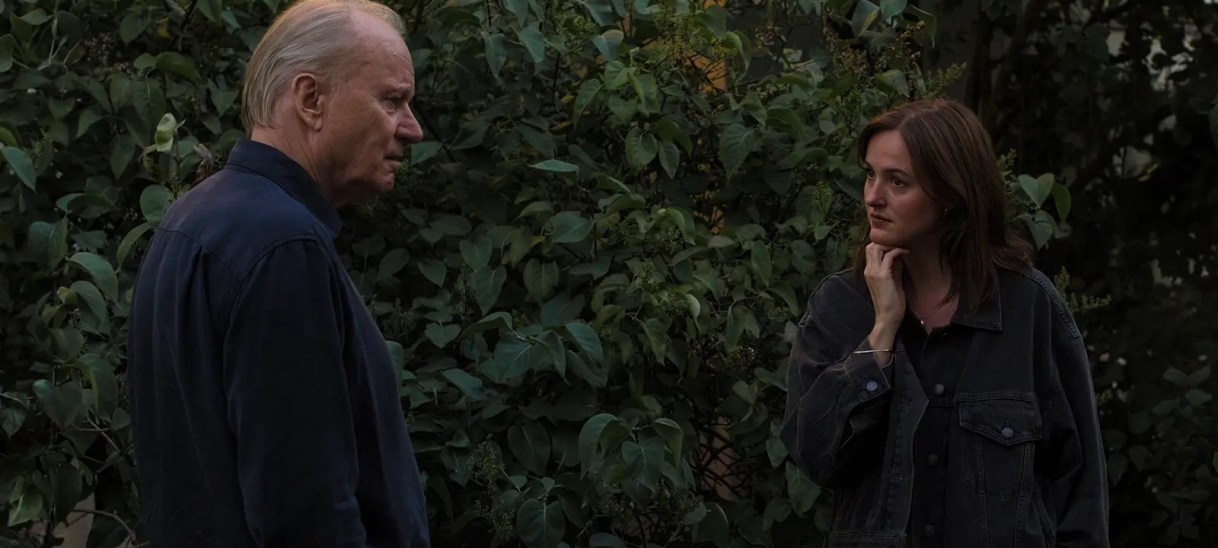
Arriving on Australian shores on Christmas Day, Joachim Trier’s follow-up to the Millennial instant classic The Worst Person in the World (2021) follows a family collision of artists that may be the perfect film for the holiday. Sentimental Value (2025) is a film about artists unable to articulate their feelings but are able to embody them and translate it to a captive audience. Trier and frequent collaborator Eskil Vogt have moved from dense single-character explorations into a wider canvas of a family, allowing their humanist writing style to weave between the said and unsaid.
Centred is Nora Borg, played by another frequent collaborator in Renate Reinsve, a respected theatre actor suffering from immense stage fright; Agnes (a remarkable Inga Ibsdotter Lilleaas), her younger sister who has escaped the arts to make a more grounded life for herself; Gustav (a tremendous Stellan Starsgård), a well respected arthouse director and their distant father; and Rachel (Elle Fanning), an American star who aches to work on more meaningful work.
The film focuses on the return of Gustav, who has written a script that explores the past and present of the family’s history, set in the old family home, most of where Sentimental Value is set. He believes this script will launch him out of the retrospective tour space and back into the forefront of modern cinema; he just needs his estranged daughter, Nora, to agree to collaborate with him and star in the film. When she refuses to work with her father on the film, Gustav, after a chance encounter at a film festival, asks the young star Rachel to perform the role instead.
The act of writing a lead role for a loved one is something the film does not take lightly, whilst never allowing the work to unfold into a navel-gazing melodrama. A shaggy family drama about the film business and artistry would quickly implode, but Trier and Vogt’s script has a dedication to the central three family members that always feels generous.
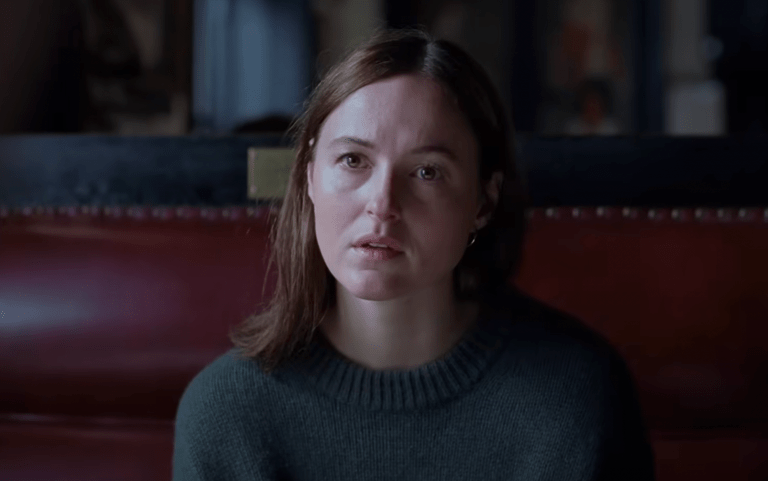
While a gut punch on first viewing, upon multiple viewings, it becomes clear that this is a generational performance by Skarsgård. This is made all the more extraordinary due to his health and his inability to memorise lines post-stroke. It is too rare where a character and performer to become as intrinsically linked as Skarsgård and Gustav do here, as an aging artist looking to the past, present, and future of their family line to understand themselves and those around them.
Bergman is always on the mind while interpersonal scenes float from moment to moment. The film dances between influences in Persona (1966) and Vertigo (1958) with Fanning’s character Rachel, arriving at an equal power through a balance of influences. While Hitchcock’s complicated masterpiece wields the weight of comedically heightened mirroring and Bergman’s film of duality that revel in never fully eliding its meaning to the characters, Trier’s mirroring achieves its power through its late decision to voice itself clearly and openly.
A key scene of mirroring occurs in a pair of scenes that opens up the film into a world of collective humanity that is often the goal of Trier’s films. On one side of the glass is a monologue rehearsal scene with Rachel (after dying her hair to more closely resemble Nora) and Gustav, who is struggling to reach the impossible place he is searching for. On the other, a gorgeous scene where Nora finally reads the script after being given it by her sister, after she also finally reads it. After finally reading the script and releasing the intimacy that Gustav is pouring onto the page — something he would never articulate to them personally — the sisters are profoundly moved, and a point of familial understanding overwhelms them.
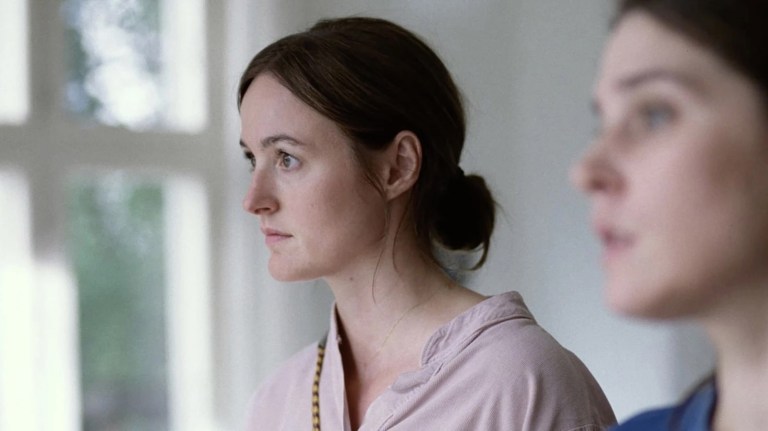
Whether the film too neatly arrives at its climaxes is up to personal taste, but much needs to be credited to Trier and Vogt for the level of clarity and emotional weight they give to the struggle artists have with connecting to those they love without using their art. And the exploration Gustav has in writing extends as an olive branch to Nora, to tell her he sees her struggles, but gives her the medium of her art to explore them together.
It is in these moments of generous openness and charged, yet elided, dialogue that Sentimental Value becomes a beautifully emotive family drama. Trier and all his creative collaborators understand that to create is to bridge an ocean of the unsaid, even if that means building a replica of your generational family home on a soundstage, only to have it hidden on the 18th page of the Netflix arthouse section. Trier and Vogt understand deeply how, even through that artifice, true openness and connection can be translated into a final, powerful image of understanding but not resolution.
Sentimental Value is in select theatres now.
 Rating Frames
One thought on “Sentimental Value is The Moving Family Drama to See”