A showman like no other, Korean visionary Park Chan Wook elicits more joy and wonder out of an audience from a perfectly timed cross-dissolve than most car chases filmed this decade. A filmmaker who is constantly looking to find the tipping point of extremity without falling into the world of camp, Park has cultivated a devoted fanbase that expands with each new entry, especially in recent years, with his fearlessness to work in the grime of modern life
Upon exiting No Other Choice (2025) in a delirium, it is clear that Park is the greatest modern visual stylist. While his stories can vary in interest and quality, as a filmmaker who is obsessed with the power of the art of editing, you will always leave his films satisfied. Adapted from the legend Donald Westlake’s The Ax from 1997, Park’s screenplay makes the key decision to maintain the protagonist’s occupation and narrative arc, showing how, as time passes, the crushing weight of modern capitalism has only increased. Centring a literal paper pusher, we walk hand in ham-fisted hand, gliding on the back of whip pans and transitions that will make film students furiously scribbling notes.
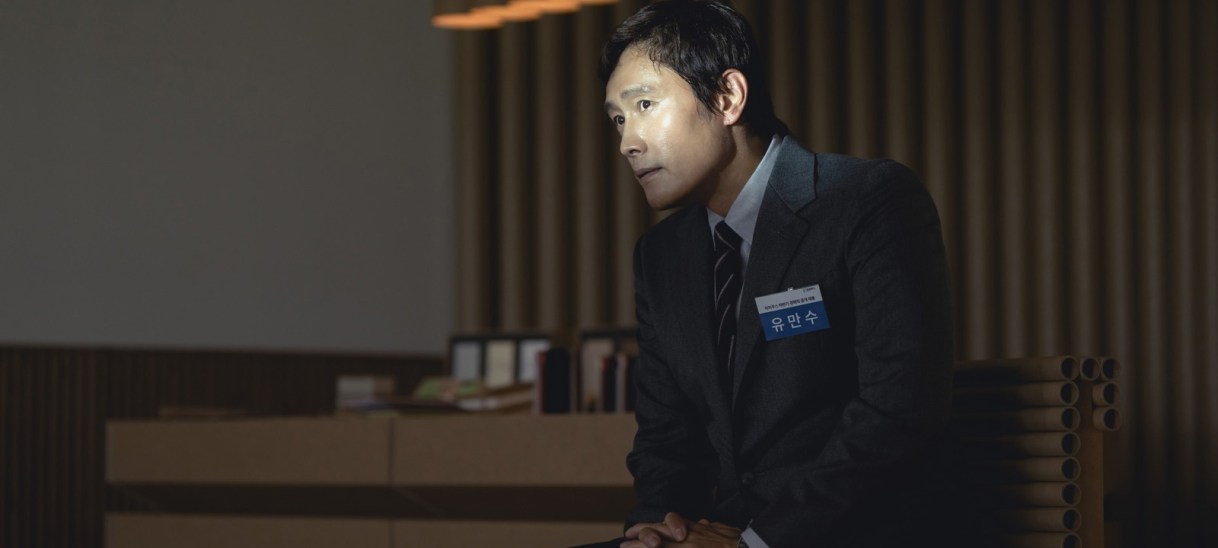
After being made redundant after the acquisition of the paper company by an American conglomerate, Man-su (Lee Byung-hun) is sent to a support group for the newly unemployed, selling self-worth and virtue as its own reward. But, after tasting mild success and a bountiful life with his family, Man-su is after a return to cold, hard reward.
Built on the late capitalist mindset that success can only be achieved through the pain of another, Man-su’s plan ultimately lands in Park’s wheelhouse, getting rid of the more hireable paper men in town, so he is all that remains. Amongst all the extremity and chaotic joy gushing out of wild filmmaking choices, the story elicits an overwhelming sense of pain as we see a group of men that should be in community with one another, forced to compete for what will ultimately be a hollow prize.
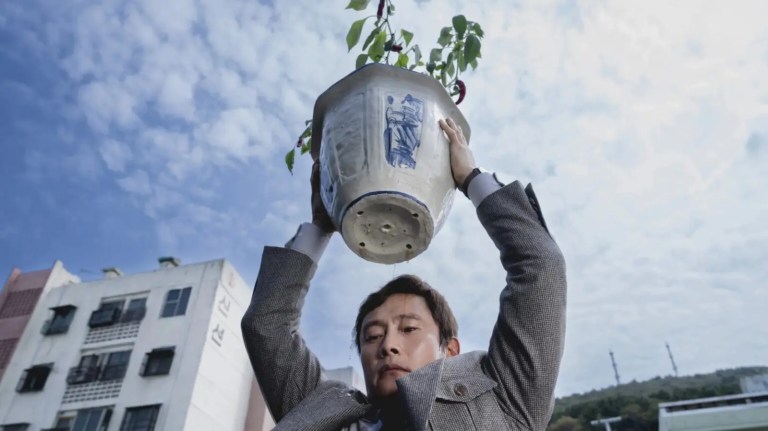
Sitting somewhere between Kiyoshi Kurosawa’s Cloud (2024) and Tokyo Sonata (2008) as modern tales on the devolving psyche of work culture and living under the cruel thumb of capitalism. That Neon in a marketing push sent an open invite to the fortune 500 company CEO’s says everything about how pointed the film aims to be at its primary villain.
Lee’s performance holds down the film’s extremity, preventing it from turning into a circus. His desperation exudes from him as a flop sweat, gritting his teeth through every moment, anxious that the moment he stops to consider the repercussions, it will all crash down. In moments where the world appears to react based on Man-su’s emotions, anything seems possible in this farcical satire that moves with a feverish pace. There is a fleeting moment when a potential final victim offers a job that we feel an unexpected glimmer of hope that we can get off the road. But as is the case with most Park Chan Wook films, that road, once entered, is one-way.
Park is in a tier above all when it comes to pushing the visual medium forward with a fever pitch and an unmatched style. Like his idol Alfred Hitchcock, Park sees his role as both old school entertainer and cinematic visionary who asks what is possible in the medium they have devoted their life to. In his recent work, Park has devoted an enormous amount of time to uncovering ways to use the reflective world of phone and computer screens to tell a story that is still compelled by the characters holding them. When we see Man-su’s reflected face alongside his screen as he drives himself further and further into his doomscroll, we so easily see ourselves. These scenes are comedic but intensely revealing, and make almost all contemporary filmmakers look like cowards for hiding in period filmmaking.
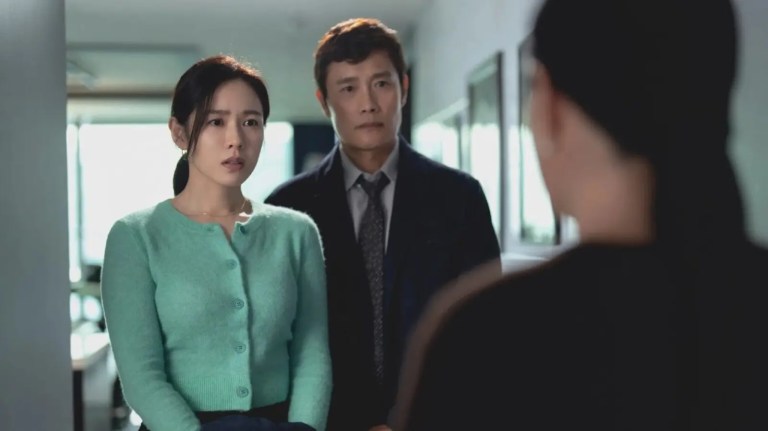
Always veering into doing too much, Park hides as much in its maximalist frames as he shows. Many have criticised the filmmaker for over-directing his screenplays, never allowing the writing to gleam through the forest of his craft, which I believe to be a false and overly simplistic reading of his work. In his very best films, whether original scripts or adaptations like in No Other Choice, he highlights the power and potency of the writing by its sheer ability to stand alongside some of the most visionary filmmaking this century through iconic characters and set pieces. It is only in his films like Stoker, with lesser scripts, that become mostly known for a scene transition (show hair transition scene from YouTube).
What allows Park to ride so close to the edge of camp absurdism without toppling over is his ability to play to a crowd, both in enjoyment and the collective experience of being surrounded by strangers, all uncertain of what will happen next, which makes live sports an enduring event. With all respect to the perfect chase scene at the conclusion of One Battle After Another (2025), the legend of the final act, Park Chan Wook’s No Other Choice, has the finale of the year. A glorious send-up of modern late-stage capitalism as a ‘be careful what you wish for’ fairy tale that blends melodrama into a living nightmare into the best satire in years. It is a farcical screed of capitalism that gloriously blooms into something unexpectedly transcendent in its conclusion.
The poetic irony in its final moments play like the deterministic singularity point that all modern art about the crushing weight of capitalism arrives at, there is literally no other choice. How Park doesn’t arrive at a place of crippling nihilism in its final moments but of cruel irony and humanity is nothing short of astounding. His revenge fables are without equal in modern storytelling, with No Other Choice arriving into this extended canon in surprising ways.
No Other Choice is in select theatres now.
 Rating Frames