Blue Moon preview screening provided by Sony Pictures
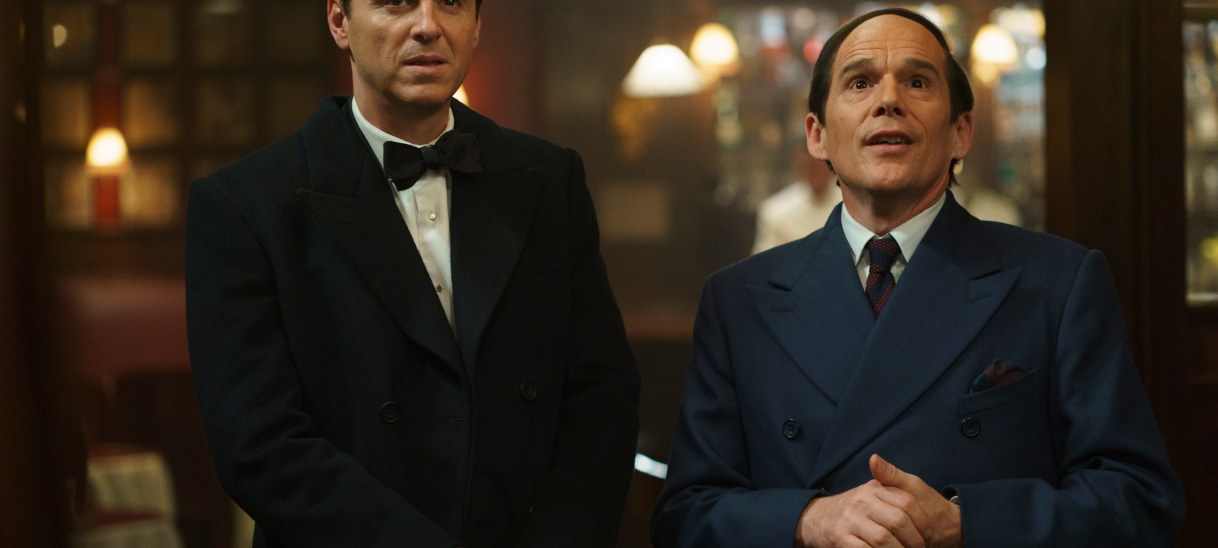
There’s a lot of talking in Richard Linklater’s Blue Moon, a film focused around a single evening in a single location that has been described as something akin to a theatre experience on screen. It’s fitting that in such a film there is a lot of talking since, if the film’s title hasn’t given it away, it revolves around Blue Moon creator Lorenz Hart (played enigmatically here by Ethan Hawke), a serial conversationalist (often to his own detriment) as he works to convince himself and those around him that he’s holding it together while his past collaborator, Richard Rogers (Andrew Scott) and his new lyricist Oscar Hammerstein (Simon Delaney), are heaped with praise following the successful opening of their Oklahoma! musical.
Setting a film entirely around the bar and lobby of a hotel while subjecting the audience to one man’s incessant talking is no easy feat, but audiences familiar with Linklater’s work (especially those that are diehard fans), will lap this approach up. For starters, Ethan Hawke does a fantastic job of carrying the weight of the film, no matter how small he is framed by Linklater (Hart was 5 feet tall; Hawke, by comparison, is 5″10). For such a small individual, Hart’s voice echoes the farthest here, with Hawke capturing his larger-than-life persona tremendously, and he’s deservedly received an Oscar nomination for it.
The film starts off rather shaky though, showing Hart on the evening of his death in a back alley, a major fall from grace for someone who was so revered, before jumping back some months to that opening night of Oklahoma! and the mingling that ensued post-show. Sure, this shows the stark difference between a man who had countless people adore him and the man who would die alone, but just as soon as this opening pops up, it’s just as quickly gone from the mind. The shakiness continues though as side characters are established like Eddie the bartender (Bobby Cannavale) and E.B. White (Patrick Kennedy), but like in any function you may have ever been to where small talk happens, they serve merely to keep you entertained until the real guests you want to speak to arrive.
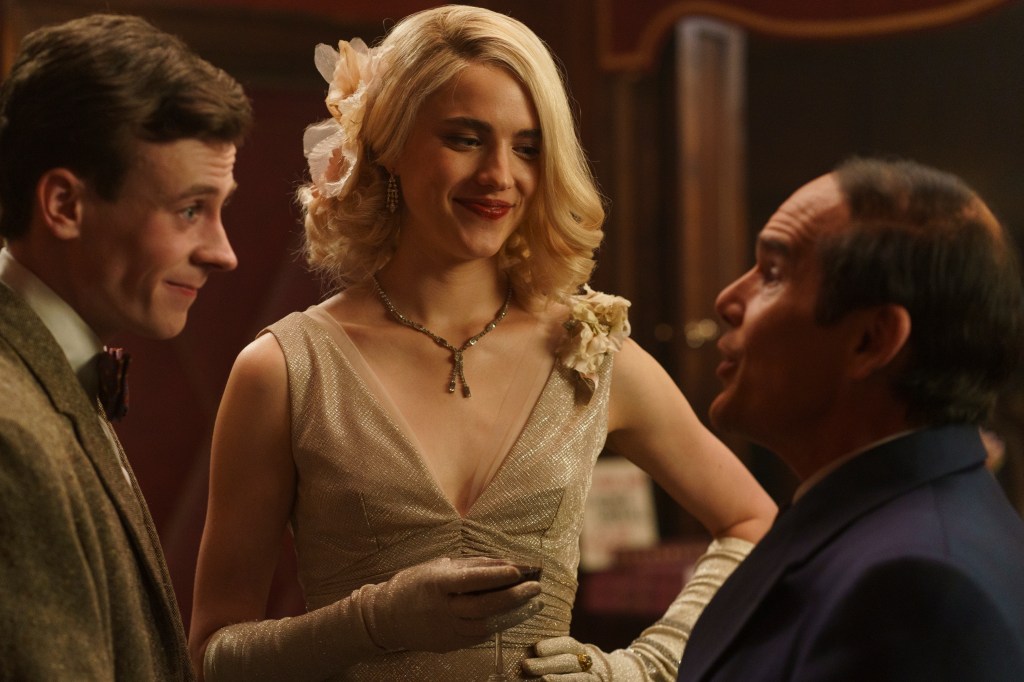
One such guest is Elizabeth Weiland (Margaret Qualley), a young 20 year old college student who Hart has been selling those side characters the narrative that he has something deeper and more meaningful going on with her. In truth, she views him as just a really good friend, someone who she loves but “just not in that way,” a line that comes at a crucial moment in the film, contextualising Hart’s erratic, borderline needy behaviour. The other guest is the star of the show, Richard Rogers, someone we (or those, like myself, who are not familiar with theatre at all) learn Hart created some legendary plays with. Their relationship holds strong, and while we learn it’s had testing moments (alcoholism from Hart’s side playing into that), their dynamic is by far the most interesting given their history and the insights that it gives into why Linklater chose this night of all nights to focus on.
On the surface, Linklater frames Hart as a man who craves attention, both intentionally and unintentionally because his disposition permits he does so. As the film unfolds, his flaws creep up, including his insecurities and desire to not fade in the background given he has become so used to being the centre of attention. It takes a good 70 minutes to get to that part though as Hart becomes almost smaller by the frame, especially after paying to have some alone time with Elizabeth in a cloak room where he shows interest in her sexual escapades, like some voyeur who gets off on the idea of another person’s pleasure. You begin to pity him more than anything, with Hawke really showing the fragility of the man when he’s not in an open space around others — a place where he uses his talking as a shield to maintain this facade of composure that he’s built.
Blue Moon knows what audience it’s for, so if you’re unfamiliar with theatre like I am, the humour and references will more than likely fly over your head and make it difficult to engage with or care for these people and their line of work. That said, as a character study it offers a wonky but gradually clearer insight into Lorenz Hart, even if it takes a while to get to any deeper unraveling of this broken side of him.
Blue Moon opens nationally from Thursday 29 January.
 Rating Frames