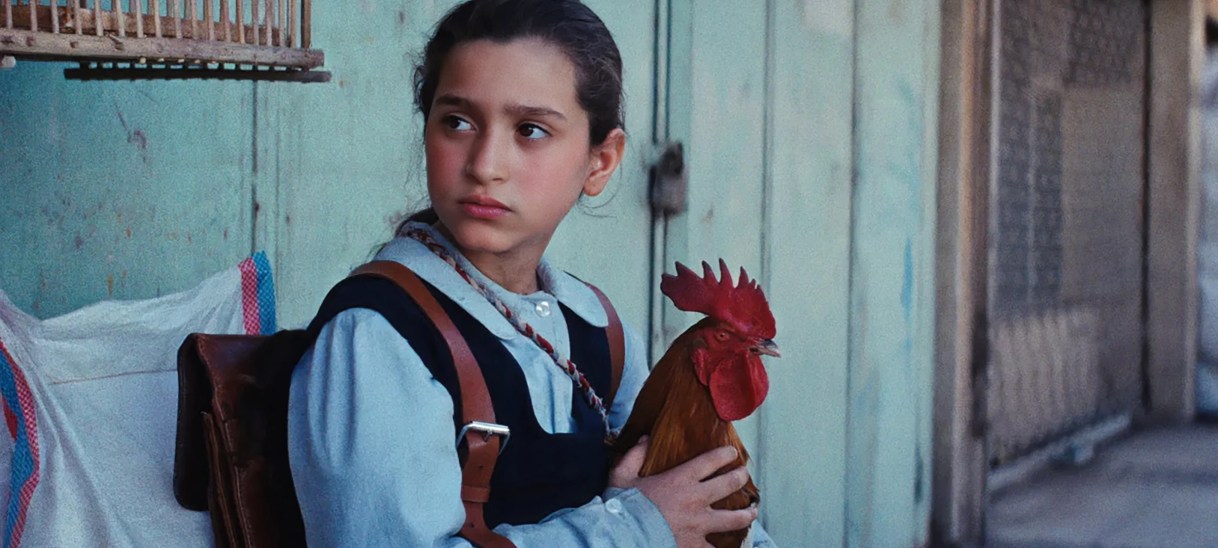
In 1990, Iraq faced strict UN-backed sanctions, which led to extreme poverty and shortages of food and medicine. Despite this, Saddam Hussein required all Iraqis to celebrate his birthday. Set two days before the president’s birthday, either during or on the verge of the Gulf War, The President’s Cake (2025) follows nine-year-old schoolgirl Lamia (Baneen Ahmad Nayyef), who is anxious about being selected for the terrible honour of baking a cake for the day.
Filmmaker Hasan Hadi contracts a world from Lamia’s perspective outward through childlike framing and camera movements, grounding us in the surreal circumstance she finds herself in on the morning of the draw to decide who will have to bake the cake. The scene is an entire film in a bottle. We see Saeed (Sajad Mohamad Qasem), Lamia’s close friend, has to write his name five times to be placed in the draw as punishment for his lateness to class. A boy reminds the teacher that his father fixed his bicycle, and his name is not written down for the draw. When Lamia is called to draw the cake, an ultimate punishment, we collapse on her face, slammed with despair, but not broken. She learnt this from her grandmother Bibi (Waheed Thabet Khreibat).
Without parents and raised on the outskirts of the city by her frail but spirited grandmother Bibi, Lamia must scrape and scrounge to acquire the funds to obtain the basic ingredients needed for the cake, which, if she doesn’t present it on the day, will be punished by being dragged through the street and possibly killed.
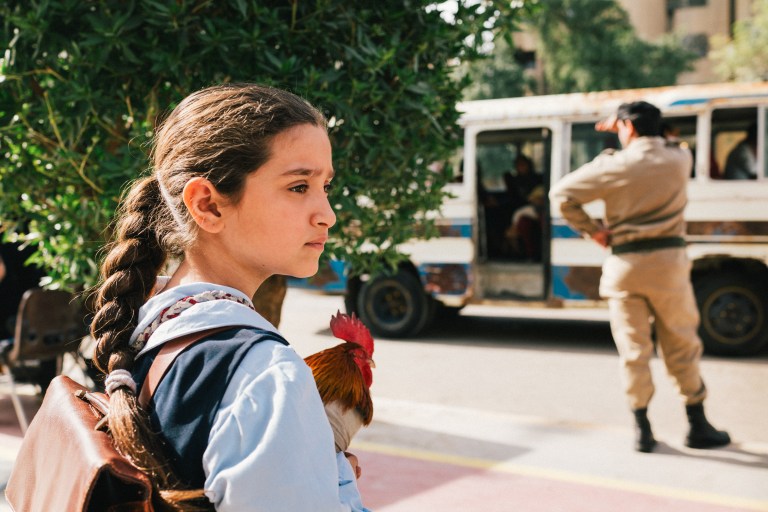
The film is littered with pensively powerful moments, like Bibi giving Lamia a shopping list for the cake while sorting through personal family items they will have to sell to acquire the ingredients. The crippling weight of political forces bears down on each individual we see. The dictatorship and UN-backed sanctions are visibly fraying the knot of community in this Iraqi village and city.
Once the film separates Bibi and Lamia on their trip to the city to collect ingredients in several heartbreaking sequences, the story blooms. Lamia is driven to acquire the ingredients and persevere, while Bibi is trying to give her granddaughter a better life as she grapples with the limitations of herself as her guardian. As the film is primarily focused on a child’s perspective of the world in a state of turmoil, this bifurcated narrative is purposely unbalanced, which can lose some audience members while engrossing others.
We see the crippling rule of dictatorship through a child’s eye and how that perspective ripples through others. As Lamia and her friend Saeed encounter various strangers on their journey for eggs, flour, and sugar, we see the callousness the regime has instilled in people, where even the sharing of small kindnesses seems impossible.
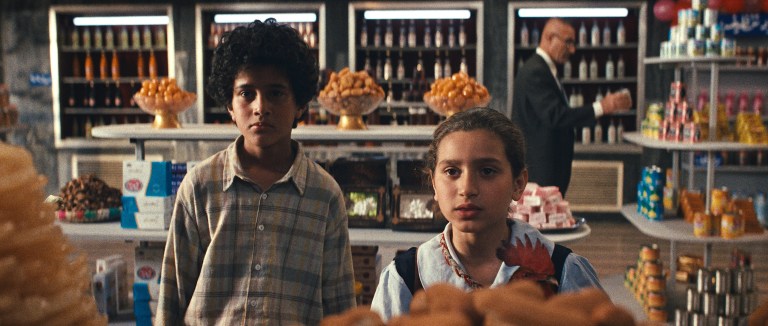
Baneen Ahmad Nayyef as Lamia is one of the best child performances in years. She carries with her a pathos that never derails her fierce determination to succeed despite her situation, making her a vital screen presence in a film that too easily could’ve sunk under the weight of its circumstances.
What also allows the film to float above the muck is the gorgeous work of cinematography by Tudor Vladimir Panduru. The President’s Cake maintains a propulsive energy, never luxuriating in the search for that one perfect shot that derails all too many films.
A film about the futility of a stable life under a cripplingly arrogant dictatorship, Hadi savvily avoids the potholes of despair with a gliding approach from scene to scene, focusing on the childlike goals at hand that ground the story in the familiar despite the circumstances. Too often, films of this nature root themselves too heavily in the past and its specifics, which feel bound by their circumstances, allowing the audience to separate their lives from the ones we see on screen. That is not the case here, and it is all the more powerful for it.
A vital and poignant film that collides with the madness of oppression with a child’s resilience, Hadi’s film is indebted to classic Iranian filmmakers like Jafar Panahi and Abbas Kiarostami while still matching contemporary urgency with a reflective look at the past. As the children move through the city ravaged by poverty through recent sanctions, all in a desperate search for money and supplies to get through the president’s birthday, we reflect on each passing individual and how they are forced to look out for themselves instead of these desperate children.
The President’s Cake is in select theatres now.
 Rating Frames