With WW2 and war films continuing to permeate film culture, it is no surprise that Tom Hanks would find himself at the helm of a war destroyer in open seas. Greyhound (2020) represents Apple TV’s first proper dip into distribution of a large scale film, and for the most part, it is a clear and simple adaptation of C.S. Forester’s 1955 novel, The Good Shepherd.
The film centres around Ernest Krause (Tom Hanks), a US Navy Commander who has the mission of escorting a large convoy across the Atlantic during WW2 while German U-boats (submarines) stand in the convoys way. With air support unavailable in the central part of the journey (known as the ‘Black Pit’) due to the range, it is up to Krause and his crew to keep the convoy afloat as they carry their supplies to Allies.
Unlike Hanks’ prior performances in war films Saving Private Ryan (1998) and sea escapades like Captain Phillips (2013), Greyhound sees the two-time Oscar winning actor play a more fixed and vocal role. This isn’t necessarily a drawback of the film as Hanks’ screenplay cuts out all of the fat and exposition that often subsumes most war films, and instead settles on the action at sea and the man at its centre.
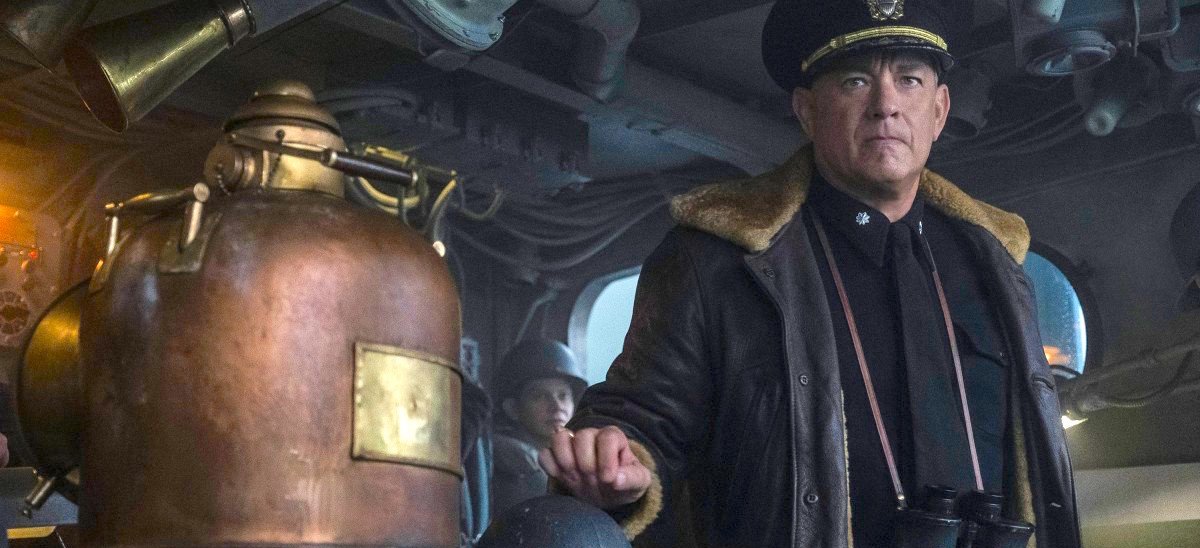
Director Aaron Schneider, known for Get Low (2009) and Two Soldiers (2003), complements Hank’s more vocal and contemplative temperament by focusing in on the tension of the battles and the ferocity of the sea. Schneider keeps most of the film centred on the bridge of the ship in order to effectively heighten the tension of each given moment and capture the spacial limitations and helplessness of being out at sea. This makes for plenty of thrilling moments as the German U-boats circle like a pack of wolves (as they assert) while Krause and his crew yell out bearings and directions.
Tom Hanks in Greyhound
In terms of some of the production aspects, the action and battle scenes are predominately CGI’d, but they hold up for a budget of US $55 million. Also, Blake Neely’s score complements the CGI’d battles in its low tone that has a constant sonar echo, and the dull green/grey colour palette is fitting for the period being depicted.
When comparing the film to other war films of recent like Dunkirk (2017) and Hacksaw Ridge (2016), Greyhound is more limited in its scope and ambitions. Not much is known about the character of Ernest Krause; there is a brief insight into his past as a commander at Pearl Harbour as well as a pre-Greyhound scene involving his significant other. However, for the most part, Hanks and Schneider want to keep the attention solely around the ship itself in order to immerse audiences in the Greyhound ship experience.
For what it’s worth, that on-ship isolation works in removing all the weight of narrative expectations that some might see as being essential (including yours truly). However, unlike something like the aforementioned Dunkirk, the same level of practicality that comes with a Nolan war film and the diversity of tense moments isn’t the same here. That might be due to the lack of space that comes with being at sea, or it might be the repetitive nature of the films events that Hanks and Schneider knuckle down on. Regardless, there isn’t much leg room to wiggle into backstory and character building that one might expect.
For a first major feature on Apple TV, Greyhound is rife with Navy lingo and sea battles, and with Tom Hanks at the helm, it makes sense that it received Oscar nominations this past year. As a war film, it isn’t as compelling as some of the films mentioned, but it is clear in its focus and objective and for the most part, it manages to provide an engaging viewing experience.
With film studio Paramount having launched its streaming service Paramount +, it seemed fitting to watch its first drawcard feature Infinite (2021) starring the ever bankable Mark Wahlberg. This comes some months after Amazon Prime’s recent sci-fi thriller The Tomorrow War (2021), starring an equably bankable Chris Pratt in the lead role. While The Tomorrow War had a relatively tolerable premise, Infinite is an insufferable mess that proves studios are willing to throw their money at just about anything as long as Wahlberg is in it.
To say that Mark Wahlberg is the problem would be an oversight. His performance in Paul Thomas Anderson’s Boogie Nights (1997) is as iconic today as it was over 20 years ago, and he seems to have found a resonance with Michael Bay — having shone in Pain and Gain (2013) and the last of Bay’s two Transformers films. However, Infinite reduces Wahlberg’s often fast-talking and physical performance to a dreary and tedious display that can only be summed up by Wahlberg’s own confused facial expressions as events of the film unfold.
Antoine Fuqua is known for his action packed films like Training Day (2001), The Equalizer (2014) and frequent collaborations with the likes of Denzel Washington (who won an Oscar for Training Day), Jake Gyllenhaal, and now Mark Wahlberg (both of whom he has worked with twice). However, Infinite represents a departure from a simple action premise to something more akin to Doug Liman’s dreadful action sci-fi, Jumper (2008). It is adapted from D. Erik Maikranz’s 2009 novel The Reincarnationist Papers (which is, by all accounts, equally underwhelming).
Infinite is essentially about a small group of people known as the infinites who are pretty much reincarnated after they die, in the sense that they can eventually remember their past lives and skills obtained in those lives. Evan McCauley (Mark Wahlberg), who is known to the other reincarnated as Heinrich Treadway (one of his past reincarnation names), lives most of his new life never really knowing he is one of the reincarnated and is instead diagnosed as a schizophrenic. What Evan doesn’t know is that somewhere in his memories lies the location of an object known as the egg, which the infinites are trying to find before Ted (Chiwetel Ejiofor), another infinite who goes by the name of Bathurst, finds it.
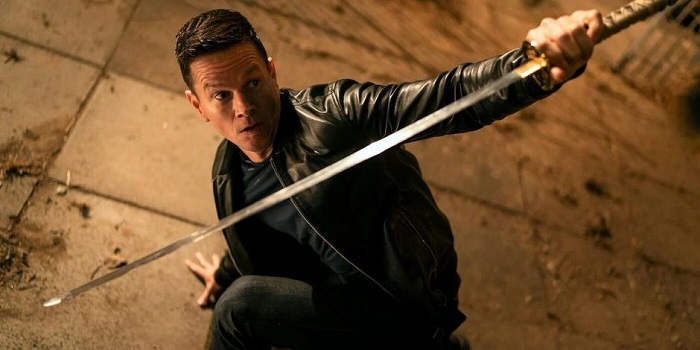
Mark Wahlberg in Infinite
Fuqua essentially orients his film around this plot device and creates a goose chase for his characters in the process. This plot device is desired by Bathurst who wants to harness it to destroy the world so that there is nothing left to reincarnate to — effectively rendering the reincarnation process as finished. The problem with the film is that it relies too much on this specific object as a catalyst for creating cause and effect, and this leaves the events of the film lacking substance.
Mark Wahlberg looks confused and bored for most of the film, with his real flair coming during the action set pieces, which themselves amount to nothing as they are too few and far. Chiwetel Ejiofor’s character is also incredibly underwritten and exists purely for the sake of being an antagonist — he delivers some lines about his purpose, kills off some equally underwritten characters, and is waterboarded with gasoline for some reason. In essence, both the protagonist and antagonist are uninspired, especially when compared to The Tomorrow War’s protagonist and alien entity which are miles better for an action sci-fi.
Perhaps Antoine Fuqua should have found a way to incorporate another 40minutes for greater clarity (seeing as Paramount already seemed set on going all in on this) or perhaps he should have focused on releasing one feature this year instead of two, seeing as The Guilty (2021) arrives later this year. Regardless, Infinite is a forgettable viewing experience and is a reminder that Michael Bay is still the only director to get the best out of Wahlberg in the last 20 years. Lets hope Paramount can bring its lacking streaming service some content worth audiences time and money.
With colonisation comes a struggle for independence and identity; oftentimes war ensues, and people are either left with less than they had before, or nothing at all. Gianfranco Rosi’s documentary, Notturno (2020), paints a perplexing picture of what life after war looks like. The Oscar-nominated documentarian lets his camera do the talking as he traverses the war ravaged Syria, Iraq, Kurdistan, and Lebanon over the course of three years. The result is a film that captures the aftermath of war ravaged lands, and the people left to endure the mess made by others.
Rosi is no stranger to focusing on people facing hardship as a result of injustice and corrupt systems. His Golden Bear winning film, Fire at Sea (2016), explores the European migrant crisis and some of the people at the centre of the migrant landings at Sicilian island, Lampedusa. While Notturno isn’t as specific in its focus as Fire at Sea, it serves to remind audiences of the realities that people on the other side are living.
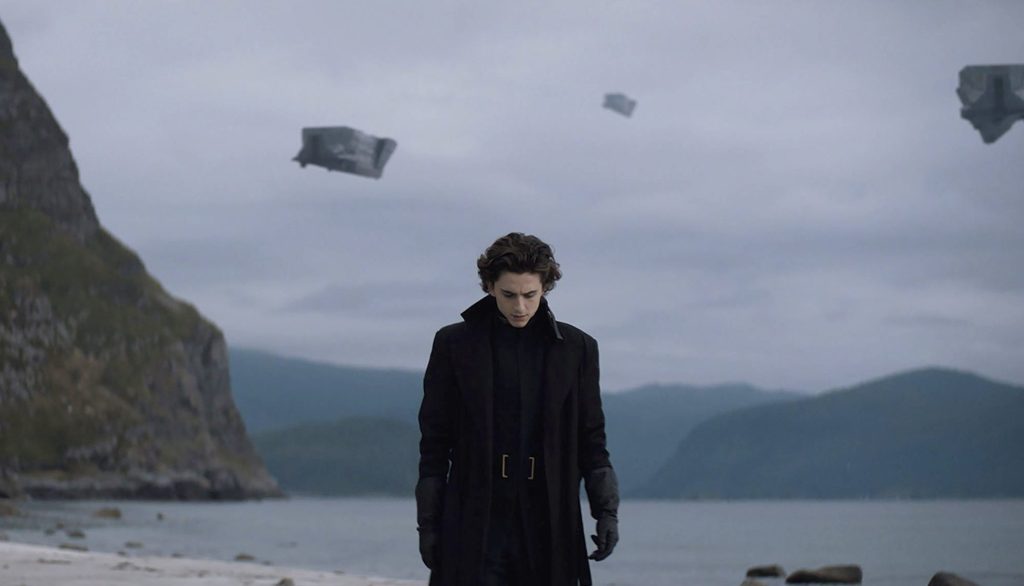
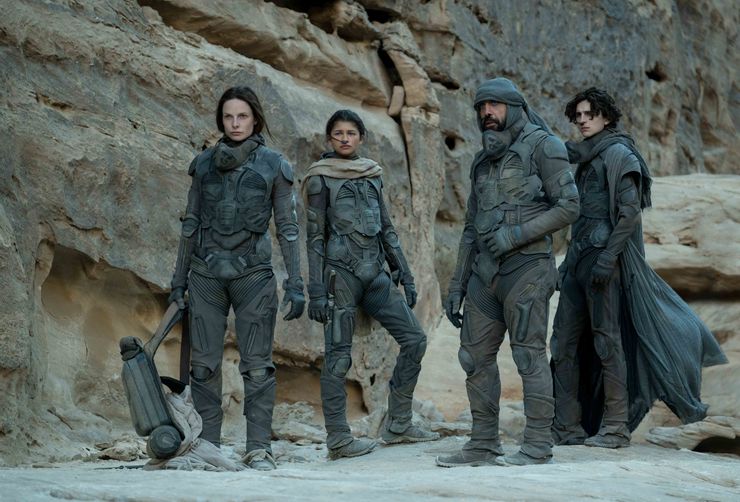
In Notturno, Rosi captures the sprawling and almost barren wasteland’s of some of the aforementioned Middle-Eastern countries, and his cinematography is comprised of an array of wide shots that give the land itself an added layer of complexity. There is almost no life in Rosi’s shots, with the environment seeming akin to that of Frank Herbert’s fictional Arrakis (or Dune) — there is a desert-like openness, structures are left behind from ISIS raids, and minimal life exists save for birds that are hunted. The purpose here is to reinforce what many of the people in the film already voice — these people’s homeland has been taken from them and losing their identity is at risk as well. Subsequently, the camera serves as this invisible observer in motion.
Unfortunately, Rosi isn’t as interested in providing more context on the people in the film, with many of them going about their lives without us ever gaining a sense of who they are. There is an instance where some children draw and describe horrific pictures from experiences they’ve had with ISIS, but that’s about as close as we come to an emotional investment beyond the shots themselves.
A mother grieving for her son in Notturno
The film seems more concerned with allowing the setting to nurture our understanding of the people who occupy it rather than through the people themselves. These people enter the frame and the nothingness around them in order to reinforce just how little this land is actually theirs — it isn’t welcoming or even supportive of its occupants. In this sense, the land and Rosi’s shots of it is being used to demonstrate the governments (or lack thereof) failure to provide for its people.
One of the subjects in the film is a boy, Ali, who supports his mother and his many siblings by hunting for birds with various unknowns. When observed outside of the long and mid shots of his home where there is a sense of control and identity, he is often framed as a spec in the wider vastness of Rosi’s wide-shots. It’s a clever approach on Rosi’s part, but it provides the bare minimum in terms of understanding Ali’s situation and how he and his family make sense of the world around them.
The most profound aspect of the film, however, is Rosi’s ability to let the land speak for itself. There is little to no dialogue which creates an eerie sensation given that the countries in question are known for the violence and chaos that eschews the normalcy that otherwise exists. The only real sounds that continually penetrate the film are those natural ambient noises (birds chirping, water rushing, wind breezing etc.). When something other than natures sounds begins to present itself, it tends to be in the form of guns clocking and war trucks rolling. For what it’s worth, Rosi juxtaposes that aspect really well and leaves an uneasiness in one’s stomach.
Perhaps now more than ever, Notturno reminds audiences that colonisation and external interference in a once functioning nation, only does more harm than good — with the current situation in Afghanistan exacerbating that claim. Sure Rosi could have done with a greater engagement with his subjects, but it’s easy to see that his camera and the setting it captures are there to do the talking. While not as moving as Fire at Sea is during its best moments, Notturno is an essential viewing if not for its contemplative look on the countries at the centre of it, then for its relevance at this very point in time.
Notturno is currently streaming on MIFF Play until the 22nd of August.
It’s been almost 20 years since Sir Peter Jackson introduced audiences — both new and familiar — to the world of Middle Earth, on the big screen. In those 20 years since The Lord of the Rings: The Fellowship of the Ring (2001), nothing, save for the sequels to The Fellowship of the Ring, has managed to capture the awe and bravado of Jackson’s Middle Earth. Franchises have come and gone, and Jackson has also adapted The Hobbit (2012 – 2014) for the big screen, but The Lord of the Rings continues to inspire as well as keep audiences coming back for more as the years roll on. Much has been said and written about the trilogy, but I believe it’s important to remind audiences why this trilogy has remained a staple in cinema history. What follows is an analysis of why Jackson’s adaptation of The Lord of the Rings has continued to permeate film culture, how it redefined the Fantasy genre, and what made the franchise as celebrated as it is.
The Lord of the Rings Trilogy Before the Acclaim
Before delving into the aforementioned concerns of the piece, it is important to first outline the trajectory of The Lord of the Rings in cinema culture — from its inception, up until Jackson’s adaptation. In the years before Jackson’s The Lord of the Rings adaptation came to fruition, there had been an animation adaptation in 1978 by Ralph Bakshi, which opened to a fair reception, and the Beatles had apparently wanted to star in a live-action adaptation of the books, with Stanley Kubrick said to have been their choice to direct. Kubrick allegedly turned down the offer to direct the planned film after saying that it was unfilmable (at least in terms of the technology not being there yet). As J.R.R Tolkien owned the rights to his work, he also turned the proposed Beatles film down as he didn’t want his work to be taken by the band and turned into something outlandish for the big screen.
It wasn’t until sometime in the mid-90s that the idea of a Jackson-led The Lord of the Rings adaptation began to circulate in the media. With Jackson’s earlier films like Bad Taste (1987) and Braindead (1992) being the epitome of schlock horror — films characterised by their absurd plots, quirky characters, campy humour, and so forth — it was no surprise that doubts were raised over the announcement that Jackson was to adapt the work of beloved and trailblazing author, J.R.R Tolkien.
Jackson had come off of directing a decently received, The Frighteners (1996), before pitching the idea of turning The Lord of the Rings into a live-action trilogy, to Miramax. Miramax said that they would be able to make two films instead of the proposed three, with the cost of the films driving their decision. However, Miramax eventually decided that that they were unable to fund the making of two films at the scale proposed. Subsequently, Jackson was allowed to pitch the idea for the films to other studios, and was eventually able to bring New Line Cinema on board to finance the film.
With New Line greenlighting the proposal for an adaptation helmed by Jackson, the next big hurdle came with the budget increase for each film. New Line had reportedly agreed to spend around US $60 million on each film, but that budget proved unrealistic with how audacious and large each film ended up becoming. Instead, New Line ended up spending around US $120 million on each film, with that eventual sum being agreed upon through much deliberation and even heat between Jackson and film executive Michael Lynne. It wasn’t until a 20 minute preview screening at Cannes in 2001 that the studio’s fears regarding the increase in budgeting, were alleviated. This was primarily due to the positive reception the footage of The Fellowship of the Ring received, and the realisation that the money invested into the film was paying off (with the Balrog scene being one that was shown).
With The Fellowship of the Ring eventually being made, and its sequels releasing within the next two years, the trilogy had officially survived the struggles of pre-production, production, and Harvey Weinstein. The trilogy would go on to become one of the highest grossing and consistently well received franchises of all time.
Hugo Weaving, Peter Jackson, and Ian Mckellen on the set of The Lord of the Rings
What Made the Trilogy as Influential and Beloved as it is?
Trying to provide a single answer to why Jackson’s The Lord of the Rings is as iconic and influential as it is, simply cannot be done. Therefore, I will break down some of the key aspects of the trilogy and why they’ve seen the trilogy continue to enjoy the success that it has.
For starters, one of the biggest issues Jackson faced was trying to transpose such a well regarded and nuanced piece of fantasy literature as faithfully as he could, and in the time he had. Tolkien’s writing is renowned for its ability to capture the minutiae of any given aspect of the world of Middle Earth — whether that be a blade of grass or a trickle of water. In saying that, Jackson was fortunate that he had a lot to work with from Tolkien’s writing, particularly because the drawn out descriptions Tolkien provides, ultimately led to a level of clarity that Jackson simply moulded for a modern audience. Sure there was no Tom Bombadil or the battle for the Shire or the character of Gildor Inglorian, but given the scale of Tolkien’s world (those who have read The Silmarillion will know the struggle of making sense of everyone and everything being described), Jackson was able to focus on the fundamentals of the book in order to guide audiences through the three films.
A major factor that contributed to the trilogy’s acclaim and success is the fact that all facets of production aligned and worked to support each other for the entirety of the three films. There were two units that worked on the film: one that was helmed by Peter Jackson, and the other, by John Mahaffie (Second Unit Director). Both units were well equipped with resources to traverse the New Zealand landscape and country side (which is explored more in the exquisite documentary-like, behind the scenes), and Weta Workshop went above and beyond to produce sets, costumes, armour, weapons, creatures and miniatures. What this all means is that there was a sense of totality and scale unlike anything seen before or since, in a blockbuster or film of any kind. The result is one that led to the record breaking Oscars sweep for The Return of the King (2003) which won all 11 Oscars it was nominated for, and is tied with Ben-Hur (1959) and Titanic (1997) for most award wins in Oscars history.
But aside from the recognition from award wins and box office success, Jackson’s trilogy has continued to amaze viewers (included yours truly) across multiple viewings in the 20 years since. Some of the reasons why include the thematic consistency as the films went on; the largely practical approach to making the films; Howard Shore’s mesmerising score that speaks to various scenes and characters; the epic battle sequences both large and small; the memorable performances from each and every actor involved; and how the trilogy paved the way for fantasy films (and shows) to be taken as seriously as they are today.
The way in which Jackson developed a sense of forwardness from the first film to the last meant that the pacing always felt consistent, and audiences were given ample time to spend with various side characters and events, while never losing sight of the primary goal of The Fellowship. For instance, The Fellowship itself and its eventual separation, serves to engage the audience with the likes of Theoden (Bernard Hill), Eowyn (Miranda Otto), Emoer (Karl Urban), Arwen (Liv Tyler), Galadriel (Cate Blanchett), Faramir (David Wenham) and so forth. All of these characters have role to play in The Fellowship’s quest, but they also bring to surface the lore of Middle Earth that cannot be wholly accounted for.
The battle sequences also stand out, particularly due to how practical they were and how little they relied on CGI in contrast to blockbusters being released today. Ridley Scott’s Gladiator (2000) is another film that comes to mind in terms of being remembered for the amount of choreography it had and the lack of CGI it used. Rarely are modern blockbusters as hands on in their approach to large scale battles as The Lord of the Rings was, and that’s another big drawcard for revisiting the trilogy — the action strived to create an out-of-body experience that sucked audiences into the world.
Another major aspect that contributed to the ongoing success of The Lord of the Rings is the way in which the show put the fantasy genre in the limelight for film and television. The point here is simply to highlight how Jackson’s films have paved the way for the fantasy genre to be taken more seriously as a form of art. A show like HBO’s Game of Thrones has won multiple Emmy awards and has been compared to The Lord of the Rings (and rightfully so given that George R.R. Martin is greatly inspired by Tolkien). Netflix’s The Witcher show has also emerged in the last couple of years and has quickly become a fan favourite. So essentially, Jackson and his first trilogy of films have brought as much attention to the fantasy genre as George Lucas and his first Star Wars trilogy did for the Sci-Fi genre.
Liv Tyler and Viggo Mortensen in The Lord of the Rings
Closing Thoughts
In the 20 years since The Fellowship of the Ring, the trilogy continues to be shown in cinemas worldwide and has had a successful shelf life (with a 4K remastering having been overseen by Jackson and released last year). With a Lord of the Rings show coming to Amazon Prime in late 2022 (supposedly exploring an earlier part of the Second Age of Middle Earth), now is the perfect time to begin revisiting Middle Earth and Jackson’s trilogy. Whether or not the show will capture the hearts of audiences and critics alike is yet to be seen, but judging by a recently released still from the show, it’s anyone’s guess. What is known is that Tolkien’s The Lord of the Rings and Jackson’s adaptation of the book are just as influential today as they were during their inception, and will continue to be in another 20 years.