MIFF 22: Darcy’s Notebook

With another great year completed at Melbourne’s International Film Festival, our writers have come out the other end bleary-eyed and brimming with excitement. MIFF 20222 was an impressively consistent festival with new releases from a combination of old masters and emerging talents, both internationally and locally.

Here, our writer Darcy has dropped his notebook full of notes and thoughts on the many films he was able to catch at the festival, all of which should hopefully be brought to larger audiences throughout the rest of the year.

Aftersun (Charlotte Wells) 2022:
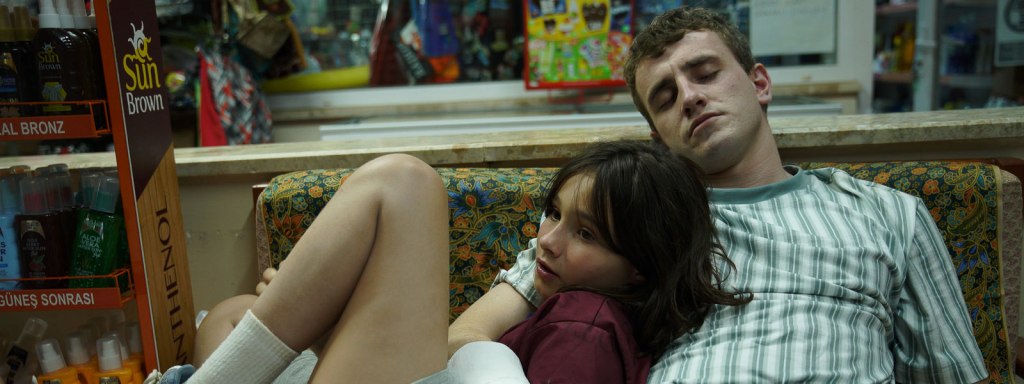
A gorgeous film about age, parenthood, and mental health that has such a warm and caring heart, it allows its heavy moments and ideas to linger with the audience.

Aftersun is a debut so assured, so confidently written and directed by Charlotte Wells you will be scrambling to discover her short film work. The film is an achingly intimate portrait of a young father on holiday with his 11-year-old daughter, played touchingly by Paul Mescal and Frankie Corio.

It will be hard to find a more affecting film this year, one so beautifully written you can’t help but see yourself in both characters. I both dread and can’t wait to return to the glow of Aftersun.

Rating: 4 out of 5.
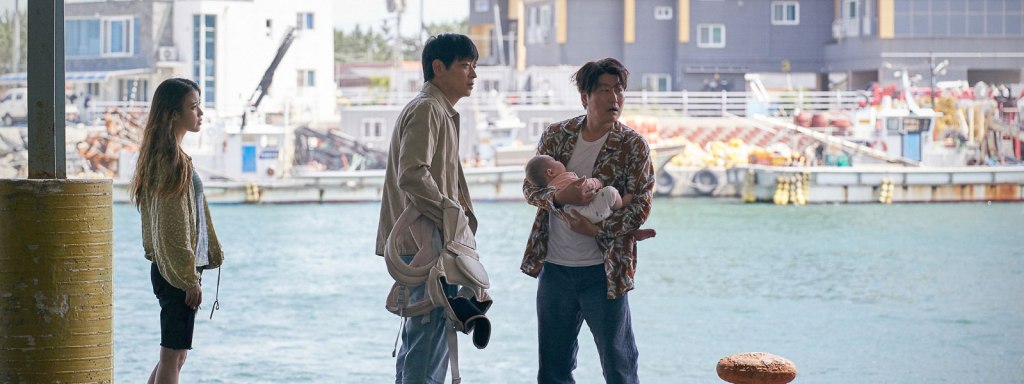
Broker (Hirokazu Koreeda) 2022:

In contention for best film of the festival, Broker is a deeply complicated but always empathetic drama from a true modern master. Hirokazu Koreeda’s films have a certain sticky quality, maturing in your mind long after the credits roll. His films will always affect you emotionally, but their true power is the depths he is able to mine from a collection of characters.

Broker, leaning into the more Korean style of cinema, is more forceful and plot-driven in its storytelling than Koreeda’s other films, but is more successful than his previous non-Japanese film, The Truth (2019).

The film is quite astonishing and deeply felt, with perhaps the only false note being its loud, heavy-handed moments. These moments are further leaned on by quite an obtrusive and manipulative score by Jung Jae-il, especially by Koreeda standards, who usually allows emotions to develop more naturally in his films.

Thank you for being born. 

Rating: 4.5 out of 5.
Decision to Leave (Park Chan-Wook) 2022:

A deeply sensual romance under the guise of a quirky police mystery. Park Chan-Wook has always had a keen understanding of his audiences, usually to an extreme effect like in Oldboy (2003) and The Handmaiden (2016). 

The film requires a rewatch as the pieces all work individually but I’m unsure as to their cohesion as the film rounds out into a melodrama. The two lead performances are complicated and layered with conflict, making the film engaging but hard to latch onto as a whole.

Rating: 4 out of 5.
Dual (Riley Stearns) 2022:

Dual (2022) is a vacuum-sealed dry comedy that owes a lot to Yorgos Lanthimos. Riley Stearns’ idiosyncratic comedic style burst onto the scene with the deeply funny film The Art of Self-Defense (2019), thanks in large part to the terrific performances by Jesse Eisenberg, Imogen Poots, and Alessandro Nivola. Like Lanthimos, it is clear actors get a certain excitement from working with his dialogue, but not all are suitable for it. It’s unclear if Dual’s lead Karen Gillan or its uber-dry dialogue lets down this film in contrast to his previous work, but it is certain to be missing a key element.

That being said, Dual is still deeply funny in places, in particular the doctor’s visits which feel the most inappropriately appropriate locale for Stearns’ dialogue. What is largely absent in the dialogue and writing as a whole, however, is any semblance of humanity and life. With this style of upfront, dry comedy writing, you lose the ability to play between the lines, as everything is pitched straight down the middle to the viewer.

Stearns has achieved success through his idiosyncratic writing style, a mountaintop many writers never reach. Now it’s time for him to seek to expand on it, engaging with his audiences more emotionally, something which would make for a pretty special film.

Rating: 3 out of 5.
Emily the Criminal (John Patton Ford) 2022:
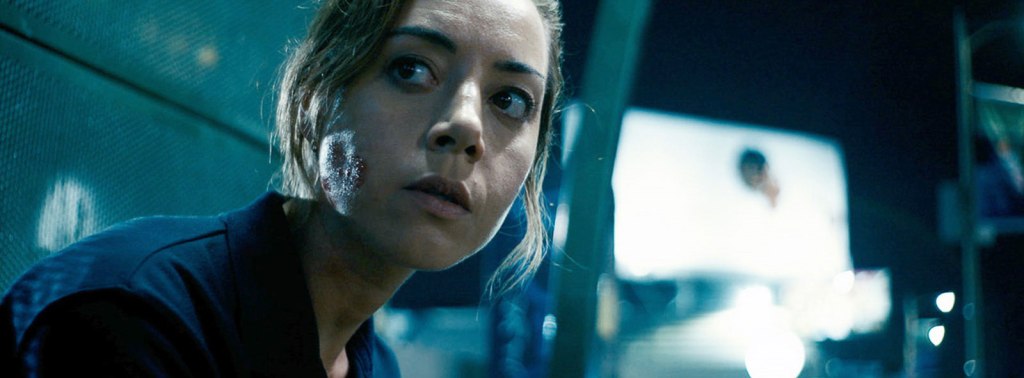
A solid crime drama with a pointed look at the economic lives of millennials, anchored by a truly great dramatic performance by Aubrey Plaza. Emily the Criminal (2022) works wonderfully as a cascading waterfall of small, utterly reasonable decisions until they come crashing down in its final act.

The film is a great debut by John Patton Ford that is certain to spark hopefully a long and interesting career. Ford’s script is the film’s highlight, especially in its ability to connect the criminal world of the film with the economic reality too many millennials find themselves trapped within.

Even though some of the decisions made in its final act undercut a lot of the messaging and themes, it is still wildly entertaining and painfully relatable, making it a deeply worthwhile watch.

Rating: 3.5 out of 5.
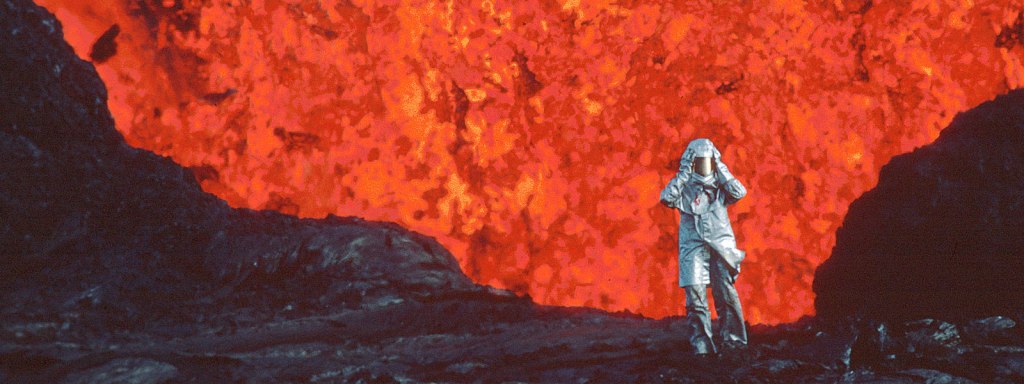
Fire of Love (Sara Dosa) 2022:

A charming, playful documentary about French volcanologist couple Katia and Maurice Krafft. Their work is highly specific but their passion is relatable and life-affirming. The film is a wonderful companion piece to the Jacques Cousteau documentary, Becoming Cousteau (2021), a clear inspiration to the Krafft’s, even down to the iconic red beanie.

The voiceover by filmmaker Miranda July is sweet and feels deeply entwined with the style of Sara Dosa’s documentary, allowing the film to work both emotionally and narratively.

A truly affecting moment was the shift from watching the couple evolve their focus from a totally self-absorbed drive for witnessing and studying volcanoes, to using their knowledge and relentless drive to protect the people living near dangerous volcanoes.

Rating: 3.5 out of 5.
Marcel the Shell with Shoes On (Dean Fleischer-Camp) 2021:
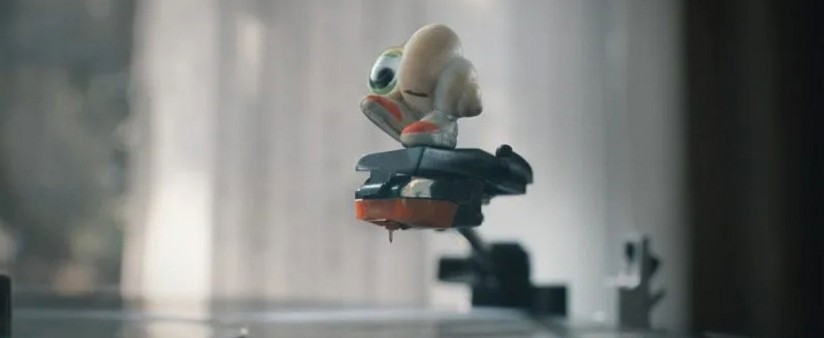
A joyful, all-ages film that was a perfect note of contrast to the festival’s more dramatic highlights, Marcel the Shell with Shoes On (2021) will win over even the more serious audiences. Based on a viral video series that is cleverly woven into the feature film’s narrative, Marcel follows an anthropomorphic shell named Marcel and an amateur documentarian (Fleischer-Camp), who has discovered the shell while staying at an Airbnb.

The film somehow never tips over into pure saccharin which is impressive given its story, which is a credit to the writing and the performances of Jenny Slate and Fleischer-Camp. It’s impossible to not get swept up in Marcel’s journey to find his family, but you may be surprised by how affected you will be by its simple story.

Rating: 4 out of 5.
Meet Me in the Bathroom (Will Lovelace, Dylan Southern) 2022:

Based on Lizzie Goodman’s totemic book of the same name, Meet Me in the Bathroom tracks the rise of the 2000s New York rock movement after many years in the wilderness, told through the words and lives of The Strokes, Yeah Yeah Yeahs, LCD Soundsystem, and many other important figures.

A deeply complicated time period to capture as a documentary, with the looming figure of 9/11 across so much of the music that came from the scene. It’s impossible for this sobering moment to not emanate outward into the rest of the film, even when we are witnessing rock stars being born.

It’s of course going to feel sparse in comparison to the 800-page oral history time that is Lizzie Goodman’s book, but it could’ve felt more focused. The approach is scattershot and without a propulsive narrative, something that is commonly absent in most documentaries but is what separates the true greats.

Lovelace and Southern’s great achievement is in the LCD Soundsystem’s Last Waltz-esque, one-last show documentary Shut Up and Play the Hits (2012), a monument to the power of access in nonfiction filmmaking. The film also indulges in copious amounts of self-mythologising (something they allow James Murphy to do again here) but is vindicated at the conclusion of the film as we become a Murphy disciple inside a sold-out Madison Square Garden crowd.

Rating: 2.5 out of 5.
Moonage Daydream (Brett Morgen) 2022:
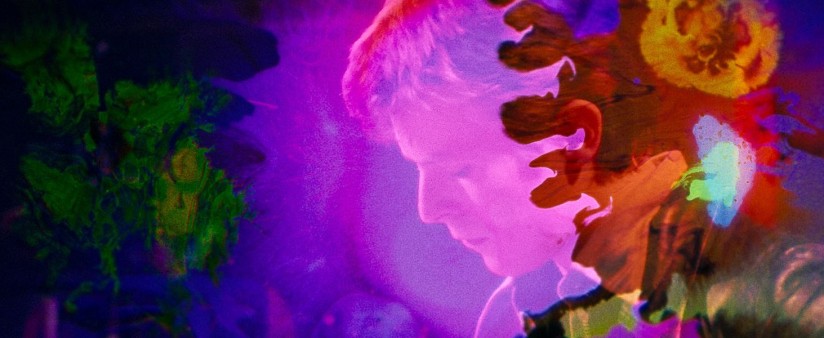
Filmmaker Brett Morgen, known for his wonderful 2015 documentary, Cobain: A Montage of Heck, declared this an experience about Bowie, not a biography of David Jones, and he truly delivered on this promise. Moonage Daydream (2022) is a deeply arresting piece of nonfiction cinema that operates as a mood piece that will be put up next to the very best in the genre.

The film weaponises its breathless propulsion in sly and interesting ways that will sneak up on you emotionally, much like Bowie’s very best work.

It takes time to show its form to you, but once it does its effect is moving and profound. Morgen found something deeply relatable in his pursuit of capturing the figure of Bowie on film, unveiling a beautiful portrait of isolation for an artist that created community, showing us an image of the chameleonic legend that you won’t soon forget.

Rating: 4.5 out of 5.
Neptune Frost (Anisia Uzeyman & Saul Williams) 2021:

Recipient of the MIFF Bright Horizons award, Neptune Frost (2021) is a gorgeously experimental afro-futurist musical that is never short on ideas.

The heart of the story is of revolution, with a character going through their own personal revolution sparking a larger revolution in others through their connection to both land and technology. Too often technology-focused sci-fi is based on fear, not on what is possible through it. There is beauty in Uzeyman and William’s use of technology that makes the film instantly unique and fascinating. 

Feels close to the films of Apichatpong Weerasethakul, focusing on a spiritual journey over a traditional narrative. This style is in stark contrast to the musical moments of the film, which play out as wondrous set pieces that create contemplative valleys afterwards. This wildly inventive approach to the film works more often than it doesn’t, toeing a nearly impossible line with confidence and style. 

You will not find another film like Neptune Frost, with the thematic density of the best science fiction stories, surrounded by wildly inventive musical set pieces that will be burned into your mind.

Rating: 4 out of 5.
Triangle of Sadness (Ruben Ostlund) 2022:
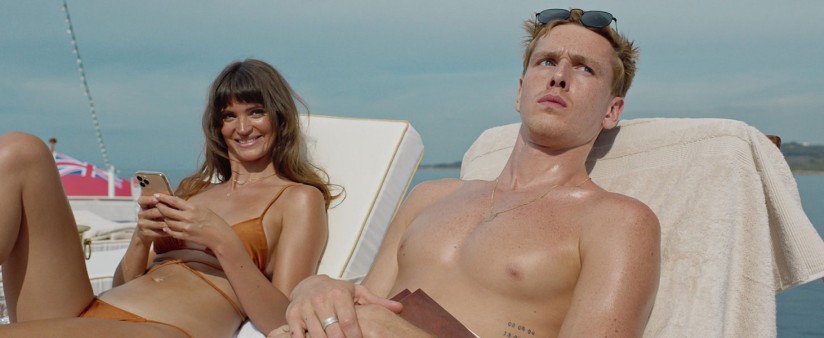
Triangle of Sadness (2022) is so arch you fear it will snap in half. Outrageous and offbeat with some truly theatre-rupturing moments, with the climactic dinner scene feeling closer to a disaster movie than the dinner sequence in The Square (2017). Unfortunately, the film is terribly bloated. This wouldn’t be as big an issue if Ostlund had put any humanity into his film. This cheapens any impact of the outrageous moments, as well as the satirical ones. 

The middle chapter is the highlight of the film, which will answer the question, “What if a Jackass skit was shot well enough to win a Palme d’Or?” 

What usually holds Ostlund’s wild scripts together is the tremendous performances of its main cast (Claes Bang in The Square, Lisa Loven Kongsli and Johannes Kuhnke in Force Majeure), which feels absent in Triangle of Sadness. His scripts are difficult to instil emotion and humanity into, but Bang, Kongsli and Kuhnke have in the past been able to achieve it, leading to those films’ great success.

Ostlund was definitely striving for a social satire in the vein of the legendary Luis Buñuel (1972’s The Discreet Charm of the Bourgeoisie) but instead felt closer to Adam McKay. The ideas of this satire are quite murky and messy, but rarely in an endearing or interesting way. 

Rating: 3 out of 5.
Saloum (Jean Luc Herbulot) 2021:

The surprise hit of the festival so far, Saloum (2021) is a film destined for cult status. A kinetic western-horror genre mashup that leaves you wanting so much more, something I pray Shudder also realises.

The story follows three mercenaries, transporting a Mexican cartel member across Africa whose plane runs out of gas over Senegal and must stay at a local village. The film is full of unique characters and is told with such style and a deft hand you won’t even notice the more fantastical moments until Herbulot wants you to focus on them.

Rating: 3.5 out of 5.
Return to Seoul (Davy Chou) 2022:

A unique mix of Korean and French cinema styles allow Return to Seoul (2022) to always feel fresh and new.

The story focuses on French-Korean 20-something Freddie (Park Ji-Min), a complicated and compelling character that elicits empathy and frustration in equal measure. She has returned to Seoul to find her birth parents, having been adopted by a french couple as a baby. Freddie has seemingly taken this trip on a whim, and as the film continues her self-destructive tendencies that seem at first like a quirk in her character, quickly form a heartbreakingly predictable pattern.

The film loses its momentum and the audience as it transitions into short, time-jumping vignettes in its final third. Not that each individual scene isn’t compelling and breathes new life into Freddie’s story, but the decision comes so late in the film’s runtime that it catches the viewer off guard, and not for greater results. The important connective tissue in this final act is unfortunately thin and leaves you mixed on a film that was rather special up until this point.

Rating: 3 out of 5.
Three Thousand Years of Longing (George Miller) 2022:

A real ‘one for me’ film for George Miller, Three Thousand Years of Longing (2022) is sure to divide audiences in ways only he can. Sandwiched between working on large-budget Mad Max franchise films, the famed Australian director has crafted a visually stunning, narratively dawdling feature that will charm and beguile audiences.

Adapted from A.S. Byatt’s collection of short stories, an important context to give the film as Miller and co-writer Augusta Gore have decided to give the film a similar structure. Leaping between casual conversations shared by narratologist Alithea (the ever off-kilter but charming Tilda Swinton) and Idris Elba’s djinn, shared in an Istanbul hotel room, and the djinn’s story of how he came to be beholden to her.

The film works in its visually dense production design which is Miller’s cinematic superpower, but never really excels in its more meandering storytelling approach. It does, however, feel like exactly the sort of film that will excel several years down the road as we live longer in these stories, constantly revisiting the couple in Istanbul for just one more story.

Rating: 3.5 out of 5.
Sweet As (Jub Clerc) 2022:

A charming, coming-of-age teen drama that feels beautifully lived in and tinged with autobiographical detail. Sweet As (2022) feels both deeply Australian but also universal, something that could allow it to really break through overseas which is incredibly exciting.

The film is gorgeously shot by the terrific Australian cinematographer Katie Milwright, allowing the natural contrast between the mining town to billow out through the Kimberley region that could easily moonlight as a travel ad for the Northern Territory.

There are rough edges around Sweet As, as most debuts do, but the emotional maturity of Clerc is what shines through in every scene. She has a keen sense and care for her characters that make it impossible not to fall in love with them.

Rating: 3 out of 5.
Something in the Dirt (Aaron Moorhead, Justin Benson) 2022:
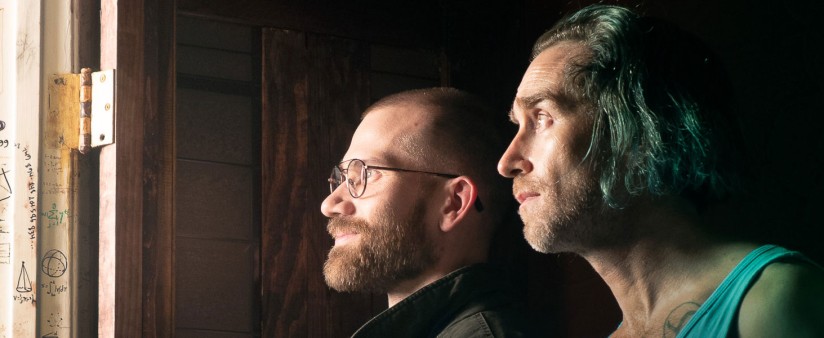
There’s nothing like a low-budget, high-concept sci-fi on a late night at a film festival, especially by a couple of cult film legends in Moorhead & Benson. 

Something in the Dirt (2022) operates as a mock documentary, something that may feel like a tired narrative framing for a low-budget indie, but the directing pair makes the film seem boundless.

There is a certain awe that comes when a film feels like it could’ve come straight out of film school, but with all of the confidence of a veteran.

Rating: 3 out of 5.

Hit the Road is a Road Trip Worth Savouring 

Rating: 4 out of 5.

Road trip comedies have always been an effective vehicle for cinema, especially for low-budget indie filmmaking. Forcing a collection of people, whether it be friends, family, or strangers, into a contained space for long stretches of time allows comedy and drama to play out in unique ways, assuming the dialogue is airtight. 

A gorgeously written, confident, and assured debut by the son of famed Iranian auteur Jafar Panahi, Hit the Road (2021), wipes away any thought of nepotism in its opening frames. The film feels deeply personal to the story of the Panahi family but is never weighed down by their history. This is due to the film being a comedy-focused film used to buoy not just the scenes, but also the characters who are using humour to hold the serious nature of their trip at bay.

What stands out immediately with the film is the beautifully realistic direction of a family, all with specific, nuanced dynamics that play out in an always engrossing comic drama. Panahi mines the relationships between all four characters to their emotional core with impressive brevity. So many debuts suffer from over-explaining plots or character motives that bog down strong scripts, something Panahi has seemingly mastered already.

Hit the Road operates with such economical storytelling through its extraordinary collection of performances, with a true firecracker from Rayan Sarlak as the 9-year-old brother. The way the family interact with him is a constant source of humour, with a late scene suggesting that the father gets up earlier and earlier each morning to get some time away from his manic energy. 

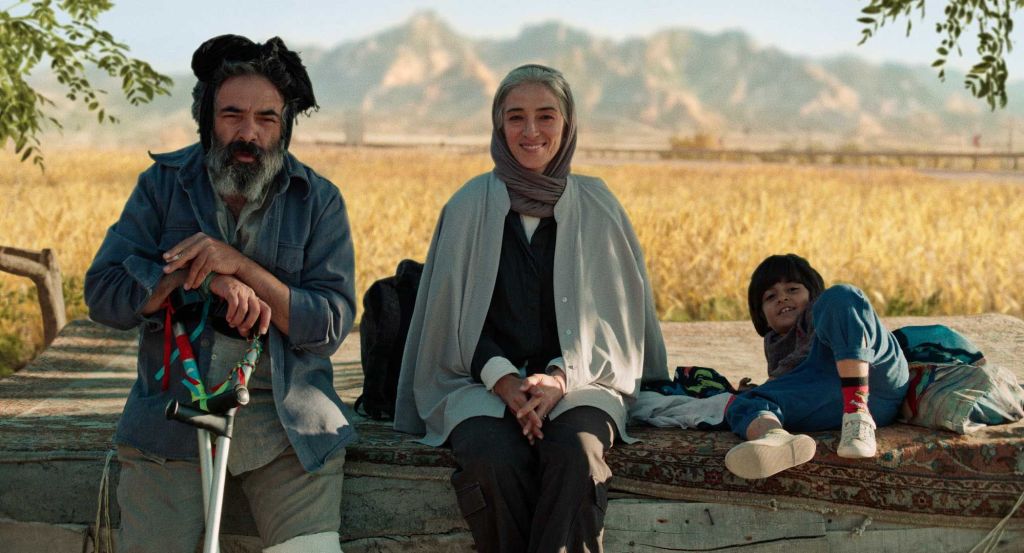
Mohammad Hassan Madjooni, Pantea Panahiha, and Rayan Sarlak in Hit the Road. Screening provided by Rialto Distribution.

Compositionally, the film is gorgeous and begs to be seen on the big screen. Panahi and cinematographer Amin Jafari capture both the sprawling vistas and confined car sequences with a considered lens. They allow the emotion and tension to play out in contrast in these two locations; the vistas allow the weather and distance to exude emotion, while the confined interiors of the car force us into the family trip and all of its complications.

There is an engrossing amount of ambiguity as to the situation of the family, something that is only amplified by their hesitancy to talk about it at all that is true to their dynamic. The comedy is at the forefront of the film, with Sarlak’s performance as its engine. Even in scenes where he isn’t the focus, his presence is never absent.

Panahi plays not just with what’s seen and not seen in terms of mise en scene, but also with the edges of the family’s story. There is a confidence in the piecemealing out of the family’s backstory, knowing that the strong dialogue and performances will keep the audience engaged instead of focusing purely on the mystery of their trip.

But that mystery is what heightens so many scenes. It works as the riveting narrative pull, running through the entire film, asking us why. Why is this family on a road trip? Why is the mother so concerned as to bury her 9-year-old son’s phone on the side of the road? Why is the driver so crippled with apparent anxiety as to barely speak in the first act? Panahi stretches these questions out, allowing us to peer into the window of this family’s lives and our imagination to run wild with ideas, all within the confines of their small car.

Hit the Road is one of the year’s best films, and a powerful debut to remember. It works as a political thriller, road trip comedy, and family drama all at once, with a keen eye for cinematic storytelling. With a standout cast that is sure to make a star out of Sarlak, this is a trip you don’t want to miss.

Hit the Road is in select cinemas now.

MIFF 22: Lingui, the Sacred Bonds is a Beautiful Portrait of Resilience

Rating: 4 out of 5.

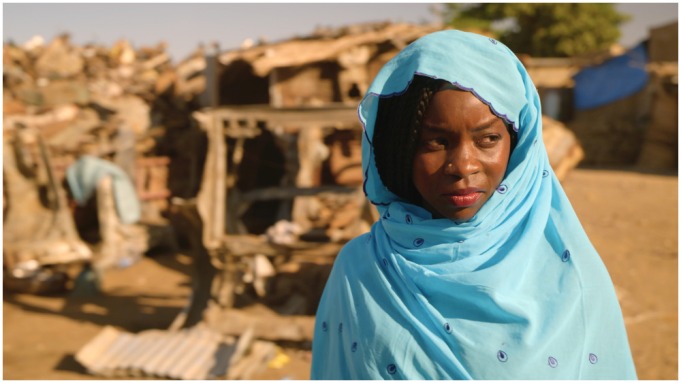
After making a festival run in 2021, including being selected as the Chadian entry for last year’s Academy Awards, Mahamat-Saleh Haroun’s engrossing and often stunning family drama Lingui, the Sacred Bonds (2021) arrives at MIFF with acclaim. The film is slight, coming in at just 87 minutes, but is always deeply engaging.

We begin with a dedicated Amina (Achouackh Abakar Souleymane), a single mother crafting intricate stoves out of the wiring in car tyres to support herself and her 15-year-old daughter Maria (Rihane Khalil Alio) in the Chadian city of N’Djamena. The sequence is shot beautifully, as most scenes are by cinematographer Mathieu Giombini, focusing on Amina’s breathing and her drive to support her family. 

What Amina does not yet know is she will have to do much more to support Maria, who she is soon to learn is pregnant, and wants an abortion. We learn of this with Amina through a meeting with Maria’s school principal, who informs her she has been expelled because of her pregnancy, stating that it’s “bad for our image.” This explanation is heartbreaking to hear, especially from a woman similar in age to Amina.

What follows is a gripping confrontation between mother and daughter in one of the most extraordinary framed and blocked sequences of the film that is truly stunning. There is a certain grace Haroun is deliberately pairing with the harshness of this confrontation and circumstance that is where the film truly clicks into place and becomes quite special.

Achouackh Abakar Souleymane in Lingui, the Sacred Bonds. Screening provided by Rialto Distribution.

I hesitate to call this an abortion drama, as the film is much more focused on the mother-daughter and the bonds they hold as the navigate their city, religion, and their perception. While similar subject matter has been shown with a clinical harshness to harness the stark reality in films like Never, Rarely, Sometimes, Always (2020) and 4 Months, 3 Weeks and 2 Days (2007), Haroun instead centres this story on the community of women that have to support one another in this city. 

The beauty in the film comes from seeing these two women grow in front of our eyes, a remarkable achievement in character work in such a slender film. The pair of performances from Souleymane and Alio are quite special. They are able to embody the quiet, seething rage necessary, as well as the desperation the story requires. Many of these stories can be guilty of wallowing in despair and misery of the characters’ situation, something Haroun is able to navigate around remarkably. Lingui is always focused on its namesake, the bonds between the women of the film, rather than the situation they are in.

There is a remarkable level of restraint that only heightens the dramatic tension scene to scene. Haroun avoids any clean outs in the story, so even with its slender frame, Lingui never feels predictable or dishonest. It is slow to unfold, but once it does you will be struck by its elegance and beauty. The performances and frame widen and lighten that makes the restrained opening worthwhile. If the beginning of the film is a tight series of hyperventilating inhales, the final act feels more like a relieving exhale.

There is a maternal warmth that emanates throughout the film’s female characters, illuminating the necessary bonds these women have with each other in the city that is truly powerful. Depictions of this are so fleeting in film, especially by a male filmmaker, that makes the film so captivating and fresh. Lingui, the Sacred Bonds move slowly on its course, but once the end of the tunnel is in sight, you will be astounded by how much it affects you.

Lingui, the Sacred Bonds will be in select theatres till August 21st and on MIFF Play from August 12th to 28th.

MIFF 22: Rewind & Play is a Must-See for Jazz Fans

Rating: 3.5 out of 5.

Taking place at the conclusion of Jazz titan Thelonious Monk’s European tour in 1969 on the French TV show Jazz Portrait, Rewind and Play (2022) gives us a window into how he was treated by even those that believed they were celebrating his genius. French-Senegalese filmmaker Alain Gomis uncovered this footage while working on a fictional, mosaic film based on the legendary musician. This is the filmmaker’s first documentary feature and is a remarkably selfless act to show this footage of unflinching honesty to a broader audience. 

Similar in style to Peter Jackson’s miracle of a Beatles documentary Get Back (2021), Rewind and Play gives us a window into one of Jazz’s biggest figures playing his instrument to what is ostensibly no audience. That alone is worth the price of admission. 

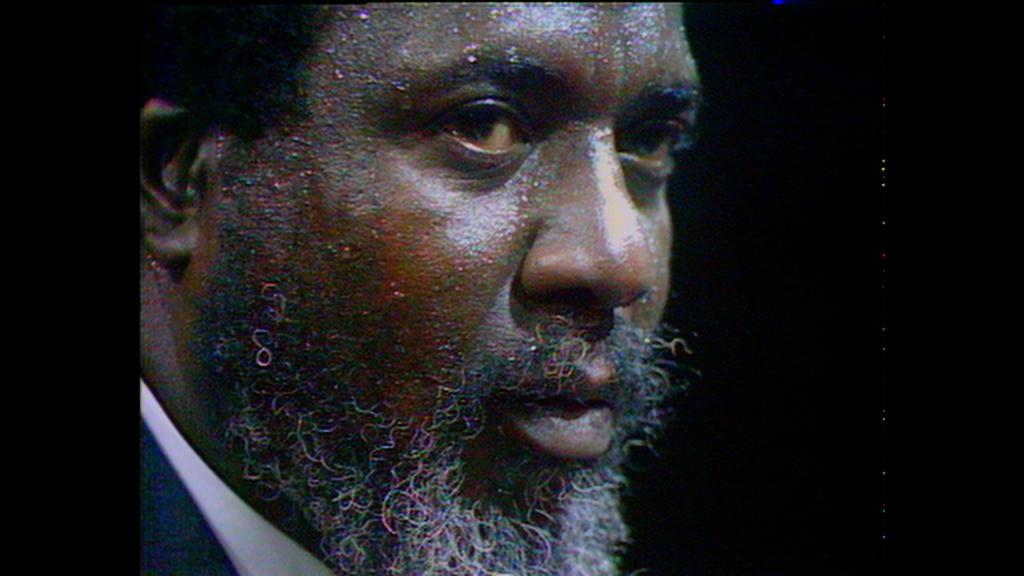
Right at the beginning of the film, you are struck by Monk, hunched and dripping with sweat. His exhausted breathing slowly overwhelms the rest of the audio, drowning out the host. In a film with a strong restraint in editorialisation of footage, Gomis from the first minute of screen time shows that he wants us to feel the harsh lights and environment the legendary pianist finds himself in. Gomis, throughout the documentary, uses Monk’s words and, more importantly, his piano, to drown out the words of those around him.

As soon as the host Henri Renaud begins to interview Monk, the callous and horrible treatment we are soon to endure rears its ugly head. When asked about his first time in France, Monk immediately mentions how he was ossified, something the host doesn’t want to be included in the show, as “it’s not nice”. The statement is also used by Gomis in the film’s opening credits.

Thelonious Monk in Rewind & Play. Screening provided by Andolfi Productions

Monk, like many musicians, communicates through his instrument. The language barrier is larger than the English and French divide here. He is clearly uncomfortable discussing his life, especially in front of a piano that he would rather be playing. Renaud is constantly interjecting his own experiences with Monk throughout the show, while also lazily translating what the pianist is saying back into French, usually in service of himself. The lack of respect and even acknowledgement of Monk’s playing is beyond frustrating, something we see draped across his face constantly.

The sadness from the documentary comes from Monk’s constant civility, coupled with an inability, or lack of desire, to combat with the host and crew on this french late night show. This is not James Baldwin on the couch of a French talk show trading barbs, Monk can only talk his frustrations out on the Steinway in front of him.

The repetition and rigidness of the talk show format is such an antithesis to the early jazz style, which centred on free-flowing, emotive pieces that had no desire to be replicated. The power of the Blue Note jazz movement came from the spontaneous outbursts in creative musicality that can be shared with an audience.

To have one of Jazz’s preeminent figures reduced to essentially a hotel lobby pianist is truly heartbreaking. And it’s not like these tv producers have an issue with the musician. They clearly adore Monk’s music and place in modern Jazz, but they cannot help themselves with their stereotypical ideas about him.

Gomis ironically closes the film with a cross-cutting sequence of Monk playing as the host describes a story of seeing the musician in a Harlem club, playing during a knife fight. The host asked Monk after the club shut down “Thelonious, how come you had the nerve to go on playing?” To which Monk replied, “it was no big deal, there was no need to stop”. This quote perfectly encapsulates the legendary musician’s relationship with music and the chaos of the world around him, highlighting the host’s lack of understanding about the man he was dealing with, then and now.

Rewind & Play will be in select theatres from August 17th to 21st and on MIFF Play from August 12th.

MIFF 22: Millie Lies Low is a Propulsive Debut to Remember

Rating: 3 out of 5.

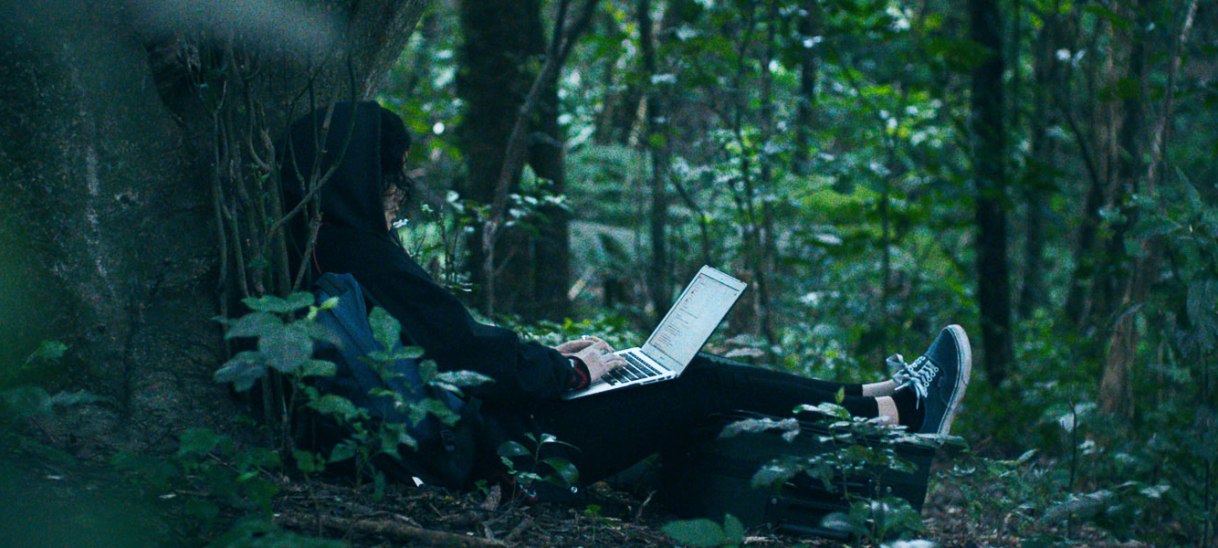
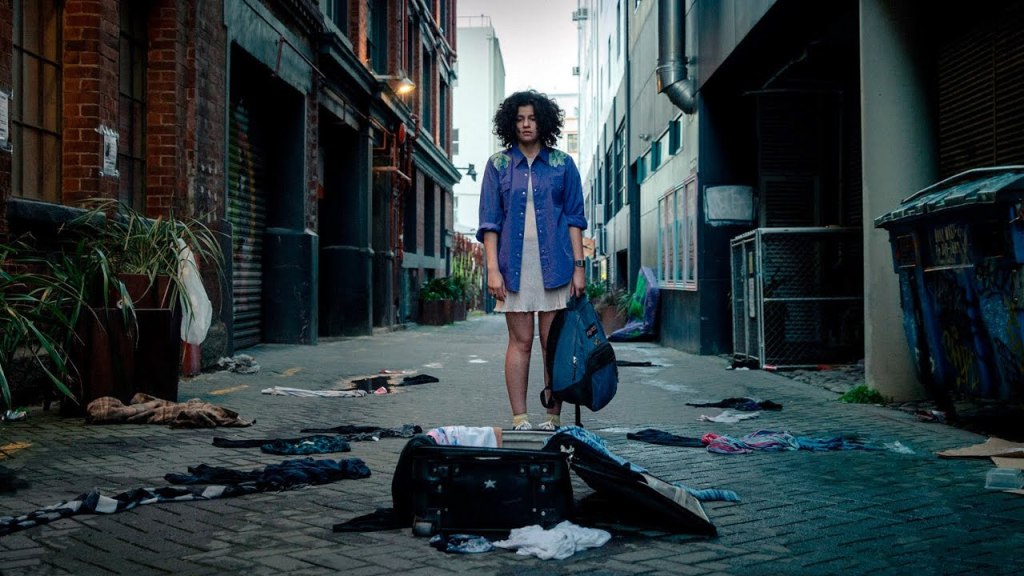
What would you do if a simple lie could get you out of an uncomfortable situation with the people you love? That is the central dilemma in this terrific debut feature out of New Zealand, a deeply relatable tale of anxiety that never shies away from the hard truths its protagonist desperately trying to avoid. Confidently directed by MIFF Accelerator alum Michelle Savill, Millie Lies Low (2021) embraces its titular character’s resourcefulness and willingness to keep the narrative alive with a relentless, anxiety-inducing farce that will break your heart.

The film tracks architecture student Millie’s web of lies and schemes as a result of her leaving the New York-bound plane on the tarmac due to a panic attack. Instead of returning home to organise a new flight, the anxious Millie (Ana Scotney) decides to create a facade through Zoom and Instagram to her friends and family that she has indeed arrived in the Big Apple.

The film is acted wonderfully and with real compassion by the whole ensemble, with Scotney a real breakout as Millie. A truly compelling lead that buoys the entire story. Scotney fills every inch of the frame with her manic, cunning, and deeply human presentation of an anxiety-filled, self-destructive young person who is impossible not to relate to on some level. There is a level of care and empathy the film takes in showing Millie digging herself further into this hole.

Co-written by Savill and Eli Kent, the film has real compassion for all its characters that allows the film to never devolve into gawking at the cringeworthy situations. All of the supporting characters are just that, true supporters who only want the best for Millie.

Much in the mould of modern anxiety-cinema staples like Good Time (2017) and Eighth Grade (2018), Millie Lies Low propels its narrative with reckless abandon. Before you can even scream out to tell Millie to release herself from this prison she has made for herself, she is already being flung into the next desperate attempt to keep the facade going. 

The narrative of Millie’s life is told with heartbreaking honesty, never giving us more than we need to work with scene to scene. Millie is a survivor who is capable of making quick decisions to continue on her path, even if they are detrimental to her in the long run. 

There is a terrific sequence where Millie is walking through her friend’s party, the night she is meant to have landed in New York, with a poncho and motorbike helmet on. She is able to overhear her friends talking about her, filling her with more anxiety and pain. Millie is able to move through the party like a phantom, a ghost peering into the lives of her friends without their knowledge. This sequence gives us a window into the other characters of the film while still allowing Scotney to maintain a literal presence on screen for the entire film’s runtime. 

Savill and cinematographer Andrew Stroud shoot Wellington in a truly cinematic way, with a clear inspiration stemming from the best of indie New York cinema. The New Zealand capital is captured by people who clearly adore the city, even within a narrative as heartbreaking as this one.

Ana Scotney as Millie in Millie Lies Low. Screening provided by Rialto Distribution.

Unfortunately, the final act felt quite unbalanced in comparison to the energy of the first hour as the many spinning plates Savill and Kent have been managing begin to slow, with the narrative beginning to lean on tropes and flimsy choices that are glaring in contrast to the impressive tightness of its relentless opening.

These sorts of anxiety-inducing, propulsive solo pieces work best with a deeply subjective camera, where any moment without its lead can suck the energy out of the space. Thankfully, Millie Lies Low understands this and maintains Scotney’s white-knuckled grip on her audience for the entire runtime. We are never able to release ourselves from her story, just as she is never able to remove us from witnessing it.

Millie Lies Low will be in select theatres from November 17th.

Thor: Love and Thunder Brings Both in Equal Measure

Rating: 3.5 out of 5.

Before Taika Waititi and Chris Hemsworth collaborated on the wonderful Thor: Ragnarok (2017), no one would have foreseen the Marvel character entering its 11th year of films, with the possibility of many more, but here we are. The God of Thunder returns to the Marvel franchise with possibly the best comedy of the year in Thor: Love and Thunder (2022), the 4th instalment in a character that Waititi and Chris Hemsworth are able to bring the best out of consistently.

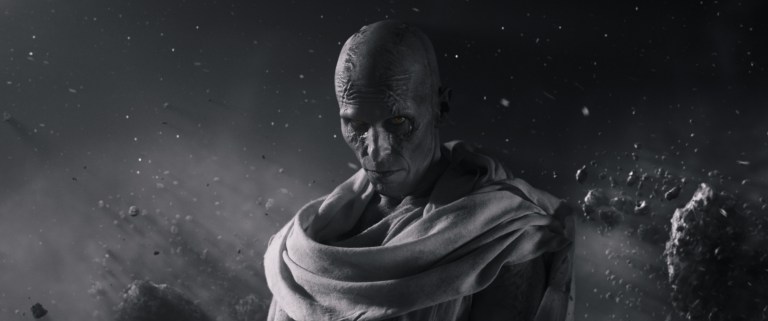
This time around, Natalie Portman’s Jane Foster returns to breathe new life into the franchise in a wonderfully charming performance. Her return feels like a notable response to the criticisms of the previous film, Thor: Ragnarok, which lacked a true emotional throughline. Adding to the emotional weight of the film is the inclusion of Christian Bale as Gorr the God Butcher, who is able to toe the line of outrageous superhero villain with real pathos that made Josh Brolin’s Thanos such a hit with audiences.

There are a suite of comedic bits throughout the film that place you firmly within the returning vibe of Waititi’s previous Marvel film, feeling closer in parts to his earliest work with Flight of the Conchords and What We Do in the Shadows (2014) —the distant girlfriend-as-weapon bit feels taken straight from the show— a distinctly comedic tone that feels oftentimes removed from the Marvel house style. The film revolves more around its comedy set-pieces than its action ones, a refreshing shift for the franchise that has often had lacking action moments. Love and Thunder is a comedy-focused superhero film, with Waititi clearly given carte blanche to make the silliest and most enjoyable film possible. 

The more recent Marvel films, especially Sam Raimi’s Doctor Strange in the Multiverse of Madness (2022), have such a burden of being more than just a film about their hero that it drags down the emotional and narrative weight of the individual films. A key reason Love and Thunder works is due to its breezy and fresh narrative that flows in the absence of these burdens, allowing it to thrive in a similar way the first phase of Marvel properties do. Unfortunately, this appears to be a rarity in this newest phase of Marvel.

Chris Hemsworth as Thor in Marvel Studios’ THOR: LOVE AND THUNDER. Photo by Jasin Boland. ©Marvel Studios 2022. All Rights Reserved.

What really allows Love and Thunder to excel is the level of filmmaking craft top to bottom throughout. Chief Mandolorian cinematographer Barry Idoine joins the franchise, which is a major step up for him after working many years as a camera operator for the upper echelon of filmmakers in the industry including Paul Thomas Anderson and Steven Soderbergh. Love and Thunder is constantly seeking to expand the visual dynamism of the Marvel style that has become well-trodden and allows it to feel weightless in comparison to other recent Marvel entries. 

Idoine and Waititi use the tone of the Thor scenes and the audience’s expectations for the film as a compelling counterpoint to the scenes with Bale’s Gorr, shot in borderline german expressionist shadows, mostly without a score or soundtrack, with one striking sequence taking place in a world with no colour. Being able to display a superhero story through tone and colour is an impressive feat the film is able to achieve and is the sort of craft audiences should seek out, even in franchise blockbuster entertainment.

Christian Bale as Gorr in Marvel Studios’ THOR: LOVE AND THUNDER. Photo courtesy of Marvel Studios. ©Marvel Studios 2022. All Rights Reserved.

Sadly for audiences, the film is also potentially Taika’s final involvement with Marvel, moving onto a yet unnamed Star Wars film, as well as being in production on a live-action adaptation to the iconic 80’s anime film Akira (1988). Waititi is so comfortably able to imprint his writing and filmmaking style onto these super-budgeted films that are so beyond other filmmakers in the medium of the franchise blockbuster. It was great to see him branch out into a film like Jojo Rabbit (2019), but what makes him a truly singular talent is his ability to scale up without ever diminishing the product or undercutting the story in any way.

Surprisingly, after winning his Oscar for Jojo Rabbit, Waititi has operated mainly in the television space, writing, acting, and producing in fantastic series’ What We Do in the Shadows, Reservation Dogs (one of the best new shows of last year), and Our Flag Means Death. He is one of the brightest lights in the industry with one of the most fascinating careers to follow, becoming one of the most must-see filmmakers working.

Love and Thunder is a real throwback to older Marvel sequels like Iron Man 3 (2013), (a film I will defend as possibly the franchise’s best), where a writer-director auteur is allowed to throw their weight around inside a mega-franchise structure without breaking any load-bearing walls. The film thrives in its eccentricities and the ensemble’s commitment to Waititi’s tone, making it a great watch that feels more of an established, stand-alone piece, rather than a stepping stone to something larger.

Thor: Love and Thunder is is currently screening in cinemas nationwide.

Hustle is an Impressively Real NBA Drama

Rating: 3 out of 5.

The history of basketball and the NBA in cinema is long and interesting, going from Julius Erving (who also cameos in Hustle) in The Fish that Saved Pittsburgh (1979), Kareem Abdul-Jabbar in Flying High! (1980), and Michael Jordan in Space Jam (1996), to more legitimate performances from players like Ray Allen in Spike Lee’s iconic He Got Game (1998), and Kevin Garnett in Uncut Gems (2019). All these films use their NBA stars to bolster the credibility of the basketball film (sans Flying High!), but very rarely has a movie been made directly about the NBA. Enter basketball super fan and walking green light Adam Sandler.

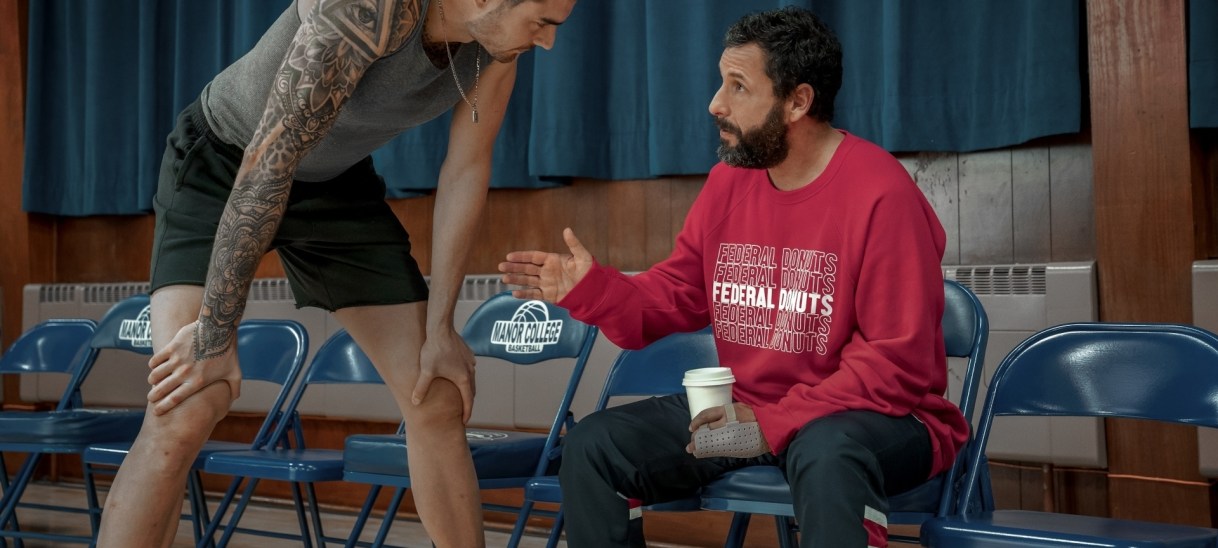
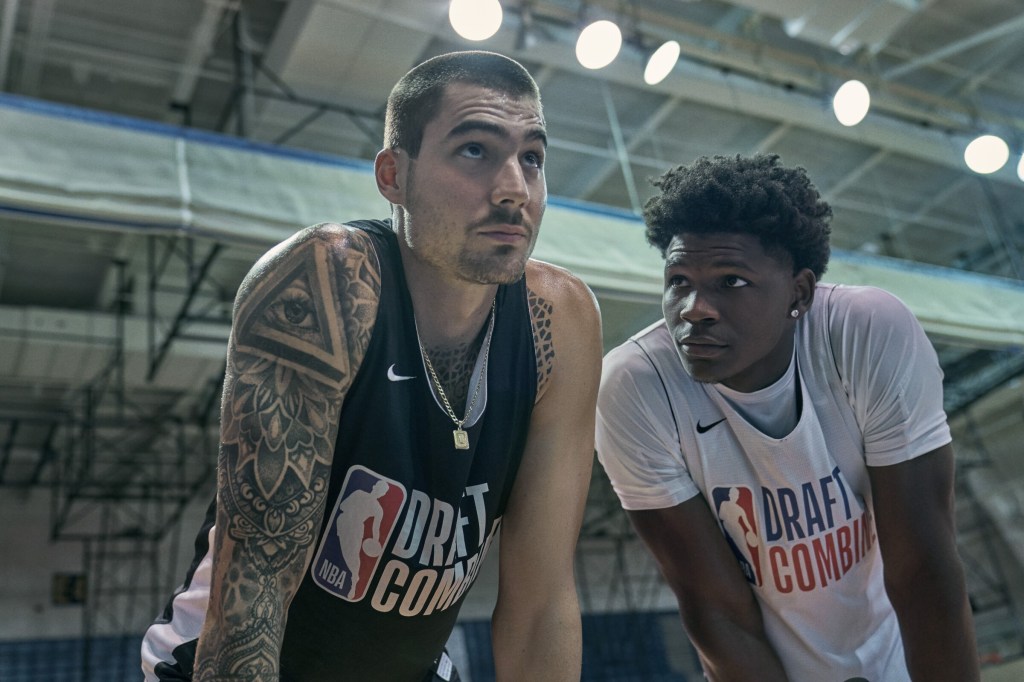
Sandler is a notorious basketball obsessive – famously setting up a net at most of his productions – with even NBA legends vouching for his skill on the court, so it’s no surprise to see him making a movie in this world. The film follows Sandler as ageing scout Stanley Sugerman for the Philadelphia 76ers, owned in this world by Robert Duvall’s Rex Merrick. After Rex’s death and ownership changes hands to his petulant son Vince (Ben Foster), Stan is forced to scout internationally to find a player, which he does in Bo Cruz, played by actual NBA player Juancho Hernangomez. 

The film is ultimately a paint-by-numbers inspirational underdog sports movie, closer to Rocky (1976) than The Fish that Saved Pittsburgh, but what makes the film worthwhile is the extraordinary verisimilitude of the NBA world, as well as some truly impressive basketball set pieces that tie the film together. Zagar deploys several extended training montages—a staple in any sports film—including Cruz running up steps in Philadelphia that Sandler had to point out during the sequence. The fact that even this moment is played earnestly is an example of the tone the creators are striving towards that separates it from a suite of recent films.

Juancho Hernangomez (left) and Anthony Edwards (right) in Hustle


Shot wonderfully on film, director Jeremiah Zagar mines intimate moments out of Hernangomez and his family that are as affecting as the high-octane basketball scenes, especially those between Kermit Wilts (played incredibly by NBA star Anthony Edwards) and Bo Cruz. Any fan of the NBA in recent years could tell you Edwards has exploded onto the scene as one of the best personalities in the sport, and Hustle uses his charm and confidence in a wonderful heel turn as Cruz’s rival leading into the draft.

Hustle is a modern sports film made with a high level of skill by Zagar, but it comes at an interesting moment in the genre. The modern sports film finds itself in a precarious position, with the dominance of sports documentary films and series crowding the market. On top of this, the only avenue for filmmakers to create a sports film or series in the 2020s seems to be the involvement of the athlete in question or as part of an athlete-led production company. Hustle is no different here with the involvement of LeBron James and Maverick Carter’s production company, Springhill Company involved, no doubt a key reason the film was able to achieve such a high level of NBA verisimilitude.

While not a terribly innovative or imaginative sports drama, Hustle continues Sandler’s recent run of more serious performances, growing into his later years as an actor that is choosing to work in more interesting and creative spaces. Die-hard NBA fans will lap this film up, while also having enough quality sports filmmaking moments to entertain the less sports averse.

Hustle is currently streaming on Netflix.

Everything Everywhere All at Once is a Sensory Overload

Rating: 4.5 out of 5.

So rarely will a group of people in a theatre howl with glee and terror in equal measure while watching a film, but that is the reaction that directing duo Daniel’s (Dan Kwan and Daniel Scheinert) newest feature Everything Everywhere All at Once elicits throughout its 144-minute runtime.

The film follows the Wang family, helmed by matriarch Evelyn (the legendary Michelle Yeoh), who is preparing for an audit from the IRS, full-time work in her struggling laundromat, Evelyn’s father Gong Gong (James Hong) arriving that morning from China, her husband Waymond (Ke Huy Quan) trying to give her divorce papers, and her daughter Joy (Stephanie Hsu) trying to get her mother to accept her girlfriend Becky (Tallie Medel). Everything is happening everywhere all at once for Evelyn, and this is all before the threat of the multiverse collapsing has entered their lives. Shock and extremity is the name of the game for Daniels so I won’t be spoiling any moment here as they would lessen the impact.

It would be so simple for Daniel’s to toss aside this opening act to get into the zany adventures in the centre of the film, but it is clear from the jump that the entire emotional weight is set up at the beginning and is allowed to mature over the runtime. This is what makes the great weird films like Back to the Future (1984) work for audiences, a clear goal and set of stakes for the story being told that is established in the opening 20-minutes, working as the firm ground to stand on as a hurricane of madness whirs around you for the rest of the film.

Those unfamiliar with the directing duo’s previous film Swiss Army Man (2016) will be taken aback by the pair’s slapstick and crude humour, as well as their frenetic pace between visually creative moments. Daniel’s crashed into the scene with their work in music videos – a common pathway for some of the industry’s best visual stylists (Michael Bay and David Fincher to name a few) – with the iconic Turn Down for What by DJ Snake and Lil Jon, one of the most-watched music videos ever. While it’s clear in their previous works the directing pair have filmmaking chops to spare, they achieve a greater scope and emotional weight in Everything Everywhere that matches with their visual creativity, a balancing act that is quite astounding.

Stephanie Hsu (left) as Joy, Michelle Yeoh (centre) as Evelyn, and Ke Huy Quan (right) as Waymond in Everything Everywhere All at Once

Floating along a constant stream of intertextuality, self-referentiality, and reverence to the films that paved the way to gift this film into audiences’ laps (The Matrix (1999), In The Mood for Love (2000), any Charlie Kaufman film), Everything Everywhere feels like a cinematic miracle that is at risk of breaking at any point. We’ve all made food (let’s say, a bagel) that we’ve overstuffed with nothing but things we enjoy eating, not realising until it’s too late that the meal has tipped over the edge into being inedible, or at the very least a meal spoilt by clashing ingredients. Like tastebuds, every person will respond to the film’s propulsive mania in different ways which are exciting, making the viewing experience with a packed audience all the more rewarding.

Everything Everywhere is a technical marvel of small budget filmmaking, from its mind-blowing costume and production design to its sound design and visual effects, but the real hero of the film is editor Paul Rogers. Rogers’ work here is nothing short of miraculous. Tasked with building a feverish momentum for over two hours while having each individual emotional moment land as impact-fully as each comedic or absurdist one. Rogers moulds the filmmaking duo’s creative madness into a deeply resonant and enjoyable film, not just another overly ambitious indie that feels more like a creative dare than a work of art with deep truths.

The film also wouldn’t work as well as it does without a perfect collection of onscreen talent that is all game for the absurdity being thrown at them. Whether it’s with IRS agent Jamie-Lee Curtis who is up for all manner of madness here and is having a blast, to Stephanie Hsu as Joy, who quickly becomes the emotional and narrative crux of the narrative, elevating an already entertaining film to transcendent levels. I am deeply looking forward to what else Hsu and Daniels can achieve together. 

The film works similarly to the hyper pop genre in modern music. Both Everything Everywhere and hyper pop are mining pure emotion within the heart of excess and artifice. The movement is a direct response to the nihilism and despair of the 90s and 00s with artists like Charli XCX and the PC Music label paving the way. This form of hyper-aware, hyper-stylised emotive filmmaking operates just like a Charli XCX album; bouncing around multiple ideas with youthful energy, whilst never losing its heart and emotion. It is truly thrilling to see a similar approach made in cinema.

Some may call this film exhausting, and perhaps on a different day I may agree, so I can’t guarantee how you will feel until you witness what Daniels are doing here. But, I would stress to anyone who has seen the film and felt it exhausting, please see it again as your mood at the time you see this will heavily influence what you think of it, and it is definitely worth your time.

The Everything Everywhere All at Once is in theatres now.

The Art of the Murakami Adaptation

In an age dominated by IP acquisitions in cinema, the art of the adaptation has seemingly narrowed and expanded in equal measure. Whether it’s adapting a recent YA novel series or the countless comic book blockbusters adapted from stories told in print from a half-century ago, cinema has leaned heavily on interpreting pre-existing literary works with established audiences to tell its stories. 

But the art of adaptation is not solely a monetary endeavour in modern moviemaking. There are opportunities to explore older works to uncover deeper truths in an artist to achieve newly interesting films. Two such examples are the recent critical darlings Burning (2018), and Drive My Car (2021), both based on the Murakami short stories Barn Burning and Drive My Car respectively.

Both films share many similarities; interpreting sub-50 page Murakami stories into films epic in length (148m for Burning, 179m for Drive My Car), exploring the interpersonal relationships that were only suggested within the source text, and exploring a place and time unique to their works. Lee Chang-dong shifted the story of Barn Burning from Japan to South Korea, whilst Ryûsuke Hamaguchi and co-writer Takamasa Oe shifted the story of Drive My Car from Tokyo to Hiroshima.

Exploring works of adaptation in cinema is a rewarding experience in understanding both works and creators better, and is worth comparing these two excellent films in tandem with Murakami’s short stories.

Drive My Car 

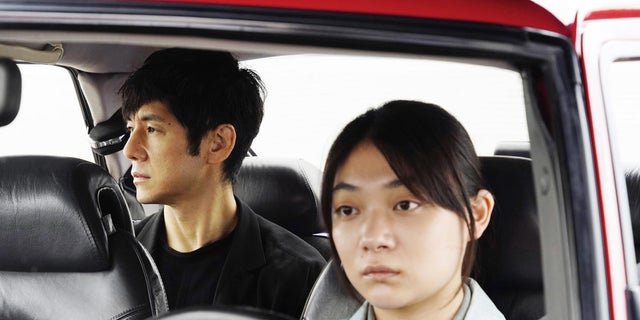
Hidetoshi Nishijima (left) and Tôko Miura in Drive My Car

“Murakami’s writing is wonderful at expressing inner emotions, and I think that’s why people want to adapt them. But it’s really difficult to re-create those inner feelings in film.” – Ryûsuke Hamaguchi

Fresh off multiple Oscar nominations including best adapted screenplay, Ryûsuke Hamaguchi’s masterpiece expands on every moment from Murakami’s short story while introducing his own fresh moments that truly thrive within the three-hour romantic drama epic.

So much is added to the story within the 40-minute prologue Hamaguchi and Oe create in the film. In literary fiction, the absence of a character is much easier to express to an audience. But in film, it is much harder for an audience to garner a relationship to a character that is only referenced. Imagine Up (2009) without its opening montage. The absence of Ellie through the rest of the film is profoundly felt by both Carl and the audience because of the impact the character had on us at the beginning of the story. Hamaguchi makes a crucial decision to further explore the intimate relationship between Yûsuke (Hidetoshi Nishijima) and Oto (Reika Kirishima) during the prologue, deepening our relationship with the couple. Oto’s absence casts a deep shadow that hangs over the entire film in a profound and moving way.

Where the adaptation feels closest to Murakami is surprisingly in an original scene, where Yûsuke goes to dinner with Gong Yoon-su (Jin Dae-yeon), Lee Yoon-a (Park Yu-rim), and the driver Misaki (Tôko Miura). It is here that Yûsuke feels comfortable enough to compliment Misaki’s driving, stating, “I hardly feel gravity. Sometimes I forget I’m in a car.” This explanation of a seemingly mundane skill perfectly executed is described so beautifully, the surrounding world feels overwhelmed with character. This is a style that Murakami has perfected in his writing and this sequence is Hamaguchi’s nod to the story’s original writer.

In the short story, Murakami uses Misaki’s driving and its mundane grace to explore Yûsuke’s unexplored feelings and memories of his wife, writing, “for some reason, he recalled her (Oto) more frequently now that Misaki was doing the driving.” Hamaguchi follows this evolution of Yûsuke opening up about his feelings while Misaki is driving in a similar graceful manner, something he also explored in his other wonderful 2021 release, Wheel of Fortune and Fantasy.

Sonia Yuan (left) and Park Yu-rim in Drive My Car

Murakami’s one gripe with the film was the change from the car being a yellow convertible Saab to a red sun-roofed Saab, a change he ultimately accepted. The red of the Saab cuts through the stark whites and navy blues of the environments Hamaguchi places it in. In a film built on the foundations of its long dialogue sequences, the simple visual style of the film is constantly engaging. By adding a roof to the now-iconic car, Hamaguchi creates a secluded space that creates a vacuum for the characters to enter. Whilst not as visually appealing as a convertible, the red Saab is a more striking cinematic object, gliding through the concrete labyrinth of Tokyo and Hiroshima.

A fascinating alteration to the original text is the character of Takatsuki, the young actor who has an affair with Oto in the film. In Murakami’s short story, the actor is in his early 40s and doesn’t share the same troubled past as a former star like his film counterpart. Through this change, the infidelity of Oto feels less connected to Yûsuke in terms of being a romantic stand-in, and more of an individual character decision, opening up the character to being more realised than in the short story. This change also deepens the conversations Yûsuke has with Takatsuki throughout the story – an element that takes up large portions of Murakami’s original text – as it creates a more interesting power dynamic between the pair as they search for a connection through Oto’s absence.

Hidetoshi Nishijima (left) and Tôko Miura in Drive My Car

Murakami’s short story focuses heavily on the theme of performance and acting, often citing, “we’re all acting aren’t we?”. Hamaguchi both explores these ideas deeper through the Uncle Vanya play while also obscuring Yûsuke’s ideas on acting by focusing the story more on his directing profession than his acting career, no doubt an area the director is more personally invested in.

One of the lasting images of the film is actually a profound moment in the short story too, of Yûsuke allowing Misaki to smoke in the car, which she accepts but also has too much respect for Yûsuke, but more importantly the car, as she smokes out the window.

Hamaguchi and Oe received an Academy Award nomination for Adapted Screenplay (an award most likely to be given to the outstanding Power of the Dog) and is everything the award should recognise. The film is a masterclass in extrapolating and personalising another writer’s story into the film medium, one that doesn’t overshadow the original, but mines new elements out of it to craft something truly special.


Burning 

Yoo Ah-in (left), Jeon Jong-seo (centre), and Steven Yeun (right) in Burning

Murakami’s writing in the short story is most compelling in between sentences. Burning works wonderfully as a work of adaptation as it is constructed to explore and expand on these silences on the page, without ever feeling pressured to over-explain.

The time spent between Hae-mi in Africa and returning is expressed with a single space on Murakami’s page, whereas in the film, Lee uses this time to explore our protagonist in this period of extended isolation. 

“Are you going to come back to Japan?” I asked her, jokingly.

“Of course I am,” she replied.

Three months later she was back, …

Barn Burning pg.2

This sequence runs for 10 minutes, showing him masturbating in Hae-mi’s room multiple times as well as going to his father’s assault trial. By adding these new layers to the character, the film adaptation seeks to expand both the Jung-su character as well as emphasise the absence Hae-mi leaves in his life.

A key scene taken straight from the short story is Hae-mi and Jung-su’s first night drinking together at a bar, where Hae-mi pantomimes eating an orange. This reads intriguingly in the Murakami story, introducing this charming and compelling character that both our protagonist and audience are unsure of. In Burning, we can see the scene performed, which greatly adds to the character’s performance of the pantomime and seeing Jung-su’s completely engrossed face as it is occurring.

A crucial thematic element to Lee’s film is the story of the African Bushmen’s two hungry people; Little Hunger, those who are physically hungry, and Great Hunger, those who are hungry for life’s meaning. It is clear even with Murakami’s short story that the female character of Hae-mi is looking for a purpose in the world that is soon to envelop her, ideas that are expanded and stretched further in Lee’s adaptation. 

Lee foreshadows Ben’s speech on burning barns in a restaurant scene between the three characters. Ben says he wants to “tell his story” to Jung-su, as he is a writer. Both the short story and the film characterise Ben as being interested in our protagonist as he is a writer. By foreshadowing this story instead of it appearing spontaneously like in the original text, Lee introduces a feeling of suspense and unease surrounding the mysterious Ben, for both Jong-su and the audience.

Jeon Jong-seo in Burning

The film’s most iconic scene is the dance sequence set to Miles Davis’ Generique, a powerfully solemn and introspective piece written for the Louis Malle film Ascenseur pour l’échafaud (1958). Burning and Drive My Car both follow a lot of Murakami’s western influences into their adaptations, an aspect which no doubt endeared itself to a wider audience.

Murakami does not specify which Davis song is heard in the short story, allowing Lee to add a layer of artistic decision-making to his adaptation. Using Generique, Lee is layering the groundwork for a dreamlike sequence not unlike something you’d see in a Malick or Lynch film, particularly the red room in Twin Peaks (1990-91); a dream-state environment where key characters’ subconscious expresses itself openly. 

What makes Lee’s adaptation so entertaining is his willingness to explore the subtext of Ben’s unnerving nature through genre tropes of a psychological thriller. By expanding these notes of Ben’s character from Murakami’s original story, Lee is able to lure both the protagonist and the audience into the story before it culminates in the farm sequence where Ben describes his barn burning hobby, the launching point of the short story’s narrative.

An important and oftentimes overlooked element of the literary adaptation is to have well defined visual and sonic components. If there is no visual or audible interest in the adaptation, then the filmmaker is not using the advantages of the medium to full effect. Burning has a distinct visual and audible style which Lee uses throughout his adaptation to emphasise the mood of the film. Whether it be the thriller-tinged score by Mowg, or the sapphire soaked sky during Jong-su’s daily runs in the second half of the film, Lee is creating a world that is unique to Murakami’s original text, exploring new depths to the short story while still maintaining a connected through-line.

Steven Yeun in Burning


What makes both of Murakami’s short stories so compelling and rich for adaptation is his ability to create compelling characters in remarkably succinct ways. There is a deftness in its layered character work to be mined within 20-40 pages like in Barn Burning and Drive My Car that leaves Lee and Hamaguchi a groundwork to adapt to the screen, while also crafting characters an audience would want to explore more deeply in film. 

Much has been made of these two successful adaptations being long compared to the source text, displaying how much depth can be uncovered from Murakami’s short pieces. Both Lee and Hamaguchi seem keenly interested in the genre elements of his stories (detective noirs in Burning, domestic melodramas and theatre as subtext stories in Drive My Car), while also wanting to deeply explore these rich characters over the course of their adaptations. 

A common criticism of Murakami is his lack of female characters, something we see in both of these short stories. Perhaps the greatest inclusion Lee and Hamaguchi make to these stories are the two female characters that haunt both Burning and Drive My Car. By making both Hae-mi and Oto not just real characters, but truly charming people that an audience can get engrossed in, the directors are able to lay the groundwork for the narrative momentum of the stories. Just as Jung-su and Yûsuke are obsessed and entranced by these characters, so too are the audience, making their eventual absences create a cavity within the film that will not be filled.

Both films ask interesting questions on the art of adaptation. By exploring a short piece of writing by a revered writer, both Lee and Hamaguchi are able to create layered, dense dramas that extend far beyond their original text. Would these films have worked nearly as well without Murakami’s imprint on key moments? Or is it the duet of writer and interpreter, an overriding theme of Hamaguchi’s film, that gives these stories such powerful meaning?

The Batman is a Wonderfully Grimy Noir in Superhero Clothes

Rating: 4 out of 5.

It’s a beautiful thing, when each element of a film is working so harmoniously together, where nothing dominates the other, all working to execute a singular vision. There was a mountain of expectations put on Matt Reeves to create a unique Batman story, a character so embedded into the story of the last 35 years of Hollywood filmmaking, and, most surprisingly, the filmmaker has met those expectations.

We are entering the Batman story a couple years into Bruce Wayne’s journey as the Caped Crusader. With so many recent iterations of the character in film, the writing here is aggressively avoiding overlapping elements from the other franchises. There is no scene of Martha Wayne’s pearls falling to the floor (although it could be argued this iteration required this scene more than any other), or extended montages of Bruce learning to fight. Modern films are increasingly aware of its audience’s background with these stories, allowing each individual film to spread its wings and flourish on its own terms.

It is here that The Batman flourishes. Reeves has crafted a true auteurist vision inside a blockbuster superhero film that is remarkable. With an outstanding cast and arguably the best working cinematographer behind the camera – Melbourne’s own Greig Fraser – The Batman shows us that with enough creativity and craft, the superhero genre can still execute high-level filmmaking.

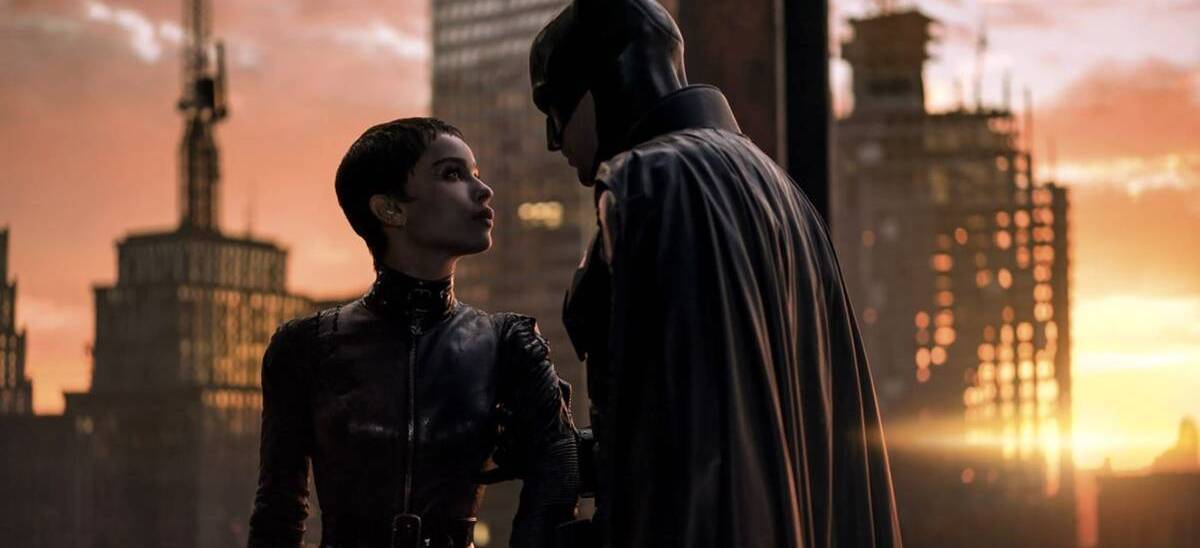
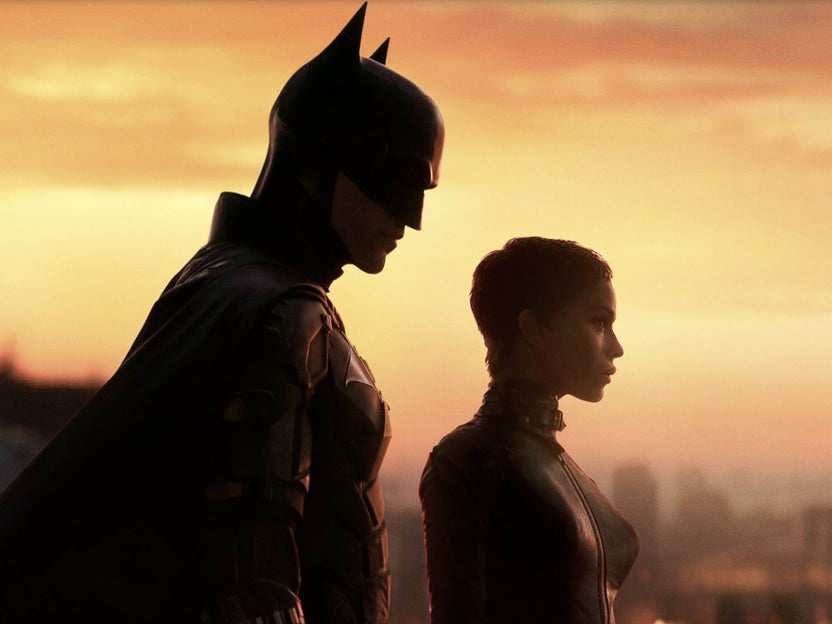
We should start with the casting, which is excellent and wonderfully refreshing. Pattinson helms the ship like it’s an A24 trauma thriller, with a performance of an emerging Batman and still grief-ridden Bruce Wayne that has you deeply compelled and tense throughout. Pattinson is an impressively nervy actor who is able to show us a mask that is just on the verge of cracking. The film positions Pattinson’s more dour Batman with a wonderful cast of actors, all at the top of their game, to ground the story in a level of humanity that could easily have gone missing in a story like this. The ensemble of Zoë Kravitz as Selina Kyle/Catwoman, Jeffrey Wright as Commissioner Gordon, John Turturro as Carmine Falcone, Paul Dano as The Riddler, an unrecognisable Colin Farrell as The Penguin, and Andy Serkis as Alfred, are all excellent and are perfect counterweights to Pattinson’s aura throughout the film.

Robert Pattinson (left) as Batman and Zoë Kravitz (right) as Catwoman in The Batman

Reeves’ previous experience as a horror director (2010’s underrated Let me in) comes through in several chilling scenes with Paul Dano’s Riddler, a character that has been adapted from one of the campiest in the rogue’s gallery to a harrowing villain that wouldn’t feel out of place in the Saw franchise.

It was clear from the beginning they wanted to craft a story that leaned more heavily into the grime and detective noir aspects of the character, with several scenes that wouldn’t seem out of place in Seven (1995). The use of Riddler in the Batman franchise has always called upon a more detective and serial killer-tinged story, an aspect the film runs headfirst into instead of avoiding. It’s pretty remarkable that this film was able to achieve an M rating in Australia (PG-13 rating).

The level of craft in The Batman is where this film shines and this review could definitely pick each individual element to highlight how it perfectly sits in the pocket of the vision Reeves has for the film. One crucial element I will highlight is the score. The Jaws-ifying of the iconic Batman theme by Michael Giacchino throughout the film works brilliantly, showcasing Pattinson’s iteration of the character as a foreboding presence.

This is further emphasised by Fraser, cribbing from his own work in Rogue One (which Giacchino also scored) of Darth Vader in the hallway, a sequence that has now become that films defining moment and one of the best in the Star Wars franchise, with Batman stepping out of the darkness to enact vengeance.

Colin Farrell as The Penguin in The Batman

It’s impossible not to view the film from the lens of the other Batman films, in particular the Nolan franchise which is still the benchmark for this sort of superhero storytelling. While there are no individual performances as totemic as Heath Ledger, there are many moments that The Batman has improved upon from those films. The political narrative that Nolan experimented with on Dark Knight Rises (2012) has been refined here. In Nolan’s film, the political aspect centred around an Occupy Wall Street allusion felt pasted onto the story being told. Whereas in Reeves’ film, the political narrative is rooted deeply in every aspect of the story, and is a large reason Paul Dano’s Riddler works so effectively. In 2022, there is no more apt American villain than a QAnon leader whose ultimate plan involves a mass shooter plot at an iconic New York venue (I won’t spoil which). Reeves and Pattinson have been active in the press the last month expressing how bleak and dark this iteration of Batman is, and it is in this story choice where that darkness is evident and chilling.

But this film is still a big-budget blockbuster and there are some exhilarating sequences, including a remarkable car chase that maintains the same viscerality that defines every moment of Reeves’ film. The Batman’s legacy will most likely focus on the emo vibe and the runtime, but its action set pieces are worthy of the same acclaim given to Nolan’s trilogy.

What The Batman has achieved feels momentous. After almost 20 years of superhero dominance in Hollywood, it is remarkable to have a filmmaker come in and make the genre feel as fresh and vital as it’s ever been. The Batman is a showcase for some of the best craftspeople and performers in the industry, and is hopefully just the beginning for this new caped crusader.