Trippy Visuals and Laughs Abound in The Mitchells vs. The Machines

Rating: 4 out of 5.

Sony Pictures Animation was once a minnow of the medium, its prosaic releases barely a threat to the dominance of the industry’s heavyweights. That order is looking shakier nowadays, with the company doing everything and anything possible to distance itself from the competition, much to its benefit, with this feature being a recent example.

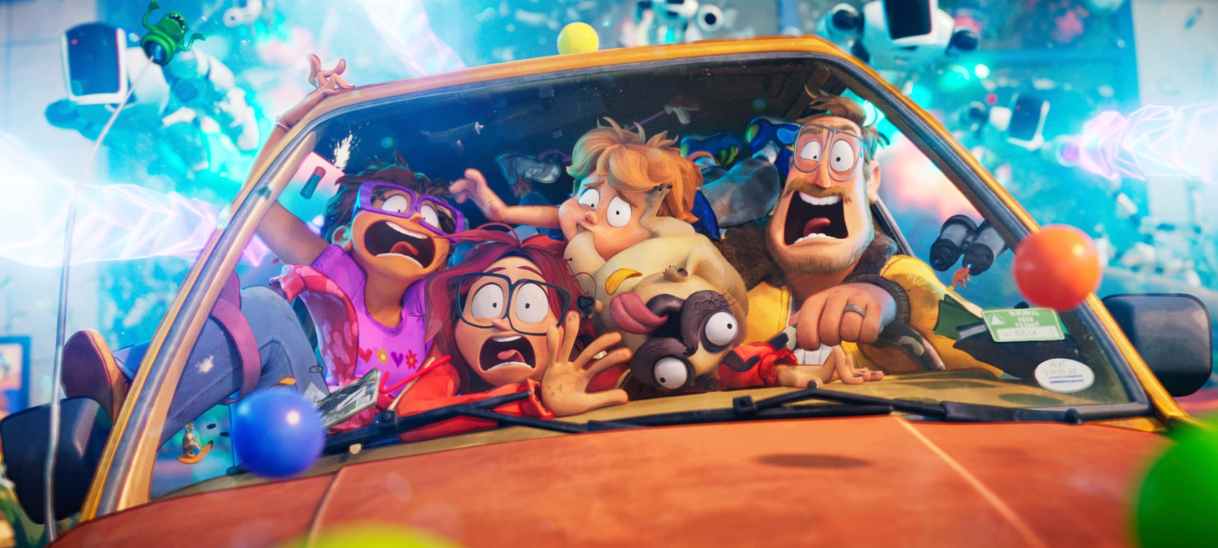
The Mitchell family – consisting of patriarch Rick (Danny McBride), his wife Linda (Maya Rudolph), teenage daughter Katie (Abbi Jacobson), youngest son Aaron (the film’s director, Mike Rianda) and their pet dog Monchi – is driving from their home in Michigan to California, where Katie will be attending Film School. For Rick, the road trip represents one last chance to connect with his daughter; for Katie, it’s just the latest instance of her father’s undermining ways.

As the Mitchells make their way across state lines in their weathered station wagon, an artificial intelligence system known as PAL (Olivia Colman) gains control of the world’s electronic devices to launch a machine-led, Terminator-style apocalypse, enslaving humanity in the process. The only people to escape PAL’s tyranny, funnily enough, are the Mitchells, who take full advantage of their freedom by tasking themselves with saving humanity through their own wacky, unconventional means.

The Mitchells vs The Machines (2021) was due for a cinematic release in 2020 under the moniker of Connected, delayed several times in the wake of the pandemic before its financier, Sony Pictures, eventually scuttled the film’s distribution plans altogether. Instead, the movie was tendered to various streaming websites and eventually purchased by Netflix, which secured global rights to the picture and a change in title – one preferred by the producers and initially rejected by Sony.

An immediately distinguishable feature of The Mitchells is the art-style, looking unique to any other Hollywood production. Although computer-generated like most animated pictures, the illustrations have been rendered and shaded in such a way that each frame better resembles an acrylic painting, lovingly hand-crafted on a patch of canvas. The character designs are equally distinctive, being adorned with flat faces, wide eyes, gangly bodies and brightly-coloured clothes to truly set the film apart from its brethren, from Sony or otherwise.

Rick Mitchell (left) with daughter Katie in The Mitchells vs the Machines

These beguiling images are energised by the exceptional animation, comparable in quality to another Sony feature, the much-loved Spider-Man: Into the Spider-Verse (2018)­. Throughout The Mitchells, people and objects are seen moving with a remarkable amount of freedom, apparently unhampered by technological limitations; in quieter, more emotional scenes, these movements are smooth and fluid, becoming quick and frenetic during scenes of action, and faster still in the comedic sequences to synchronise perfectly with the film’s zany tone.

Therein lies another forte of The Mitchells: its comic sensibilities. The movie is rife with humour, containing a plentiful number of visual gags, generous amounts of slapstick and a selection of decent one-liners – including some ironic, pointed statements about America’s technology giants that surely aren’t lost on Netflix. For cinephiles, there’s even more pleasure to be derived from the copious references to other works, including no less than two welcome homages to Quentin Tarantino’s Kill Bill Vol. 1 (2003).

Disappointingly, there is an area where The Mitchells lags behind its contemporaries, and that’s in the screenplay department. The story is one that follows some very familiar beats, incorporating timeworn elements such as a young protagonist struggling to bond with their parent, and revelations of deceit that cause greater conflict between characters, neither of which are appreciated. Even so, the plot remains relatively compelling, courtesy of some clever turns thwarting the progress of the characters.

And anyhow, it’s the comedy and animation that are the picture’s greatest strengths, hallmarks shared with Into the Spider-Verse ­– and surely not by coincidence. With these two films, it appears that Sony is readying itself as a pioneer of the industry; a company that doesn’t compromise on the artists’ vision, encouraging innovation rather than adherence to a particular style or image. In an era where movies are increasingly subject to studio interference, it’s an approach that’s sorely needed.

Blessed with an abundance of creativity, colour and zaniness, The Mitchells vs. The Machines is the kind of picture that other studios could only dream of emulating. Its distinctive visuals, brilliant animation and hilarious antics are more than enough to overcome a cliched plot, all showing why Sony Pictures Animation has a bright future ahead.

The Mitchells vs. The Machines is currently streaming on Netflix.

Infinite: Reincarnation has Never Looked so Boring

Rating: 1.5 out of 5.

With film studio Paramount having launched its streaming service Paramount +, it seemed fitting to watch its first drawcard feature Infinite (2021) starring the ever bankable Mark Wahlberg. This comes some months after Amazon Prime’s recent sci-fi thriller The Tomorrow War (2021), starring an equably bankable Chris Pratt in the lead role. While The Tomorrow War had a relatively tolerable premise, Infinite is an insufferable mess that proves studios are willing to throw their money at just about anything as long as Wahlberg is in it.

To say that Mark Wahlberg is the problem would be an oversight. His performance in Paul Thomas Anderson’s Boogie Nights (1997) is as iconic today as it was over 20 years ago, and he seems to have found a resonance with Michael Bay — having shone in Pain and Gain (2013) and the last of Bay’s two Transformers films. However, Infinite reduces Wahlberg’s often fast-talking and physical performance to a dreary and tedious display that can only be summed up by Wahlberg’s own confused facial expressions as events of the film unfold.

Antoine Fuqua is known for his action packed films like Training Day (2001), The Equalizer (2014) and frequent collaborations with the likes of Denzel Washington (who won an Oscar for Training Day), Jake Gyllenhaal, and now Mark Wahlberg (both of whom he has worked with twice). However, Infinite represents a departure from a simple action premise to something more akin to Doug Liman’s dreadful action sci-fi, Jumper (2008). It is adapted from D. Erik Maikranz’s 2009 novel The Reincarnationist Papers (which is, by all accounts, equally underwhelming).

Infinite is essentially about a small group of people known as the infinites who are pretty much reincarnated after they die, in the sense that they can eventually remember their past lives and skills obtained in those lives. Evan McCauley (Mark Wahlberg), who is known to the other reincarnated as Heinrich Treadway (one of his past reincarnation names), lives most of his new life never really knowing he is one of the reincarnated and is instead diagnosed as a schizophrenic. What Evan doesn’t know is that somewhere in his memories lies the location of an object known as the egg, which the infinites are trying to find before Ted (Chiwetel Ejiofor), another infinite who goes by the name of Bathurst, finds it.

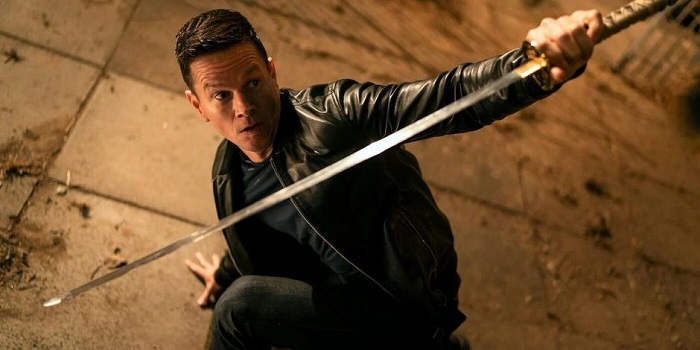
Mark Wahlberg in Infinite

Fuqua essentially orients his film around this plot device and creates a goose chase for his characters in the process. This plot device is desired by Bathurst who wants to harness it to destroy the world so that there is nothing left to reincarnate to — effectively rendering the reincarnation process as finished. The problem with the film is that it relies too much on this specific object as a catalyst for creating cause and effect, and this leaves the events of the film lacking substance.

Mark Wahlberg looks confused and bored for most of the film, with his real flair coming during the action set pieces, which themselves amount to nothing as they are too few and far. Chiwetel Ejiofor’s character is also incredibly underwritten and exists purely for the sake of being an antagonist — he delivers some lines about his purpose, kills off some equally underwritten characters, and is waterboarded with gasoline for some reason. In essence, both the protagonist and antagonist are uninspired, especially when compared to The Tomorrow War’s protagonist and alien entity which are miles better for an action sci-fi.

Perhaps Antoine Fuqua should have found a way to incorporate another 40minutes for greater clarity (seeing as Paramount already seemed set on going all in on this) or perhaps he should have focused on releasing one feature this year instead of two, seeing as The Guilty (2021) arrives later this year. Regardless, Infinite is a forgettable viewing experience and is a reminder that Michael Bay is still the only director to get the best out of Wahlberg in the last 20 years. Lets hope Paramount can bring its lacking streaming service some content worth audiences time and money.

Infinite is now streaming on Paramount +

Worth Tackles Questions of Loss and Tragedy in 9/11 Drama

Rating: 3 out of 5.

Releasing onto Netflix in time for the 20th anniversary of the 9/11 attacks, Sara Colangelo’s Worth (2020) asks the daunting question of valuing a human life and the emotional turmoil of asking an individual to calculate that number in dollars and cents. That is the task of Ken Feinberg (Michael Keaton) and Camille Biros’s (Amy Ryan) law firm after the tragedy of the September 11th attacks, a task only Feinberg jumps at the opportunity to pursue. Just over a week after the attacks, the US Congress passed a bill to compensate the families of those that were lost, with the promise of not suing the airlines involved in the attacks, an act we are told would sink the economy, with Feinberg’s task to be to find the right number value for this compensation.

The film is setup well and has a high level of care given to the events that tell the audience immediately the sort of 9/11 drama this will be. Yes, there will be emotional scenes with grieving families breaking down in law offices, but the film will not confront you with the horrors of the events, that is not where its interests lie.

Keaton is a standout here, having an impressive command of the film while never being flashy, maintaining a consistent and measured demeanour, never wanting the emotional weight of tragedy the job requires to cloud his judgement. There are no “they knew!” scenes of emotional release that Spotlight had here – which won’t help it come awards season – the emotion of the film instead was carried through the circumstances and the testimonies of the families, an aspect Colangelo never abused, peppering these scenes in to create a measured flow to the film.

But this was no one-man show. The whole cast was excellent and individualised, especially Amy Ryan and Shunori Ramanathan, who at times were given the task of grounding and transferring the emotional weight of the film from the families to the firm, something she did with a certain energy and grace that was quite remarkable. It did on occasion lean too heavily into the tropes of the grizzled boomer man needing to be taught empathy by the women in his life, but the performances of Keaton, Ryan, and Ramanathan ground it just enough to avoid falling over.


Colangelo and cinematographer Pepe Avila del Pino (who worked together on Colangelo’s complex previous film The Kindergarten Teacher) also created an engaging and compelling visual language to Worth that should be celebrated. There’s a heavy use of negative space throughout the film, emphasising the isolation the lawyers are feeling as they attempt to connect with different parties, as well as an interesting use of centre framing, something quite unique in this sort of biopic film that stylises it in a singular way. Too often movies of this nature focus too much on dialogue in dull fluorescent lit offices and ignore the infinite ways filmmaking techniques can communicate a theme and emotion that makes the best films so impactful.

Stanley Tucci and Michael Keaton’s pivotal confrontation in Worth

One area that didn’t feel as considered as the framing, however, was the haphazard score, with different styles being thrown around between very quiet and sterile scenes. Even with the musical connection of opera and classical music being formed between Keaton and Tucci’s characters, this bond is never felt on a filmic level, with some score choices feeling at odds with the nature of the scenes they are intended to accompany. Compare that to Spotlight, something impossible to ignore throughout the film, which has one of the best scores of the 2010s by legend Howard Shore. What makes that score transcendent isn’t the flashy, rousing orchestral moments we usually attribute to the best scores, but in how well it connects to the film it is contained within and elevates in its emotional weight, something Muhly’s score falls short on.

The Shore score is measured, inquisitive, and almost mourning, matching and amplifying the tone of the film. The Muhly score, however, feels disjointed with its use of different instruments and styles with no real sense of cohesion between pieces, and rarely matched the emotional stakes of the scenes they were in which limited the film’s ability to transcend the more cliche and typical aspects of the film. It may feel harsh to harp on just this one aspect of the film but it feels a microcosm for the issues of the film and what holds it back from being great.

Worth is an admirable film that is considered and thoughtful about an important time in our history that needs to be viewed more closely and has set Colangelo up for a potentially long career oscillating between indie and studio filmmaking. It’s worth your time. (I couldn’t help myself.)

Worth is currently streaming on Netflix.

James Gunn’s The Suicide Squad is an Irreverent, Unhinged Joy

DC’s cinematic output has been rather disparate of late, to say the least, with their releases range in quality from good to woeful, and most being mediocre at best. Now comes another blockbuster branded with the DC moniker, this one outshining everything that has come before it – especially its 2016 namesake.

Task Force X is a secretive branch of the United States government that oversees military operations deemed too dangerous, or too sensitive, for America’s heroes to be involved in. Their agents are inmates of the Belle Reve Correctional Centre – home to the evilest of supervillains – who are recruited in exchange for reduced sentences, provided they comply with their commands; should they not, the agents will be killed by their superiors.

The organisation’s newest recruit is Robert “Bloodsport” DuBois (Idris Elba) who has been sought by the director of Task Force X, Amanda Waller (Viola Davis) to lead an operation on the despotic island-state of Corto Maltese. DuBois has no desire to be involved whatsoever, until Waller threatens the safety of his teenage daughter, thereby forcing his hand into joining and reluctantly leading the mission.

The entity of Task Force X previously made its cinematic debut in David Ayer’s Suicide Squad (2016), which found commercial success despite being widely panned by critics for its appalling direction, unfunny humour and jarring, inconsistent tone. In developing the sequel, Warner Bros. ditched Ayer and handed directorial duties to James Gunn – who had just been fired from Marvel Studio for a series of tasteless posts on social media – and gave him complete creative freedom.

As a result of said freedom, Gunn’s new film bares next to no correlation with its Ayer-helmed precursor, despite sharing a similar title in The Suicide Squad. The extended cast serves as the only discernible connection between the two movies, with the abovementioned Davis reprising her role, in addition to Joel Kinnaman as Colonel Rick Flag; Australia’s own Margot Robbie as the squeaky-voiced jester, Harley Quinn; and fellow Australian Jai Courtney as the intensely ocker Captain Boomerang.

Harley Quinn (Margot Robbie) makes a return to the screen in The Suicide Squad

Joining them are a bunch of fresh recruits who operate under Bloodsport’s command, including macho gunman Christopher “Peacemaker” Smith (John Cena); a man who can conjure explosive polka-dots, Abner Krill (David Dastmalchian); an anthropomorphic shark named Nanaue (voiced by Sylvester Stallone); a young woman who can summon and control rats, Cleo Cazo (Daniela Melchior); and finally, Cleo’s pet rat Sebastian (voiced by animal impressionist Dee Bradley Baker).

The Suicide Squad spends the majority of its time focused on the latter group of characters, and rightly so, because they’re nothing but a charm. This appeal is fuelled largely by the performers who play them, with all the newcomers looking poised and relaxed, and each gifting their respective roles with a distinct personality. Through their efforts alone, these actors have turned a group of obscure antagonists into loveable rogues who deserve to lead every sequel and spin-off that follows.

Just as admirable is the film’s screenplay, solely and cleverly written by Gunn. In addition to the main conflict, each character is gifted with their own story-arc that pertains to a troubled backstory, developing and maturing as they seek to address it. Although these struggles are relatively minor, they do aid in further humanising the protagonists; what’s more, their arcs prove just as gripping as the central plot without ever distracting from it, nor overwhelming the audience with narrative.

The screenplay’s strength doesn’t just lie in its ability to fuse multiple storylines into a coherent package, for it is equally adept at toying with the viewer’s expectations. Gunn sets the stakes of his picture high from the outset, showing characters being killed left, right and centre with little regard for how established they are, and even less for the celebrities chosen to portray them. After the first few minutes, there’s no knowing where the film is heading, nor if anybody will survive the climactic showdown.

As much a part of The Suicide Squad’s appeal is the mature content, being more vulgar and graphic than the average superhero blockbuster, courtesy of the profanity-ridden dialogue, sporadic glimpses of nudity and gratuitous levels of violence. Blood and gore are abundant in Gunn’s picture, with all manner of body parts bursting open whenever a character is slaughtered, and the majority of those deaths being played for laughs.

Robert “Bloodsport” DuBois (Idris Elba) confronts Amanda Waller (Viola Davis) in The Suicide Squad

On the subject of laughs, there’s some pretty decent ones to be had throughout, with frequent, fast-paced quips coming from every character, as well as the occasional slapstick gag; yet the best comedy is mined from the desk-bound bureaucrats of Task Force X – played by Steve Agee, Tinashe Kajese-Bolden and Jennifer Holland, among others – who utter the funniest one-liners of the entire movie, very nearly outmatching the likeability of the main characters.

Amusingly impish though The Suicide Squad is, there are some aspects in which it falls short. One such aspect is the characterisation of Bloodsport who, despite the film’s best efforts, cannot shake the fact that he is practically identical to Deadshot from the other Suicide Squad film – both are played by black actors, both wear silly masks, both are sharpshooters with impeccable aim, and both are absent fathers wanting to do right by their respective daughters. Were it not for Elba’s British accent, there would be nothing to distinguish between them.

Another disappointment is the music that accompanies proceedings. As per his work on the Guardians of the Galaxy movies (2014, 2017), Gunn has personally curated a soundtrack of retro songs to pair with events, but this one doesn’t have the same appeal, for it lacks the catchy, kitschy tunes of his Marvel Studios playlists. The result is a soundtrack that pales not only to Gunn’s previous features, but even to a picture like Cruella (2021), which demonstrated a far better utilisation of classic hits.

Those grievances notwithstanding, The Suicide Squad is unequivocally the wittiest, warmest and most gratifying DC film to date, and an irreverent alternative to the superhero genre’s usual offerings. Idiosyncratic characters, fantastic performances, gory action sequences and some hearty chuckles solidify the picture as a winner, all but atoning for the sins of its predecessor.

The Suicide Squad is currently screening in cinemas where open, and available for digital download through select services.

Thrice Upon a Time is a Deserving Farewell for Evangelion

To conclude a ground-breaking saga is an unenviable task, not least because the resulting product needs to honour its forebears whilst leaving a legacy of its own. It’s a position in which this animated feature finds itself, and deftly succeeds in doing so, being as close to flawless as a send-off can possibly be.

Hidden beneath the city of Paris, the paramilitary organisation known as NERV has stored weaponry created as part of the Evangelion project, heavily guarded by an autonomous defence system. An assault on the city is launched by rival outfit WILLE, which seeks to liberate Paris from its captive state, and retrieve said weaponry for its own means – namely, defeating NERV and preventing it from curating another cataclysmic event.

Meanwhile, in the ruins of Japan, Shinji Ikari is listless after failing to thwart the actions of NERV and, by extension, his own father. He and Rei Ayanami – or an entity that purports to be her – follow his fellow EVA pilot Asuka Langley Shikinami to a rural village, there meeting with survivors of the Third Impact. As their days in the village pass, Shinji’s depression only worsens, with his friends fearing he’ll never engage with the outside world again.

Evangelion: 3.0+1.01 Thrice Upon a Time marks the definitive conclusion to the multifaceted Evangelion saga that began a quarter of a century ago with Neon Genesis Evangelion, a 26-episode television series that challenged the medium’s conventions and revived Japan’s dormant animation industry. The series’ creator, Hideaki Anno, seemingly concluded the narrative with a feature-length, theatrically-released picture called The End of Evangelion, only to begin afresh with a new set of films that shared the show’s title, plot and themes.

Shinji’s EVA Unit-01 brandishes a new Spear in Thrice Upon a Time

Belonging to this same set of films – collectively known as the Rebuild of Evangelion – is Thrice Upon a Time, accordingly sharing many a quality with the instalments that came before. One such trait is the impressive animation, which again combines traditional cel animation with computer-generated imagery, and is striking throughout. The environments are richly detailed, the designs slick, and the fight scenes bathed in a kaleidoscope of colours, all ensuring this is the best-looking entry in the entire Evangelion franchise.

Another strength carried over from Evangelion films past is the music, crafted once again by franchise stalwart and Anno’s favoured collaborator, Shiro Sagisu. Most of Sagisu’s compositions are drawn from his previous work on the television series, here being slowed down and re-arranged to better match with the imagery, providing a suspenseful, chilling or heroic atmosphere as the need arises. Bookending the excellent soundtrack is Hiraku Utada’s “One Last Kiss”, a hauntingly tender pop song that’s worthy of an Oscar nomination (or Grammy).

Being part of the Rebuild saga, Thrice Upon a Time consequently and unfortunately shares the drawbacks of its precursors, too. One is the infrequency of the action sequences, with most of the film’s time spent observing Shinji’s pensive state; another is the hyper-sexualisation of the young female protagonists, who are oftentimes dressed in fetish-gear or shown from a suggestive angle – both elements serve only to alienate the franchise’s newcomers, who will doubtless already be confused by proceedings.

Asuka looks into the distance in Thrice Upon a Time

Truthfully though, this isn’t a picture made to appease the uninitiated; rather, Thrice Upon a Time is for those already converted to the Church of Evangelion, whose devotion is constantly rewarded. The film contains plenty of throwbacks to the series and previous films, including surprise appearances from much-loved supporting characters, as well as fitting, poetic farewells for a select few. Furthermore, there’s an uplifting, life-affirming epilogue that perfectly concludes the years-long Evangelion narrative.

Finally, Thrice Upon a Time also deserves commendation for rectifying a sore point of the Rebuild films, that being Mari Illustrious Makinami. Upon her introduction in 2.0 You Can (Not) Advance (2009), Mari was a character who appeared superfluous to the conflict, with no backstory nor function, a feeling that remained in 3.0 You Can (Not) Redo (2012); but with the final chapter, Mari’s inclusion is finally justified, thanks to revelations about her past and her connection to Shinji – which deserve not to be spoilt.

Containing the franchise’s trademarks of spellbinding animation, splendid music and thoughtful storytelling, Evangelion: 3.0+1.01 Thrice Upon a Time is a compelling finale and a highpoint for the most prestigious of anime sagas. Ultimately, it’s best viewed as the celebration of a venerable series, embodying all the tropes for which it will forever be renowned.

Evangelion: 3.0+1.01 Thrice Upon a Time is now streaming worldwide on Prime Video.

Wolfwalkers Exemplifies The Might of Irish Cinema

Animated films have long regaled viewers with their retellings of folk and fantasy legends, a tradition that extends back to the medium’s dawn, and continues here in this feature-length production from Ireland. But this film is not here merely to capitalise on a time-honoured trend – in fact, it’s more likely to establish a new standard for the artform.

In the mid-17th Century, a young girl named Robin Goodfellowe (Honor Kneafsey) moves from England to Kilkenny, Ireland, where her father Bill (Sean Bean) has been tasked with capturing the wolves that prey on the townsfolk. Robin is adventurous by nature, and longs to accompany her father on his wolf-hunting duties; but unfortunately, she is forbidden from venturing beyond Kilkenny’s walls, due to her age and gender.

Robin eventually sneaks through the town’s gates and into the nearby forest, hoping to find and kill a wolf herself. Instead, she encounters Mebh (Eva Whittaker), an unkempt girl of smaller stature who calls herself a Wolfwalker – the name given to a mystical human who lives among the wolves. After an acrimonious greeting, a friendship between the two girls soon develops, and Robin’s perception of wolves with it.

It’s no coincidence that Wolfwalkers is based in Ireland, since the feature is one produced by Cartoon Saloon, a studio based where the film is set: Kilkenny. Just like the studio’s previous releases, The Secret of Kells (2009) and The Song of the Sea (2014), there’s a strong Celtic influence to this production, as evidenced by the voice-cast, soundtrack and screenplay – the latter of which draws its inspiration from an Irish folk tale.

Despite its mythological origins and Cromwellian setting, Wolfwalkers contains a fresh, contemporary story that grows more compelling with each minute that passes. The writing is masterful, with the film seamlessly, gracefully morphing from one conflict to another, the stakes heightening as it does so. If there is one complaint with the screenplay, it’s that the conflict between Robin and her father does come across as hackneyed at times, though never to the extent of annoyance.

Robin (left) and Mebh, the central protagonists of Cartoon Saloon’s Wolfwalkers

By far the most appealing element of Wolfwalkers is the distinctive art-style, ensuring it looks unlike any other animated feature – including those previously made by Cartoon Saloon. There’s a storybook-like simplicity to the hand-drawn illustrations, witnessed in both the characters and scenery, that charms profoundly, with the best images undoubtedly found in the forest scenes, their gorgeous watercolour backdrops contrasting heavily with the bleak, yet nonetheless striking, greyscale palette of Kilkenny.

Paired with the animation is an equally wonderful soundtrack, composed by Bruno Coulais with the assistance of Kíla, a traditional Irish folk band. The compositions of Coulais and Kíla make use of acoustic instruments such as fiddles, mandolas and tin whistles, sounding quite ethereal when listened to in isolation, yet suiting the tone and imagery of Wolfwalkers perfectly. There’s even the odd pop song to be heard, including a beautiful re-recording of Aurora’s “Running with the Wolves”.

Yet another aural delight is the cast of voice-actors, most of whom are of Irish nationality or descent. The most famous name, and recognisable voice, to the layperson will be Sean Bean, whose mellow, fatherly tone is perfectly suited to Bill Goodfellowe; Eva Whittaker and Honor Kneafsey are good also as the two girls, but to this author’s ear, the finest vocal performer is Simon McBurney, who provides an understated, menacing turn as Kilkenny’s Lord Protector.

Wolfwalkers is simply exquisite, with great voice-acting, stirring music, magnificent artwork and an elegant narrative combining to form a wondrous experience. Very few feature-length animations come close to this level of quality, making this not only a great film but also, quite possible, the best ever to emerge from Ireland.

Wolfwalkers will be screening online as part of the Irish Film Festival from September 3rd to 12th. For more information, head to the Festival’s official website.

The film is also available for streaming now on Apple TV+.

Disney’s Jungle Cruise is a Ride to Be Forgotten

There’s a prestige and heritage to the Disney brand that other studios can only envy – it’s a fact the corporation itself recognises, having produced a new picture that plays to its traditions. An initial glance suggests that said picture is primed for success; one viewing is enough to prove otherwise.

At the height of the First World War, Dr Lily Houghton (Emily Blunt) is venturing to the Amazonian rainforests of South America, where she hopes to locate a rare flower with fabled healing properties in the name of science. Upon arrival, she engages the services of tour guide Frank Wolff (Dwayne Johnson), who offers to pilot Lily – and her accompanying, neurotic brother MacGregor (Jack Whitehall) – in his own boat along the Amazon’s many tributaries.

Their journey is one that will be fraught with the deadliest of dangers, including carnivorous beasts, turbulent rapids, and native tribespeople who are unwelcoming to outsiders; yet the greatest threat of all is a pursuing German officer, Prince Joachim (Jesse Plemons) who seeks the flower for his own warped, egocentric benefit as much as his beloved Vaterland.

Jungle Cruise is the latest blockbuster to be adapted from a Disneyland attraction, joining the likes of the Pirates of the Caribbean films, as well as less popular efforts such as The Haunted Mansion and Tomorrowland. Of these releases, it’s the Pirates franchise that Jungle Cruise most closely aligns with, hoping to emulate the former’s box-office success – a feat that looks unlikely, not just because of recent outbreaks of a certain strain of virus, but also the sheer mediocrity of the picture.

One advantage that Jungle Cruise does possess is a talented cast, including two leads who are familiar to the Disney faithful. Emily Blunt is the top-billed female, having previously fronted the cameras for Into the Woods and Mary Poppins Returns, albeit with more singing; her male counterpart, Dwayne “The Rock” Johnson is no stranger to the studio either, with starring roles in The Game Plan, Race to Witch Mountain and Moana.

Undoubtedly, Blunt and Johnson’s historic involvement with Disney is what endeared them to the producers, and perhaps why both actors perform with a laidback confidence – their respective characters seem more an extension of their own charming selves than a transformation. This is particularly evident when the two personalities share the screen, demonstrating the kind of chemistry that is usually found in more seasoned duos, not a pair who are sharing their first credit together.

The villainous Prince Joachim (Jesse Plemons) as seen in Jungle Cruise

One performer who has taken the transformative approach, and played against type in the process, is Jesse Plemons. Where in other roles he would be understated with only a hint of menace, here Plemons gleefully portrays the antagonistic Prince Joachim with a fitting level of camp, eccentricity and accented speech. It’s yet another delightful performance from Plemons, who by now is well on his way to conquering Hollywood.

Sadly, that praise does not extend to the secondary villains of Jungle Cruise: a group of zombified Spanish conquistadors who are clearly inspired by Captain Barbossa’s crew. Despite their unique appearances – the men take their physical form with the help of rainforest features such as vines, snakes and hornets – there’s nothing remotely interesting nor memorable about these foes, who lack the personality and wickedness necessary for this kind of role.

Matters are made worse by the substandard visual effects, which look as though they were rendered two decades ago; the comedic elements, which barely incite so much as a chuckle; and the underwhelming soundtrack from James Newton Howard, which lacks a rousing theme a la the Pirates movies. Yet these problems are minor when compared to the biggest issue of all: the confusing action sequences.

By most measures, the thrills of Jungle Cruise are pretty serviceable, with decent choreography and stunt-work; but they are made difficult to appreciate due to the shaky camerawork and frantic editing. Such techniques have been utilised by many a Hollywood blockbuster in recent times, proving just as annoying here as they do elsewhere – it’s high time producers learned that they don’t make the action any more exciting.

It’s baffling to think that a film with six producers and the backing of the world’s largest studio could be so mediocre. Despite having some gifted actors at its disposal, Jungle Cruise serves only as a passing distraction, with most of its other attributes being adequate at best. If this film is to herald a new Disney franchise, it’s not a promising start.

Jungle Cruise is screening in cinemas nationally where open, and available for streaming with Premium Access on Disney+.

MIFF ’21: Notturno Forces us to Face the Realities of War that we Often Ignore

Rating: 3 out of 5.

With colonisation comes a struggle for independence and identity; oftentimes war ensues, and people are either left with less than they had before, or nothing at all. Gianfranco Rosi’s documentary, Notturno (2020), paints a perplexing picture of what life after war looks like. The Oscar-nominated documentarian lets his camera do the talking as he traverses the war ravaged Syria, Iraq, Kurdistan, and Lebanon over the course of three years. The result is a film that captures the aftermath of war ravaged lands, and the people left to endure the mess made by others.

Rosi is no stranger to focusing on people facing hardship as a result of injustice and corrupt systems. His Golden Bear winning film, Fire at Sea (2016), explores the European migrant crisis and some of the people at the centre of the migrant landings at Sicilian island, Lampedusa. While Notturno isn’t as specific in its focus as Fire at Sea, it serves to remind audiences of the realities that people on the other side are living.

In Notturno, Rosi captures the sprawling and almost barren wasteland’s of some of the aforementioned Middle-Eastern countries, and his cinematography is comprised of an array of wide shots that give the land itself an added layer of complexity. There is almost no life in Rosi’s shots, with the environment seeming akin to that of Frank Herbert’s fictional Arrakis (or Dune) — there is a desert-like openness, structures are left behind from ISIS raids, and minimal life exists save for birds that are hunted. The purpose here is to reinforce what many of the people in the film already voice — these people’s homeland has been taken from them and losing their identity is at risk as well. Subsequently, the camera serves as this invisible observer in motion.

Unfortunately, Rosi isn’t as interested in providing more context on the people in the film, with many of them going about their lives without us ever gaining a sense of who they are. There is an instance where some children draw and describe horrific pictures from experiences they’ve had with ISIS, but that’s about as close as we come to an emotional investment beyond the shots themselves.

A mother grieving for her son in Notturno

The film seems more concerned with allowing the setting to nurture our understanding of the people who occupy it rather than through the people themselves. These people enter the frame and the nothingness around them in order to reinforce just how little this land is actually theirs — it isn’t welcoming or even supportive of its occupants. In this sense, the land and Rosi’s shots of it is being used to demonstrate the governments (or lack thereof) failure to provide for its people.

One of the subjects in the film is a boy, Ali, who supports his mother and his many siblings by hunting for birds with various unknowns. When observed outside of the long and mid shots of his home where there is a sense of control and identity, he is often framed as a spec in the wider vastness of Rosi’s wide-shots. It’s a clever approach on Rosi’s part, but it provides the bare minimum in terms of understanding Ali’s situation and how he and his family make sense of the world around them.

The most profound aspect of the film, however, is Rosi’s ability to let the land speak for itself. There is little to no dialogue which creates an eerie sensation given that the countries in question are known for the violence and chaos that eschews the normalcy that otherwise exists. The only real sounds that continually penetrate the film are those natural ambient noises (birds chirping, water rushing, wind breezing etc.). When something other than natures sounds begins to present itself, it tends to be in the form of guns clocking and war trucks rolling. For what it’s worth, Rosi juxtaposes that aspect really well and leaves an uneasiness in one’s stomach.

Perhaps now more than ever, Notturno reminds audiences that colonisation and external interference in a once functioning nation, only does more harm than good — with the current situation in Afghanistan exacerbating that claim. Sure Rosi could have done with a greater engagement with his subjects, but it’s easy to see that his camera and the setting it captures are there to do the talking. While not as moving as Fire at Sea is during its best moments, Notturno is an essential viewing if not for its contemplative look on the countries at the centre of it, then for its relevance at this very point in time.

Notturno is currently streaming on MIFF Play until the 22nd of August.

MIFF ’21: Indie Darling Freshman Year is an Unassuming Charmer

If Hollywood is to be believed, college is one big, endless party rife with booze, drugs and sexual encounters. What’s needed is an exploration of the minutiae of tertiary education, those quieter moments that prove just as key to the experience – a void this indie feature has just filled.

Having moved from his family home in Texas, teenager Alex (Cooper Raiff) is struggling in his first year of university in California, feeling isolated physically and emotionally with only his dog plush for company. That loneliness eases upon a chance encounter with Maggie (Dylan Gelula), a fellow dweller in his dormitory, who Alex falls in love with over the course of one night, only to be rejected by her the very next morning.

Freshman Year is the directorial debut of Cooper Raiff, who also wrote the screenplay in addition to starring. His picture first garnered attention last year on the festival circuit under the title of Shithouse, earning near-unanimous praise and securing Raiff as a film-maker to watch in the months and years ahead. Those are some pretty lofty ambitions to meet, especially when one considers that Raiff’s film is quite modest in its presentation.

Raiff impresses as both an actor and director – fronting the camera, he looks assured and comfortable in the role of Alex, keeping his emotions restrained and never resorting to melodrama; likewise, his helmsmanship is solid, with the film having steady pacing, clean cinematography, and mise-en-scene that’s perfectly suited to an indie feature. What’s here certainly doesn’t break new ground, but it demonstrates that Raiff does have a firm understanding of his craft.

Where Freshman Year differs from other indie, coming-of-age or college movies is in its fly-on-the-wall depictions of dorm life. There are no rowdy frat-houses or wild riots to be witnessed in Raiff’s picture, which is more preoccupied with discussing the ennui of university, hypothesising that living on-campus is not the endless thrill that others proclaim it to be. In that sense, one could consider the film as the antithesis to the likes of Animal House and Bad Neighbours.

Freshman Year is best appreciated though as a sweet, humble tale of two lovers. Raiff and Gelula’s chemistry is palpable throughout, their endearing nature swiftly ensured by their soft, amicable conversations in the first act, and further cemented by a cathartic night-time walk. In these moments, both Alex and Maggie prove so likeable that one can forgive the awkward, cliched moments they share in the latter half of the film. Well, almost.

While far from a revelation, Freshman Year is a respectable first effort from writer-director Cooper Raiff, who does well to reflect the experiences of a disaffected student, yet also proves adept at delivering a romance that viewers yearn for. It’ll be interesting to see what he crafts next.

Freshman Year is currently streaming on MIFF Play until August the 22nd.

MIFF ’21: Japan’s Volleyballers Get Their Due in The Witches of the Orient

History is littered with sporting dynasties – in basketball, Phil Jackson’s Chicago Bulls are often touted as one of the all-time greats; in rugby, it’s New Zealand’s fearsome All Blacks who reign supreme. Of equal significance to both is a group of female volleyballers from the East, whose exploits have sadly been underreported in recent years.

In the early 1960s, the world of women’s volleyball was dominated by the Nichibo Kaizuka team, consisting largely of textile workers from the outskirts of Osaka. Under the rigorous training regime of coach Hirofumi “The Demon” Diamatsu, this band of young women annihilated their domestic opponents, eventually being selected to represent Japan internationally against other, higher-ranked teams.

Diamatsu’s team would go on to be dubbed the “Oriental Witches” by the foreign press, owing to their athletic prowess and unparalleled succession of victories – 258, to be exact. This extraordinary feat saw the Japanese players become celebrities at home and abroad, inspiring cartoons, comics, and documentaries such as this one, albeit without the same levels of artistry and reflection.

The Witches of the Orient comes from French documentarian Julien Faraut, who three years ago examined the psyche of tennis player John McEnroe in another MIFF entry, In the Realm of Perfection. Much of Faraut’s narrative is composited of existing footage – including the aforementioned cartoons, plus material of the team competing in Eastern Europe – which is then paired with electronic music, an eclectic combination that leaves the viewer in a trance.

Perhaps the most mesmerising sequence of Witches is the archival film of the women training in Kaizuka. In this footage, coach Diamatsu can be seen relentlessly spiking balls at his players to ostensibly improve their return serve, forcing them to sprint and roll across the court until they are all but exhausted of energy. While Diamatsu’s arduous techniques are somewhat mortifying to witness, they do provide an indication as to why the Witches were so competitive.

Archival footage, such as the Gold Medal match at the 1964 Tokyo Olympics, makes up a significant portion of The Witches of the Orient

Faraut’s story also draws upon interviews with Nichibo Kaizuka’s surviving members, who provide rare, exclusive access to their lives. The women never speak directly to the camera, instead providing voice-overs that are matched to their daily routines – the earliest example being Katsumi Chiba and her morning workout at a local gym – as well as a discussion between them over dinner.

There are some real gems offered in the ladies’ narration and B-roll of their activities. Yoshido Kanda speaks most candidly of all the former players, reflecting upon her status as a substitute player and why the women were so drawn to Diamatsu despite his gruelling nature; meanwhile, Yoko Tamura’s footage has a lifestyle to be envied, shown playing a game of memory with her grandchildren and watching volleyball anime with her family.

Although the narrative is transfixing, Witches would benefit from some tighter editing – the montages are too long at times, and there’s a sequence about the players’ nicknames that adds nothing to the story. There are some questionable stylistic choices too, with Faraut keeping a tight 4:3 frame throughout – even in contemporary settings – only to inexplicably transfer to a widescreen ratio in the third act.

Watching The Witches of the Orient, it’s difficult to fathom why their achievements have been so muted in contemporary media. The Nichibo Kaizuka story may not possess the drama or excitement of other sporting dynasties, but their winning streak is yet to be matched by any other volleyball team, as is the level of fame and fervour they generated overseas. Surely those facts alone are worth a place in sporting folklore.

Crafted with an element of idiosyncrasy, Julien Faraut’s The Witches of the Orient is a beguiling story about a group of women whose triumphs ought to be celebrated more. The openness and humility of the subjects is what charms most, though the mesmeric visuals play their part too.

The Witches of the Orient is currently streaming as part of the Melbourne International Film Festival on MIFF Play until August 22nd.