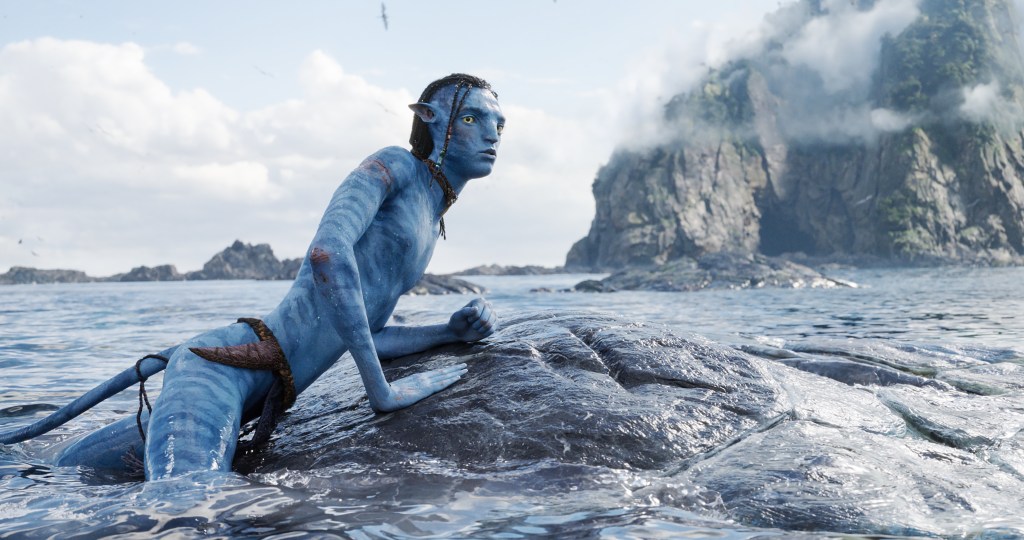
Avatar: Fire and Ash Has Pandora Starting to Feel Familiar

Rating: 3 out of 5.

Returning to Pandora after just three years, James Cameron’s third entry into his one-of-a-kind franchise, Avatar: Fire and Ash (2025), is closely linked to its previous chapter, Avatar: Way of Water (2022), giving the film its first sense of stagnation. But that is not to say Fire and Ash is a regression. The film is overwhelming and unwieldy, and in a normal year would be the best in a lacklustre slate of Hollywood blockbuster filmmaking with its incomparable visual style and boundary-pushing ingenuity that still convinces global audiences to leave the house and wear 3D glasses. But with the releases of Sinners (2025)and One Battle After Another (2025), two of the year’s films, should audiences start asking more from the stories coming out of Pandora?

Taking place one year after Way of Water, the Sully family is still mourning the loss of Neteyam (Jamie Flatters), all in different ways. As a Na’vi, most are still in a mourning period, especially Neytiri (Zoe Saldana), who feels lost in her grief. Jake (Sam Worthington), however, introduces the human concept of never addressing your feelings and pushing through in the hope of progress to the community. 

There is little time to settle back into Pandora before the action starts. Spurred by the adults’ desire to remove Spider (Jack Champion, their sort of adoptive son and only human protagonist left in the franchise) from their community, much to the rage of the rest of their young and growing family, the Sully clan are ambushed by the Mangkwan clan, or Ash people, are they are known. A brutal Na’vi group headed by Varang (Oona Chaplin), a war chief who leaps off the screen and gives this long film the jolt it needs to sustain itself, even if we are constantly let down by a lack of development.

Oona Chaplin as Varang in Avatar: Fire and Ash.

While Varang is a viscous and instantly captivating antagonist, entering the canon of Cameron villains, we are constantly seeking more depth behind the violence and destructive tendencies. What does it mean for a leader of a seemingly nomadic group of Na’vi styled like the Comanche to so easily join the colonising oppressive humans, and what does it mean that these questions are not explored? While appreciating that screenwriters Cameron, Rick Jaffa, and Amanda Silver explore different sides of their Native American and colonist sci-fi allegory, the lack of depth or curiosity in its own writing falls flat, underwhelming what should be an explosive final act.

With a script and thematic conceptions decades out of date and technological cinema spectacle decades ahead of its competitors, James Cameron’s Avatar films live outside of time, allowing us extended peaks at this bizarre yet captivating place. What has allowed these films to thrive after all these years is their commitment to elemental storytelling, and not just in its commitment to adding elements like its naming brother, Avatar: The Last Airbender (2005) (definitely adding an earth tribe next). The family dynamics are overwhelmed with melodrama, deeply intertwining friend and foe with children and lost families, all with a growing connection to the land and its creatures, the more time they spend there, to a point where the climax of the film is weighted equally to the Na’vi as the Tulkan (whale creature added in the previous film) Payakan.

Cameron’s franchise expands in surprisingly organic ways, closer to a sweeping fantasy novel series than a film franchise spinning its wheels and playing the hits. Heroes and villains remain as the story is almost solely fascinated by their evolution as characters in a shifting world rather than having an expanding world smash up against rigid, established characters. As a double-edged sword, however, this does mean that at a runtime of 197 minutes we are focusing a lot of time and resources on the story of Spider, a mildly interesting but repetitive character, and his two fathers, Jake and Quarich (Stephan Lang). 

Sam Worthington as Jake Sully in Avatar: Fire and Ash

While the script and characterisations continue to lack, we still marvel at the film’s visual palette and stunning sound design. With its use of high frame rates, something that takes time to settle into, water and elemental scenes really soar, while the textured sound design grounds the world in the familiar, a delicate balance that allows each scene to grip you even if the storytelling falls away. Unfortunately the score by  Simon Franglen still remains uninspired in these films, with preplanned swells that stir less emotion than is required for a film of this scale and craft.

Where films like The Creator (2023) seem designed to offer its cinematic approach to CGI filmmaking to future films in the genre, Cameron’s Avatar films strives for the visual Pantheon to be worshipped not emulated. We marvel, moment to moment at scenes of lush forests and dense reef ecosystems, fully immersed in a world of human creation, even as we get swept up in an expansive story about our need to protect and connect with nature. Like going to the aquarium and spending all day in the VR room. 

But at what stage does it feel greedy to ask for more from a franchise now 551 minutes into its on-screen runtime? As we round the corner to home plate and the James Cameron payoff machine starts working its gears, it’s hard not to be hit by a pang of sadness that this fascinating cultural item at the heart of a medium in a state of panic doesn’t strive for something more human or poetic. Audiences may never stop returning to Pandora once invited, but they may begin to ask for something under the surface to sustain them.

Avatar: Fire and Ash is in theatres now.

Avatar: The Way of Water Sees Pandora Return Bigger and Better Than Ever

Rating: 4.5 out of 5.

Avatar: The Way of Water preview screening provided by Disney

In a year where caped crusaders have played second fiddle to F18’s and dinosaurs, Avatar: The Way of Water sees James Cameron swimming in his exclusive pool of opportunity; a sandbox style, open world, video game feeling film that is as hearty as it is beefy. Cameron, unsurprisingly, is no stranger to pushing the boundaries of what a high concept blockbuster looks like. Setting the trend with The Terminator (1984), he’s always been out to entertain first, and worry about everything else second. The Way of Water speaks to that sentiment and culminates in a sensory experience unlike any at the cinema this year.

This is, after all, a film that —like the original Avatar (2009) before it— places an emphasis on out-of-body living, on connecting with the surrounding world and learning how to nurture and care for it. Cameron, an environmental activist in his own right, made Avatar and has pursued these sequels in part because he sees them as an opportunity to raise more awareness about our own world and environment.

In The Way of Water, he follows similar concerns to that of the first film, but trades the fullness of the foresty terrain, for the breadth and depth of the oceanic surroundings. The Na’vi continue to thrive, with Jake Sully (Sam Worthington) now leading the tribe alongside his partner Neytiri (Zoe Saldana). They also have a few mini-Sully’s of their own: two sons —Neteyam (Jamie Flatters) and Lo’ak (Britain Dalton)— and a daughter, Tuk (Trinity Jo-Li Bliss). They also care for Kiri (Sigourney Weaver) who has a connection to Weaver’s character from the first film, but one that is kept intentionally vague.

The actual events of the film take place some 10 years after those of the first one. Humans continue to arrive to Pandora to harvest resources, and are even continuing to create avatars of their own. One of those is Colonel Miles Quartich (Stephen Lang), whose DNA and memories have been imbued in one of the lab grown blue beings to the point where he acts and talks like the Colonel in the first film, but he’s not him per se.

(L-R): Jake Sully, Ronal, and Tonowari in 20th Century Studios’ AVATAR: THE WAY OF WATER. Photo courtesy of 20th Century Studios. © 2022 20th Century Studios. All Rights Reserved.

In essence, the stakes feel similar: Jake and co are on the backfoot while the Sky People pursue and hunt them. Sometimes the actual motive behind this continued hunting isn’t explained all that clearly — the Colonel seems to have retained the same grudge for Sully in his avatar form as he had in his human form, but beyond that, the plot plays out like a game of hide and seek. Most of that hiding happens in the distant islands far off the mainland, where other tribes reside and have grown and learned the way of water. A good chunk of the film is spent leading up to Sully’s retreat into this unseen part of Pandora, but once out in open waters, the film opens up both visually and sonically.

Cameron has a penchant for anything aqua related, and it shows in these deep diving areas. The flora and fauna pop in ways that make one believe this world is tucked away somewhere in our own oceanic backyard. Maybe seeing all of this unfold through Cameron’s other love, 3D, might have heightened the immersion? But there is an evident care for this world that entraps and allures you, and makes you believe it’s real, if but for a split second.

It helps that the frame rate is bumped up to 48fps at certain parts. Character movements are crisp and almost life-like, where there is a fluidity to the motion. This is especially noticeable in the underwater portions of the film that are as visceral as they are breathtaking, with colours popping out like a Van Gogh painting as you try and absorb each section of the frame.

Lo’ak (Britain Dalton) in 20th Century Studios’ AVATAR: THE WAY OF WATER. Photo courtesy of 20th Century Studios. © 2022 20th Century Studios. All Rights Reserved.

Cameron makes it easy to care for these characters, who have more nuance splashed across their digital faces and more realness behind their big anime-like eyes, than any of the beings before and since Avatar. The technology is a large reason why this film works, because there just hasn’t been anything like it in cinemas previously, Avatar included. The film’s weakest link tends to be anything that isn’t digitised to the gills, like the Tarzan-esque boy Spider (Jack Champion) who was left an outcast and was essentially adopted by the Sully’s. While the film justifies his presence, it’s more jarring to spend time with anything that isn’t wholly CGI.

Cameron’s brilliance ultimately rests in his unmatched understanding of scale — of how to get all of his story points in a basket while showcasing them in the biggest way possible. He swiftly transitions from moments of bonding and connection between tribes and creatures, to large battles sequences involving these tribes and creatures as they glide over the ocean. You might not end up caring for the whale like Tulkin beasts that end up playing a more vital role in the plot than anything else, but it’s enough to believe that Cameron does. It’s a large reason he takes so long with these films, and especially with The Way of Water, as he finds that balance between telling a story about big blue people and everything in between that’s worth caring about, with the trailblazing action and scenery on display.

Even if the plot is very akin to that of the original film, The Way of Water is a sum of all of Cameron’s experiences and experiments up until now, where he pours his heart and soul into each and every frame, as though this could be the last ride in Pandora even with most of the sequels penned and planned out. The Way of Water hits like a tidal wave, and it’s worth getting drenched for.

This post was originally published on SYN

Avatar: The Way of Water opens nationally from the 15th of December, 2022.  

Avatar Remastered, Revisited

The highest grossing film of all time when not adjusting for inflation (1939’s Gone with the Wind will always have that title), not based on established IP, and created by Steven Spielberg’s successor as king of the blockbuster James Cameron, should have an indelible mark on 21st Century culture, right? 

2009’s Avatar is perhaps the most curious artefact in the history of cinema. At once a totemic text seen by an entire generation, reviving 3D as the preferred medium for primetime blockbuster entertainment (as well as leading electronics companies to release 3D TV’s), until audiences grew weary years later. And yet, why does the film seem to lack any form of lasting cultural imprint?

This is a film Roger Ebert opened his four-star review by stating, “Watching “Avatar,” I felt sort of the same as when I saw “Star Wars” in 1977.” So, why does a film celebrated by critics and seen by an enormous audience at the time feel so disconnected from cinema history and modern culture?

Now, in 2022, 20th Century Fox (now owned by Disney) has remastered Avatar, putting it back in theatres before the release of Avatar 2: The Way of Water (2022). I was not writing about films when the film was in theatres in 2009, but I was among the masses that saw the film in IMAX, an experience that left a mark on my psyche, even if the film itself did not. By remastering and rereleasing the film into theatres upon the release of its long gestated sequel, they are giving a new generation the opportunity to live through that again, but does it hold up?

Zoe Saldaña as Neytiri in Avatar

Surprisingly, it really does. The film is an 80s action film dressed in the clothes of a 21st sci-fi epic. The performances are hammy (Stephen Lang is an all-time 80s villain in this), creating a buoyancy between scenes. This buoyancy allows Cameron to do what he does better than almost any filmmaker; pace an engaging film, no matter the runtime. Genuinely one of the breeziest 160+ minute films you’re likely to see, something that has been severely lacking in modern Hollywood filmmaking.

Visually, the film is without comparison. It is ridiculous to consider the budget for the film is akin to this year’s The Gray Man, the cinematic equivalent of a beige wall. The visuals have been upscaled and remastered for this new version returning to cinemas and is remarkable to see a film of this quality on screen, especially within a quiet month of theatrical releases. Cameron has always been able to get the most out of a budget, finding new ways to scale up even an enormous sci-fi epic. 

Avatar was once the story of the 2000s, and as we get further away from its release the clearer it is that the film excels in stark contrast to modern blockbuster filmmaking. You could do a lot worse this weekend than seeing the somehow ill-remembered, but still high-quality mega-blockbuster from one of Hollywood’s living legends.

Avatar Remastered is having a limited release in theatres from September 22nd.