There’s a prestige and heritage to the Disney brand that other studios can only envy – it’s a fact the corporation itself recognises, having produced a new picture that plays to its traditions. An initial glance suggests that said picture is primed for success; one viewing is enough to prove otherwise.
At the height of the First World War, Dr Lily Houghton (Emily Blunt) is venturing to the Amazonian rainforests of South America, where she hopes to locate a rare flower with fabled healing properties in the name of science. Upon arrival, she engages the services of tour guide Frank Wolff (Dwayne Johnson), who offers to pilot Lily – and her accompanying, neurotic brother MacGregor (Jack Whitehall) – in his own boat along the Amazon’s many tributaries.
Their journey is one that will be fraught with the deadliest of dangers, including carnivorous beasts, turbulent rapids, and native tribespeople who are unwelcoming to outsiders; yet the greatest threat of all is a pursuing German officer, Prince Joachim (Jesse Plemons) who seeks the flower for his own warped, egocentric benefit as much as his beloved Vaterland.
Jungle Cruise is the latest blockbuster to be adapted from a Disneyland attraction, joining the likes of the Pirates of the Caribbean films, as well as less popular efforts such as The Haunted Mansion and Tomorrowland. Of these releases, it’s the Pirates franchise that Jungle Cruise most closely aligns with, hoping to emulate the former’s box-office success – a feat that looks unlikely, not just because of recent outbreaks of a certain strain of virus, but also the sheer mediocrity of the picture.
One advantage that Jungle Cruise does possess is a talented cast, including two leads who are familiar to the Disney faithful. Emily Blunt is the top-billed female, having previously fronted the cameras for Into the Woods and Mary Poppins Returns, albeit with more singing; her male counterpart, Dwayne “The Rock” Johnson is no stranger to the studio either, with starring roles in The Game Plan, Race to Witch Mountain and Moana.
Undoubtedly, Blunt and Johnson’s historic involvement with Disney is what endeared them to the producers, and perhaps why both actors perform with a laidback confidence – their respective characters seem more an extension of their own charming selves than a transformation. This is particularly evident when the two personalities share the screen, demonstrating the kind of chemistry that is usually found in more seasoned duos, not a pair who are sharing their first credit together.
The villainous Prince Joachim (Jesse Plemons) as seen in Jungle Cruise
One performer who has taken the transformative approach, and played against type in the process, is Jesse Plemons. Where in other roles he would be understated with only a hint of menace, here Plemons gleefully portrays the antagonistic Prince Joachim with a fitting level of camp, eccentricity and accented speech. It’s yet another delightful performance from Plemons, who by now is well on his way to conquering Hollywood.
Sadly, that praise does not extend to the secondary villains of Jungle Cruise: a group of zombified Spanish conquistadors who are clearly inspired by Captain Barbossa’s crew. Despite their unique appearances – the men take their physical form with the help of rainforest features such as vines, snakes and hornets – there’s nothing remotely interesting nor memorable about these foes, who lack the personality and wickedness necessary for this kind of role.
Matters are made worse by the substandard visual effects, which look as though they were rendered two decades ago; the comedic elements, which barely incite so much as a chuckle; and the underwhelming soundtrack from James Newton Howard, which lacks a rousing theme a la the Pirates movies. Yet these problems are minor when compared to the biggest issue of all: the confusing action sequences.
By most measures, the thrills of Jungle Cruise are pretty serviceable, with decent choreography and stunt-work; but they are made difficult to appreciate due to the shaky camerawork and frantic editing. Such techniques have been utilised by many a Hollywood blockbuster in recent times, proving just as annoying here as they do elsewhere – it’s high time producers learned that they don’t make the action any more exciting.
It’s baffling to think that a film with six producers and the backing of the world’s largest studio could be so mediocre. Despite having some gifted actors at its disposal, Jungle Cruise serves only as a passing distraction, with most of its other attributes being adequate at best. If this film is to herald a new Disney franchise, it’s not a promising start.
Jungle Cruise is screening in cinemas nationally where open, and available for streaming with Premium Access on Disney+.
It’s been almost 20 years since Sir Peter Jackson introduced audiences — both new and familiar — to the world of Middle Earth, on the big screen. In those 20 years since The Lord of the Rings: The Fellowship of the Ring (2001), nothing, save for the sequels to The Fellowship of the Ring, has managed to capture the awe and bravado of Jackson’s Middle Earth. Franchises have come and gone, and Jackson has also adapted The Hobbit (2012 – 2014) for the big screen, but The Lord of the Rings continues to inspire as well as keep audiences coming back for more as the years roll on. Much has been said and written about the trilogy, but I believe it’s important to remind audiences why this trilogy has remained a staple in cinema history. What follows is an analysis of why Jackson’s adaptation of The Lord of the Rings has continued to permeate film culture, how it redefined the Fantasy genre, and what made the franchise as celebrated as it is.
The Lord of the Rings Trilogy Before the Acclaim
Before delving into the aforementioned concerns of the piece, it is important to first outline the trajectory of The Lord of the Rings in cinema culture — from its inception, up until Jackson’s adaptation. In the years before Jackson’s The Lord of the Rings adaptation came to fruition, there had been an animation adaptation in 1978 by Ralph Bakshi, which opened to a fair reception, and the Beatles had apparently wanted to star in a live-action adaptation of the books, with Stanley Kubrick said to have been their choice to direct. Kubrick allegedly turned down the offer to direct the planned film after saying that it was unfilmable (at least in terms of the technology not being there yet). As J.R.R Tolkien owned the rights to his work, he also turned the proposed Beatles film down as he didn’t want his work to be taken by the band and turned into something outlandish for the big screen.
It wasn’t until sometime in the mid-90s that the idea of a Jackson-led The Lord of the Rings adaptation began to circulate in the media. With Jackson’s earlier films like Bad Taste (1987) and Braindead (1992) being the epitome of schlock horror — films characterised by their absurd plots, quirky characters, campy humour, and so forth — it was no surprise that doubts were raised over the announcement that Jackson was to adapt the work of beloved and trailblazing author, J.R.R Tolkien.
Jackson had come off of directing a decently received, The Frighteners (1996), before pitching the idea of turning The Lord of the Rings into a live-action trilogy, to Miramax. Miramax said that they would be able to make two films instead of the proposed three, with the cost of the films driving their decision. However, Miramax eventually decided that that they were unable to fund the making of two films at the scale proposed. Subsequently, Jackson was allowed to pitch the idea for the films to other studios, and was eventually able to bring New Line Cinema on board to finance the film.
With New Line greenlighting the proposal for an adaptation helmed by Jackson, the next big hurdle came with the budget increase for each film. New Line had reportedly agreed to spend around US $60 million on each film, but that budget proved unrealistic with how audacious and large each film ended up becoming. Instead, New Line ended up spending around US $120 million on each film, with that eventual sum being agreed upon through much deliberation and even heat between Jackson and film executive Michael Lynne. It wasn’t until a 20 minute preview screening at Cannes in 2001 that the studio’s fears regarding the increase in budgeting, were alleviated. This was primarily due to the positive reception the footage of The Fellowship of the Ring received, and the realisation that the money invested into the film was paying off (with the Balrog scene being one that was shown).
With The Fellowship of the Ring eventually being made, and its sequels releasing within the next two years, the trilogy had officially survived the struggles of pre-production, production, and Harvey Weinstein. The trilogy would go on to become one of the highest grossing and consistently well received franchises of all time.
Hugo Weaving, Peter Jackson, and Ian Mckellen on the set of The Lord of the Rings
What Made the Trilogy as Influential and Beloved as it is?
Trying to provide a single answer to why Jackson’s The Lord of the Rings is as iconic and influential as it is, simply cannot be done. Therefore, I will break down some of the key aspects of the trilogy and why they’ve seen the trilogy continue to enjoy the success that it has.
For starters, one of the biggest issues Jackson faced was trying to transpose such a well regarded and nuanced piece of fantasy literature as faithfully as he could, and in the time he had. Tolkien’s writing is renowned for its ability to capture the minutiae of any given aspect of the world of Middle Earth — whether that be a blade of grass or a trickle of water. In saying that, Jackson was fortunate that he had a lot to work with from Tolkien’s writing, particularly because the drawn out descriptions Tolkien provides, ultimately led to a level of clarity that Jackson simply moulded for a modern audience. Sure there was no Tom Bombadil or the battle for the Shire or the character of Gildor Inglorian, but given the scale of Tolkien’s world (those who have read The Silmarillion will know the struggle of making sense of everyone and everything being described), Jackson was able to focus on the fundamentals of the book in order to guide audiences through the three films.
A major factor that contributed to the trilogy’s acclaim and success is the fact that all facets of production aligned and worked to support each other for the entirety of the three films. There were two units that worked on the film: one that was helmed by Peter Jackson, and the other, by John Mahaffie (Second Unit Director). Both units were well equipped with resources to traverse the New Zealand landscape and country side (which is explored more in the exquisite documentary-like, behind the scenes), and Weta Workshop went above and beyond to produce sets, costumes, armour, weapons, creatures and miniatures. What this all means is that there was a sense of totality and scale unlike anything seen before or since, in a blockbuster or film of any kind. The result is one that led to the record breaking Oscars sweep for The Return of the King (2003) which won all 11 Oscars it was nominated for, and is tied with Ben-Hur (1959) and Titanic (1997) for most award wins in Oscars history.
But aside from the recognition from award wins and box office success, Jackson’s trilogy has continued to amaze viewers (included yours truly) across multiple viewings in the 20 years since. Some of the reasons why include the thematic consistency as the films went on; the largely practical approach to making the films; Howard Shore’s mesmerising score that speaks to various scenes and characters; the epic battle sequences both large and small; the memorable performances from each and every actor involved; and how the trilogy paved the way for fantasy films (and shows) to be taken as seriously as they are today.
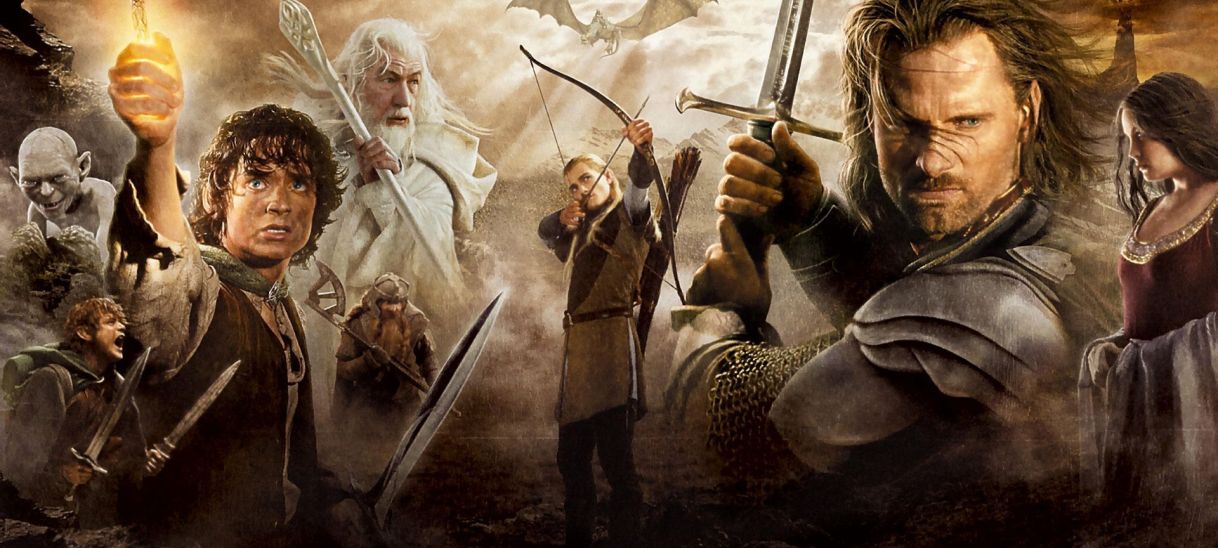
The way in which Jackson developed a sense of forwardness from the first film to the last meant that the pacing always felt consistent, and audiences were given ample time to spend with various side characters and events, while never losing sight of the primary goal of The Fellowship. For instance, The Fellowship itself and its eventual separation, serves to engage the audience with the likes of Theoden (Bernard Hill), Eowyn (Miranda Otto), Emoer (Karl Urban), Arwen (Liv Tyler), Galadriel (Cate Blanchett), Faramir (David Wenham) and so forth. All of these characters have role to play in The Fellowship’s quest, but they also bring to surface the lore of Middle Earth that cannot be wholly accounted for.
The battle sequences also stand out, particularly due to how practical they were and how little they relied on CGI in contrast to blockbusters being released today. Ridley Scott’s Gladiator (2000) is another film that comes to mind in terms of being remembered for the amount of choreography it had and the lack of CGI it used. Rarely are modern blockbusters as hands on in their approach to large scale battles as The Lord of the Rings was, and that’s another big drawcard for revisiting the trilogy — the action strived to create an out-of-body experience that sucked audiences into the world.
Another major aspect that contributed to the ongoing success of The Lord of the Rings is the way in which the show put the fantasy genre in the limelight for film and television. The point here is simply to highlight how Jackson’s films have paved the way for the fantasy genre to be taken more seriously as a form of art. A show like HBO’s Game of Thrones has won multiple Emmy awards and has been compared to The Lord of the Rings (and rightfully so given that George R.R. Martin is greatly inspired by Tolkien). Netflix’s The Witcher show has also emerged in the last couple of years and has quickly become a fan favourite. So essentially, Jackson and his first trilogy of films have brought as much attention to the fantasy genre as George Lucas and his first Star Wars trilogy did for the Sci-Fi genre.
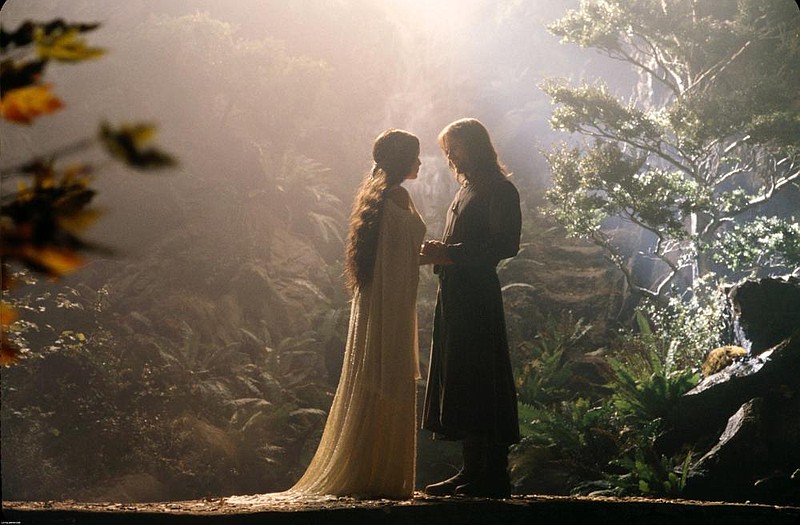
Liv Tyler and Viggo Mortensen in The Lord of the Rings
Closing Thoughts
In the 20 years since The Fellowship of the Ring, the trilogy continues to be shown in cinemas worldwide and has had a successful shelf life (with a 4K remastering having been overseen by Jackson and released last year). With a Lord of the Rings show coming to Amazon Prime in late 2022 (supposedly exploring an earlier part of the Second Age of Middle Earth), now is the perfect time to begin revisiting Middle Earth and Jackson’s trilogy. Whether or not the show will capture the hearts of audiences and critics alike is yet to be seen, but judging by a recently released still from the show, it’s anyone’s guess. What is known is that Tolkien’s The Lord of the Rings and Jackson’s adaptation of the book are just as influential today as they were during their inception, and will continue to be in another 20 years.