Dance For Your Life Brings the Docuseries to the Big Screen

Rating: 3 out of 5.

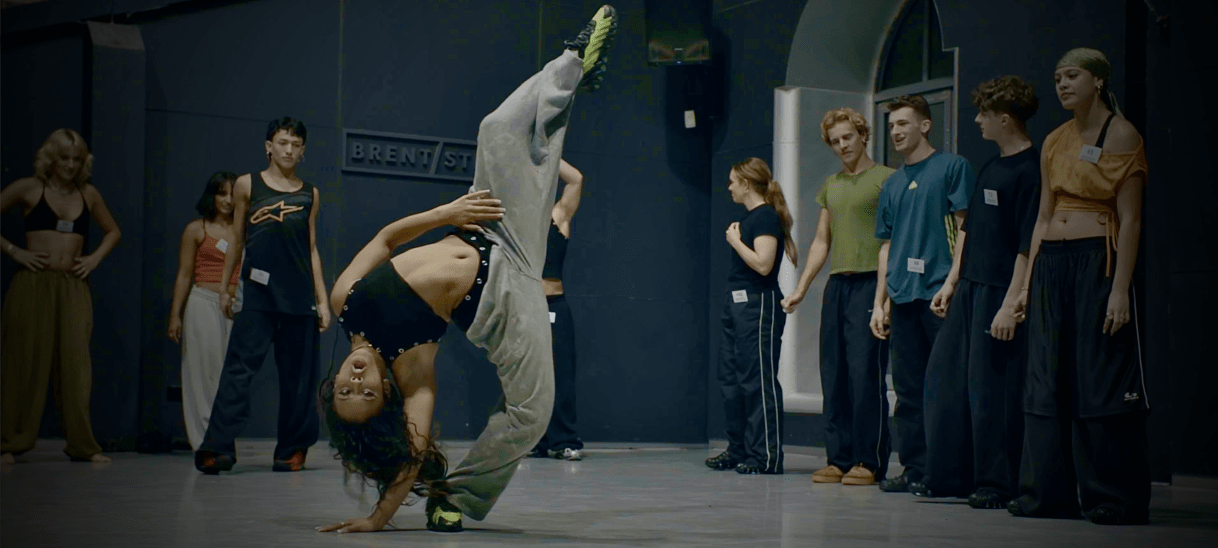
The audition of a lifetime. 100 dancers, 1 contract. An expansion of the television docuseries Dance Life (2024), the documentary feature Dance For Your Life (2026) is an intimate look into the world of modern professional dance through two dance companies: Sydney’s Brent Street and London’s Shapehaus led by revered choreographer Dean Lee. 100 dancers will have the opportunity to prove they have what it takes to obtain the single contract up for grabs in the notorious London company.

The question Dance For Your Life asks across its 100-minute runtime boils down to whether this is an extended TV episode or a work of cinema. While starting on rocky footing with an extended first act in Sydney, the film blooms into a wonderful work of resilience and passion once the group of ten finalists arrive in London, which benefits from the space given by the feature-length runtime. All great works of documentary in this vein ultimately require compelling characters, something Dance For Your Life takes its time cultivating beyond simple introductions during the trial stage in Brent Street. Once we begin to see the Australian dancers interact and learn from Lee, the world begins to open up, and we see what these young artists are capable of achieving. 

Spending the first 45 minutes locked in Sydney was crucial to establishing the world and stakes of the film before the lucky ten arrived in London. We are introduced to many impressive dancers, with the knowledge that only a few will make it to the final performance at the end of the film, so it is only once the final ten are selected that the audience can settle into which individuals to give emotional weight to.
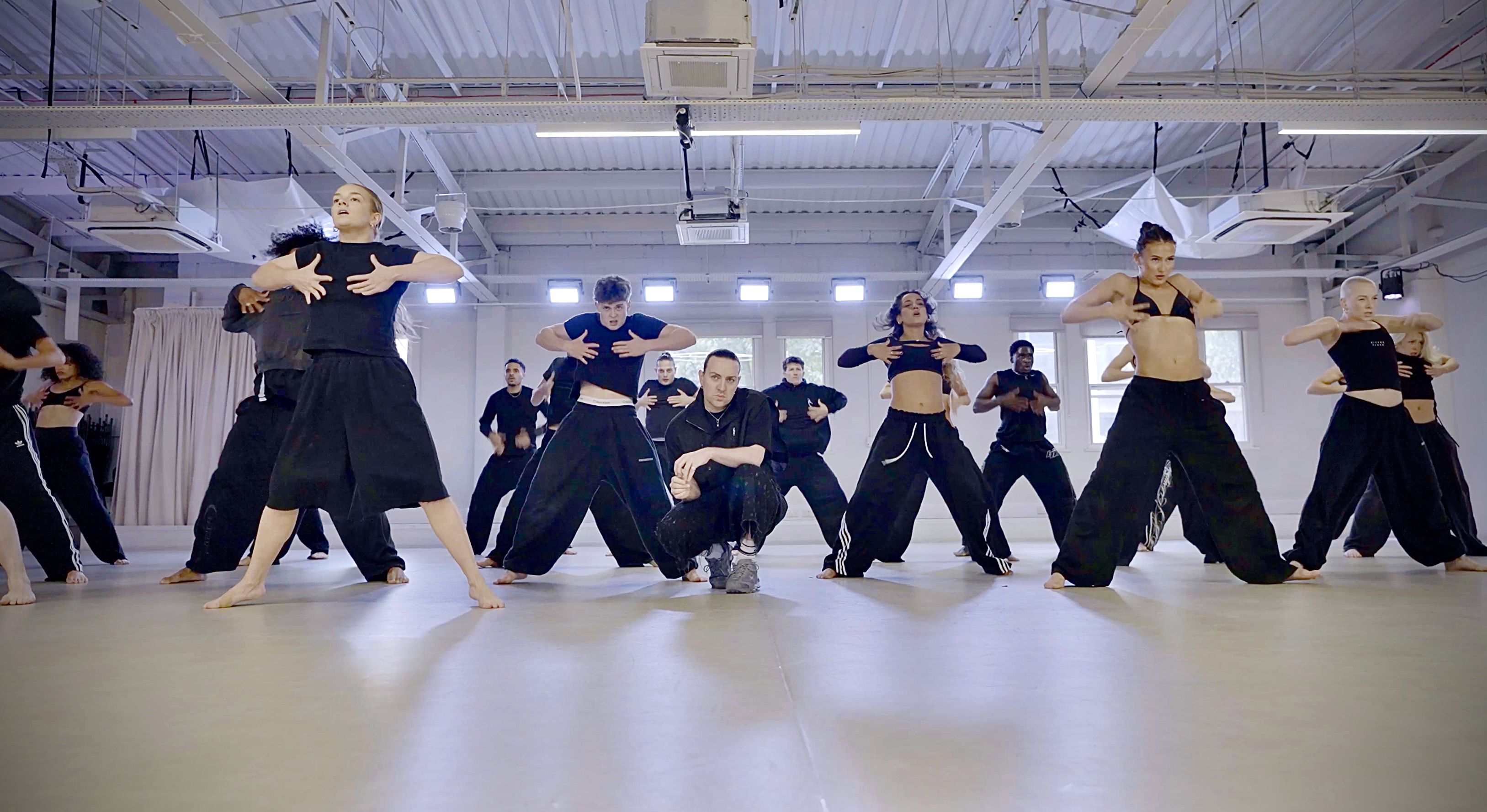
Dance For Your Life sends ten Sydney dance students to London for the shot at a single professional contract.
Dean Lee (centre) and Brent Street dancers in Dance For Your Life (2026). Screener courtesy of Mushroom Group

What director Luke Cornish and cinematographer Geoff Blee understand about filming dance is the potency of a locked-off wide shot, allowing the dancers to power the scene. Like most creative subject documentaries, the film thrives when we are given space to watch these incredible performers do what barely anyone else on the planet can do. Dance For Your Life is given more space to breathe and explore the works in London, working through Dean Lee’s choreography that will be the basis for the film’s final performance.

The tension between personal gain and camaraderie is at the heart of the film and allows the competitive engine to keep the audience invested in the story and these dancers. In a climate of economic uncertainty in live performing spaces at scale, the stakes feel impossibly high for these young people trying to survive in a creative industry seemingly set up for them to leave.

Dance as a ruthlessly athletic medium of artistic expression is unlike any other art form, but is potently absent from the competition element of the film. When we watch the ten in these wonderful rehearsal scenes, we are not viewing it as an artistic pursuit but as a fellow judge, picking up on minimal mistakes and alterations from the group. When this shift in viewership excels, it is in the lead sequence as Lee is deciding between Max and Connor, watching the piece back to back, noticing what each individual brings to the part. Expressing themselves within the framework in place is electric to watch, with the knowledge that ultimately only one will be selected.

Dance For Your Life has Dean Lee at its heart. It works more effectively as an exploration of modern professional dance and those who are excluded and marginalised from that space, rather than a competition that ultimately feels secondary to the journey the dancers go on at Shapehaus.

The final dance performance, which the entire film has been building towards, is a feat. The access for filming allowed the sequence to excel beyond a simple documentary or competition television film. The medium of dance allows for a litany of great cinematic moments when performed at the highest level, something Dance For Your Life achieves in this finale. 

There is a wisdom to not linger in the final contract decision at the film’s conclusion for long, knowing the audience has seen the growth of these performers across the film as more important than this one opportunity. While only one lucky person received the contract, no one walked away empty-handed.

Dance For Your Life is in select theatres from April 2nd.

Carmen Defies Expectation

Rating: 3.5 out of 5.

A modern dance film to remember, with a more emotive story than expected, Carmen (2022) is an evocative and thrilling experience that has peaks as high as you’ll find this year. An adaptation in name alone, choreographer and first-time feature filmmaker Benjamin Millepied has crafted, alongside a terrific collection of talent in front of and behind the camera, a complete reimagining of the Carmen opera. The film is vibrant and alive, and while the script is slight and only gestures mildly at its location and setting as a Mexico-American border romance, it still moves with a rapturous passion.

At the heart of the story is Carmen, played with fierce precision by emerging star Melissa Barrera, escaping across the border after the murder of her mother Zilah (flamenco dancer Marina Tamayo with one of the best opening scenes of the year). On the other side, we have Paul Mescal, a recently returning war vet Aiden, who is withholding his PTSD from those around him. On top of this, due to the struggling financial situation of the area, Aiden is forced to volunteer as a border patrol officer (the only real work in town), which pulls him into the path of Carmen.  

Paul Mescal and Melissa Barrera in Carmen.

It would be easy to reduce this film to a tragic love story between a Mexican immigrant and a border patrol officer, but that would discredit all of the work being done by screenwriters Lisa Loomer, Loïc Barrere, and Alexander Dinelaris to give these characters an agency and poignancy that surpasses these easy conventions.

What allows a dance-focused film to thrive as a theatrical experience is the incredible work of the great composer Nicolas Brittel. Brittell’s choral and string focused score is a work of magic, showing the extraordinary composer’s range while still driven by a focus on uplifting the emotion and narrative. Whether on Succession or his work with Barry Jenkins – his work on The Underground Railroad (2021) and If Beale Street Could Talk (2018) ought to be the stuff of legend – Britell’s compositions never overwhelm the narrative as they appear to come from the very core of the character’s beings. It is a shame a lot of his best work is on TV (Succession, The Underground Railroad, Andor), as it is a privilege to hear his work in a cinema.

Millepied and veteran cinematographer Jörg Widmer both understand the power of movement on screen, especially when shown in deep contrast by a solemn stillness. An emotive dance performance is often followed by an extended stationary shot centring an isolated performer in a chair or in isolation in some form. Wielding a combination of natural and neon lighting, Carmen operates well in both static frame and in movement, constantly fighting a balance between the two poles.

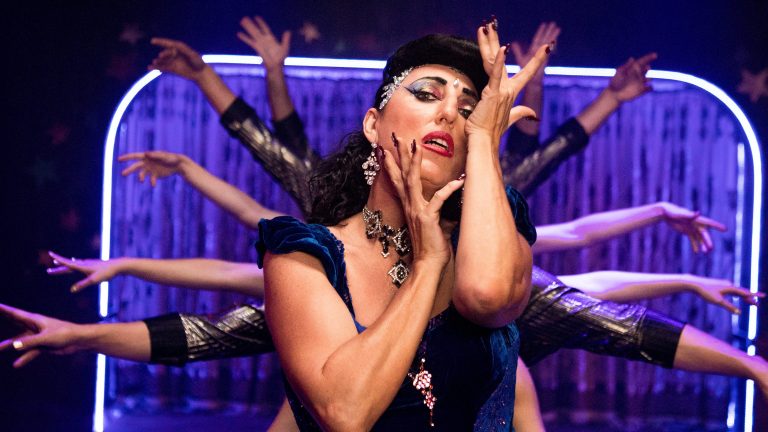
Rossy de Palma in Carmen.

When the film is at its best, all of the film’s elements come together to make something magical. The dancers alongside Barrera, Mescal’s war-torn performance, Widmer’s camera, Millepied’s gorgeous choreography, and Brittell’s score brings the whole film to life, transcending certain moments into awe-inspiring sequences. While it is his first time behind the camera for a feature film, Millepied has a clear knowledge of how these different elements, when operated by some of the best in the industry, can overwhelm an audience.

Bob Fosse paved the way for undeniable dance choreographers leaving their mark on cinema with style and personality, and while Carmen is no Cabaret (1972) or All That Jazz (1979), Millepied has a clear understanding of the energy an expressive, well filmed dance number can give an audience.

The lowest point of the film is certainly the stretch in the final hour without any large dance sequence, a standard for dance-forward films of this ilk. Millepied is aware of this lull, however, with two eruptive dance moments in the club and an underground fight ring that holds nothing back. The fight scene in particular sneaks out of the shadows, building naturally in a thrilling way. Focusing the scene on hip-hop legend The D.O.C and his original song ‘Pelea’ heightens the moment and makes for a terrific finale. Collaborating with Brittel on the song brings to mind Pusha T’s incredible Succession theme remix with its mix of modern Hip Hop and the composer’s cinematic style. 

There is power in an artist, uncertain if an opportunity like this will arise again, leaving it all on the floor. This is why the best debut albums are always so powerful. And while this is certainly the case here with Carmen, what makes it unique is how collaborator-focused Millepied’s film is. In a tour de force score from Brittell, a balletic work behind the camera from Widmer and Australian Steadicam operator Andrew ‘AJ’ Johnson, and a potent ensemble highlighted by Barrera and Mescal, Millepied has made an intoxicating debut to remember.

Carmen is in select theatres now.