
Presence preview provided by Rialto Distribution.
From the outset of Steven Soderbergh’s newest cinematic experiment, Presence (2024), it is clear this gambit will pay off. As we, through the anxious eyes of a new ghost, experience a new world, through a nimble first-person lens that never relents. This new world in question is the arrival of a young family of four in a large suburban house after the traumatic deaths of teenager Chloe’s (a wonderful Callina Liang) two friends in the city, leaving them in need of a fresh start.
Beginning with one of 2022’s best films Kimi, veteran filmmakers Steven Soderbergh and David Koepp have united to create a series of impressively contemporary small-scale American films (with another set for 2025 with Black Bag), that feels wholly unique on the movie calendar. With Presence, the pair shift from tech thriller to modern ghost tale with an equally impressive lens pointed directly at the connection in contemporary life.
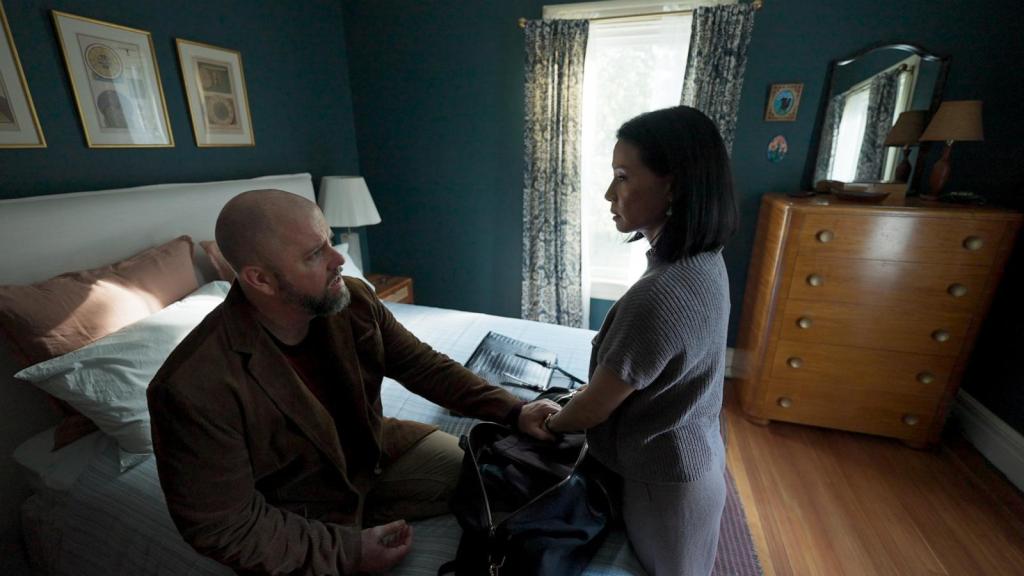
Through a floating visual language, we explore this young family in moments of both intimate quiet and explosive argument. The parents, high-powered exec Rebecca (Lucy Liu) and the more emotive Chris (Chris Sullivan), have clear strong ties to individual children, creating a constant tension between the four characters. Rebecca sees herself and the potential for great success in their arrogant older son Tyler (Eddy Maday), whereas Chris’ more emotional side draws him to his daughter Chloe, an isolated teen dealing with tremendous grief at a young age that pierces through the screen.
Themes of accidental overdoses and youth deaths are complicated but important issues to place in a film, particularly at its emotional core. While Presence floats freely between potential genre trappings, it is grounded by this potent story element that is sure to resonate with many.
To achieve the sensation of a first-person camera narrative that has real expression through the lens, Soderbergh — acting as his own cinematographer as he often does — filmed Presence chronologically, with the camera beginning in a more trepidatious, larval state before coming into its own by the film’s midpoint. The camera does not glide effortlessly through the house to open the movie. Instead, we feel every step as we move around the space, like a young foal taking its awkward first steps into the world. The camera has physical tics and safe spaces inside the home that, through repetition, just like an acting performance, breathes life into the lens. This deft and crucial weight of intent allows the film to quickly transcend from a small-scale cinema experiment into a riveting family drama where the absence is just as visceral.
It’s remarkable how quickly you can slide into the position as a fly-on-the-wall observer by wielding the camera this way, and how the emotion of a scene can play out with sharp efficiency (a Soderbergh hallmark) when the personification of the camera holds so much weight.
The film operates as an interesting refraction to David Lowery’s poetic A Ghost Story (2017), which focuses on a ghostly presence with a level of banal reality that transforms slowly into a beautiful understanding of a greater spiritual moment. Much like that film, the innovative style of filmmaking on hand here works effectively because of the decision to place a young ghost at the heart of both stories.
While the structure of the film allows a flow state of dramatic experiences for the family, the final 10 minutes of Presence are as distressed as you’ll feel at the movies this year with its clear eyed understanding of modern life and pressures. This shouldn’t be a surprise as it’s a ghost film, but over the course of this innovative family drama on loss and connection, this shift has an overwhelming weight of emotion that is wonderfully unexpected. Through Koepp and Soderbergh, we have a new creative powerhouse partnership that is breathing new life into modern American storytelling.
Presence is in theatres now.
 Rating Frames