Annette is a Whirlwind of Ideas Mashed into one very Unique Feature

Rating: 3.5 out of 5.

Few films of recent memory have been as visually abstract and wavering in their focus as Leos Carax’s Annette (2021). It’s one of those films that leans into art-house conventions of filmmaking and asks its audience to latch onto them for dear life as the film zig-zags through a minefield of ideas, set pieces, and oddness to provide an experience unlike any other in 2021.  

So where does one start with a film that is more interested in keeping its audience guessing than providing them with a clear cut narrative? Well for starters, Annette unfolds in an operatic-like showcase that echoes early French Avant-Garde filmmaking (particularly that of Jacques Demy whose influence is definitely felt). For instance, dialogue is often sung throughout the film, scenes are choreographed to play out like live theatre, and there is a particular emphasis on the unnaturalness of how the actors move through space and time.

With a screenplay by the Mael brothers (Sparks Brothers) and Carax, Annette is never short on surprises and wackiness as it leans into a romantic-fantasy-musical akin to what I can best describe as Beauty and the Beast (1991) meets A Star Is Born (2018).

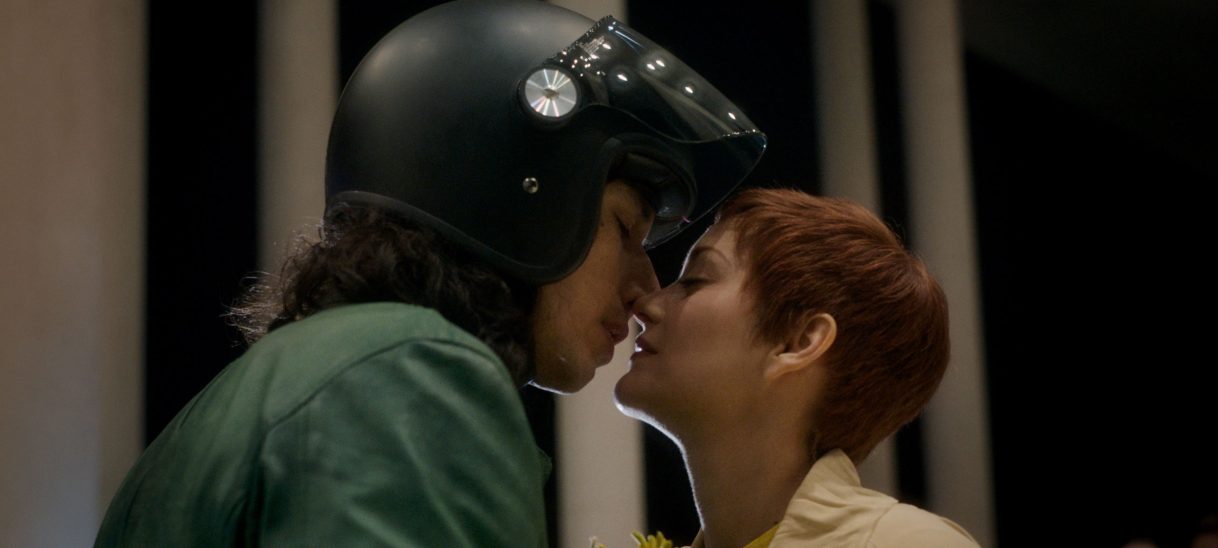
At its core though, the premise of the film is a relatively simple one revolving around romance and the struggles of stardom. Henry McHenry (Adam Driver) and Ann Defrasnoux (Marion Cotillard) are both performers — a comedian and soprano, respectively. As with most celebrities, their life and personal affairs cannot escape the public eye, and Henry becomes more agitated and narcissistic as the film progresses, while Ann gradually begins to pull back and become somewhat of a muse. This is particularly true for both characters as they welcome their baby daughter Annette, into the world.

Annette herself is presented in puppet form which raises interesting ideas pertaining to artifice, especially when it comes to how Henry and Ann see the world around them. Both characters seemingly awaken following Annette’s birth in that they realise the life they have been living up until now has all been a farce so as to maintain the illusion of contentedness. Annette’s presence sees that illusion be torn down as the film spirals into a hodgepodge of visual cues, symbols and motifs that are really difficult to grapple with (oh and did I mention Annette is gifted with an incredible musical voice?).
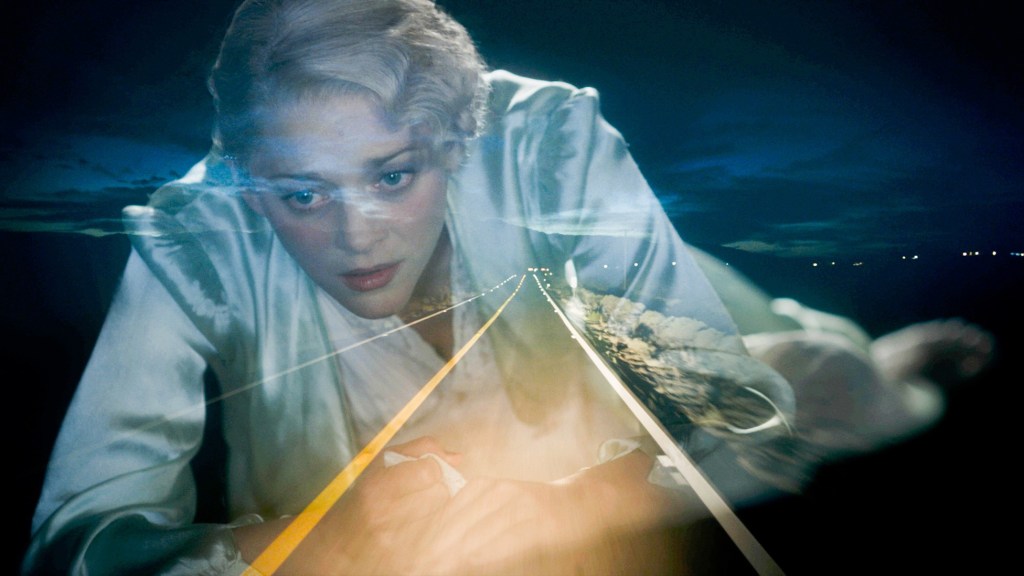
Marion Cotillard in Annette

The music of the film is also a big reason for why its zaniness works — perhaps because it was conjured up by the equally zany Sparks Brothers. With lyrics that penetrate and carry over between each set piece (especially “We Love Each Other So Much”) Carax is able to nurse the film into a level of tenderness that becomes crucial to living up to the films tragic finale. The repetition of music and lyrics has a level of sadness that brings to light the illusory truth effect where, the more something is repeated, the more likely it is an individual will believe it to be true.

But for Henry and Ann, there is a level of truth to their repetition no matter how much it seems to divide them. Carax makes this apparent by intertwining the aforementioned lyrics into very physical actions and events (i.e. Henry performing oral sex on Ann, Ann giving birth while those in the birth theatre sing). In this sense, Henry and Ann aren’t repeating for the sake of wanting to believe that they love each other, rather, as Henry lyrically asserts to Ann’s former partner The Conductor (Simon Helberg), “that song was our song”. In the same way, that love was their love — it was born out of truth and remained so, even as Henry continued to descend into a deeper low (which I won’t spoil).

The film isn’t without its shortcomings though. Carax is less interested in drawing an emotional response from audiences due to the lack of avenues from which to draw that response (at least for the first two acts), and is instead interested in using symbols and motifs (Annette in her puppet state, Ann’s distinct vocal pattern etc.) to build up the audiences understanding of events. For most of the second act, the film relies on these cues to give some sort of structure and direction to an otherwise unruly narrative. Sure, fans of Carax will band together to point out that Carax’s style is less about narrative coherency as it is about using the affordances of the medium in a Lynchian fashion, but it’s an absence, nonetheless.

Most of Annette relies on the audiences desire to be in equal parts submissive to the subversive form of the film, and to experience the film through its wandering structure. It’s a unique experience that can often feel exhausting which I have no doubt is intentional as Henry and Ann’s relationship is an exhausting one, but it’s worth taking the ride.

Annette is currently screening in select cinemas, and on Palace Home Cinema
The Mad Women’s Ball is a Deeply Compelling and Arresting French Period Drama

Rating: 4 out of 5.

Centred around the infamous Pitié-Salpêtrière Hospital during the reign of Jean-Martin Charcot in the late 19th century, The Mad Women’s Ball (or Le Bal des folles in its native french, 2021), written, directed, and starring the terrific Mélanie Laurent (who audiences will recognise as Shoshanna from Inglorious Basterds or as Two from 6 Underground), is a compelling and gripping period drama, adapted from the critically acclaimed 2019 novel from Victoria Mas of the same name.

The film focuses on Eugénie Cléry (played by a mesmerising Lou de Laâge), a wealthy and defiant woman who is desperate to experience the world around her through books and exploration, a world that to her feels as tight and restricting as a corset (more on that later). We quickly come to learn that Eugénie has the ability to communicate with spirits, in several gripping sequences that would not feel out of place in Hereditary (2018), which keep the audience on edge for the entire first act, unsure of where the story is headed.

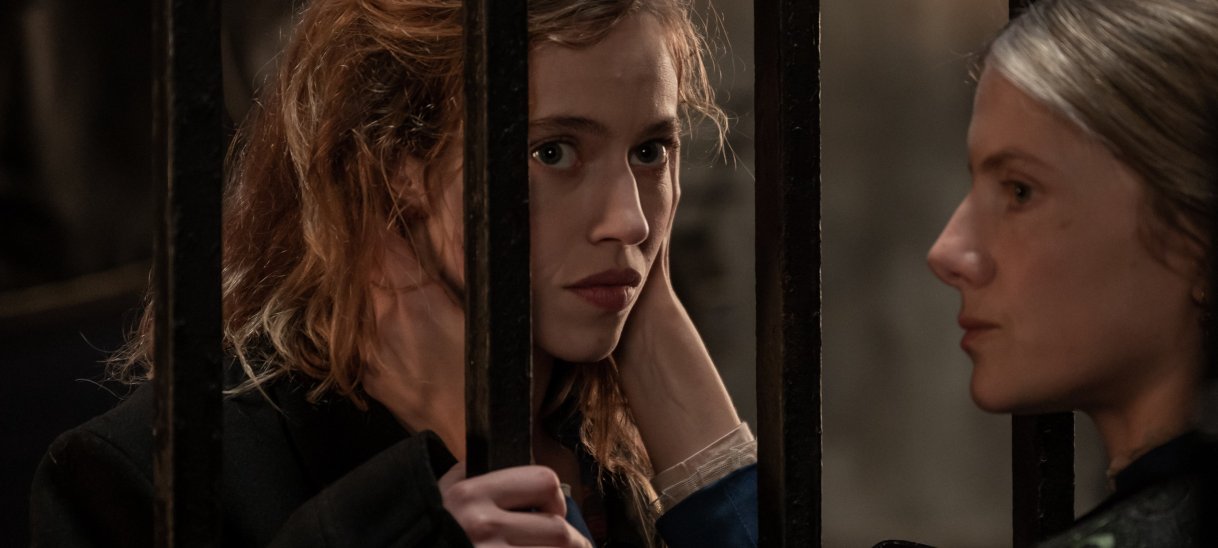
The film turns as Eugénie’s family discovers her abilities and, out of fear, admits her to the famous hospital, in the care of neurologist Jean-Martin Charcot (Grégoire Bonnet) and head nurse Geneviève Gleizes (Mélanie Laurent). Based on previous expectation of films and novels set in psychiatric wards, we assume Geneviève will be the antagonising presence of the film, but is quickly apparent that the relationship and bond between Geneviève and Eugénie will be the driving force of the film moving forward.

It is in this two-hander that the film truly excels, with Laurent and Cléry playing off each other tremendously with a quiet electricity only the best can achieve. Laurent has experience capturing Cléry’s intoxicating screen presence in her 2014 coming-of-age film Breathe and that familiarity is immediately apparent with a creative relationship that will hopefully continue into the future.

What separates a protagonist like Eugénie from those in similar films is her undying faith in her abilities. Even while under extreme duress inflicted upon her in barbaric fashion by the doctors in Salpêtrière, Eugénie never once backs down from her belief, all but guaranteeing her imprisonment but endearing her to those around her. Her lack of doubt in what she sees is truly refreshing, not bogging the narrative down in the swamp of a protagonist questioning themselves, as their resolve is the survival mechanism they require to withstand the world around them.

 Lou de Laâge and Mélanie Laurent are extrordinary together in The Mad Women’s Ball

The Salpêtrière is shown to us and Eugénie immediately as a monstrous place, with the howls of women echoing throughout the walls as she is dragged from her carriage – her father François (Cédric Kahn) and brother Théo (Benjamin Voisin) barely able look at her out of shame – unable to face the nightmare they have condemned her to. This is a famed hospital, the largest in Paris and known for its discoveries in neuroscience, but this film sets out to show us that within these hallowed walls, there is great pain and trauma being inflicted on the women inside, imprisoned here and experimented on in truly barbaric ways.

These acts of barbarism would weigh down most films, but Laurent is able to dull the blade of the men’s savagery through the close and careful attention given to the women Eugénie meets in the dormitory, who develop a wonderful camaraderie over the course of the film. A quietly moving moment happens after Eugénie returns from a horrific stay in hydrotherapy where we see her truly open up to the other inmates around her, embracing those she originally turned away from.

Whilst The Mad Women’s Ball is very much an actor’s showcase, there are some truly wonderful flourishes from Laurent and cinematographer Nicolas Karakatsanis. There is a beautiful use of natural lighting which was displaying throughout, highlighted in images echoing still life paintings of tea cups and hairbrushes that places the film firmly in the set period of the 19th century. It is common for actor-turned-director’s to focus on their actor to a fault, but Laurent is shown to have a clear vision for the story that is consistent and thoughtful throughout the film.

In a film full of thematic motifs and imagery, the corset stands out, climaxing in a gripping intercut sequence between Eugénie and Geneviève, removing the symbolic restrictions placed upon the two women by a patriarchal world that looks to dominate them. The scene is a climax of earned melodrama, which a lot of films fall short of achieving, but when it is captured it can be quite transcendent. The motif of the corset is established not just through the literal clothing item, but in the constant hounding from Eugénie’s father François, telling her to fix her posture in almost every scene they share, attempting to drill his ideas of appearance and respectability through societal pressures into his daughter.

This is Laurent’s largest production to date and is setup for big things next year with an adaptation of the bestselling novel The Nightingale by Kristin Hannah on the horizon next year, starring Dakota and Elle Fanning, that is sure to further launch her into the next level of her terrific filmmaking career.

The Mad Women’s Ball is streaming on Amazon Prime Video.

Greyhound: Tom Hanks Writes and Stars in WW2 Thriller

Rating: 2 out of 5.

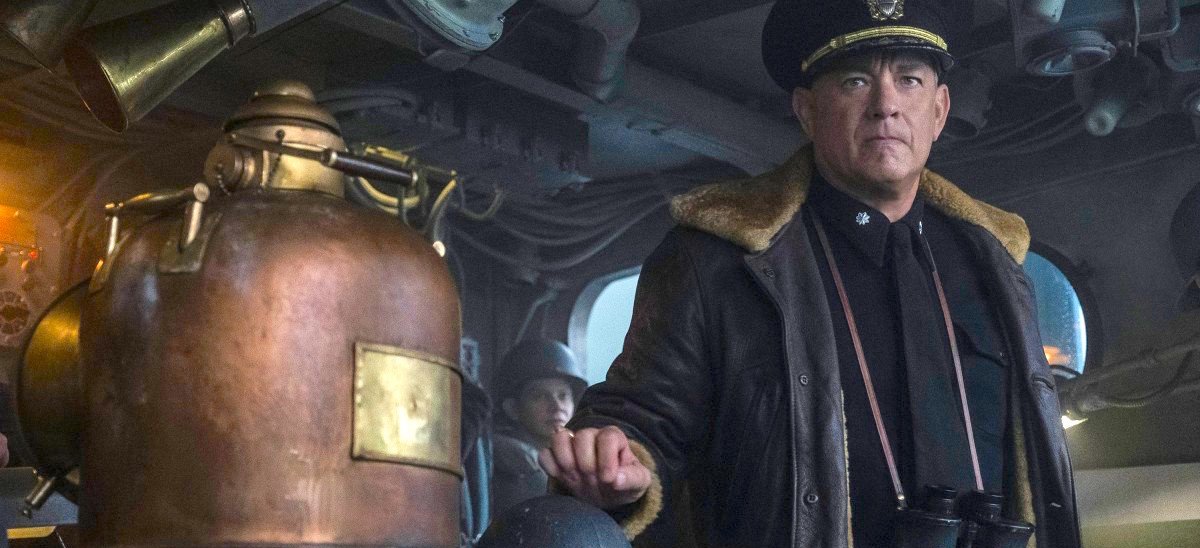
With WW2 and war films continuing to permeate film culture, it is no surprise that Tom Hanks would find himself at the helm of a war destroyer in open seas. Greyhound (2020) represents Apple TV’s first proper dip into distribution of a large scale film, and for the most part, it is a clear and simple adaptation of C.S. Forester’s 1955 novel, The Good Shepherd.

The film centres around Ernest Krause (Tom Hanks), a US Navy Commander who has the mission of escorting a large convoy across the Atlantic during WW2 while German U-boats (submarines) stand in the convoys way. With air support unavailable in the central part of the journey (known as the ‘Black Pit’) due to the range, it is up to Krause and his crew to keep the convoy afloat as they carry their supplies to Allies.

Unlike Hanks’ prior performances in war films Saving Private Ryan (1998) and sea escapades like Captain Phillips (2013), Greyhound sees the two-time Oscar winning actor play a more fixed and vocal role. This isn’t necessarily a drawback of the film as Hanks’ screenplay cuts out all of the fat and exposition that often subsumes most war films, and instead settles on the action at sea and the man at its centre.

Director Aaron Schneider, known for Get Low (2009) and Two Soldiers (2003), complements Hank’s more vocal and contemplative temperament by focusing in on the tension of the battles and the ferocity of the sea. Schneider keeps most of the film centred on the bridge of the ship in order to effectively heighten the tension of each given moment and capture the spacial limitations and helplessness of being out at sea. This makes for plenty of thrilling moments as the German U-boats circle like a pack of wolves (as they assert) while Krause and his crew yell out bearings and directions.

Tom Hanks in Greyhound

In terms of some of the production aspects, the action and battle scenes are predominately CGI’d, but they hold up for a budget of US $55 million. Also, Blake Neely’s score complements the CGI’d battles in its low tone that has a constant sonar echo, and the dull green/grey colour palette is fitting for the period being depicted.

When comparing the film to other war films of recent like Dunkirk (2017) and Hacksaw Ridge (2016), Greyhound is more limited in its scope and ambitions. Not much is known about the character of Ernest Krause; there is a brief insight into his past as a commander at Pearl Harbour as well as a pre-Greyhound scene involving his significant other. However, for the most part, Hanks and Schneider want to keep the attention solely around the ship itself in order to immerse audiences in the Greyhound ship experience.

For what it’s worth, that on-ship isolation works in removing all the weight of narrative expectations that some might see as being essential (including yours truly). However, unlike something like the aforementioned Dunkirk, the same level of practicality that comes with a Nolan war film and the diversity of tense moments isn’t the same here. That might be due to the lack of space that comes with being at sea, or it might be the repetitive nature of the films events that Hanks and Schneider knuckle down on. Regardless, there isn’t much leg room to wiggle into backstory and character building that one might expect.

For a first major feature on Apple TV, Greyhound is rife with Navy lingo and sea battles, and with Tom Hanks at the helm, it makes sense that it received Oscar nominations this past year. As a war film, it isn’t as compelling as some of the films mentioned, but it is clear in its focus and objective and for the most part, it manages to provide an engaging viewing experience.

Greyhound is streaming on Apple TV

Trippy Visuals and Laughs Abound in The Mitchells vs. The Machines

Rating: 4 out of 5.

Sony Pictures Animation was once a minnow of the medium, its prosaic releases barely a threat to the dominance of the industry’s heavyweights. That order is looking shakier nowadays, with the company doing everything and anything possible to distance itself from the competition, much to its benefit, with this feature being a recent example.

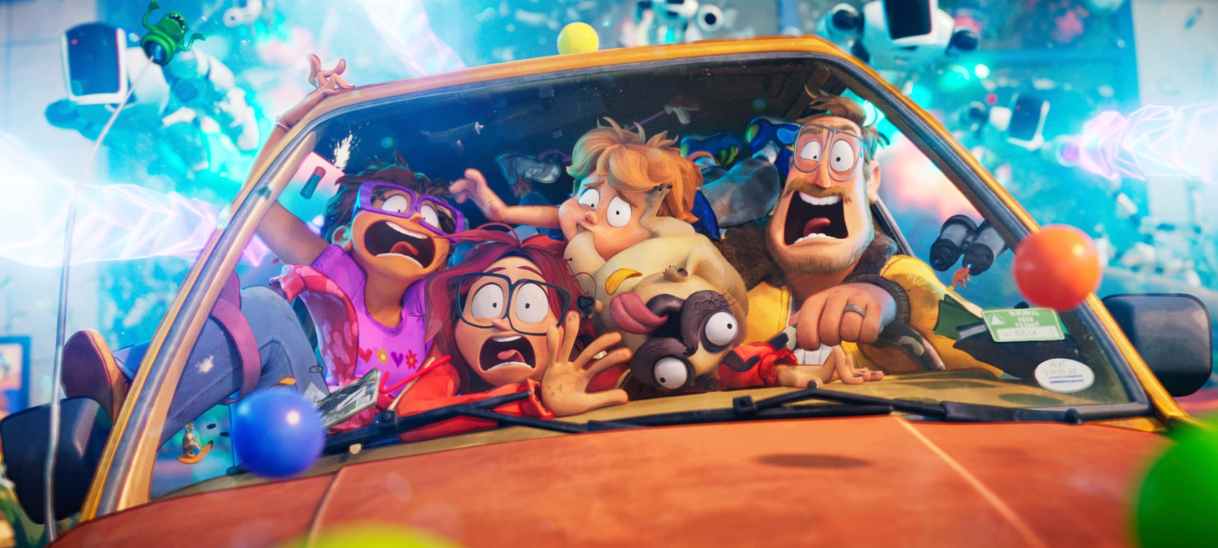
The Mitchell family – consisting of patriarch Rick (Danny McBride), his wife Linda (Maya Rudolph), teenage daughter Katie (Abbi Jacobson), youngest son Aaron (the film’s director, Mike Rianda) and their pet dog Monchi – is driving from their home in Michigan to California, where Katie will be attending Film School. For Rick, the road trip represents one last chance to connect with his daughter; for Katie, it’s just the latest instance of her father’s undermining ways.

As the Mitchells make their way across state lines in their weathered station wagon, an artificial intelligence system known as PAL (Olivia Colman) gains control of the world’s electronic devices to launch a machine-led, Terminator-style apocalypse, enslaving humanity in the process. The only people to escape PAL’s tyranny, funnily enough, are the Mitchells, who take full advantage of their freedom by tasking themselves with saving humanity through their own wacky, unconventional means.

The Mitchells vs The Machines (2021) was due for a cinematic release in 2020 under the moniker of Connected, delayed several times in the wake of the pandemic before its financier, Sony Pictures, eventually scuttled the film’s distribution plans altogether. Instead, the movie was tendered to various streaming websites and eventually purchased by Netflix, which secured global rights to the picture and a change in title – one preferred by the producers and initially rejected by Sony.

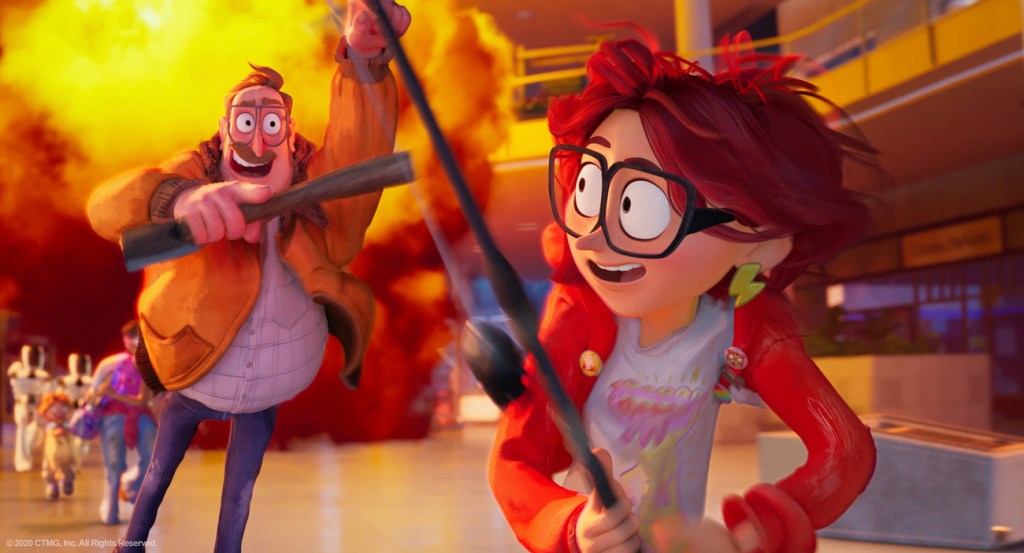
An immediately distinguishable feature of The Mitchells is the art-style, looking unique to any other Hollywood production. Although computer-generated like most animated pictures, the illustrations have been rendered and shaded in such a way that each frame better resembles an acrylic painting, lovingly hand-crafted on a patch of canvas. The character designs are equally distinctive, being adorned with flat faces, wide eyes, gangly bodies and brightly-coloured clothes to truly set the film apart from its brethren, from Sony or otherwise.

Rick Mitchell (left) with daughter Katie in The Mitchells vs the Machines

These beguiling images are energised by the exceptional animation, comparable in quality to another Sony feature, the much-loved Spider-Man: Into the Spider-Verse (2018)­. Throughout The Mitchells, people and objects are seen moving with a remarkable amount of freedom, apparently unhampered by technological limitations; in quieter, more emotional scenes, these movements are smooth and fluid, becoming quick and frenetic during scenes of action, and faster still in the comedic sequences to synchronise perfectly with the film’s zany tone.

Therein lies another forte of The Mitchells: its comic sensibilities. The movie is rife with humour, containing a plentiful number of visual gags, generous amounts of slapstick and a selection of decent one-liners – including some ironic, pointed statements about America’s technology giants that surely aren’t lost on Netflix. For cinephiles, there’s even more pleasure to be derived from the copious references to other works, including no less than two welcome homages to Quentin Tarantino’s Kill Bill Vol. 1 (2003).

Disappointingly, there is an area where The Mitchells lags behind its contemporaries, and that’s in the screenplay department. The story is one that follows some very familiar beats, incorporating timeworn elements such as a young protagonist struggling to bond with their parent, and revelations of deceit that cause greater conflict between characters, neither of which are appreciated. Even so, the plot remains relatively compelling, courtesy of some clever turns thwarting the progress of the characters.

And anyhow, it’s the comedy and animation that are the picture’s greatest strengths, hallmarks shared with Into the Spider-Verse ­– and surely not by coincidence. With these two films, it appears that Sony is readying itself as a pioneer of the industry; a company that doesn’t compromise on the artists’ vision, encouraging innovation rather than adherence to a particular style or image. In an era where movies are increasingly subject to studio interference, it’s an approach that’s sorely needed.

Blessed with an abundance of creativity, colour and zaniness, The Mitchells vs. The Machines is the kind of picture that other studios could only dream of emulating. Its distinctive visuals, brilliant animation and hilarious antics are more than enough to overcome a cliched plot, all showing why Sony Pictures Animation has a bright future ahead.

The Mitchells vs. The Machines is currently streaming on Netflix.

Infinite: Reincarnation has Never Looked so Boring

Rating: 1.5 out of 5.

With film studio Paramount having launched its streaming service Paramount +, it seemed fitting to watch its first drawcard feature Infinite (2021) starring the ever bankable Mark Wahlberg. This comes some months after Amazon Prime’s recent sci-fi thriller The Tomorrow War (2021), starring an equably bankable Chris Pratt in the lead role. While The Tomorrow War had a relatively tolerable premise, Infinite is an insufferable mess that proves studios are willing to throw their money at just about anything as long as Wahlberg is in it.

To say that Mark Wahlberg is the problem would be an oversight. His performance in Paul Thomas Anderson’s Boogie Nights (1997) is as iconic today as it was over 20 years ago, and he seems to have found a resonance with Michael Bay — having shone in Pain and Gain (2013) and the last of Bay’s two Transformers films. However, Infinite reduces Wahlberg’s often fast-talking and physical performance to a dreary and tedious display that can only be summed up by Wahlberg’s own confused facial expressions as events of the film unfold.

Antoine Fuqua is known for his action packed films like Training Day (2001), The Equalizer (2014) and frequent collaborations with the likes of Denzel Washington (who won an Oscar for Training Day), Jake Gyllenhaal, and now Mark Wahlberg (both of whom he has worked with twice). However, Infinite represents a departure from a simple action premise to something more akin to Doug Liman’s dreadful action sci-fi, Jumper (2008). It is adapted from D. Erik Maikranz’s 2009 novel The Reincarnationist Papers (which is, by all accounts, equally underwhelming).

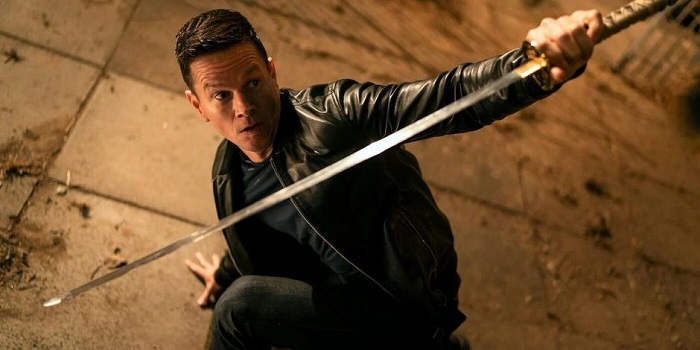
Infinite is essentially about a small group of people known as the infinites who are pretty much reincarnated after they die, in the sense that they can eventually remember their past lives and skills obtained in those lives. Evan McCauley (Mark Wahlberg), who is known to the other reincarnated as Heinrich Treadway (one of his past reincarnation names), lives most of his new life never really knowing he is one of the reincarnated and is instead diagnosed as a schizophrenic. What Evan doesn’t know is that somewhere in his memories lies the location of an object known as the egg, which the infinites are trying to find before Ted (Chiwetel Ejiofor), another infinite who goes by the name of Bathurst, finds it.

Mark Wahlberg in Infinite

Fuqua essentially orients his film around this plot device and creates a goose chase for his characters in the process. This plot device is desired by Bathurst who wants to harness it to destroy the world so that there is nothing left to reincarnate to — effectively rendering the reincarnation process as finished. The problem with the film is that it relies too much on this specific object as a catalyst for creating cause and effect, and this leaves the events of the film lacking substance.

Mark Wahlberg looks confused and bored for most of the film, with his real flair coming during the action set pieces, which themselves amount to nothing as they are too few and far. Chiwetel Ejiofor’s character is also incredibly underwritten and exists purely for the sake of being an antagonist — he delivers some lines about his purpose, kills off some equally underwritten characters, and is waterboarded with gasoline for some reason. In essence, both the protagonist and antagonist are uninspired, especially when compared to The Tomorrow War’s protagonist and alien entity which are miles better for an action sci-fi.

Perhaps Antoine Fuqua should have found a way to incorporate another 40minutes for greater clarity (seeing as Paramount already seemed set on going all in on this) or perhaps he should have focused on releasing one feature this year instead of two, seeing as The Guilty (2021) arrives later this year. Regardless, Infinite is a forgettable viewing experience and is a reminder that Michael Bay is still the only director to get the best out of Wahlberg in the last 20 years. Lets hope Paramount can bring its lacking streaming service some content worth audiences time and money.

Infinite is now streaming on Paramount +

Worth Tackles Questions of Loss and Tragedy in 9/11 Drama

Rating: 3 out of 5.

Releasing onto Netflix in time for the 20th anniversary of the 9/11 attacks, Sara Colangelo’s Worth (2020) asks the daunting question of valuing a human life and the emotional turmoil of asking an individual to calculate that number in dollars and cents. That is the task of Ken Feinberg (Michael Keaton) and Camille Biros’s (Amy Ryan) law firm after the tragedy of the September 11th attacks, a task only Feinberg jumps at the opportunity to pursue. Just over a week after the attacks, the US Congress passed a bill to compensate the families of those that were lost, with the promise of not suing the airlines involved in the attacks, an act we are told would sink the economy, with Feinberg’s task to be to find the right number value for this compensation.

The film is setup well and has a high level of care given to the events that tell the audience immediately the sort of 9/11 drama this will be. Yes, there will be emotional scenes with grieving families breaking down in law offices, but the film will not confront you with the horrors of the events, that is not where its interests lie.

Keaton is a standout here, having an impressive command of the film while never being flashy, maintaining a consistent and measured demeanour, never wanting the emotional weight of tragedy the job requires to cloud his judgement. There are no “they knew!” scenes of emotional release that Spotlight had here – which won’t help it come awards season – the emotion of the film instead was carried through the circumstances and the testimonies of the families, an aspect Colangelo never abused, peppering these scenes in to create a measured flow to the film.

But this was no one-man show. The whole cast was excellent and individualised, especially Amy Ryan and Shunori Ramanathan, who at times were given the task of grounding and transferring the emotional weight of the film from the families to the firm, something she did with a certain energy and grace that was quite remarkable. It did on occasion lean too heavily into the tropes of the grizzled boomer man needing to be taught empathy by the women in his life, but the performances of Keaton, Ryan, and Ramanathan ground it just enough to avoid falling over.


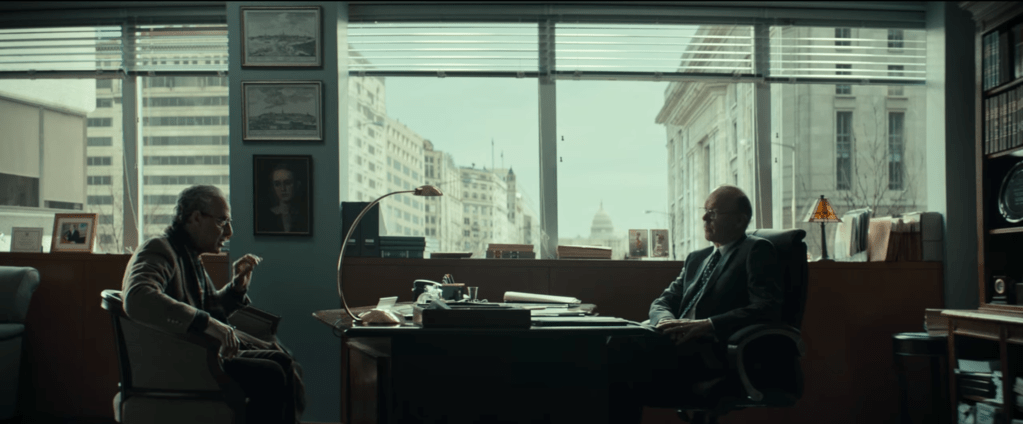
Colangelo and cinematographer Pepe Avila del Pino (who worked together on Colangelo’s complex previous film The Kindergarten Teacher) also created an engaging and compelling visual language to Worth that should be celebrated. There’s a heavy use of negative space throughout the film, emphasising the isolation the lawyers are feeling as they attempt to connect with different parties, as well as an interesting use of centre framing, something quite unique in this sort of biopic film that stylises it in a singular way. Too often movies of this nature focus too much on dialogue in dull fluorescent lit offices and ignore the infinite ways filmmaking techniques can communicate a theme and emotion that makes the best films so impactful.

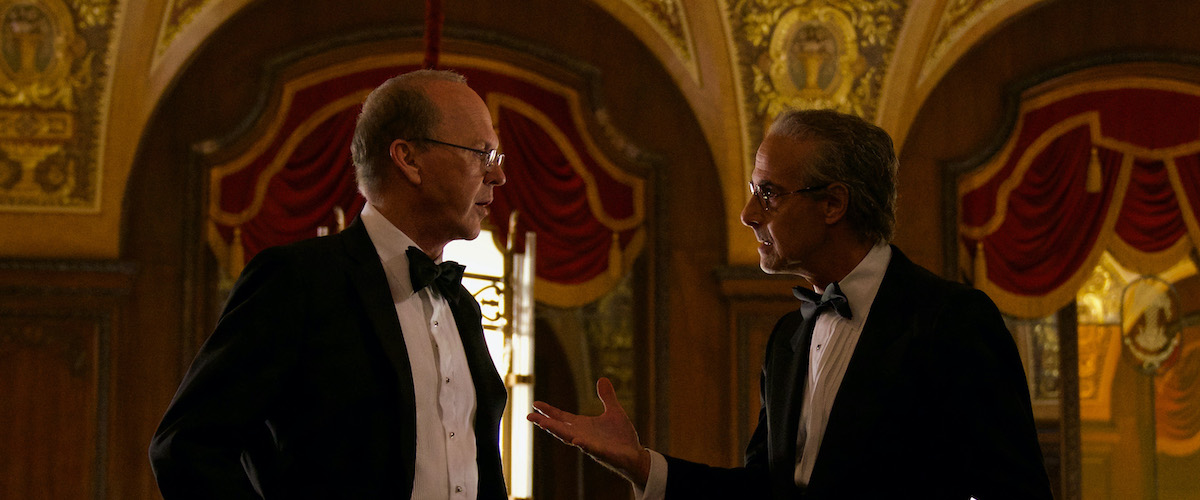
Stanley Tucci and Michael Keaton’s pivotal confrontation in Worth

One area that didn’t feel as considered as the framing, however, was the haphazard score, with different styles being thrown around between very quiet and sterile scenes. Even with the musical connection of opera and classical music being formed between Keaton and Tucci’s characters, this bond is never felt on a filmic level, with some score choices feeling at odds with the nature of the scenes they are intended to accompany. Compare that to Spotlight, something impossible to ignore throughout the film, which has one of the best scores of the 2010s by legend Howard Shore. What makes that score transcendent isn’t the flashy, rousing orchestral moments we usually attribute to the best scores, but in how well it connects to the film it is contained within and elevates in its emotional weight, something Muhly’s score falls short on.

The Shore score is measured, inquisitive, and almost mourning, matching and amplifying the tone of the film. The Muhly score, however, feels disjointed with its use of different instruments and styles with no real sense of cohesion between pieces, and rarely matched the emotional stakes of the scenes they were in which limited the film’s ability to transcend the more cliche and typical aspects of the film. It may feel harsh to harp on just this one aspect of the film but it feels a microcosm for the issues of the film and what holds it back from being great.

Worth is an admirable film that is considered and thoughtful about an important time in our history that needs to be viewed more closely and has set Colangelo up for a potentially long career oscillating between indie and studio filmmaking. It’s worth your time. (I couldn’t help myself.)

Worth is currently streaming on Netflix.

James Gunn’s The Suicide Squad is an Irreverent, Unhinged Joy

DC’s cinematic output has been rather disparate of late, to say the least, with their releases range in quality from good to woeful, and most being mediocre at best. Now comes another blockbuster branded with the DC moniker, this one outshining everything that has come before it – especially its 2016 namesake.

Task Force X is a secretive branch of the United States government that oversees military operations deemed too dangerous, or too sensitive, for America’s heroes to be involved in. Their agents are inmates of the Belle Reve Correctional Centre – home to the evilest of supervillains – who are recruited in exchange for reduced sentences, provided they comply with their commands; should they not, the agents will be killed by their superiors.

The organisation’s newest recruit is Robert “Bloodsport” DuBois (Idris Elba) who has been sought by the director of Task Force X, Amanda Waller (Viola Davis) to lead an operation on the despotic island-state of Corto Maltese. DuBois has no desire to be involved whatsoever, until Waller threatens the safety of his teenage daughter, thereby forcing his hand into joining and reluctantly leading the mission.

The entity of Task Force X previously made its cinematic debut in David Ayer’s Suicide Squad (2016), which found commercial success despite being widely panned by critics for its appalling direction, unfunny humour and jarring, inconsistent tone. In developing the sequel, Warner Bros. ditched Ayer and handed directorial duties to James Gunn – who had just been fired from Marvel Studio for a series of tasteless posts on social media – and gave him complete creative freedom.

As a result of said freedom, Gunn’s new film bares next to no correlation with its Ayer-helmed precursor, despite sharing a similar title in The Suicide Squad. The extended cast serves as the only discernible connection between the two movies, with the abovementioned Davis reprising her role, in addition to Joel Kinnaman as Colonel Rick Flag; Australia’s own Margot Robbie as the squeaky-voiced jester, Harley Quinn; and fellow Australian Jai Courtney as the intensely ocker Captain Boomerang.

Harley Quinn (Margot Robbie) makes a return to the screen in The Suicide Squad

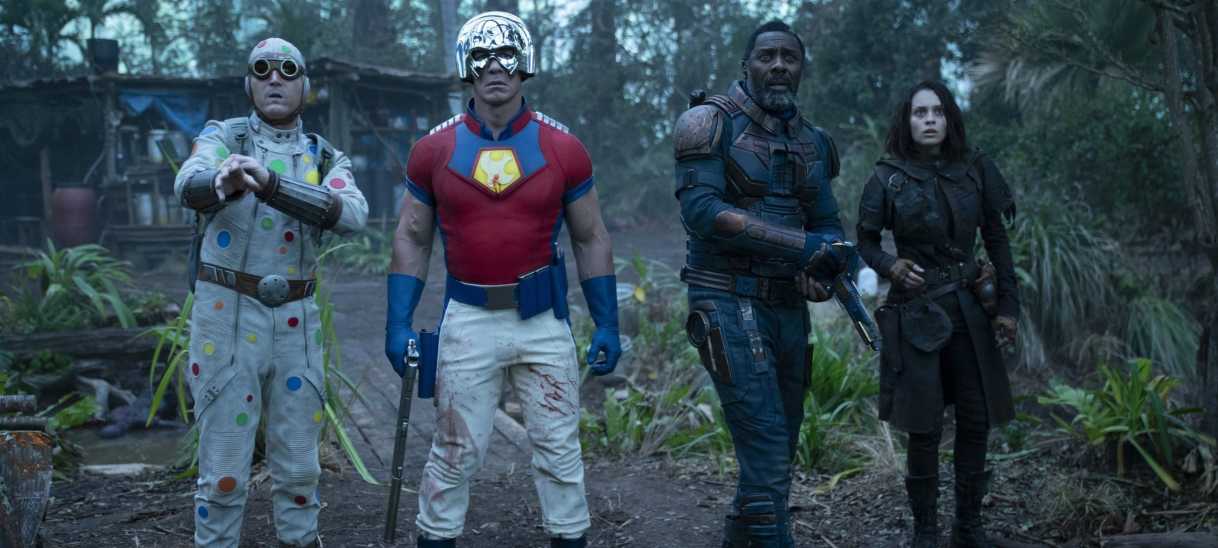
Joining them are a bunch of fresh recruits who operate under Bloodsport’s command, including macho gunman Christopher “Peacemaker” Smith (John Cena); a man who can conjure explosive polka-dots, Abner Krill (David Dastmalchian); an anthropomorphic shark named Nanaue (voiced by Sylvester Stallone); a young woman who can summon and control rats, Cleo Cazo (Daniela Melchior); and finally, Cleo’s pet rat Sebastian (voiced by animal impressionist Dee Bradley Baker).

The Suicide Squad spends the majority of its time focused on the latter group of characters, and rightly so, because they’re nothing but a charm. This appeal is fuelled largely by the performers who play them, with all the newcomers looking poised and relaxed, and each gifting their respective roles with a distinct personality. Through their efforts alone, these actors have turned a group of obscure antagonists into loveable rogues who deserve to lead every sequel and spin-off that follows.

Just as admirable is the film’s screenplay, solely and cleverly written by Gunn. In addition to the main conflict, each character is gifted with their own story-arc that pertains to a troubled backstory, developing and maturing as they seek to address it. Although these struggles are relatively minor, they do aid in further humanising the protagonists; what’s more, their arcs prove just as gripping as the central plot without ever distracting from it, nor overwhelming the audience with narrative.

The screenplay’s strength doesn’t just lie in its ability to fuse multiple storylines into a coherent package, for it is equally adept at toying with the viewer’s expectations. Gunn sets the stakes of his picture high from the outset, showing characters being killed left, right and centre with little regard for how established they are, and even less for the celebrities chosen to portray them. After the first few minutes, there’s no knowing where the film is heading, nor if anybody will survive the climactic showdown.

As much a part of The Suicide Squad’s appeal is the mature content, being more vulgar and graphic than the average superhero blockbuster, courtesy of the profanity-ridden dialogue, sporadic glimpses of nudity and gratuitous levels of violence. Blood and gore are abundant in Gunn’s picture, with all manner of body parts bursting open whenever a character is slaughtered, and the majority of those deaths being played for laughs.

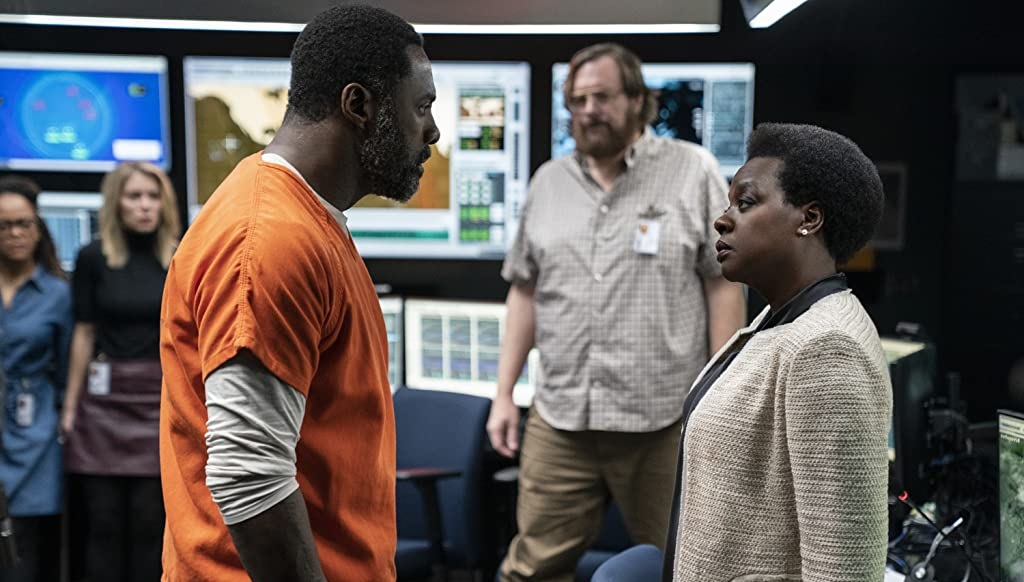
Robert “Bloodsport” DuBois (Idris Elba) confronts Amanda Waller (Viola Davis) in The Suicide Squad

On the subject of laughs, there’s some pretty decent ones to be had throughout, with frequent, fast-paced quips coming from every character, as well as the occasional slapstick gag; yet the best comedy is mined from the desk-bound bureaucrats of Task Force X – played by Steve Agee, Tinashe Kajese-Bolden and Jennifer Holland, among others – who utter the funniest one-liners of the entire movie, very nearly outmatching the likeability of the main characters.

Amusingly impish though The Suicide Squad is, there are some aspects in which it falls short. One such aspect is the characterisation of Bloodsport who, despite the film’s best efforts, cannot shake the fact that he is practically identical to Deadshot from the other Suicide Squad film – both are played by black actors, both wear silly masks, both are sharpshooters with impeccable aim, and both are absent fathers wanting to do right by their respective daughters. Were it not for Elba’s British accent, there would be nothing to distinguish between them.

Another disappointment is the music that accompanies proceedings. As per his work on the Guardians of the Galaxy movies (2014, 2017), Gunn has personally curated a soundtrack of retro songs to pair with events, but this one doesn’t have the same appeal, for it lacks the catchy, kitschy tunes of his Marvel Studios playlists. The result is a soundtrack that pales not only to Gunn’s previous features, but even to a picture like Cruella (2021), which demonstrated a far better utilisation of classic hits.

Those grievances notwithstanding, The Suicide Squad is unequivocally the wittiest, warmest and most gratifying DC film to date, and an irreverent alternative to the superhero genre’s usual offerings. Idiosyncratic characters, fantastic performances, gory action sequences and some hearty chuckles solidify the picture as a winner, all but atoning for the sins of its predecessor.

The Suicide Squad is currently screening in cinemas where open, and available for digital download through select services.

Thrice Upon a Time is a Deserving Farewell for Evangelion

To conclude a ground-breaking saga is an unenviable task, not least because the resulting product needs to honour its forebears whilst leaving a legacy of its own. It’s a position in which this animated feature finds itself, and deftly succeeds in doing so, being as close to flawless as a send-off can possibly be.

Hidden beneath the city of Paris, the paramilitary organisation known as NERV has stored weaponry created as part of the Evangelion project, heavily guarded by an autonomous defence system. An assault on the city is launched by rival outfit WILLE, which seeks to liberate Paris from its captive state, and retrieve said weaponry for its own means – namely, defeating NERV and preventing it from curating another cataclysmic event.

Meanwhile, in the ruins of Japan, Shinji Ikari is listless after failing to thwart the actions of NERV and, by extension, his own father. He and Rei Ayanami – or an entity that purports to be her – follow his fellow EVA pilot Asuka Langley Shikinami to a rural village, there meeting with survivors of the Third Impact. As their days in the village pass, Shinji’s depression only worsens, with his friends fearing he’ll never engage with the outside world again.

Evangelion: 3.0+1.01 Thrice Upon a Time marks the definitive conclusion to the multifaceted Evangelion saga that began a quarter of a century ago with Neon Genesis Evangelion, a 26-episode television series that challenged the medium’s conventions and revived Japan’s dormant animation industry. The series’ creator, Hideaki Anno, seemingly concluded the narrative with a feature-length, theatrically-released picture called The End of Evangelion, only to begin afresh with a new set of films that shared the show’s title, plot and themes.

Shinji’s EVA Unit-01 brandishes a new Spear in Thrice Upon a Time

Belonging to this same set of films – collectively known as the Rebuild of Evangelion – is Thrice Upon a Time, accordingly sharing many a quality with the instalments that came before. One such trait is the impressive animation, which again combines traditional cel animation with computer-generated imagery, and is striking throughout. The environments are richly detailed, the designs slick, and the fight scenes bathed in a kaleidoscope of colours, all ensuring this is the best-looking entry in the entire Evangelion franchise.

Another strength carried over from Evangelion films past is the music, crafted once again by franchise stalwart and Anno’s favoured collaborator, Shiro Sagisu. Most of Sagisu’s compositions are drawn from his previous work on the television series, here being slowed down and re-arranged to better match with the imagery, providing a suspenseful, chilling or heroic atmosphere as the need arises. Bookending the excellent soundtrack is Hiraku Utada’s “One Last Kiss”, a hauntingly tender pop song that’s worthy of an Oscar nomination (or Grammy).

Being part of the Rebuild saga, Thrice Upon a Time consequently and unfortunately shares the drawbacks of its precursors, too. One is the infrequency of the action sequences, with most of the film’s time spent observing Shinji’s pensive state; another is the hyper-sexualisation of the young female protagonists, who are oftentimes dressed in fetish-gear or shown from a suggestive angle – both elements serve only to alienate the franchise’s newcomers, who will doubtless already be confused by proceedings.

Asuka looks into the distance in Thrice Upon a Time

Truthfully though, this isn’t a picture made to appease the uninitiated; rather, Thrice Upon a Time is for those already converted to the Church of Evangelion, whose devotion is constantly rewarded. The film contains plenty of throwbacks to the series and previous films, including surprise appearances from much-loved supporting characters, as well as fitting, poetic farewells for a select few. Furthermore, there’s an uplifting, life-affirming epilogue that perfectly concludes the years-long Evangelion narrative.

Finally, Thrice Upon a Time also deserves commendation for rectifying a sore point of the Rebuild films, that being Mari Illustrious Makinami. Upon her introduction in 2.0 You Can (Not) Advance (2009), Mari was a character who appeared superfluous to the conflict, with no backstory nor function, a feeling that remained in 3.0 You Can (Not) Redo (2012); but with the final chapter, Mari’s inclusion is finally justified, thanks to revelations about her past and her connection to Shinji – which deserve not to be spoilt.

Containing the franchise’s trademarks of spellbinding animation, splendid music and thoughtful storytelling, Evangelion: 3.0+1.01 Thrice Upon a Time is a compelling finale and a highpoint for the most prestigious of anime sagas. Ultimately, it’s best viewed as the celebration of a venerable series, embodying all the tropes for which it will forever be renowned.

Evangelion: 3.0+1.01 Thrice Upon a Time is now streaming worldwide on Prime Video.

MIFF ’21: All Light, Everywhere Conjures Deep and Thought-Provoking Questions on Surveillance

“The optic nerve receives no visual information. It’s a blind spot. At the exact point where the world meets the seeing of the world. We’re blind.”

This statement delivered by unspoken subtitles captures both the intent and tone of the cerebral documentary feature All Light, Everywhere by Baltimore-based filmmaker Theo Anthony. The film is a meditation on surveillance, observation, police technology, privacy, and the relationship between filmmaker – which in this case extends to police and their body cameras – and subject.

Over the course of its 109-minute run time, the documentary deeply explores unique and interesting areas that link thematically to the notion of surveillance and the role of the observer in the process, from a factory tour of Axon Technologies (formally Taser) who created the police body cameras used today, the history of the moving picture and how its conception ties in deeply with policing, and a Baltimore community meeting on the prospect of being surveilled by a drone in an attempt to reduce crime that delivers some of the most poignant moments of the film.

This is not a film with answers or any sort of declarative statement at the conclusion. This is a documentary whose primary goal is to provoke thought in a complicated but necessary subject, while also weaving in more philosophical questions about the purpose of surveillance and the questions of bias in all things, and on this front, the film succeeds.

A lot of credit should be given to Anthony and cinematographer Corey Hughes, as they are acutely aware of the power they hold scene to scene with their camera and wield it in a more contemplative and wandering way that really captures the tone of the documentary. 

This tone is further illuminated through the score of the terrific electronic artist and composer Dan Deacon, also from Baltimore. Deacon’s synth-heavy score is equally haunting and sweeping, accompanying the more poetic and cerebral aspects of the documentary in a humanistic way, albeit while occasionally overwhelming the scenes that could’ve used a softer hand.

The film uses narration and unspoken subtitles as a form of contemplative fact-checking, prompting the audience to ask questions about what they are seeing, reminding us of the biases that naturally occur in seemingly unnatural things like drone footage and security footage. In the example of police body cameras, something which is pitched to society as an unbiased recording of events as they occur, narrator Keaver Brenai asserts that “the wide-angle is used to document as much space as possible, but the angle also exaggerates motion.”

A small child stares at the approaching solar eclipse in All Light, Everywhere

As is the case with a growing number of modern documentaries, the filmmakers themselves are as much a focus as the subjects. While this is usually a grating aspect to non-fiction storytelling, here it is necessary and Anthony and Hughes understand that their film is centred on the relationship and biases the observer has with what is being observed.

As the documentary format is explored and interrogated more deeply – especially post documentary boom thanks in large part to streaming – the ideas of bias and intent have been given more importance, and the form appears to be reacting to that interrogation by involving the filmmakers more often in front of and around the camera, as well as through moments of candidness where we are shown moments before or after scenes in an attempt to strip away the artifice of the film. These are techniques used often in All Light, Everywhere, even going to the lengths to show us the Adobe Premiere screen of the film’s edit, which is less capable hands may come off as a cheap and exploitative trick to create a sense of authenticity so that the audience can trust what is shown in front of the camera is coming from an honest place. 

Documentaries from others in recent years deploy these techniques to create an aura of authenticity, while Anthony here uses these same techniques to force the audience to question his own biases, something he clearly had to grapple with through the making of this film.

There are a thousand interesting threads to pull in this poignant, thought-provoking documentary, which is something the filmmakers clearly also found in the creation of this project, with an epilogue showing us footage of Anthony and Hughes documenting a filmmaking course at a Baltimore high school that was meant to feature prominently in the film but couldn’t find the thematic links to the rest of the piece. It is disappointing we were unable to view this film with a large audience as it absolutely deserved the sensation of walking out of a film into a packed foyer bustling with people wanting to discuss their thoughts and feelings on what they just saw.

All Light, Everywhere is streaming as part of the Melbourne International Film Festival on MIFF Play until August 22nd.

Peter Jackson’s The Lord of the Rings Revisited, 20 Years On

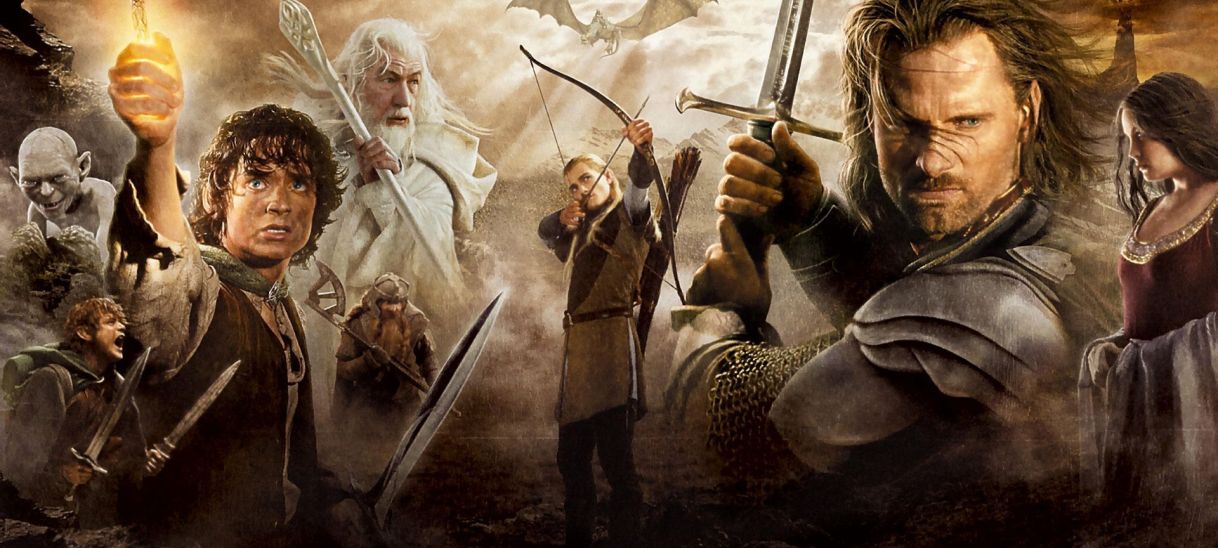
It’s been almost 20 years since Sir Peter Jackson introduced audiences — both new and familiar — to the world of Middle Earth, on the big screen. In those 20 years since The Lord of the Rings: The Fellowship of the Ring (2001), nothing, save for the sequels to The Fellowship of the Ring, has managed to capture the awe and bravado of Jackson’s Middle Earth. Franchises have come and gone, and Jackson has also adapted The Hobbit (2012 – 2014) for the big screen, but The Lord of the Rings continues to inspire as well as keep audiences coming back for more as the years roll on. Much has been said and written about the trilogy, but I believe it’s important to remind audiences why this trilogy has remained a staple in cinema history. What follows is an analysis of why Jackson’s adaptation of The Lord of the Rings has continued to permeate film culture, how it redefined the Fantasy genre, and what made the franchise as celebrated as it is.

The Lord of the Rings Trilogy Before the Acclaim

Before delving into the aforementioned concerns of the piece, it is important to first outline the trajectory of The Lord of the Rings in cinema culture — from its inception, up until Jackson’s adaptation. In the years before Jackson’s The Lord of the Rings adaptation came to fruition, there had been an animation adaptation in 1978 by Ralph Bakshi, which opened to a fair reception, and the Beatles had apparently wanted to star in a live-action adaptation of the books, with Stanley Kubrick said to have been their choice to direct. Kubrick allegedly turned down the offer to direct the planned film after saying that it was unfilmable (at least in terms of the technology not being there yet). As J.R.R Tolkien owned the rights to his work, he also turned the proposed Beatles film down as he didn’t want his work to be taken by the band and turned into something outlandish for the big screen.

It wasn’t until sometime in the mid-90s that the idea of a Jackson-led The Lord of the Rings adaptation began to circulate in the media. With Jackson’s earlier films like Bad Taste (1987) and Braindead (1992) being the epitome of schlock horror — films characterised by their absurd plots, quirky characters, campy humour, and so forth — it was no surprise that doubts were raised over the announcement that Jackson was to adapt the work of beloved and trailblazing author, J.R.R Tolkien.

Jackson had come off of directing a decently received, The Frighteners (1996), before pitching the idea of turning The Lord of the Rings into a live-action trilogy, to Miramax. Miramax said that they would be able to make two films instead of the proposed three, with the cost of the films driving their decision. However, Miramax eventually decided that that they were unable to fund the making of two films at the scale proposed. Subsequently, Jackson was allowed to pitch the idea for the films to other studios, and was eventually able to bring New Line Cinema on board to finance the film.

With New Line greenlighting the proposal for an adaptation helmed by Jackson, the next big hurdle came with the budget increase for each film. New Line had reportedly agreed to spend around US $60 million on each film, but that budget proved unrealistic with how audacious and large each film ended up becoming. Instead, New Line ended up spending around US $120 million on each film, with that eventual sum being agreed upon through much deliberation and even heat between Jackson and film executive Michael Lynne. It wasn’t until a 20 minute preview screening at Cannes in 2001 that the studio’s fears regarding the increase in budgeting, were alleviated. This was primarily due to the positive reception the footage of The Fellowship of the Ring received, and the realisation that the money invested into the film was paying off (with the Balrog scene being one that was shown).

With The Fellowship of the Ring eventually being made, and its sequels releasing within the next two years, the trilogy had officially survived the struggles of pre-production, production, and Harvey Weinstein. The trilogy would go on to become one of the highest grossing and consistently well received franchises of all time.

Hugo Weaving, Peter Jackson, and Ian Mckellen on the set of The Lord of the Rings

What Made the Trilogy as Influential and Beloved as it is?

Trying to provide a single answer to why Jackson’s The Lord of the Rings is as iconic and influential as it is, simply cannot be done. Therefore, I will break down some of the key aspects of the trilogy and why they’ve seen the trilogy continue to enjoy the success that it has.

For starters, one of the biggest issues Jackson faced was trying to transpose such a well regarded and nuanced piece of fantasy literature as faithfully as he could, and in the time he had. Tolkien’s writing is renowned for its ability to capture the minutiae of any given aspect of the world of Middle Earth — whether that be a blade of grass or a trickle of water. In saying that, Jackson was fortunate that he had a lot to work with from Tolkien’s writing, particularly because the drawn out descriptions Tolkien provides, ultimately led to a level of clarity that Jackson simply moulded for a modern audience. Sure there was no Tom Bombadil or the battle for the Shire or the character of Gildor Inglorian, but given the scale of Tolkien’s world (those who have read The Silmarillion will know the struggle of making sense of everyone and everything being described), Jackson was able to focus on the fundamentals of the book in order to guide audiences through the three films.

A major factor that contributed to the trilogy’s acclaim and success is the fact that all facets of production aligned and worked to support each other for the entirety of the three films. There were two units that worked on the film: one that was helmed by Peter Jackson, and the other, by John Mahaffie (Second Unit Director). Both units were well equipped with resources to traverse the New Zealand landscape and country side (which is explored more in the exquisite documentary-like, behind the scenes), and Weta Workshop went above and beyond to produce sets, costumes, armour, weapons, creatures and miniatures. What this all means is that there was a sense of totality and scale unlike anything seen before or since, in a blockbuster or film of any kind. The result is one that led to the record breaking Oscars sweep for The Return of the King (2003) which won all 11 Oscars it was nominated for, and is tied with Ben-Hur (1959) and Titanic (1997) for most award wins in Oscars history.

But aside from the recognition from award wins and box office success, Jackson’s trilogy has continued to amaze viewers (included yours truly) across multiple viewings in the 20 years since. Some of the reasons why include the thematic consistency as the films went on; the largely practical approach to making the films; Howard Shore’s mesmerising score that speaks to various scenes and characters; the epic battle sequences both large and small; the memorable performances from each and every actor involved; and how the trilogy paved the way for fantasy films (and shows) to be taken as seriously as they are today.

The way in which Jackson developed a sense of forwardness from the first film to the last meant that the pacing always felt consistent, and audiences were given ample time to spend with various side characters and events, while never losing sight of the primary goal of The Fellowship. For instance, The Fellowship itself and its eventual separation, serves to engage the audience with the likes of Theoden (Bernard Hill), Eowyn (Miranda Otto), Emoer (Karl Urban), Arwen (Liv Tyler), Galadriel (Cate Blanchett), Faramir (David Wenham) and so forth. All of these characters have role to play in The Fellowship’s quest, but they also bring to surface the lore of Middle Earth that cannot be wholly accounted for.

The battle sequences also stand out, particularly due to how practical they were and how little they relied on CGI in contrast to blockbusters being released today. Ridley Scott’s Gladiator (2000) is another film that comes to mind in terms of being remembered for the amount of choreography it had and the lack of CGI it used. Rarely are modern blockbusters as hands on in their approach to large scale battles as The Lord of the Rings was, and that’s another big drawcard for revisiting the trilogy — the action strived to create an out-of-body experience that sucked audiences into the world.

Another major aspect that contributed to the ongoing success of The Lord of the Rings is the way in which the show put the fantasy genre in the limelight for film and television. The point here is simply to highlight how Jackson’s films have paved the way for the fantasy genre to be taken more seriously as a form of art. A show like HBO’s Game of Thrones has won multiple Emmy awards and has been compared to The Lord of the Rings (and rightfully so given that George R.R. Martin is greatly inspired by Tolkien). Netflix’s The Witcher show has also emerged in the last couple of years and has quickly become a fan favourite. So essentially, Jackson and his first trilogy of films have brought as much attention to the fantasy genre as George Lucas and his first Star Wars trilogy did for the Sci-Fi genre.

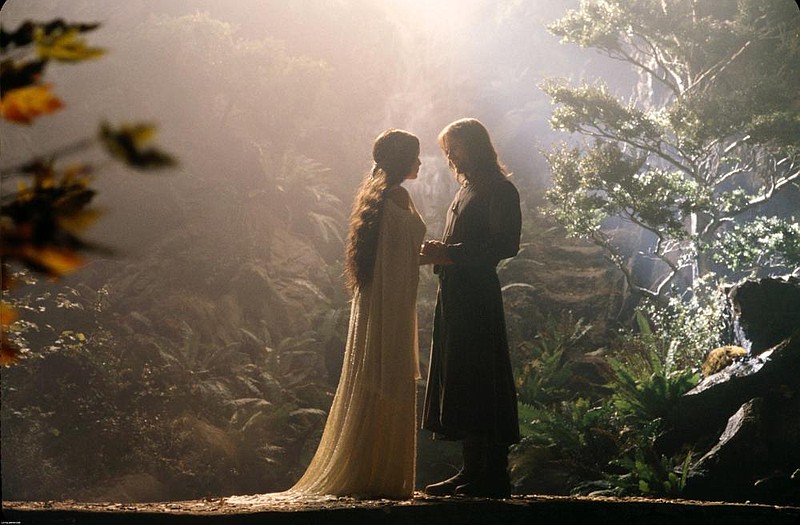
Liv Tyler and Viggo Mortensen in The Lord of the Rings

Closing Thoughts

In the 20 years since The Fellowship of the Ring, the trilogy continues to be shown in cinemas worldwide and has had a successful shelf life (with a 4K remastering having been overseen by Jackson and released last year). With a Lord of the Rings show coming to Amazon Prime in late 2022 (supposedly exploring an earlier part of the Second Age of Middle Earth), now is the perfect time to begin revisiting Middle Earth and Jackson’s trilogy. Whether or not the show will capture the hearts of audiences and critics alike is yet to be seen, but judging by a recently released still from the show, it’s anyone’s guess. What is known is that Tolkien’s The Lord of the Rings and Jackson’s adaptation of the book are just as influential today as they were during their inception, and will continue to be in another 20 years.

Sources Consulted:

  1. https://screenrant.com/lotr-everything-know-kubrick-beatles-unproduced-adaptation/
  2. https://www.nytimes.com/2001/12/12/movies/gambling-film-fantasy-lord-rings-shows-new-line-cinema-s-value-aol.html
  3. https://www.thethings.com/how-harvey-weinstein-almost-ruined-the-lord-of-the-rings/
  4. https://www.indiewire.com/2021/07/peter-jackson-screamed-studio-lord-of-the-rings-budget-battle-1234649369/