Criterion Channel’s Japanese Horror Collection, Ranked

For horror season, the Criterion Channel has crafted an eclectic and bountiful collection of iconic Japanese Horror films to immerse yourself in. From ’60s cult classics to the ’90s and early ’00s staples that exploded the country’s unique horror classics onto the world stage, this collection has something for both the cinephile horror fan and those looking for an entry point.

The genre is defined by old folklore and urban legends about Oni, invisible demons that potentially bring disaster and disease with them. A key form of Oni is Yūrei, or vengeful spirits, which we can see spread across almost all Japanese horror cinema. Perhaps the most well-known story of Yūrei is of Okiku, a young maid who was thrown down a well by a samurai after she refused his advances, returning as a vengeful spirit. Okiku is defined by her long black hair and hushed whisper, iconography burned into the celluloid of the country’s horror storytelling for generations, forming the immortal image that spreads across this entire collection.

Japanese horror storytelling thrives when these legends of Yūrei and other Oni are weaved into their contemporary settings, from post-civil war anxiety (Onibaba) to suburban anxiety and community suspicions (Creepy) and the encroaching dominance of technology in our world (Ring, Pulse, Tetsuo: The Iron Man). This creates a consistent cultural imprint that makes the genre so satisfying to engage with and return to.

So what better way to spend October than to binge through these and craft a ranking list from this well-curated list of classics from the fine folks at Criterion.

13. Ichi the Killer (2001) – Takashi Miike
Rating: 2.5 out of 5.

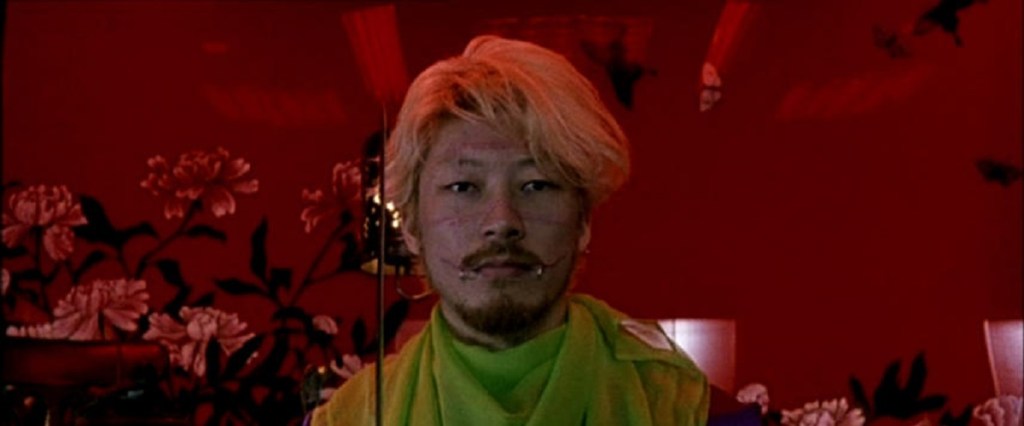
Extremist hyperviolence for the incels, industry legend Takashi Miike’s bizarre and underbaked screed Ichi the Killer, made two years after his brilliant film Audition (which will arrive later in this list), was banned in multiple countries for its approach to sexual violence and sadomasochism.  Centring on the titular Ichi (Nao Ômori), an emotionally disturbed man who is just as likely to weep uncontrollably in the corner of a room as he is to violently murder those around him, most likely with a blade hidden in his boot. Pursuing Ichi is a sadomasochistic yakuza enforcer Kakihara (Tadanobu Asano), known for his brutality and Joker-like scars along his cheeks, who is impressed and tantalised by Ichi’s level of violence.

If that reads like a teenage boy fantasia of hyper-violence and extremity at the expense of taste and storytelling, that’s because it is. The only skippable film on this list, Ichi the Killer sees the chaotic filmmaker indulge in all his worst impulses which were weaved in more creatively in his other films.

While the film and the manga it is faithfully adapting has clearly influenced a generation of filmmakers, particularly in manga and anime circles, its haphazard approach to storytelling centred on a hyper-violent incel creates an instant callous so thick, the proceeding depravity sparks little to no emotion. 

12. Ju-On: The Grudge 2 (2003) – Takashi Shimizu
Rating: 2.5 out of 5.

Even as the lesser of the films in the franchise selected by Criterion, Ju-On: The Grudge 2 is not without its iconic moments that each film in the franchise achieves. Operating in a surprisingly quieter, more atmospheric horror register, Ju-On: The Grudge 2 centres its plot on a TV crew working on a reality show about ghosts set in the house of the original film. 

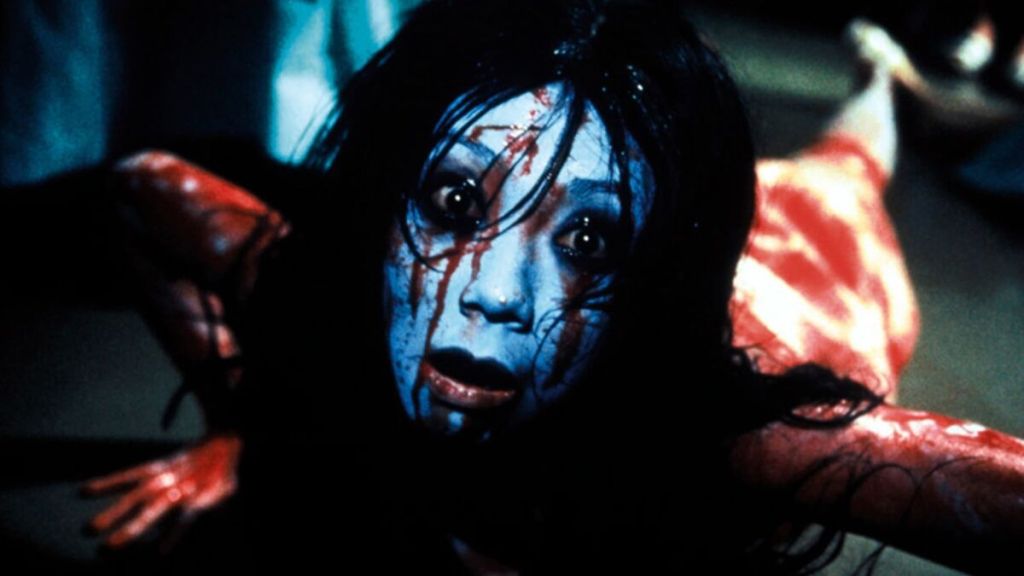
The Yūrei at the heart of the franchise stems from a murdered housewife, cursing all those who enter the house to an inevitable demise. The horror set pieces in the film and the franchise grow repetitive in a hurry, but still manage a psychological stickiness through some impressive genre flourishes. The ghost’s death rattle sound remains one of the great noises in the horror canon that ratchets up tension faster than any convoluted plot.

Following the similar trajectory of the previous film with its nonlinear narratives inside character (read, next victim) focused chapters, Ju-On: The Grudge 2 has a more menacing air of inevitability that never feels oppressive. Instead, it makes for an easier watch than the first film, albeit with the same issues. 

The time-skipping narrative in this film is more potent and evocatively tied to the whole story than the original, making its climactic final act wash over you in waves of sadness and melancholy, even with its bizarre final ten minutes.

11. Ju-On: The Grudge (2002) – Takashi Shimizu

Rating: 3 out of 5.

The all-time ‘just leave the house’ franchise, Ju-On: The Grudge thrives in the unknown. The horror is a tightly contained, well-chosen horror house, a small collection of characters and a looming presence we are desperate to learn more about, even if the resolution ultimately lessens the experience in the film’s uneven conclusion.

Ju-On: The Grudge’s keen focus on sound design with its wall scratching, cat screeches, and the iconic death rattle heightens an unfocused plot, held together by its terrific horror set pieces, Hitomi’s (Misaki Itô) chapter especially. Japanese horror, and especially those centred on yūrei have these unexpected and often moving notes of sadness at the heart of the curse, something that can be felt even within the iconic stair scene at the climax of the film, largely through Takako Fuji’s performance as the ghost Kayako.

Ju-On thrives in its limitations as a micro-budget film shot in a tremendous house for a horror, which Shimizu puts great attention to laying out, but is bogged down by a serious lack of characterisation, opting instead for time skipping and short chapters that prevent the inventive filmmaking to thrive. Ultimately, these films have such aggressively passive characters stuck in these doom loops that while tepidly compelling, never excel as an overall experience.

10. Tetsuo: The Iron Man (1989) – Shinya Tsukamoto

Rating: 3.5 out of 5.

Pure heavy metal cinema that some have deemed ‘migraine cinema’, the wildly feverish Tetsuo The Iron Man leaves a crater in the medium we can only hope to mine for future resources. With the self-awareness to hit the ejector seat after 67 minutes, Shinya Tsukamoto’s manic sci-fi nightmare about a self-professed ‘metal fetishist’ (Tomorô Taguchi) is driven mad (or already was), creating a sequence of events which include a graphic and hysterical sex scene, an incredibly tactile chase sequence, all culminating in a transcendent moment of mania you’ll be coming down for days after.

This Japanese Eraserhead (1977) crushes your skull with a relentless pace and style, truly fitting its design aesthetic of violent machinery bursting from limbs like the chest burster in Alien (1979). There is no Crash (1996) or Titane (2021) (and to a certain extent The Substance, 2024) without Tetsuo, placing it violently at the top of the heap of the cinema of extremity, even if its ideas arrive with a blunted edge.

9. Dark Water (2002) – Hideo Nakata
Rating: 3.5 out of 5.

A tense and poignant drama of a family going through a divorce wrapped up in a ghost story, Dark Water is a melancholic look at childhood neglect and trauma with a beautiful and unexpected third act.

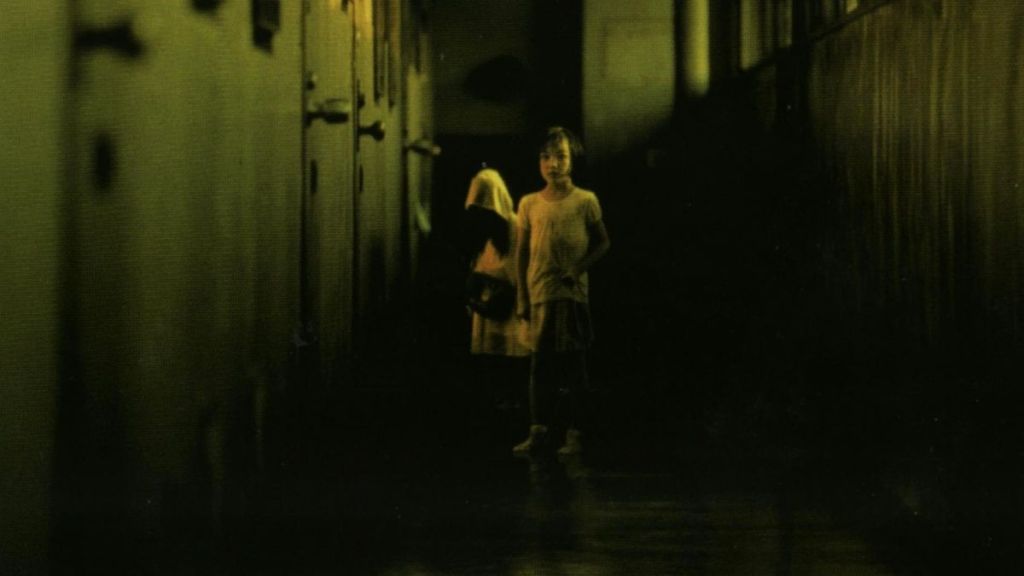
Directed by Hideo Nakata who thrust the Japanese horror genre onto the world stage with Ring (1998) —appearing later in this list— based on a short story collection by Koji Suzuki (who also wrote the Ring novels), Dark Water centres on a young mother in the process of divorcing her husband and rebuilding a life for herself and her young daughter Ikuko (Rio Kanno). The mother, Yoshimi (Hitomi Kuroki), rents a rundown apartment for her and her daughter where strange occurrences happen, localising around the water in the building.

Four years after his enormous success with Ring, Nakata is driven to a more potent emotional story of childhood neglect and a fracturing family, lowering the temperature of the horror, using the genre instead to heighten the dramatic storytelling rather than as a means to an end. The film succeeds as a sombre piece of atmospheric storytelling that weaves two unique stories together, the family divorce drama that gives remarkable attention to the young child’s feelings throughout, and the ghost story in the apartment. 

Held together by a pair of fantastic performances by Kuroki and Kanno, with the latter giving an all-time child performance in a horror film, Dark Water sneaks up on you with its deceptively poignant storytelling and characters, culminating in the most emotionally resonant final act on this list. The horror genre, and especially ghost stories, excel in articulating a sense of longing and lost time, with those we love and those that need to be loved.

8. Creepy (2016) – Kiyoshi Kurosawa

Rating: 3.5 out of 5.

It is no mistake that Kiyoshi Kurosawa finds himself on this list three times, as the great master formalist makes a case for the most important voice in horror storytelling since John Carpenter. A film that understands the anxiety an audience gets from a whisper in a stressful situation, or a quiet interview in a frame full of people, Creepy brings Kurosawa’s doom scenario milieu to the suburbs, tracking an ex-detective Koichi Takakura (Hidetoshi Nishijima) forced to retire from the force and move with his young wife Yasuko (Yūko Takeuchi). 

With a clear itching to return to detective work, as well as a heightened sense of danger and menace behind every door, influenced by a level of unresolved PTSD, Koichi becomes obsessed with a local cold case brought on by an ex-colleague, as well as being unnerved and suspicious of his neighbours.

Kurosawa’s formalism is well suited to the obsessive detective narrative, with the modern suburbia setting slowly pierced by the auteur’s signature sense of overwhelming dread and suspicion. His measured camera movements, at times unsettlingly ahead of the action, heighten the anxiety of any given moment, binding us to the experiences of his characters.

The legendary auteur is at his best when he can place the audience, alongside his characters, in situations where anything is possible. Like reality, not every moment is cause and effect, where potentially horrifying incidents can occur seemingly without motive or reason. This troubling, anxiety-fuelled sensation is where Kurosawa is more keenly tapped into than perhaps any living filmmaker, allowing his seemingly mundane character dramas to glide into some of the greatest horror moments of the past 30 years.

A bold perspective gearshift in the film’s second half almost derails the drama and tension Kurosawa so brilliantly establishes for over an hour, held together only by the filmmaker’s ability to reignite the dramatic flame for a memorable closing moment. While not in the highest tier of works, Kurosawa’s Creepy is as satisfying an unsettling portrait of suburban anxiety and destabilisation as you will find.

7. Ring (1998) – Hideo Nakata

Rating: 4 out of 5.

The quintessential Japanese horror film, Hideo Nakata’s Ring is probably the most iconic film on the list, defined by its Yūrei antagonist Sadako (Rie Ino’o), clearly based on the Okiku legend, down to her horrific murder of being thrown down a well. It’s also the film that sparked a Western fever over the Japanese horror industry, rapidly adapting them into American versions of middling success (four films on this list have American adaptations), the best of the lot being Gore Verbinski’s impressive adaptation The Ring in 2002.

To catch those up to speed with the story of this blockbuster from Japan, Hideo Nakata’s Ring has the all-time horror premise of a mysterious VHS tape that, once watched, will have you scared into an early grave seven days after watching. Wonderfully blending Japanese folklore with modern society’s relationship with physical media and storytelling, all wrapped up in a moody yet propulsive journalism procedural centred on the brilliant Nanako Matsushima and Hiroyuki Sanada as ex-wife and husband pair Reiko and Ryūji.

Where Ju-On falters by being solely driven by its formula and inventive kills, Ringu thrives in its deep fascination with the looming spectre of Sadako, using the framework of the journalism procedural to uncover the reality that she is less a hostile ghost and more of an enraged victim.

The film elevates itself with an emotionally overwhelming moment in the climax, with Reiko warmly embracing the skeleton of Sadako, a graceful note in a film that until this moment thrived in its procedural meticulous storytelling. In a genre defined by outcasts reaping revenge on the world, this moment of tenderness pierces through the shroud of menace and cynicism, leaving behind a desperate mother letting her tormentor know it will be okay. Even though this moment is followed by a scene with the franchise’s most iconic imagery of Sadako crawling out of the television, it’s without question the film would be stronger for ending at this place (the TV crawl scene could happen at any point), perhaps moving it higher up this list.

6. House (1977) – Hideo Nakata
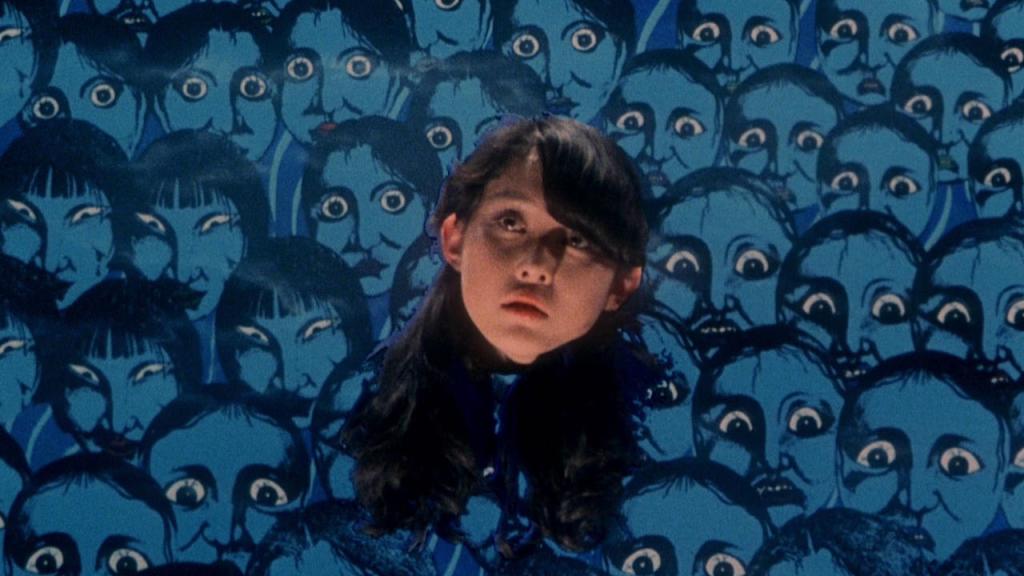
Rating: 4 out of 5.

A destabilising horror experience, unlike anything you’ve seen before. With a feverish energy and imagination that removes an audience’s ability to anticipate an inch in front of their face —a crucial component of any great horror— Nobuhiko Ôbayashi’s House, playfully referred to as a psychedelic comedy horror, is the most unique film on this list that quickly became a global cult object.

A tremendously enjoyable film, House follows seven schoolgirls with names like Gorgeous (Kimiko Ikegami) and Kung Fu (Miki Jinbo, MVP of the group once the mania starts), played by mostly amateur actors, who go on a summer vacation to a country estate owned by Gorgeous’ aunt (Yōko Minamida), an eccentric older woman. Strange occurrences and violent episodes begin to plague the girls at the house, shifting the film from a glossily bizarre romp into a clear ur-text for Sam Raimi’s Evil Dead films while never losing its internal style and spirit.

Ôbayashi has made a film on such a different frequency to the rest of cinema, a feat that forces you to realign your senses to get onto its wavelength. But once you’re there, the results will astonish you. You’ll be so overwhelmed with a sense of dysphoria, oscillating rapidly between genuine glee and anxiety with its feverish editing style and use of stop motion and simple animations. In a secluded cabin where anything is possible, even a cat can become a nightmare.

5. Onibaba (1964) – Kaneto Shindō

Rating: 4 out of 5.

The demonic nature of war and conflict which sows its violence into the very earth, Kaneto Shindô’s atmospheric and captivating 14th-century folk tale has perhaps the loosest attachment to the horror genre as anything on this list, earning its place through its deep connection to post-war anxiety, reflected through the prism of Japanese samurai cinema.

With her son, Kichi, away at war as a samurai, a woman (Nobuko Otowa) and her daughter-in-law (Jitsuko Yoshimura) struggle to survive on their own in the outskirts of Kyoto, resorting to killing solitary samurai and stealing their swords and clothes to a local merchant for food. Upon the return of a neighbour, Hatchi (Kei Satô), who tells them of the death of the son, the trio begin a dance of seduction and connection fuelled by loneliness, jealousy, and desire.

Onibaba lives in the sound of nature in conflict with human violence, the aggressive rustling of grain and reeds, the coarse splashing of water on a riverbed as two nameless men fight, tying notions of human violence and horror to the very earth, better than almost any film has since. As the oldest film on this list, it is as crucial a watch as any in understanding the genre as a whole.

4. Kuroneko (1968) – Kaneto Shindō

Rating: 4 out of 5.

Such a wonderful companion to his previous film Onibaba it’s impossible to separate the pair, with its casting of Nobuko Otowa in near identical roles, mirrored visual motifs and narrative of the women left behind and left to rot in the burnt ruins of a world left by feeble men.

Opening with the brutal murder of a woman, Shige (Kiwako Taichi), and her mother-in-law Yone (Otowa), at the hand of a band of samurai that sets the tone for the rest of this haunted revenge thriller as the pair return to the world as cat formed Onryō, a more vengeful form of yūrei.

In many ways, this is the more overtly horrific film of the pair, but where Kuroneko really excels and where Shindō clearly improves as a writer is in the dramatic storytelling that is unlocked in the centre of the film with the return of Gintoki (Nakamura Kichiemon II), Yone’s son, Shige’s husband, and crucially, a samurai. This return creates a compelling internal battle for Shige and Yone, who have returned to the mortal world to seek vengeance on the samurai plaguing and overwhelming the land, but still harbour a great love and longing for the man who left them.

At its core, Kuroneko is a story of vengeance against the inhumanity of male violence, with its beautiful knots of human longing and connection in the face of great pain piercing the heart more powerfully than any fang.

3. Audition (2001) – Takashi Miike

Rating: 4 out of 5.

Recently ranked the 7th best horror film of all time by Variety, Takashi Miike’s second and much more successful entry on this list, Audition, moves as an anglerfish, enrapturing you in its romantic light, masking the dark monster lurking in the shadows.

Beginning with a beautiful three-minute prologue of a young family losing their mother in a hospital, Miike’s Audition blooms from a place of empathy and loss, creating a lush bed to destabilise us. Set seven years after this, Shigeharu’s (Ryo Ishibashi) son Shigehiko (Tetsu Sawaki) presses him to find a wife. Shigeharu’s friend Yasuhisa (Jun Kunimura), a film producer, devises a plan to hold an audition for a fake film project with the goal of Shigeharu choosing a wife out of the cohort. 

Immediately, Shigeharu is enchanted, bordering on obsessed with one prospect, the quiet Asami (Eihi Shiina), and pursues her, even though Yasuhisa urges him to reconsider as he believes something is off about her. Miike uses his chaotic approach to editing and story structure that tipped over Ichi the Killer here as a piercing needle into the skin of this Vaseline-covered pulpy romance. It is in this needling contrast that the film thrives.

Miike has a profound eye for composition and lighting, transcending the material into a consistent wave of tangible emotion, never letting its characters or the audience off the hook he so delicately dangles. This lush style is wrapped in a discordant editing style once we meet Asami, reshaping any notion of the type of film we are watching from moment to moment, culminating in a wild final act that made the film legendary to horror fans.

2. Pulse (2001) – Kiyoshi Kurosawa

Rating: 5 out of 5.

The year is 2001 and the legend Kiyoshi Kurosawa is deeply sceptical about the internet’s promise to connect the global population more deeply with each other. In Pulse, at the turn of the millennium with the internet burgeoning into being, a creeping loneliness epidemic appears to be bleeding into people’s lives through their computer screens, leaving its victims in a fate worse than death.

In conversation with Hideo Nakata’s Ring with their relationships to media and technology’s place as the medium to our new folk stories, Pulse elicits a similar feeling the VHS tape has with its steadily increasing number of apparent ghosts taking form inside the internet, desperate to escape for reasons that become clearer at the film’s remarkably evocative climax. 

Viewing the relationship between a rapidly isolating city and life through the lens of a small group of young people retreating into their own worlds via the internet is eminently recognisable in 2024. With a steady march towards depression tied to the oblivion of disconnection that Kurosawa achieves better than almost any living filmmaker, we are forced into the role of both protagonist and camera operator, refracting our modern life into this 23-year-old film. For this reason, alongside its depressive but uncynical atmosphere, Pulse is potentially the definitive work of cinema for our online, modern age.

The miracle of Kurosawa’s films is their ability to form a compellingly bleak drama without an overwhelmingly cynical worldview. While the film is defined by suicide and internet-driven malaise, Pulse is never driven by a contempt for the ghostly presences or the young victims like in the Ju On films. Even in the final, apocalyptic moments, the audience, with Kurosawa by our side, is hopeful for a potential step forward.

With all that said, what supercharges these ideas and propels them into a plane few films achieve is their ability to operate as a truly terrifying work of horror. Even in a horror collection that boasts iconic horror scenes like the ones in Ring or Ju-On, nothing is as bone-chilling and skin-crawling as the slow-moving ghost sequence, perfectly calibrated to destabilise our ideas of how our fears can be provoked in such a simple scene.
 
The unveiling of the Big Bang event at the film’s core as a deeply personal, isolating act of exposed self-annihilation is overwhelmingly emotional. The best horror films root themselves in empathetic moments of anguish that birth a larger malice to those in its orbit, which Pulse achieves better than anything on this list and in almost any other film in the genre.

1. Cure (1997) – Kiyoshi Kurosawa

Rating: 5 out of 5.

Perhaps the film I’ve thought about the most since watching it on a gloomy night in 2020, sliding ever higher up my all-time list, making its ultimate landing spot at the top here felt inevitable but still celebratory. Kurosawa’s best film, Cure, is the perfect blend of his obsessions of ingrained human anxiety and potential for violence, with his filmmaking influences, equal parts Andrei Tarkovsky and Tobe Hooper, flourishing at every turn.

Centring on obsessive detective Takabe (a colossal performance by Kōji Yakusho), with a deteriorating home life due to his wife’s (Anna Nakagawa) failing mental health, who is tasked with solving a series of seemingly random murders connected only by the assailants having carved an ‘X’ into the neck or chest of the victim. We are shown these violent attacks in Kurosawa’s familiar smooth camera movements, creating an unnerving balance that stems from the potential violence of everyday life. 

Much like David Fincher’s Se7en (1995), a film deeply tied to Cure, our burgeoning obsession with true crime storytelling is being reflected back at us, forcing us to contend with our own impulses towards viewing violence in this way. Cure excels because Kurosawa is keenly aware of these impulses and genre conventions, understanding when to subvert them or allow them to play out at his own deliberate pace.

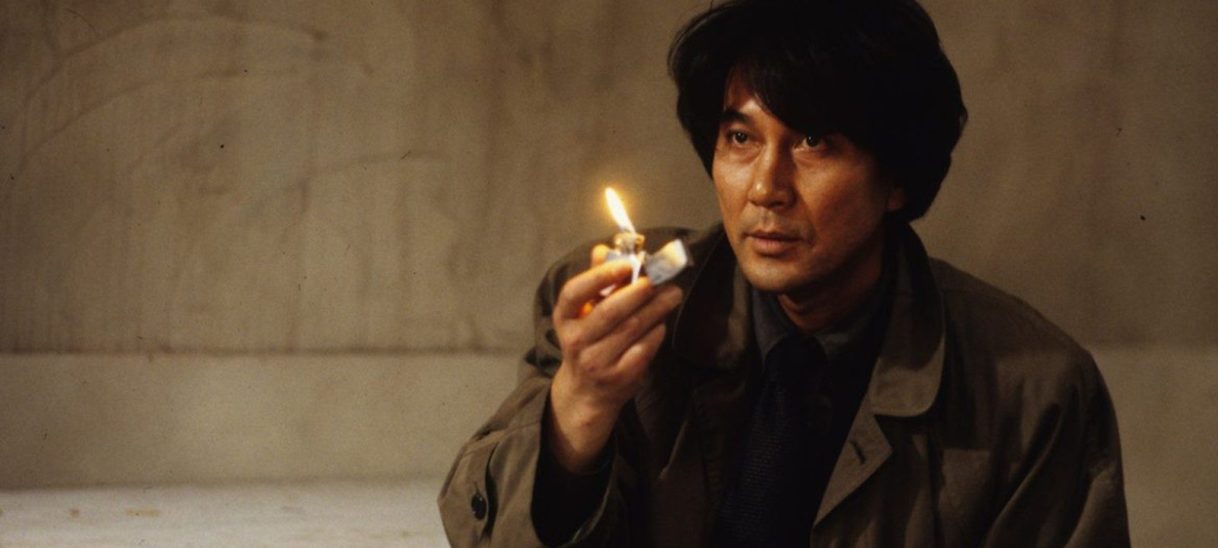
Cure’s greatest act of subversion comes from the crafting of perhaps the best horror character of the past 30 years, the black hole known as Mamiya, the man seemingly hypnotising people into performing these murders. Portrayed with a compelling aloofness by Masato Hagiwara that disarms both the audience and other characters, while also flooding the air with a palpable sense of tension and dread. Mamiya’s hypnotism scenes are extraordinary set pieces in magnetic genre filmmaking, focusing on elemental connections like the flame of a lighter or the meditative quality of washing over you like a steadily rising tide. The film transcends past its terrific villain and set-pieces due to our near-instant tethering to Takabe’s obsession with understanding these murders, propelling us deeper and deeper into the world and ultimately, Mamiya’s spell. 

Takabe’s ultimate decision to give his ailing wife over to an asylum creates an absence inside him that allows him to reach the precipice of defeating Mamiya but directly asks us the cost of this sacrifice. In a world void of something to fight for, how does one look into the abyss and see anything but themselves? In a genre of scares and nightmarish atmospheres, these lasting questions and closing moments will have you questioning how you view humanity itself.
The Films of Hayao Miyazaki, Ranked

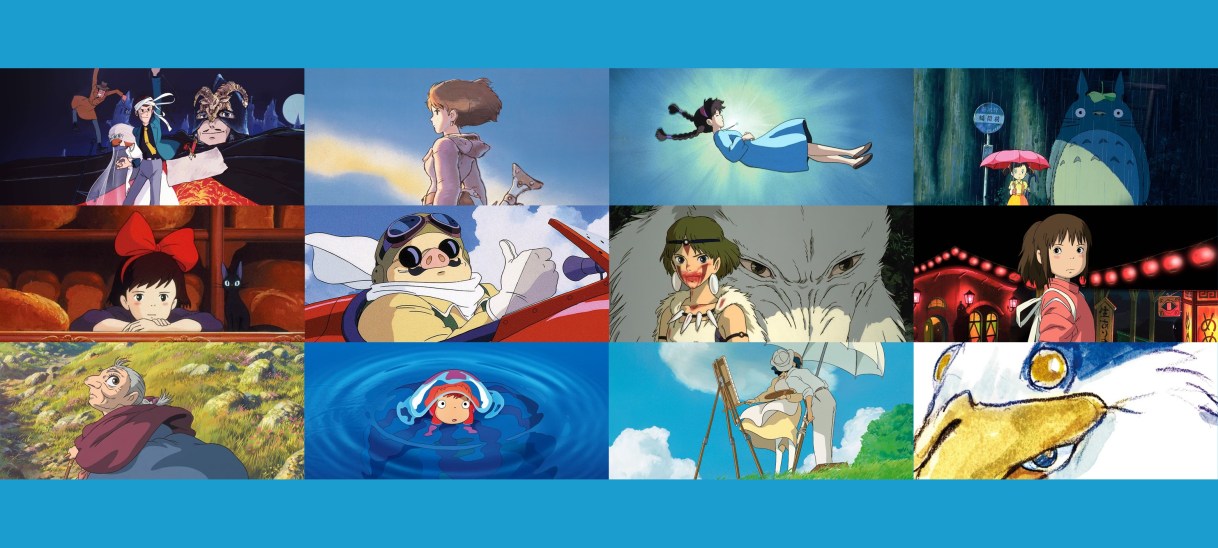
In recognition of The Boy and The Heron releasing nationwide this very week, our resident animation buff Tom Parry is here to list its director’s filmography from least best to absolute best — because there is no such thing as a bad Miyazaki picture! But first, an explainer…


With the exception of Walt Disney, there is indisputably no animator more famous or revered than Hayao Miyazaki. In a career spanning six decades, the Japanese auteur has left an indelible mark on the artform through his distinctive films, readily identified by their gentle tone, strong female characters, fantasy themes, pertinent morals and gorgeous illustrations.

His work has spawned plenty of imitators and thousands more admirers, both within the industry and outside of it — all of his feature-length pictures have an average rating of 3.95 stars or above on Letterboxd, plus an approval rating of 87 percent or above on Rotten Tomatoes. He’s garnered no shortage of accolades either, including Berlin’s Golden Bear, numerous Annie Awards, and two Oscars — one competitive, one honorary.

Miyazaki-san is also notorious for prematurely exiting the industry, having declared retirement in the late 1990s, 2013, and again in 2018, only to return to directing each time, hence earning himself a reputation as the John Farnham of Cinema. He pulled the same trick just this year, announcing he has another project in the works despite previously saying that The Boy and The Heron (2023) would be his last as a director.

That title is finally reaching local cinemas this week, and to celebrate this momentous occasion, yours truly is taking a look back at Miyazaki’s previous 11 releases and determining which of his releases is best. Of course, all of his pictures are fantastic, which makes ranking his filmography a nigh-on impossible task; if nothing else, consider this list a guide for which of the living legend’s masterpieces to prioritise seeing before his latest one.

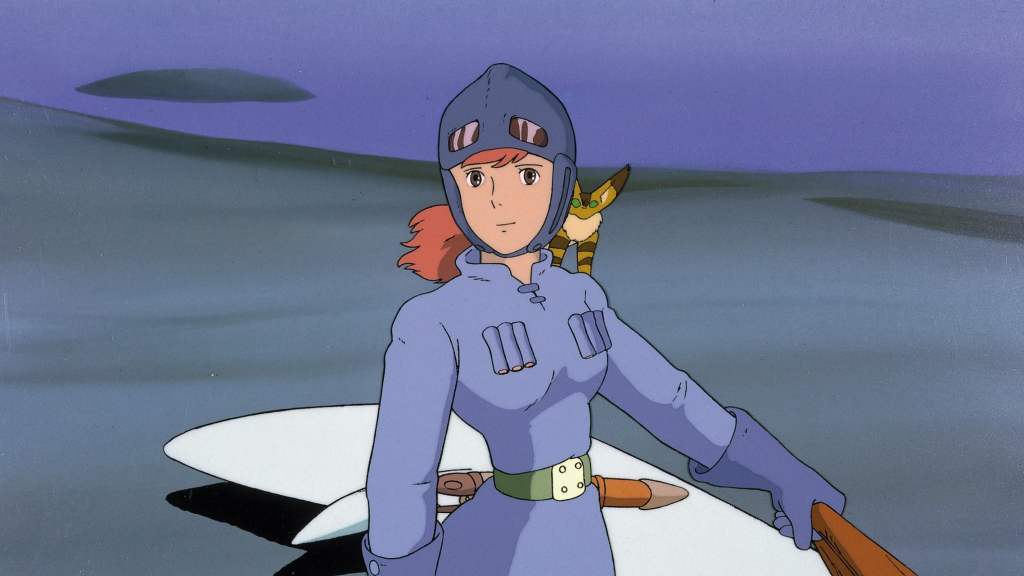
11. Nausicaä of the Valley of the Wind (1984)

One of the earliest directorial efforts from Miyazaki, and it shows — but it’s certainly not without charm. Nausicaä follows its eponymous heroine, a teenage princess of a post-apocalyptic land, who seeks to protect a neighbouring jungle and its large insectile inhabitants from a warring kingdom, one seemingly hellbent on the forest’s destruction.

This feature, the second to be helmed by Miyazaki, can be considered the genesis for the themes which would later come to define his catalogue. Its screenplay touches upon themes of conservation, pacifism and anti-Imperialism, all tropes which have come to be a consistent presence in his career, while also drawing upon his penchant for aviation and placing a brave, resourceful young woman in a leading role.

Yet it’s not without flaw. The screenplay is too reliant on dialogue to tell its story; the score of Joe Hisaishi — in the first of his many collaborations with Miyazaki — utilises electronic instruments at times, which prove tonally jarring; and the illustrations lack detail, being near-indistinguishable from other anime projects of the period. (In fairness, the film was produced on a limited budget.) Nausicaä may be considered a classic, and rightly so, but to consider it Miyazaki’s best is doing the remainder of his works a great disservice.

10. Howl’s Moving Castle (2004)

Countless productions have paid tribute to Miyazaki, but here is a rare instance in which the director pays homage to himself. Adapted from British author Diana Wynne Jones’ novel of the same name, its plot concerns a young woman who is cursed with an elderly body, the wizard who offers her refuge, and the moving, mechanical fortress which they call home.

Howl’s Moving Castle plays like a melange, or even a rehash of all the Miyazaki films released up until that point, sharing many of the themes and even the same aesthetics as those made previously. This, in turn, marks the picture as the least distinctive and least memorable of his career.

Yet the film is not without appeal. The characters are all likeable and well-written, the orchestrations of Hisaishi beautiful and the illustrations, as ever, stunning to look at. It’s a less-than-stellar glint in his resumé, sure, but certainly not bad. Heck, compared to most other animated features, it’s exceptional.

9. Ponyo (2008)

For a film-maker unafraid to place mature and complex themes into his stories, Ponyo appears a retrograde step for Miyazaki-san; it takes place in a contemporary setting, has two kindergarten-aged children as its core protagonists, and borrows heavily from a Danish fairy-tale that has been told countless times elsewhere. The only difference being, this Little Mermaid’s dream of becoming human could lead to an ecological catastrophe. Now there’s a twist!

Despite being a definite contender for the cutesiest and most juvenile product in this list, it’s impossible not the be charmed by Ponyo, nor its namesake character — her insatiable enthusiasm for the human world and its delicacies is the undoubted highlight. Pleasing further is a driving sequence that evokes Miyazaki’s earliest cinematic handiwork (more on that later) and rich use of colour throughout; less so a nauseating theme that accompanies the English dub, and the heavy-handed application of its environmentalist themes.

Anime purists may scoff at its soft tone and simplistic messaging, but those apparent misgivings are what makes the title ideal for a younger audience, or those needing an easy entry point to Japanese animation.

8. The Wind Rises (2013)

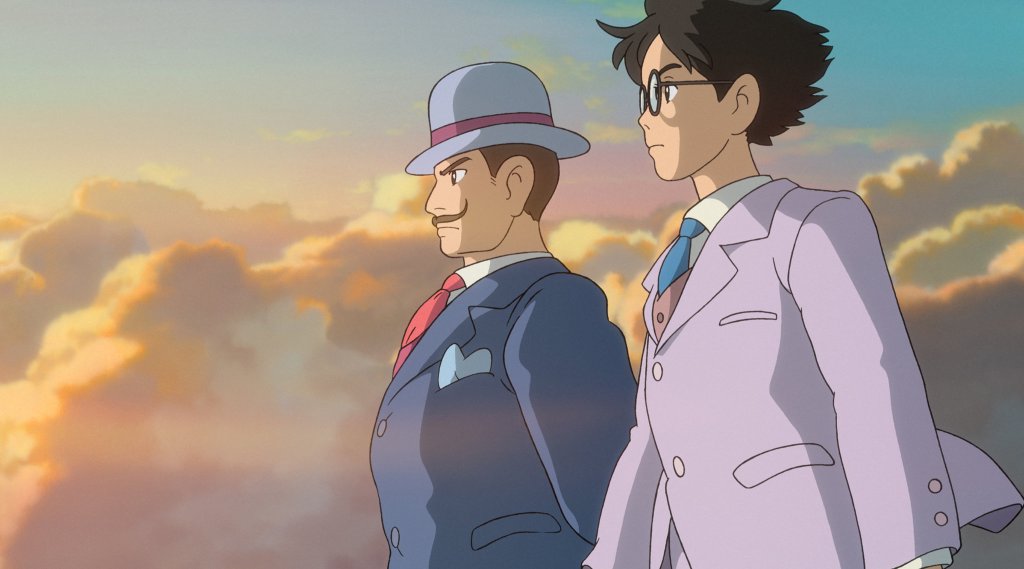
Biographical stories aren’t typically the domain of animators; then again, Miyazaki isn’t your typical animator. This one recounts the life of inventor, aviator and engineer Jiro Horikoshi — infamous for developing the Mitsubishi “Zero” fighter planes that fought during World War II — tracing his journey from teenagehood to immediately after the Japanese surrender, revealing himself to be an idealistic dreamer.

The Wind Rises ties firmly with two of Miyazaki’s persistent motifs: his fondness for aviation, and his unwavering advocacy for pacifism. It’s the former which comes through most strongly, courtesy of the mesmeric flying scenes, Jiro’s dream sequences, and the human sound effects applied to the aircraft that assist in personifying them. And, of course, the animation and music are exquisite.

Sadly, there are flaws. The film does romanticise its main protagonist somewhat, who lacks complexity and doesn’t appear particularly distressed by his aircraft being utilised for warfare; and some of the minor characters present themselves more like caricatures than they do human beings.

7. Castle in the Sky (1986)

Properly considered the first movie to hail from Studio Ghibli — the world-renowned animation firm co-founded by Miyazaki, fellow director Isao Takahata, and producer Toshio Suzuki — and a captivating one at that. Its story is about a young girl and boy in possession of a powerful crystal, who travel across their homeland in search of a mythical flying kingdom known as Laputa.

There are numerous signs of a director transitioning into an auteur in Castle in the Sky, as Miyazaki again applies his themes of environmentalism, nonviolence and aviation to the screenplay. Other connections to his future output are also present, such as the steampunk visuals that would later be applied to Howl’s Moving Castle.

Even so, parts of this picture clearly indicate a career still in its infancy. The script is rather dialogue-heavy, much like Nausicaä, breaking the medium’s golden rule of “Show, Don’t Tell”; the moods of the supporting characters are rather capricious; and it doesn’t quite reach the level of storytelling magic for which Studio Ghibli is nowadays famed for.

6. My Neighbour Totoro (1988)

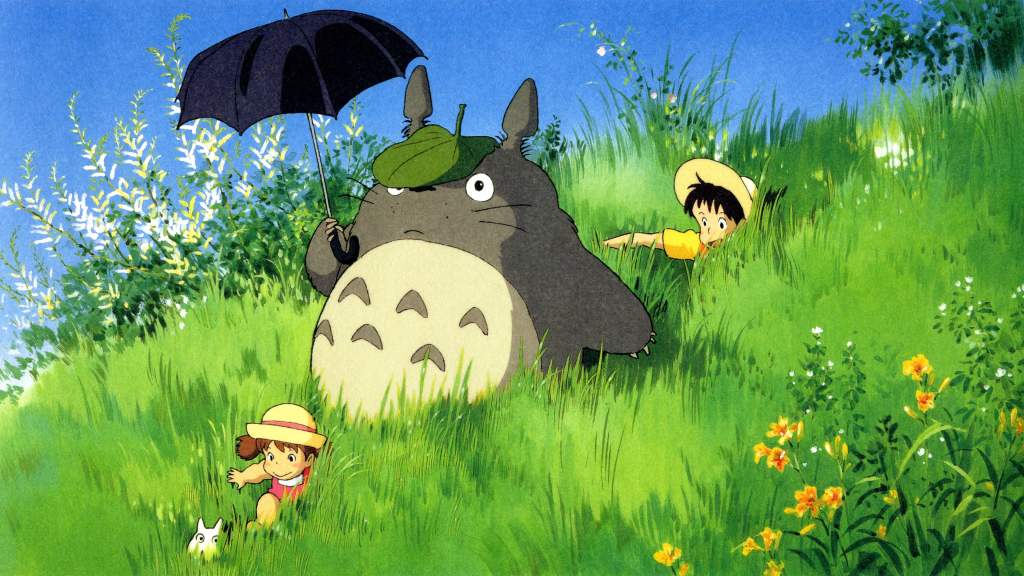
Undoubtedly the sweetest, cutest and most innocent feature to be directed by Miyazaki.  Here, the plot unfolds in rural Japan, where a mother-of-two is recuperating from an undisclosed illness; nearby lives her husband and their two daughters, who occupy their time by playing in the adjacent forest. It’s in this same forest that the girls encounter a series of friendly beings — including a large grey one whose name graces the title.

Chief to the appeal of Totoro is the ingeniously-designed creatures who interact with Satsuki and Mei; this includes Totoro himself, who would go on to be incorporated into Studio Ghibli’s logo, and become the company’s official mascot. Also notable is the picture’s tone, which is light and palatable to even the youngest of viewers, possessing very little in the way of threat or conflict.

And therein lies Totoro’s biggest problem: this slice-of-life drama is too light and fluffy for its own good. The only tension that occurs is when Satsuki learns of her mother’s deteriorating health, leaving her angry and causing her to yell at her younger sister, and even that low level of friction is resolved in a matter of what feels like seconds.

5. Princess Mononoke (1997)

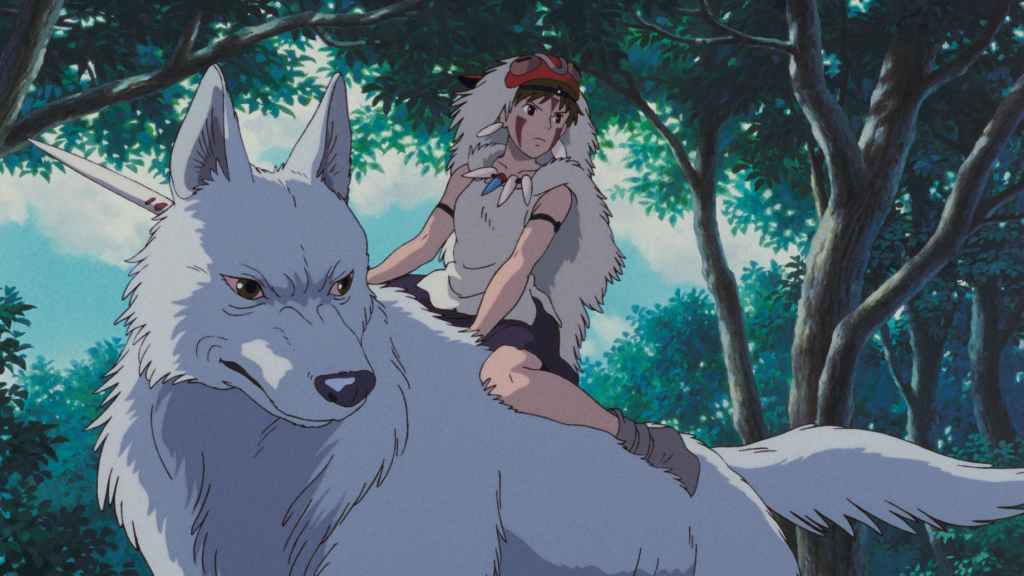
Quite possibly the most mature and complex work of this list, and one often rated highly in animation circles. Its title refers to a female warrior raised by wolves, who seeks to protect the forests she calls home in feudal-era Japan. But she is not the central figure in this tale. Instead, the lead protagonist is a young prince who seeks to stop the demons that are terrorising his village.

Mononoke’s tone is noticeably darker than all other Miyazaki pictures, as evidenced by the amount of violence and blood on display; it also leans heavily into its conservationist, pacifist and anti-imperialist themes. Additionally, the film possesses characters that are well-written with intricate personalities; and what may well be Hisaishi’s best score, at times evoking the work of his American contemporary, Howard Shore.

As for problems, having the narrative follow Prince Ashitaka — as noted above — means less attention is paid to San, who is by far the more interesting of the duo; and the conclusion isn’t wholly satisfying. Those flaws aside, there’s very little to complain about.

4. Kiki’s Delivery Service (1989)

Another literary adaptation, and one of Miyazaki’s better examples. Beginning with its heroine, a young witch, leaving her home to partake in an adolescent rite-of-passage, the story eventually settles in the town of Koriko, where our broomstick-riding maiden comes to find employment at a bakery in exchange for a place to stay.

Like Totoro before it and Ponyo after it, Kiki has a sweet, inoffensive tone that makes it perfect viewing for youngsters, or those otherwise unfamiliar with anime. But where Totoro is largely devoid of conflict, Kiki has its central protagonist undergo a great emotional struggle; and where Ponyo talks down to its audience with simplistic messaging, Kiki has faith in their intelligence and maturity.

And then there’s the wonderful flying sequences, and the immensely likeable characters, and the European aesthetics, all of which combine with the usual Miyazaki hallmarks to make a fun, heart-warming adventure. If there’s any fault with Kiki, it lies in the somewhat rushed conclusion, and the convenient amount of time its witch takes to overcome her woes.  

3. Porco Rosso (1992)

This one is quite the achievement; not only does it contain a Flying Pig as the main character, but it manages to overcome its rather silly premise to be a funny, heartfelt and mesmerising tale. It’s a tale that sees Marco — a veteran of the First World War who has gone on to become an aerial bounty hunter — partner with an aspiring female mechanic to defeat his American arch-rival, Curtis, and the shenanigans that ensue.

Predictably, yet pleasingly, Miyazaki’s love of aviation shines through in Porco Rosso, with detailed illustrations of aircraft and enchanting moments of planes in flight; also emerging strongly is his steadfast objection to Imperialism, with the film’s titular protagonist outrightly condemning fascist ideology. What makes this picture truly stand-out though, is the level of humour, with more gags and therefore laughs to be had than just about any production from the Great Man.

Porco Rosso comes ever so close to being top-ranked; but, as with Kiki, the conclusion arrives rather abruptly, almost to the point of being anti-climactic and leaving the viewer underwhelmed. Thankfully, no such issue plagues the next two entries on the list.

2. The Castle of Cagliostro (1979)

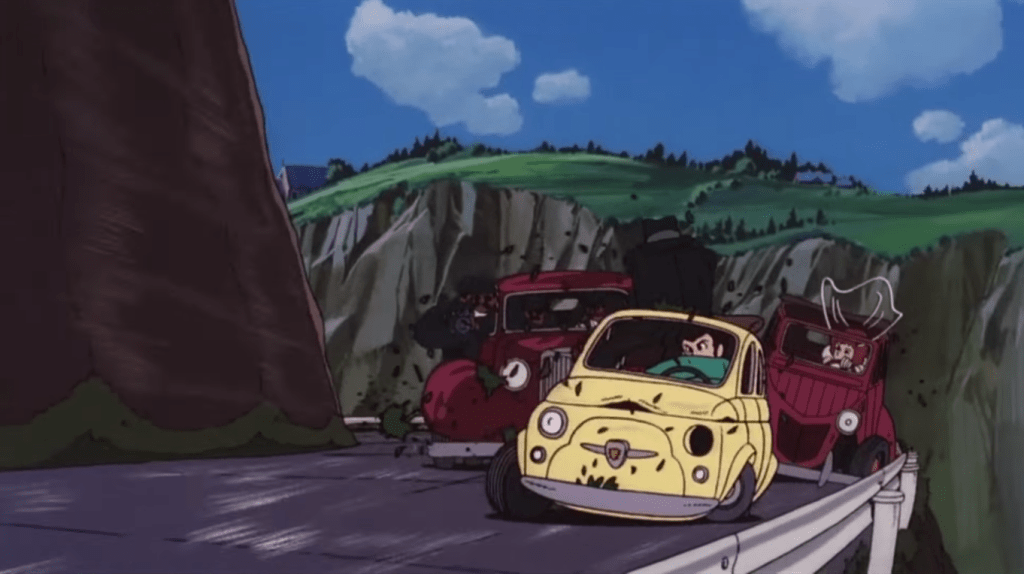
Miyazaki’s debut feature is one far removed from anything else in his filmography, yet proves one of his most entertaining works. Spinning off from the Lupin the Third TV series — which itself was based on the manga of the same name — Cagliostro tells of a gentleman thief who uncovers a counterfeiting operation in a dilapidated European kingdom, while simultaneously pining for the affections of the country’s Princess.

Laced within this ostensible crime-caper is a mystery bountiful in action and humour, as evidenced by a chaotic, destructive chase scene between a yellow Fiat 500 and two much-larger sedans (see above); our hero, Arsene Lupin III running full-pelt down the steepest of roofs; and Lupin desperately trying to escape a plunge of certain death by swimming up a waterfall! Additionally, there’s a surprisingly warm romance between Princess Clarisse and Lupin; and while the illustrations aren’t up to the standards of later Miyazaki efforts, they still have appeal.

Cagliostro was a critical and commercial success upon release in Japan, and went on to have a profound impact on several Western film-makers — its influence can be seen everywhere, from the climactic clocktower sequence in Basil the Great Mouse Detective (1986) to the Roman car chase in Mission: Impossible – Dead Reckoning Part One (2023). Steven Spielberg is also said to be an admirer, with the story purportedly inspiring him to create Raiders of the Lost Ark (1981).

1. Spirited Away (2001)

Is it a cliché to consider this Miyazaki’s best film? At this point in history, possibly; yet to consider anything other than Spirited Away as his greatest achievement would be sacrilege. Inspired by Lewis Carroll’s Alice in Wonderland stories, it centres on a girl named Chihiro and her journey through a mystical realm of spirits, witches and beasts; a realm where she must grow-up in order to find her way home.

Along the way, viewers are met with imaginatively designed creatures; strangers who are curt and kind; stunning painted landscapes; and Joe Hisaishi’s gentle, catchy piano refrain that enters the ear like a cool breeze on a summer’s day. In terms of faults, the pacing is lethargic on initial viewing, taking a long time to establish the setting and its characters; and the screenplay is a bit too eager to portray Chihiro as a spoilt brat in its early stages, rather than a flawed heroine. But so haunting, moving and transfixing is the story that these qualms are more or less forgotten by its end.

Universally, rightly lauded, Spirited Away is to date the only Japanese production and the only hand-drawn work to have won the Academy Award for Best Animated Feature; it’s also beloved by the public, sitting in the upper-echelons of the IMDb Top 250, and Letterboxd’s Top 250 Narrative Features. And, on a personal note, it happens to be the very film that fostered this writer’s interest in anime — there are almost certainly others who can say the same.

This is a film not to be ignored; a must-see for fans of animation, cinephiles, and indeed anybody with even the barest of interest in movies.

A Tranquil, Reflective Journey Awaits in Drive My Car

Rating: 4 out of 5.

For many people, the car isn’t just a mode of transport – it’s a means of escape, a source of passion, or even a way of life. It’s a fact that is recognised by Japanese director Ryusuke Hamaguchi, who has chosen to make an automobile the star of his feature-length drama Drive My Car (2021), even though it’s the human protagonists and their struggles that are given the centre stage.

A widowed playwright, Yusuke Kafuku (Hidetoshi Nishijima) has been invited to Hiroshima, where he is to work for the next two months as a director-in-residence. Kafuku is a keen motorist, and anticipated he would be making the hour-long journey between his accommodation and the city in his cherished Saab 900 Turbo; instead, much to his dismay, Kafuku’s employers have assigned to him a chauffeur, and stipulated that he is not allowed to drive anywhere by himself.

Designated to fulfil the role of chauffeur is a young woman named Misaki (Toko Miura), who quickly earns the approval of Kafuku with her sedate driving style and shared love of motoring. In the days and weeks that follow, the car-bound companions engage in deep conversation and reveal intimate details about their past, all while Kafuku mulls over the development of his upcoming stage-play – a multilingual adaptation of Anton Chekov’s Uncle Vanya.

Oddly, Kafuku’s production of Uncle Vanya is the most engrossing aspect of this picture, offering a welcome deviation from the relative mundanity of his automotive journeys. Every step of the playwright’s creative process is shown, beginning with him meeting his financiers, through to casting and rehearsals, before a momentary glimpse of the final product – one that’s made even more absorbing by the transnational cast speaking in their native languages, a delightfully unconventional choice that more directors, be they real or fictitious, should emulate.  

As a fellow practitioner in the arts, this author was always going find the character of Kafuku relatable, yet found himself connecting even further with the main protagonist than anticipated, thanks to a mutual appreciation for driving. There is no activity more cathartic for a keen motorist than a long, solo drive; so naturally, when that outlet is taken away, a driver cannot help but feel a sense of melancholy or loss, which is palpable in Kafuku’s body language and expressions. That inability to drive is made even more painful by the winding roads and scenic views on the outskirts of Hiroshima, routes that any petrolhead would love to traverse if given the chance.

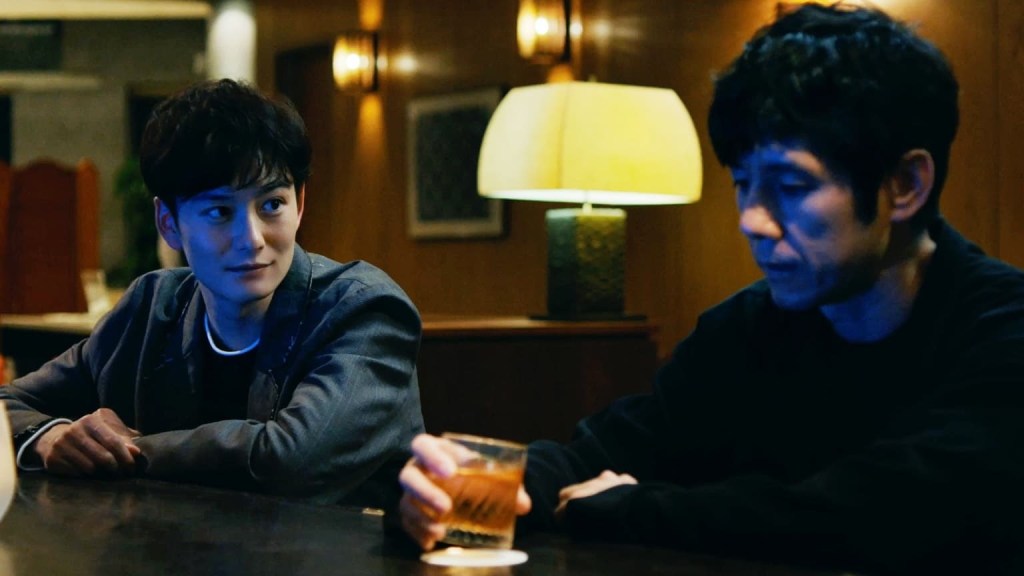
Young thespian Koshi Takatsuki (Masaki Okada) chats with playwright Yusuke Kafuku (Hidetoshi Nishijima) in Drive My Car

But this is not a film that exclusively romanticises about the automobile; instead, it’s an examination of the human psyche and soul, pondering what constitutes a meaningful, satisfying existence. These discussions are manifested in the thespians who appear in Kafuku’s stage-play – like Koshi (Masaki Okada) who joins the production as a means of reconnecting with his lost love, or Yoon-a (Park Yu-rim) who seeks to rekindle her love of performing – and in Kafuku himself, who longs for intimacy and connection yet also values his solitude.

Interesting though these philosophical musings are, they can become tiresome and will no doubt draw the ire of certain viewers, as will the ambiguous conclusion, run-time of three hours (or very close to) and the slow pacing. The latter grievance is evident from the earliest stages of the picture, with its prologue lasting a good 40 minutes before the titles appear. Moreover, since its events are recounted several times throughout the narrative, this entire first act could probably be removed altogether – as is the case with Haruki Murakami’s short story, on which this picture is based.

Pleasantly, there isn’t much else to fault with Drive My Car, which is brimming with artistic excellence throughout. The soundtrack, composed by Eiko Ishibashi, is light and ethereal, pairing impeccably with the film’s serene tone; its beauty is matched by the cinematography of Hidetoshi Shinomiya, whose framing and lighting of each shot is flawless, whether it be on-location or in the confines of Kafuku’s Saab. And then there’s the extraordinary cast, every member of which gives a dedicated, naturalistic performance regardless of experience.

Drive My Car is a pensive, genteel and tender drama made transfixing by its behind-the-scenes observations of an unusual stage production, reflections on what it means to be human, and beautiful driving sequences across the landscapes of Japan. Even with its drawbacks of length and slowness, Ryusuke Hamaguchi’s film is one of 2021’s best, and should be a strong contender for the upcoming Academy Awards.

Drive My Car will be screening in select theatres from February 10th.

Thrice Upon a Time is a Deserving Farewell for Evangelion

To conclude a ground-breaking saga is an unenviable task, not least because the resulting product needs to honour its forebears whilst leaving a legacy of its own. It’s a position in which this animated feature finds itself, and deftly succeeds in doing so, being as close to flawless as a send-off can possibly be.

Hidden beneath the city of Paris, the paramilitary organisation known as NERV has stored weaponry created as part of the Evangelion project, heavily guarded by an autonomous defence system. An assault on the city is launched by rival outfit WILLE, which seeks to liberate Paris from its captive state, and retrieve said weaponry for its own means – namely, defeating NERV and preventing it from curating another cataclysmic event.

Meanwhile, in the ruins of Japan, Shinji Ikari is listless after failing to thwart the actions of NERV and, by extension, his own father. He and Rei Ayanami – or an entity that purports to be her – follow his fellow EVA pilot Asuka Langley Shikinami to a rural village, there meeting with survivors of the Third Impact. As their days in the village pass, Shinji’s depression only worsens, with his friends fearing he’ll never engage with the outside world again.

Evangelion: 3.0+1.01 Thrice Upon a Time marks the definitive conclusion to the multifaceted Evangelion saga that began a quarter of a century ago with Neon Genesis Evangelion, a 26-episode television series that challenged the medium’s conventions and revived Japan’s dormant animation industry. The series’ creator, Hideaki Anno, seemingly concluded the narrative with a feature-length, theatrically-released picture called The End of Evangelion, only to begin afresh with a new set of films that shared the show’s title, plot and themes.

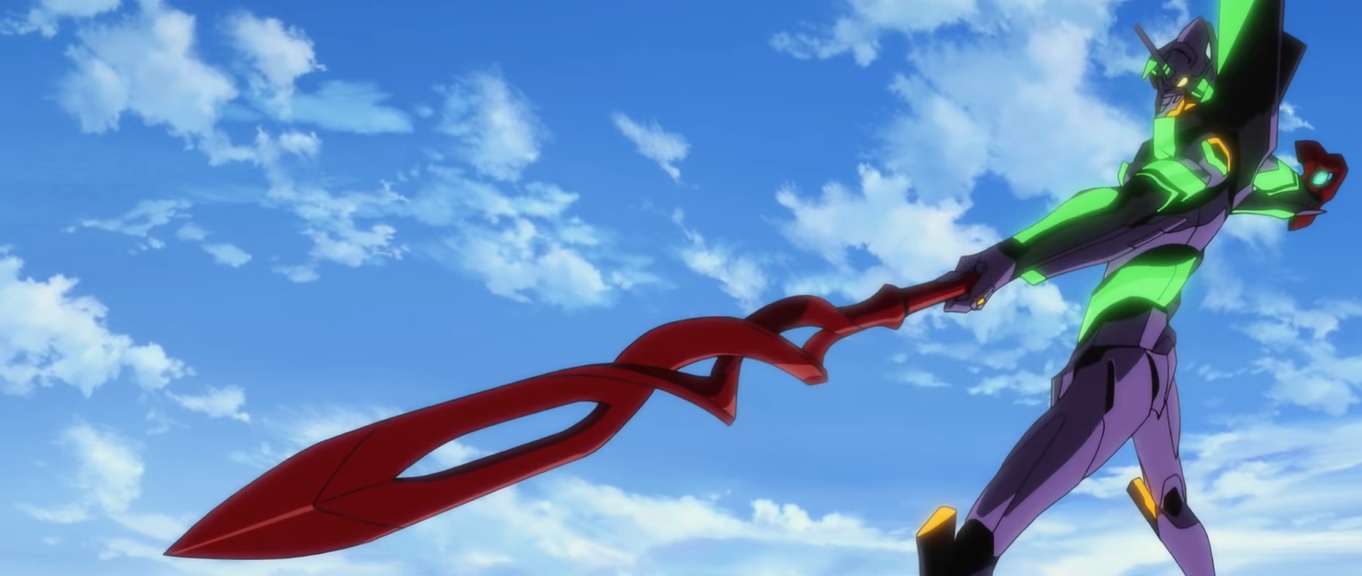
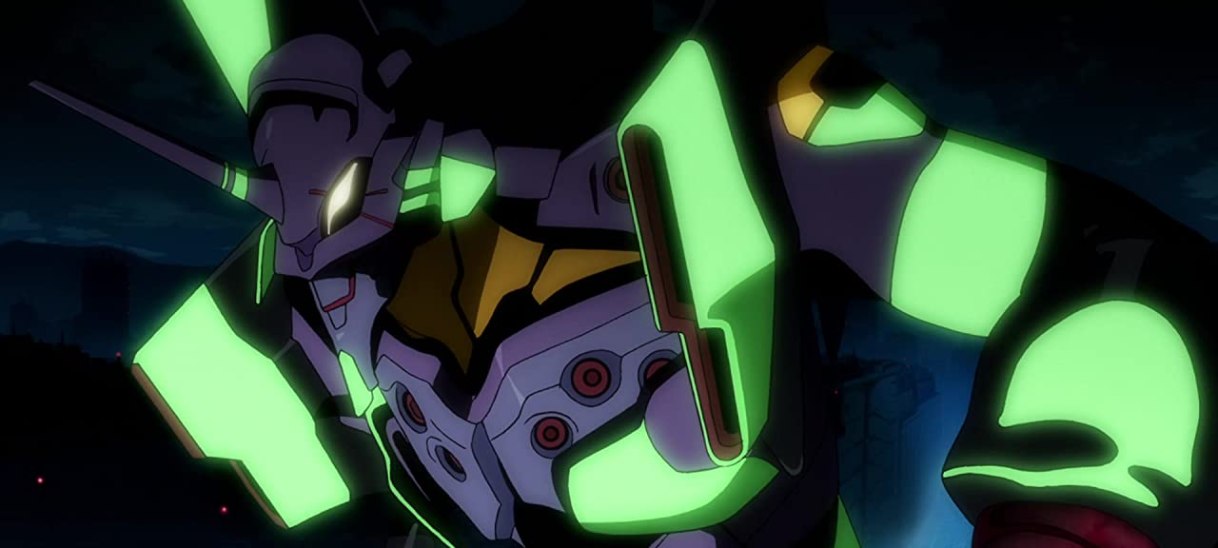
Shinji’s EVA Unit-01 brandishes a new Spear in Thrice Upon a Time

Belonging to this same set of films – collectively known as the Rebuild of Evangelion – is Thrice Upon a Time, accordingly sharing many a quality with the instalments that came before. One such trait is the impressive animation, which again combines traditional cel animation with computer-generated imagery, and is striking throughout. The environments are richly detailed, the designs slick, and the fight scenes bathed in a kaleidoscope of colours, all ensuring this is the best-looking entry in the entire Evangelion franchise.

Another strength carried over from Evangelion films past is the music, crafted once again by franchise stalwart and Anno’s favoured collaborator, Shiro Sagisu. Most of Sagisu’s compositions are drawn from his previous work on the television series, here being slowed down and re-arranged to better match with the imagery, providing a suspenseful, chilling or heroic atmosphere as the need arises. Bookending the excellent soundtrack is Hiraku Utada’s “One Last Kiss”, a hauntingly tender pop song that’s worthy of an Oscar nomination (or Grammy).

Being part of the Rebuild saga, Thrice Upon a Time consequently and unfortunately shares the drawbacks of its precursors, too. One is the infrequency of the action sequences, with most of the film’s time spent observing Shinji’s pensive state; another is the hyper-sexualisation of the young female protagonists, who are oftentimes dressed in fetish-gear or shown from a suggestive angle – both elements serve only to alienate the franchise’s newcomers, who will doubtless already be confused by proceedings.

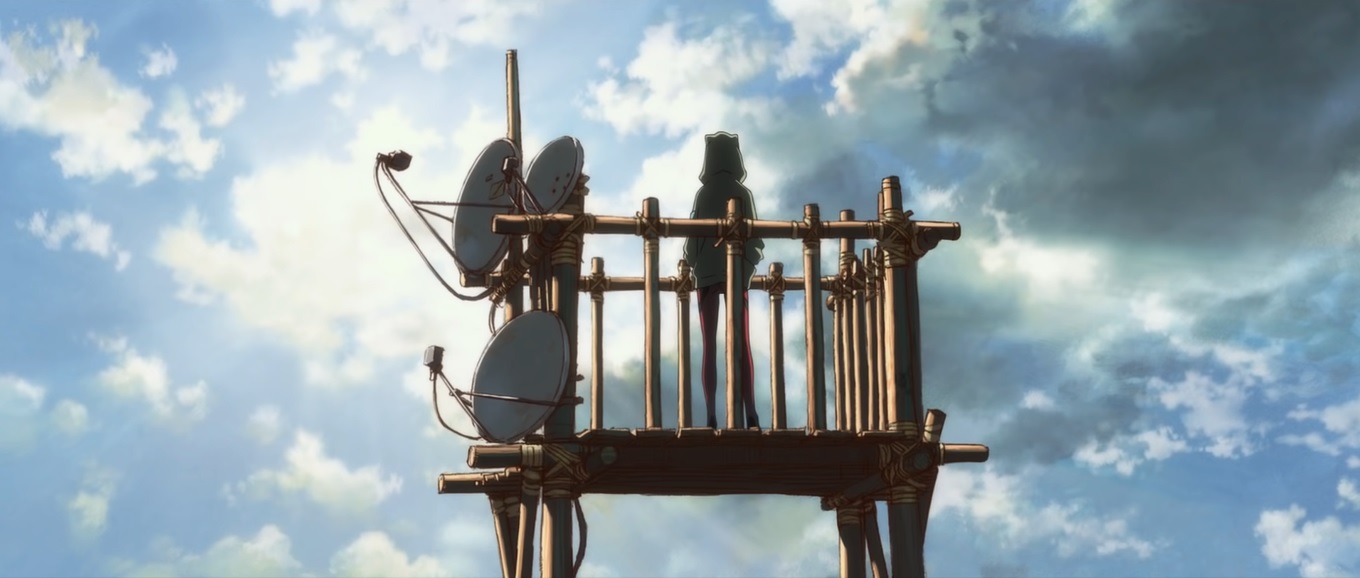
Asuka looks into the distance in Thrice Upon a Time

Truthfully though, this isn’t a picture made to appease the uninitiated; rather, Thrice Upon a Time is for those already converted to the Church of Evangelion, whose devotion is constantly rewarded. The film contains plenty of throwbacks to the series and previous films, including surprise appearances from much-loved supporting characters, as well as fitting, poetic farewells for a select few. Furthermore, there’s an uplifting, life-affirming epilogue that perfectly concludes the years-long Evangelion narrative.

Finally, Thrice Upon a Time also deserves commendation for rectifying a sore point of the Rebuild films, that being Mari Illustrious Makinami. Upon her introduction in 2.0 You Can (Not) Advance (2009), Mari was a character who appeared superfluous to the conflict, with no backstory nor function, a feeling that remained in 3.0 You Can (Not) Redo (2012); but with the final chapter, Mari’s inclusion is finally justified, thanks to revelations about her past and her connection to Shinji – which deserve not to be spoilt.

Containing the franchise’s trademarks of spellbinding animation, splendid music and thoughtful storytelling, Evangelion: 3.0+1.01 Thrice Upon a Time is a compelling finale and a highpoint for the most prestigious of anime sagas. Ultimately, it’s best viewed as the celebration of a venerable series, embodying all the tropes for which it will forever be renowned.

Evangelion: 3.0+1.01 Thrice Upon a Time is now streaming worldwide on Prime Video.

MIFF ’21: Japan’s Volleyballers Get Their Due in The Witches of the Orient

History is littered with sporting dynasties – in basketball, Phil Jackson’s Chicago Bulls are often touted as one of the all-time greats; in rugby, it’s New Zealand’s fearsome All Blacks who reign supreme. Of equal significance to both is a group of female volleyballers from the East, whose exploits have sadly been underreported in recent years.

In the early 1960s, the world of women’s volleyball was dominated by the Nichibo Kaizuka team, consisting largely of textile workers from the outskirts of Osaka. Under the rigorous training regime of coach Hirofumi “The Demon” Diamatsu, this band of young women annihilated their domestic opponents, eventually being selected to represent Japan internationally against other, higher-ranked teams.

Diamatsu’s team would go on to be dubbed the “Oriental Witches” by the foreign press, owing to their athletic prowess and unparalleled succession of victories – 258, to be exact. This extraordinary feat saw the Japanese players become celebrities at home and abroad, inspiring cartoons, comics, and documentaries such as this one, albeit without the same levels of artistry and reflection.

The Witches of the Orient comes from French documentarian Julien Faraut, who three years ago examined the psyche of tennis player John McEnroe in another MIFF entry, In the Realm of Perfection. Much of Faraut’s narrative is composited of existing footage – including the aforementioned cartoons, plus material of the team competing in Eastern Europe – which is then paired with electronic music, an eclectic combination that leaves the viewer in a trance.

Perhaps the most mesmerising sequence of Witches is the archival film of the women training in Kaizuka. In this footage, coach Diamatsu can be seen relentlessly spiking balls at his players to ostensibly improve their return serve, forcing them to sprint and roll across the court until they are all but exhausted of energy. While Diamatsu’s arduous techniques are somewhat mortifying to witness, they do provide an indication as to why the Witches were so competitive.

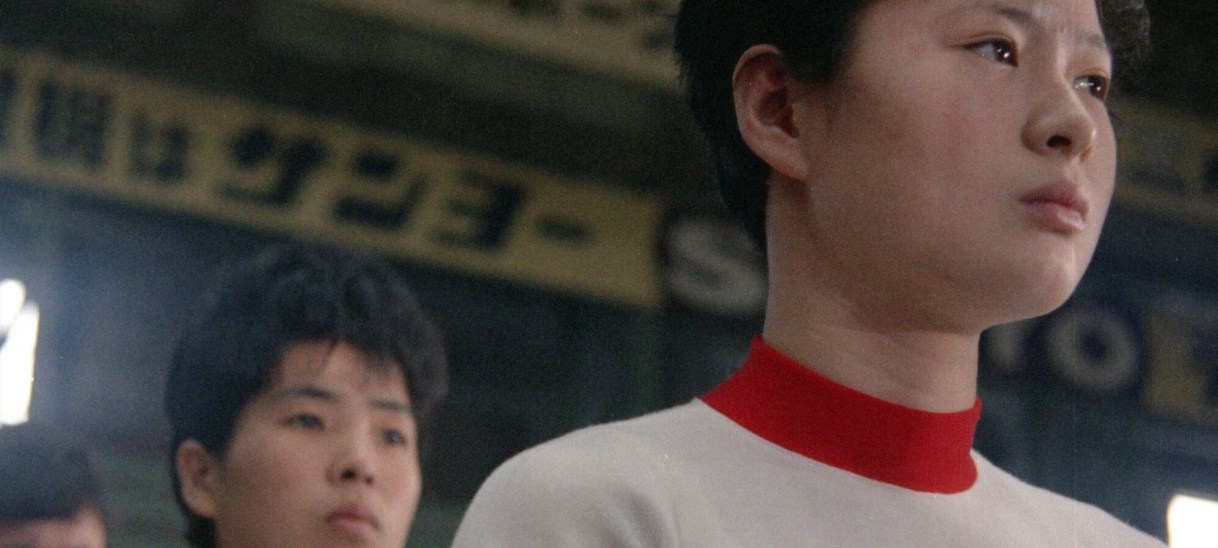
Archival footage, such as the Gold Medal match at the 1964 Tokyo Olympics, makes up a significant portion of The Witches of the Orient

Faraut’s story also draws upon interviews with Nichibo Kaizuka’s surviving members, who provide rare, exclusive access to their lives. The women never speak directly to the camera, instead providing voice-overs that are matched to their daily routines – the earliest example being Katsumi Chiba and her morning workout at a local gym – as well as a discussion between them over dinner.

There are some real gems offered in the ladies’ narration and B-roll of their activities. Yoshido Kanda speaks most candidly of all the former players, reflecting upon her status as a substitute player and why the women were so drawn to Diamatsu despite his gruelling nature; meanwhile, Yoko Tamura’s footage has a lifestyle to be envied, shown playing a game of memory with her grandchildren and watching volleyball anime with her family.

Although the narrative is transfixing, Witches would benefit from some tighter editing – the montages are too long at times, and there’s a sequence about the players’ nicknames that adds nothing to the story. There are some questionable stylistic choices too, with Faraut keeping a tight 4:3 frame throughout – even in contemporary settings – only to inexplicably transfer to a widescreen ratio in the third act.

Watching The Witches of the Orient, it’s difficult to fathom why their achievements have been so muted in contemporary media. The Nichibo Kaizuka story may not possess the drama or excitement of other sporting dynasties, but their winning streak is yet to be matched by any other volleyball team, as is the level of fame and fervour they generated overseas. Surely those facts alone are worth a place in sporting folklore.

Crafted with an element of idiosyncrasy, Julien Faraut’s The Witches of the Orient is a beguiling story about a group of women whose triumphs ought to be celebrated more. The openness and humility of the subjects is what charms most, though the mesmeric visuals play their part too.

The Witches of the Orient is currently streaming as part of the Melbourne International Film Festival on MIFF Play until August 22nd.

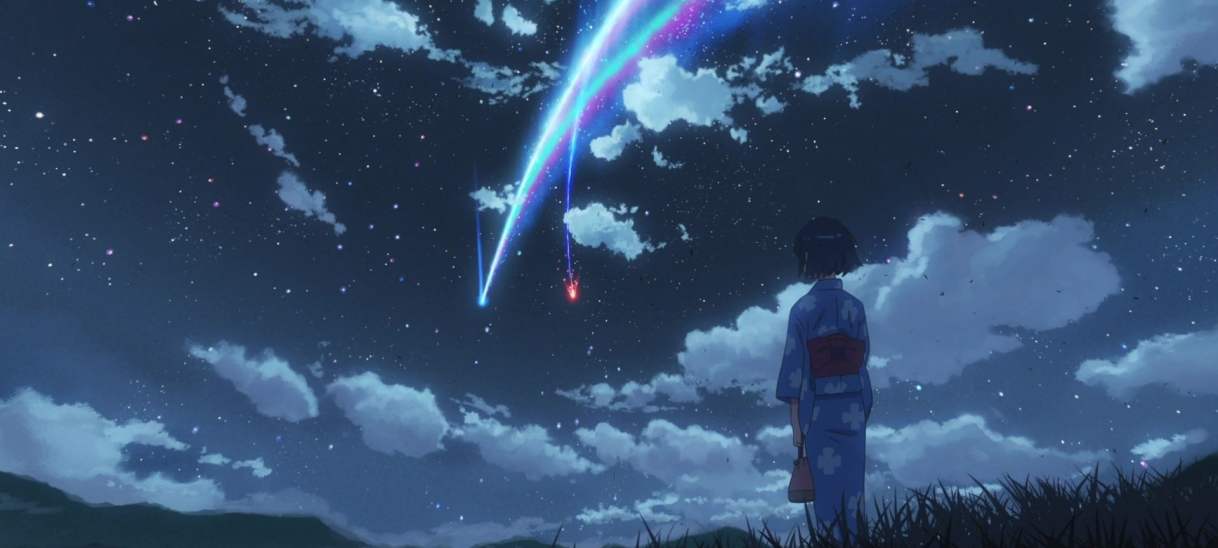
Revisiting Your Name, Makoto Shinkai’s Blessing for a Disaffected World

Every so often, there comes a film that transcends boundaries to find mainstream success. Such an example is this feature-length animation from 2016, a narrative that spans multiple genres and subverts expectations to be one of the artform’s most beautiful, original and compelling offerings, leagues above anything else from that same period.

Teenagers Mitsuha and Taki lead very different lives – the former is an introverted girl who resides in the Japanese countryside with her grandmother and younger sister; the latter has no siblings and shares an apartment with his father in Tokyo. Over the course of several months, these two strangers will awake in each other’s bodies, altering and manipulating their usual routines to the point where they become different people entirely.

As its manga-style designs make obvious, Your Name (or Kimi no Na Wa) is a feature-length anime, being one of several released in its home country of Japan every year; yet despite their ubiquity, very few of these pictures make their way into the Western hemisphere, and fewer still attain any semblance of popularity – arguably, only the releases of Studio Ghibli have managed to do so. This fact alone is enough to make the prominence of Your Name noteworthy, but what makes it all the more extraordinary is knowing who directed the feature-length production.

Responsible for helming Your Name is Makoto Shinkai, who had developed a modest following with his oeuvre in the years prior. Many of the themes in Shinkai’s previous films are rekindled in his 2016 effort, including adolescence, time and companionship, as are the fantasy elements that he so often incorporates. Think of it less as somebody lazily applying the same old tropes, and more an auteur utilising his motifs, like Hayao Miyazaki and his recurring morals of environmentalism and pacifism.

One of the greatest strengths of Your Name is how fluidly it morphs between genres, dabbling in fantasy, science-fiction, romance and drama without tying itself to any one in particular. Just when the picture looks to have settled on a tone – just when the viewer thinks they’ve worked out where the screenplay is heading – along comes an unexpected turn that sees it transform, almost into an entirely different narrative. Impressively, these transitions are never jarring or bewildering, but rather a smooth, natural progression of the story.

Mitsuha scribbles on her face in Your Name

Just as investing is the development of the protagonists, who become more likeable as the movie progresses. From the outset, audiences will find themselves relating to the struggles of Mitsuha and Taki, but their naivety and timidness are evident; as the plot continues, both characters mature and gain confidence through their body-swapping experiences, changing from archetypal youths to well-rounded adults. As a result, the viewer grows so attached to Mitsuha and Taki that the film’s emotional moments are made absolutely heart-wrenching.

Another reason to love Your Name is the animation, which is of a quality seldom witnessed in a Japanese production. All of the illustrations, be they the character designs, landscapes, vehicles or otherwise, are superbly detailed and splashed with colour, with the highlight being an ethereal, dreamlike sequence that sees Taki transported through time. This is Ghibli-levels of artistry on display here, with images so gorgeous that they deserve to be placed on the walls of a museum.

Although there’s plenty to distinguish this picture from its anime brethren, Your Name still ties itself firmly to the medium. Frequent references are made to Japanese culture and tradition, tropes of the artform appear every so often, and there’s an upbeat J-pop soundtrack provided by Radwimps that’s surprisingly pleasant to the ear. That’s the beauty of Your Name – clichés that would detract from the experience in another feature prove nothing but endearing here.

Unfortunately, there is one drawback to Your Name, and that’s the epilogue. While touching and by no means bad, these last few minutes feel like an eternity, needlessly delaying the inevitable outcome to the point where the film overstays its welcome. In fairness though, this is only a minor criticism that in no way frustrates, nor does it sour the rest of Your Name, which is as close to faultless as any feature-length anime has come in the past decade.

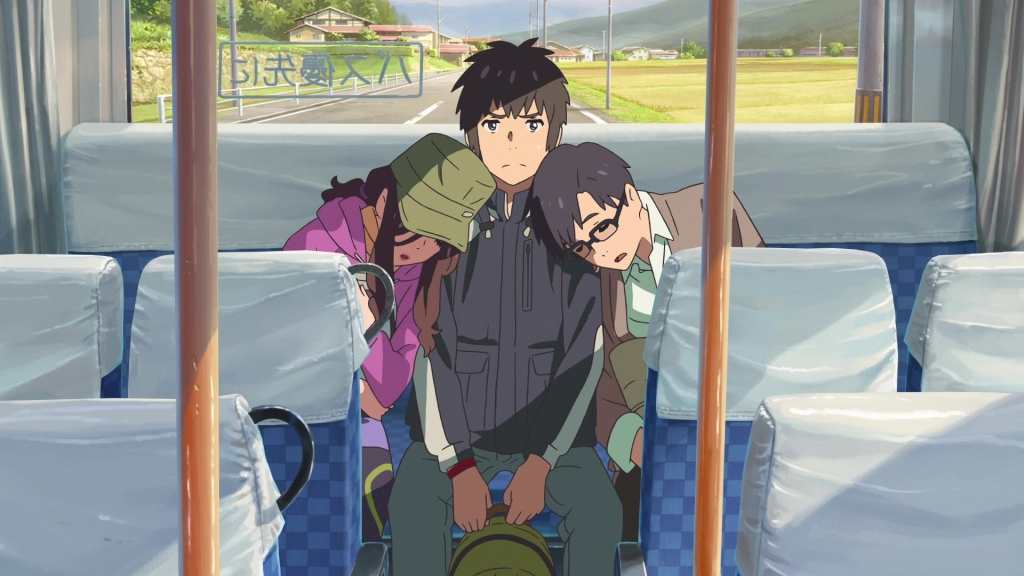
Taki (centre) with friends Miki and Tsukasa in Your Name

That consensus is one that’s widely shared by critics and cinemagoers – Your Name earned rave reviews in Japan upon its theatrical release and shattered records at the domestic box-office, being the highest-earning film of 2016 by a considerable margin and becoming the second highest-grossing anime film of all-time, behind Miyazaki’s Spirited Away. (It’s now in third position, with Demon Slayer: Mugen Train having usurped the top spot.) Those accomplishments were later mirrored in the West, where the movie generated far more interest than usual for a Japanese release.

Your Name’s unexpected success in the Anglosphere can be attributed to two factors. One is the releases it performed against: a myriad of ordinary blockbusters that did squat to innovate the medium, and just as little to appease cinephiles. The second factor is the downbeat period in which the picture was released – remember, 2016 was a particularly miserable time for many people, owing to Trump, Brexit, and a swathe of beloved celebrities passing away, among other things. What this movie provided wasn’t just an alternative to its lacklustre contemporaries, but an escape from the glum realities of life.

Three years after Your Name, Shinkai would attempt to capitalise on his global triumph with the release of Weathering With You, a film that shares many of the same attributes. In addition to utilising the plot mechanics from his prior works, Shinkai’s follow-up boasts beautiful illustrations, charming protagonists and an accompanying Radwimps-penned soundtrack; yet it also suffers from the identical problem of a prolonged third act. One thing Weathering fails to capture though is the magic of its predecessor, lacking that sense of wonder – but then again, there a few other films that do possess such wonder.

Placing in the top tier of animation and eclipsing most live-action productions, Your Name is a disarming, spellbinding feature with beautiful illustrations, loveable characters and a fresh screenplay that is unpredictable in the best possible way. It’s essential viewing for anybody who calls themselves an anime fan, and an ideal entry-point for those wanting to immerse themselves in the artform.

Your Name is currently streaming on Netflix.

A Beginner’s Guide to Evangelion, The Monolithic Anime Franchise

This week heralds a momentous event: the worldwide debut of Evangelion: 3.0+1.01 Thrice Upon a Time, the definitive conclusion to Hideaki Anno’s anime franchise, on Prime Video. Why is it momentous? Well, because the Evangelion series is widely celebrated for reinvigorating and redefining the Japanese animation industry, with its production values, narratives, religious allegories, and musings on humanity all being of exceptional quality. These attributes have resulted in Evangelion amassing a legion of fans across the globe, and hence, a great deal of anticipation for the feature-length finale.

For those who are unfamiliar with Evangelion, and wanting to see the new film without being mystified, Rating Frames has provided this handy recap of the entire series, from its televisual origins right up until the third instalment of the cinematic reboot. This article will contain spoilers, so those wanting their viewing experience of the other Evangelion media to be unsullied are best advised to look away now.

The TV Series

In the beginning, there was Neon Genesis Evangelion, a 26-episode series that debuted on October 4th, 1995 in its native Japan. Its story takes place in a futuristic, post-apocalyptic world that is under attack from large, omnipotent monsters referred to as “Angels” throughout the series. Defending against these threats is a well-financed, transnational militant outfit known as NERV, which has developed giant mechanical weapons capable of defeating the Angels. There’s a catch though – the machines can only be operated by a teenage pilot who is linked to the interface.

The programme largely centres around Shinji Ikari, the pilot of EVA Unit-01, whose father Gendo is the director of NERV’s operations. Shinji fights the Angels alongside the “First Pilot”, Rei Ayanami, and the two are later joined by the feisty Asuka Langley Soryu, who pilots EVA Unit-02. When not defending the world against an Angel attack, Shinji lives in Tokyo-3 under the guardianship of Misato Katsuragi – who is also his superior at NERV – and attends school, there struggling to connect with his fellow students.

Neon Genesis Evangelion was created and overseen by Hideaki Anno, who drew inspiration from the mecha anime of his youth, as well as his own experiences with depression. The latter is what better informs the narrative, being an examination of loneliness, mortality, purpose, and the burden of expectation. Though fleeting in comparison to these philosophical discussions, the giant robot fights are quite exhilarating too, being among the best that the industry has ever produced.

There are some inherent weaknesses with the series, including the concealed motivations of the characters, slow pacing, and the sexualisation of the female characters; yet the harshest judgements are often reserved for the final two episodes, which some viewers deemed too vague and allegorical for their tastes. Nevertheless, the programme remains a standard-bearer for the medium and, alongside Pokémon and Cowboy Bebop, is broadly regarded for popularising anime in the West.

Death, Rebirth & The End

After the mixed reception to the final episodes of Neon Genesis, Anno set to work on a feature-length production that would serve as a comparatively straightforward conclusion. The narrative would eventually be released in two parts, the first of which, Evangelion: Death & Rebirth premiered in March 1997. Much of the film was little more than a clip-show summarising the key moments of the TV series, with the exciting, all-new material saved for the last half-hour – which itself was essentially an extended teaser for the second movie.

Said movie was ultimately released three months later as The End of Evangelion, a retelling of Episodes 25 and 26 of the show. This picture serves as a grand culmination of everything hinted at in the TV series, directly and explicitly revealing what happens to the characters through the most haunting, harrowing and enduring imagery ever witnessed. What’s more, in a continuation of the series’ tone, the film also offers complex, existential discussions about what it means to live meaningfully.

Quite ironically, Evangelion fans who loathed the series finale found themselves even more displeased by End of Evangelion, taking aim at the depressing plot and ambiguous epilogue. Some circles have gone further in their criticisms to suggest that the movie is Anno’s way of trolling his audience, pointing to not only the screenplay, but also the credits rolling mid-film, and an extended live-action sequence that includes a crane shot of a bored crowd in a cinema.

Yet for every detractor, there is just as much fervent support for End of Evangelion – it’s often cited as one of the best anime films of all-time and one of the greatest animated films generally, thus cementing the franchise’s legacy. Its creator was lauded too as a visionary and innovator of the artform; but Anno, ever the perfectionist, was unsatisfied with his work and soon began development on another feature-length instalment.

You Can (Not) Rebuild

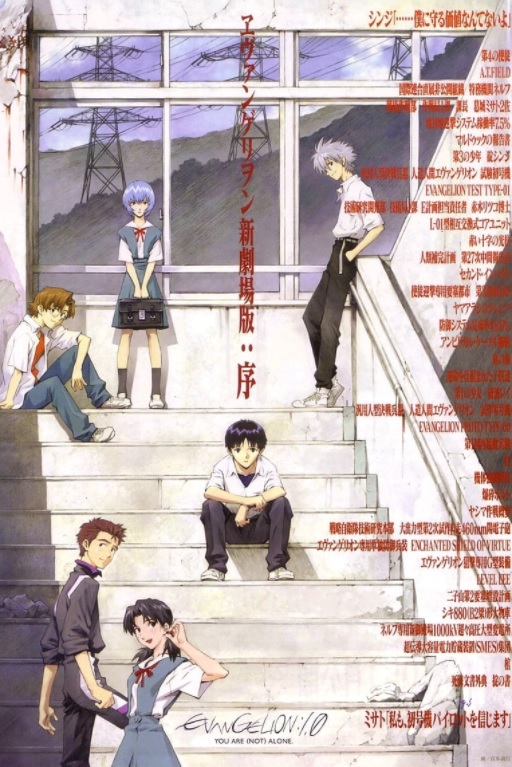
A decade after The End of Evangelion came the first in a series of films known as the Rebuild of Evangelion, ostensibly starting the franchise afresh and introducing it to a new generation. Titled Evangelion: 1.0 You Are (Not) Alone, the picture is a virtual rehash of the TV series’ first six episodes, with only the slightest of changes to the music and plot. The visuals are the most noticeable difference, with large objects such as the EVA Units and Angels being computer-generated animations, while the hand-drawn characters, surroundings and backgrounds are all richer in colour.

Next came 2.0 You Can (Not) Advance, going in the opposite direction and deviating wildly from the source material by gifting fan-favourite Asuka with a new introduction, different surname and fresh character arc. The ending of the film is a wilder change still, retconning the series’ timeline by seeing Shinji inadvertently trigger a second apocalypse in a desperate attempt to save Rei’s life – a conclusion that is heart-wrenching on multiple levels. Less appealing is the character of Mari, a newly-introduced, hyper-sexualised EVA pilot whose sole function is Fan Service.

Following the highs of the second Rebuild film was the relatively sedate 3.0 You Can (Not) Redo, taking place 14 years after the prior movie’s events. Shinji awakes – having been placed in a coma since the “Third Impact” – to find himself in the custody of WILLE, a ragtag command of defectors from NERV and other freedom-fighters. It’s a slow and rather obscure narrative, one that will surely test the patience of even the most ardent Evangelion devotee; in all other respects though, the picture is satisfying, containing the same exquisite illustrations and music as its predecessors.

And now comes the fourth and final instalment of the Rebuild saga after quite a lengthy delay, arriving five months after its Japanese premiere and eight years after the previous movie’s theatrical run. The response in Evangelion’s homeland has been largely positive, with Thrice Upon a Time breaking box-office records – despite the pandemic’s ongoing presence in the country – and critics lavishing praise upon the film, but whether that success will be repeated internationally remains to be seen.

In any case, all of this will hopefully provide some context as to why a film about giant fighting robots is one of the most hotly-anticipated releases of 2021.

Availability

A freshly-dubbed version of the original television series is available for streaming globally via Netflix, which also has the rights to The End of Evangelion and an abbreviated version of Death & Rebirth, titled Death(True)2.

All of the Rebuild films, including Thrice Upon a Time, will be available worldwide on Prime Video from this Friday, August 13th.