Furiosa: A Mad Max Saga: George Miller’s Return to the Wasteland is just as Chaotic and Fun as Ever

Rating: 4.5 out of 5.

Melbourne premiere screening provided by Universal Pictures

How does one follow up one of the greatest action films of all time? In George Miller’s case, he doubles down: double the car chases, double the explosions, double the chaos, double what’s happening in the mise-en-scene, and double the fun. But Furiosa: A Mad Max Saga should not be seen as an attempt to outdo Mad Max: Fury Road (2015), even though it speaks (sometimes explicitly) to the idea of making something epic and memorable, as though that wasn’t already achieved with the sequel.

Tonally, visually and sonically, Furiosa is on par with Fury Road which makes complete sense for the simple reason that it’s a prequel that’s there to compliment, and there’s not someone else in the director’s seat to screw it up. It’s clear that Miller went with a ‘if it ain’t broke, don’t fix it’ mentality when approaching this film, and the result is all the better for it. The biggest deviation to be felt in Furiosa is that, while it lives in the universe of Mad Max, it isn’t about him. In fact, Fury Road wasn’t exactly about him either, with these two films carving out their own place as post-apocalyptic, operatic action epics with larger-than-life stakes beyond a bloke called Max. But nonetheless, Furiosa is the character we follow and the focal point that guides our understanding of where Fury Road begins and ends.

Taking place across five chapters, Furiosa opens with the titular character (played in youth by Alyla Browne) in the green haven she attempts to return to throughout Fury Road. After noticing bandits ravaging through the haven, she tries to sabotage their bikes and alert the rest of her people of their presence; unfortunately she’s captured in the process, leading her mother (Charlee Fraser) to give chase. Eventually, Furiosa is brought to the bandits leader, Dementus (Chris Hemsworth), who is looking for his own means of survival along with the rest of his pack of bikers.

Chris Hemsworth in Warner Bros. Pictures’ action adventure “FURIOSA: A MAD MAX SAGA,” a Warner Bros. Pictures release.

It’s from here that Miller reintroduces familiar aspects from Fury Road, namely Immortan Joe (Lachy Hulme) and his goofball sons; Immortan’s white army of War Boys; and the Citadel. The first hour or so of the film focuses on Furiosa’s navigation of this space after she finds herself a captive of sorts (for reasons I won’t spoil). Alyla Browne does a fantastic job at setting the foundations of Furiosa’s arc to the point where, when Anya Taylor-Joy eventually takes the reigns after an hour, it’s not immediately apparent because of how alike the two actresses are with their pronounced blue eyes and Miller’s focus on framing them in tight close-ups.

Once Taylor-Joy is at the helm, Miller throws her into a extended chase sequence with Praetorian Jack (Tom Burke in a minor, but effective role) onboard an oil tanker, the War Rig. It echoes the chase from Fury Road where Furiosa deviates from her oil run to Gastown, but here Miller is much more interested in stretching the tension out as much as possible, almost to breaking point. It really speaks to his penchant for destruction and his eye for detail, where every nook and cranny of the truck, gears and all, is on display and pushed to the limit.

It takes some time to buy into Taylor-Joy’s performance, namely because it feels like she trying too hard to fill Charlize Theron’s boots rather than carve out her own little space for this character. Theron’s commanding screen presence, particularly the way she carries herself, is ultimately too pronounced for Taylor-Joy — she even tries to mimic her cadence of speaking — and subtlety is more effective here (which Browne brings). But Taylor-Joy does offer a level of vulnerability through her enchanting eyes; in this sense it’s easy to see why Miller might have chosen her as the lead.

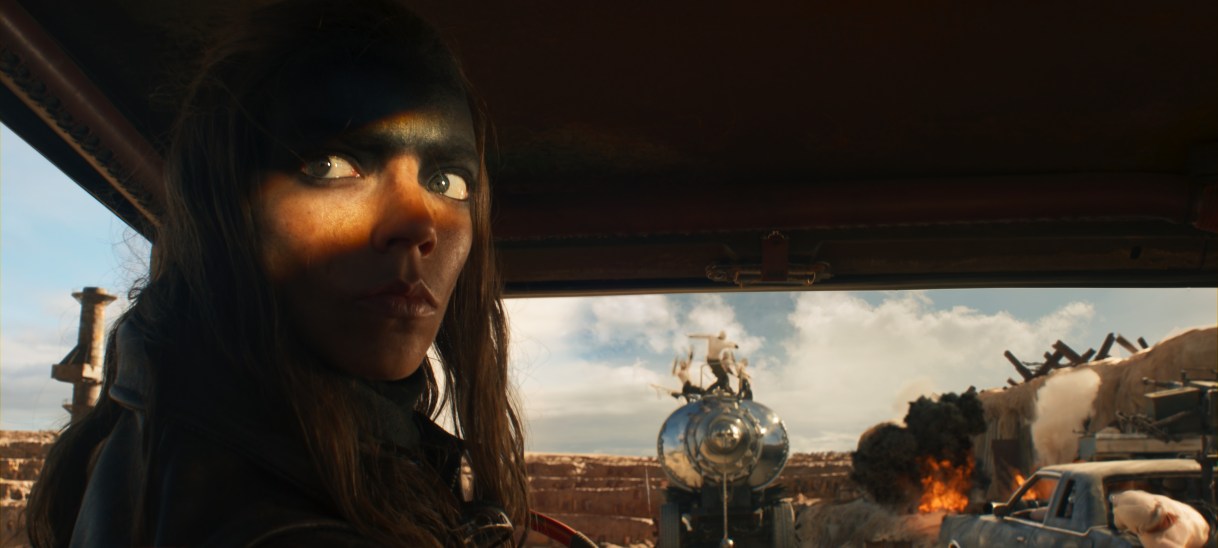
Tom Burke as Praetorian Jack and Anya Taylor-Joy as Furiosa in Warner Bros. Pictures’ action adventure “FURIOSA: A MAD MAX SAGA,” a Warner Bros. Pictures release.

Hemsworth, by contrast, steals every scene he’s in, even when he goes missing for some stretches of time. Where the Thor films misplaced his larrikin humour (often at the character’s expense), Miller gives him the freedom to lean into it in a way befitting a character with a name like Dementus. His brute physique coupled with his nasally way of speaking gives Dementus a memorable edge, especially with all of the quotable lines he’s given.

Adding to the grandiose and scale of what’s on display is the fact that the Wasteland’s harshness is felt to an equal (if not greater) degree than in the first film. The addition of locations hinted at in Fury Road, like the aforementioned Gastown and Bullettown, adds weight to the stakes at play. There isn’t just more for the sake of having more, but rather Miller deliberately leaves no stone unturned and paces his film like the War Rig barrelling down a stretch of road — there’s no room for respite, you just brace yourself and try to hold on for the ride.

For what it’s worth, it’s a gorgeous ride to be had, with the visuals once again being enveloped in this orange, grainy tinge. Where in Fury Road the colours felt less saturated, there’s a much more surreal, darker quality this time around.

This is ultimately a film about Furiosa though, and her story never feels like it’s compromised or diluted for the sake of brandishing all of the fun and games that audiences will expect. Miller is a master at knowing how to capture human plight and not let it be overshadowed by the scale of his pictures. The human element of his films and this portrayal for struggle is what intensifies every car flip, gun shot and extraordinary set-piece, which is why it’s even more commendable that in a film full of incredible moments, Furiosa never loses sight of Furiosa.

Furiosa: A Mad Max Saga opens nationally from the 23rd of May.
Three Mad Max Theories that Change How You See the Franchise

Of all the cultural exports to emerge from Australia, arguably none is more widely recognised or celebrated than the Mad Max film series. These post-apocalyptic, dystopian tales have inspired praise and enthusiastic fan-bases the world over, from Asia to the Americas, all enamoured by the franchise’s idiosyncratic characters, punk-like aesthetics, and high-octane action sequences.

This popularity is quite remarkable when one considers the franchise’s humble origins. The initial Mad Max (1979) was conceived by its director, George Miller — a qualified surgeon — as a means of highlighting the impacts of road trauma, with the hallmarks for which the series is most-widely known not being introduced until its sequel, two years later. And even then, it is never directly stated nor explained why, or how, Max’s world operates the way it does.

This mystique has led to several theories from cinephiles, some of which help explain discrepancies that have emerged in the franchise’s four-picture, five-decade history. With the latest film in the long-running saga, Furiosa set to reach our screens this week, we’re sharing three of our favourites. Spoilers follow!

Max is Dreaming
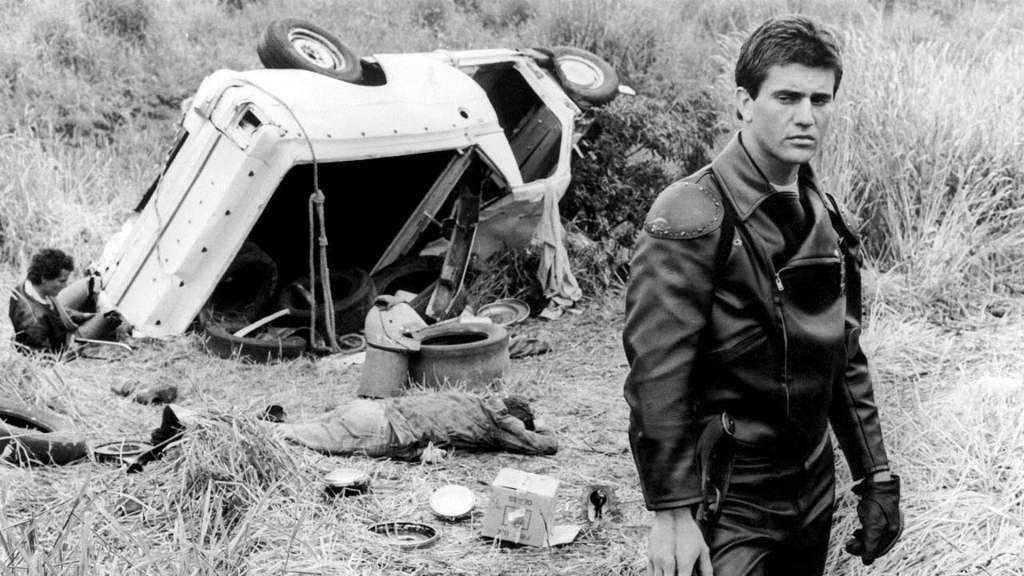
Max Rockatansky (Mel Gibson) as he appears in the final moments of the first Mad Max

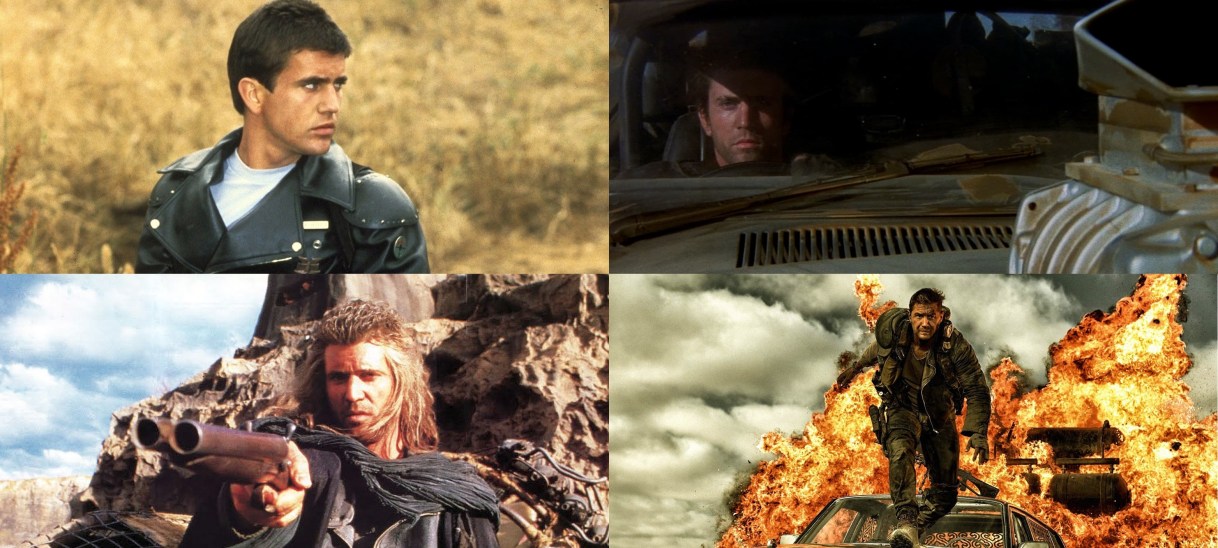
This first theory postulates that our main protagonist, Max Rockatansky is imagining the events which occur in the second, third and fourth entries in the series, and stems from what transpires in the first picture. As a reminder: Max (Mel Gibson) loses his best mate, Jim “Goose” Rains (Steve Bisley), wife Jessie (Joanne Samuel) and infant son Sprog (Brendan Heath) to the violent hands of a rogue biker gang, led by The Toecutter (Hugh Keays-Byrne).

The argument here is that Max, having been distressed by the loss of those closest to him, becomes listless and descends into madness — hence the title — by entering a fantasy world of his own creation, one where he gets his revenge on Toecutter and his minions. From there, he visualises himself as a champion of the oppressed, committing vengeance against those who dare to stymie the peaceful will of others.

Applying the Caligari-esque mentality of it all being a dream may appear juvenile, but there are some elements which help provide credence to this belief. Note how, for instance, the respective plots of Mad Max 2: The Road Warrior (1981), Mad Max: Beyond Thunderdome (1985) and Mad Max: Fury Road (2015) all have Max entering a cult as an outsider, becoming their leader in all but name, and defeating their oppressors in a climactic chase sequence.

The theory also explains the use of certain actors in more than one film. Bruce Spence is a prime example — he plays the Gyro-Captain in The Road Warrior, and then appears as an amateur pilot in Beyond Thunderdome, both times assisting Max and his allies as they escape tyranny. Then there’s Max Fairchild, who appears in supporting roles in the first and second instalments; and Toecutter himself, Hugh Keays-Byrne, who portrays Fury Road’s antagonistic Immortan Joe over three decades after his first casting as a villain.

Max is a Legend
Max (Mel Gibson, again) with The Ones Left Behind in Mad Max: Beyond Thunderdome

By that, we mean he’s a mythical figure, akin to the Roman or Greek gods written about centuries ago. A couple of the examples used above could also be utilised as evidence for this second theory — the appearance of thespians as different characters in multiple films; the vaguely similar narratives of the three sequels — and more besides.

The Road Warrior is the entry which most readily identifies with Max Rockatansky being a myth. From the outset, it’s made clear the story is set in the future, with an elderly man (voiced by Harold Baigent) recounting the events of his past, who by story’s end reveals himself to be one of Max’s allies: the Feral Kid (Emil Minty).

More proof comes from the end of Beyond Thunderdome, where an adult Savannah Nix (Helen Buday) is seen recounting the tale of how she and her fellow tribespeople were rescued by Max. And then, there’s this quote which appears at the end of Fury Road:

“Where must we go… we who wander this Wasteland in search of our better selves?”

That line is attributed to “The First History Man”, and unknown and unwitnessed figure who, we can assume, is responsible for telling Max’s story.

Also indicative of this theory is the demise and unexplained return of Max’s iconic car, The Interceptor. This heavily-modified Ford XB Falcon Hardtop was stolen by Rockatansky in the third act of the original film, and destroyed in Mad Max 2, only to miraculously appear in the opening scenes of Fury Road (though in fairness, Miller circumvents this plot-hole by describing the latter picture as a “revisiting” of the franchise).

There’s More than One Max
Max (Tom Hardy) strapped to the front of a War Boy’s car in Mad Max: Fury Road

In the days and weeks following the release of Fury Road, there were certain netizens who hypothesised that this particular Max is, in fact, the aforementioned Feral Kid from Mad Max 2, owing to his long hair, the return of The Interceptor, him being played by a different actor, and the character reluctantly sharing his name.

Miller himself entertained this idea when queried by IGN, labelling it “interesting” but ultimately dismissing it, pointing to The Road Warrior’s end narration. Other factors that work against the premise include Tom Hardy being directly credited as “Max Rockatansky” in Fury Road’s opening, and his voice-over where he directly states:

“Once I was a cop, a Road Warrior searching for a righteous cause.”

But, tying into the theory that Max is a fable, it is possible that he is not the only “Max” in this universe. Again, The Interceptor helps provide weight to this theory — if this is the same Max we saw in Road Warrior and Thunderdome, how is it that “the last of the V8s” (as the car is labelled in the first and second chapters) is still in his possession after being lost?

There’s the matter of his name, too. Rockatansky only says his name twice in Fury Road — in the initial voice-over, and in the third act when he saves Furiosa’s life; he shares it about as often in Mad Max 2, and doesn’t utter it even once in Thunderdome, where he’s instead called “the Raggedy Man” or “the Man with No Name”. Perhaps our History Folk are telling of several figures who came to the aid of others, and just so happen to have named their hero “Max” in each tale.

Furiosa: A Mad Max Saga is screening in theatres nationwide from this Thursday, May 23rd. The other four Mad Max films are available via home-video, streaming and on-demand services.