MIFF 22: Cheap Laughs Abound as Triangle of Sadness Lays Waste to the Wealthy

Rating: 3 out of 5.

In Ruben Östlund’s latest overblown, satirical romp, Triangle of Sadness (2022), there is a wealthy German stroke survivor whose only words of communication are “in der wolken” (translated: in the clouds). It’s a phrase she yells out countlessly across the film to the point where it wouldn’t be surprising if it pops its head in like an M. Night Shyamalan twist at the film’s close. It never does though, but it perfectly captures the underlying message behind Östlund’s rich ripping, caste crushing film — the wealthy just love to live in the clouds, out of touch with reality, no matter how dire a situation can get.

While most of the rich folk in this film are overblown caricatures that breach the threshold of excessiveness, for Östlund, excessiveness is the name of the game. Structuring his film into three chapters (three edges that make up a “Triangle of Sadness”, if you will), Östlund takes aim at the false pretences that the wealthy hide behind — fancy yachts, material goods like Rolex watches, and cosmetic procedures among other things — and bares them for viewers in all their grotesqueness. It’s nothing that hasn’t been depicted throughout cinema history in the past (2013’s The Great Gatsby and The Wolf of Wall Street come to mind from recent films), but Östlund isn’t privy to subtlety, rather, he’s going all in until you’re either exhausted, squeamish, or both.  

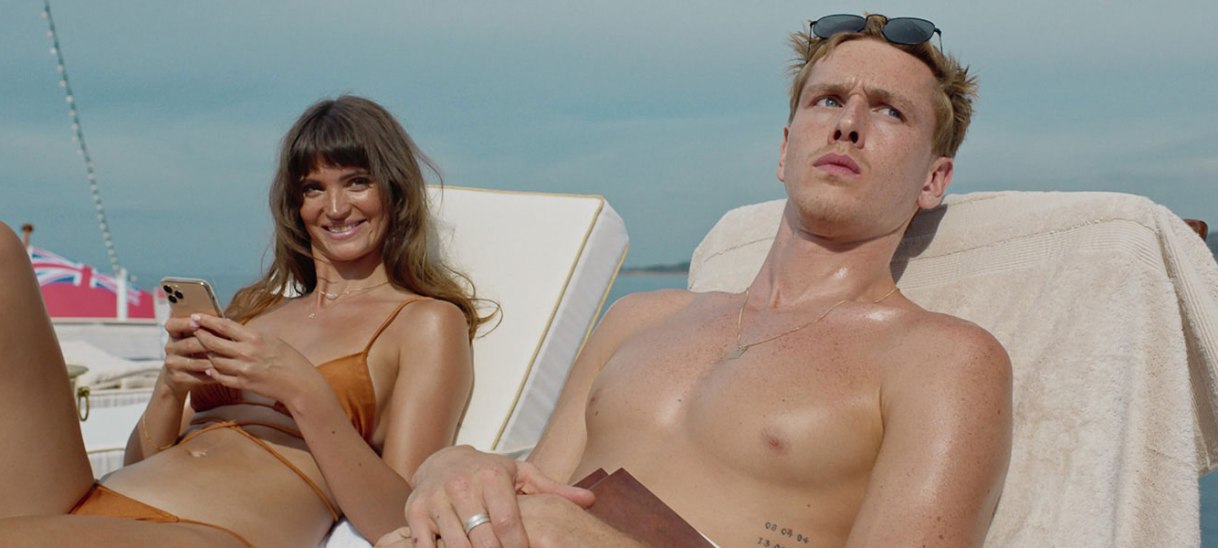
Where there is beauty, there is deceit — at least that’s part of the message that underpins Triangle of Sadness. Set on a luxurious yacht for the most part, the film is comprised of a solid ensemble that plays seamlessly off of Östlund’s material and each other. It’s Yaya (Charlbi Dean Kriek) and Carl (Harris Dickinson), two models and partners-with-benefits, that serve as the entry point into the mayhem that ensues. Both characters skimp by on their looks, and it’s part of the reason they find themselves in the company of millionaires and billionaires on the aforementioned yacht as Yaya is gifted a free trip courtesy of her influencer status.

On the ship we find a bunch of rich folk and everyone in-between including the ship’s crew. There’s a British couple who boast about their contribution to the munitions industry including their role in creating land mines and hand grenades (which Östlund returns to in explosive fashion); a down-on-his-luck code-seller whose partner didn’t join him on the cruise; the vessel’s drunk captain (Woody Harrelson); a Russian billionaire who made his money selling manure; and the chief stew of the ship, among others.
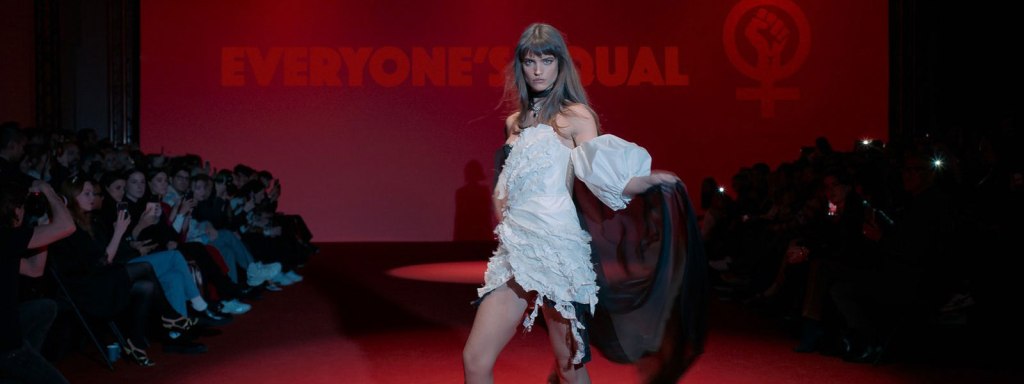
Charlbi Dean Kriek in Triangle of Sadness

Each character has a role to play in Östlund’s charade as events spiral from controlled to chaotic in an instant. He rocks the boat to the point where characters are literally spewing their guts out (of both ends) after a slimy buffet and storm, he throws in a pirate attack at one point, and in the third act he leaves some characters stranded on an island where he flips the hierarchical triangle on its head.

There’s a lot happening in Triangle of Sadness to the point where you can feel the lengthy runtime weighing proceedings down. This is undoubtedly a conscious choice on Östlund’s part as he leans into the satire he is going for to create an equally exhausting experience for his characters (especially in that third act).

At times it feels like his screenplay is made up of a bunch of short films or mini sketches that have just been welded together. There’s a scene involving the yacht’s captain and the rich Russian Dimitry (Zlatko Buric) as they indulge in a Marxist and capitalist back-and-forth while playing a drinking game that they continue in the captains quarters over the yacht’s PA system. There’s also a sexploitation sequence on the island portion of the film where the yacht’s Toilet Manager pays Carl for his services with pretzel sticks and shelter. All of these sequences are comical, but there’s never greater substance or deeper subliminal messaging beyond the superficiality of being rich and the vanity of these characters.

Triangle of Sadness is at its best during its first half, where it plays around with ideas of inadequacy and superficiality at a more measured level. The longer the film chugs on though, the more it tailspins into a cartoonish satire that trades subtlety for unhinged chaos, where you’re fed what you know and nothing more.

Triangle of Sadness hits Australian cinemas in late December.

MIFF 22: Lingui, the Sacred Bonds is a Beautiful Portrait of Resilience

Rating: 4 out of 5.

After making a festival run in 2021, including being selected as the Chadian entry for last year’s Academy Awards, Mahamat-Saleh Haroun’s engrossing and often stunning family drama Lingui, the Sacred Bonds (2021) arrives at MIFF with acclaim. The film is slight, coming in at just 87 minutes, but is always deeply engaging.

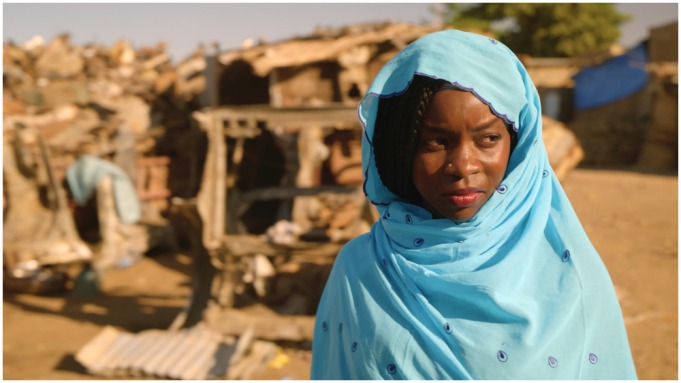
We begin with a dedicated Amina (Achouackh Abakar Souleymane), a single mother crafting intricate stoves out of the wiring in car tyres to support herself and her 15-year-old daughter Maria (Rihane Khalil Alio) in the Chadian city of N’Djamena. The sequence is shot beautifully, as most scenes are by cinematographer Mathieu Giombini, focusing on Amina’s breathing and her drive to support her family. 

What Amina does not yet know is she will have to do much more to support Maria, who she is soon to learn is pregnant, and wants an abortion. We learn of this with Amina through a meeting with Maria’s school principal, who informs her she has been expelled because of her pregnancy, stating that it’s “bad for our image.” This explanation is heartbreaking to hear, especially from a woman similar in age to Amina.

What follows is a gripping confrontation between mother and daughter in one of the most extraordinary framed and blocked sequences of the film that is truly stunning. There is a certain grace Haroun is deliberately pairing with the harshness of this confrontation and circumstance that is where the film truly clicks into place and becomes quite special.

Achouackh Abakar Souleymane in Lingui, the Sacred Bonds. Screening provided by Rialto Distribution.

I hesitate to call this an abortion drama, as the film is much more focused on the mother-daughter and the bonds they hold as the navigate their city, religion, and their perception. While similar subject matter has been shown with a clinical harshness to harness the stark reality in films like Never, Rarely, Sometimes, Always (2020) and 4 Months, 3 Weeks and 2 Days (2007), Haroun instead centres this story on the community of women that have to support one another in this city. 

The beauty in the film comes from seeing these two women grow in front of our eyes, a remarkable achievement in character work in such a slender film. The pair of performances from Souleymane and Alio are quite special. They are able to embody the quiet, seething rage necessary, as well as the desperation the story requires. Many of these stories can be guilty of wallowing in despair and misery of the characters’ situation, something Haroun is able to navigate around remarkably. Lingui is always focused on its namesake, the bonds between the women of the film, rather than the situation they are in.

There is a remarkable level of restraint that only heightens the dramatic tension scene to scene. Haroun avoids any clean outs in the story, so even with its slender frame, Lingui never feels predictable or dishonest. It is slow to unfold, but once it does you will be struck by its elegance and beauty. The performances and frame widen and lighten that makes the restrained opening worthwhile. If the beginning of the film is a tight series of hyperventilating inhales, the final act feels more like a relieving exhale.

There is a maternal warmth that emanates throughout the film’s female characters, illuminating the necessary bonds these women have with each other in the city that is truly powerful. Depictions of this are so fleeting in film, especially by a male filmmaker, that makes the film so captivating and fresh. Lingui, the Sacred Bonds move slowly on its course, but once the end of the tunnel is in sight, you will be astounded by how much it affects you.

Lingui, the Sacred Bonds will be in select theatres till August 21st and on MIFF Play from August 12th to 28th.

MIFF 22: Rewind & Play is a Must-See for Jazz Fans

Rating: 3.5 out of 5.

Taking place at the conclusion of Jazz titan Thelonious Monk’s European tour in 1969 on the French TV show Jazz Portrait, Rewind and Play (2022) gives us a window into how he was treated by even those that believed they were celebrating his genius. French-Senegalese filmmaker Alain Gomis uncovered this footage while working on a fictional, mosaic film based on the legendary musician. This is the filmmaker’s first documentary feature and is a remarkably selfless act to show this footage of unflinching honesty to a broader audience. 

Similar in style to Peter Jackson’s miracle of a Beatles documentary Get Back (2021), Rewind and Play gives us a window into one of Jazz’s biggest figures playing his instrument to what is ostensibly no audience. That alone is worth the price of admission. 

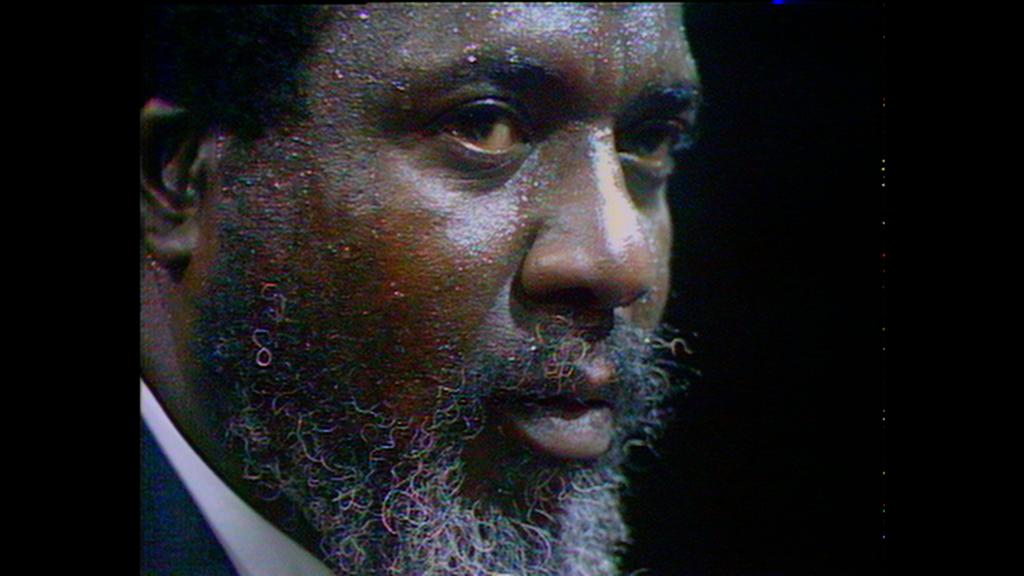
Right at the beginning of the film, you are struck by Monk, hunched and dripping with sweat. His exhausted breathing slowly overwhelms the rest of the audio, drowning out the host. In a film with a strong restraint in editorialisation of footage, Gomis from the first minute of screen time shows that he wants us to feel the harsh lights and environment the legendary pianist finds himself in. Gomis, throughout the documentary, uses Monk’s words and, more importantly, his piano, to drown out the words of those around him.

As soon as the host Henri Renaud begins to interview Monk, the callous and horrible treatment we are soon to endure rears its ugly head. When asked about his first time in France, Monk immediately mentions how he was ossified, something the host doesn’t want to be included in the show, as “it’s not nice”. The statement is also used by Gomis in the film’s opening credits.

Thelonious Monk in Rewind & Play. Screening provided by Andolfi Productions

Monk, like many musicians, communicates through his instrument. The language barrier is larger than the English and French divide here. He is clearly uncomfortable discussing his life, especially in front of a piano that he would rather be playing. Renaud is constantly interjecting his own experiences with Monk throughout the show, while also lazily translating what the pianist is saying back into French, usually in service of himself. The lack of respect and even acknowledgement of Monk’s playing is beyond frustrating, something we see draped across his face constantly.

The sadness from the documentary comes from Monk’s constant civility, coupled with an inability, or lack of desire, to combat with the host and crew on this french late night show. This is not James Baldwin on the couch of a French talk show trading barbs, Monk can only talk his frustrations out on the Steinway in front of him.

The repetition and rigidness of the talk show format is such an antithesis to the early jazz style, which centred on free-flowing, emotive pieces that had no desire to be replicated. The power of the Blue Note jazz movement came from the spontaneous outbursts in creative musicality that can be shared with an audience.

To have one of Jazz’s preeminent figures reduced to essentially a hotel lobby pianist is truly heartbreaking. And it’s not like these tv producers have an issue with the musician. They clearly adore Monk’s music and place in modern Jazz, but they cannot help themselves with their stereotypical ideas about him.

Gomis ironically closes the film with a cross-cutting sequence of Monk playing as the host describes a story of seeing the musician in a Harlem club, playing during a knife fight. The host asked Monk after the club shut down “Thelonious, how come you had the nerve to go on playing?” To which Monk replied, “it was no big deal, there was no need to stop”. This quote perfectly encapsulates the legendary musician’s relationship with music and the chaos of the world around him, highlighting the host’s lack of understanding about the man he was dealing with, then and now.

Rewind & Play will be in select theatres from August 17th to 21st and on MIFF Play from August 12th.

MIFF 22: Millie Lies Low is a Propulsive Debut to Remember

Rating: 3 out of 5.

What would you do if a simple lie could get you out of an uncomfortable situation with the people you love? That is the central dilemma in this terrific debut feature out of New Zealand, a deeply relatable tale of anxiety that never shies away from the hard truths its protagonist desperately trying to avoid. Confidently directed by MIFF Accelerator alum Michelle Savill, Millie Lies Low (2021) embraces its titular character’s resourcefulness and willingness to keep the narrative alive with a relentless, anxiety-inducing farce that will break your heart.

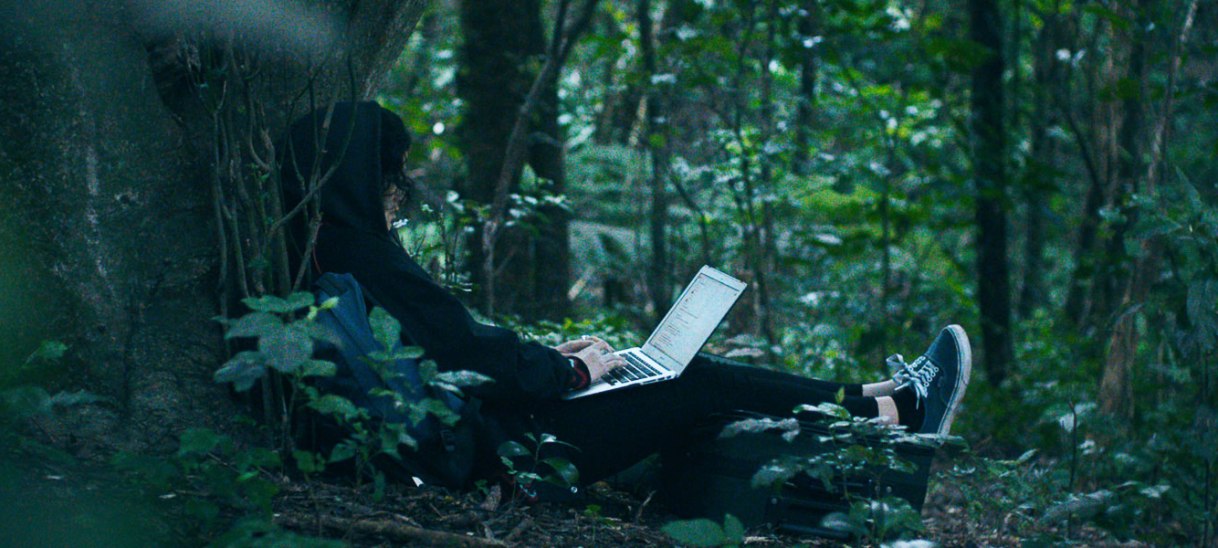
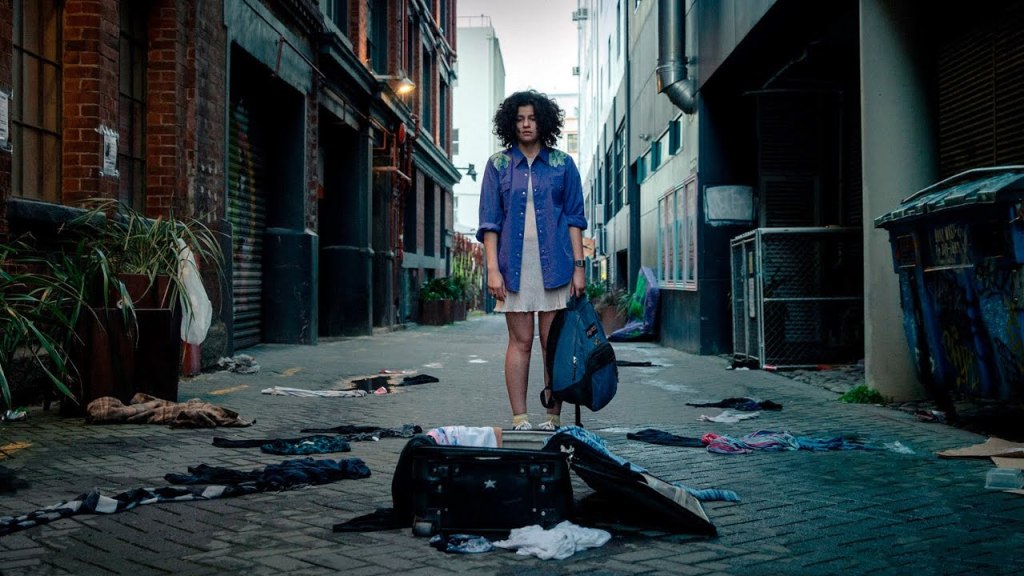
The film tracks architecture student Millie’s web of lies and schemes as a result of her leaving the New York-bound plane on the tarmac due to a panic attack. Instead of returning home to organise a new flight, the anxious Millie (Ana Scotney) decides to create a facade through Zoom and Instagram to her friends and family that she has indeed arrived in the Big Apple.

The film is acted wonderfully and with real compassion by the whole ensemble, with Scotney a real breakout as Millie. A truly compelling lead that buoys the entire story. Scotney fills every inch of the frame with her manic, cunning, and deeply human presentation of an anxiety-filled, self-destructive young person who is impossible not to relate to on some level. There is a level of care and empathy the film takes in showing Millie digging herself further into this hole.

Co-written by Savill and Eli Kent, the film has real compassion for all its characters that allows the film to never devolve into gawking at the cringeworthy situations. All of the supporting characters are just that, true supporters who only want the best for Millie.

Much in the mould of modern anxiety-cinema staples like Good Time (2017) and Eighth Grade (2018), Millie Lies Low propels its narrative with reckless abandon. Before you can even scream out to tell Millie to release herself from this prison she has made for herself, she is already being flung into the next desperate attempt to keep the facade going. 

The narrative of Millie’s life is told with heartbreaking honesty, never giving us more than we need to work with scene to scene. Millie is a survivor who is capable of making quick decisions to continue on her path, even if they are detrimental to her in the long run. 

There is a terrific sequence where Millie is walking through her friend’s party, the night she is meant to have landed in New York, with a poncho and motorbike helmet on. She is able to overhear her friends talking about her, filling her with more anxiety and pain. Millie is able to move through the party like a phantom, a ghost peering into the lives of her friends without their knowledge. This sequence gives us a window into the other characters of the film while still allowing Scotney to maintain a literal presence on screen for the entire film’s runtime. 

Savill and cinematographer Andrew Stroud shoot Wellington in a truly cinematic way, with a clear inspiration stemming from the best of indie New York cinema. The New Zealand capital is captured by people who clearly adore the city, even within a narrative as heartbreaking as this one.

Ana Scotney as Millie in Millie Lies Low. Screening provided by Rialto Distribution.

Unfortunately, the final act felt quite unbalanced in comparison to the energy of the first hour as the many spinning plates Savill and Kent have been managing begin to slow, with the narrative beginning to lean on tropes and flimsy choices that are glaring in contrast to the impressive tightness of its relentless opening.

These sorts of anxiety-inducing, propulsive solo pieces work best with a deeply subjective camera, where any moment without its lead can suck the energy out of the space. Thankfully, Millie Lies Low understands this and maintains Scotney’s white-knuckled grip on her audience for the entire runtime. We are never able to release ourselves from her story, just as she is never able to remove us from witnessing it.

Millie Lies Low will be in select theatres from November 17th.

MIFF ’21: All Light, Everywhere Conjures Deep and Thought-Provoking Questions on Surveillance

“The optic nerve receives no visual information. It’s a blind spot. At the exact point where the world meets the seeing of the world. We’re blind.”

This statement delivered by unspoken subtitles captures both the intent and tone of the cerebral documentary feature All Light, Everywhere by Baltimore-based filmmaker Theo Anthony. The film is a meditation on surveillance, observation, police technology, privacy, and the relationship between filmmaker – which in this case extends to police and their body cameras – and subject.

Over the course of its 109-minute run time, the documentary deeply explores unique and interesting areas that link thematically to the notion of surveillance and the role of the observer in the process, from a factory tour of Axon Technologies (formally Taser) who created the police body cameras used today, the history of the moving picture and how its conception ties in deeply with policing, and a Baltimore community meeting on the prospect of being surveilled by a drone in an attempt to reduce crime that delivers some of the most poignant moments of the film.

This is not a film with answers or any sort of declarative statement at the conclusion. This is a documentary whose primary goal is to provoke thought in a complicated but necessary subject, while also weaving in more philosophical questions about the purpose of surveillance and the questions of bias in all things, and on this front, the film succeeds.

A lot of credit should be given to Anthony and cinematographer Corey Hughes, as they are acutely aware of the power they hold scene to scene with their camera and wield it in a more contemplative and wandering way that really captures the tone of the documentary. 

This tone is further illuminated through the score of the terrific electronic artist and composer Dan Deacon, also from Baltimore. Deacon’s synth-heavy score is equally haunting and sweeping, accompanying the more poetic and cerebral aspects of the documentary in a humanistic way, albeit while occasionally overwhelming the scenes that could’ve used a softer hand.

The film uses narration and unspoken subtitles as a form of contemplative fact-checking, prompting the audience to ask questions about what they are seeing, reminding us of the biases that naturally occur in seemingly unnatural things like drone footage and security footage. In the example of police body cameras, something which is pitched to society as an unbiased recording of events as they occur, narrator Keaver Brenai asserts that “the wide-angle is used to document as much space as possible, but the angle also exaggerates motion.”

A small child stares at the approaching solar eclipse in All Light, Everywhere

As is the case with a growing number of modern documentaries, the filmmakers themselves are as much a focus as the subjects. While this is usually a grating aspect to non-fiction storytelling, here it is necessary and Anthony and Hughes understand that their film is centred on the relationship and biases the observer has with what is being observed.

As the documentary format is explored and interrogated more deeply – especially post documentary boom thanks in large part to streaming – the ideas of bias and intent have been given more importance, and the form appears to be reacting to that interrogation by involving the filmmakers more often in front of and around the camera, as well as through moments of candidness where we are shown moments before or after scenes in an attempt to strip away the artifice of the film. These are techniques used often in All Light, Everywhere, even going to the lengths to show us the Adobe Premiere screen of the film’s edit, which is less capable hands may come off as a cheap and exploitative trick to create a sense of authenticity so that the audience can trust what is shown in front of the camera is coming from an honest place. 

Documentaries from others in recent years deploy these techniques to create an aura of authenticity, while Anthony here uses these same techniques to force the audience to question his own biases, something he clearly had to grapple with through the making of this film.

There are a thousand interesting threads to pull in this poignant, thought-provoking documentary, which is something the filmmakers clearly also found in the creation of this project, with an epilogue showing us footage of Anthony and Hughes documenting a filmmaking course at a Baltimore high school that was meant to feature prominently in the film but couldn’t find the thematic links to the rest of the piece. It is disappointing we were unable to view this film with a large audience as it absolutely deserved the sensation of walking out of a film into a packed foyer bustling with people wanting to discuss their thoughts and feelings on what they just saw.

All Light, Everywhere is streaming as part of the Melbourne International Film Festival on MIFF Play until August 22nd.

MIFF ’21: Riders of Justice Subverts the Revenge Thriller for a Truly Unique Experience

When tragedy strikes, our instinct is to seek out how something so monstrous could happen. We try to understand the actions that led to this point, a chain of causality that will answer what, or who, is responsible. This is at the heart of Anders Thomas Jensen’s new film Riders of Justice. Working with frequent collaborators Nikolaj Lie Kaas and the extraordinary Mads Mikkelson, this revenge thriller cleverly deconstructs the genre while weaving Jensen’s penchant for pitch-black humour that we’ve seen in his previous films Men & Chicken and Adam’s Apple.

After his wife is tragically killed, Mikkelson’s still deployed soldier Markus returns home to his daughter Mathilde (Andrea Heick Gadeberg), as they come to terms with their loss. Markus wants to move past the tragedy, seemingly accepting the freak nature of the accident, much to the dismay of his daughter who is in denial, wanting to believe it to be an of act of god. Markus’s mind is quickly changed however, when statistician Otto (Nikolaj Lie Kaas) shows up at his door and tells Markus exactly what he wants to hear; that there is a person responsible for his wife’s death.

In most revenge thrillers, the target of vengeance is almost always a gang leader or secret cabal that messed with the wrong man’s family, like notable revenge films Taken and Death Wish, and on the surface Riders of Justice is no different with the titular biker gang Riders of Justice. What separates this film from the others in the genre however, is the lack of focus given to the characters we should be viewing as villains, the targets of Markus’s vengeance. By focusing solely on Markus and his oddball group of friends, Jensen is telling us these villains are merely surrogates for these men as they deal with their grief, guilt, and loss of control. 

Riders of Justice also subverts the revenge genre by focusing heavily on the emotion toll of the central characters actions. A staple of the revenge thriller is to quickly establish why the only action the protagonist can take is to go on a no holds barred, guilt-free rampage through the city, as we revel in the carnage catharsis alongside our hero. What Riders of Justice achieves through grounding the narrative in Markus’ home life, especially his relationship with violence through his life as a soldier, as well as his daughter’s relationship with his violence, is that we have to decide for ourselves whether the feeling we are left with is one of catharsis or sadness at the path taken by our heroes as they tear through the Riders of Justice.

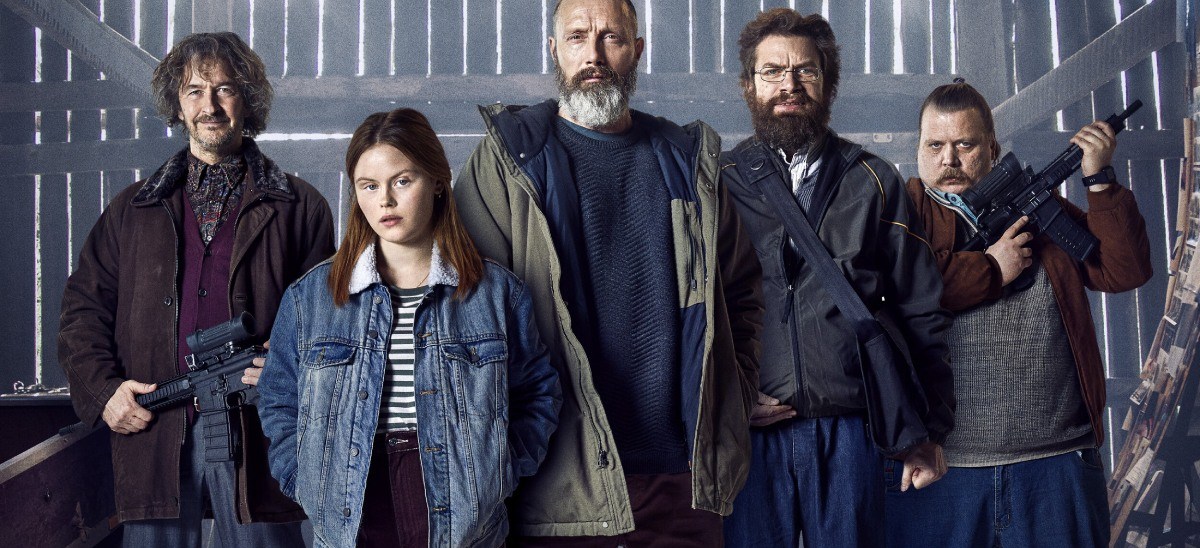
Nikolaj Lie Kaas (left to right), Lars Brygmann, and Mads Mikkelson in Riders of Justice

This is a difficult film to categorise and that is evident through the trailers and marketing of the film, which focuses around either the black humour or the Taken-esque plot, but what makes this film truly singular is its pathos and sadness, and how it attempts to balance all these elements while maintaining the humanity at its core.

None of this would be possible without the driving force of Mikkelson who, even in his most restrained moments, is a comet oftentimes at risk of overshadowing the rest of the cast and the film as a whole. Jensen’s crucial writing decision to give all of his dark humour dialogue to the characters surrounding Markus is an important one, as it allows him to simmer under the surface until he is ready to blow, without undercutting his character’s nature by joking at the situation they find themselves in.

It’s impossible not to compare the film to the Oscar-winning film Another Round with its connection to Mikkelson, Danish cinema, and their close releases. Both films are centred around a certain type of middle-aged male pathos and sadness, with unique but similar feelings of estrangement with the world around them. Both films are similar in their use of academic reasoning in an attempt to explain the feelings they are having. In Another Round, the high-school teachers seek to explain the emptiness they feel as being a result of their blood alcohol level not being high enough, while in Riders of Justice, Otto seeks to explain away the guilt he is feeling for this tragedy by proving the sheer impossibility of the events occurring purely through chance.

Mikkelson’s performances in both films are wildly different and truly displays his versatility as an actor and what separates him as one of the best in the business. He is a must-see in any project.

Riders of Justice is streaming on MIFF Play until August 22.