Avatar: Fire and Ash Has Pandora Starting to Feel Familiar

Rating: 3 out of 5.

Returning to Pandora after just three years, James Cameron’s third entry into his one-of-a-kind franchise, Avatar: Fire and Ash (2025), is closely linked to its previous chapter, Avatar: Way of Water (2022), giving the film its first sense of stagnation. But that is not to say Fire and Ash is a regression. The film is overwhelming and unwieldy, and in a normal year would be the best in a lacklustre slate of Hollywood blockbuster filmmaking with its incomparable visual style and boundary-pushing ingenuity that still convinces global audiences to leave the house and wear 3D glasses. But with the releases of Sinners (2025)and One Battle After Another (2025), two of the year’s films, should audiences start asking more from the stories coming out of Pandora?

Taking place one year after Way of Water, the Sully family is still mourning the loss of Neteyam (Jamie Flatters), all in different ways. As a Na’vi, most are still in a mourning period, especially Neytiri (Zoe Saldana), who feels lost in her grief. Jake (Sam Worthington), however, introduces the human concept of never addressing your feelings and pushing through in the hope of progress to the community. 

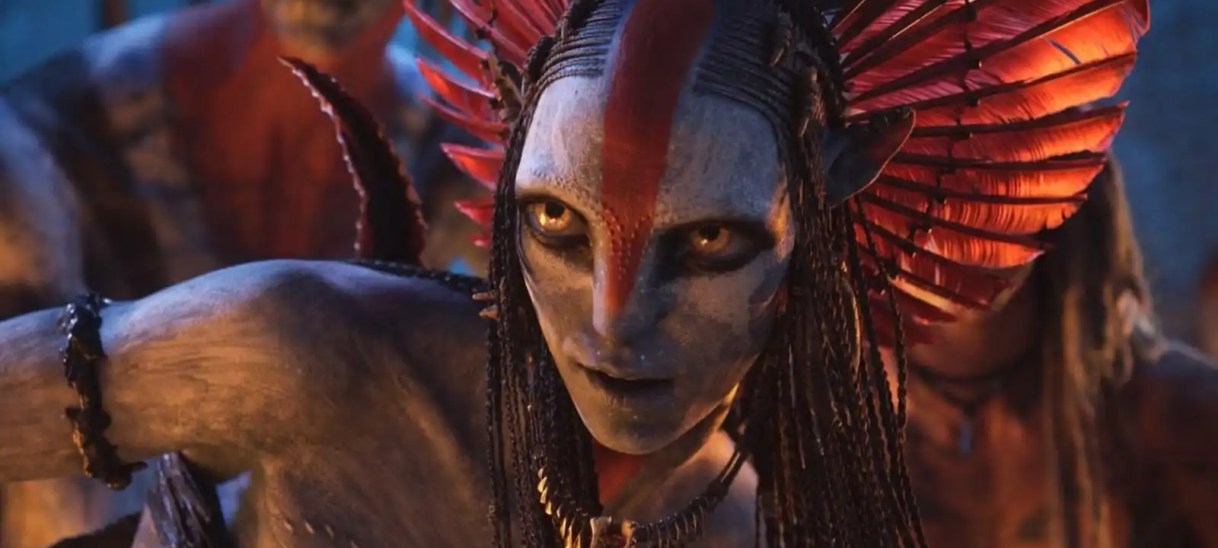
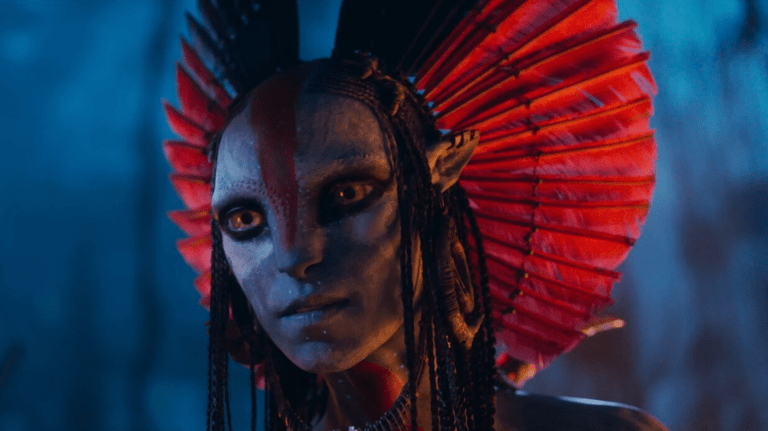
There is little time to settle back into Pandora before the action starts. Spurred by the adults’ desire to remove Spider (Jack Champion, their sort of adoptive son and only human protagonist left in the franchise) from their community, much to the rage of the rest of their young and growing family, the Sully clan are ambushed by the Mangkwan clan, or Ash people, are they are known. A brutal Na’vi group headed by Varang (Oona Chaplin), a war chief who leaps off the screen and gives this long film the jolt it needs to sustain itself, even if we are constantly let down by a lack of development.

Oona Chaplin as Varang in Avatar: Fire and Ash.

While Varang is a viscous and instantly captivating antagonist, entering the canon of Cameron villains, we are constantly seeking more depth behind the violence and destructive tendencies. What does it mean for a leader of a seemingly nomadic group of Na’vi styled like the Comanche to so easily join the colonising oppressive humans, and what does it mean that these questions are not explored? While appreciating that screenwriters Cameron, Rick Jaffa, and Amanda Silver explore different sides of their Native American and colonist sci-fi allegory, the lack of depth or curiosity in its own writing falls flat, underwhelming what should be an explosive final act.

With a script and thematic conceptions decades out of date and technological cinema spectacle decades ahead of its competitors, James Cameron’s Avatar films live outside of time, allowing us extended peaks at this bizarre yet captivating place. What has allowed these films to thrive after all these years is their commitment to elemental storytelling, and not just in its commitment to adding elements like its naming brother, Avatar: The Last Airbender (2005) (definitely adding an earth tribe next). The family dynamics are overwhelmed with melodrama, deeply intertwining friend and foe with children and lost families, all with a growing connection to the land and its creatures, the more time they spend there, to a point where the climax of the film is weighted equally to the Na’vi as the Tulkan (whale creature added in the previous film) Payakan.

Cameron’s franchise expands in surprisingly organic ways, closer to a sweeping fantasy novel series than a film franchise spinning its wheels and playing the hits. Heroes and villains remain as the story is almost solely fascinated by their evolution as characters in a shifting world rather than having an expanding world smash up against rigid, established characters. As a double-edged sword, however, this does mean that at a runtime of 197 minutes we are focusing a lot of time and resources on the story of Spider, a mildly interesting but repetitive character, and his two fathers, Jake and Quarich (Stephan Lang). 

Sam Worthington as Jake Sully in Avatar: Fire and Ash

While the script and characterisations continue to lack, we still marvel at the film’s visual palette and stunning sound design. With its use of high frame rates, something that takes time to settle into, water and elemental scenes really soar, while the textured sound design grounds the world in the familiar, a delicate balance that allows each scene to grip you even if the storytelling falls away. Unfortunately the score by  Simon Franglen still remains uninspired in these films, with preplanned swells that stir less emotion than is required for a film of this scale and craft.

Where films like The Creator (2023) seem designed to offer its cinematic approach to CGI filmmaking to future films in the genre, Cameron’s Avatar films strives for the visual Pantheon to be worshipped not emulated. We marvel, moment to moment at scenes of lush forests and dense reef ecosystems, fully immersed in a world of human creation, even as we get swept up in an expansive story about our need to protect and connect with nature. Like going to the aquarium and spending all day in the VR room. 

But at what stage does it feel greedy to ask for more from a franchise now 551 minutes into its on-screen runtime? As we round the corner to home plate and the James Cameron payoff machine starts working its gears, it’s hard not to be hit by a pang of sadness that this fascinating cultural item at the heart of a medium in a state of panic doesn’t strive for something more human or poetic. Audiences may never stop returning to Pandora once invited, but they may begin to ask for something under the surface to sustain them.

Avatar: Fire and Ash is in theatres now.

Drop: First Date Nerves come into Full Force in this Cheeky Thriller

Rating: 3 out of 5.

Drop preview screening provided by Universal Pictures.

Have you ever been on a date where you’re getting random AirDrops from someone in your vicinity, threatening your family unless you kill your date? Me neither, and that’s another reason I’m sticking with Android. But mobile ecosystems aside, that’s exactly what Christopher Landon’s (2017’s Happy Death Day and 2020’s Freaky) textbook thriller, Drop, anchors its focus around for its tight 90 minute runtime. As far as thrillers go, Drop is neither groundbreaking nor is it something you’ll be eager to revisit, but it’s kooky and self assured in an M Night Shyamalan-esque way with a neat twist at the end.

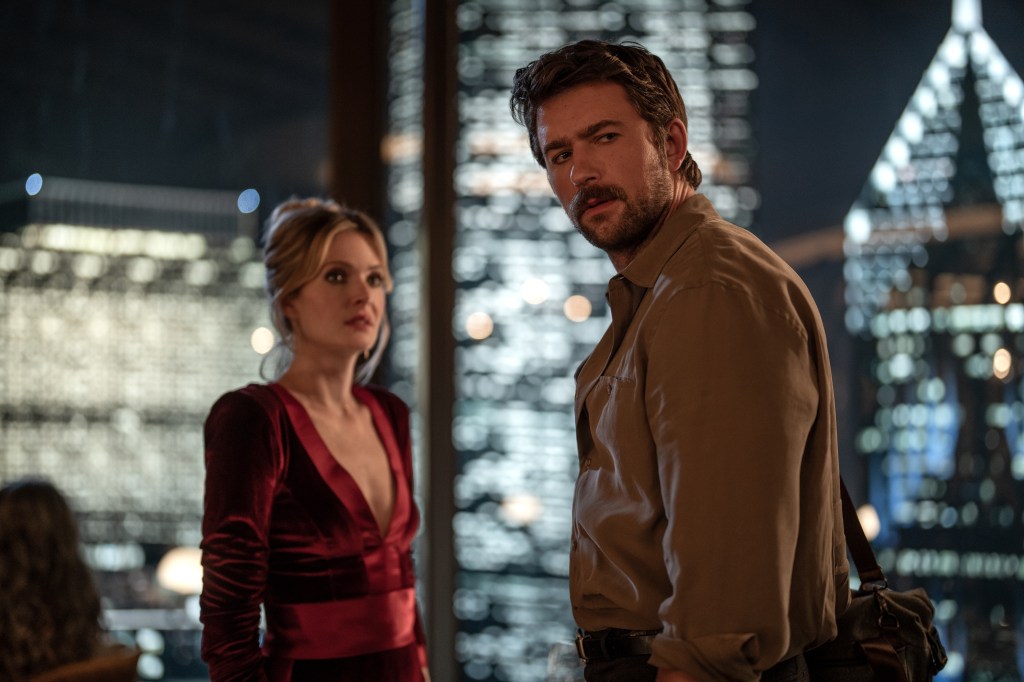
That approach will fly with audiences who like cheesy dialogue that regular people probably wouldn’t say, and movies that take a simple activity like a date and give it some sinister flavour. Landon’s film captures the angst of putting oneself back into the dating sphere by taking single mum Violet (Meghann Fahy) and having her meet up with Henry (Brandon Sklenar) in a highrise restaurant for the first time after 3 months of texting.

Similar to other Screenlife movies that focus on the dangers of screen culture like Searching (2018) or Missing (2023), Landon’s film builds its tension by capturing the modern dread of being watched, of having multiple eyes on you through surveillance or simply using your own surveillance against you. The latter is true for Violet who, after settling in with her date at the dinner table, is told to check her security cameras by her anonymous AirDropper where she sees a masked man in her house with a gun, with the choice being: do as I say or we kill your sister and son (if her first date jitters around what to wear weren’t scary enough, that really complicates things).

(from left) Violet (Meghann Fahy) and Henry (Brandon Sklenar) in Drop, directed by Christopher Landon.

This is where Landon’s film kicks into gear as it wastes no time in building out all of the directions that Violet will have to follow while focusing on keeping her date going as smoothly as possible. Fahy and Sklenar’s dynamic is what the film really banks on to sell the premise, with little actual room to cut to anything beyond the restaurant. There’s also the added element of shifty side-characters, all of whom could be the AirDropper making her life difficult; whether it’s the boisterous first-time waiter, the distant bartender or the Jamie Dornan-looking businessman who can’t seem to stop running into Violet (literally) — Drop is to Knives Out (2019) what mini-golf is to golf… a smaller playing field but just as satisfying.

The title, a play on words, might also describe the shift in pace in the final third, where there is almost a literal drop as the heat intensifies and as plot threads start to come together. For one, Violet literally hangs out of the highrise by a tablecloth. While this final third does feel like it’s been crammed into an otherwise tight screenplay, it gives the film some added momentum, even if the result feels like it gets away from the better part of the build up to it. That said, Drop is clean and will get a chin scratch or two as you try to piece together its puzzle, and proves that you may never know where your next date might take (or drop) you.

Drop opens nationally from the 17th of April.

The Amateur is a Spy Thriller Uncomfortable in its Own Shoes

Rating: 3 out of 5.

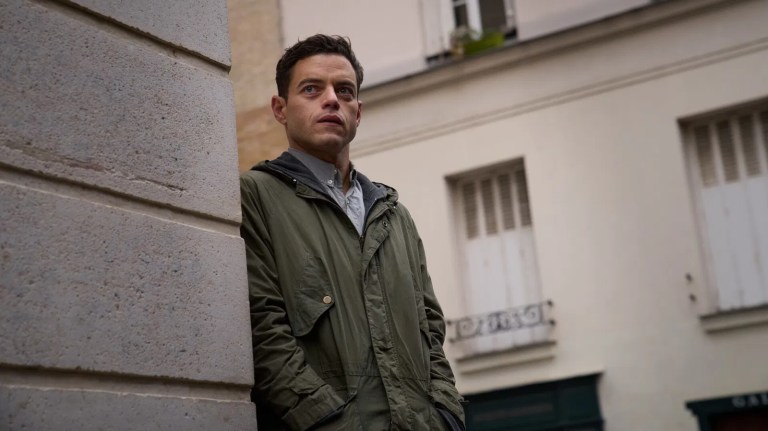
Helmed by British Television veteran James Hawes, The Amateur is a spy thriller unable to capture its own personality or separate itself from the recently booming subgenre. Focusing on a CIA data analyst-slash-hacker (Rami Malek, in his wheelhouse) who forces himself into the field by any means necessary after the death of his wife (Rachel Brosnahan) during a terrorist hostage crisis in London, the film’s fractured cadence and lack of narrative momentum despite this inciting incident means you don’t know where you’ll be taken next, but also uncertain about whether you’ll care. 

Based on Robert Litell’s 1981 spy novel of the same name and adapted by Black Hawk Down (2001) screenwriter Ken Nolan and Gary Spinelli, The Amateur plays both sides of the Atlantic with its approach to the spy thriller. This, unfortunately, means the film never finds a singular drive or point of view but is made with a great cast and a refined crew that keeps the train on the tracks.

A surprisingly small-scale espionage thriller even as Malek makes his way through many cities, The Amateur shuffles along from moment to moment, with many cast members rarely appearing in multiple locations, restricting the narrative momentum of every sequence. Even the pivot hostage scene with Brosnahan plays out in short news clipping bursts, forcing Malek to shoulder the weight of every emotional and narrative beat, something very few actors can manage.

Rami Malek combined his experiences in the TV series Mr Robot (2015-2019) and No Time to Die (2021) to lead his own spy thriller in the vein of Jason Bourne if his amnesia expanded to include the trainee manual. With a tremendous cast of faces alongside Malek with Laurence Fishburne, Brosnahan, Jon Bernthal, Michael Stuhlbarg, Caitríona Balfe, Holt McCallany, and Julianne Nicholson, elevate rote scenes with barely a hint of drama or characterisation.


Rami Malek in The Amateur. Screening provided by 20th Century Studios.

Malek’s compelling anti-chemistry as a leading man works in fits and starts, primarily when he is acting alongside some of the best working actors in Bernthal, Stuhlbarg, and Fishbourne. Mr Robot thrived in its ability to work to Malek’s strength as a performer by constantly giving him unique counterweights to act against. In a surprisingly thin script, Malek and the other actors are repeatedly left out to dry, forced to fend for themselves while the ship chugs along to a near nonstop score.

The film is not assisted by Oscar-winning composer Volker Bertelmann’s austere score that opts to flatten much of the proceedings. The constant score certainly elevates the uncompelling exposition scenes but never highlights the entertaining and thrilling set pieces that are the film’s shining light.

However, almost in spite of itself, the film comes together in a worthwhile and satisfying way, even as it frays around the edges of time and drama. This is largely due to its creative action set pieces where each element, especially Malek’s performance, clicks into place into pure enjoyment. While the revenge narrative is established with a reckless abandon, it is thrilling to see where Hawes places these pivotal scenes, including a highrise pool and a final confrontation in the Russian-Finnish ocean border.

Due to this narrative style, The Amateur is not dissimilar to Tenet (2020) in how it moves quickly between setting up and executing inventive action set pieces instead of exploring the characters within its espionage world. This is surprising given The Amateur’s stellar cast, even if they are rarely given any meat on the bone.

Ultimately, there were high hopes for The Amateur due to its cast and veteran crew in a subgenre currently in a mini-boom. Still, without a unique style or handle on tone, the film moves shakily between sequences, never arriving sure of foot. Thankfully, the film’s trump card for a final sequence, a charming and compelling Michael Stuhlbarg performance, pretty successfully ties up a desperately fraying narrative yearning for a satisfying end note.

The Amateur is in theatres now. 

The Alto Knights: Robert De Niro Delivers a Dual Performance in a Modern 80s Crime Film

Rating: 2 out of 5.

The Alto Knights preview screening provided by Universal Pictures.

While the odd gangster film does pop up every now and then, the genre has felt like it’s been on life support for the better part of ten years. With misses like The Many Saints of Newark (2021), Capone (2020) and Gotti (2018) coming to mind, it’s no surprise why that feeling is in the air. The Alto Knights isn’t a terrible film for the genre, but it doesn’t exactly have the legs to stretch beyond being simply another story about honouring a code and betrayal between close friends.

Knowing that Barry Levinson’s film has been in development since 1970 gives a world of perspective in understanding how this subject matter and story would have been eaten up in the heyday of the genre. The fact that this has been released in 2025 to audiences that have either seen the genre be done to death or are seeking out alternative stories, hasn’t worked in its favour. That’s not to say that these stories can’t work for modern audiences, with The Irishman (2019) providing a unique look at ageing crime figures mixed with wider political commentary, while Killers of the Flower Moon (2023) is masked as a crime-thriller but uses themes from the genre and orients them around Native American plights in history (the difference being, you guessed it, Martin Scorsese).

The Alto Knights, by contrast, is slow, it’s weighty, and it doesn’t reinvent itself or its framing of events in a new and crisp way for the genre. It’s a by-the-books gangster drama that cuts to one of Robert de Niro’s two characters, Frank Costello, looking down the barrel of the camera and narrating various parts of the film. It’s a shortcoming of the film that speaks to the rest of the exposition and general hand-holding that’s overdone in its roughly two-hour runtime (modest, for this sort of film). But The Alto Knights isn’t inherently bad, rather, it’s just a bit too textbook for my taste in that it doesn’t really offer much we haven’t seen from some of those aforementioned similar films.

Caption: Robert De Niro as “Vito Genovese” in Warner Bros. Pictures “THE ALTO KNIGHTS,” a Warner Bros. Pictures release.

Taking place across different time periods, but mainly in the mid to late 50s, Levinson’s film focuses on the friendship and betrayal between Frank Costello and Vito Genovese (both played by Robert De Niro). After Costello survives an assassination attempt from one of Genovese’s henchmen, Levinson takes us back in time from the incident to show us how the duo got to that point of division. It sees familiar tropes like courtroom scenes and political unrest take place as power dynamics switch from one boss to another, in this case from Genovese to Costello.

De Niro plays both characters with a classy, but sharp edge that’s like child’s play for him at this point. The supporting cast aren’t nearly as interesting as his dual performances though, with many of the actors bordering the line of “too much wise talking” while lacking the screen presence to match De Niro (even Cosmo Jarvis is relegated to a mumbling mafioso, a ways away from his breakout performance in hit series Shogun).

The script sometimes feels contrived, in part because there’s clearly a lot going on to the point where we need De Niro speaking all of the exposition, and the jumps in time don’t exactly help, with part of me wondering whether a version exists that doesn’t become bogged down in the final third where the pace begins to falter after we’ve finally caught up to all of the backstory.

The Alto Knights is a been-there-done-it kind of crime film, one that feels like it’s come a bit too late to have its subject matter and story land, but it hits the beats we’ve come to expect from similar films. For what it’s worth, seeing De Niro saddle up for any mobster film is a blessing, no matter how many times he does them, but where The Irishman felt like a capstone of sorts to the genre and the actors who brought it to life, The Alto Knights doesn’t quite find the same level of ingenuity.

The Alto Knights opens nationally from today.

Beetlejuice Beetlejuice: Tim Burton Turns Back the Clock with a Nostalgic Sequel

Rating: 4 out of 5.

Beetlejuice Beetlejuice preview screening provided by Universal Pictures.

Whether you like him or not, mesh with his unique aesthetic or run the other way, Tim Burton occupies a space in modern cinema that he’s carved from consistency: in strangeness, in the casting of brilliant oddballs, and in retaining his trusted collaborators. It’s a big reason why Beetlejuice Beetlejuice (2024), his follow-up to the now classic Beetlejuice (1988), is such a breezy experience at the cinema, one that picks up effortlessly from where its predecessor left off, and feels just as fresh and alive as it did 36 years ago.

It’s all the better, in fact, with this sequel using the foundations established in the first film and elevating them to a level of zaniness and tomfoolery that only Burton is capable of. Beetlejuice Beetlejuice plays out like a celebration of its predecessor, one that’s well thought out and that doesn’t feel like it’s had to reinvent itself for a modern audience. That’s in stark contrast to Burton’s attempt at Dumbo (2019), a film that from the outside looked like it was marred by too much intervention and creative oversight by Disney to the point where it felt like two visions clashing, with the result being a pretty mess.

Burton’s return to his own fabled creation has the opposite effect, showing a director who’s at ease and in his element, as though he needed a reset by returning to something so beloved to find his groove again. The title sequence attests to this, with a sweeping overhead shot of the town of Winter River that’s almost identical to the one he utilised in the first film; it’s a familiar, nostalgic sight, with most of the film leaning on callbacks to the original to appeal to audiences both old and new.

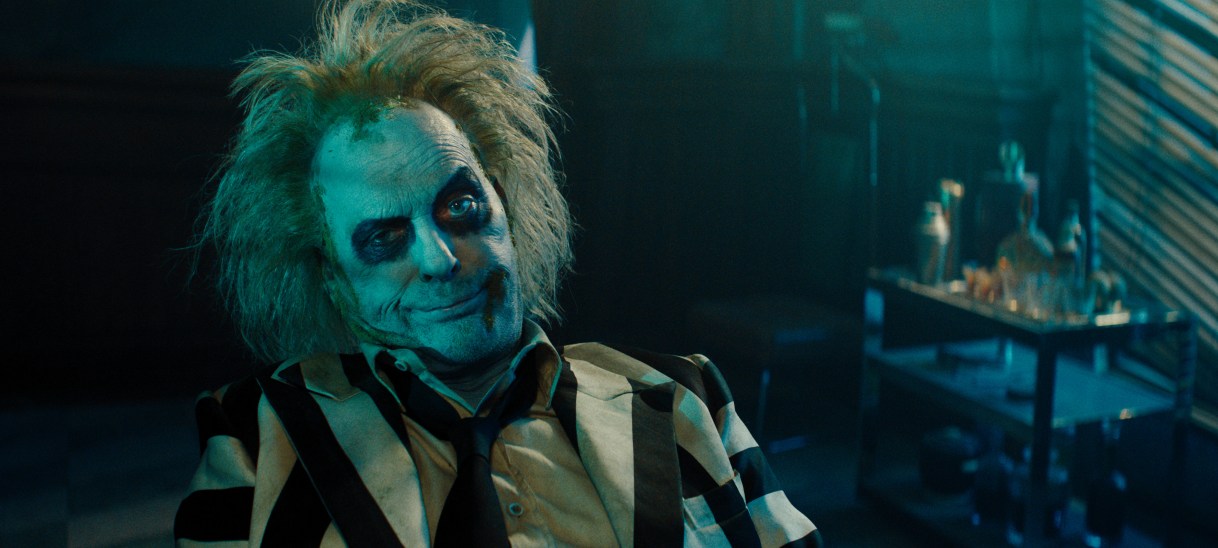
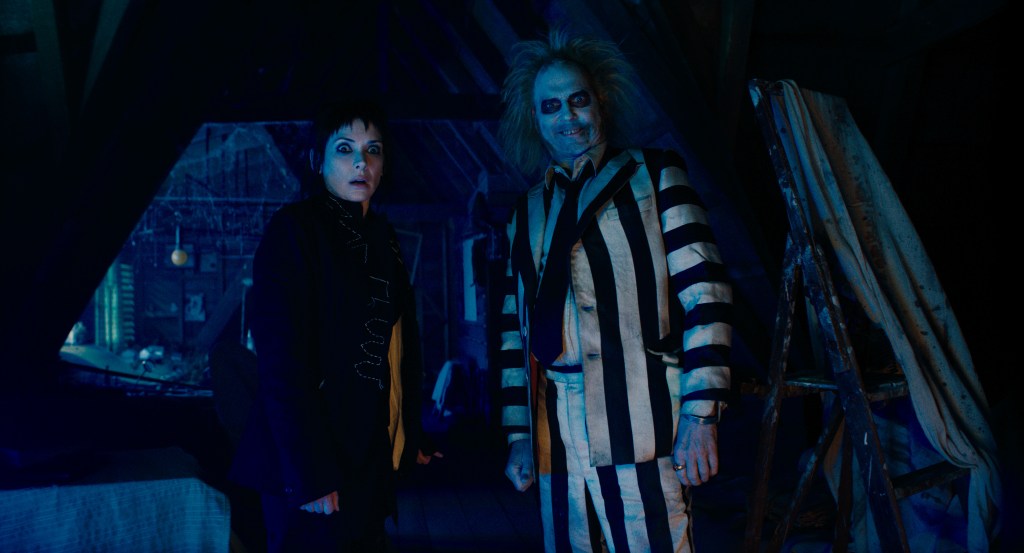
(L-r) WINONA RYDER as Lydia and MICHAEL KEATON as Beetlejuice in Warner Bros. Pictures’ comedy, “BEETLEJUICE BEETLEJUICE.”

From the overhead shot, we land on Winona Ryder’s Lydia Deetz who’s now hosting her own show on paranormal horrors as though this was an episode of Ghost Hunters. She’s still just as quirky as in the first film, but is also much more on edge as she’s clearly still haunted by her own encounter with Beetlejuice (Michael Keaton) many years ago. It could also be that her overly sleazy TV-producer boyfriend, Rory (Justin Theroux) is right up in her business trying to solve her problems the moment she gets a bit jittery; or even that her own daughter Astrid (Jenna Ortega) ignores her texts and doesn’t believe her ghost obsessions.

The truth is, it’s a mix of those things, but especially the former. Beetlejuice’s presence is still felt by the characters of the first film, including Delia (an ever so comical and hilariously bougie Catherine O’Hara), but he’ll play a key part in helping them deal with the film’s wider threats, including an old flame of his, Delores (aptly played by Monica Bellucci), who’s stapled herself back from the dead and wants revenge.

That’s not the least of the backstory that Burton traces through, with the first 25 or so minutes of the film introducing and reintroducing the film’s characters. Others include Wolf Jackson (Willem Dafoe), a dead-actor-turned-detective in the Afterlife who’s full of wits as he’s tasked with tracking down Delores, treating his job like a performance in the process. The standout of the newcomers is of course Ortega who, after her success with Burton’s hit Netflix show Wednesday, slots effortlessly into the director’s zanny world. Her chemistry with Ryder is a revelation, with their pairing singing the tune of the film and its theme around reconciliation and the bond between a mother and daughter.

(L-r) JENNA ORTEGA as Astrid and WINONA RYDER as Lydia in Warner Bros. Pictures’ comedy, “BEETLEJUICE BEETLEJUICE.”

The Afterlife itself is just as teeming with (dead) life, and looks just as vibrant and charming as it did all those years ago. It’s a testament to production designer Mark Scruton’s eye for detail as he decorates this setting with even more personality and character through his whacky designs. In fact, all of Burton’s collaborators are on their A-game, especially his regulars; Danny Eflman’s score has an ethereal quality that is reminiscent of the heyday of this genre of film, while costume designer Colleen Atwood once again dresses the cast to impress, to the point where one’s eye is naturally drawn to all characters lurking in the background.

There’s rarely ever any wasted space in a Burton film which is something that all filmmakers working in tight runtimes should aspire to. Every frame feels well thought out, every gag is executed cleanly and every prop feels like it’s just where it needs to be. Keaton has more screen time this time around as well, but everyone gets a share of the spotlight. There’s even time for a Chucky-esque demon baby-Beetlejuice, a room full of awkward Bob-like, small-headed, big-bodied beings, and a ‘Soul Train’ that —befitting to its name— transports soul musicians (and has wider implications in the plot). It’s a film that feels like it was made for the 80s gothic B-movie scene, was somehow never shown the light of day, but was unearthed at the right time.

Beetlejuice Beetlejuice opens nationally from the 5th of September.

Blink Twice and you Might Miss the Thrills and Spills of Zoë Kravitz’s Debut Feature

Rating: 3.5 out of 5.

Blink Twice preview screening provided by Universal Pictures.

It’s 2024 and movie characters in thrillers are none the wiser, still choosing to vacation with strangers on secluded islands in the middle of nowhere. That idea has tickled the fancy of first time director Zoë Kravitz whose star studded feature Blink Twice, which she co-wrote with E.T. Feigenbaum, is ripe with dark humour, bubbling tension, and is gripping from start to finish.

As it turns out, Instagram doesn’t tell you about stranger danger, at least not to Frida (Naomi Ackie). She’s a barely-getting-by waitress who we meet as she’s scrolling through the social media app before finding herself enthralled by millionaire Slater King (Channing Tatum) in a strange apology video he’s issued. Whether for better or worse (which becomes clear as the pace picks up), she clumsily meets him while waitressing at a fundraising event with her friend Jess (Alia Shawkat), and when he asks her if she’d like to come to his private island, of course she says yes.

She’s not the only one who takes up his offer to ‘party it up’, as though this is one of Leonardo DiCaprio’s yacht getaways. King has decided to bring a whole group, one that’s comprised of celebrities like Sarah (Adria Arjona), his troupe of mates (Simon Rex, Haley Joel Osment, Levon Hawke, Liz Caribel, Trew Mullen, and Kyle MacLachlan), and a few other unsuspecting souls.

Channing Tatum stars as Slater King and Naomi Ackie as Frida in director Zoë Kravitz’s BLINK TWICE, an Amazon MGM Studios film.
Photo credit: Carlos Somonte
© 2024 Amazon Content Services LLC. All Rights Reserved.

The real fun and games commence on the island, which has a sprawling resort-like quality; frequently smiling, somewhat off-kilter staff; slithering snakes; and enough drugs to kill a herd of elephants. It’s hard to think one would ever want to leave when every day seems like a holiday, even if you don’t quite know what day it is and what happened yesterday —that’s all part of the deal, or so Frida tries to tell herself.

For what it’s worth, Ackie’s performance is solid, and when paired with Shawkat (and later, Arjona) she’s really able to lean into the constant state of flux that her character finds herself in. Coming off the back of his performance in Fly Me to the Moon (2024), Tatum is also able to hold his own, playing his rich, handsome but slightly-off/too-good-to-be-true character with a distant edge, proving that he can hold the weight of a tense scene with an equally tense gaze and charming quality.

Where similar debut thrillers like Don’t Worry Darling (2022) often have a promising start, they tend to struggle to bring plot points together in the final act and tailspin within their own twists and turns. In saying that, knowing that this is Kravitz’s debut feature is almost as wild as the film’s premise. Her direction is assured and distinct, and I was often reminded of Jordan Peele and his approach to his debut feature Get Out (2017), from which this film clearly takes inspiration from.

Kravitz’s style is especially evident in the groovy soundtrack and the frequently blunt, yet edgy, but altogether humorous, dialogue. Coupled with Kathryn J. Schubert’s snappy editing, which gives both a feeling of intoxication/trippiness as well as the flittering of time, the title Blink Twice reverberates deep into the film’s technical elements. It also helps that Kravitz is able to get all of her nuts and bolts into roughly 90-minutes where so many filmmakers today struggle to write compact scripts that don’t overstay their welcome. If Blink Twice is anything to go by, we’ll be talking about Zoë Kravitz a lot more in years to come.

Blink Twice opens nationally from the 22nd of August.

Furiosa: A Mad Max Saga: George Miller’s Return to the Wasteland is just as Chaotic and Fun as Ever

Rating: 4.5 out of 5.

Melbourne premiere screening provided by Universal Pictures

How does one follow up one of the greatest action films of all time? In George Miller’s case, he doubles down: double the car chases, double the explosions, double the chaos, double what’s happening in the mise-en-scene, and double the fun. But Furiosa: A Mad Max Saga should not be seen as an attempt to outdo Mad Max: Fury Road (2015), even though it speaks (sometimes explicitly) to the idea of making something epic and memorable, as though that wasn’t already achieved with the sequel.

Tonally, visually and sonically, Furiosa is on par with Fury Road which makes complete sense for the simple reason that it’s a prequel that’s there to compliment, and there’s not someone else in the director’s seat to screw it up. It’s clear that Miller went with a ‘if it ain’t broke, don’t fix it’ mentality when approaching this film, and the result is all the better for it. The biggest deviation to be felt in Furiosa is that, while it lives in the universe of Mad Max, it isn’t about him. In fact, Fury Road wasn’t exactly about him either, with these two films carving out their own place as post-apocalyptic, operatic action epics with larger-than-life stakes beyond a bloke called Max. But nonetheless, Furiosa is the character we follow and the focal point that guides our understanding of where Fury Road begins and ends.

Taking place across five chapters, Furiosa opens with the titular character (played in youth by Alyla Browne) in the green haven she attempts to return to throughout Fury Road. After noticing bandits ravaging through the haven, she tries to sabotage their bikes and alert the rest of her people of their presence; unfortunately she’s captured in the process, leading her mother (Charlee Fraser) to give chase. Eventually, Furiosa is brought to the bandits leader, Dementus (Chris Hemsworth), who is looking for his own means of survival along with the rest of his pack of bikers.

Chris Hemsworth in Warner Bros. Pictures’ action adventure “FURIOSA: A MAD MAX SAGA,” a Warner Bros. Pictures release.

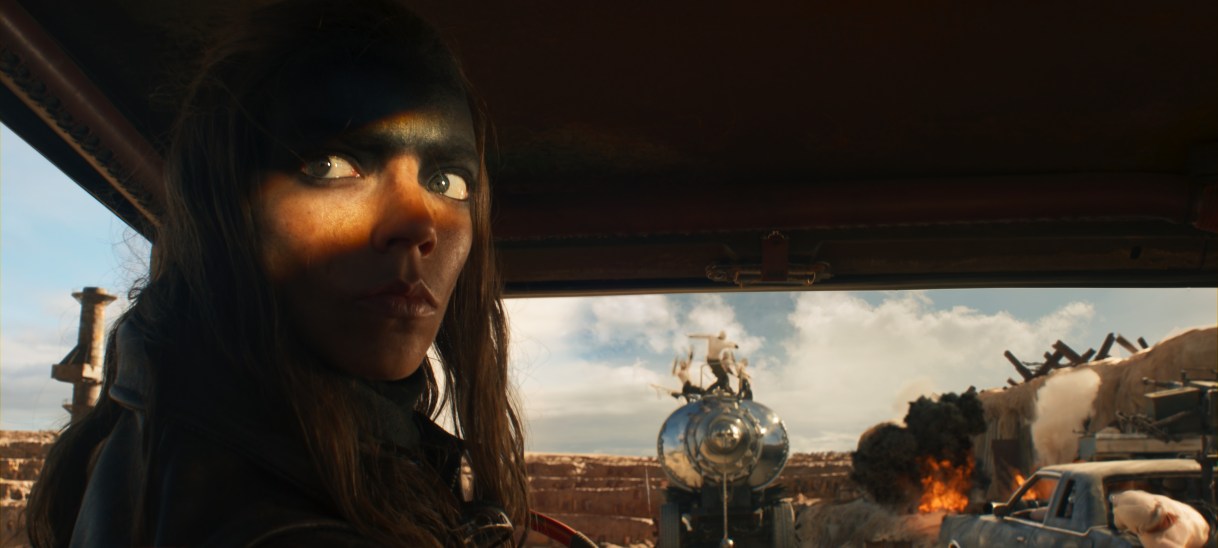
It’s from here that Miller reintroduces familiar aspects from Fury Road, namely Immortan Joe (Lachy Hulme) and his goofball sons; Immortan’s white army of War Boys; and the Citadel. The first hour or so of the film focuses on Furiosa’s navigation of this space after she finds herself a captive of sorts (for reasons I won’t spoil). Alyla Browne does a fantastic job at setting the foundations of Furiosa’s arc to the point where, when Anya Taylor-Joy eventually takes the reigns after an hour, it’s not immediately apparent because of how alike the two actresses are with their pronounced blue eyes and Miller’s focus on framing them in tight close-ups.

Once Taylor-Joy is at the helm, Miller throws her into a extended chase sequence with Praetorian Jack (Tom Burke in a minor, but effective role) onboard an oil tanker, the War Rig. It echoes the chase from Fury Road where Furiosa deviates from her oil run to Gastown, but here Miller is much more interested in stretching the tension out as much as possible, almost to breaking point. It really speaks to his penchant for destruction and his eye for detail, where every nook and cranny of the truck, gears and all, is on display and pushed to the limit.

It takes some time to buy into Taylor-Joy’s performance, namely because it feels like she trying too hard to fill Charlize Theron’s boots rather than carve out her own little space for this character. Theron’s commanding screen presence, particularly the way she carries herself, is ultimately too pronounced for Taylor-Joy — she even tries to mimic her cadence of speaking — and subtlety is more effective here (which Browne brings). But Taylor-Joy does offer a level of vulnerability through her enchanting eyes; in this sense it’s easy to see why Miller might have chosen her as the lead.

Tom Burke as Praetorian Jack and Anya Taylor-Joy as Furiosa in Warner Bros. Pictures’ action adventure “FURIOSA: A MAD MAX SAGA,” a Warner Bros. Pictures release.

Hemsworth, by contrast, steals every scene he’s in, even when he goes missing for some stretches of time. Where the Thor films misplaced his larrikin humour (often at the character’s expense), Miller gives him the freedom to lean into it in a way befitting a character with a name like Dementus. His brute physique coupled with his nasally way of speaking gives Dementus a memorable edge, especially with all of the quotable lines he’s given.

Adding to the grandiose and scale of what’s on display is the fact that the Wasteland’s harshness is felt to an equal (if not greater) degree than in the first film. The addition of locations hinted at in Fury Road, like the aforementioned Gastown and Bullettown, adds weight to the stakes at play. There isn’t just more for the sake of having more, but rather Miller deliberately leaves no stone unturned and paces his film like the War Rig barrelling down a stretch of road — there’s no room for respite, you just brace yourself and try to hold on for the ride.

For what it’s worth, it’s a gorgeous ride to be had, with the visuals once again being enveloped in this orange, grainy tinge. Where in Fury Road the colours felt less saturated, there’s a much more surreal, darker quality this time around.

This is ultimately a film about Furiosa though, and her story never feels like it’s compromised or diluted for the sake of brandishing all of the fun and games that audiences will expect. Miller is a master at knowing how to capture human plight and not let it be overshadowed by the scale of his pictures. The human element of his films and this portrayal for struggle is what intensifies every car flip, gun shot and extraordinary set-piece, which is why it’s even more commendable that in a film full of incredible moments, Furiosa never loses sight of Furiosa.

Furiosa: A Mad Max Saga opens nationally from the 23rd of May.

The Fall Guy: Ryan Gosling and Emily Blunt Amplify David Leitch’s Ode to Stuntwork

Rating: 3 out of 5.

The Fall Guy Melbourne Premiere provided by Universal Pictures

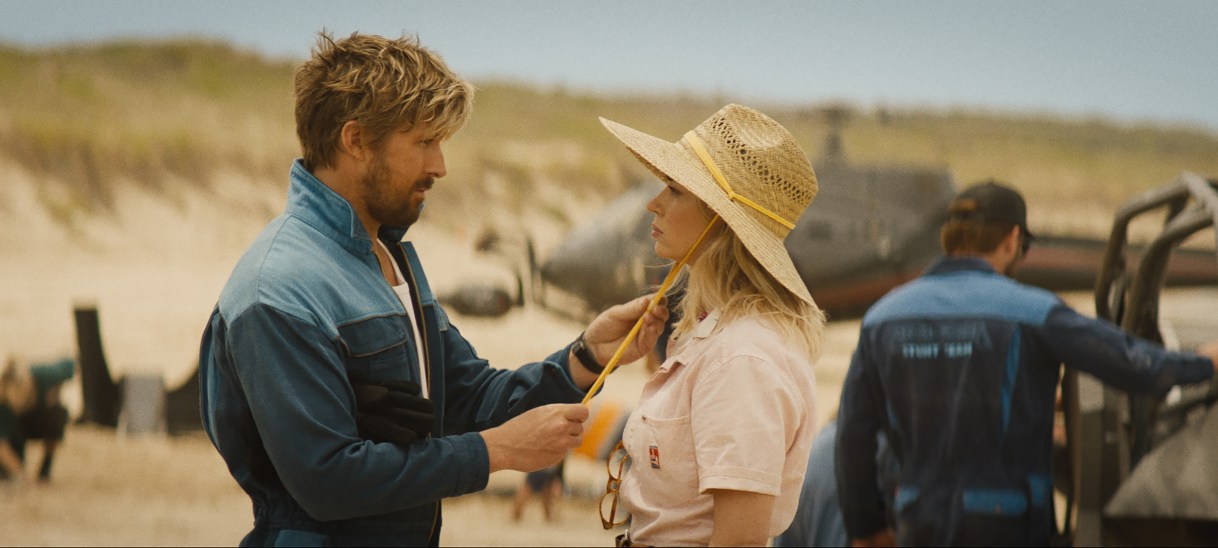
Car flips, ramp jumps, countless explosions and high tumbles are just some of the obstacles that stunt people face, and David Leitch’s The Fall Guy has them all. Leitch’s film seeks to celebrate the unsung heroes of stunts by putting two of Hollywood’s hottest properties, Ryan Gosling and Emily Blunt, in the driver’s seat and letting them run amok.

Stuntman Colt Seavers’ (Ryan Gosling) life takes an expected turn after a stunt-gone-wrong puts him out of the business for over a year. To make matters worse, he’s derailed a relationship with another crew member, cinematographer Jody Moreno (Emily Blunt) after ghosting her in the time since. But it’s not until a phone call from producer Gail (Hannah Waddingham), begging him to return to stunt work on a film that Jody is now directing, that his life really takes a turn. And that’s because amidst his awkward return to facing Jody, he’s also been tasked with locating the film’s missing star that he stunt-doubles for, Tom Ryder (Aaron Taylor-Johnson).

On paper, it’s hardly a unique premise, but it lends itself to a rampant few hours at the cinema, largely because of Gosling and Blunt’s on-screen chemistry. The duo, fresh off of their 2023 blockbuster hits Barbie and Oppenheimer, respectively, seamlessly work off of one another here.

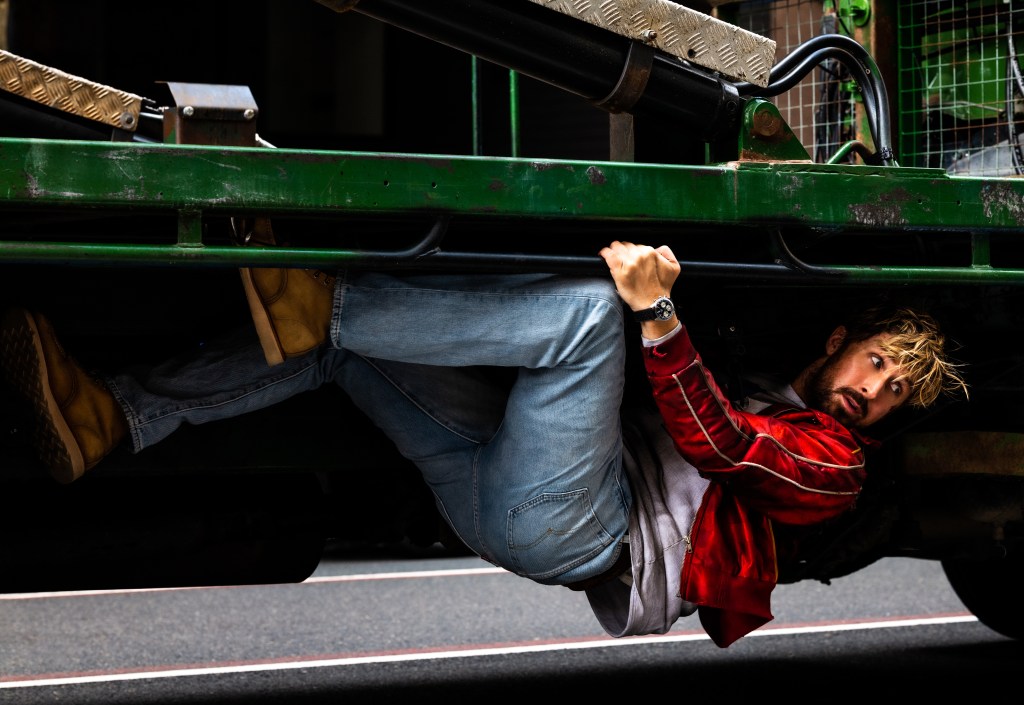
Gosling has a penchant for dry humour, as evidenced by his straight faced delivery of lines, but he’s also an incredibly versatile actor and it shows here as he effortlessly exudes charisma —at once being able to cry in the car to Taylor Swift’s ‘All Too Well’ and then go and burst through a door like a clumsy Jackie Chan. Blunt matches him in her charm, where she finds a balance between being obliviously innocent and a straight-up butt-kicking baddie.

Ryan Gosling is Colt Seavers in THE FALL GUY, directed by David Leitch

The duo are really the heart and soul of the film, which sometimes gets caught up in its own self-reflexivity. Characters will often call out wider pop culture references (Winston Duke’s character slams a bad guy through a table while shouting “Dwayne Johnson!”) and sometimes the writing doesn’t take itself seriously enough, leading to a feeling that the stakes just don’t feel that important —or the wider “why should I care if you don’t” aspect that Leitch’s films are notorious for.

Make no mistake, this is a film that revels in blowing everything out of proportion, so much so that it affords little respite. There are boat chases, three major ramp jumps, a sequence where Gosling is tripping on psychedelics and seeing unicorns, street chases throughout Sydney (which has never looked better), and a closing sequence that is committed to blowing things up.

In other words, Leitch (a former stuntman himself, famously for Brad Pitt) and lead stunt coordinator Keir Beck are all-in on going as big as they can and as fast as they can. For the most part they achieve that as the film rarely gives you a moment to stop and think, at times to its own detriment (the third act resolves in a rather eye-roll moment of spewy exposition), but at the same time that’s the name of the game as stunt people rarely hesitate.

Whether or not the stunts themselves will stand the test of time in the same way Tom Cruise throwing himself off of a mountain face will, isn’t clear. For the most part they’re great in the moment, but I wouldn’t call them memorable, especially when it’s Gosling and Blunt who will steal the accolades for their effortless banter. But Leitch (like Chad Stahelski with his John Wick franchise) knows the stunt game better than anyone, and The Fall Guy delivers the popcorn filmmaking goods while celebrating the bodies behind the actors.

The Fall Guy opens nationally from the 24th of April.

Challengers: Tennis and Sexual Tension are Blended Together in Luca Guadagnino’s Latest

Rating: 3.5 out of 5.

Challengers preview screening provided by Universal Pictures

Challengers feels like both a breath of fresh air for sports movies and a film struggling to find air, mainly because it’s less about the act of winning and more about savouring the build up to a point, soaking in the tension, and when Luca Guadagnino is the director, pushing the boundaries of continuous edging that only free spirited, experimental youths seem to bring. Make no mistake, tennis is the lens through which we untangle Guadagnino’s webs and fascination with youths being unorthodox, but this is by no means a sports rags-to-riches story like King Richard (2021) or a light-hearted underdog tale like Next Goal Wins (2023).

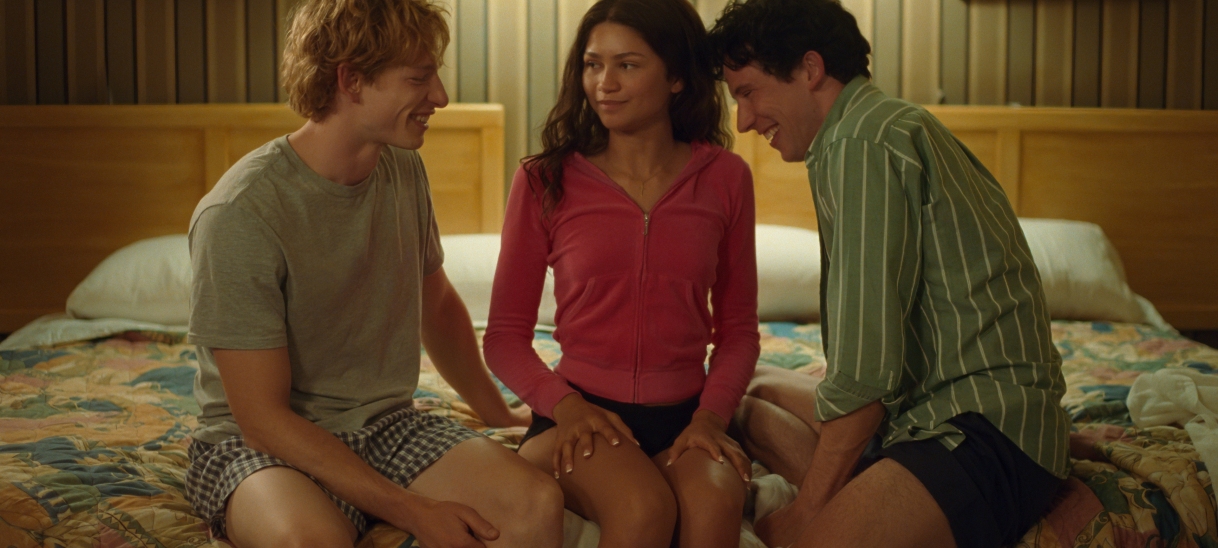
It follows two up-and-coming tennis prodigies, childhood friends Art Donaldson (Mike Faist) and Patrick Zweig (Josh O’Connor), and an established youth pro, Tashi Duncan (Zendaya). Things get a little complicated for this trio who meet long before Art becomes a touring pro and Tashi, his coach and wife. In fact, Guadagnino’s film takes many turns, often dovetailing from one moment in time to another, with Marco Costa’s editing giving the film this back-and-forth rally like quality, sometimes a bit too excessively but enough to keep you on your toes.

We open in the present, where Art’s game isn’t as great as it once was and Tashi signs him up for a challenger event in New Rochelle to find some flair before the US Open. Unbeknownst to Art, Patrick, now his former friend, will also be competing. It’s from here that Guadagnino cuts between the present and the past, sometimes for a matter of days, other times for years. It becomes clear that there’s some unresolved history between the trio who first met 12 years ago at a juniors tournament where they hit it off both on and off the court.

Zendaya as Tashi in CHALLENGERS, directed by Luca Guadagnino, a Metro Goldwyn Mayer Pictures film. Credit: Niko Tavernise / Metro Goldwyn Mayer Pictures © 2023 Metro-Goldwyn-Mayer Pictures Inc. All Rights Reserved.

Guadagnino, an expert at extrapolating meaning from odd situations, uses Tashi as a catalyst for carnage, or to put it in her own words, a “homewrecker”. From early stages, her motivations aren’t entirely clear in terms of her fascination with the duo —there’s a steamy scene where the trio lock lips before Tashi pulls back and leaves Art and Patrick still going at it before she admires her work and ducks out— but she’s clearly the focal point that pushes the narrative forward. And that’s largerly because Zendaya does a great job at conveying this larger than life presence, mainly since that’s how she’s perceived in pop culture more broadly. Guadagnino is able to tap into that to a greater degree, working with cinematographer Sayombhu Mukdeeprom to box her into the frame through tight close-ups and really portray her as a figure of authority who has a grip on Art and Patrick that can’t be shaken off.

The enjoyment of the film comes from the tension that is bubbling beneath the surface, after all this is a story about competing and winning no matter the cost. That’s at least the mentality that Tashi has instilled into both Art and Patrick who, no matter their rankings in the wider sense, constantly seem to be tussling with one another. At the same time, this tussle seems to be less about proving anything to themselves and more about proving something to Tashi.

Ultimately, tennis provides the perfect platform for Guadagnino to pivot such ideas against one another, with the underlying horniness of it all working to give the film a unique edge —especially when paired with Trent Reznor and Atticus Ross’ pulsating techno score which further breathes life in any given moment. Whether or not this is the sort of film you’ll walk away from and continue to ponder isn’t clear, especially with an ending that doesn’t exactly prod you to ask any more questions but almost leaves you wanting more answers in the same unfulfilled way the trio have been all movie.

Challengers opens nationally from the 18th of April, 2024.

Monkey Man: Dev Patel Channels his Inner John Wick

Rating: 3.5 out of 5.

Monkey Man preview screening provided by Universal Pictures

It doesn’t take long for Monkey Man, Dev Patel’s directorial debut 10 years in the making, to thrust you into a world teeming with injustice, blood and grime. In fact, it’s there from the outset following a short monologue describing the backstory to an Indian legend, Hanuman, that drives much of the film’s undertones.

Monkey Man is a brutal revenge thriller charting a man’s rise from blood soaked human cockfighting in the slums, to the bustling streets of the vibrant, fictional Yatana city beyond. It’s not unlike similar action revenge flicks of recent times like the John Wick series (which it even name drops) or Nobody (2021), yet it retains a level of verisimilitude through its distinguishable identity that Patel has clearly spent time trying to workshop on top of the frenetic fight sequences.

Kid (Patel) has experienced loss at the hands of people in power (namely the police and its chief), and like John Wick, he’s all-in on enacting vengeance to those who did him wrong. As you’d expect, much of this film plays out in a rather formulaic fashion where we see our hero rise from the ashes and fall again before re-building himself up for once last hurrah.

Where Patel has tried to impose himself on the genre is by weaving in the aforementioned legend of Hanuman to imbue the character with a purpose that extends beyond simply trying to kill and be done with it. Ultimately this never really lands in the way Patel might hope it would, with large chunks of the second act often falling flat when away from the action while Kid is nursed back to health following a failed assassination of Rana (Sikandar Kher as the film’s prime adversary) and attempt to flee. This dip takes away from the momentum that has been building up in the moments prior and feels like Patel is trying to get all of his eggs in a basket in ways that similar directorial debuts tend to go —and that’s not surprising since the film was in limbo for a while until producer Jordan Peele practically ‘saved’ it.

MONKEY MAN, directed by Dev Patel

Yet when Monkey Man is hitting, it’s really hitting, and that’s through the well crafted hand-to-hand and gun combat that is reminiscent of classic Bruce Lee titles like Enter the Dragon (1973) or fellow suit-wearer John Wick’s tussles, respectively. There’s a greater freedom in these sequences with Patel experimenting a bit more and having fun with the affordances of breakable chairs, glass and the wider space of these fancy venues (there’s even a few knife and axe moments that had me squirming).

By the time the third act has rolled around Kid is a fully fledged badass who has embraced his proverbial destiny. It opens the film up from the shell it became in the second act and is really where it’s at its best. Some of the political tendencies that Patel tries to inject feel forced in this third act and really reiterate that the film just has too much it wants to say but not the leg room or the chops to do so. The punches in the film land great, the subtext, not so much. Then again, this is a director finding his voice, and if Monkey Man is anything to go by, this won’t be the last we see of Patel behind the camera, and that’s the best hit of the bunch.

Monkey Man opens nationally from the 4th of April.