Joker: Folie à Deux Treads Familiar Territory to its Predecessor

Rating: 2 out of 5.

Joker: Folie à Deux preview screening provided by Universal Pictures.

When word came out that Todd Phillips’ sequel to his box office hit, Joker (2019), would take the form of a quasi-musical for large parts, intrigue with a sprinkle of hesitation was coursing through the veins of pop culture discourse. After all, Phillips’ track record with sequels, namely the Hangover sequels, isn’t exactly the most compelling; but when you’ve got Joaquin Phoenix helming your film, anything is possible.

It wasn’t until news of Lady Gaga’s involvement with the sequel, however, that interest really started picking up. Here’s a director who’s landed arguably the greatest actor of his generation for a second roll of the dice, AND he’s got one of the biggest pop stars in the world as well? Well, If A Star is Born (2018) was a recipe for success, Joker: Folie à Deux was practically a delicious dish waiting to be served.

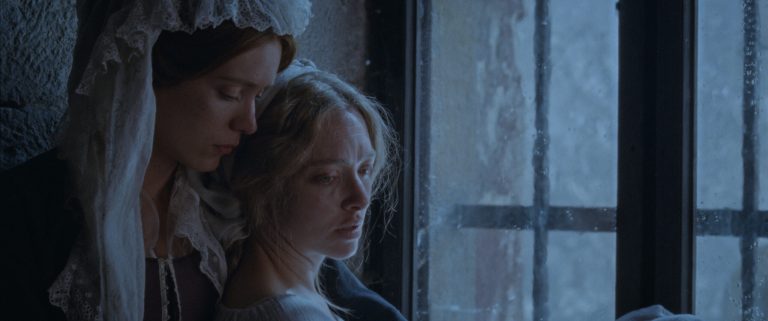
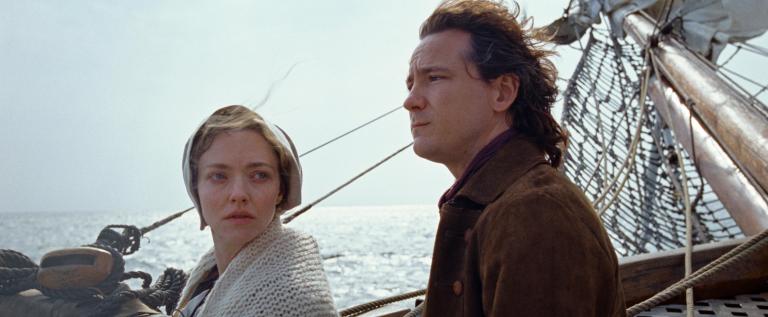
And to be fair, that intrigue carries into the first 20 or so minutes of Folie à Deux, with the events of the first film where Arthur Fleck (Joaquin Phoenix) blew out the brains of a hit late-night talk-show host live on TV, permeating. Arthur is now a martyr of sorts to other troubled minds, with a TV movie charting his killings earning him far reaching recognition, however he’s also in Arkham Asylum and hardly reaping the benefits of his infamous status.

It’s in these first 20 minutes that Phillips also sets the stage for Arthur’s eventual relationship with Harleen ‘Lee’ Quintal (Lady Gaga), an arsonist who catches Arthur’s eye from within the prison’s singing group for inmates. After Arthur is enrolled in the class by a brutal prison guard (played by the legendary Brendan Gleeson), it’s easy to see where this thread is going.

Whether or not Lee is drawn to the real Arthur or his alter-ego Joker, is still relatively vague at this stage, but it’s a concern that Phillips leans on for a majority of the film’s tension — the distortion between reality and fantasy. The idea of unpacking where Arthur Fleck ends and where the Joker begins is an interesting one, if it wasn’t already so fleshed out in the first film.

(L to r) JOAQUIN PHOENIX as Arthur Fleck and LADY GAGA as Lee Quinzel in Warner Bros. Pictures’ “JOKER: FOLIE À DEUX,” a Warner Bros. Pictures release.

It’s also what the film’s many jazzy musical numbers serve to emphasise, as they speak to Arthur’s attempt to cope with and manage the reality he’s been dealt and the fantasy he’s created for himself. Oftentimes I found myself at odds with these numbers, where at once they offer little glimpses into the psyche of a self-absorbed psychopath, but also act as distracting detours that seem to be the only opportunity to give Gaga some leg room to do… well… anything (though I’m mindful this is a film about the titular character and not the Harley Quinn show).

These numbers become even more prevalent as the film kicks into the second act where Arthur is on trial for his murders, as the jury seeks to determine whether he’s downright insane, or playing things up for show — essentially the film’s primary concern. This whole courtroom drama, second act overstays its welcome, with drawn out nothingness that reminded me of just how well other film’s manage similar situations (like 2023’s Killers of the Flower Moon). Phoenix gets some brief moments to lean into his even thinner physique, but beyond that this whole middle section feels like its treading old ground that the first film already established and resolved.

The brilliance of the Joker character in the DC universe has tended to shine through his caped crusader counterpart. It’s why Nolan’s version of Joker is so memorable, because he feels like a larger than life presence — something that’s earned in those films through methodical world building. In Folie à Deux, Arthur is contending with himself for a large majority of the film, trying to redeem himself in parts while succumbing to the voices within, in others. For such a big film, in this way it feels rather small which comes at the expense of the sort of substance you might expect from a film about such a recognisable character. As a result, a lot is banking on Phoenix’s performance to carry the often dull moments, but the shock factor of seeing him embody the character in the same way he did in the first film flies out the window this time around, so the shortcomings in the script are more noticeable.

While reducing the scale and confining audiences to Arthur’s world is a welcome subversion to what audiences might expect, it comes at the cost of an entertaining narrative. There are no mind blowing set pieces or scenes that build momentum into something; the biggest moment of the film comes rather late on, and even then it closes itself up faster than it opened (which will make sense as you watch the movie). Arthur —and by extension, the Joker— is relegated to the sidelines: he poses no palpable threat in the same way he did in the first film, and as a result the stakes don’t feel nearly as significant because he’s contained. Whether or not that’s a satiating enough angle for audiences by the time the credits roll is hard to say, but you may be left hungry for more.

Joker: Folie à Deux opens nationally from today.

West Side Story is a Surprisingly Endearing Remake

Rating: 4 out of 5.

Steven Spielberg has done just about everything in his five-decade career, from horror to comedy, science-fiction to historical drama. Yet until now, there is one genre that Spielberg has not ventured into, and after seeing the final product, viewers will be left scratching their heads as to why the legendary director waited so long to do so.

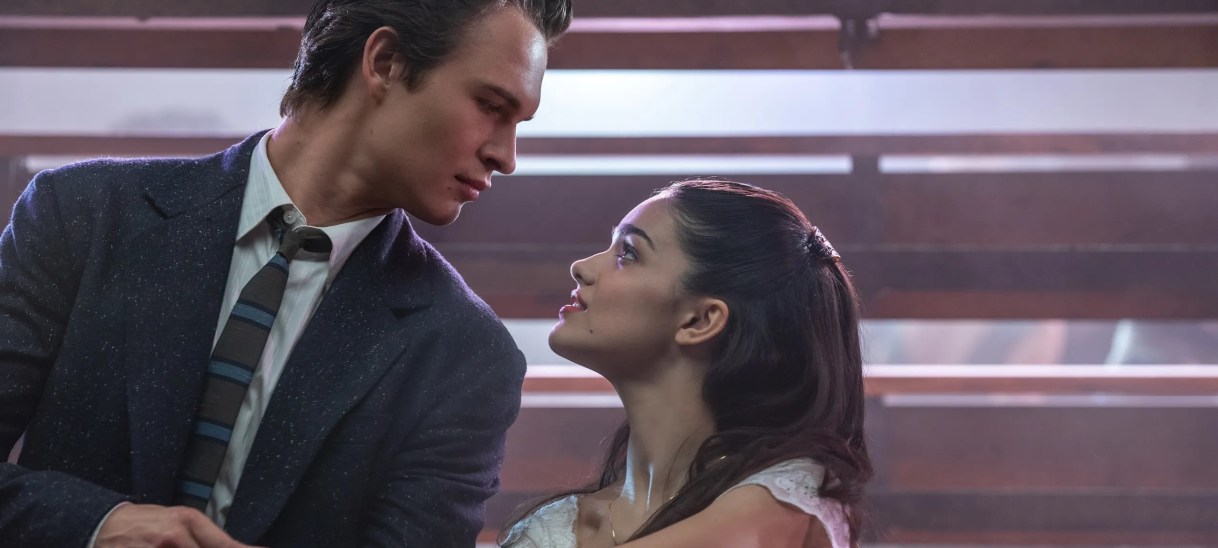
In the late Fifties, amidst a period of gentrification in New York City, tensions between working-class communities are at their peak – principally the Italian-American adolescents, known collectively as the Jets, and the Puerto Rican youths called the Sharks. Caught between this feud are two star-crossed lovers, Tony (Ansel Elgort) and Maria (Rachel Zegler) whose adoration for one another risks causing an even greater rift between these warring factions.

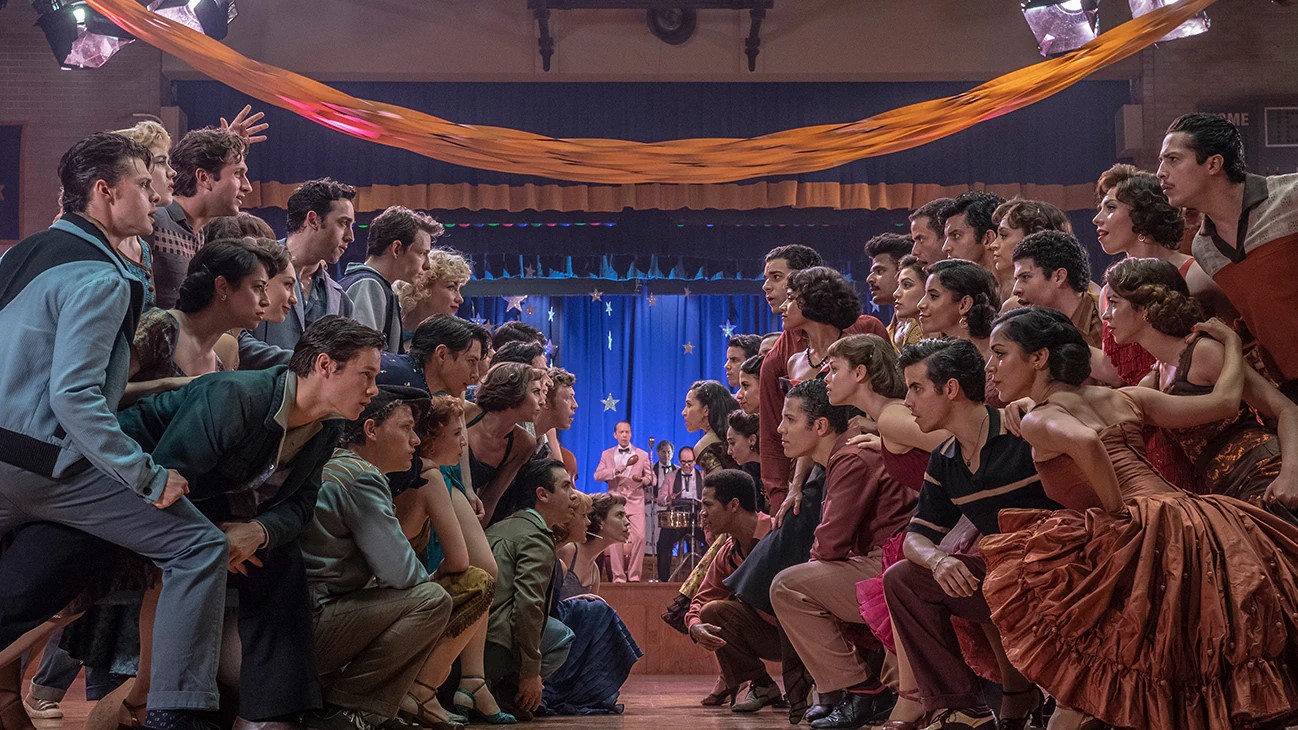
Originating as a Broadway production, Spielberg’s West Side Story (2021) is the second motion-picture adaptation of the celebrated musical, the first having originated in 1961 under the direction of Robert Wise and Jerome Robbins. The 2021 version contains plenty of homages to its film and stage forebears, the costuming being such an example – colours help to distinguish where the loyalties of the characters lie, with the Sharks being dressed in warmer colours like reds and oranges, while the Jets typically wear blue clothing.

Another, more obvious link is the soundtrack, originally composed by Leonard Bernstein with Stephen Sondheim, and re-arranged here by David Newman. None of the songs contained within have lost their charm nor their infectiousness, so even those who’ve never seen West Side Story before are bound to recognise iconic numbers like “Maria”, “Tonight” and “America”. And further connection is made through Rita Moreno, the 1961 film’s Anita, who in Spielberg’s version plays the role of Valentina, a gender-swapped Doc – the shopkeeper who mentors Tony.

Although adapting a six-decade-old musical may seem a retrograde step for a legend like Spielberg, the director does plenty to keep the material fresh. For one, it atones for the lack of representation in Wise & Robbins’ production by casting actors with Puerto Rican, Latin-American and Hispanic heritage as the Sharks – actors like Rachel Zegler, who shines in her film debut as Maria; David Alvarez as Maria’s hot-headed brother Bernardo; and Ariana DeBose, rightfully tipped as the front-runner for the Best Supporting Actor gong at this month’s Academy Awards.

In recent months, much of the criticism surrounding West Side Story has involved Ansel Elgort in the lead role of Tony. Although not as insufferable as some commentators are suggesting him to be – his performance isn’t half bad, and his singing is rather impressive – Elgort’s presence is something of a sore-point for the film, given the allegations of assault and grooming of a minor that linger over him. But even if said allegations can be ignored, the fact remains that Elgort doesn’t possess the natural charisma of, say, a young Hugh Jackman or Ryan Gosling to carry the role of Tony.

The Jets face-off against the Sharks in West Side Story

Such a casting decision speaks to Spielberg’s lack of experience when it comes to directing musicals, which is evident elsewhere in his West Side Story too. Although there is a flamboyance to proceedings, it’s not consistent, with some scenes possessing a level of dourness that is endemic of Spielberg’s recent output; additionally, the film has a weird placement of songs – for instance, one upbeat number sung by Maria and her fellow Sharks takes place immediately following the death of a major character.

Problems like this may explain why West Side Story wasn’t the hit that 20th Century Studios hoped it would be. The Omicron wave has undeniably had an impact as well, yet in this reviewer’s eyes, Musical Fatigue is the reason for this picture’s shunning by the masses. Recently, there’s been a saturation of musicals not witnessed since the genre’s heyday, with Spielberg’s film arriving within months of films such as Stephen Chbosky’s Dear Evan Hansen, Disney’s Encanto, Sony’s Vivo, Lin-Manuel Miranda’s tick, tick… BOOM! and John M. Chu’s In the Heights.

Talking of the latter, one of the more pointed traits Spielberg’s West Side Story shares with Chu’s In the Heights is a substantial amount of Spanish dialogue, none of which is translated by text – the normal practice in this medium. Such an approach is fine in the United States, where Spanish is spoken or at least learnt by most of its inhabitants; but in a country like Australia – where most people don’t speak Spanish, nor are exposed to it in their everyday life – most viewers would benefit from the so-called barrier of subtitles to understand what is being said.

Yet even with the lack of English translations, and other gripes besides, West Side Story easily ranks as the best musical of 2021. There’s a vibrancy to the choreography and visuals that is lacking in most contemporary live-action musicals, the decades-old numbers barely need updating, and the story remains as charged, moving and timely as it was all those years ago. More importantly, the film is comforting proof that Steven Spielberg still has that magic touch, even as he enters his sixth decade working in the industry.

What’s here is more than remake of a renowned musical. With a terrific cast and welcome throwbacks, this is a vibrant adaptation that pays tribute to its originators whilst doing more than enough to differentiate itself for the better. And of course, it boasts the direction of a venerable artist who rarely ever falters – one can only hope that West Side Story isn’t the last musical to be directed by the Great Man.

West Side Story is currently streaming on Disney+.

A Big Heart Defines the Colourful Musical Vivo

Rating: 3 out of 5.

In 2021, seemingly everybody wants a piece of Lin-Manuel Miranda, and Sony Pictures Animation is no exception. The studio looks to be pinning its hopes on the Puerto Rican’s ceaseless popularity with its newest release – support it may not have needed, given the production’s strengths lie elsewhere.

Andréas (Juan de Marcos González) is a musician and street entertainer living in Havana, Cuba, who for years has entertained locals with his dancing kinkajou – a tree-dwelling, monkey-like mammal with golden fur – which he calls Vivo (the abovementioned Miranda). The pair are most happy living and performing together, but their relationship is tested when Andréas is invited to play alongside his long-lost love, songstress Marta (Gloria Estefan) in Miami, the city she now calls home.

After some internal deliberation, Vivo decides to join Andréas on his trip Stateside, only for a twist of fate to quash their plans and leave the latter’s affections for Marta unaffirmed. It’s at this point that the kinkajou decides on journeying alone to Miami, eventually alighting at the port town of Key West, Florida, three hours’ drive from his intended destination. Luckily, Key West is also the home of Andréas’ great-niece, Gabi (Ynairaly Simo) who pledges to help Vivo in his quest to locate Marta.

Vivo (2021) is the latest project to bear the stamp of the multitalented Lin-Manuel Miranda, who has been busier than ever this year – he’s already produced a widely-acclaimed film adaptation of his stage musical In the Heights, made an appearance in Questlove’s documentary Summer of Soul, written songs for the upcoming Disney feature Encanto, and next month will be making his directorial debut with Tick, Tick… Boom! On this occasion, Miranda’s song-writing abilities are utilised in addition to his vocal talents, undoubtedly pleasing fans of his work and riling those who find him less appealing.

In keeping with the film’s settings, there’s a clear Latin American and Afro-Caribbean influence to the tunes, which is unfortunately the only praise that can be afforded to the soundtrack. Miranda’s music is more grating than ever in Vivo, his hybridised rapping-singing making for an inelegant accompaniment to the visuals, and almost none of his numbers being memorable – the sole outlier is Gabi’s song “My Own Drum”, if only for how obnoxious and annoying it is. Indeed, so unremarkable are these compositions that they are enough to eradicate any tolerance for Lin-Manuel’s stylings.

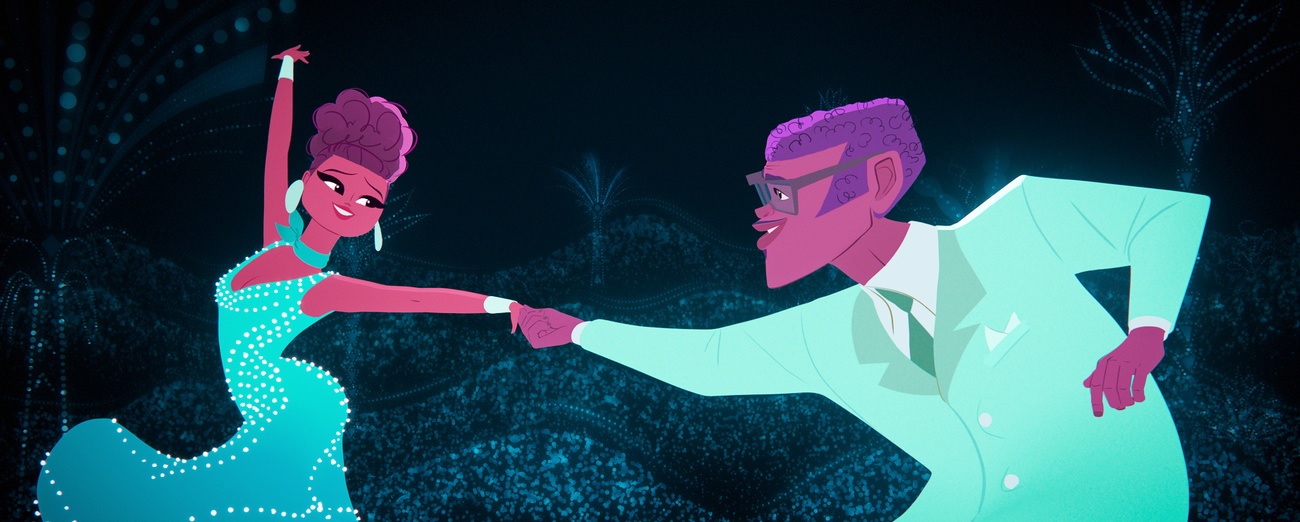
The young Marta and Andréas in a dreamlike 2D dance sequence in Vivo

Another weak element of Vivo is the screenplay, being of a lesser standard than what other studios are producing. It’s storytelling at its most basic on display here, including a familiar narrative arc and tropes diligently adhered to, resulting in a plot that is quite bland and unimaginative. That stated, the story is a heartfelt one, with its resonant struggles and touching moments between characters ensuring an emotional wallop for viewers of all ages; and for younger demographics, the film offers considered, thoughtful messaging about dealing with grief.

More pleasing still are the visuals, with Vivo’s distinctive illustrations and unique designs echoing the quality of its Sony Pictures Animation stablemates, Spider-Man: Into the Spider Verse (2018) and The Mitchells vs. The Machines (2021) – although neither are surpassed in this instance. Highly stylised versions of Havana and Miami have been rendered, featuring thick, blocky architecture shaded the brightest of colours, while the human characters are all round- or wide-shaped figures that differ from the artform’s norm. (There’s even some brief, yet nonetheless enjoyable 2D sequences, as evidenced above.)

Also worthy of compliment is the voice-cast, with every actor performing solidly. Ynairaly Simo leaves the greatest impression, being the perfect choice for the outgoing, rambunctious Gabi, even managing to outdo established celebrities like Zoe Saldana, who voices Gabi’s mother, Rosa. And on the subject of celebrities, there’s a fair number who lend their vocal talents to the movie, the most entertaining of which are Brian Tyree Henry as a lovesick spoonbill, and Michael Rooker as a sinister python, both of whom put all their effort into their performances despite being heard only briefly.

Save for a cliched plot and middling soundtrack, Vivo is a pleasurable distraction that benefits from great voice-work, vibrant imagery and, above all, scenes of tenderness that are bound to move even the most hardened of viewers. Consider the inclusion of Lin-Manuel Miranda as an added bonus – or minus, depending on preference.

Vivo is currently streaming globally on Netflix.