Dad, Larrikin, Friend, Genius, Icon, Documentary Subject But Also John Clarke

Rating: 4.5 out of 5.

“Life could be pretty boring if we didn’t make it funnier.”

Eight years have passed since Australia, and the world lost legendary satirist John Clarke, a New Zealander whose comedic alter-ego made him a national celebrity, before he made the trip across the Tasman, called Melbourne home and delighted another whole country with his distinct brand of humour. His death in 2017 was met with the kind of despair our brethren generally reserve for athletes, movie stars or royalty; praise came forth from all quarters – journalists, thespians, second-rate critics and the very individuals he so often lampooned, politicians, all effusively praising his wit and drawing attention to his huge body of work in written, aural and visual formats.

No figure is better placed to tell the story of this Kiwi multihyphenate than his eldest daughter Lorin, who emulates his diverse artistic talents by performing the manifold roles of director, producer, writer, interviewer and narrator of the very documentary that bares his name: But Also John Clarke (2025). Through monologues, conversations, anecdotes and a treasure-trove of archival footage – including home-videos, and Lorin’s own conversations with her father before his untimely death – viewers are presented with a captivating and amusing portrait that cordially pays homage to its eponymous focal point.

Much of the narrative’s first half is spent (as is often the case with stories of a biographical nature) exploring Clarke’s younger days in his mother-country, detailing a tumultuous upbringing that saw his creative spirit very nearly stymied by an oppressive boarding school, and a court blame him for the failed marriage of his parents rather than the more logical explanations of “irreconcilable differences” or “emotional trauma stemming from the horrors experienced in the Second World War”. Such torment would have broken an ordinary man, but not John Clarke, who overcame this animosity by way of several failed university courses, a brief sojourn to Europe and applying himself to the scene of theatre. This, of course, begat the persona we know as Fred Dagg.

Our attention is soon diverted to happenings in Australia, where John raised his family, refined his craft and began making allegorical waves via supporting roles on ABC Radio’s Science Show – despite having virtually no knowledge of any scientific pursuits – and ABC TV’s The Gillies Report, on the latter programme earning recognition as the globe’s foremost authority on farnarkeling. Then came sketches with Bryan Dawe on A Current Affair, in which Clarke masterfully impersonated political dignitaries and those of a comparable persuasion through the simple act of bearing their name and emulating their mannerisms, followed by the equally-innovative mockumentary series The Games.

Shaun Micallef (left) is one of several talking-heads acquiesced for But Also John Clarke

Parties from Clarke’s homeland and adopted nation lend their voices to the film on a pro rata basis, ranging from his theatrical contemporaries to the funnymen he himself would go on to inspire, and some fellow NZ expatriate by the name of Sam Neill (we’re told he’s quite famous). As director, editor et al, Lorin utilises their insights to craft a story warm and moving without succumbing to the egregious crime of saccharinity that all too often befalls personality-driven documentaries. More impressive still is her compelling argument put forward that Fred Dagg, and by extension John not only gave birth to New Zealand’s comedy scene, but also helped to foster an irreverent, self-deprecating sense of national pride.

Faults in the picture are few and far between, especially when viewed on a cinema screen via digital projection. A more discerning eye may be saddened by the lack of consideration given to Clarke’s international standing, with an opening remark from Britain’s Stephen Fry being the only moment to suggest he had any influence outside of the Antipodes; others will be left to ponder why nothing is said of him providing his vocal talents to Wal in the Footrot Flats movie, The Dog’s Tail Tale (1986).

One element certainly not lacking is a steady provision of humorous clips from John’s frequent and plentiful appearances on the stage and screen during his lifetime. Some of these extracts are four or even five decades in age, yet timeless in terms of their amusement value – at the Melbourne International Film Festival screening this reviewer attended, hearty laughs were often elicited from audience members young and old. Most hilarious of all proved to be a very early sketch involving a Fred Dagg precursor named Farmer Brown, the punchline of which had yours truly succumbing to fits of tittering long after the credits had rolled.

Countless luminaries have dreamed of being the subject of a critically-acclaimed documentary that bears their name in years gone by; now, they’ll be hoping such a production is as earnest, mirthful and brilliantly told as what Lorin Clarke has put together in honour of her forebear. But Also John Clarke is a more-than-fitting tribute to a man of infinite jest who meant so much to so many people, not least his ever-talented daughter.

But Also John Clarke is screening in limited release now.

Bookworm Revives the Family Adventure Genre

Rating: 3 out of 5.

Screener provided by Rialto.

A charming, off-kilter adventure story that stakes a claim as a story for all ages, Ant Timpson’s Bookworm (2024) offers a lot to an audience crying out for live-action family films made with care and respect. With a wry Kiwi humour that buoys the more rote storytelling choices to get to its uplifting finale, the film has the charm and enough evocative imagery to enthral both kids and parents.

After a tragic electrical accident leaves her mother Dotty (Nikki Si’ulepa) in a coma, 11-year-old Mildred’s (a spark plug Nell Fisher) world gets turned upside down as her estranged father, the washed-up illusionist Strawn Wise (Elijah Wood) returns from America to New Zealand to take care of her, whether she likes it or not. Eager to please a child he has avoided his whole life, Strawn agrees to go camping with Mildred, who is driven to dive into the forest to track down the fabled Canterbury Panther, a real New Zealand urban legend. Mildred is keen to capture proof of the fabled panther, which has a reward of $50,000 on its head, money we learn she and Dotty are desperate for.

The opening sequence, shot in a boxed aspect ratio, reflects the overprotectiveness Dotty had on Mildred, a cage she was desperate to prove herself larger than. As the unlikely pair emerge from the car into the glorious New Zealand landscape, the film expands into widescreen, a simple but effective nod towards the adventure we are about to embark on. 

Mildred is not like other kids, a voracious book reader who is keen to show how mature and knowledgeable she is on all matters. Whereas Strawn is a down on his luck but an overconfident magician who only knows as much as he needs to to make a living in Vegas. The duo could not be more mismatched, creating friction that these two equally charming performers wield to delightful effect from beginning to end.

Elijah Wood and Nell Fisher in Bookworm.

The charm of seeing Elijah Wood back in the New Zealand mountains is never lost on this adventure story, and while Strawn is no Frodo, Fishers’ Mildred has all the heartful energy and tenacity of the legendary Hobbit. While the storytelling lacks cohesion, particularly in the back end that offers little thread between points, Timpson’s inventive and creative filmmaking carries us through the New Zealand countryside. While the gorgeous scenery certainly has no bad side for the camera, Timpson and cinematographer Daniel Katz’s charming use of camera setups gives us a fresh perspective on the space that easily could’ve fallen into being a tourism ad. 

Surprisingly, the film arrives at the panther footage capturing sequence like it took a wrong turn. While the scene is charming and engaging, it leaves little room to continue on from, a decision it never recovers from, sputtering to invent a new take to continue on the story, with every plot exploration afterwards becoming increasingly bizarre. The off-kilter nature of the story and characters does assist the unbalancing impact of seemingly finishing our quest so early, but the film never arrives back on solid ground.

Ultimately, Timpson’s exploration into the dense, murky marshes of family entertainment is a unique trajectory for an indie filmmaker from our neck of the woods and should be celebrated. While not every piece falls into place, the chemistry between Fisher and Wood, on top of an enchanting visual palette, means Bookworm is creatively leagues ahead in a genre crying out for original voices.

Bookworm is in theatres now.

MIFF 22: Millie Lies Low is a Propulsive Debut to Remember

Rating: 3 out of 5.

What would you do if a simple lie could get you out of an uncomfortable situation with the people you love? That is the central dilemma in this terrific debut feature out of New Zealand, a deeply relatable tale of anxiety that never shies away from the hard truths its protagonist desperately trying to avoid. Confidently directed by MIFF Accelerator alum Michelle Savill, Millie Lies Low (2021) embraces its titular character’s resourcefulness and willingness to keep the narrative alive with a relentless, anxiety-inducing farce that will break your heart.

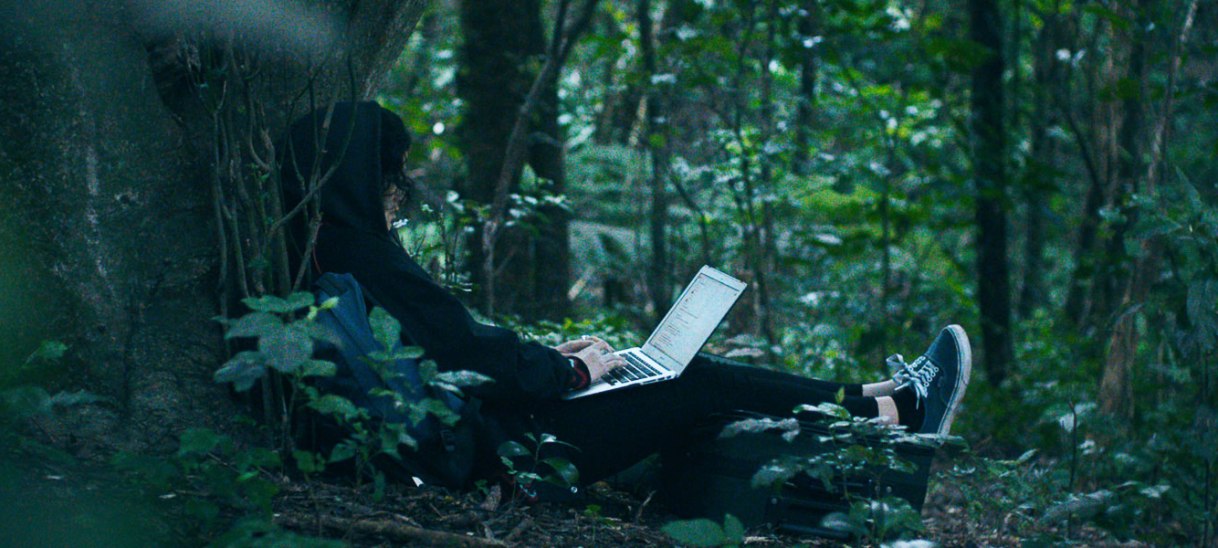
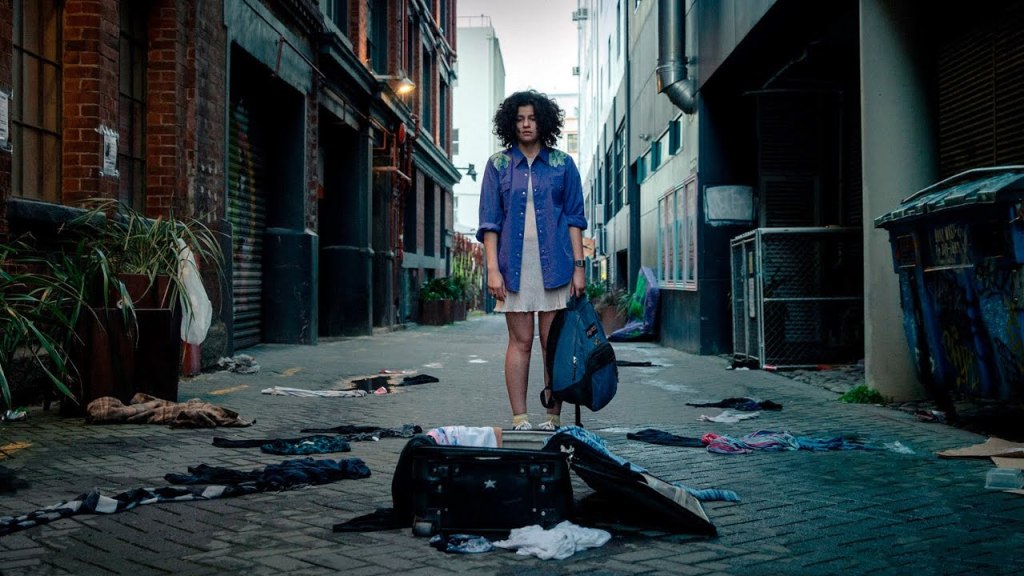
The film tracks architecture student Millie’s web of lies and schemes as a result of her leaving the New York-bound plane on the tarmac due to a panic attack. Instead of returning home to organise a new flight, the anxious Millie (Ana Scotney) decides to create a facade through Zoom and Instagram to her friends and family that she has indeed arrived in the Big Apple.

The film is acted wonderfully and with real compassion by the whole ensemble, with Scotney a real breakout as Millie. A truly compelling lead that buoys the entire story. Scotney fills every inch of the frame with her manic, cunning, and deeply human presentation of an anxiety-filled, self-destructive young person who is impossible not to relate to on some level. There is a level of care and empathy the film takes in showing Millie digging herself further into this hole.

Co-written by Savill and Eli Kent, the film has real compassion for all its characters that allows the film to never devolve into gawking at the cringeworthy situations. All of the supporting characters are just that, true supporters who only want the best for Millie.

Much in the mould of modern anxiety-cinema staples like Good Time (2017) and Eighth Grade (2018), Millie Lies Low propels its narrative with reckless abandon. Before you can even scream out to tell Millie to release herself from this prison she has made for herself, she is already being flung into the next desperate attempt to keep the facade going. 

The narrative of Millie’s life is told with heartbreaking honesty, never giving us more than we need to work with scene to scene. Millie is a survivor who is capable of making quick decisions to continue on her path, even if they are detrimental to her in the long run. 

There is a terrific sequence where Millie is walking through her friend’s party, the night she is meant to have landed in New York, with a poncho and motorbike helmet on. She is able to overhear her friends talking about her, filling her with more anxiety and pain. Millie is able to move through the party like a phantom, a ghost peering into the lives of her friends without their knowledge. This sequence gives us a window into the other characters of the film while still allowing Scotney to maintain a literal presence on screen for the entire film’s runtime. 

Savill and cinematographer Andrew Stroud shoot Wellington in a truly cinematic way, with a clear inspiration stemming from the best of indie New York cinema. The New Zealand capital is captured by people who clearly adore the city, even within a narrative as heartbreaking as this one.

Ana Scotney as Millie in Millie Lies Low. Screening provided by Rialto Distribution.

Unfortunately, the final act felt quite unbalanced in comparison to the energy of the first hour as the many spinning plates Savill and Kent have been managing begin to slow, with the narrative beginning to lean on tropes and flimsy choices that are glaring in contrast to the impressive tightness of its relentless opening.

These sorts of anxiety-inducing, propulsive solo pieces work best with a deeply subjective camera, where any moment without its lead can suck the energy out of the space. Thankfully, Millie Lies Low understands this and maintains Scotney’s white-knuckled grip on her audience for the entire runtime. We are never able to release ourselves from her story, just as she is never able to remove us from witnessing it.

Millie Lies Low will be in select theatres from November 17th.