The Guilty is a Stripped Back but Lacking Drama

Rating: 2.5 out of 5.

Shot in just 11 days through strict Covid restrictions, Jake Gyllenhaal and director Antoine Fuqua once again collaborate on a remake of Gustav Möller’s 2018 debut feature Den skyldige, with mixed results. The script, adapted by crime drama maestro Nic Pizzolatto, maintains the same structure and narrative beats from the original, but lacks the propulsive energy that made Möller’s so gripping and entertaining.

The film centres around the LAPD officer Joe Baylor (Jake Gyllenhaal) who is benched to 911 response duty during a wildfire while he awaits trial for an incident while on duty, something that is giving him extreme anxiety. His night takes a turn when he receives a call from a kidnapped woman (Riley Keough) that he takes upon himself to save. While predominately a solo performance, the film is helped out greatly by quality voice acting performances from an ensemble of actors too long to mention that help ground the film that is limited in its ways to communicate the story.

The Guilty is all about limitations and the feeling of being trapped on the other side not being able to do enough to help, and in that regard, Fuqua largely succeeds by focusing on a more vulnerable lead performance than the original. This allows the audience to engage with Joe’s situation on a more emotional level which is Gyllenhaal’s bread and butter, and must’ve appealed to him about the role.

Unfortunately, too much of the film feels like a rushed first draft of a film, and not in the endearing two takes and that’s lunch Eastwood way. There is a serious lack of experimentation and innovation in a project that desperately calls for it, being handcuffed to one character on the phone for 90 minutes, that makes the 11-day shoot painfully apparent. Maybe it is unfair to ask for more than an average movie from that absurdly short turnaround from quality creators, but the work we’ve seen from Fuqua, Pizzolatto, and Gyllenhaal in the past warrants it.
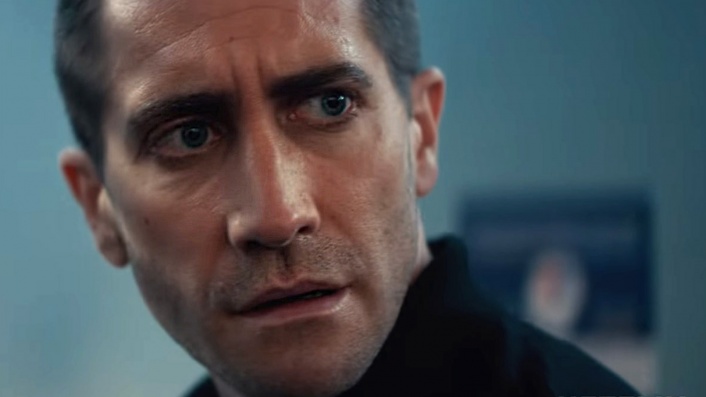
Jake Gyllenhaal consumes every inch of the frame in The Guilty

Coming from the perspective of someone who has seen and enjoyed the original film which screened at MIFF in 2018, it is a more interesting exercise to dive into what is added in this work of adaptation. Firstly, thematically and narratively speaking, the story is actually improved by centring around an LAPD officer, as it adds an entire history for the audience that changes the context to many scenes, especially in comparison to the original story set in Denmark.

By setting the film in LA, the audience views the actions of Joe in a profoundly different way compared to Asger’s (the lead Jakob Cedergren in Den skyldige), as we immediately question his first response in situations of extreme pressure, namely leaping to violence as the only answer. Having this seed of doubt coupled with Gyllenhaal’s rapidly deteriorating mental state is where the film truly separates itself from the original, and if given more time, may have been where a more polished version of this movie would’ve put more consideration into.

The other aspect that centred the film’s setting is the California wildfire that is present throughout the film, but is never a true character that it needed to be. The roaring fire is only present in brief mentions by officers on the phone, as well as on the large monitors that bear down upon Joe’s desk, but add no actual weight to the story or emotionality Pizzolatto was going for and is another instance of the film greatly needing more time and care to expand its ideas.

While The Guilty is a commendable film and an interesting touch point in the recent history of US adaptations of European films, it is difficult to recommend this over the original film Den skyldige, even if it is only available to rent in Australia (it is currently streaming on Hulu). This is a film that may end up being merely a footnote in the collaborative journey between Gyllenhaal and Möller, as they adapt the graphic novel thriller Snow Blind, which will be Möller’s first English-language feature.

The Guilty is streaming on Netflix now.
Annette is a Whirlwind of Ideas Mashed into one very Unique Feature

Rating: 3.5 out of 5.

Few films of recent memory have been as visually abstract and wavering in their focus as Leos Carax’s Annette (2021). It’s one of those films that leans into art-house conventions of filmmaking and asks its audience to latch onto them for dear life as the film zig-zags through a minefield of ideas, set pieces, and oddness to provide an experience unlike any other in 2021.  

So where does one start with a film that is more interested in keeping its audience guessing than providing them with a clear cut narrative? Well for starters, Annette unfolds in an operatic-like showcase that echoes early French Avant-Garde filmmaking (particularly that of Jacques Demy whose influence is definitely felt). For instance, dialogue is often sung throughout the film, scenes are choreographed to play out like live theatre, and there is a particular emphasis on the unnaturalness of how the actors move through space and time.

With a screenplay by the Mael brothers (Sparks Brothers) and Carax, Annette is never short on surprises and wackiness as it leans into a romantic-fantasy-musical akin to what I can best describe as Beauty and the Beast (1991) meets A Star Is Born (2018).

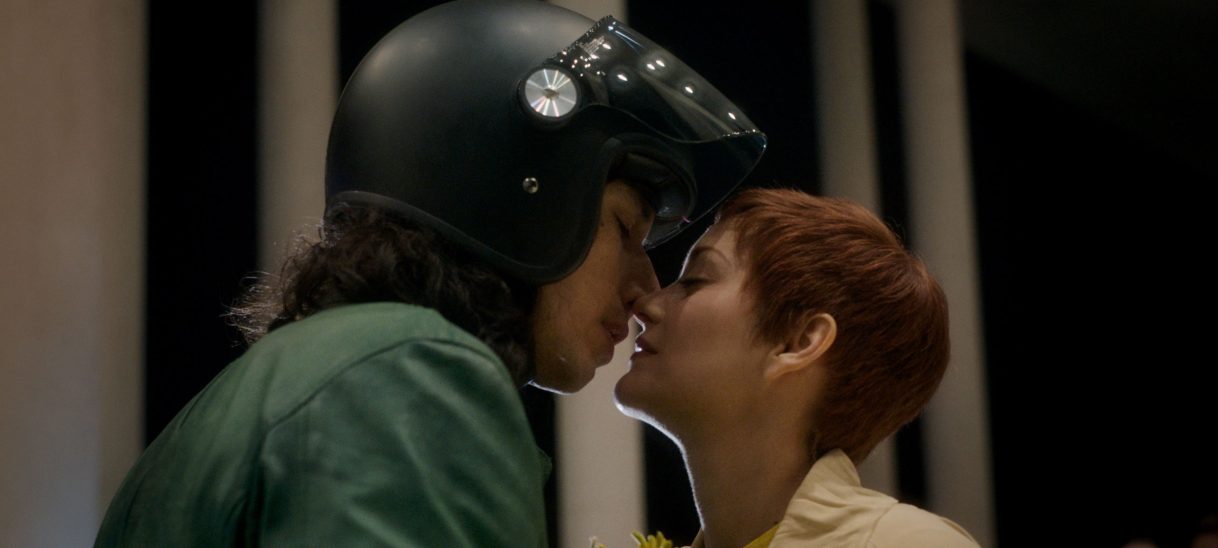
At its core though, the premise of the film is a relatively simple one revolving around romance and the struggles of stardom. Henry McHenry (Adam Driver) and Ann Defrasnoux (Marion Cotillard) are both performers — a comedian and soprano, respectively. As with most celebrities, their life and personal affairs cannot escape the public eye, and Henry becomes more agitated and narcissistic as the film progresses, while Ann gradually begins to pull back and become somewhat of a muse. This is particularly true for both characters as they welcome their baby daughter Annette, into the world.

Annette herself is presented in puppet form which raises interesting ideas pertaining to artifice, especially when it comes to how Henry and Ann see the world around them. Both characters seemingly awaken following Annette’s birth in that they realise the life they have been living up until now has all been a farce so as to maintain the illusion of contentedness. Annette’s presence sees that illusion be torn down as the film spirals into a hodgepodge of visual cues, symbols and motifs that are really difficult to grapple with (oh and did I mention Annette is gifted with an incredible musical voice?).

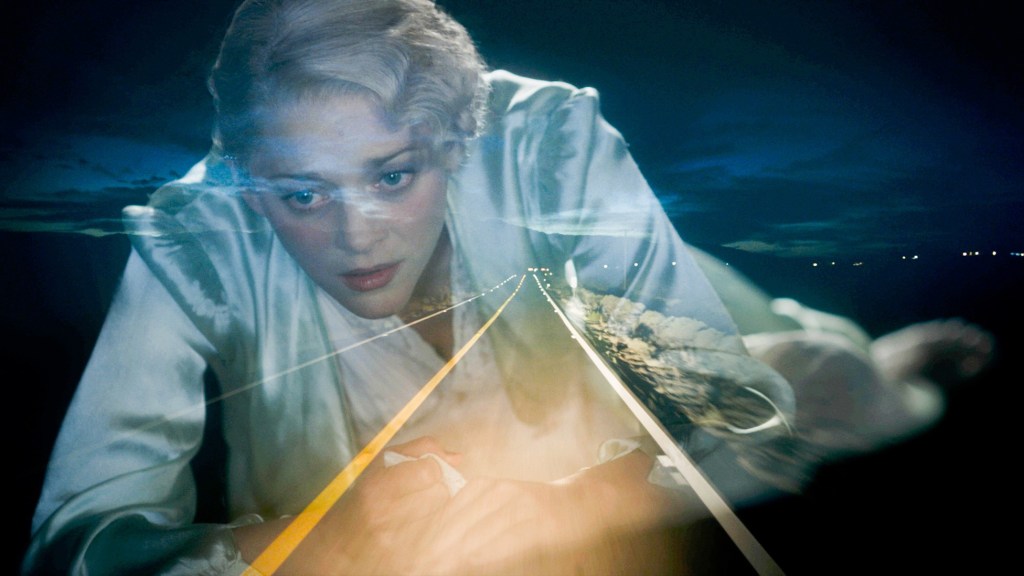
Marion Cotillard in Annette

The music of the film is also a big reason for why its zaniness works — perhaps because it was conjured up by the equally zany Sparks Brothers. With lyrics that penetrate and carry over between each set piece (especially “We Love Each Other So Much”) Carax is able to nurse the film into a level of tenderness that becomes crucial to living up to the films tragic finale. The repetition of music and lyrics has a level of sadness that brings to light the illusory truth effect where, the more something is repeated, the more likely it is an individual will believe it to be true.

But for Henry and Ann, there is a level of truth to their repetition no matter how much it seems to divide them. Carax makes this apparent by intertwining the aforementioned lyrics into very physical actions and events (i.e. Henry performing oral sex on Ann, Ann giving birth while those in the birth theatre sing). In this sense, Henry and Ann aren’t repeating for the sake of wanting to believe that they love each other, rather, as Henry lyrically asserts to Ann’s former partner The Conductor (Simon Helberg), “that song was our song”. In the same way, that love was their love — it was born out of truth and remained so, even as Henry continued to descend into a deeper low (which I won’t spoil).

The film isn’t without its shortcomings though. Carax is less interested in drawing an emotional response from audiences due to the lack of avenues from which to draw that response (at least for the first two acts), and is instead interested in using symbols and motifs (Annette in her puppet state, Ann’s distinct vocal pattern etc.) to build up the audiences understanding of events. For most of the second act, the film relies on these cues to give some sort of structure and direction to an otherwise unruly narrative. Sure, fans of Carax will band together to point out that Carax’s style is less about narrative coherency as it is about using the affordances of the medium in a Lynchian fashion, but it’s an absence, nonetheless.

Most of Annette relies on the audiences desire to be in equal parts submissive to the subversive form of the film, and to experience the film through its wandering structure. It’s a unique experience that can often feel exhausting which I have no doubt is intentional as Henry and Ann’s relationship is an exhausting one, but it’s worth taking the ride.

Annette is currently screening in select cinemas, and on Palace Home Cinema

The Mad Women’s Ball is a Deeply Compelling and Arresting French Period Drama

Rating: 4 out of 5.

Centred around the infamous Pitié-Salpêtrière Hospital during the reign of Jean-Martin Charcot in the late 19th century, The Mad Women’s Ball (or Le Bal des folles in its native french, 2021), written, directed, and starring the terrific Mélanie Laurent (who audiences will recognise as Shoshanna from Inglorious Basterds or as Two from 6 Underground), is a compelling and gripping period drama, adapted from the critically acclaimed 2019 novel from Victoria Mas of the same name.

The film focuses on Eugénie Cléry (played by a mesmerising Lou de Laâge), a wealthy and defiant woman who is desperate to experience the world around her through books and exploration, a world that to her feels as tight and restricting as a corset (more on that later). We quickly come to learn that Eugénie has the ability to communicate with spirits, in several gripping sequences that would not feel out of place in Hereditary (2018), which keep the audience on edge for the entire first act, unsure of where the story is headed.

The film turns as Eugénie’s family discovers her abilities and, out of fear, admits her to the famous hospital, in the care of neurologist Jean-Martin Charcot (Grégoire Bonnet) and head nurse Geneviève Gleizes (Mélanie Laurent). Based on previous expectation of films and novels set in psychiatric wards, we assume Geneviève will be the antagonising presence of the film, but is quickly apparent that the relationship and bond between Geneviève and Eugénie will be the driving force of the film moving forward.

It is in this two-hander that the film truly excels, with Laurent and Cléry playing off each other tremendously with a quiet electricity only the best can achieve. Laurent has experience capturing Cléry’s intoxicating screen presence in her 2014 coming-of-age film Breathe and that familiarity is immediately apparent with a creative relationship that will hopefully continue into the future.

What separates a protagonist like Eugénie from those in similar films is her undying faith in her abilities. Even while under extreme duress inflicted upon her in barbaric fashion by the doctors in Salpêtrière, Eugénie never once backs down from her belief, all but guaranteeing her imprisonment but endearing her to those around her. Her lack of doubt in what she sees is truly refreshing, not bogging the narrative down in the swamp of a protagonist questioning themselves, as their resolve is the survival mechanism they require to withstand the world around them.

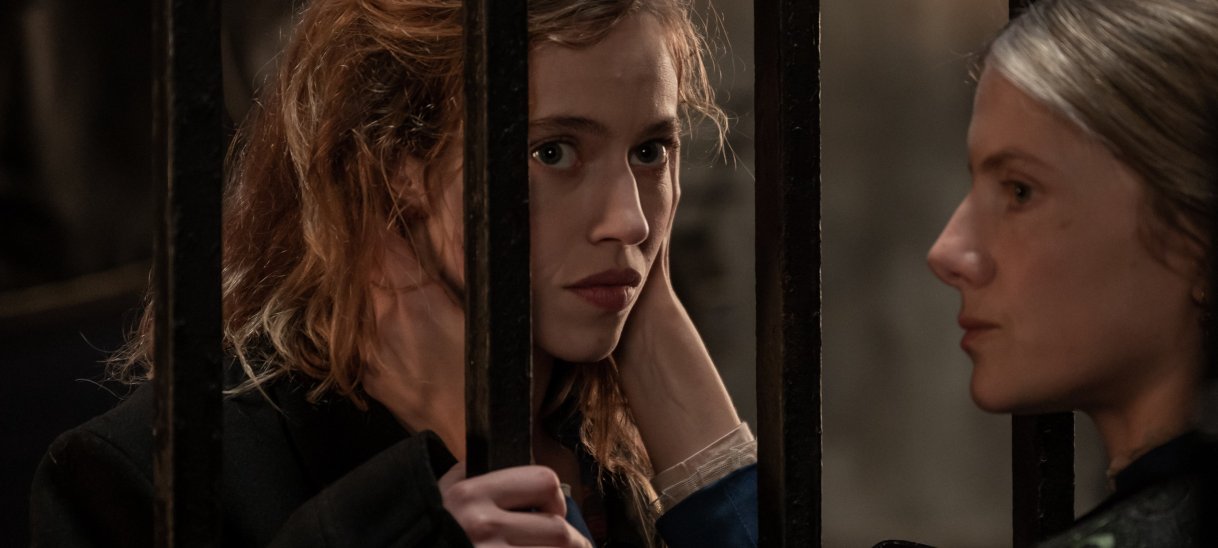
 Lou de Laâge and Mélanie Laurent are extrordinary together in The Mad Women’s Ball

The Salpêtrière is shown to us and Eugénie immediately as a monstrous place, with the howls of women echoing throughout the walls as she is dragged from her carriage – her father François (Cédric Kahn) and brother Théo (Benjamin Voisin) barely able look at her out of shame – unable to face the nightmare they have condemned her to. This is a famed hospital, the largest in Paris and known for its discoveries in neuroscience, but this film sets out to show us that within these hallowed walls, there is great pain and trauma being inflicted on the women inside, imprisoned here and experimented on in truly barbaric ways.

These acts of barbarism would weigh down most films, but Laurent is able to dull the blade of the men’s savagery through the close and careful attention given to the women Eugénie meets in the dormitory, who develop a wonderful camaraderie over the course of the film. A quietly moving moment happens after Eugénie returns from a horrific stay in hydrotherapy where we see her truly open up to the other inmates around her, embracing those she originally turned away from.

Whilst The Mad Women’s Ball is very much an actor’s showcase, there are some truly wonderful flourishes from Laurent and cinematographer Nicolas Karakatsanis. There is a beautiful use of natural lighting which was displaying throughout, highlighted in images echoing still life paintings of tea cups and hairbrushes that places the film firmly in the set period of the 19th century. It is common for actor-turned-director’s to focus on their actor to a fault, but Laurent is shown to have a clear vision for the story that is consistent and thoughtful throughout the film.

In a film full of thematic motifs and imagery, the corset stands out, climaxing in a gripping intercut sequence between Eugénie and Geneviève, removing the symbolic restrictions placed upon the two women by a patriarchal world that looks to dominate them. The scene is a climax of earned melodrama, which a lot of films fall short of achieving, but when it is captured it can be quite transcendent. The motif of the corset is established not just through the literal clothing item, but in the constant hounding from Eugénie’s father François, telling her to fix her posture in almost every scene they share, attempting to drill his ideas of appearance and respectability through societal pressures into his daughter.

This is Laurent’s largest production to date and is setup for big things next year with an adaptation of the bestselling novel The Nightingale by Kristin Hannah on the horizon next year, starring Dakota and Elle Fanning, that is sure to further launch her into the next level of her terrific filmmaking career.

The Mad Women’s Ball is streaming on Amazon Prime Video.

Worth Tackles Questions of Loss and Tragedy in 9/11 Drama

Rating: 3 out of 5.

Releasing onto Netflix in time for the 20th anniversary of the 9/11 attacks, Sara Colangelo’s Worth (2020) asks the daunting question of valuing a human life and the emotional turmoil of asking an individual to calculate that number in dollars and cents. That is the task of Ken Feinberg (Michael Keaton) and Camille Biros’s (Amy Ryan) law firm after the tragedy of the September 11th attacks, a task only Feinberg jumps at the opportunity to pursue. Just over a week after the attacks, the US Congress passed a bill to compensate the families of those that were lost, with the promise of not suing the airlines involved in the attacks, an act we are told would sink the economy, with Feinberg’s task to be to find the right number value for this compensation.

The film is setup well and has a high level of care given to the events that tell the audience immediately the sort of 9/11 drama this will be. Yes, there will be emotional scenes with grieving families breaking down in law offices, but the film will not confront you with the horrors of the events, that is not where its interests lie.

Keaton is a standout here, having an impressive command of the film while never being flashy, maintaining a consistent and measured demeanour, never wanting the emotional weight of tragedy the job requires to cloud his judgement. There are no “they knew!” scenes of emotional release that Spotlight had here – which won’t help it come awards season – the emotion of the film instead was carried through the circumstances and the testimonies of the families, an aspect Colangelo never abused, peppering these scenes in to create a measured flow to the film.

But this was no one-man show. The whole cast was excellent and individualised, especially Amy Ryan and Shunori Ramanathan, who at times were given the task of grounding and transferring the emotional weight of the film from the families to the firm, something she did with a certain energy and grace that was quite remarkable. It did on occasion lean too heavily into the tropes of the grizzled boomer man needing to be taught empathy by the women in his life, but the performances of Keaton, Ryan, and Ramanathan ground it just enough to avoid falling over.


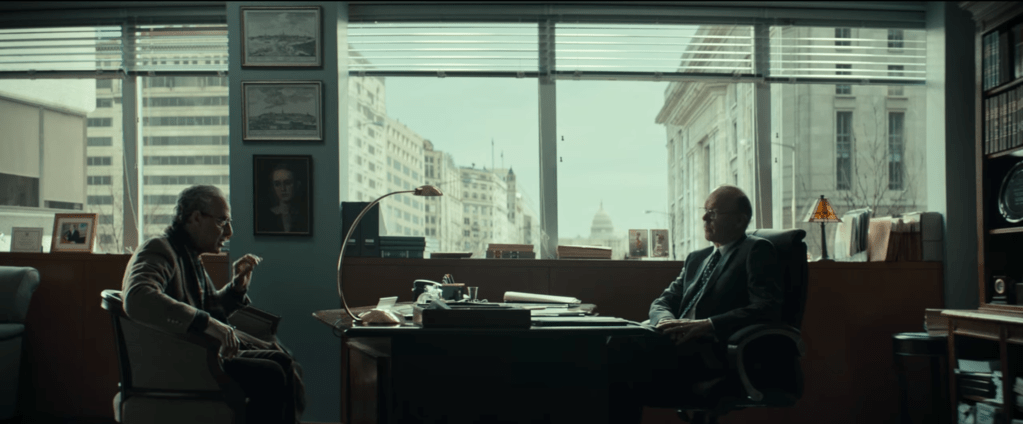
Colangelo and cinematographer Pepe Avila del Pino (who worked together on Colangelo’s complex previous film The Kindergarten Teacher) also created an engaging and compelling visual language to Worth that should be celebrated. There’s a heavy use of negative space throughout the film, emphasising the isolation the lawyers are feeling as they attempt to connect with different parties, as well as an interesting use of centre framing, something quite unique in this sort of biopic film that stylises it in a singular way. Too often movies of this nature focus too much on dialogue in dull fluorescent lit offices and ignore the infinite ways filmmaking techniques can communicate a theme and emotion that makes the best films so impactful.

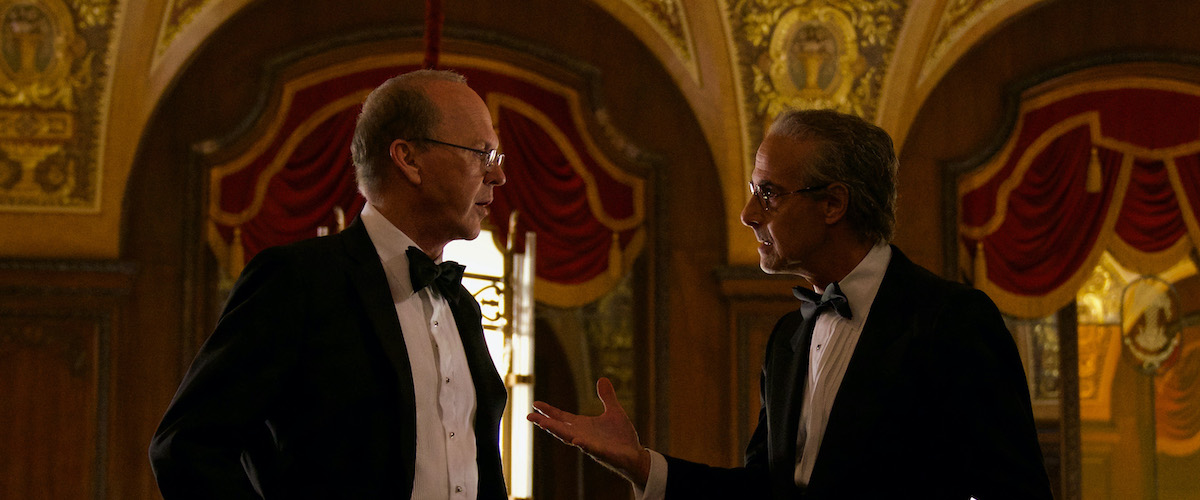
Stanley Tucci and Michael Keaton’s pivotal confrontation in Worth

One area that didn’t feel as considered as the framing, however, was the haphazard score, with different styles being thrown around between very quiet and sterile scenes. Even with the musical connection of opera and classical music being formed between Keaton and Tucci’s characters, this bond is never felt on a filmic level, with some score choices feeling at odds with the nature of the scenes they are intended to accompany. Compare that to Spotlight, something impossible to ignore throughout the film, which has one of the best scores of the 2010s by legend Howard Shore. What makes that score transcendent isn’t the flashy, rousing orchestral moments we usually attribute to the best scores, but in how well it connects to the film it is contained within and elevates in its emotional weight, something Muhly’s score falls short on.

The Shore score is measured, inquisitive, and almost mourning, matching and amplifying the tone of the film. The Muhly score, however, feels disjointed with its use of different instruments and styles with no real sense of cohesion between pieces, and rarely matched the emotional stakes of the scenes they were in which limited the film’s ability to transcend the more cliche and typical aspects of the film. It may feel harsh to harp on just this one aspect of the film but it feels a microcosm for the issues of the film and what holds it back from being great.

Worth is an admirable film that is considered and thoughtful about an important time in our history that needs to be viewed more closely and has set Colangelo up for a potentially long career oscillating between indie and studio filmmaking. It’s worth your time. (I couldn’t help myself.)

Worth is currently streaming on Netflix.

MIFF ’21: All Light, Everywhere Conjures Deep and Thought-Provoking Questions on Surveillance

“The optic nerve receives no visual information. It’s a blind spot. At the exact point where the world meets the seeing of the world. We’re blind.”

This statement delivered by unspoken subtitles captures both the intent and tone of the cerebral documentary feature All Light, Everywhere by Baltimore-based filmmaker Theo Anthony. The film is a meditation on surveillance, observation, police technology, privacy, and the relationship between filmmaker – which in this case extends to police and their body cameras – and subject.

Over the course of its 109-minute run time, the documentary deeply explores unique and interesting areas that link thematically to the notion of surveillance and the role of the observer in the process, from a factory tour of Axon Technologies (formally Taser) who created the police body cameras used today, the history of the moving picture and how its conception ties in deeply with policing, and a Baltimore community meeting on the prospect of being surveilled by a drone in an attempt to reduce crime that delivers some of the most poignant moments of the film.

This is not a film with answers or any sort of declarative statement at the conclusion. This is a documentary whose primary goal is to provoke thought in a complicated but necessary subject, while also weaving in more philosophical questions about the purpose of surveillance and the questions of bias in all things, and on this front, the film succeeds.

A lot of credit should be given to Anthony and cinematographer Corey Hughes, as they are acutely aware of the power they hold scene to scene with their camera and wield it in a more contemplative and wandering way that really captures the tone of the documentary. 

This tone is further illuminated through the score of the terrific electronic artist and composer Dan Deacon, also from Baltimore. Deacon’s synth-heavy score is equally haunting and sweeping, accompanying the more poetic and cerebral aspects of the documentary in a humanistic way, albeit while occasionally overwhelming the scenes that could’ve used a softer hand.

The film uses narration and unspoken subtitles as a form of contemplative fact-checking, prompting the audience to ask questions about what they are seeing, reminding us of the biases that naturally occur in seemingly unnatural things like drone footage and security footage. In the example of police body cameras, something which is pitched to society as an unbiased recording of events as they occur, narrator Keaver Brenai asserts that “the wide-angle is used to document as much space as possible, but the angle also exaggerates motion.”

A small child stares at the approaching solar eclipse in All Light, Everywhere

As is the case with a growing number of modern documentaries, the filmmakers themselves are as much a focus as the subjects. While this is usually a grating aspect to non-fiction storytelling, here it is necessary and Anthony and Hughes understand that their film is centred on the relationship and biases the observer has with what is being observed.

As the documentary format is explored and interrogated more deeply – especially post documentary boom thanks in large part to streaming – the ideas of bias and intent have been given more importance, and the form appears to be reacting to that interrogation by involving the filmmakers more often in front of and around the camera, as well as through moments of candidness where we are shown moments before or after scenes in an attempt to strip away the artifice of the film. These are techniques used often in All Light, Everywhere, even going to the lengths to show us the Adobe Premiere screen of the film’s edit, which is less capable hands may come off as a cheap and exploitative trick to create a sense of authenticity so that the audience can trust what is shown in front of the camera is coming from an honest place. 

Documentaries from others in recent years deploy these techniques to create an aura of authenticity, while Anthony here uses these same techniques to force the audience to question his own biases, something he clearly had to grapple with through the making of this film.

There are a thousand interesting threads to pull in this poignant, thought-provoking documentary, which is something the filmmakers clearly also found in the creation of this project, with an epilogue showing us footage of Anthony and Hughes documenting a filmmaking course at a Baltimore high school that was meant to feature prominently in the film but couldn’t find the thematic links to the rest of the piece. It is disappointing we were unable to view this film with a large audience as it absolutely deserved the sensation of walking out of a film into a packed foyer bustling with people wanting to discuss their thoughts and feelings on what they just saw.

All Light, Everywhere is streaming as part of the Melbourne International Film Festival on MIFF Play until August 22nd.

MIFF ’21: Riders of Justice Subverts the Revenge Thriller for a Truly Unique Experience

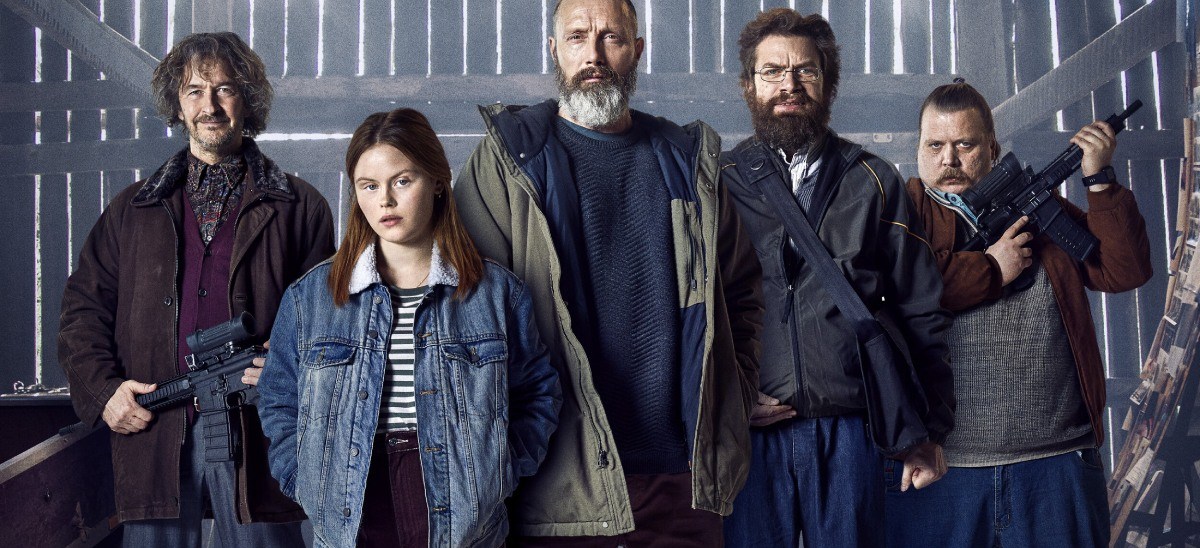
When tragedy strikes, our instinct is to seek out how something so monstrous could happen. We try to understand the actions that led to this point, a chain of causality that will answer what, or who, is responsible. This is at the heart of Anders Thomas Jensen’s new film Riders of Justice. Working with frequent collaborators Nikolaj Lie Kaas and the extraordinary Mads Mikkelson, this revenge thriller cleverly deconstructs the genre while weaving Jensen’s penchant for pitch-black humour that we’ve seen in his previous films Men & Chicken and Adam’s Apple.

After his wife is tragically killed, Mikkelson’s still deployed soldier Markus returns home to his daughter Mathilde (Andrea Heick Gadeberg), as they come to terms with their loss. Markus wants to move past the tragedy, seemingly accepting the freak nature of the accident, much to the dismay of his daughter who is in denial, wanting to believe it to be an of act of god. Markus’s mind is quickly changed however, when statistician Otto (Nikolaj Lie Kaas) shows up at his door and tells Markus exactly what he wants to hear; that there is a person responsible for his wife’s death.

In most revenge thrillers, the target of vengeance is almost always a gang leader or secret cabal that messed with the wrong man’s family, like notable revenge films Taken and Death Wish, and on the surface Riders of Justice is no different with the titular biker gang Riders of Justice. What separates this film from the others in the genre however, is the lack of focus given to the characters we should be viewing as villains, the targets of Markus’s vengeance. By focusing solely on Markus and his oddball group of friends, Jensen is telling us these villains are merely surrogates for these men as they deal with their grief, guilt, and loss of control. 

Riders of Justice also subverts the revenge genre by focusing heavily on the emotion toll of the central characters actions. A staple of the revenge thriller is to quickly establish why the only action the protagonist can take is to go on a no holds barred, guilt-free rampage through the city, as we revel in the carnage catharsis alongside our hero. What Riders of Justice achieves through grounding the narrative in Markus’ home life, especially his relationship with violence through his life as a soldier, as well as his daughter’s relationship with his violence, is that we have to decide for ourselves whether the feeling we are left with is one of catharsis or sadness at the path taken by our heroes as they tear through the Riders of Justice.

Nikolaj Lie Kaas (left to right), Lars Brygmann, and Mads Mikkelson in Riders of Justice

This is a difficult film to categorise and that is evident through the trailers and marketing of the film, which focuses around either the black humour or the Taken-esque plot, but what makes this film truly singular is its pathos and sadness, and how it attempts to balance all these elements while maintaining the humanity at its core.

None of this would be possible without the driving force of Mikkelson who, even in his most restrained moments, is a comet oftentimes at risk of overshadowing the rest of the cast and the film as a whole. Jensen’s crucial writing decision to give all of his dark humour dialogue to the characters surrounding Markus is an important one, as it allows him to simmer under the surface until he is ready to blow, without undercutting his character’s nature by joking at the situation they find themselves in.

It’s impossible not to compare the film to the Oscar-winning film Another Round with its connection to Mikkelson, Danish cinema, and their close releases. Both films are centred around a certain type of middle-aged male pathos and sadness, with unique but similar feelings of estrangement with the world around them. Both films are similar in their use of academic reasoning in an attempt to explain the feelings they are having. In Another Round, the high-school teachers seek to explain the emptiness they feel as being a result of their blood alcohol level not being high enough, while in Riders of Justice, Otto seeks to explain away the guilt he is feeling for this tragedy by proving the sheer impossibility of the events occurring purely through chance.

Mikkelson’s performances in both films are wildly different and truly displays his versatility as an actor and what separates him as one of the best in the business. He is a must-see in any project.

Riders of Justice is streaming on MIFF Play until August 22.