In 1990, Iraq faced strict UN-backed sanctions, which led to extreme poverty and shortages of food and medicine. Despite this, Saddam Hussein required all Iraqis to celebrate his birthday. Set two days before the president’s birthday, either during or on the verge of the Gulf War, The President’s Cake (2025) follows nine-year-old schoolgirl Lamia (Baneen Ahmad Nayyef), who is anxious about being selected for the terrible honour of baking a cake for the day.
Filmmaker Hasan Hadi contracts a world from Lamia’s perspective outward through childlike framing and camera movements, grounding us in the surreal circumstance she finds herself in on the morning of the draw to decide who will have to bake the cake. The scene is an entire film in a bottle. We see Saeed (Sajad Mohamad Qasem), Lamia’s close friend, has to write his name five times to be placed in the draw as punishment for his lateness to class. A boy reminds the teacher that his father fixed his bicycle, and his name is not written down for the draw. When Lamia is called to draw the cake, an ultimate punishment, we collapse on her face, slammed with despair, but not broken. She learnt this from her grandmother Bibi (Waheed Thabet Khreibat).
Without parents and raised on the outskirts of the city by her frail but spirited grandmother Bibi, Lamia must scrape and scrounge to acquire the funds to obtain the basic ingredients needed for the cake, which, if she doesn’t present it on the day, will be punished by being dragged through the street and possibly killed.
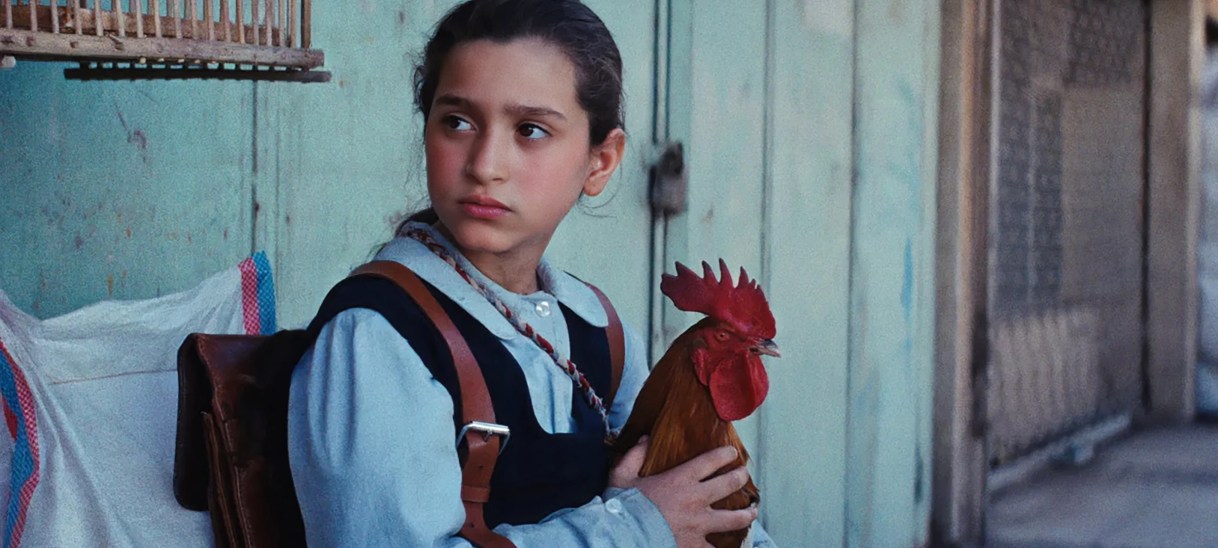
Baneen Ahmad Nayyef as Lamia in The President’s Cake.
The film is littered with pensively powerful moments, like Bibi giving Lamia a shopping list for the cake while sorting through personal family items they will have to sell to acquire the ingredients. The crippling weight of political forces bears down on each individual we see. The dictatorship and UN-backed sanctions are visibly fraying the knot of community in this Iraqi village and city.
Once the film separates Bibi and Lamia on their trip to the city to collect ingredients in several heartbreaking sequences, the story blooms. Lamia is driven to acquire the ingredients and persevere, while Bibi is trying to give her granddaughter a better life as she grapples with the limitations of herself as her guardian. As the film is primarily focused on a child’s perspective of the world in a state of turmoil, this bifurcated narrative is purposely unbalanced, which can lose some audience members while engrossing others.
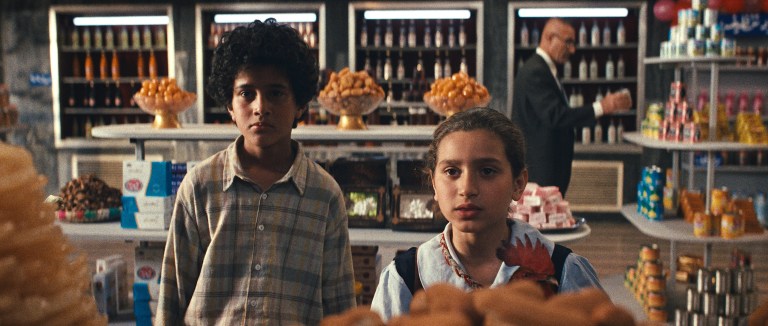
We see the crippling rule of dictatorship through a child’s eye and how that perspective ripples through others. As Lamia and her friend Saeed encounter various strangers on their journey for eggs, flour, and sugar, we see the callousness the regime has instilled in people, where even the sharing of small kindnesses seems impossible.
(From left) Sajad Mohamad Qasem and Baneen Ahmad Nayyef as Saeed and Lamia in The President’s Cake.
Baneen Ahmad Nayyef as Lamia is one of the best child performances in years. She carries with her a pathos that never derails her fierce determination to succeed despite her situation, making her a vital screen presence in a film that too easily could’ve sunk under the weight of its circumstances.
What also allows the film to float above the muck is the gorgeous work of cinematography by Tudor Vladimir Panduru. The President’s Cake maintains a propulsive energy, never luxuriating in the search for that one perfect shot that derails all too many films.
A film about the futility of a stable life under a cripplingly arrogant dictatorship, Hadi savvily avoids the potholes of despair with a gliding approach from scene to scene, focusing on the childlike goals at hand that ground the story in the familiar despite the circumstances. Too often, films of this nature root themselves too heavily in the past and its specifics, which feel bound by their circumstances, allowing the audience to separate their lives from the ones we see on screen. That is not the case here, and it is all the more powerful for it.
A vital and poignant film that collides with the madness of oppression with a child’s resilience, Hadi’s film is indebted to classic Iranian filmmakers like Jafar Panahi and Abbas Kiarostami while still matching contemporary urgency with a reflective look at the past. As the children move through the city ravaged by poverty through recent sanctions, all in a desperate search for money and supplies to get through the president’s birthday, we reflect on each passing individual and how they are forced to look out for themselves instead of these desperate children.
The audition of a lifetime. 100 dancers, 1 contract. An expansion of the television docuseries Dance Life (2024), the documentary feature Dance For Your Life (2026) is an intimate look into the world of modern professional dance through two dance companies: Sydney’s Brent Street and London’s Shapehaus led by revered choreographer Dean Lee. 100 dancers will have the opportunity to prove they have what it takes to obtain the single contract up for grabs in the notorious London company.
The question Dance For Your Life asks across its 100-minute runtime boils down to whether this is an extended TV episode or a work of cinema. While starting on rocky footing with an extended first act in Sydney, the film blooms into a wonderful work of resilience and passion once the group of ten finalists arrive in London, which benefits from the space given by the feature-length runtime. All great works of documentary in this vein ultimately require compelling characters, something Dance For Your Life takes its time cultivating beyond simple introductions during the trial stage in Brent Street. Once we begin to see the Australian dancers interact and learn from Lee, the world begins to open up, and we see what these young artists are capable of achieving.
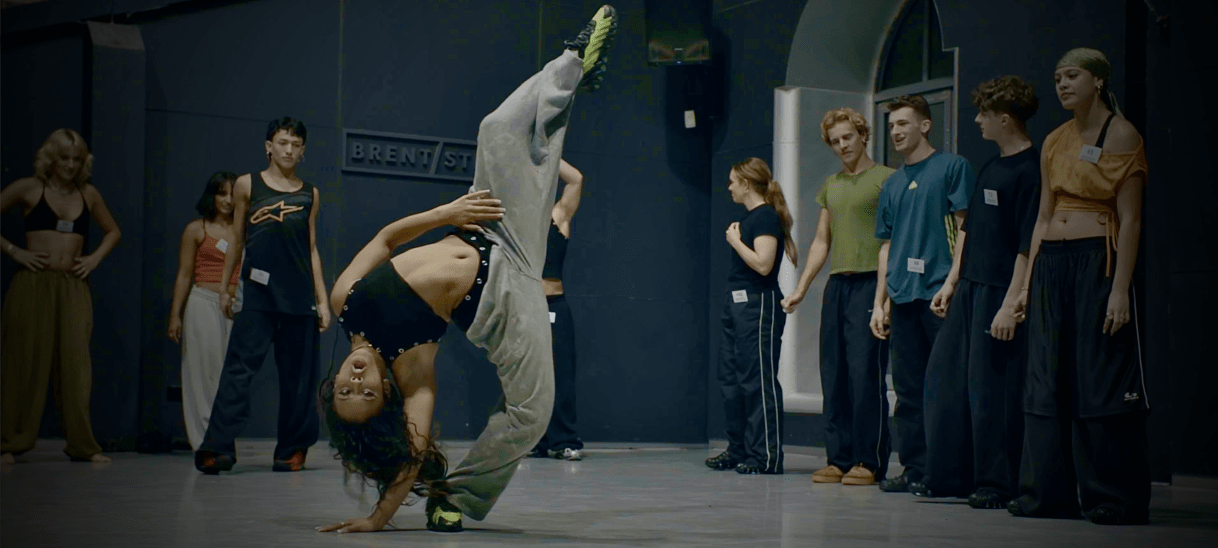
Spending the first 45 minutes locked in Sydney was crucial to establishing the world and stakes of the film before the lucky ten arrived in London. We are introduced to many impressive dancers, with the knowledge that only a few will make it to the final performance at the end of the film, so it is only once the final ten are selected that the audience can settle into which individuals to give emotional weight to.
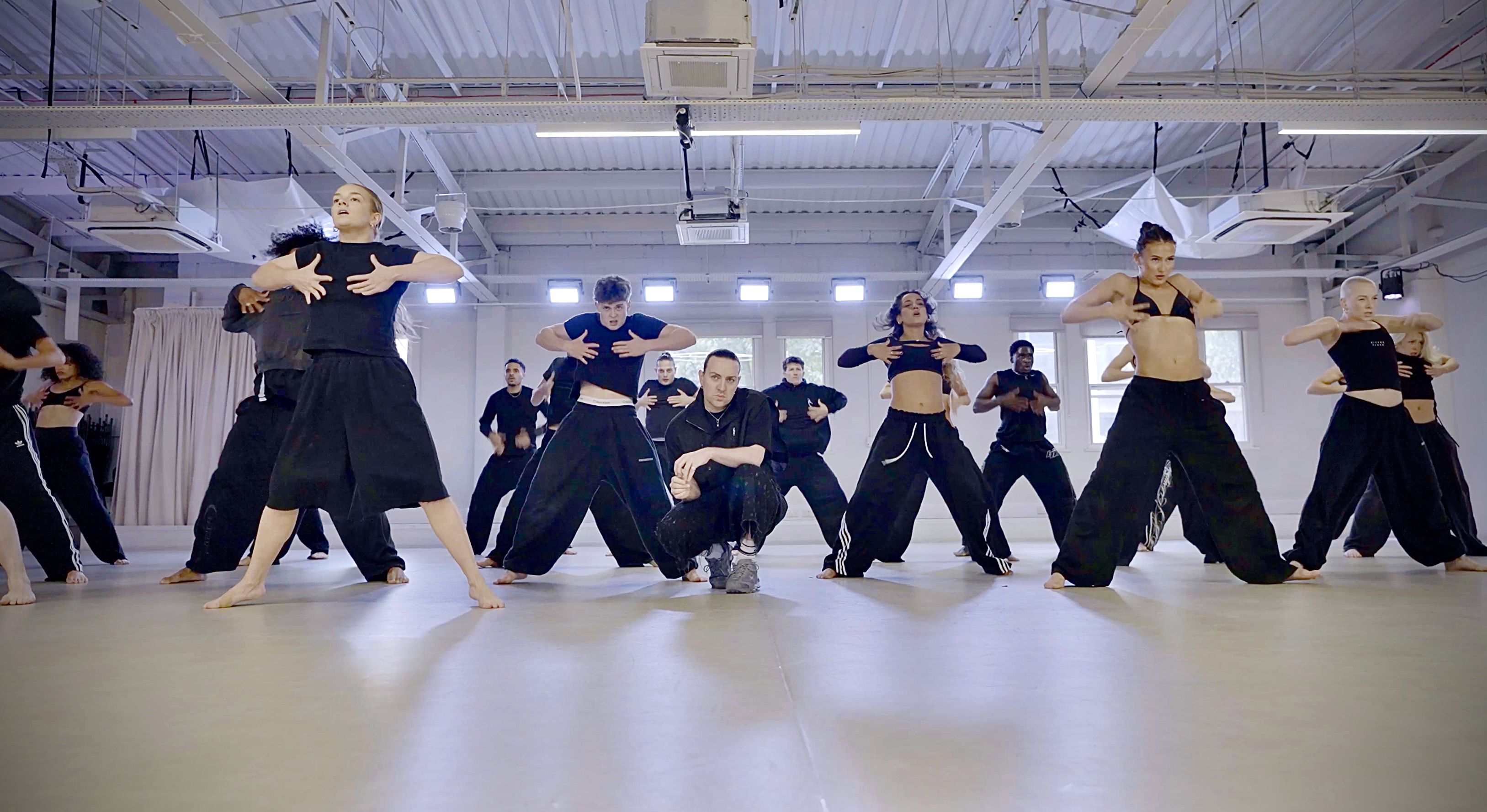
Dean Lee (centre) and Brent Street dancers in Dance For Your Life (2026). Screener courtesy of Mushroom Group
What director Luke Cornish and cinematographer Geoff Blee understand about filming dance is the potency of a locked-off wide shot, allowing the dancers to power the scene. Like most creative subject documentaries, the film thrives when we are given space to watch these incredible performers do what barely anyone else on the planet can do. Dance For Your Life is given more space to breathe and explore the works in London, working through Dean Lee’s choreography that will be the basis for the film’s final performance.
The tension between personal gain and camaraderie is at the heart of the film and allows the competitive engine to keep the audience invested in the story and these dancers. In a climate of economic uncertainty in live performing spaces at scale, the stakes feel impossibly high for these young people trying to survive in a creative industry seemingly set up for them to leave.
Dance as a ruthlessly athletic medium of artistic expression is unlike any other art form, but is potently absent from the competition element of the film. When we watch the ten in these wonderful rehearsal scenes, we are not viewing it as an artistic pursuit but as a fellow judge, picking up on minimal mistakes and alterations from the group. When this shift in viewership excels, it is in the lead sequence as Lee is deciding between Max and Connor, watching the piece back to back, noticing what each individual brings to the part. Expressing themselves within the framework in place is electric to watch, with the knowledge that ultimately only one will be selected.
Dance For Your Life has Dean Lee at its heart. It works more effectively as an exploration of modern professional dance and those who are excluded and marginalised from that space, rather than a competition that ultimately feels secondary to the journey the dancers go on at Shapehaus.
The final dance performance, which the entire film has been building towards, is a feat. The access for filming allowed the sequence to excel beyond a simple documentary or competition television film. The medium of dance allows for a litany of great cinematic moments when performed at the highest level, something Dance For Your Life achieves in this finale.
There is a wisdom to not linger in the final contract decision at the film’s conclusion for long, knowing the audience has seen the growth of these performers across the film as more important than this one opportunity. While only one lucky person received the contract, no one walked away empty-handed.
Dance For Your Life is in select theatres from April 2nd.
Melding powerful and emotive choreography with rhythmically propulsive music built out from recontextualised hymns, The Testament of Ann Lee (2025) is an intoxicating musical biopic like no other, creating a singular theatrical experience that will have you asking more from the genre. Centred on the fascinating movement of the Shakers, the 18th-century religious group known for their ecstatic dancing, Mona Fastvold’s exploration into humanity, ambition, and religion in a moment of turmoil and potential is an unexpected revelation in cinema this year.
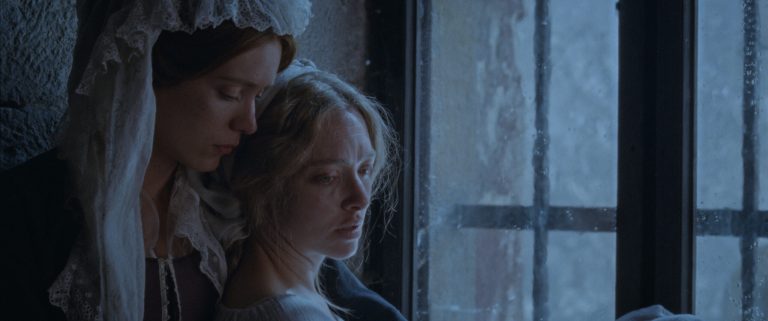
The film operates as a probing look into personal religion and how it can be expanded into a community, with Fastvold exploding the potential of the story into a wild and emotive musical that feels grounded in the power of the Shaker movement through its choreography and music. At the heart of it all is the titular Ann Lee, the rare female religious leader whose story is easily worth an emotive and expressionistic biopic starring one of the industry’s best actors in Amanda Seyfried. Spurred by unimaginable grief and some notable, potentially queer subtext, Ann is devoted to becoming a prophet of the Shakers she has found herself the leader of, seeing the act of celibacy as a key tenet of driving away sin, even as the movement is built on the overwhelming sense of religious community born out of dance and bodily movement.
Ann’s decision to shift the movement towards celibacy can only be accepted for so long by the large community in Manchester, as well as her husband, Abraham (Christopher Abbott), a simple man who will walk with her to the edge of his faith, but not beyond his human desires. Staying by Ann’s side through it all is her brother William (Lewis Pullman) and close friend Mary (Thomasin McKenzie), who also serves as the film’s narrator in one of the best uses of lengthy expositional narration in years.
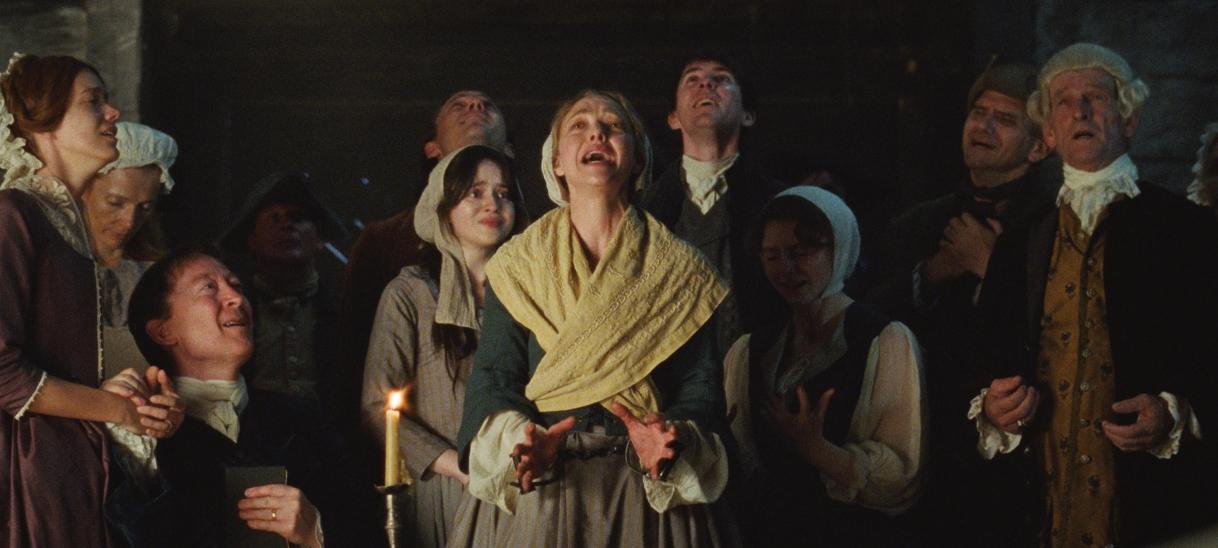
Stacy Martin and Amanda Seyfried in The Testament of Ann Lee (2025).
Remixed from Shaker hymns, composer Daniel Blumberg follows up award-winning work on Fastvold’s previous film, The Brutalist (2024), with a starkly different collection of music, combining beautifully with the ensemble’s choreography that always stays within the realm of absurd realism that the Shakers are known for. Seyfried allows the melodies to transcend the screen, using the repetitions of the hymns as a hypnotic bedrock to build out some exalted musical numbers.
Working previously as a co-writer on her partner Brady Corbet’s standout film The Brutalist, Fastvold’s film works as a fascinating companion piece of equal quality. Both Ann Lee and The Brutalist are fixated on ambitious figures that see potential in the pursuit of America, believing themselves to be called to a higher purpose in some form, with the faith that this purpose will shield them from the dangers that lie ahead. While Corbet’s film echoes its protagonist’s mode of deliberate architecture (as its namesake) to tell its wider story of faith, religion, and pursuit, Fastvold’s film moves with the grace of fresh silk and dance.
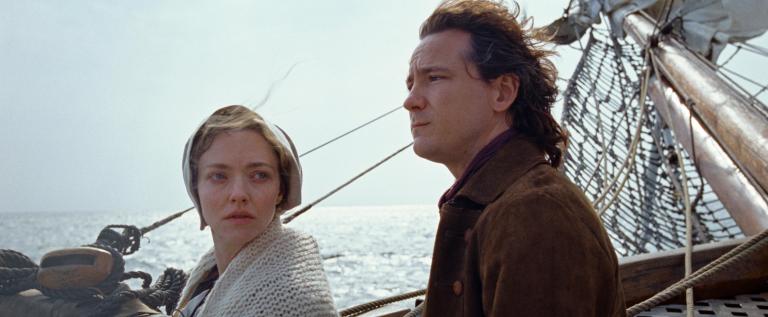
The Testament of Ann Lee transcends the bounds of its screen when the small group manage to obtain passage by boat to New York, with an extraordinary piece of montage, choreography and music as good as any you’ll find this decade. Fastvold’s exploration of the newly American striver through the unique lens of an upstart religious sect in England, stymied by the lack of progressive thinking at home, is swept up in the power of the musical genre at its best, with Seyfried commanding the helm with a mixture of mania and overwhelming grace.
Amanda Seyfried and Lewis Pullman in The Testament of Ann Lee (2025).
She contends with this part of the film in a complex understanding of many sides to the Shaker history of driven American conquest. The group see America as untoiled land, perhaps more accepting of a female preacher and of their unconventional worship practices. As they arrive in New York, however, they are almost immediately confronted by a slave auction, which Ann sees as barbaric sin; she is here to cleanse in her mission to expand the movement.
A story of finding divine ambition in community and connection, Ann Lee feels powerfully tied to many period-set ‘Great Men’ films like There Will Be Blood (2007), but shown through a woman’s lens. With a pivotal montage of the Shakers building their housing and village, we see Ann less as a wise prophet and that of project manager and architect, reflecting many scenes in The Brutalist, bathed in hopeful sunlight and warm wooden surroundings. Rarely have we seen such a powerful set of companion stories, especially ones filmed so similarly and with equal ambition.
But this is not just a film of personal ambition built on grief and personal turmoil; it is crucially a film driven by ideas of faith and religion. This may steer off many an agnostic cinemagoer in ways Fastvold and Corbet’s previous film didn’t (although that film is as Jewish in nature as this film is Christian); to open your heart to the story is no different than the task given to an audience in many films.
As difficult a proposition as this film is for audiences, the lack of Academy recognition Fastvold and her collaborators received this awards season is surprising. It is especially difficult to reckon with as The Testament of Ann Lee is a more intelligently woven story of ambition and grief than the walloping Hamnet (2025), which received eight nominations. For those crying out for individual voices still striving to work with Hollywood studios, you simply have to witness this fascinating and engrossing film from a truly singular voice.
The Testament of Ann Lee is in select theatres now.
Set in the Northeast of Brazil in the city of Recife in 1977, just as the country’s military dictatorship rounds third base, Kleber Mendonça Filho’s relaxed but probing political film The Secret Agent (2025) is like nothing else you’ll encounter in a cinema this year. Able to open a double feature with either Dazed and Confused (1993) or Army of Shadows (1969), the film wears many hats that in less assured hands would appear frayed and confused. Thankfully, Filho has levelled up as a filmmaker and storyteller, letting his playful tendencies heighten the moments of potent tension and violence that in less capable hands would beguile an audience.
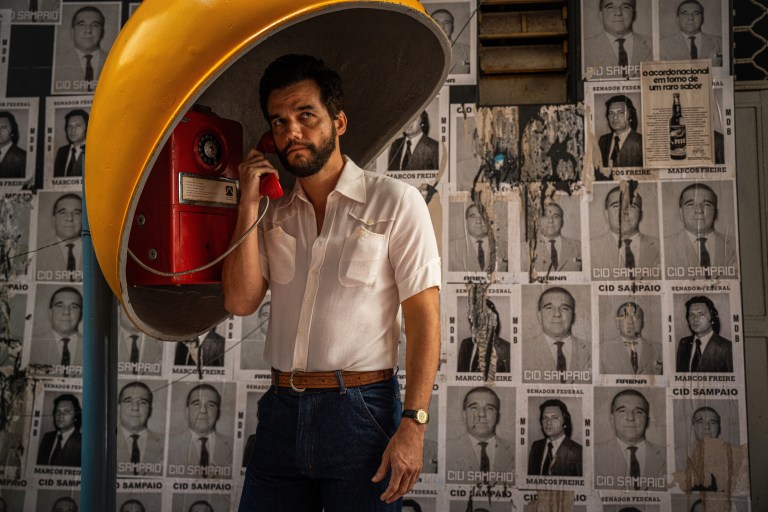
Centring a former professor and widower with a political target on his back, Armando (an exceptional Wagner Moura) returns to Recife to collect his son from his in-laws, seeking refuge in the warm embrace of a small community of political refugees helmed by Dona Sebastiana, in one of the year’s best supporting performances by Tânia Maria that feels achingly real.
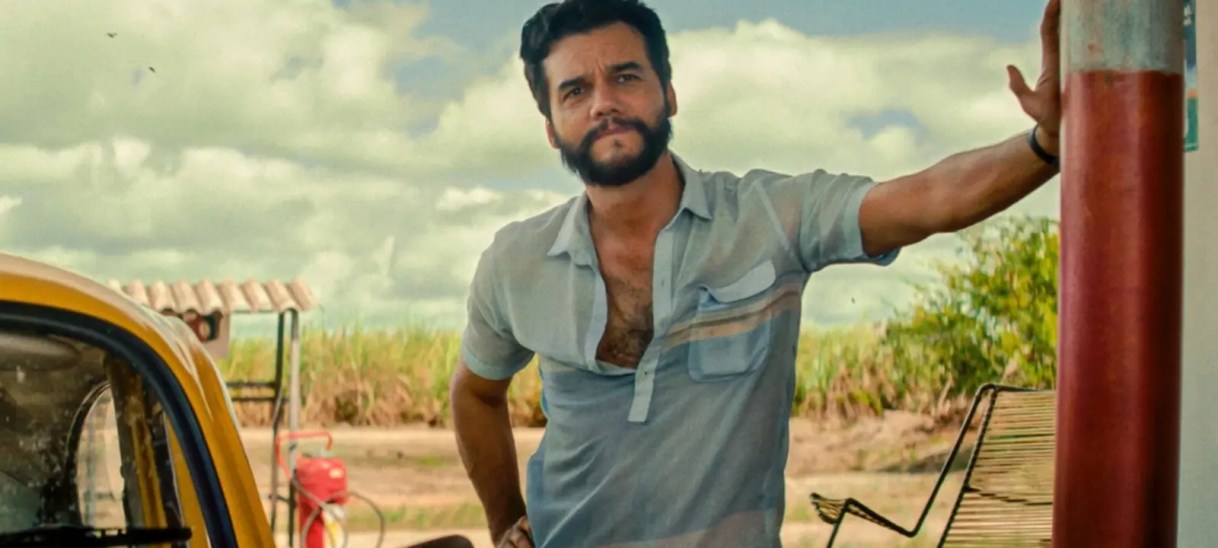
Wagner Moura’s work shifts elusively from room to room as Armando quickly surveys his surroundings to uncover how he needs to respond to each interaction. The highly regarded actor is given the role of a lifetime and is set to acquire several awards, as a man with a committed goal, but never stops living his elusive life, even as the violence around the corner draws nearer.
Wagner Moura as Armando in The Secret Agent (2025).
By placing this political and community-based struggle in the veins of a hangout film, Filho supports Moira’s performance with an outstanding cast that gives life to the past by giving a beating heart to this community of political refugees of his own country.
Echoes ripple through buildings, but the truth in history is something that must be searched for. Filho explores his country’s past and the people who inhabit those histories not as vessels for political tropes and ideologies, but as human beings who pass away long before their heroism is uncovered. The secondary narrative device of university students seeking to uncover the truth through tape recordings of our central story is surprising when it first appears, but it allows a dense exploration of ideas to occur. Filho’s way of shooting these scenes gives what could’ve been a contrived narrative crutch a potent level of emotional intimacy, allowing the film’s final sequence to sing.
In voicing The Secret Agent in the language of De Palma and Pakula, masters of the genre and time period the film is based, Filho is placing his film in conversation with the genre of political thrillers that most audiences are familiar with, allowing a discourse to occur across the screen between time and continents, ideas that are very much at the heart of the narrative. Alongside this, the film is a Cinema Paradiso (1988) level love affair with cinema itself, playing out in large swathes at a theatre, set against the backdrop of the sweltering summer backdrop of Jaws (1975) and the way it took the world by storm. Opening the film is the beguiling discovery of a leg inside a shark being studied at a local university, sweeping us up in the strange and playful mode Filho builds the world around, all while leading us down deeper and deeper with an unnerving sense of impending violence.
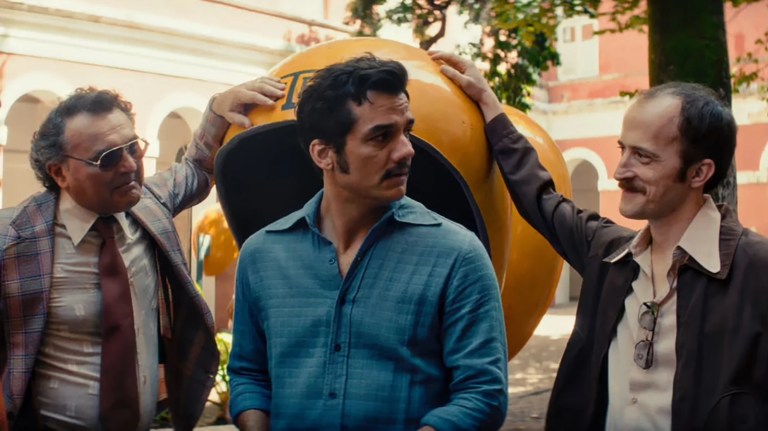
Like his previous film, Bacurau (2019), a rhythmic playfulness quickly sweeps an audience into a story, but a moment of visceral violence and aggression can pierce through that world like a stray bullet. With The Secret Agent, Filho’s eye is sharper and more directed, but playfulness is still the engine that drives his work. People do not stop living as the plots of his films take place; everything and everyone is transient, a poignant concept to maintain in a political thriller of this kind.
(From left) Robério Diógenes, Wagner Moura, and Igor de Araújo in The Secret Agent.
While the political thriller genre is defined by American filmmakers like De Palma and Pakula, peaking in the conspiratorial aftermath of Watergate and the Nixon administration, in recent years, the genre has been defined by international cinema. The Secret Agent asks much of its audience in terms of prior knowledge of Brazil’s military dictatorship, but in a modern climate of authoritarian spot fires around the globe, many audiences will see themselves in the images Filho shows us. Scenes of political refugees commenting on the limited groceries that are handed by a local farmer trying to assist them are as keenly observed as the moments of shocking violence.
Returning to the present day with the students weaving themselves into the stories of the past, we are in a constant meditation with ideas of bearing witness through aural recollection and the intimate but limited way of history being investigated. A pivotal scene in the film’s movement towards the thriller genre plays out when Armando and Elza (Maria Fernanda Cândido) discuss getting his family out of the country and the hit being put on his head, all while recording the conversation. This gripping scene is shown alongside Flavia (Laura Lufési), a heavily invested student, probing the moments we are shown, trying to glean insight into this moment and what may have occurred in that room outside of the captured audio.
What does it mean to tell a story of such darkness with this level of lightness? The film’s Godardian level of bounce and freedom activates a unique form of scene-to-scene tension not often seen in the political skin that Filho’s film wears. But, while the tension of these genre moments is usually played for excitement, The Secret Agent conditions us to find these moments profoundly reflective, peering into these lives with an open heart and a wry smirk of the absurdity of buffoonish political violence. A high-wire act that appears shockingly relaxed.
A showman like no other, Korean visionary Park Chan Wook elicits more joy and wonder out of an audience from a perfectly timed cross-dissolve than most car chases filmed this decade. A filmmaker who is constantly looking to find the tipping point of extremity without falling into the world of camp, Park has cultivated a devoted fanbase that expands with each new entry, especially in recent years, with his fearlessness to work in the grime of modern life
Upon exiting No Other Choice (2025) in a delirium, it is clear that Park is the greatest modern visual stylist. While his stories can vary in interest and quality, as a filmmaker who is obsessed with the power of the art of editing, you will always leave his films satisfied. Adapted from the legend Donald Westlake’s The Ax from 1997, Park’s screenplay makes the key decision to maintain the protagonist’s occupation and narrative arc, showing how, as time passes, the crushing weight of modern capitalism has only increased. Centring a literal paper pusher, we walk hand in ham-fisted hand, gliding on the back of whip pans and transitions that will make film students furiously scribbling notes.
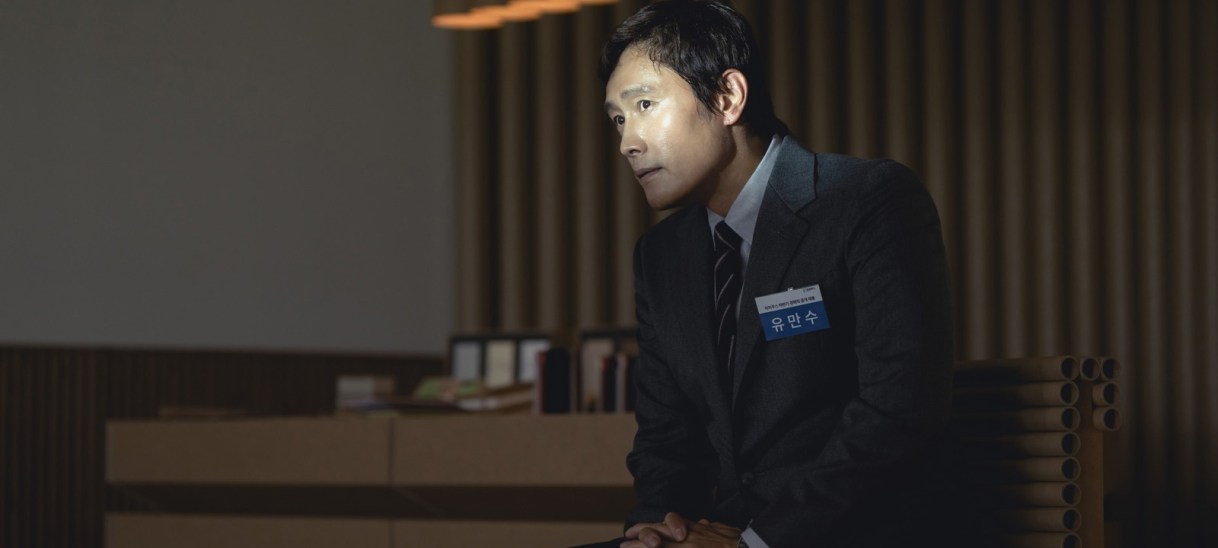
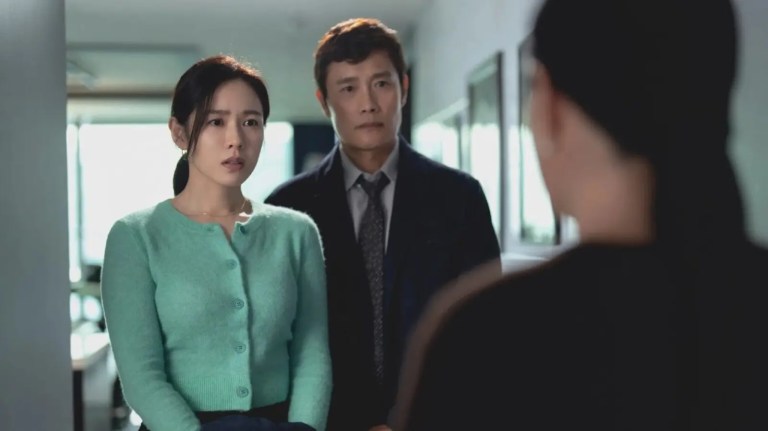
After being made redundant after the acquisition of the paper company by an American conglomerate, Man-su (Lee Byung-hun) is sent to a support group for the newly unemployed, selling self-worth and virtue as its own reward. But, after tasting mild success and a bountiful life with his family, Man-su is after a return to cold, hard reward.
Built on the late capitalist mindset that success can only be achieved through the pain of another, Man-su’s plan ultimately lands in Park’s wheelhouse, getting rid of the more hireable paper men in town, so he is all that remains. Amongst all the extremity and chaotic joy gushing out of wild filmmaking choices, the story elicits an overwhelming sense of pain as we see a group of men that should be in community with one another, forced to compete for what will ultimately be a hollow prize.
Lee Byung-hun as Man-Su in No Other Choice.
Sitting somewhere between Kiyoshi Kurosawa’s Cloud (2024) and Tokyo Sonata (2008) as modern tales on the devolving psyche of work culture and living under the cruel thumb of capitalism. That Neon in a marketing push sent an open invite to the fortune 500 company CEO’s says everything about how pointed the film aims to be at its primary villain.
Lee’s performance holds down the film’s extremity, preventing it from turning into a circus. His desperation exudes from him as a flop sweat, gritting his teeth through every moment, anxious that the moment he stops to consider the repercussions, it will all crash down. In moments where the world appears to react based on Man-su’s emotions, anything seems possible in this farcical satire that moves with a feverish pace. There is a fleeting moment when a potential final victim offers a job that we feel an unexpected glimmer of hope that we can get off the road. But as is the case with most Park Chan Wook films, that road, once entered, is one-way.
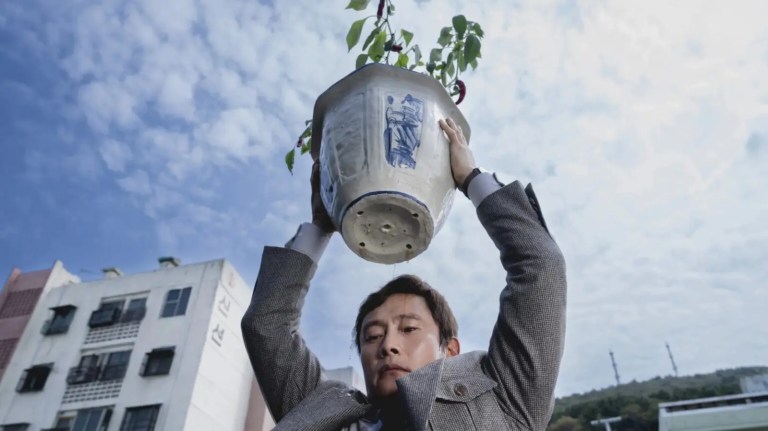
Park is in a tier above all when it comes to pushing the visual medium forward with a fever pitch and an unmatched style. Like his idol Alfred Hitchcock, Park sees his role as both old school entertainer and cinematic visionary who asks what is possible in the medium they have devoted their life to. In his recent work, Park has devoted an enormous amount of time to uncovering ways to use the reflective world of phone and computer screens to tell a story that is still compelled by the characters holding them. When we see Man-su’s reflected face alongside his screen as he drives himself further and further into his doomscroll, we so easily see ourselves. These scenes are comedic but intensely revealing, and make almost all contemporary filmmakers look like cowards for hiding in period filmmaking.
(From left) Son Ye-Jin as Miri and Lee Byung-hun as Man-Su in No Other Choice.
Always veering into doing too much, Park hides as much in its maximalist frames as he shows. Many have criticised the filmmaker for over-directing his screenplays, never allowing the writing to gleam through the forest of his craft, which I believe to be a false and overly simplistic reading of his work. In his very best films, whether original scripts or adaptations like in No Other Choice, he highlights the power and potency of the writing by its sheer ability to stand alongside some of the most visionary filmmaking this century through iconic characters and set pieces. It is only in his films like Stoker, with lesser scripts, that become mostly known for a scene transition (show hair transition scene from YouTube).
What allows Park to ride so close to the edge of camp absurdism without toppling over is his ability to play to a crowd, both in enjoyment and the collective experience of being surrounded by strangers, all uncertain of what will happen next, which makes live sports an enduring event. With all respect to the perfect chase scene at the conclusion of One BattleAfter Another (2025), the legend of the final act, Park Chan Wook’s No Other Choice, has the finale of the year. A glorious send-up of modern late-stage capitalism as a ‘be careful what you wish for’ fairy tale that blends melodrama into a living nightmare into the best satire in years. It is a farcical screed of capitalism that gloriously blooms into something unexpectedly transcendent in its conclusion.
The poetic irony in its final moments play like the deterministic singularity point that all modern art about the crushing weight of capitalism arrives at, there is literally no other choice. How Park doesn’t arrive at a place of crippling nihilism in its final moments but of cruel irony and humanity is nothing short of astounding. His revenge fables are without equal in modern storytelling, with No Other Choice arriving into this extended canon in surprising ways.
A caustic character study of depression, expressed in a near limitless capacity of anger and frustration, the legend Mike Leigh and Marianne Jean-Baptiste reunite for a potent and captivating film like no other. At times an excruciating viewing experience, Hard Truths (2024) is as rewarding a film as you’ll find this year, sneaking up on you with seasoned patience so few filmmakers deploy.
John Waters lovingly called Jean-Baptiste’s Pansy “the most unpleasant sourpuss in the history of cinema”, and it’s hard to argue with him. An open wound that reacts to every possible moment like a critically endangered animal hoping to survive another day, even if they’re unsure why they cling to life so hard.
An ornery and occasionally cruel working-class mother of an adult-at-home son, Pansy doesn’t drift across days as much as she bulldozes through every waking moment. We learn everything you need to know about Pansy by the way she wakes up. In multiple instances across Hard Truths, we grow desperately empathetic to the peacefulness she exudes while sleeping, but is constantly jolted awake, activating an instantaneous fight mode.
While Jean-Baptiste is prone to blot out the sun with her performance, Leigh leaves room for some truly remarkable supporting performances. David Webber and Tuwaine Barrett, as Pansy’s husband Curtley and reclusive and introverted son Moses, manage to withstand the ocean storm that is Pansy through a deep connection to characters given little room to breathe but require a wide berth.
Marianne Jean-Baptiste in Hard Truths
Leigh is a cinematic master through his ability to create a cumulative character experience that bursts at the seams of its final ensemble sequence. Like a well-crafted play, Hard Truths walks you towards a profound moment of empathy and attachment in a naturally unexpected cadence. With little plot outside of a Mother’s Day date for Pansy and her sister Chantelle (Michele Austin), Leigh gives his ensemble enormous space to fill the frame with nuanced character portraits that will feel like mirrors into the soul of the modern-day middle-class, seen with honesty and respect.
While Pansy is increasingly vocal about an uncertain ailment that is fuelling a violent discomfort with life, she harbours a real hesitation in improving her situation. From a doctor’s appointment to a trip to the dentist (with Leigh using a real dentist!), these scenes carry a weight that sustains the film’s second half, as the audience grows increasingly desperate for the reason in all this internal suffering perpetually boiling over. She is nothing but a raw nerve, longing for a connection without the capability to find it.
A desperate need to be understood and heard hidden within a desperate need to be left alone, Jean-Baptiste, with Leigh by her side, reflects a moment of modern life not seen in the old cinematic masters. While Leigh’s best films are where he forces his fractured characters into unfamiliar places (Topsy Turvy,Naked), Hard Truths can be placed among a select few films that express the early 2020s with an honest reflection you’d more likely see in a period piece made decades after. We cannot take his movies for granted.
For horror season, the Criterion Channel has crafted an eclectic and bountiful collection of iconic Japanese Horror films to immerse yourself in. From ’60s cult classics to the ’90s and early ’00s staples that exploded the country’s unique horror classics onto the world stage, this collection has something for both the cinephile horror fan and those looking for an entry point.
The genre is defined by old folklore and urban legends about Oni, invisible demons that potentially bring disaster and disease with them. A key form of Oni is Yūrei, or vengeful spirits, which we can see spread across almost all Japanese horror cinema. Perhaps the most well-known story of Yūrei is of Okiku, a young maid who was thrown down a well by a samurai after she refused his advances, returning as a vengeful spirit. Okiku is defined by her long black hair and hushed whisper, iconography burned into the celluloid of the country’s horror storytelling for generations, forming the immortal image that spreads across this entire collection.
Japanese horror storytelling thrives when these legends of Yūrei and other Oni are weaved into their contemporary settings, from post-civil war anxiety (Onibaba) to suburban anxiety and community suspicions (Creepy) and the encroaching dominance of technology in our world (Ring, Pulse, Tetsuo: The Iron Man). This creates a consistent cultural imprint that makes the genre so satisfying to engage with and return to.
So what better way to spend October than to binge through these and craft a ranking list from this well-curated list of classics from the fine folks at Criterion.
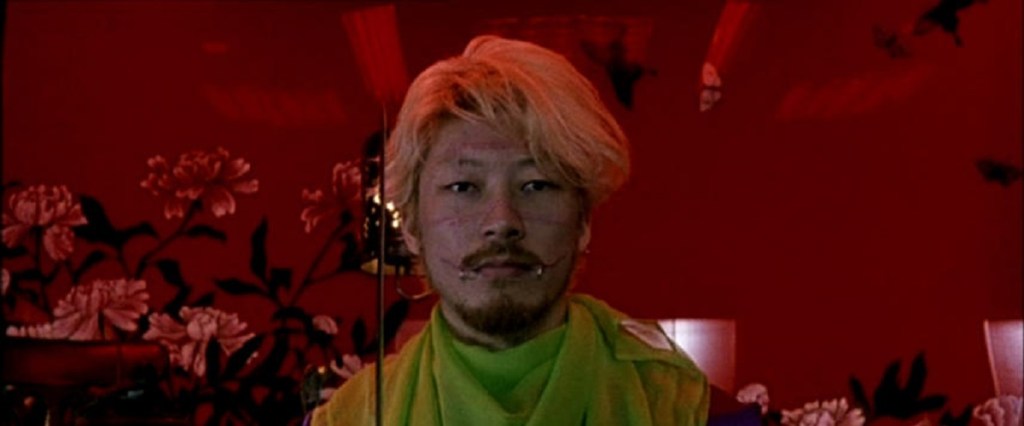
13. Ichi the Killer (2001) – Takashi Miike
⭐⭐⭐
Rating: 2.5 out of 5.
Extremist hyperviolence for the incels, industry legend Takashi Miike’s bizarre and underbaked screed Ichi the Killer, made two years after his brilliant film Audition (which will arrive later in this list), was banned in multiple countries for its approach to sexual violence and sadomasochism. Centring on the titular Ichi (Nao Ômori), an emotionally disturbed man who is just as likely to weep uncontrollably in the corner of a room as he is to violently murder those around him, most likely with a blade hidden in his boot. Pursuing Ichi is a sadomasochistic yakuza enforcer Kakihara (Tadanobu Asano), known for his brutality and Joker-like scars along his cheeks, who is impressed and tantalised by Ichi’s level of violence.
If that reads like a teenage boy fantasia of hyper-violence and extremity at the expense of taste and storytelling, that’s because it is. The only skippable film on this list, Ichi the Killer sees the chaotic filmmaker indulge in all his worst impulses which were weaved in more creatively in his other films.
While the film and the manga it is faithfully adapting has clearly influenced a generation of filmmakers, particularly in manga and anime circles, its haphazard approach to storytelling centred on a hyper-violent incel creates an instant callous so thick, the proceeding depravity sparks little to no emotion.
12. Ju-On: The Grudge 2 (2003) – Takashi Shimizu
⭐⭐⭐
Rating: 2.5 out of 5.
Even as the lesser of the films in the franchise selected by Criterion, Ju-On: The Grudge 2 is not without its iconic moments that each film in the franchise achieves. Operating in a surprisingly quieter, more atmospheric horror register, Ju-On: The Grudge 2 centres its plot on a TV crew working on a reality show about ghosts set in the house of the original film.
The Yūrei at the heart of the franchise stems from a murdered housewife, cursing all those who enter the house to an inevitable demise. The horror set pieces in the film and the franchise grow repetitive in a hurry, but still manage a psychological stickiness through some impressive genre flourishes. The ghost’s death rattle sound remains one of the great noises in the horror canon that ratchets up tension faster than any convoluted plot.
Following the similar trajectory of the previous film with its nonlinear narratives inside character (read, next victim) focused chapters, Ju-On: The Grudge 2 has a more menacing air of inevitability that never feels oppressive. Instead, it makes for an easier watch than the first film, albeit with the same issues.
The time-skipping narrative in this film is more potent and evocatively tied to the whole story than the original, making its climactic final act wash over you in waves of sadness and melancholy, even with its bizarre final ten minutes.
11. Ju-On: The Grudge (2002) – Takashi Shimizu
⭐⭐⭐
Rating: 3 out of 5.
The all-time ‘just leave the house’ franchise, Ju-On: The Grudge thrives in the unknown. The horror is a tightly contained, well-chosen horror house, a small collection of characters and a looming presence we are desperate to learn more about, even if the resolution ultimately lessens the experience in the film’s uneven conclusion.
Ju-On: The Grudge’s keen focus on sound design with its wall scratching, cat screeches, and the iconic death rattle heightens an unfocused plot, held together by its terrific horror set pieces, Hitomi’s (Misaki Itô) chapter especially. Japanese horror, and especially those centred on yūrei have these unexpected and often moving notes of sadness at the heart of the curse, something that can be felt even within the iconic stair scene at the climax of the film, largely through Takako Fuji’s performance as the ghost Kayako.
Ju-On thrives in its limitations as a micro-budget film shot in a tremendous house for a horror, which Shimizu puts great attention to laying out, but is bogged down by a serious lack of characterisation, opting instead for time skipping and short chapters that prevent the inventive filmmaking to thrive. Ultimately, these films have such aggressively passive characters stuck in these doom loops that while tepidly compelling, never excel as an overall experience.
10. Tetsuo: The Iron Man (1989) – Shinya Tsukamoto
⭐⭐⭐⭐
Rating: 3.5 out of 5.
Pure heavy metal cinema that some have deemed ‘migraine cinema’, the wildly feverish Tetsuo The Iron Man leaves a crater in the medium we can only hope to mine for future resources. With the self-awareness to hit the ejector seat after 67 minutes, Shinya Tsukamoto’s manic sci-fi nightmare about a self-professed ‘metal fetishist’ (Tomorô Taguchi) is driven mad (or already was), creating a sequence of events which include a graphic and hysterical sex scene, an incredibly tactile chase sequence, all culminating in a transcendent moment of mania you’ll be coming down for days after.
This Japanese Eraserhead (1977) crushes your skull with a relentless pace and style, truly fitting its design aesthetic of violent machinery bursting from limbs like the chest burster in Alien (1979). There is no Crash (1996) or Titane (2021) (and to a certain extent The Substance, 2024) without Tetsuo, placing it violently at the top of the heap of the cinema of extremity, even if its ideas arrive with a blunted edge.
9. Dark Water (2002) – Hideo Nakata
⭐⭐⭐⭐
Rating: 3.5 out of 5.
A tense and poignant drama of a family going through a divorce wrapped up in a ghost story, Dark Water is a melancholic look at childhood neglect and trauma with a beautiful and unexpected third act.
Directed by Hideo Nakata who thrust the Japanese horror genre onto the world stage with Ring (1998) —appearing later in this list— based on a short story collection by Koji Suzuki (who also wrote the Ring novels), Dark Water centres on a young mother in the process of divorcing her husband and rebuilding a life for herself and her young daughter Ikuko (Rio Kanno). The mother, Yoshimi (Hitomi Kuroki), rents a rundown apartment for her and her daughter where strange occurrences happen, localising around the water in the building.
Four years after his enormous success with Ring, Nakata is driven to a more potent emotional story of childhood neglect and a fracturing family, lowering the temperature of the horror, using the genre instead to heighten the dramatic storytelling rather than as a means to an end. The film succeeds as a sombre piece of atmospheric storytelling that weaves two unique stories together, the family divorce drama that gives remarkable attention to the young child’s feelings throughout, and the ghost story in the apartment.
Held together by a pair of fantastic performances by Kuroki and Kanno, with the latter giving an all-time child performance in a horror film, Dark Water sneaks up on you with its deceptively poignant storytelling and characters, culminating in the most emotionally resonant final act on this list. The horror genre, and especially ghost stories, excel in articulating a sense of longing and lost time, with those we love and those that need to be loved.
8. Creepy (2016) – Kiyoshi Kurosawa
⭐⭐⭐⭐
Rating: 3.5 out of 5.
It is no mistake that Kiyoshi Kurosawa finds himself on this list three times, as the great master formalist makes a case for the most important voice in horror storytelling since John Carpenter. A film that understands the anxiety an audience gets from a whisper in a stressful situation, or a quiet interview in a frame full of people, Creepy brings Kurosawa’s doom scenario milieu to the suburbs, tracking an ex-detective Koichi Takakura (Hidetoshi Nishijima) forced to retire from the force and move with his young wife Yasuko (Yūko Takeuchi).
With a clear itching to return to detective work, as well as a heightened sense of danger and menace behind every door, influenced by a level of unresolved PTSD, Koichi becomes obsessed with a local cold case brought on by an ex-colleague, as well as being unnerved and suspicious of his neighbours.
Kurosawa’s formalism is well suited to the obsessive detective narrative, with the modern suburbia setting slowly pierced by the auteur’s signature sense of overwhelming dread and suspicion. His measured camera movements, at times unsettlingly ahead of the action, heighten the anxiety of any given moment, binding us to the experiences of his characters.
The legendary auteur is at his best when he can place the audience, alongside his characters, in situations where anything is possible. Like reality, not every moment is cause and effect, where potentially horrifying incidents can occur seemingly without motive or reason. This troubling, anxiety-fuelled sensation is where Kurosawa is more keenly tapped into than perhaps any living filmmaker, allowing his seemingly mundane character dramas to glide into some of the greatest horror moments of the past 30 years.
A bold perspective gearshift in the film’s second half almost derails the drama and tension Kurosawa so brilliantly establishes for over an hour, held together only by the filmmaker’s ability to reignite the dramatic flame for a memorable closing moment. While not in the highest tier of works, Kurosawa’s Creepy is as satisfying an unsettling portrait of suburban anxiety and destabilisation as you will find.
7. Ring (1998) – Hideo Nakata
⭐⭐⭐⭐
Rating: 4 out of 5.
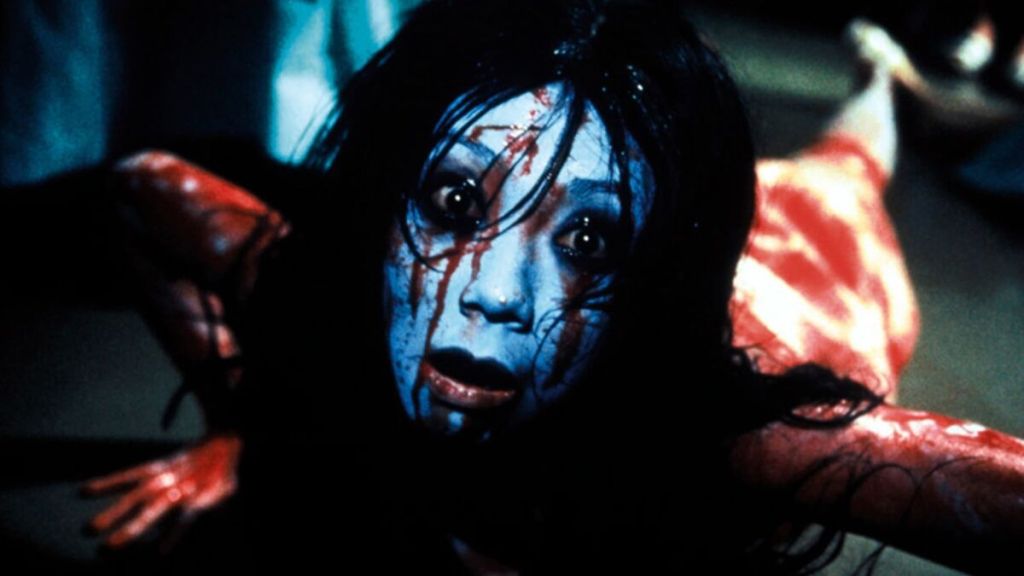
The quintessential Japanese horror film, Hideo Nakata’s Ring is probably the most iconic film on the list, defined by its Yūrei antagonist Sadako (Rie Ino’o), clearly based on the Okiku legend, down to her horrific murder of being thrown down a well. It’s also the film that sparked a Western fever over the Japanese horror industry, rapidly adapting them into American versions of middling success (four films on this list have American adaptations), the best of the lot being Gore Verbinski’s impressive adaptation The Ring in 2002.
To catch those up to speed with the story of this blockbuster from Japan, Hideo Nakata’s Ring has the all-time horror premise of a mysterious VHS tape that, once watched, will have you scared into an early grave seven days after watching. Wonderfully blending Japanese folklore with modern society’s relationship with physical media and storytelling, all wrapped up in a moody yet propulsive journalism procedural centred on the brilliant Nanako Matsushima and Hiroyuki Sanada as ex-wife and husband pair Reiko and Ryūji.
Where Ju-On falters by being solely driven by its formula and inventive kills, Ringu thrives in its deep fascination with the looming spectre of Sadako, using the framework of the journalism procedural to uncover the reality that she is less a hostile ghost and more of an enraged victim.
The film elevates itself with an emotionally overwhelming moment in the climax, with Reiko warmly embracing the skeleton of Sadako, a graceful note in a film that until this moment thrived in its procedural meticulous storytelling. In a genre defined by outcasts reaping revenge on the world, this moment of tenderness pierces through the shroud of menace and cynicism, leaving behind a desperate mother letting her tormentor know it will be okay. Even though this moment is followed by a scene with the franchise’s most iconic imagery of Sadako crawling out of the television, it’s without question the film would be stronger for ending at this place (the TV crawl scene could happen at any point), perhaps moving it higher up this list.
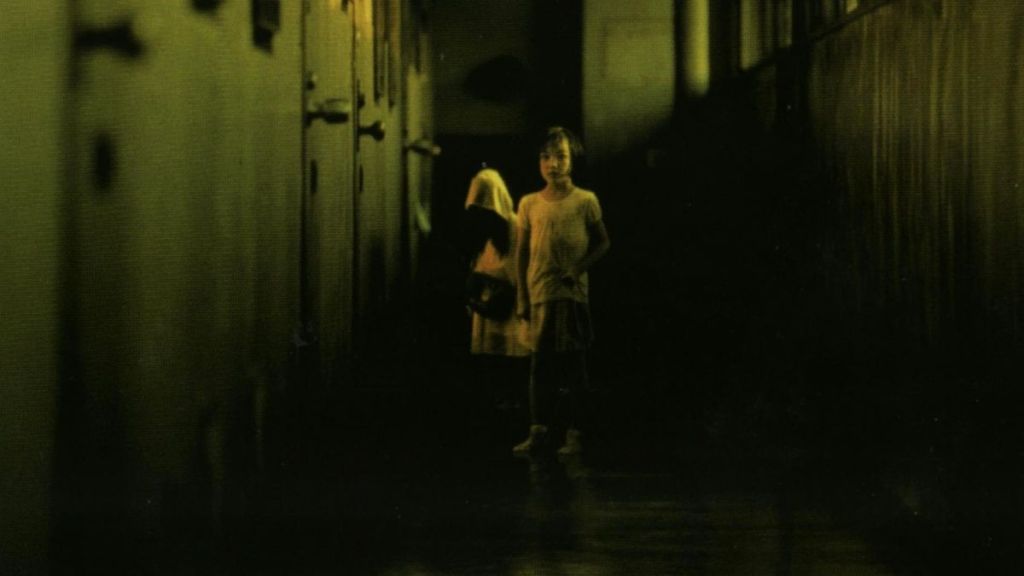
6. House (1977) – Hideo Nakata
⭐⭐⭐⭐
Rating: 4 out of 5.
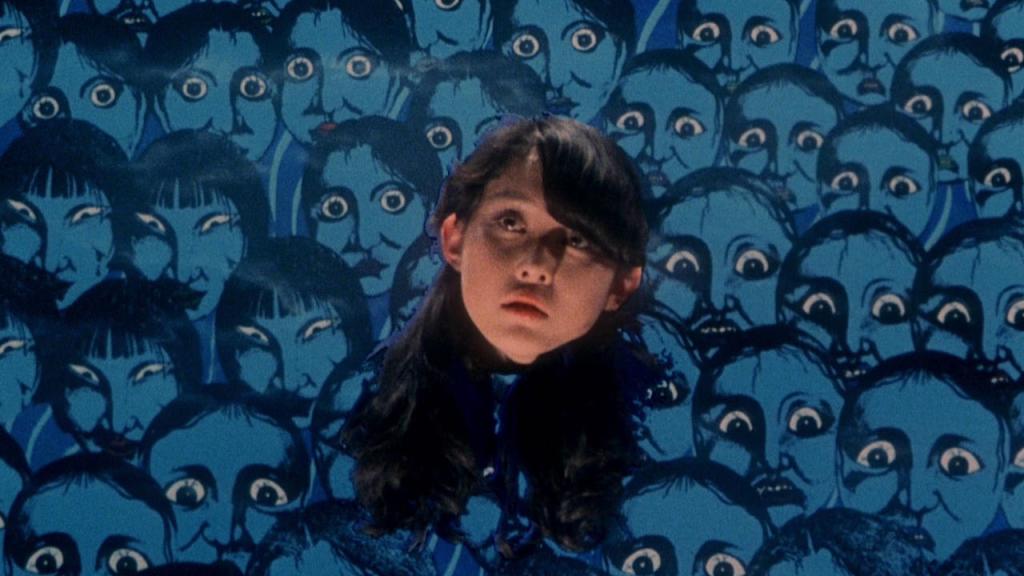
A destabilising horror experience, unlike anything you’ve seen before. With a feverish energy and imagination that removes an audience’s ability to anticipate an inch in front of their face —a crucial component of any great horror— Nobuhiko Ôbayashi’s House, playfully referred to as a psychedelic comedy horror, is the most unique film on this list that quickly became a global cult object.
A tremendously enjoyable film, House follows seven schoolgirls with names like Gorgeous (Kimiko Ikegami) and Kung Fu (Miki Jinbo, MVP of the group once the mania starts), played by mostly amateur actors, who go on a summer vacation to a country estate owned by Gorgeous’ aunt (Yōko Minamida), an eccentric older woman. Strange occurrences and violent episodes begin to plague the girls at the house, shifting the film from a glossily bizarre romp into a clear ur-text for Sam Raimi’s Evil Dead films while never losing its internal style and spirit.
Ôbayashi has made a film on such a different frequency to the rest of cinema, a feat that forces you to realign your senses to get onto its wavelength. But once you’re there, the results will astonish you. You’ll be so overwhelmed with a sense of dysphoria, oscillating rapidly between genuine glee and anxiety with its feverish editing style and use of stop motion and simple animations. In a secluded cabin where anything is possible, even a cat can become a nightmare.
5. Onibaba (1964) – Kaneto Shindō
⭐⭐⭐⭐
Rating: 4 out of 5.
The demonic nature of war and conflict which sows its violence into the very earth, Kaneto Shindô’s atmospheric and captivating 14th-century folk tale has perhaps the loosest attachment to the horror genre as anything on this list, earning its place through its deep connection to post-war anxiety, reflected through the prism of Japanese samurai cinema.
With her son, Kichi, away at war as a samurai, a woman (Nobuko Otowa) and her daughter-in-law (Jitsuko Yoshimura) struggle to survive on their own in the outskirts of Kyoto, resorting to killing solitary samurai and stealing their swords and clothes to a local merchant for food. Upon the return of a neighbour, Hatchi (Kei Satô), who tells them of the death of the son, the trio begin a dance of seduction and connection fuelled by loneliness, jealousy, and desire.
Onibaba lives in the sound of nature in conflict with human violence, the aggressive rustling of grain and reeds, the coarse splashing of water on a riverbed as two nameless men fight, tying notions of human violence and horror to the very earth, better than almost any film has since. As the oldest film on this list, it is as crucial a watch as any in understanding the genre as a whole.
4. Kuroneko (1968) – Kaneto Shindō
⭐⭐⭐⭐
Rating: 4 out of 5.
Such a wonderful companion to his previous film Onibaba it’s impossible to separate the pair, with its casting of Nobuko Otowa in near identical roles, mirrored visual motifs and narrative of the women left behind and left to rot in the burnt ruins of a world left by feeble men.
Opening with the brutal murder of a woman, Shige (Kiwako Taichi), and her mother-in-law Yone (Otowa), at the hand of a band of samurai that sets the tone for the rest of this haunted revenge thriller as the pair return to the world as cat formed Onryō, a more vengeful form of yūrei.
In many ways, this is the more overtly horrific film of the pair, but where Kuroneko really excels and where Shindō clearly improves as a writer is in the dramatic storytelling that is unlocked in the centre of the film with the return of Gintoki (Nakamura Kichiemon II), Yone’s son, Shige’s husband, and crucially, a samurai. This return creates a compelling internal battle for Shige and Yone, who have returned to the mortal world to seek vengeance on the samurai plaguing and overwhelming the land, but still harbour a great love and longing for the man who left them.
At its core, Kuroneko is a story of vengeance against the inhumanity of male violence, with its beautiful knots of human longing and connection in the face of great pain piercing the heart more powerfully than any fang.
3. Audition (2001) – Takashi Miike
⭐⭐⭐⭐
Rating: 4 out of 5.
Recently ranked the 7th best horror film of all time by Variety, Takashi Miike’s second and much more successful entry on this list, Audition, moves as an anglerfish, enrapturing you in its romantic light, masking the dark monster lurking in the shadows.
Beginning with a beautiful three-minute prologue of a young family losing their mother in a hospital, Miike’s Audition blooms from a place of empathy and loss, creating a lush bed to destabilise us. Set seven years after this, Shigeharu’s (Ryo Ishibashi) son Shigehiko (Tetsu Sawaki) presses him to find a wife. Shigeharu’s friend Yasuhisa (Jun Kunimura), a film producer, devises a plan to hold an audition for a fake film project with the goal of Shigeharu choosing a wife out of the cohort.
Immediately, Shigeharu is enchanted, bordering on obsessed with one prospect, the quiet Asami (Eihi Shiina), and pursues her, even though Yasuhisa urges him to reconsider as he believes something is off about her. Miike uses his chaotic approach to editing and story structure that tipped over Ichi the Killer here as a piercing needle into the skin of this Vaseline-covered pulpy romance. It is in this needling contrast that the film thrives.
Miike has a profound eye for composition and lighting, transcending the material into a consistent wave of tangible emotion, never letting its characters or the audience off the hook he so delicately dangles. This lush style is wrapped in a discordant editing style once we meet Asami, reshaping any notion of the type of film we are watching from moment to moment, culminating in a wild final act that made the film legendary to horror fans.
2. Pulse (2001) – Kiyoshi Kurosawa
⭐⭐⭐⭐⭐
Rating: 5 out of 5.
The year is 2001 and the legend Kiyoshi Kurosawa is deeply sceptical about the internet’s promise to connect the global population more deeply with each other. In Pulse, at the turn of the millennium with the internet burgeoning into being, a creeping loneliness epidemic appears to be bleeding into people’s lives through their computer screens, leaving its victims in a fate worse than death.
In conversation with Hideo Nakata’s Ring with their relationships to media and technology’s place as the medium to our new folk stories, Pulse elicits a similar feeling the VHS tape has with its steadily increasing number of apparent ghosts taking form inside the internet, desperate to escape for reasons that become clearer at the film’s remarkably evocative climax.
Viewing the relationship between a rapidly isolating city and life through the lens of a small group of young people retreating into their own worlds via the internet is eminently recognisable in 2024. With a steady march towards depression tied to the oblivion of disconnection that Kurosawa achieves better than almost any living filmmaker, we are forced into the role of both protagonist and camera operator, refracting our modern life into this 23-year-old film. For this reason, alongside its depressive but uncynical atmosphere, Pulse is potentially the definitive work of cinema for our online, modern age.
The miracle of Kurosawa’s films is their ability to form a compellingly bleak drama without an overwhelmingly cynical worldview. While the film is defined by suicide and internet-driven malaise, Pulse is never driven by a contempt for the ghostly presences or the young victims like in the Ju On films. Even in the final, apocalyptic moments, the audience, with Kurosawa by our side, is hopeful for a potential step forward.
With all that said, what supercharges these ideas and propels them into a plane few films achieve is their ability to operate as a truly terrifying work of horror. Even in a horror collection that boasts iconic horror scenes like the ones in Ring or Ju-On, nothing is as bone-chilling and skin-crawling as the slow-moving ghost sequence, perfectly calibrated to destabilise our ideas of how our fears can be provoked in such a simple scene.
The unveiling of the Big Bang event at the film’s core as a deeply personal, isolating act of exposed self-annihilation is overwhelmingly emotional. The best horror films root themselves in empathetic moments of anguish that birth a larger malice to those in its orbit, which Pulse achieves better than anything on this list and in almost any other film in the genre.
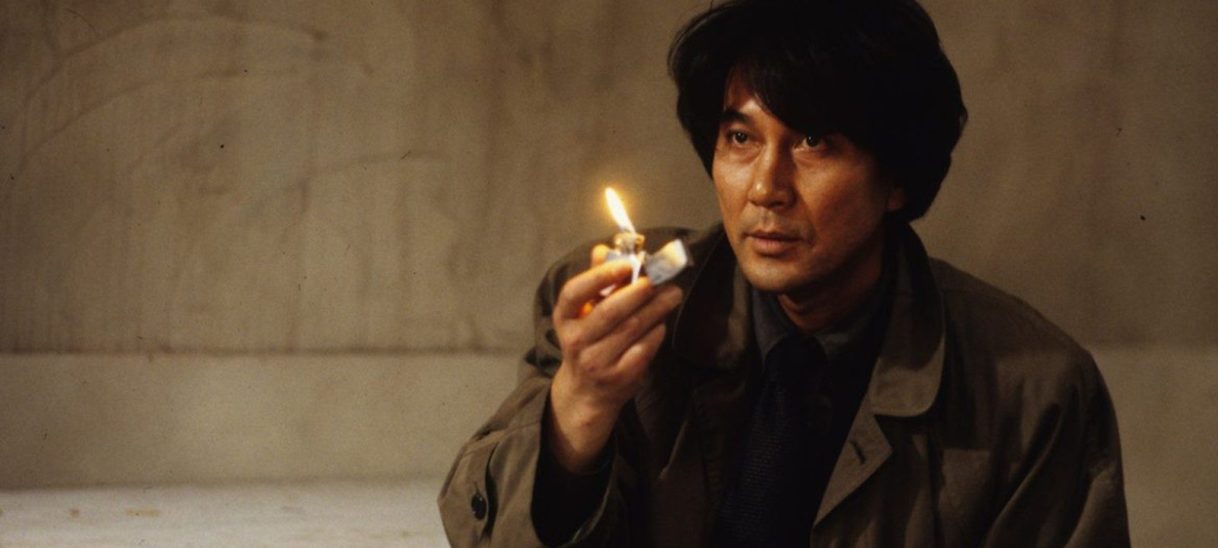
1. Cure (1997) – Kiyoshi Kurosawa
⭐⭐⭐⭐⭐
Rating: 5 out of 5.
Perhaps the film I’ve thought about the most since watching it on a gloomy night in 2020, sliding ever higher up my all-time list, making its ultimate landing spot at the top here felt inevitable but still celebratory. Kurosawa’s best film, Cure, is the perfect blend of his obsessions of ingrained human anxiety and potential for violence, with his filmmaking influences, equal parts Andrei Tarkovsky and Tobe Hooper, flourishing at every turn.
Centring on obsessive detective Takabe (a colossal performance by Kōji Yakusho), with a deteriorating home life due to his wife’s (Anna Nakagawa) failing mental health, who is tasked with solving a series of seemingly random murders connected only by the assailants having carved an ‘X’ into the neck or chest of the victim. We are shown these violent attacks in Kurosawa’s familiar smooth camera movements, creating an unnerving balance that stems from the potential violence of everyday life.
Much like David Fincher’s Se7en (1995), a film deeply tied to Cure, our burgeoning obsession with true crime storytelling is being reflected back at us, forcing us to contend with our own impulses towards viewing violence in this way. Cure excels because Kurosawa is keenly aware of these impulses and genre conventions, understanding when to subvert them or allow them to play out at his own deliberate pace.
Cure’s greatest act of subversion comes from the crafting of perhaps the best horror character of the past 30 years, the black hole known as Mamiya, the man seemingly hypnotising people into performing these murders. Portrayed with a compelling aloofness by Masato Hagiwara that disarms both the audience and other characters, while also flooding the air with a palpable sense of tension and dread. Mamiya’s hypnotism scenes are extraordinary set pieces in magnetic genre filmmaking, focusing on elemental connections like the flame of a lighter or the meditative quality of washing over you like a steadily rising tide. The film transcends past its terrific villain and set-pieces due to our near-instant tethering to Takabe’s obsession with understanding these murders, propelling us deeper and deeper into the world and ultimately, Mamiya’s spell.
Takabe’s ultimate decision to give his ailing wife over to an asylum creates an absence inside him that allows him to reach the precipice of defeating Mamiya but directly asks us the cost of this sacrifice. In a world void of something to fight for, how does one look into the abyss and see anything but themselves? In a genre of scares and nightmarish atmospheres, these lasting questions and closing moments will have you questioning how you view humanity itself.
The history of basketball and the NBA in cinema is long and interesting, going from Julius Erving (who also cameos in Hustle) in The Fish that Saved Pittsburgh (1979), Kareem Abdul-Jabbar in Flying High! (1980), and Michael Jordan in Space Jam (1996), to more legitimate performances from players like Ray Allen in Spike Lee’s iconic He Got Game (1998), and Kevin Garnett in Uncut Gems (2019). All these films use their NBA stars to bolster the credibility of the basketball film (sans Flying High!), but very rarely has a movie been made directly about the NBA. Enter basketball super fan and walking green light Adam Sandler.
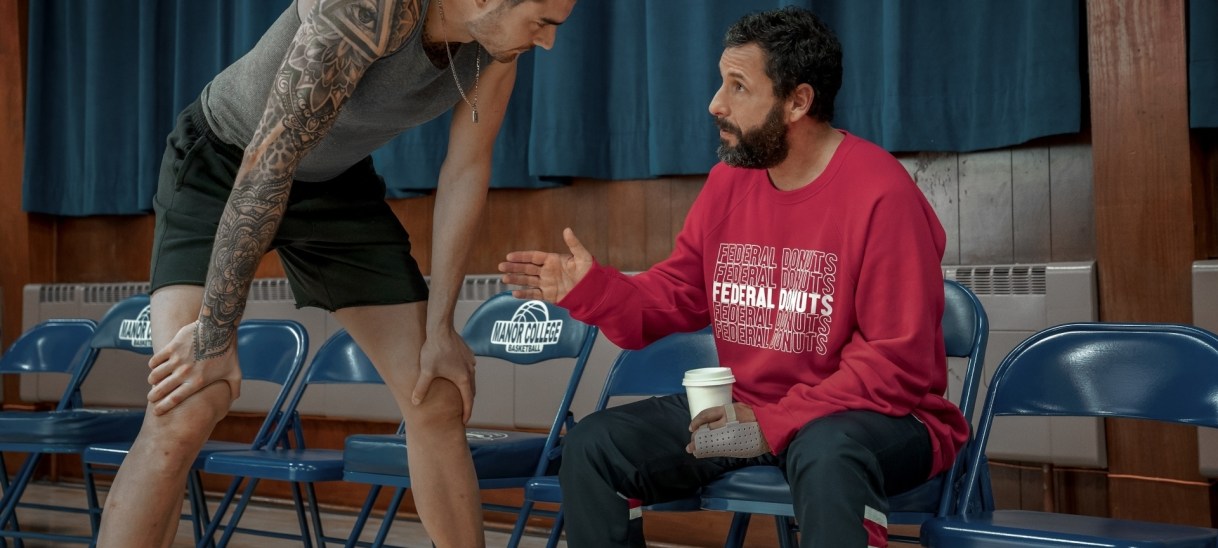
Sandler is a notorious basketball obsessive – famously setting up a net at most of his productions – with even NBA legends vouching for his skill on the court, so it’s no surprise to see him making a movie in this world. The film follows Sandler as ageing scout Stanley Sugerman for the Philadelphia 76ers, owned in this world by Robert Duvall’s Rex Merrick. After Rex’s death and ownership changes hands to his petulant son Vince (Ben Foster), Stan is forced to scout internationally to find a player, which he does in Bo Cruz, played by actual NBA player Juancho Hernangomez.
The film is ultimately a paint-by-numbers inspirational underdog sports movie, closer to Rocky (1976)than The Fish that Saved Pittsburgh, but what makes the film worthwhile is the extraordinary verisimilitude of the NBA world, as well as some truly impressive basketball set pieces that tie the film together. Zagar deploys several extended training montages—a staple in any sports film—including Cruz running up steps in Philadelphia that Sandler had to point out during the sequence. The fact that even this moment is played earnestly is an example of the tone the creators are striving towards that separates it from a suite of recent films.
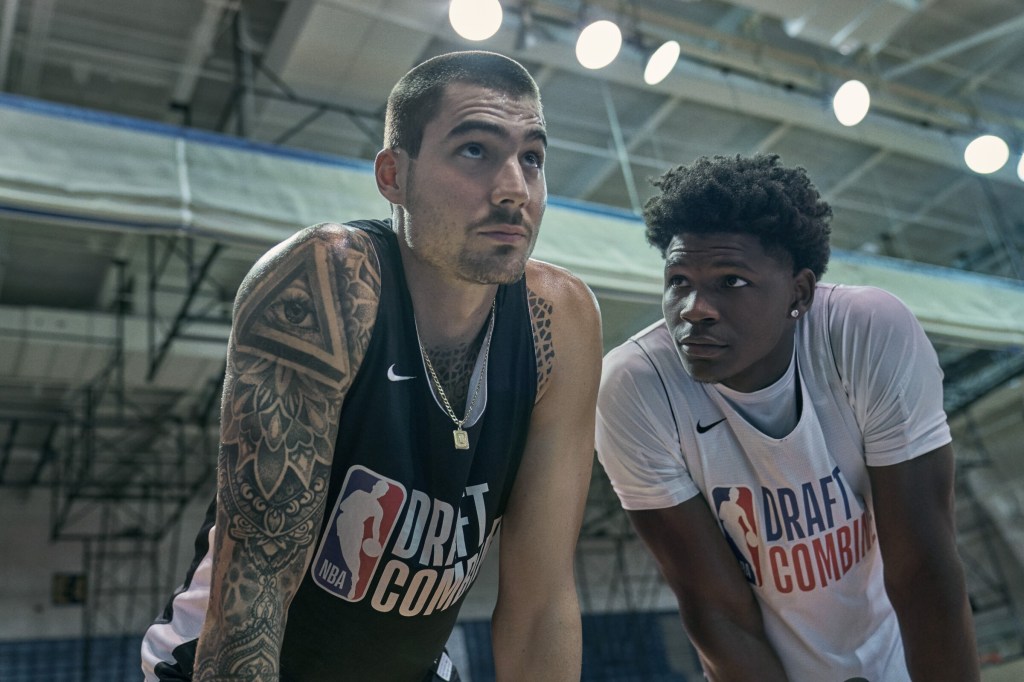
Juancho Hernangomez (left) and Anthony Edwards (right) in Hustle
Shot wonderfully on film, director Jeremiah Zagar mines intimate moments out of Hernangomez and his family that are as affecting as the high-octane basketball scenes, especially those between Kermit Wilts (played incredibly by NBA star Anthony Edwards) and Bo Cruz. Any fan of the NBA in recent years could tell you Edwards has exploded onto the scene as one of the best personalities in the sport, and Hustle uses his charm and confidence in a wonderful heel turn as Cruz’s rival leading into the draft.
Hustle is a modern sports film made with a high level of skill by Zagar, but it comes at an interesting moment in the genre. The modern sports film finds itself in a precarious position, with the dominance of sports documentary films and series crowding the market. On top of this, the only avenue for filmmakers to create a sports film or series in the 2020s seems to be the involvement of the athlete in question or as part of an athlete-led production company. Hustle is no different here with the involvement of LeBron James and Maverick Carter’s production company, Springhill Company involved, no doubt a key reason the film was able to achieve such a high level of NBA verisimilitude.
While not a terribly innovative or imaginative sports drama, Hustle continues Sandler’s recent run of more serious performances, growing into his later years as an actor that is choosing to work in more interesting and creative spaces. Die-hard NBA fans will lap this film up, while also having enough quality sports filmmaking moments to entertain the less sports averse.
It feels somewhat reductive to call Jacques Cousteau an explorer. He was a pioneer, an inventor, a filmmaker, an author, and, at the later stages of his life, a conservationist to say the bare minimum. Sporting his unmistakeable red beanie, Cousteau set out on a lifelong journey to understand the depth of the ocean, which he and his team on the Calypso saw as an endeavour on the scale of space travel. People unfamiliar with his story may recognise his iconography through the Wes Anderson film The Life Aquatic with Steve Zissou (2004), where Cousteau was the main inspiration for Bill Murray’s titular character, albeit with vastly different personalities.
Helmed by Oscar-nominated documentary filmmaker Liz Garbus and a mountain of Cousteau’s own archival footage, this documentary is an honest and, at times, quite moving film about how an individual’s singular passion can be inspiring while also blinding them to the relationships to the people and world they inhabit. The film is neither a pure work of lionisation or exposé like many recent documentaries end up being. Garbus is able to toe that incredibly difficult and constantly shifting line that has made her one of the best in the business in working with subjects of immense cultural weight like Marilyn Monroe and Nina Simone.
From the outset, the film strikes you with a certain somber energy, constructed primarily through its voiceover interview delivery as well as the Desplat-esque score from workhorse film composers Danny Bensi and Saunder Jurriaans, furthering the Wes Anderson connection. In a documentary that uses almost entirely archival footage (which is much more effective than a constant barrage of talking heads in hotels), audio is one of two crucial elements Garbus has to involve the audience (the other being the editing), and is where the films grounds itself wonderfully. This gives the film this off-beat energy that never holds your hand into feeling certain emotions while the extraordinary footage of the Calypso’s archival footage crashes over you in waves. This is best illustrated in an early sequence where we are shown actual footage of one of Cousteau’s closest friends, a fellow “musketeer of the sea” Maurice Fargues, which felt somehow both confronting and respectful to the depths they were willing to go to achieve their insatiable goal of exploration.
Jacques Cousteau in Becoming Cousteau
Becoming Cousteau is sequenced in an interesting and poignant way, tracking the transformation of Cousteau from a young passionate man driven to conquer the unknown depths of the ocean, to a seasoned traveller tasking himself with its protection. Garbus does an excellent job shaping Cousteau’s narrative in a cinematic way, from a visionary explorer ahead of his time that was all too often used for his passions by seperate interests (the revelation that the Calypso can be directly linked to the discovery of oil on the Qatari coast felt especially heartbreaking as the film went on), that had to eventually grapple with those earlier decisions.
In the era of the docuseries, it’s hard not to ponder the idea of Cousteau needing an extended runtime to dive deeper into each step of his journey. The films 90-minute runtime oftentimes felt to be moving at warp speed through many nuggets of narrative, from his Oscar and Palme d’Or winning documentary The Silent World (1956) that did The Abyss (1989) two years after James Cameron was born, to his struggles and achievements as a conservationist in his later years. While there is a certain charm to the quick burst documentary film, Becoming Cousteau definitely falters in its execution as a cradle-to-grave story, an issue with most single subject documentary and biopic features, but works well in creating an honest portrait of an inspirational figure that gave us the gift of his own journey on film.
Becoming Cousteau is coming to select national cinemas October 22nd.











 Rating Frames