The Creator is Missing Some Parts

Rating: 3 out of 5.

Due to the frenetic nature of modern streaming churn based on shareholder growth over humane work practices or audience desire, the Star Wars industrial complex has pivoted to television in recent years. These shows have the blown-out budgets for blockbuster sci-fi epics, but are piped into our TVs and laptops. Some of these shows are great (Tony Gilroy’s Andor), and some aren’t (Obi-Wan Kenobi), but as a whole, this pivot has created a dearth of real blockbuster sci-fi with a sense of originality and modernity.

Enter The Creator (2023), the latest from visual stylist Gareth Edwards of Rogue One (2016) and Godzilla (2014) fame. In an alt-history world where robotic development arrived much earlier and Asia is seemingly conquered by Japan (the film is not equipped to deal with the meaning of his choice) and renamed New Asia, the US, seemingly under martial law, has declared war on AI who have allegedly detonated a nuclear weapon on LA (another choice we are not left given time to process). Joshua (John David Washington), an ex-special forces soldier, still mourning the death of his pregnant wife Maya (Gemma Chan in the most thankless role of the year), is brought onto a mission in New Asia to extract what they believe to be a new AI weapon.

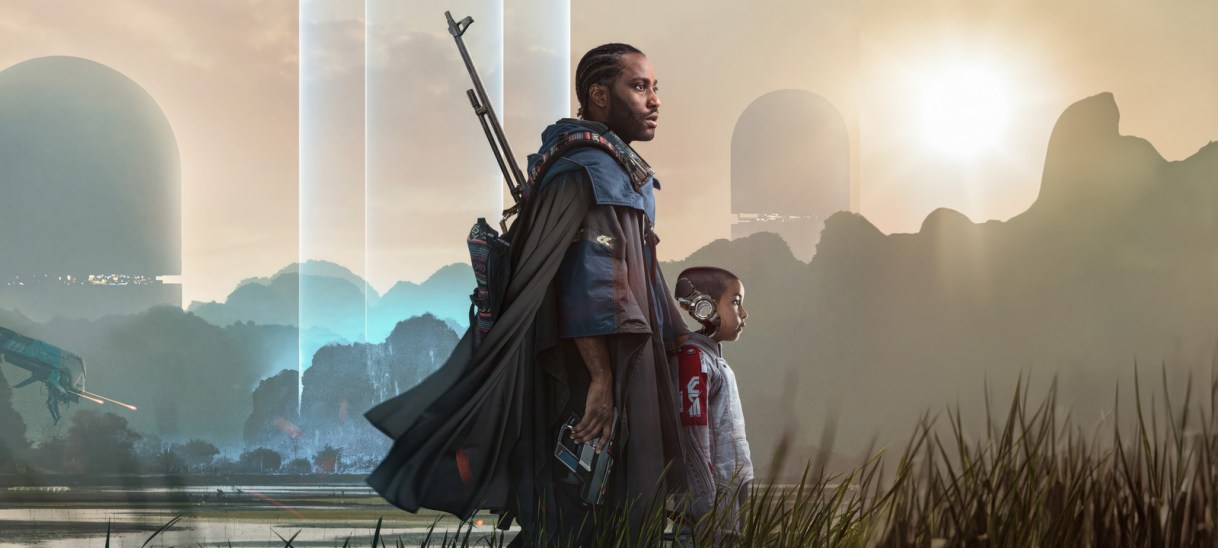
Quickly we discover the weapon is actually an adorable child whom Joshua names Alphie (the standout newcomer Madeleine Yuna Voyles), turning The Creator into a showreel of Star Wars (1977) tropes that begin with a lone wolf and cub story, and concluding with the inevitable explode-death-ship-equals-victory mission. From the outset, the film is at war with itself, with its cheesy 90s sci-fi plot machinations and tropes on AI, robots, and human connection in a sci-fi world, styled as a contemplative Denis Villeneuve sci-fi. Edwards compels you into this visually entrancing film with real locations, considered visual effects, and evocative lighting that is truly stunning.

John David Washington and Madeleine Yuna Voyles in The Creator

The extraordinary production and visual design keep you invested in a film that’s narrative constantly draws groans from the audience. With a fifth of the budget of Star Wars Episode 9: Rise of Skywalker (2019) ($80m vs $416m), it is incredible what Edwards and his all star team have created visually. To contend with the wash of franchise blockbusters, Edwards has returned to the big screen with real weight behind him, including Hans Zimmer, cinematographer Greig Fraser, and editors Hank Corwin and Joe Walker, to elevate this familiar story to greater heights than this script deserves.

With Zimmer behind the wheel of a modern sci-fi, one would expect to be awestruck at the master composer’s work, but in The Creator, the great German is on autopilot. With some truly bizarre needle drops including Radiohead’s Everything in its Right Place, the audience is constantly pulled between the furiously disjointed world that is created in the theatre. Edwards has an enormous mountain to climb with this hacky script, with each decision taking away instead of building upon the last.

The film is loaded with arresting images and beautifully unique production designs, like the Nomad ship and South East Asia setting, but it’s all in service to a script that is a collection of sloppy plot machinations and simple tropes rather than genuine insight or human emotion. There is a pregnant wife to be sacrificed as character motivation. There is a surrogate child given to a character that lost a child to learn fatherhood. There are moustache-twirling, blonde military villains that were seemingly given a tape of Stephen Lang in Avatar (2009) to emulate. None of these moments are knowingly familiar or aware that fall into place by a steady hand, instead arriving to us as a manic bingo card of staid sci-fi plots that consistently underwhelm and frustrate.

Madeleine Yuna Voyles in The Creator

Events, even the visually stunning ones, occur as cheap building blocks designed to arrive in its most obvious destination. There is no room for exploration and character moments in this beautifully realised sci-fi world, like a child given every toy in a store only to spend an afternoon throwing a rock at a wall. These critiques on story and film structure pale in comparison to the wild othering and orientalism that occurs throughout this story that can seemingly be put down to a team of white writers not considering their choices and subject matter, a trend that becomes clear the further down the rabbit hole of the film you go. It is lovely to see the real world locations of Cambodia and Vietnam used in a large-scale studio sci-fi, but at what cost?

Concluding with a mandatory ‘defeat the enemy by blowing up their Death Star’ plot removes any hope for a satisfying and unique story that earns its dazzling imagery and sound design. The Creator flashes of brilliance are crashing waves, thrashing you against the sea, but once those waves subside, you realise you can easily stand in the shallow depths of the water.

The Creator is in theatres now.

Infinite: Reincarnation has Never Looked so Boring

Rating: 1.5 out of 5.

With film studio Paramount having launched its streaming service Paramount +, it seemed fitting to watch its first drawcard feature Infinite (2021) starring the ever bankable Mark Wahlberg. This comes some months after Amazon Prime’s recent sci-fi thriller The Tomorrow War (2021), starring an equably bankable Chris Pratt in the lead role. While The Tomorrow War had a relatively tolerable premise, Infinite is an insufferable mess that proves studios are willing to throw their money at just about anything as long as Wahlberg is in it.

To say that Mark Wahlberg is the problem would be an oversight. His performance in Paul Thomas Anderson’s Boogie Nights (1997) is as iconic today as it was over 20 years ago, and he seems to have found a resonance with Michael Bay — having shone in Pain and Gain (2013) and the last of Bay’s two Transformers films. However, Infinite reduces Wahlberg’s often fast-talking and physical performance to a dreary and tedious display that can only be summed up by Wahlberg’s own confused facial expressions as events of the film unfold.

Antoine Fuqua is known for his action packed films like Training Day (2001), The Equalizer (2014) and frequent collaborations with the likes of Denzel Washington (who won an Oscar for Training Day), Jake Gyllenhaal, and now Mark Wahlberg (both of whom he has worked with twice). However, Infinite represents a departure from a simple action premise to something more akin to Doug Liman’s dreadful action sci-fi, Jumper (2008). It is adapted from D. Erik Maikranz’s 2009 novel The Reincarnationist Papers (which is, by all accounts, equally underwhelming).

Infinite is essentially about a small group of people known as the infinites who are pretty much reincarnated after they die, in the sense that they can eventually remember their past lives and skills obtained in those lives. Evan McCauley (Mark Wahlberg), who is known to the other reincarnated as Heinrich Treadway (one of his past reincarnation names), lives most of his new life never really knowing he is one of the reincarnated and is instead diagnosed as a schizophrenic. What Evan doesn’t know is that somewhere in his memories lies the location of an object known as the egg, which the infinites are trying to find before Ted (Chiwetel Ejiofor), another infinite who goes by the name of Bathurst, finds it.

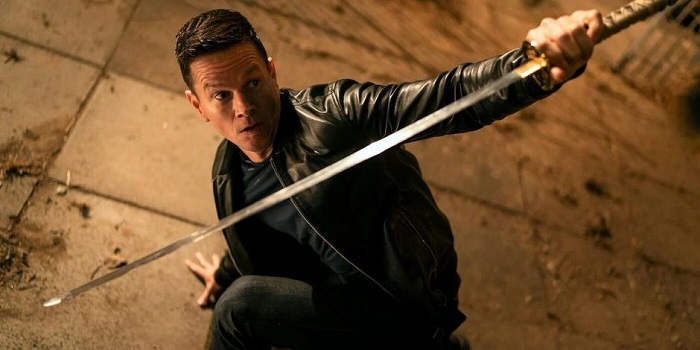
Mark Wahlberg in Infinite

Fuqua essentially orients his film around this plot device and creates a goose chase for his characters in the process. This plot device is desired by Bathurst who wants to harness it to destroy the world so that there is nothing left to reincarnate to — effectively rendering the reincarnation process as finished. The problem with the film is that it relies too much on this specific object as a catalyst for creating cause and effect, and this leaves the events of the film lacking substance.

Mark Wahlberg looks confused and bored for most of the film, with his real flair coming during the action set pieces, which themselves amount to nothing as they are too few and far. Chiwetel Ejiofor’s character is also incredibly underwritten and exists purely for the sake of being an antagonist — he delivers some lines about his purpose, kills off some equally underwritten characters, and is waterboarded with gasoline for some reason. In essence, both the protagonist and antagonist are uninspired, especially when compared to The Tomorrow War’s protagonist and alien entity which are miles better for an action sci-fi.

Perhaps Antoine Fuqua should have found a way to incorporate another 40minutes for greater clarity (seeing as Paramount already seemed set on going all in on this) or perhaps he should have focused on releasing one feature this year instead of two, seeing as The Guilty (2021) arrives later this year. Regardless, Infinite is a forgettable viewing experience and is a reminder that Michael Bay is still the only director to get the best out of Wahlberg in the last 20 years. Lets hope Paramount can bring its lacking streaming service some content worth audiences time and money.

Infinite is now streaming on Paramount +