One Battle After Another: Paul Thomas Anderson’s Latest is the Year’s Best, an Instant Classic

Rating: 5 out of 5.

One Battle After Another preview screening provided by Universal Pictures

Even as I found myself slouched into the cinema seat, still having not adjusted to the timezone after a recent overseas vacation, Paul Thomas Anderson’s One Battle After Another (2025) woke me up, slapped me around and reminded me why I spent a year researching his work. There are few working directors who have stayed as true to form as PTA has, and even fewer who have dared to push quirky, unpredictable narratives and irreverent characters at such a scale out to audiences; One Battle After Another might just be the quirkiest, most unpredictable film he’s ever made, and easily one of the rare few that a studio has decided to back, with such a big budget.

While One Battle After Another, at least on paper, has all of the elements of a PTA film —themes of surrogacy, a focus on damaged male characters and dialogue that has you think twice and then twice more— it also feels like his most relevant film to date and not because of smart phones or modern mustangs, but because it isn’t a period piece, it isn’t looking back in ways that There Will be Blood (2007) or Inherent Vice (2014) were. This film plays like it’s very much a forward-looking, foreshadowing of what’s to come if we let forces greater than us hunt us down in the little spaces we’ve carved out for ourselves in a world that feels like it’s already getting smaller around us.

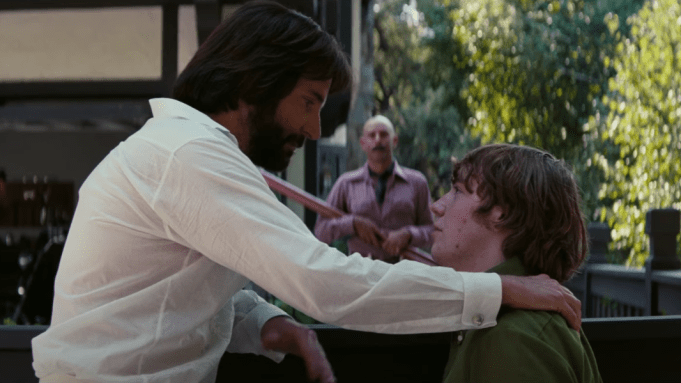
And it’s immediately apparent from the opening sequence that this isn’t going to be your stock standard PTA flick, with a harsher, almost street-like quality to the cinematography. We open with Perfidia (Teyana Taylor), a revolutionary who is scouting an immigration camp before we’re introduced to Bob Ferguson (Leonardo DiCaprio), and other grungy looking revolutionaries who are looking to cause calculated havoc in similar encampments and eventually, across banks and other establishments as well. The political undertones of the film are clear, but the whirlwind that’s to follow is unimaginable.

It doesn’t take long for things to shift to fifth gear as narcissistic leader of said camp/s, Steven J. Lockjaw (a career best Sean Penn and shoo-in for supporting actor), someone who detests African Americans but in being humiliated by Perfidia, falls head over heels for her (hey, everyone’s got a kink), is on a mission to hunt down every revolutionary involved in these acts of defiance. While he does hunt/kill most of them, Bob and his daughter Willa (played in youth age later by Chase Infiniti) are extracted to a safe haven while Perfidia, finding herself in witness protection, escapes to Mexico.

LEONARDO DI CAPRIO as Bob Ferguson in “One Battle After Another.” A Warner Bros. Pictures Release.

A time jump to 16 years later caps off a first act that is as balls-to-the-wall as any PTA has attempted (with 1997’s Boogie Nights coming in at a distant second). It’s telling that like Bob, who goes into hiding with his daughter while others hunt him down in this almost cat and mouse plot at the centre of this film, PTA has (in a way) almost been doing the same, or at the very least, trying to find a version of himself who’d warm up to the idea of being more in touch with the immediate world as it unfolds. While PTA can never be accused of playing things safe —in fact, his framing of thematic interests has only shifted as he’s aged and as he’s had his own children— he’s at his most abrasive, rampant self here.

For starters, PTA doesn’t attempt to play to the good vs evil, right vs wrong binary tendencies that so many weaker political thrillers tend to. Instead, he uses this strange love triangle (if it can be called that), between Bobb, Lockjaw and Perfidia, and a focus on character, to let any surrounding commentary seep in from. Ultimately this is a film about a father/daughter dynamic that’s complicated by an equally complicated lunatic whose motive (without spoiling) in hunting them is far more nuanced than simply getting rid of them.

What ensues is an electrifying, chaotically focused, yet hearty film that never slows down but keeps you on your toes until its classic finale that’s already entered legendary status. To get to that point, Johnny Greenwood’s edgy, almost chimey score keeps the tension flowing and builds on the unnerving aura of not knowing what’s around the corner. This is coupled with the equally unnerving performances of Penn, DiCaprio and Infiniti, with the former having a duality and complex that feels insane to have been pulled off, while Leo has a hipster edginess that’s underpinned by a desire to be didactic yet his paranoia is leaving him out of sorts (this pairing between PTA and Leo is a match made in heaven).

Like the characters in this film, PTA is a revolutionary but of a different cause: the preservation of cinema. In shooting One Battle After Another, he decided to bring back VistaVision (a dying breed of film format). It speaks to his desire to find meaning and breathe life into things often deemed unworthy or better left to fade with time, and this desire is almost felt on the screen with a character like Bob who’s brought back from the brink, from a place where he’s almost lost sight of himself and who he was, and risks fading away into someone that once meant something to so many people but doesn’t anymore. In this way, One Battle After Another inextricably ties PTA so closely to its characters and their plights (both of which always take precedence in his films ahead of commentary) which makes its daring finale and all that Bob finds he really stands for and that his daughter hopes to stand for in her own place in the world, feel so deeply personal.

One Battle After Another opens nationally from September 25

Paul Thomas Anderson Returns to Roots in the Delightful Licorice Pizza

Rating: 4.5 out of 5.

Set against the backdrop of the 70s San Fernando Valley, Paul Thomas Anderson’s Licorice Pizza (2021) paints a perplexing and wholesome picture of what it’s like to grow up as a youth in a rowdy 70s setting and go on to discover new emotions and experience new highs and lows like everyone else at the time, but unlike everyone else at the time.

Perhaps that’s because this is a film made up of ‘firsts’: PTA takes a swing at the coming-of-age genre for the first time; Cooper Hoffman and Alana Haim take on their first acting roles; and the characters are constantly rolling with the punches while welcoming every new obstacle that comes their way as if it were a means to something greater and more real.

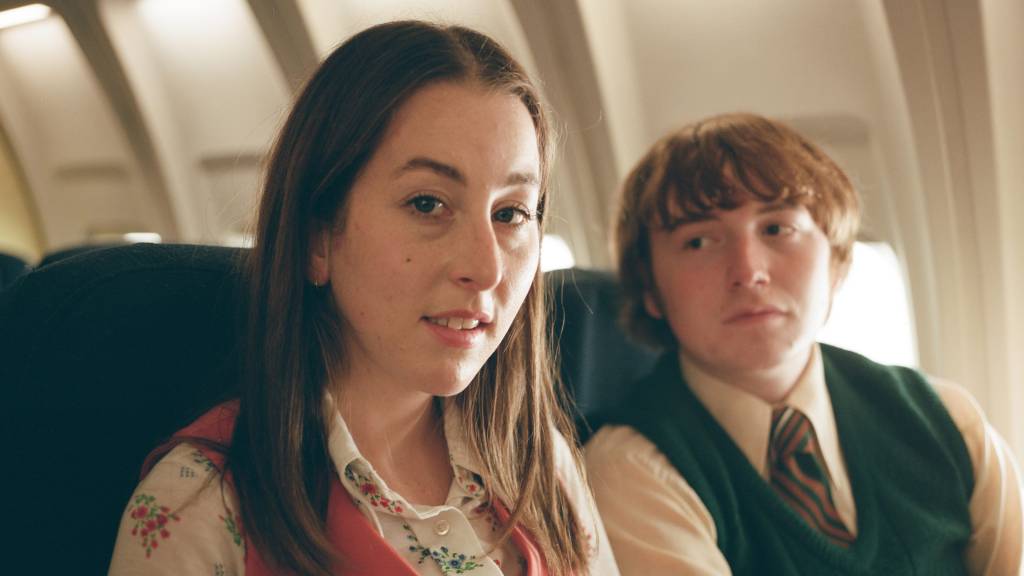
Those characters are the budding entrepreneur and smooth talking child actor Gary Valentine (Cooper Hoffman) and the pessimistic optimist coasting by with a high school photoshoot day-job, Alana Kane (Alana Haim). The two meet at Gary’s yearbook high school photoshoot in what is easily PTA’s most inviting opening sequence and one that really sets the tone for the cruisy, laidback feel and tone of the rest of the film.

The two characters share a unique bond and find themselves traversing the valley and sharing each others company as they walk the fine line of adulthood and adolescence — each learning from their counterpart and ultimately bridging the two worlds together. The relationship between Barry Egan (Adam Sandler) and Lena Leonard (Emily Watson) in Punch-Drunk Love (2002) was much the same in that regard and this film shares much with that one in terms of scope and even scale as PTA relishes the intimate moments ahead of large scale ones.

Much has been said on the age disparity between the characters, with Haim playing a 25 year old and Hoffman being 10 years her junior in the film (12 years in real life), ultimately fluffing some progressive feathers. But PTA is too smart to buy into that criticism as he acknowledges that difference throughout, but never uses it for anything other than building a story based on a shared experience between likeminded individuals who happen to have some attraction in the mix as well.

If Boogie Nights (1997) was about how the porn industry finds and offers lost souls solace and interconnectedness by bringing them into surrogate families, then Licorice Pizza is about how free souls find each other and create families born out of friendship. PTA does a stellar job in guiding his characters through this lively world courtesy of his formal cinematic tools that have become so pertinent in his oeuvre — tracking shots, long takes, a classical narrative structure — while at the same time creating a sense of forwardness and momentum that never seems to slow down.

Bradley Cooper & Cooper Hoffman in Licorice Pizza

The characters embrace the ambiguity of their future and the unknown that awaits them, but they never dwell on it. In this way, Licorice Pizza also represents a shift in PTA’s interest in human unknowability and it instead sees him place an emphasis on living in the moment. This very much plays into the spontaneity of the characters in how they make decisions and approach their lives — Gary jumps between businesses while Alana is indecisive with what she wants from life as she moves from freedom to stability and back to freedom. Subsequently, PTA lets youths be youths at a time where hippy culture and its messages of peace and love were more embraced.

There’s no denying that PTA’s films from, and since, Punch-Drunk Love place a greater emphasis on the more intimate and subdued moments between characters. Whether that be the impenetrable relationship between Lancaster Dodd and Freddy Quell in The Master (2012) or the push-pull teasing between Reynolds Woodcock and Alma in Phantom Thread (2017); each of these character dynamics allow Anderson to entertain his fascination with characters whose connection works because it’s so strange, distant, and against the grain of expectation.

That’s why Licorice Pizza is so striking. PTA’s latest return to the San Fernando Valley sees his fascination with this character dynamic reach a climax, but the end product works to different avail.

The innocence of Hoffman and Haim’s characters breathes an air of freshness into a period that was already so fresh, alive and teeming with avenues for self-discovery and growth. Their performances as Gary and Alana exude a truth and understanding of PTA’s vision and his fascination with characters that would appear to be on opposite sides of the spectrum, but need each other to coexist because the universe would have it no other way.

Further to that, Hoffman and Haim’s performances echo the awkward muteness and hesitance of Daniel Day-Lewis and Vicky Krieps in Phantom Thread whilst simultaneously capturing the charm and innocence of Adam Sandler and Emily Watson in Punch-Drunk Love. In this way, these characters are equally the same and different to all the PTA characters before them in that they’re bound to one another but also to the freedom that their youth offers — always following impulse rather than reason.

Alana tries to break that pattern of reckless decision making that her bond to Gary has brought by looking for different avenues for growth and something more stable. She finds herself in the company of esteemed actor Jack Holden (Sean Penn) and film director Rex Blau (played by a rapturous Tom Waits) before rekindling a past friendship and becoming an advisor of sorts to city council candidate Joel Wachs (a dapper looking Ben Safdie). Ultimately, she succumbs to impulse and realises that she is inextricably linked to a life with no measure of time and to people that share that outlook.

Theirs is a relationship that is neither wholly platonic nor wholly sexual and it finds its place in somewhat of a middle-ground as exacerbated by the tension between adolescence and adulthood. Earlier I mentioned that Gary and Alana are approaching everything head on as though that were a means to something more real (Alana running after the police car driving Gary away, Gary smashing the windshield of Jon Peters who Bradley Cooper steals the show as) and that’s precisely what the condition of their relationship is: as long as there is something to look forward to, as long as they aren’t encumbered in ways that PTA’s other duos are encumbered, then they can keep on reaching for the stars — wherever and whatever they may be.  

Alana Haim & Cooper Hoffman in Licorice Pizza

It has to be said that PTA is no stranger to the entertainment industry having been raised in a show business family, with his father Ernie Anderson working on the likes of the ‘Carol Burnett Show’, announcing on the ABC, and being close friends with comedian Tim Conway. Of the nine siblings and step siblings from two of his father’s marriages, PTA would be the only one to go down the road of show business.

Magnolia (1999) is the last film where Anderson explored the highs and lows that come with working in the entertainment industry (alongside that films’ more deep-rooted concerns), so it feels kind of bittersweet that he’s decided to draw back the curtain and look at the industry in a different light at a different time in his life.

It’s an intoxicating and alluring world that PTA conjures up and one where the backbone that is the script holds its own. What follows is an Andersonian ride filled with a level of zest and sincerity that hasn’t been felt since Punch-Drunk Love. You’d even be forgiven for thinking you’re watching a Richard Linklater trip instead — Dazed and Confused (1993) will cross many people’s minds.

So much of Licorice Pizza works because of the man at its helm; the film is truly as testament to just how well PTA wrangles his troops on set to create something special. It’d be hard to put it past an Oscars sweep this year with Johnny Greenwood’s pulsating score being a possible contender for Best Score (even with how little he actually did here), while PTA’s screenplay will undoubtedly be the script to beat for Best Original Screenplay.

PTA has crafted his most personal film yet, one that is born out of family and love, and one that takes all the best ingredients from his oeuvre and meshes them together. In a way, the film’s title is almost a perfect reflection of how two things that would appear polar opposites and that carry their own flavour can come together and just make sense the longer you stare at them. It has to be said then that Gary and Alana’s relationship is much the same as it also merges the sweet and savoury together — they are Licorice Pizza at its core.

Licorice Pizza is currently screening in cinemas nationwide