Best of 2025: Darcy’s Picks

With 2025 having drawn to a close, Rating Frames is looking back at the past twelve months of cinema and streaming releases that have come our way. In the second of our series of articles, Darcy is taking a look at his ten favourite films of the year that was.

The medium is the message of films in 2025. In a time where feature filmmaking has to, in some form or another, justify its existence on the screen in comparison to TV or internet slop fed through an infinite reel, the best work to come out this year weaponises the stranglehold a great long-form story can have on an audience. A mixture of old masters and bright new talents across genres and styles, the top of a terrific year in film was all improved by viewing them in a packed theatre, demonstrating that cinema is still at its best as a communal experience, from incisive documentaries and quiet family dramas to a provocative action spectacle that invites an audience to question its worldview.

10. The Perfect Neighbor
So much of good documentary work comes down to access and editing, and Geeta Gandbhir’s heartbreaking portrait of a Ajike Owens’ Florida community and the very active role racism can take in someone’s life has both in droves. Using almost exclusively bodycam footage, police station security tapes, and 911 calls, Gandbhir and editor Viridiana Lieberman weave a poignant and incisive story of the state’s Stand Your Ground laws and the reality of how they are abused. No other film this year will make your blood boil and your heart sink.

9. 28 Years Later

Returning 18 years later with a supposed three screenplays in hand, Alex Garland (a personal favourite writer) wanted to tell the story of the UK in recent years in a franchise that has defined a lot of 21st Century English cinema, with a remarkable and unexpectedly emotional film. Centring on a young family led by an impressive newcomer in Alfie Williams, the rich level of depth and commentary in 28 Years Later allows what could’ve easily been a quick money grab by Garland and Danny Boyle to become an instant Brexit classic. With its exploration of community and isolationism with the backdrop of a widespread outbreak, 28 Years Later places itself at the forefront of art in conversation with the world in the 2020s.

8. The Mastermind
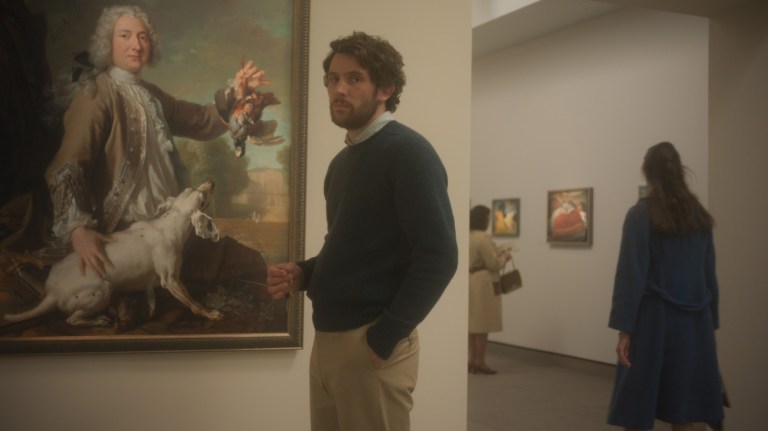
A sleepy political heist hangout with the actor of the moment, Kelly Reichardt’s 70s whisper-of-a-film will leave a long tail that may define the year in the future. Starring Josh O’Connor in his best performance to date as an uninspired suburban dad wanting to pull off an art heist, The Mastermind glides through its own world with a protagonist who believes himself smart and savvy enough to pull off the crime. Reichardt’s hidden sharp blade of focusing on someone causing chaos through their quiet ego of knowing better than those around them allows the world around O’Connor to build from gentle embers to a raging fire.

7. Sorry, Baby
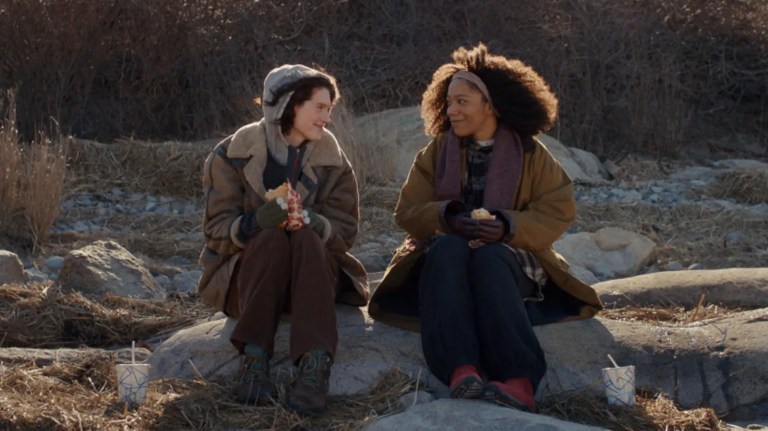
A wonderfully modern dramedy, Sorry, Baby may just usher in a new era of 2020s mumblecore with a shining new voice in Eva Victor. A story that easily could’ve landed on television and overextended, Victor, who wrote, directed, and starred in this thorny comedy of unsurety, loves cinema enough to operate and thrive within the condensed medium. As a young, depressed literary professor, Victor’s Agnes is one of the best cinematic characters of the year, a charming and thorny person you can’t help but connect with. A film that handles heavy subjects with grace and clarity, Victor has emerged as one of the brightest emerging filmmakers and performers in years.

6. Sirât
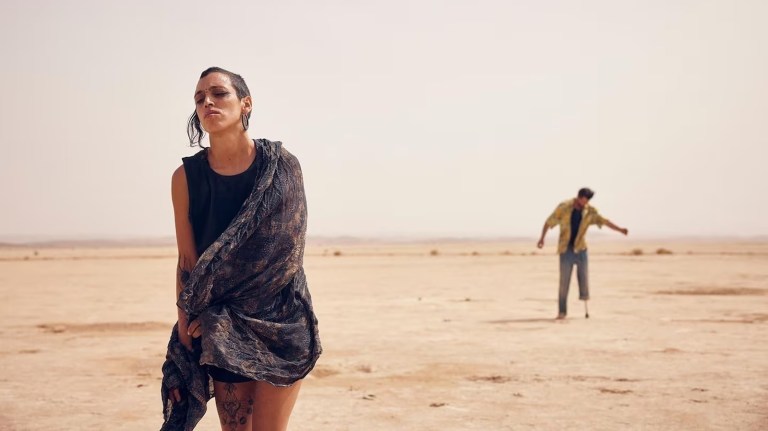
A modern experiential travel saga akin to William Friedkin’s Sorcerer (1977), Oliver Laxe’s Sirât must be seen to be believed, with several earth-shaking moments that will dig into your bones and leave scars. A shocking cinematic experience, Sirât follows a father and son as they search through an underground Moroccan desert rave scene to find their daughter and sister. The film explores community and connection, propelling you forward in line with Kangding Ray’s incredible music soundscapes.

5. Sinners
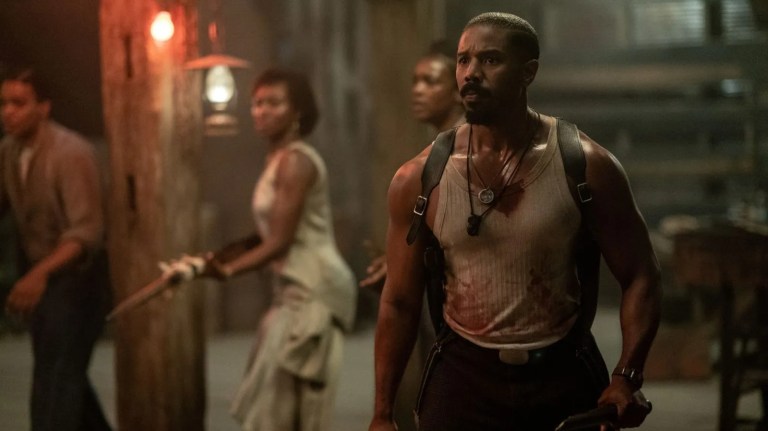
The future promise of exciting blockbuster cinema is also one of the most enjoyable and prickly films of the year. Ryan Coogler’s exploration into race, music, and history is tied to an explosive vampire action film that proves adults will still show up if given some real meat to sink their teeth into. With a terrific ensemble and a remarkable breakout by Miles Caton (so good you do not question his future self played by Buddy Guy), Coogler’s musical knows how to entertain a crowd while still provoking thoughts about how culture and music are consumed.

4. BLKNWS: Terms & Conditions
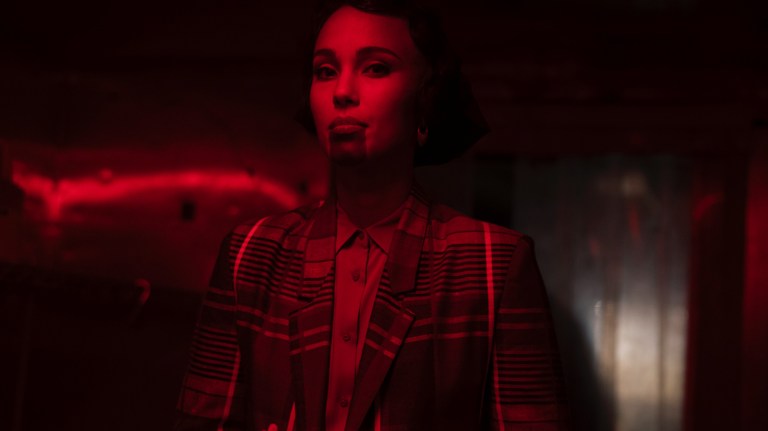
My most anticipated film experience of the year delivers and beguiles like no other. Perhaps the greatest music video director around, working with Beyonce, Kendrick Lamar, FKA Twigs, and Flying Lotus, Kahlil Joseph has a visual eye that blends hyper-modern documentary styles — which includes YouTube clips and memes — with his love and influence from the legendary Thai director Apichatpong Weerasethakul. Debuting the first iteration of BLKNWS at the Venice Biennale in 2019 as a video installation, Joseph and A24 collaborated to expand the work into a feature-length experience like no other. The film will be hard to track down, but it is as essential a watch in 2025 as any film on this list. BLKNWS: Terms & Conditions is a dense yet enjoyable work that will have you asking more from documentary and experiential cinema for the rest of the decade.

3. Sentimental Value
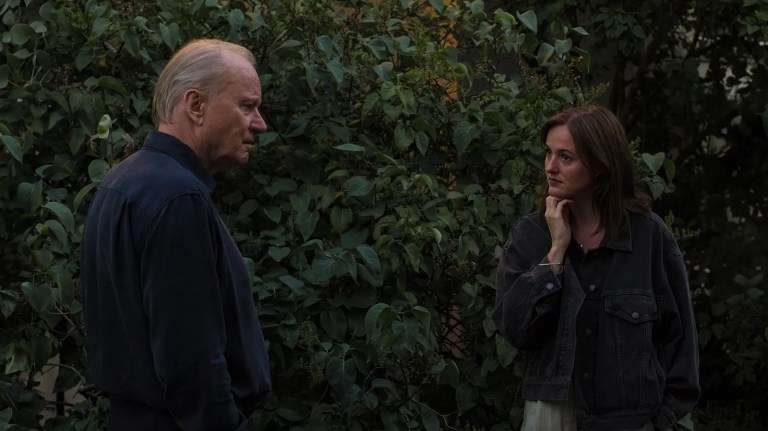
A tremendous follow up to Joachim Trier’s millennial classic The Worst Person in the World (2021), Sentimental Value pulses and ripples through generations of familial connection and disconnection with grace and power that feels open and inviting even in its thorniest moments. Trier and all his creative collaborators understand that to create is to bridge an ocean of the unsaid, even if that means building a replica of your generational family home on a soundstage, only to have it hidden on the 18th page of the Netflix arthouse section. Trier and Vogt understand deeply how, even through that artifice, true openness and connection can be translated into a final, powerful image of understanding but not resolution.

2. No Other Choice

With all respect to the perfect chase scene at the conclusion of the film at the top of my list, the master of the final act, Park Chan Wook’s No Other Choice, has the finale of the year. A glorious send-up of modern late-stage capitalism as a ‘be careful what you wish for’ fairy tale that blends melodrama into a living nightmare into the best satire in years. How Park doesn’t arrive at a place of crippling nihilism in its final moments but of cruel irony and humanity is nothing short of astounding. His revenge fables are without equal in modern storytelling, with No Other Choice entering this extended canon in surprising ways. No one is pushing the language of cinematic storytelling more than Park with his visualisations of doomscrolling as a uniquely modern debilitation.

1. One Battle After Another
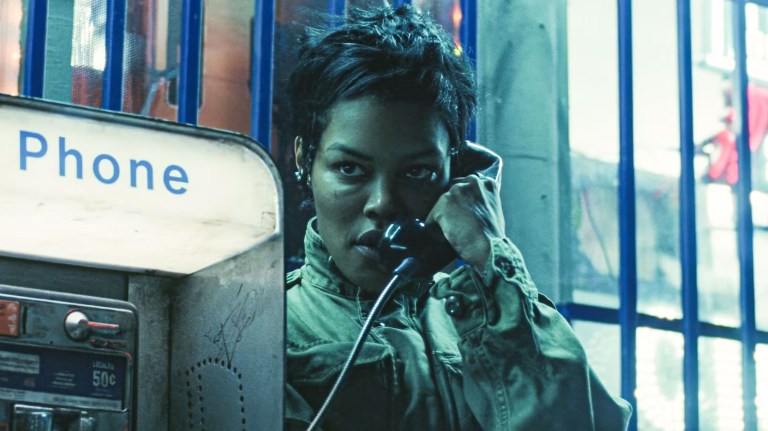
A film that leaps off the screen in an instant, One Battle After Another works the way most immediately immortal films do. And much like many of the great immortal films, I find myself reading rather than writing about Paul Thomas Anderson’s incisive work of contemporary revolutionary cinema that even when it pulls punches, compels you forward. I’m not surprised a new PTA film that finally delves into contemporary life is my favourite film to be released in its 2020s, as his deeply humanist approach to writing over the last 30 years has defined so much of my taste in art. Combine that with subject matter I find endlessly compelling as a modern look at the humanity and personhood of revolutionaries that is fuelled by the past but never backwards-looking, and you have a film that will be the yardstick all other films will be measured against.

Honourable mentions: Black Bag, Caught By The Tides, Eephus.

MIFF 2025: Darcy’s Notebook

Another year, another chaotic year of MIFF. With some dizzying heights and impressive debuts, cinema feels in good hands as we march headfirst into the tail end of the 2020s (a wild thought). The festival is the highlight of the cinematic calendar for the city, defining the landscape as it shifts towards awards season, with a tremendous work of curation and bold decisions as addressed below that make August the best month of the year.

Twinless (2025) – James Sweeney

Rating: 3.5 out of 5.

A proper dramedy with a complicated but compelling pair at its core, Twinless is a charming and confident debut not weighed down by its writer, director James Sweeney’s decision to also star in the film. Following a pair of twins who have recently lost their other half and meet at a support group, Dylan O’Brien’s Roman (and Rocky) and Sweeney’s Dennis fall into a quick friendship as they look to fill the void.

Would make an interesting double feature with Andrew DeYoung’s Friendship (2024) as a perceptive and darkly funny look at the pursuit of modern male friendship, with many screwball moments in Sweeney’s film feeling like I Think You Should Leave (2019) pitches. Sweeney excels in wrongfooting the audience into a charming dramedy that gives space to both sides of the genre mash.

The Mastermind (2025) – Kelly Reichardt

Rating: 4 out of 5.

No one is operating on Kelly Reichardt’s small but vital level. With an autumnal romp that makes way for a surprisingly poignant introspection into one’s relationship to political change, Reichardt’s period heist mood piece captures you in a breathing world, and will linger on you long after you leave like the smell of last night’s smoke break.

Josh O’Connor’s niche as a dirtbag charmer continues with his best Elliot Gould here (absolute cinematic catnip for me) as an art school washout living in suburbia with a wife (an underused Alana Haim) and two kids who have a side hustle-slash-obsession with art heists. While not on the level of O’Connor’s recent classic La Chimera (2023), this cool, warm-hued hangout film will only expand as the months go on, where I would not be surprised if it lands on end-of-year lists and amongst Reichardt’s most beloved films.

Blue Moon (2025) – Richard Linklater

Rating: 3.5 out of 5.

A frenetic script by novelist Robert Kaplow and a high-level performance from Ethan Hawke allow Richard Linklater’s Blue Moon to shine through its humble boundaries as a film that should’ve been a play. Set against the background of the opening night of Oklahoma! On Broadway in 1943, Hawke plays the famed but troubled songwriter Lorenz Hart, who is stewing at Sardi’s, the bar soon to be the venue for the show’s party.

Hawke is flanked by a terrific cast who bounce off and counter his manic energy wonderfully, including Bobby Cannavale, Margaret Qualley, Andrew Scott, and Patrick Kennedy as an array of famous names the film nods to. Thankfully, Linklater’s love and curiosity for these artists and individuals dance energetically around the screen, allowing even those with no Broadway knowledge to understand and appreciate the film.

Sirât (2025) – Oliver Laxe

Rating: 4 out of 5.

In a year of great horror and thrillers, there is no more visceral or dire theatre going experience than Óliver Laxe’s Cannes Jury Prize winning film Sirāt. Aided by the festival’s bold decision to screen this anxiety ridden, grim family nightmare at IMAX. We follow father and son Luis (Sergi López) and Esteban (Bruno Núñez Arjona) into the Moroccan desert in search of their daughter and sister Mar, leading them into an EDM festival where they are briefly liberated from the bounds of society. With its pounding techno score and 16mm film stock, Sirāt is a sensory marvel that pulls you into its world and commands you to walk desperately into the desert and into the unknown. 

With a political undercurrent and bare-boned family drama, Sirāt uses the visual language of the immortal William Friedkin fever dream Sorcerer (1977) to illustrate an Odyssey-like adventure in a world quickly becoming unrecognisable. This is a film that will take days to process, asking unique questions of yourself and to what extent you’ll chase exhilaration in your own life and in an experience on screen.

Exit 8 (2025) – Genki Kawamura

Rating: 3.5 out of 5.

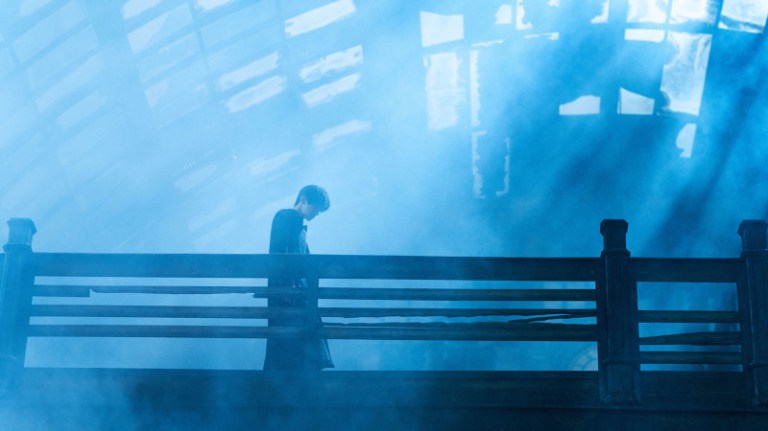
No experience illustrates the power the festival has over the city than the sold-out IMAX screening of Genki Kawamura’s Exit 8, a chaotic and mesmerising Escher painting of a horror film about being trapped in a loop in Shinjuku station. With a dozen references to The Shining (1980), Kawamura focuses on mood and engagement with a game audience to draw us along its short and concise runtime. We are given just enough narrative to fill a feature, trapped in a propulsive active viewing experience, a wonderful feeling in a sold-out crowd. In a great year for horror, this is not one to miss when it enters theatres.

Resurrection (2025) – Bi Gan

Rating: 3.5 out of 5.

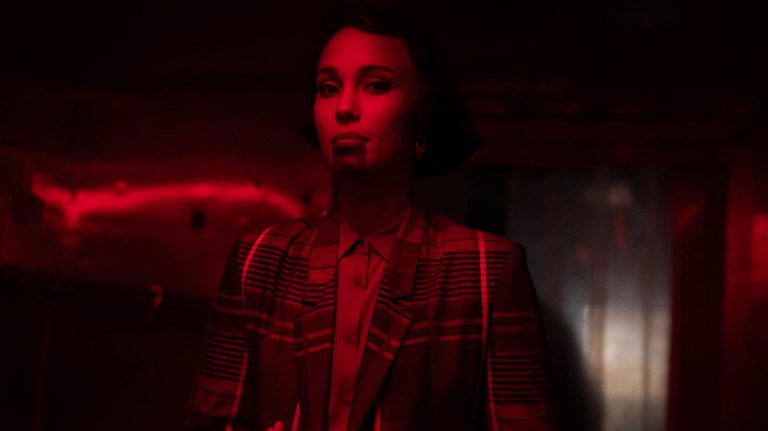
What to say about the film that has everything. Bursting at the seams with plots in miniature and arthouse bravura, Bi Gan’s follow-up to the extraordinary Long Days Journey into Night (2018) is the cinematic odyssey Resurrection. An undefinable tapestry that wears many genre hats as a sci monster powered like a projected as the line dreamer in a world that has learnt the secret to eternal life, so long as they don’t dream. Or something like that. While Gan’s previous film is expansive but intimate in its storytelling scope, Resurrection operates as basically six short genre pieces that have the density and plot to inhabit for its entire 160-minute run-time. That is a testament to Gan’s visual style and conceptual scope, even if he can get caught up in its own luxuriating to succeed as a narrative.

An interesting film to compare this expansive odyssey with is Bertrand Bonello’s The Beast (2023). Both grand-scale odysseys following a pair of characters that can’t help but pursue one another, across time or across cinematic dreams. The key distinction is that Resurrection is a work of sentiment told across cinematic history, akin to Babylon (2022), whereas Bonello’s film operates as an incisive look at relationships through the lens of their pair.

With wonderful performances by Jackson Yee and Shu Qi, played across many genres including silent film, noir, and a gangster vampire romance shot as a 30 minute oner on New Years’ Eve 1999, Resurrection can and will show you its whole heart if you’ll let it, overwhelming you with ideas and concepts rooted in the undeniable truth that the cinematic dream is irreplaceable.

Dreams (Sex Love) (2025) – Dag Johan Haugerud

Rating: 3 out of 5.

A delicate exploration of teenage love and obsession that treats it with sensuality and respect, while allowing space for realism and reflection. The third part of Norwegian Dag Johan Haugerud’s collection of films on love and desire made in quick succession, Dreams (Sex Love) centres on a teenage art student Johanne (Ella Øverbye) who pines for her new teacher Johanna (Selome Emnetu), eventually pouring her feelings and desires into a book she gives to her poet grandmother.

The film shifts in unexpected ways while still following Johanne’s emotional journey that resonates with the fresh wisdom of a good teen romance novel. The prolific nature of Haugerud’s work does not diminish the literary quality of his films, which leave room for many poignant interpersonal conversations that span generations. I was only able to catch this single entry in the collection, but I will endeavour to complete the trilogy by year’s end.

BLKNWS: Terms & Conditions (2024) – Kahlil Joseph

Rating: 4.5 out of 5.

Kahlil Joseph did not set out to make a documentary. Expanding on his two screen art installations of the same name, Joseph explodes his vision of an intertwining Black past and future through an extravagant reimagining of history and form with a frenetic energy that bounces from lush Afrofuturist narratives with some of the best production design of the year to reaction memes.

With cinematography from the great Bradford Young and a pulsating score by experimental artist Klein, BLKNWS: Terms & Conditions sees beauty in the interplay between sweeping science fiction storytelling with dense, academic dialogue and modern internet culture, something rarely seen projected on a large screen. While not an easy film to grasp or comprehend in real-time, Joseph and his writing collective have crafted a dizzying piece of art that will hopefully inspire new nonfiction visual artists to explore their craft in inventive and genre-breaking ways. The film of the festival for me.

Cloud (2024) – Kiyoshi Kurosawa

Rating: 3.5 out of 5.

A cynical master storyteller returning to the twisty world of revenge cinema through the lens of a modern huckster dirtbag trying to turn a quick buck as an online reseller, Kiyoshi Kurosawa’s Cloud forces us to confront our relationship to ground-level late-stage capitalism in unexpected and darkly comedic ways. Unaware of the mild carnage he leaves behind him as he attempts to secure a comfortable life on his own terms, Masaki Soda’s Ryôsuke Yoshii is just smart enough to spot an opportunity to coldly swindle desperate people out of their undervalued goods, but not smart enough to avoid danger and risk. 

There’s no greater feeling in the theatre than when Kurosawa is moving through his spider web plots with the tension of a vintage paranoia thriller. When a true master of form and craft is still interested in the modern world and can critique and perceive it in compelling ways, we can’t afford to ignore it. Especially when they’re this enjoyable in a crowd.

Brand New Landscape (2025) – Yuiga Danzuka

Rating: 3 out of 5.

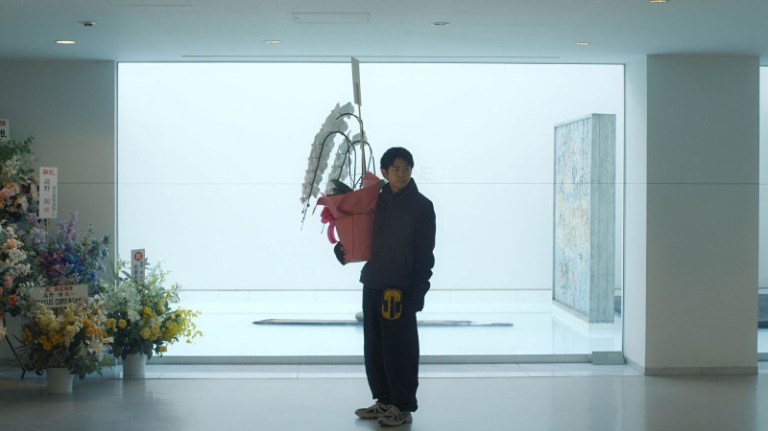
Danzuka’s debut feature made waves as the youngest Japanese director ever to be featured in the Directors’ Fortnight at Cannes, beginning with an extended Ozu-like exploration of a family in quiet crisis. Brand New Landscape wears its compelling, if slightly clouded themes proudly of a shifting Tokyo, and more specifically Shibuya, as a space aimed to accommodate a younger generation, even if it harms its current occupants.

The film displays the ripple effects from an unimaginable event that fractures a familiar family structure alongside the construction and evolution of several key spaces in the famous Tokyo area. Brand New Landscape never reaches a triumphant peak of dramatic storytelling, but it does leave you with both a unique perspective of Tokyo and of your own experiences in your own city and neighbourhood. A rather remarkable feat for a young filmmaker to garner.

Sorry, Baby (2025) – Eva Victor

Rating: 4 out of 5.

The most assured and confident debut of the year, Eva Victor writes, directs, and stars in a playful yet poignant dramedy on the lasting impacts of trauma that finds new ground in the familiar lane of modern storytelling. As a liberal arts grad still living near campus and on the verge of starting a full-time teaching position while still processing and working through deep trauma, Agnes (Victor) feels stuck while her closest friend Lydie (Naomie Ackie) returns to tell her she’s pregnant.

A film about the adult anxiety of never being sure of the right thing to do or feel in any situation, Victor is perceptive with a sharp eye for when to be kind and when to be cutting. Sorry, Baby has such a strong command of a difficult tone throughout that the audience quickly settles into the hands of a commanding filmmaker, a rare feat in a first feature. There may be no better scene in indie cinema this year than the jury duty scene in this film with its ability to float between wry humour, female camaraderie in unlikely situations, and quiet character storytelling that announced Victor as am impressive filmmaker and performer.

The End (2024) – Joshua Oppenheimer

Rating: 3.5 out of 5.

A film about a family resolute in their self delusion, unflinching in their avoidance of personal reckoning after a climate apocalypse they helped create, played out as a musical, the genre defined by its characters constantly reckoning with their own feelings and decisions through song.

A remarkable ensemble that elevates the film above an impressive academic genre experiment, particularly George Mackay, who, after starring in Bonello’s The Beast (wow, two nods in one festival for this film), has more than proven his bona fides as a young star able to breathe life into some art cinema trappings. Oppenheimer clearly has a lot on his mind with the ability of the most powerful people in the world to craft self-delusions to survive within and what happens when others encounter and potentially destabilise those delusions, a throughline that ties his totemic documentary films to The End. The decision to mine new thematic ground in a wildly different way may go down as a defining cinematic decision of the decade, and while this film does not reach some of the transcendent moments of The Act of Killing (2012) or The Look of Silence (2014), The End is certainly worth your time and hopefully not a final foray into narrative film.

.