Presence Sees the World Through a Ghost’s Eyes

Rating: 3.5 out of 5.

Presence preview provided by Rialto Distribution.

From the outset of Steven Soderbergh’s newest cinematic experiment, Presence (2024), it is clear this gambit will pay off. As we, through the anxious eyes of a new ghost, experience a new world, through a nimble first-person lens that never relents. This new world in question is the arrival of a young family of four in a large suburban house after the traumatic deaths of teenager Chloe’s (a wonderful Callina Liang) two friends in the city, leaving them in need of a fresh start.

Beginning with one of 2022’s best films Kimi, veteran filmmakers Steven Soderbergh and David Koepp have united to create a series of impressively contemporary small-scale American films (with another set for 2025 with Black Bag), that feels wholly unique on the movie calendar. With Presence, the pair shift from tech thriller to modern ghost tale with an equally impressive lens pointed directly at the connection in contemporary life.

Through a floating visual language, we explore this young family in moments of both intimate quiet and explosive argument. The parents, high-powered exec Rebecca (Lucy Liu) and the more emotive Chris (Chris Sullivan), have clear strong ties to individual children, creating a constant tension between the four characters. Rebecca sees herself and the potential for great success in their arrogant older son Tyler (Eddy Maday), whereas Chris’ more emotional side draws him to his daughter Chloe, an isolated teen dealing with tremendous grief at a young age that pierces through the screen.
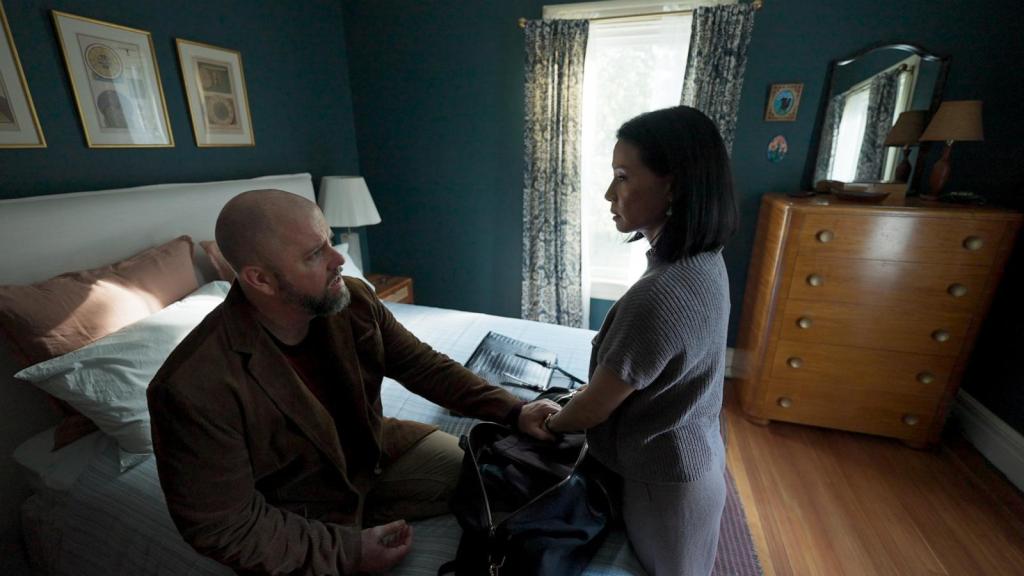
Chris Sullivan and Lucy Liu in Presence.

Themes of accidental overdoses and youth deaths are complicated but important issues to place in a film, particularly at its emotional core. While Presence floats freely between potential genre trappings, it is grounded by this potent story element that is sure to resonate with many.

To achieve the sensation of a first-person camera narrative that has real expression through the lens, Soderbergh — acting as his own cinematographer as he often does — filmed Presence chronologically, with the camera beginning in a more trepidatious, larval state before coming into its own by the film’s midpoint. The camera does not glide effortlessly through the house to open the movie. Instead, we feel every step as we move around the space, like a young foal taking its awkward first steps into the world. The camera has physical tics and safe spaces inside the home that, through repetition, just like an acting performance, breathes life into the lens. This deft and crucial weight of intent allows the film to quickly transcend from a small-scale cinema experiment into a riveting family drama where the absence is just as visceral.

It’s remarkable how quickly you can slide into the position as a fly-on-the-wall observer by wielding the camera this way, and how the emotion of a scene can play out with sharp efficiency (a Soderbergh hallmark) when the personification of the camera holds so much weight. 

The film operates as an interesting refraction to David Lowery’s poetic A Ghost Story (2017), which focuses on a ghostly presence with a level of banal reality that transforms slowly into a beautiful understanding of a greater spiritual moment. Much like that film, the innovative style of filmmaking on hand here works effectively because of the decision to place a young ghost at the heart of both stories. 

While the structure of the film allows a flow state of dramatic experiences for the family, the final 10 minutes of Presence are as distressed as you’ll feel at the movies this year with its clear eyed understanding of modern life and pressures. This shouldn’t be a surprise as it’s a ghost film, but over the course of this innovative family drama on loss and connection, this shift has an overwhelming weight of emotion that is wonderfully unexpected. Through Koepp and Soderbergh, we have a new creative powerhouse partnership that is breathing new life into modern American storytelling.

Presence is in theatres now. 
Kimi is a True Covid-era Thriller

Rating: 4 out of 5.

We are fast approaching the second anniversary of the launching point of the Covid pandemic – it is still marked for me by the weekend of NBA calculations due from the Rudy Gobert positive case on March 11th – and for the most part, we have avoided including any reference to it in our films. There has clearly been zero appetite to see our bleak reality projected onto screens. There have been a couple bright spots; the terrific Zoom horror film Host (2020) captured the screen-dominated world we found ourselves in with lockdown, while still managing to craft an enjoyable film about a Zoom seance. The other that comes to mind is last year’s wonderful Romanian comedy Bad Luck Banging or Loony Porn (2021), which shows the iconography that we have come to know from the pandemic with face masks and social distancing.

It may be years until the quintessential Covid-era movie is released, but for now, the top of the contenders should be Steven Soderbergh’s wonderful paranoia thriller Kimi (2022). No other film of the past two years has captured the paranoia and anxiety of the pandemic in such stark terms while remaining light on its feet and enjoyable throughout.

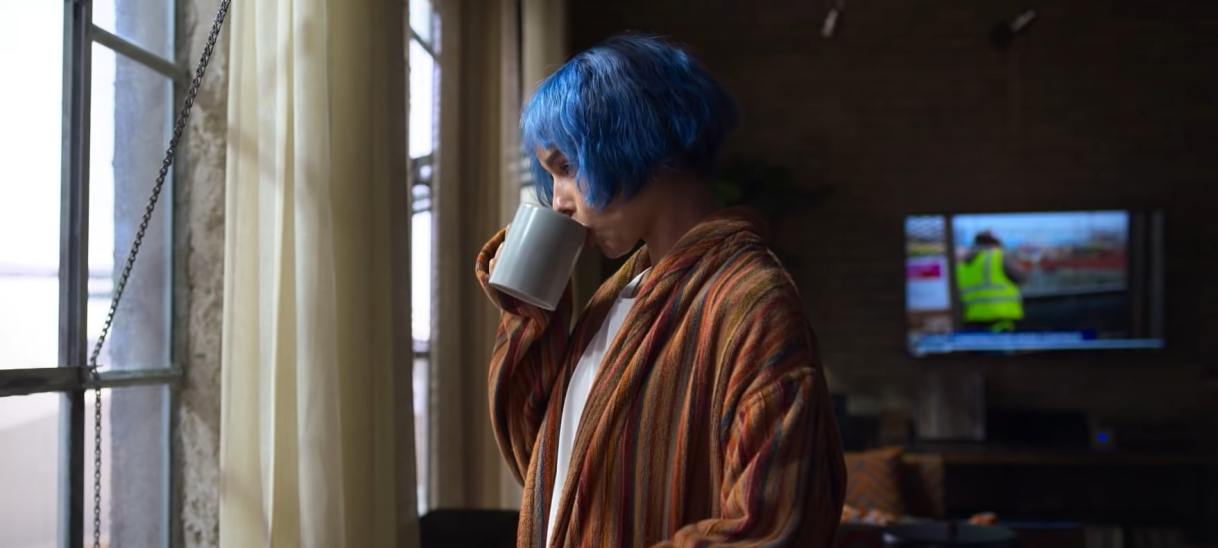
The film centres on the agoraphobic Angela Childs (Zoë Kravitz), a sound tech worker for the company Amygdala and their Siri-esque home device KIMI. What sets KIMI apart from its real-world counterparts is that any error in communication from the device is given to remote workers like Angela to fix. Set almost completely within Angela’s Seattle loft apartment, the tension of this paranoia thriller is heightened once she hears what appears to be a violent crime on one of the files and is compelled to investigate.

Angela’s agoraphobia has forced her paranoia to be tangible for years, something a few years ago would’ve felt like a stretch for audiences, but not now. The film’s Jenga stack of Covid paranoia, tech surveillance paranoia, and the recent true crime content boom is perfectly positioned for 2022, creating a series of escalating tensions that keep you on the edge of your seat throughout its brisk 89-minute runtime.

It shouldn’t be any real surprise that Soderbergh crafted a Covid-era thriller that speaks to our moment brilliantly. Early in 2020, the Academy-award winning filmmaker received a lot of attention for his prescient pandemic film Contagion (2011), an extraordinary film that rocketed to the top of VOD charts during the pandemic. Due to this, he has often been asked for his opinions on the pandemic while in interviews for his recent features (which I highly recommend seeking out), he is one of the great talkers of Hollywood. Since March 2020, Soderbergh has crafted three enjoyable features for HBO Max with Let Them All Talk (2020), No Sudden Move (2021), and Kimi at a feverish pace that can be felt throughout each film.

Zoë Kravitz as Angela Childs in Kimi

After the unjust cancellation of the excellent High Fidelity (2021), a show that confirmed Kravitz’s bonafides as a magnetic screen presence ready to become a star, I was eagerly anticipating her next project. The pairing of Soderbergh and Kravitz is perfect, as they match each other’s nervy exuberance that creates friction at the heart of Kimi that gives the film an enjoyably frenetic energy. 

The film is also buoyed by frequent collaborator Cliff Martinez’s charming score that focuses on longer mood pieces overplaying up the paranoia thriller elements of the film. Soderbergh clearly enjoys living in the world of the genre but is always cautious to never dip too heavily into certain tropes. This allows him to stay ahead of his audience whilst never exuding smugness, something that Martinez is crucial in achieving. 

The acclaimed director has experimented with paranoid thrillers in the past with Unsane (2018), an enjoyable film shot on an iPhone which ultimately felt more like a genre exercise than a high-quality film, something he has achieved here.

Soderbergh, taking up his regular posts as director, cinematographer (as Peter Andrews), and editor (as Mary Ann Bernard), never ceases to amaze in his innovation at shooting single location scenes whilst maintaining a relentless efficiency in shotmaking. You can never accuse the academy award-winning filmmaker of taking the long way round a story.

Zoë Kravitz in Kimi

The screenplay by David Koepp (Jurassic Park, Mission Impossible) is weightier than the breezy paranoia thriller it’s contained within, including a truly tense scene centred on Amygdala executive Natalie Chowdhury (Rita Wilson) spouting these empty MeToo platitudes that are pressed on Angelica in an executive suite that grow more and more unnerving.

Soderbergh has always been a difficult auteur to pin down for a definitive style – other than the relentless efficiency in his shotmaking and the opinionated anti-capitalist point of view in most of his films – something that makes each of his films feel fresh and innovative. This is a filmmaker that mastered his craft so completely, he briefly retired. Now, the famed director is seemingly content making enjoyable, sub-two-hour features for HBO Max that lack any burden of pretence, and we should be grateful.

Kimi is a film with a long and very evident film history, drawing from the paranoia thrillers of the 70s as well as Hitchcock’s Rear Window (1954). Soderbergh uses this well-defined genre to speak to this moment through a modern interpretation of Blow Out (1981) and Rear Window, which is everything one can hope for out of a pandemic era film release. The legendary filmmaker continues the modernisation of De Palma’s 80s thriller here with a sound editor as its protagonist, a profession that lends itself well to the paranoia of their eras. 

While Soderbergh never lets up in his taut 90-minute thriller, he does leave audiences with many interesting ideas to sit with, including the invasive nature of modern tech, even in the world of a woman who never leaves her apartment. The combination of Kravitz and Soderbergh elevates the material to create one of the best new releases of the year.

Kimi, play Sabotage.

Kimi is currently streaming on Binge and HBO Max.