
With another wonderful festival in the books, MIFF 2023 was a surprising mix of emerging artists from home and abroad spotlighting the program that gave the year a distinct flavour. Here, our writer Darcy has dropped part one of his notebook full of notes and thoughts on the many films he was able to catch at the festival, all of which should hopefully be brought to larger audiences throughout the rest of the year.
Sleep (Jason Yu) 2022:
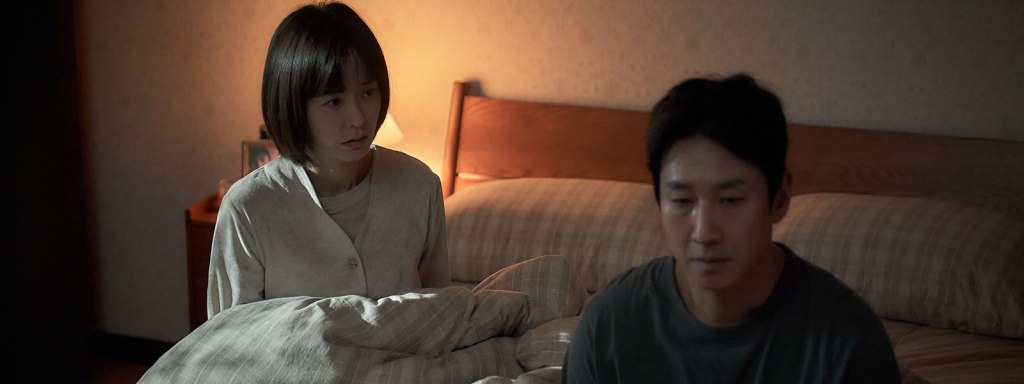
A wonderfully charming but uneven riff on Rosemary’s Baby (1968) dances between comedy and genuine tension throughout, Sleep (2023) will keep the audience teetering on the edge of uncertainty until its delicious final image.
With an entrancing combination of performances by Lee Sun-kyun and Jung Yu-mi as a young couple about to welcome their first child, the stage is set for a tension-filled domestic horror, one that filmmaker Jason Yu is adept in weaving despite it being his first feature. Sleep, however, is more brash and darkly comic in nature, with a tone that will certainly reward the film with a certain cinephilic cult status.
While structurally inventive that should always stay a few steps ahead of even the most adept horror fans, Sleep’s third-act decisions lessen the forceful impact that was delighting and engaging its audience in the delicious tension Yu builds in exciting and unexpected ways. The enjoyment of the film stems from the deft dance between genre formalism and charming diversions, so further exploring these third-act choices will lessen the adventure as a whole.
I’m being deliberately coy about these aspects of the film as Yu has earned the surprise of these revelations on future audiences. This is a proud and confident debut that is sure to elevate Yu as an emerging voice in Korean genre cinema, one that is sure to expand on and improve on his deft filmmaking skills.
The Breaking Ice (Anthony Chen) 2023:
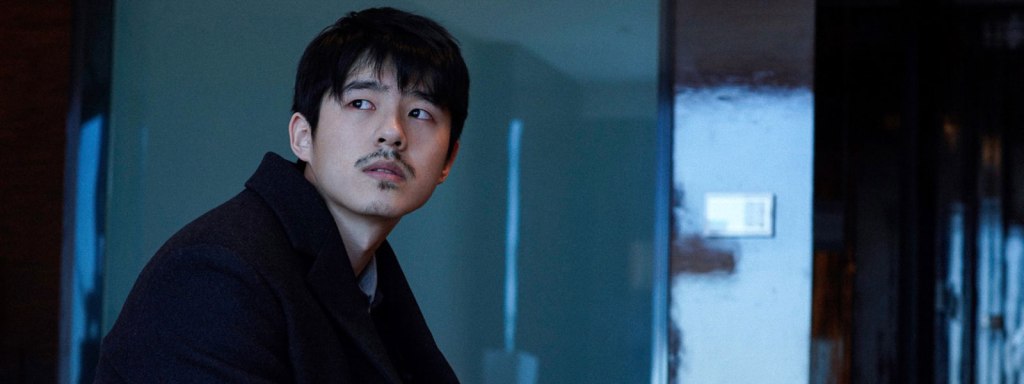
A collection of transitory young people in moments of quiet stagnation that could soon harden into a crisis, Anthony Chen’s first of two films at the festival, the familiar but evocative drama The Breaking Ice (2023), illustrates the filmmaker’s deft hand in crafting relatable and defined characters you can’t help but see yourself in.
The film is an exploration of life’s transitional nature, depicted through the constant theme of ice. Ice is a fascinating property to base a film around, something that is constantly thawing and refreezing, altering its shape when in contact with warmth, only to regain its solidity through its frigid surroundings in a new shape, forever changed by this transition.
Situated in a frozen Chinese town of Yanji on the North Korean border, a town that literally exports and profits from the ice around them, we meet Haofeng (Liu Haoran), a depressed Shanghai financier alone at a destination wedding of a distant college friend. Through happenstance, he wills himself onto —’s () tour bus, a relatively new local who is also in a moment of stagnation and personal crisis. They quickly form a trio with — (), an older local kitchen hand who feels stuck in this small town.
The film brings to mind a more modern and sombre Bande à part (1964) with its young trio traversing a town and experiencing a shifting world. A romantic film depicted with true honesty, Chen has a deep love for these three transitory characters who arrive and depart in different and life-affirming ways. This intense connection between the trio doesn’t change the matter of their being, but they were thawed out enough to emerge in a new shape. These are still the characters who question the value of their life and the purpose moving forward that we are greeted by but are more assured in their sense of self and their place in the world that is deeply moving.
La Chimera (Alice Rohrwacher) 2023:

There is no one like Alice Rohrwacher working today, with the Happy as Lazaro (2018) filmmaker consistently producing wry, comic, and deeply felt films that harken back to a stranger and often more interesting period in arthouse cinema. With her new feature, La Chimera (2023), Rohrwacher uses her breezy charm to glance into the world of Italian generational class and history through the lens of an instantly iconic band of lost boys, led by Josh O’Connor in a true star-making performance as the ivory suit wearing tortured archaeologist-slash-graverobber Arthur.
The separation between grave-robbing and archeological profiteering is placed at the centre of this brilliant surrealist tragicomedy, asking us to constantly look downwards and question the rights and possessions of the deceased, especially the impoverished deceased. There is weight to these themes and Rohrwacher’s often allows her characters to linger in their moral ambiguity, but through her virtuosic camera work and editing, La Chimera is full of vitality.
Rohrwacher’s camera is alive with cinematic ideas both profound and charming, exuding both personal character moments as well as a wider filmmaking language that can beguile a full theatre in its motions. She is able to land big ideas in her films through her focus on both cinematic and mythic storytelling styles that are rarely so well blended. Few films look and sound like La Chimera, as Rohrwacher is both patient in showing you her style, and confident enough in the story being told that the audience will be put under its spell.
Drift (Anthony Chen) 2023:

Anthony Chen’s second feature at the festival, Drift centres on a young woman Jacqueline (a captivating Cynthia Erivo) who finds herself houseless on a Greek island, both running from her past and avoiding her future. In a mostly wordless first act, Erivo moves through the town, just managing to survive as she sleeps amongst the crashing waves and rock pools on the coast.
Drift operates across three timelines, showing us her life in London with her girlfriend Helen (a surprising Honor Swinton Bryne appearance), and her trip back to her family in Liberia that precedes her arrival in Greece. Much like Jacqueline, we drift through these moments with little to latch ourselves into. Where The Breaking Ice succeeds is in informing its audience about the characters enough to engage and propel the narrative forward. Here, however, the withholding nature of the storytelling becomes the combustion engine of the film instead of the central characters. This structure works perfectly in thrillers and horror, but in a more contemplative character drama, the results are too slim to be wholly engaging.
Ama Gloria (Marie Amachoukeli-Barsacq) 2023:

Featuring one of the best child performances in years, Marie Amachoukeli-Barsacq’s Ama Gloria (2023) follows 6-year-old Cléo, (a charming and captivating Louise Mauroy-Panzani) who spends her summer with her au pair Gloria (Ilça Moreno Zego), who has returned home to Cape Verde to care for her own children after the death of her mother. This tight-focus drama of a young person sharing a final core memory with someone they love is emotionally potent in its simplicity. For two characters that have endured recent untimely loss, there is a genuine warmth in showing this elongated goodbye to a loved one that washes over you like the summer afternoon sun.
The visual highlight of the film is in the gorgeous animated painting sequences that dot the short runtime of Ama Gloria, diving into not just Cleo’s mind, but of Gloria’a, riding an ocean of tears back home. The second painted sequence transforms into a roaring volcano, enacting Cleo’s rage at the sudden departure of her surrogate mother. Both sequences are transitioned with gorgeous sonic match cuts, blending seamlessly into the ether of the 4:3 film stock showing the control and respect Amachoukeli-Barsacq has for her characters and the relationship we have invested in over the efficient runtime of just 83 minutes.
Earth Mama (Savanah Leaf) 2023:

A debut of honest warmth, Savanah Leaf’s Earth Mama (2023) is designed to stay with you the next time you pass a stranger on the street. With its captivating 16mm cinematography of Oakland by Jody Lee Lipes and provocative central performance by Tia Nomore as Gia, a pregnant single mother of two trying to get by while battling the US foster care to regain custody of her children, Earth Mama strips away feelings of judgement until only a depth of empathy is left.
Instead of constructing a film with a tight, domineeringly singular perspective of Gia, Leaf opts to move supportingly alongside her. In the opening moments of the film, a pregnant mother tells us matter-of-factly, “You can’t walk in my shoes, feel my experience, but you can walk alongside me, holding my hand.”
The heartbreak and emotionality of Earth Mama stem from Leaf’s tender honesty she exudes in telling Gia’s story. We want the best for her and her family, so when she hits her lowest point, we feel that moment, not as if it were ourselves, but as a dear friend.
The film shines in its unexpected relationships as Gia searches for solid ground inside a world that feels designed to destabilise. On first meeting with the prospective family in a diner, Gia has a beautiful moment with the family’s teenage daughter Amber (Kami Jones), who she immediately strikes a connection with. Earth Mama has quickly demonstrated Leaf’s deft hand as a writer and filmmaker who will only improve as new opportunities arise.
 Rating Frames