
With another wonderful festival in the books, MIFF 2023 was a surprising mix of emerging artists from home and abroad spotlighting the program that gave the year a distinct flavour. Here, our writer Darcy has dropped part one of his notebook full of notes and thoughts on the many films he was able to catch at the festival, all of which should hopefully be brought to larger audiences throughout the rest of the year.
Blue Jean (Georgia Oakley) 2022:

It would be a diminishment to label Blue Jean (2022) a period film as the theatrical experience felt closer to a retrospective of a lost 80s gem than an indie debut from 2023. The debut feature from Georgia Oakley set the stage for a wonderful festival of emerging artists, centring on a young queer gym teacher Jeanie (a transfixing Rosy McEwan), trying to balance her life amongst the authoritarian and anti-LGBT+ Thatcher government in late 1980s Newcastle. The film is intricate in its layering of Jeanie’s clashing worlds as she aims to compartmentalise her sexuality from her work and family, loading even the simplest gestures and moments with palpable anxiety.
Oakley positions the story in an interesting state of generational limbo, with Jeanie’s behaviour clearly ingrained by the regressive world she grew up in and remains. She must navigate being an authority figure to a group of teenage girls that feel destined to progress past her. It’s almost cliche for films centred on teachers to develop into a story of the kids being the real teachers, but Blue Jean is able to maturely navigate these waters with confidence and purpose, developed through an immense level of authenticity.
And this achievement in period authenticity by Oakley and the whole crew cannot be understated. Oakley, alongside cinematographer Victor Seguin and production designer Soraya Gilanni Viljoen, work well beyond their means to create an incredibly lived-in 80s period drama that grounds the worlds of the characters. All three will be ones to watch in the following years.
Disco Boy (Giacomo Abbruzzese) 2023:

Disco Boy (2023) is a fascinating but slight debut from Giacomo Abbruzzese about a pair of interconnected but opposed soldiers, Aleksei (Franz Rogowski) and Jomo (Morr Ndiaye), which aims for Denis but lands closer to Winding Refn. A fascinating moral portrait of who fights our wars and for what purpose, Abbruzzese weaves compelling visual choices, including a heat-vision sensory explosion of violence in the Niger Delta, into this more atmospheric than deeply felt character work, bouncing between engaging and alienating in equal measure.
More a collection of fragmented visual ideas about self-identity, cultural identity through conflict, and purpose, than a developed story, Disco Boy ultimately disengages and limits one’s investment in the story of Alex and Jomo, especially as it enters its final act.
These are weighty themes for a debut feature, one that often falls into flat abstraction instead of provocative imagery that in more seasoned hands, would envelop an audience more fully.
Showing Up (Kelly Reichardt) 2022:

Even a minor feeling Reichardt is still an event, packed with nuggets of wisdom and exploration into the delicate, tiny worlds of its characters. With her muse Michelle Williams, Reichardt centres the world of a tight artist community in her standard milieu of Portland. Williams inhabits Lizzy, a ceramics artist trying to get by while she works on her new independent show. Her friend-slash-landlord Jo (the terrific Hong Chau) keeps putting off fixing her hot water on top of a myriad of other minor obstacles involving an injured pigeon, her office work at the artist’s community keeps overtaking her time, leaving little time for Lizzy’s passion for her art as her patience gets stretched to a breaking point. But there is no true outburst of crescendo to Lizzy’s frustrations, that is never how Reichardt operates.
The master of American neorealism, the lives and conflicts of Showing Up (2022) involve the anxiety of unexpected moments soaking up time. The beautiful counterpoint to these moments however, is in the simple giving of one’s time, whether through a simple walk home, alleviating a colleague’s work, or coming to a friend’s art show, is as powerful a show of love one can demonstrate in this life. In a time of feverish multitasking and anxiety-inducing attention economy, Reichardt instead centres her film around just showing up (which is why this is easily the film title of the year).
There is an intense focus on the physical work of creativity rarely shown on film, giving the sensation of a mid-afternoon stroll through a tiny gallery, seeking to understand an artist through their work. There is genuine comedy rarely felt in Reichardt’s films here that is never snarky or mocking. She has a real care and love for this world and the people within it that emanates through Showing Up, allowing its humour to bubble to the surface in surprising moments.
When she is at her best, Reichardt’s screenplays never show the seams of a Robert McKee-approved story structure, with character arcs never becoming clear until their peaks are unveiled through the clouds. This allows her work to thrive and engage an audience consistently, developing one of the most consistent filmographies in 21st-century American auteurs. We should not take these films for granted.
Shayda (Noora Niasari) 2023:
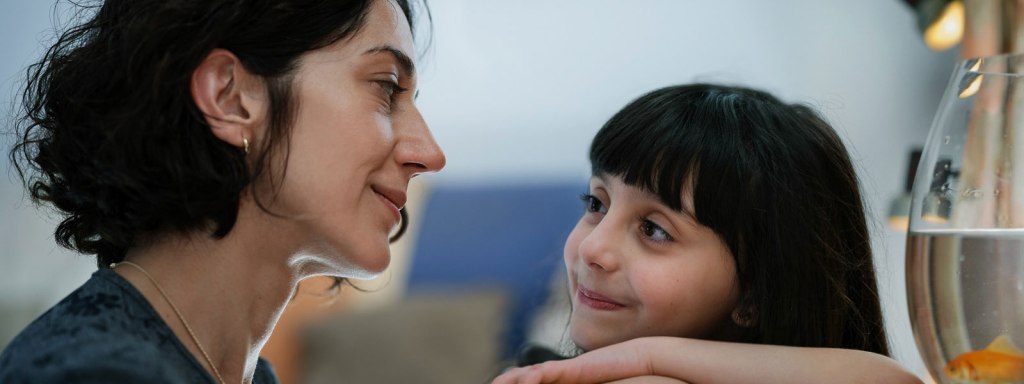
A gorgeous debut from a real bright light in Australian cinema, Noora Niasari’s deeply personal portrait of her mother, portrayed in the film by the stunning Zar Amir Ebrahimi, brings to mind many great films before it, including MIFF 2022 highlight Aftersun, but is able to confidently stand on its own.
Following a young mother, Shayda, and her six-year-old (Selina Zahednia) daughter Mona, escaping an abusive father to a women’s shelter, Niasari has a clear-eyed but empathetic view of a story so close to her that emanates through the screen. Shayda’s (2023) sense of place and community is tight and focused while still allowing a beautiful freedom for the performers.
Niasari has a graceful way of weaving inner character life into scenes that in lesser hands would be doled out as blunt exposition. By giving the audience just enough story to understand the situation, we are rewarded with an expanded glance into the world of these characters and their relationships as they navigate the difficult situation they have been placed in. This year’s festival has been a wonder of debut features and emerging voices, with Shayda a real spotlight on the new and creative minds coming out of Australian cinema. It was heartwarming to see the festival wrap their arms around her and this impressive film.
Past Lives (Celine Song) 2023:

I wrote about my favourite film of the year in my Sydney notebook here, but I just had to come back to see it with a packed MIFF crowd. It’s just as gorgeous the second time around. An absolute miracle in filmmaking, Celine Song is able to toe the line between the grandiosity of life and destiny and the minutiae of a relationship across many years with the ease of a veteran screenwriter and filmmaker.
In Celine Song’s extraordinary debut Past Lives (2023), time is the central tenet. During the post-screening Q&A, Song said she wanted the film to have the lived-in feeling that “12 years could pass in an instant, but a two-minute wait for an Uber could be an eternity.” What stood out on rewatch at the festival is the underrated challenge of editing this film, particularly in its shifting perspectives at the placement of its time shifts. We are never rushed into these leaps, nor are we led slowly into them, but Song and editor Keith Fraase (who came up working with Terrence Malick) are able to achieve a breathtaking sensation of each stage in Nora (Greta Lee) and Hae Sung’s (Teo Yoo) relationship feeling cut short.
MIFF is the perfect place to be exposed to the emerging talents of filmmakers and actors that will define the next generation, with Song joining Aftersun’s Charlotte Wells at the top of that list. This is the year’s best film to date with an instantly iconic ending that holds a packed theatre’s heart in its hands.
Anatomy of a Fall (Justine Triet) 2023:

Beginning with an abrasive soundtrack of 50 Cent’s P.I.M.P (not a joke), Justine Triet’s Palme d’Or-winning film Anatomy of a Fall (2023) is seeking to destabilise its audience. With a winding courtroom structure and almost comical documentary film style, we are shown an increasingly engaging excavation in truth and what it means to us.
The film is a fascinating investigation of marriage and family through the lens of a tense courtroom drama that lures you deeper and deeper into its world with a powerful pair of performances by Sandra Hüller and Milo Machado Graner as mother and son Sandra and Daniel. Sandra Voyter, a novelist, stands trial for the murder of her husband Samuel (Samuel Theis), who “fell” from the second floor of their reclusive vacation home in the Alps.
Over the extended 150-minute runtime, Triet explores the legal system, guilt, and a family living with trauma inside a distinct Cinéma vérité comic realism. Anatomy of a Fall is a film that teaches you how to watch it, forcing an audience to give themselves over to its style and storytelling. This may be too big an ask for some films, but through Hüller’s all-encompassing guile as the compelling figure of Sandra, alongside Graner’s stellar work as her son Daniel, the beating heart of the film, it achieves something special as the story reaches its tipping point.
 Rating Frames