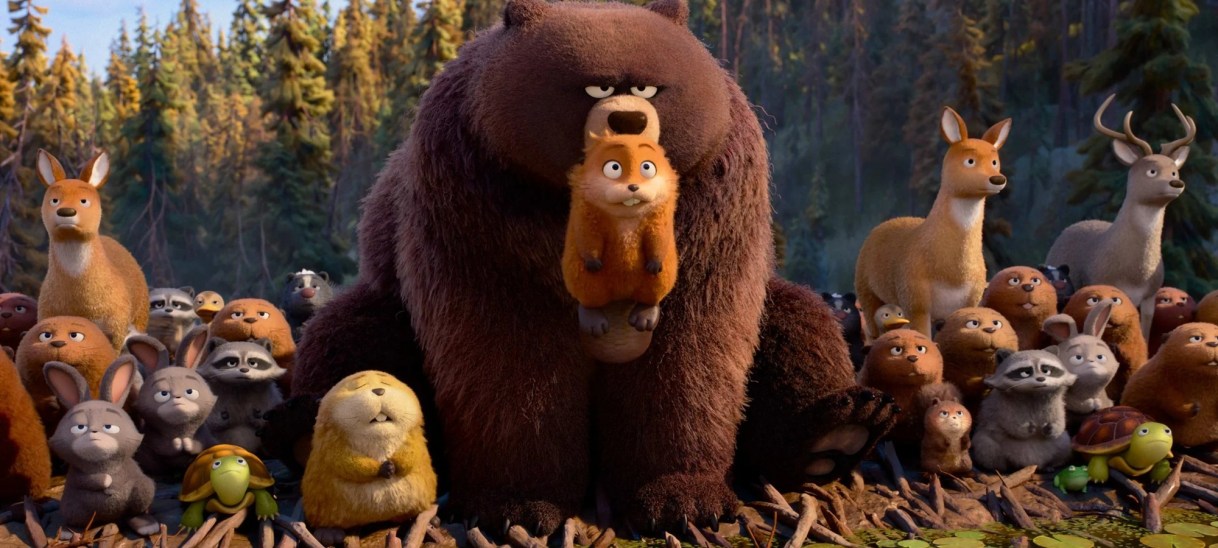
A feeling of unease went through Pixar’s fanbase not so long ago when the animation studio’s Chief Creative Officer, Pete Docter expressed his plans to move away from the auteur-driven, autobiographical narratives of recent years and focus more on universal stories that “appeal to everybody”. Those words proved worrisome, for they implied that Emeryville would forgo the creative risk-taking which helped establish its box-office dominance and regress to producing safe, marketable fluff. Strange words they were too, coming from the very same man who directed tales about creatures who lurk in bedroom cupboards, an elderly widower flying his house to South America, personified emotions who inhabit our consciousness, and a jazz musician coming to terms with his mortality – and, produced this creative endeavour.
Mabel Tanaka (voice of Piper Curda) is a university student and passionate environmentalist whose love of the natural world often places her at odds with her city’s vain and development-willed leader, Mayor Jerry Generazzo (Jon Hamm) who wishes to build a freeway over her favourite forest. In fact, so strong is Mabel’s passion for the locale that she’s willing to hijack her college’s “Hopping” device – experimental technology that allows humans to transfer their psyche into a robot – and disguise herself as a lifelike, mechanical beaver just to find evidence to tarnish the Mayor’s reputation. But her actions give her far greater powers than she realises, not least the ability to understand and converse with other fauna in the forest, which is used to its full advantage. And then some!
Hoppers (2026) emanates from a returnee to the Pixar fold, Daniel Chong, a name most would associate as the creator of Cartoon Network’s We Bare Bears. Having risen through the studio’s ranks as a storyboard artist in his earlier years, one might reasonably expect this picture to mirror the sensibilities of other productions in its catalogue from stalwarts like Docter or Andrew Stanton; yet in truth, it’s closer in manner and style to Domee Shi’s Turning Red (2022) which, alongside Enrico Casarosa’s Luca (2021) and Peter Sohn’s Elemental (2023) has been labelled as one of those autobiographical films that supposedly didn’t resonate with a wider audience. That fact shouldn’t be viewed as a slight, for the idiosyncratic Turning Red is the company’s best release of the past decade on account of its unique premise, energy, and will to stray from an established formula.
More than a few attributes are shared between Chong’s feature and Shi’s – most overtly, both have as their lead protagonist a female adolescent of Asian descent who possesses the ability to transform into an animal, either through machinery or a supernatural inheritance. The parallels extend to the comedy, with no lack of silliness in either title; and the visuals, evidence of which includes the ultra-expressive faces of their characters, and the way their pupils dilate and irises contract rapidly to convey their sudden realisations, fear or excitement. Yet Hoppers is far from a measly duplicate of what Shi produced, on account of its better third-act, a distinctive art-style unlike any seen in a Pixar concoction before, and connections with a certain other property.
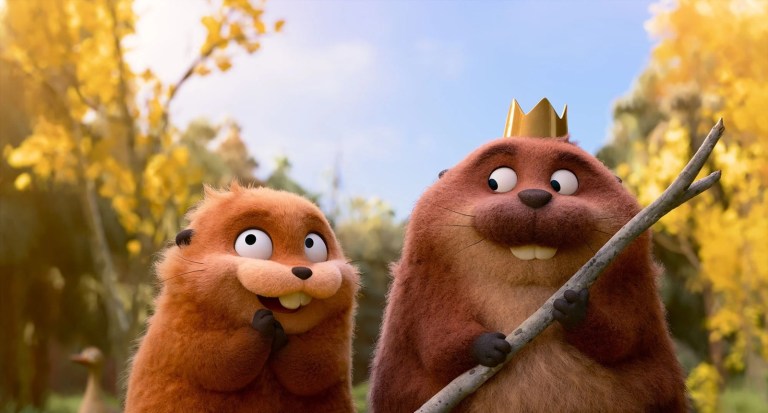
Those familiar with the aforementioned Bears will find several of the animated programme’s traits also present in this film, including a family-friendly tone, quirky sense of humour, eccentric talking mammals, ponderings on the juxtaposition of nature and modernity, and two of the series’ principal cast members: Demetri “Ice Bear” Martin, here voicing a flock of talkative birds in a cameo, and Bobby “Panda” Moynihan as George, a beaver and the Mammal King of the besieged forest Mabel seeks to protect. Moynihan’s voice is instantly recognisable, though not the manner in which he speaks; where before he played a neurotic, whiny and easily-lovestruck character, now he’s an outgoing, independent and upbeat leader who provides the ideal personality for Mabel to interact with and Hoppers with its wholesome soul.
Further setting this movie apart from these other two titles, and its Pixar companions is the gags, which find a perfect balance in appealing to both younger and older viewers. The undoubted highlight in this regard is a silly, yet joyous sequence where George leads his fellow beavers in building a dam to the tune of Loverboy’s “Working for the Weekend”, which had this reviewer wearing the dopiest grin, while another somewhat macabre scene involving the death of a character resulted in him falling into a fit of hysterical laughter. The comedy is also refreshingly self-aware, openly acknowledging the similarities its premise shares with James Cameron’s Avatar (2009) and letting the dialogue note the absurdity of what’s happening on-screen.
If audiences are to take Mr Docter at his word and soon pay witness a new era at Pixar Animation Studios, at least this latest epoch has ended on a high with the outfit’s funniest and most bonkers feature-length production yet. Hoppers may not be as original nor as revelatory as its stablemates, but it is nevertheless a charmer with plenty of heart that showcases what’s possible when you place trust in the creative forces behind a project. Daniel Chong is one such force, a director whose hitherto untapped talents are likely to be called on frequently in the years ahead.
Hoppers is streaming in Australia on Disney+ from Wednesday, June 17th.

