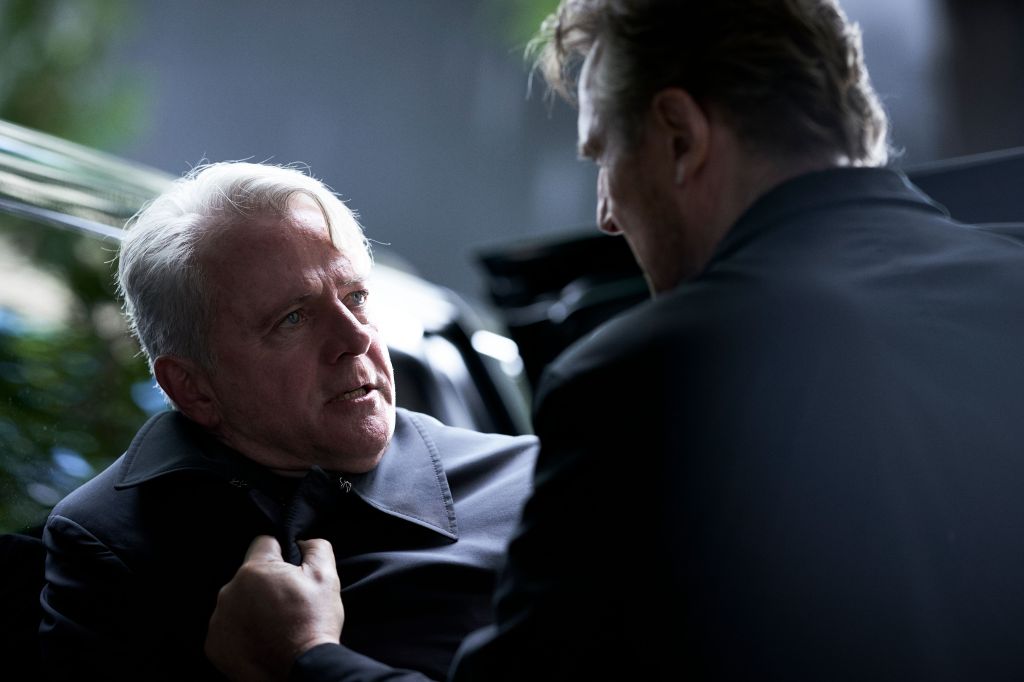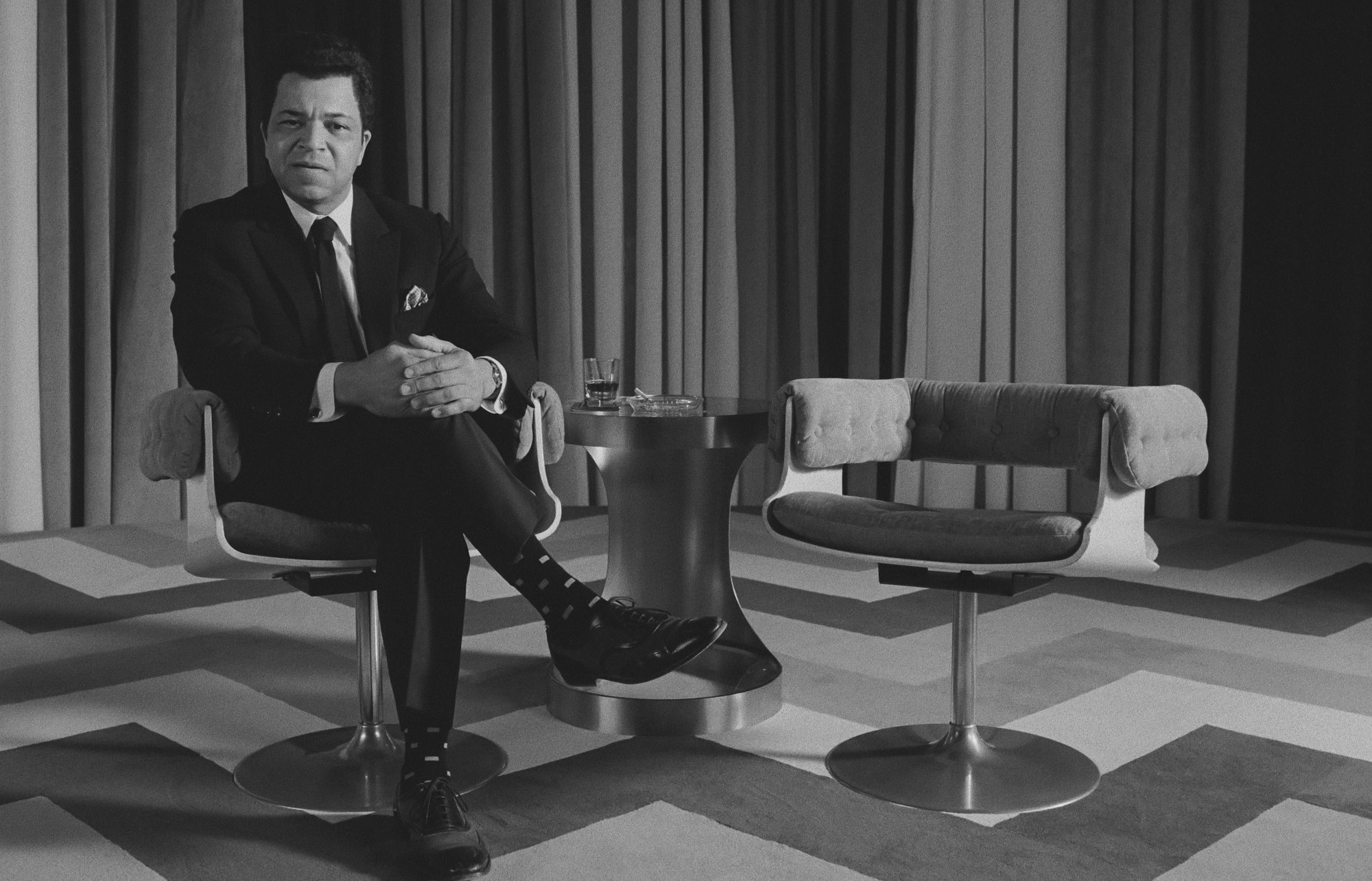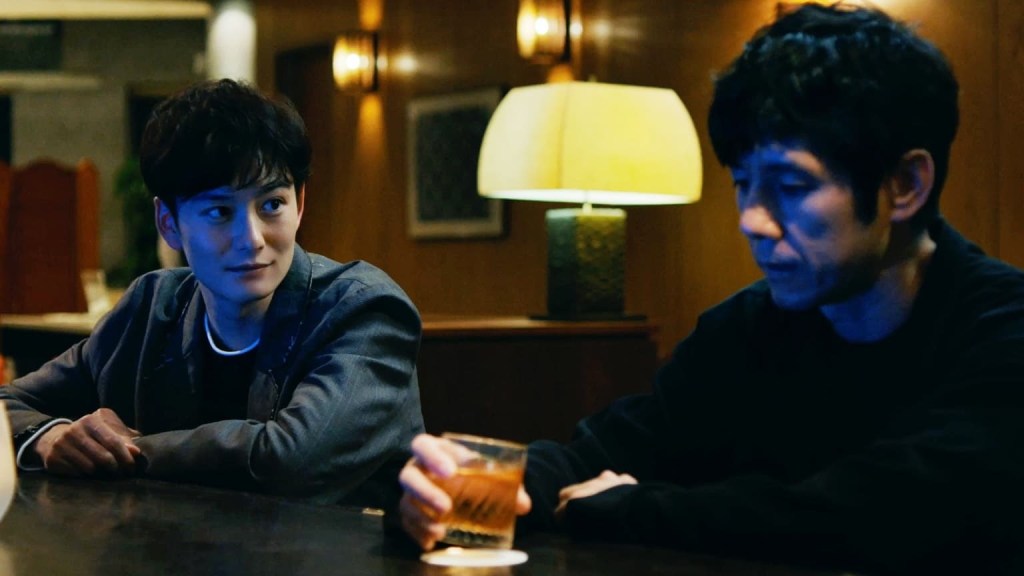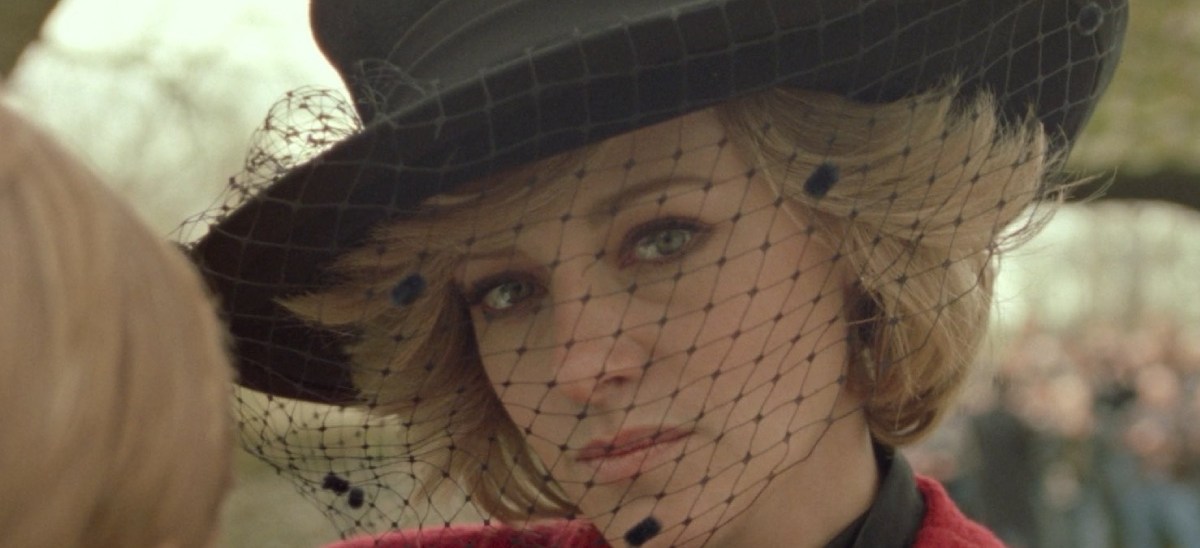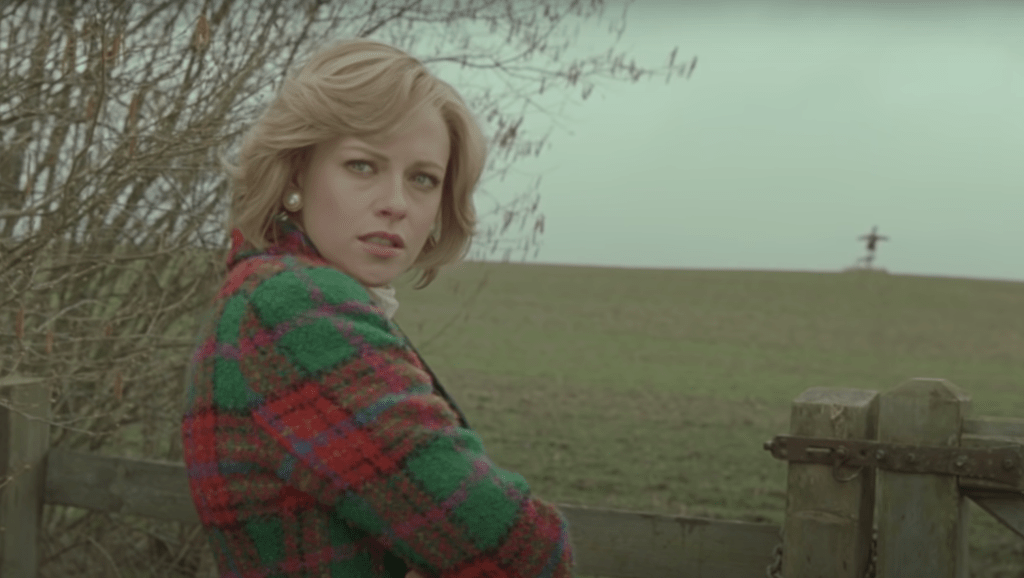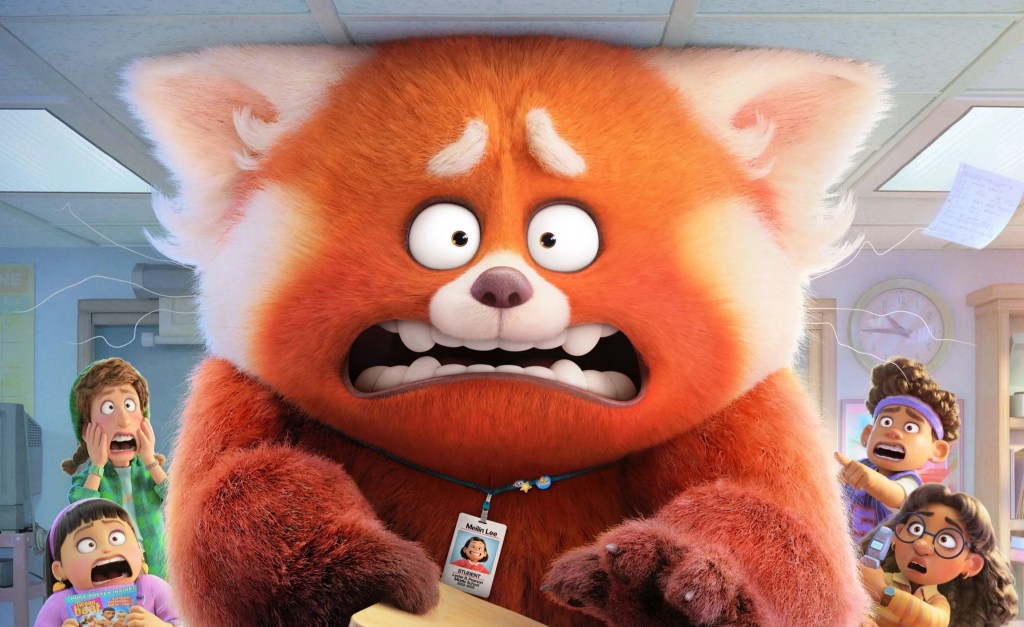
With another year having drawn to a close, Rating Frames is looking back at the best new releases of the last twelve months.
It was a difficult year for the medium, owing to numerous delays and cancellations – these retrospectives would be quite different had MIFF been able to run its full schedule – but there were still some excellent films released that we all wanted to celebrate.
In the second of our end-of-year articles, Darcy Read will be revealing his ten favourite pictures of 2021.
The majority of the year was dominated by great television (It’s a Sin, The Underground Railroad) as cinemas were closed and films were delaying their releases as filmmakers faced massive challenges in production due to the pandemic. But absence makes the heart grow fonder as the last three months of the year had me going back to the theatre as often as possible.
In a year spent mostly watching films at home, it’s perhaps surprising to see the majority of my list be films seen in theatres, although that definitely influenced my enjoyment of each film seen on the big screen.
10. The Father
The earliest entrant on my list, with many lists placing it on the 2020 calendar instead, but a very small amount of the audience for Florian Zeller’s The Father actually saw the film that early, so here it is on my list. I am usually not fond of filmed plays, but Zeller’s work is undeniable and the care and consideration taken to adapt his own play into the medium of cinema is remarkable.
Currently streaming on Prime Video and Foxtel Now.
9. Red Rocket
Sean Baker’s new feature Red Rocketis a unique prospect in modern American moviemaking. It is a difficult and enthralling challenge to the audience that even in its final moments, you aren’t sure what side of the fence you land. Mikey is a true antihero; a loathsome, motor-mouthed, hustling suitcase pimp returning home to Texas City after 20 years working as an adult film star in LA.The film will have you questioning your feelings and emotions throughout, with Baker expertly weaponising his humanist approach towards an individual that may or may not deserve retribution. You will never hear NSYNC’s ‘Bye Bye Bye’ the same way again.
Currently screening in theatres nationwide.
8. Wheel of Fortune and Fantasy
The year of Ryûsuke Hamaguchi will no doubt culminate in an Oscar for his critically beloved Drive My Car (2021), a film that no doubt would’ve been on my list if it was released in time (the film is not slated to release in Australia until February), but I hope the success of that film does not cloud the achievement of Hamaguchi’s other release of the year, Wheel of Fortune and Fantasy.
This extraordinary short film triptych floats elegantly through ideas of love, chance, and opportunity in three 40-minute short films that have stuck with me longer than most other films this year. You will bring yourself to each story and each viewer will no doubt have a different personal favourite with mine being the second story “Door Wide Open”, a compelling story that may have been my favourite film of the year if it was stretched into a feature.
Will hopefully be available online soon.
7. Pig
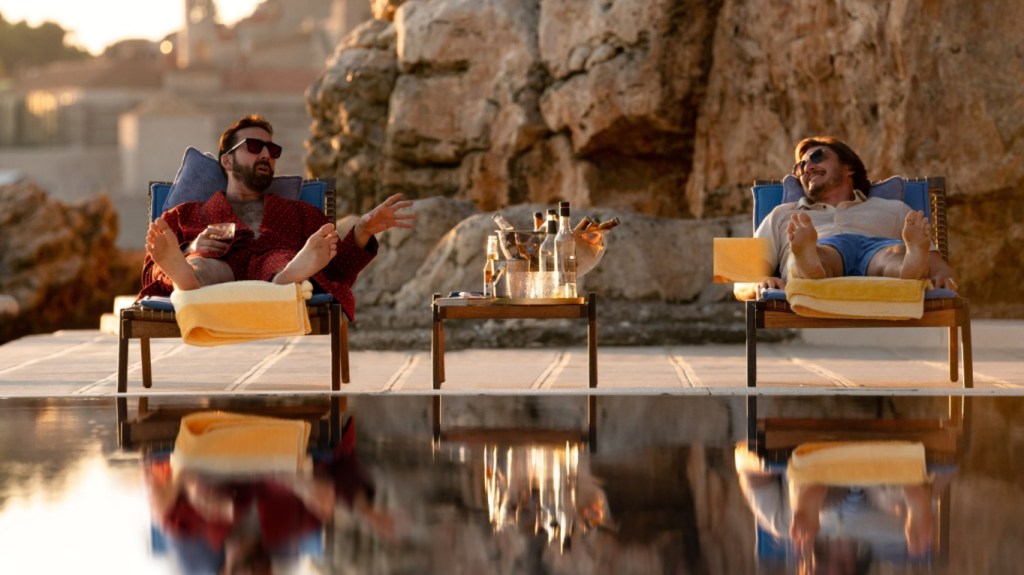
What originally sounded like a Nic Cage led John Wick (2014) film set in Portland, eventuated into a deeply human tale of art, creativity, and love set in the intoxicating world of Oregon fine dining. Michael Sarnoski’s feature debut Pighas the feel of a grizzled vet reflecting on a long career, making it all the more impressive and rewarding to watch. A name to keep an eye on for years to come.
Currently available on home-video and on-demand services.
6. The Velvet Underground
The film I have thought about more than any other this year. Director Todd Haynes’ The Velvet Undergroundhas crafted an immersive world of 60s New York counterculture on the immortal band that had little to no live performances captured on film, whilst never feeling this absence. Haynes is one of the best working American directors and has crafted one of his most complete works celebrating his favourite band and arts movement. If only it could be seen on the big screen and have the opening credits and ‘Venus in Furs’ wash over a packed theatre.
Currently streaming on Apple TV+
5. Dune
There is an overwhelming visual splendour that can’t be overstated with a film like Dune. In an era of blockbuster cinema dominated by Marvel Studios, the visual flair that Villeneuve developed with the extraordinary Blade Runner 2049 (2017), and has deployed with precision here, is both refreshing and awe-inspiring. Dune is only half of Herbert’s story so rating it as a whole is difficult, but the film works so well on its own to more than earn its place on this list.
Currently screening in theatres nationwide.
4. The Power of the Dog
A striking film from a returning legend, The Power of the Dogis a slow build that creeps under your skin and never leaves. The most anxiety-inducing scene of the year can be found in the film between Benedict Cumberbatch, Kirsten Dunst, a piano, and a mocking banjo. Campion weaponises her emotive writing and filmmaking trademarks with a combination of sharp-toothed writing and superb performances that gives the film an off-beat flow that keeps its cards close to the vest and its audiences on the edge of their seat.
Currently streaming on Netflix.
3. The Green Knight
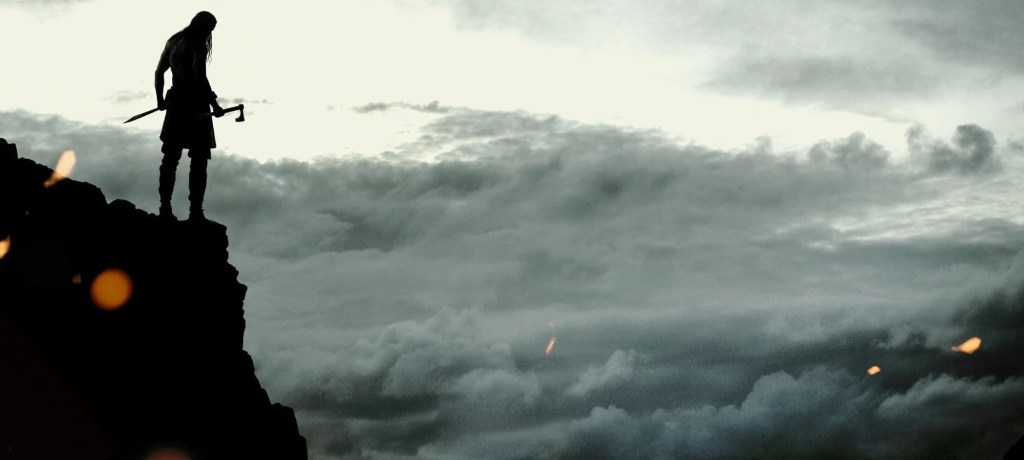
The 2021 released film I’ve rewatched the most, The Green Knightis a well of ideas that is a treat to return to. Each viewing uncovers new elements as well as cementing key moments in this peculiar and deeply rewarding fantasy story that revels in its ambiguity. The director David Lowery’s assuredness throughout the film to be comfortable leaving the audience confused for stretches of Gawain’s quest, knowing the emotionality of the film work as a guide rope through the darkness, is wonderful and all too rare in modern American cinema.
Currently streaming on Amazon Prime.
2. The Worst Person in the World
It’s the quiet moments mixed into the loud ones that make it special. A walk home alone from a party. A conversation with your distant father after he misses your 30th birthday. Taking a friend’s photo as you explore his old apartment building. Joachim Trier’s masterpiece The Worst Person in the World will knock you off your feet early on and send you tumbling down its emotional rapids for its runtime.
His previous film of his “Oslo Trilogy”, Oslo, August 31st (2011) (2006’s Reprise being the first entrant), has a consistent bleakness that slightly calloused the viewing experience, preventing an audience from falling in love with his wonderfully crafted characters. This is not the case with The Worst Person, which mixes humour and pure rushes of love with the ennui that will have you enraptured.
Not enough can be said about Renate Reinsve’s performance as Julie, a truly star-making performance that is by far the year’s best. Where Reinsve shines brightest is when Julie allows herself to be herself, a high we find ourselves chasing with her throughout the film’s 12 chapters. One such moment is the party meeting sequence between Julie and Elvind (Herbert Nordrum); 20 perfectly balanced minutes of the magically intimate waltz of words and emotions that make their inevitable coupling so exhilarating and is among the film’s several transcendent scenes.
For a film with a title like The Worst Person in the World that deploys a post-modern narrator commenting on Julie’s decisions other than merely describing them, Trier has crafted a coming-of-age story that is unbelievably kind and welcoming, which helps the audience feel looked after and willing to give themselves over to the film.
Currently screening at select cinemas.
1. Licorice Pizza
My most anticipated film of the year was always going to feature highly on this list, and Paul Thomas Anderson did not disappoint in this often surprising, frequently hilarious coming-of-age film. Licorice Pizza sees possibly my favourite director loosen his collar and explore ideas of adolescent stagnation whilst never indulging in the nostalgia of his own past. There is no doubt this film will eventually become my most-watched film of the year with an enchanting world that will no doubt grow and evolve as the years go by.
Licorice Pizza is my favourite film of 2021, coming from a filmmaker that feels at his most comfortable while also being able to thrill in equal measure. Anderson is a writer and filmmaker like no other working today. He has created a 70s coming-of-age film with two of the most realised characters of recent American cinema history in Gary and Alana that will live on long in my memory.
Allow this film to wash over you with its gorgeous visuals and recreation of the 70s in The Valley, and find yourself totally engrossed in a story of teenage and early 20s stagnation while searching for your place in the world.
In a year stuck at home with little else to do but take stock of one’s life, it feels only right that the two films that sang to me this year are two that were not these immaculately crafted pieces of artistic achievement but instead worked as mirrors, seeing myself in the eyes of each and every person shown on screen, both their emotional peaks and valleys.
Currently screening at select theatres nationwide.
Honourable Mentions: Zola, Malignant, In the Heights, Azor
With another year having drawn to a close, Rating Frames is looking back at the best new releases of the last twelve months.
It was a difficult year for the medium, owing to numerous delays and cancellations – these retrospectives would be quite different had MIFF been able to run its full schedule – but there were still some excellent films released that we all wanted to celebrate.
In the first of our end-of-year articles, Tom Parry will be revealing his ten favourite pictures of 2021.
Unlike his fellow critics at Rating Frames, yours truly has spent the last twelve months away from Melbourne, avoiding protracted lockdowns yet also missing frequent visits to his favourite haunts – no theatre in regional Victoria can match the majesty of a communal screening at Nova, nor can any town provide the satisfaction of a post-cinema burger at one of Naarm’s many fried-food eateries.
This author’s temporary relocation has also meant being unable to see many of the titles listed by his two Melburnian counterparts (which shan’t be spoilt… for now) and as such, the following list is of a lesser quality than theirs. But the pictures below are just as worthy of acclaim, and at the very least, offer a more… egalitarian alternative to Arnel and Darcy’s choices.
10. My Name is Gulpilil
The passing of its main subject in November has given even further resonance to this pick, which was always intended to be his final on-screen appearance; yet even without that knowledge, My Name is Gulpilil remains one of 2021’s best, being a poignant, stirring narrative told by David Gulpilil himself – one that is open, honest and never shies away from his demons. It’s nothing short of a fitting, touching finale to a fixture and icon of the Australian screen.
Currently available on home-video and on-demand services.
9. Lupin III: The First
Here’s one that hasn’t been covered on Rating Frames, nor anywhere else by this author until now. Given a limited, brief theatrical release here last January – 13 months after debuting in its native Japan – Lupin III is (ironically) the umpteenth feature-length adaptation of the famed manga series; but it is The First to be drawn and animated via computer-generated imagery, looking fantastic whilst remaining true to the original designs of the manga. Witty, energetic and slightly absurd, it’s an adventure well worth seeking.
Currently available on Blu-Ray and select on-demand services.
8. The Mitchells vs. The Machines
Sony Pictures Animation is possibly the only studio countering the unassailable dominance of Disney and Pixar right now – where the Mouse House and its subsidiary are producing movies more formulaic than the last, Sony is taking the opposite approach and releasing films that are unique to all others, including their own. There’s much to love about The Mitchells vs. The Machines, chiefly an inimitable art-style and zippy animation, both of which need a large screen to be truly appreciated. (We want that theatrical release, Sony!)
Currently streaming on Netflix and available on DVD.
7. The Suicide Squad
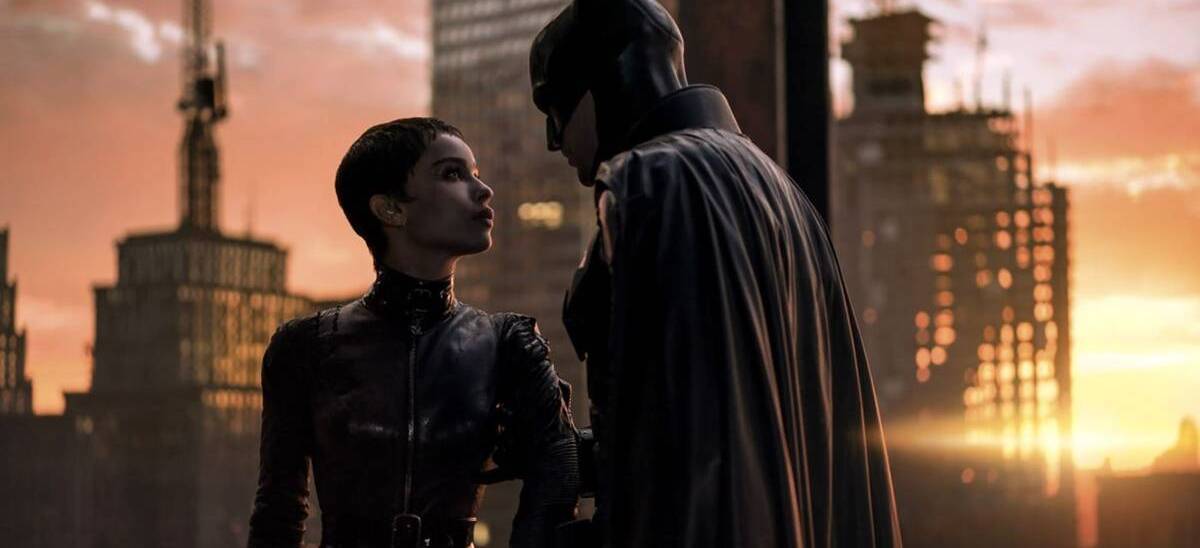
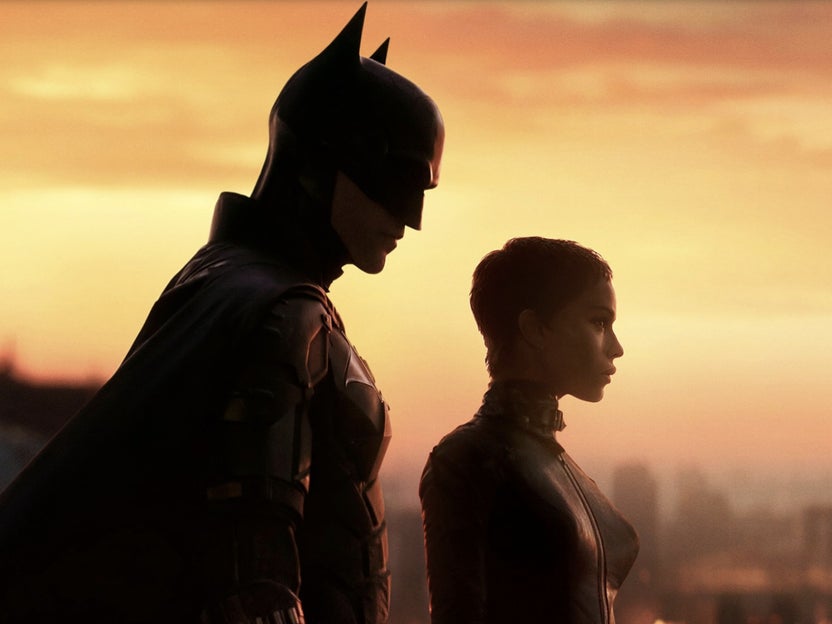
It should come as no surprise to know that James Gunn’s The Suicide Squad is irrefutably better than David Ayer’s similarly-titled, hapless adaptation; indeed, the more surprising feat is how entertaining Gunn’s film is in its own right, not only besting DC’s recent output in terms of action, humour and heart, but also a majority of instalments in the MCU. Eccentric in nature and distinctive from the competition, it’s a gratifying alternative to the superhero norm.
Currently available on home-video and on-demand services.
6. Nitram
Director Justin Kurzel is no stranger to telling controversial stories, making him the ideal candidate to helm a feature about one of the most chilling events in Australia’s history. Just like his past work, Nitramsees Kurzel handle the sensitive material with restraint and grace, yet he doesn’t shy away from confrontation, demonstrating the brave, bold style of film-making that has been lacking in our industry of late. Be sure to watch for the turns of Judy David and Caleb Landry Jones as well.
Currently streaming on Stan.
5. Judas and the Black Messiah
A biographical drama that benefitted from a delayed and extended Awards season, as well as a powerful debut from an African-American director. There’s an enormous degree of nuance to Shaka King’s Judas, which never defines its characters as good or bad; instead, they’re a group of complex, fluid individuals who constantly evaluate their allegiances and question their choices. And of course, it’s lead by three of the finest actors of their generation, all of whom put forward captivating performances.
Currently available on home-video and on-demand services.
4. Evangelion: 3.0+1.0 Thrice Upon a Time
The highest-grossing theatrical release of 2021 in Japan, and with good reason. Hideaki Anno bids farewell to his medium-defining franchise by instilling Thrice Upon a Timewith all the usual hallmarks – think philosophical screenplay, exquisite animation, haunting imagery, and majestic soundtrack – while easing back on the bleakness and rectifying the drawbacks of its predecessors. The result is a feature-length anime that ranks not only as the best animated picture of the year, but one of the greatest ever made.
Currently streaming on Prime Video.
3. Minari
A darling of Sundance and another latecomer to the 2020 Oscar race, it wasn’t until February of 2021 that the majority of Australians got to experience Lee Isaac Chung’s drama. Those fortunate enough to see Minari were treated to some astonishing performances from a gifted cast; and a pensive narrative, one that will particularly resonate with migrants regardless of where they’ve hailed from, or where they live now.
Currently available on home-video and on-demand services.
2. Summer of Soul
This music documentary and directorial debut of Ahmir “Questlove” Thompson very narrowly misses out on the top spot in this list, its only faults being some questionable choices for interview subjects, and the varying quality of concert footage. Otherwise, Summer of Soul is close to perfect, an insightful and compelling documentary about African-American pride that doubles as a showcase for the greatest musicians of an era gone by, such as Mavis Staples and Mahlia Jackson (pictured above).
Currently streaming on Disney+.
1. Spider-Man: No Way Home
As an unabashed fan of the Marvel Cinematic Universe – and to a lesser extent, the Spider-Man films – this was always guaranteed to be a personal highlight of 2021; yet even with the enormous hype surrounding it, Jon Watts’ threequel was still able to exceed expectations. No Way Home serves as a tribute to its forebears, drawing inspiration from their examples whilst also functioning as the perfect denouement to three separate franchises, all while not forgetting to be a fun, moving and thrill-laden blockbuster.
Currently screening in theatres; available on home-video March 23rd.
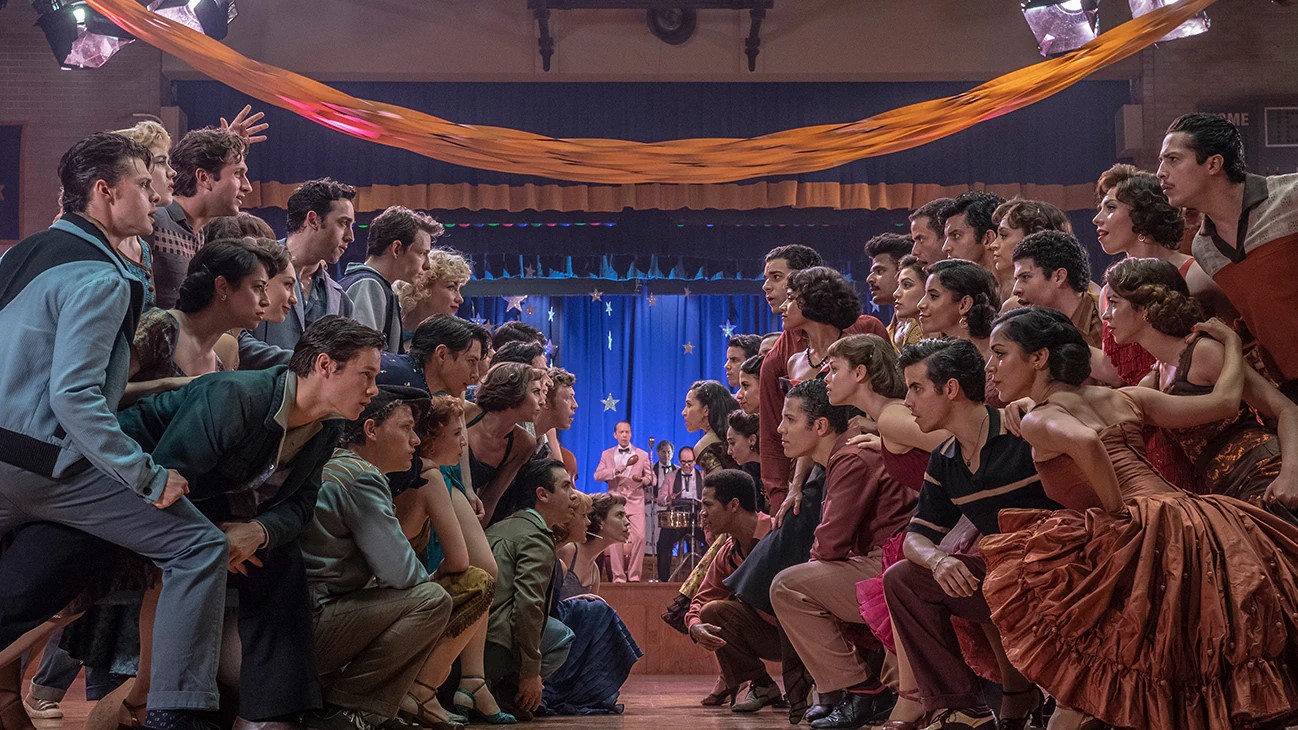
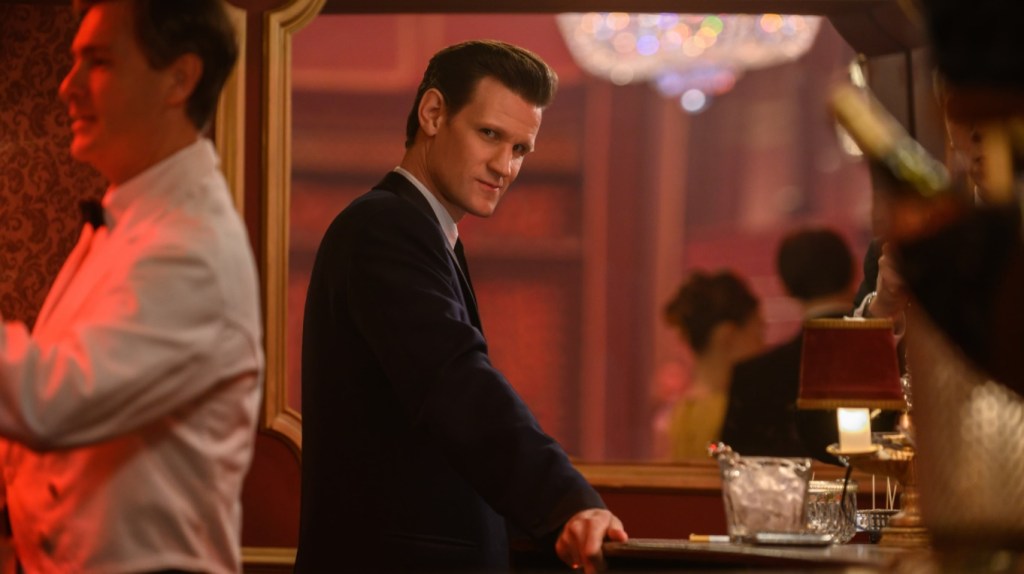
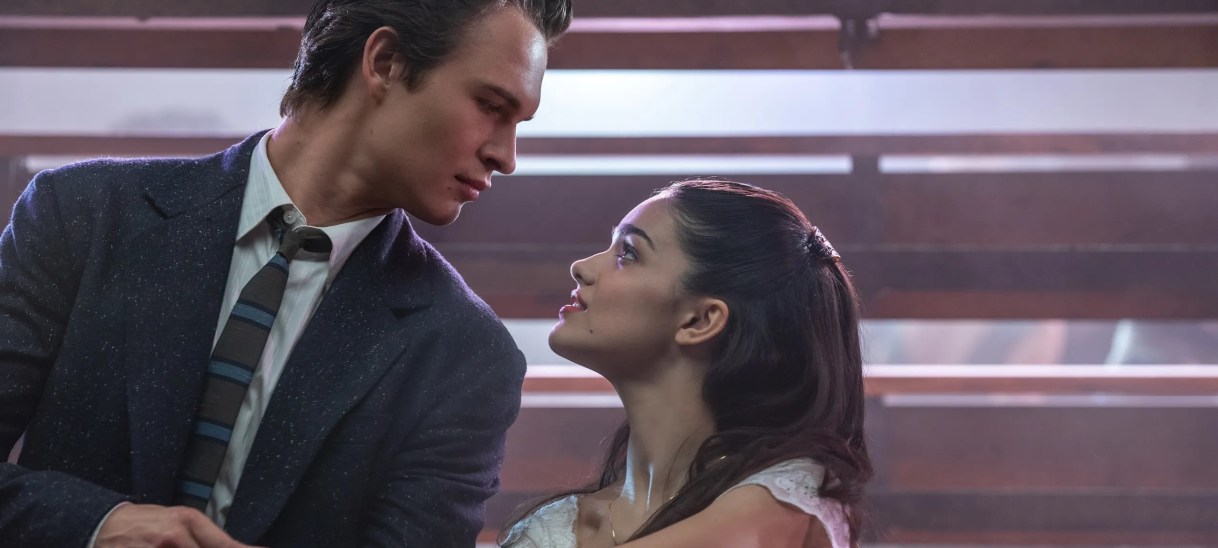
Honourable Mentions: Last Night in Soho, Dune, West Side Story, Amphibia: True Colours
Set against the backdrop of the 70s San Fernando Valley, Paul Thomas Anderson’s Licorice Pizza (2021) paints a perplexing and wholesome picture of what it’s like to grow up as a youth in a rowdy 70s setting and go on to discover new emotions and experience new highs and lows like everyone else at the time, but unlike everyone else at the time.
Perhaps that’s because this is a film made up of ‘firsts’: PTA takes a swing at the coming-of-age genre for the first time; Cooper Hoffman and Alana Haim take on their first acting roles; and the characters are constantly rolling with the punches while welcoming every new obstacle that comes their way as if it were a means to something greater and more real.
Those characters are the budding entrepreneur and smooth talking child actor Gary Valentine (Cooper Hoffman) and the pessimistic optimist coasting by with a high school photoshoot day-job, Alana Kane (Alana Haim). The two meet at Gary’s yearbook high school photoshoot in what is easily PTA’s most inviting opening sequence and one that really sets the tone for the cruisy, laidback feel and tone of the rest of the film.
The two characters share a unique bond and find themselves traversing the valley and sharing each others company as they walk the fine line of adulthood and adolescence — each learning from their counterpart and ultimately bridging the two worlds together. The relationship between Barry Egan (Adam Sandler) and Lena Leonard (Emily Watson) in Punch-Drunk Love (2002) was much the same in that regard and this film shares much with that one in terms of scope and even scale as PTA relishes the intimate moments ahead of large scale ones.
Much has been said on the age disparity between the characters, with Haim playing a 25 year old and Hoffman being 10 years her junior in the film (12 years in real life), ultimately fluffing some progressive feathers. But PTA is too smart to buy into that criticism as he acknowledges that difference throughout, but never uses it for anything other than building a story based on a shared experience between likeminded individuals who happen to have some attraction in the mix as well.
If Boogie Nights (1997) was about how the porn industry finds and offers lost souls solace and interconnectedness by bringing them into surrogate families, then Licorice Pizza is about how free souls find each other and create families born out of friendship. PTA does a stellar job in guiding his characters through this lively world courtesy of his formal cinematic tools that have become so pertinent in his oeuvre — tracking shots, long takes, a classical narrative structure — while at the same time creating a sense of forwardness and momentum that never seems to slow down.
Bradley Cooper & Cooper Hoffman in Licorice Pizza
The characters embrace the ambiguity of their future and the unknown that awaits them, but they never dwell on it. In this way, Licorice Pizza also represents a shift in PTA’s interest in human unknowability and it instead sees him place an emphasis on living in the moment. This very much plays into the spontaneity of the characters in how they make decisions and approach their lives — Gary jumps between businesses while Alana is indecisive with what she wants from life as she moves from freedom to stability and back to freedom. Subsequently, PTA lets youths be youths at a time where hippy culture and its messages of peace and love were more embraced.
There’s no denying that PTA’s films from, and since, Punch-Drunk Love place a greater emphasis on the more intimate and subdued moments between characters. Whether that be the impenetrable relationship between Lancaster Dodd and Freddy Quell in The Master (2012) or the push-pull teasing between Reynolds Woodcock and Alma in Phantom Thread (2017); each of these character dynamics allow Anderson to entertain his fascination with characters whose connection works because it’s so strange, distant, and against the grain of expectation.
That’s why Licorice Pizza is so striking. PTA’s latest return to the San Fernando Valley sees his fascination with this character dynamic reach a climax, but the end product works to different avail.
The innocence of Hoffman and Haim’s characters breathes an air of freshness into a period that was already so fresh, alive and teeming with avenues for self-discovery and growth. Their performances as Gary and Alana exude a truth and understanding of PTA’s vision and his fascination with characters that would appear to be on opposite sides of the spectrum, but need each other to coexist because the universe would have it no other way.
Further to that, Hoffman and Haim’s performances echo the awkward muteness and hesitance of Daniel Day-Lewis and Vicky Krieps in Phantom Thread whilst simultaneously capturing the charm and innocence of Adam Sandler and Emily Watson in Punch-Drunk Love. In this way, these characters are equally the same and different to all the PTA characters before them in that they’re bound to one another but also to the freedom that their youth offers — always following impulse rather than reason.
Alana tries to break that pattern of reckless decision making that her bond to Gary has brought by looking for different avenues for growth and something more stable. She finds herself in the company of esteemed actor Jack Holden (Sean Penn) and film director Rex Blau (played by a rapturous Tom Waits) before rekindling a past friendship and becoming an advisor of sorts to city council candidate Joel Wachs (a dapper looking Ben Safdie). Ultimately, she succumbs to impulse and realises that she is inextricably linked to a life with no measure of time and to people that share that outlook.
Theirs is a relationship that is neither wholly platonic nor wholly sexual and it finds its place in somewhat of a middle-ground as exacerbated by the tension between adolescence and adulthood. Earlier I mentioned that Gary and Alana are approaching everything head on as though that were a means to something more real (Alana running after the police car driving Gary away, Gary smashing the windshield of Jon Peters who Bradley Cooper steals the show as) and that’s precisely what the condition of their relationship is: as long as there is something to look forward to, as long as they aren’t encumbered in ways that PTA’s other duos are encumbered, then they can keep on reaching for the stars — wherever and whatever they may be.
Alana Haim & Cooper Hoffman in Licorice Pizza
It has to be said that PTA is no stranger to the entertainment industry having been raised in a show business family, with his father Ernie Anderson working on the likes of the ‘Carol Burnett Show’, announcing on the ABC, and being close friends with comedian Tim Conway. Of the nine siblings and step siblings from two of his father’s marriages, PTA would be the only one to go down the road of show business.
Magnolia (1999) is the last film where Anderson explored the highs and lows that come with working in the entertainment industry (alongside that films’ more deep-rooted concerns), so it feels kind of bittersweet that he’s decided to draw back the curtain and look at the industry in a different light at a different time in his life.
It’s an intoxicating and alluring world that PTA conjures up and one where the backbone that is the script holds its own. What follows is an Andersonian ride filled with a level of zest and sincerity that hasn’t been felt since Punch-Drunk Love. You’d even be forgiven for thinking you’re watching a Richard Linklater trip instead — Dazed and Confused (1993) will cross many people’s minds.
So much of Licorice Pizza works because of the man at its helm; the film is truly as testament to just how well PTA wrangles his troops on set to create something special. It’d be hard to put it past an Oscars sweep this year with Johnny Greenwood’s pulsating score being a possible contender for Best Score (even with how little he actually did here), while PTA’s screenplay will undoubtedly be the script to beat for Best Original Screenplay.
PTA has crafted his most personal film yet, one that is born out of family and love, and one that takes all the best ingredients from his oeuvre and meshes them together. In a way, the film’s title is almost a perfect reflection of how two things that would appear polar opposites and that carry their own flavour can come together and just make sense the longer you stare at them. It has to be said then that Gary and Alana’s relationship is much the same as it also merges the sweet and savoury together — they are Licorice Pizza at its core.
Licorice Pizza is currently screening in cinemas nationwide
20 years after leaving his hometown of Texas City to make it as an adult film star in LA, Mikey washes up on the door of his ex/current wife Lexey’s house looking for money. You can practically smell the stale cigarette smoke on his clothes in the theatre. Red Rocket (2021), written and directed by Sean Baker, is a true antihero tale of a loathsome suitcase pimp that challenges its audiences throughout in uncomfortable and compelling ways.
We are introduced to Mikey on the bus ride home to the tune of NSYNC’s Bye Bye Bye, the film’s theme. The song is played multiple times throughout the film, gaining different contexts and meaning each time it is played, being chopped up and remixed differently throughout. There is something deeply strange but delightful in hearing the pop song in a movie theatre, but the longer it plays as we follow Mikey’s trip home, the more the connections to dated 2000’s culture become apparent.
The film unfolds itself to the audience slowly – yet still with a kinetic sense of momentum to Baker’s storytelling – as Mikey attempts to build some sort of life after returning home to the tiny Gulf Coast town of Texas City after 20 years in LA, through sheer charm and force of will. He is a hustler by nature. He knows if he can just talk long enough, he can get what he’s after. The film takes a deeply uncomfortable turn as Mikey becomes transfixed on the 17-year old donut shop waitress who goes by Strawberry (first-time actress Suzanna Son), which pushes the audience’s moral boundaries to its limit.
Baker has a better eye for casting than possibly any in the industry, as his neo-realist leaning of non-actor casting or inspired lead choices including Willem Dafoe and Simon Rex set his films apart in modern American filmmaking. The latter, a product of the early 2000s that has faded into obscurity in a similar way to Mikey where the subtext just feels like text.
Rex carries a nervous energy throughout the film, even when he’s bragging about his past life, or convincing someone to hire him, he seems aware that even at his “highest” moments of the film, he has still constructed a house of cards.
There are multiple instances in Red Rocket where Baker is showing the audience that even the film itself is checking out of Mikey’s motor-mouthed wheeling and dealing. Inspired by one of the best scenes in Taxi Driver (1976)where Scorsese shows the audience that even the film is embarrassed by its protagonist, Baker deployed similar tactics to tune out its loathsome protagonist in a subtle and effective way. The film achieves this either by drowning out Mikey with sound effects (having a train go past and obstruct Mikey pleading with Strawberry near the climax of the film) or by pulling the camera’s focus literally off of Mikey as he is explaining why he left LA to Lexey. Baker rarely flashes moments of commentary within his films, but it is so necessary here to undercut the more challenging aspects that may be interpreted as his values.
The peripheries of the film are littered with Trump-era politics, showing a MAGA billboard but obscuring the former president. The film is set in the run-up to the 2016 election, with the RNC broadcast on the TV throughout, gesturing to the audience heavily to compare Mikey’s slick and opportunistic motormouth to Trump.
Simon Rex and Suzanna Son as Mikey and Strawberry in Red Rocket
The charm of Baker’s previous films has been his ability to tell deeply empathetic stories of people on the fringes, but here the central figure of Mikey, the washed-up adult film star, is so unlikeable that he asks the audience more difficult questions throughout.
These questions Baker is asking the audience are challenging and deeply engaging, as the final shots ask the question of what we really want out of this story and out of Mikey. Are we just along for the ride, anticipating the inevitable car crash, or have we spent enough time with this motormouth charmer that we want him to succeed?
Baker is a deeply humanist filmmaker that always understands his characters in intimate ways, as well as having the awareness to know how an audience member will feel about his characters. That assignment is wildly different here in Red Rocket in comparison to Tangerine (2015), as Baker weaponises similar humanistic techniques to ask the audience how far are they willing to go down this path with Mikey? A simple focus pull in a kitchen can tell you everything about how Baker wants the audience to feel about Mikey’s yarn spinning, and who we should be empathising with within the scene.
Red Rocket will not be for everyone with its difficult subject matter and protagonist, but Baker is such a tremendous filmmaker and tells such deeply human stories of people on the borders of society that it’s definitely worth your time.
Red Rocket is screening in cinemas nationwide from January 6th.
Reintroducing a franchise to cinemas is always a tricky prospect, but most have found appeal by taking the best attributes of their older films and refining them for a contemporary audience. To be a long-term success though, a series revival needs to be innovative, to offer its viewers something fresh – a criterion this science-fiction reboot fails to meet.
Decades after the liberation of Zion, a group of humans analysing The Matrix witness code belonging to Neo (Keanu Reeves), who was thought to have sacrificed himself during said liberation. This same group of humans enters The Matrix in hope of locating Neo, only to happen across an event eerily similar to Neo’s origin story, and a rogue Agent (Yahya Abdul-Mateen II) wanting answers to his strange visions.
As it happens, Neo is residing elsewhere in The Matrix, having reverted to his old alter-ego of Thomas Anderson and become an accomplished video-game designer. He has presently been tasked with designing a sequel to his best-selling trilogy of games, a project which is causing him undue stress, leaving him miserable, and triggering memories of his past life – including those spent with his lost love, Trinity (Carrie-Anne Moss).
It’s hard not to draw comparisons between Neo’s situation and that of Lana Wachowski, who is returning to the Matrix franchise (sans her sister Lilly) after an 18-year absence. Those comparisons are made most obvious in the dialogue, which provides unsubtle critiques of the discourse surrounding the original trilogy and even disparages fans by rubbishing their theories. Not to be outdone, Lana even throws shade at her corporate overlords, directly mocking them and their insistence on rebooting the series.
Of course, subtlety has never been the modus operandi of the Wachowskis – even in The Matrix (1999), their most celebrated production, the screenplay is quite overt with the religious symbolism and literary allegories, leaving no doubt as to what the film is trying to convey. This philosophy is found in another Wachowski trademark, featured rather prominently in The Matrix Resurrections (2021): lengthy, convoluted monologues that force-feed exposition to the audience and explain everything that is happening, or has happened, in intricate detail.
Yahya Abdul-Mateen II as a Morpheus-adjacent character in The Matrix Resurrections
The unwelcome Wachowski motifs don’t end there, as Resurrections also demonstrates an over-reliance on computer-generated imagery. The visuals here appear to be inspired by George Lucas’ later works, with the machines and environments of Zion particularly lacking in character and detail, with little attempt made to hide their digital origins. For a franchise that’s frequently hailed for its forward-thinking use of CGI, scenes like these are most baffling and embarrassing to witness.
In Matrix films past, these irritants would be offset by the action, incorporating slow-motion, large-scale destruction and an impeccable sense of style to craft a thrilling, inimitable set of fight sequences. Such action is present in Resurrections too, yet it lacks the jaw-dropping, mind-blowing spectacle of scenes like the foyer shootout from the first picture, or the highway chase from The Matrix Reloaded (2003), instead being a succession of bland moments that are indistinguishable from those any other blockbuster released in the past two decades.
Thankfully, there are a couple of improvements over the previous Matrix films, one being the characterisation of the protagonists, who are at their most human here. Resurrections adds a depth, fragility and tenderness to its heroes that was otherwise lacking in the first three instalments, ensuring the viewer’s sympathies in the picture’s more emotional moments and allowing for a more satisfying resolution than The Matrix Revolutions (2003). If only these qualities could be retroactively applied to the original trilogy.
A film with the lineage of The Matrix Resurrections should be a ground-breaking triumph of special effects, grandiose stunt-work and insightful commentary; in its place is a mediocre blockbuster that fails to build upon the legacy of its originator and does not amaze on any level. Still, it’s no more disappointing than the third movie.
The Matrix Resurrections is screening in cinemas nationwide from December 26th.
Nearly four decades have passed since Canadian director Ivan Reitman first brought a story about middle-aged men hunting ghosts to the big screen, becoming a runaway hit and spawning a franchise in the process. Now his son, Jason has been handed the reins to the series, and produced a movie that ought to make his father, and fans, proud.
Science prodigy Phoebe (Mckenna Grace), her teenage brother Trevor (Finn Wolfhard) and their mother Callie (Carrie Coon) are a family in arrears, forcing a move to the rural outpost of Summerville – an old mining town made interesting only by the unexplained earthquakes that occur daily. There, on the locale’s outskirts, the three will be living in a dilapidated farmhouse inherited from Callie’s deceased father, home to a yard of rusted cars, strange electronic devices, and a spectral presence with an apparent connection to Phoebe.
There’s a great burden borne by Ghostbusters: Afterlife (2021), a film which serves as a direct sequel to one of the funniest and most-revered blockbusters of the Eighties. The original Ghostbusters (1984) brought together three of the then-biggest names in comedy – Bill Murray, Dan Ackroyd, and Harold Ramis – to produce a film that was equal parts humorous, heartfelt and scary, whilst also being accessible to younger viewers. That’s a huge legacy to live up to, and yet, it’s one that Afterlife comes surprisingly close to matching.
Chief to the appeal of Afterlife is its cast, with every player being a welcome presence. Of all the actors, it’s Mckenna Grace who impresses most, showing great assuredness and sweetness in the role of Phoebe; as the protagonist with the most screen-time, she gets to prove herself quite often. Grace is aided in her performance by fellow youngster Logan Kim as “Podcast”, Phoebe’s Summerville classmate, who constantly demonstrates a level of quick-wittedness and energy beyond his years.
There are plenty of other familiar faces to be seen in Afterlife, most notably the ever-likeable Paul Rudd as Mr Grooberson, a science teacher at Summerville’s public school. But unfortunately, most of these thespians are seen only fleetingly, and aren’t given the opportunity to flaunt the full scope of their abilities – examples include character actor Tracy Letts, given just one scene as the owner-operator of a local hardware store; and Bokeem Woodbine, who barely incites an emotion as Summerville’s sheriff.
The wasting of certain actors is not the only shortcoming present in Afterlife. Among the others are the pacing, fluctuating between too quick and not quick enough; a screenplay attuned to fan service, containing scenes and gags made solely to appease those who adore the original picture; and the humour, which is lacklustre when compared to the film’s quip-laden 1984 namesake – but then again, most comedies are these days. And, to be truly honest, there are some pretty decent laughs within the script.
A propensity for jokes is just one of the many connections Afterlife shares with its originator. Aside from the plentiful references, such connections include Rob Simonsen’s soundtrack, which takes its cues from Elmer Bernstein’s work; a perfectly-balanced tone that walks the middle-ground between scary and sentimental; and an impressive utilisation of visual effects, with lifelike models and puppetry favoured over digital technology where practical. As a result, the film is very much in-keeping with the spirit of its Eighties predecessor – and by extension, its 1989 sequel.
Happily though, Afterlife is no mere imitation of the pictures which have come before it, doing just as much to craft a legacy of its own. The visual effects, for instance, make clever use motion-capture technology and computer-generated imagery in certain scenes, ingenuity which is bound to inform other franchises with their inevitable remakes and reboots; and then there’s the slight variation in tone which some viewers may deem schmaltzy, but other will find most endearing.
Carried by a bright young cast and a generous helping of nostalgia, Ghostbusters: Afterlife is a wholesome picture with all the qualities expected of a modern blockbuster. Although skewed toward those with an investment in the original two films, Jason Reitman’s sequel remains accessible to newcomers, who are sure to find resonance in its touching story.
Ghostbusters: Afterlife will be screening in Australian cinemas from New Year’s Day.
Ambitious crossovers have become the forte of the Marvel Cinematic Universe, to the point where grand encounters between its heroes are nowadays a given. The latest MCU venture is one that fulfils those expectations, and immediately surpasses them, drawing inspiration from some rather unlikely sources to produce a truly amazing, spectacular blockbuster that enriches the legacy of its namesake.
Following his defeat of an Avengers-level threat in Europe, Peter Parker (Tom Holland) has been publicly identified as the alter-ego of Spider-Man, and is now being persecuted for his vigilantism. He’s not the only person facing judgement, since friends Ned (Jacob Batalon) and M.J. (Zendaya) and even his Aunt May (Marisa Tomei) are being hounded by the authorities and the populace for merely being associated with the web-slinger.
Hoping to rectify the situations of those he holds most dear, Peter ventures across New York City and approaches fellow superhero Stephen Strange (Benedict Cumberbatch) who is versed in the mystic arts. Doctor Strange offers his help by conjuring a spell that will ensure the entire world forgets Spider-Man’s secret identity; but after being botched by Peter’s constant interruptions, Strange’s magic instead unleashes a peril far greater than either hero could ever imagine.
The full ramifications of this wayward conjuration deserve not to be spoiled, suffice to say that it brings to the fore a concept that has long been gestating within Kevin Feige’s MCU: the Multiverse. The notion that every reality is connected to a series of parallel dimensions was initially floated by Scott Derrickson’s Doctor Strange (2016), teased in Spider-Man: Far From Home (2019) and eventually confirmed as canon in the Disney+ series Loki (2021), before being effectively applied to the animated series What If…? (2021).
Peter Parker (Tom Holland) with Doctor Strange (Benedict Cumberbatch) in Spider-Man: No Way Home
There are, of course, other Marvel-branded projects that have utilised a multiverse-spanning narrative, most notably the feature-length animation Spider-Man: Into the Spider-Verse (2018). With said film being a critical and commercial success, there would be every temptation for this live-action production to emulate its greatest strengths, and in some instances it does – there’s certainly an influence in the self-referential humour. But the latest Spider-Man flick is certainly no facsimile of its animated counterpart, since it owes more to its live-action forebears.
In truth, the films that best inform Spider-Man: No Way Home (2021) are those of Sam Raimi’s Spider-Man trilogy (2002-2007), and not just for… the obvious. Raimi’s movies – yes, even the maligned third chapter – triumphed by instilling heart into the conflict, humanising the antagonists with their personal struggles and adding tender, delicate moments that kept the narrative grounded. Similar, if not identical, attributes are present in No Way Home, which keeps an eye on the finer details and constantly looks for the good in others, no matter what their failings are.
This heartfelt tone is not the only quality present in the screenplay, for there are plenty more smarts contained within. Most impressive is how coherent and easy to follow the narrative is, succinctly establishing the conflict and deftly balancing a multitude of characters who each have their own arcs, all of which is done without No Way Home spiralling into an incongruent, slapdash mess. Additionally, the script has a fair amount of emotional heft, with one or two scenes being among the most poignant this franchise has ever produced.
Part of the reason why these moments hit so hard is because of the performances, with just about every actor providing a phenomenal turn. Undoubtedly, the thespians who leave the greatest impression are those who play the villains from alternate universes, their portrayals being an adroit balance between cheesy and sinister, while not forgetting to convey the tenderness in their characters. What’s more, everybody in the cast has fantastic chemistry with one-another, despite most having not shared the screen previously.
The Iron Spider suit, as seen in Spider-Man: No Way Home
All of these traits pleasingly help to distinguish No Way Home from the many other Marvel blockbusters; but even so, this is still a picture tied firmly to the MCU, sharing various components with the two prior Spider-Man films to ensure that the look, tone and sound of this chapter is in keeping with what audiences are accustomed to, whilst also paying homage to its earlier precursors – for instance, the orchestral score of returnee Michael Giacchino incorporates elements of Danny Elfman’s work in the Raimi trilogy, as well as James Horner’s compositions for The Amazing Spider-Man (2012).
Although No Way Home is unquestionably a very pleasing affair, it’s not a faultless one. The most pressing of these faults is the film’s pacing – during the first two acts, the story flows briskly yet smoothly, before slowing right down as it heads into the third act and loosing steam altogether by the epilogue. Of further annoyance is the lengthy conversations had between characters in this final act which not only contribute to the slowness, but also ensure that it feels needlessly bloated.
There are other quibbles to be had with No Way Home, including the humour, which is funnier than Far From Home yet never reaches the comedic heights of Spider-Man: Homecoming (2017) or Into the Spider-Verse. And while the plot can be followed without having to revisit every previous Spider-Man film, its numerous revelations and throwbacks aren’t going to be as satisfying nor as rewarding for uninitiated viewers. But these are only minor problems when compared to the issues of pace, and even they aren’t enough to spoil enjoyment of the picture.
Spider-Man: No Way Home is a euphoric celebration of Marvel’s web-slinging superhero, one that cheekily yet adoringly pays homage to the films that came before it. With a humanist screenplay that deftly balances multiple characters, and an all-star cast at the peak of their talents, this blockbuster represents another fantastic entry in the MCU, and an utter treat for Spider-Man fans of any generation.
Spider-Man: No Way Home is currently screening in cinemas nationwide.
It’s no secret that Paul Thomas Anderson is one of the most celebrated film directors of the past 25 years. After having spent the better part of 2020 researching and writing about Anderson for my Honours thesis, I’ve come to appreciate the intricacies, nuances and overlooked aspects of his oeuvre (like his fascination with damaged male characters and their function in his films). With the director returning to roots in his latest 1970s, San Fernando Valley set Licorice Pizza (2021), it seemed fitting for me to rank Anderson’s work before the film hits Australian cinemas this month (I will update this list after watching the film). This list is very much a subjective one, but it it is a sum of my time spent with his films and the various journal articles, interviews, and reviews that I have read when writing my thesis. Therefore, I hope that any controversial rankings are taken with a grain of salt as, for what it’s worth, Anderson is one of my favourite film directors so I very much adore all of his films in their own way.
8. Hard Eight (1996)
John C. Reilly & Phillip Baker Hall in Hard Eight
While the first film of a director’s oeuvre often sits on the lower end of a ranking list due the belief that directors just become better as they make more films, Hard Eight (1996) is deservedly in the number eight spot.
Originally titled Sydney, Anderson experienced plenty of headaches with then production company Rysher Entertainment, as he battled for creative control and control over the final cut. The film was ultimately re-titled to Hard Eight due to the name better suiting the sort of promotion that Rysher were looking for, but Anderson managed to send his final cut to Sundance which was a longer version than the one Rysher had cut, and the one that Sundance would showcase.
Most directors today would be more than happy to claim Hard Eight as their magnum opus should they have made it, but Anderson isn’t most directors. The simple fact is that Anderson’s later films are both more stylistically pronounced as they begin to reveal who Anderson truly is as an auteur (his stylistic signature, technical competence, and interior meaning by Andrew Sarris’ measure), they dig deeper into his thematic concerns, and they present much more complex characters that are some of the most difficult to grapple with in recent times.
Hard Eight represents a taste of what Anderson would serve up in larger doses in his films thereafter. The best example of this is the themes that penetrate the directors work like the absence of the mother figure, dysfunctional families and even isolation as explored through largely distant and impregnable characters — all of his films following Hard Eight went deeper with those concerns.
Hard Eight also marks the start of what would be frequent collaborations with Phillip Baker Hall (who Anderson was a fan of and cast in the short film that would inspire Hard Eight, Cigarettes & Coffee), John C. Reilly, and the late Phillip Seymour Hoffman.
The film also introduces audiences to the cinematic tools that Anderson continues to use today. For instance, there is a particular tracking shot and long take in a casino that tracks Phillip Baker Hall’s character as he moves through the casino and eventually lands at a gambling table. This is the first instance where Anderson applies the use of formal tools pertinent to indie cinema, in his filmography. This moment is significant as it marks the ever-present relationship between indie and more classical cinema (like narrative storytelling) conventions in Anderson’s work.
7. Inherent Vice (2014)
Joaquin Phoenix in Inherent Vice
Inherent Vice (2014) is one of those films that I needed multiple viewings to wrap my head around which isn’t new when it comes to an Anderson film — they’re made to keep you coming back.
Anderson adapted Thomas Pynchon’s novel of the same name, a figure who has evaded the public eye for so long you’d think he’d write a how-to book on the subject. What Anderson conjured up was a neo-noir unlike any from recent time. The film marks one of the directors most dialogue heavy films and easily his most hilarious script which is peppered with so much twists and turns that you’d be forgiven for not seeing the full picture the first time around.
In response to the lengthy dialogue scenes in Inherent Vice, Anderson said, “Look, cuts are great, and they’re exclusive to movies, but when you have a lot of dialogue with ping-ponging back and forth, staying out of the way is always preferable” (Hemphill, J. 2014).
Staying out of the way is what Anderson ultimately does as he lets the stellar ensemble comprised of Joaquin Phoenix, Katherine Waterston, Owen Wilson, Josh Brolin, Martin Short, Reese Witherspoon, Benicio Del Toro and countless others, run the show.
The film is also Anderson’s second to be set in the 70s as it places a thriving Joaquin Phoenix in the mind of a hippy detective in what can only be described as perfect casting. With his mutton chops, sandals, long hair, notepad and blunt, the character of Doc Sportello (Joaquin Phoenix) is what Christopher Llyod’s Doc from Back to the Future would look like had he gone the route of peace, weed and inquisitiveness.
Placing this film in seventh position is a disservice to just how giving this film is upon multiple viewings. There’s always something new to decipher and there are plenty of moments that beg for your close attention and maybe even the pause button (like the recreation of the last supper but with hippies). My rating for this film gradually climbed to five stars and this placement is purely based on how I rated the films higher up in this list the same way after the first viewing. So, if that isn’t a sign of my feelings for just how near flawless Anderson’s filmography is, I don’t know what is.
6. Phantom Thread (2017)
Daniel Day-Lewis & Vicky Krieps in Phantom Thread
I’ll never forget the first time I saw this in a cinema comprised of a significantly older demographic; one gentleman in his 80s turned and said to me, “you’re here to watch a real movie” and boy was his right.
Phantom Thread (2017) is an interesting film for multiple reasons. For starters, it’s the last film Daniel Day-Lewis would perform in but it is also the first film Anderson would set outside of the US social milieu that has informed and even shaped the the stories and characters he has brought to life.
Anderson takes the thematic concerns that have become a staple of his work (absence of mother figures) and tailors them to a British setting, ultimately providing a nuanced account of a dressmaker, his muse, and the tense and strange push-pull condition of their relationship (with one of my favourite closing sequences in recent times).
The story came about through a moment where Anderson found himself sick and helpless, with his wife Maya Rudolph, tending to him; that was the seed of the story but it had to grow.
The film also marks a shift from what is often a personal endeavour for Anderson as he writes his scripts on his own, to something more involving with Daniel Day-Lewis. With Phantom Thread, “his [Anderson’s] star practically co-wrote their second film together, refining the script and even choosing the protagonist’s hilarious, yet dignified name, Reynolds Woodcock.” (Solem-Pfeifer, 2018). Anderson had worked in a similar way (co-authorship) with “Phil [Seymour Hoffman] on The Master”, however on Phantom Thread, “I had less than I had ever had before when coming to Daniel, which I found to be a really good way of working, actually. We had the seed of the story and the character, but it had to grow.” (quoted in Bell, 2018, Pg. 22)
The result is one of Anderson’s most mature features as he explores this complex and impenetrable relationship of which its conditions are too formidable to access (with the latter having first stemmed from The Master); he takes on the role of cinematographer for the first time in his career (with frequent collaborator Robert Elswit not being involved); and writes one of his most hilarious scripts to date (behind Inherent Vice).
To top all of this off, Vicky Krieps’ performance as Alma matches Day-Lewis’ portrayal as the set-in-his-ways Reynolds Woodcock. Krieps matches Day-Lewis through her own ability to capture Alma’s headstrong nature, and the result is two performers working at the top of their game.
5. The Master (2012)
Phillip Seymour Hoffman & Joaquin Phoenix in The Master
If the central relationship between Reynolds and Alma is one that is difficult to penetrate, The Master (2012) does a stellar job at rendering the viewer completely expendable when it comes to Freddie Quell (Joaquin Phoenix) and Lancaster Dodd’s (Phillip Seymour Hoffman) relationship.
With The Master, Anderson delves deeper into ideas pertaining to human unknowability and surrogacy by using Quell and Dodd to play around with form — ultimately creating a greater disconnectedness between the audience and the narrative.
As George Toles writes, The Master (along with Anderson’s two films before it) represents a “departure from traditional, readable narrative structure” which “seems to be a necessary corollary for Anderson’s deepening fascination with human unknowability” (Toles, 2016, Pg. 4). In this way, The Master is a film that is difficult to grapple with due to just how far it deviates from a traditional narrative structure to the point where Freddie Quell can’t be relied upon to help guide your understanding of the narrative or to build an emotional connection with — he’s as far from a protagonist as you can get.
The Master is therefore more akin to Magnolia (1999) in terms of wandering focus as Anderson anchors us to Freddie who himself isn’t anchored to anything — he’s detached from the world around him.
Anderson uses Freddie to reinforce the subversive form of the film whereby the character himself begins to represent formlessness at a structural level while Lancaster Dodd begins to represent form. When the two characters clash and reconcile at various moments throughout the film, Anderson is taking formlessness and form and throwing them at each other, ultimately experimenting in his own way with the two (like with the informal processing sequence). In a way, Lancaster believes that he can tame the formlessness of Freddie and this is where Anderson’s other, more recognisable theme of surrogacy intersects with the theme of human unknowability — Lancaster assumes a surrogate role.
By the closing sequence of the film, Lancaster relinquishes his attempts to tame and nurture Freddie and chooses instead to release him — to release formlessness back into the world.
What is fascinating is how multiple different story and technical elements are in a constant tension in The Master — both in isolated instances, and altogether. Whether that be formlessness and form (structure), human unknowability and surrogacy (themes), Freddie and Lancaster (character) or each of the elements (structure, theme and character) between each other — Anderson creates an experience that is unlike any he has before or since.
Ultimately, The Master either landed for audiences or it didn’t due to its impregnable nature, the ambiguity it revels in, and its unrelatable anti-hero Freddie Quell. When considered in relation to the four films above it on this list, it could just as easily be in one of those positions, however it retains a solid position as number five.
4. Magnolia (1999)
Tom Cruise & Jason Robards in Magnolia
Magnolia (1999) is easily Anderson’s most ambitious film. The film is comprised of multiple storylines that connect the characters to each other even if they can’t see that they are connected to the other characters in their suffering.
Both Magnolia and Boogie Nights (1997) are the closest Altmanesque films we have from Anderson as they are very much ensemble pictures that offer the actors a degree of freedom that isn’t felt in the same way in Anderson’s other films. Unlike with Altman’s films like Nashville (1975) and Mash (1970), Anderson still retains a level of control that, while offering his ensembles more freedom (very much an Altman staple), allows him be more stringent when it comes to dialogue being delivered as written or characters serving clear narrative and thematic functions.
In this way, Magnolia is very much about a collective that experience a shared misery, but what separates it from Anderson’s other films is that this film prioritises character ahead of narrative. Essentially, audiences view one single diegetic day in the lives of these characters and the film is banking on the audience buying into “the passionate, melodramatic circumstances of characters living out another day in their lives,” (Sperb, 2013, Pg. 137).
This film explores the plights of these characters and, in a very Andersonian fashion, redeems and punishes certain characters by the closing sequence — which plays on the biblical ideas underpinning the film. The closing sequence is one of Anderson’s most poignant and philosophical as the raining frogs almost serve to allow Anderson to reach in beyond the diegetic world and inject it with this element of fantasy that alerts all the characters to a presence that makes all of their problems disappear, if but for a moment — leading some to certain realizations while punishing others for their wrongdoings.
Magnolia is an experience unlike any other with an incredible cast (Tom Cruise, Julianne Moore, John C. Reilly, Phillip Baker Hall, Phillip Seymour Hoffman, and countless others), multiple storylines that are handled so well, and even an item number where the characters are unified through a spontaneous rendition of Aimee Mann’s ‘Wise Up’.
There’s nothing quite like Magnolia, and as with any other Anderson film, depending on the emotions you carry with you into one of his films, Magnolia could just as easily be number one on someone’s Anderson ranking list.
3. Boogie Nights (1997)
Part of the ensemble from Boogie Nights
The film that introduced me to Paul Thomas Anderson, Boogie Nights (1997) is an alluring, inviting, and intoxicating feature that draws you in the longer it plays. It would be superfluous to mention every aspect that made Boogie Nights as incredible as it is, after all this is a ranking list rather than a review, but here are some.
Set in the late 70s and early 80s Reseda, Boogie Nights paints a perplexing picture of the porn industry and almost dignifies it in a way as the ensemble of characters here find solace in their interconnectedness within the industry.
That approach sits in stark contrast to Magnolia’s characters who are connected without ever having met each other (for the most part, while some do cross paths), whereas in Boogie Nights the Jack Horner (Burt Reynolds) household becomes more than just a ticket to an unconventional success story.
Keeping in mind that Anderson was 26 at the time, Boogie Nights is one of those films that a director like Quentin Tarantino wishes he had made but never did. Anderson makes you care for each of these characters while still exploring the business side of the porn industry (the need to adapt as video becomes more attractive and affordable than film) and weaving in concerns pertaining to surrogate families, family issues, and exotic danger.
Boogie Nights has plenty of incredible sequences (the ‘Jessie’s Girl’ sequence with Alfred Molina, Jack Horner’s new years party etc.), a mix of experienced and (then) young talents that all give it their all, and all the while managing to weave in its multiple storylines and provide a holistic viewing experience that continues to outdo itself.
Anderson clearly drew upon the work of Martin Scorsese and Robert Altman while forging his own place in cinema discourse, ultimately putting himself on the radar as one of the most exciting directors to emerge in recent times.
The result is one of the most celebrated films of the 90s and one of those films that lends itself to multiple viewings. Boogie Nights could just as easily be Anderson’s number one film.
2. Punch-Drunk Love (2002)
Emily Watson & Adam Sandler in Punch-Drunk Love
My placement of Punch-Drunk Love (2002) in second position might be viewed as the most controversial ranking on this list.
To put it in Anderson’s own words, Punch-Drunk Love is “an art-house Adam Sandler movie” (quoted in Brooks, 2003) but it is also a film that goes against conventional rom-coms and their structure. Barry Egan (Adam Sandler) pushes everyone away (and with due cause) and even his eventual love interest Lena (Emily Watson) refuses to allow the audience any access into the connection she builds with Barry.
Barry expresses himself in such odd ways yet it’s the only way he knows how. For instance, he tells Lena that he desires to smash her face with a sledgehammer during an intimate scene and he even uses physical violence against those who unintentionally hurt Lena while trying to get to him, both for the sake of protection but also to express himself to her through these acts of violence.
What’s peculiar is that Lena reciprocates these emotions to Barry by, for instance, also playfully expressing that she wants to “scoop out” his “eyes” and “eat them”. Yes, these are all playful albeit odd expressions, but usually in rom-coms, if a character is ridden with defects, the ‘other’ in the relationship is the explanatory character who is there to explain their attraction to a character like Barry, but this is not the case with Lena. George Toles (author of the 2016 scholarly book on Paul Thomas Anderson) reaffirms this by writing that for a “normative” character like Lena, the “attraction or gradual succumbing to the problem figure’s initially well-masked allure” is usually met with an “ample explanatory framework” (2016, Pg. 45).
Punch-Drunk Love is just unlike any romantic comedy out there due to the way its characters interact and due to the use of unconventional (long take, jump cuts, tracking shots, dreamlike blue filters that overlay scenes) formal tools. But more than that, Punch-Drunk Love is filled with striking moments of cathexis and their eventual release (Barry destroying his sisters glass window/door after enduring ridicule, the confessions of love between Lena and Barry, the flipping car). All of these qualities allow Anderson to really assert himself and to forge his own identity that go on to contribute to his auteur status (a term so misused these days, it’s baffling).
With Adam Sandler playing the role of Barry in such a Sandler-like fashion (the boyish charm matched with the sudden outbursts that render him socially inept), he ends up cashing in his best performance. To top this off, Sandler’s knack for playing largely comical and flimsy characters is essentially perfect casting here (or a ‘perfect fit’ by Richard Dyer’s measure) as it sits in line with the unexpectedness Anderson is striving for.
From the methodical patience it creates to the unexpectedness of intense moments that follow — Punch-Drunk Love is unquestionably Anderson’s own. As Anderson told The Sunday Times in 2003, Punch-Drunk Love is “referenceless. When you start out, you latch onto other styles, to help you get across what you’re trying to say. But this one is mine somehow— and I’m proud of that.” (Sperb, 2013, Pg. 152). But more than that, it is a rom-com unlike any other and one that sees Adam Sandler at the top of his game after some hits, misses, but overall enjoyable films prior to this one.
If There Will be Blood (2007) didn’t exist, Punch-Drunk Love would be a shoehorn for Anderson’s most Andersonian film and his best.
1. There Will be Blood (2007)
Daniel Day-Lewis in There Will be Blood
Anderson’s magnum opus, the quintessential 21st century film, a classic before the fact — There Will be Blood (2007) is an achievement that feels as momentous and unreal today as it did 14 years ago.
I’ve mentioned that anything I write about these films is superfluous as there are countless reviews and analyses of Anderson’s films (including my own), but There Will be Blood was an event that really cemented Anderson in the pantheon of cinemas greatest directors.
With an Oscar winning performance by Daniel Day-Lewis as the ruthless prospector-turned-oilman Daniel Plainview (one of the greatest performances of all time), a rousing score by the legendary Johnny Greenwood, exquisite cinematography by Robert Elswit, and a perfect screenplay and direction by Anderson, There Will be Blood is what happens when all of the ingredients mesh into something complete.
Anderson created the ultimate period piece with so many iconic moments (the opening sequence in the oil-well, the legendary explosion of the oil-rig, the bowling alley skull bashing) and such an incredible script (adapted from Upton Sinclair’s ‘Oil!’). The film eschews a traditional, readable narrative structure so as to allow Anderson to entertain his now heightened interest in human unknowability. I mean, what better way to explore that thematic concern than by literally putting forward a greedy, power-hungry character who shuns everyone (even after he begins to trust them like Henry) and goes against the very will of god and plays god in his own life and the oil industry — as exacerbated by the films religious undertones.
What is most profound about Daniel Plainview is how Anderson is able to make him one of the most loathsome anti-heroes of all time, yet one that you can’t help but sympathise with. It’s a testament to just how incredible a performer Day-Lewis is that he is able to practically keep other characters and the audience out of his life, but you still feel like there is justness to his cause.
The supporting cast is also quite good (especially Paul Dano), but Day-Lewis outshines everyone and really captures the idiosyncrasies of Anderson’s characters. In turn, Day-Lewis transmutes everything you know about what an Anderson character looks, feels, and acts like, into something greater. Due to the performance and all of aspects of production, There Will be Blood ends up hitting a different level of ecstasy that is both frightening, and rewarding.
Everyone is at the top of their game in There Will beBlood and each scene plays out like a carefully crafted artwork. Had No Country for Old Men (2007) not been released in the same year (with both films having a relatively similar tone and setting), the 2008 Oscars would have been swept by Anderson’s once in a lifetime masterpiece. Even to this day, I vehemently believe that There Will be Blood deserved so much more than what it got even with the Coen Brothers having decided to make their own masterpiece in the same year. There are films and then there are films, and Anderson’s There Will be Blood is a lot of film to be had.
Content Warning: First Nations readers are advised that the following article contains the name and likeness of a person who has died. Both are respectfully used with the permission of the deceased’s family.
Last week, Australia and the world mourned the loss of an eminent, indelible fixture in the medium of cinema. The artist, David Gulpilil Ridjimiralil Dalaithngu, was born and raised in the Mandhalpuyngu clan, plucked from obscurity to appear in a motion-picture, and later became an informal ambassador for his Indigenous culture through his traditional dance, painting and public speaking.
But of course, David Gulpilil (as he’s most often credited in projects) is best recognised as an actor, having appeared in some of the most iconic Australian movies and delivered one fantastic performance after another. In honour of his memory, Rating Frames has put together a list of the ten roles that best shaped and defined his career, all of which are essential viewing for anybody who considers themselves a fan of Australian cinema.
Walkabout (1971)
In his debut role, filmed when he was just a teenager, Gulpilil plays an Aborigine on “Walkabout”, an adolescent ritual where a boy must traverse the bush alone in order to achieve manhood; on his journey, the teenager happens across a white girl the same age as he (played by Jenny Agutter) and her younger brother (Luc Roeg, the director’s son) both of whom come to rely on him for survival.
Walkabout is often cited, wrongly, as the first picture to star a First Nations actor; and the first to have a Black performer in the role of an Aborigine, rather than in blackface – it’s beaten to each milestone by Jedda (1955) and The Overlanders (1946) respectively. But, it is the first known instance of Indigenous Australian culture being accurately and respectfully represented in a feature-length film, which Gulpilil does almost effortlessly.
Storm Boy (1976)
Gulpilil’s next feature-length role came five years later, a picture based on Colin Thiele’s junior novel of the same name. This crowd-pleasing affair centres on Mike (Greg Rowe), a boy who lives with his reclusive father Tom (Peter Cummins) on the Coorong – the wetlands that separate the Murray River from the Southern Ocean – and his friendship with a pelican he names Mr Percival.
The character that Gulpilil portrays here is Fingerbone Bill, a local Aborigine who befriends young Mike and becomes his mentor. His performance is more energetic and upbeat when compared to that in Walkabout, and yet, the actor demonstrates the same relaxed and natural presence in front of the camera. (Incidentally, Storm Boy would be adapted again in 2019, with Gulpilil quite fittingly playing the father to Fingerbone Bill.)
Mad Dog Morgan (1976)
The same year that Gulpilil appeared in the family-friendly Storm Boy, he also starred – alongside Dennis Hopper (pictured above, right) – in a violent, confronting biopic set during Australia’s colonial era. In said biopic, Gulpilil plays an accomplice and confidant to the titular bushranger, guiding him through unfamiliar terrain and abetting his crimes.
Mad Dog Morgan is an example of the “Meat Pie Western”, a term affectionately given to an Australian production that utilises the tropes of a Hollywood Western. Its success, both at home and internationally, helped spur the New Wave of antipodean cinema and gave rise to numerous imitations in the decades that followed; one such example is The Proposition (2005), which featured Gulpilil in a minor role as an interpreter.
Crocodile Dundee (1986)
Here’s a movie that needs no introduction. It’s the worldwide box-office smash that made Kakadu a top holiday destination for tourists locally and abroad, renewed interest in Australia and its culture, and transformed Paul Hogan from a TV larrikin to an international star. Neville is the character Gulpilil plays here, who meets with friend Mick Dundee (Hogan) and American journalist Sue Charlton (Linda Kozlowski) on his way to a Corroboree – a ceremonial gathering of First Nations peoples.
The briefest of Gulpilil’s roles on this list, and possibly the one he’s recognised most-widely for, Neville is viewed as the embodiment of modern Indigenous culture; caught between modernity and tradition, practising the ways of his ancestors while also adhering to the white man’s norms – it’s most evident in his appearance, with Neville seen wearing traditional face-paint with jeans and a wristwatch.
The Tracker (2002)
The first film to credit Gulpilil as a lead performer, this low-budget drama tells of an Indigenous man tasked, at the behest of the white authorities, with locating a fellow Aborigine accused of murder. Ironically, the actor performed in a very similar role for Phillip Noyce’s Rabbit-Proof Fence (also 2002) albeit as a supporting player with less screen-time – and hence, is never given the opportunity to truly flex his acting chops.
The Tracker marked Gulpilil’s first collaboration with director Rolf de Heer, and netted him an AFI Award for Best Actor. It’s an accolade that’s rightfully deserved, for he does well to convey the conflicted emotions of his character – the apprehension, fear, guilt and anger, sometimes all at once – and does so with an unflinching ease, outshining all of his co-stars in the process.
Ten Canoes (2006)
Following the success of The Tracker, Gulpilil and de Heer reunited for another narrative, and a particularly ground-breaking one at that. It’s a tale of sacrifice, leadership, covetousness and warfare that takes place before European settlement, is spoken in the Yolngu Matha language and features a cast of First Nations actors in traditional dress. As a result, Ten Canoes is the most authentic representation of a nomadic, tribal lifestyle ever put to film.
Unlike his two other partnerships with de Heer, Gulpilil doesn’t make a physical appearance on this occasion, with his son Jamie (pictured above) playing the lead instead. But the elder Gulpilil still has a presence in Ten Canoes, taking on the role of narrator in both the English and Yolngu Matha versions of the picture, complete with his trademark energy and dry wit.
Australia (2008)
Baz Luhrmann’s Northern Territory-set epic was much-hyped at the time of its release, stirring the emotions of many an Australian with its allusions to the Stolen Generations and re-enactment of the World War II bombing of Darwin. Also generating hype was a star-laden cast that included the two biggest Australian thespians of the day, Hugh Jackman and Nicole Kidman, in addition to David Wenham, Bryan Brown, Ben Mendelsohn, Jack Thompson and, of course, Gulpilil.
The latter plays an Indigenous elder known to the white settlers as King George, who’s also the grandfather of Nullah (Brandon Walters), the half-caste child adopted by Lady Sarah Ashley (Kidman). ‘Tis a more restrained and mostly silent performance from the venerable actor, one that doesn’t make full use of his abilities; but his presence in this big-budget, Hollywood-backed blockbuster did, at least, immortalise him as a legend of the Australian screen.
Charlie’s Country (2014)
The years that followed Luhrmann’s Australia were some of the most turbulent for Gulpilil, who spent time in jail for physical assault and as such, failed to find work. His experience in prison, and in poverty, would eventually inform his third collaboration with de Heer, in which he plays a semi-fictionalised version of himself named Charlie. It’s a deeply personal narrative, yet one that resonates widely, for his story is reflected in First Nations communities across Australia.
Charlie’s Country had its premiere at the Cannes Film Festival, with the lead winning an award for his performance as part of the Un Certain Regard program; this feat would later be replicated at that year’s AACTA Awards, with Gulpilil winning Best Actor for a second time. More importantly though, the film revived Gulpilil’s dormant career, ensuring that audiences hadn’t seen the last of his talents.
Goldstone (2016)
A contemporary take on the Meat Pie Western, Goldstone is a sequel to Ivan Sen’s excellent Mystery Road (2013) and sees journalist-turned-actor Aaron Pedersen return to the role of Detective Jay Swan. This story has Swan working undercover, attempting to locate a missing person in a remote mining community; and, just like its precursor, examines issues of prejudice and corruption in regional townships.
Harking back to his roles in Mad Dog Morgan and Storm Boy, here Gulpilil plays a sage elder who guides Jay through the landscape and tells legends of his ancestors. The part is rather unassuming, but nevertheless, Gulpilil lends it a gravitas that only a performer of his calibre can, being a charming and welcome presence as per usual.
My Name is Gulpilil (2021)
“This is my story, of my story,” says a gravel-voiced Gulpilil as he fixes his eyes on the viewer, wearily but warmly. Produced and narrated by its very subject, this tender, intimate documentary recounts the significant events in Gulpilil’s life, observes his routine as a cancer patient and ponders what his legacy will be once he departs this world.
Even before his untimely death, this was always intended to be Gulpilil’s final on-screen role, but is no less impressive, leaving the viewer transfixed throughout. Gulpilil is at his most vulnerable, physically and emotionally, yet still manages to deliver an insightful, compelling tale about himself, a testament to his abilities as a storyteller. For those reasons, this raw portrait has earned a place as one of the greatest performances of David Gulpilil’s fifty-year career.
There are very few directors whose name alone is a drawcard for the masses, but Ridley Scott is one who can be considered among that company. Most recently, Scott’s touch has been applied to this medieval-set picture, drawing upon his wealth of experience to form a reasonably engrossing, if imperfect movie.
In 14th Century France, a squire and solider of the King is accused of sexual assault by a noblewoman, an act he empathically denies. The lady’s husband, a knight, supports her claims and demands justice, challenging the accused to a trial by combat – a duel to the death. Should the knight win, his wife’s accusations shall be seen as true to the eyes of God and her honour restored; should the squire win, he shall be deemed innocent, and his accuser punished for dishonesty.
Although the premise of The Last Duel (2021) is straightforward, its narrative structure wishes to be anything but, being non-linear in manner and split into three chapters, each focused on a different character. The first chapter’s subject is Sir Jean de Carrouges (Matt Damon), the accuser’s husband; the second Jacques Le Gris (Adam Driver), the alleged perpetrator and estranged friend of Sir Jean; and the third Marguerite de Carrouges (Jodie Comer), the alleged victim.
In each of these three parts, the story is told from the perspective of the subject and what they deem to be “The Truth”. It’s a noble and rather interesting approach, yet one that’s ultimately pointless, since the film is more or less convinced that Lady Marguerite’s account is absolute fact; thus, the perspectives of the other two men are rendered null and void, an unnecessary distraction from the main conflict. Had it dispensed of its all-sides-considered angle, and instead stuck with a singular, cohesive plot, The Last Duel would be just as compelling, if not more so.
Adding to woes, the picture devotes an inordinate amount of time to establishing the relationship between Jacques and Sir Jean, which does little to advance the plot – watching these chivalrous exchanges, viewers get the sense that Lady Marguerite’s assault is an event of secondary importance to the narrative, despite it being billed as the main conflict. Admittedly, there is some appeal in listening to their eloquent, well-spoken dialogue, but this soon becomes tiresome, paling in comparison to the film’s other merits.
Jacques Le Gris (Adam Driver, left) and Sir Jean de Carrouges (Matt Damon) prepare for their battle in The Last Duel.
One such merit is its world-building, with The Last Duel having fashioned a vast, enchanting and rather accurate medieval setting for its characters to inhabit. There’s no shortage of beautiful scenery, with the feature having been shot on-location in Ireland and France; the meticulous set design adds further to the realism, as do the costume designs of Janty Yates – a regular collaborator of Scott’s – who adorns the characters in era-appropriate fabrics and all other manner of regalia. Truly, this is the closest a Hollywood production can come to being an authentic recreation of the feudal era.
It’s a view that’s further enforced by the knightly battles that Sir Jean and Jacques partake in. These action sequences of clashing swords and armour-clad soldiers on horseback are littered throughout The Last Duel, evoking Scott’s work on Gladiator (2000) and warranting praise for being tense, brutal and expertly choreographed. Yet more excitement is generated through the close-up cinematography and terrific sound editing in these scenes, allowing viewers to feel that they are very much part of these violent encounters.
Eliciting just as much satisfaction are the performances of the leads, both the young and not-so-young. Adam Driver and Jodie Comer are their usual luminous, unflappable selves, once again providing turns that belie their age and experience; Matt Damon is also solid, though the same cannot be said for his impression of a British accent. Surprisingly, the highlight is actually Damon’s producing partner and real-life buddy Ben Affleck, whose carefree, amusing and somewhat irreverent effort as Count Pierre d’Alençon constantly brings a smile to the face.
Through its acting, direction and vivid replication of the medieval era, The Last Duel manages to be an intriguing drama with serviceable thrills. Ridley Scott’s film is not a masterpiece by any means – the male characters are given too much focus, and the plot’s chaptered structure is somewhat pointless – but nonetheless is a reminder of why he’s considered one of the industry’s greats.
The Last Duel is currently screening in select cinemas.