The Sound of Christopher Nolan Movies Have Changed

With Christopher Nolan’s Oppenheimer (2023) accumulating a swathe of awards wins and nominations, including its recent 13 Oscar nominations which are all most likely to result in wins now is the opportune moment to look through the last three features of one of Hollywood’s most influential 21st-century auteurs, in particular, the use of sound in these films.

Sound has always been a primary focus in the work of Christopher Nolan, a stylistic and philosophical choice in filmmaking that has been placed at the forefront of storytelling choices since 2017’s Dunkirk, the filmmaker’s towering achievement. This forward approach to storytelling through sound carried through to the controversial Covid defining feature Tenet (2020), a bombastic and jittery experiment in how much a celebrated auteur can push an audience to their breaking point. Questions of poor mixing and dialogue decisions became the opening remarks to the film’s obituary, offhand jokes that displayed a level of creative freedom that felt a necessary evolution for modern Hollywood’s straightest shooter. Gone were the days of lifeless exposition scenes, music, and sound design cues that drew comparisons to photocopies of Michael Mann and Stanley Kubrick, with Nolan finally settling into a dynamic cinematic experience that no one in the industry can be compared to.

In the language of cinema, sound is the primary form of subjectivity. Diving into the mind of a character is profoundly more effective going between their ears than their eyes, with the right mixture of score and sound design achieving a level of symbiosis with an audience that can last a lifetime. These are ideas Christopher Nolan has been building towards in recent features, with his latest, Oppenheimer, his landmark achievement in cinematic sonic storytelling, more than likely take home multiple Oscars including best score and sound. It is his greatest film to date through its culmination of skills the revered director has accumulated over the years.

Sonically, these three films are abundantly similar even though Nolan changed several collaborators between Dunkirk and Tenet, mostly a result of scheduling issues with Denis Villeneuve’s Dune (2020), but perhaps also an indicator of a filmmaker’s style shifting as his sensibilities develop. Even though revered sound designer Richard King has worked with Nolan since The Prestige (2006) — netting himself three of his four Oscars in the process — his approach has clearly adapted alongside the filmmakers shifting ideas on how a blockbuster film can sound and how it can challenge and overwhelm an audience’s senses. 

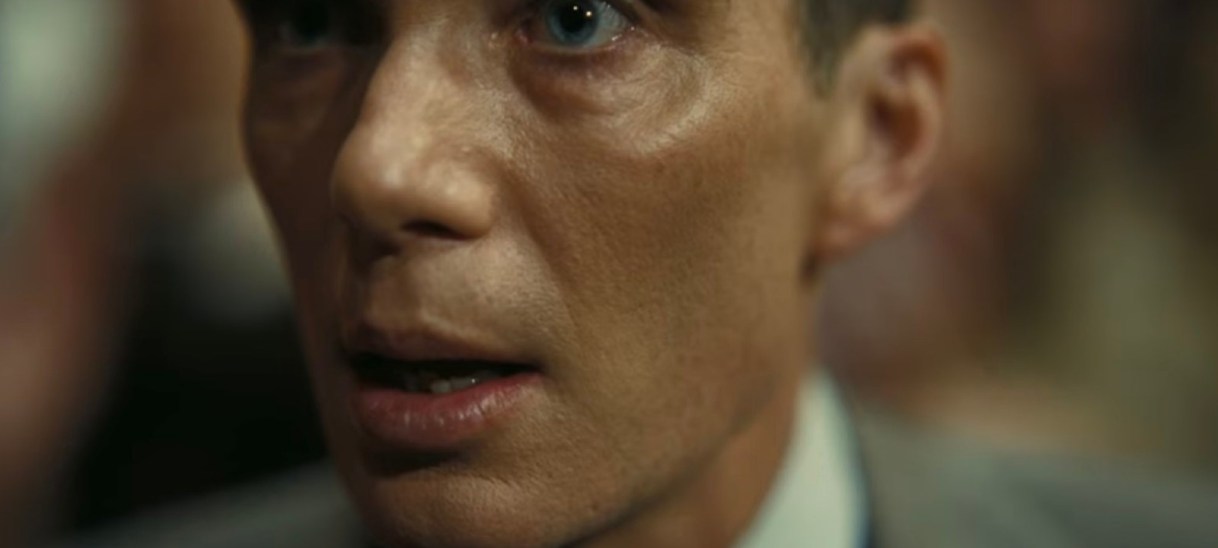
Cillian Murphy in Oppenheimer.

Before this shift in sonic philosophy there was Interstellar (2014), Nolan’s scientifically precise sci-fi sentimentalist epic. The film has a large fanbase, with many viewing it as the auteur’s best, but its flaws of flat character archetypes floating along overly contorted plots that have plagued many a Nolan script felt like a true nadir, ushering in this new era which has opened up his style and filmmaking in exciting ways. Sound in Interstellar is used more as an absence, to create moments of awe while still maintaining the authenticity of muted space travel. There are still wonderful moments of sound however, with Hans Zimmer’s iconic score and Cooper’s (Matthew McConaughey) act of grounding himself on Earth when in orbit through a simple act of listening to the sounds of nature through headphones. What lets the film down ultimately is Nolan’s over reliance on dialogue to explain concepts he was executing wonderfully already, muting the emotional swells at every turn, particularly in its lopsided final act. 

In cinema, dialogue usually gets placed on a separate physical (in a mono track in a separate speaker in the middle of the screen) and ideological track to music and sound design for increased clarity, but this mode of thinking has shifted for Nolan since Dunkirk. In the film, King and Nolan decide to democratise dialogue in the cinematic hierarchy, allowing the full breadth of audio to translate the stories being told. This approach challenged audiences’ ears, a rarity in American cinema, especially large-scale studio films, that should be commended even if you don’t agree with the result.

This is also where Nolan’s evolution as a screenwriter starts to deviate in strange and compelling ways after Inception (2010) and Interstellar. With Dunkirk, there is little characterisation or dialogue in general, with actors like Mark Rylance and Tom Hardy playing archetypes that give way to the overwhelming war narrative they find themselves trapped within. The film, now alongside Oppenheimer, is Nolan’s greatest cinematic achievement as it highlights all of his talents as a visceral filmmaker while avoiding all of his classic pitfalls: female character punishments as motivation for male characters, over-explaining concepts, and basic protagonist arcs based on core American archetypes. Nolan’s films have now become more akin to cinematic symphonies, where the artistic goal is a full sensory experience, guided through sound, to tell a simple yet engaging story.

Robert Pattinson and John David Washington in Tenet.

In Tenet, John David Washington’s character is literally called Protagonist, a nod of self awareness that allows the kinetic energy to overwhelm the audience instead of attaching ourselves to any characters, a wild filmmaking decision that works as a creative exploration in audience engagement, one that ultimately creates a hard ceiling for the film’s quality overall. Make no mistake however, there is not an absence of expository dialogue in the film. In fact, the film is mostly expository scenes with very little room given to characterisation or emotionality, but it is in the delivery method of these dialogue dumps that expresses to an audience that the words being said are only part of what is being portrayed in the moment. In understanding Nolan’s creative decision making with Tenet, there is no better scene than Neil’s (Robert Pattinson) walkthrough of the freeport before the heist. 

With the dial cranked to eleven with Tenet, Nolan rolled back these experimental concepts of cinematic sound and narrative to a surprising sweet spot that will see him recognised by his peers at the Academy Awards. Oppenheimer‘s dialogue is stickier than his previous two films, brandishing the weight of historical record to great effect. The film is clearly detailed in its research from this time, taken often from the book American Prometheus by Kai Bird and Martin J. Sherwin that the film is adapted from, which has allowed Nolan to ground the reality of the story, opening up space to create this vivid exploration in subjectivity and purpose, led through sound. Oppenheimer’s dialogue is not positioned on the sonic field as liberally as it is in Dunkirk or Tenet, valuing the historical accuracy of the people and events involved. It is, however, greatly influenced by the exploration Nolan and King took across those films, landing in a Goldilocks zone of sonic potency that is sure to define his future filmography.

Outside of Memento (2000) with its deliberately unreliable protagonist, all of Nolan’s lead characters have clear, defined minds that an audience can attach themselves to and connect with, until J. Robert Oppenheimer, a notably obtuse and withholding historical figure that even his closest friends and allies struggled to get inside the mind of. In Oppenheimer, the brilliant music and sound design allow us an entry point into an artist’s interpretation of this challenging mind through deep subjectivity, ideas that Nolan has never felt comfortable exploring until now.

Tom Hardy in Dunkirk.

It is impossible to talk about the relationship Nolan has with sound without delving into how music is used in his films, something that has also expanded in recent years. With a clear allergy to song cues, Nolan views the use of music and score like an opera, crashing waves that hurdles an audience towards the rocks of the drama.

In Dunkirk, much was made of Nolan and Zimmer’s collaborative writing through their mutual interest in the sonic phenomena of Shepard tones as both a film score and script writing exercise. In brief, Shepard tones are a phenomenon where a bass frequency either ascends or descends alongside another tone an octave high which creates an audible illusion of a perpetually ascending or descending sound. Zimmer used this as a jumping-off point for his tension-filled score, with Nolan using the Shepard Tone concept in line with the three intercut narratives to give the audience a similar sensation of perpetual movement and tension. At the time this was a radical approach to blockbuster filmmaking to offer little respite to an audience’s eardrums, but has now developed into Nolan’s post-Interstellar style.

Like Nolan, we will work nonlinearly here in regards to Ludwig Göransson’s work with the filmmaker, as his film score for Oppenheimer is in much closer discussion with Dunkirk than Tenet, his first collaboration with the director. Perhaps bluntly but no less affecting, Göransson’s score focuses on descending pieces in a work of musical allusion to the dropping of the bomb. Göransson’s piece “Can You Hear The Music” defines the film, with its swirls of strings, horns, and synths, beginning in a swell of glorious ascension, before plummeting down through descending scale progressions that are an inversion of the ascending progression. The piece also changes tempo up to 21 different times (from 180bpm to 350bpm!) in a deceptively short piece of music, placing us within the manic Neuron sparks of Oppenheimer’s brain that everyone in the film and in the audience is trying to match the wavelength with. Of all the incredible technical achievements that define the success of Oppenheimer from the editing, cinematography, performances, and production design, perhaps the most impressive artists involved in the production are the violinists that beautifully performed this piece in one take. The stuff of legends.

The film’s near-constant score which focuses on descending scales, accentuates the creeping dread that permeates the fringes of the film leading up to the Trinity test. Most of this frenetic opening two hours operate as a whirlwind of character establishments in tight office spaces and classrooms that can at times feel like Nolan directing an episode of Genius (2017) through the lens of his and Tenet editor Jennifer Lame’s emerging house-style. Where Nolan matches Göransson’s ominous tone is fascinating. With an early scene of Oppenheimer injecting cyanide into his Cambridge professor Patrick Blackett’s (James D’Arcy) apple (a disputed event in the man’s complicated life), Nolan is highlighting the undercurrent of malice and potential valuation of those that hinder his progress in his being that matches the tone set from the outset by Göransson’s score.
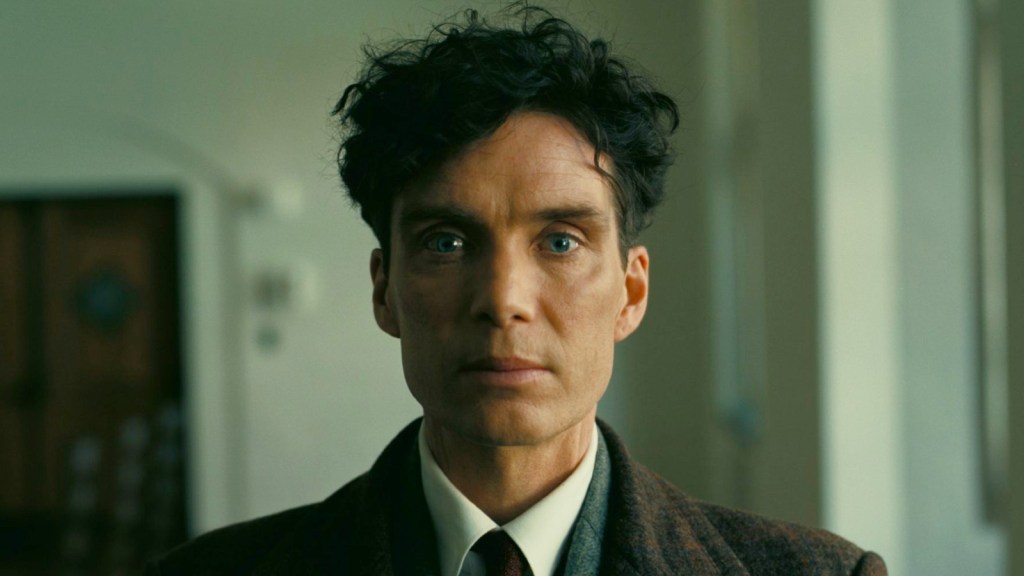
Cillian Murphy in Oppenheimer.

In Göransson’s first project with Nolan, Tenet, the composer centred his score on a layering of guitars, altering its structure through time shifting and inversion, mirroring the film’s text that has become more and more crucial to Nolan’s filmmaking process. This shift in ideology can be felt more prominently in the differences between Göransson’s work on Tenet and Hans Zimmer’s work on Interstellar. While Zimmer’s work on Interstellar is perhaps some of his best compositionally (Cornfield Chase is a masterpiece), it often soars above the film instead of permeating its core. Nolan asked the famed composer to write pieces with clear restrictions on information about the narrative which certainly allowed Zimmer to write freely, but in contrast to the following features, lacks that cohesion that allows those films to thrive.

In Oppenheimer, what allows the sound design to weave seamlessly throughout the continuous score is Göransson’s removal of any percussion. By removing this floor, King and the sound design team were able to oscillate between stabilising and destabilising the audience, matching the mind of Oppenheimer scene to scene as it is splayed out on the brilliant Cillian Murphy’s anguished face, at will. King and Göransson have a tremendous cinematic chemistry, striving for the mountainous peak of Walter Murch and David Shire in the masterpiece The Conversation (1974).

Blending sound design with score, there are sounds and music compositions that emit a mechanically demonic presence, with its metallic jittering edges and sub-bass heartbeat, which are used in the scenes leading up to the Trinity test sure to be a defining moment in Nolan’s storied career that becomes an overwhelming experience, titled “Ground Zero” in the soundtrack.

The explosion itself, the culmination of the previous two hours of manic motion of montage editing, near constant score (the first non scored scene doesn’t arrive till around the one hour mark), and propulsive soundscaping, is shown in near silence, opting instead for the introspection achieved through Oppenheimer’s anxious breaths. What else could be said in a seismic moment like this? Across three films, Nolan pulverises you with an almost constant barrage of overwhelming sound, but in this critical moment, he asks for your own moment of introspection. It’s impossible not to get swept up in the awe felt by the scientists at Los Alamos as a years-long theoretical exploration illuminates the desert sky in crystal clarity, but that feeling morphs into a solemn understanding of what this moment will mean for the rest of the world. In a film of chain reactions, this central colliding moment needed near silence, until the reality of its impact came rushing forwards in a world defining blast. No moment better captures the evolution Nolan has made as a filmmaker and storyteller in these past 10 years, and is why he will be rewarded come the Academy Awards.
MIFF 22: Darcy’s Notebook

With another great year completed at Melbourne’s International Film Festival, our writers have come out the other end bleary-eyed and brimming with excitement. MIFF 20222 was an impressively consistent festival with new releases from a combination of old masters and emerging talents, both internationally and locally.

Here, our writer Darcy has dropped his notebook full of notes and thoughts on the many films he was able to catch at the festival, all of which should hopefully be brought to larger audiences throughout the rest of the year.

Aftersun (Charlotte Wells) 2022:

A gorgeous film about age, parenthood, and mental health that has such a warm and caring heart, it allows its heavy moments and ideas to linger with the audience.

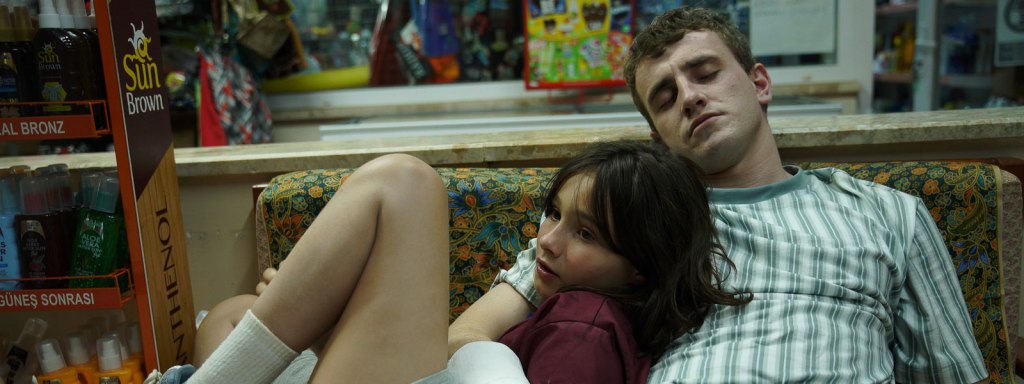
Aftersun is a debut so assured, so confidently written and directed by Charlotte Wells you will be scrambling to discover her short film work. The film is an achingly intimate portrait of a young father on holiday with his 11-year-old daughter, played touchingly by Paul Mescal and Frankie Corio.

It will be hard to find a more affecting film this year, one so beautifully written you can’t help but see yourself in both characters. I both dread and can’t wait to return to the glow of Aftersun.

Rating: 4 out of 5.
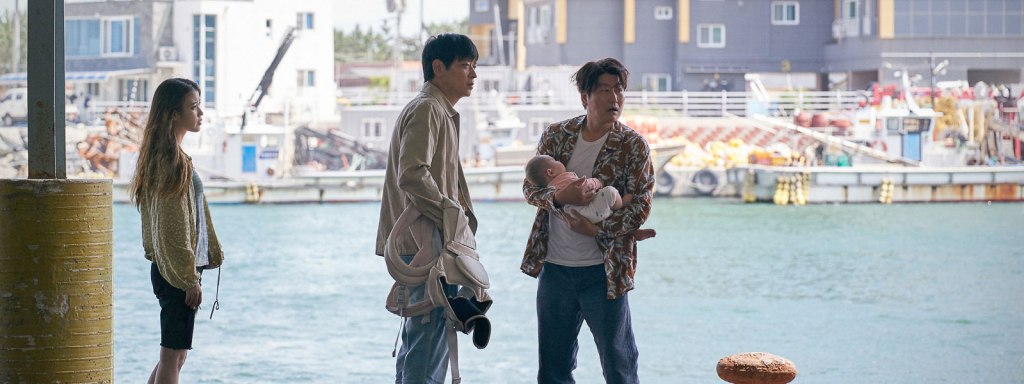
Broker (Hirokazu Koreeda) 2022:

In contention for best film of the festival, Broker is a deeply complicated but always empathetic drama from a true modern master. Hirokazu Koreeda’s films have a certain sticky quality, maturing in your mind long after the credits roll. His films will always affect you emotionally, but their true power is the depths he is able to mine from a collection of characters.

Broker, leaning into the more Korean style of cinema, is more forceful and plot-driven in its storytelling than Koreeda’s other films, but is more successful than his previous non-Japanese film, The Truth (2019).

The film is quite astonishing and deeply felt, with perhaps the only false note being its loud, heavy-handed moments. These moments are further leaned on by quite an obtrusive and manipulative score by Jung Jae-il, especially by Koreeda standards, who usually allows emotions to develop more naturally in his films.

Thank you for being born. 

Rating: 4.5 out of 5.
Decision to Leave (Park Chan-Wook) 2022:

A deeply sensual romance under the guise of a quirky police mystery. Park Chan-Wook has always had a keen understanding of his audiences, usually to an extreme effect like in Oldboy (2003) and The Handmaiden (2016). 

The film requires a rewatch as the pieces all work individually but I’m unsure as to their cohesion as the film rounds out into a melodrama. The two lead performances are complicated and layered with conflict, making the film engaging but hard to latch onto as a whole.

Rating: 4 out of 5.
Dual (Riley Stearns) 2022:

Dual (2022) is a vacuum-sealed dry comedy that owes a lot to Yorgos Lanthimos. Riley Stearns’ idiosyncratic comedic style burst onto the scene with the deeply funny film The Art of Self-Defense (2019), thanks in large part to the terrific performances by Jesse Eisenberg, Imogen Poots, and Alessandro Nivola. Like Lanthimos, it is clear actors get a certain excitement from working with his dialogue, but not all are suitable for it. It’s unclear if Dual’s lead Karen Gillan or its uber-dry dialogue lets down this film in contrast to his previous work, but it is certain to be missing a key element.

That being said, Dual is still deeply funny in places, in particular the doctor’s visits which feel the most inappropriately appropriate locale for Stearns’ dialogue. What is largely absent in the dialogue and writing as a whole, however, is any semblance of humanity and life. With this style of upfront, dry comedy writing, you lose the ability to play between the lines, as everything is pitched straight down the middle to the viewer.

Stearns has achieved success through his idiosyncratic writing style, a mountaintop many writers never reach. Now it’s time for him to seek to expand on it, engaging with his audiences more emotionally, something which would make for a pretty special film.

Rating: 3 out of 5.
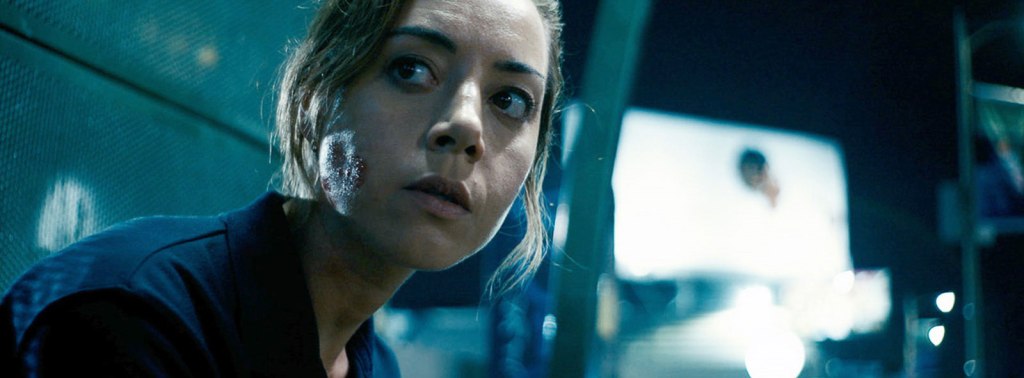
Emily the Criminal (John Patton Ford) 2022:

A solid crime drama with a pointed look at the economic lives of millennials, anchored by a truly great dramatic performance by Aubrey Plaza. Emily the Criminal (2022) works wonderfully as a cascading waterfall of small, utterly reasonable decisions until they come crashing down in its final act.

The film is a great debut by John Patton Ford that is certain to spark hopefully a long and interesting career. Ford’s script is the film’s highlight, especially in its ability to connect the criminal world of the film with the economic reality too many millennials find themselves trapped within.

Even though some of the decisions made in its final act undercut a lot of the messaging and themes, it is still wildly entertaining and painfully relatable, making it a deeply worthwhile watch.

Rating: 3.5 out of 5.
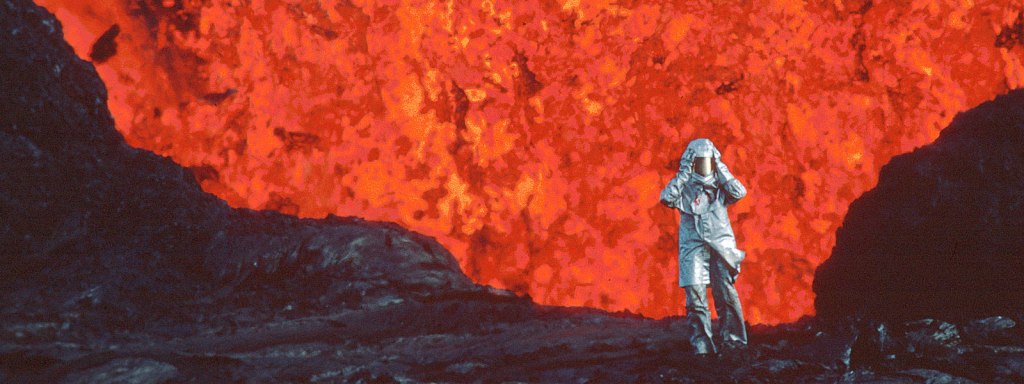
Fire of Love (Sara Dosa) 2022:

A charming, playful documentary about French volcanologist couple Katia and Maurice Krafft. Their work is highly specific but their passion is relatable and life-affirming. The film is a wonderful companion piece to the Jacques Cousteau documentary, Becoming Cousteau (2021), a clear inspiration to the Krafft’s, even down to the iconic red beanie.

The voiceover by filmmaker Miranda July is sweet and feels deeply entwined with the style of Sara Dosa’s documentary, allowing the film to work both emotionally and narratively.

A truly affecting moment was the shift from watching the couple evolve their focus from a totally self-absorbed drive for witnessing and studying volcanoes, to using their knowledge and relentless drive to protect the people living near dangerous volcanoes.

Rating: 3.5 out of 5.
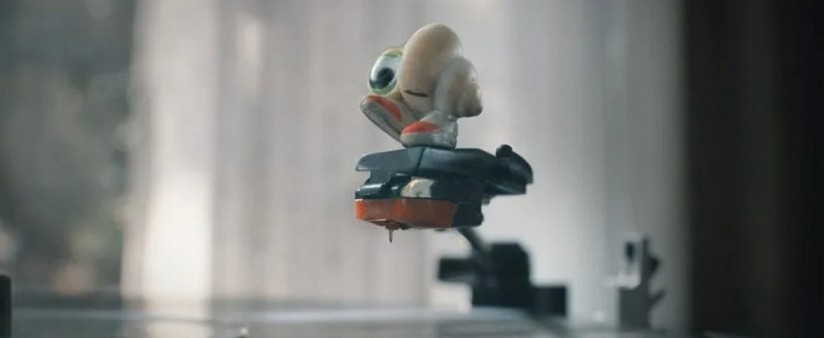
Marcel the Shell with Shoes On (Dean Fleischer-Camp) 2021:

A joyful, all-ages film that was a perfect note of contrast to the festival’s more dramatic highlights, Marcel the Shell with Shoes On (2021) will win over even the more serious audiences. Based on a viral video series that is cleverly woven into the feature film’s narrative, Marcel follows an anthropomorphic shell named Marcel and an amateur documentarian (Fleischer-Camp), who has discovered the shell while staying at an Airbnb.

The film somehow never tips over into pure saccharin which is impressive given its story, which is a credit to the writing and the performances of Jenny Slate and Fleischer-Camp. It’s impossible to not get swept up in Marcel’s journey to find his family, but you may be surprised by how affected you will be by its simple story.

Rating: 4 out of 5.
Meet Me in the Bathroom (Will Lovelace, Dylan Southern) 2022:

Based on Lizzie Goodman’s totemic book of the same name, Meet Me in the Bathroom tracks the rise of the 2000s New York rock movement after many years in the wilderness, told through the words and lives of The Strokes, Yeah Yeah Yeahs, LCD Soundsystem, and many other important figures.

A deeply complicated time period to capture as a documentary, with the looming figure of 9/11 across so much of the music that came from the scene. It’s impossible for this sobering moment to not emanate outward into the rest of the film, even when we are witnessing rock stars being born.

It’s of course going to feel sparse in comparison to the 800-page oral history time that is Lizzie Goodman’s book, but it could’ve felt more focused. The approach is scattershot and without a propulsive narrative, something that is commonly absent in most documentaries but is what separates the true greats.

Lovelace and Southern’s great achievement is in the LCD Soundsystem’s Last Waltz-esque, one-last show documentary Shut Up and Play the Hits (2012), a monument to the power of access in nonfiction filmmaking. The film also indulges in copious amounts of self-mythologising (something they allow James Murphy to do again here) but is vindicated at the conclusion of the film as we become a Murphy disciple inside a sold-out Madison Square Garden crowd.

Rating: 2.5 out of 5.
Moonage Daydream (Brett Morgen) 2022:

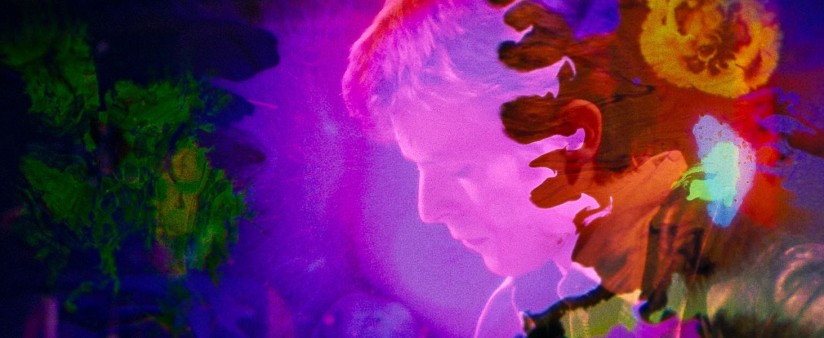
Filmmaker Brett Morgen, known for his wonderful 2015 documentary, Cobain: A Montage of Heck, declared this an experience about Bowie, not a biography of David Jones, and he truly delivered on this promise. Moonage Daydream (2022) is a deeply arresting piece of nonfiction cinema that operates as a mood piece that will be put up next to the very best in the genre.

The film weaponises its breathless propulsion in sly and interesting ways that will sneak up on you emotionally, much like Bowie’s very best work.

It takes time to show its form to you, but once it does its effect is moving and profound. Morgen found something deeply relatable in his pursuit of capturing the figure of Bowie on film, unveiling a beautiful portrait of isolation for an artist that created community, showing us an image of the chameleonic legend that you won’t soon forget.

Rating: 4.5 out of 5.
Neptune Frost (Anisia Uzeyman & Saul Williams) 2021:

Recipient of the MIFF Bright Horizons award, Neptune Frost (2021) is a gorgeously experimental afro-futurist musical that is never short on ideas.

The heart of the story is of revolution, with a character going through their own personal revolution sparking a larger revolution in others through their connection to both land and technology. Too often technology-focused sci-fi is based on fear, not on what is possible through it. There is beauty in Uzeyman and William’s use of technology that makes the film instantly unique and fascinating. 

Feels close to the films of Apichatpong Weerasethakul, focusing on a spiritual journey over a traditional narrative. This style is in stark contrast to the musical moments of the film, which play out as wondrous set pieces that create contemplative valleys afterwards. This wildly inventive approach to the film works more often than it doesn’t, toeing a nearly impossible line with confidence and style. 

You will not find another film like Neptune Frost, with the thematic density of the best science fiction stories, surrounded by wildly inventive musical set pieces that will be burned into your mind.

Rating: 4 out of 5.
Triangle of Sadness (Ruben Ostlund) 2022:

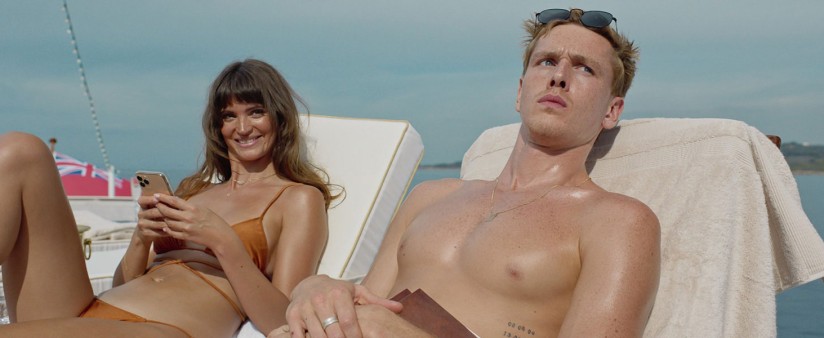
Triangle of Sadness (2022) is so arch you fear it will snap in half. Outrageous and offbeat with some truly theatre-rupturing moments, with the climactic dinner scene feeling closer to a disaster movie than the dinner sequence in The Square (2017). Unfortunately, the film is terribly bloated. This wouldn’t be as big an issue if Ostlund had put any humanity into his film. This cheapens any impact of the outrageous moments, as well as the satirical ones. 

The middle chapter is the highlight of the film, which will answer the question, “What if a Jackass skit was shot well enough to win a Palme d’Or?” 

What usually holds Ostlund’s wild scripts together is the tremendous performances of its main cast (Claes Bang in The Square, Lisa Loven Kongsli and Johannes Kuhnke in Force Majeure), which feels absent in Triangle of Sadness. His scripts are difficult to instil emotion and humanity into, but Bang, Kongsli and Kuhnke have in the past been able to achieve it, leading to those films’ great success.

Ostlund was definitely striving for a social satire in the vein of the legendary Luis Buñuel (1972’s The Discreet Charm of the Bourgeoisie) but instead felt closer to Adam McKay. The ideas of this satire are quite murky and messy, but rarely in an endearing or interesting way. 

Rating: 3 out of 5.
Saloum (Jean Luc Herbulot) 2021:

The surprise hit of the festival so far, Saloum (2021) is a film destined for cult status. A kinetic western-horror genre mashup that leaves you wanting so much more, something I pray Shudder also realises.

The story follows three mercenaries, transporting a Mexican cartel member across Africa whose plane runs out of gas over Senegal and must stay at a local village. The film is full of unique characters and is told with such style and a deft hand you won’t even notice the more fantastical moments until Herbulot wants you to focus on them.

Rating: 3.5 out of 5.
Return to Seoul (Davy Chou) 2022:

A unique mix of Korean and French cinema styles allow Return to Seoul (2022) to always feel fresh and new.

The story focuses on French-Korean 20-something Freddie (Park Ji-Min), a complicated and compelling character that elicits empathy and frustration in equal measure. She has returned to Seoul to find her birth parents, having been adopted by a french couple as a baby. Freddie has seemingly taken this trip on a whim, and as the film continues her self-destructive tendencies that seem at first like a quirk in her character, quickly form a heartbreakingly predictable pattern.

The film loses its momentum and the audience as it transitions into short, time-jumping vignettes in its final third. Not that each individual scene isn’t compelling and breathes new life into Freddie’s story, but the decision comes so late in the film’s runtime that it catches the viewer off guard, and not for greater results. The important connective tissue in this final act is unfortunately thin and leaves you mixed on a film that was rather special up until this point.

Rating: 3 out of 5.
Three Thousand Years of Longing (George Miller) 2022:

A real ‘one for me’ film for George Miller, Three Thousand Years of Longing (2022) is sure to divide audiences in ways only he can. Sandwiched between working on large-budget Mad Max franchise films, the famed Australian director has crafted a visually stunning, narratively dawdling feature that will charm and beguile audiences.

Adapted from A.S. Byatt’s collection of short stories, an important context to give the film as Miller and co-writer Augusta Gore have decided to give the film a similar structure. Leaping between casual conversations shared by narratologist Alithea (the ever off-kilter but charming Tilda Swinton) and Idris Elba’s djinn, shared in an Istanbul hotel room, and the djinn’s story of how he came to be beholden to her.

The film works in its visually dense production design which is Miller’s cinematic superpower, but never really excels in its more meandering storytelling approach. It does, however, feel like exactly the sort of film that will excel several years down the road as we live longer in these stories, constantly revisiting the couple in Istanbul for just one more story.

Rating: 3.5 out of 5.
Sweet As (Jub Clerc) 2022:

A charming, coming-of-age teen drama that feels beautifully lived in and tinged with autobiographical detail. Sweet As (2022) feels both deeply Australian but also universal, something that could allow it to really break through overseas which is incredibly exciting.

The film is gorgeously shot by the terrific Australian cinematographer Katie Milwright, allowing the natural contrast between the mining town to billow out through the Kimberley region that could easily moonlight as a travel ad for the Northern Territory.

There are rough edges around Sweet As, as most debuts do, but the emotional maturity of Clerc is what shines through in every scene. She has a keen sense and care for her characters that make it impossible not to fall in love with them.

Rating: 3 out of 5.
Something in the Dirt (Aaron Moorhead, Justin Benson) 2022:

There’s nothing like a low-budget, high-concept sci-fi on a late night at a film festival, especially by a couple of cult film legends in Moorhead & Benson. 

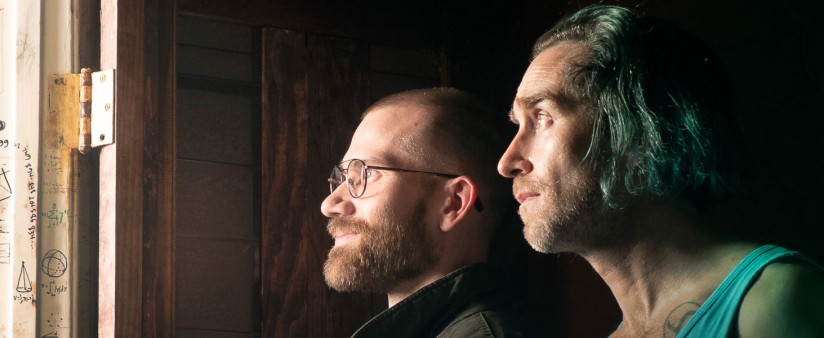
Something in the Dirt (2022) operates as a mock documentary, something that may feel like a tired narrative framing for a low-budget indie, but the directing pair makes the film seem boundless.

There is a certain awe that comes when a film feels like it could’ve come straight out of film school, but with all of the confidence of a veteran.

Rating: 3 out of 5.

MIFF 22: Citizen Ashe Has Smarts, Lacks Power

Rating: 3.5 out of 5.

Historically, tennis has been a gentleman’s game, and there’s arguably no player who better personifies this philosophy than Arthur Ashe. Embodying this same spirit is a feature-length documentary about the late athlete and activist which, while fascinating and well-told, doesn’t quite do its subject justice.

Born in the former capital of the Confederacy and raised in the shadow of segregation, Ashe overcame socio-economic disadvantage to achieve a bold ambition he set himself in his youth: doing for tennis what Jackie Robinson did for baseball. On the court, he devoured opponents with an icy elegance and disarming modesty; off it, he was a polite yet passionate advocate for civil rights the world over. His relentlessness continued well into retirement, using his name and voice in the fight against HIV/AIDS – a disease which he himself contracted, with fatal consequences.

It’s quite fitting that Citizen Ashe (2021) should be screening as part of this year’s Melbourne International Film Festival. Our city is, of course, home to the Australian Open, the Asia-Pacific’s premier tennis tournament; but it’s also the place where Ashe obtained his last ever Grand Slam title, winning the Men’s Doubles competition with Aussie player Tony Roche in January 1977. Additionally, its showing continues the Festival’s affinity with politically-minded sports documentaries, with previous examples including The Witches of the Orient (2021) and The Australian Dream (2019). That’s right – this is no mere tennis story.

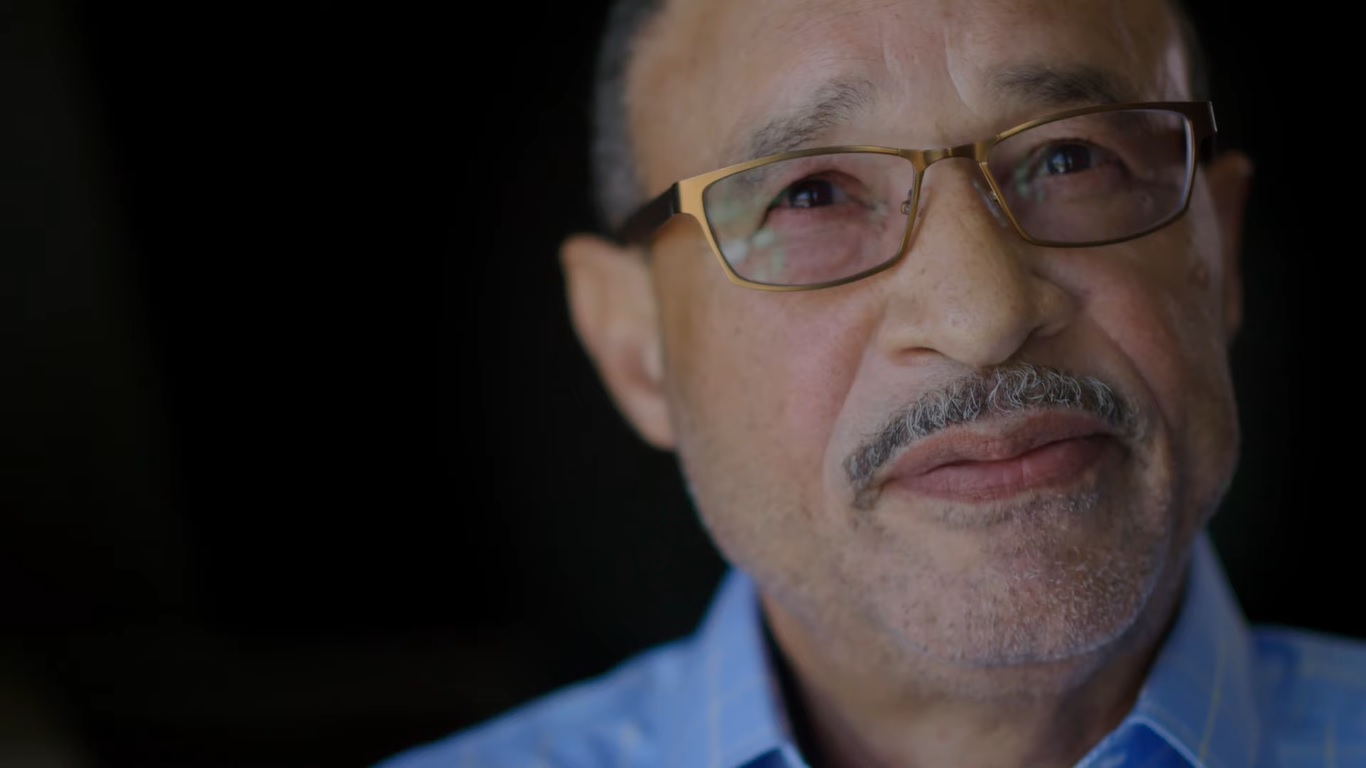
Ashe’s sporting achievements have since been overshadowed by the likes of the Williams sisters and Roger Federer, so it’s not surprising that directors Rex Miller and Sam Pollard have opted for a greater focus on the politics and social issues that shaped the athlete’s mindset. Insights are provided by the likes of Johnnie Ashe, who discusses his older brother’s upbringing in Montgomery, Alabama and his military service; and Harry Edwards, a former Black Panther who reflects on the tennis star’s passive approach to racism.

What’s most intriguing, and impressive, about Citizen Ashe is how Miller and Pollard tell their story. Fresh interviews with Edwards, Johnnie Ashe and others are woven together with archival video, and audio, of its subject appearing on current affairs programs and chat shows, all of which is expertly edited – to the point where the film negates the need for a dedicated narrator. At times, it’s almost as though Arthur Ashe is speaking directly to the viewer, his soundbites seemingly uttered with this very documentary in mind. And the ingenuity of the screenplay doesn’t end there.

Arthur Ashe’s younger brother, Johnnie is one of the talking heads in Citizen Ashe

Every good tale needs an adversary, and Ashe has one in Jimmy Connors. Having emerged on the tennis scene just as Ashe was reaching his peak, Connors appears to be everything that his counterpart isn’t, a man who’s strong, brash and loud – he’s widely recognised as one of the first “grunters” in the sport. Connors’ game-changing techniques contrast with the more traditional, tactical approach of his rival, making him the James Hunt to Ashe’s Niki Lauda, or the John McEnroe to the other’s Bjorn Borg. So intriguing is this rivalry that it could be a fascinating movie or mini-series on its own.

The same could be said for the rest of the documentary, for that matter. Every aspect of Ashe’s extraordinary life – whether it be his childhood, his studies in California, his military service, his visit to Apartheid-era South Africa, his coaching of the American Davis Cup team, his relationship with John McEnroe, his marriage to Jeanne Moutoussamy, or his AIDS diagnosis – is worthy of the feature-length treatment. But instead, Citizen Ashe condenses it all into a 95-minute runtime. While this is a commendable feat, the film needs at least another half-hour to thoroughly study its namesake, and reflect upon his legacy.

As a result of its abbreviated duration, the tone of Citizen Ashe is somewhat remote. His many achievements and milestones are made to feel more like footnotes, never reaching the cathartic highs of other documentaries about the African-American experience, such as Summer of Soul (2021). And in being so emotionally distant, the picture never becomes the profound, moving tale that it ought to be, nor does the viewer feel compelled to emulate its central figure and become a better person – as was the case in The Australian Dream.

Much like the man himself, Citizen Ashe refrains from melodrama, telling its narrative with poise and intelligence. The documentary falters as a tribute to the professional athlete, for it is overly clinical in its delivery, though it does serve some purpose as a neat introduction to those who are unfamiliar with all that Arthur Ashe accomplished in his remarkable, all-too-short life.

Citizen Ashe is streaming on MIFF Play until Sunday, August 28.

94th Academy Awards: Predictions

There are just a few mere hours until this year’s Oscars ceremony, and the team at Rating Frames are feeling more excited than ever, eagerly awaiting the live telecast and yearning to see who will be victorious.

As with most cinephiles, the three resident writers at this site have been making their prognostications as to what, or who, will win in each category, and will be putting them to the test come Monday morning, when the ceremony is scheduled to begin Melbourne time.

Below are the films that Arnel, Darcy and Tom are predicting will walk away with a coveted statuette at the 94th Academy Awards, and their personal vote, in each category.

Best Picture

What will win // What deserves to win

Arnel: The Power of the Dog // Licorice Pizza

Darcy: CODA // Drive My Car

Tom: The Power of the Dog // Drive My Car

Best Director

Arnel: Jane Campion (The Power of the Dog) // Paul Thomas Anderson (Licorice Pizza)

Darcy: Jane Campion (The Power of the Dog) // Paul Thomas Anderson (Licorice Pizza)

Tom: Jane Campion (The Power of the Dog) // Ryusuke Hamaguchi (Drive My Car)

Best Actor

Arnel: Benedict Cumberbatch (The Power of the Dog) // Benedict Cumberbatch (The Power of the Dog)

Darcy: Will Smith (King Richard) // Benedict Cumberbatch (The Power of the Dog)

Tom: Benedict Cumberbatch (The Power of the Dog) // Benedict Cumberbatch (The Power of the Dog)

Best Actress

Arnel: Kristen Stewart (Spencer) // Kristen Stewart (Spencer)

Darcy: Jessica Chastain (The Eyes of Tammy Faye) // Penélope Cruz (Parallel Mothers)

Tom: Jessica Chastain (The Eyes of Tammy Faye) // Kristen Stewart (Spencer)

Best Supporting Actor

Arnel: Jesse Plemons (The Power of the Dog) // Jesse Plemons (The Power of the Dog)

Darcy: Troy Kotsur (CODA) // Kodi Smit-Mcphee (The Power of the Dog)

Tom: Troy Kotsur (CODA) // Jesse Plemons (The Power of the Dog)

Best Supporting Actress

Arnel: Kristen Dunst (The Power of the Dog) // Jessie Buckley (The Lost Daughter)

Darcy: Ariana DeBose (West Side Story) // Jessie Buckley (The Lost Daughter)

Tom: Ariana DeBose (West Side Story) // Kirsten Dunst (The Power of the Dog)

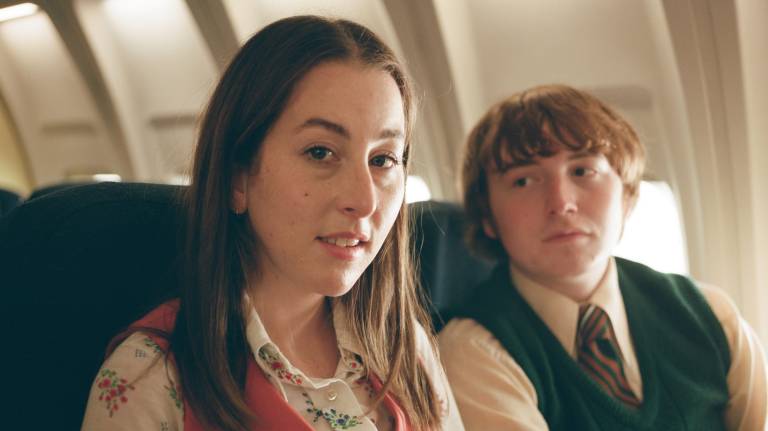
Alana Haim and Cooper Hoffman in Licorice Pizza
Best Original Screenplay

Arnel: Paul Thomas Anderson (Licorice Pizza) // Paul Thomas Anderson (Licorice Pizza)

Darcy: Paul Thomas Anderson (Licorice Pizza) // Paul Thomas Anderson (Licorice Pizza)

Tom: Kenneth Branagh (Belfast) // Eskil Vogt & Joachim Trier (The Worst Person in the World)

Best Adapted Screenplay

Arnel: Jane Campion (The Power of the Dog) // Jon Spaihts, Dennis Villeneuve & Eric Roth (Dune)

Darcy: Jane Campion (The Power of the Dog) // Ryusuke Hamaguchi & Takamasa Oe (Drive Me Car)

Tom: Sian Heder (CODA) // Ryusuke Hamaguchi & Takamasa Oe (Drive Me Car)

Best Animated Feature

Arnel: Encanto // The Mitchells vs The Machines

Darcy: Encanto // The Mitchells vs The Machines

Tom: Encanto // The Mitchells vs The Machines

Best International Feature

Arnel: Drive My Car // The Worst Person in the World

Darcy: Drive My Car // Drive My Car

Tom: Drive My Car // Drive My Car

Best Documentary Feature

Arnel: Summer of Soul // Summer of Soul

Darcy: Summer of Soul // Flee

Tom: Summer of Soul // Summer of Soul

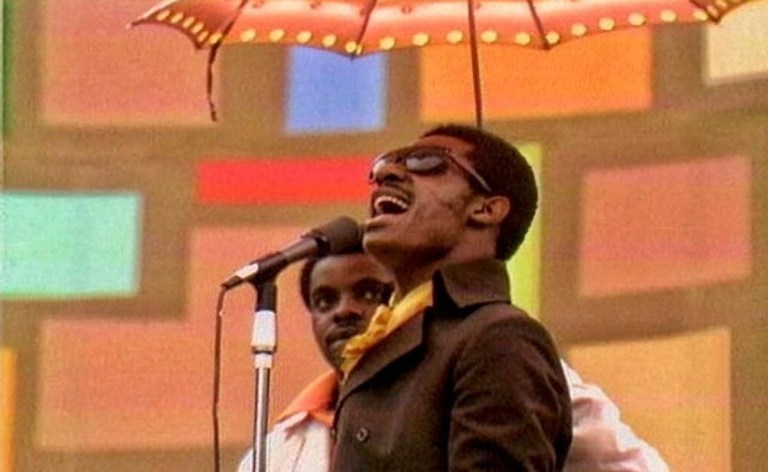
Stevie Wonder performing at the Harlem Cultural Festival, as seen in Summer of Soul
Best Documentary Short Subject

Arnel: The Queen of Basketball

Darcy: The Queen of Basketball

Tom: The Queen of Basketball

Best Live-Action Short

Arnel: On My Mind

Darcy: The Long Goodbye

Tom: The Long Goodbye

Best Animated Short

Arnel: Bestia

Darcy: Robin Robin

Tom: Bestia

Best Original Score

Arnel: Hans Zimmer (Dune) // Hans Zimmer (Dune)

Darcy: Hans Zimmer (Dune) // Jonny Greenwood (The Power of the Dog)

Tom: Hans Zimmer (Dune) // Hans Zimmer (Dune)

Best Original Song

Arnel: No Time to Die // No Time to Die

Darcy: No Time to Die // No Time to Die

Tom: No Time to Die // Encanto

Timothee Chalamet in Dune
Best Sound

Arnel: Dune // Dune

Darcy: Dune // Dune

Tom: Dune // Dune

Best Production Design

Arnel: Dune // Dune

Darcy: Dune // Dune

Tom: Dune // Dune

Best Cinematography

Arnel: Greig Fraser (Dune) // Greig Fraser (Dune)

Darcy: Greig Fraser (Dune) // Greig Fraser (Dune)

Tom: Greig Fraser (Dune) // Greig Fraser (Dune)

Best Makeup and Hairstyling

Arnel: Cruella // House of Gucci

Darcy: The Eyes of Tammy Faye // The Eyes of Tammy Faye

Tom: The Eyes of Tammy Faye // Cruella

Best Costume Design

Arnel: Jenny Beavan (Cruella) // Jenny Beavan (Cruella)

Darcy: Jenny Beavan (Cruella) // Jenny Beavan (Cruella)

Tom: Jenny Beavan (Cruella) // Jenny Beavan (Cruella)

Best Film Editing

Arnel: Joe Walker (Dune) // Joe Walker (Dune)

Darcy: Joe Walker (Dune)// Peter Sciberras (The Power of the Dog)

Tom: Joe Walker (Dune)// Joe Walker (Dune)

Best Visual Effects

Arnel: Dune // Dune

Darcy: Dune // Dune

Tom: Dune // Spider-Man: No Way Home

West Side Story is a Surprisingly Endearing Remake

Rating: 4 out of 5.

Steven Spielberg has done just about everything in his five-decade career, from horror to comedy, science-fiction to historical drama. Yet until now, there is one genre that Spielberg has not ventured into, and after seeing the final product, viewers will be left scratching their heads as to why the legendary director waited so long to do so.

In the late Fifties, amidst a period of gentrification in New York City, tensions between working-class communities are at their peak – principally the Italian-American adolescents, known collectively as the Jets, and the Puerto Rican youths called the Sharks. Caught between this feud are two star-crossed lovers, Tony (Ansel Elgort) and Maria (Rachel Zegler) whose adoration for one another risks causing an even greater rift between these warring factions.

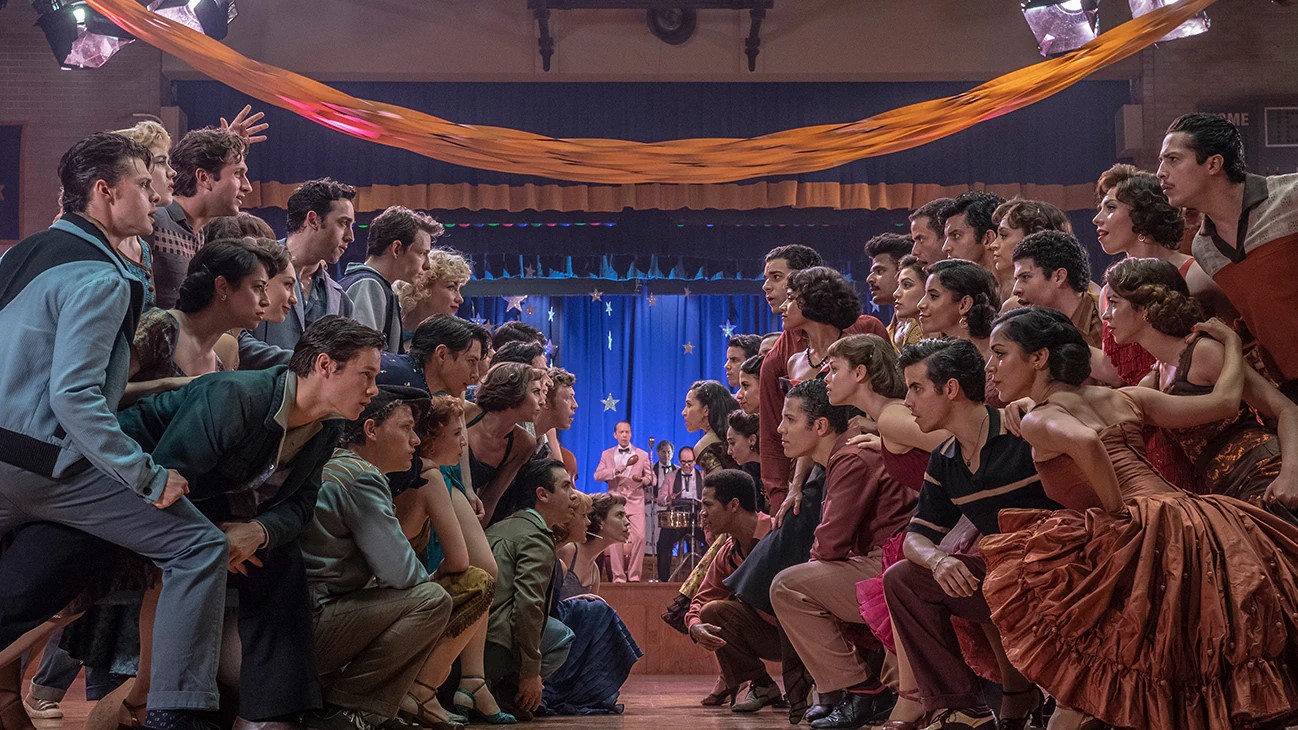
Originating as a Broadway production, Spielberg’s West Side Story (2021) is the second motion-picture adaptation of the celebrated musical, the first having originated in 1961 under the direction of Robert Wise and Jerome Robbins. The 2021 version contains plenty of homages to its film and stage forebears, the costuming being such an example – colours help to distinguish where the loyalties of the characters lie, with the Sharks being dressed in warmer colours like reds and oranges, while the Jets typically wear blue clothing.

Another, more obvious link is the soundtrack, originally composed by Leonard Bernstein with Stephen Sondheim, and re-arranged here by David Newman. None of the songs contained within have lost their charm nor their infectiousness, so even those who’ve never seen West Side Story before are bound to recognise iconic numbers like “Maria”, “Tonight” and “America”. And further connection is made through Rita Moreno, the 1961 film’s Anita, who in Spielberg’s version plays the role of Valentina, a gender-swapped Doc – the shopkeeper who mentors Tony.

Although adapting a six-decade-old musical may seem a retrograde step for a legend like Spielberg, the director does plenty to keep the material fresh. For one, it atones for the lack of representation in Wise & Robbins’ production by casting actors with Puerto Rican, Latin-American and Hispanic heritage as the Sharks – actors like Rachel Zegler, who shines in her film debut as Maria; David Alvarez as Maria’s hot-headed brother Bernardo; and Ariana DeBose, rightfully tipped as the front-runner for the Best Supporting Actor gong at this month’s Academy Awards.
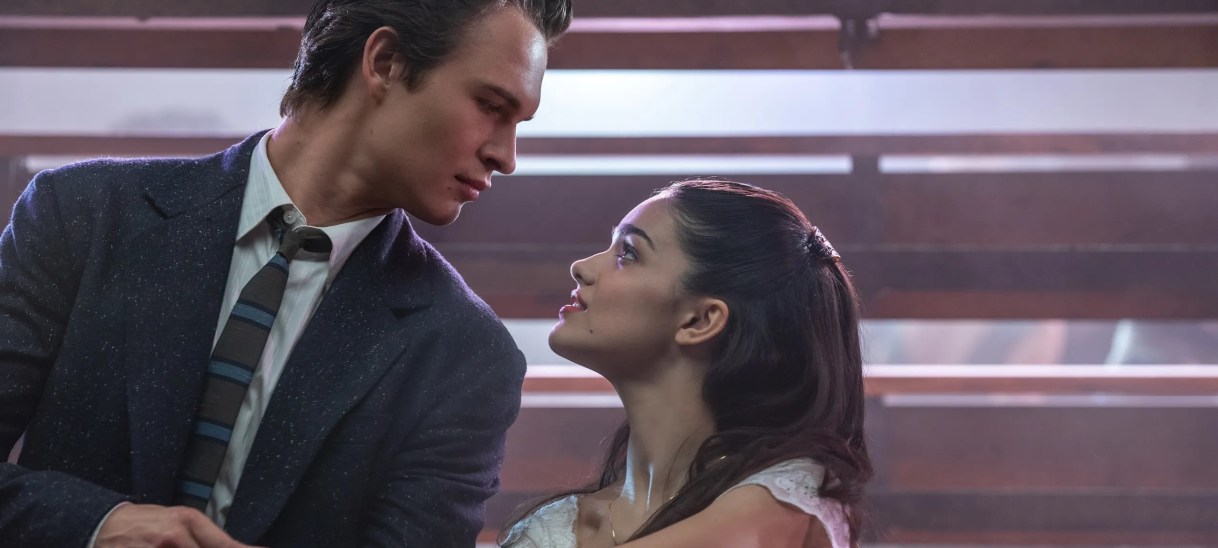
In recent months, much of the criticism surrounding West Side Story has involved Ansel Elgort in the lead role of Tony. Although not as insufferable as some commentators are suggesting him to be – his performance isn’t half bad, and his singing is rather impressive – Elgort’s presence is something of a sore-point for the film, given the allegations of assault and grooming of a minor that linger over him. But even if said allegations can be ignored, the fact remains that Elgort doesn’t possess the natural charisma of, say, a young Hugh Jackman or Ryan Gosling to carry the role of Tony.

The Jets face-off against the Sharks in West Side Story

Such a casting decision speaks to Spielberg’s lack of experience when it comes to directing musicals, which is evident elsewhere in his West Side Story too. Although there is a flamboyance to proceedings, it’s not consistent, with some scenes possessing a level of dourness that is endemic of Spielberg’s recent output; additionally, the film has a weird placement of songs – for instance, one upbeat number sung by Maria and her fellow Sharks takes place immediately following the death of a major character.

Problems like this may explain why West Side Story wasn’t the hit that 20th Century Studios hoped it would be. The Omicron wave has undeniably had an impact as well, yet in this reviewer’s eyes, Musical Fatigue is the reason for this picture’s shunning by the masses. Recently, there’s been a saturation of musicals not witnessed since the genre’s heyday, with Spielberg’s film arriving within months of films such as Stephen Chbosky’s Dear Evan Hansen, Disney’s Encanto, Sony’s Vivo, Lin-Manuel Miranda’s tick, tick… BOOM! and John M. Chu’s In the Heights.

Talking of the latter, one of the more pointed traits Spielberg’s West Side Story shares with Chu’s In the Heights is a substantial amount of Spanish dialogue, none of which is translated by text – the normal practice in this medium. Such an approach is fine in the United States, where Spanish is spoken or at least learnt by most of its inhabitants; but in a country like Australia – where most people don’t speak Spanish, nor are exposed to it in their everyday life – most viewers would benefit from the so-called barrier of subtitles to understand what is being said.

Yet even with the lack of English translations, and other gripes besides, West Side Story easily ranks as the best musical of 2021. There’s a vibrancy to the choreography and visuals that is lacking in most contemporary live-action musicals, the decades-old numbers barely need updating, and the story remains as charged, moving and timely as it was all those years ago. More importantly, the film is comforting proof that Steven Spielberg still has that magic touch, even as he enters his sixth decade working in the industry.

What’s here is more than remake of a renowned musical. With a terrific cast and welcome throwbacks, this is a vibrant adaptation that pays tribute to its originators whilst doing more than enough to differentiate itself for the better. And of course, it boasts the direction of a venerable artist who rarely ever falters – one can only hope that West Side Story isn’t the last musical to be directed by the Great Man.

West Side Story is currently streaming on Disney+.

The Stylish, Scary Last Night in Soho is Horror Done Right

Rating: 4 out of 5.

There’s a great anxiety or even terror that comes with moving to a new place, but especially for females, since they are more likely to fall victim to perverts and predators who seek to take advantage of them. This horror film is one that brilliantly plays to those fears, benefitting from the helmsmanship of an ever-solid director.

Cornish teenager Ellie Turner (Thomasin McKenzie) is leaving her rural home for the bright lights and bustling streets of London, where she hopes to fulfil her dream of becoming a fashion designer. Her romanticised notion of the city is tarnished upon arrival, with leering cab drivers, conniving roommates and loud dorm parties all making her experience an unpleasant one, forcing her to move off-campus and into a dingy flat.

Ellie’s new accommodation brings with it a series of strange dreams that transport her back to 1966 and into the body of Sandie (Anja Taylor-Joy) – a blonde who aspires to be a famous singer in West End. Initially, Ellie is enamoured by Sandie’s world and the characters that inhabit it; yet within days, these slumber-induced visions become increasingly nightmarish, before creeping their way into Ellie’s everyday life.

Last Night in Soho (2021) marks a long-awaited return to horror for director Edgar Wright, who has not dabbled in the genre since Shaun of the Dead (2004), the comedic blockbuster that garnered him worldwide fame. Not that he’s completely disassociated himself from the field, mind – in the intervening years, Wright has helmed films such as the buddy-cop parody-pastiche Hot Fuzz (2007) and the humour-laced science-fiction The World’s End (2013), both of which contain horror elements without being outright scary.

Wright’s latest feature, meanwhile, is one that’s crafted to frighten everybody and anybody, even viewers who aren’t usually startled by horror movies. The nameless monsters of Last Night in Soho are some of the most creative and original in years, ranking among the creepiest ever witnessed in the medium. What’s more, Wright is also able to generate scares by leaning quite heavily into the horror genre’s tropes, smartly utilising the clichés seen in countless other films and then subverting them – it’s rather clever stuff.

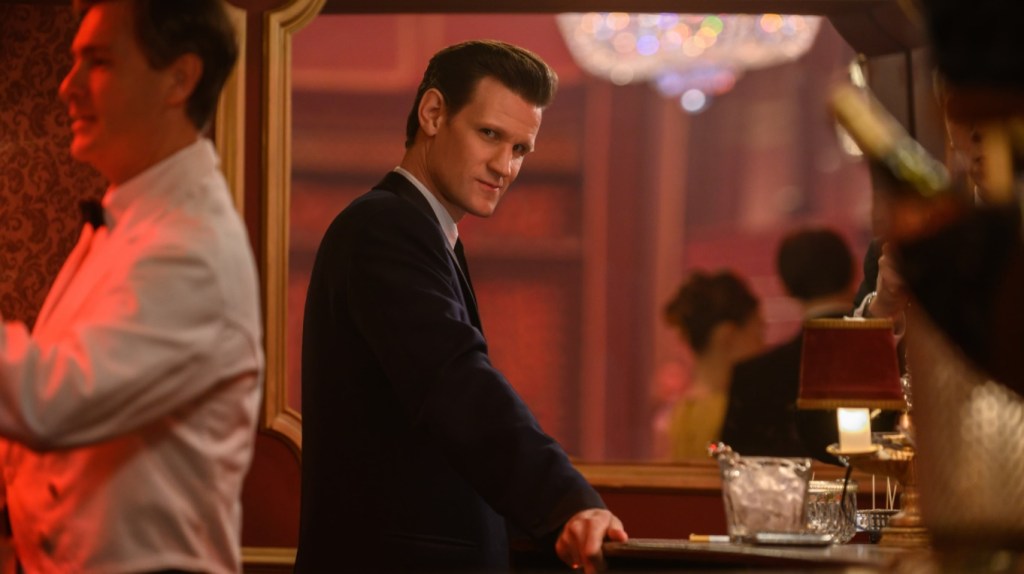
Jack (Matt Smith) in Last Night in Soho

The cast is excellent too, with great acting from all involved – praise that applies to rising stars McKenzie and Taylor-Joy, the relatively-unknown Michael Ajao, octogenarian Terence Stamp with his sinister aura, and the late Diana Rigg in her final on-screen performance. Yet of all the thespians, it’s Matt Smith who impresses most as Jack, the sharply-dressed, well-spoken London gent who grooms Sandie into becoming part of his seedy empire, his evilness becoming more pronounced as he does.

Long-time fans of Wright’s work will be gratified to know that his affinity for music has not been lost, since Last Night in Soho is paired with a fantastic soundtrack, as per tradition for the director. Tying into Ellie’s affinity for all things retro, there’s a wide array of Sixties pop songs to be heard – some that are familiar to the ear, others more obscure – that contribute to a fun, upbeat atmosphere; and when proceedings are creepier, Wright utilises the talents of composer Steven Price, who delights once again with a neat orchestral soundtrack.

While Last Night in Soho is undoubtedly a great film, there are some faults that prevent it from being perfect. The most glaring of these flaws is a persistent bugbear of Wright’s, that being a predictable screenplay, with the twists and revelations being rather easy to foresee. Of smaller consequence is the comparatively sedate direction of Wright, who has shown more liveliness and flair in releases past, such as Scott Pilgrim vs. The World (2010) and Baby Driver (2017).

Regardless, this is still a fun romp that satisfies anybody in need of a good scare. With a fantastic soundtrack, cast, monsters and ability to generate dread, Last Night in Soho represents yet more excellence from one of the most creative, eclectic and original blockbuster directors working today.

Last Night in Soho is available now on home-video and on-demand platforms.

Wes Anderson Triumphs Again with The French Dispatch

Rating: 4.5 out of 5.

He’s a director who shouldn’t need an introduction. As one of the few, true auteurs actively working in Hollywood and certainly the most popular, Wes Anderson’s name has become shorthand for offbeat, idiosyncratic cinema, and drawn a legion of passionate followers. And for those same devotees, or even newcomers to his filmography, his latest picture is nothing short of enjoyable.

The year is 1975, and in the village of Ennui, France, an American literary journal known as “The French Dispatch” is about to publish its final issue ever. Among the articles planned for its pages are an essay from Ms. J. K. L. Berensen (Tilda Swinton) about incarcerated painter Moses Rosenthaler (Benicio del Toro); details of a student uprising through the eyes of Lucinda Krementz (Frances McDormand); and the words of Roebuck Wright (Jeffrey Wright) as he recounts the kidnapping of a policeman’s son.

Anderson’s film is a visual depiction of these magazine stories, with each writer serving as a narrator for their respective pieces. All three reports are told from a contemporary perspective, with happenings in the present bathed in the auteur’s trademark pastels and those of the past in greyscale, which is occasionally livened by splashes of colour. While Anderson purists may bemoan a dearth of vibrant hues in these flashback sequences, the black-and-white photography is no less impressive, for the meticulous lighting and shading ensures a sense of artistry in every shot.

Being a Wes Anderson picture, the grey sheen applied to historic events is just one of many peculiarities to be found in The French Dispatch (2021). Another worth noting is the old-fashioned 4:3 aspect ratio, previously utilised by Anderson in The Grand Budapest Hotel (2014) – as with that film, the director uses the tighter frame and subsequent lack of space to his advantage, imbuing affairs with an intimate and cosy vibe. The difference here is that the smaller ratio is employed throughout the narrative and only changes during particular sequences, such as when the film is showing different points-of-view simultaneously.

To help realise his vision, Anderson has called upon the services of his favoured collaborators, including production designer Adam Stockhausen, whose adorable dollhouse aesthetics are visible throughout; costume designer Milena Canonero, who adorns every character in dapper, retro clothing; cinematographer Robert Yeoman, who shares the auteur’s eye for symmetry and detail; and composer Alexandre Desplat, whose score retains the trademark playfulness of his previous efforts. The result, naturally, is a film that looks and sounds unmistakably like a Wes Anderson product.

Roebuck Wright (Jeffrey Wright) in The French Dispatch

It’s a feeling that’s reinforced by the ensemble cast, with most of its players having appeared previously in Anderson’s projects – among them Owen Wilson, Adrien Brody, Willem Dafoe, Edward Norton, Jason Schwartzman, Anjelica Huston, and Bill Murray, who has been a mainstay of the director’s filmography since Rushmore (1998). Though the performances from all involved are memorable and faultless, the highlight is undoubtedly Jeffrey Wright, who exudes charisma and appears more than comfortable in his role, suggesting that he and Anderson shall have many more collaborations in the years ahead.

Because The French Dispatch contains so many of the motifs found in his previous works, comparisons with it and Anderson’s other movies are inevitable, and in most respects his latest fares well. This picture is wittier, more quotable and slightly more energetic than his preceding feature, Isle of Dogs (2018), whilst also being lighter and breezier than his earlier output; yet the narrative here is less compelling than usual, lacking the intrigue and emotional heft of Anderson screenplays past. It would probably benefit from adding more impishness to its protagonists too, most of whom are bland and indistinguishable.

There has been criticism from some quarters about The French Dispatch being formulaic and too similar to Anderson’s prior films, but in this author’s view, such claims lack merit. Although this movie is never one to stray from that which has come before – and it certainly won’t change the opinion of the auteur’s detractors – Anderson does just enough set it apart from its contemporaries through the anthological plot, greyscale imagery and intermittent use of hand-drawn animation, ensuring he can’t be accused of lazily using the same old tropes in this instance.

The French Dispatch is yet another pleasurable turn from Wes Anderson, emanating with the distinctive visuals and quirky, irreverent humour for which he is renowned, and made even more resplendent by the settings, cast, and old-school touches. For strangers to Anderson’s work, it’s an ideal entry-point; for the converted, it’s a just reward for their dedication.

The French Dispatch is currently streaming on Disney+, and available to purchase on home-video and on-demand services.

A Tranquil, Reflective Journey Awaits in Drive My Car

Rating: 4 out of 5.

For many people, the car isn’t just a mode of transport – it’s a means of escape, a source of passion, or even a way of life. It’s a fact that is recognised by Japanese director Ryusuke Hamaguchi, who has chosen to make an automobile the star of his feature-length drama Drive My Car (2021), even though it’s the human protagonists and their struggles that are given the centre stage.

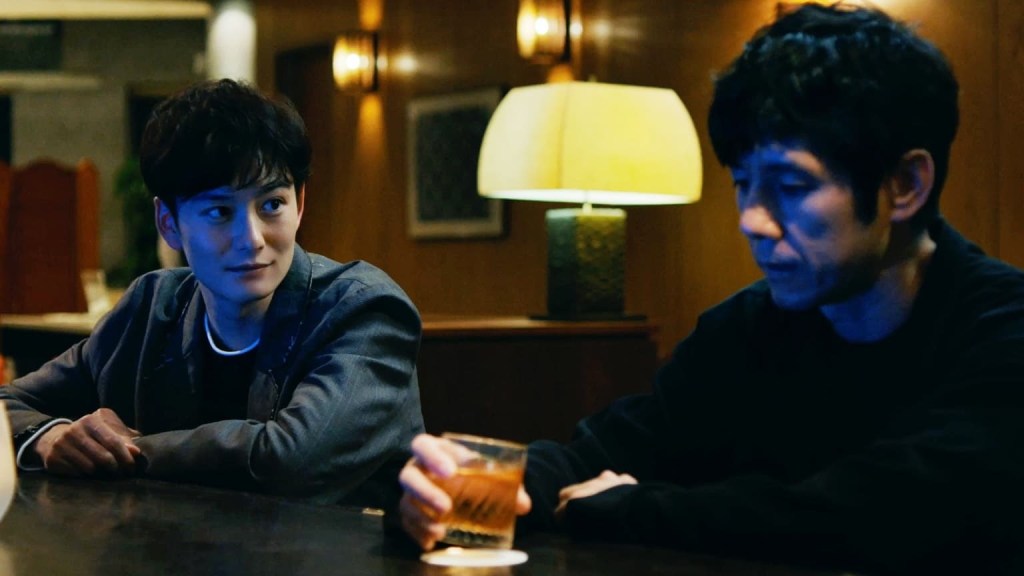
A widowed playwright, Yusuke Kafuku (Hidetoshi Nishijima) has been invited to Hiroshima, where he is to work for the next two months as a director-in-residence. Kafuku is a keen motorist, and anticipated he would be making the hour-long journey between his accommodation and the city in his cherished Saab 900 Turbo; instead, much to his dismay, Kafuku’s employers have assigned to him a chauffeur, and stipulated that he is not allowed to drive anywhere by himself.

Designated to fulfil the role of chauffeur is a young woman named Misaki (Toko Miura), who quickly earns the approval of Kafuku with her sedate driving style and shared love of motoring. In the days and weeks that follow, the car-bound companions engage in deep conversation and reveal intimate details about their past, all while Kafuku mulls over the development of his upcoming stage-play – a multilingual adaptation of Anton Chekov’s Uncle Vanya.

Oddly, Kafuku’s production of Uncle Vanya is the most engrossing aspect of this picture, offering a welcome deviation from the relative mundanity of his automotive journeys. Every step of the playwright’s creative process is shown, beginning with him meeting his financiers, through to casting and rehearsals, before a momentary glimpse of the final product – one that’s made even more absorbing by the transnational cast speaking in their native languages, a delightfully unconventional choice that more directors, be they real or fictitious, should emulate.  

As a fellow practitioner in the arts, this author was always going find the character of Kafuku relatable, yet found himself connecting even further with the main protagonist than anticipated, thanks to a mutual appreciation for driving. There is no activity more cathartic for a keen motorist than a long, solo drive; so naturally, when that outlet is taken away, a driver cannot help but feel a sense of melancholy or loss, which is palpable in Kafuku’s body language and expressions. That inability to drive is made even more painful by the winding roads and scenic views on the outskirts of Hiroshima, routes that any petrolhead would love to traverse if given the chance.

Young thespian Koshi Takatsuki (Masaki Okada) chats with playwright Yusuke Kafuku (Hidetoshi Nishijima) in Drive My Car

But this is not a film that exclusively romanticises about the automobile; instead, it’s an examination of the human psyche and soul, pondering what constitutes a meaningful, satisfying existence. These discussions are manifested in the thespians who appear in Kafuku’s stage-play – like Koshi (Masaki Okada) who joins the production as a means of reconnecting with his lost love, or Yoon-a (Park Yu-rim) who seeks to rekindle her love of performing – and in Kafuku himself, who longs for intimacy and connection yet also values his solitude.

Interesting though these philosophical musings are, they can become tiresome and will no doubt draw the ire of certain viewers, as will the ambiguous conclusion, run-time of three hours (or very close to) and the slow pacing. The latter grievance is evident from the earliest stages of the picture, with its prologue lasting a good 40 minutes before the titles appear. Moreover, since its events are recounted several times throughout the narrative, this entire first act could probably be removed altogether – as is the case with Haruki Murakami’s short story, on which this picture is based.

Pleasantly, there isn’t much else to fault with Drive My Car, which is brimming with artistic excellence throughout. The soundtrack, composed by Eiko Ishibashi, is light and ethereal, pairing impeccably with the film’s serene tone; its beauty is matched by the cinematography of Hidetoshi Shinomiya, whose framing and lighting of each shot is flawless, whether it be on-location or in the confines of Kafuku’s Saab. And then there’s the extraordinary cast, every member of which gives a dedicated, naturalistic performance regardless of experience.

Drive My Car is a pensive, genteel and tender drama made transfixing by its behind-the-scenes observations of an unusual stage production, reflections on what it means to be human, and beautiful driving sequences across the landscapes of Japan. Even with its drawbacks of length and slowness, Ryusuke Hamaguchi’s film is one of 2021’s best, and should be a strong contender for the upcoming Academy Awards.
Drive My Car will be screening in select theatres from February 10th.

Spencer sees Kristen Stewart Shine in a Royal Thriller Masked as a Drama

Rating: 4 out of 5.

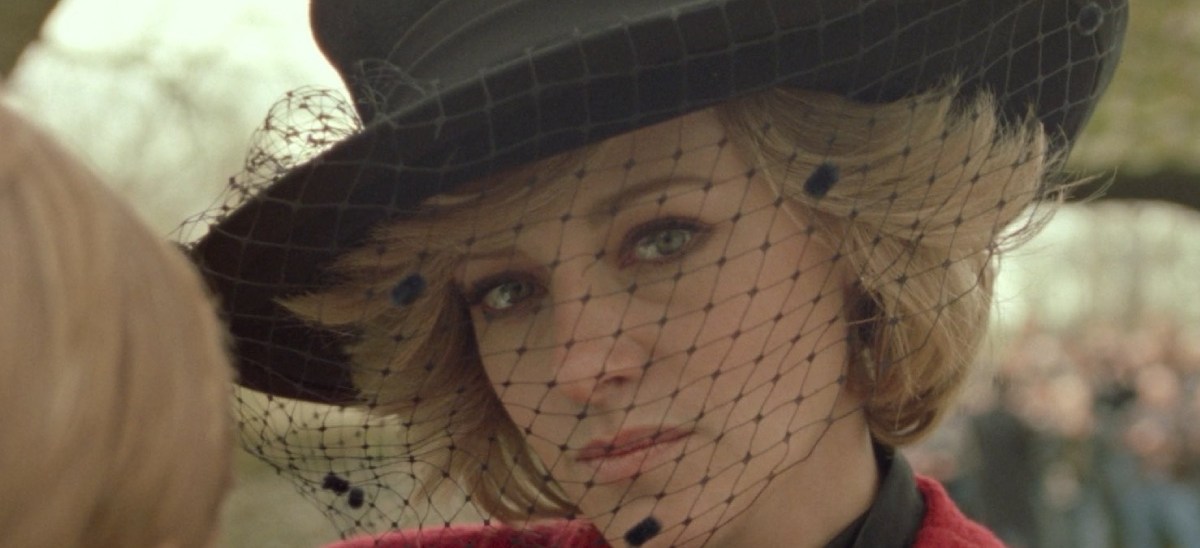
From the very moment Pablo Larraín’s Spencer (2021) opens, it makes sure to emphasise that the film is a “fable from a true tragedy”. In essence, the film isn’t a factual retelling, albeit many will see the truth in how this fictional drama around Princess Diana portrays her internalised trauma and struggle for a semblance of normality in an otherwise abnormal world.

From the films outset, Larraín establishes the very unsettling tone that will persist for the rest of its 105 or so minutes. We open to a convoy of army trucks driving to the grounds of the Sandringham Estate where the film is set, with soldiers unloading multiple boxes labelled with ‘Barrett .50 caliber’. Amidst this convoy is a dead pheasant on the road — a symbol that plays a big role later on — narrowly not being flattened by the large vehicles passing by. The soldiers situate these boxes in a kitchen where it is revealed some moments later that they are actually filled with food, not guns, but as the film progresses they may as well have had guns in them.

This brings us to Diana (played incredibly by Kristen Stewart) as she seemingly struggles to find her way to the Estate in time for a Christmas Eve dinner and weekend with the Royal family. The land is familiar to her as she grew up in the neighbourhood, but she is lost. It’s a well crafted opening sequence that really establishes the unnerving events that will take place over the course of the Christmas weekend in the film, as Diana begins to break away from the grip of the structured life she leads.

Spencer revolves around a short window of time in the early 90s when Diana and Prince Charles (Jack Farthing) were growing increasingly estranged from one another (especially as news of an affair circulated). Larraín focuses on Diana’s response to this truth and crafts a series of spellbinding scenes that leave you wondering whether you’re actually watching a drama or the year’s best thriller.

One of those scenes occurs early on in the film as Diana reluctantly joins the rest of the royal family for a Christmas Eve dinner. Larraín masterfully captures the anxiety plaguing Diana as she is essentially made to share a space with the cheating Charles while wearing a pearl necklace that he has also implicitly gifted to his mistress. As the scene progresses, this necklace continues to tighten around Diana’s neck, and Johnny Greenwood’s pulsating score accentuates that tightness, ultimately extending it beyond the screen and wrapping it around you like a straitjacket — you can feel the suffocation taking place. Eventually, Diana rips the necklace off which lands in her pea soup, and she ends up stuffing her face with the peas and pearls. By this point, Greenwood’s score has reached a crescendo and is now dying down — it is experiencing the same relief that Diana is experiencing.

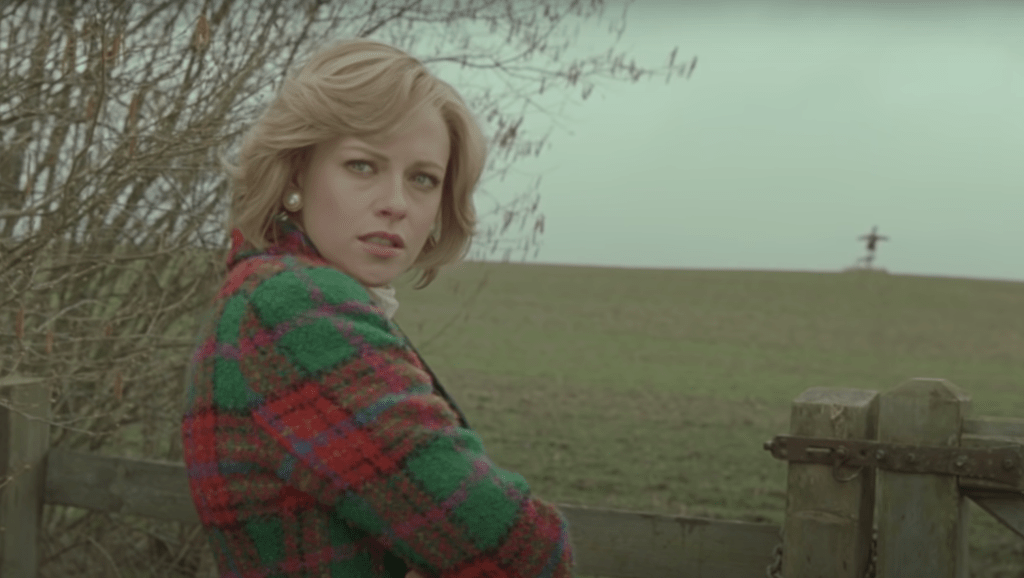
Kristen Stewart in Spencer

There are multiple sequences like this in Spencer that border the fine line of drama and thriller as various elements like story, sound, camerawork and performance work in tandem to highlight the anxiety Diana is experiencing. Larraín took a similar approach in his melancholic drama, Jackie (2016) — the biopic on the First Lady Jackie Kennedy (Natalie Portman). The two films share various similarities including the focus on a glamorous public figure of a country, the aforementioned focus on the internal trauma and struggle that comes with that lifestyle, and the very sombre tone.

It is through Stewart’s performance though that we come to perceive how far from normal Diana’s situation was. Stewart plays Diana with a degree of verisimilitude (tapping into the very innocence of her gestures and expressions) and relatability that can be best quantified through Stewart’s own star persona and her very gentle, reserved demeanour in the public eye. Stewart wholly embodies Diana and gives her an added layer of complexity that may have escaped the public eye.

Cinematographer Claire Mathon (best known for shooting one of 2019’s best films, Portrait of a Lady on Fire) does an incredible job at capturing both the loneliness Diana experienced and the suffocating lifestyle of being a royal. She uses a Super 16mm camera for the most part and focuses on sprawling wide shots that frame Diana alone in the vastness of a world that overwhelms her; high angle shots that place an emphasis on the overbearing and watchful eye of those around her; and close-ups and extreme close-ups during interior sequences to heighten how confined and constricted she is in the artificial world she’s now a part of.

The film isn’t perfect though as Steven Knight’s screenplay is sometimes too on-the-nose and just not subtle enough which would make sense if this was a beat-for-beat retelling, but because there is a level of fictionalisation going on here, there could have been less obviousness in some of the dialogue spoken. The supporting cast is also quite unused but that actually makes sense in the wider scheme of things given this is focusing on Diana and is emphasising that distance between her and others which plays into the muted ambience Larraín is going for.

There’s a particular moment towards the films end where Diana ponders over how she will be remembered in the distant future. She notes that Elizabeth the first has been reduced to “The Virgin Queen” while George the third would be known as “The Mad King”. While the tragic circumstances of Diana’s life and death are known, if Larraín’s Spencer is anything to go by, Diana drives into the sunset on her own terms.

Spencer is currently screening in cinemas nationwide.

Best of 2021: Arnel’s Picks

With another year having drawn to a close, Rating Frames is looking back at the best new releases of the last twelve months.

It was a difficult year for the medium, owing to numerous delays and cancellations – these retrospectives would be quite different had MIFF been able to run its full schedule – but there were still some excellent films released that we all wanted to celebrate.

In the last of our end-of-year articles, Arnel Duracak will be revealing his ten favourite pictures of 2021.

In arguably one of cinema’s most challenging years ever, 2021 surprisingly stood the test of time to become one of the best years for films and film lovers in the 21st century.

There were films by Paul Thomas Anderson, Steven Spielberg, Wes Anderson, Denis Villeneuve, Todd Haynes, Edgar Wright, Jane Campion, David Lowery, Lana Wachowski, Steven Soderbergh, M. Night Shyamalan, Shaka King, Zack Snyder, Sean Baker, Mike Mills, James Gunn, Lin Manuel Miranda, Adam McKay, and Ridley Scott (two from him) all coming last year, and that’s just the tip of the iceberg.

My point is, as impacted as cinema was in 2021, there was a silver lining in terms of the films we got from the large pool of iconic filmmakers available. My list is a sum of my experiences with some of those filmmakers and their films, and here’s to a promising 2022.

10. The Last Duel

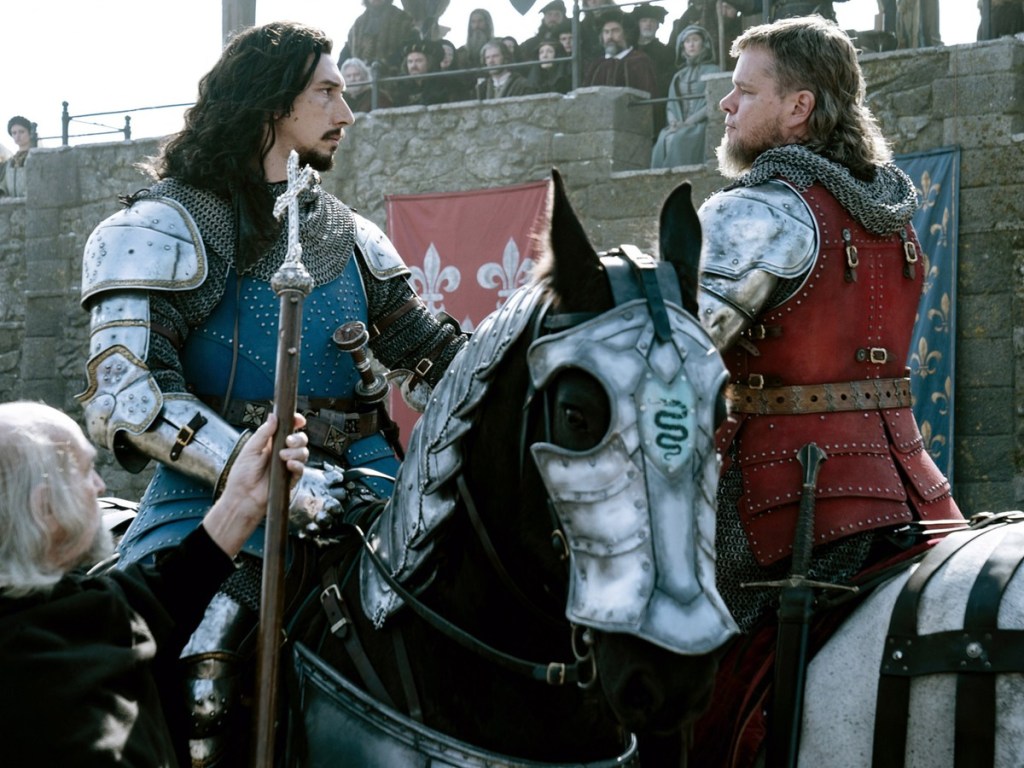
Having one new Ridley Scott film these days feels like a rarity that needs to be savoured, but two? Now that’s like seeing a UFO. But The Last Duel isn’t just rare because it’s a film from a legendary filmmaker in his later years, it’s also a film that doesn’t come around too often. In fact, this film is Ridley Scott at his directing best, all the while bringing in the grit and tension that make his films so enjoyable.

Through a chapter like structure, this film is about the closest thing we have to Scott’s iconic Gladiator (2000) as it keeps you engaged right throughout courtesy of some clever editing and writing, and it sees Jodie Comer deliver her best performance yet (even outshining her male counterparts Adam Driver, Matt Damon, and Ben Affleck to a lesser extent given his minimal on-screen time).

The Last Duel is also memorable due to its practical filmmaking (incorporating practical combat rather than taking the easy route through CGI), well worked story, and captivating performances. Unfortunately, Scott’s other film of 2021, The House of Gucci, doesn’t hit the same high as this one but both are worth watching if not for want, then for the icon that is Ridley Scott.

Currently streaming on Disney+.

9. Nobody

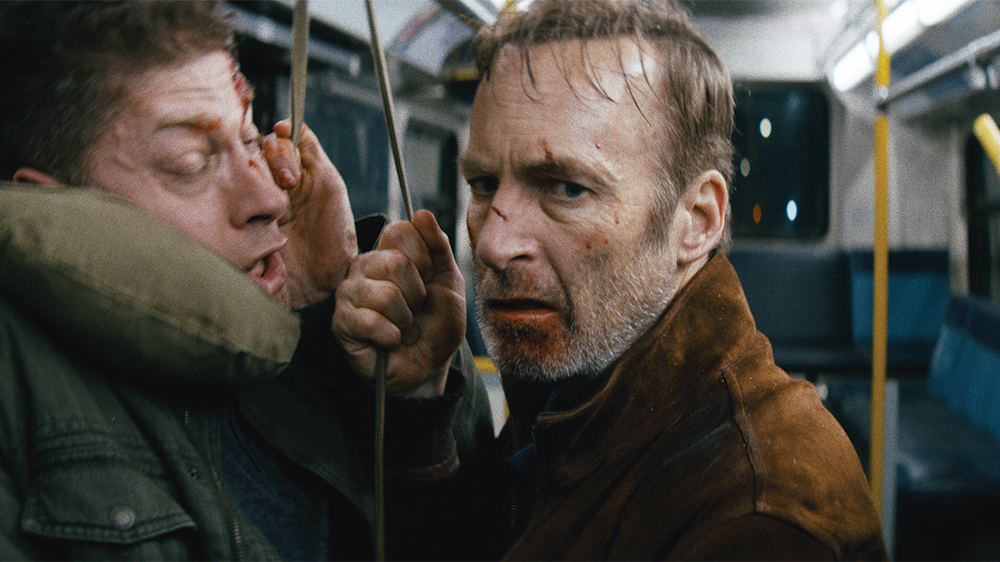
I can only imagine that screenwriter Derek Kolstad’s logline to get this screenplay green-lit was “John Wick but with Bob Odenkirk dialled up to 11”. Nobody is the John Wick (2014) of 2021 and this was one of the first films I saw in a packed cinema at the start of 2021. It was an exhilarating experience and one that got me excited to get back into the cinema.

With a relatively simple premise that sends Odenkirk on a revenge killing spree after his daughter’s Hello Kitty bracelet is nabbed during a failed house robbery, Ilya Naishuller’s Nobody is a joy ride from start to finish. While the film doesn’t capture the awe and suddenness that came with seeing a rampant Keanu Reeves in John Wick back in 2014, Nobody is still a rowdy 90 minutes at the cinema.

The closing sequence is one of my most memorable from last year with a shotgun wielding Christopher Llyod going berserk alongside Odenkirk — Doc and Saul Goodman really paint the town red here.

Currently streaming on Prime and Binge.

8. The Mitchells vs. The Machines

When adding films to my top of the year list, I kept asking myself “why does this film deserve a spot on my list?”; in the case of The Mitchells vs. The Machines the answer was pretty simple: there wasn’t an animation like it in 2021.

Michael Rianda does a stellar job with telling a story about family and the drama of family life, while also managing to tap into ever present fears around technology as it becomes more advanced. This animated road movie is essentially We’re The Millers (2013) meets I, Robot (2004) but it’s actually funny and it actually handles its subject matter quite well.

The animation style here has been spoken about a bit, and while it does take a bit of time to adjust to the striking style like with Spider-Man: Into the Spider-Verse (2018), the animators prove that animation doesn’t need to be a cookie cutter process.

Currently streaming on Netflix and available on DVD.

7. Minari

The second of my two 2020 films seen in 2021 courtesy of Australia’s awful theatrical schedule, Minari is a compelling piece of storytelling by Lee Isaac Chung that focuses on themes of family, loss, the American dream (or whatever that means today), and the immigrant experience.

With a cast that gives it their all (comprised of Steven Yeun, Han Ye-ri, and Youn Yuh-jung whose performance won her an Oscar), a well written script, and excellent direction, Minari has a bit of everything for everyone.

Coming from an immigrant background with refugee parents, this film really hit home in terms of the difficulties families experience when moving to a new country and the struggles of growing up relatively poor. If you haven’t seen Minari yet, what are you waiting for!

Currently available on home-video and on-demand services.

6. The Father

The Father is a heartfelt and considerate film that provides a unique outlook on the struggles of dealing with dementia from the perspective of a character dealing with the condition.

Director Florian Zeller directs his play of the same name and he’s evidently had the look of this film down pat for a while — focusing on enclosed spaces with lots of mid-shots, close-ups and extreme close-ups and using space to his advantage.

With Anthony Hopkins winning his second Best Actor Oscar and making history as the oldest actor to win a Best Actor Oscar at the ripe age of 83, this film is all about the performance. It’s an interesting idea to look at the condition from the perspective of the patient, and Zeller does so by brilliantly playing with time through smart editing and staging (take note Nolan).

While this film is technically listed as a 2020 release (as is another on this list), Australia unfortunately has an awful theatrical window so I’ve had to adjust accordingly and this film deserves a place on my list. 

Currently streaming on Prime Video and Foxtel Now.

5. Dune

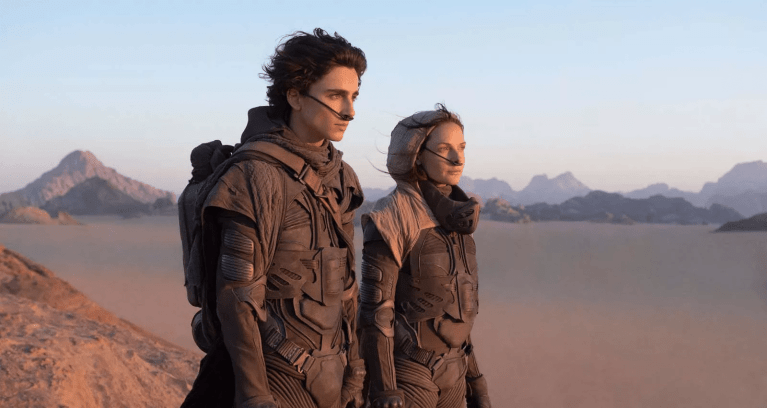
Having read Frank Herbert’s novel of the same name shortly before its release, Denis Villeneuve’s Dune is blockbuster filmmaking at its very best that honours Herbert’s writing through visual splendour that only the cinema can offer.

The film has everything you want from a blockbuster: scale, mesmerising world-building, a lived in feel, a large ensemble, wondrous set pieces, a resounding score, and (for the most part) grounded storytelling.

Villenueve has once again proven his worth by tackling a piece of fiction and an iconic title often deemed unfilmable due to its scope and depth, and he’s left his imprint on it in the process. He incorporates his fondness for slow cinema with plenty of moments of recollection and contemplation to be had, and he sets the stage for a sequel that will no doubt have a lot more riding on it given the success of this picture (especially considering his 2017 feature, Blade Runner 2049 was a box office flop).

The film is not flawless given that characters aren’t all that interesting and the performances are quite mute (there’s not one that stands out from the other), but it’s a fitting first adaptation of half of Herbert’s novel and lays the foundation for a (hopefully) more spectacular part two.

Currently screening in theatres nationwide and will soon be on Blu-Ray.

4. C’mon C’mon

A film that was unbeknown to me for the majority of last year, C’mon C’mon is one of those cozy and warm films that you would just want to hug if it was a tangible object.

Mike Mills writes and directs this tender story of connection and self-discovery, with two resounding performances from the incomparable Joaquin Phoenix and newcomer Woody Norman. Phoenix plays Johnny, the uncle of Norman’s character Jesse, and the two of them spend the film together after Jesse’s mother leaves town for a week or so to tend to her mentally ill husband. What ensues is a sweet and earnest film that revolves around a shared journey of self growth as the two characters confide in one another and open each others eyes to the world around them.

The film is shot in black and white which works to its advantage as, even among the very colourlessness of the world, the two characters stand out like a sore thumb; in other words, by being in each others company and experiencing the world through unfiltered conversations (particularly from Jesse), these two become the most colourful parts of the world. Mills meticulously builds his story through the characters’ shared experience to the point where their bond and relationship leads Johnny to view the world in a different light and have a much needed awakening or wake up call.

Children and their world view is at the forefront of the film as Johnny interviews various child subjects due to his radio profession, but Jesse is his gateway to something more real, and Mills makes sure that reality is felt beyond the diegetic world. 

Releasing in select Australian cinemas on the 17th of February 2022.

3. In The Heights

In what felt like the year of the musical with West Side Story, Tick Tick Boom, Dear Evan Hansen, and Annette, it was In The Heights that reigned supreme in 2021. I’m usually not a big fan of the musical genre — with The Umbrellas of Cherbourg (1964) being an exception — but In The Heights rekindled my faith in the genre and in its future in cinema.

Jon M. Chu directs the hell out of this adaptation of Lin Manuel Miranda’s first successful broadway musical,  which is filled with brilliant choreography and item numbers, a dedicated cast, an infectious energy that sucks you in the longer the film plays out, and a considerate, thought provoking perspective on gentrification and the Latino community at its core.

I must say, I’m yet to see West Side Story, but In The Heights was really the film to get me excited for everything else that would grace our screens in 2021, and it came at the right time during the despondent events that continue to plague the world. 

Currently available for rent on Prime and for purchase on DVD.

2. Pig

Michael Sarnoski’s Pig moved me in ways that no other film in 2021 had. With a simple yet gripping story and an emotionally charged Nicolas Cage cashing in his best performance in years, this film hit all the right emotional chords for me — leading me to rewatch it a few days after my initial viewing.

Pig doesn’t go down the conventional route of a revenge thriller even though it might appear that that’s the direction Sarnoski is heading; instead, the film is about reflection, mourning and a wider commentary on how we forgo what we love in favour of a life of conformity in a capitalist system where we ultimately lose sight of who and what we are.

There are so many layers in Pig for a runtime of around 90 minutes, and had Licorice Pizza not been released, this would have been at the tippity top of my list. 

Currently available on home-video and on-demand services.

1. Licorice Pizza

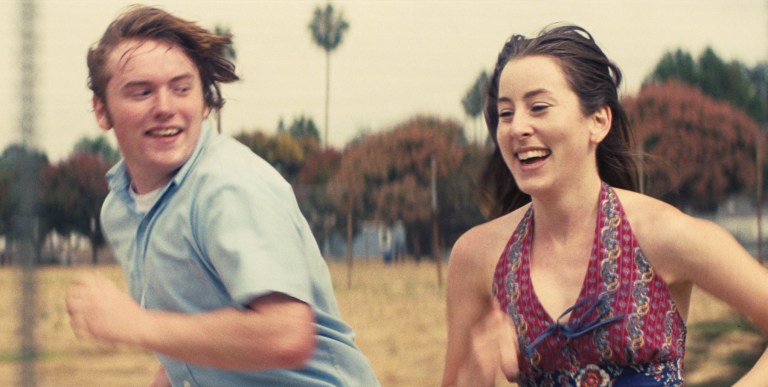
That brings me to Paul Thomas Anderson’s latest, or the quintessential film of 2021. It takes everything we know and love about PTA — his undying connection to the San Fernando Valley, the 70s period, characters that are larger than life, the themes that underpin his work, the formal devices from his cinematic toolkit — and meshes it all into one. The result is a heartwarming tale of self-discovery and companionship, and one that traverses the fine line of adolescence and adulthood while managing to bridge the two worlds together.

Acting newcomers Cooper Hoffman (Phillip Seymour Hoffman’s son) and Alana Haim (from the pop rock band Haim), deliver captivating and confident performances of youth angst and free spiritedness. Their chemistry is magical and infectious and it’s hard not to see bits of yourself in their performances (such is the magic of PTA’s screenplays).

Licorice Pizza was always going to be a shoehorn for one of my favourite films of 2021 due to the man at its helm, but it deserves all the praise it has received and it deserves to be seen on the biggest screen you can find.

Currently screening in select theatres nationwide.

Honourable Mentions: Encanto, Annette, Judas and the Black Messiah, The Matrix Resurrections