What happens when you put three lead actors, with completely different acting chops, on the screen together? The answer is a hodgepodge of nothingness. It’s hard to know whether that fault lies with the A-list trio of Dwayne Johnson, Ryan Reynolds and Gal Gadot, or whether it’s because Rawson Marshal Thurber’s Red Notice (2021) is a film wrought by the same inadequacies that have plagued similarly awful films before it.
Being one of Netflix’s most expensive films at $200 million (I believe Scorsese’s 2019 gangster film The Irishman might still hold that title) and their most viewed opening ever, you’d think that the next 115 minutes will be something that’s sure to be worth your time. Unfortunately, this film manages to look both expensive and cheap at the same time as it’s ridden with unflattering CGI, flat performances, and contrived storytelling.
The film wants to be a mix of Raiders of the Lost Ark (1981) and Mission: Impossible (any from that franchise), but ends up becoming something more akin to Tower Heist (2011) and basically any of the films Johnson and Reynolds have been in prior.
It’s a film that centres on a historical artifact (instead of the lost ark, you have three golden eggs once gifted to Cleopatra) and sends three different, albeit similarly minded characters on a goose chase to locate all three eggs. The characters in question are John Hartley (Dwayne Johnson), Nolan Booth (Ryan Reynolds), and The Bishop (Gal Gadot). Hartley wants to secure the eggs and put Booth and Bishop behind bars for their thevious crimes, while Booth and Bishop are out to find the eggs in time for an Egyptian billionaire’s daughter’s wedding for a large pay-out.
Ryan Reynolds & Dwayne Johnson in Red Notice
Honestly, the actual premise isn’t what drives this film into the dustbin of film history, it’s everything in-between. The filmmaking doesn’t have any flair and is really banking on the chemistry between the three leads who all seem to be playing the lead in their own movie here. Reynolds is channelling his inner Deadpool and really every character he has ever played with those cheesy one-liners and shtick that never lands; Gadot is popping up when you least expect her to and kicking everyone’s butt like Wonder Woman; and Johnson just seems to be there for the ride as the big stiff brute with zero charisma that reaffirms why his desire to be Bond would be a kick to action’s figurative groin.
The film is clearly inspired by the aforementioned films, with comparisons also coming in with the likes of the James Bond and National Treasure films, but Red Notice is also equally uninspired. It’s a film thwarted by all the cliches that subsume Reynolds and Johnson’s recent films: from a level of incessant self-awareness to the worn out buddy-cop plotline that should be retired at this point (I’m looking at you, the soon-to-be acquired Jason Momoa & Dave Bautista buddy-cop film).
Not to mention, that self-awareness becomes so intolerable that at one point Reynolds’ character even sarcastically calls the final egg in the journey the MacGuffin. If you’re blatantly going to point out the unimportance of a plot device that is supposed to be driving the events of the narrative, then you might as well break the fourth wall while you’re at it. In other words, the audience is treated like they’re the ones silly enough to watch this film — which I guess we are.
Netflix and the big studios have become too comfortable in churning out money for pop-corn cinema that really could have been used better in more capable hands. I’m certain that 60% of this films budget went to the star trio alone and in turn, you’re left with characters that don’t captivate you, performances that are drab, and a plot that deviates too much like a zig zag road. The recent Netflix feature Army of Thieves (2021) at least had something that separated itself from all the heist and artifact films before it, but Red Notice doesn’t even try to be different.
After 12 long years away from the big screen, the extraordinary auteur Jane Campion has returned, backed by Netflix, with an adaptation of Thomas Savage’s 1967 American western psychodrama The Power of the Dog (2021). The film centres on two brothers, the charismatic but menacing Phil (Benedict Cumberbatch), and the meek and gentle George (Jesse Plemons), successful Montana ranchers whose lives are quickly changed as George decides to marry the widowed mother Rose (Kirsten Dunst), who brings her doctor-to-be son Peter (Kodi Smit-McPhee) to live with them on the ranch.
Phil sees this incursion by Rose and Peter as a personal affront to his ideal world and responds by setting out to torture Rose psychologically in a sequence of scenes that has Campion at her venomous best.
The Power of the Dog sits on a knife’s edge for the entire runtime, with Campion keeping her cards close to the chest as the drama unfolds with the patience of a long novel. There are four central characters to the film and the audience is unsure throughout who is gaining the upper hand in the family dynamic and the film as a whole.
The film has a certain offbeat cadence in its storytelling. It will sit in quiet moments we are yet to understand the importance of, while other scenes quietly obscure that dramatic temporal shifts in the characters’ lives. A more traditional version of this film would climax with a violent confrontation between brothers, but the power of Campion’s writing and Savage’s prose comes from how we are being led through the fog into an illuminating, yet rather understated final act.
What’s always jumped out to me about Campion’s writing is her ability to complicate seemingly archetypal characters into three-dimensional figures. There are countless examples in fiction of the sorts of characters in The Power of the Dog, but it’s Campion’s masterful command of storytelling that blooms in the grey areas, not by reducing everyone down to their lowest moments, but by elevating the humanity of even the most abhorrent figures.
Set in Montana but shot in New Zealand, The Power of the Dog relishes in the rolling hillsides of Campion’s homeland that feel overwhelming and mythical all at once. You truly feel the seasons change over the course of the film, from the encroaching white snow on the mountains and the farm which forces the family inside, to the glaring sunlight that ratchets up the tension.
Rose Gordon (Kirsten Dunst) with terror in her eye in The Power of the Dog
Ari Wegner’s cinematography powerfully contrasts this natural world that is shot during as much magic hour as could be achieved I’m sure, with the almost German expressionist lighting choices inside the family home, giving those scenes a nightmarish quality. These lighting decisions help emphasise Cumberbatch’s angular features into a figure that haunts every inch of the Montana estate.
The Power of the Dog deploys an extraordinary use of both diegetic and nondiegetic music that echoes Campion’s breakout feature The Piano (1993), with possibly the first use in cinema of a banjo as an instrument of menace. Phil is constantly heard whistling a melody that buries itself under Rose and the audience’s skin that feels unrelenting. This sadistic side of Phil is so well established early in the film that even in the later stages where Campion opens Phil up to the audience, we are still able to see him from Rose’s perspective, creating a murkier area for the audience to perceive Phil as a character.
Much has been made of Cumberbatch’s performance and it certainly feels like the actor is in career-best form, although I will admit to not being a big fan of his work to date. The power of his performance lies in how Phil works to be outwardly projecting his idea of masculinity, and how that projection changes depending on who he is surrounded by. Campion captures fleeting moments with Phil that illuminate the character in truly spectacular ways, from his attachment to his brother’s presence, to how he luxuriates in the brief moments he’s able to wash away his protective armour in the river.
The connections to There Will be Blood (2007) are boundless here, even to the point of Plemon’s character originally planned to be Paul Dano before scheduling issues intervened. Greenwood’s atonal score at times felt like There Will be Blood B-sides but they quickly took on their own shape within this story. There are also moments where Cumberbatch carries a similar menace to Daniel Day Lewis’s character, but they are deployed in different and unique ways that work in their respective films. The two films are in conversation with each other visually, sonically, and thematically, with differing views on male desire and its relationship with ambition and cruelty. Both films are also so overpowering on initial watch – for completely different reasons – that repeated viewings feel necessary to fully grasp what you’re witnessing.
This film is a classic slow build that is working and growing on you long after you leave the theatre – or your couch as almost all viewers will see it on Netflix – which is common for most Campion films. She has also created an adaptation that truly sucks you into the story to the point of feeling compelled to immediately read Savage’s novel. This is not a world I particularly want to linger any longer in but is a story I have a deep desire to see how it compares to Campion’s interpretation.
There is a meticulous method to Campion’s unfolding narrative that may leave audiences cool and detached as rarely do moments feel spontaneous, which can work wonderfully in some films but detract from others. The Power of the Dog is a film that may feel expanded upon rewatch, as it takes time to fall into its syncopated rhythms. You could reduce the film down to a psychodrama about toxic masculinity, but that feels ultimately reductive to the work Campion is doing here.
The Power of the Dog is in select theatres now and will be available on Netflix December 1st.
Despite what its very vocal critics say, the Marvel Cinematic Universe has never been afraid to deviate from the norm, frequently toying with its formula to deliver creative and outlandish pictures. More often than not, these risks have paid off handsomely; here though, is a rare example where the deviations don’t work to the material’s advantage.
Several millennia ago, the Celestials – omnipotent forces responsible for the creation of all life within the universe – placed on Earth a group of immortal, superpowered beings known as Eternals, and tasked them with defending humanity from outside forces that impeded their evolution. Said beings are presently living peaceful lives and have not needed to intervene in human affairs for centuries; but after a worldwide tremor, and the re-emergence of an old enemy, they feel compelled to embrace their former roles and defend the planet once more.
Directed by Oscar-winner Chloé Zhao, Eternals (2021) is so distinct from its Marvel stablemates that it barely qualifies as a superhero movie, being closer in spirit to a meditation on living purposefully. Throughout the narrative, the protagonists constantly reiterate their vow to not interfere with the evolution of humanity, philosophising whether this stance has resulted in further woes, if they should have done more to ease the world’s suffering, and the consequences of contributing too greatly to the human race’s development.
Other discussions in the film lean more towards the existential, as the ageless characters ponder whether a meaningful existence among mortals is even possible. It’s a struggle best exemplified by Sprite (Lia McHugh), an Eternal who resembles a teenage girl, and as such cannot enjoy all the pleasures that her adult-looking counterparts can; meanwhile, the “older” Eternals struggle to maintain relationships and livelihoods, such as Sersi (Gemma Chan) who cannot commit to her human boyfriend, Dane (Kit Harrington) despite their obvious love for each other.
To place so many philosophical musings in a Marvel flick is a peculiar direction to take, but Eternals is by no means the first in this Universe to do so – that honour belongs to Scott Derrickson’s Doctor Strange (2016) which drew interest by, among other things, pondering the futility of existence. That’s pretty much where the similarities end though, because where the Sorcerer Supreme’s film balances its existentialism with hypnotic imagery, inventive action sequences and shades of humour, Eternals offers nothing of the sort, resulting in a less exciting, less riveting blockbuster.
From left: Kingo (Kumail Nanjiani), Sprite (Lia McHugh), Sersi (Gemma Chan), Ikarus (Richard Madden), Thena (Angelina Jolie) and Gilgamesh (Don Lee) in Eternals
Zhao’s picture isn’t just weak when compared to Doctor Strange; it’s the weakest instalment in the MCU to date, lacking any of the spectacular elements associated with its forebears. There are no large-scale battles like those in the Avengers movies, nor the tense, close-quarters combat witnessed in the likes of Captain America: The Winter Soldier (2014) or, more recently, Black Widow (2021); it does not possess a jaunty pop-rock soundtrack á la Guardians of the Galaxy (2014), and certainly doesn’t share the rich comedic stylings of Spider-Man: Homecoming (2017) or Thor: Ragnarok (also 2017).
This insipidness is reinforced by the elongated, gratuitous run-time of two-and-a-half hours – courtesy of the slow pacing – that solidifies Eternals as the second-longest picture in the franchise, behind only Avengers: Endgame (2019). Because of the film’s leisurely flow, there’s no sense of urgency to keep the viewer invested; nor is there a feeling of peril, even when situations are at their most dire. And on top of that, the narrative lacks any rousing, uplifting or showstopping moments, resulting in a tone that is way too sombre for a Marvel-stamped property.
In any other MCU entry, these problems would be alleviated by the efforts of the performers; yet here, not even a cast brimming with Hollywood’s most talented, charismatic actors can improve proceedings. This includes players such as Richard Madden, Barry Keoghan, Salma Hayek, Angelina Jolie, the funny Kumail Nanjiani and the eminently loveable Brian Tyree Henry, all of whom lack the magnetism they usually instil into their roles, and are never given the opportunity to demonstrate just how capable they are. In other words, they’ve all been wasted.
Mercifully, the experience is not all bad, having been made somewhat bearable by the reasonably stunning visuals, at least by Marvel’s standards. Zhao made a point of prioritising on-location shoots for Eternals, rather than the usual sets and green-screens, and her decision has proven a good one, for the sun-bathed locales – superbly photographed by frequent Marvel contributor Ben Davis – provide a level of beauty hitherto unwitnessed in a superhero movie. Given the large budgets and healthy returns of Marvel’s output, one has to wonder why more of their releases can’t utilise similar techniques too.
Yet despite this splendour, and the nuanced discussions it also possesses, nothing can escape the fact that Eternals is the most tedious, least inspiring entry in the Marvel Cinematic Universe to date. The action is underwhelming, the cast under-utilised, and the narrative unsatisfying, drawbacks that are certain to test the most devoted of Marvel fans.
Eternals is currently screening in cinemas nationwide.
Man and dog almost always seem to go hand-in-hand when post-apocalyptic settings come into question — they’re like buddy-up cop films minus all of the cheesy one-liners and recycled cliches. From I Am Legend (2007) and Mad Max 2: The Road Warrior (1981) to the more recent Love and Monsters (2020) and now Finch (2021); man’s best friend has had a long spanning place in this genre of films.
The film marks the second feature that Hanks has starred in for Apple TV following last year’s Greyhound (2020), and the second feature from Miguel Sapochnik following Repo Men (2010).
Like the aforementioned films before it, Finch focuses on themes pertaining to companionship and surviving, but it is also a much more quiet and reflective post-apocalyptic film that digs into the importance of trust, honesty and loyalty — values exhibited by man’s best friend.
It sees a former engineer and all round tech guru Finch (Tom Hanks) and his dog Goodyear, scavenge for food and supplies in a world where most life has been wiped out due to a sun flare which has resulted in large amounts of radiation infecting the world. Finch’s own health has been impacted by this radiation so he decides to create a robot companion whose main directive among all others will be to take care of Finch’s doggo should he die. That robot, who becomes imbued with vast knowledge through some tech savvy work by Finch, decides to call himself Jeff (voiced by Caleb Landry Jones) and develops an interesting, if not coy relationship with Finch. The three companions eventually set out to San Francisco as a deadly storm closes in on their haven in St Louis.
Tom Hanks and Goodyear in Finch
Hanks begins to play Finch in a similar way to his iconic Chuck Noland from Cast Away (2000) where he’s often talking at something (his dog) as opposed to with someone. This is where the talking robot Jeff comes into play as he helps steer the film away from Cast Away territory to something more involving as opposed to a version of this film that would bank on Hanks’ performance for its entirety.
Jones gives Jeff a level of complexity that becomes more revealing as the trio trudges on in their motorhome and interact with each other. Hanks adopts a more paternal presence as he literally brings this robot into existence whilst also having the job of feeding and taking care of Goodyear and another little non-speaking robot compadre.
For what it’s worth, the trio of man, dog, and robot is actually quite endearing and heart-warming that makes me think of this film as Chappie (2015) meets I Am Legend but without the boxing and killing, respectively. It’s very much a tale of companionship that pays respect to the importance of man’s best friend and celebrates that relationship by seeing Finch echo the values of trust, honesty and loyalty at the robot he has made, so as to help Jeff build a relationship with Goodyear that is comprised of those values once Finch is gone.
While the film doesn’t necessarily offer much in the way of unique spins on the post-apocalyptic genre, it does retain a sincerity and truth that can be felt through the script — especially the dialogue. When all is said and done, it looks like the biggest winners in a world with minimal human existence will be man’s best friend — given they’ll still have someone to play catch with.
The release of a new James Bond film is always greeted with keen anticipation; on this occasion though, the mood is more solemn, since the latest instalment also heralds the end of Daniel Craig’s tenure as the gentleman spy. While it’s undoubtedly one of the better chapters in the long-running series, when viewed as a tribute to its much-loved star, the picture proves less appeasing.
The British intelligence agency known as MI6 has been compromised, yet again, after an experimental weapon is stolen from one of their top-secret research facilities in London. Its theft has huge ramifications for global security, not just because of the potential harm it can inflict on humanity, but also due to its secrecy, with only a select few individuals being aware of the weapon’s existence – not even Britain’s Prime Minister has been informed of its development.
In years gone by, MI6 would have called upon the services of James Bond (Daniel Craig) to rectify affairs like this; but the secret agent is now long-retired from the organisation, living off-grid and isolated in Jamaica with no desire of returning to duty. That is, until Bond is greeted by his CIA counterpart and friend, Felix Leiter (Jeffrey Wright) who informs him of the raid’s connection to SPECTRE, the criminal syndicate believed to have been thwarted five years earlier.
No Time to Die (2021) marks the 25th entry in Eon Productions’ James Bond film franchise, the release of which has been a long time coming. Initially set for a global debut in late 2019, delays in development and production saw that date pushed to March 2020, only for you-know-what to see the picture delayed again until September of this year. Australians have had to wait longer still to see the feature, with lockdowns in their two most-populous cities resulting in a six-week delay for the theatrical release.
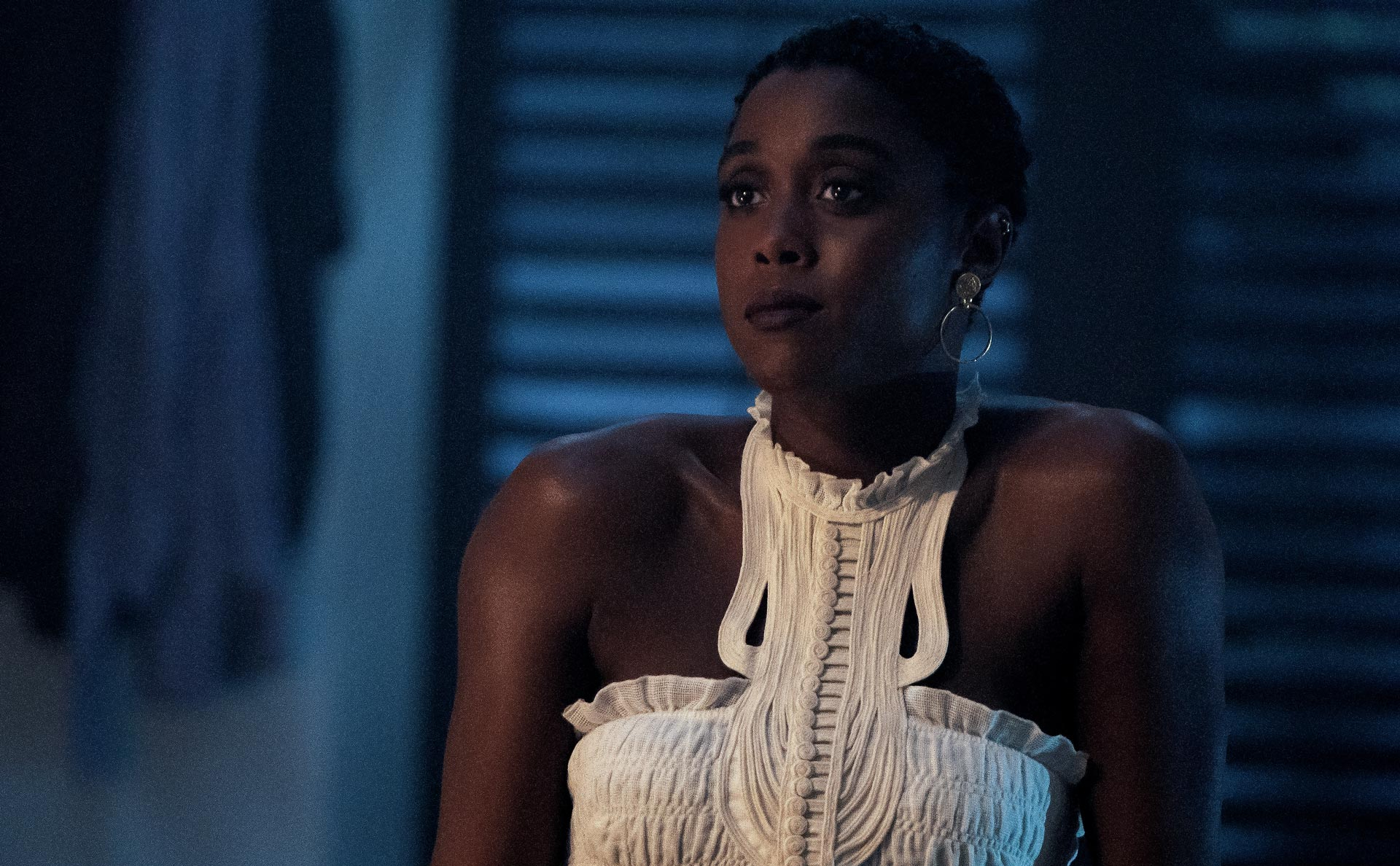
MI6 agent Nomi (Lashana Lynch) makes her debut in No Time to Die
Those who have been eagerly awaiting Bond’s newest adventure will be pleased to know that No Time to Die has plenty of exciting action sequences, possibly the best of any Bond film. Among these sequences are some ferocious close-quarters encounters with impeccable choreography; intense gun fights between parties that have an unnerving realism; and two sublime car chases – the first through an Italian village in Bond’s iconic Aston Martin DB5, the second an off-road argy-bargy in a decidedly unexotic Toyota Prado.
Long-time fans of the franchise will be equally thrilled by the constant allusions to the previous Bond flicks, including the aforesaid DB5, as well as Timothy Dalton’s V8 Vantage from The Living Daylights (1987), and the occasional musical reference to On Her Majesty’s Secret Service (1969). Yet undoubtedly, the most recognisable trademark is Bond’s dry humour, here crafted with the input of another personality known for their sardonic wit: Phoebe Waller-Bridge, who is credited as one of No Time to Die’s four screenwriters.
Waller-Bridge’s comedic influence can also be found in the two “Bond girls” making their franchise debut. One is the cool, assured Nomi (Lashana Lynch), an MI6 operative and Bond’s replacement; the other is the giddy, yet resourceful Paloma (Ana de Armas) who is contracted to the CIA. The latter is a particular highlight – despite being seen only briefly, Paloma adds a vast amount of liveliness to proceedings with her unique, quirky personality, certifying herself as a protagonist who deserves a larger role in a future Bond instalment.
Although these many qualities help distinguish the 25th film from its precursors, No Time to Die is not one to deviate from the established formula, being closest in spirit to the previous chapter, Spectre (2015). This association is most evident in the lethargic pacing, flowing at a patience-testing speed that ensures the blockbuster seems every bit as long as its advertised 163-minute length would suggest. Still, both pictures remain an improvement on Quantum of Solace (2008) and its rapid-fire editing.
Another of Bond’s allies, Paloma (Ana de Armas) as she appears in No Time to Die
There is a greater problem with No Time to Die, and that’s its chief antagonist, Lyutsifer Safin (Rami Malek). In addition to possessing a convoluted plan and opaque motivations, Safin is an uncompelling character, lacking the intriguing backstory, maniacal personality and ruthless mentality of Bond villains past, with a slight facial disfigurement and soft French accent being his only distinguishable traits. Malek himself does nothing to help matters, his performance being bland, remote, and failing to convey even the slightest hint of emotion.
And on the subject of emotion, it’s worth noting that No Time to Die isn’t quite the heartfelt send-off that it’s trying so hard to be. There are numerous stirring moments within the story, yet very few of these moments feel earned, and have seemingly been put forward solely to get a cheap reaction out of the audience. What’s more, because this screenplay forms part of a serialised, five-part narrative, the emotional scenes will only find resonance with viewers who’ve seen Craig’s previous outings as 007.
25 films and very nearly six decades into its existence, the James Bond franchise is one that continues to delight and surprise, with No Time to Die profiting from superbly choreographed action sequences, welcome nods to the character’s past and the contributions of Phoebe Waller-Bridge. This may not be the satisfying denouement that Daniel Craig deserves, but it’s a fitting one nevertheless.
No Time to Die will be screening in cinemas from this Thursday, November 11th.
After 18 long months, Australian fans of filmmaker David Lowery were rewarded with the release of his critically-lauded feature The Green Knight (2021). The film has had a long Covid-delayed release, from a canceled SXSW debut in March 2020 – a date that feels weightier with each passing month – to theatres pulling the film from the calendar completely. US audiences were finally able to see the gorgeous and beguiling film in theatres in late July, but Australian audiences had to wait three more months before being able to see this wonderful film on Amazon Prime.
Whether it was this long delay or the enveloping world Lowery has constructed here, but it felt so necessary to savour every moment on screen. Lowery has stated in interviews that this release delay allowed him to go back and edit large swathes of the film, not dissimilar to the eventual creation of Steven Soderbergh’s brilliant The Limey (1999) which involved the director re-editing the film after being dissatisfied after an early screening was shown. Whilst that film was recut with a focus on more experimental uses of editing, The Green Knight found its rhythm in its new cut, “allowing it to breathe” as Lowery describes. This is felt in the extended shots that have become the director’s signature, especially his use of a methodical 360° pan that never fails to draw the audience in (more on that later).
The Green Knight is a work of adaptation that keeps in the spirit of the original chivalric romance’s beguiling nature while also changing many details that are deceptively interesting that are sure to be picked over for years to come. There is a lot of meat on this bone that will propel you to return to the film often (a key bonus to having the film available on a streaming service.)
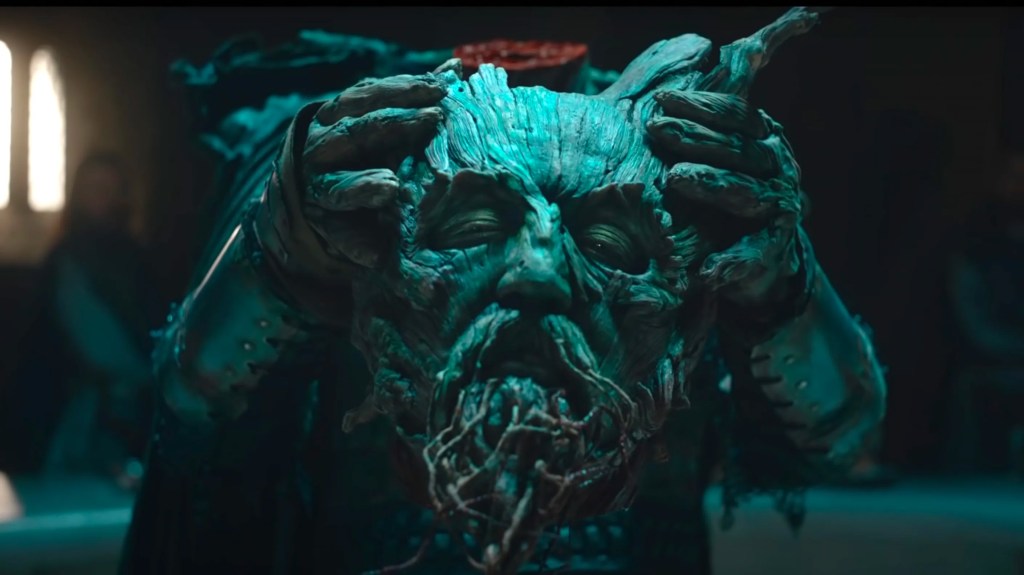
At the centre of our story is Gawain, a knight played by the wonderful Dev Patel with a mixture of youthful eagerness and unassuredness that propels every moment of the story, accepting the challenge from the titular Green Knight (Ralph Ineson) during a Christmas day celebration in King Arthur’s round table court. Whether you’re familiar with the story or not, Lowery lays out the stakes with an assured pace, moving smoothly into Gawain’s quest for knightly honour, and to discover what that even means to him.
David Lowery is an auteur that works across genres and styles but is firmly rooted in the Del Toro camp of fairytale filmmakers. Whether it’s a grizzled career criminal, a lyrical film poem about the concept of haunting and death, or one of the best live-action Disney films of the 21st century about an orphan and a dragon, Lowery is able to breathe a sense of sincerity and beauty into his worlds, whilst never bogging down in the plots of his stories. The director’s assuredness throughout the film to be comfortable leaving the audience confused for stretches of Gawain’s quest, knowing the emotionality of the film work as a guide rope through the darkness, is wonderful and all too rare in modern American cinema.
The story unfolds patiently, following Gawain’s journey to understanding his own virtue and courage in the face of the inevitability of death. The Green Knight is a story about understanding and respecting the natural order of death and decay, themes that in less deft hands would become overbearing with a sense of mourning and sorrow. Lowery has said that he originally planned on the film to be under two hours but during his re-edit discovered it needed more time to breathe, but it feels necessary to the film’s ability to not be dragged down by its themes or become too oblique as to lose the momentum of the narrative that might’ve occurred if the film stretched into the 150-180 minute range that most period epics sit.
The titular Green Knight (Ralph Ineson) in The Green Knight
One of the most admirable and deeply compelling aspects of the film is Lowery’s use of visual storytelling and sound design in extended sequences that allow the audience to sit with and contemplate the themes and ideas being laid out, something that is quite unique to the cinematic form. In The Green Knight, this sequence arrives at the dead centre of the film as we find Gawain bound in a forest. We are shown this through a patient 360° pan as we see and hear the seasons change around the forest, as well as the growth of green moss consuming the forest, ultimately landing on the bones of a long-deceased Gawain. It invites the audience into being an active participant in the storytelling, asking you to put your own thoughts and emotions into the film that will develop and grow like moss on a forest bed over the duration of the film. Scenes like this can be seen throughout cinema, from the many films of Yasujirō Ozu, the procession scene in Bergman’s The Seventh Seal (1957), and in the works of Apichatpong Weerasethakul that all allow the viewer to meditate on the ideas of the film while still very much experiencing it.
One of the best things in cinema is when a filmmaker, whether consciously or not, creates a double feature/trilogy in their filmography, thematically linking separate films that go deeper than just their aesthetic sensibilities. It’s impossible not to see the connections between Lowery’s previous two films A Ghost Story (2017) and The Old Man & The Gun (2018) with The Green Knight. All three features have a quest to find the meaning in death, not in trying to outwit it like a Bergman film, but in coming to terms with it and respecting it, both by meeting it head-on and from beyond the pale.
Crafting one of the best cake-and-eat-it ending sequences in recent memory, Lowery is able to convey a rich tapestry fit for the Arthurian legend with a sense of grace that is truly remarkable. While the author of the original chivalric romance is unknown, the author of this adaptation is firmly Lowery, an auteur that is building an extraordinary filmography. Lowery is one of the best American filmmakers to emerge in the last 10 years and is only a year away from the release of his return to Disney with an adaptation of Peter Pan, a dream pairing of storyteller and story that will not disappoint.
Denis Villeneuve’s adaptation of Frank Herbert’s widely beloved novel of the same name, Dune (2021), is a remarkable feat in blockbuster filmmaking that reaffirms why Villeneuve is one of the best working directors today. Villeneuve’s adaptation honours Herbert’s writing by matching it with visual splendour and creating an on-screen world that feels lived-in — something that hasn’t been felt on the big screen since the director’s last film, Blade Runner 2049 (2017).
There’s a reason why Frank Herbert’s science fiction novel had always been deemed unfilmable in the same way as J.R.R Tolkien’s The Lord of the Rings. Like The Lord of the Rings, Dune is comprised of a level of detail that captures the minutia of the world it creates and the characters that occupy it; whether that be through numerous internal monologues, vivid imagery through carefully selected wording, or just the fact that the ‘hero’s journey’ isn’t approached in a way that would seek to validate the protagonist’s actions.
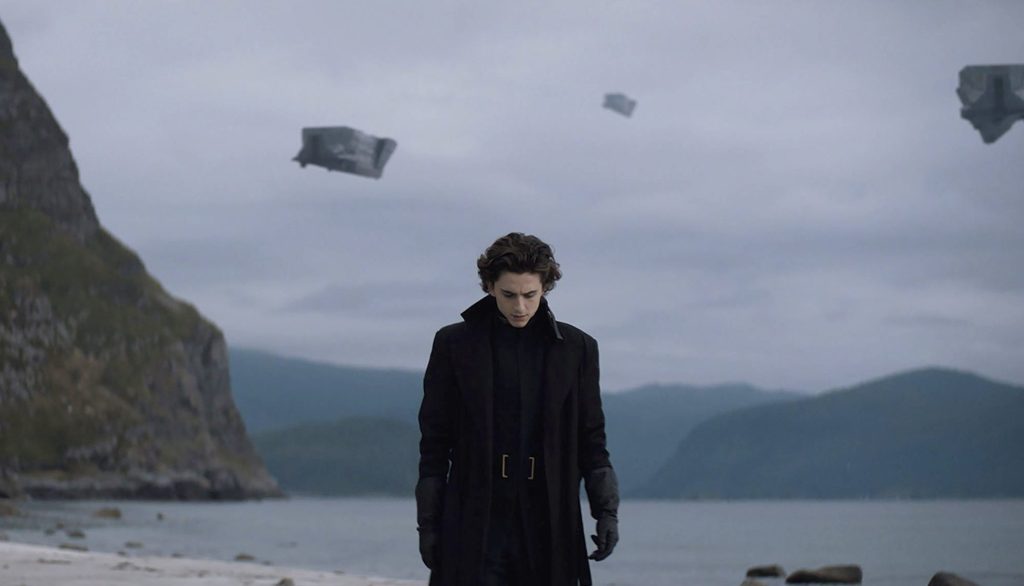
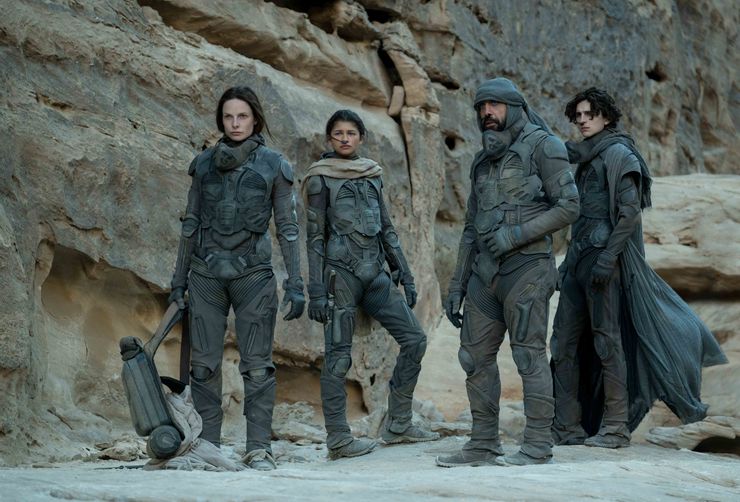
That protagonist is the Muad’Dib, Lisan al Gaib, Kwisatz Haderach, Messiah — Paul Atreides (Timothee Chalamet). Mentioning all of the ways in which Paul is referred to in the book and film is important because it highlights just how nuanced of a character he is. Paul is many things to many different groups and people, be it the Bene Gesserit who are a sisterhood conditioned in superhuman ways; the Fremen who are the desert people of the planet Arrakis; and to those that know him across the story like Chani (Zendaya), Lady Jessica (Rebecca Ferguson), and Duncan Idaho (Jason Momoa), to name a few.
When it comes to the plot, two houses (House Atreides and House Harkonnen) have been feuding with each other for ages. It isn’t until the Padishah Emperor requests that Duke Leto (Oscar Isaac) and the rest of House Atreides move to and oversee the desert planet of Arrakis (Dune), that tensions begin to further boil between the houses as deceit and betrayal ensues. On the planet is the galactic currency known as the spice (a melange like substance) that is the source for discontent, power, and wealth, and as mentioned in the novel, “he who controls the spice controls the universe”.
Timothee Chalamet in Dune
Alongside all of this is Paul who has a unique destiny that will change the lives of all of those around him. Paul is viewed as a messiah of sorts that has been bred and trained by the Bene Gesserit for the purpose of leading people into a better future, though at the expense of bringing about a potentially worse future known as the jihad (or ‘war’, as the film westernizes the term).
The story itself is a rather complex one, if not for Herbert’s aforementioned approach to writing the book, then for its emphasis on ideas pertaining to feudalism, mysticism, perennial truth, and a plethora of other nuanced ideas and leanings. Jon Spaihts, Eric Roth, and Villenueve do a good job of dissecting some of Herbert’s ideas for the screenplay, and adapting them for the screen through visual cues, motifs, and worldbuilding.
They take the heart of the story in Paul Atreides, and allow him to guide us through each given moment using visual storytelling and the affordances of the cinematic medium. In this way, for anyone that hasn’t picked up the novel, it’s relatively easy to follow the film and pick up on some of the concerns and ideas that penetrate Herbert’s telling through visual cues.
Villeneuve is a master of using visual storytelling to tell a complex story while leaving his own print on that story; It’s a large reason why Blade Runner 2049 worked so well and why Dune works just as well. The world he creates on-screen speaks for itself with its own visual language through setting, colour, visual effects, and cinematography. For instance, there is a scene involving the Sardaukar (the Padishah Emperor’s specially trained elite force) that captures the very essence of this force by using no dialogue. Rather, Villeneuve utilises framing, composition, visual effects and sound in a sequence that lasts barely a minute, but is able to depict the very ruthlessness of the Sardaukar in this short sequence. That’s just one of the many examples where Villeneuve shows and doesn’t tell — everything you need to know about this force is shown to you in this condensed form.
What Villeneuve isn’t able to do with Dune like with Blade Runner 2049, is give you a reason to care about the characters in this film. The first half of the film is paced incredibly quickly which is understandable given there is a lot of ground to cover in Herbert’s novel, however characters are what audiences latch onto for emotional support. The character of K (Ryan Gosling) in Blade Runner 2049 was multifaceted for an android, and the scale of the film never overwhelmed that connection built with him.
Some might view Villeneuve’s treatment of character as one that is reflective of Herbert’s own reluctance to provide overly accessible characters, however films need that connection otherwise you’re relying on visual bravado to take you where you need to go (which it does, but that aspect is a shortcoming nonetheless). I’d make the case that Herbert’s own novel offers characters like Gurney Halleck, Duke Leto, and even Paul to an extent, for emotional support and for connection.
(From left to right) Rebecca Ferguson, Zendaya, Javier Bardem, and Timothee Chalamet
That said, as with any adaptation of a novel or novels as rich in detail as Dune, Villeneuve has to sacrifice key aspects of the novel in favour of an adaptation that is worthy of a 155minute feature. Certain characters like Gurney Halleck (Josh Brolin), Thufir Hawat (Stephen McKinley Henderson), and Liet Kynes (Sharon Duncan-Brewster) become side-lined more than others where in the book they would play a much more pivotal role in understanding Paul and the motifs that underpin the film.
Some of those motifs include the significance of water on a planet where water is like its own currency. A film like George Miller’s Mad Max: Fury Road (2015) did a stellar job in capturing the significance of water in a largely desolate desert setting where it is treated as a controlling tool. Villeneuve’s Dune has moments where its significance is brought to light, but it never fleshes that out in a way that would make an audience member (unless you had read the book) realise the significance of the still-suits that the characters wear, or the cannibalistic like re-purposing of a deceased persons water.
But at its core, Villeneuve’s Dune is a film that pushes what the medium can achieve at this scale and is a masterful cinematic experience that epitomizes blockbuster filmmaking. The score composed by Hans Zimmer is piercing and fitting, and makes for an enthralling soundscape (which one would hope it would be given how long he has been sitting on it for a modern Dune film); the visuals are breath-taking and unlike anything I have seen in a film before where the world feels like it exists or will exist (as though Villeneuve is his own messiah who has seen the state of the world in 10,000 years); and the cast is incredibly talented and exciting to watch (especially Stellan Skarsgard as The Baron Vladimir Harkonnen in a role that echoes the muteness of his character in the Pirates of the Caribbean franchise).
For those that haven’t read the books and even those that have, Denis Villeneuve’s Dune part 1 is a breath-taking feat in filmmaking that deserves to be seen. It’s a film that places emphasis on worldbuilding and scale at the expense of some characterisation, but it is an experience that is unlike any you will have this year. It would have been great to have had a trilogy greenlit in order to explore the complexities of Herbert’s novel in greater detail, however the fact that there will be a sequel at all is a win for fans of the book, Villeneuve, and cinema.
Dune is now streaming on HBO Max until the 22nd of November and in Australian cinemas next month
Before the advent of the motion-picture, the martial arts were Asia’s greatest cultural export, imitated and appropriated by Western societies for decades. The latest film to continue this tradition comes from, of all places, the Marvel Cinematic Universe, albeit with a lot more care and consideration than is normal for a Hollywood production.
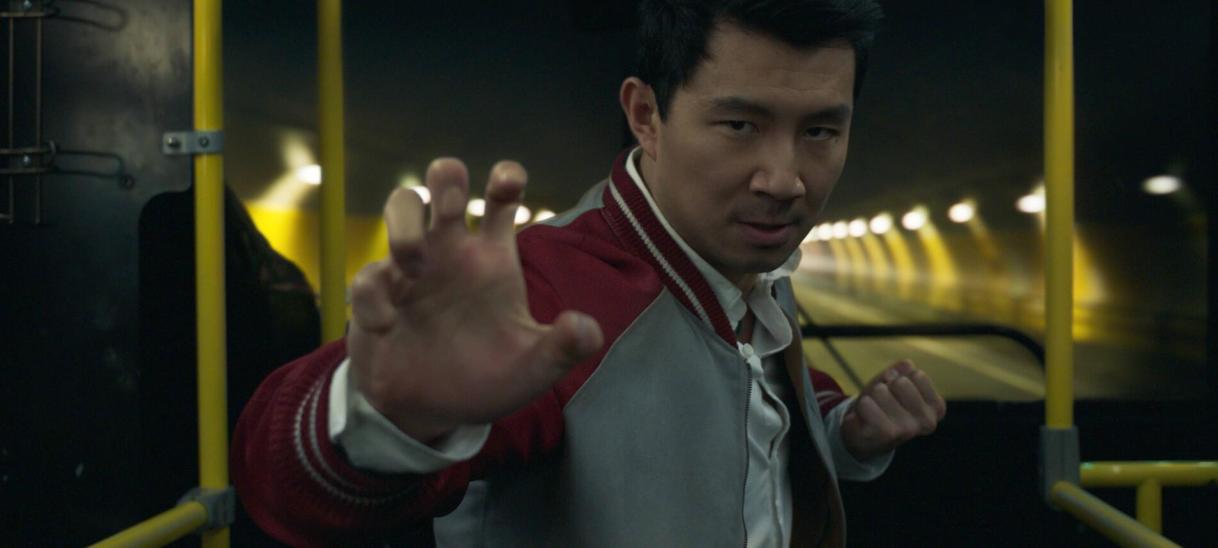
Since fleeing his homeland of China as a teenager, Shaun (Simu Liu) has led a modest life in San Francisco, keen to shun the criminal lifestyle practised by his father, Xu Wenwu (Tony Leung). The only connection he keeps to his past is a jade pendant – gifted to him by his deceased mother, Ying Li (Fala Chen) – which is worn around his neck for safekeeping; but the value of the pendant is more than sentimental, since armed mercenaries are willing to fight Shaun for it on public transport.
Though said mercenaries don’t reveal their motivations, nor their affiliations, Shaun is convinced that they are tied to Wenwu’s shady dealings, and will remain a threat to himself and others – principally his American friend, Katy (Awkwafina) with whom he shares a close bond; and his estranged sister, Xialing (Meng’er Zhang) who is thought to be living in Macau. Whatever the case, one thing is for certain: Shaun will need to confront his murky past if he wants to ensure his future.
On most fronts, Shang-Chi and the Legend of the Ten Rings (2021) is rather innovative for a Marvel Studios feature, heavily drawing inspiration from the wuxia films that have long dominated Asian cinema. Kung fu is frequently incorporated into the action sequences, making for a refreshing chance from the usual superhero fisticuffs; there’s an Eastern influence in the soundtrack of Joel P. West too, with woodwind instruments and thumping drum beats heard throughout; and, more noticeably, the majority of the film’s narrative takes place in China.
The influence of Eastern movies even extends to the majority Asian cast, with Shang-Chi boasting two iconic stars of Hong Kong cinema – the aforementioned Leung, and Michelle Yeoh. While both actors provide delightful turns, it’s the lead performers who leave the greater impact, with Simu Liu looking confident and relaxed as the titular hero in his first-ever headline role; and Awkwafina constantly elevating key moments with her charisma alone. And there’s further delight still to be garnered from the supporting actors, such as comedian Ronny Chieng, and regular MCU bit-player Benedict Wong.
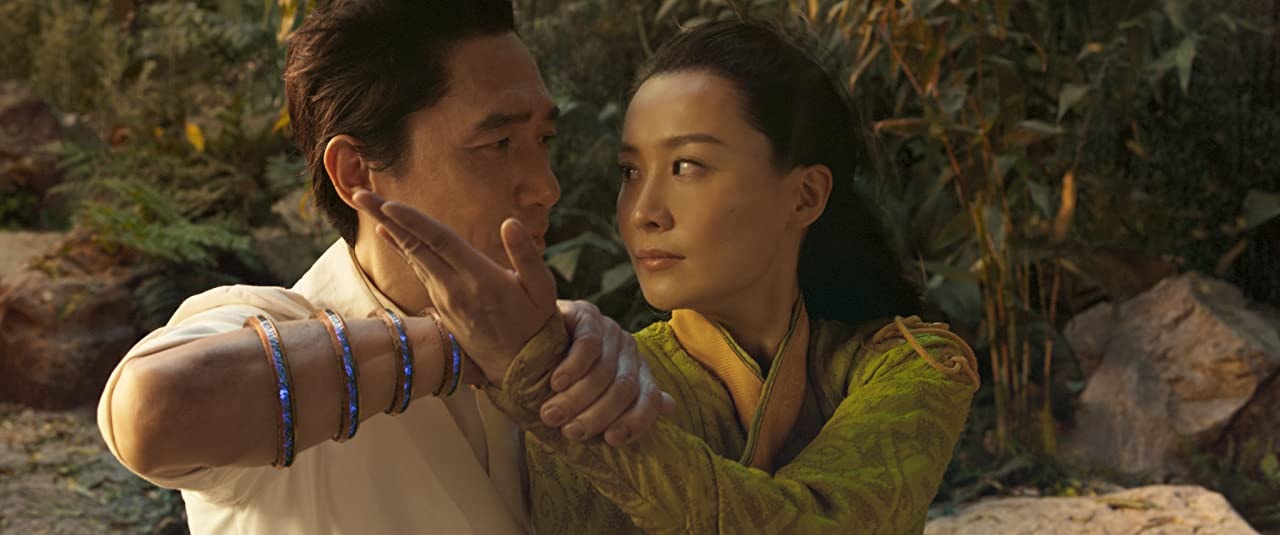
Xu Wenwu (Tony Leung) and Ying Li (Fala Chen) in Shang-Chi and the Legend of the Ten Rings
Although Shang-Chi does a great deal to singularise itself from its Marvel brethren, the film is somewhat lacking in originality, particularly in the screenplay department. The story here shares a few too many similarities with that of another MCU instalment released less than four months ago, Black Widow (2021) – both pictures follow a protagonist reuniting with an estranged sibling and returning to their country of birth to defeat a paternal figure. Whether intentional or not, these parallels will serve only to validate the notion that Marvel Studios’ output is becoming rather formulaic.
Other weaknesses are present in Shang-Chi, minor yet nonetheless irritating. One is the fight sequences, which have great choreography but could be more thrilling, for they lack the kind of death-defying stunts that Jackie Chan is renowned for executing. Also in need of refinement is the comedy, being decent and well-timed without ever reaching the level of hilarity found in other Marvel films. If Kevin Feige’s superhero factory is to continue beyond a fourth phase, both elements sorely need to be improved in any future releases.
There are some areas where this picture does improve over its predecessors, one being the depiction of its villain – blessedly, Shang-Chi has one of the better antagonists of the MCU in Wenwu, who is sinister, restrained and cool all at once, while possessing far more complexity and humanity than the average Marvel foe. The music too is above Marvel’s usual standards, with West being the closest a composer has come to matching the opulence of Alan Silvestri’s work in the Avengers movies – he deserves to be called upon for more of Feige’s projects in the years ahead.
Shang-Chi and the Legend of the Ten Rings does for the world’s Asian communities what Black Panther (2018) did for the African diaspora, utilising the familiar Marvel tropes to craft a visual and aural celebration of Eastern culture. It’s not perfect, owing to the muted humour and unoriginal script, but more than ably satisfies with its beguiling action scenes, glorious soundtrack and exceptional cast.
Shang-Chi is currently screening in theatres, and will be available to stream on Disney+ from November 12th.
There are infinite ways to tell the story of The Velvet Underground. An infinite amount of people have been profoundly influenced and changed by the band, with every individual latching onto different elements from specific moments to the point where the famous Brian Eno quote about the band somehow understates their impact. So if you asked 10,000 filmmakers to capture The Velvet Underground and what makes them personally influential to them, you would be given 10,000 vastly different films. Luckily for us, Todd Haynes is a perfect scribe for the group in his debut documentary film.
In a similar way to Haynes’ extraordinary 2007 Bob Dylan film I’m Not There, many may be left wanting by this documentary if you come to it with your own expectations for what this film should be. If you are deeply versed in The Velvet Underground’s story and want this film to chronicle their entire arc from 1964 to their Rock and Roll Hall of Fame induction in 1996, you will not find that here. If you are seeking a film stacked with unearthed concert footage, unfortunately you will be left disappointed (this would have taken the film to a truly transcendent place but alas, that footage barely exists). If you have only vaguely heard of the band, of the names Lou Reed and John Cale, and only recognise the Warhol banana through t-shirts and couch cushions, I genuinely don’t know how you would feel about this film but you may be left beguiled and full of questions, while also hopefully gaining an understanding of the reverie so many have for the group.
Too often music documentaries focus on either deconstructing the art to the point of banality, or mythologising to the point of absurdity. What makes Haynes’ film so refreshing is his ability to deconstruct individual moments of the Velvets history without removing the artistic mystery that made the band grow as a source of creative inspiration for generations, whilst never overstating that cultural weight. An entire documentary could be made about the bands that owe their entire musical identity to The Velvet Underground – or even just a single song – but that would not create a compelling film and is not something a filmmaker of Haynes’ calibre would create when given the opportunity. Instead, Haynes focuses on the birth of the band and the environment they were sculpting and being sculpted by.
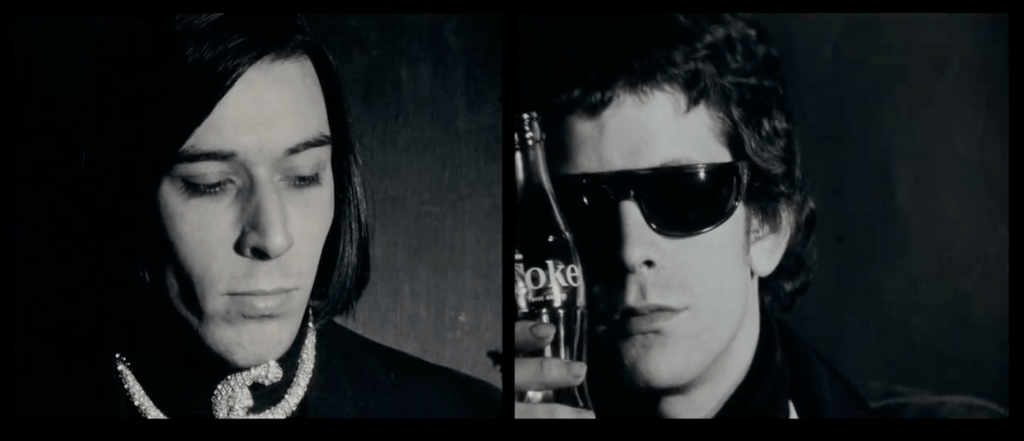
By focusing on the polarity of John Cale’s avant-garde tendencies and Lou Reed’s lyricism and pop sensibilities, Haynes captures what makes the band’s early years so powerful and unique, while never shying away from how those tensions would inevitably divide the group. Haynes further illustrates this polarity through the film’s style. Heavily influenced from Andy Warhol and Paul Morrissey’s split-screen feature Chelsea Girls (1966), the documentary constantly shows us two images, sometimes to pair with the narrative of the sequence, but often in stark contrast, made most potent whenever Haynes shows Cale and Reed’s profile footage from The Factory side-by-side.
John Cale (left) and Lou Reed (right) in The Velvet Underground
A master of period filmmaking, Haynes captures the early 60s art moment in New York beautifully. By focusing on the visual and aesthetic elements of the film, Haynes has created a truly visceral project that is rare in documentary filmmaking, especially in the genre of retrospective music documentary. Haynes has curated a filmography out of deconstructing genres and movements from Douglas Sirk to Bob Dylan, while also being able to freeze a moment in amber. One would think a filmmaker that constantly goes back to previous era would fill their films with nostalgia and sentimentality, but what makes Haynes’ films so poignant and fresh is his ability to articulate the universality of stories. The magic trick Haynes is constantly able to pull off in his films is the ability to interrogate a moment heavily while never devaluing it. In a similar way he critiqued while also showing deep admiration to Douglas Sirk in Far From Heaven (2002), Haynes takes a similar approach to the 60s New York art movement, centred around Warhol’s Factory.
An absolute treat of the documentary is the interview with American avant-garde icon Jonas Mekas, who died in early 2019 which had to have been not long after the interview was conducted. Haynes pays great respect throughout the film to the underground and avant-garde movements that inspired him, as well as the icons that inspired Warhol and Cale like Mekas, John Cage, and La Monte Young. You can feel the deep connection Haynes has to this movement and how important it was to the establishment of The Velvet Underground and how it contrasted so heavily with Reed’s pop leanings that created the tension of the band. Tension that ignited into extraordinary music that ultimately drove Cale and Reed apart.
The spectre of Lou Reed is palpable through the documentary which culminates in a piece of fascinating final footage that shows even after everything they went through, he was still close to Cale. The documentary does not aim to dispel the mysteries of the band – an impossible task given the lack of concert footage as well as the ability to interview Reed for the film. A seemingly unknowable person, it is apparent throughout the film that people were hesitant to speak for Lou, making the audience constantly ponder what Reed would think about each moment in their storied history.
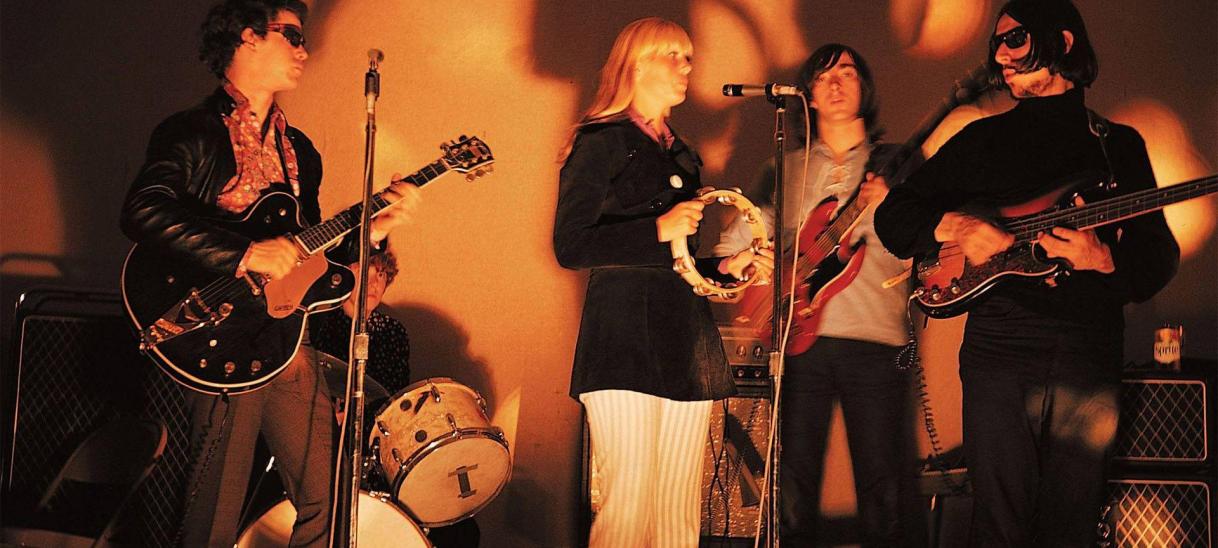
The visual splendour coupled with The Velvet’s music makes for a mesmerising experience that would’ve been greatly improved by being viewed in a theatre. The sequences and images of the band playing live at Warhol’s Studio 54 should be projected onto walls, and the slow crawl of the opening sequence set to “Venus in Furs” should be seen and heard in a loud, dark room. It is a sad reality that this opportunity is unavailable to us due to its production through Apple, but at least we got this treasure of a film at all.
There seems to be a trend of films and film titles revolving around farm animals in the last 18 or so months. From Kelly Reichardt’s First Cow (2019/2020) to Valdmiar Johansson’s Lamb (2021) and Michael Sarnoski’s Pig (2021); each of these films places these animals at the forefront, but each one tells a vastly different story and to different avail.
Pig is a film that centres on themes of grief and loss, but it is also about acceptance and surviving. It sees a truffle hunter, Robin (played by the unsurprisingly great Nicolas Cage) have his pig companion stolen in the middle of the night while living off-grid in some cabin. This results in him setting out to find his pig with the help of Amir (Alex Wolff) who pays Robin for his truffle work.
For what it’s worth, the premise is deceptively simple as it plays on audience expectations that Robin will go out on a killing spree until his pig is found. This deception is particularly true given that the man playing Robin is Cage, who audiences almost expect will go on a killing frenzy comprised of outbursts and sadistic rage like in Mandy (2018), Color Out of Space (2019), or Vengeance: A Love Story (2017), to name a few.
While there are moments of rage bubbling beneath the surface (with the most extreme outburst seeing Cage kick the crap out of a yellow Camaro’s door), Sarnoski never goes down that predictable rabbit hole (which would be a great name for another animal film). Rather, Sarnoski uses Robin’s loss and grief as a catalyst for exploring how sometimes we can’t control what happens to us — sometimes our efforts are in vain even if we think there is a silver lining at the end of the tunnel.
What is especially interesting to note is that Robin isn’t just some weirdo who drew the short straw and is now out to exact revenge, but he is a renowned former chef whose name is uttered like a long lost legend. He’s had his share of fortune, has mingled with the city folk, and has lived under the false pretences of success that capitalism masquerades as — ultimately seeing him swap city lights for green bushland. What this approach allows Sarnoski to do is to paint capitalism as a grotesque construct that can tear down even the most successful people if they aren’t willing to adapt to the changing world around them.
Nicolas Cage in Pig
There’s a particular scene in a high end restaurant where Robin — in his rugged, beat-up state — calmy rips into the chef of the restaurant (who happens to be a former intern of his) for allowing himself to forgo his dreams and settle for a world built around falsity and conformity. It is one of the many profoundly moving scenes in the film that gets to the heart of selling ones soul and settling — ultimately forgetting about what it is that we really care about. Robin asserts to that chef that “we don’t get a lot of things to really care about”; In essence, the pig and the lengths Robin goes to in order to find it, represents that pursuit for what we really care about, which is often quashed by settling.
In a sense, you’d be forgiven for thinking this film plays out somewhat semi-biographically for Cage where he sees his own past mistakes and strives to protect and salvage what he cares about, but may have ignored in the past. There’s the whole ‘fall from grace’ type approach where Robin is an esteemed chef (Cage is an esteemed actor) who disappeared from the spotlight only to re-emerge out of nowhere and still cook (act) like a pro. Heck, a character asserts to Robin that “I remember a time when your name meant something to people, Robin”.
It makes for a resounding 90 minutes that gives Cage a platform to showcase why he is among the top 10 actors of all time. Cage himself asserted in recent interviews that the acting came easy for him here because he didn’t need to act as much due to having dreams and thoughts about losing his cat — which he channelled into Robin. In this sense, Cage plays Robin with a degree of verisimilitude that many (including yours truly) will be able to relate to. Whether someone has lost an animal, a loved one, or just an inherent desire — it’s about finding what you care about and protecting it at all costs, no matter the outcome.
The comparisons between John Wick and Pig have been plentiful due to the nature of messing with one’s animal companion and then hunting down the perpetrators. However, Sarnoski’s take on the revenge storyline plays out in a resoundingly different light. Robin is the one that gets beat down (physically and mentally) throughout the whole film without so much as throwing a punch. It’s a unique take on what we might expect to have happened, but it adds a level of humanism and honesty that captures how things don’t always end up the way we want them to.
The film is a masterclass in exploring how we deal with grief and how we learn to live with it in a system that encourages people to forget about what they truly care for and move on. Nicolas Cage delivers one of his most subtle and sublime performances ever, and the result is one of the most touching, sombre and best films of the year.







 Rating Frames