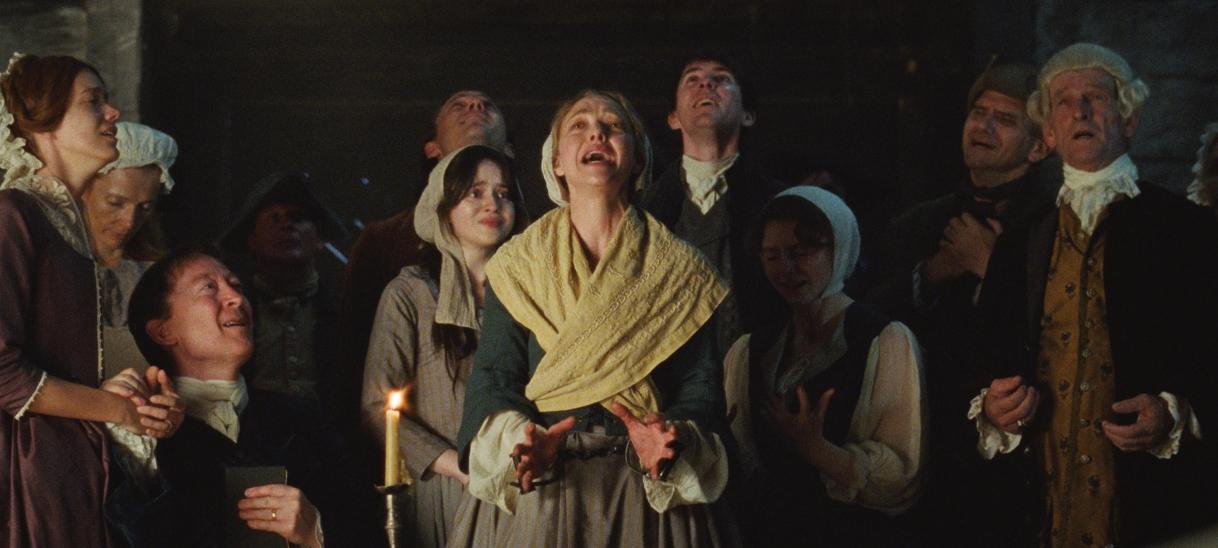
Melding powerful and emotive choreography with rhythmically propulsive music built out from recontextualised hymns, The Testament of Ann Lee (2025) is an intoxicating musical biopic like no other, creating a singular theatrical experience that will have you asking more from the genre. Centred on the fascinating movement of the Shakers, the 18th-century religious group known for their ecstatic dancing, Mona Fastvold’s exploration into humanity, ambition, and religion in a moment of turmoil and potential is an unexpected revelation in cinema this year.
The film operates as a probing look into personal religion and how it can be expanded into a community, with Fastvold exploding the potential of the story into a wild and emotive musical that feels grounded in the power of the Shaker movement through its choreography and music. At the heart of it all is the titular Ann Lee, the rare female religious leader whose story is easily worth an emotive and expressionistic biopic starring one of the industry’s best actors in Amanda Seyfried. Spurred by unimaginable grief and some notable, potentially queer subtext, Ann is devoted to becoming a prophet of the Shakers she has found herself the leader of, seeing the act of celibacy as a key tenet of driving away sin, even as the movement is built on the overwhelming sense of religious community born out of dance and bodily movement.
Ann’s decision to shift the movement towards celibacy can only be accepted for so long by the large community in Manchester, as well as her husband, Abraham (Christopher Abbott), a simple man who will walk with her to the edge of his faith, but not beyond his human desires. Staying by Ann’s side through it all is her brother William (Lewis Pullman) and close friend Mary (Thomasin McKenzie), who also serves as the film’s narrator in one of the best uses of lengthy expositional narration in years.
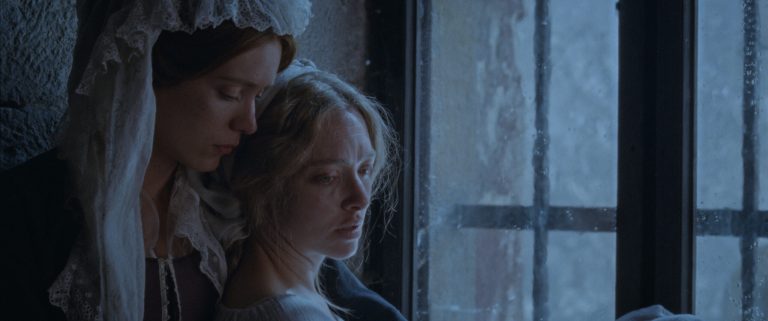
Stacy Martin and Amanda Seyfried in The Testament of Ann Lee (2025).
Remixed from Shaker hymns, composer Daniel Blumberg follows up award-winning work on Fastvold’s previous film, The Brutalist (2024), with a starkly different collection of music, combining beautifully with the ensemble’s choreography that always stays within the realm of absurd realism that the Shakers are known for. Seyfried allows the melodies to transcend the screen, using the repetitions of the hymns as a hypnotic bedrock to build out some exalted musical numbers.
Working previously as a co-writer on her partner Brady Corbet’s standout film The Brutalist, Fastvold’s film works as a fascinating companion piece of equal quality. Both Ann Lee and The Brutalist are fixated on ambitious figures that see potential in the pursuit of America, believing themselves to be called to a higher purpose in some form, with the faith that this purpose will shield them from the dangers that lie ahead. While Corbet’s film echoes its protagonist’s mode of deliberate architecture (as its namesake) to tell its wider story of faith, religion, and pursuit, Fastvold’s film moves with the grace of fresh silk and dance.
The Testament of Ann Lee transcends the bounds of its screen when the small group manage to obtain passage by boat to New York, with an extraordinary piece of montage, choreography and music as good as any you’ll find this decade. Fastvold’s exploration of the newly American striver through the unique lens of an upstart religious sect in England, stymied by the lack of progressive thinking at home, is swept up in the power of the musical genre at its best, with Seyfried commanding the helm with a mixture of mania and overwhelming grace.
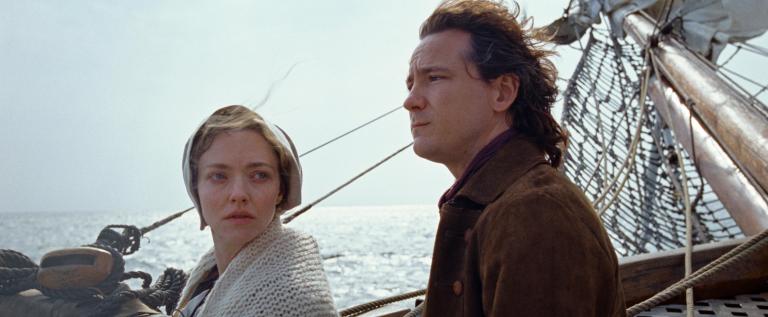
Amanda Seyfried and Lewis Pullman in The Testament of Ann Lee (2025).
She contends with this part of the film in a complex understanding of many sides to the Shaker history of driven American conquest. The group see America as untoiled land, perhaps more accepting of a female preacher and of their unconventional worship practices. As they arrive in New York, however, they are almost immediately confronted by a slave auction, which Ann sees as barbaric sin; she is here to cleanse in her mission to expand the movement.
A story of finding divine ambition in community and connection, Ann Lee feels powerfully tied to many period-set ‘Great Men’ films like There Will Be Blood (2007), but shown through a woman’s lens. With a pivotal montage of the Shakers building their housing and village, we see Ann less as a wise prophet and that of project manager and architect, reflecting many scenes in The Brutalist, bathed in hopeful sunlight and warm wooden surroundings. Rarely have we seen such a powerful set of companion stories, especially ones filmed so similarly and with equal ambition.
But this is not just a film of personal ambition built on grief and personal turmoil; it is crucially a film driven by ideas of faith and religion. This may steer off many an agnostic cinemagoer in ways Fastvold and Corbet’s previous film didn’t (although that film is as Jewish in nature as this film is Christian); to open your heart to the story is no different than the task given to an audience in many films.
As difficult a proposition as this film is for audiences, the lack of Academy recognition Fastvold and her collaborators received this awards season is surprising. It is especially difficult to reckon with as The Testament of Ann Lee is a more intelligently woven story of ambition and grief than the walloping Hamnet (2025), which received eight nominations. For those crying out for individual voices still striving to work with Hollywood studios, you simply have to witness this fascinating and engrossing film from a truly singular voice.
The Testament of Ann Lee is in select theatres now.
A showman like no other, Korean visionary Park Chan Wook elicits more joy and wonder out of an audience from a perfectly timed cross-dissolve than most car chases filmed this decade. A filmmaker who is constantly looking to find the tipping point of extremity without falling into the world of camp, Park has cultivated a devoted fanbase that expands with each new entry, especially in recent years, with his fearlessness to work in the grime of modern life
Upon exiting No Other Choice (2025) in a delirium, it is clear that Park is the greatest modern visual stylist. While his stories can vary in interest and quality, as a filmmaker who is obsessed with the power of the art of editing, you will always leave his films satisfied. Adapted from the legend Donald Westlake’s The Ax from 1997, Park’s screenplay makes the key decision to maintain the protagonist’s occupation and narrative arc, showing how, as time passes, the crushing weight of modern capitalism has only increased. Centring a literal paper pusher, we walk hand in ham-fisted hand, gliding on the back of whip pans and transitions that will make film students furiously scribbling notes.
After being made redundant after the acquisition of the paper company by an American conglomerate, Man-su (Lee Byung-hun) is sent to a support group for the newly unemployed, selling self-worth and virtue as its own reward. But, after tasting mild success and a bountiful life with his family, Man-su is after a return to cold, hard reward.
Built on the late capitalist mindset that success can only be achieved through the pain of another, Man-su’s plan ultimately lands in Park’s wheelhouse, getting rid of the more hireable paper men in town, so he is all that remains. Amongst all the extremity and chaotic joy gushing out of wild filmmaking choices, the story elicits an overwhelming sense of pain as we see a group of men that should be in community with one another, forced to compete for what will ultimately be a hollow prize.
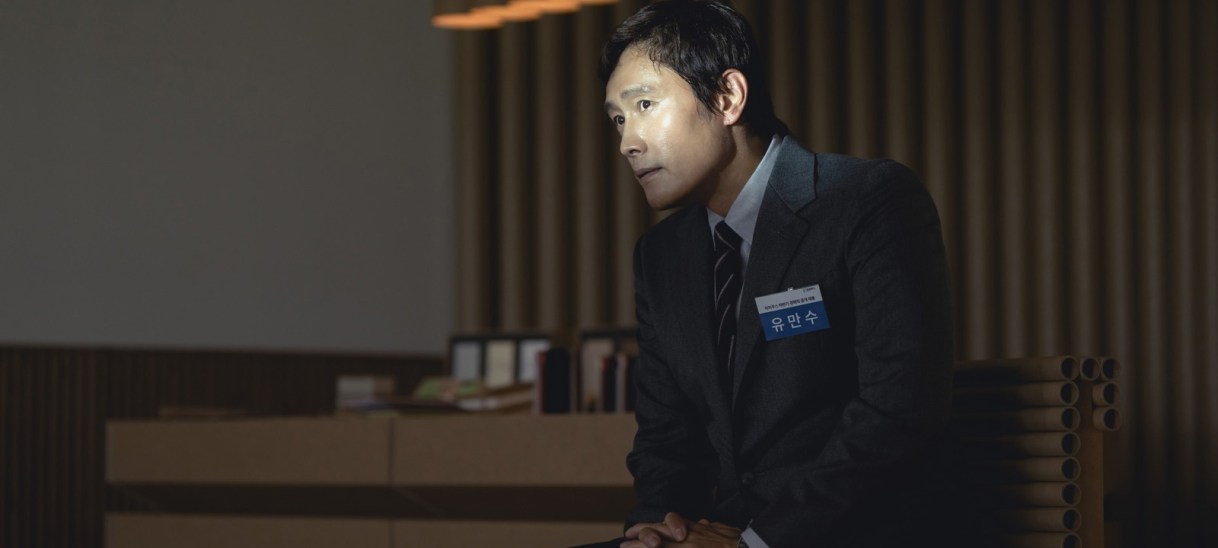
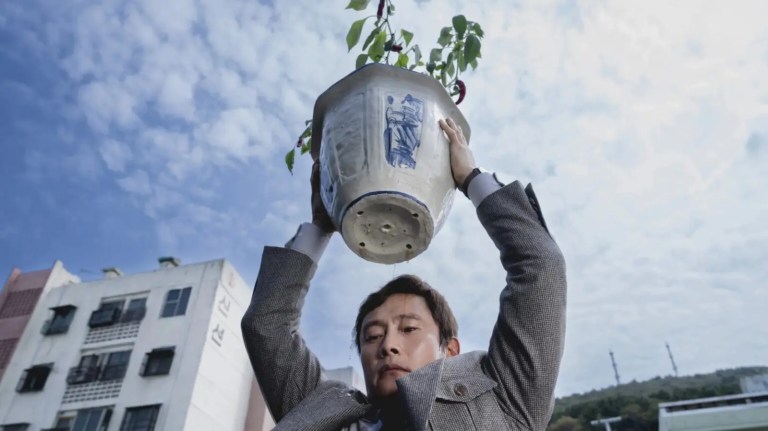
Lee Byung-hun as Man-Su in No Other Choice.
Sitting somewhere between Kiyoshi Kurosawa’s Cloud (2024) and Tokyo Sonata (2008) as modern tales on the devolving psyche of work culture and living under the cruel thumb of capitalism. That Neon in a marketing push sent an open invite to the fortune 500 company CEO’s says everything about how pointed the film aims to be at its primary villain.
Lee’s performance holds down the film’s extremity, preventing it from turning into a circus. His desperation exudes from him as a flop sweat, gritting his teeth through every moment, anxious that the moment he stops to consider the repercussions, it will all crash down. In moments where the world appears to react based on Man-su’s emotions, anything seems possible in this farcical satire that moves with a feverish pace. There is a fleeting moment when a potential final victim offers a job that we feel an unexpected glimmer of hope that we can get off the road. But as is the case with most Park Chan Wook films, that road, once entered, is one-way.
Park is in a tier above all when it comes to pushing the visual medium forward with a fever pitch and an unmatched style. Like his idol Alfred Hitchcock, Park sees his role as both old school entertainer and cinematic visionary who asks what is possible in the medium they have devoted their life to. In his recent work, Park has devoted an enormous amount of time to uncovering ways to use the reflective world of phone and computer screens to tell a story that is still compelled by the characters holding them. When we see Man-su’s reflected face alongside his screen as he drives himself further and further into his doomscroll, we so easily see ourselves. These scenes are comedic but intensely revealing, and make almost all contemporary filmmakers look like cowards for hiding in period filmmaking.
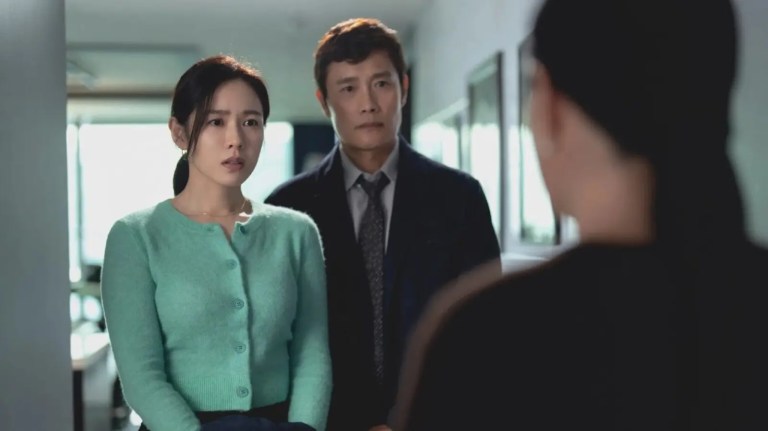
(From left) Son Ye-Jin as Miri and Lee Byung-hun as Man-Su in No Other Choice.
Always veering into doing too much, Park hides as much in its maximalist frames as he shows. Many have criticised the filmmaker for over-directing his screenplays, never allowing the writing to gleam through the forest of his craft, which I believe to be a false and overly simplistic reading of his work. In his very best films, whether original scripts or adaptations like in No Other Choice, he highlights the power and potency of the writing by its sheer ability to stand alongside some of the most visionary filmmaking this century through iconic characters and set pieces. It is only in his films like Stoker, with lesser scripts, that become mostly known for a scene transition (show hair transition scene from YouTube).
What allows Park to ride so close to the edge of camp absurdism without toppling over is his ability to play to a crowd, both in enjoyment and the collective experience of being surrounded by strangers, all uncertain of what will happen next, which makes live sports an enduring event. With all respect to the perfect chase scene at the conclusion of One BattleAfter Another (2025), the legend of the final act, Park Chan Wook’s No Other Choice, has the finale of the year. A glorious send-up of modern late-stage capitalism as a ‘be careful what you wish for’ fairy tale that blends melodrama into a living nightmare into the best satire in years. It is a farcical screed of capitalism that gloriously blooms into something unexpectedly transcendent in its conclusion.
The poetic irony in its final moments play like the deterministic singularity point that all modern art about the crushing weight of capitalism arrives at, there is literally no other choice. How Park doesn’t arrive at a place of crippling nihilism in its final moments but of cruel irony and humanity is nothing short of astounding. His revenge fables are without equal in modern storytelling, with No Other Choice arriving into this extended canon in surprising ways.
With 2025 having drawn to a close, Rating Frames is looking back at the past twelve months of cinema and streaming releases that have come our way. In the second of our series of articles, Darcy is taking a look at his ten favourite films of the year that was.
The medium is the message of films in 2025. In a time where feature filmmaking has to, in some form or another, justify its existence on the screen in comparison to TV or internet slop fed through an infinite reel, the best work to come out this year weaponises the stranglehold a great long-form story can have on an audience. A mixture of old masters and bright new talents across genres and styles, the top of a terrific year in film was all improved by viewing them in a packed theatre, demonstrating that cinema is still at its best as a communal experience, from incisive documentaries and quiet family dramas to a provocative action spectacle that invites an audience to question its worldview.
10. The Perfect Neighbor
So much of good documentary work comes down to access and editing, and Geeta Gandbhir’s heartbreaking portrait of a Ajike Owens’ Florida community and the very active role racism can take in someone’s life has both in droves. Using almost exclusively bodycam footage, police station security tapes, and 911 calls, Gandbhir and editor Viridiana Lieberman weave a poignant and incisive story of the state’s Stand Your Ground laws and the reality of how they are abused. No other film this year will make your blood boil and your heart sink.
9. 28 Years Later
Returning 18 years later with a supposed three screenplays in hand, Alex Garland (a personal favourite writer) wanted to tell the story of the UK in recent years in a franchise that has defined a lot of 21st Century English cinema, with a remarkable and unexpectedly emotional film. Centring on a young family led by an impressive newcomer in Alfie Williams, the rich level of depth and commentary in 28 Years Later allows what could’ve easily been a quick money grab by Garland and Danny Boyle to become an instant Brexit classic. With its exploration of community and isolationism with the backdrop of a widespread outbreak, 28 Years Later places itself at the forefront of art in conversation with the world in the 2020s.
8. The Mastermind
A sleepy political heist hangout with the actor of the moment, Kelly Reichardt’s 70s whisper-of-a-film will leave a long tail that may define the year in the future. Starring Josh O’Connor in his best performance to date as an uninspired suburban dad wanting to pull off an art heist, The Mastermind glides through its own world with a protagonist who believes himself smart and savvy enough to pull off the crime. Reichardt’s hidden sharp blade of focusing on someone causing chaos through their quiet ego of knowing better than those around them allows the world around O’Connor to build from gentle embers to a raging fire.
7. Sorry, Baby
A wonderfully modern dramedy, Sorry, Baby may just usher in a new era of 2020s mumblecore with a shining new voice in Eva Victor. A story that easily could’ve landed on television and overextended, Victor, who wrote, directed, and starred in this thorny comedy of unsurety, loves cinema enough to operate and thrive within the condensed medium. As a young, depressed literary professor, Victor’s Agnes is one of the best cinematic characters of the year, a charming and thorny person you can’t help but connect with. A film that handles heavy subjects with grace and clarity, Victor has emerged as one of the brightest emerging filmmakers and performers in years.
6. Sirât
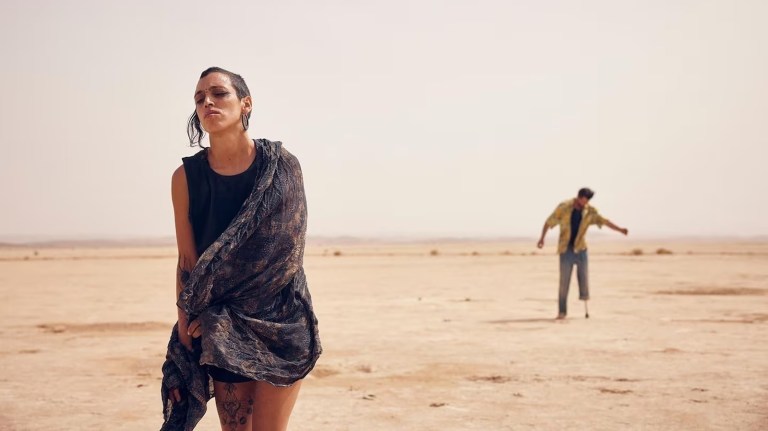
A modern experiential travel saga akin to William Friedkin’s Sorcerer (1977), Oliver Laxe’s Sirât must be seen to be believed, with several earth-shaking moments that will dig into your bones and leave scars. A shocking cinematic experience, Sirât follows a father and son as they search through an underground Moroccan desert rave scene to find their daughter and sister. The film explores community and connection, propelling you forward in line with Kangding Ray’s incredible music soundscapes.
5. Sinners
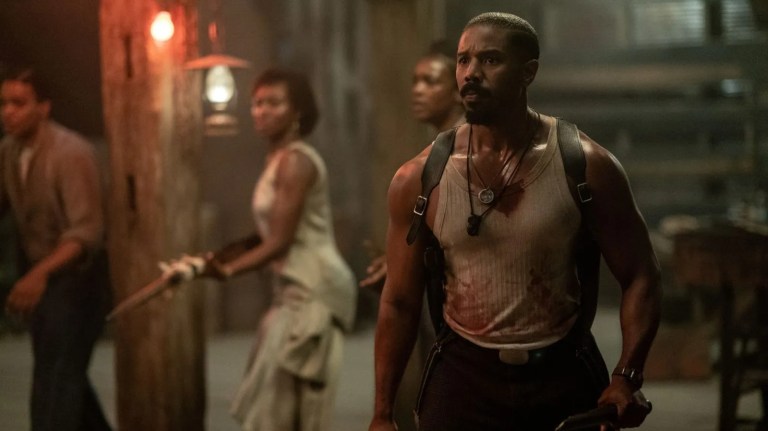
The future promise of exciting blockbuster cinema is also one of the most enjoyable and prickly films of the year. Ryan Coogler’s exploration into race, music, and history is tied to an explosive vampire action film that proves adults will still show up if given some real meat to sink their teeth into. With a terrific ensemble and a remarkable breakout by Miles Caton (so good you do not question his future self played by Buddy Guy), Coogler’s musical knows how to entertain a crowd while still provoking thoughts about how culture and music are consumed.
4. BLKNWS: Terms & Conditions
My most anticipated film experience of the year delivers and beguiles like no other. Perhaps the greatest music video director around, working with Beyonce, Kendrick Lamar, FKA Twigs, and Flying Lotus, Kahlil Joseph has a visual eye that blends hyper-modern documentary styles — which includes YouTube clips and memes — with his love and influence from the legendary Thai director Apichatpong Weerasethakul. Debuting the first iteration of BLKNWS at the Venice Biennale in 2019 as a video installation, Joseph and A24 collaborated to expand the work into a feature-length experience like no other. The film will be hard to track down, but it is as essential a watch in 2025 as any film on this list. BLKNWS: Terms & Conditions is a dense yet enjoyable work that will have you asking more from documentary and experiential cinema for the rest of the decade.
3. Sentimental Value
A tremendous follow up to Joachim Trier’s millennial classic The Worst Person in the World (2021), Sentimental Valuepulses and ripples through generations of familial connection and disconnection with grace and power that feels open and inviting even in its thorniest moments. Trier and all his creative collaborators understand that to create is to bridge an ocean of the unsaid, even if that means building a replica of your generational family home on a soundstage, only to have it hidden on the 18th page of the Netflix arthouse section. Trier and Vogt understand deeply how, even through that artifice, true openness and connection can be translated into a final, powerful image of understanding but not resolution.
2. No Other Choice
With all respect to the perfect chase scene at the conclusion of the film at the top of my list, the master of the final act, Park Chan Wook’s No Other Choice, has the finale of the year. A glorious send-up of modern late-stage capitalism as a ‘be careful what you wish for’ fairy tale that blends melodrama into a living nightmare into the best satire in years. How Park doesn’t arrive at a place of crippling nihilism in its final moments but of cruel irony and humanity is nothing short of astounding. His revenge fables are without equal in modern storytelling, with No Other Choice entering this extended canon in surprising ways. No one is pushing the language of cinematic storytelling more than Park with his visualisations of doomscrolling as a uniquely modern debilitation.
1. One Battle After Another
A film that leaps off the screen in an instant, One Battle After Anotherworks the way most immediately immortal films do. And much like many of the great immortal films, I find myself reading rather than writing about Paul Thomas Anderson’s incisive work of contemporary revolutionary cinema that even when it pulls punches, compels you forward. I’m not surprised a new PTA film that finally delves into contemporary life is my favourite film to be released in its 2020s, as his deeply humanist approach to writing over the last 30 years has defined so much of my taste in art. Combine that with subject matter I find endlessly compelling as a modern look at the humanity and personhood of revolutionaries that is fuelled by the past but never backwards-looking, and you have a film that will be the yardstick all other films will be measured against.
Honourable mentions: Black Bag, Caught By The Tides, Eephus.
Arriving on Australian shores on Christmas Day, Joachim Trier’s follow-up to the Millennial instant classic The Worst Person in the World (2021) follows a family collision of artists that may be the perfect film for the holiday. Sentimental Value (2025) is a film about artists unable to articulate their feelings but are able to embody them and translate it to a captive audience. Trier and frequent collaborator Eskil Vogt have moved from dense single-character explorations into a wider canvas of a family, allowing their humanist writing style to weave between the said and unsaid.
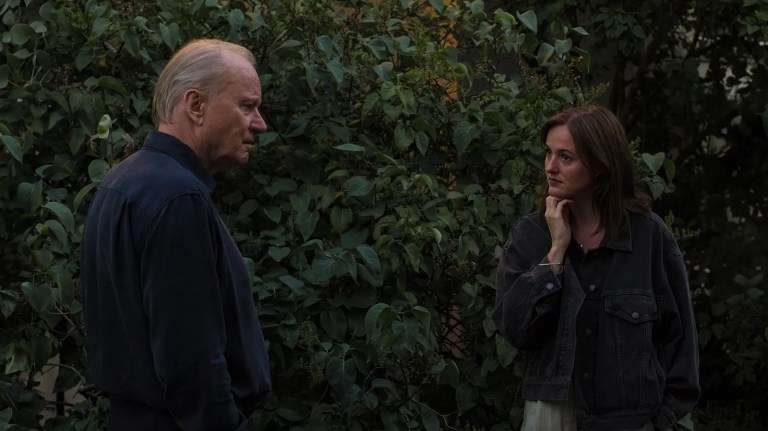
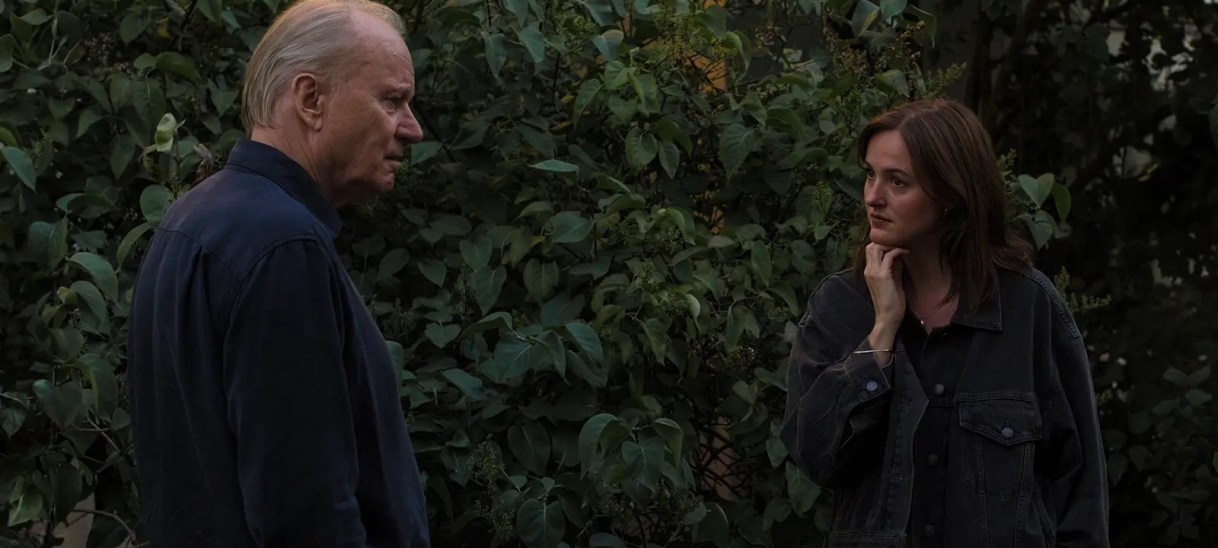
Centred is Nora Borg, played by another frequent collaborator in Renate Reinsve, a respected theatre actor suffering from immense stage fright; Agnes (a remarkable Inga Ibsdotter Lilleaas), her younger sister who has escaped the arts to make a more grounded life for herself; Gustav (a tremendous Stellan Starsgård), a well respected arthouse director and their distant father; and Rachel (Elle Fanning), an American star who aches to work on more meaningful work.
The film focuses on the return of Gustav, who has written a script that explores the past and present of the family’s history, set in the old family home, most of where Sentimental Value is set. He believes this script will launch him out of the retrospective tour space and back into the forefront of modern cinema; he just needs his estranged daughter, Nora, to agree to collaborate with him and star in the film. When she refuses to work with her father on the film, Gustav, after a chance encounter at a film festival, asks the young star Rachel to perform the role instead.
The act of writing a lead role for a loved one is something the film does not take lightly, whilst never allowing the work to unfold into a navel-gazing melodrama. A shaggy family drama about the film business and artistry would quickly implode, but Trier and Vogt’s script has a dedication to the central three family members that always feels generous.
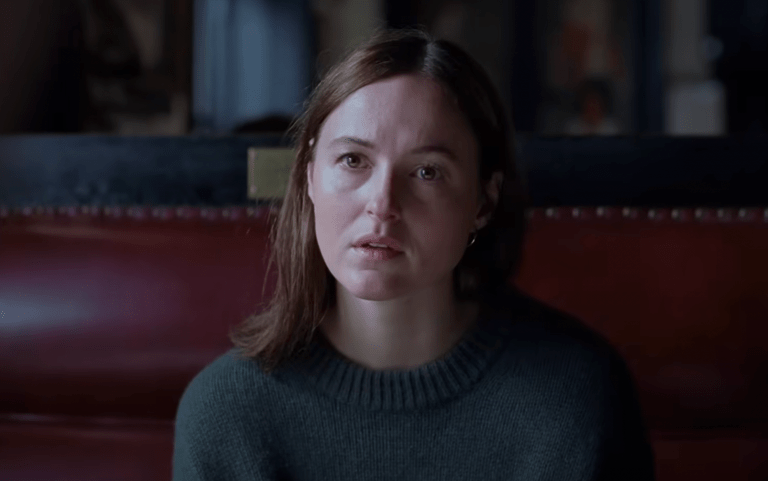
Renate Reinsve in Sentimental Value (2025.)
While a gut punch on first viewing, upon multiple viewings, it becomes clear that this is a generational performance by Skarsgård. This is made all the more extraordinary due to his health and his inability to memorise lines post-stroke. It is too rare where a character and performer to become as intrinsically linked as Skarsgård and Gustav do here, as an aging artist looking to the past, present, and future of their family line to understand themselves and those around them.
Bergman is always on the mind while interpersonal scenes float from moment to moment. The film dances between influences in Persona (1966) and Vertigo (1958) with Fanning’s character Rachel, arriving at an equal power through a balance of influences. While Hitchcock’s complicated masterpiece wields the weight of comedically heightened mirroring and Bergman’s film of duality that revel in never fully eliding its meaning to the characters, Trier’s mirroring achieves its power through its late decision to voice itself clearly and openly.
A key scene of mirroring occurs in a pair of scenes that opens up the film into a world of collective humanity that is often the goal of Trier’s films. On one side of the glass is a monologue rehearsal scene with Rachel (after dying her hair to more closely resemble Nora) and Gustav, who is struggling to reach the impossible place he is searching for. On the other, a gorgeous scene where Nora finally reads the script after being given it by her sister, after she also finally reads it. After finally reading the script and releasing the intimacy that Gustav is pouring onto the page — something he would never articulate to them personally — the sisters are profoundly moved, and a point of familial understanding overwhelms them.
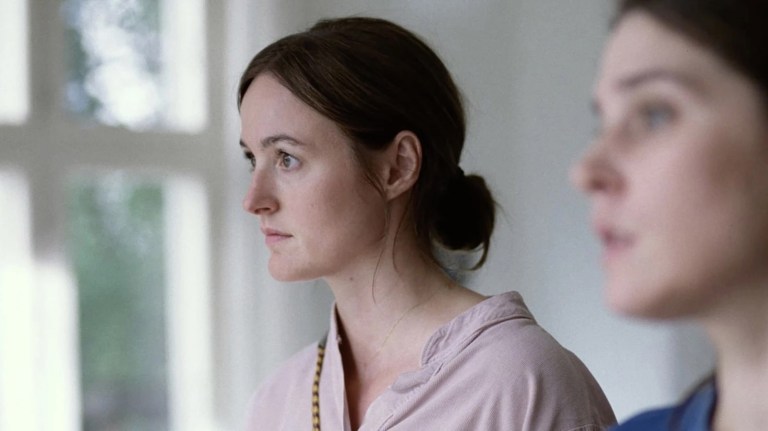
(from left) Renate Reinsve and Inga Ibsdotter Lilleaas in Sentimental Value (2025.)
Whether the film too neatly arrives at its climaxes is up to personal taste, but much needs to be credited to Trier and Vogt for the level of clarity and emotional weight they give to the struggle artists have with connecting to those they love without using their art. And the exploration Gustav has in writing extends as an olive branch to Nora, to tell her he sees her struggles, but gives her the medium of her art to explore them together.
It is in these moments of generous openness and charged, yet elided, dialogue that Sentimental Value becomes a beautifully emotive family drama. Trier and all his creative collaborators understand that to create is to bridge an ocean of the unsaid, even if that means building a replica of your generational family home on a soundstage, only to have it hidden on the 18th page of the Netflix arthouse section. Trier and Vogt understand deeply how, even through that artifice, true openness and connection can be translated into a final, powerful image of understanding but not resolution.
Another year, another chaotic year of MIFF. With some dizzying heights and impressive debuts, cinema feels in good hands as we march headfirst into the tail end of the 2020s (a wild thought). The festival is the highlight of the cinematic calendar for the city, defining the landscape as it shifts towards awards season, with a tremendous work of curation and bold decisions as addressed below that make August the best month of the year.
Twinless (2025) – James Sweeney
⭐⭐⭐⭐
Rating: 3.5 out of 5.
A proper dramedy with a complicated but compelling pair at its core, Twinless is a charming and confident debut not weighed down by its writer, director James Sweeney’s decision to also star in the film. Following a pair of twins who have recently lost their other half and meet at a support group, Dylan O’Brien’s Roman (and Rocky) and Sweeney’s Dennis fall into a quick friendship as they look to fill the void.
Would make an interesting double feature with Andrew DeYoung’s Friendship (2024) as a perceptive and darkly funny look at the pursuit of modern male friendship, with many screwball moments in Sweeney’s film feeling like I Think You Should Leave (2019) pitches. Sweeney excels in wrongfooting the audience into a charming dramedy that gives space to both sides of the genre mash.
The Mastermind (2025) – Kelly Reichardt
⭐⭐⭐⭐
Rating: 4 out of 5.
No one is operating on Kelly Reichardt’s small but vital level. With an autumnal romp that makes way for a surprisingly poignant introspection into one’s relationship to political change, Reichardt’s period heist mood piece captures you in a breathing world, and will linger on you long after you leave like the smell of last night’s smoke break.
Josh O’Connor’s niche as a dirtbag charmer continues with his best Elliot Gould here (absolute cinematic catnip for me) as an art school washout living in suburbia with a wife (an underused Alana Haim) and two kids who have a side hustle-slash-obsession with art heists. While not on the level of O’Connor’s recent classic La Chimera (2023), this cool, warm-hued hangout film will only expand as the months go on, where I would not be surprised if it lands on end-of-year lists and amongst Reichardt’s most beloved films.
Blue Moon (2025) – Richard Linklater
⭐⭐⭐⭐
Rating: 3.5 out of 5.
A frenetic script by novelist Robert Kaplow and a high-level performance from Ethan Hawke allow Richard Linklater’s Blue Moon to shine through its humble boundaries as a film that should’ve been a play. Set against the background of the opening night of Oklahoma! On Broadway in 1943, Hawke plays the famed but troubled songwriter Lorenz Hart, who is stewing at Sardi’s, the bar soon to be the venue for the show’s party.
Hawke is flanked by a terrific cast who bounce off and counter his manic energy wonderfully, including Bobby Cannavale, Margaret Qualley, Andrew Scott, and Patrick Kennedy as an array of famous names the film nods to. Thankfully, Linklater’s love and curiosity for these artists and individuals dance energetically around the screen, allowing even those with no Broadway knowledge to understand and appreciate the film.
Sirât (2025) – Oliver Laxe
⭐⭐⭐⭐
Rating: 4 out of 5.
In a year of great horror and thrillers, there is no more visceral or dire theatre going experience than Óliver Laxe’s Cannes Jury Prize winning film Sirāt. Aided by the festival’s bold decision to screen this anxiety ridden, grim family nightmare at IMAX. We follow father and son Luis (Sergi López) and Esteban (Bruno Núñez Arjona) into the Moroccan desert in search of their daughter and sister Mar, leading them into an EDM festival where they are briefly liberated from the bounds of society. With its pounding techno score and 16mm film stock, Sirāt is a sensory marvel that pulls you into its world and commands you to walk desperately into the desert and into the unknown.
With a political undercurrent and bare-boned family drama, Sirāt uses the visual language of the immortal William Friedkin fever dream Sorcerer (1977) to illustrate an Odyssey-like adventure in a world quickly becoming unrecognisable. This is a film that will take days to process, asking unique questions of yourself and to what extent you’ll chase exhilaration in your own life and in an experience on screen.
Exit 8 (2025) – Genki Kawamura
⭐⭐⭐⭐
Rating: 3.5 out of 5.
No experience illustrates the power the festival has over the city than the sold-out IMAX screening of Genki Kawamura’s Exit 8, a chaotic and mesmerising Escher painting of a horror film about being trapped in a loop in Shinjuku station. With a dozen references to The Shining (1980), Kawamura focuses on mood and engagement with a game audience to draw us along its short and concise runtime. We are given just enough narrative to fill a feature, trapped in a propulsive active viewing experience, a wonderful feeling in a sold-out crowd. In a great year for horror, this is not one to miss when it enters theatres.
Resurrection (2025) – Bi Gan
⭐⭐⭐⭐
Rating: 3.5 out of 5.
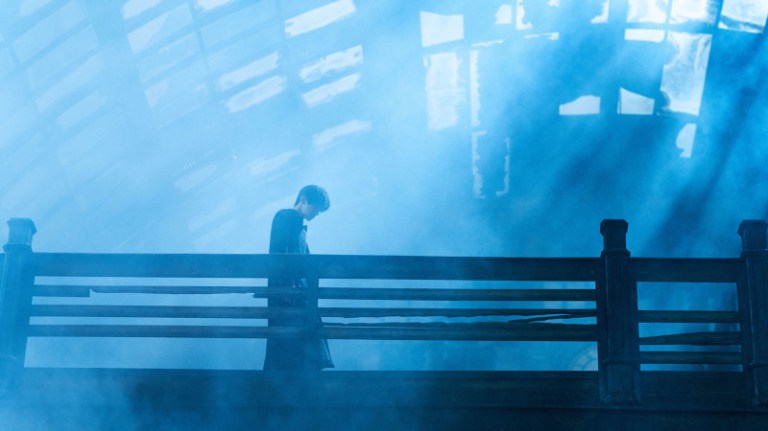
What to say about the film that has everything. Bursting at the seams with plots in miniature and arthouse bravura, Bi Gan’s follow-up to the extraordinary Long Days Journey into Night (2018) is the cinematic odyssey Resurrection. An undefinable tapestry that wears many genre hats as a sci monster powered like a projected as the line dreamer in a world that has learnt the secret to eternal life, so long as they don’t dream. Or something like that. While Gan’s previous film is expansive but intimate in its storytelling scope, Resurrection operates as basically six short genre pieces that have the density and plot to inhabit for its entire 160-minute run-time. That is a testament to Gan’s visual style and conceptual scope, even if he can get caught up in its own luxuriating to succeed as a narrative.
An interesting film to compare this expansive odyssey with is Bertrand Bonello’s The Beast (2023). Both grand-scale odysseys following a pair of characters that can’t help but pursue one another, across time or across cinematic dreams. The key distinction is that Resurrection is a work of sentiment told across cinematic history, akin to Babylon (2022), whereas Bonello’s film operates as an incisive look at relationships through the lens of their pair.
With wonderful performances by Jackson Yee and Shu Qi, played across many genres including silent film, noir, and a gangster vampire romance shot as a 30 minute oner on New Years’ Eve 1999, Resurrection can and will show you its whole heart if you’ll let it, overwhelming you with ideas and concepts rooted in the undeniable truth that the cinematic dream is irreplaceable.
Dreams (Sex Love) (2025) – Dag Johan Haugerud
⭐⭐⭐
Rating: 3 out of 5.
A delicate exploration of teenage love and obsession that treats it with sensuality and respect, while allowing space for realism and reflection. The third part of Norwegian Dag Johan Haugerud’s collection of films on love and desire made in quick succession, Dreams (Sex Love) centres on a teenage art student Johanne (Ella Øverbye) who pines for her new teacher Johanna (Selome Emnetu), eventually pouring her feelings and desires into a book she gives to her poet grandmother.
The film shifts in unexpected ways while still following Johanne’s emotional journey that resonates with the fresh wisdom of a good teen romance novel. The prolific nature of Haugerud’s work does not diminish the literary quality of his films, which leave room for many poignant interpersonal conversations that span generations. I was only able to catch this single entry in the collection, but I will endeavour to complete the trilogy by year’s end.
BLKNWS: Terms & Conditions (2024) – Kahlil Joseph
⭐⭐⭐⭐⭐
Rating: 4.5 out of 5.
Kahlil Joseph did not set out to make a documentary. Expanding on his two screen art installations of the same name, Joseph explodes his vision of an intertwining Black past and future through an extravagant reimagining of history and form with a frenetic energy that bounces from lush Afrofuturist narratives with some of the best production design of the year to reaction memes.
With cinematography from the great Bradford Young and a pulsating score by experimental artist Klein, BLKNWS: Terms & Conditions sees beauty in the interplay between sweeping science fiction storytelling with dense, academic dialogue and modern internet culture, something rarely seen projected on a large screen. While not an easy film to grasp or comprehend in real-time, Joseph and his writing collective have crafted a dizzying piece of art that will hopefully inspire new nonfiction visual artists to explore their craft in inventive and genre-breaking ways. The film of the festival for me.
Cloud (2024) – Kiyoshi Kurosawa
⭐⭐⭐⭐
Rating: 3.5 out of 5.
A cynical master storyteller returning to the twisty world of revenge cinema through the lens of a modern huckster dirtbag trying to turn a quick buck as an online reseller, Kiyoshi Kurosawa’s Cloud forces us to confront our relationship to ground-level late-stage capitalism in unexpected and darkly comedic ways. Unaware of the mild carnage he leaves behind him as he attempts to secure a comfortable life on his own terms, Masaki Soda’s Ryôsuke Yoshii is just smart enough to spot an opportunity to coldly swindle desperate people out of their undervalued goods, but not smart enough to avoid danger and risk.
There’s no greater feeling in the theatre than when Kurosawa is moving through his spider web plots with the tension of a vintage paranoia thriller. When a true master of form and craft is still interested in the modern world and can critique and perceive it in compelling ways, we can’t afford to ignore it. Especially when they’re this enjoyable in a crowd.
Brand New Landscape (2025) – Yuiga Danzuka
⭐⭐⭐
Rating: 3 out of 5.
Danzuka’s debut feature made waves as the youngest Japanese director ever to be featured in the Directors’ Fortnight at Cannes, beginning with an extended Ozu-like exploration of a family in quiet crisis. Brand New Landscape wears its compelling, if slightly clouded themes proudly of a shifting Tokyo, and more specifically Shibuya, as a space aimed to accommodate a younger generation, even if it harms its current occupants.
The film displays the ripple effects from an unimaginable event that fractures a familiar family structure alongside the construction and evolution of several key spaces in the famous Tokyo area. Brand New Landscape never reaches a triumphant peak of dramatic storytelling, but it does leave you with both a unique perspective of Tokyo and of your own experiences in your own city and neighbourhood. A rather remarkable feat for a young filmmaker to garner.
Sorry, Baby (2025) – Eva Victor
⭐⭐⭐⭐
Rating: 4 out of 5.
The most assured and confident debut of the year, Eva Victor writes, directs, and stars in a playful yet poignant dramedy on the lasting impacts of trauma that finds new ground in the familiar lane of modern storytelling. As a liberal arts grad still living near campus and on the verge of starting a full-time teaching position while still processing and working through deep trauma, Agnes (Victor) feels stuck while her closest friend Lydie (Naomie Ackie) returns to tell her she’s pregnant.
A film about the adult anxiety of never being sure of the right thing to do or feel in any situation, Victor is perceptive with a sharp eye for when to be kind and when to be cutting. Sorry, Baby has such a strong command of a difficult tone throughout that the audience quickly settles into the hands of a commanding filmmaker, a rare feat in a first feature. There may be no better scene in indie cinema this year than the jury duty scene in this film with its ability to float between wry humour, female camaraderie in unlikely situations, and quiet character storytelling that announced Victor as am impressive filmmaker and performer.
The End (2024) – Joshua Oppenheimer
⭐⭐⭐⭐
Rating: 3.5 out of 5.
A film about a family resolute in their self delusion, unflinching in their avoidance of personal reckoning after a climate apocalypse they helped create, played out as a musical, the genre defined by its characters constantly reckoning with their own feelings and decisions through song.
A remarkable ensemble that elevates the film above an impressive academic genre experiment, particularly George Mackay, who, after starring in Bonello’s The Beast (wow, two nods in one festival for this film), has more than proven his bona fides as a young star able to breathe life into some art cinema trappings. Oppenheimer clearly has a lot on his mind with the ability of the most powerful people in the world to craft self-delusions to survive within and what happens when others encounter and potentially destabilise those delusions, a throughline that ties his totemic documentary films to The End. The decision to mine new thematic ground in a wildly different way may go down as a defining cinematic decision of the decade, and while this film does not reach some of the transcendent moments of The Act of Killing (2012) or The Look of Silence (2014), The End is certainly worth your time and hopefully not a final foray into narrative film.
It can be daunting being the first. The first people in space. The first superheroes in the world, uncertain of the responsibility their power demands. The first child. Crossing that uneasy bridge from the familiar into the depths of the unknown. This was once a core aspect of superhero storytelling, but after thirty-seven entries in the compounding Marvel enterprise, it feels impossible to return to. Even the recent release of James Gunn’s Superman (2025) — a new frontier on the DC side of larger storytelling building blocks, while successful in its storytelling — had notes of this and still couldn’t help itself surround their central figure with larger but unnecessary chatter.
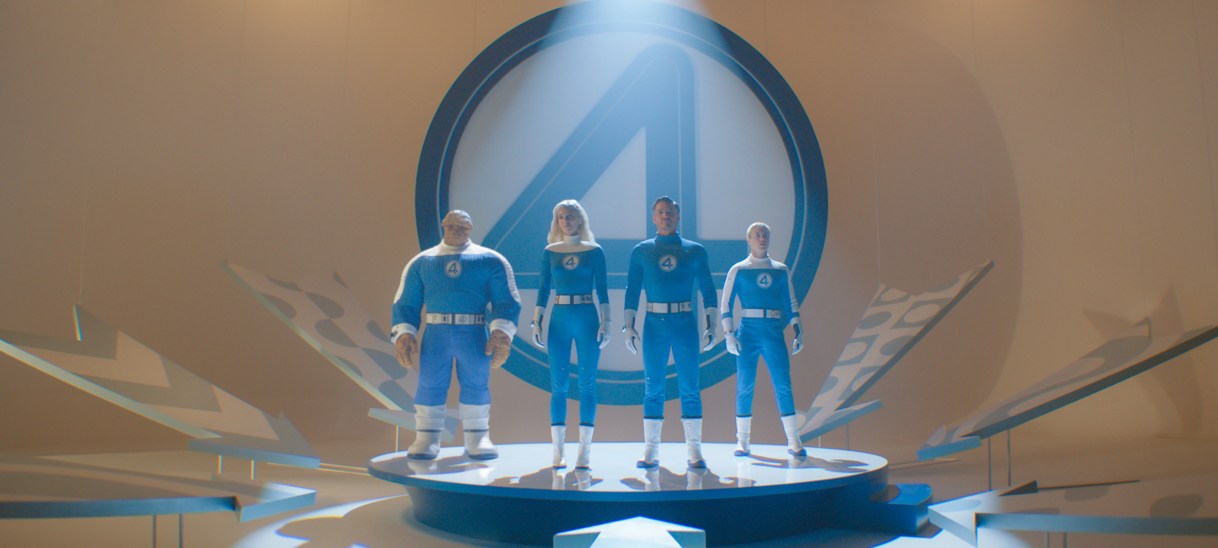
But this is where The Fantastic Four: First Steps (2025) succeeds and earns its colonised titling and a real throwback to why the MCU has built a legacy on quality films. Set in an alternate Earth from the familiar stomping ground of the MCU, and heavily focused on its famous foursome and not its larger worldbuilding, director Matt Shackman has crafted a brisk and entertaining sci-fi-focused ride that will leave you wholly satisfied; a feeling Marvel films used to give us.
the Fantastic Four, led by Reed Richards and Sue Storm, brought to life better than ever by Pedro Pascal and Venessa Kirby, and flanked by Ben Grimm (Ebon Moss-Bachrach) and Johnny Storm (Joseph Quinn), arrive on screens in an Jetsons-themed alternate reality giving them the freedom of not needing less compelling super friends to give passing screen time too. Portrayed with enthusiasm and sincerity that reflects outwards into the whole film while still avoiding a saccharine mawkishness, making this Fantastic Four entry feel like a delightful throwback.
Four years into their journey, that is just settling in until the unexpected arrives both in-house and extra-terrestrially; the surprising pregnancy of Sue and the arrival of the Herald of Galactus (Ralph Ineson), The Silver Surfer (played with a pride and melancholy by the great Julia Garner), spelling doom for the Earth.
Joseph Quinn and Pedro Pascal in The Fantastic Four: First Steps
Building a competent film around these four characters has proved difficult in the past (this is the fourth go around for the crew in cinema, maybe they needed the luck?), but writers Eric Pearson, Josh Friedman, Jeff Kaplan, and Ian Springer have found success by properly centering the four actors, allowing plot and CGI battles to whizz past their family sci-fi soap opera. Told with sincerity and a deep love of the characters strengths and weaknesses, Shackman is allowed to stretch out and tell a full story, showing the potential from his directorial work on WandaVision (2021), perhaps the only successful Marvel TV show post Daredevil, even if it relied on a lazy final battle to conclude its story.
By centring two terrific performers who have shown the ability to operate in an old Hollywood mode, Pedro Pascal (in full Clark Gable mode) and Venessa Kirby jump off the screen with a chemistry and guile built from the characters out. Even as the world around them monumentally shifts with the arrival of a new child and a new Earth-destroying threat, we constantly see them lock eyes and respond to each other with a depth of understanding and empathy that wouldn’t be amiss in an awards season marriage drama. Pascal is at his best as a supportive scene partner, an invisible hand that allows others to shine instead of absorbing the audience’s attention.
Rounding out the team is Ebon Moss-Bachrach and Joseph Quinn who have an easy banter built on warmth and care that adds to scenes. Quinn in particular is given a full story that is surprising and compelling, improving on the reductive framing we often see of the Human Torch.
A refreshing turn in the superhero genre that is potentially in its death throes, The Fantastic Four: First Steps focuses on an older sci-fi genre package with longer dialogue scenes, fewer action moments with a passing amount of care and attention to story, and a visual language that mostly grounds itself in its own reality (several scenes still feel deeply 2020s which the film seemed intent on avoiding in its first hour).
Pedro Pascal in The Fantastic Four: First Steps
With special effects that actually looked like the VFX team was given time to fully render and actualise ideas from scratch, The Fantastic Four: First Steps withheld the action at the centre of the story in place for a simple but emotive narrative built on a new, emerging family. Even Galactus, once portrayed as a large cloud in a film too embarrassed by its own sci-fi story, is given a tactile nature and a quality performance by Ineson, perhaps the best voice in the industry. In few words, Ineson displays a menace to his words but a clarity in character motivation one wouldn’t expect from an enormous villain desperate to consume planets. It’s not just that Shackman found space for the key six characters to show dimension and character through considered relationship work within a sci-fi framework; it’s that we could achieve this while wrapping up the film in under two hours.
The Fantastic Four: First Steps is a fast-moving train that has a real destination in mind, an aspect of American genre storytelling we took for granted and allowed to bloat and stagnate, too satisfied with its own navel-gazing to realise they were left as the only people looking. With a recent run of superhero films, Thunderbolts* (2025), Superman, and The Fantastic Four: First Steps, we are potentially rounding the corner into the enjoyment and craft that built this genre into the cinematic tentpole that it strives to hold onto.
By giving these characters a fully rounded narrative that satisfies more than stringing you along with the promise of a larger experience in the future, Shackman and co have achieved what was supposed to be the goal of cinematic genre storytelling; something familiar and something new, contained in an entertaining and sometimes emotional time at the movies. Where James Gunn’s Superman stretched far and wide to populate his emerging franchise venture, making for a fun but frustrating experience, The Fantastic Four: First Steps focuses on a small collection of characters where the biggest spectacle is the arrival of a new family member, the largest event in most audience members’ lives as well.
The Fantastic Four: First Steps is in theatres now.
Marketed with a keen focus on its crew’s previous work with the production company de jour A24, Marvel’s attempted rebound back into the public consciousness has arrived in the Florence Pugh led Thunderbolts* (2025). The film is emotional and built from the inside out with a commitment to its characters, a collection of misfit Marvel characters played by an incredible cast of emerging talents that shows when the call is made, they will deliver.
Much like an aggressive chiropractic session, the Marvel project desperately needed realignment, no matter the clunkiness to achieve it. By bringing in emerging creatives to develop a more personal character story — what used to be the MCU’s calling card in the early years — Thunderbolts* arrives fashionably late to a series in need of rescue. While modest in its pursuits (for a blockbuster feature), Thunderbolts* is built off the back of two terrific performances in Pugh as Helena and Lewis Pullman as Bob. Their chemistry stems from the characters’ visible mental health struggles that long for meaning and connection in a world devoid of both, a difficult idea to place front and centre in a film with multiple car flips.
After a haphazard and almost impressively uninspired handover film Captain America: A Brave New World (2025), Marvel’s loaded release schedule picks back up with a darker, sharper, and wittier ensemble film that stands on its own feet before the navel-gazing returns with a new Fantastic Four and Avengers films in the next 12 months.
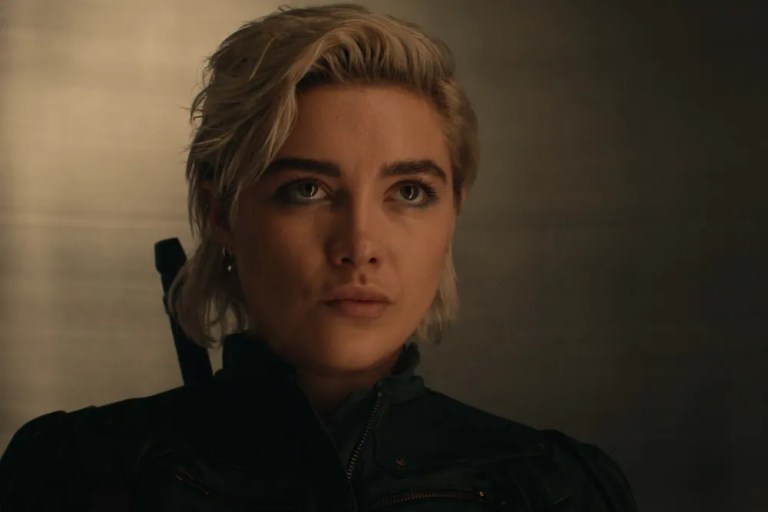
Florence Pugh in Thunderbolts*.
Beef’s (2024) Jake Schreier, alongside many of his collaborators on the acclaimed series, puts character above all in a seemingly obvious pivot away from the plug-and-play style of most post-Endgame MCU films that has put the company on the brink.
Never undercutting its emotional weight with a cheap joke in the same sentence, screenwriters Eric Pearson and Joanna Calo keep their characters, in particular Yelena (a tremendous Florence Pugh), on clearly defined and recognisable tracks. Even as one of the world’s best assassin’s, Yelena’s mental health struggles and ennui is expressed with a profound clarity that underscores the entire film.
By taking their story of literalising mental health struggles to a fulfilling breaking point, Thunderbolts* shows what can be achieved in the best comic book stories by reflecting these superpowered people’s humanity out into the world. Thunderbolts* elicits an unusual feeling: nostalgia for the early entrants in the Marvel cinematic project. Slimmed down to bare essentials with an antagonist that reflects the interior conflicts of our soon-to-be heroes, the film knows the power it holds with its outstanding cast and when to cede ground to their talents.
Sebastian Stan in Thunderbolts*.
From the outset, the score out of electronic trio Son Lux stands apart from the swathe of superhero cinema. In many critical scenes, their emotional intelligence shines through, giving the story of depression and reconciliation a clarity of vision that easily could’ve fallen through our hands like sand. The acoustic and electronic work sustains an unexpected grace that should be applauded.
With an eventual villain in The Sentry that embodies the call of the void itself, Thunderbolts* excels in grounding every element of its story within its characters. Much like Tony Stark being forced to reckon with his role in war profiteering to survive, Yelena must contend with her depression and learn to live alongside it.
The film excels in its modesty, even if it sets a pivotal confrontation in the old Avengers tower (baby steps!). Thunderbolts* uses a potent mix of humour and contemporary emotional turmoil to place itself a tier above the durge of action cinema that doesn’t even arrive at the boilerplate. While striving to be remembered as more than a footnote on the way to back-to-back billion-dollar cheques, Schreier’s film places potent themes of loneliness and emptiness at the forefront of a superhero story that separates itself from the studio’s recent shortfalls.
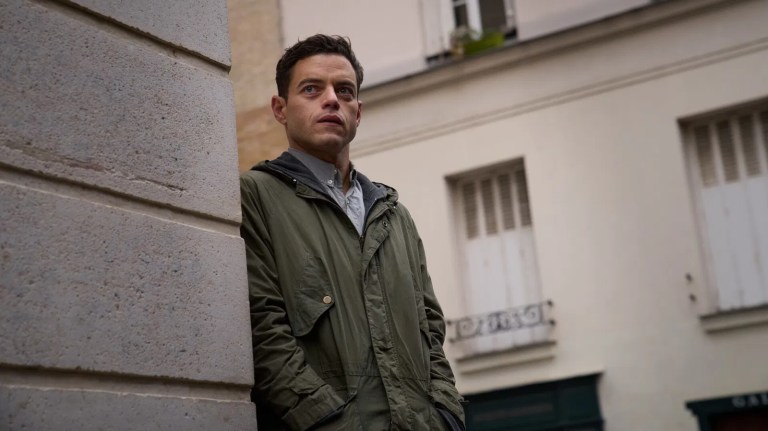
Helmed by British Television veteran James Hawes, The Amateur is a spy thriller unable to capture its own personality or separate itself from the recently booming subgenre. Focusing on a CIA data analyst-slash-hacker (Rami Malek, in his wheelhouse) who forces himself into the field by any means necessary after the death of his wife (Rachel Brosnahan) during a terrorist hostage crisis in London, the film’s fractured cadence and lack of narrative momentum despite this inciting incident means you don’t know where you’ll be taken next, but also uncertain about whether you’ll care.
Based on Robert Litell’s 1981 spy novel of the same name and adapted by Black Hawk Down (2001) screenwriter Ken Nolan and Gary Spinelli, The Amateur plays both sides of the Atlantic with its approach to the spy thriller. This, unfortunately, means the film never finds a singular drive or point of view but is made with a great cast and a refined crew that keeps the train on the tracks.
A surprisingly small-scale espionage thriller even as Malek makes his way through many cities, The Amateur shuffles along from moment to moment, with many cast members rarely appearing in multiple locations, restricting the narrative momentum of every sequence. Even the pivot hostage scene with Brosnahan plays out in short news clipping bursts, forcing Malek to shoulder the weight of every emotional and narrative beat, something very few actors can manage.
Rami Malek combined his experiences in the TV series Mr Robot (2015-2019) and No Time to Die (2021) to lead his own spy thriller in the vein of Jason Bourne if his amnesia expanded to include the trainee manual. With a tremendous cast of faces alongside Malek with Laurence Fishburne, Brosnahan, Jon Bernthal, Michael Stuhlbarg, Caitríona Balfe, Holt McCallany, and Julianne Nicholson, elevate rote scenes with barely a hint of drama or characterisation.
Rami Malek in The Amateur. Screening provided by 20th Century Studios.
Malek’s compelling anti-chemistry as a leading man works in fits and starts, primarily when he is acting alongside some of the best working actors in Bernthal, Stuhlbarg, and Fishbourne. Mr Robot thrived in its ability to work to Malek’s strength as a performer by constantly giving him unique counterweights to act against. In a surprisingly thin script, Malek and the other actors are repeatedly left out to dry, forced to fend for themselves while the ship chugs along to a near nonstop score.
The film is not assisted by Oscar-winning composer Volker Bertelmann’s austere score that opts to flatten much of the proceedings. The constant score certainly elevates the uncompelling exposition scenes but never highlights the entertaining and thrilling set pieces that are the film’s shining light.
However, almost in spite of itself, the film comes together in a worthwhile and satisfying way, even as it frays around the edges of time and drama. This is largely due to its creative action set pieces where each element, especially Malek’s performance, clicks into place into pure enjoyment. While the revenge narrative is established with a reckless abandon, it is thrilling to see where Hawes places these pivotal scenes, including a highrise pool and a final confrontation in the Russian-Finnish ocean border.
Due to this narrative style, The Amateur is not dissimilar to Tenet (2020) in how it moves quickly between setting up and executing inventive action set pieces instead of exploring the characters within its espionage world. This is surprising given The Amateur’s stellar cast, even if they are rarely given any meat on the bone.
Ultimately, there were high hopes for The Amateur due to its cast and veteran crew in a subgenre currently in a mini-boom. Still, without a unique style or handle on tone, the film moves shakily between sequences, never arriving sure of foot. Thankfully, the film’s trump card for a final sequence, a charming and compelling Michael Stuhlbarg performance, pretty successfully ties up a desperately fraying narrative yearning for a satisfying end note.
A caustic character study of depression, expressed in a near limitless capacity of anger and frustration, the legend Mike Leigh and Marianne Jean-Baptiste reunite for a potent and captivating film like no other. At times an excruciating viewing experience, Hard Truths (2024) is as rewarding a film as you’ll find this year, sneaking up on you with seasoned patience so few filmmakers deploy.
John Waters lovingly called Jean-Baptiste’s Pansy “the most unpleasant sourpuss in the history of cinema”, and it’s hard to argue with him. An open wound that reacts to every possible moment like a critically endangered animal hoping to survive another day, even if they’re unsure why they cling to life so hard.
An ornery and occasionally cruel working-class mother of an adult-at-home son, Pansy doesn’t drift across days as much as she bulldozes through every waking moment. We learn everything you need to know about Pansy by the way she wakes up. In multiple instances across Hard Truths, we grow desperately empathetic to the peacefulness she exudes while sleeping, but is constantly jolted awake, activating an instantaneous fight mode.
While Jean-Baptiste is prone to blot out the sun with her performance, Leigh leaves room for some truly remarkable supporting performances. David Webber and Tuwaine Barrett, as Pansy’s husband Curtley and reclusive and introverted son Moses, manage to withstand the ocean storm that is Pansy through a deep connection to characters given little room to breathe but require a wide berth.
Marianne Jean-Baptiste in Hard Truths
Leigh is a cinematic master through his ability to create a cumulative character experience that bursts at the seams of its final ensemble sequence. Like a well-crafted play, Hard Truths walks you towards a profound moment of empathy and attachment in a naturally unexpected cadence. With little plot outside of a Mother’s Day date for Pansy and her sister Chantelle (Michele Austin), Leigh gives his ensemble enormous space to fill the frame with nuanced character portraits that will feel like mirrors into the soul of the modern-day middle-class, seen with honesty and respect.
While Pansy is increasingly vocal about an uncertain ailment that is fuelling a violent discomfort with life, she harbours a real hesitation in improving her situation. From a doctor’s appointment to a trip to the dentist (with Leigh using a real dentist!), these scenes carry a weight that sustains the film’s second half, as the audience grows increasingly desperate for the reason in all this internal suffering perpetually boiling over. She is nothing but a raw nerve, longing for a connection without the capability to find it.
A desperate need to be understood and heard hidden within a desperate need to be left alone, Jean-Baptiste, with Leigh by her side, reflects a moment of modern life not seen in the old cinematic masters. While Leigh’s best films are where he forces his fractured characters into unfamiliar places (Topsy Turvy,Naked), Hard Truths can be placed among a select few films that express the early 2020s with an honest reflection you’d more likely see in a period piece made decades after. We cannot take his movies for granted.
With 2024 having drawn to a close, Rating Frames is looking back at the past twelve months of cinema and streaming releases that have come our way. In the third and final of our series of articles, Tom Parry is taking a look at his ten favourite films of the year that was.
The resilience of the medium we know as cinema truly knows no bounds. Having survived a once-in-a-century pandemic and endured the dual strikes of unions representing America’s screenwriters and performers, 2024 proved – from an artistic perspective, at least – that the industry is as strong and creative as ever, with several titles catching the eye of yours truly.
As with previous end-of-year reflections compiled by this writer, the list below is dominated by English-language and blockbuster pictures, in part due to the shortage of arthouse theatres in regional Victoria and lack of opportunities to visit Melbourne; but had circumstances been different, he is confident the structure of this list would remain much the same.
10. The Apprentice
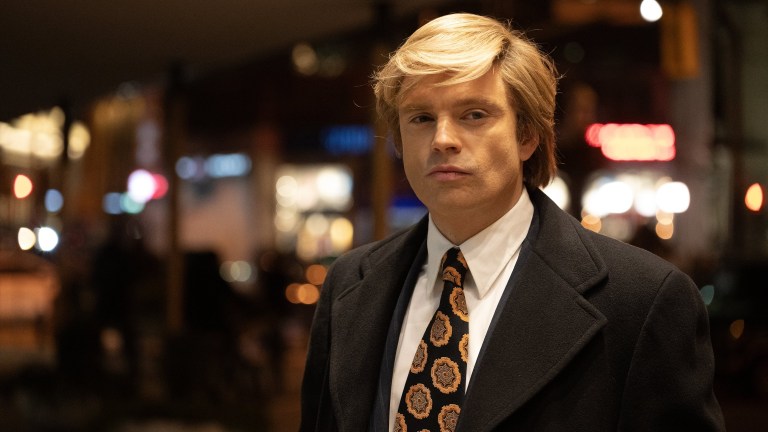
Director Ali Abbasi envisaged this biopic would sway undecided voters ahead of last year’s U.S. Presidential Election, though as the box-office returns and subsequent vote-count suggest, he failed miserably in achieving that goal. Yet what he does succeed in doing with The Apprentice is offer an astonishing re-creation of 1970s New York; elicit uncanny, lifelike performances from Sebastian Stan and Jeremy Strong; and provide a surprisingly nuanced examination of a man whose single-minded pursuit of wealth and fame turned him into the physical embodiment of every negative stereotype we associate with his countrymen.
9. Conclave
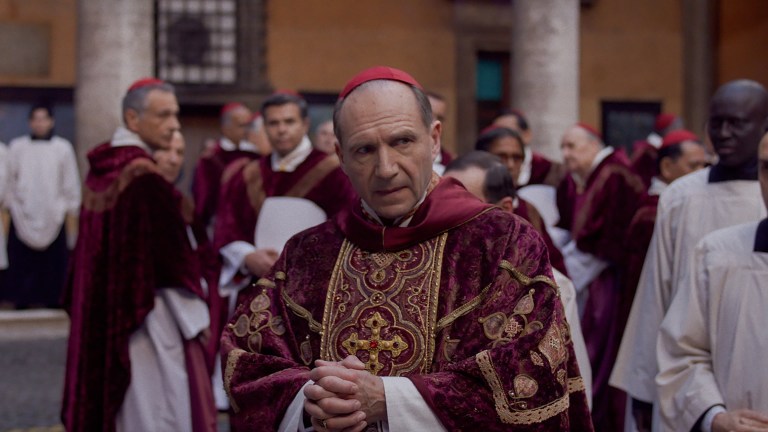
Applying the term “mature” to a feature-length drama, for most, conjures in the mind imagery, actions, themes and language inappropriate for younger audiences; yet it can also be used to define a production which is nuanced, composed and cerebral – all apt descriptions for Conclave. Here is what can be considered a political thriller without politicians, or Glengarry Glen Ross (1992) without the excessive swearing, taking viewers behind the façade of pageantry and into the halls of power, complete with excellent performances, great dialogue and a fantastic narrative that hooks until the very last twist.
8. Anora
For the better part of a decade, Sean Baker has made it his mission to document those on the margins of American society, a pursuit that has rightfully brought him countless accolades and admirers. He may well have reached his directorial and screenwriting peak with his latest effort Anora, a film so mesmeric that it has placed within in the Top Ten of this year’s Best-Of lists by all three of Rating Frames’ resident scribes – though Arnie and Darcy both seem to have neglected mentioning the ever-delightful Igor (Yura Borisov), one of the best characters of any picture in recent years.
7. Perfect Days
Despite earning high praise at the Sydney and Melbourne International Film Festivals the year prior, it wasn’t until March of 2024 that Wim Wenders’ Japanese drama received a theatrical release in Australia. That decision flies in the face of what is a beautiful story, one that’s tranquil and almost poetic in its observations of an otherwise unremarkable man who cleans toilets for a living. Add to that the gorgeous cinematography and impeccable soundtrack, and Perfect Days pretty much lives up to its title.
6. Super/Man: The Christopher Reeve Story
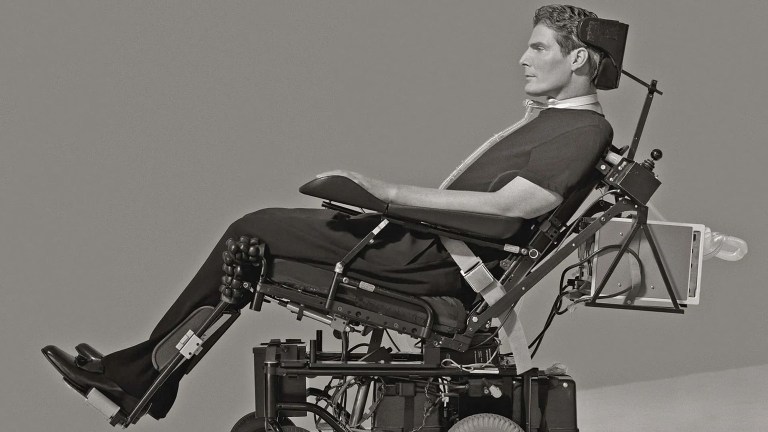
The 72nd iteration of MIFF was the first time since a certain global pandemic that yours truly attended an in-person screening in the Festival’s namesake city, an occasion marked at The Capitol with this very documentary. Its moving screenplay – yes, tears were shed – explores Reeve’s upbringing, early career as stage actor, casting as the Man of Steel, paralysis and charity work, told via interviews with some very famous and unexpected talking-heads (Jeff Daniels! Glenn Close! Susan Sarandon!) plus unseen home-videos and archival footage. An intimate portrait that offers a heartfelt tribute to its subject while not shying away from his faults.
5. The Wild Robot
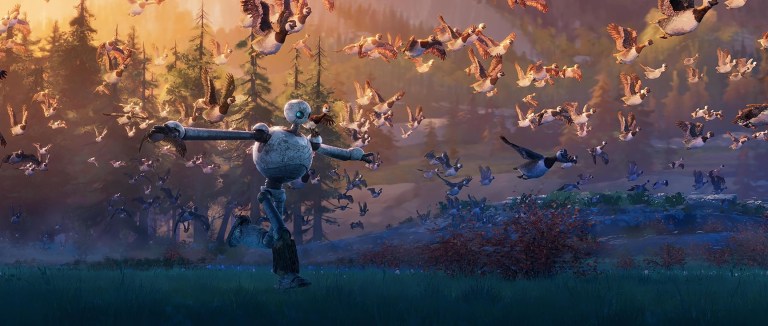
Amid Disney’s ongoing cultural and commercial dominance, and increasing competition from Sony Pictures Animation, the once-mighty DreamWorks had in recent times gone from being a pioneer of the industry to a studio at-risk of losing its prestige. That belief was immediately dispelled with the arrival of The Wild Robot, a feature-length production which not only proved a better film than any of its animated contemporaries released last year, but is also its studio’s most-impressive effort since the How to Train Your Dragon movies, complete with a talented voice-cast, stunning visuals, touching screenplay and rousing score from Kris Bowers.
4. The Iron Claw
Here lies a biographical narrative far better than it has any right to be. Distributed on our shores last January and lost in the thick of Awards Season, The Iron Claw recounts the lives of the famed Von Erich brothers, their contributions to the sport of wrestling, and the tragedies which impacted them as they pursued glory. Among its impressive elements are the cinematography, perfectly-curated rock soundtrack, and raw, compelling script that, astonishingly, had to be toned-down because the family’s actual story proved too sad and unbelievable. A must-watch, even for non-wrestling types (this writer included).
3. The Holdovers
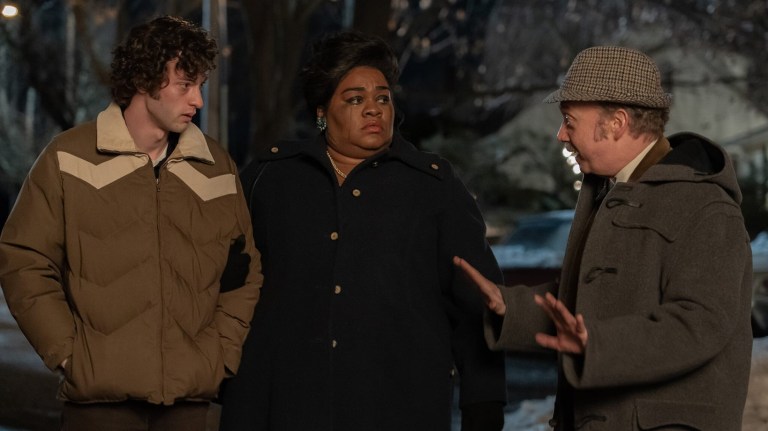
Yet another release that made a belated appearance in Australian theatres, and unfairly so, since The Holdovers would have made for ideal festive viewing had it been brought here just one month earlier. Beneath the sardonic, caustic veneer of a history teacher (Paul Giamatti), anarchic rebellion of a student (Dominic Sessa) and remoteness of a cook in mourning (Da’Vine Joy Randolph) lies a transfixing, warm and sweet – yet never saccharine – tale embodying all the best qualities of Christmas.
2. Dune: Part Two
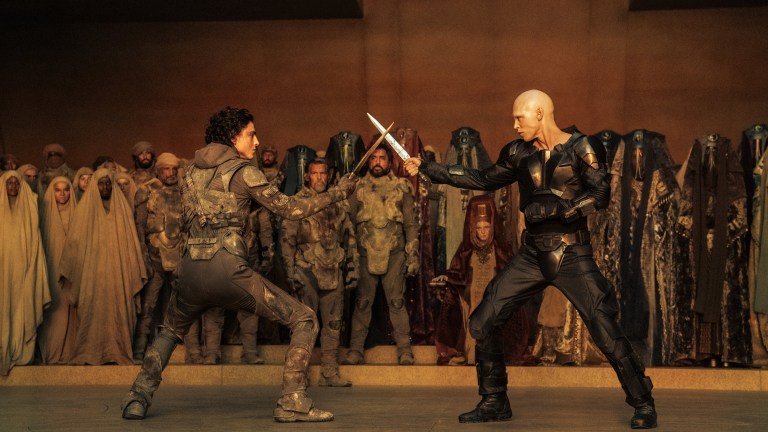
Arnie and myself have quite differing tastes when it comes to cinema, but on one count we are in strong agreement: the sequel to 2021’s Duneis the second-best release of 2024. Canadian auteur Denis Villeneuve provides with Dune: Part Twothe Empire Strikes Back (1980) to its predecessor’s New Hope (1977), a follow-up that builds upon the lore of its established characters and setting, and pairs them with even-more impressive visuals, sound and music. Also, kudos to Villeneuve for leaning heavily into the religious allegories of Frank Herbert’s original text.
1. Challengers
The sheer number of quality pictures meant choosing this final list of ten proved much harder than in previous years, and deciding where to place the Top Five was a more difficult decision still. All came close to usurping the honour of being this writer’s ultimate favourite of 2024, yet only one prevailed – chiefly due to its flamboyance and idiosyncrasy.
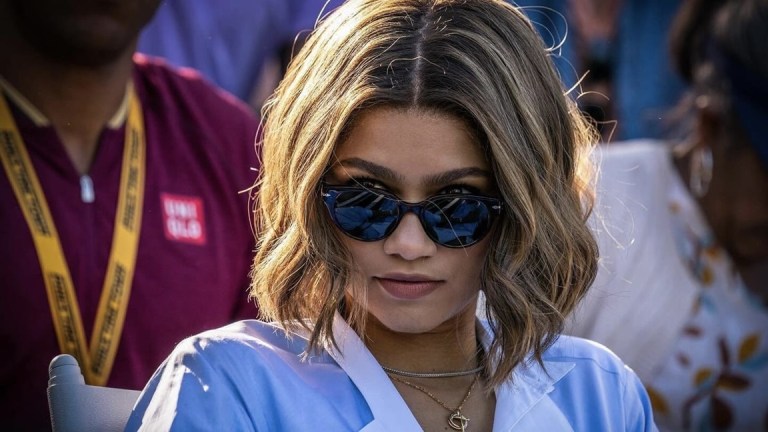
Expertly helmed by Luca Guadagnino, Challengers boasts a tense, pulsating techno soundtrack from Trent Reznor and Atticus Ross; a non-linear narrative with a conflict that remains engaging throughout; fun camera angles and photography during its tennis sequences; and morally-ambiguous characters who defy the traditional concepts of a protagonist, yet never succumb to being antagonists. Put simply, there’s been no other film quite like it in the previous 12 months – and perhaps ever.
















 Rating Frames