Mickey 17: Bong Joon-ho’s Long-Awaited Follow-Up to Parasite is Amusing, Insightful and Downright Fun

Rating: 4 out of 5.

Mickey 17 preview screening provided by Universal Pictures.

It doesn’t take a genius to understand that a film about a guy who wants to leave on an expedition and chooses to willingly die and get reprinted (literally) with his memories in-tact, only to keep dying and being reprinted, is right up Bong Joon-ho’s alley. While that doesn’t capture the multifaceted space adventure that is Mickey 17 (2025) to nearly the full extent of the word, Bong’s interests are very particular in that, human dispensability —especially with regards to people in lower socio-economic situations— is a pertinent concern throughout his oeuvre.

In Snowpiercer (2013), a train is used as a motif to portray the various carriages of the caste system, with the back of the train being the lowest class citizens and the front, the highest class, while in Mickey 17, a large spaceship serves a similar purpose. In other words, it’s no secret that capitalism and the presence of an oligarchy are concerns that he hasn’t been shy about critiquing, and they’re a thematic consistency across his work. Regarding dispensability, Mickey 17 is much more literal than any of his previous films in how it reduces the human body to something that can be done away with, something that goes beyond even that of the lowliest of workers to just a recycled carcass.

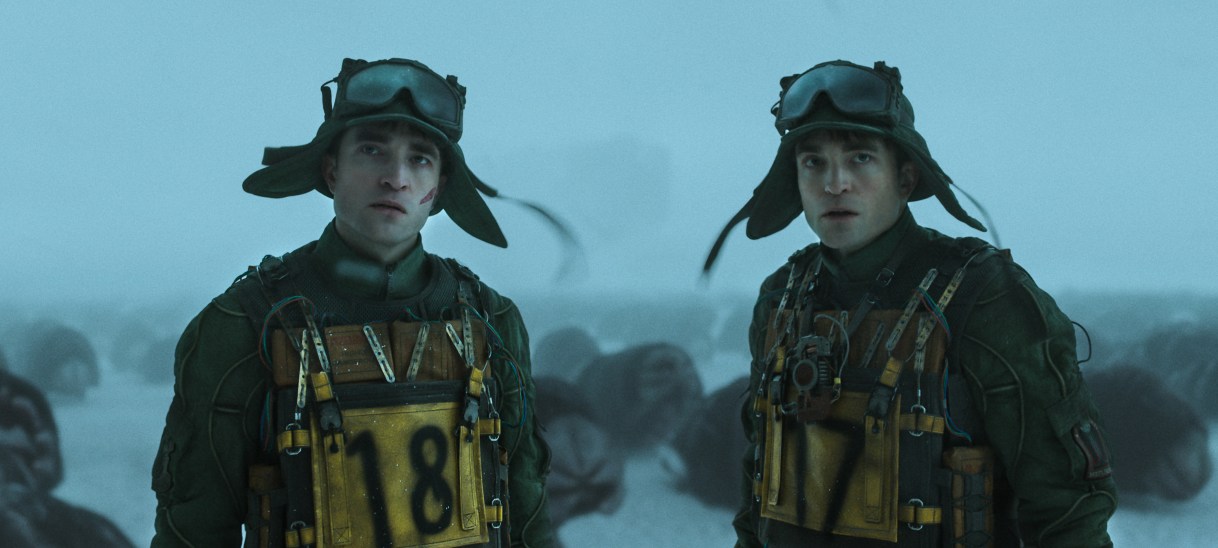
That’s at least the seed from which the rest of the film grows and revolves around as Mickey (Robert Pattinson) signs himself up to be an “expendable” or an unfortunate soul who would choose to live a quasi-immortal life by living to die and dying to live. He does this after finding himself in bad company on Earth following a debt he hasn’t paid back, before ending up on a government spaceship headed up by a pompous failed politician, Kenneth Marshall (a goofy Mark Ruffalo whose performance echoes that of his one in 2023’s Poor Things), that’s on an expedition to find a new planet to preserve mankind — if this is sounding like Passengers (2016) mixed with Edge of Tomorrow (2014), then you’d be on the right track.

Robert Pattinson in Mickey 17

The spaceship finds itself headed towards Niflheim (not to be confused with that area in 2018’s God of War game), a cold planet inhabited by woolly creatures that look like roly polie, pill bugs (dubbed “Creepers”). It’s here that Mickey’s expendable state is really tested, as he’s exposed to the planet’s toxic air over and over again until a cure can be found and applied; it’s also where we eventually get to the 17th version of Mickey that opens the film in a scene we circle back to later. While comical in its portrayal of the printing process after every Mickey death, Bong’s commentary on how human life can be reduced so willy-nilly by those in power makes for a tasty treat, especially when it comes to just how dispensable the human body is in real life, especially when it comes to matters of war.

Bong never dwells though, he keeps the film moving and he keeps the action and dialogue light-hearted and cosy, but his ability to go a step further in his critique of capitalism and the frivolousness of those in power who look down on others, shows a director who is maturing in his own ideas and isn’t afraid to mine them to the full extent. It helps that Marshall and Gwen (Toni Collette) are so effortlessly unlikable in their bougieness which helps those ideas evolve easier.

But their relationship is hardly the most shocking: after being saved by the aforementioned woolly pill bugs (following a harsh fall in an ice cave), Mickey 17 manages to find his way back to the ship where he comes across a clone of himself or a “multiple” as they’re called. It turns out Mickey 17 was presumed dead so the 18th version of him was printed, but without his pitchy accent and more akin to Pattinson’s Bruce Wayne in cadence.

Mark Ruffalo and Toni Collette in Mickey 17

It also turns out “multiples” aren’t permitted, so much so that Mickey 18 tries to kill Mickey 17 from the outset, but they soon find a commonality in the form of taking down their oppressors (very much in the vein of Snowpiercer). Pattinson’s dual performance is really a make-or-break factor in understanding what makes these multiples so unique from one another — that these reprints exhibit more humanity than the majority of the crew really adds weight to just how narcissistic and morally bleak humans can be at their worst.

At the end of the day, this is easily Bong’s most optimistic film, one that doesn’t present a bleak future but offers a chance for its characters to carve a brighter tomorrow on their own terms. Sure, he isn’t subtle about his growing interest in ideas he’s previously explored, but he also doesn’t pander to his audience, choosing to let the film’s amusing story take you on a rollercoaster comprised of the grotesque, heartfelt and humorous. In this way, it feels like his most accessible film as there are no hidden windows that keep you guessing.

Mickey 17 opens nationally from today.

Presence Sees the World Through a Ghost’s Eyes

Rating: 3.5 out of 5.

Presence preview provided by Rialto Distribution.

From the outset of Steven Soderbergh’s newest cinematic experiment, Presence (2024), it is clear this gambit will pay off. As we, through the anxious eyes of a new ghost, experience a new world, through a nimble first-person lens that never relents. This new world in question is the arrival of a young family of four in a large suburban house after the traumatic deaths of teenager Chloe’s (a wonderful Callina Liang) two friends in the city, leaving them in need of a fresh start.

Beginning with one of 2022’s best films Kimi, veteran filmmakers Steven Soderbergh and David Koepp have united to create a series of impressively contemporary small-scale American films (with another set for 2025 with Black Bag), that feels wholly unique on the movie calendar. With Presence, the pair shift from tech thriller to modern ghost tale with an equally impressive lens pointed directly at the connection in contemporary life.

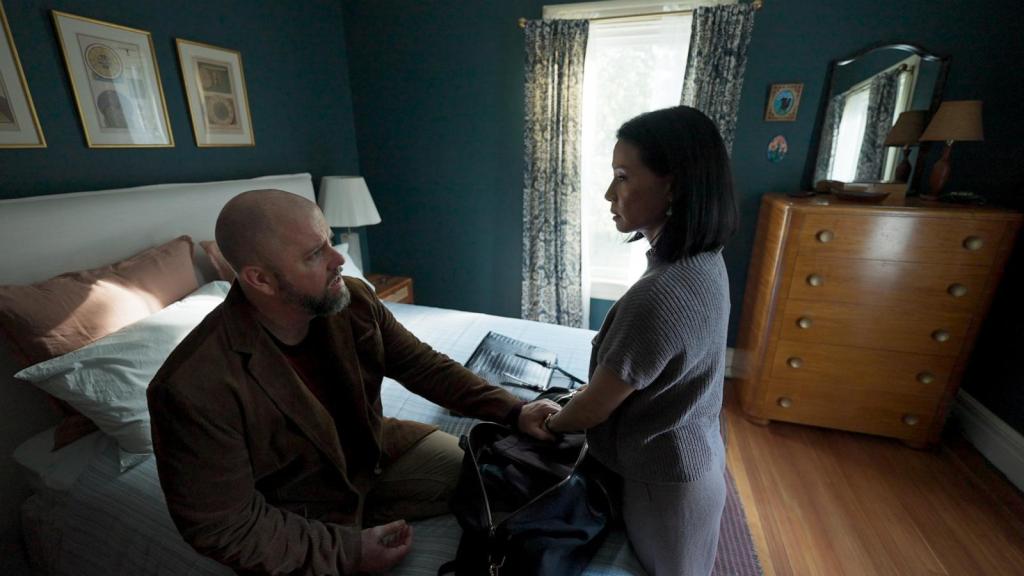
Through a floating visual language, we explore this young family in moments of both intimate quiet and explosive argument. The parents, high-powered exec Rebecca (Lucy Liu) and the more emotive Chris (Chris Sullivan), have clear strong ties to individual children, creating a constant tension between the four characters. Rebecca sees herself and the potential for great success in their arrogant older son Tyler (Eddy Maday), whereas Chris’ more emotional side draws him to his daughter Chloe, an isolated teen dealing with tremendous grief at a young age that pierces through the screen.

Chris Sullivan and Lucy Liu in Presence.

Themes of accidental overdoses and youth deaths are complicated but important issues to place in a film, particularly at its emotional core. While Presence floats freely between potential genre trappings, it is grounded by this potent story element that is sure to resonate with many.

To achieve the sensation of a first-person camera narrative that has real expression through the lens, Soderbergh — acting as his own cinematographer as he often does — filmed Presence chronologically, with the camera beginning in a more trepidatious, larval state before coming into its own by the film’s midpoint. The camera does not glide effortlessly through the house to open the movie. Instead, we feel every step as we move around the space, like a young foal taking its awkward first steps into the world. The camera has physical tics and safe spaces inside the home that, through repetition, just like an acting performance, breathes life into the lens. This deft and crucial weight of intent allows the film to quickly transcend from a small-scale cinema experiment into a riveting family drama where the absence is just as visceral.

It’s remarkable how quickly you can slide into the position as a fly-on-the-wall observer by wielding the camera this way, and how the emotion of a scene can play out with sharp efficiency (a Soderbergh hallmark) when the personification of the camera holds so much weight. 

The film operates as an interesting refraction to David Lowery’s poetic A Ghost Story (2017), which focuses on a ghostly presence with a level of banal reality that transforms slowly into a beautiful understanding of a greater spiritual moment. Much like that film, the innovative style of filmmaking on hand here works effectively because of the decision to place a young ghost at the heart of both stories. 

While the structure of the film allows a flow state of dramatic experiences for the family, the final 10 minutes of Presence are as distressed as you’ll feel at the movies this year with its clear eyed understanding of modern life and pressures. This shouldn’t be a surprise as it’s a ghost film, but over the course of this innovative family drama on loss and connection, this shift has an overwhelming weight of emotion that is wonderfully unexpected. Through Koepp and Soderbergh, we have a new creative powerhouse partnership that is breathing new life into modern American storytelling.

Presence is in theatres now. 

Wolf Man takes a Bite out of a Monster Classic

Rating: 3 out of 5.

Wolf Man preview screening provided by Universal Pictures.

It’s been nearly five years since Leigh Whannell’s Invisible Man (2020) took audiences by surprise and became an instant hit while re-imagining a classic Universal Monsters story for a modern audience. His latest film, Wolf Man (2025), written along with co-writer and partner Corbett Tuck, and based on The Wolf Man (1941), offers a fresh new spin on another classic while touching on concerns around the duality of man and beast, sickness and health.

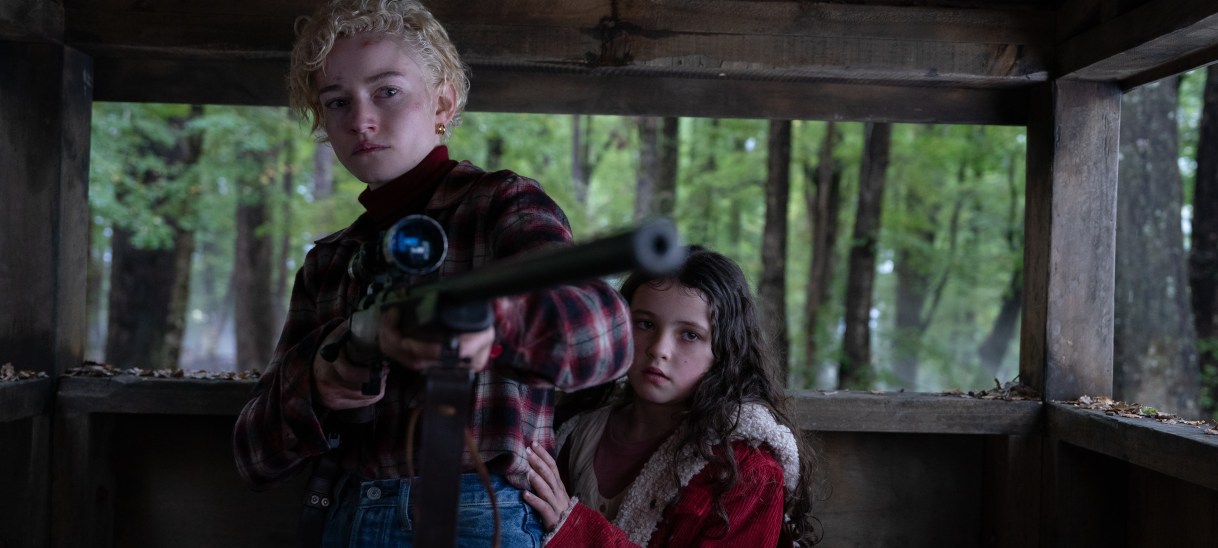
If Invisible Man was a compact horror/thriller that cleverly utilised space, subtle pans and tilts to create brewing tension, then Wolf Man scales things back even more, focusing its events around an eerie house in a grim Oregon, foresty setting where danger lurks. It’s where Blake (Christopher Abbott), his wife Charlotte (Julia Garner), and daughter Ginger (Matilda Firth), find themselves after a short New York-set introduction reveals that his father has passed away and he’s been left with the keys to his old house.

In true horror fashion, a tight strip of road with towering trees is the first sign of the unease and helplessness that awaits, sitting in stark contrast to the bustling, comfortable concrete jungle the family is used to. And it doesn’t take long for this little getaway to go south as their moving truck tumbles off the road after veering last minute from a figure in the middle of the road. A lot happens and it happens really quickly, including Blake’s gradual transformation into his wolf-esque appearance after he contracts a disease upon realising a cut he received on his arm came not from glass but from the devious figured that sent them tumbling.

In this way, Wolf Man is paced rather abruptly, with Whannell wanting to get you into the thick of the suspense as soon as possible. It’s a less daring exercise in tension compared to his last feature and feels more routine in how it hits genre beats. There’s nothing inherently wrong in this, it just feels like a return to earlier roots in that he could seemingly tackle something like Wolf Man in his sleep.

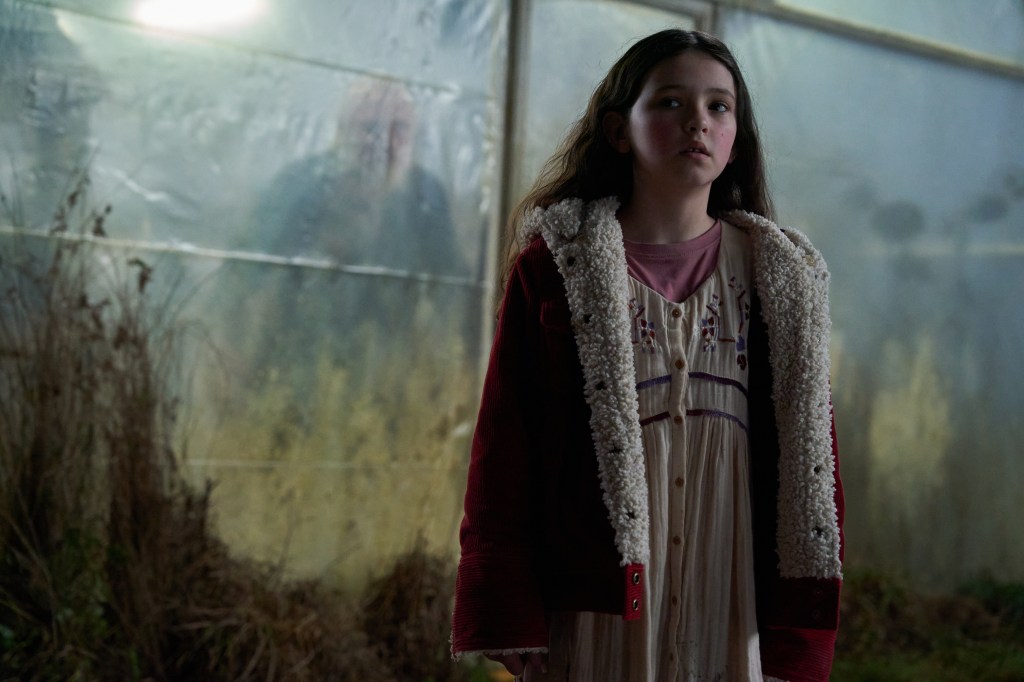
Ginger (Matilda Firth, right) in Wolf Man, directed by Leigh Whannell.

Unlike the subtly of the camerawork, which Stefan Duscio has managed to balance out quite nicely with Whannell’s stylish direction across their three film collaboration, the writing can feel on the nose at certain points like when Ginger indulges her father’s ‘guess what I’m thinking’ game at various points or the constant “daddy” and “mommy” dialogue which sticks out like a sore thumb.

Fortunately, like with Elisabeth Moss’ brilliantly grounded performance in Invisible Man, Julia Garner speaks as much through her eyes as she does through her mouth, with her signature fluttering eyelids at once conveying motherly resoluteness as she protects Ginger, while showing empathy for her husband’s deteriorating state. Her performance goes hand in hand with Whannell’s artful flourishes and Duscio’s tight camerawork, the latter of which seems to favour a more contemplative cinematic approach this time around, with shots that linger heavily before bursting to meet the frantic-ness of a chase.

There’s a few moments where the camera circles around Blake and his family and shows how his worsening state is affecting his vision, almost heightening his senses while blurring his vision to those around him; this is one of those stylistic choices that the film needed more of as it gave an extra layer to a character who might otherwise simply fall into the antagonist category.

While less horrific and more melancholic by the end, prior to the screening, Whannell revealed that part of the direction of the film was derived from a friend who had passed away after her health deteriorated, and just having that context added more weight to Blake’s rapid decline as his family try and keep him from falling out of himself. In this way, Wolf Man has a sentimentality about it and comes full circle in ways that will creep up on you as you feel the closing sequence nearing, with a final shot that will leave a mark.

Wolf Man opens nationally from today.