The Testament of Ann Lee is Revelatory

Rating: 4 out of 5.

Melding powerful and emotive choreography with rhythmically propulsive music built out from recontextualised hymns, The Testament of Ann Lee (2025) is an intoxicating musical biopic like no other, creating a singular theatrical experience that will have you asking more from the genre. Centred on the fascinating movement of the Shakers, the 18th-century religious group known for their ecstatic dancing, Mona Fastvold’s exploration into humanity, ambition, and religion in a moment of turmoil and potential is an unexpected revelation in cinema this year.

The film operates as a probing look into personal religion and how it can be expanded into a community, with Fastvold exploding the potential of the story into a wild and emotive musical that feels grounded in the power of the Shaker movement through its choreography and music. At the heart of it all is the titular Ann Lee, the rare female religious leader whose story is easily worth an emotive and expressionistic biopic starring one of the industry’s best actors in Amanda Seyfried. Spurred by unimaginable grief and some notable, potentially queer subtext, Ann is devoted to becoming a prophet of the Shakers she has found herself the leader of, seeing the act of celibacy as a key tenet of driving away sin, even as the movement is built on the overwhelming sense of religious community born out of dance and bodily movement.

Ann’s decision to shift the movement towards celibacy can only be accepted for so long by the large community in Manchester, as well as her husband, Abraham (Christopher Abbott), a simple man who will walk with her to the edge of his faith, but not beyond his human desires. Staying by Ann’s side through it all is her brother William (Lewis Pullman) and close friend Mary (Thomasin McKenzie), who also serves as the film’s narrator in one of the best uses of lengthy expositional narration in years. 

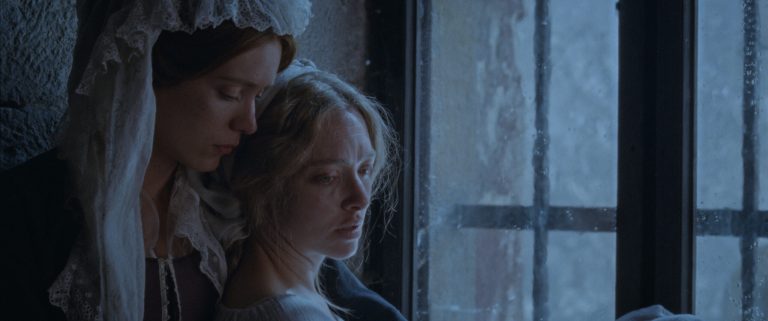
Stacy Martin and Amanda Seyfried in The Testament of Ann Lee (2025).

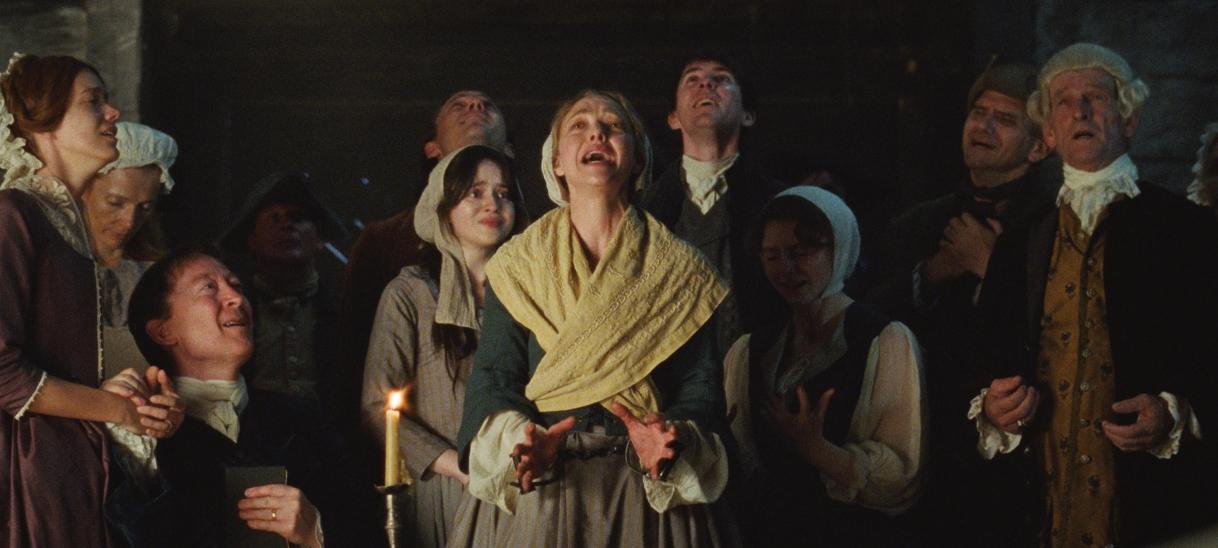
Remixed from Shaker hymns, composer Daniel Blumberg follows up award-winning work on Fastvold’s previous film, The Brutalist (2024), with a starkly different collection of music, combining beautifully with the ensemble’s choreography that always stays within the realm of absurd realism that the Shakers are known for. Seyfried allows the melodies to transcend the screen, using the repetitions of the hymns as a hypnotic bedrock to build out some exalted musical numbers. 

Working previously as a co-writer on her partner Brady Corbet’s standout film The Brutalist, Fastvold’s film works as a fascinating companion piece of equal quality. Both Ann Lee and The Brutalist are fixated on ambitious figures that see potential in the pursuit of America, believing themselves to be called to a higher purpose in some form, with the faith that this purpose will shield them from the dangers that lie ahead. While Corbet’s film echoes its protagonist’s mode of deliberate architecture (as its namesake) to tell its wider story of faith, religion, and pursuit, Fastvold’s film moves with the grace of fresh silk and dance.

The Testament of Ann Lee transcends the bounds of its screen when the small group manage to obtain passage by boat to New York, with an extraordinary piece of montage, choreography and music as good as any you’ll find this decade. Fastvold’s exploration of the newly American striver through the unique lens of an upstart religious sect in England, stymied by the lack of progressive thinking at home, is swept up in the power of the musical genre at its best, with Seyfried commanding the helm with a mixture of mania and overwhelming grace.

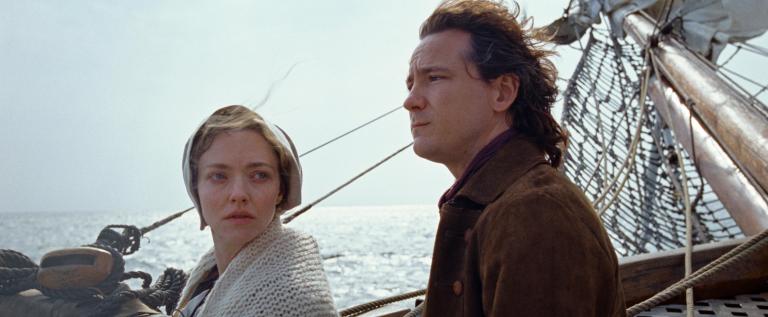
Amanda Seyfried and Lewis Pullman in The Testament of Ann Lee (2025).

She contends with this part of the film in a complex understanding of many sides to the Shaker history of driven American conquest. The group see America as untoiled land, perhaps more accepting of a female preacher and of their unconventional worship practices. As they arrive in New York, however, they are almost immediately confronted by a slave auction, which Ann sees as barbaric sin; she is here to cleanse in her mission to expand the movement.

A story of finding divine ambition in community and connection, Ann Lee feels powerfully tied to many period-set ‘Great Men’ films like There Will Be Blood (2007), but shown through a woman’s lens. With a pivotal montage of the Shakers building their housing and village, we see Ann less as a wise prophet and that of project manager and architect, reflecting many scenes in The Brutalist, bathed in hopeful sunlight and warm wooden surroundings. Rarely have we seen such a powerful set of companion stories, especially ones filmed so similarly and with equal ambition.

But this is not just a film of personal ambition built on grief and personal turmoil; it is crucially a film driven by ideas of faith and religion. This may steer off many an agnostic cinemagoer in ways Fastvold and Corbet’s previous film didn’t (although that film is as Jewish in nature as this film is Christian); to open your heart to the story is no different than the task given to an audience in many films.

As difficult a proposition as this film is for audiences, the lack of Academy recognition Fastvold and her collaborators received this awards season is surprising. It is especially difficult to reckon with as The Testament of Ann Lee is a more intelligently woven story of ambition and grief than the walloping Hamnet (2025), which received eight nominations. For those crying out for individual voices still striving to work with Hollywood studios, you simply have to witness this fascinating and engrossing film from a truly singular voice.

The Testament of Ann Lee is in select theatres now.

The Secret Agent is a Biting and Playful Political Thriller

Rating: 4.5 out of 5.

Set in the Northeast of Brazil in the city of Recife in 1977, just as the country’s military dictatorship rounds third base, Kleber Mendonça Filho’s relaxed but probing political film The Secret Agent (2025) is like nothing else you’ll encounter in a cinema this year. Able to open a double feature with either Dazed and Confused (1993) or Army of Shadows (1969), the film wears many hats that in less assured hands would appear frayed and confused. Thankfully, Filho has levelled up as a filmmaker and storyteller, letting his playful tendencies heighten the moments of potent tension and violence that in less capable hands would beguile an audience.

Centring a former professor and widower with a political target on his back, Armando (an exceptional Wagner Moura) returns to Recife to collect his son from his in-laws, seeking refuge in the warm embrace of a small community of political refugees helmed by Dona Sebastiana, in one of the year’s best supporting performances by Tânia Maria that feels achingly real.

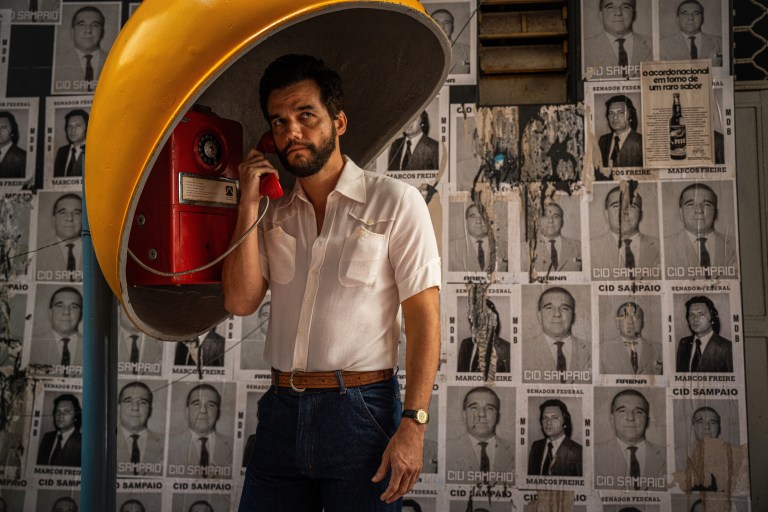
Wagner Moura’s work shifts elusively from room to room as Armando quickly surveys his surroundings to uncover how he needs to respond to each interaction. The highly regarded actor is given the role of a lifetime and is set to acquire several awards, as a man with a committed goal, but never stops living his elusive life, even as the violence around the corner draws nearer.

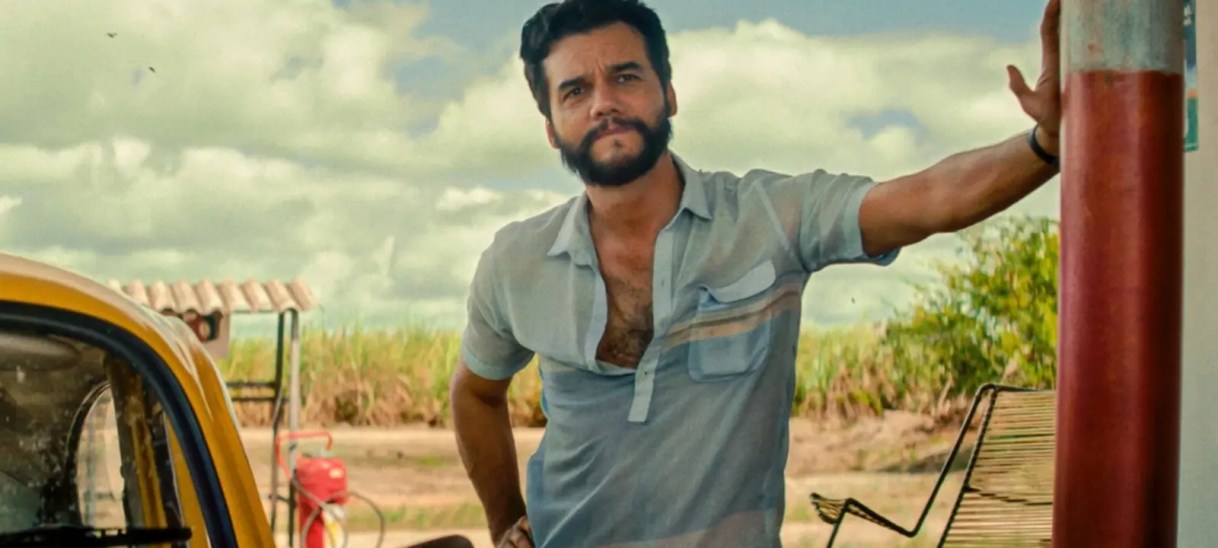
Wagner Moura as Armando in The Secret Agent (2025).

By placing this political and community-based struggle in the veins of a hangout film, Filho supports Moira’s performance with an outstanding cast that gives life to the past by giving a beating heart to this community of political refugees of his own country.

Echoes ripple through buildings, but the truth in history is something that must be searched for. Filho explores his country’s past and the people who inhabit those histories not as vessels for political tropes and ideologies, but as human beings who pass away long before their heroism is uncovered. The secondary narrative device of university students seeking to uncover the truth through tape recordings of our central story is surprising when it first appears, but it allows a dense exploration of ideas to occur. Filho’s way of shooting these scenes gives what could’ve been a contrived narrative crutch a potent level of emotional intimacy, allowing the film’s final sequence to sing.

In voicing The Secret Agent in the language of De Palma and Pakula, masters of the genre and time period the film is based, Filho is placing his film in conversation with the genre of political thrillers that most audiences are familiar with, allowing a discourse to occur across the screen between time and continents, ideas that are very much at the heart of the narrative. Alongside this, the film is a Cinema Paradiso (1988) level love affair with cinema itself, playing out in large swathes at a theatre, set against the backdrop of the sweltering summer backdrop of Jaws (1975) and the way it took the world by storm. Opening the film is the beguiling discovery of a leg inside a shark being studied at a local university, sweeping us up in the strange and playful mode Filho builds the world around, all while leading us down deeper and deeper with an unnerving sense of impending violence.

Like his previous film, Bacurau (2019), a rhythmic playfulness quickly sweeps an audience into a story, but a moment of visceral violence and aggression can pierce through that world like a stray bullet. With The Secret Agent, Filho’s eye is sharper and more directed, but playfulness is still the engine that drives his work. People do not stop living as the plots of his films take place; everything and everyone is transient, a poignant concept to maintain in a political thriller of this kind. 

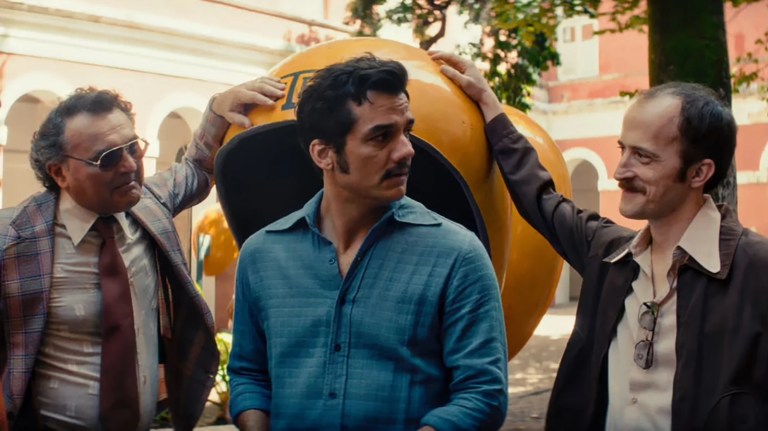
(From left) Robério Diógenes, Wagner Moura, and Igor de Araújo in The Secret Agent.

While the political thriller genre is defined by American filmmakers like De Palma and Pakula, peaking in the conspiratorial aftermath of Watergate and the Nixon administration, in recent years, the genre has been defined by international cinema. The Secret Agent asks much of its audience in terms of prior knowledge of Brazil’s military dictatorship, but in a modern climate of authoritarian spot fires around the globe, many audiences will see themselves in the images Filho shows us. Scenes of political refugees commenting on the limited groceries that are handed by a local farmer trying to assist them are as keenly observed as the moments of shocking violence.

Returning to the present day with the students weaving themselves into the stories of the past, we are in a constant meditation with ideas of bearing witness through aural recollection and the intimate but limited way of history being investigated. A pivotal scene in the film’s movement towards the thriller genre plays out when Armando and Elza (Maria Fernanda Cândido) discuss getting his family out of the country and the hit being put on his head, all while recording the conversation. This gripping scene is shown alongside Flavia (Laura Lufési), a heavily invested student, probing the moments we are shown, trying to glean insight into this moment and what may have occurred in that room outside of the captured audio.

What does it mean to tell a story of such darkness with this level of lightness? The film’s Godardian level of bounce and freedom activates a unique form of scene-to-scene tension not often seen in the political skin that Filho’s film wears. But, while the tension of these genre moments is usually played for excitement, The Secret Agent conditions us to find these moments profoundly reflective, peering into these lives with an open heart and a wry smirk of the absurdity of buffoonish political violence. A high-wire act that appears shockingly relaxed.

The Secret Agent is in select theatres now.