While J. Robert Oppenheimer’s name might be synonymous with the deadliest device ever created, Christopher Nolan’s latest three hour biopic, Oppenheimer, looks at the man behind the atomic bomb through a much more introspective lens without ever insinuating that audiences should feel a sense of sympathy for his brilliant mistake/s. Of course, introspection is a key building block to any biopic, but given Nolan’s ouevre hasn’t ever focused on a historical figure of this magnitude —or any historical figure in this sense which still isn’t as big a shock as not casting Michael Caine—, there’s understandably a greater interest surrounding this biopic if not for the simple fact that it’s a Nolan film, then definitely because its subject is one of the most infamous, and misunderstood, scientific minds ever.
That Oppenheimer was a brilliant theoretical physicist who was the victim of his own belief that man could be trusted with forces larger than them, is undeniable. But Nolan’s film isn’t just concerned with the cookie-cutter facts that you can pull from a Wikipedia page. While the film is based on 2005’s Pulitzer winning novel, ‘American Prometheus’, Nolan’s interest jumps from the key, often glossed over moments in Oppenheimer’s life, and interrogates them more carefully.
Nolan’s Oppenheimer (a perfectly cast Cillian Murphy) is a man struggling to be faithful, who is always in his mind, viewing every next move like an equation on a chalkboard. His relationship to theory stretches into his everyday life as he struggles to maintain meaningful relationships, always approaching life by the numbers and relegating himself to a disconnected observer as opposed to a practical artisan. At one point he is in disbelief that scientists overseas have figured out how to split atoms from each other (or something to that effect), stating that it’s not possible from a theoretical point of view (POV), and it’s through this sort of mould that he carves his Oppenheimer from — a man unlike those around him, an outlier.
L to R: Florence Pugh is Jean Tatlock and Cillian Murphy is J. Robert Oppenheimer in OPPENHEIMER, written, produced, and directed by Christopher Nolan.
In this way, he isn’t too different from other Nolan characters like Bruce Wayne or Joseph Cooper in that he’s committed to what he knows, and does what he must for the greater good. His distant persona also affects his ability to build sustainable relationships, often pin-balling across various lovers and failing to forge a life beyond his commitment to his craft as exacerbated by a scene where he offers his crying baby to his friends as he doesn’t have the time to look after it (a selfish move he recognises).
Early in the film he’s encouraged to pursue his interest in theory and master it, and this is the point in his life that Nolan opts to introduce us to. And it’s in the early stages of the film that Nolan really portrays the internal struggle that will go on to plague Oppenheimer in the film’s later stages. He cleverly uses hazy, almost dreamlike visual motifs that equally look like beautiful stars and bomb fragments. These moments are some of the most thought-provoking as they provide a real deviation from the coolness and level head of Cillian Murphy’s performance that makes the character difficult to read — as though he’s got everything under his hat and under control.
It helps that multiple POV’s are being deployed by Nolan here in what is probably the most un-Nolan-esque part of this movie. Not only is Oppenheimer’s view of the world on display, but that of his early ‘affiliate’, Lewis Strauss (Robert Downey Jr. at his brilliant best). This duality helps build tension and allows the events of the third act to come together more tightly than might otherwise have been possible. Frequent Nolan cinematographer, Hoyte van Hoytema, shoots in colour for Oppenheimer and black and white for Strauss, further helping create this sense of separation through subjectivity and objectivity, ultimately adding to Oppenheimer’s unknowability and the difference in views that the two characters have. Whether or not this approach works in its entirety is difficult to tell from a first viewing, especially since it does tie events together, but equally throws one out of rhythm from time to time with the various timelines intersecting.
Robert Downey Jr is Lewis Strauss in OPPENHEIMER, written, produced, and directed by Christopher Nolan.
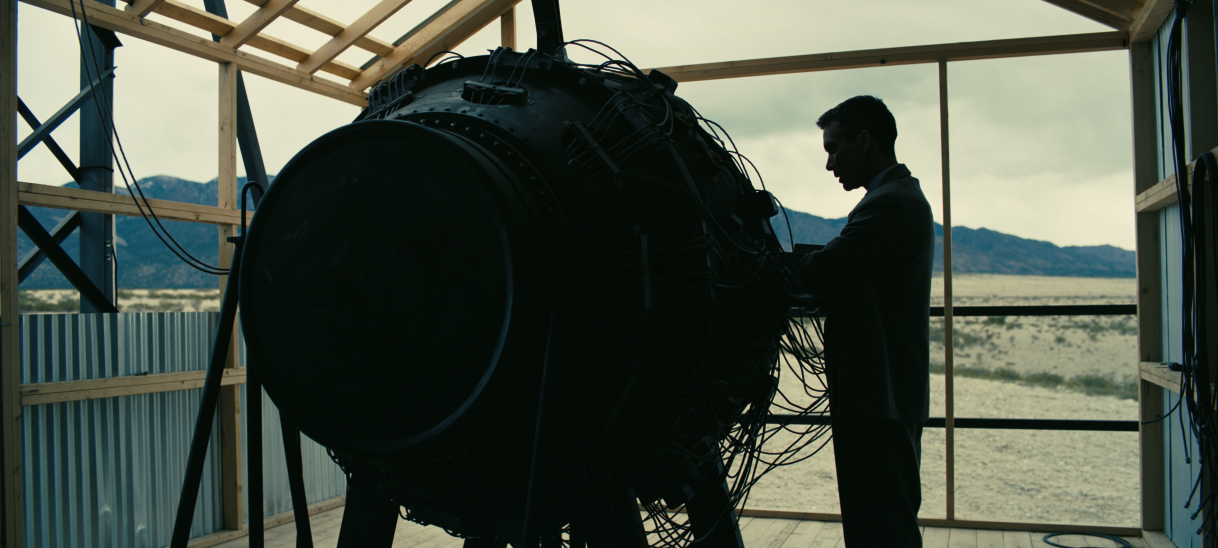
The most jarring instance of rhythmic intrusion is also the film’s best for the very fact that it’s the most speechless moment in the film. If you’ve followed the marketing, the controlled atomic set-piece (atomic in its own right) is where the full force of seeing this 70mm beast in IMAX really sells itself. By this point a lot of the establishing from the first half —namely around the politics of the Manhattan Project and the scientific lingo that will fly over most people’s heads— has been rounded off and Nolan finally gets to play with his own toys by unleashing the mother of all bombs, creating a spectacle that almost transports you to the New Mexico desert with the characters. It is really the punchline of the film, rewarding your patience by drowning out all of the noise in its countdown and the ensuing blast.
Whether or not Oppenheimer is the sort of Nolan film audiences are eager for is tough to say; there’s no tricky logic that fans of Interstellar (2014) or Inception (2010) wouldn’t wrap their heads around, but the film also sees Nolan at his rawest and most cynical, choosing to show a world destined to implode on itself just as it’s beginning to take shape. While The Dark Knight (2008) followed a similar path, there was at least the knowledge that its commentary was so distant from reality rather than a part of it. Yet in a film full of so many competing elements whether it’s the performances, the dialogue (which has has never really been the sweet-spot in a Nolan film as much as the moments around it are), the rapturous score from Ludwig Göransson, the staging of the key set piece or even the candidness of the story, there’s no doubt that like Oppenheimer, Nolan was all in on going big, and the final result is one that will stick with many long after the end credits roll by.
“Welcome back Mr Wick” (RIP the iconic Lance Reddick). The bravura American action franchise of the past 10 years, John Wick returns bolder, brasher, and more inventive than ever in John Wick:Chapter 4 (2023). The film, clocking in at 169 minutes with an immense 14 action set pieces, figures which on the surface would cripple most films, but in reality are remarkably well paced. Renown stuntman turned in-demand filmmaker (his IMDb page reads like a to-do list) Chad Stahelski has always focused more on individual moments than a wholly engaging narrative, which is still the case with the fourth entry in the franchise, but the attention to detail in these moments, along with an extraordinary ensemble that are all giving their best, makes the film as a whole immensely enjoyable.
The franchise has always focused on three central tenets: gloriously realistic fight choreography with one of the best to ever do it in Keanu Reeves, stunningly inventive visuals in all real locations, and minimal dialogue with an eye for larger world-building on the margins. These are all ratcheted up to extremes in Chapter 4, bringing the film closer in comparison to a David Lean film than whatever the Russo’s are producing on Netflix.
Following on from the events of Chapter 3: Parabellum (2019), John Wick (Reeves), down a finger and assumed dead by the High Table, must traverse even further reaches of the globe to take down the senior figures of the organisation. The major inclusion to the franchise here is the legendary Donnie Yen, and his presence is felt immediately as the blind retired assassin Caine, tasked with eliminating his old friend John. Caine’s story parallels John’s from the first film, a connection that is simple but effective in a film that knows when to expand the story and when to be quiet and let audiences bathe in the stylised action set pieces.
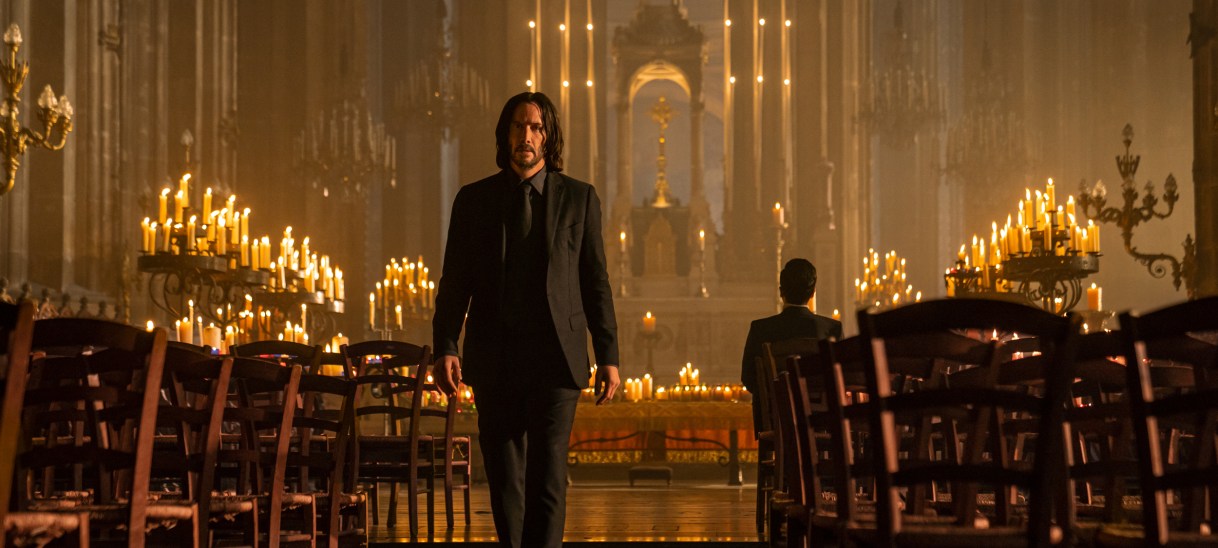
Keanu Reeves in John Wick: Chapter 4
The franchise has been able to boast an incredibly varied list of cameos from Angelica Houston to Boban Marjanović, adding a sense of scale and interest to each sequence. Added here are Yen, Bill Skarsgard, Rina Sawayama, and Hiroyuki Sanada, all improving on an already impressive ensemble that is unparalleled in an action franchise. Yen in particular is incredible, adding a coy and aloof nature to one of the best fighters in cinema history makes for a constantly compelling screen presence. To be able to add a figure like Yen to the franchise after four films shows the filmmakers are never satisfied with what was previously achieved, always seeking a greater experience for audiences, which they have accomplished in spades.
John Wick has long been a quintessential YouTube clips movie, focusing on individual moments over a cohesive narrative. Chapter 4 is easily the most ambitious entry. Whether that is in its outrageous Berlin rave sequence, incredible Donnie Yen fight sequences, or a seen-to-be-believed false roof bird’s eye oner with explosive shotgun rounds that will have audiences with their jaws on the floor and an overwhelming desire to cheer in appreciation.
The best inclusion to the franchise introduced in Chapter 3: Parabellum (besides Halle Berry and her dogs) are the locations outside of New York, something that is being further expanded here in Chapter 4. Taking place in Berlin, Paris, and Osaka, this film is able to flex its muscles visually and tonally which adds important freshness to a world that could have relied on what previously worked instead of giving audiences a three-hour endorphin rush.
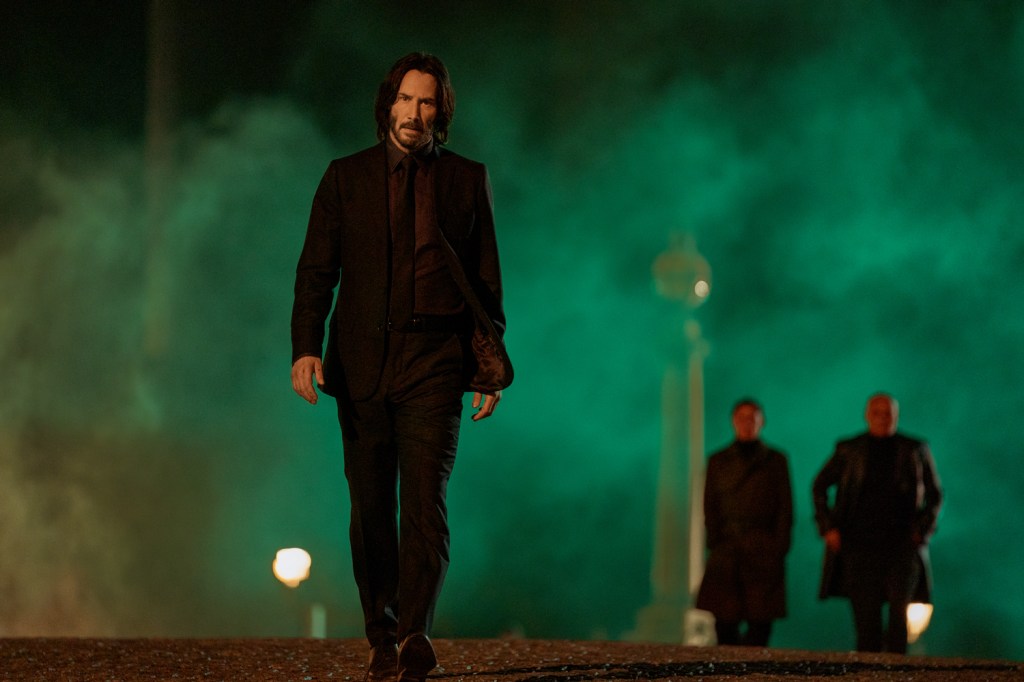
Keanu Reeves in John Wick: Chapter 4
Connection to the entire franchise can be felt throughout Chapter 4, from its extraordinary Berlin rave sequence to Mr Nobody’s attack dog. These moments never feel like a tired repetition, but an evolution of form that makes this film the quintessential John Wick film. With the additions of location jumping and more convoluted plots, the John Wick franchise has morphed into a sort of John Woo-inspired, American Wuxia James Bond or Mission Impossible, with Keanu Reeves at its centre. The only thing it’s missing is the iconic score (although the music is always top-notch).
Among the best blockbuster theatre experiences this decade, Stahelski and crew have pushed every moment to its limits to put John Wick: Chapter 4 in the pantheon of action filmmaking achievements. Comfortably the best film in the series, Chapter 4 is a perfect culmination of everything that makes the previous films great, heightened and stylised to the highest degree imaginable.
No one manages to blend crime and action on the big screen quite like Michael Mann. From the sprawling cityscapes that act as their own character, to the attention-to-detail with each and every aspect of production, Mann’s films are distinctively his own. It seems fitting then to look back on his stellar oeuvre and try and rank his titles based on my sentiment towards them at this moment in time. This is especially the case following his recent novel and sequel to the iconic Heat (1995), which he co-wrote with Meg Gardiner, and leading up to his Adam Driver-led, Enzo Ferrari biopic, Ferrari (2023).
Of course, like with any list, opinions are different and feelings towards films change as time goes by and depending on where in your life you find yourself. But for now, these are his films ranked from worst (if you can call them that) to best:
11. The Keep (1983)
The Keep
Whether it’s due to the fact that large chunks of this film were cut out, or because it’s the least Mann-esque title on the list, The Keep is what I like to call Mann’s brain fart.
His second feature following the brilliant Thief (1981) represents his first and clearest (as there are elements of this in his true crime thrillers) foray into the horror genre. It’s a film plagued by bland and uninspired performances; a nonsensical narrative involving Nazis, a devilish entity, a supernatural Scott Glenn and one of the strangest but best sex-scenes you’re likely to see in a Mann film or otherwise; an interesting production design; and a pretty neat synthy score by Tangerine Dream.
Given Mann has disowned the film because of Paramount’s treatment of it, one can only imagine what the unreleased director’s cut had in store — we can only hope it graces out screens someday.
10. Manhunter (1986)
Manhunter
Many might find my ranking of Manhunter to be completely against the grain, but this thriller revolving around capturing a psychotic serial killer just never resonated with me on a narrative level like some of the other titles on this list (and I still gave it 3.5/5).
Manhunter focuses on FBI agent Will Graham (William Peterson), a detective who’s come out of retirement to help locate an elusive serial-killer with strange motives. His past experiences hunting figures like Hannibal Lecter (a subtle performance by Brian Cox) means he’s the perfect guy for the job.
Manhunter uses Will and the serial killer he’s hunting to create an interesting parallel between the mind of a psychotic man and the man capable of catching him. Its use of home video and the focus on truly seeing almost posits that these two men aren’t so different in how they see the world, but to different ends and outcomes.
Whether or not I was expecting a more conventional voyeuristic mystery-thriller in the way that Se7en (1995) or Rear Window (1954) are —where the killer feels like they’re an arm’s length away, only for the satisfaction of catching them to be snatched from you— is difficult to say (perhaps that’s what people love about this?), but I found myself at a crossroads by the third act. I hope my opinion changes on a second viewing.
9. Ali (2001)
Ali
On the surface, a film about Muhammad Ali seems like the farthest thing from a Michael Mann joint. There’s no mesmerising cityscape, no sirens or gunfire, no real suspense in the way that his crime films create suspense, and the subject matter doesn’t exactly scream ‘Michael Mann’.
But this film about the greatest boxer of all time works because of Mann’s interest in figures that don’t play by the rules. Specifically, Ali focuses on the period of time between Ali’s (Will Smith) first major heavyweight bout, the court case filed against him for refusing conscription for the Vietnam War, and his famous win against George Foreman to reclaim the heavyweight title.
Ali’s unilateral decision to not be conscripted was momentous for the fact that he was the heavyweight champion of the world, and making such a decision could affect his ability to box in his prime (which it did). He also reinvented who he was by changing his name and living on his own terms — a staple of Mann characters, but for different reasons. Often his characters are trying to protect others from who they truly are whereas Ali was trying to break away from the branding that others (white slavers) had given him and his people centuries ago.
The opening 15 or so minutes are also arguably Mann’s most compelling in the way that he establishes character, creates purpose and builds tension. At times there’s a suddenness to proceedings where the film makes abrupt leaps in time between the court case announcement, the Joe Frazier fight, and the George Foreman fight, but overall Ali is a portrait of one man’s journey to becoming in the face of adversary.
8. The Last of the Mohicans (1992)
The Last of the Mohicans
Along with The Keep, The Last of the Mohicans represents a different sort of Mann.
Like with Peter Jackson’s first film experience with the classic King Kong (1933) and his eventual reimagining of that classic on his own terms in King Kong (2005), Mann’s first vivid film memory was of 1936’s The Last of the Mohicans.
Helmed by Daniel Day-Lewis as the adopted Mohican, Hawkeye, this period piece about everything from the damning effects of bureaucracy to the Tarzan-esque romanticism of the love affair between Hawkeye and Cora Munro (Madeleine Stowe), is the first Mann film to create a sense of scale that would have greatly shaped the way he approached his later films.
By that I mean Mann finds a balance between showcasing the wide and beautiful terrain of a primeval America against the harshness of the looming modernisation that threatens its existence. This translates onto how the characters react to each other, whether it be through Magua (a mesmerising Wes Studi) and his desire for revenge against the British (for what they took from him) as well as his forward thinking to help his tribe, or through the loud and rampant battle at Fort William Henry that threatens the peace of the land.
Guided by one of the greatest scores of any film ever by Trevor Jones and Randy Edelman which at once evokes hope and sadness, picturesque vistas, and gripping direction that never falters, this Mann-epic is Mann at his most untethered.
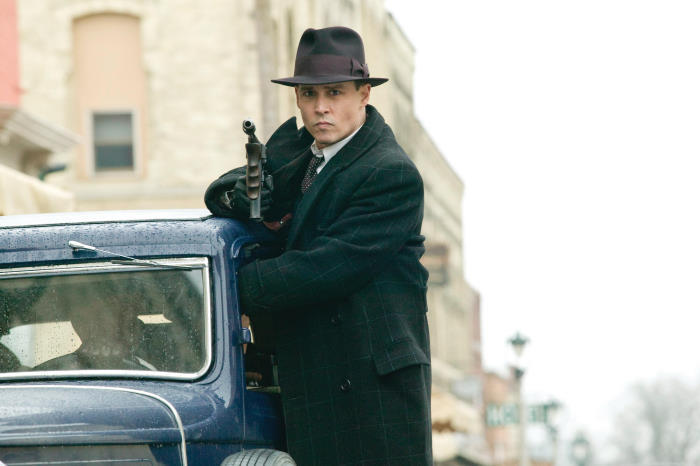
7. Public Enemies (2009)
Public Enemies
When it comes to famous outlaws, there are few that are as iconic as John Dillinger, especially given he was a man who wasn’t interested in stealing from regular people, but the state itself.
That’s partly why he’s the perfect historical figure for a Michael Mann film given his self-defined approach to life.
Public Enemies follows Dillinger (Johnny Depp) as he makes prison escape after prison escape, continuously evading capture and robbing banks before finding an added purpose in life in the form of one French-American, Billie Frechette (Marion Cotillard).
Like all of Mann’s anti-heroes, Depp’s Dillinger is charming and elusive all at once. He’s a character infused with an aura of mystique that Depp delivers with the casual suave that his own image beyond the screen has maintained.
But it’s in the reimagining of the period through a digital lens where Public Enemies really excels. The moody greys, dark passages and almost colourless world are so striking here that it creates a more profound hyper-realism — almost bringing the 1930s to life in a way that shooting on film wouldn’t.
6. The Insider (1999)
The Insider
A film about a man’s grapple with doing what’s morally right or being forced into silence by forces greater than him; The Insider, in true Mann-style, is an exercise in patience — in waiting for the right moment to make a move before it’s too late.
Unlike Mann’s other thrillers though, The Insider doesn’t have vans of heavily armed forces hiding around the corner, but it instead puts its faith in the truth overcoming the odds. That truth is in the form of former tobacco chemical scientist, Jeffrey Wigand (Russell Crowe) and the 60 Minutes producer looking to help bring his story to light, Lowell Bergman (Al Pacino). The odds are the Brown and Williamson Tobacco Company who are trying to keep Jeffrey, and this story around what really happens to tobacco, silent.
Guided by Mann’s brilliant direction, a well-crafted script by Mann and Eric Roth, and a standout performance from Al Pacino in an unfamiliar but equally familiar performance, The Insider paints a perplexing portrait of the lengths to which vindictive multi-billion dollar organisations will go to in order to supress information. It brings various parties with differing interests together, and creates a wide web of uncertainty for all involved — with no clear contingencies, but everything to lose for everyone involved.
5. Blackhat (2015)
Blackhat
Michael Mann’s most recent film feels like a sum of all of his best parts (it’s also been eight years since it was released!).
The film follows hacker Nicholas Hathaway (a career-best performance from Chris Hemsworth) who, after a series of awry events happen by an unknown source, is released from prison for the purpose of helping discover the person behind these events.
Blackhat is where ideas meet, characters converge, and where the tangible coalesces with the intangible.
In a similar way to Manhunter (but without the straining of classic thriller conventions) and Heat, this film once again depicts two sides of the same coin — Hathaway as the hacker-turned-FBI collaborator, and the unknown hacker blowing up coolant pipes and infiltrating wall-street. One is front and centre for the audience, while the other is kept faceless. While their intentions are different, they occupy a similar space like almost all of Mann’s characters do, but Blackhat is different to his past films because of how it bridges the characters worlds together and carries and communicates messages.
Mann uses modern technology to create a divide (the intangible), and forces his characters to embrace human interaction and connection (the tangible) if they are to overcome this threat.
His portrayal of the L.A. and Hong Kong maze of buildings and their bright lights speaks to the lack of personality or distinguished features in these settings, which fizzles down to the people who fade into each other like ones and zeros. It’s a wider critique on getting lost in the masses at a macro level, and getting lost in the code on a micro level.
Hathaway is the vessel Mann uses here to try and break through the code and by extension, this front that a world lacking real connections, has maintained — with Hemsworth using his size and stature to brilliant avail.
The closing sequence sees Hathaway concoct weapons and armour out of everyday tools, as though Mann is returning man to a primitive state before the world of data and technology became the guiding force. Hathaway gets the upper hand, and walks away in perhaps Mann’s most optimistic ending.
4. Thief (1981)
Thief
The OG Mann, Thief introduced audiences to this true-crime loving director who focuses on characters that take pride in the work they do, sometimes fall in love in the process, and live life on their own terms.
For expert safe-cracker and straight-talker, Frank (James Caan), he embodies the above perhaps more than any other character in Mann’s oeuvre. It might be because this is Mann’s most contained film in that it isn’t made up of major set pieces and crowded settings, but instead allows Caan to revel in the dialogue and the weight behind his words.
Thief is about a man on a mission to tick off his checklist of wants before cashing out. It’s also about a man refusing to bow down to the interests of others, instead taking it upon himself to shape his own destiny at any cost.
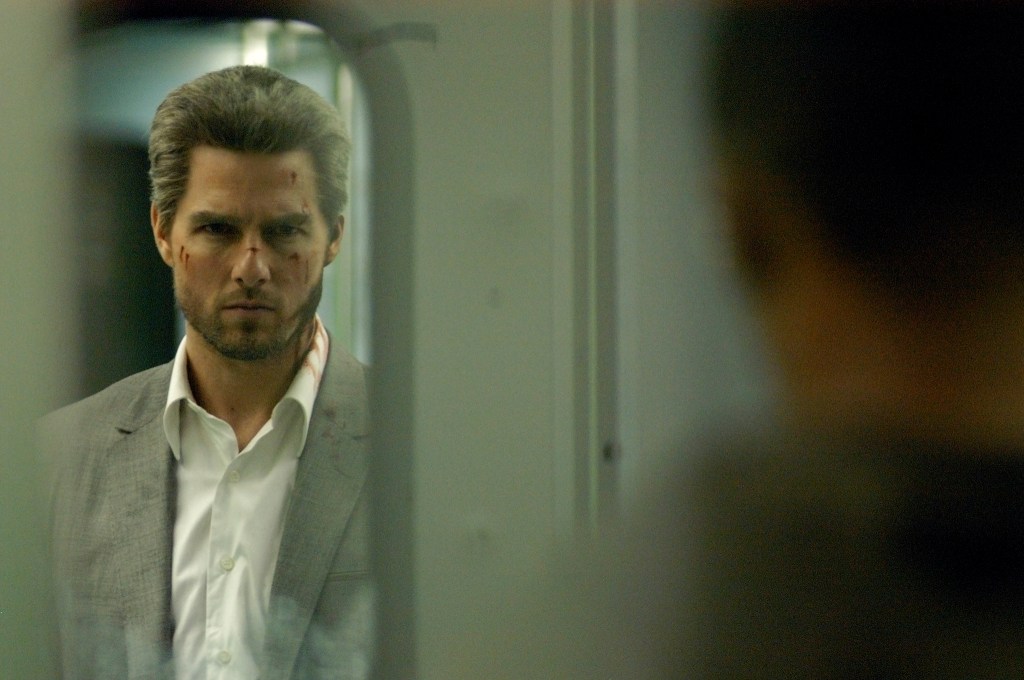
3. Collateral (2004)
Collateral
Two guys in a car, strangers to each other, both operating on a routine, a structure that they rarely break from, moving as one through the luminous L.A. night but to different ends.
Collateral is a wonderous neo-noir that pivots two men with differing moral compasses against each other: Max (Jamie Foxx), a slave to his inhibition, to his failure to act and make a difference to his life; and Vincent (Tom Cruise), a man untethered, a multi-faceted nihilistic hitman who gets in, gets out, and keeps moving forward.
Much has already been written on Collateral, from its vivid imagery to the rawness of its digitised look — at once enticing and haunting. Vincent poses a threat to Max’s idealised vision of tomorrow, but also an opportunity to start making things happen and not idle by.
2. Heat (1995)
Heat
What does one even say about what, in the eyes of many, is Mann’s magnum-opus?
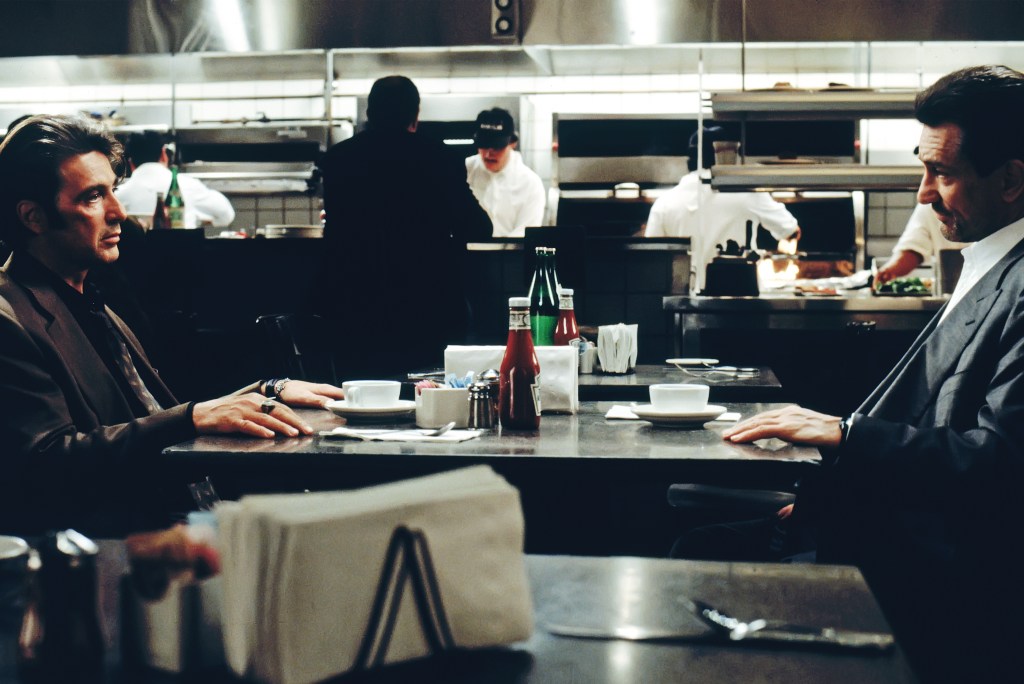
Heat is the sum of many parts, but it doesn’t work without its two key pieces: Al Pacino and Robert de Niro. The duo, reunited together on a feature for the first time (and for the first time ever in the same scene/s) since The Godfather Part II (1974), Pacino and de Niro are two sides of the same coin.
Vincent Hanna and Neil McCauley are like yin and yang — they don’t mix but they can’t function without one another. This speaks to Mann’s wider commentary on good vs evil, crime vs order which has been the focal point for 90% of his oeuvre. In Heat, Pacino and de Niro accentuate Mann’s fascination with these binary opposites to their full extent.
It’s as though these characters revel in the chase, of being the hunter and the prey, and they treat it like a drug that supersedes everything else in life. Mann brilliantly captures this through bright neon lights and the wider city which acts as its own sanctum that gives weight to the chase. Nothing is as beautiful as the city lights in a Mann film where cop cars race down the freeway in a storm of intensity.
But Heat is also made up of moments: the diner scene between Neil and Vincent is one of the greatest moments of character interaction in cinema history as these two men come face to face, pause the chase, and acknowledge each other; the downtown LA shootout where Mann shut down multiple blocks to shoot one of the most jaw-dropping scenes in any film ever; and the poignant finale where the two leads lock horns for the last time.
Without Heat, we may never have had The Dark Knight (2008), and that’s just one extra reason to watch this if you haven’t.
1. Miami Vice (2006)
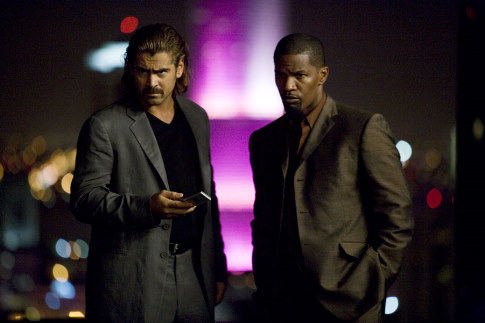
Miami Vice
I’m sure Miami Vice is a top-three Mann on anyone’s ranking of his work, but this bustling neo-noir about two under-cover detectives goes beyond the 80s show of the same name to become a gripping tale of people accepting that they’re living on borrowed time and learning how to manage the time they have left.
On the surface, Miami Vice is a buddy-cop thriller about two detectives infiltrating an offshore drug operation where they act as the middle-man between the international supplier and the local Miami buyer. Their mission is to find out who the buyer is, but the deeper they find themselves in the operation, the more they realise they’ll never have an opportunity like this again.
Jamie Foxx and Colin Farrell are the two leads here and (while already the case with Foxx) they instantly fit the Mann-model of characters who don’t always play by the books, are good at what they do, and sometimes make rash, emotionally led decisions.
But it’s through Mann’s ability to capture the fleeting nature of life, the suddenness of a bust and the shootouts that ensue, where Miami Vice makes a case for his best film. There’s a dream-like tranquillity to the use of digital footage here that might just be the best example of creating evocative images in the digital format. From the bright hues of the nightlife and its clubs to the more intimate sensual moments, there’s a sense of liveliness and temporality mixed together in the film’s visual language.
Mann’s growing fascination with the commodification and expendability of the human body really started gaining momentum here as well. Whether it be in the film’s final shootout where bodies drop at a whim or the use of people as shields for getting what you want (drugs, cash, obedience), it’s an aspect of his films that really does speak to how precious those moments of human interaction are for his characters when they do have them.
So rarely will a group of people in a theatre howl with glee and terror in equal measure while watching a film, but that is the reaction that directing duo Daniel’s (Dan Kwan and Daniel Scheinert) newest feature Everything Everywhere All at Once elicits throughout its 144-minute runtime.
The film follows the Wang family, helmed by matriarch Evelyn (the legendary Michelle Yeoh), who is preparing for an audit from the IRS, full-time work in her struggling laundromat, Evelyn’s father Gong Gong (James Hong) arriving that morning from China, her husband Waymond (Ke Huy Quan) trying to give her divorce papers, and her daughter Joy (Stephanie Hsu) trying to get her mother to accept her girlfriend Becky (Tallie Medel). Everything is happening everywhere all at once for Evelyn, and this is all before the threat of the multiverse collapsing has entered their lives. Shock and extremity is the name of the game for Daniels so I won’t be spoiling any moment here as they would lessen the impact.
It would be so simple for Daniel’s to toss aside this opening act to get into the zany adventures in the centre of the film, but it is clear from the jump that the entire emotional weight is set up at the beginning and is allowed to mature over the runtime. This is what makes the great weird films like Back to the Future (1984) work for audiences, a clear goal and set of stakes for the story being told that is established in the opening 20-minutes, working as the firm ground to stand on as a hurricane of madness whirs around you for the rest of the film.
Those unfamiliar with the directing duo’s previous film Swiss Army Man (2016) will be taken aback by the pair’s slapstick and crude humour, as well as their frenetic pace between visually creative moments. Daniel’s crashed into the scene with their work in music videos – a common pathway for some of the industry’s best visual stylists (Michael Bay and David Fincher to name a few) – with the iconic Turn Down for What by DJ Snake and Lil Jon, one of the most-watched music videos ever. While it’s clear in their previous works the directing pair have filmmaking chops to spare, they achieve a greater scope and emotional weight in Everything Everywhere that matches with their visual creativity, a balancing act that is quite astounding.
Stephanie Hsu (left) as Joy, Michelle Yeoh (centre) as Evelyn, and Ke Huy Quan (right) as Waymond in Everything Everywhere All at Once
Floating along a constant stream of intertextuality, self-referentiality, and reverence to the films that paved the way to gift this film into audiences’ laps (The Matrix (1999), In The Mood for Love (2000), any Charlie Kaufman film), Everything Everywhere feels like a cinematic miracle that is at risk of breaking at any point. We’ve all made food (let’s say, a bagel) that we’ve overstuffed with nothing but things we enjoy eating, not realising until it’s too late that the meal has tipped over the edge into being inedible, or at the very least a meal spoilt by clashing ingredients. Like tastebuds, every person will respond to the film’s propulsive mania in different ways which are exciting, making the viewing experience with a packed audience all the more rewarding.
Everything Everywhere is a technical marvel of small budget filmmaking, from its mind-blowing costume and production design to its sound design and visual effects, but the real hero of the film is editor Paul Rogers. Rogers’ work here is nothing short of miraculous. Tasked with building a feverish momentum for over two hours while having each individual emotional moment land as impact-fully as each comedic or absurdist one. Rogers moulds the filmmaking duo’s creative madness into a deeply resonant and enjoyable film, not just another overly ambitious indie that feels more like a creative dare than a work of art with deep truths.
The film also wouldn’t work as well as it does without a perfect collection of onscreen talent that is all game for the absurdity being thrown at them. Whether it’s with IRS agent Jamie-Lee Curtis who is up for all manner of madness here and is having a blast, to Stephanie Hsu as Joy, who quickly becomes the emotional and narrative crux of the narrative, elevating an already entertaining film to transcendent levels. I am deeply looking forward to what else Hsu and Daniels can achieve together.
The film works similarly to the hyper pop genre in modern music. Both Everything Everywhere and hyper pop are mining pure emotion within the heart of excess and artifice. The movement is a direct response to the nihilism and despair of the 90s and 00s with artists like Charli XCX and the PC Music label paving the way. This form of hyper-aware, hyper-stylised emotive filmmaking operates just like a Charli XCX album; bouncing around multiple ideas with youthful energy, whilst never losing its heart and emotion. It is truly thrilling to see a similar approach made in cinema.
Some may call this film exhausting, and perhaps on a different day I may agree, so I can’t guarantee how you will feel until you witness what Daniels are doing here. But, I would stress to anyone who has seen the film and felt it exhausting, please see it again as your mood at the time you see this will heavily influence what you think of it, and it is definitely worth your time.
The Everything Everywhere All at Once is in theatres now.
Blacklight screener provided by Rialto Distribution
Liam Neeson has long been one of Hollywood’s most dependable and compelling screen presences. In recent years, the iconic Irish actor has been working as much as he ever has, spanning many locales including Northern Canada in The Ice Road (2021) to right here in Australia for Blacklight (2022).
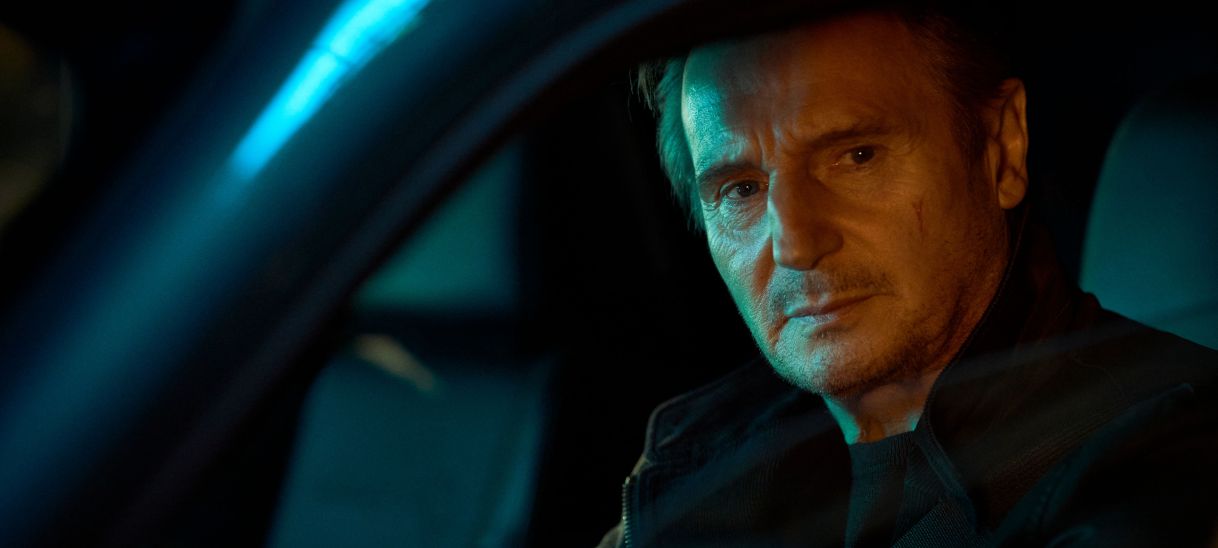
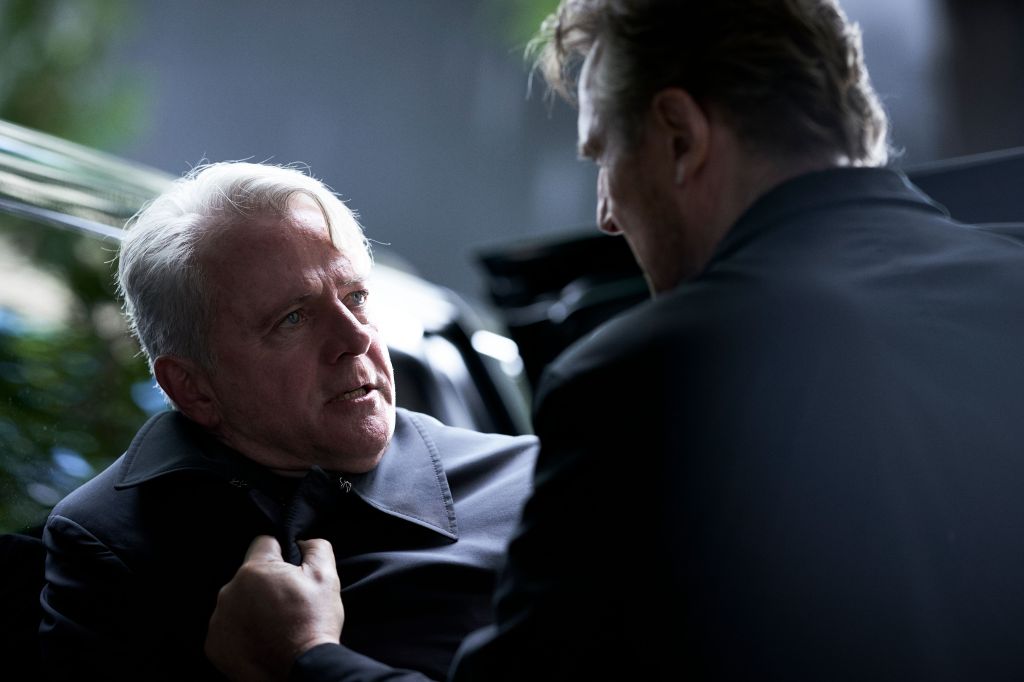
Set in Washington D.C. but filmed mostly here in Melbourne (with a crucial car chase sequence shot in Canberra), the film follows Travis Block (excellent action movie name), an OCD-inflicted FBI fixer who finds himself on the tail end of a career working in the shadowy underbelly of the FBI, working directly with the director of the bureau Gabriel Robinson (Aiden Quinn). Block must reckon with his role as a shadowy figure and how that life has impacted his personal life, including his daughter Amanda (Claire van der Boom) and granddaughter Natalie (Gabriella Sengos).
The film is a serviceable action conspiracy thriller that feels perfectly of a piece with the political moment we find ourselves in. Director and co-writer Mark Williams (Ozark co-creator, Honest Thief 2020)) reunites with Neeson from a script by first-time screenwriter Nick May, a former Obama-era Justice Department attorney.
FBI Director Gabriel Robinson (Aiden Quinn, left) and Travis Block (Liam Neeson, right)
Blacklight certainly has some moments of first-screenplay-itis, but the story is a fresh and interesting take on the modern government conspiracy thriller. There is something chilling about a former government attorney writing his first script about a J. Edgar Hoover-esque villain at the head of the FBI, an idea that will stay with you longer than any car chase.
Now, we need to talk about the action in Blacklight. Neeson, at almost 70, is a tremendous actor but is far too old to be the star of an action thriller that seems designed to have the legendary actor chase and hand-to-hand fight people a third his age. In the past, Neeson action films have revolved around the iconic star being either stationary (The Marksman (2020) or in a fast-moving vehicle (The Commuter (2018)), but here we see Neeson closer to his Taken (2008) role with foot chases and athletic explosive action sequences. Recent action films like Nobody (2021) or John Wick: Chapter 3 – Parabellum (2019) have built around the limitations of its star to make entertaining films, something Blacklight would have benefited greatly from.
This would not have been as big an issue, however, if the film didn’t also feel so dependent on these action sequences, as Blacklight’s dialogue was not enjoyable or emotive enough to make up the action deficit. Dialogue is never too important in these movies – only Michael Mann has really perfected both sides of the coin – as it is often the thrilling action sequences that make the genre enjoyable. Unfortunately, Blacklight falters in both areas to make it as enjoyable as some of Neeson’s best action films.
Where Blacklight is most interesting is in its choice of villain and plot. This is a massive shift away from the Eastern European villain tropes from Taken and the John Wick series, centring on a conspiracy plot with an impossible to miss Hoover parallel (there is even a scene of Quinn quoting the man). It’s easy to forget that just a decade ago J. Edgar Hoover was played reverentially by Leonardo DiCaprio – as well as featuring in a truly baffling scene in Being the Ricardos (2021) – to now being essentially the villain of an action thriller who has an AOC stand-in assassinated.
While not a great film, Blacklight is an entertaining action thriller starring a legendary actor that is capable of getting any project made and elevates any material he is given. Let’s never take Liam Neeson for granted.
Blacklight will be screening in theatres nationwide from February 10th.
Reintroducing a franchise to cinemas is always a tricky prospect, but most have found appeal by taking the best attributes of their older films and refining them for a contemporary audience. To be a long-term success though, a series revival needs to be innovative, to offer its viewers something fresh – a criterion this science-fiction reboot fails to meet.
Decades after the liberation of Zion, a group of humans analysing The Matrix witness code belonging to Neo (Keanu Reeves), who was thought to have sacrificed himself during said liberation. This same group of humans enters The Matrix in hope of locating Neo, only to happen across an event eerily similar to Neo’s origin story, and a rogue Agent (Yahya Abdul-Mateen II) wanting answers to his strange visions.
As it happens, Neo is residing elsewhere in The Matrix, having reverted to his old alter-ego of Thomas Anderson and become an accomplished video-game designer. He has presently been tasked with designing a sequel to his best-selling trilogy of games, a project which is causing him undue stress, leaving him miserable, and triggering memories of his past life – including those spent with his lost love, Trinity (Carrie-Anne Moss).
It’s hard not to draw comparisons between Neo’s situation and that of Lana Wachowski, who is returning to the Matrix franchise (sans her sister Lilly) after an 18-year absence. Those comparisons are made most obvious in the dialogue, which provides unsubtle critiques of the discourse surrounding the original trilogy and even disparages fans by rubbishing their theories. Not to be outdone, Lana even throws shade at her corporate overlords, directly mocking them and their insistence on rebooting the series.
Of course, subtlety has never been the modus operandi of the Wachowskis – even in The Matrix (1999), their most celebrated production, the screenplay is quite overt with the religious symbolism and literary allegories, leaving no doubt as to what the film is trying to convey. This philosophy is found in another Wachowski trademark, featured rather prominently in The Matrix Resurrections (2021): lengthy, convoluted monologues that force-feed exposition to the audience and explain everything that is happening, or has happened, in intricate detail.
Yahya Abdul-Mateen II as a Morpheus-adjacent character in The Matrix Resurrections
The unwelcome Wachowski motifs don’t end there, as Resurrections also demonstrates an over-reliance on computer-generated imagery. The visuals here appear to be inspired by George Lucas’ later works, with the machines and environments of Zion particularly lacking in character and detail, with little attempt made to hide their digital origins. For a franchise that’s frequently hailed for its forward-thinking use of CGI, scenes like these are most baffling and embarrassing to witness.
In Matrix films past, these irritants would be offset by the action, incorporating slow-motion, large-scale destruction and an impeccable sense of style to craft a thrilling, inimitable set of fight sequences. Such action is present in Resurrections too, yet it lacks the jaw-dropping, mind-blowing spectacle of scenes like the foyer shootout from the first picture, or the highway chase from The Matrix Reloaded (2003), instead being a succession of bland moments that are indistinguishable from those any other blockbuster released in the past two decades.
Thankfully, there are a couple of improvements over the previous Matrix films, one being the characterisation of the protagonists, who are at their most human here. Resurrections adds a depth, fragility and tenderness to its heroes that was otherwise lacking in the first three instalments, ensuring the viewer’s sympathies in the picture’s more emotional moments and allowing for a more satisfying resolution than The Matrix Revolutions (2003). If only these qualities could be retroactively applied to the original trilogy.
A film with the lineage of The Matrix Resurrections should be a ground-breaking triumph of special effects, grandiose stunt-work and insightful commentary; in its place is a mediocre blockbuster that fails to build upon the legacy of its originator and does not amaze on any level. Still, it’s no more disappointing than the third movie.
The Matrix Resurrections is screening in cinemas nationwide from December 26th.
Ambitious crossovers have become the forte of the Marvel Cinematic Universe, to the point where grand encounters between its heroes are nowadays a given. The latest MCU venture is one that fulfils those expectations, and immediately surpasses them, drawing inspiration from some rather unlikely sources to produce a truly amazing, spectacular blockbuster that enriches the legacy of its namesake.
Following his defeat of an Avengers-level threat in Europe, Peter Parker (Tom Holland) has been publicly identified as the alter-ego of Spider-Man, and is now being persecuted for his vigilantism. He’s not the only person facing judgement, since friends Ned (Jacob Batalon) and M.J. (Zendaya) and even his Aunt May (Marisa Tomei) are being hounded by the authorities and the populace for merely being associated with the web-slinger.
Hoping to rectify the situations of those he holds most dear, Peter ventures across New York City and approaches fellow superhero Stephen Strange (Benedict Cumberbatch) who is versed in the mystic arts. Doctor Strange offers his help by conjuring a spell that will ensure the entire world forgets Spider-Man’s secret identity; but after being botched by Peter’s constant interruptions, Strange’s magic instead unleashes a peril far greater than either hero could ever imagine.
The full ramifications of this wayward conjuration deserve not to be spoiled, suffice to say that it brings to the fore a concept that has long been gestating within Kevin Feige’s MCU: the Multiverse. The notion that every reality is connected to a series of parallel dimensions was initially floated by Scott Derrickson’s Doctor Strange (2016), teased in Spider-Man: Far From Home (2019) and eventually confirmed as canon in the Disney+ series Loki (2021), before being effectively applied to the animated series What If…? (2021).
Peter Parker (Tom Holland) with Doctor Strange (Benedict Cumberbatch) in Spider-Man: No Way Home
There are, of course, other Marvel-branded projects that have utilised a multiverse-spanning narrative, most notably the feature-length animation Spider-Man: Into the Spider-Verse (2018). With said film being a critical and commercial success, there would be every temptation for this live-action production to emulate its greatest strengths, and in some instances it does – there’s certainly an influence in the self-referential humour. But the latest Spider-Man flick is certainly no facsimile of its animated counterpart, since it owes more to its live-action forebears.
In truth, the films that best inform Spider-Man: No Way Home (2021) are those of Sam Raimi’s Spider-Man trilogy (2002-2007), and not just for… the obvious. Raimi’s movies – yes, even the maligned third chapter – triumphed by instilling heart into the conflict, humanising the antagonists with their personal struggles and adding tender, delicate moments that kept the narrative grounded. Similar, if not identical, attributes are present in No Way Home, which keeps an eye on the finer details and constantly looks for the good in others, no matter what their failings are.
This heartfelt tone is not the only quality present in the screenplay, for there are plenty more smarts contained within. Most impressive is how coherent and easy to follow the narrative is, succinctly establishing the conflict and deftly balancing a multitude of characters who each have their own arcs, all of which is done without No Way Home spiralling into an incongruent, slapdash mess. Additionally, the script has a fair amount of emotional heft, with one or two scenes being among the most poignant this franchise has ever produced.
Part of the reason why these moments hit so hard is because of the performances, with just about every actor providing a phenomenal turn. Undoubtedly, the thespians who leave the greatest impression are those who play the villains from alternate universes, their portrayals being an adroit balance between cheesy and sinister, while not forgetting to convey the tenderness in their characters. What’s more, everybody in the cast has fantastic chemistry with one-another, despite most having not shared the screen previously.
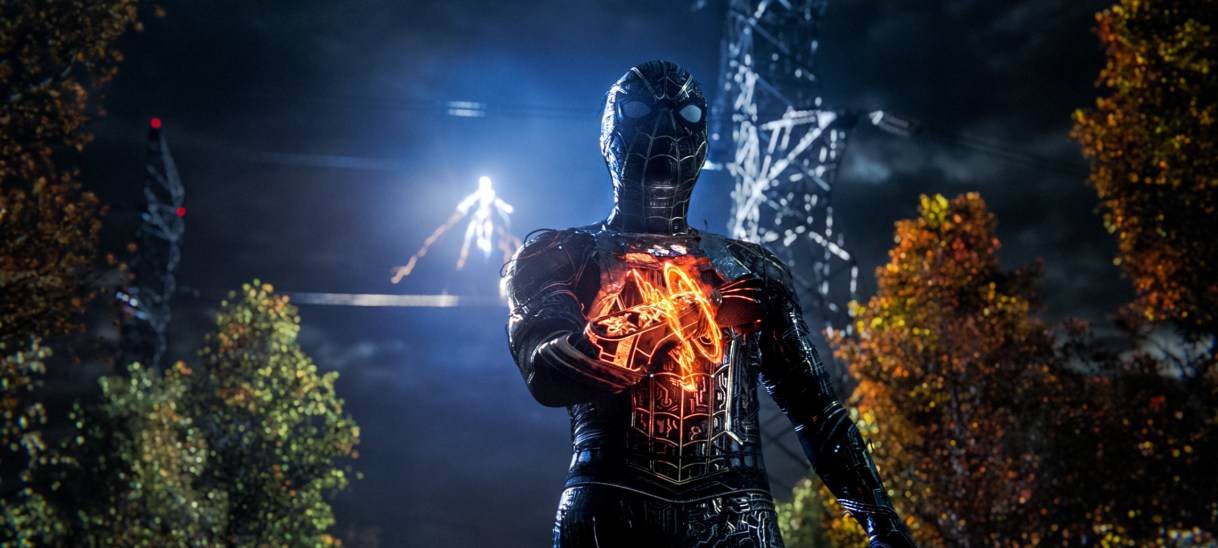
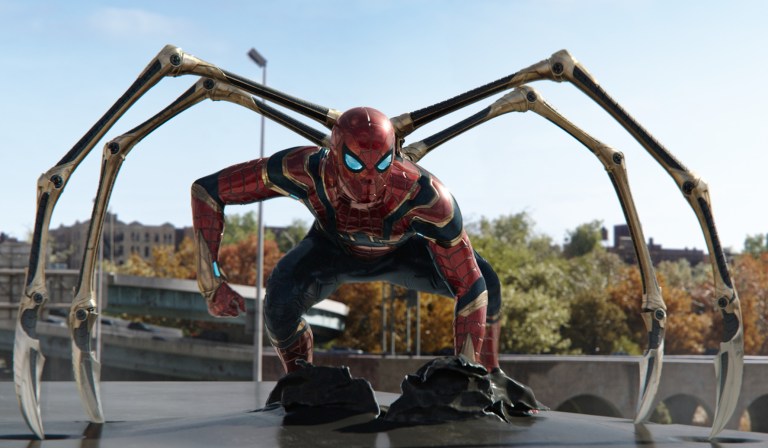
The Iron Spider suit, as seen in Spider-Man: No Way Home
All of these traits pleasingly help to distinguish No Way Home from the many other Marvel blockbusters; but even so, this is still a picture tied firmly to the MCU, sharing various components with the two prior Spider-Man films to ensure that the look, tone and sound of this chapter is in keeping with what audiences are accustomed to, whilst also paying homage to its earlier precursors – for instance, the orchestral score of returnee Michael Giacchino incorporates elements of Danny Elfman’s work in the Raimi trilogy, as well as James Horner’s compositions for The Amazing Spider-Man (2012).
Although No Way Home is unquestionably a very pleasing affair, it’s not a faultless one. The most pressing of these faults is the film’s pacing – during the first two acts, the story flows briskly yet smoothly, before slowing right down as it heads into the third act and loosing steam altogether by the epilogue. Of further annoyance is the lengthy conversations had between characters in this final act which not only contribute to the slowness, but also ensure that it feels needlessly bloated.
There are other quibbles to be had with No Way Home, including the humour, which is funnier than Far From Home yet never reaches the comedic heights of Spider-Man: Homecoming (2017) or Into the Spider-Verse. And while the plot can be followed without having to revisit every previous Spider-Man film, its numerous revelations and throwbacks aren’t going to be as satisfying nor as rewarding for uninitiated viewers. But these are only minor problems when compared to the issues of pace, and even they aren’t enough to spoil enjoyment of the picture.
Spider-Man: No Way Home is a euphoric celebration of Marvel’s web-slinging superhero, one that cheekily yet adoringly pays homage to the films that came before it. With a humanist screenplay that deftly balances multiple characters, and an all-star cast at the peak of their talents, this blockbuster represents another fantastic entry in the MCU, and an utter treat for Spider-Man fans of any generation.
Spider-Man: No Way Home is currently screening in cinemas nationwide.
There are very few directors whose name alone is a drawcard for the masses, but Ridley Scott is one who can be considered among that company. Most recently, Scott’s touch has been applied to this medieval-set picture, drawing upon his wealth of experience to form a reasonably engrossing, if imperfect movie.
In 14th Century France, a squire and solider of the King is accused of sexual assault by a noblewoman, an act he empathically denies. The lady’s husband, a knight, supports her claims and demands justice, challenging the accused to a trial by combat – a duel to the death. Should the knight win, his wife’s accusations shall be seen as true to the eyes of God and her honour restored; should the squire win, he shall be deemed innocent, and his accuser punished for dishonesty.
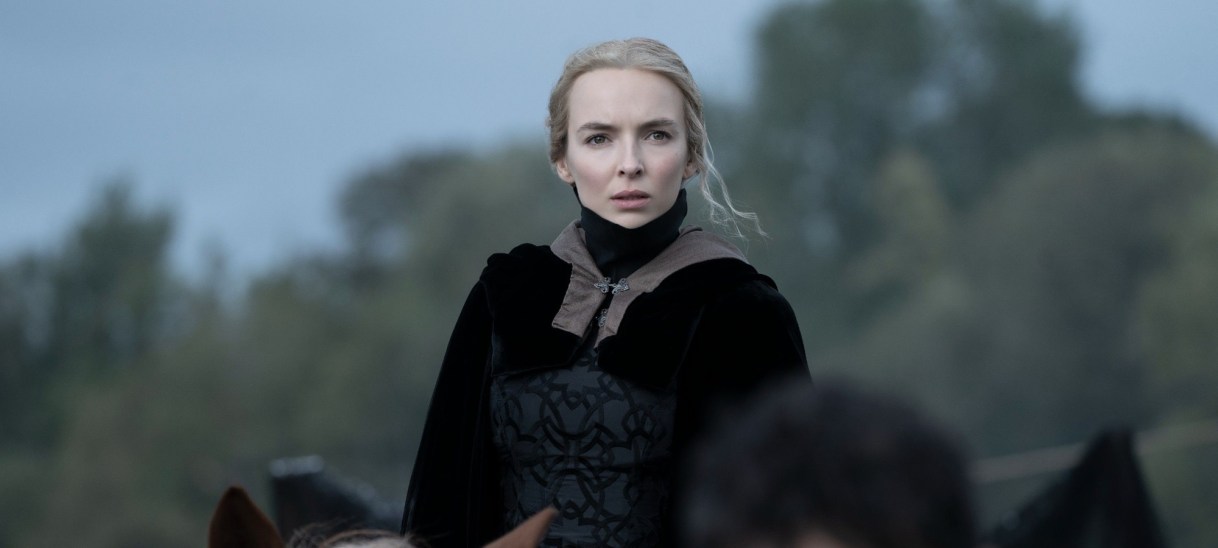
Although the premise of The Last Duel (2021) is straightforward, its narrative structure wishes to be anything but, being non-linear in manner and split into three chapters, each focused on a different character. The first chapter’s subject is Sir Jean de Carrouges (Matt Damon), the accuser’s husband; the second Jacques Le Gris (Adam Driver), the alleged perpetrator and estranged friend of Sir Jean; and the third Marguerite de Carrouges (Jodie Comer), the alleged victim.
In each of these three parts, the story is told from the perspective of the subject and what they deem to be “The Truth”. It’s a noble and rather interesting approach, yet one that’s ultimately pointless, since the film is more or less convinced that Lady Marguerite’s account is absolute fact; thus, the perspectives of the other two men are rendered null and void, an unnecessary distraction from the main conflict. Had it dispensed of its all-sides-considered angle, and instead stuck with a singular, cohesive plot, The Last Duel would be just as compelling, if not more so.
Adding to woes, the picture devotes an inordinate amount of time to establishing the relationship between Jacques and Sir Jean, which does little to advance the plot – watching these chivalrous exchanges, viewers get the sense that Lady Marguerite’s assault is an event of secondary importance to the narrative, despite it being billed as the main conflict. Admittedly, there is some appeal in listening to their eloquent, well-spoken dialogue, but this soon becomes tiresome, paling in comparison to the film’s other merits.
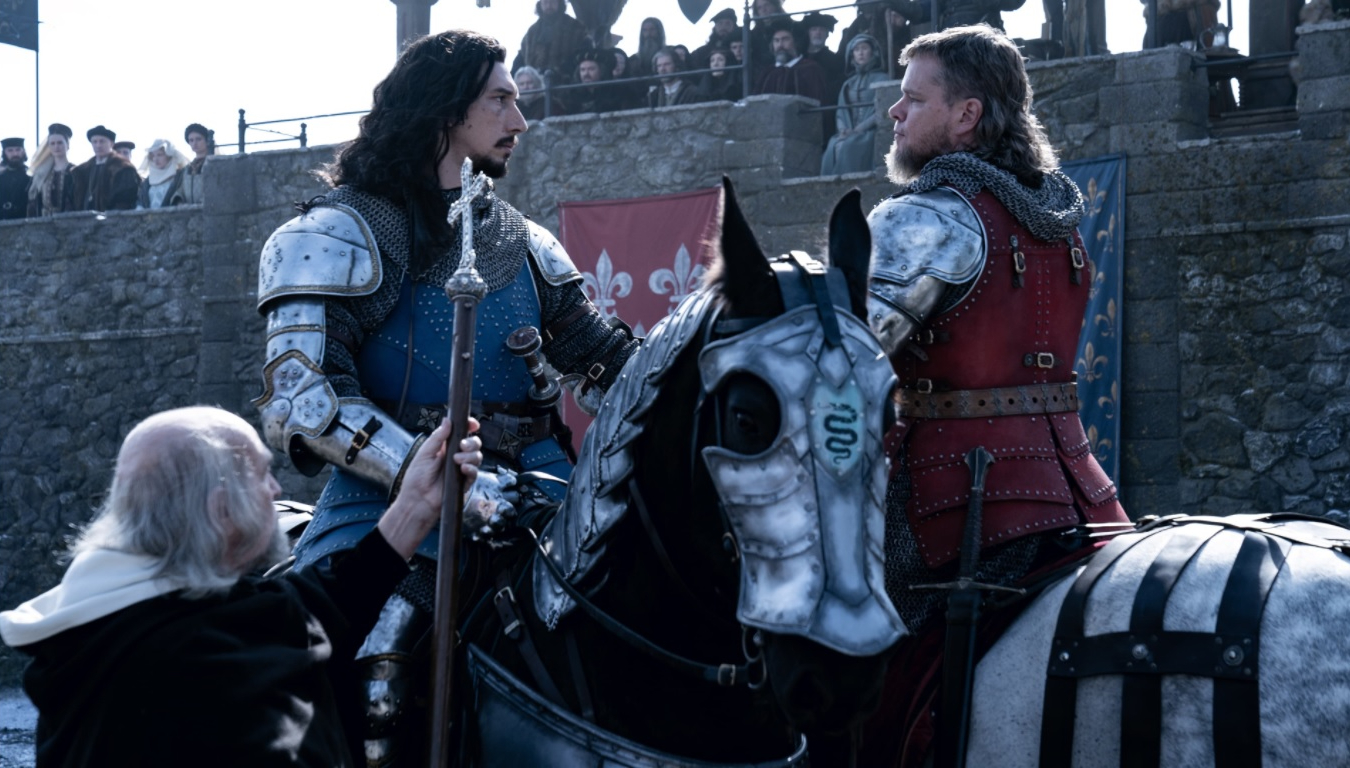
Jacques Le Gris (Adam Driver, left) and Sir Jean de Carrouges (Matt Damon) prepare for their battle in The Last Duel.
One such merit is its world-building, with The Last Duel having fashioned a vast, enchanting and rather accurate medieval setting for its characters to inhabit. There’s no shortage of beautiful scenery, with the feature having been shot on-location in Ireland and France; the meticulous set design adds further to the realism, as do the costume designs of Janty Yates – a regular collaborator of Scott’s – who adorns the characters in era-appropriate fabrics and all other manner of regalia. Truly, this is the closest a Hollywood production can come to being an authentic recreation of the feudal era.
It’s a view that’s further enforced by the knightly battles that Sir Jean and Jacques partake in. These action sequences of clashing swords and armour-clad soldiers on horseback are littered throughout The Last Duel, evoking Scott’s work on Gladiator (2000) and warranting praise for being tense, brutal and expertly choreographed. Yet more excitement is generated through the close-up cinematography and terrific sound editing in these scenes, allowing viewers to feel that they are very much part of these violent encounters.
Eliciting just as much satisfaction are the performances of the leads, both the young and not-so-young. Adam Driver and Jodie Comer are their usual luminous, unflappable selves, once again providing turns that belie their age and experience; Matt Damon is also solid, though the same cannot be said for his impression of a British accent. Surprisingly, the highlight is actually Damon’s producing partner and real-life buddy Ben Affleck, whose carefree, amusing and somewhat irreverent effort as Count Pierre d’Alençon constantly brings a smile to the face.
Through its acting, direction and vivid replication of the medieval era, The Last Duel manages to be an intriguing drama with serviceable thrills. Ridley Scott’s film is not a masterpiece by any means – the male characters are given too much focus, and the plot’s chaptered structure is somewhat pointless – but nonetheless is a reminder of why he’s considered one of the industry’s greats.
The Last Duel is currently screening in select cinemas.
Despite what its very vocal critics say, the Marvel Cinematic Universe has never been afraid to deviate from the norm, frequently toying with its formula to deliver creative and outlandish pictures. More often than not, these risks have paid off handsomely; here though, is a rare example where the deviations don’t work to the material’s advantage.
Several millennia ago, the Celestials – omnipotent forces responsible for the creation of all life within the universe – placed on Earth a group of immortal, superpowered beings known as Eternals, and tasked them with defending humanity from outside forces that impeded their evolution. Said beings are presently living peaceful lives and have not needed to intervene in human affairs for centuries; but after a worldwide tremor, and the re-emergence of an old enemy, they feel compelled to embrace their former roles and defend the planet once more.
Directed by Oscar-winner Chloé Zhao, Eternals (2021) is so distinct from its Marvel stablemates that it barely qualifies as a superhero movie, being closer in spirit to a meditation on living purposefully. Throughout the narrative, the protagonists constantly reiterate their vow to not interfere with the evolution of humanity, philosophising whether this stance has resulted in further woes, if they should have done more to ease the world’s suffering, and the consequences of contributing too greatly to the human race’s development.
Other discussions in the film lean more towards the existential, as the ageless characters ponder whether a meaningful existence among mortals is even possible. It’s a struggle best exemplified by Sprite (Lia McHugh), an Eternal who resembles a teenage girl, and as such cannot enjoy all the pleasures that her adult-looking counterparts can; meanwhile, the “older” Eternals struggle to maintain relationships and livelihoods, such as Sersi (Gemma Chan) who cannot commit to her human boyfriend, Dane (Kit Harrington) despite their obvious love for each other.
To place so many philosophical musings in a Marvel flick is a peculiar direction to take, but Eternals is by no means the first in this Universe to do so – that honour belongs to Scott Derrickson’s Doctor Strange (2016) which drew interest by, among other things, pondering the futility of existence. That’s pretty much where the similarities end though, because where the Sorcerer Supreme’s film balances its existentialism with hypnotic imagery, inventive action sequences and shades of humour, Eternals offers nothing of the sort, resulting in a less exciting, less riveting blockbuster.
From left: Kingo (Kumail Nanjiani), Sprite (Lia McHugh), Sersi (Gemma Chan), Ikarus (Richard Madden), Thena (Angelina Jolie) and Gilgamesh (Don Lee) in Eternals
Zhao’s picture isn’t just weak when compared to Doctor Strange; it’s the weakest instalment in the MCU to date, lacking any of the spectacular elements associated with its forebears. There are no large-scale battles like those in the Avengers movies, nor the tense, close-quarters combat witnessed in the likes of Captain America: The Winter Soldier (2014) or, more recently, Black Widow (2021); it does not possess a jaunty pop-rock soundtrack á la Guardians of the Galaxy (2014), and certainly doesn’t share the rich comedic stylings of Spider-Man: Homecoming (2017) or Thor: Ragnarok (also 2017).
This insipidness is reinforced by the elongated, gratuitous run-time of two-and-a-half hours – courtesy of the slow pacing – that solidifies Eternals as the second-longest picture in the franchise, behind only Avengers: Endgame (2019). Because of the film’s leisurely flow, there’s no sense of urgency to keep the viewer invested; nor is there a feeling of peril, even when situations are at their most dire. And on top of that, the narrative lacks any rousing, uplifting or showstopping moments, resulting in a tone that is way too sombre for a Marvel-stamped property.
In any other MCU entry, these problems would be alleviated by the efforts of the performers; yet here, not even a cast brimming with Hollywood’s most talented, charismatic actors can improve proceedings. This includes players such as Richard Madden, Barry Keoghan, Salma Hayek, Angelina Jolie, the funny Kumail Nanjiani and the eminently loveable Brian Tyree Henry, all of whom lack the magnetism they usually instil into their roles, and are never given the opportunity to demonstrate just how capable they are. In other words, they’ve all been wasted.
Mercifully, the experience is not all bad, having been made somewhat bearable by the reasonably stunning visuals, at least by Marvel’s standards. Zhao made a point of prioritising on-location shoots for Eternals, rather than the usual sets and green-screens, and her decision has proven a good one, for the sun-bathed locales – superbly photographed by frequent Marvel contributor Ben Davis – provide a level of beauty hitherto unwitnessed in a superhero movie. Given the large budgets and healthy returns of Marvel’s output, one has to wonder why more of their releases can’t utilise similar techniques too.
Yet despite this splendour, and the nuanced discussions it also possesses, nothing can escape the fact that Eternals is the most tedious, least inspiring entry in the Marvel Cinematic Universe to date. The action is underwhelming, the cast under-utilised, and the narrative unsatisfying, drawbacks that are certain to test the most devoted of Marvel fans.
Eternals is currently screening in cinemas nationwide.
The release of a new James Bond film is always greeted with keen anticipation; on this occasion though, the mood is more solemn, since the latest instalment also heralds the end of Daniel Craig’s tenure as the gentleman spy. While it’s undoubtedly one of the better chapters in the long-running series, when viewed as a tribute to its much-loved star, the picture proves less appeasing.
The British intelligence agency known as MI6 has been compromised, yet again, after an experimental weapon is stolen from one of their top-secret research facilities in London. Its theft has huge ramifications for global security, not just because of the potential harm it can inflict on humanity, but also due to its secrecy, with only a select few individuals being aware of the weapon’s existence – not even Britain’s Prime Minister has been informed of its development.
In years gone by, MI6 would have called upon the services of James Bond (Daniel Craig) to rectify affairs like this; but the secret agent is now long-retired from the organisation, living off-grid and isolated in Jamaica with no desire of returning to duty. That is, until Bond is greeted by his CIA counterpart and friend, Felix Leiter (Jeffrey Wright) who informs him of the raid’s connection to SPECTRE, the criminal syndicate believed to have been thwarted five years earlier.
No Time to Die (2021) marks the 25th entry in Eon Productions’ James Bond film franchise, the release of which has been a long time coming. Initially set for a global debut in late 2019, delays in development and production saw that date pushed to March 2020, only for you-know-what to see the picture delayed again until September of this year. Australians have had to wait longer still to see the feature, with lockdowns in their two most-populous cities resulting in a six-week delay for the theatrical release.
MI6 agent Nomi (Lashana Lynch) makes her debut in No Time to Die
Those who have been eagerly awaiting Bond’s newest adventure will be pleased to know that No Time to Die has plenty of exciting action sequences, possibly the best of any Bond film. Among these sequences are some ferocious close-quarters encounters with impeccable choreography; intense gun fights between parties that have an unnerving realism; and two sublime car chases – the first through an Italian village in Bond’s iconic Aston Martin DB5, the second an off-road argy-bargy in a decidedly unexotic Toyota Prado.
Long-time fans of the franchise will be equally thrilled by the constant allusions to the previous Bond flicks, including the aforesaid DB5, as well as Timothy Dalton’s V8 Vantage from The Living Daylights (1987), and the occasional musical reference to On Her Majesty’s Secret Service (1969). Yet undoubtedly, the most recognisable trademark is Bond’s dry humour, here crafted with the input of another personality known for their sardonic wit: Phoebe Waller-Bridge, who is credited as one of No Time to Die’s four screenwriters.
Waller-Bridge’s comedic influence can also be found in the two “Bond girls” making their franchise debut. One is the cool, assured Nomi (Lashana Lynch), an MI6 operative and Bond’s replacement; the other is the giddy, yet resourceful Paloma (Ana de Armas) who is contracted to the CIA. The latter is a particular highlight – despite being seen only briefly, Paloma adds a vast amount of liveliness to proceedings with her unique, quirky personality, certifying herself as a protagonist who deserves a larger role in a future Bond instalment.
Although these many qualities help distinguish the 25th film from its precursors, No Time to Die is not one to deviate from the established formula, being closest in spirit to the previous chapter, Spectre (2015). This association is most evident in the lethargic pacing, flowing at a patience-testing speed that ensures the blockbuster seems every bit as long as its advertised 163-minute length would suggest. Still, both pictures remain an improvement on Quantum of Solace (2008) and its rapid-fire editing.
Another of Bond’s allies, Paloma (Ana de Armas) as she appears in No Time to Die
There is a greater problem with No Time to Die, and that’s its chief antagonist, Lyutsifer Safin (Rami Malek). In addition to possessing a convoluted plan and opaque motivations, Safin is an uncompelling character, lacking the intriguing backstory, maniacal personality and ruthless mentality of Bond villains past, with a slight facial disfigurement and soft French accent being his only distinguishable traits. Malek himself does nothing to help matters, his performance being bland, remote, and failing to convey even the slightest hint of emotion.
And on the subject of emotion, it’s worth noting that No Time to Die isn’t quite the heartfelt send-off that it’s trying so hard to be. There are numerous stirring moments within the story, yet very few of these moments feel earned, and have seemingly been put forward solely to get a cheap reaction out of the audience. What’s more, because this screenplay forms part of a serialised, five-part narrative, the emotional scenes will only find resonance with viewers who’ve seen Craig’s previous outings as 007.
25 films and very nearly six decades into its existence, the James Bond franchise is one that continues to delight and surprise, with No Time to Die profiting from superbly choreographed action sequences, welcome nods to the character’s past and the contributions of Phoebe Waller-Bridge. This may not be the satisfying denouement that Daniel Craig deserves, but it’s a fitting one nevertheless.
No Time to Die will be screening in cinemas from this Thursday, November 11th.

















 Rating Frames