Ranking the James Bond Series

Long before superhero franchises came to proliferate theatres, there was just one man guaranteed to be a box-office drawcard: Bond. James Bond. His handsome looks, sophisticated wardrobe and suave tongue have allured filmgoers for decades, despite his notoriety as a heavy-drinker and misogynist, with his popularity enduring to this day. And next week, he’ll be returning to the limelight once more when his newest picture, No Time to Die (2021), finally debuts in Australian cinemas.

For the benefit of the uninitiated, Bond – who is also referred to by his codename, 007 (pronounced “double-oh-seven”) – is a spy who works as part of the British government’s secret intelligence service, nowadays referred to as MI6. His character originated in a series of wildly-popular novels penned by Ian Fleming and published at the height of Cold War-paranoia, before making his first big-screen appearance in the 1962 adaptation of Dr. No.

More movies starring the secret agent would follow in the years after, with the premise, tone, style and cast occasionally adjusted to suit the tastes of audiences, with varying degrees of success. Like many others, the team at Rating Frames has been revisiting these pictures, and can now offer to you their definitive ranking of the James Bond film franchise, listed below from worst to best.

24. Live and Let Die (1973)
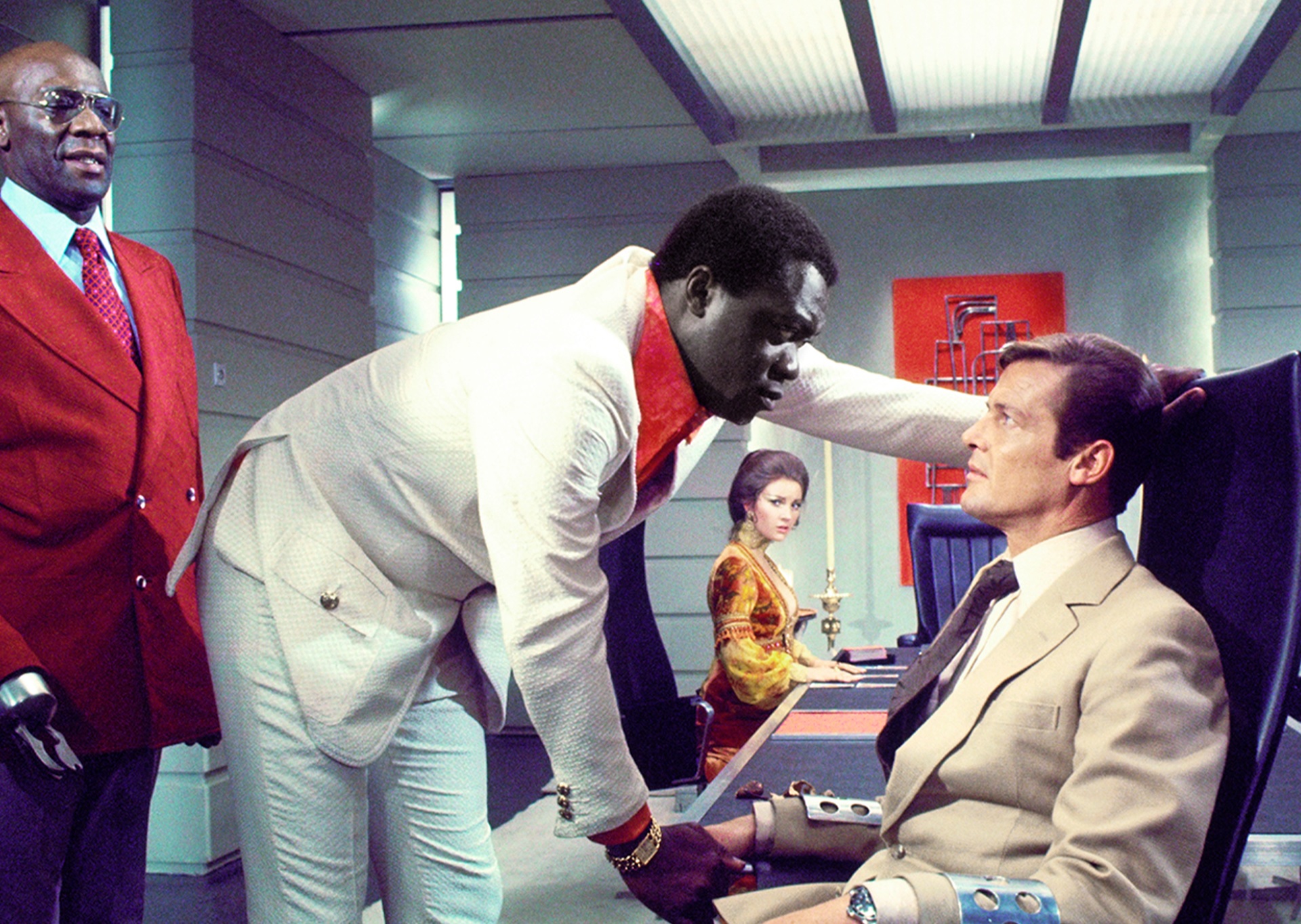
Roger Moore’s debut as 007 is by far and away the most embarrassing entry in the character’s history, filled with painfully unfunny one-liners, far-fetched stunts and plenty more illogical moments. A decent boat chase on the Louisiana Bayou is the only element that saves it from being unwatchable.

23. The World is Not Enough (1999)

“Monotonous” is the word that best describes this Pierce Brosnan-led bore, doing nothing to innovate the genre, nor the franchise. It’s long, slow, bland, and made even more frustrating by the presence of Denise Richards, the most unnatural and ineffectual “Bond Girl” to ever grace the screen.

22. Quantum of Solace (2008)

A misguided affair that takes a few too many cues from the Bourne movies and not enough from its predecessor, which also starred Daniel Craig. The pacing is too fast, camerawork too shaky, narrative lightweight, and Mathieu Amalric’s villain feeble at best.

21. Octopussy (1983)

This one is the most light-hearted of all the films, bordering on parody – especially during the third act; yet it’s not without its charms, with some good chase sequences, decent fights and tension involving a nuclear bomb. Certainly not a stinker, but nor is it Moore’s finest hour.

20. Licence to Kill (1989)
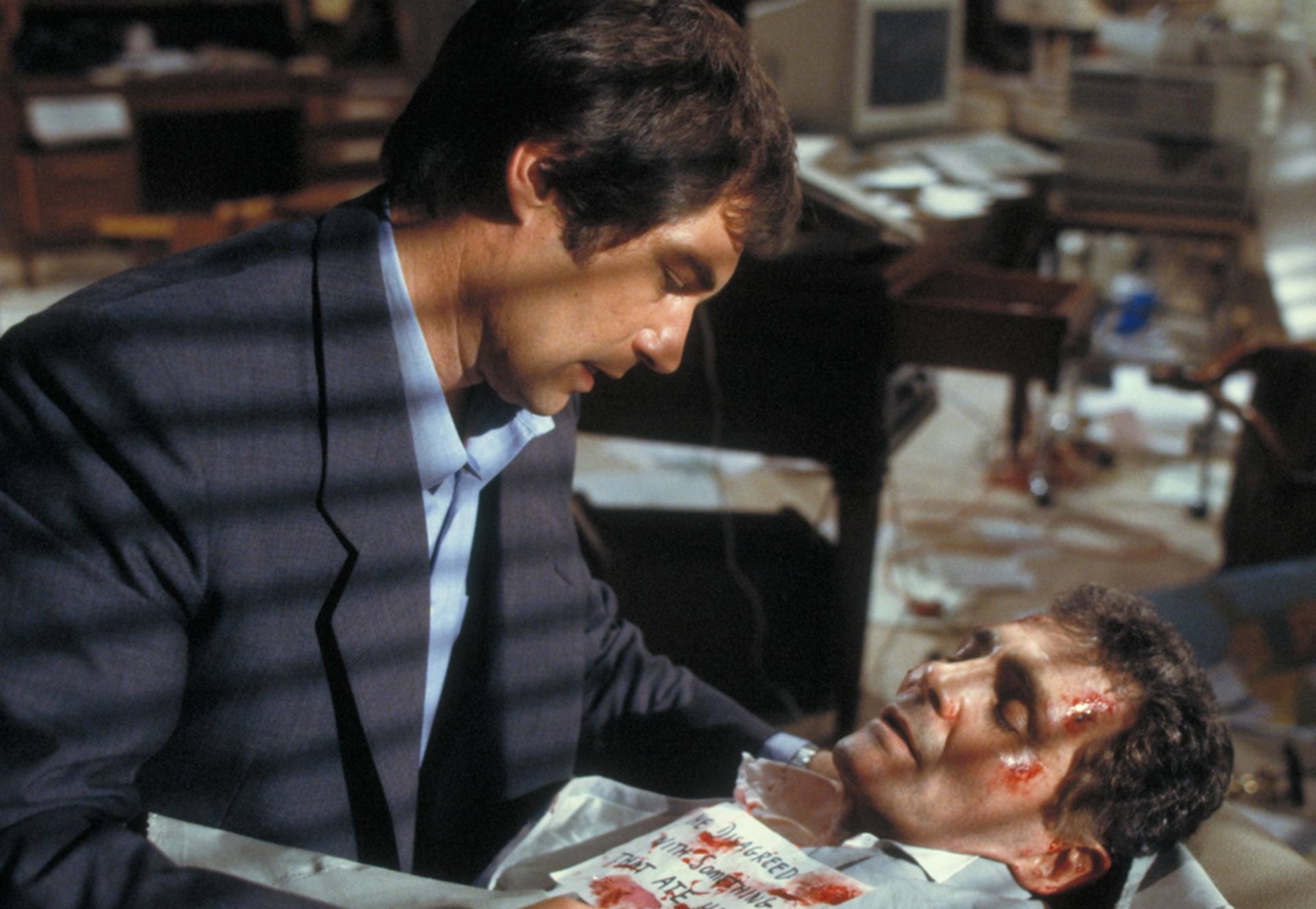
007 goes rogue in Timothy Dalton’s second and last picture as the secret agent, and things get very dark in the process. Quite simply, it’s too violent, too graphic and too angry for a Bond flick, its tone better suited to a Scarface knockoff.

19. Moonraker (1979)
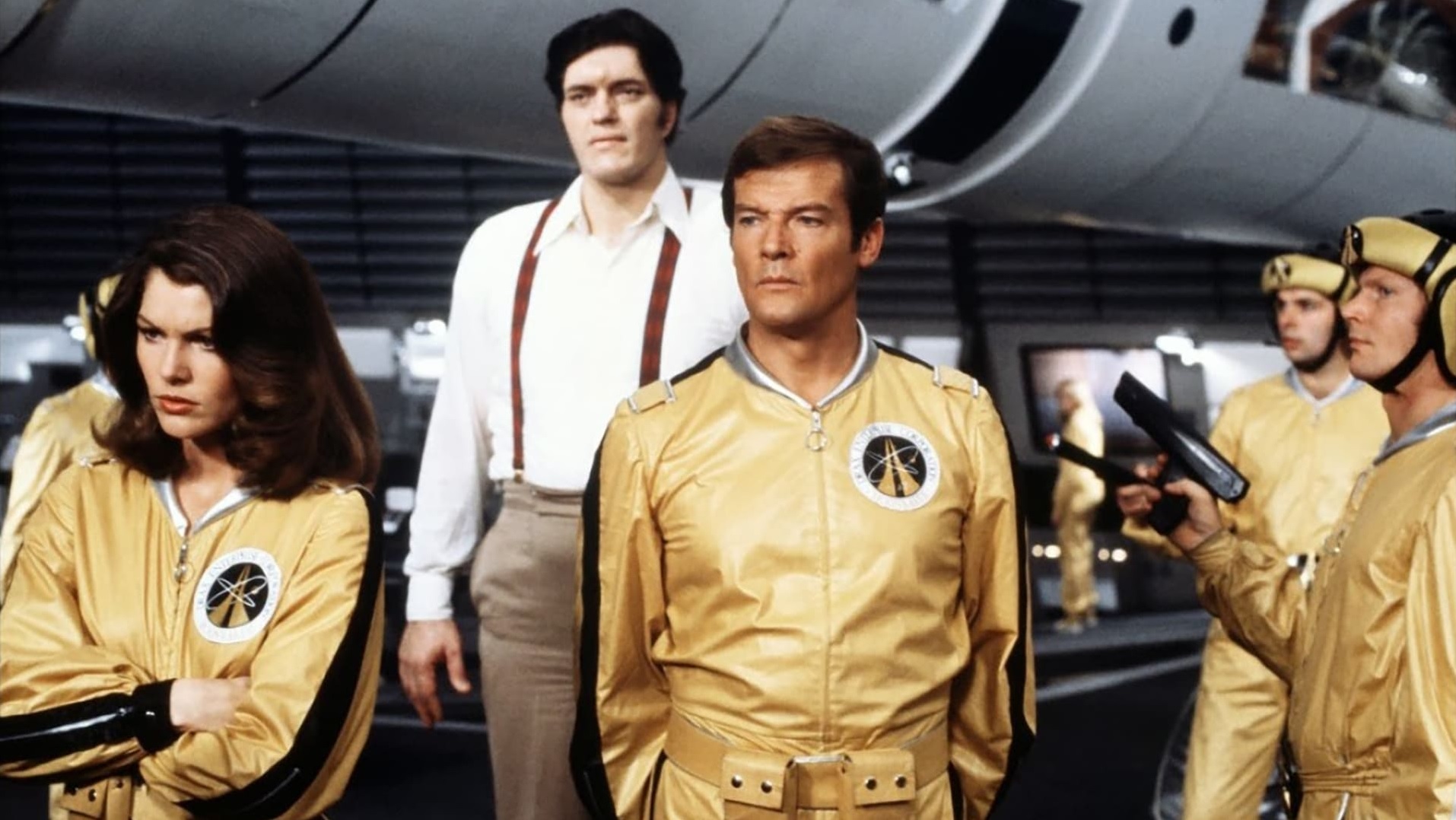
This romp saw Bond fly into outer-space in an effort to capitalise on the science-fiction craze of the late Seventies, resulting in the silliest, campiest film of Moore’s tenure – and that’s really saying something, given the quality of his other movies. With that said, the space sequences are reasonably entertaining.

18. The Man with the Golden Gun (1974)

A pretty tepid and rather forgettable affair for Moore, with the exception of its two antagonists: Sir Christopher Lee as the main foe, Francisco Scaramanga, and Hervé Villechaize as his short-statured associate, Nick Nack. That corkscrew jump is pretty cool, too.

17. Diamonds Are Forever (1971)
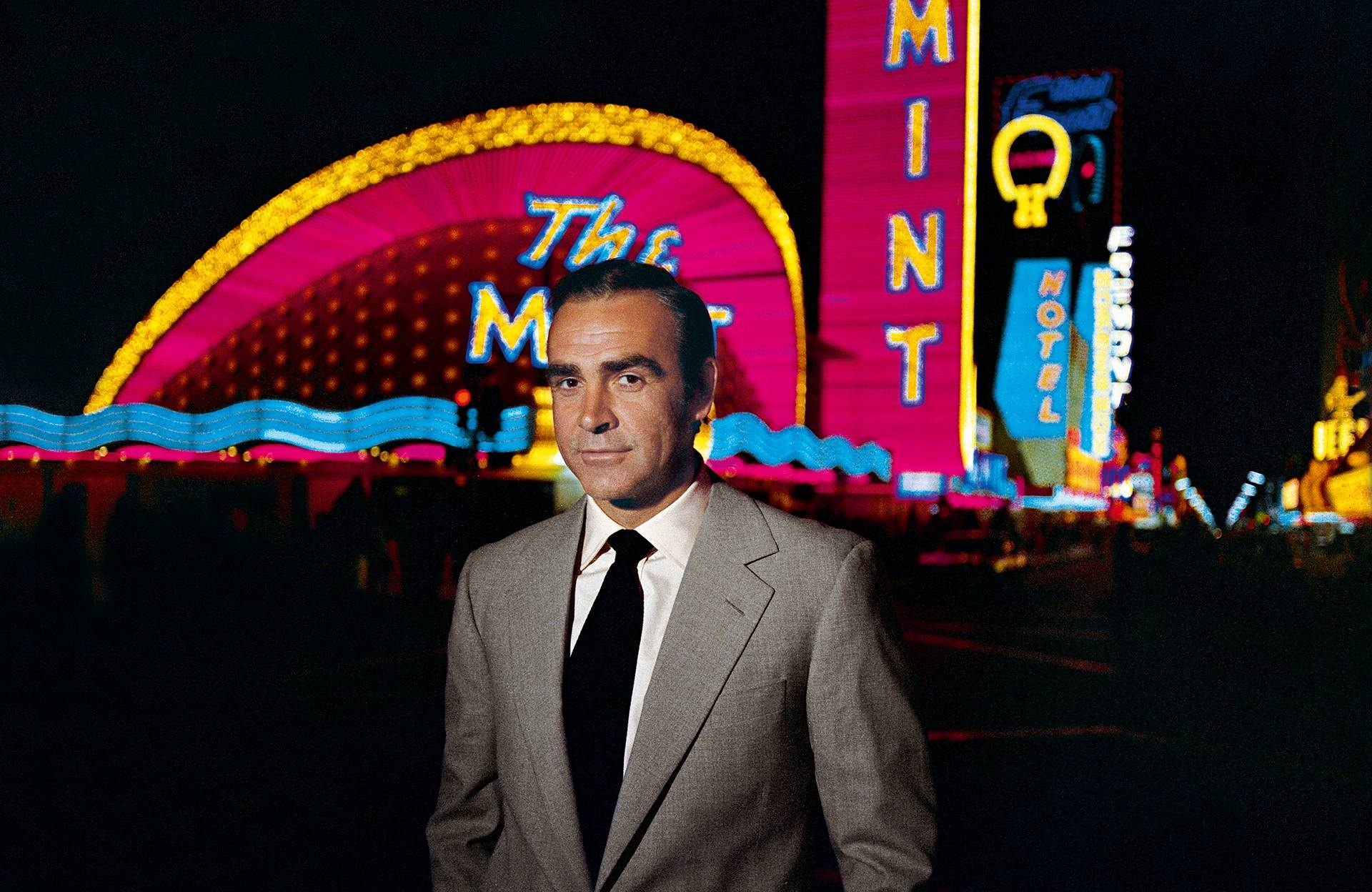
The last official Bond film to star Sean Connery, who is virtually the only aspect that elevates proceedings. This instalment marked the franchise’s transition into camp, with bright colours and many ludicrous moments, yet is simultaneously dullened by its flat, lifeless Las Vegas setting.

16. Die Another Day (2002)

Often derided as the worst in the series, but nowhere near as bad as its reputation suggests, Brosnan’s final appearance as 007 contains a bonkers, yet fun, car chase on ice with military weaponry, and a tense climactic battle aboard a jumbo jet. Just be sure to suspend all disbelief.

15. The Spy Who Loved Me (1977)
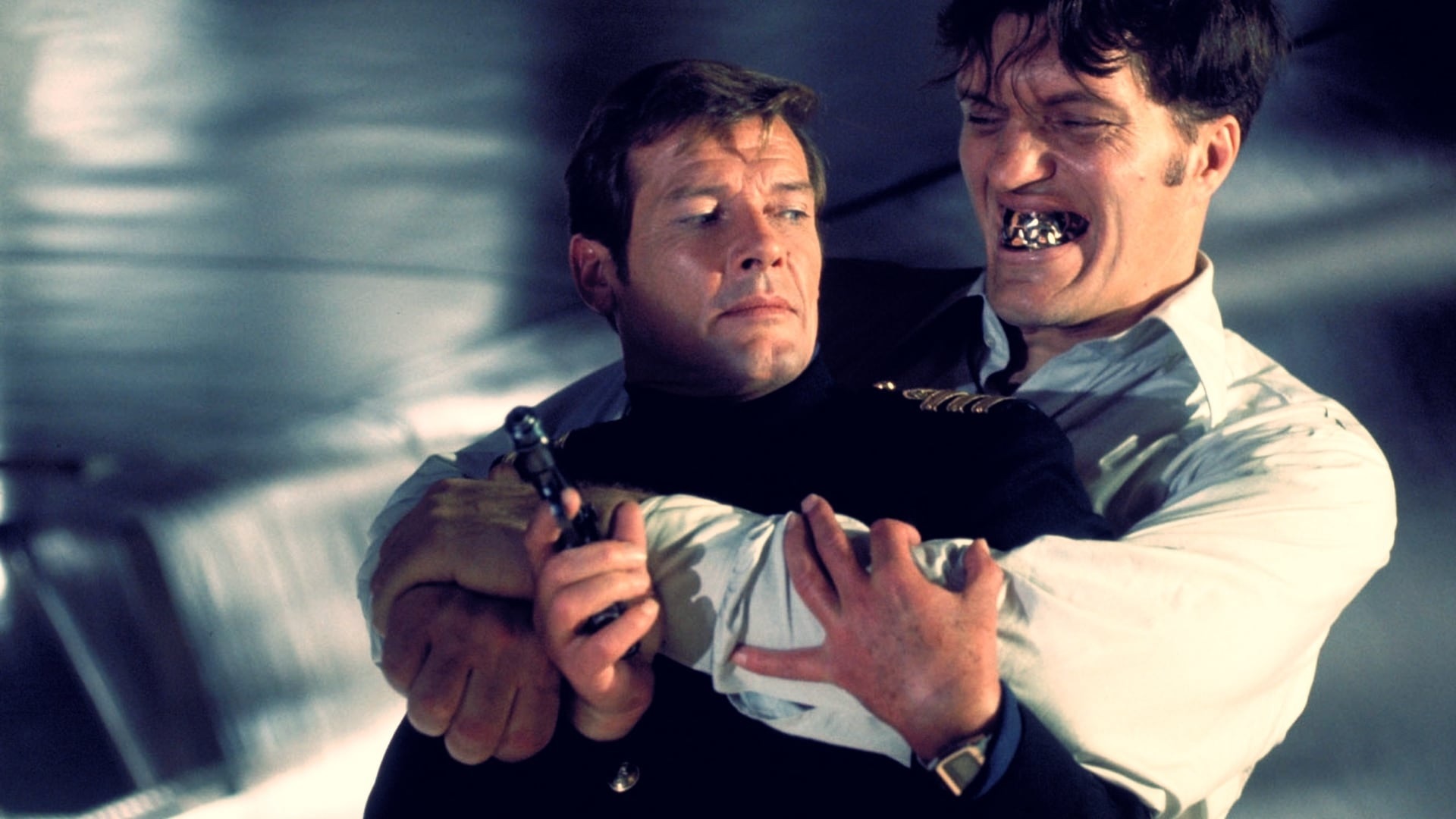
Introduced a great adversary in Jaws (Richard Kiel), and an iconic ride in Bond’s white Lotus Esprit that doubles as a submarine; beyond that though, Moore’s third movie as lead is pretty mundane, and in need of some greater thrills.

14. A View to Kill (1985)
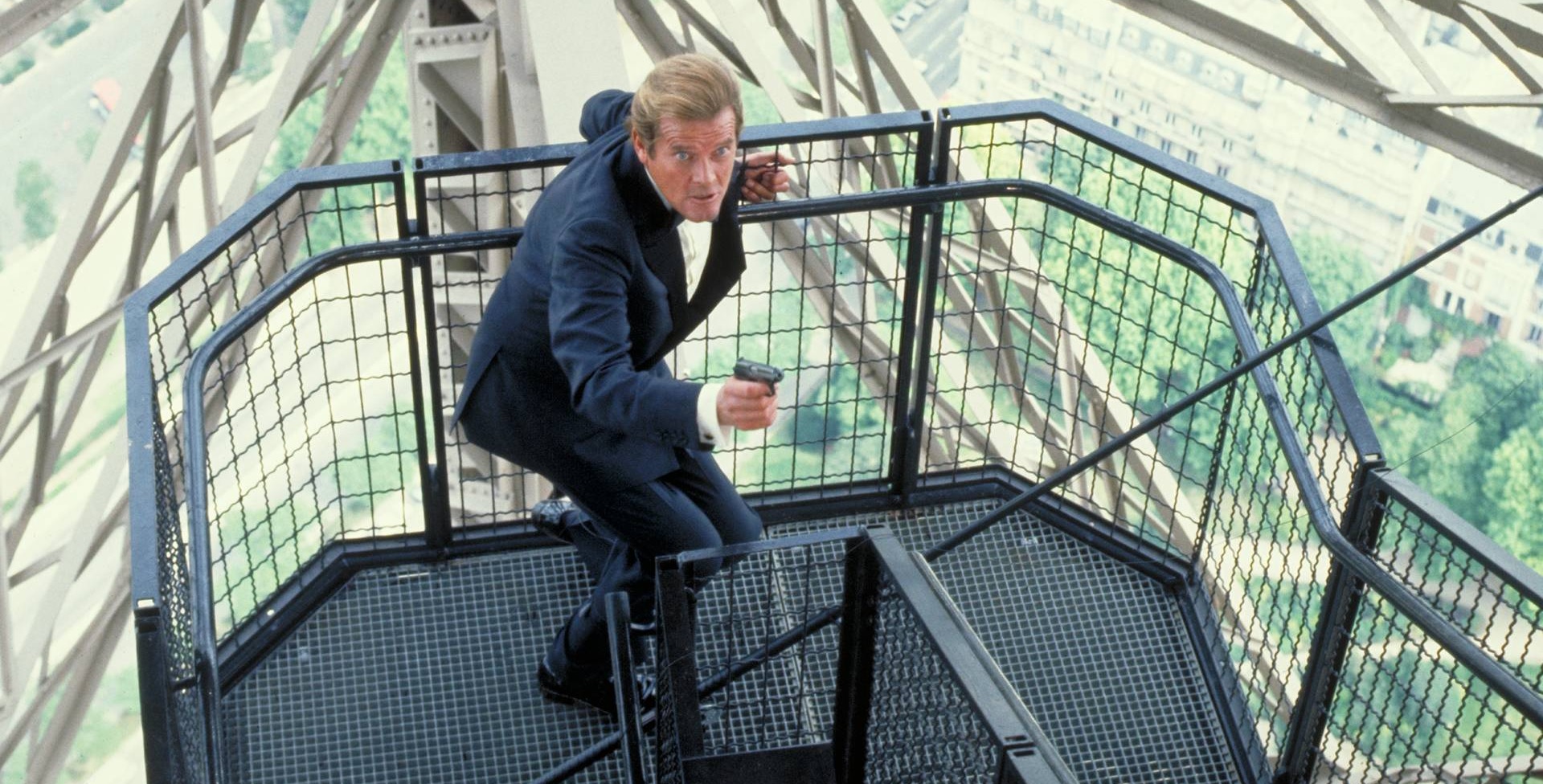
While Moore was definitely too old to be leading an action flick by this point, his swansong is good nonetheless, boasting two of the series’ best villains – Max Zorin (Christopher Walken) and May Day (Grace Jones) – and the occasional moment of high tension.  

13. You Only Live Twice (1967)
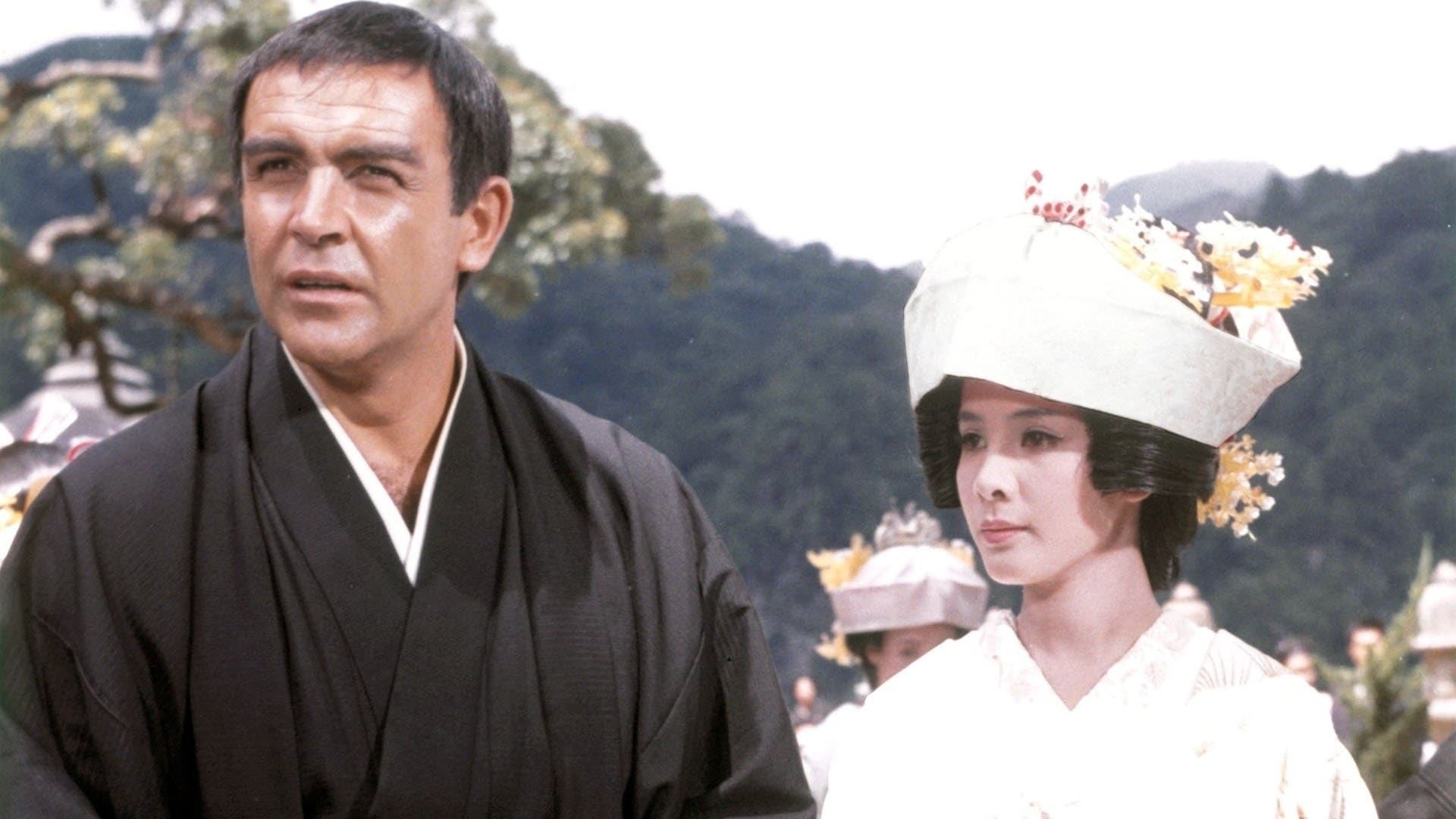
Cultural appropriation of the Japanese aside, Connery’s fifth outing stands the test of time, with all the Bond trademarks present. Plus, there’s a memorable climax inside a secret lair that sees Bond’s first face-to-face encounter with his arch-nemesis: Ernst Stavro Blofeld (Donald Pleasence).

12. Dr. No (1962)
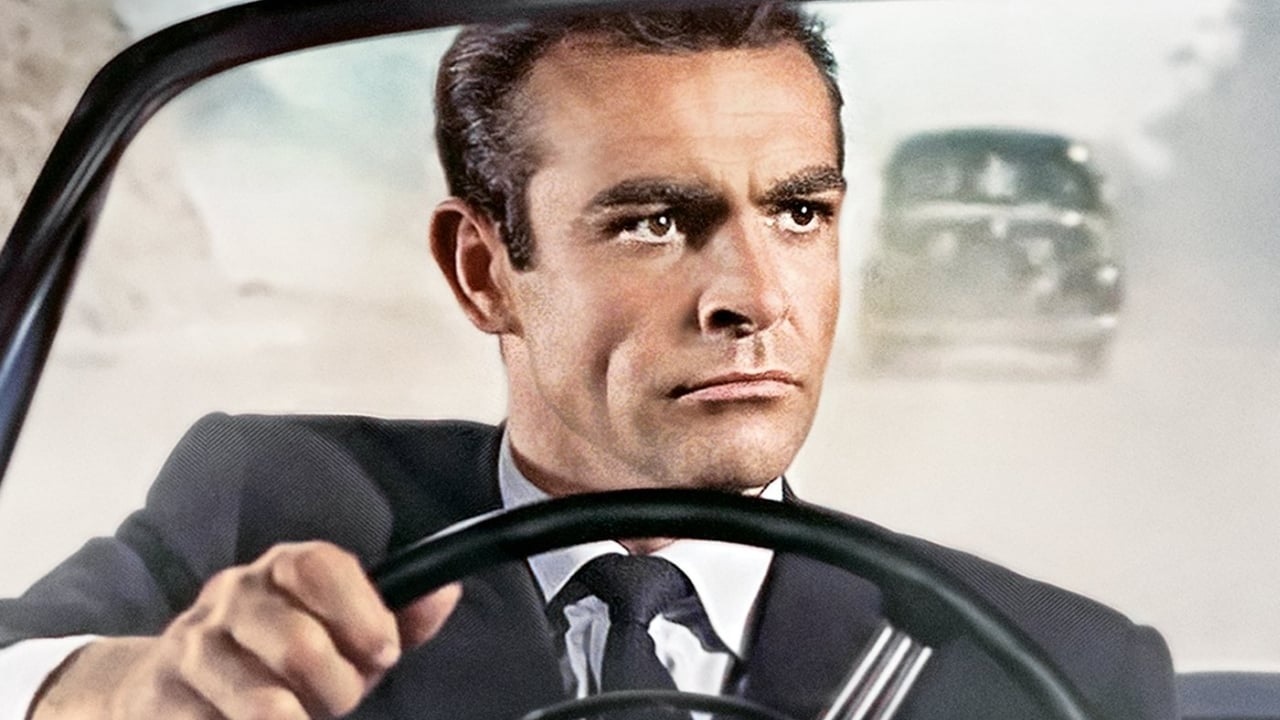
The first ever Bond film is by no means spectacular by today’s standards, yet remains one of the better instalments due to its straightforward narrative – one that’s reasonably faithful to Fleming’s original novel – and serviceable thrills. A splendid introduction to the secret agent, even if some of the effects look cheap.

11. Thunderball (1966)

Another much-loved entry from the Connery era, this one is marked by its extended underwater sequences that look exceptional; less so the editing, particularly in the third act. Probably has the driest sense of humour of any Bond script, too.

10. Tomorrow Never Dies (1997)

There’s lots to appreciate in Brosnan’s sophomore excursion as 007, including a genuinely terrifying first act, a delectable antagonist, and the presence of Michelle Yeoh, who brings with her some exciting close-quarters combat. But the pacing is too quick, and there’s a few too many corny punchlines.

9. The Living Daylights (1987)

In the first of his two appearances in the franchise, Dalton steers proceedings in a more serious direction than his precursor did, to great effect. The chase scenes and stunt-work are exemplary; the narrative involving a group of Afghan freedom fighters hasn’t aged very well, though.

8. For Your Eyes Only (1981)

The best, and least camp, picture from the Moore era, made enjoyable by the action sequences, a pretty decent twist involving the villain, and an understated sweetness that’s missing from most other instalments; yet it remains quite silly when compared to its contemporaries.

7. On Her Majesty’s Secret Service (1969)

One of the more distinctive entries in the Bond canon, owing to the snowy backdrops, romantic subplot, and George Lazenby in his first and only turn as 007. The icy driving scenes and ski chases are especially pleasing, even when paired with some unconvincing effects.

6. Spectre (2015)
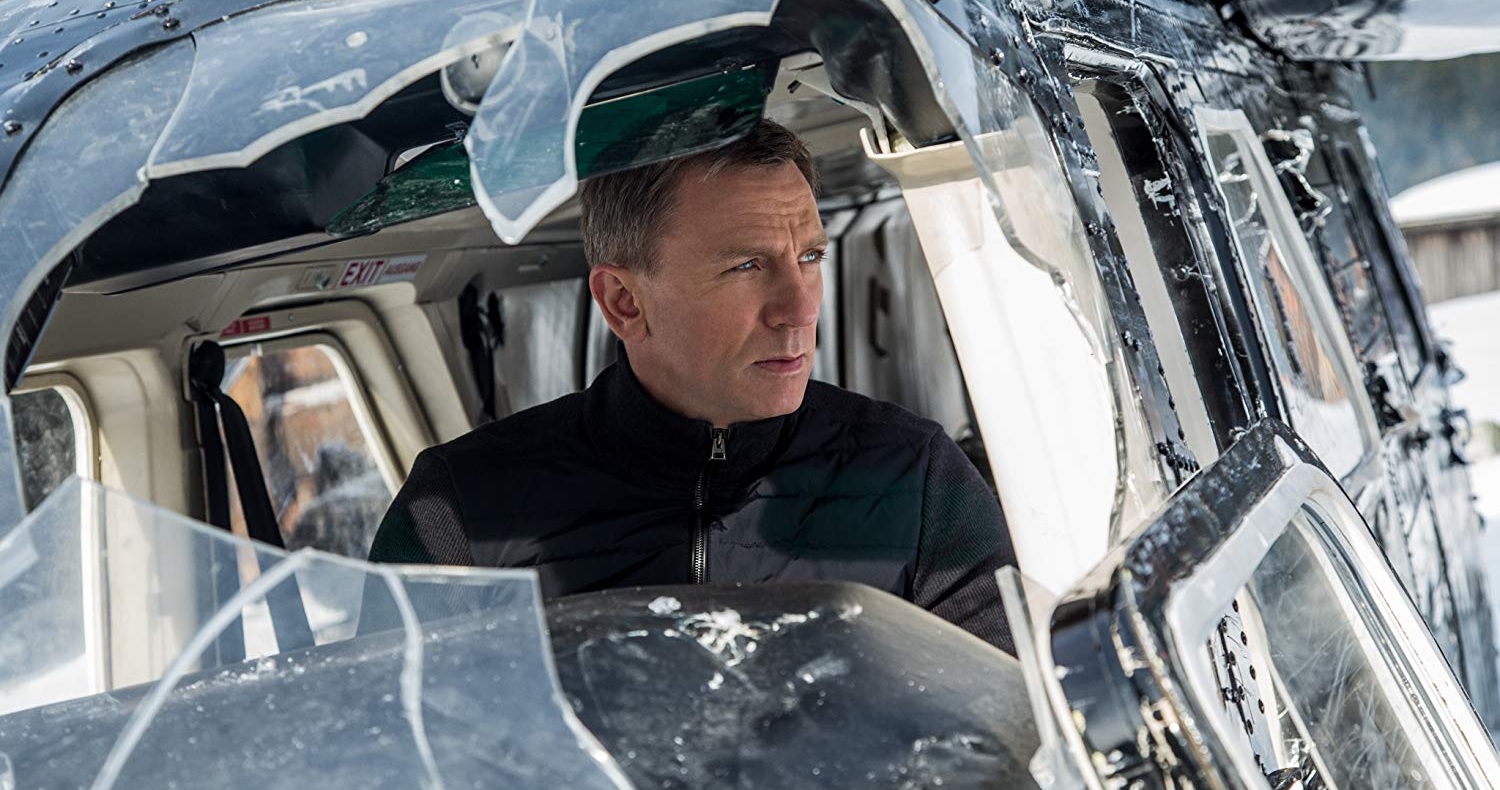
Often lambasted for being too slow and too predictable, and both criticisms are valid; but the qualities of this movie cannot be denied. Caters to the franchise’s purists with its brutal fights, chase sequences and aircraft wreckages.

5. Goldfinger (1964)
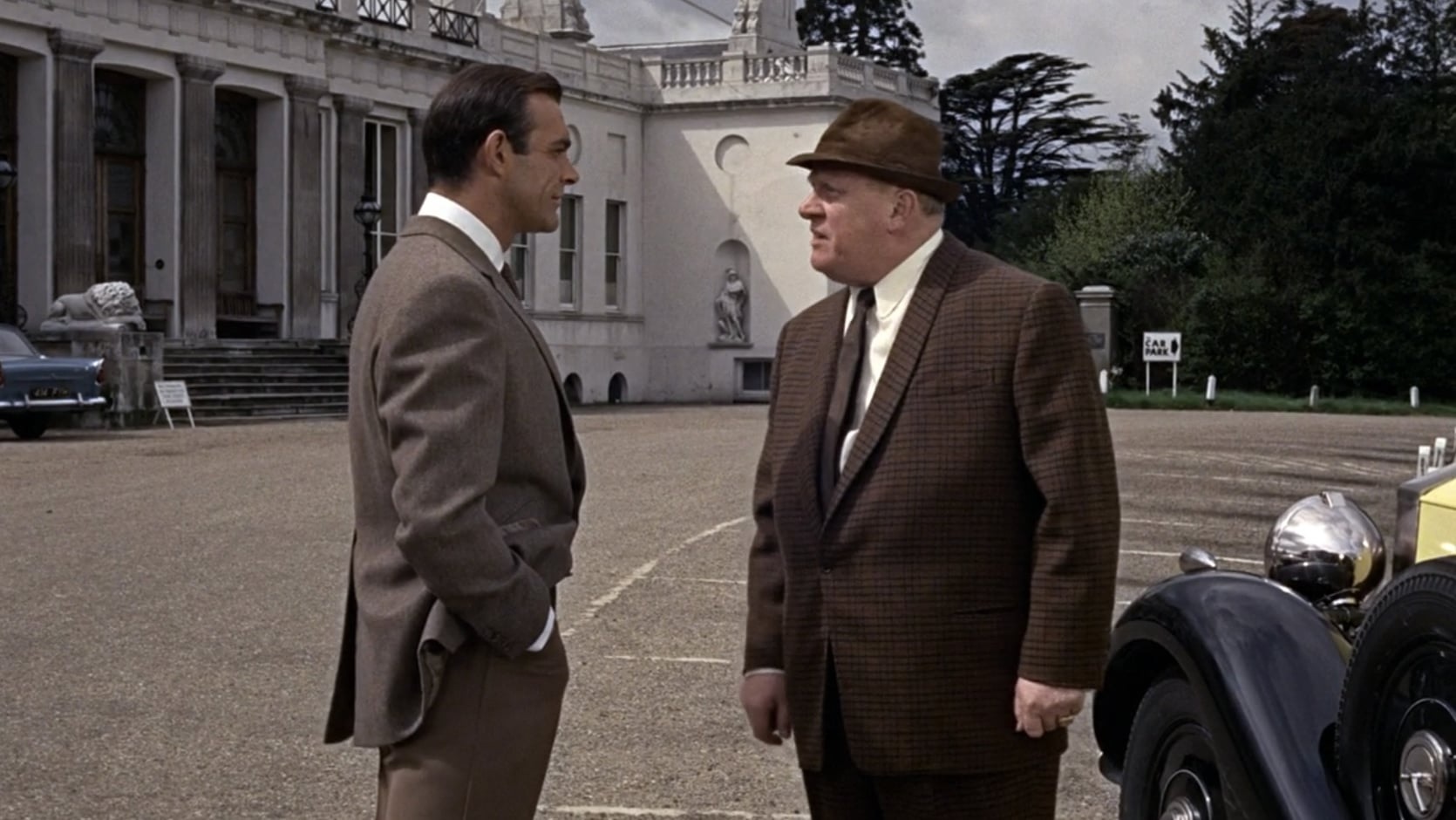
Considered the quintessential Bond flick, and with good reason. Boasts two iconic villains in Auric Goldfinger (Gert Frobe) and Oddjob (Harold Sakata), in addition to a gadget-laden Aston Martin which has come to be synonymous with the series and the spy genre as a whole. Tacky effects and substandard editing let it down.

4. Casino Royale (2006)

Loosely inspired by Fleming’s debut novel, this is the chapter that rebooted the venerable series and introduced Craig as a cold, unflinching 007. It’s gritty, taut and occasionally brutal, factors that don’t always work to the material’s advantage; nor, for that matter, does the embarrassing product placement.

3. From Russia with Love (1963)
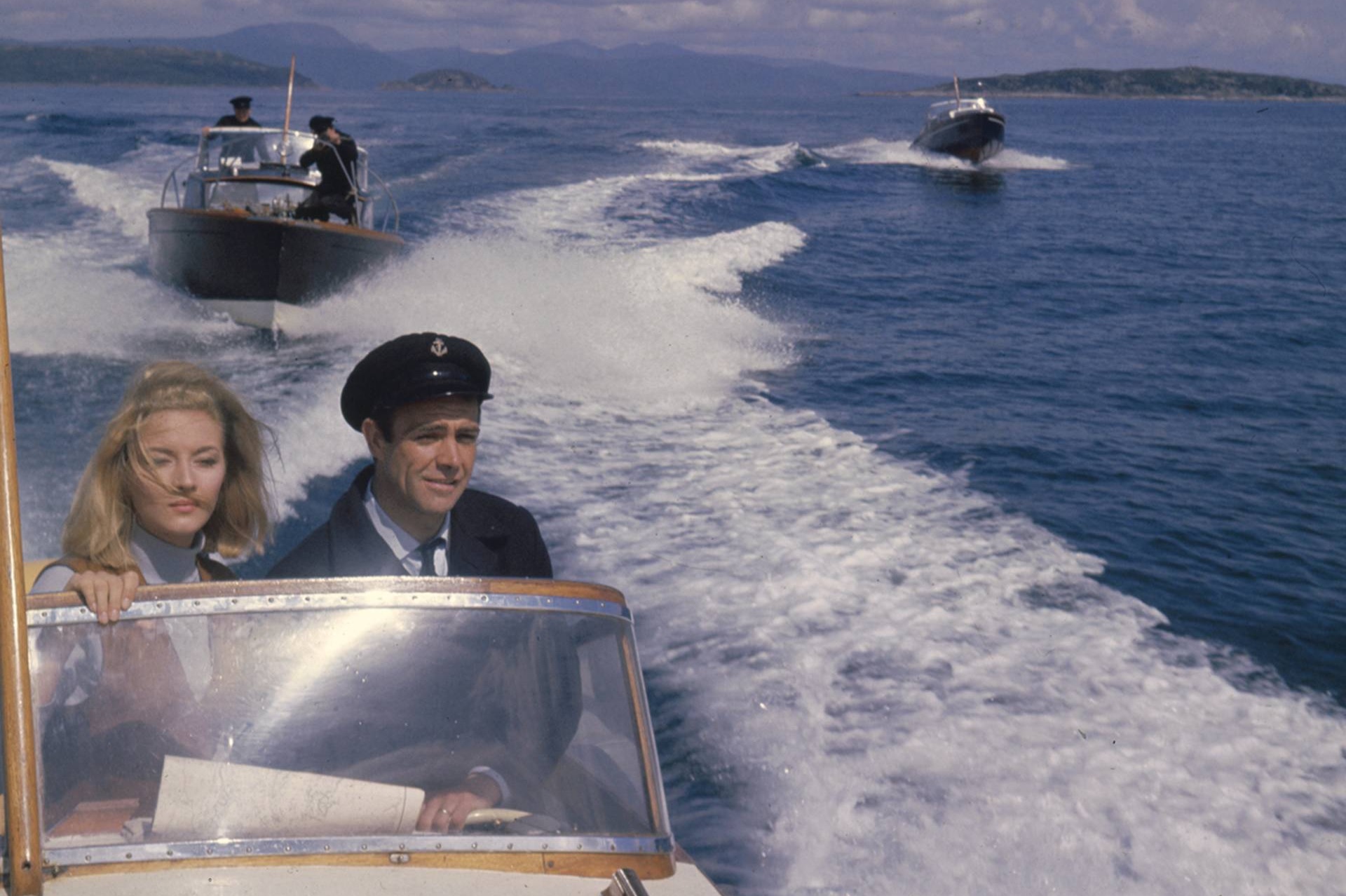
An improvement over the previous year’s Dr. No in practically every respect, courtesy of a higher budget that allowed for more action and stunts. Justly remains the feature by which all other Bond films are judged.

2. Skyfall (2012)
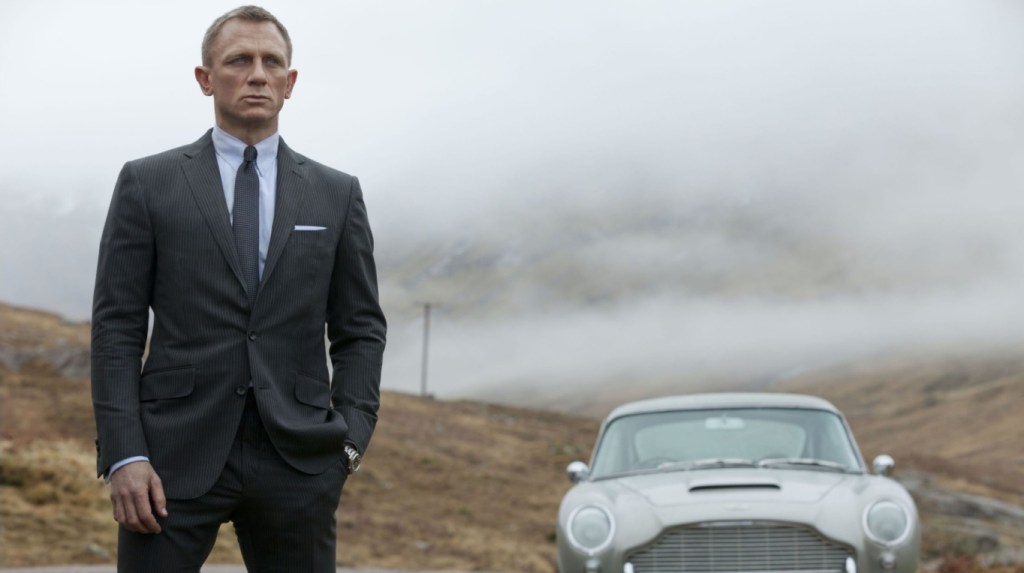
Deftly combines the tropes of its forebears with an intimate, grounded screenplay to create a product that pleases Bond aficionados and casual viewers alike. Quite simply, it’s one of the best blockbusters ever produced.

1. GoldenEye (1995)

Here is the genesis for the modern James Bond film, an early and brilliant demonstration of how to balance tradition with evolution, the serious with the silly. Pierce Brosnan, sublime and effortlessly comfortable in the lead role, is faced with a pair of equally formidable antagonists who can predict his every move, and the conflict that ensues is nothing short of thrilling. GoldenEye is the franchise’s finest hour, and a must-see for everybody.
East Meets West in Marvel’s Dazzling Shang-Chi

Rating: 3.5 out of 5.

Before the advent of the motion-picture, the martial arts were Asia’s greatest cultural export, imitated and appropriated by Western societies for decades. The latest film to continue this tradition comes from, of all places, the Marvel Cinematic Universe, albeit with a lot more care and consideration than is normal for a Hollywood production.

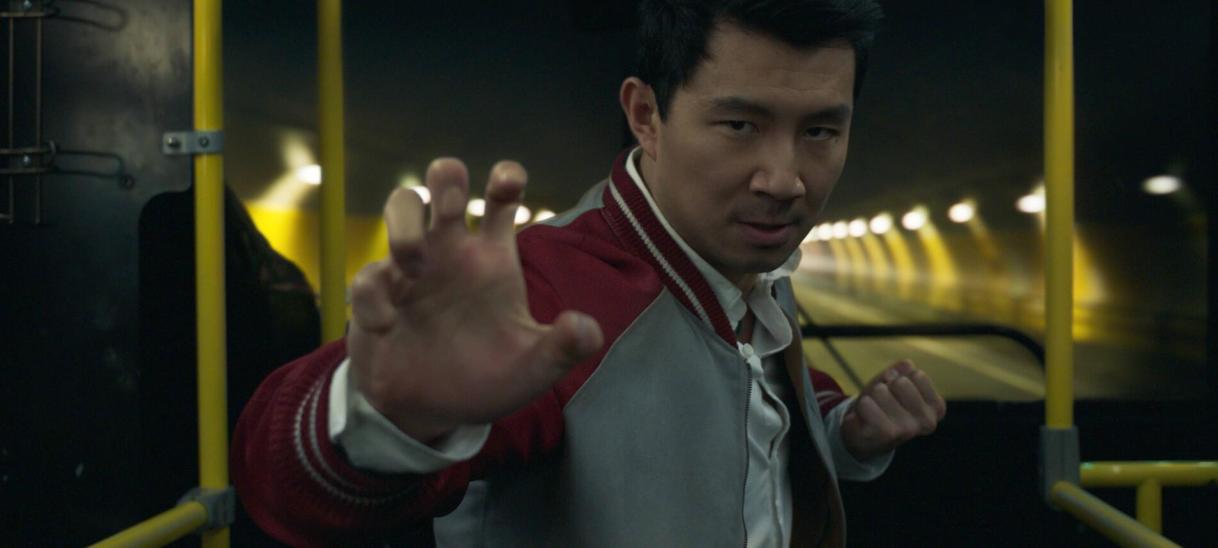
Since fleeing his homeland of China as a teenager, Shaun (Simu Liu) has led a modest life in San Francisco, keen to shun the criminal lifestyle practised by his father, Xu Wenwu (Tony Leung). The only connection he keeps to his past is a jade pendant – gifted to him by his deceased mother, Ying Li (Fala Chen) – which is worn around his neck for safekeeping; but the value of the pendant is more than sentimental, since armed mercenaries are willing to fight Shaun for it on public transport.

Though said mercenaries don’t reveal their motivations, nor their affiliations, Shaun is convinced that they are tied to Wenwu’s shady dealings, and will remain a threat to himself and others – principally his American friend, Katy (Awkwafina) with whom he shares a close bond; and his estranged sister, Xialing (Meng’er Zhang) who is thought to be living in Macau. Whatever the case, one thing is for certain: Shaun will need to confront his murky past if he wants to ensure his future.

On most fronts, Shang-Chi and the Legend of the Ten Rings (2021) is rather innovative for a Marvel Studios feature, heavily drawing inspiration from the wuxia films that have long dominated Asian cinema. Kung fu is frequently incorporated into the action sequences, making for a refreshing chance from the usual superhero fisticuffs; there’s an Eastern influence in the soundtrack of Joel P. West too, with woodwind instruments and thumping drum beats heard throughout; and, more noticeably, the majority of the film’s narrative takes place in China.

The influence of Eastern movies even extends to the majority Asian cast, with Shang-Chi boasting two iconic stars of Hong Kong cinema – the aforementioned Leung, and Michelle Yeoh. While both actors provide delightful turns, it’s the lead performers who leave the greater impact, with Simu Liu looking confident and relaxed as the titular hero in his first-ever headline role; and Awkwafina constantly elevating key moments with her charisma alone. And there’s further delight still to be garnered from the supporting actors, such as comedian Ronny Chieng, and regular MCU bit-player Benedict Wong.

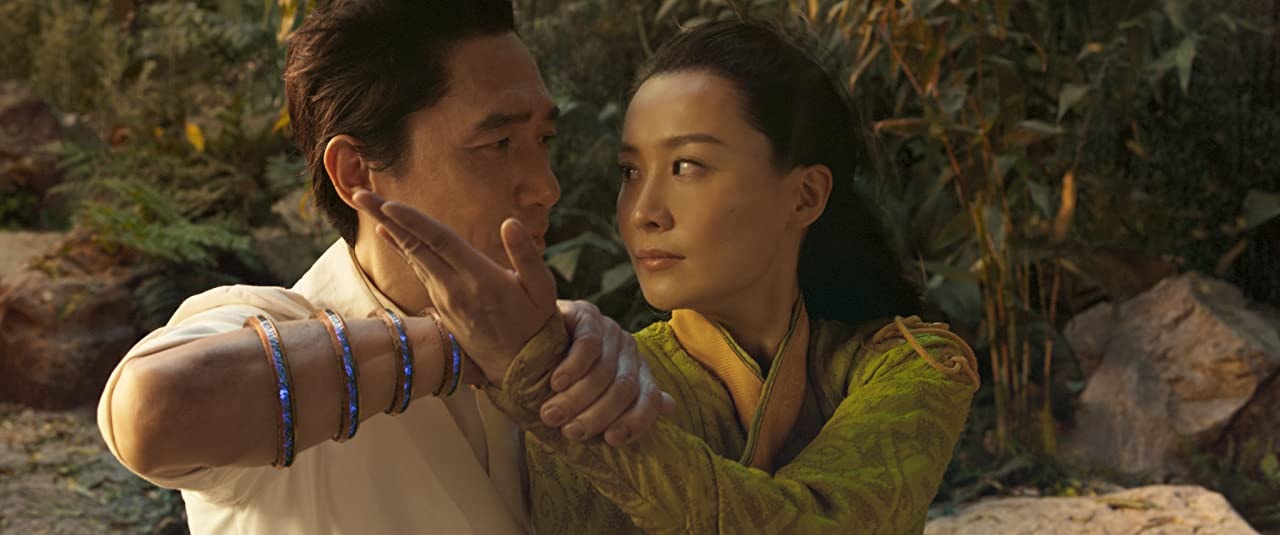
Xu Wenwu (Tony Leung) and Ying Li (Fala Chen) in Shang-Chi and the Legend of the Ten Rings

Although Shang-Chi does a great deal to singularise itself from its Marvel brethren, the film is somewhat lacking in originality, particularly in the screenplay department. The story here shares a few too many similarities with that of another MCU instalment released less than four months ago, Black Widow (2021) – both pictures follow a protagonist reuniting with an estranged sibling and returning to their country of birth to defeat a paternal figure. Whether intentional or not, these parallels will serve only to validate the notion that Marvel Studios’ output is becoming rather formulaic.

Other weaknesses are present in Shang-Chi, minor yet nonetheless irritating. One is the fight sequences, which have great choreography but could be more thrilling, for they lack the kind of death-defying stunts that Jackie Chan is renowned for executing. Also in need of refinement is the comedy, being decent and well-timed without ever reaching the level of hilarity found in other Marvel films. If Kevin Feige’s superhero factory is to continue beyond a fourth phase, both elements sorely need to be improved in any future releases.

There are some areas where this picture does improve over its predecessors, one being the depiction of its villain – blessedly, Shang-Chi has one of the better antagonists of the MCU in Wenwu, who is sinister, restrained and cool all at once, while possessing far more complexity and humanity than the average Marvel foe. The music too is above Marvel’s usual standards, with West being the closest a composer has come to matching the opulence of Alan Silvestri’s work in the Avengers movies – he deserves to be called upon for more of Feige’s projects in the years ahead.

Shang-Chi and the Legend of the Ten Rings does for the world’s Asian communities what Black Panther (2018) did for the African diaspora, utilising the familiar Marvel tropes to craft a visual and aural celebration of Eastern culture. It’s not perfect, owing to the muted humour and unoriginal script, but more than ably satisfies with its beguiling action scenes, glorious soundtrack and exceptional cast.

Shang-Chi is currently screening in theatres, and will be available to stream on Disney+ from November 12th.

Free Guy is a Serviceable, Yet Sweet Action-Comedy

Rating: 3 out of 5.

Sometimes, there’s just no saving a picture from mediocrity; but in the right hands, even a milquetoast production can win the hearts of a cynical audience, provided it has the necessary elements. Said elements could be a poignant story, or dazzling visuals, or simply a charming performance from a famous thespian… or even a combination of the three.

Free City is a place where crime is so widespread that it’s more or less accepted as a daily occurrence by those who live there, casually treating the most violent of felonies as a minor inconvenience. What the city’s many residents don’t realise is that their home is actually the setting for an open-world video-game, and they are the non-playable characters – or NPCs – who have been programmed to endure any and all hostile behaviour.

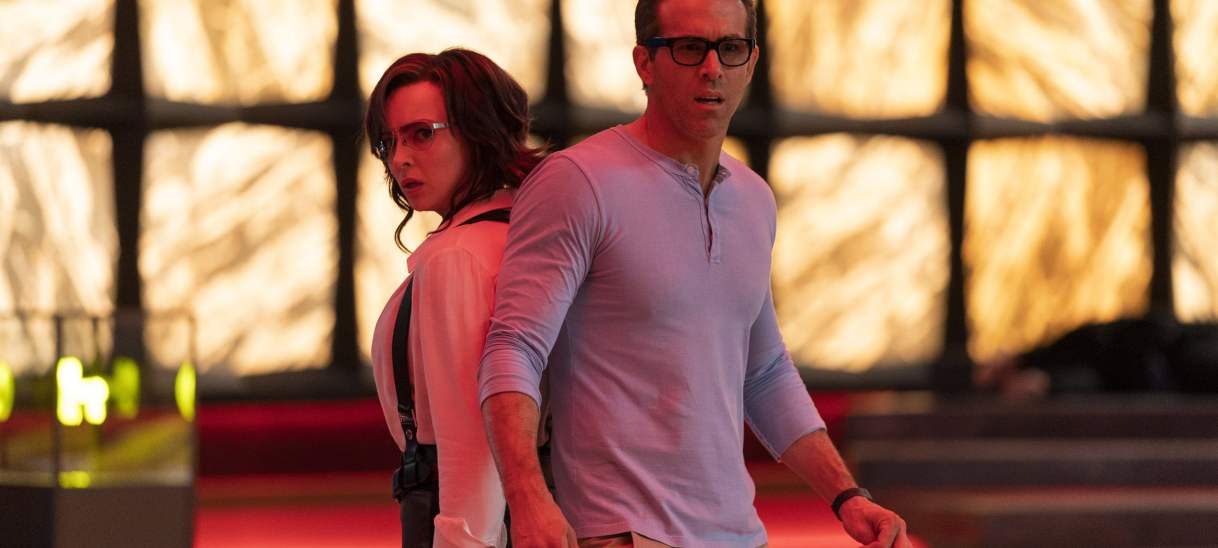
The only NPC with a shred of self-awareness is Guy (Ryan Reynolds), a bank teller who wonders if there’s more to his existence than stamping cheques and being threatened at gunpoint. Guy’s theory that proves true after a chance encounter with Molotov Girl, the avatar of human user named Millie (both played by Jodie Comer) who, much to her bemusement, explains how Guy can actively play the game, rather than just be part of it.

Much like Rich Moore’s Wreck-It Ralph (2012) or Steven Spielberg’s Ready Player One (2018), the appeal of Free Guy (2021) relies heavily on the viewer’s knowledge and appreciation of pop-culture, and gaming culture in particular – those who adhere to the latter category will undoubtedly distinguish Guy’s Free City game as an amalgamation of Grand Theft Auto Online and Fortnite. Non-gamers need not fear though, since these references to other properties are infrequent, and a greater emphasis is placed on the surprisingly compelling struggles of the characters.

One such character is Guy, whose desire to want more out of life is by no means unique, but is made endearing by his sweet, innocent and wholesome personality. It’s a performance that refreshingly deviates from Ryan Reynolds’ usual schtick, forgoing the snark and self-referential humour whilst retaining the exuberance which he now readily identifies with. Thus, Free Guy marks one of the rare instances where the presence of Reynolds doesn’t become grating.

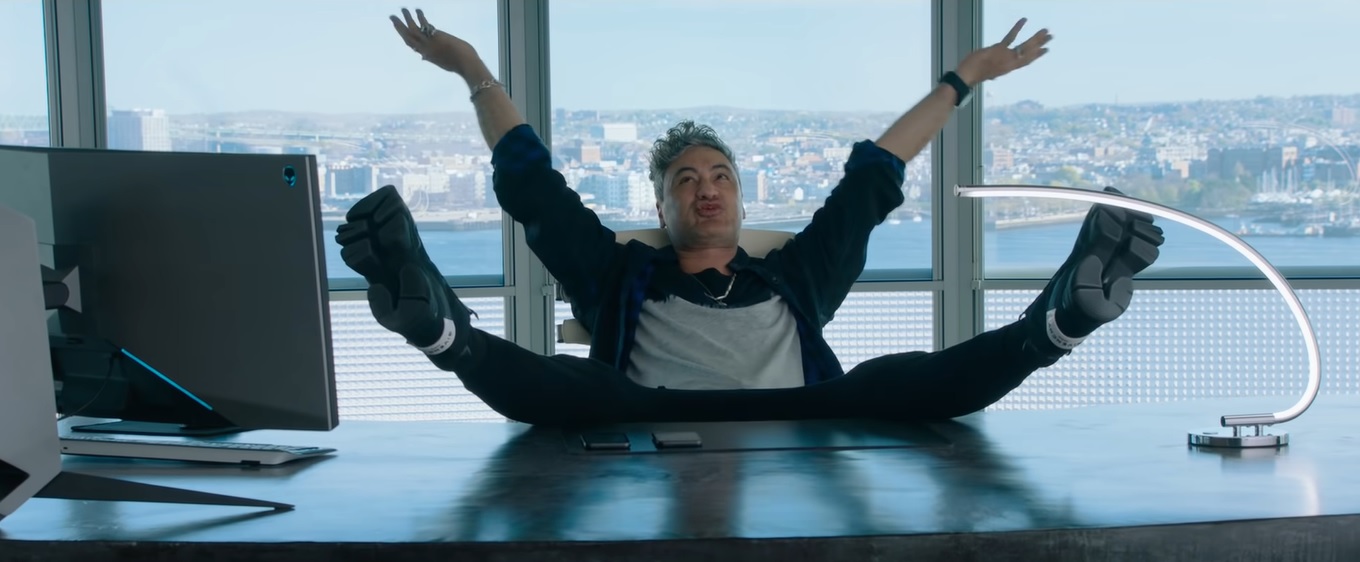
The live-action antagonist of Free Guy, Antwan (Taika Waititi)

Of equal interest is the secondary plot involving Millie, which sees her scouring Free City to locate a stolen piece of software supposedly hidden within the game. This conflict has much higher stakes than Guy’s, thereby being the more engaging of the two; but again, its charm is due largely to the performer – in this instance Jodie Comer – adding a disarming sweetness to their character. (It’s something of a trend for Comer, who has flexed her acting muscles on TV’s Killing Eve and is now well on her way to conquering Hollywood.)

Comer and Reynolds aren’t the only charmers in Free Guy, with the film profiting from the inclusion of plenty more talented actors. Lil Rel Howley is the standout within the digital realm of Free City, offering his usual buoyant energy as Guy’s lazily-named friend, Buddy; in live-action settings, events are made pleasant by the likes of Utkarsh Ambudkar and Stranger Things’ Joe Keery, both playing coders who work under the eccentric game developer Antwan, as performed by the ever-delightful Taika Waititi.

Weirdly, the sprawling Free City is a sight that proves just as alluring. Most of the location’s exterior shots have been filmed in Boston, Massachusetts, with visual effects being utilised when required to mask similarities and maintain the illusion of a video-game, the result being an environment that looks ideally suited to a free-roaming adventure. And for petrolheads, there’s extra fun to be had in spotting all the cars and motorcycles littered throughout.

While the visuals and cast are exemplary, the other aspects of Free Guy are somewhat lackadaisical. This includes the action, which is well-choreographed yet lacks the tension and excitement of that in other blockbusters; the comedy, with plenty of quips and gags but only one or two producing a giggle; and the references, which are of such low effort that they generate no glee whatsoever. All three of these elements do nothing to elevate the picture, serving only to make proceedings decidedly plain.

Yet when all is considered, Free Guy remains deserving of appreciation, even by those with only the slimmest awareness of pop-culture. A group of gifted performers, impressive effects and an unexpectedly touching screenplay are what satisfy most, all ensuring the film is never tedious nor bland.

Free Guy is currently screening in cinemas where open, and streaming on Disney+.

James Gunn’s The Suicide Squad is an Irreverent, Unhinged Joy

DC’s cinematic output has been rather disparate of late, to say the least, with their releases range in quality from good to woeful, and most being mediocre at best. Now comes another blockbuster branded with the DC moniker, this one outshining everything that has come before it – especially its 2016 namesake.

Task Force X is a secretive branch of the United States government that oversees military operations deemed too dangerous, or too sensitive, for America’s heroes to be involved in. Their agents are inmates of the Belle Reve Correctional Centre – home to the evilest of supervillains – who are recruited in exchange for reduced sentences, provided they comply with their commands; should they not, the agents will be killed by their superiors.

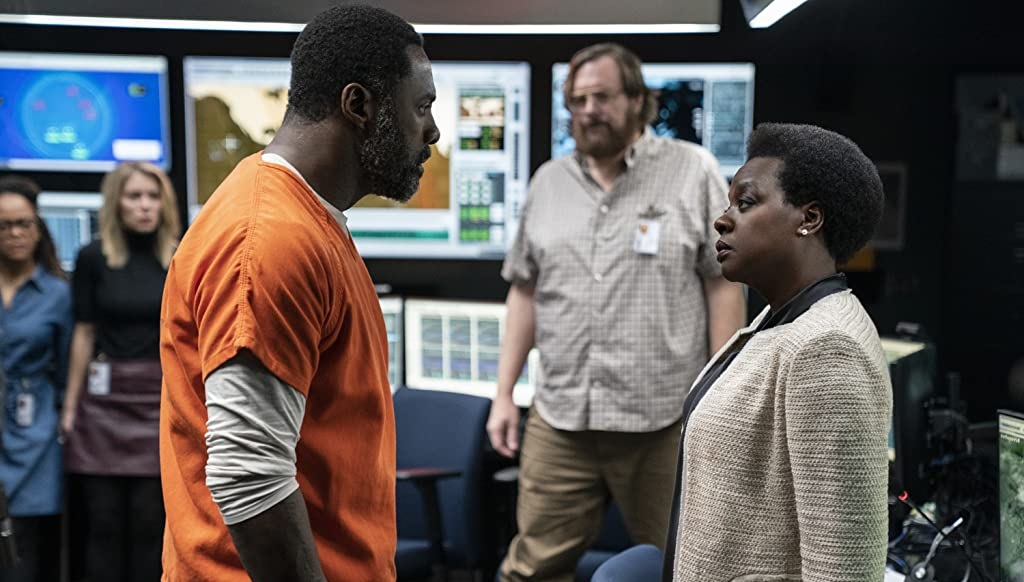
The organisation’s newest recruit is Robert “Bloodsport” DuBois (Idris Elba) who has been sought by the director of Task Force X, Amanda Waller (Viola Davis) to lead an operation on the despotic island-state of Corto Maltese. DuBois has no desire to be involved whatsoever, until Waller threatens the safety of his teenage daughter, thereby forcing his hand into joining and reluctantly leading the mission.

The entity of Task Force X previously made its cinematic debut in David Ayer’s Suicide Squad (2016), which found commercial success despite being widely panned by critics for its appalling direction, unfunny humour and jarring, inconsistent tone. In developing the sequel, Warner Bros. ditched Ayer and handed directorial duties to James Gunn – who had just been fired from Marvel Studio for a series of tasteless posts on social media – and gave him complete creative freedom.

As a result of said freedom, Gunn’s new film bares next to no correlation with its Ayer-helmed precursor, despite sharing a similar title in The Suicide Squad. The extended cast serves as the only discernible connection between the two movies, with the abovementioned Davis reprising her role, in addition to Joel Kinnaman as Colonel Rick Flag; Australia’s own Margot Robbie as the squeaky-voiced jester, Harley Quinn; and fellow Australian Jai Courtney as the intensely ocker Captain Boomerang.

Harley Quinn (Margot Robbie) makes a return to the screen in The Suicide Squad

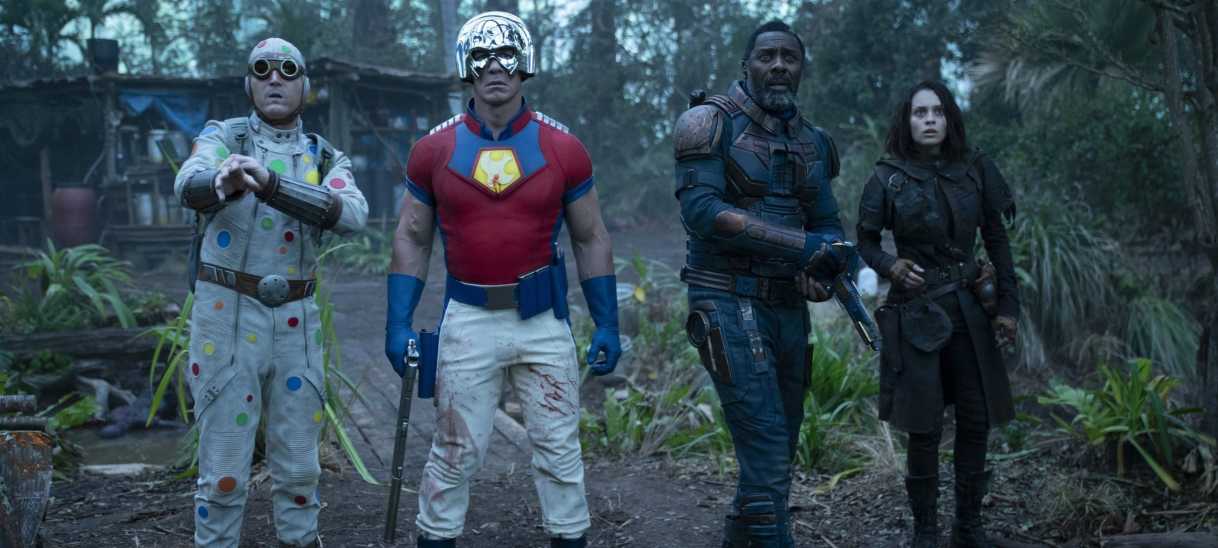
Joining them are a bunch of fresh recruits who operate under Bloodsport’s command, including macho gunman Christopher “Peacemaker” Smith (John Cena); a man who can conjure explosive polka-dots, Abner Krill (David Dastmalchian); an anthropomorphic shark named Nanaue (voiced by Sylvester Stallone); a young woman who can summon and control rats, Cleo Cazo (Daniela Melchior); and finally, Cleo’s pet rat Sebastian (voiced by animal impressionist Dee Bradley Baker).

The Suicide Squad spends the majority of its time focused on the latter group of characters, and rightly so, because they’re nothing but a charm. This appeal is fuelled largely by the performers who play them, with all the newcomers looking poised and relaxed, and each gifting their respective roles with a distinct personality. Through their efforts alone, these actors have turned a group of obscure antagonists into loveable rogues who deserve to lead every sequel and spin-off that follows.

Just as admirable is the film’s screenplay, solely and cleverly written by Gunn. In addition to the main conflict, each character is gifted with their own story-arc that pertains to a troubled backstory, developing and maturing as they seek to address it. Although these struggles are relatively minor, they do aid in further humanising the protagonists; what’s more, their arcs prove just as gripping as the central plot without ever distracting from it, nor overwhelming the audience with narrative.

The screenplay’s strength doesn’t just lie in its ability to fuse multiple storylines into a coherent package, for it is equally adept at toying with the viewer’s expectations. Gunn sets the stakes of his picture high from the outset, showing characters being killed left, right and centre with little regard for how established they are, and even less for the celebrities chosen to portray them. After the first few minutes, there’s no knowing where the film is heading, nor if anybody will survive the climactic showdown.

As much a part of The Suicide Squad’s appeal is the mature content, being more vulgar and graphic than the average superhero blockbuster, courtesy of the profanity-ridden dialogue, sporadic glimpses of nudity and gratuitous levels of violence. Blood and gore are abundant in Gunn’s picture, with all manner of body parts bursting open whenever a character is slaughtered, and the majority of those deaths being played for laughs.

Robert “Bloodsport” DuBois (Idris Elba) confronts Amanda Waller (Viola Davis) in The Suicide Squad

On the subject of laughs, there’s some pretty decent ones to be had throughout, with frequent, fast-paced quips coming from every character, as well as the occasional slapstick gag; yet the best comedy is mined from the desk-bound bureaucrats of Task Force X – played by Steve Agee, Tinashe Kajese-Bolden and Jennifer Holland, among others – who utter the funniest one-liners of the entire movie, very nearly outmatching the likeability of the main characters.

Amusingly impish though The Suicide Squad is, there are some aspects in which it falls short. One such aspect is the characterisation of Bloodsport who, despite the film’s best efforts, cannot shake the fact that he is practically identical to Deadshot from the other Suicide Squad film – both are played by black actors, both wear silly masks, both are sharpshooters with impeccable aim, and both are absent fathers wanting to do right by their respective daughters. Were it not for Elba’s British accent, there would be nothing to distinguish between them.

Another disappointment is the music that accompanies proceedings. As per his work on the Guardians of the Galaxy movies (2014, 2017), Gunn has personally curated a soundtrack of retro songs to pair with events, but this one doesn’t have the same appeal, for it lacks the catchy, kitschy tunes of his Marvel Studios playlists. The result is a soundtrack that pales not only to Gunn’s previous features, but even to a picture like Cruella (2021), which demonstrated a far better utilisation of classic hits.

Those grievances notwithstanding, The Suicide Squad is unequivocally the wittiest, warmest and most gratifying DC film to date, and an irreverent alternative to the superhero genre’s usual offerings. Idiosyncratic characters, fantastic performances, gory action sequences and some hearty chuckles solidify the picture as a winner, all but atoning for the sins of its predecessor.

The Suicide Squad is currently screening in cinemas where open, and available for digital download through select services.

Disney’s Jungle Cruise is a Ride to Be Forgotten

There’s a prestige and heritage to the Disney brand that other studios can only envy – it’s a fact the corporation itself recognises, having produced a new picture that plays to its traditions. An initial glance suggests that said picture is primed for success; one viewing is enough to prove otherwise.

At the height of the First World War, Dr Lily Houghton (Emily Blunt) is venturing to the Amazonian rainforests of South America, where she hopes to locate a rare flower with fabled healing properties in the name of science. Upon arrival, she engages the services of tour guide Frank Wolff (Dwayne Johnson), who offers to pilot Lily – and her accompanying, neurotic brother MacGregor (Jack Whitehall) – in his own boat along the Amazon’s many tributaries.

Their journey is one that will be fraught with the deadliest of dangers, including carnivorous beasts, turbulent rapids, and native tribespeople who are unwelcoming to outsiders; yet the greatest threat of all is a pursuing German officer, Prince Joachim (Jesse Plemons) who seeks the flower for his own warped, egocentric benefit as much as his beloved Vaterland.

Jungle Cruise is the latest blockbuster to be adapted from a Disneyland attraction, joining the likes of the Pirates of the Caribbean films, as well as less popular efforts such as The Haunted Mansion and Tomorrowland. Of these releases, it’s the Pirates franchise that Jungle Cruise most closely aligns with, hoping to emulate the former’s box-office success – a feat that looks unlikely, not just because of recent outbreaks of a certain strain of virus, but also the sheer mediocrity of the picture.

One advantage that Jungle Cruise does possess is a talented cast, including two leads who are familiar to the Disney faithful. Emily Blunt is the top-billed female, having previously fronted the cameras for Into the Woods and Mary Poppins Returns, albeit with more singing; her male counterpart, Dwayne “The Rock” Johnson is no stranger to the studio either, with starring roles in The Game Plan, Race to Witch Mountain and Moana.

Undoubtedly, Blunt and Johnson’s historic involvement with Disney is what endeared them to the producers, and perhaps why both actors perform with a laidback confidence – their respective characters seem more an extension of their own charming selves than a transformation. This is particularly evident when the two personalities share the screen, demonstrating the kind of chemistry that is usually found in more seasoned duos, not a pair who are sharing their first credit together.

The villainous Prince Joachim (Jesse Plemons) as seen in Jungle Cruise

One performer who has taken the transformative approach, and played against type in the process, is Jesse Plemons. Where in other roles he would be understated with only a hint of menace, here Plemons gleefully portrays the antagonistic Prince Joachim with a fitting level of camp, eccentricity and accented speech. It’s yet another delightful performance from Plemons, who by now is well on his way to conquering Hollywood.

Sadly, that praise does not extend to the secondary villains of Jungle Cruise: a group of zombified Spanish conquistadors who are clearly inspired by Captain Barbossa’s crew. Despite their unique appearances – the men take their physical form with the help of rainforest features such as vines, snakes and hornets – there’s nothing remotely interesting nor memorable about these foes, who lack the personality and wickedness necessary for this kind of role.

Matters are made worse by the substandard visual effects, which look as though they were rendered two decades ago; the comedic elements, which barely incite so much as a chuckle; and the underwhelming soundtrack from James Newton Howard, which lacks a rousing theme a la the Pirates movies. Yet these problems are minor when compared to the biggest issue of all: the confusing action sequences.

By most measures, the thrills of Jungle Cruise are pretty serviceable, with decent choreography and stunt-work; but they are made difficult to appreciate due to the shaky camerawork and frantic editing. Such techniques have been utilised by many a Hollywood blockbuster in recent times, proving just as annoying here as they do elsewhere – it’s high time producers learned that they don’t make the action any more exciting.

It’s baffling to think that a film with six producers and the backing of the world’s largest studio could be so mediocre. Despite having some gifted actors at its disposal, Jungle Cruise serves only as a passing distraction, with most of its other attributes being adequate at best. If this film is to herald a new Disney franchise, it’s not a promising start.

Jungle Cruise is screening in cinemas nationally where open, and available for streaming with Premium Access on Disney+.