All We Imagine as Light is Unforgettable

Rating: 4.5 out of 5.

Screener provided by Rialto Pictures.

“I’ve lived here maybe 23 years. But I feel afraid to call it home. There’s always the feeling that I’ll have to leave.” These opening words, by a nameless individual, ring out throughout Payal Kapadia’s extraordinary film All We Imagine as Light (2024), shot against the backdrop of Mumbai, focusing on the women who inhabit it.

The most soulful film in years is also perhaps the best feature of the year, documentarian turned fiction filmmaker Kapadia exploding onto the scene with an honest and poetic portrait of humanity in modern India. A powerful blend of personal womanhood inside the political sprawled across modern Mumbai, Kapadia’s gorgeous and lyrical film centres on three multigenerational nurses navigating a world unwilling to accommodate their lives.

Centring on a pair of nurses, seasoned veteran Prabha (Kani Kusruti), and the youthful and expressive Anu (Divya Prabha), navigate an economically and politically uncertain time in Mumbai, along with older nurse Parvarty (Chhaya Kadam), who is facing eviction after the death of her husband. Prabha is dealing with the extended absence of her husband. This arranged marriage almost immediately left Mumbai to work in Germany, sending gestures to her home like a European rice cooker that only highlights the void he has left. On the other hand, Anu is attempting to balance her life while forming an interfaith romance with Muslim boy Shiaz (Hridhu Haroon), an increasingly contentious issue in current-day India.

Kani Kusruti as Prabha in All We Imagine as Light.

We first see Anu and Prabha on public transport on their way to work, inside the lyrical six-minute opening sequence that guides you immediately into the world Kapadia is sharing with us. Anu is asleep on her side on a train seat, demonstrating her naive sense of safety in her position while also telling the audience her level of preparedness to arrive at work. In the immediate next shot, we see Prabha, gracefully shown in a medium closeup holding onto the pole of the same train for stability (seen above). By only showing Prabha from the shoulders up here, Cinematographer and frequent collaborator Ranabir Das portrays the battle-hardened nurse in grace with the world around her, yet never settled into one place.

There is a fear this remarkable film will be lost in the awards race shuffle due to India’s increasingly conservative film body and government not submitting it for the Academy Awards, even with the film winning the Grand Prix at Cannes. This is a sad but unsurprising occurrence after Kapadia emerged onto the film scene with her 2021 documentary A Night of Knowing Nothing, also critical of India’s patriarchal system.

The sweet centre of the film lies in the blossoming romance between Anu and Shiaz, a relationship that blends religion and the modern political moment in the city. In a series of push-pull romantic moments which includes a heartbreaking yet comedic booty call where Anu must purchase a hijab to visit him in the Muslim district where he lives. Kapadia avoids easy exits with this romance, concluding powerfully with an honest and poetic moment of acceptance and beauty, tied into an honest moment of private security.

In contrast to this romance, Prabha and her complicated relationship with her absent husband fills the remaining emotional bandwidth. Born of an arranged marriage that ties her to the city she does not call her own. In the opening prologue, a resident tells us, “That’s life. You better get used to the impermanence”. In a film centred on the relationship between people and the places they inhabit, this line pangs with an honest awareness.
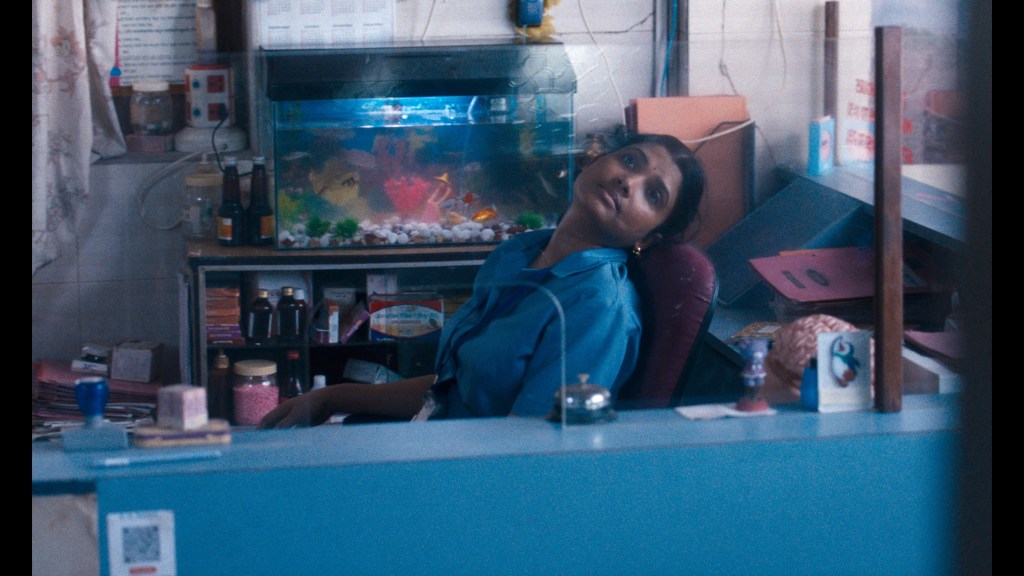
Divya Prabha as Anu in All We Imagine as Light.

A film that comes to mind while watching Kapadia’s film is Steve McQueen’s Lover’s Rock (2020) from his Small Axe series, and not just because composers Dhritiman Das and Topshe’s playful piano score could’ve fallen out of one of his films. The short and sweet feature is in contention for the film of the decade, a complicated work of desire and connection inside a wealth of sumptuous visual storytelling and guile that simply overwhelms you. Both films use colour and vivid travelogue-styled cinematography to embrace the human connection of place. What separates the two films is Kapadia’s deceptively critical eye when depicting modern Mumbai, especially the three women’s place within it. 

The slow, simmering drama underneath the film’s central pair is the wrongful eviction of a third nurse at the hospital, the older woman Parvaty. Her husband has died, removing her right to live in her own home. The potency of the feminist politics that simmer underneath All We Imagine as Light is in the grounded reality of the characters’ situation, one they are helpless to improve, finding solace in their own uneasy but accepting companionship.

The film operates within two acts, the first within the city that flows downstream into its latter half as the trio of women go to the beachside village that Parvaty grew up in. Kapadia, through her documentary lens, views characters as people who have been steeped in a certain place like tea, becoming more like a place the longer you inhabit it. While Mumbai is described as a place of impermanence and instability for the characters we meet, it is only in venturing out of the rapid city do they begin to view their life and their wants more clearly. In its final moments, would Anu and Shiaz ever have the courage to meet Prabha without this opportunity outside the city? And would Prabha’s spiritual exchange with her husband which opened her eyes to what she is holding onto and what she needs to give up to change have occurred in the melancholy that followed her throughout Mumbai?

Kapadia, with a refined hand through documentary work, flourishes in small moments. Whether it’s the embrace of a rice cooker given by a distant-slash-estranged husband working in Germany, or the small gesture of helping an older colleague move her things back to her old home after being wrongfully evicted, All We Imagine as Light embraces the aching emotionality of the quotidian, knowing these fleeting moments create a mosaic that reflects the light of human experience.

All We Imagine as Light is in select theatres now.
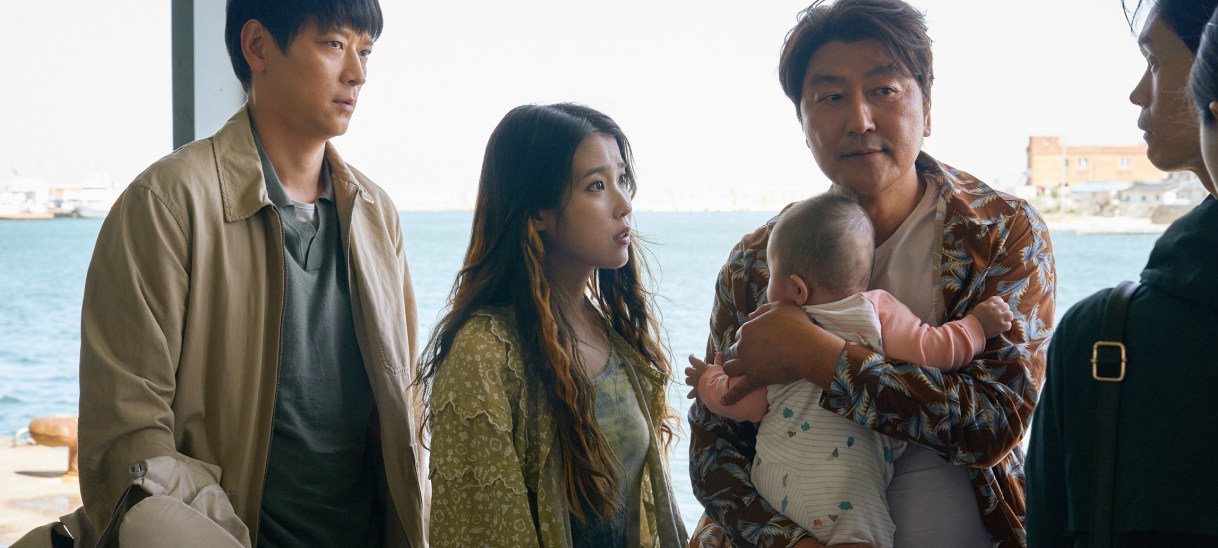
Broker is Kore-eda’s Most Challenging but Rewarding Family Drama

Rating: 4.5 out of 5.

One of the best films from MIFF 2022 has finally arrived in theatres, Broker (2022) is a deeply complicated but always empathetic drama from a true modern master. Hirokazu Kore-eda’s films have a certain sticky texture, maturing in your mind long after the credits roll. His films will always affect you emotionally, but their true power is the depths he is able to mine from a collection of characters. 

Born out of a desire to work with legendary Korean actor Song Kang-ho, working with a large swathe of the Parasite (2019) production crew, Kore-eda has crafted another thorny but deeply humanist portrait of an unlikely family, thrown together through unusual circumstances. Broker follows a pair of church volunteers Ha Sang-hyun (Song Kang-ho) and Dong-soo (Gang Dong-won), who sell unwanted babies that are left in the church’s baby box on the adoption black market. When a young mother Moon So-young (pop star IU), returns for her baby the next day, she catches wind of their schemes and forces the brokers to take her on their journey out of town to sell her baby to the right family.

Even for one of the greatest humanist filmmakers to ever live, this is an extremely difficult story to operate as an empathy machine for an audience, making it all the more moving when it does break you open. Most of the auteur’s films start with a sweeter taste, which then patiently develops into a more acidic and complex series of emotions and flavours. In Broker, however, Koreeda begins with his darkest and most complicated place to date. The film builds and develops on top of this shaky foundation, unmasking compassion and empathy in unexpected places that will leave you in pieces. 

Song Kanh-ho in Broker

Where The Truth (2019) faltered in its execution of performance (French and Japanese styles are worlds apart), Broker is one of the best ensembles put to film in years. From Song Kang-ho’s heart of gold humanity in face of difficult circumstance to the detectives Lee (Lee Jou-young) and Su-jin (the always terrific Bae Donna) that are tasked with taking down the operation, the entire cast is pitched perfectly to Kore-eda’s empathetic underpinnings that make his work so affecting. But it is IU (real name Ji-eun Lee), who really stands out and is transcendent in the role, vaulting her immediately into the top tier of pop star performances.

Broker operates closer in style to The Truth, the filmmaker’s big swing after winning the Palme d’Or for the masterful Shoplifters (2018), which was filmed away from his home nation of Japan and in a foreign language. Both Broker and The Truth has less of the documentary style of pacing and mise en scene that made him legendary in Japanese cinema, showcasing his adaptability not just in style, but in his ability to work with a cast and crew that speak different languages.

Broker, leaning into the more Korean style of cinema, is more forceful and plot-driven in its storytelling than Kore-eda’s other films, that often stem from his documentary background. The film is quite astonishing and deeply felt, with perhaps the only false note being its loud, heavy-handed moments. These moments are further leaned on by quite an obtrusive and manipulative score by Jung Jae-il, especially by Kore-eda standards, who usually allows emotions to develop more naturally in his films.

Bae Doona (left) and Lee Joo-young (right) in Broker

In most Kore-eda films, a single location is used that is full of so much personality and attention that it feels like a whole world. In Broker, a road trip movie for the most part, that single location becomes the two central vehicles: Ha Sang-hyun’s laundry van with its broken back door but homely interior, and Su-jin and Lee’s detective sedan where they spend most of the film.

Themes of care in different forms permeate the film, with the notable motifs of rain and shirt buttons coursing through its veins. By weaving themes of care and compassion between Ha Sang-hyun and detective Su-jin through their clothing, Kore-eda complicates his seemingly straightforward detective story through his characters’ shared connections. In these small moments, Kore-eda excels and deepens his character portraits which have made him a modern master. 

Perhaps the most emotionally overwhelmed you will feel in a theatre this year occurs in a hotel room with Moon So-young and the ragtag crew, with all the lights off, thanking them for being born. She is unable to say it directly to her child who she may never see again, so she says it individually to the whole group. This is a group who have felt discarded and left behind in their own lives, so to have a young mother saying this to them with the same care as she tells her own son, is profound. This is one of the most emotionally resonant scenes Kore-eda has put to film, which is saying something given his extraordinary filmography.

Fellow filmmaker Kogonada once described Kore-eda’s films as tasting similarly to the legendary director ​​Yasujirō Ozu’s work due to its aftertaste. “When we leave his films we experience a similar aftertaste, which is to say, a deeper sense of life. And it turns out that the every day is a lot like tofu (which may explain why Ozu referred to himself as a tofu maker). It may seem bland in comparison to the spectacle of other dishes and desserts being offered, but if we happen to stumble upon a master chef capable of bringing out its subtle flavours, it will change the way we experience tofu forever.” In this case, Broker is perhaps Kore-eda’s most complex dish yet, one that will stay with you forever.

Broker is in select theatres now.

MIFF 22: Cheap Laughs Abound as Triangle of Sadness Lays Waste to the Wealthy

Rating: 3 out of 5.

In Ruben Östlund’s latest overblown, satirical romp, Triangle of Sadness (2022), there is a wealthy German stroke survivor whose only words of communication are “in der wolken” (translated: in the clouds). It’s a phrase she yells out countlessly across the film to the point where it wouldn’t be surprising if it pops its head in like an M. Night Shyamalan twist at the film’s close. It never does though, but it perfectly captures the underlying message behind Östlund’s rich ripping, caste crushing film — the wealthy just love to live in the clouds, out of touch with reality, no matter how dire a situation can get.

While most of the rich folk in this film are overblown caricatures that breach the threshold of excessiveness, for Östlund, excessiveness is the name of the game. Structuring his film into three chapters (three edges that make up a “Triangle of Sadness”, if you will), Östlund takes aim at the false pretences that the wealthy hide behind — fancy yachts, material goods like Rolex watches, and cosmetic procedures among other things — and bares them for viewers in all their grotesqueness. It’s nothing that hasn’t been depicted throughout cinema history in the past (2013’s The Great Gatsby and The Wolf of Wall Street come to mind from recent films), but Östlund isn’t privy to subtlety, rather, he’s going all in until you’re either exhausted, squeamish, or both.  

Where there is beauty, there is deceit — at least that’s part of the message that underpins Triangle of Sadness. Set on a luxurious yacht for the most part, the film is comprised of a solid ensemble that plays seamlessly off of Östlund’s material and each other. It’s Yaya (Charlbi Dean Kriek) and Carl (Harris Dickinson), two models and partners-with-benefits, that serve as the entry point into the mayhem that ensues. Both characters skimp by on their looks, and it’s part of the reason they find themselves in the company of millionaires and billionaires on the aforementioned yacht as Yaya is gifted a free trip courtesy of her influencer status.

On the ship we find a bunch of rich folk and everyone in-between including the ship’s crew. There’s a British couple who boast about their contribution to the munitions industry including their role in creating land mines and hand grenades (which Östlund returns to in explosive fashion); a down-on-his-luck code-seller whose partner didn’t join him on the cruise; the vessel’s drunk captain (Woody Harrelson); a Russian billionaire who made his money selling manure; and the chief stew of the ship, among others.

Charlbi Dean Kriek in Triangle of Sadness

Each character has a role to play in Östlund’s charade as events spiral from controlled to chaotic in an instant. He rocks the boat to the point where characters are literally spewing their guts out (of both ends) after a slimy buffet and storm, he throws in a pirate attack at one point, and in the third act he leaves some characters stranded on an island where he flips the hierarchical triangle on its head.

There’s a lot happening in Triangle of Sadness to the point where you can feel the lengthy runtime weighing proceedings down. This is undoubtedly a conscious choice on Östlund’s part as he leans into the satire he is going for to create an equally exhausting experience for his characters (especially in that third act).

At times it feels like his screenplay is made up of a bunch of short films or mini sketches that have just been welded together. There’s a scene involving the yacht’s captain and the rich Russian Dimitry (Zlatko Buric) as they indulge in a Marxist and capitalist back-and-forth while playing a drinking game that they continue in the captains quarters over the yacht’s PA system. There’s also a sexploitation sequence on the island portion of the film where the yacht’s Toilet Manager pays Carl for his services with pretzel sticks and shelter. All of these sequences are comical, but there’s never greater substance or deeper subliminal messaging beyond the superficiality of being rich and the vanity of these characters.

Triangle of Sadness is at its best during its first half, where it plays around with ideas of inadequacy and superficiality at a more measured level. The longer the film chugs on though, the more it tailspins into a cartoonish satire that trades subtlety for unhinged chaos, where you’re fed what you know and nothing more.

Triangle of Sadness hits Australian cinemas in late December.