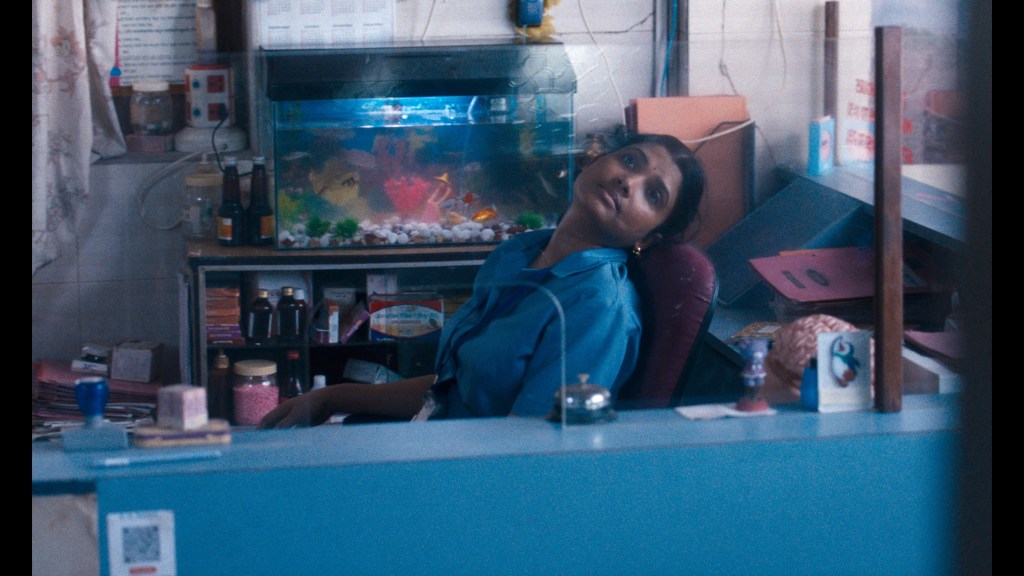
From Cannes favourites to local newcomers making their mark, the Melbourne International Film Festival is a fixture in the Australian cinema calendar, with the 2026 entry in the loaded program having something for everyone. Whether you just want to get the jump on Oscar prediction morning or need to spend the last weeks of a brittle Melbourne winter in packed cinemas, the festival will provide. Below is part two of our resident festival obsessive Darcy’s notebook on what he’s seen and loved this year.
All of a Sudden (2026) – Ryusuke Hamaguchi
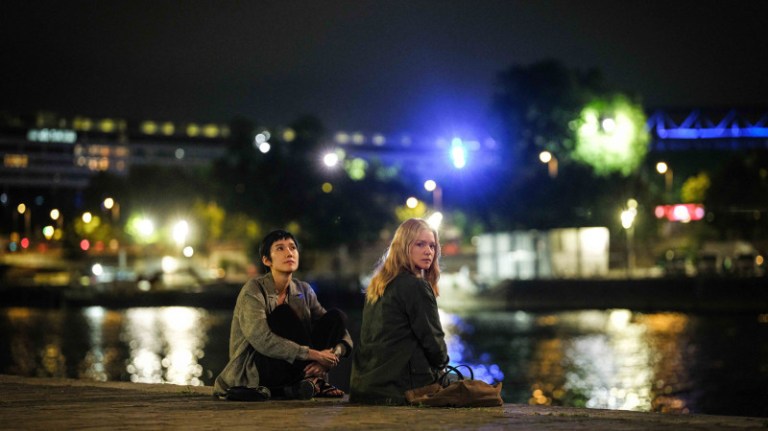
As a keen Drive My Car (2021) evangelist, Ryusuke Hamaguchi’s newest film, a near 200-minute luxuriation on connection, empathy, and capitalism inside a nursing home in France, was the must-see event of the festival. And it did not disappoint. With a unique pair of performances from Virginie Efira and Tao Okamoto (who shared the best actress award at Cannes) that glue you to the screen for its extended runtime, All of a Sudden has a dramatic and thematic engine you never want to leave. Whether it’s during a walk along the river or a whiteboard-assisted monologue on the cancerous nature of capitalism, Hamaguchi knows what he has in Efira and Okamoto and his characters, moving through a world of care and empathy without falling into saccharine traps that would doom a film of this nature.
But this isn’t just a talky film; it also contains perhaps the best use of natural lighting since Barry Lyndon (1975), particularly in its duration capture of sunrises and sunsets. There is a unique magic to having radical natural light changes within a durational scene, and Hamaguchi and cinematographer Alan Guichaoua build many of their extended sequences around it. Hamaguchi’s films may not be to everyone’s taste, but the observational clarity of storytelling he builds his work around should be required viewing for anyone still open to having their world altered by a work of cinema.
Minotaur (2026) – Andrey Zvyagintsev
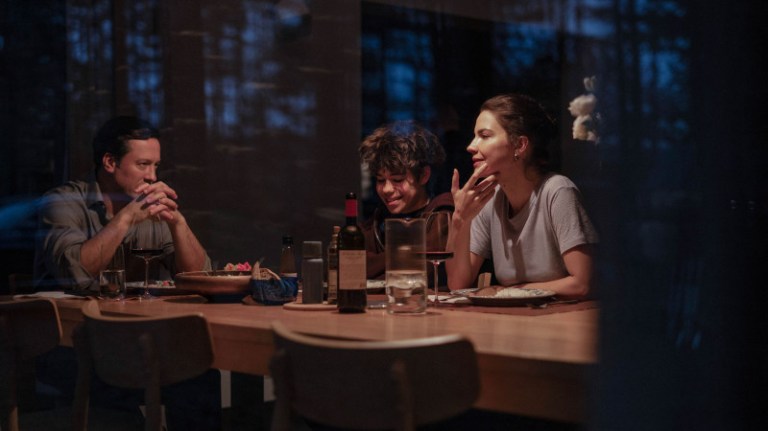
The weaving of a simmering political turmoil with a pulpy affair plot would be an ill-fitting suit, but with Andrey Zvyagintsev, we immediately feel a cool, meticulous guidance. Coupled with a ruthless consideration by cinematographer Mikhail Krichman to achieve a level of voyeurism that probes without gawking, Zvyagintsev’s film is impressive and engrossing. Even when the film’s gentle simmer reaches boiling point, we are asked to observe and consider its characters rather than place ourselves inside their lives. A reimagining of Claude Chabrol’s 1969 classic The Unfaithful Wife — also made into the erotic thriller Unfaithful in 2002 with Richard Gere and Diane Lane — against the backdrop of the Ukraine war, wealthy local CEO Gleb (Dmitriy Mazurov) suspects his wife Galina (Iris Lebedeva) of hiding an affair. As the pressure mounts to sacrifice 14 workers to the war effort, Gleb’s family and personal turmoil begin to boil over.
The film excels as both high art drama and family melodrama through this melding of the weight of the personal and the existential. The political undertow pulling us to the violence of the sea is constant and powerfully considered, landing in a place of resonance in its final act that manages to echo Burn After Reading (2008) and postwar Soviet cinema. This high-wire act of tonal precision has to be seen to be believed, particularly with an active and engaged crowd.
Nagi Notes (2026) – Koji Fukada
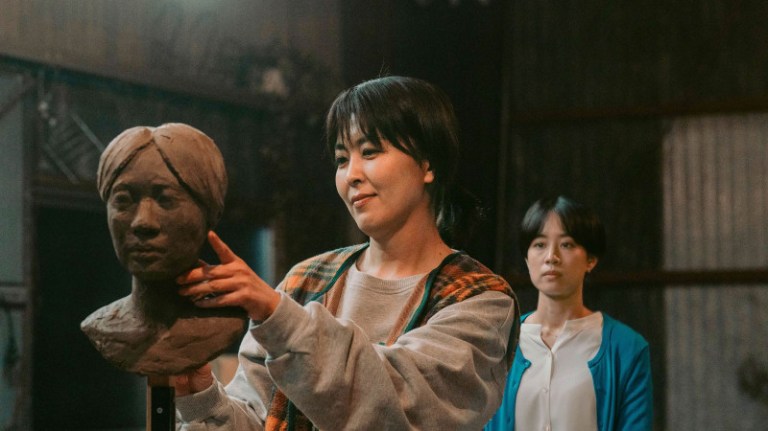
A gentle, clear-eyed look at human dynamics playing out across the struggling small town of Nagi, Koji Fukada’s probing drama Nagi Notes is deeply fascinated by places and their impact on people, unfolding itself slowly but warmly. 630 kilometres outside Tokyo, Nagi is a small farming town that was forced to sell off most of its land to the government for an army base, creating a transitory aspect to the once stationary place.
The film is centred around a coming and going. The coming: an ex-sister-in-law from the city, Yuri (Shizuka Ishibashi), moves in with sculptor and farmer Yoriko (Takako Matsu), to sit for an art piece. The going: the son of a military family, Keita (Kiyora Fujiwara), tells his friend and crush HarukiIguchi (Kawaguchi Waku) he has to move away in two weeks. The joy of Nagi Notes comes from how Fukada weaves narrative and character dynamics in unexpected ways through this seemingly simple story, so the less said before viewing the better; just know you are in the hands of a caring and inquisitive writer and filmmaker.
Sweet Milk Lake (2026) – Harvey Zielinski
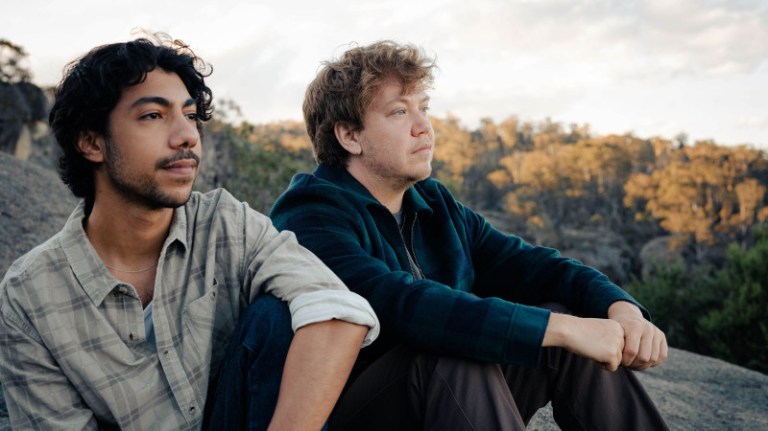
Harvey Zielinski bursts onto the Australian film scene with a debut to remember. Confidently entering the conversation for best Aussie film of the 2020s, Zielinski writes, directs, and leads Sweet Milk Lake (2026) in dual roles as sibling pair Sam and Jake.
Jake has recently transitioned and is struggling for their place in the city while living under the shadow of his more confident and successful brother Sam. While his brother is wonderfully supportive and offers a job to them, Jake is unsure where they see themselves. On an impulse, Jake travels down to the remote country town of Sweet Milk to see his terminally ill father (Kieran Darcy-Smith), who doesn’t know about their transition. After being mistaken for his brother Sam, Jake decides to stay longer than intended in Sweet Milk. The film is a charming and unique look into wider Australian culture and how gender is performed in different contexts while never losing its narrative drive. Zielinski’s writing is assured and moves with a syncopated rhythm that allows the awkward humour and piercing family drama to arrive and crescendo at unexpected moments, making for a thrilling watch.
Josephine (2026) – Beth de Araújo
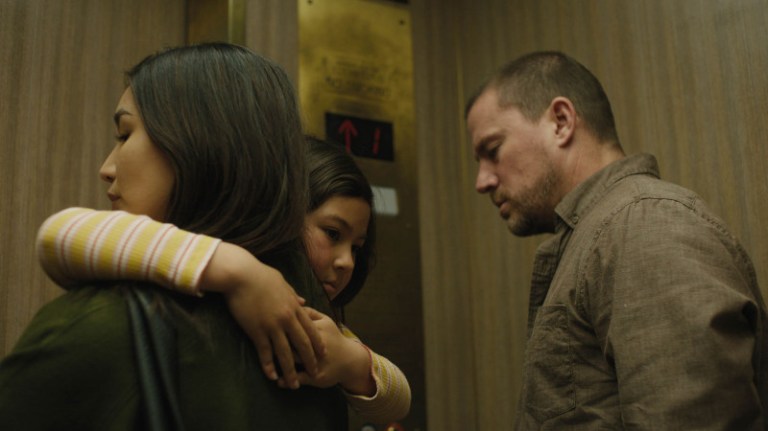
“In some ways I’ve been writing this since I was eight years old”. A to-the-core film of devastation from the intimate perspective of a child who witnesses a sexual assault and the emotional ripples of that moment. Told from the perspective of Josephine (Mason Reeves), we view the failed attempts at comfort and understanding from the adults surrounding her, particularly her parents, played by Gemma Chan and Channing Tatum.
Beth de Araújo knows in her bones that the only way to tell a story like this is through force. Some may find moments or scenes manipulative or lacking subtlety, but that is to deny the argumentative nature of the filmmaking. This is a film to be shown to all who can see it, not to be watched passively or with any remove. To understand that perspective is to know the power of Josephine.
La Gradiva (2026) – Marine Atlan
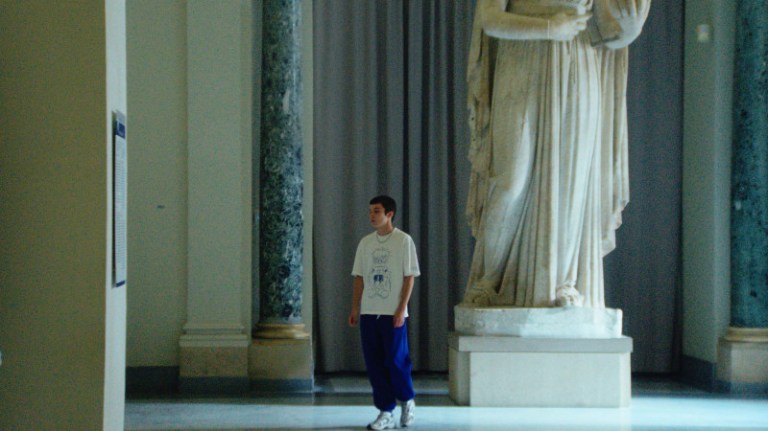
A worthy winner of MIFF Bright Horizons competition, cinematographer turned writer and director Marine Atlan has crafted what could be a definitional coming-of-age film through its extraordinary blend of modernity and timelessness.
One of the best films of the year, Atlan and her co-cinematographer Pierre Mazoyer have an eye for documentary-like importance even as the scenes flow with the casualness of youth. Following a French school group on a trip to Pompeii on the precipice of their final exam results, Atlan is delicately placing her characters, with their youthful drive and view of eternality in a famous space of stolen time, swallowed by ash. There is depth here I will be mining for years to come, like staring at an ash-encased body, interpreting the life underneath by the surface and shape placed in front of us.
Erupcja (2025) – Pete Ohs
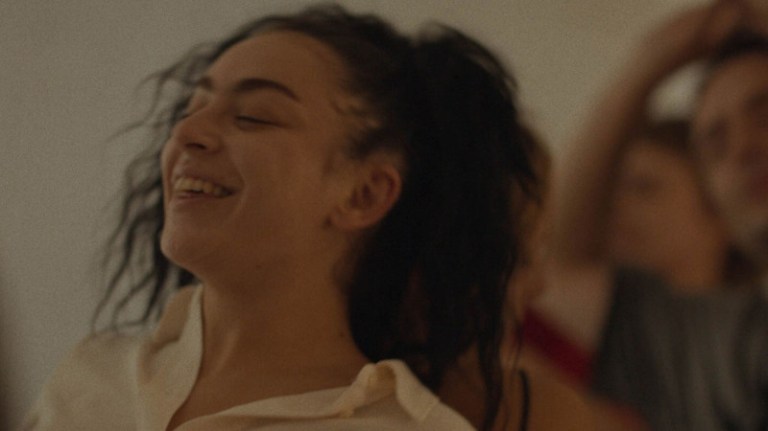
A soft wisp of a modern 71-minute Godard riff starring Charli XCX as Bethany, a Londoner visiting Warsaw with her soon-to-be fiancé Rob (Will Madden). Questioned why Bethany wanted to go to Warsaw over somewhere like Paris, she responds, “it’s more romantic”. This is a half-truth, as the answer is Nel (a magnetic Lena Góra), who owns a flower shop in town.
Their connection is tectonic, as the pair will tell you. Each time they encounter one another, a volcano erupts. Like the magnificent and frightening energy of the natural event, Bethany and Nel radically change the environment around their reunions, oftentimes leaving others in the ensuing ash. Filmmaker Pete Ohs was clearly working with fragments of ideas and a loose plot coming into production, allowing the ease of connection between the cast to drive the story like the French New Wave films Erupcja is indebted to. The key cast members all have writing and producing credits here, which is deeply felt scene to scene and allows the film to reach several poignant moments inside its modest framework.
The Only Living Pickpocket in New York (2026) – Noah Segan
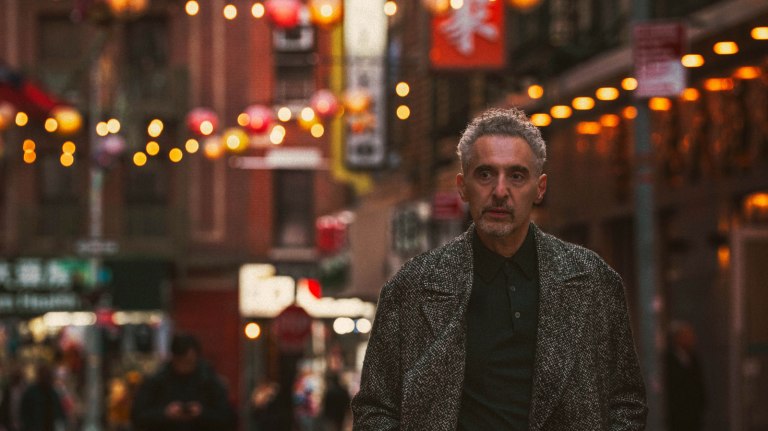
A charming and thoughtful exploration of aging and legacy shot beautifully across the five boroughs, Noah Segan’s newest film as director longs for a previous golden age of cinema with New York streets operating as its veins. John Turturro excels as Harry, a career pickpocket making do in a world with fewer floating wallets and cash than ever before as he hustles to care for his ailing wife.
Segan’s film is Uncut Gems (2019) in a pair of moccasins, with the stakes never raising the blood pressure too high. An over-the-hill pickpocket moving through the city is a lovely way of weaving through modern life in New York. Harry’s reticence to change tactics to online or credit scams gives him an air of a Lupin-tinged gentleman thief, where even his detective rival, Allen (Giancarlo Esposito) respects him. A delightful film that works best on an older crowd.
The Samurai and the Prisoner (2026) – Kiyoshi Kurosawa
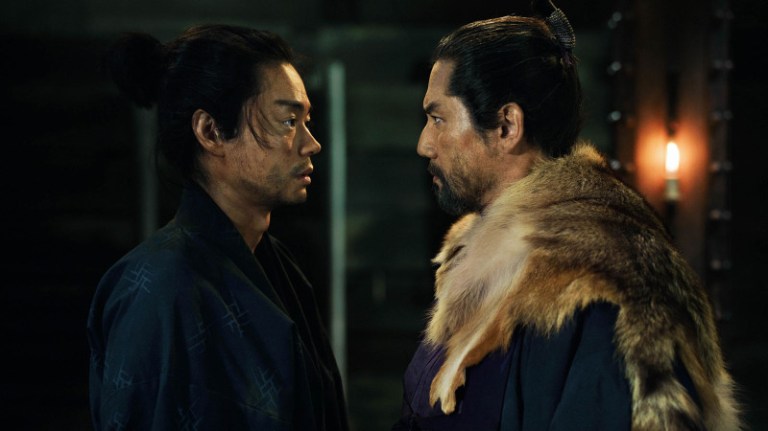
Equal parts political war drama and samurai Columbo, horror master Kiyoshi Kurosawa’s adaptation of the 2021 novel The Samurai and the Prisoner (2026) moves to its own rhythms, knowing its audience is hooked to every moment.
Set in 16th-century Japan, samurai lord Murashige Araki (Masahiro Motoki) is locked in his castle as Oda Nobunaga lays siege to his home. The film begins in earnest when rival envoy Kanbei Kuroda (Masaki Suda) is captured by Murashige. The award-winning novel opens with the line “Toss him in the dungeon; do not let anyone see him and do not kill him. Keep him alive until I say otherwise.” In a time of ruthless killing and few prisoners of war, the stage is set for a defensively woven chamber drama that is keen to charm an audience by its movements towards Agatha Christie and other European-style mystery fiction. The pair of performances between Suda and Motoki is gripping and falls easily into Kurosawa’s unique film style that allows long sequences to play out naturally, ratcheting the tension inside a still frame that has made his horror features the best in the genre. Overlaying this perfected style of storytelling over a samurai chamber epic makes The Samurai and the Prisoner a wholly unique and captivating viewing experience.
The Man I Love (2026) – Ira Sachs
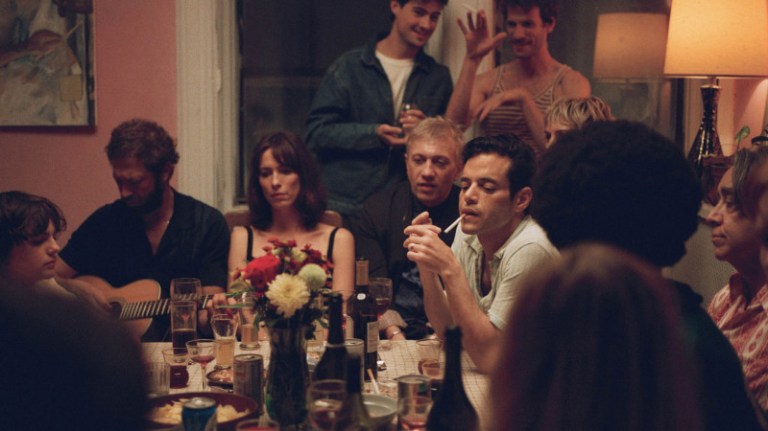
There is a certain surreality that occurs when you’re around a sick person who, after a gruelling treatment process, returns, however fleetingly, to their previous self. An almost religious experience. Screenwriters Ira Sachs and Mauricio Zacharias know this intimately.
Handling the AIDS crisis in 1980s New York with a passion and care for those caught in its crosshairs, and how they choose to respond, Sachs imbues his characters with the dramatic tension of uncertainty and sharp edges, complicating each conversation scene with where we expect it to conclude. Rami Malek and Tom Sturridge have never been better, and with the introduction of Luther Ford to cinema with support from Rebecca Hall and Ebon Moss-Bachrach, Sachs can paint with a wider canvas than his previous couple of films to show the community and isolation of this well-documented era of American history.