Bugonia is a Conspiracy Comedy With a Lot on its Mind

Rating: 3.5 out of 5.

A dark comedy satire about modern conspiracies that devolves into chaos, Bugonia (2025) is a perfect follow-up for Greek auteur Yorgos Lanthimos’ uneven but fascinating 2024 triptych Kinds of Kindness. Based on Jang Joon-hwan’s too-early-for-the-moment film Save the Green Planet (2003), Lanthimos works with The Menu (2022) screenwriter Will Tracy, tapping into the moment of conspiracy and class-based desperation as the wealth gap opens into a chasm that flits between glancingly poignant insights.

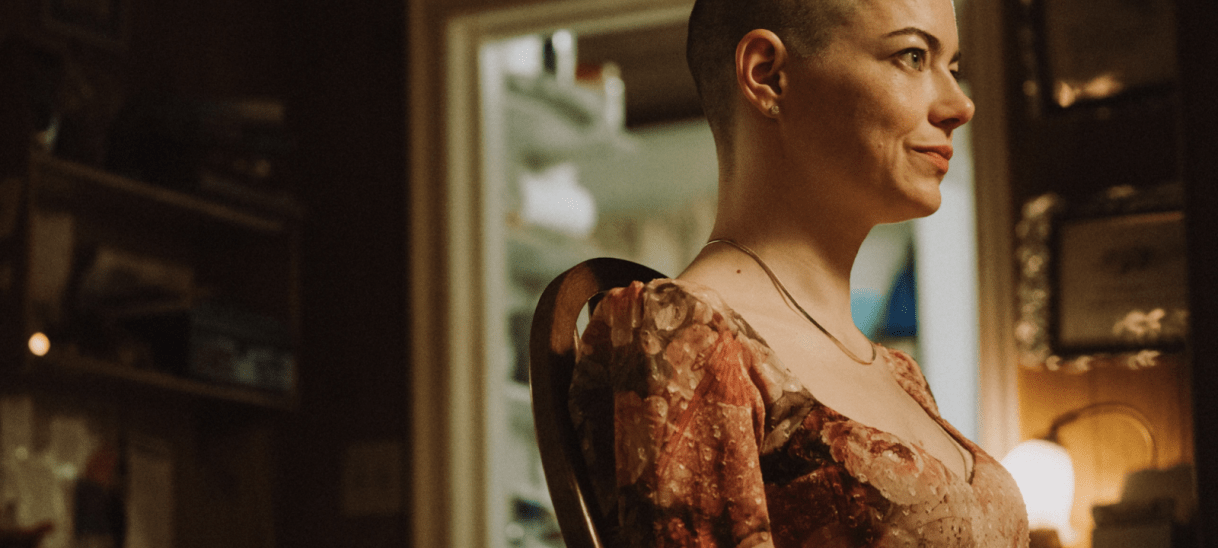
Set around the outskirts of Atlanta, cousins Teddy (Jesse Plemons) and Don (Aidan Delbris in his first screen role) are conspiracy-addled loners living in Teddy’s family home, preparing to kidnap a nearby pharmaceutical CEO they believe is an alien hellbent on destroying the planet. The CEO in question, Michelle Fuller, played by now-regular Lanthimos collaborator and producing partner Emma Stone, holds this shaky film and script together with a powerfully committed performance that would command greater Oscar buzz if the film weren’t so off-putting, likely dissuading voters from admiring her work.

In quiet and chaotic scenes alike, Stone plays the cousins and audiences constantly, as we search for any clue as to whether Teddy is right about any of his ravings. While the film fluctuates in tone, never settling on a worldview of humanity that usually allows Lanthimos’ films to shine through the affectation, Stone is perhaps Hollywood’s most dexterous performer of tonality, with an ever-increasing ability to comfort and challenge an audience at a moment’s notice.

Jesse Plemons as Teddy in Bugonia (2025).

When the film is thriving, it bounces between satirical black comedy moments from Teddy’s conspiratorial ravings about aliens causing all of his personal problems and Michelle’s faux empathic conversations with her employees. By so heavily linking Teddy’s personal traumas to his conspiracies as well as his solution of convincing the aliens to spare Earth, we are drawn deeper into the spiral of empathising with a violent protagonist while never wavering in our scepticism. Teddy’s seeming displeasure with other people also has the audience questioning why his end goal is to save humanity, when he only appears to like his family and the bees he cares for.

Plemons and Stone have become so locked into Lanthimos’ sets that they become true extensions of the filmmaker that are worth the price of admission. Robbie Ryan’s 35mm Vistavision camera focuses so intently on faces during key confrontation scenes that complicate and enrich every fraught interaction between the three characters, playing out like an absurdist tragedy of modern nihilism and the cost of humanity in simple close-up.
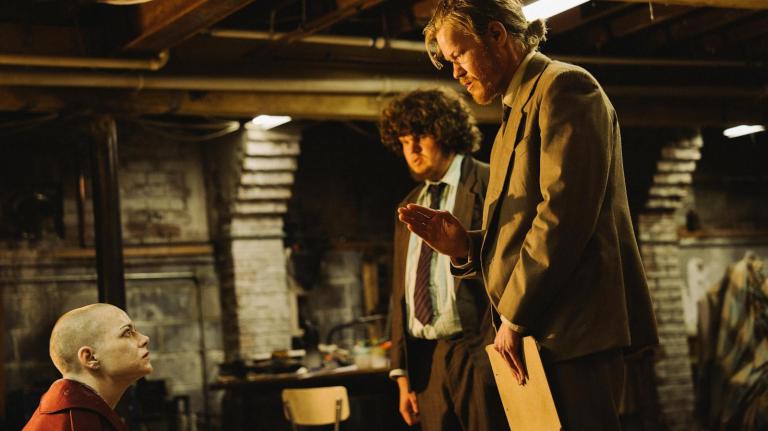
(From Left) Emma Stone, Aiden Delbis, and Jesse Plemons in Bugonia (2025).

Even with its often bracing moments and artistic flourishes that have won and lost the Greek filmmaker’s fans over the years, Bugonia will go down smoother than recent entries due to its deliberately modern setting. With a pair of iconic needle-drops in Chappel Roan’s Good Luck, Babe and Green Day’s Basketcase, Lanthimos’ film stretches out past his own artistic bubble, offering a hand to a contemporary audience needing to be invited into his world that is richly rewarding. 

Teddy is a beekeeper and blames Michelle’s company for the death of the countless bees (bees feature as prominently here as in Jason Statham’s bizarre 2024 film The Beekeeper), as well as the death of his mother, clouding the audience’s perceptions of whether this kidnapping is mostly an act of personal vengeance. The title Bugonia comes from an ancient Mediterranean ritual based on the belief that bees are produced from a cow’s carcass. This spiritual concept of rebirth, blossoming from an integral part of the ecosystem through the death of another being, is woven throughout the film, most clearly in its final images. Unfortunately, the rest of the film’s zippy nihilism clouds these fleeting ideas, never reaching above a wry smirk or passing glance towards a future it believes in. 

The Greek auteur’s work can too often feel disconnected from our world, much like his clear idol, Terry Gillem, striving for the work to be seen and appreciated outside time rather than exist alongside it. In Bugonia, however, we live in an achingly dissolving world of Teddy’s conspiracies and Michelle’s jarring CEO ruthlessness, echoing much of the world in our mid-2020s in a similar vein to Ari Aster’s divisive Eddington (2025).

But in a current climate of political violence and peak conspiratorial thinking in positions of power, what does it mean to centre a violent conspiracy theorist in a contemporary movie? Kudos to Tracy and Lanthimos for adapting Jang Joon-hwan’s 22-year-old film into this fraught moment, but do they truly reckon with that decision? A film that plays with your ideas of truth and fiction, Bugonia lands in a certain vein of deterministic nihilism that questions why bother asking the question in the first place, leaving us with a satisfying movie but a bizarre aftertaste. Turning to conspiracy as a direct result of tragedy is an evocative core at the heart of a contemporary story, but are you willing to turn inwards and face that ugly humanness that is uncovered?

Bugonia is in theatres on October 30.

Mufasa: The Lion King is a Serviceable Origin Story

Rating: 3 out of 5.

Mufasa: The Lion King preview screening provided by Disney

When word first came that Barry Jenkins’ next project after his hit mini-series The Underground Railroad (2021) would be an origin story about Mufasa from The Lion King (1994), it’s safe to say that there were some brief head-scratch moments. After all, Jenkins hasn’t really had a miss in his filmography and there are always doubts when it comes to beloved IP taking similar or new directions. Mufasa: The Lion King (2024) is no Moonlight (2016), but it does offer a new light on one of Disney’s most celebrated animated characters, bringing his story (even if James Earl Jones’ iconic voice is no longer with us), to life on the big-screen.

From early on, it’s safe to say that Jenkins didn’t really have too much leg room to stretch out to, with the world of Mufasa being rooted in the Pride Lands of Africa. In that sense, his options were clearly limited in terms of scope and the type of origin story he could tell about a lion rising up through the ranks. In this way, Mufasa takes a bite out of The Lion King‘s notebook by focusing on a tragic event in the form of a flood (told through a flashback sequence by John Kani’s mandrill, Rafiki) that would shape cub Mufasa and inform his life thereafter.

In the same way that his son Simba (Donald Glover) would be forced to reconcile with his situation of loss, Mufasa (Braelyn Rankins, later Aaron Pierre), too, is adopted, not by a warthog or meerkat but by a new pride some distance away from his old one. Key to his success in being accepted in that pride are Taka (Theo Somolu, later Kelvin Harrison Jr.) and his mother Eshe (Thandiwe Newton), much to the disdain of their father and husband Obasi (Lennie James), respectively.

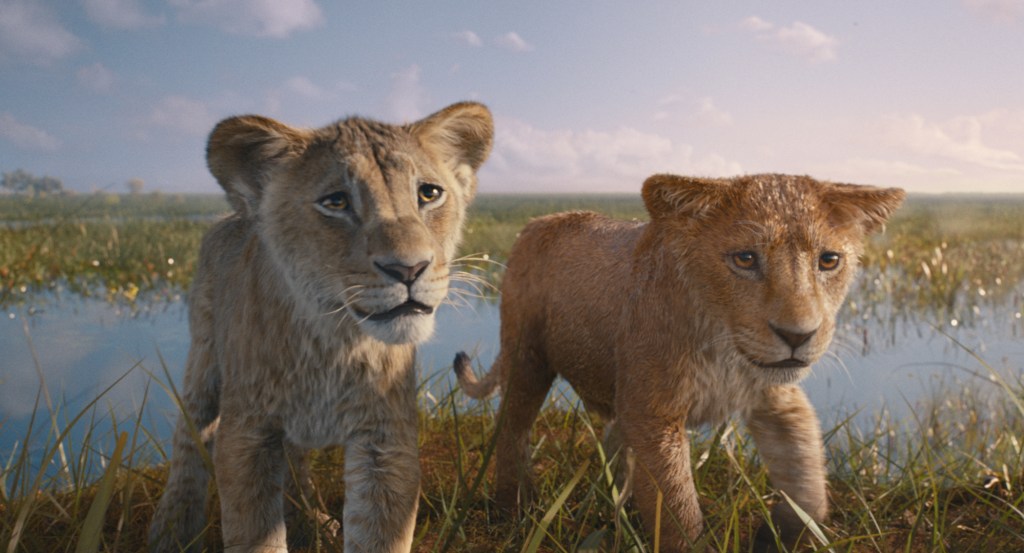
(L-R): Taka (voiced by Theo Somolu) and Mufasa (voiced by Braelyn Rankins) in Disney’s live-action MUFASA: THE LION KING.

What ultimately tests these lions’ ability to act as a cohesive pride is a competing white pride of lions, led by Kiros (Mads Mikkelsen). It doesn’t take long for Taka and Mufasa to find themselves on the run, though, as they seek out Milele — a land deemed a fantasy. This journey between the step lions is where Jenkins aims to mine the emotional core of the film, testing the strength of their relationship by throwing in a love triangle with a lioness, Sarabi (Tiffany Boone), and really looking to flesh out what it means to be a “king”, whether it’s a birth right or something to be fought for and earned.

This brotherly tussle is what really holds the film together during moments where it threatens to nosedive, especially in the late second act as it brings in twists and starts to lay the groundwork for motives in The Lion King. The biggest hurdle, however, in a film about life-like lions who talk and sing, is building that connection to these characters, a shortcoming that marred Jon Favreau’s 2019 remake. As far as the technology has come since Favreau’s film, photorealistic lions just don’t have the same expressiveness as animated ones, especially when you consider the 1994 animation has aged gracefully while the 2019 remake hasn’t, and it’s only been five years.

Lin Manuel Miranda also seemingly swapped Moana 2 (2024) for Mufasa, with songs that are identifiable to him but similarly to Moana 2, fall short in creating memorable moments that will stick in your mind.

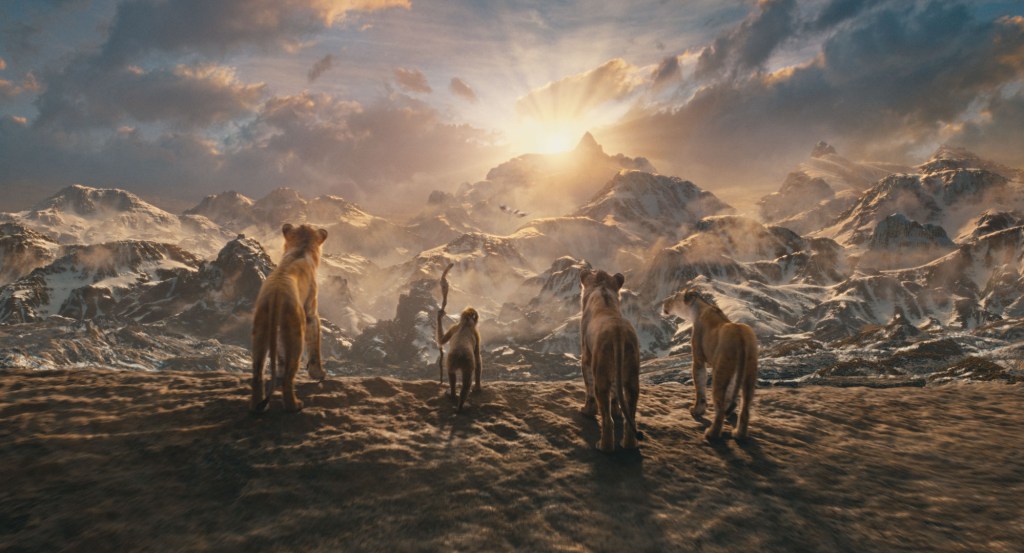
(L-R) Mufasa (voiced by Aaron Pierre), Young Rafiki (Kagiso Lediga), Taka (voiced by Kelvin Harrison Jr.) and Sarabi (Tiffany Boone).

The added element of having Rafiki do a retelling can also feel jarring at times, especially as it pulls you out of the story he’s trying to recite which interrupts the flow and pace. Most of us know what happens to Mufasa and who Taka eventually becomes, so that’s the least surprising thing about this film, but keeping us anchored to their journey and to the vistas of the Pridelands would have saved the filler scenes from being exactly that.

The Lion King‘s idea of the circle of life is about finding balance and harmony, something Jenkins’ film takes and glosses over in a similar light by creating a state of imbalance and power struggles that have to be overcome. In fact, most of Mufasa is a gloss over, sometimes for better (the visuals are still more refined than its live-action predecessor) and sometimes for worse (the retreading of old ground amidst the new ground covered, a shortcoming Moana 2 also suffers from). As a prequel, Mufasa makes sense (even if Jenkins’ involvement is bemusing) and it gives a welcome insight into one of Disney’s most beloved characters, coming full circle in the process.

Mufasa: The Lion King opens nationally from the the 19th of December.

Moana 2 is as Endearing as the Original but Suffers from Sea-quel Sickness

Rating: 2.5 out of 5.

Moana 2 preview screening provided by Disney

Upon rewatching Moana (2016) the other night, I was reminded just how special a place that film occupies in Disney’s catalogue of releases: it both captures and celebrates Polynesian culture so sincerely while at the same time offering a fresh spin on Disney’s heroine-oriented stories by avoiding becoming another princess film with tropes we’ve seen countless times over. Moana 2 is fine, but I found myself scratching my head throughout, not because I felt like there wasn’t an interesting adventure to be had, but because this adventure feels like it has been had.

After a thick-of-the-action opening where we find Moana (Auli’i Cravalho) scouring a cliff face in search of signs of other tribes and people, it doesn’t take long for the sea to once again call Disney’s beloved Polynesian not-princess, to its aid. There are no Lin-Manuel Miranda tunes to propel her forward this time around, with the Hamilton creator opting not to return for a second stint, but rather a vision from an ancestor that shows a new destiny — to seek out a lost island that would connect all the peoples from the near beyond.

To do so, she will have to overcome an ancient god, Nalo (Tofiga Fepulea’i), who has put a curse on the island, but first she has to find it. Of course, it wouldn’t be an adventure without her trustee demigod buddy Maui (Dwayne Johnson), who has found himself entangled in his own mess and needs saving. The duo will see themselves accompanied by old and new crew members alike, like the single brain-cell chicken and her porky friend.

Still from Moana 2

As sequels tend to go, bigger always seems to be the preferred option, otherwise you’re just treading old ground, right? While going bigger is what Moana 2 naturally has to do, what makes the first film so special is that it is an intimate film of self-discovery, of venturing into the unknown and realising your destiny. In expanding the second film, both in terms of characters and action on the screen, Dana Ledoux Miller, Jason Hand and David Derrick Jr.’s film sacrifices intimacy for a more generic storytelling approach.

That’s not to say that Moana 2 isn’t filled with thrills and spills: there’s a wider array of monsters, the set pieces are more rampant, the animations are the highlight as always, and there’s just more happening on the screen. Moana has also embraced the wayfinder lifestyle and doesn’t hesitate to seek out adventure, so there has been deeper character development on that level. It makes sense from a storytelling point of view to throw her into the deep end and have more to do and overcome. However, I couldn’t help but feel that that’s not what this story needed, especially when the first film was such a perfect standalone that at once pulled at your heartstrings but would also throw in a Jermaine Clement crab curveball every now and then to keep you on your toes and smiling where it counts.

The biggest fault in a film about going bigger and louder is that it’s often looking back to do so. Most of the humour banks on similar punchlines to the first film like constant cutaways to the chicken either picking at something or screaming, while the songs themselves by Abigail Barlow and Emily Bear don’t have the same flair or catchiness to Miranda’s, even though they’re very much striving to land in the same way. Kakamoras (those cute little coconut people) once again make an appearance, and it’s one of the better highlights of the film as they team up with Moana and co to take down a large clam-shaped mountain. In trying to offer something new, the directors have looked back in large part, and when they have offered something new, it hasn’t left a lasting impression.

Maui (Dwayne Johnson) in Moana 2

One such new offering is the villains (if we can call them that) with Nalo, and to a lesser degree Sina (Nicole Scherzinger). They’re two characters who serve less as villains and more as obstacles to overcome, and they’re offered little development and motive, with Nalo in particular whose whole shtick is he hates Maui and humans and wants to keep the island of Motufetu away from their grasp.

Moana 2, like most of Disney’s films, is a children’s movie first, one with adult themes that cater to audiences young and old, second. The child in me was having a ball for the most part, but also trying to find something to cling onto beyond the fun and games (or that second part), and that’s been my general sentiment towards some of these films in recent times. With the cliffhanger the film ends on (make sure to stay for the post-credits scene!) the second film always felt like a shoehorn for more to come, especially with a live-action remake of the original in the works. While I’m always dubious about such directions, the Moana IP is still rife with joy and potential, and it’s always a pleasure to see Polynesian culture still continue to be represented and resonate with audiences.

Moana 2 opens nationally from the 28th of November.

Kingdom of the Planet of the Apes is a Worthy Entry in the Enduring Franchise

Rating: 3.5 out of 5.

The under-the-radar but always enjoyable sci-fi franchise, the Apes films has always impressed with its top-tier CGI department and Shakespearean approach to storytelling taken straight from the James Cameron school of action cinema. With this new entry, Kingdom of the Planet of the Apes (2024), the franchise has evolved and shifted towards a more intimate scope, without lacking its compelling and nuanced storytelling vision. This latest entry is less interested in the do-or-die existential struggle for primates and humanity survival as a whole and more interested in the young individuals (on both sides) finding their place in an ever-shifting world. The Apes films have never been more relatable than with our hero Noa (Owen Teague), a young prince to a quiet colony of apes whose avian-centric culture shuts off the outside world, focusing on the establishment of their slice of the brave new world. 

With Matt Reeves moving on to darker pastures with The Batman (2022), Wes Ball, central filmmaker for the Divergent franchise, has taken the keys to this generation-spanning tale of legacy and evolution, merging into his familiar abode of adolescents staking a claim in an uncertain, dystopian future. 

Kingdom begins with a coming-of-age trial, as Noa and his companions, Anaya (Travis Jeffery) and Soona (Lydia Peckham), attempt to climb an overgrown skyscraper (in one of many evocative world-building choices the creative team have made here), in pursuit of eagle eggs to take home. The sequence is thrilling and economical in its storytelling, as the trio swing from floor to floor, learning just enough about each character to satisfy a full film. A central tenet of this trial is to always leave an egg behind, allowing the eagle cycle to continue mostly uninterrupted. As we come to learn of other colonies throughout the film, the acceptance of the eagle clans’ place in the wider ecosystem is stark and increasingly emotional as we see Noa having to adapt and find his own place in the world.

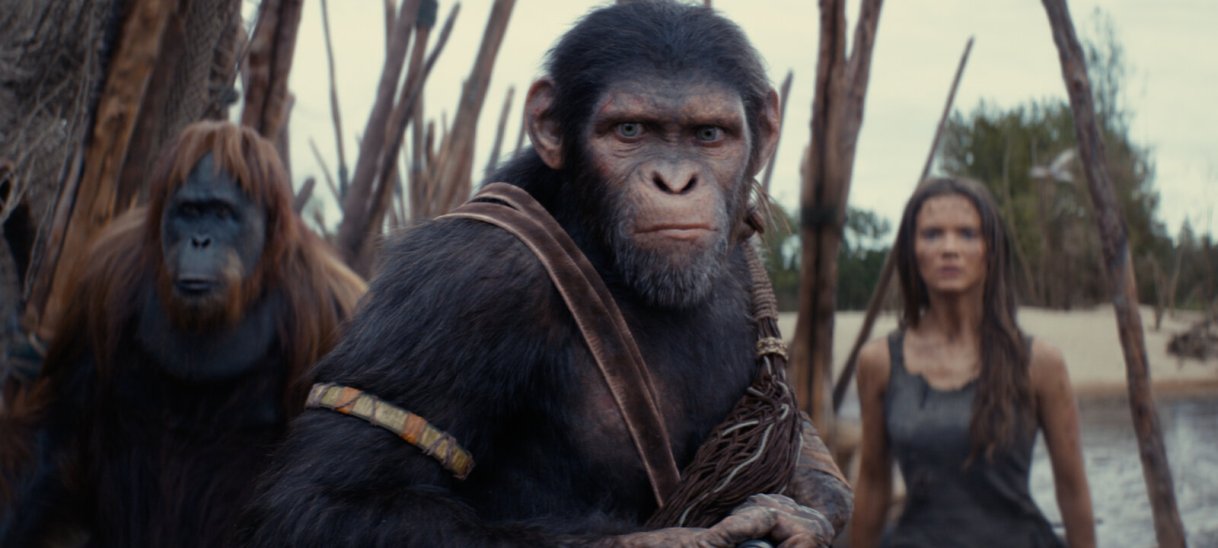
Noa (Owen Teague) in Kingdom of the Planet of the Apes.

What allowed the trilogy of modern Apes films to maintain a strong dramatic narrative is the Caesar character, seen from birth to death, performed extraordinarily across the films by the great Andy Serkis, the king of motion capture filmmaking. Serkis gave Caesar a soul deeper than skin and fur humanity, and his absence is plainly felt here, even as technology has rapidly grown. 

Kingdom sets itself apart from the previous Apes entries with its relationship with humans through its far-future setting. Noa and his companions stumble upon the mercurial Mae (Freya Allen), a seemingly feral scavenger of a human, isolated from ape kind and potentially one of only a few humans on the continent. The film thrives when Noa is forced into trusting either Mae or the film’s domineering antagonist: the cunning and powerful Proximus Caesar (Kevin Durand). Whether Promixus is a true successor to the previous film’s Caesar is only vaguely touched upon, with both potential answers to that question compelling. This question of legitimacy and Durand’s sly performance add a richer depth of storytelling to the film’s villain, solving an issue the previous trilogy of Apes films have suffered from.

The exploration of religion in this Simian civilisation is compelling and something that was taking its first steps in War of the Planet of the Apes (2017), with the word of Caesar holding an incalculable weight, leaving an enormous hole in their society after his passing. In this new film, Ball and screenwriter Josh Friedman explore these teachings of Caesar through both Raka (Peter Macon) and Proximus. While Raka seeks to use Caesar’s words to teach cohabitation and compassion across Simian and humankind, Proximus uses the recurring “ape together strong” franchise moniker to dominate other apes, folding them into his fascist empire. 

(From left) Noa (Owen Teague), Mae (Freya Allen) and Raka (Peter Macon) in Kingdom of the Planet of the Apes.

Similar to the previous entry War, Kingdom is interested in whether this new emerging primate civilisation is inherently similar to humanity or has become similar through their knowledge of humanity’s past through the characters’ desire to survive and dominate all others. The second half shifts towards a fight for survival between Mae and Proximus to break into an American army vault, with Noa stuck in the middle, disagreeing with both. While altogether a satisfying climax, these moments feel closer to retreads of similar set pieces and ideas than anything fresh and exciting to allow Kingdom to stand on its own in this enduring franchise. 

There are suggestions of a continuation of this story at its conclusion, comically implying the franchise’s intentions to leave no stone unturned towards arriving amongst the zany 70s entries in the Apes story. But, even with our modern addiction to Hollywood IP storytelling, Kingdom of the Planet of the Apes still manages to continue developing a vision for a more interesting and creative version of franchise cinema.

Kingdom of the Planet of the Apes is in theatres now.

The Creator is Missing Some Parts

Rating: 3 out of 5.

Due to the frenetic nature of modern streaming churn based on shareholder growth over humane work practices or audience desire, the Star Wars industrial complex has pivoted to television in recent years. These shows have the blown-out budgets for blockbuster sci-fi epics, but are piped into our TVs and laptops. Some of these shows are great (Tony Gilroy’s Andor), and some aren’t (Obi-Wan Kenobi), but as a whole, this pivot has created a dearth of real blockbuster sci-fi with a sense of originality and modernity.

Enter The Creator (2023), the latest from visual stylist Gareth Edwards of Rogue One (2016) and Godzilla (2014) fame. In an alt-history world where robotic development arrived much earlier and Asia is seemingly conquered by Japan (the film is not equipped to deal with the meaning of his choice) and renamed New Asia, the US, seemingly under martial law, has declared war on AI who have allegedly detonated a nuclear weapon on LA (another choice we are not left given time to process). Joshua (John David Washington), an ex-special forces soldier, still mourning the death of his pregnant wife Maya (Gemma Chan in the most thankless role of the year), is brought onto a mission in New Asia to extract what they believe to be a new AI weapon.

Quickly we discover the weapon is actually an adorable child whom Joshua names Alphie (the standout newcomer Madeleine Yuna Voyles), turning The Creator into a showreel of Star Wars (1977) tropes that begin with a lone wolf and cub story, and concluding with the inevitable explode-death-ship-equals-victory mission. From the outset, the film is at war with itself, with its cheesy 90s sci-fi plot machinations and tropes on AI, robots, and human connection in a sci-fi world, styled as a contemplative Denis Villeneuve sci-fi. Edwards compels you into this visually entrancing film with real locations, considered visual effects, and evocative lighting that is truly stunning.

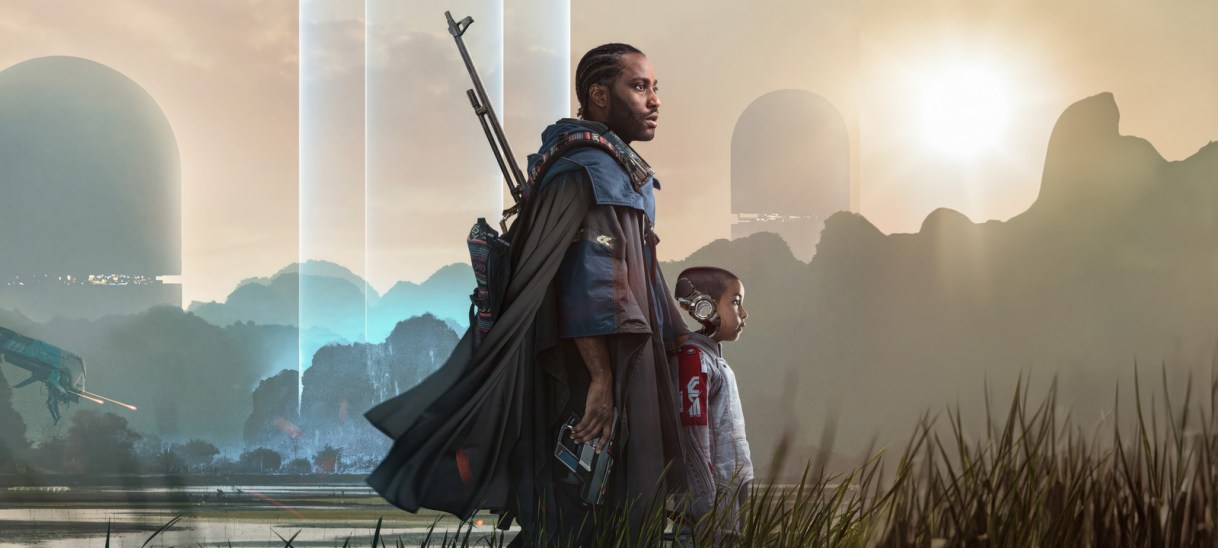
John David Washington and Madeleine Yuna Voyles in The Creator

The extraordinary production and visual design keep you invested in a film that’s narrative constantly draws groans from the audience. With a fifth of the budget of Star Wars Episode 9: Rise of Skywalker (2019) ($80m vs $416m), it is incredible what Edwards and his all star team have created visually. To contend with the wash of franchise blockbusters, Edwards has returned to the big screen with real weight behind him, including Hans Zimmer, cinematographer Greig Fraser, and editors Hank Corwin and Joe Walker, to elevate this familiar story to greater heights than this script deserves.

With Zimmer behind the wheel of a modern sci-fi, one would expect to be awestruck at the master composer’s work, but in The Creator, the great German is on autopilot. With some truly bizarre needle drops including Radiohead’s Everything in its Right Place, the audience is constantly pulled between the furiously disjointed world that is created in the theatre. Edwards has an enormous mountain to climb with this hacky script, with each decision taking away instead of building upon the last.

The film is loaded with arresting images and beautifully unique production designs, like the Nomad ship and South East Asia setting, but it’s all in service to a script that is a collection of sloppy plot machinations and simple tropes rather than genuine insight or human emotion. There is a pregnant wife to be sacrificed as character motivation. There is a surrogate child given to a character that lost a child to learn fatherhood. There are moustache-twirling, blonde military villains that were seemingly given a tape of Stephen Lang in Avatar (2009) to emulate. None of these moments are knowingly familiar or aware that fall into place by a steady hand, instead arriving to us as a manic bingo card of staid sci-fi plots that consistently underwhelm and frustrate.

Madeleine Yuna Voyles in The Creator

Events, even the visually stunning ones, occur as cheap building blocks designed to arrive in its most obvious destination. There is no room for exploration and character moments in this beautifully realised sci-fi world, like a child given every toy in a store only to spend an afternoon throwing a rock at a wall. These critiques on story and film structure pale in comparison to the wild othering and orientalism that occurs throughout this story that can seemingly be put down to a team of white writers not considering their choices and subject matter, a trend that becomes clear the further down the rabbit hole of the film you go. It is lovely to see the real world locations of Cambodia and Vietnam used in a large-scale studio sci-fi, but at what cost?

Concluding with a mandatory ‘defeat the enemy by blowing up their Death Star’ plot removes any hope for a satisfying and unique story that earns its dazzling imagery and sound design. The Creator flashes of brilliance are crashing waves, thrashing you against the sea, but once those waves subside, you realise you can easily stand in the shallow depths of the water.

The Creator is in theatres now.

Empire of Light is Less than the Sum of its Parts

Rating: 2 out of 5.

The Oscar-bait film too contrived even for awards voters, Sam Mendes’ follow-up to the acclaimed war film 1917 (2019) Empire of Light (2022) is a flat ode to the theatre made by some of the best industry professionals. Spanning the early 80s in the small British seaside town of Margate, we follow the workers of the quiet movie theatre including deputy manager Hillary (Olivia Colman), manager Donald (Colin Firth), projectionist Norman (Toby Jones), and bright-eyed new crew member Stephen (Michael Ward). We are mostly locked onto the world of Hillary, a depressive older woman burnt out and fading through life until a romance is sparked with the much younger Stephen. 

Made with the best intentions with a world class crew and ensemble, Empire of Light stumbles not just in its underbaked racial and political underpinnings, but in its narrative contrivances that permeate every moment. Hillary is written into a dead end within 40 minutes, sucking the air out of the film before it even gets going. Mendes overreaches in so many narrative directions that no one moment is given the time it deserves, reducing everything to its thinnest ideas, making all the plot machinations nakedly visible.

There are many films inside this one, making it feel closer to a debut Sundance feature from an upstart filmmaker that is unsure whether they will ever make another film. Through its flat characters spouting unfelt political statements, Mendes has made a unmemorable film that takes for granted its extraordinary crew.

And enough cannot be said about the crew involved here; Trent Reznor and Atticus Ross craft an interesting piano score that unfortunately never seeps deeply into the drama; greatest living cinematographer Roger Deakins has mastered his craft to an absurd degree that we should be thankful doesn’t get relegated to a TV screen just yet; the ensemble of Colman, Firth, Jones, and the breakout of Michael Ward is punching well above the script, finding emotional depths to their characters that were clearly underdeveloped on the page.

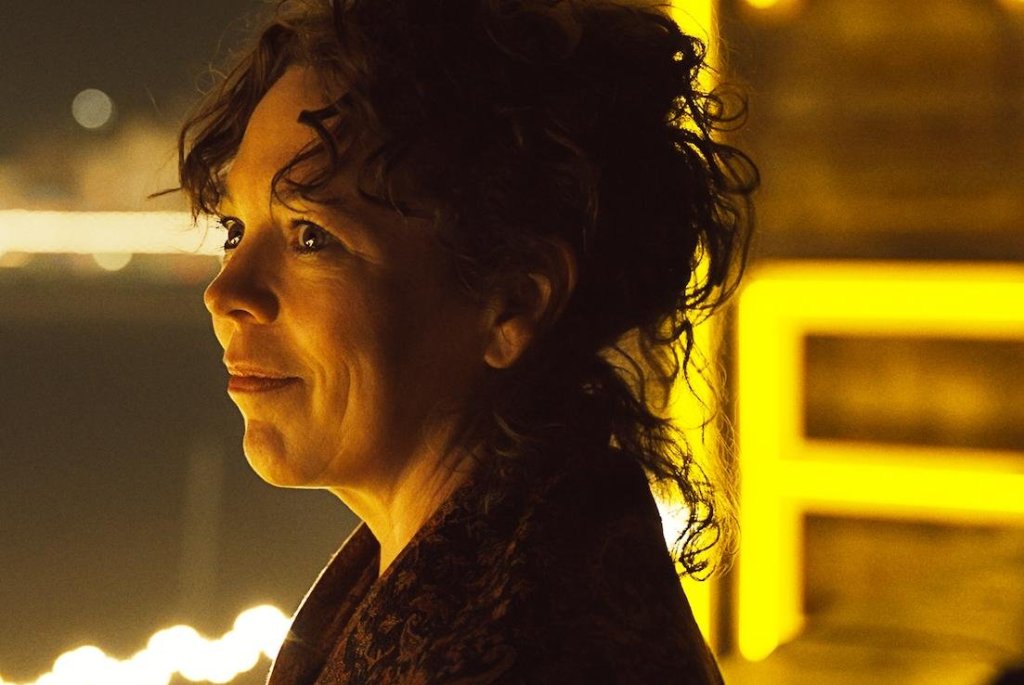
Michael Ward and Olivia Colman in Empire of Light.

One of the best technical filmmakers working, Mendes has always been successful when working with quality screenwriters (Skyfall, Jarhead, American Beauty if that’s your thing) while still pursuing his own point of view, often surrounded by top-tier craftspeople. He has been able to create quality features without working as the screenwriter, but was clearly emboldened by his original screenplay Oscar nomination for 1917, a film that is effective more as a set piece art installation than as a work of screenwriting, to pen his follow-up feature.

Much has been made about Empire of Light being a love letter to the theatre, which is reductive at best. This film is as much a movie about the movies as Snowpiercer (2013) is a movie about trains. Cinema has enough love letters to itself, but too few ones of quality and substance that values the audience on the other end of that beam of light.

The racial politics of the film are tired and dated, with the anti-black violence made in service of a white character’s emotional development that is a disservice to both performers. The few instances of racialised violence do not even give Ward the respect of a reaction shot. There is also the issue of the depiction of Stephen’s mother Delia (Tanya Moodie) in the film, a character who does not speak to her son for almost its entirety, having more lines of dialogue with Colman than Ward. Mendes shows little maturity to handle these racial aspects of his film, souring any goodwill in its pursuits of bringing to light the racism of 1980s England.

Olivia Colman in Empire of Light.

Colman does better than any actor could with her extraordinary mix of subtle rage, but the script lends her or the other actors little assistance. Her performance in 2021’s The Lost Daughter (which she should’ve won an Oscar for last year), is a better demonstration of her quality at playing a depressive older woman.

Ward’s performance as Stephen is above the level given to him, as a purely contrived character that is more aggressively attached to the film’s writing faults and poor writing than any other character. Even with the quality of individual performance from Ward and Colman, the pair’s growing romance never garners genuine interest or stirred emotions as it is just another one of Mendes’ undercooked ideas in a film without a strong perspective.

Mendes never trusts his actors and, to a greater self-critique, his own penned characters, to develop the story and romance organically, ending up with a collection of contrivances. Empire of Light is a beautifully shot but unsubstantial feature that will quickly be forgotten, adding up to less than the sum of the parts with its top-tier cast and crew.

Empire of Light is in theatres now.

Avatar: The Way of Water Sees Pandora Return Bigger and Better Than Ever

Rating: 4.5 out of 5.

Avatar: The Way of Water preview screening provided by Disney

In a year where caped crusaders have played second fiddle to F18’s and dinosaurs, Avatar: The Way of Water sees James Cameron swimming in his exclusive pool of opportunity; a sandbox style, open world, video game feeling film that is as hearty as it is beefy. Cameron, unsurprisingly, is no stranger to pushing the boundaries of what a high concept blockbuster looks like. Setting the trend with The Terminator (1984), he’s always been out to entertain first, and worry about everything else second. The Way of Water speaks to that sentiment and culminates in a sensory experience unlike any at the cinema this year.

This is, after all, a film that —like the original Avatar (2009) before it— places an emphasis on out-of-body living, on connecting with the surrounding world and learning how to nurture and care for it. Cameron, an environmental activist in his own right, made Avatar and has pursued these sequels in part because he sees them as an opportunity to raise more awareness about our own world and environment.

In The Way of Water, he follows similar concerns to that of the first film, but trades the fullness of the foresty terrain, for the breadth and depth of the oceanic surroundings. The Na’vi continue to thrive, with Jake Sully (Sam Worthington) now leading the tribe alongside his partner Neytiri (Zoe Saldana). They also have a few mini-Sully’s of their own: two sons —Neteyam (Jamie Flatters) and Lo’ak (Britain Dalton)— and a daughter, Tuk (Trinity Jo-Li Bliss). They also care for Kiri (Sigourney Weaver) who has a connection to Weaver’s character from the first film, but one that is kept intentionally vague.

The actual events of the film take place some 10 years after those of the first one. Humans continue to arrive to Pandora to harvest resources, and are even continuing to create avatars of their own. One of those is Colonel Miles Quartich (Stephen Lang), whose DNA and memories have been imbued in one of the lab grown blue beings to the point where he acts and talks like the Colonel in the first film, but he’s not him per se.

(L-R): Jake Sully, Ronal, and Tonowari in 20th Century Studios’ AVATAR: THE WAY OF WATER. Photo courtesy of 20th Century Studios. © 2022 20th Century Studios. All Rights Reserved.

In essence, the stakes feel similar: Jake and co are on the backfoot while the Sky People pursue and hunt them. Sometimes the actual motive behind this continued hunting isn’t explained all that clearly — the Colonel seems to have retained the same grudge for Sully in his avatar form as he had in his human form, but beyond that, the plot plays out like a game of hide and seek. Most of that hiding happens in the distant islands far off the mainland, where other tribes reside and have grown and learned the way of water. A good chunk of the film is spent leading up to Sully’s retreat into this unseen part of Pandora, but once out in open waters, the film opens up both visually and sonically.

Cameron has a penchant for anything aqua related, and it shows in these deep diving areas. The flora and fauna pop in ways that make one believe this world is tucked away somewhere in our own oceanic backyard. Maybe seeing all of this unfold through Cameron’s other love, 3D, might have heightened the immersion? But there is an evident care for this world that entraps and allures you, and makes you believe it’s real, if but for a split second.

It helps that the frame rate is bumped up to 48fps at certain parts. Character movements are crisp and almost life-like, where there is a fluidity to the motion. This is especially noticeable in the underwater portions of the film that are as visceral as they are breathtaking, with colours popping out like a Van Gogh painting as you try and absorb each section of the frame.

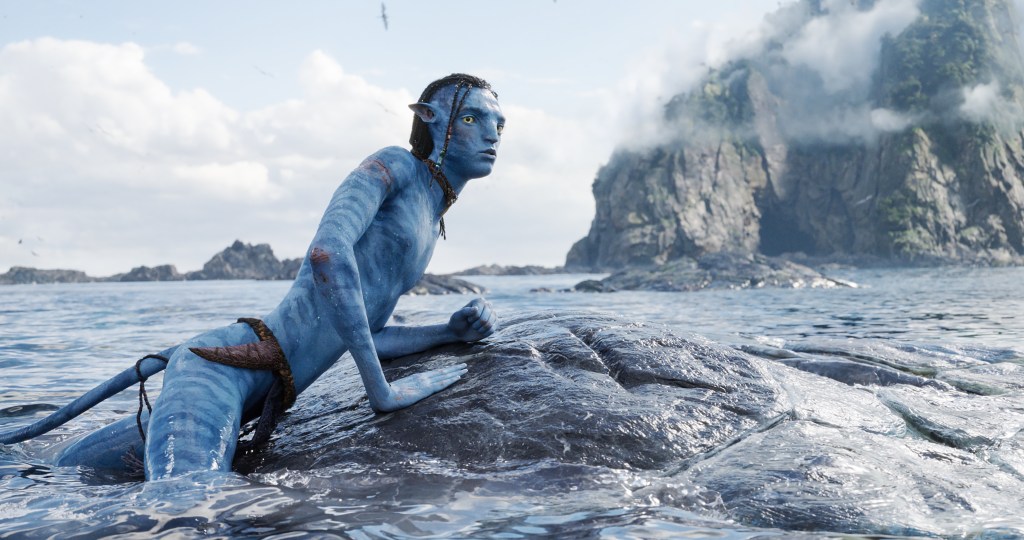
Lo’ak (Britain Dalton) in 20th Century Studios’ AVATAR: THE WAY OF WATER. Photo courtesy of 20th Century Studios. © 2022 20th Century Studios. All Rights Reserved.

Cameron makes it easy to care for these characters, who have more nuance splashed across their digital faces and more realness behind their big anime-like eyes, than any of the beings before and since Avatar. The technology is a large reason why this film works, because there just hasn’t been anything like it in cinemas previously, Avatar included. The film’s weakest link tends to be anything that isn’t digitised to the gills, like the Tarzan-esque boy Spider (Jack Champion) who was left an outcast and was essentially adopted by the Sully’s. While the film justifies his presence, it’s more jarring to spend time with anything that isn’t wholly CGI.

Cameron’s brilliance ultimately rests in his unmatched understanding of scale — of how to get all of his story points in a basket while showcasing them in the biggest way possible. He swiftly transitions from moments of bonding and connection between tribes and creatures, to large battles sequences involving these tribes and creatures as they glide over the ocean. You might not end up caring for the whale like Tulkin beasts that end up playing a more vital role in the plot than anything else, but it’s enough to believe that Cameron does. It’s a large reason he takes so long with these films, and especially with The Way of Water, as he finds that balance between telling a story about big blue people and everything in between that’s worth caring about, with the trailblazing action and scenery on display.

Even if the plot is very akin to that of the original film, The Way of Water is a sum of all of Cameron’s experiences and experiments up until now, where he pours his heart and soul into each and every frame, as though this could be the last ride in Pandora even with most of the sequels penned and planned out. The Way of Water hits like a tidal wave, and it’s worth getting drenched for.

This post was originally published on SYN

Avatar: The Way of Water opens nationally from the 15th of December, 2022.  

Guillermo del Toro’s Pinocchio is the Year’s Best Animation, and it isn’t Even Close

Rating: 4 out of 5.

Breathing life into an intellectual property (IP) that has had countless iterations is no easy feat, yet Guillermo del Toro has done exactly that with his unique and heartfelt take on Disney’s iconic wooden boy, Pinocchio. In fact, Guillermo del Toro’s Pinocchio (2022) —or just Pinocchio— might be the best entry in this fabled story, and it’s easily one of del Toro’s best.

Like the careful craftwork of Geppetto, the woodcarver that creates Pinocchio, del Toro masterfully creates a heartfelt story of grief and loss through the lens of a fascist-set Italy. Unlike the year’s other Pinocchio film which felt like a sanded-down, stringless remake of the celebrated original, this one is coated in all the gloss that epitomises del Toro’s career: otherworldly creatures, a looming air of gloominess, a darker palette, religious commentary and evocative imagery. It’s in the un-del Toro-ness of the visual component —stop motion animation— that all of those ingredients shine, and where the film separates itself from the director’s past films.

Pinocchio has some of the best stop motion work, period; unsurprising given that del Toro co-directed the film with Fantastic Mr. Fox (2009) Animation Director, Mark Gustafson. The world has an air of freshness and almost appears like a series of dioramas that have been stuck together. The details of the world are sharp and striking, right from the spaces the characters inhibit like a church and foresty area earlier on, to the underworld and Monstro scenes in later stages. It’s an enticing vista that sucks you in the more the film unfolds, and it’s clear that animators were given ample time to carefully workshop the look and feel that del Toro was going for. When coupled with Alexandre Desplat’s spine-tingling score that is in the vein of his score for The Shape of Water (2017), there is an added layer of enchantment that emerges.

In terms of the story itself, it hits all of the key beats from Carlo Colldi’s original book —the circus scenes, the water monster Monstro in the later stages, etc.— but del Toro works around these moments to add his own flourishes and feel. Whether that be the aforementioned fascist leanings, where he explores the loss of innocence from children in the face of conscription and nationalism, right through to those underworld moments where he asks questions pertaining to mortality and the significance of life and death.

They’re heavy themes and leanings for a story that has always been depicted as light and fluffy, and has mainly covered ideas relating to growing up and fitting in. It helps that del Toro immediately jumps into a moment of anguish, as Geppetto (voiced with a gut wrenching croakiness by David Bradley) mourns the loss of his son, Carlo (voiced by Gregory Mann who also voices the titular character), after a bomb is dropped on the town church by unsuspecting war planes above. This whole opening sequence that explores the prelude to Geppetto’s grief and prolonged mourning, establishes the sort of grimness that will persist.

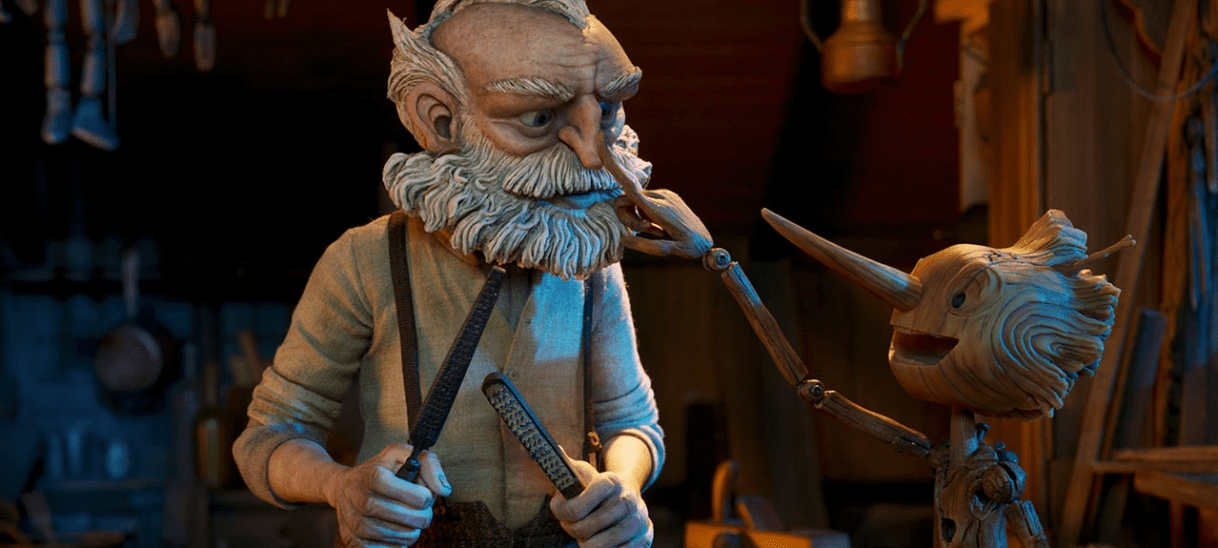
Pinocchio (Gregory Mann) and Count Volpe (Christoph Waltz) in Guillermo del Toro’s Pinocchio (2022)

It also introduces the running commentary on religion that has underpinned most of del Toro’s oeuvre from and since The Devil’s Backbone (2001). For instance, the destruction of the church and its subsequent rebuilding goes on to symbolise Geppetto’s own rebuilding of his son. This is especially true as Pinocchio (after he has been magically brought into being) assumes the role of Carlo by helping Geppetto build out a wooden Jesus in the church (the last task the father and son shared). He goes on to raise one of the film’s most significant lines relating to why everyone likes the wooden Jesus but not him. This undercuts the road to self-discovery that Pinocchio ultimately takes as he faces death and rebirth numerous times, before enacting a moment of selflessness in the film’s final act that would bring him as close to ‘being a real boy’ as he can come.

In order to get to that point though, he has to face various hurdles including a money-hungry circus ringmaster, Count Volpe (Christoph Waltz); a fascist government official from the town, who is set on sending the puppet with immortality to war (del Toro’s frequent go-to, Ron Perlman); the prospect of living forever and seeing those around him die; and his own desire to experience the fullness of the world.

Along the journey he is also accompanied by the talking cricket Sebastian (formerly, Jiminy) voiced by a comforting Ewan McGregor who injects the film with some of the comedic relief (e.g. being squashed countless times, being interrupted just as he’s about to break-away into song). Tilda Swinton also has a subtle role as an angelic spirit of life that brings Pinocchio into the world, and she also plays the sphinx-looking, death alter-ego that meets him every time he dies. Each of these characters have a distinct look that is both familiar and different in the ethereal way that del Toro’s creatures tend to be.

While finding one’s purpose and identity comes with its challenges, Guillermo del Toro’s Pinocchio helps the wooden puppet get there, and at the same time creates an experience with a unique identity of its own.  

Guillermo del Toro’s Pinocchio is in select cinemas and will be streaming on Netflix from December 9.

Obi-Wan Kenobi and the Rise of the Spin-Off Series

It seems we’re living in the age of the spin-off series. Intellectual property (IP) that has proven successful is now seeing a surge of either origin or ‘where-are-they-now’ stories surrounding established characters (Better Call Saul, Young Sheldon, the upcoming That 90s Show etc.), or shows providing more context on the show they are spun-off from (1883, How I Met Your Father etc.). No truer is that than in Disney’s wave of Star Wars limited series.

There’s no question that the Star Wars universe lends itself to this surge of content more than any other property available. That’s not to say that there aren’t other major IP’s that have the same possibilities, with the widely popular Game of Thrones set to see Kit Harrington reprise his role as everyone’s favourite, nothing-knowing Jon Snow.

But in Star Wars, Disney has a well with an endless supply of content, and one that the entertainment behemoth is unlikely to ever to stop drilling. From The Book of Boba Fett to the latest Obi-Wan Kenobi show, the last year has seen Disney already churn out two Star Wars-centric shows for two iconic characters from the franchise. And with a long pipeline of further shows to come —Andor, Ahsoka and Lando, to name a few— it looks like spin-offs are on the menu and Disney is ready to keep serving them.  

Rosario Dawson as Ahsoka

That’s not necessarily a problem though. Even with a minority of fans that would like to see more shows in the vein of The Mandalorian than that of a bounty hunter whose fate was seemingly set in stone almost 40 years ago, there’s still lots of good to come with the bad.

The one big positive is the sheer amount of talent that has been involved in each of the shows. From less renowned directors like Rick Famuyiwa, Kevin Tancharoen and Bryce Dallas Howard, to more established directors like Taika Waititi, Robert Rodriguez and Jon Favreau — the spoils have been shared across the board.

It’s in Obi-Wan Kenobi though, that Disney have managed to return to something so familiar and etched in Star Wars history. By allowing Deborah Chow to direct all six episodes of the show, there is a level of balance restored to the force (as it were) and the franchise. The singular vision of Chow’s Obi-Wan Kenobi is one that goes back to the roots of what made the franchise so iconic in the first place — George Lucas.

That’s not to say that the show is without its faults, as there isn’t much in the way of storytelling beats that you wouldn’t find in The Mandalorian. The premise is really similar to that of The Mandalorian (a hero thrust into the far reaches of the galaxy to escort a child home safely is hardly exciting) albeit that isn’t a fault of Chow’s given she didn’t pen the episodes. But to call this a shortcoming of Obi-Wan Kenobi isn’t a large criticism, given that The Mandalorian has offered the most compelling storytelling of all the current crop of Star Wars shows, so if any other Sci-Fi oriented shows are drawing from it, then more power to them.

Still from The Mandalorian

Unfortunately some of those shows include Paramount’s expensive adaptation of the beloved video game Halo which has had more problems than simply trying to emulate The Mandalorian‘s success. If anything really lets Obi-Wan Kenobi down it’s that it was always sold as a six episode limited series as opposed to something like The Mandalorian which will push three seasons next year.

There’s speculation that a second season of the show could happen, but one can’t help but wonder how much more refined the show could have been if it had stretched out its characterisation and storylines across more episodes. Obi-Wan Kenobi was always going to be a success —after all, it’s ‘Star Wars’, and sees fan-favourites Ewan McGregor and Hayden Christensen return— so why take a limited series approach? To have people request a second season at the show’s conclusion anyway?

It’s understandable that certain entertainment companies will want to play it safe by taking up a limited series format and waiting for the public reception before greenlighting a further season. But Disney is the biggest entertainment company in the world, and Obi-Wan Kenobi was always going to do well. By limiting the show to only six episodes and cramming everything (including that long awaited battle) into these episodes, there really isn’t a reason to bring Hayden Christensen back for a second season even though he’d love to, and which will probably happen in some capacity anyway. Obi-Wan Kenobi would have benefitted from more episodes to give the character a more refined arc than simply a baby-sitter who finds strength and hope as a result of said babysitting.

Maybe I’m being too harsh as I do feel that Deborah Chow found her groove by being the sole director here, and it was a delight to see Ewan and Hayden put on the jedi-esque robes and Darth Vader suit, respectively. It might be my adulation for a show like Better Call Saul and its extraordinary writing, but if there is to be a second season of Obi-Wan Kenobi, let’s hope that it’s given ample time to develop further and does keep some mystery tucked away for later.

All six episodes of Obi-Wan Kenobi are now streaming on Disney+

Ranking Pixar’s Filmography

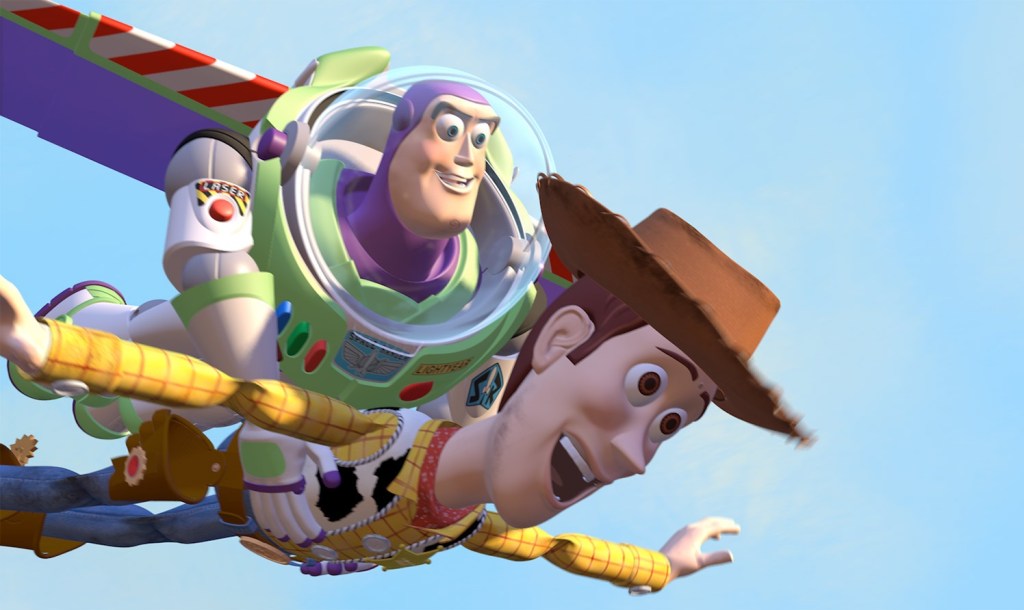
27 years ago, Walt Disney Pictures took a massive gamble in distributing Toy Story, the world’s first feature-length film animated entirely with computer technology. Said film has since gone on to become a cultural touchstone, and the Emeryville-based crew that created it has morphed from a humble software firm to an entertainment juggernaut, its name as synonymous with animation as the corporation which acquired it.

The team at Rating Frames has been fortunate enough to witness the meteoric rise of Pixar Animation Studios first-hand – with our eldest writer being only a year older in age than Toy Story, we have never known a world without Pixar’s movies in it. Our earliest cinematic memories have been forged by their releases, which in turn have informed our love of the medium today.

Pixar made a return to theatres this weekend just past with Lightyear, breaking a two-year tradition of its pictures being released exclusively on Disney+. To celebrate this achievement, and his unflinching admiration for the company, our resident animation expert Tom Parry is ranking every prior Pixar feature from worst to best.

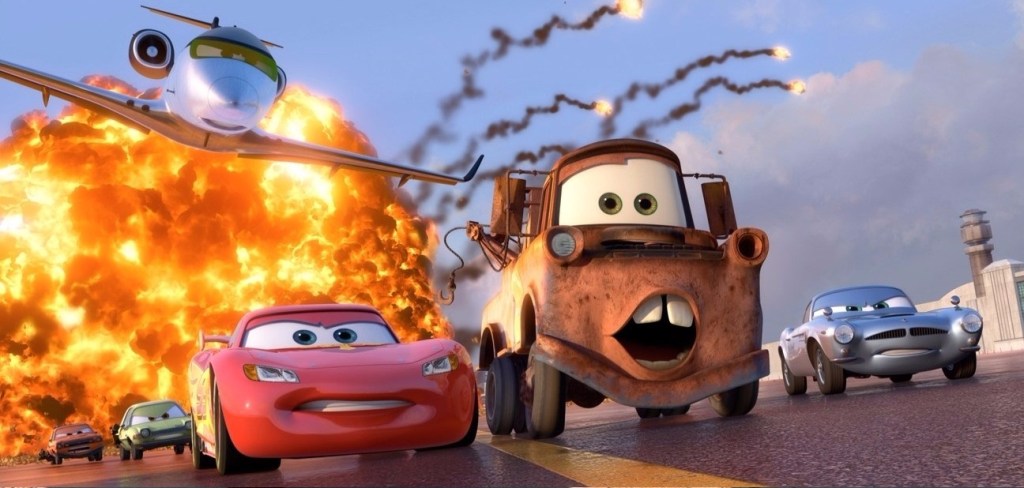
25. Cars 2 (2011)

This one’s appearance at the very bottom of our list should come as no surprise to anybody familiar with Emeryville’s filmography. With a nonsensical, chaotic story that makes its originator look passive, and a penchant for violence and destruction, this sequel is the let-down in an otherwise stellar family of high-achievers.

24. The Good Dinosaur (2015)

Despite being undeniably sweet and filled to the brim with gorgeous visuals – particularly those near-realistic landscapes – this seen-it-all-before screenplay squanders any potential by failing to build upon its (admittedly) clever premise. Ordinary by the standards of most; underwhelming by the standards of Pixar.

23. Cars 3 (2017)

Seeking to atone for the mess that was its predecessor, this threequel took the series back to its roots by opting for a more placid approach, and removing the juvenile antics – mostly. Although these changes are welcome, they result in a picture that feels too safe and lacks the magic of its stablemates.

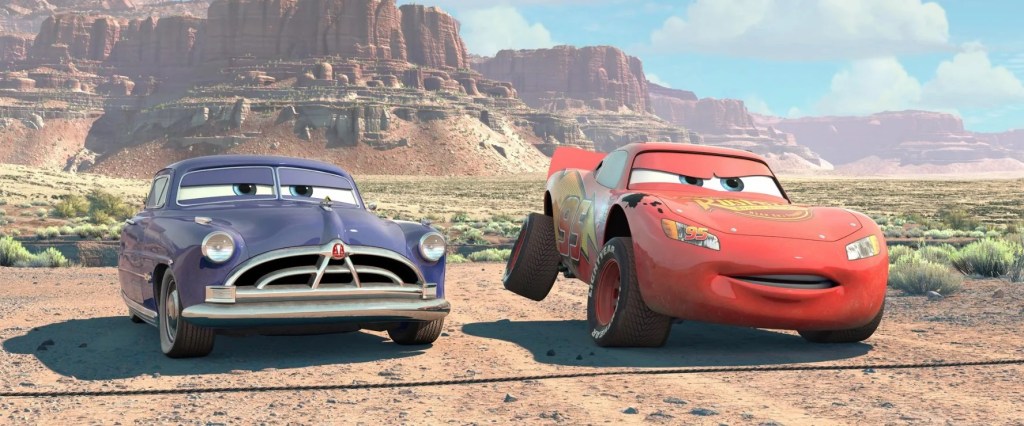
22. Cars (2006)

Barely a nose ahead of the second and third Cars movies is the very product that inspired them. Some elements prove enjoyable, such as the tranquil driving sequences and surprisingly decent soundtrack; others are less so, like the infantile morals it seeks to impart on the viewer.

21. A Bug’s Life (1998)

One of the earlier releases from Pixar that has almost been lost to time, owing to the many quality productions in its wake. Needlessly mean-spirited and possessing a screenplay riddled with clichés, today it looks closer to another studio’s product than an early example of Pixar’s greatness.

20. Brave (2012)
A backward step for the esteemed folk of Emeryville as they follow the route usually taken by their superiors – telling a narrative about a princess in a medieval setting. But it’s saved from mediocrity by the Scottish backdrop, Patrick Doyle’s soundtrack and reasonably engaging conflict between the central protagonist and her mother.

19. Monsters University (2013)

The first and, to date, only prequel from Pixar, utilising the well-worn formula of the college movie and combining it with the ingenious concepts of its originator. Never reaches the emotional or intellectual heights of its contemporaries, but does have some amusing moments and a smart, thoughtful message.

18. Finding Dory (2016)

Andrew Stanton’s return to the deep-blue tugs at the heartstrings without ever reaching the heights of its highly-acclaimed and much-loved precursor. Nonetheless, it’s a delight, and worth watching alone for an utterly wild third-act.

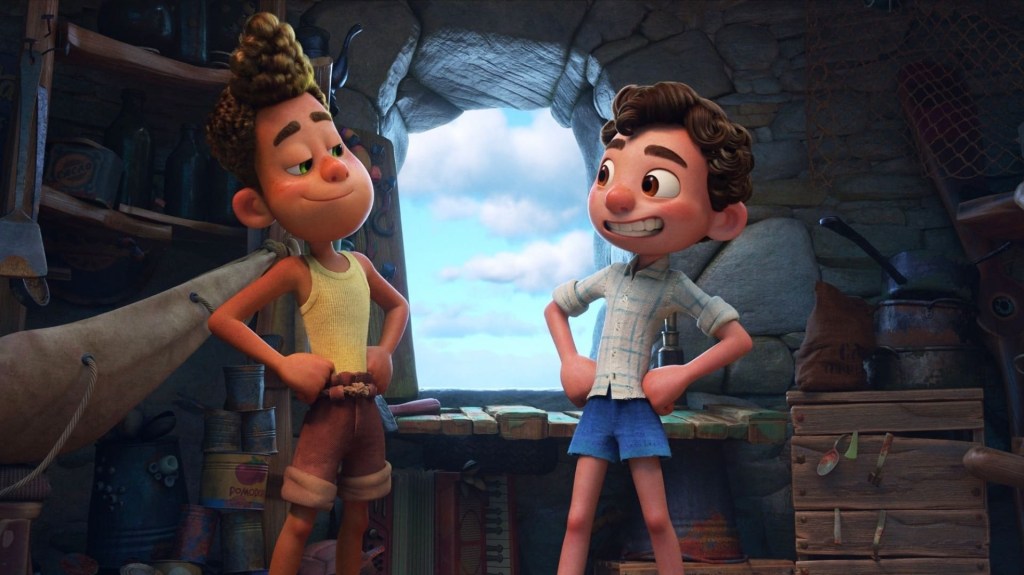
17. Luca (2021)

Riding on an easy-going, carefree tone and possessing anime-inspired visuals, Enrico Casarosa’s Italy-set adventure is the most distinct feature of this bunch. A little too sweet and gentle when compared with its brethren, yet still an absolute charmer – one could almost describe it as catharsis in motion-picture format.

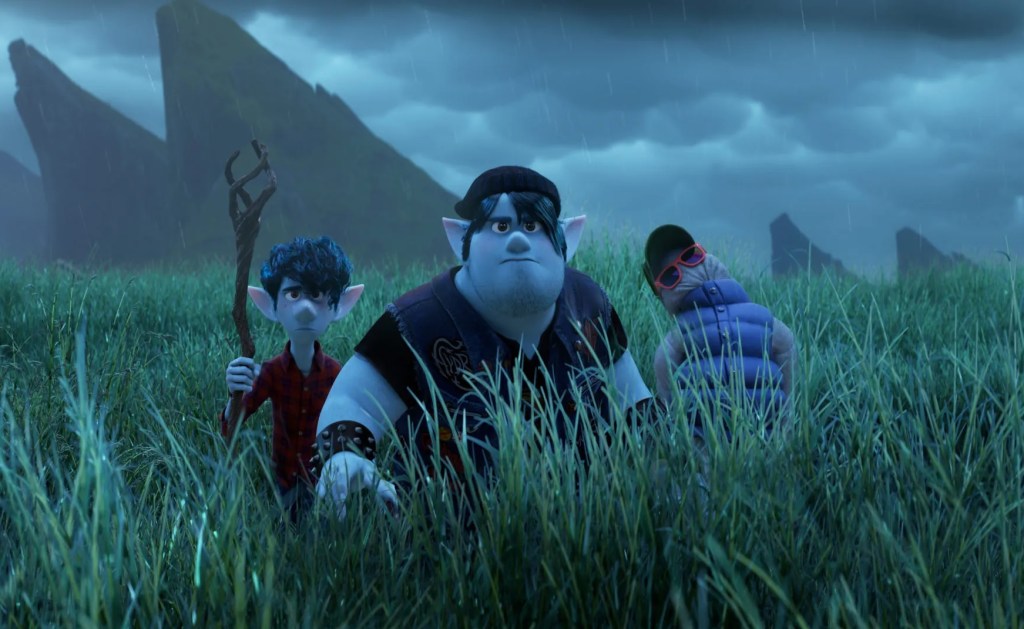
16. Onward (2020)

Nestled in the rich and imaginative world of New Mushroomton is a compelling, witty and warm tale about brotherly love, paired to an epic soundtrack of power ballads. Spoiling the otherwise-pleasing narrative is a trite conflict between siblings that a studio of this calibre should be avoiding at all costs.

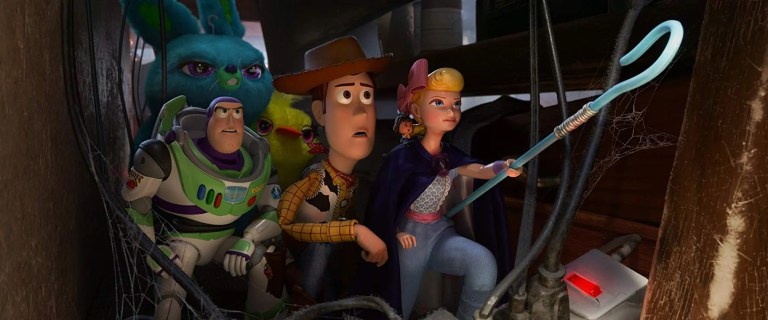
15. Toy Story 4 (2019)

The least compelling entry in the Toy Story franchise, for it dispels its fantastic roster of deuteragonists and has rather disparate messaging. Even so, the screenplay is absorbing, the laughs hearty, the new characters likeable, the struggles relatable and the familiar voice-cast a reassuring hug from an old friend.

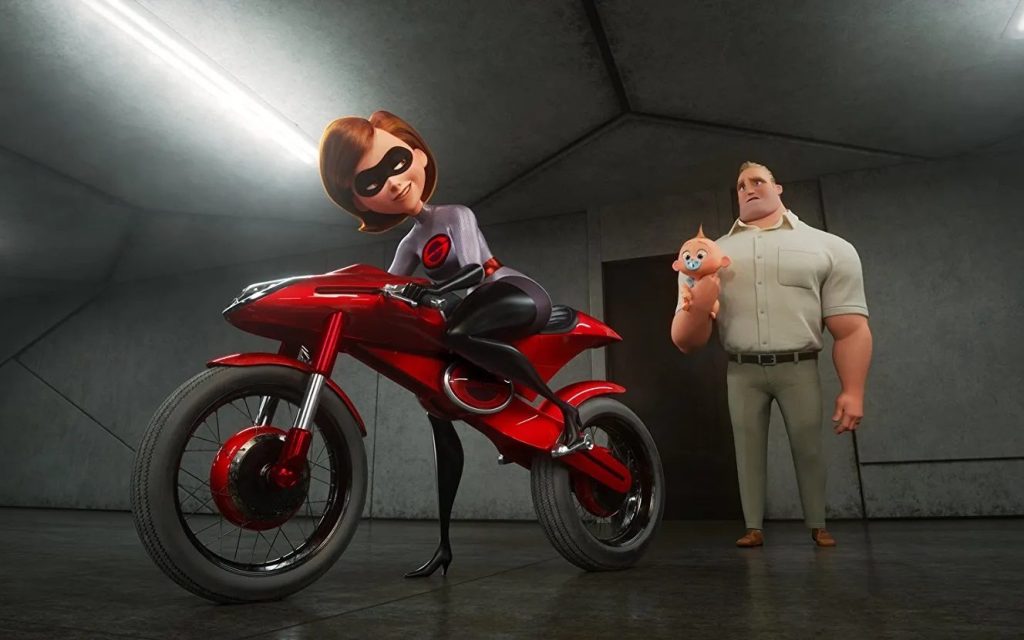
14. Incredibles 2 (2018)

A long-awaited, much-anticipated sequel that nearly lives up to the hype. Brad Bird’s movie carries over the superhero protagonists and multiple qualities of its predecessor, but forgets one key ingredient: an imposing, inimitable villain.

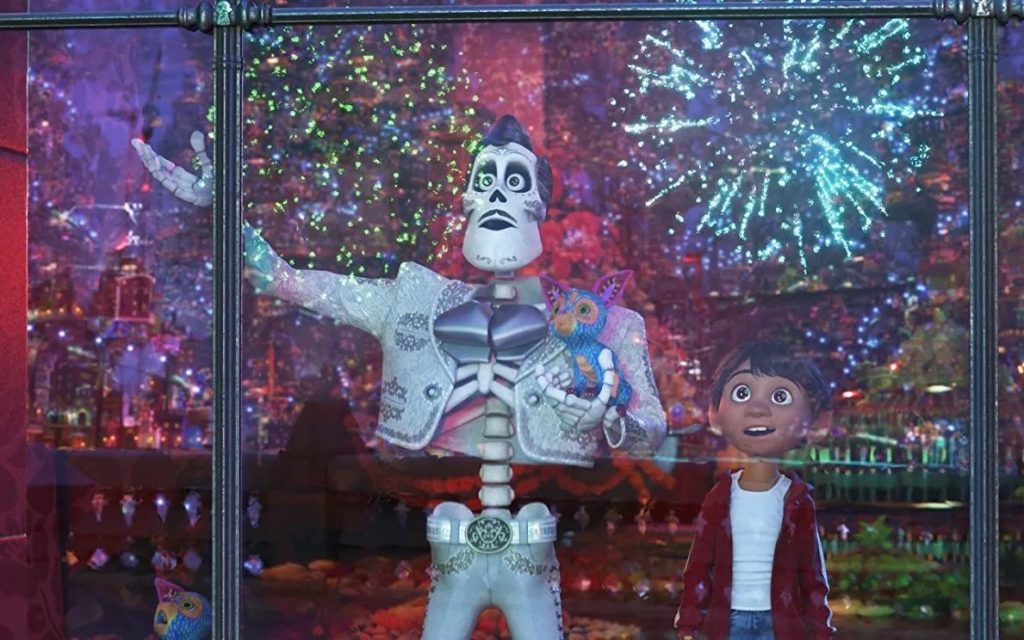
13. Coco (2017)

While comparisons with another Day of the Dead-themed animated feature, The Book of Life (2014) are inevitable, Pixar’s effort proves enjoyable in its own right due to the astonishing visuals and fabulous soundtrack. Only a hackneyed script hinders it from outright greatness.

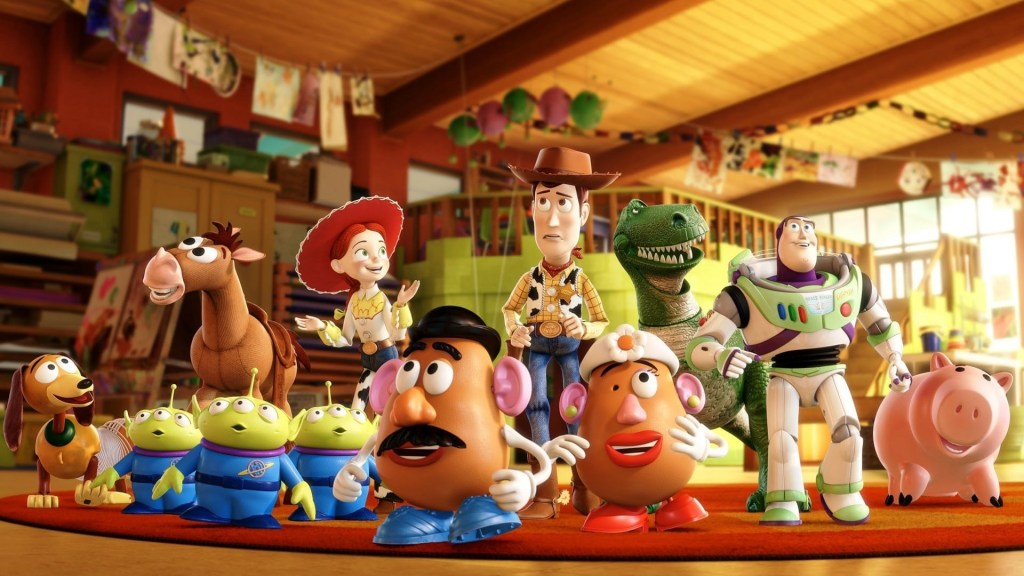
12. Toy Story 3 (2010)

Never afraid to wrench a few hearts, Emeryville delivered its biggest tearjerker yet with this stirring threequel about everybody’s favourite playthings. Unfortunately, it’s spoilt by being a touch too dark at times, utilising the same themes as its precursor, and needing knowledge of the two prior films to be fully appreciated.

11. Monsters, Inc. (2001)

The directorial debut of Pete Docter takes a common trope – the belief that monsters terrorise children in their bedrooms at night – and applies its own unique spin to deliver a clever, heartfelt story. The characters are iconic, the dialogue endlessly quotable, the designs creative and the voice-cast peerless, though proceedings do get a bit outlandish.  

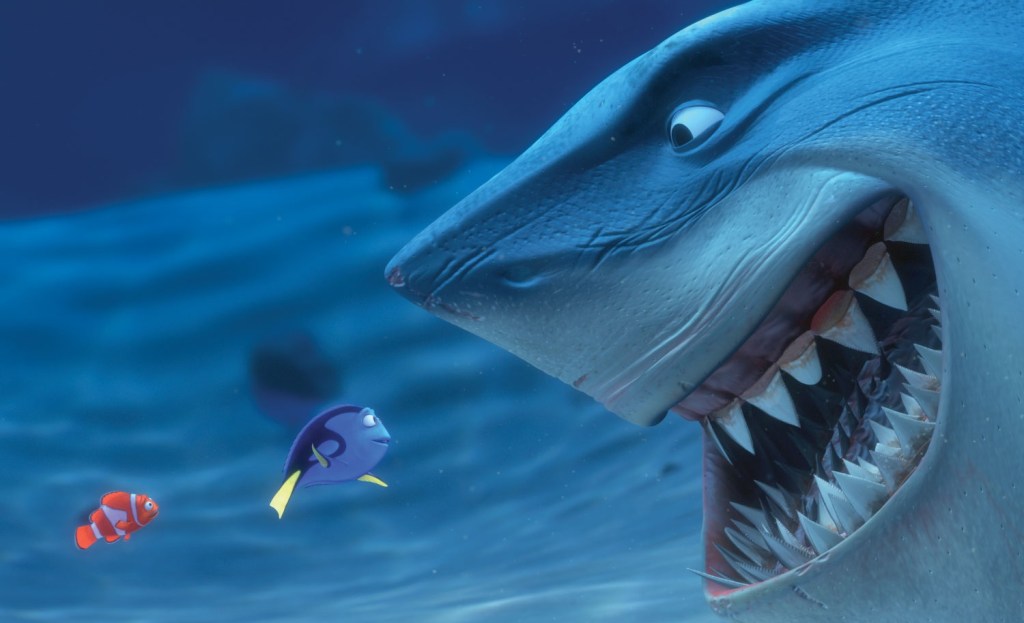
10. Finding Nemo (2003)

Andrew Stanton’s ocean-faring debut feature possesses much the same strengths as Docter’s door-hopping tale, such as fantastic characters, quotes and voice-acting; yet Nemo gets the edge over Monsters for being the more grounded conflict. Plus, the blue of the deep sea helps lend a tranquil, serene tone.

9. Toy Story (1995)

After all these years, the movie that started it all remains a solid watch thanks to a timeless narrative and litany of distinctive personalities. If anything sours the experience, it’s the evident limitations of the technology available at the time. That, and the actions of the characters are quite extreme on occasion.

8. Turning Red (2022)

Released only a few months ago, Domee Shi’s coming-of-age comedy is already a certified classic for the studio. It’s also the most individual film of the bunch, containing slick designs, amusing slapstick gags, extroverted protagonists and an exuberance which is absent from most other Pixar movies.

7. Ratatouille (2007)

Its premise is bizarre and brilliant in equal measure – a rodent with a passion for gastronomy becomes a chef at his idol’s restaurant by using a lowly garbage boy as his vessel. But look behind the zaniness, and there will be found an investing conflict, stunning imitations of Parisian streetscapes, playful orchestrations and a monologue in the third-act that one never tires of hearing.

6. The Incredibles (2004)

Well-written protagonists facing a memorable, formidable villain. Detailed, superbly-rendered worlds. Quotes that stand the test of time. A brassy, catchy soundtrack from one of the industry’s all-time great composers. This isn’t just one of the best Pixar films, nor animated features; it’s one of the best superhero blockbusters ever released.

5. Soul (2020)

The least childlike product to emerge from Emeryville, which is no bad thing. Pete Docter’s pensive, adult-minded drama wins viewers over with its clever screenplay and exceptional soundtrack, proving that animation is a medium for all ages. It’s also, quite possibly, the only good thing to come from the year 2020, film or otherwise.

4. Wall-E (2008)

An ambitious, mesmerising piece of cinema that’s loaded with allegories and offers plenty of commentary of modern consumerism, yet at its basest level is a touching, charming tale about a tiny, lonesome robot who seeks a greater purpose in life. Visuals, music, sound editing and writing are all stellar.

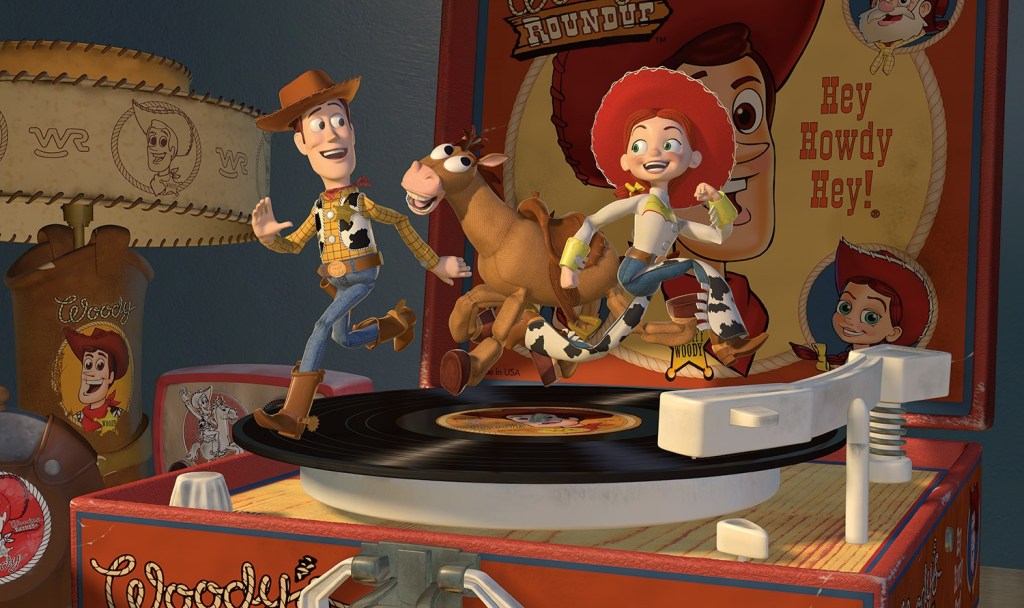
3. Toy Story 2 (1999)

The first of many sequels and spin-offs from this company that set a very high benchmark for every production since. Aspects improved upon over the first Toy Story include better rendering, a more nuanced antagonist and some insightful ruminations on purpose and mortality, while the only irksome element is the pacing – it leans a tad toward the fast side.

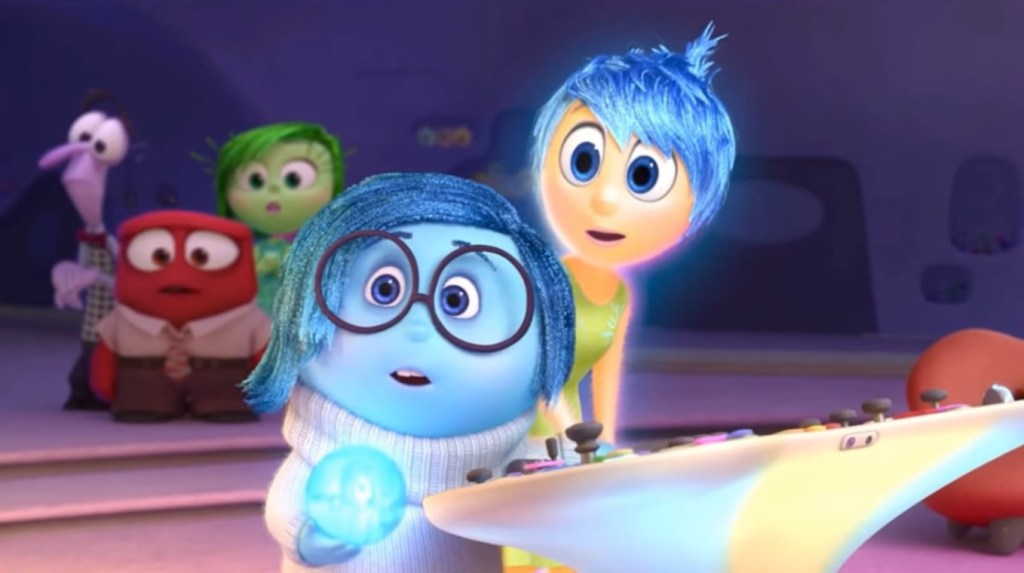
2. Inside Out (2015)

Until the release of Soul, this was the most profound, mature and resonant feature in Pixar’s relatively short history. Don’t be fooled by the simplistic premise, loud colours and cartoonish designs of the main characters, for they mask a screenplay that’s clever and moving in the most unexpected of ways.

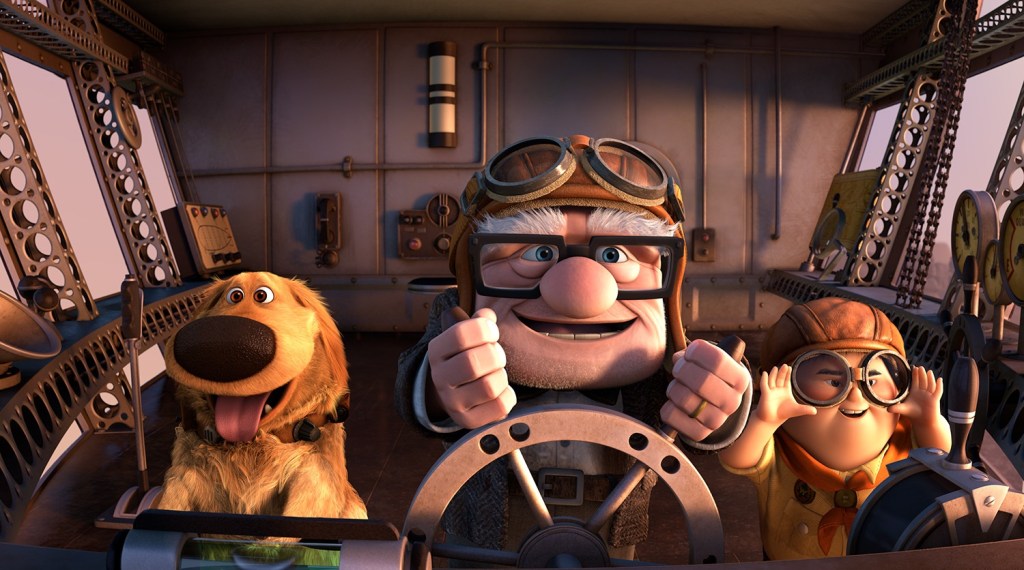
1. Up (2009)

The 2000s well and truly witnessed the peak of Pixar Animation Studios – it’s the decade that bore Monsters, Inc., Finding Nemo, The Incredibles, Ratatouille and Wall-E, five of the features which have drawn universal acclaim and come to define the company almost as much as the Toy Story franchise has. And at the very end of that decade came the picture that would top them all: Pete Docter’s Up.

The film has it all – a melodic orchestral soundtrack from Michael Giacchino; an emotion-filled montage of married life; endearing characters, both human and non-human; outstanding voice-acting from all involved; and a script that deftly fuses adventure, comedy, romance, fantasy and thrills. It is, quite simply, perfection in animated form, and deserves to be seen by everybody young and old.