Companionship Between Man, Dog and Robot Encompasses the Endearing Finch

Rating: 3 out of 5.

Man and dog almost always seem to go hand-in-hand when post-apocalyptic settings come into question — they’re like buddy-up cop films minus all of the cheesy one-liners and recycled cliches. From I Am Legend (2007) and Mad Max 2: The Road Warrior (1981) to the more recent Love and Monsters (2020) and now Finch (2021); man’s best friend has had a long spanning place in this genre of films.

The film marks the second feature that Hanks has starred in for Apple TV following last year’s Greyhound (2020), and the second feature from Miguel Sapochnik following Repo Men (2010).

Like the aforementioned films before it, Finch focuses on themes pertaining to companionship and surviving, but it is also a much more quiet and reflective post-apocalyptic film that digs into the importance of trust, honesty and loyalty — values exhibited by man’s best friend.

It sees a former engineer and all round tech guru Finch (Tom Hanks) and his dog Goodyear, scavenge for food and supplies in a world where most life has been wiped out due to a sun flare which has resulted in large amounts of radiation infecting the world. Finch’s own health has been impacted by this radiation so he decides to create a robot companion whose main directive among all others will be to take care of Finch’s doggo should he die. That robot, who becomes imbued with vast knowledge through some tech savvy work by Finch, decides to call himself Jeff (voiced by Caleb Landry Jones) and develops an interesting, if not coy relationship with Finch. The three companions eventually set out to San Francisco as a deadly storm closes in on their haven in St Louis.

Tom Hanks and Goodyear in Finch

Hanks begins to play Finch in a similar way to his iconic Chuck Noland from Cast Away (2000) where he’s often talking at something (his dog) as opposed to with someone. This is where the talking robot Jeff comes into play as he helps steer the film away from Cast Away territory to something more involving as opposed to a version of this film that would bank on Hanks’ performance for its entirety.

Jones gives Jeff a level of complexity that becomes more revealing as the trio trudges on in their motorhome and interact with each other. Hanks adopts a more paternal presence as he literally brings this robot into existence whilst also having the job of feeding and taking care of Goodyear and another little non-speaking robot compadre.

For what it’s worth, the trio of man, dog, and robot is actually quite endearing and heart-warming that makes me think of this film as Chappie (2015) meets I Am Legend but without the boxing and killing, respectively. It’s very much a tale of companionship that pays respect to the importance of man’s best friend and celebrates that relationship by seeing Finch echo the values of trust, honesty and loyalty at the robot he has made, so as to help Jeff build a relationship with Goodyear that is comprised of those values once Finch is gone.

While the film doesn’t necessarily offer much in the way of unique spins on the post-apocalyptic genre, it does retain a sincerity and truth that can be felt through the script — especially the dialogue. When all is said and done, it looks like the biggest winners in a world with minimal human existence will be man’s best friend — given they’ll still have someone to play catch with.

Finch is now streaming on Apple TV+

Daniel Craig Gets a Semi-Rousing Farewell in No Time to Die

Rating: 3.5 out of 5.

The release of a new James Bond film is always greeted with keen anticipation; on this occasion though, the mood is more solemn, since the latest instalment also heralds the end of Daniel Craig’s tenure as the gentleman spy. While it’s undoubtedly one of the better chapters in the long-running series, when viewed as a tribute to its much-loved star, the picture proves less appeasing.

The British intelligence agency known as MI6 has been compromised, yet again, after an experimental weapon is stolen from one of their top-secret research facilities in London. Its theft has huge ramifications for global security, not just because of the potential harm it can inflict on humanity, but also due to its secrecy, with only a select few individuals being aware of the weapon’s existence – not even Britain’s Prime Minister has been informed of its development.

In years gone by, MI6 would have called upon the services of James Bond (Daniel Craig) to rectify affairs like this; but the secret agent is now long-retired from the organisation, living off-grid and isolated in Jamaica with no desire of returning to duty. That is, until Bond is greeted by his CIA counterpart and friend, Felix Leiter (Jeffrey Wright) who informs him of the raid’s connection to SPECTRE, the criminal syndicate believed to have been thwarted five years earlier.

No Time to Die (2021) marks the 25th entry in Eon Productions’ James Bond film franchise, the release of which has been a long time coming. Initially set for a global debut in late 2019, delays in development and production saw that date pushed to March 2020, only for you-know-what to see the picture delayed again until September of this year. Australians have had to wait longer still to see the feature, with lockdowns in their two most-populous cities resulting in a six-week delay for the theatrical release.

MI6 agent Nomi (Lashana Lynch) makes her debut in No Time to Die

Those who have been eagerly awaiting Bond’s newest adventure will be pleased to know that No Time to Die has plenty of exciting action sequences, possibly the best of any Bond film. Among these sequences are some ferocious close-quarters encounters with impeccable choreography; intense gun fights between parties that have an unnerving realism; and two sublime car chases – the first through an Italian village in Bond’s iconic Aston Martin DB5, the second an off-road argy-bargy in a decidedly unexotic Toyota Prado.

Long-time fans of the franchise will be equally thrilled by the constant allusions to the previous Bond flicks, including the aforesaid DB5, as well as Timothy Dalton’s V8 Vantage from The Living Daylights (1987), and the occasional musical reference to On Her Majesty’s Secret Service (1969). Yet undoubtedly, the most recognisable trademark is Bond’s dry humour, here crafted with the input of another personality known for their sardonic wit: Phoebe Waller-Bridge, who is credited as one of No Time to Die’s four screenwriters.

Waller-Bridge’s comedic influence can also be found in the two “Bond girls” making their franchise debut. One is the cool, assured Nomi (Lashana Lynch), an MI6 operative and Bond’s replacement; the other is the giddy, yet resourceful Paloma (Ana de Armas) who is contracted to the CIA. The latter is a particular highlight – despite being seen only briefly, Paloma adds a vast amount of liveliness to proceedings with her unique, quirky personality, certifying herself as a protagonist who deserves a larger role in a future Bond instalment.

Although these many qualities help distinguish the 25th film from its precursors, No Time to Die is not one to deviate from the established formula, being closest in spirit to the previous chapter, Spectre (2015). This association is most evident in the lethargic pacing, flowing at a patience-testing speed that ensures the blockbuster seems every bit as long as its advertised 163-minute length would suggest. Still, both pictures remain an improvement on Quantum of Solace (2008) and its rapid-fire editing.

Another of Bond’s allies, Paloma (Ana de Armas) as she appears in No Time to Die

There is a greater problem with No Time to Die, and that’s its chief antagonist, Lyutsifer Safin (Rami Malek). In addition to possessing a convoluted plan and opaque motivations, Safin is an uncompelling character, lacking the intriguing backstory, maniacal personality and ruthless mentality of Bond villains past, with a slight facial disfigurement and soft French accent being his only distinguishable traits. Malek himself does nothing to help matters, his performance being bland, remote, and failing to convey even the slightest hint of emotion.

And on the subject of emotion, it’s worth noting that No Time to Die isn’t quite the heartfelt send-off that it’s trying so hard to be. There are numerous stirring moments within the story, yet very few of these moments feel earned, and have seemingly been put forward solely to get a cheap reaction out of the audience. What’s more, because this screenplay forms part of a serialised, five-part narrative, the emotional scenes will only find resonance with viewers who’ve seen Craig’s previous outings as 007.

25 films and very nearly six decades into its existence, the James Bond franchise is one that continues to delight and surprise, with No Time to Die profiting from superbly choreographed action sequences, welcome nods to the character’s past and the contributions of Phoebe Waller-Bridge. This may not be the satisfying denouement that Daniel Craig deserves, but it’s a fitting one nevertheless.

No Time to Die will be screening in cinemas from this Thursday, November 11th.

The Green Knight is a Brilliant and Unique Work of Adaptation

Rating: 4.5 out of 5.

After 18 long months, Australian fans of filmmaker David Lowery were rewarded with the release of his critically-lauded feature The Green Knight (2021). The film has had a long Covid-delayed release, from a canceled SXSW debut in March 2020 – a date that feels weightier with each passing month – to theatres pulling the film from the calendar completely. US audiences were finally able to see the gorgeous and beguiling film in theatres in late July, but Australian audiences had to wait three more months before being able to see this wonderful film on Amazon Prime. 

Whether it was this long delay or the enveloping world Lowery has constructed here, but it felt so necessary to savour every moment on screen. Lowery has stated in interviews that this release delay allowed him to go back and edit large swathes of the film, not dissimilar to the eventual creation of Steven Soderbergh’s brilliant The Limey (1999) which involved the director re-editing the film after being dissatisfied after an early screening was shown. Whilst that film was recut with a focus on more experimental uses of editing, The Green Knight found its rhythm in its new cut, “allowing it to breathe” as Lowery describes. This is felt in the extended shots that have become the director’s signature, especially his use of a methodical 360° pan that never fails to draw the audience in (more on that later).

The Green Knight is a work of adaptation that keeps in the spirit of the original chivalric romance’s beguiling nature while also changing many details that are deceptively interesting that are sure to be picked over for years to come. There is a lot of meat on this bone that will propel you to return to the film often (a key bonus to having the film available on a streaming service.)

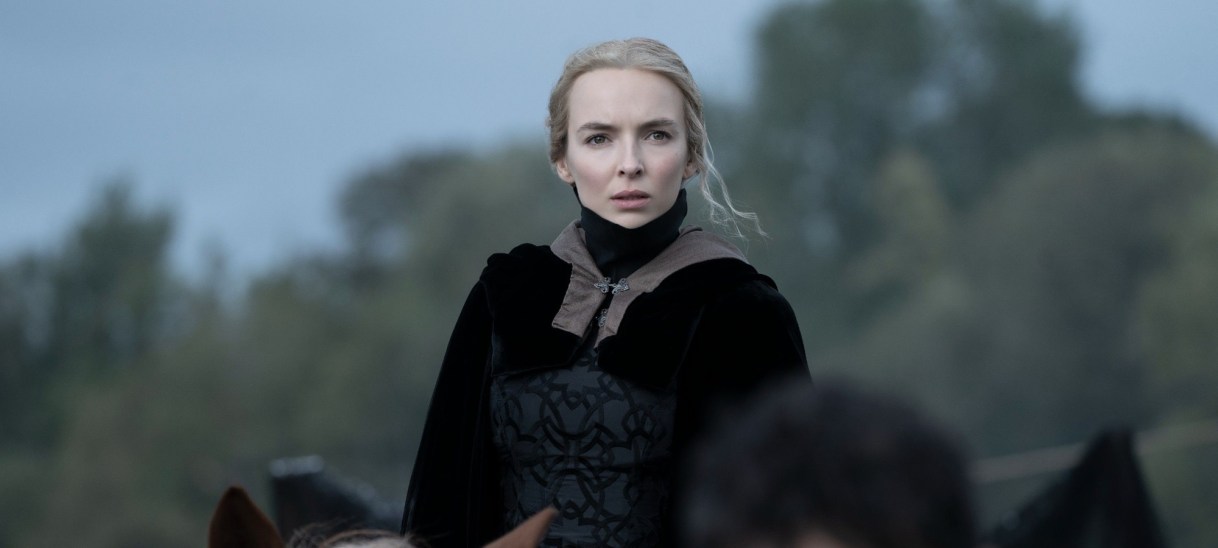
At the centre of our story is Gawain, a knight played by the wonderful Dev Patel with a mixture of youthful eagerness and unassuredness that propels every moment of the story, accepting the challenge from the titular Green Knight (Ralph Ineson) during a Christmas day celebration in King Arthur’s round table court. Whether you’re familiar with the story or not, Lowery lays out the stakes with an assured pace, moving smoothly into Gawain’s quest for knightly honour, and to discover what that even means to him.

David Lowery is an auteur that works across genres and styles but is firmly rooted in the Del Toro camp of fairytale filmmakers. Whether it’s a grizzled career criminal, a lyrical film poem about the concept of haunting and death, or one of the best live-action Disney films of the 21st century about an orphan and a dragon, Lowery is able to breathe a sense of sincerity and beauty into his worlds, whilst never bogging down in the plots of his stories. The director’s assuredness throughout the film to be comfortable leaving the audience confused for stretches of Gawain’s quest, knowing the emotionality of the film work as a guide rope through the darkness, is wonderful and all too rare in modern American cinema.

The story unfolds patiently, following Gawain’s journey to understanding his own virtue and courage in the face of the inevitability of death. The Green Knight is a story about understanding and respecting the natural order of death and decay, themes that in less deft hands would become overbearing with a sense of mourning and sorrow. Lowery has said that he originally planned on the film to be under two hours but during his re-edit discovered it needed more time to breathe, but it feels necessary to the film’s ability to not be dragged down by its themes or become too oblique as to lose the momentum of the narrative that might’ve occurred if the film stretched into the 150-180 minute range that most period epics sit.

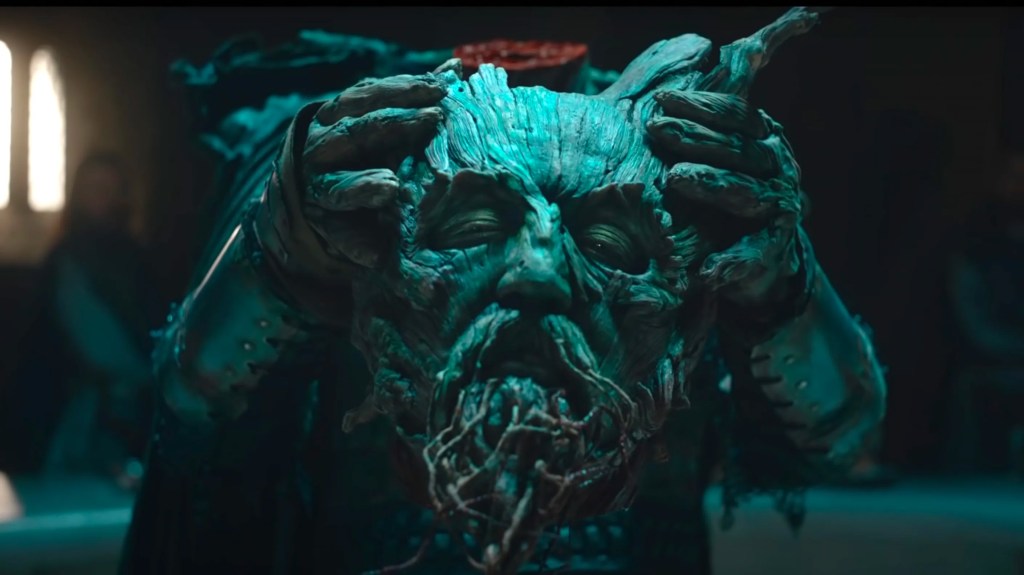
The titular Green Knight (Ralph Ineson) in The Green Knight

One of the most admirable and deeply compelling aspects of the film is Lowery’s use of visual storytelling and sound design in extended sequences that allow the audience to sit with and contemplate the themes and ideas being laid out, something that is quite unique to the cinematic form. In The Green Knight, this sequence arrives at the dead centre of the film as we find Gawain bound in a forest. We are shown this through a patient 360° pan as we see and hear the seasons change around the forest, as well as the growth of green moss consuming the forest, ultimately landing on the bones of a long-deceased Gawain. It invites the audience into being an active participant in the storytelling, asking you to put your own thoughts and emotions into the film that will develop and grow like moss on a forest bed over the duration of the film. Scenes like this can be seen throughout cinema, from the many films of Yasujirō Ozu, the procession scene in Bergman’s The Seventh Seal (1957), and in the works of Apichatpong Weerasethakul that all allow the viewer to meditate on the ideas of the film while still very much experiencing it.

One of the best things in cinema is when a filmmaker, whether consciously or not, creates a double feature/trilogy in their filmography, thematically linking separate films that go deeper than just their aesthetic sensibilities. It’s impossible not to see the connections between Lowery’s previous two films A Ghost Story (2017) and The Old Man & The Gun (2018) with The Green Knight. All three features have a quest to find the meaning in death, not in trying to outwit it like a Bergman film, but in coming to terms with it and respecting it, both by meeting it head-on and from beyond the pale.

Crafting one of the best cake-and-eat-it ending sequences in recent memory, Lowery is able to convey a rich tapestry fit for the Arthurian legend with a sense of grace that is truly remarkable. While the author of the original chivalric romance is unknown, the author of this adaptation is firmly Lowery, an auteur that is building an extraordinary filmography. Lowery is one of the best American filmmakers to emerge in the last 10 years and is only a year away from the release of his return to Disney with an adaptation of Peter Pan, a dream pairing of storyteller and story that will not disappoint.

The Green Knight is on Amazon Prime now.

Dune is a Movie Experience that Beckons to be Lived

Rating: 4 out of 5.

Denis Villeneuve’s adaptation of Frank Herbert’s widely beloved novel of the same name, Dune (2021), is a remarkable feat in blockbuster filmmaking that reaffirms why Villeneuve is one of the best working directors today. Villeneuve’s adaptation honours Herbert’s writing by matching it with visual splendour and creating an on-screen world that feels lived-in — something that hasn’t been felt on the big screen since the director’s last film, Blade Runner 2049 (2017).

There’s a reason why Frank Herbert’s science fiction novel had always been deemed unfilmable in the same way as J.R.R Tolkien’s The Lord of the Rings. Like The Lord of the Rings, Dune is comprised of a level of detail that captures the minutia of the world it creates and the characters that occupy it; whether that be through numerous internal monologues, vivid imagery through carefully selected wording, or just the fact that the ‘hero’s journey’ isn’t approached in a way that would seek to validate the protagonist’s actions.

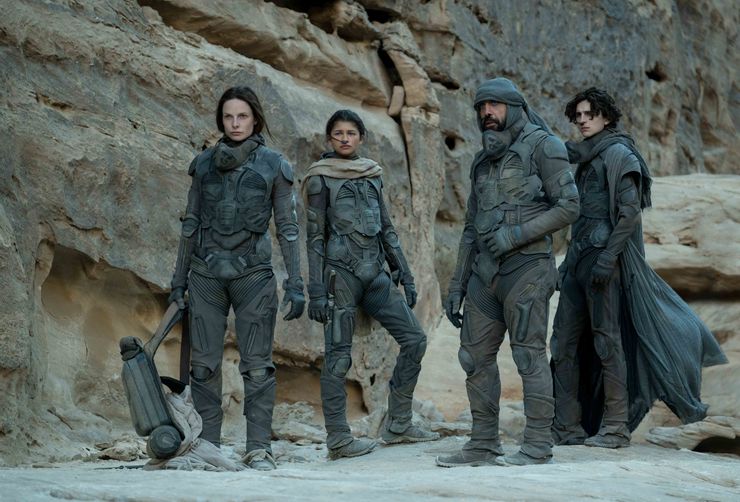
That protagonist is the Muad’Dib, Lisan al Gaib, Kwisatz Haderach, Messiah — Paul Atreides (Timothee Chalamet). Mentioning all of the ways in which Paul is referred to in the book and film is important because it highlights just how nuanced of a character he is. Paul is many things to many different groups and people, be it the Bene Gesserit who are a sisterhood conditioned in superhuman ways; the Fremen who are the desert people of the planet Arrakis; and to those that know him across the story like Chani (Zendaya), Lady Jessica (Rebecca Ferguson), and Duncan Idaho (Jason Momoa), to name a few.

When it comes to the plot, two houses (House Atreides and House Harkonnen) have been feuding with each other for ages. It isn’t until the Padishah Emperor requests that Duke Leto (Oscar Isaac) and the rest of House Atreides move to and oversee the desert planet of Arrakis (Dune), that tensions begin to further boil between the houses as deceit and betrayal ensues. On the planet is the galactic currency known as the spice (a melange like substance) that is the source for discontent, power, and wealth, and as mentioned in the novel, “he who controls the spice controls the universe”.

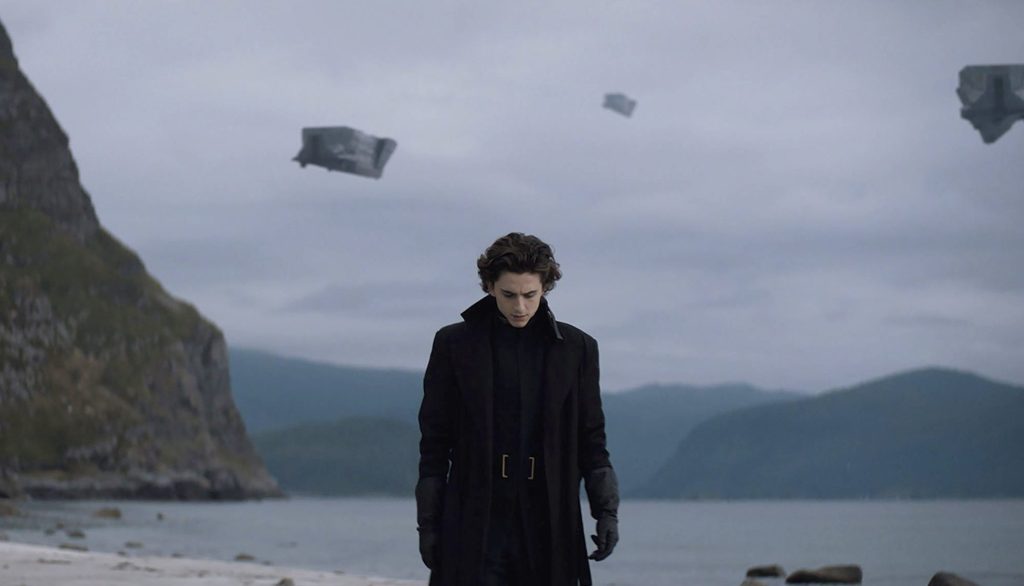
Timothee Chalamet in Dune

Alongside all of this is Paul who has a unique destiny that will change the lives of all of those around him. Paul is viewed as a messiah of sorts that has been bred and trained by the Bene Gesserit for the purpose of leading people into a better future, though at the expense of bringing about a potentially worse future known as the jihad (or ‘war’, as the film westernizes the term).

The story itself is a rather complex one, if not for Herbert’s aforementioned approach to writing the book, then for its emphasis on ideas pertaining to feudalism, mysticism, perennial truth, and a plethora of other nuanced ideas and leanings. Jon Spaihts, Eric Roth, and Villenueve do a good job of dissecting some of Herbert’s ideas for the screenplay, and adapting them for the screen through visual cues, motifs, and worldbuilding.

They take the heart of the story in Paul Atreides, and allow him to guide us through each given moment using visual storytelling and the affordances of the cinematic medium. In this way, for anyone that hasn’t picked up the novel, it’s relatively easy to follow the film and pick up on some of the concerns and ideas that penetrate Herbert’s telling through visual cues.

Villeneuve is a master of using visual storytelling to tell a complex story while leaving his own print on that story; It’s a large reason why Blade Runner 2049 worked so well and why Dune works just as well. The world he creates on-screen speaks for itself with its own visual language through setting, colour, visual effects, and cinematography. For instance, there is a scene involving the Sardaukar (the Padishah Emperor’s specially trained elite force) that captures the very essence of this force by using no dialogue. Rather, Villeneuve utilises framing, composition, visual effects and sound in a sequence that lasts barely a minute, but is able to depict the very ruthlessness of the Sardaukar in this short sequence. That’s just one of the many examples where Villeneuve shows and doesn’t tell — everything you need to know about this force is shown to you in this condensed form.

What Villeneuve isn’t able to do with Dune like with Blade Runner 2049, is give you a reason to care about the characters in this film. The first half of the film is paced incredibly quickly which is understandable given there is a lot of ground to cover in Herbert’s novel, however characters are what audiences latch onto for emotional support. The character of K (Ryan Gosling) in Blade Runner 2049 was multifaceted for an android, and the scale of the film never overwhelmed that connection built with him.

Some might view Villeneuve’s treatment of character as one that is reflective of Herbert’s own reluctance to provide overly accessible characters, however films need that connection otherwise you’re relying on visual bravado to take you where you need to go (which it does, but that aspect is a shortcoming nonetheless). I’d make the case that Herbert’s own novel offers characters like Gurney Halleck, Duke Leto, and even Paul to an extent, for emotional support and for connection.

(From left to right) Rebecca Ferguson, Zendaya, Javier Bardem, and Timothee Chalamet

That said, as with any adaptation of a novel or novels as rich in detail as Dune, Villeneuve has to sacrifice key aspects of the novel in favour of an adaptation that is worthy of a 155minute feature. Certain characters like Gurney Halleck (Josh Brolin), Thufir Hawat (Stephen McKinley Henderson), and Liet Kynes (Sharon Duncan-Brewster) become side-lined more than others where in the book they would play a much more pivotal role in understanding Paul and the motifs that underpin the film.

Some of those motifs include the significance of water on a planet where water is like its own currency. A film like George Miller’s Mad Max: Fury Road (2015) did a stellar job in capturing the significance of water in a largely desolate desert setting where it is treated as a controlling tool. Villeneuve’s Dune has moments where its significance is brought to light, but it never fleshes that out in a way that would make an audience member (unless you had read the book) realise the significance of the still-suits that the characters wear, or the cannibalistic like re-purposing of a deceased persons water.

But at its core, Villeneuve’s Dune is a film that pushes what the medium can achieve at this scale and is a masterful cinematic experience that epitomizes blockbuster filmmaking. The score composed by Hans Zimmer is piercing and fitting, and makes for an enthralling soundscape (which one would hope it would be given how long he has been sitting on it for a modern Dune film); the visuals are breath-taking and unlike anything I have seen in a film before where the world feels like it exists or will exist (as though Villeneuve is his own messiah who has seen the state of the world in 10,000 years); and the cast is incredibly talented and exciting to watch (especially Stellan Skarsgard as The Baron Vladimir Harkonnen in a role that echoes the muteness of his character in the Pirates of the Caribbean franchise).

For those that haven’t read the books and even those that have, Denis Villeneuve’s Dune part 1 is a breath-taking feat in filmmaking that deserves to be seen. It’s a film that places emphasis on worldbuilding and scale at the expense of some characterisation, but it is an experience that is unlike any you will have this year. It would have been great to have had a trilogy greenlit in order to explore the complexities of Herbert’s novel in greater detail, however the fact that there will be a sequel at all is a win for fans of the book, Villeneuve, and cinema.

Dune is now streaming on HBO Max until the 22nd of November and in Australian cinemas next month

Licence to Steal: The Unofficial Bond Films

Given their ubiquity, changes in cast and wildly varying degrees of quality, casual moviegoers could be forgiven for thinking that the James Bond films are always produced by a different studio, their rights exchanging hands more frequently than Bond himself changes lovers. In actual fact, these rights have stayed with the same two companies for decades, both holding the exclusive licence to adapt Ian Fleming’s stories and characters to celluloid.

Well, almost.

In the six decades since producers Harry Saltzman and Albert R. Broccoli were granted Fleming’s permission to turn his novels into feature-length pictures, there have been 27 films released with Agent 007 as the lead character. 25 of those movies – including the upcoming No Time to Die (2021) – have been made by Eon Productions, a company founded by Broccoli with the sole purpose of creating Bond films; the remaining two have not.

The production and release of these movies was, on both occasions, made possible due to legal loopholes that allowed individuals to circumvent Eon’s authority and craft their own adaptations of Fleming’s works. Neither picture is remarkable, but nonetheless, both are important pieces of cinematic history that contribute to Bond’s legacy, and as of such are worthy of discussion here on Rating Frames.

The first of these two films is Casino Royale (1967) which arrived at the height of James Bond’s popularity and mere weeks before Eon’s You Only Live Twice (also 1967) hit theatres. Its title is shared with Fleming’s debut novel, and not by coincidence – the rights to this book were optioned by American producer Charles K. Feldman, who unsuccessfully tried to adapt the story with Saltzman and Broccoli. When his relationship with the pair fell through, Feldman decided to continue on with the project alone, eventually securing the backing of Columbia Pictures.

Peter Sellers with Ursula Andress in 1967’s Casino Royale

Feldman’s Casino Royale is a picture that deviates wildly from its source material, being a slapstick parody that centres on an older James Bond (David Niven) coming out of retirement to mitigate a crisis at the behest of his former superior. The picture benefitted from a celebrity-laden cast that included not just Niven, but also the likes of John Huston, Peter Sellers, Orson Welles (yes, really!) and original “Bond girl” Ursula Andress, in addition to future stars Woody Allen, Jacqueline Bisset, Ronnie Corbett, Bernard Cribbons and John Bluthal.

Why actors of such calibre wanted to be involved is a mystery, because Casino Royale is an unmitigated mess of a movie, with the pacing being too fast, the screenplay lacking coherence, and the comedy being atrociously unfunny, with just about every gag falling flat. Its only redeeming feature is an irreverent finale that appears to have inspired Mel Brooks’ Blazing Saddles (1974), but even this moment of absurdity proves just as underwhelming as any other scene in the picture.

By comparison, the second of these “unofficial” Bond films is a masterpiece, if only because it possesses a level of competence non-existent in Feldman’s production. The film in question is Never Say Never Again (1983), which owes its existence to screenwriter Kevin McClory. Prior to Saltzman and Broccoli’s acquisition of the film rights, McClory was approached by Fleming to adapt one or more of his books, but instead chose to write an original story with Fleming’s input – a story that was novelised by Fleming and published under the title of Thunderball in 1961.

A middle-aged Sean Connery with a young Kim Basinger in Never Say Never Again

A legal battle between McClory and Fleming ensued, one that went to court and saw McClory awarded damages plus joint authorship of the novel. With this small credit, McClory also had control of the rights to Thunderball, thus gifting him with the power to make his own picture if he saw fit. Those rights were eventually sold to film producer Jack Schwartzman; but since there was already a movie called Thunderball (1966), significant changes were needed to differentiate between the two – most obviously the title.

Never Say Never Again is a virtual rehash of Thunderball’s screenplay, with the fresh cast, updated visuals and the like doing little to disguise this fact; moreover, the newer adaptation is less fun than the Eon production, for it lacks the Sixties aesthetics and fantastic music that make the original picture such a charmer. Yet because it lacks camp and takes itself rather seriously, the film manages to be better than the “official” Bond title released that very same year, Octopussy (1983). Though only just.

In short, both of these movies pale in comparison to their Eon counterparts – one fails as both a compelling spy movie and an astute satire of the source material; the other is serviceable, yet unable to offer anything new or unique. If this author were to place them in our countdown of the other 25 Bond films, Casino Royale would be dead last, while Never Say Never Again would fall between Moonraker (1979) and Licence to Kill (1989), neither of which are 007’s finest hour.

If there’s one positive that can be said about the two unofficial films, it’s that they provide the viewer with a greater appreciation of the Eon-produced pictures, demonstrating the value of Saltzman and Broccoli’s input and why their movies have endured, instead of becoming relics from a bygone era. Or how not to do a Bond flick.

Ranking the James Bond Series

Long before superhero franchises came to proliferate theatres, there was just one man guaranteed to be a box-office drawcard: Bond. James Bond. His handsome looks, sophisticated wardrobe and suave tongue have allured filmgoers for decades, despite his notoriety as a heavy-drinker and misogynist, with his popularity enduring to this day. And next week, he’ll be returning to the limelight once more when his newest picture, No Time to Die (2021), finally debuts in Australian cinemas.

For the benefit of the uninitiated, Bond – who is also referred to by his codename, 007 (pronounced “double-oh-seven”) – is a spy who works as part of the British government’s secret intelligence service, nowadays referred to as MI6. His character originated in a series of wildly-popular novels penned by Ian Fleming and published at the height of Cold War-paranoia, before making his first big-screen appearance in the 1962 adaptation of Dr. No.

More movies starring the secret agent would follow in the years after, with the premise, tone, style and cast occasionally adjusted to suit the tastes of audiences, with varying degrees of success. Like many others, the team at Rating Frames has been revisiting these pictures, and can now offer to you their definitive ranking of the James Bond film franchise, listed below from worst to best.

24. Live and Let Die (1973)

Roger Moore’s debut as 007 is by far and away the most embarrassing entry in the character’s history, filled with painfully unfunny one-liners, far-fetched stunts and plenty more illogical moments. A decent boat chase on the Louisiana Bayou is the only element that saves it from being unwatchable.

23. The World is Not Enough (1999)

“Monotonous” is the word that best describes this Pierce Brosnan-led bore, doing nothing to innovate the genre, nor the franchise. It’s long, slow, bland, and made even more frustrating by the presence of Denise Richards, the most unnatural and ineffectual “Bond Girl” to ever grace the screen.

22. Quantum of Solace (2008)

A misguided affair that takes a few too many cues from the Bourne movies and not enough from its predecessor, which also starred Daniel Craig. The pacing is too fast, camerawork too shaky, narrative lightweight, and Mathieu Amalric’s villain feeble at best.

21. Octopussy (1983)

This one is the most light-hearted of all the films, bordering on parody – especially during the third act; yet it’s not without its charms, with some good chase sequences, decent fights and tension involving a nuclear bomb. Certainly not a stinker, but nor is it Moore’s finest hour.

20. Licence to Kill (1989)

007 goes rogue in Timothy Dalton’s second and last picture as the secret agent, and things get very dark in the process. Quite simply, it’s too violent, too graphic and too angry for a Bond flick, its tone better suited to a Scarface knockoff.

19. Moonraker (1979)

This romp saw Bond fly into outer-space in an effort to capitalise on the science-fiction craze of the late Seventies, resulting in the silliest, campiest film of Moore’s tenure – and that’s really saying something, given the quality of his other movies. With that said, the space sequences are reasonably entertaining.

18. The Man with the Golden Gun (1974)

A pretty tepid and rather forgettable affair for Moore, with the exception of its two antagonists: Sir Christopher Lee as the main foe, Francisco Scaramanga, and Hervé Villechaize as his short-statured associate, Nick Nack. That corkscrew jump is pretty cool, too.

17. Diamonds Are Forever (1971)

The last official Bond film to star Sean Connery, who is virtually the only aspect that elevates proceedings. This instalment marked the franchise’s transition into camp, with bright colours and many ludicrous moments, yet is simultaneously dullened by its flat, lifeless Las Vegas setting.

16. Die Another Day (2002)

Often derided as the worst in the series, but nowhere near as bad as its reputation suggests, Brosnan’s final appearance as 007 contains a bonkers, yet fun, car chase on ice with military weaponry, and a tense climactic battle aboard a jumbo jet. Just be sure to suspend all disbelief.

15. The Spy Who Loved Me (1977)

Introduced a great adversary in Jaws (Richard Kiel), and an iconic ride in Bond’s white Lotus Esprit that doubles as a submarine; beyond that though, Moore’s third movie as lead is pretty mundane, and in need of some greater thrills.

14. A View to Kill (1985)

While Moore was definitely too old to be leading an action flick by this point, his swansong is good nonetheless, boasting two of the series’ best villains – Max Zorin (Christopher Walken) and May Day (Grace Jones) – and the occasional moment of high tension.  

13. You Only Live Twice (1967)

Cultural appropriation of the Japanese aside, Connery’s fifth outing stands the test of time, with all the Bond trademarks present. Plus, there’s a memorable climax inside a secret lair that sees Bond’s first face-to-face encounter with his arch-nemesis: Ernst Stavro Blofeld (Donald Pleasence).

12. Dr. No (1962)

The first ever Bond film is by no means spectacular by today’s standards, yet remains one of the better instalments due to its straightforward narrative – one that’s reasonably faithful to Fleming’s original novel – and serviceable thrills. A splendid introduction to the secret agent, even if some of the effects look cheap.

11. Thunderball (1966)

Another much-loved entry from the Connery era, this one is marked by its extended underwater sequences that look exceptional; less so the editing, particularly in the third act. Probably has the driest sense of humour of any Bond script, too.

10. Tomorrow Never Dies (1997)

There’s lots to appreciate in Brosnan’s sophomore excursion as 007, including a genuinely terrifying first act, a delectable antagonist, and the presence of Michelle Yeoh, who brings with her some exciting close-quarters combat. But the pacing is too quick, and there’s a few too many corny punchlines.

9. The Living Daylights (1987)

In the first of his two appearances in the franchise, Dalton steers proceedings in a more serious direction than his precursor did, to great effect. The chase scenes and stunt-work are exemplary; the narrative involving a group of Afghan freedom fighters hasn’t aged very well, though.

8. For Your Eyes Only (1981)

The best, and least camp, picture from the Moore era, made enjoyable by the action sequences, a pretty decent twist involving the villain, and an understated sweetness that’s missing from most other instalments; yet it remains quite silly when compared to its contemporaries.

7. On Her Majesty’s Secret Service (1969)

One of the more distinctive entries in the Bond canon, owing to the snowy backdrops, romantic subplot, and George Lazenby in his first and only turn as 007. The icy driving scenes and ski chases are especially pleasing, even when paired with some unconvincing effects.

6. Spectre (2015)

Often lambasted for being too slow and too predictable, and both criticisms are valid; but the qualities of this movie cannot be denied. Caters to the franchise’s purists with its brutal fights, chase sequences and aircraft wreckages.

5. Goldfinger (1964)

Considered the quintessential Bond flick, and with good reason. Boasts two iconic villains in Auric Goldfinger (Gert Frobe) and Oddjob (Harold Sakata), in addition to a gadget-laden Aston Martin which has come to be synonymous with the series and the spy genre as a whole. Tacky effects and substandard editing let it down.

4. Casino Royale (2006)

Loosely inspired by Fleming’s debut novel, this is the chapter that rebooted the venerable series and introduced Craig as a cold, unflinching 007. It’s gritty, taut and occasionally brutal, factors that don’t always work to the material’s advantage; nor, for that matter, does the embarrassing product placement.

3. From Russia with Love (1963)

An improvement over the previous year’s Dr. No in practically every respect, courtesy of a higher budget that allowed for more action and stunts. Justly remains the feature by which all other Bond films are judged.

2. Skyfall (2012)

Deftly combines the tropes of its forebears with an intimate, grounded screenplay to create a product that pleases Bond aficionados and casual viewers alike. Quite simply, it’s one of the best blockbusters ever produced.

1. GoldenEye (1995)

Here is the genesis for the modern James Bond film, an early and brilliant demonstration of how to balance tradition with evolution, the serious with the silly. Pierce Brosnan, sublime and effortlessly comfortable in the lead role, is faced with a pair of equally formidable antagonists who can predict his every move, and the conflict that ensues is nothing short of thrilling. GoldenEye is the franchise’s finest hour, and a must-see for everybody.

East Meets West in Marvel’s Dazzling Shang-Chi

Rating: 3.5 out of 5.

Before the advent of the motion-picture, the martial arts were Asia’s greatest cultural export, imitated and appropriated by Western societies for decades. The latest film to continue this tradition comes from, of all places, the Marvel Cinematic Universe, albeit with a lot more care and consideration than is normal for a Hollywood production.

Since fleeing his homeland of China as a teenager, Shaun (Simu Liu) has led a modest life in San Francisco, keen to shun the criminal lifestyle practised by his father, Xu Wenwu (Tony Leung). The only connection he keeps to his past is a jade pendant – gifted to him by his deceased mother, Ying Li (Fala Chen) – which is worn around his neck for safekeeping; but the value of the pendant is more than sentimental, since armed mercenaries are willing to fight Shaun for it on public transport.

Though said mercenaries don’t reveal their motivations, nor their affiliations, Shaun is convinced that they are tied to Wenwu’s shady dealings, and will remain a threat to himself and others – principally his American friend, Katy (Awkwafina) with whom he shares a close bond; and his estranged sister, Xialing (Meng’er Zhang) who is thought to be living in Macau. Whatever the case, one thing is for certain: Shaun will need to confront his murky past if he wants to ensure his future.

On most fronts, Shang-Chi and the Legend of the Ten Rings (2021) is rather innovative for a Marvel Studios feature, heavily drawing inspiration from the wuxia films that have long dominated Asian cinema. Kung fu is frequently incorporated into the action sequences, making for a refreshing chance from the usual superhero fisticuffs; there’s an Eastern influence in the soundtrack of Joel P. West too, with woodwind instruments and thumping drum beats heard throughout; and, more noticeably, the majority of the film’s narrative takes place in China.

The influence of Eastern movies even extends to the majority Asian cast, with Shang-Chi boasting two iconic stars of Hong Kong cinema – the aforementioned Leung, and Michelle Yeoh. While both actors provide delightful turns, it’s the lead performers who leave the greater impact, with Simu Liu looking confident and relaxed as the titular hero in his first-ever headline role; and Awkwafina constantly elevating key moments with her charisma alone. And there’s further delight still to be garnered from the supporting actors, such as comedian Ronny Chieng, and regular MCU bit-player Benedict Wong.

Xu Wenwu (Tony Leung) and Ying Li (Fala Chen) in Shang-Chi and the Legend of the Ten Rings

Although Shang-Chi does a great deal to singularise itself from its Marvel brethren, the film is somewhat lacking in originality, particularly in the screenplay department. The story here shares a few too many similarities with that of another MCU instalment released less than four months ago, Black Widow (2021) – both pictures follow a protagonist reuniting with an estranged sibling and returning to their country of birth to defeat a paternal figure. Whether intentional or not, these parallels will serve only to validate the notion that Marvel Studios’ output is becoming rather formulaic.

Other weaknesses are present in Shang-Chi, minor yet nonetheless irritating. One is the fight sequences, which have great choreography but could be more thrilling, for they lack the kind of death-defying stunts that Jackie Chan is renowned for executing. Also in need of refinement is the comedy, being decent and well-timed without ever reaching the level of hilarity found in other Marvel films. If Kevin Feige’s superhero factory is to continue beyond a fourth phase, both elements sorely need to be improved in any future releases.

There are some areas where this picture does improve over its predecessors, one being the depiction of its villain – blessedly, Shang-Chi has one of the better antagonists of the MCU in Wenwu, who is sinister, restrained and cool all at once, while possessing far more complexity and humanity than the average Marvel foe. The music too is above Marvel’s usual standards, with West being the closest a composer has come to matching the opulence of Alan Silvestri’s work in the Avengers movies – he deserves to be called upon for more of Feige’s projects in the years ahead.

Shang-Chi and the Legend of the Ten Rings does for the world’s Asian communities what Black Panther (2018) did for the African diaspora, utilising the familiar Marvel tropes to craft a visual and aural celebration of Eastern culture. It’s not perfect, owing to the muted humour and unoriginal script, but more than ably satisfies with its beguiling action scenes, glorious soundtrack and exceptional cast.

Shang-Chi is currently screening in theatres, and will be available to stream on Disney+ from November 12th.

The Velvet Underground Found Their Scribe in Todd Haynes

Rating: 4 out of 5.

There are infinite ways to tell the story of The Velvet Underground. An infinite amount of people have been profoundly influenced and changed by the band, with every individual latching onto different elements from specific moments to the point where the famous Brian Eno quote about the band somehow understates their impact. So if you asked 10,000 filmmakers to capture The Velvet Underground and what makes them personally influential to them, you would be given 10,000 vastly different films. Luckily for us, Todd Haynes is a perfect scribe for the group in his debut documentary film.

In a similar way to Haynes’ extraordinary 2007 Bob Dylan film I’m Not There, many may be left wanting by this documentary if you come to it with your own expectations for what this film should be. If you are deeply versed in The Velvet Underground’s story and want this film to chronicle their entire arc from 1964 to their Rock and Roll Hall of Fame induction in 1996, you will not find that here. If you are seeking a film stacked with unearthed concert footage, unfortunately you will be left disappointed (this would have taken the film to a truly transcendent place but alas, that footage barely exists). If you have only vaguely heard of the band, of the names Lou Reed and John Cale, and only recognise the Warhol banana through t-shirts and couch cushions, I genuinely don’t know how you would feel about this film but you may be left beguiled and full of questions, while also hopefully gaining an understanding of the reverie so many have for the group.

Too often music documentaries focus on either deconstructing the art to the point of banality, or mythologising to the point of absurdity. What makes Haynes’ film so refreshing is his ability to deconstruct individual moments of the Velvets history without removing the artistic mystery that made the band grow as a source of creative inspiration for generations, whilst never overstating that cultural weight. An entire documentary could be made about the bands that owe their entire musical identity to The Velvet Underground – or even just a single song – but that would not create a compelling film and is not something a filmmaker of Haynes’ calibre would create when given the opportunity. Instead, Haynes focuses on the birth of the band and the environment they were sculpting and being sculpted by.

By focusing on the polarity of John Cale’s avant-garde tendencies and Lou Reed’s lyricism and pop sensibilities, Haynes captures what makes the band’s early years so powerful and unique, while never shying away from how those tensions would inevitably divide the group. Haynes further illustrates this polarity through the film’s style. Heavily influenced from Andy Warhol and Paul Morrissey’s split-screen feature Chelsea Girls (1966), the documentary constantly shows us two images, sometimes to pair with the narrative of the sequence, but often in stark contrast, made most potent whenever Haynes shows Cale and Reed’s profile footage from The Factory side-by-side.

John Cale (left) and Lou Reed (right) in The Velvet Underground

A master of period filmmaking, Haynes captures the early 60s art moment in New York beautifully. By focusing on the visual and aesthetic elements of the film, Haynes has created a truly visceral project that is rare in documentary filmmaking, especially in the genre of retrospective music documentary. Haynes has curated a filmography out of deconstructing genres and movements from Douglas Sirk to Bob Dylan, while also being able to freeze a moment in amber. One would think a filmmaker that constantly goes back to previous era would fill their films with nostalgia and sentimentality, but what makes Haynes’ films so poignant and fresh is his ability to articulate the universality of stories. The magic trick Haynes is constantly able to pull off in his films is the ability to interrogate a moment heavily while never devaluing it. In a similar way he critiqued while also showing deep admiration to Douglas Sirk in Far From Heaven (2002), Haynes takes a similar approach to the 60s New York art movement, centred around Warhol’s Factory.

An absolute treat of the documentary is the interview with American avant-garde icon Jonas Mekas, who died in early 2019 which had to have been not long after the interview was conducted. Haynes pays great respect throughout the film to the underground and avant-garde movements that inspired him, as well as the icons that inspired Warhol and Cale like Mekas, John Cage, and La Monte Young. You can feel the deep connection Haynes has to this movement and how important it was to the establishment of The Velvet Underground and how it contrasted so heavily with Reed’s pop leanings that created the tension of the band. Tension that ignited into extraordinary music that ultimately drove Cale and Reed apart.

The spectre of Lou Reed is palpable through the documentary which culminates in a piece of fascinating final footage that shows even after everything they went through, he was still close to Cale. The documentary does not aim to dispel the mysteries of the band – an impossible task given the lack of concert footage as well as the ability to interview Reed for the film. A seemingly unknowable person, it is apparent throughout the film that people were hesitant to speak for Lou, making the audience constantly ponder what Reed would think about each moment in their storied history.

The visual splendour coupled with The Velvet’s music makes for a mesmerising experience that would’ve been greatly improved by being viewed in a theatre. The sequences and images of the band playing live at Warhol’s Studio 54 should be projected onto walls, and the slow crawl of the opening sequence set to “Venus in Furs” should be seen and heard in a loud, dark room. It is a sad reality that this opportunity is unavailable to us due to its production through Apple, but at least we got this treasure of a film at all.

The Velvet Underground is on Apple TV+ now.

Pig Sees Nicolas Cage Shine in One of the Year’s Best Films

Rating: 4.5 out of 5.

There seems to be a trend of films and film titles revolving around farm animals in the last 18 or so months. From Kelly Reichardt’s First Cow (2019/2020) to Valdmiar Johansson’s Lamb (2021) and Michael Sarnoski’s Pig (2021); each of these films places these animals at the forefront, but each one tells a vastly different story and to different avail.

Pig is a film that centres on themes of grief and loss, but it is also about acceptance and surviving. It sees a truffle hunter, Robin (played by the unsurprisingly great Nicolas Cage) have his pig companion stolen in the middle of the night while living off-grid in some cabin. This results in him setting out to find his pig with the help of Amir (Alex Wolff) who pays Robin for his truffle work.

For what it’s worth, the premise is deceptively simple as it plays on audience expectations that Robin will go out on a killing spree until his pig is found. This deception is particularly true given that the man playing Robin is Cage, who audiences almost expect will go on a killing frenzy comprised of outbursts and sadistic rage like in Mandy (2018), Color Out of Space (2019), or Vengeance: A Love Story (2017), to name a few.

While there are moments of rage bubbling beneath the surface (with the most extreme outburst seeing Cage kick the crap out of a yellow Camaro’s door), Sarnoski never goes down that predictable rabbit hole (which would be a great name for another animal film). Rather, Sarnoski uses Robin’s loss and grief as a catalyst for exploring how sometimes we can’t control what happens to us — sometimes our efforts are in vain even if we think there is a silver lining at the end of the tunnel.  

What is especially interesting to note is that Robin isn’t just some weirdo who drew the short straw and is now out to exact revenge, but he is a renowned former chef whose name is uttered like a long lost legend. He’s had his share of fortune, has mingled with the city folk, and has lived under the false pretences of success that capitalism masquerades as — ultimately seeing him swap city lights for green bushland. What this approach allows Sarnoski to do is to paint capitalism as a grotesque construct that can tear down even the most successful people if they aren’t willing to adapt to the changing world around them.

Nicolas Cage in Pig

There’s a particular scene in a high end restaurant where Robin — in his rugged, beat-up state — calmy rips into the chef of the restaurant (who happens to be a former intern of his) for allowing himself to forgo his dreams and settle for a world built around falsity and conformity. It is one of the many profoundly moving scenes in the film that gets to the heart of selling ones soul and settling — ultimately forgetting about what it is that we really care about. Robin asserts to that chef that “we don’t get a lot of things to really care about”; In essence, the pig and the lengths Robin goes to in order to find it, represents that pursuit for what we really care about, which is often quashed by settling.

In a sense, you’d be forgiven for thinking this film plays out somewhat semi-biographically for Cage where he sees his own past mistakes and strives to protect and salvage what he cares about, but may have ignored in the past. There’s the whole ‘fall from grace’ type approach where Robin is an esteemed chef (Cage is an esteemed actor) who disappeared from the spotlight only to re-emerge out of nowhere and still cook (act) like a pro. Heck, a character asserts to Robin that “I remember a time when your name meant something to people, Robin”.

It makes for a resounding 90 minutes that gives Cage a platform to showcase why he is among the top 10 actors of all time. Cage himself asserted in recent interviews that the acting came easy for him here because he didn’t need to act as much due to having dreams and thoughts about losing his cat — which he channelled into Robin. In this sense, Cage plays Robin with a degree of verisimilitude that many (including yours truly) will be able to relate to. Whether someone has lost an animal, a loved one, or just an inherent desire — it’s about finding what you care about and protecting it at all costs, no matter the outcome.

The comparisons between John Wick and Pig have been plentiful due to the nature of messing with one’s animal companion and then hunting down the perpetrators. However, Sarnoski’s take on the revenge storyline plays out in a resoundingly different light. Robin is the one that gets beat down (physically and mentally) throughout the whole film without so much as throwing a punch. It’s a unique take on what we might expect to have happened, but it adds a level of humanism and honesty that captures how things don’t always end up the way we want them to.

The film is a masterclass in exploring how we deal with grief and how we learn to live with it in a system that encourages people to forget about what they truly care for and move on. Nicolas Cage delivers one of his most subtle and sublime performances ever, and the result is one of the most touching, sombre and best films of the year.

Pig is streaming on Palace Home Cinema

Celebrating The Adventures of Tintin, The Dream Collaboration

The adventure serial was once a staple of cinema, with theatregoers each and every week treated to fresh takes of heroes in exotic, faraway lands. After a decades-long period of dormancy, the genre saw a brief revival in the 1980s, only to fade into obscurity once again; but for a brief moment in the early 2010s, it looked as though adventure films were here to stay, all thanks to a pair of the medium’s modern-day pioneers.

Tintin (Jamie Bell) is a famed investigative reporter whose journeys and discoveries have enraptured millions across Europe, and whose latest mystery involves the model of a sailing ship – bought by him at a flea market for a minimal sum – which no less than two men are willing to pay a substantial amount of money for. As it happens, the seemingly innocuous model is of a naval vessel known as the Unicorn, fabled to have sunk with countless riches.

One of the men seeking to acquire the model from Tintin’s possession is Sakharine (Daniel Craig), who believes it holds the key to the real ship’s final resting place, and therefore the treasure sunken with it. So dogged is Sakharine in his pursuit of the plunder that he’s even kidnapped Archibald Haddock (Andy Serkis), a descendant of the Unicorn’s captain, to prevent him from laying claim to the ship’s fortune – by which he has rights to.

The Adventures of Tintin: The Secret of the Unicorn (2011) was a long-gestating project for veteran director Steven Spielberg, who first took an interest in the character thirty years prior. Whilst promoting his film Raiders of the Lost Ark (1981) in Europe, Spielberg noted that many French reviews repeated the phrase “Tintin”, unaware what was being referred to. He soon learned that critics were referencing the Tintin comics, written and drawn by Belgian artist Hergé, which they claimed bore a similarity to the escapades of Indiana Jones.

The antagonistic Sakharine, as he appear in The Adventures of Tintin

Spielberg initially envisaged the film as a feature-length animation, then as a live-action production, procuring the services of Peter Jackson’s visual effects company, Weta Digital, to create a computer-generated version of Tintin’s faithful dog, Snowy. Being a long-time fan of Hergé’s work, Jackson took a keen interest in the project, eventually convincing Spielberg to utilise motion-capture technology for the final product, resulting in visuals that fused photorealism with the “traditional” look of Tintin.

This imagery proved rather polarising upon the film’s release, with some viewers unsettled by the not-quite-human looks of the protagonists; yet for others, including this author, the 3D representations of Tintin and his associates are quite charming, striking a perfect balance between the cutesy drawings of Hergé’s work and the lifelike renderings of other motion-capture projects, such as The Polar Express (2004) – and just like said project, the faintest hint of an actor’s likeness can be seen in the characters they portray.

The character designs are certainly the most talked-about element of The Adventures of Tintin, but they are far from the most notable; in actuality, the most enthralling aspect is the animation, which is masterfully rendered and quite fluid. The high quality of the illustrations allows for some exciting sequences, including a flashback scene of a piratical raid on the Unicorn; a one-shot motorcycle chase through a Moroccan city; and a climactic battle in a dockyard featuring all manner of destruction.

Also appreciable is the orchestral score, composed by musical legend and Spielberg’s favoured collaborator, John Williams. Although not as perpetually hummable as his work for other franchises (think Star Wars, Harry Potter), Williams’ compositions here provide a sense of whimsy and grandeur that fits perfectly with the adventurous tone of the story. So impressive was The Adventures of Tintin’s soundtrackthat it earned John Williams his 46th nomination at the Academy Awards, breaking the record of fellow composer Alfred Newman.

A naval battle, one of the many astonishing scenes in The Adventures of Tintin

A less commendable element of The Adventures of Tintin is the screenplay – it’s certainly captivating enough, with a strong mystery element and decent gags, but is also blemished by the occasional cliché; and there’s further irritation to be had at the characterisation of Captain Haddock, who is way too buffoonish for him to be taken seriously. These faults aside though, The Secret of the Unicorn is a rousing adventure, and an ideal entry point for children too young to witness the exploits of Dr. Henry Jones Jr.

Spielberg and Jackson’s Tintin generated plenty of buzz upon its initial release in 2011, with foreign markets taking a particular interest. Even before earning decent reviews from critics and becoming a modest box-office success, discussion of a sequel was fervent, with both directors expressing their interest in a potential Tintin trilogy and Jackson even confirmed to helm the second instalment. And yet, despite the picture’s critical and financial triumphs, audiences are still waiting for a sequel.

It would seem that neither director is in a hurry to make the next Tintin film. On the verge of Unicorn’s tenth anniversary, Spielberg is currently directing an autobiographical film about his childhood, while Jackson is promoting his latest documentary project Get Back (2021); but beyond that, the former is consigned only to production duties, and the latter has no other projects planned, so there’s every possibility that a new movie from the pair is just around the corner – and we all sorely hope that’s the case.

In the meantime though, there’s immense pleasure to be had in rewatching the original collaboration. Lovingly woven together by two giants of cinema, The Adventures of Tintin: The Secret of the Unicorn is a picture that encapsulates the qualities of both Steven Spielberg and Peter Jackson, its enjoyment solidified by fantastic animation, unceasing thrills and a majestic soundtrack.

The Adventures of Tintin is currently streaming on Netflix, Prime Video, and Stan.