Screening provided by Madman Entertainment.
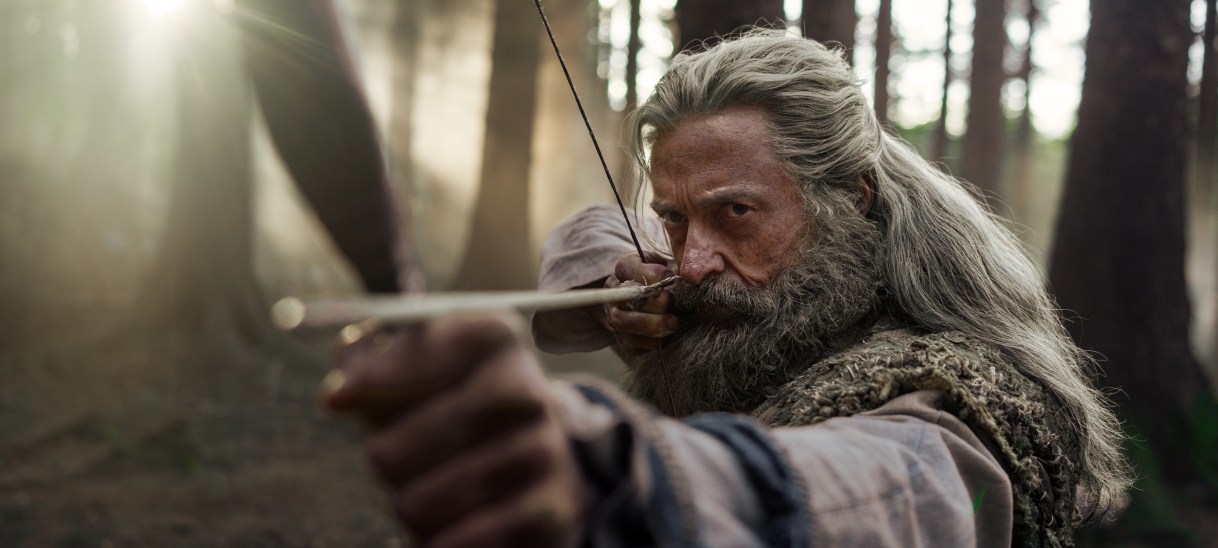
As the title suggests, The Death of Robin Hood (2026) begins with Robin Hood seemingly at the end of his journey. Somewhat of an extended coda, he has no desire to continue; Robin Hood (an aged and grizzled Hugh Jackman) spends his days pushing through the days, weighed towards the centre of the Earth by the gravity of his past. Long gone are his famous troupe who scampered across England as outlaws, robbing the rich and giving to the poor.
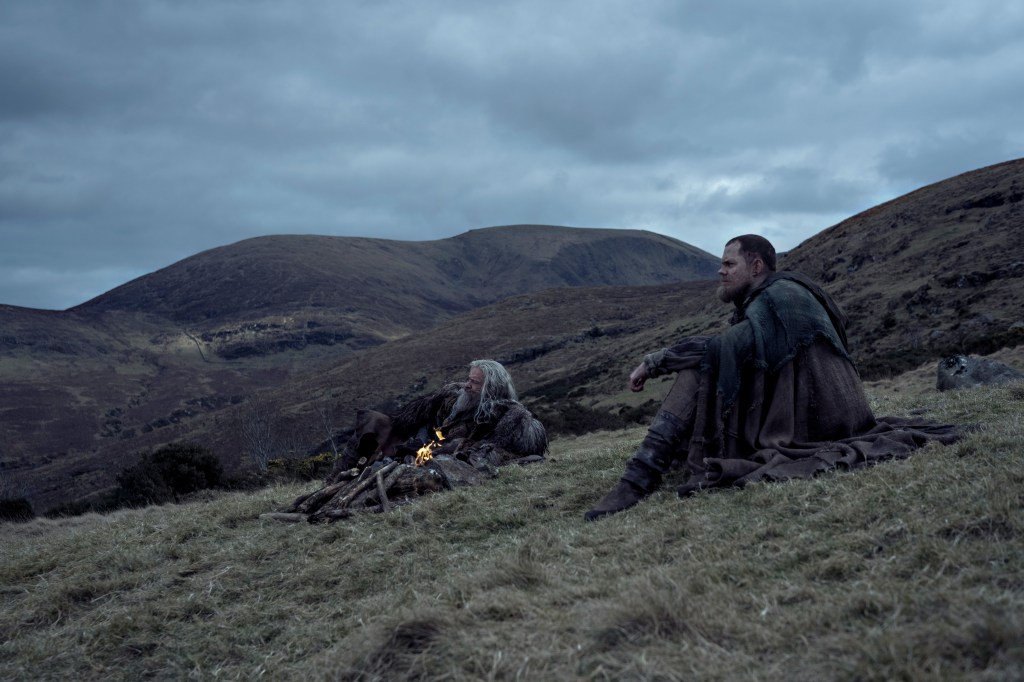
Instead, the famed outlaw is alone in the English hearth, making do with simple hunting to survive with no home or companionship. It is not until his old friend Little John (Bill Skarsgård) asks Robin for help rescuing his wife and daughter from bandits that the outlaw is pushed to purpose. This scene is quickly riddled with conflict, as in the same breath we learn of how Little John came about this family; having acquired them after he killed their husband and father years prior.
Filmmaker Michael Sarnoski made a name for himself with his 2021 breakout, Pig, starring Nicolas Cage, a mature and reflective look at an older man with a lifetime of regrets forced back into society through violence — all themes that also drive The Death of Robin Hood. It is fascinating that Sarnoski, the now 31-year-old American, has a deep pull to these stories and is deftly able to probe humanist questions on regret at the beginning of his artistic career.
The metatextual element of casting Hugh Jackman as the waking ghost of Robin Hood is effective, layering on his legacy as an old-fashioned showman to this storied character worthy of reinvestigation. Similar in many respects to Logan (2017), Jackman’s greatest performance as the weathered Wolverine, Robin Hood is a man with a code that can easily morph into self-mythologisation through nothing but the immovable passage of time. The stories we tell ourselves to survive, especially ones that shield us from the stories others tell about us, drive Robin, even in his withered state. Throughout the film, Robin is both correcting the record of his folklore and forgetting the names of those he has slain, a fascinating bit of oscillation that creates an engine of revisionism that powers Sarnoski’s gritty screenplay.
Whether Sarnoski is deeply connected to the Robin Hood folk tale or just enjoyed one of many depictions across cinema, his iteration on the character is a mere shorthand to investigate the life of an outlaw defined by mythmaking and storytelling that justifies one’s violence until violence is all that remains. This is a film with a relentless drive to revise notions of history at scale through an intimate lens.
The Death of Robin Hood is an adult film that wields its violence with a sharp knife. It cares for its impact both in the moment and in how it ripples through generations. Beginning with a stark moment of brutal violence – Robin killing a teenager who has come for revenge in the night is straight out of Robert Eggers’ grimy historical epic The Northman (2022), a lynchpin inspiration here – Sarnoski is signalling to the audience the film to come. This moment is one of a long line of sons and daughters seeking revenge on Robin’s trail of blood. Even through several wistful and lyrical sequences that weave in and out of the film, it is this graphic violence that chains the story to the damp soil.
After the rescue attempt goes as expected for a film this cold and bleak, Robin is beaten and left within inches of a death he so clearly craves, and shipped out to an island priory to heal. Surprisingly, in a shrewd piece of filmmaking, this island is where we are left for the remainder of the film. The film is split in two, with Robin Hood made to support the small community led by the prioress, sister Bridgid (Jodie Comer), as his wounds heal. A bifurcated film is difficult to pull off, but Sarnoski’s lush visual lyricism creates a flowing river of moments that land.
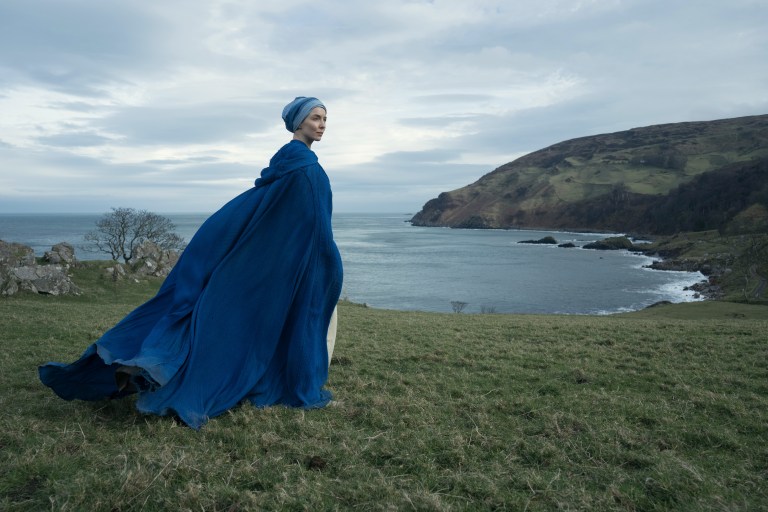
Plucked from the Sheffield folk scene, musician Jim Ghedi’s score and soundtrack both shroud and dampen the opening section of the film as much as they light the scenes in the priory. Coupled with an aspect ratio shift after the first act, cinematographer Pat Scola focuses on the warmth of sunlight seemingly hitting Robin’s cheek for the first time in decades. Sarnoski is driven to guide the famed outlaw and us towards the light.
But the past cannot be willfully ignored even at an island retreat. With new visitors steadily coming to the priory for care, Robin’s desire to fade into obscurity becomes harder and harder. Coupled with this is the punishing repetition of Robin Hood not remembering those he has killed along his journey. This is the sturdy rock Sarnoski’s film is built on. The why does not matter, as the why never matters when it comes to those that carry on the legacy of those that have been lost. There is only the loss.
For a film with a loud fight scene set in front of a burning building, it surprisingly has its most gripping moment in an infirmary, involving several intimate bloodletting scenes between Comer and Jackson, with Sarnoski carefully building up the tension of his grisly film to this point. Comer elevates these moments and the back half of the film even as her character is kept to the side, with Sarnoski clearly driven by singular character portraits and how people enter and exit a person’s life.
Whether it arrives at its emotional climax in its dying moments with legitimacy is in the eye of the beholder, but Sarnoski is serious enough about his adult drama to conclude his film with an aching sentimentality that is all too rare. With a sturdy ensemble that occasionally elevates above Sarnoski’s considered lens, The Death of Robin Hood is the dramatic adult period piece probing at the heart of heroism and violence that is rarely seen on a big screen anymore. Now all we need is Sarnoski to make his Ned Kelly film.
The Death of Robin Hood is in theatres now.