Bob Marley: One Love: A Basic Biopic that Never Really Hits its Notes

Rating: 2.5 out of 5.

Bob Marley: One Love preview screening provided by Paramount Pictures

It’s telling that a film showcasing one of music’s most audacious artists who refused to ‘play it safe’ is the exact opposite in its approach to capturing his significance to history. Reggae icon Bob Marley is just that, an icon, which is why Reinaldo Marcus Green’s Bob Marley: One Love (2024) should feel like more than just a surface level recount of a trailblazing artist.

Unfortunately this exact problem has plagued a majority of recent films that have focused on iconic musicians. Film’s like Bohemian Rhapsody (2018), Elvis (2022) and Rocketman (2019) are all guilty of playing it too safely when it comes to taking a historical figure and adapting their story from a fictional lens. These film’s all ultimately lean too far into accuracy (or their version of it) at the expense of deeper character drama, a nurtured plot and an understanding that every nook and cranny of the musician’s life doesn’t need to be shown (we’ve got Wikipedia for that).

One Love falls into that category where it never really tells you more about the subject beyond what a simple google search might. If we consider A Star is Born (2018), Walk the Line (2005) and even The United States vs. Billie Holiday (2021), all of these films said more about the characters at their core through the very fact that they understood how to tow the line between fiction (of which A Star is Born is completely) and utilising drama to create tension ––– and that’s all while never losing sight of the protagonist at their core.

Marcus Green’s film picks up at a point in Marley’s (Kingsley Ben-Adir) life when he’s already reached a level of fame that has him ruffling a few political feathers. It’s a commendable point in his life to start at (in the mid-70s) rather than tracing the complete rags-to-riches story like some of the aforementioned titles.

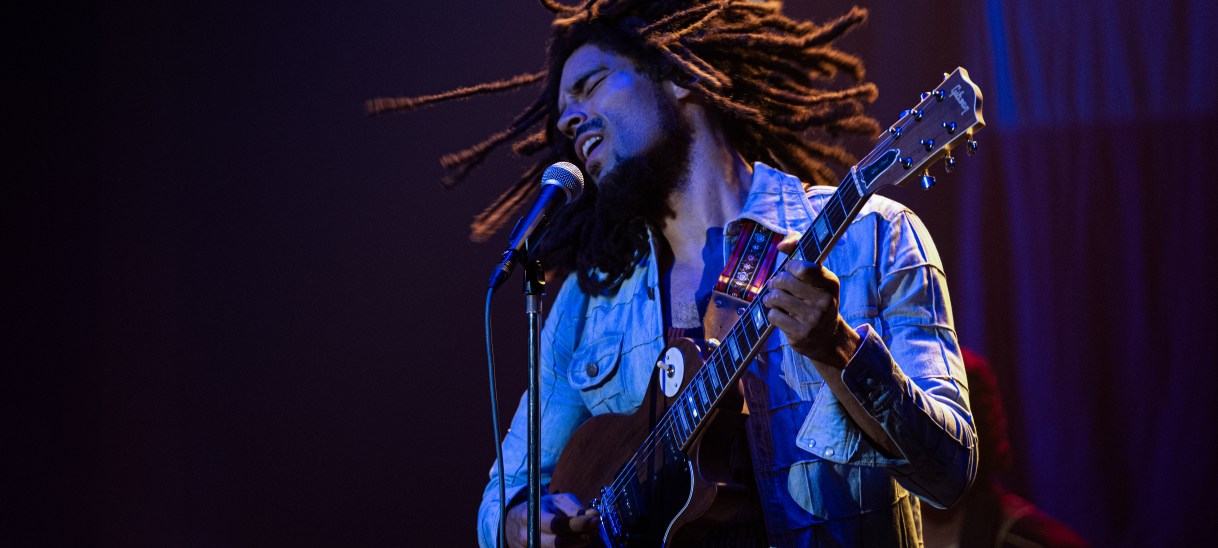
Kingsley Ben-Adir as Bob Marley and Lashana Lynch as Rita Marley in Bob Marley: One Love from Paramount Pictures.

After being shot in an attempted murder, Marley is advised to leave Jamaica for a period of time while tensions ease at the top. This is much to his dismay since his wife Rita (Lashana Lynch) was also shot and narrowly avoided death. It proves to be a worthwhile move, with Marley finding inspiration in the UK music scene after arriving in London, and eventually releasing albums like Exodus which were undercut with political commentary and offered a twist on the sort of reggae beat he had become accustomed to in prior years.

If there’s one saving grace in a film about an iconic musician, it’s the music itself. There’s no shortage of hits that are played throughout like War, Exodus, I Shot the Sheriff, Three Little Birds and more. Fortunately they’re not showcased in the same way as the hits of Queen in Bohemian Rhapsody where they were seemingly devised on a whim and almost purely exist in that film for nostalgic purposes rather than to propel the narrative forward.

The film rounds off to a close after some 95 minutes which is a silver lining at a time where most overstay their welcome. This film doesn’t overstay its welcome and will no doubt be lopped up by an audience familiar with and intrigued by, Marley’s story. Should there have been a greater focus on accentuating that internal dialogue and sentiment Marley had towards the political situation in his country that ultimately led to his performance of unity at the One Love peace concert? Definitely. Ultimately the film gets you to that point, but the result is more of a split, cobbled-together look at key milestones rather than a deeper dive into a man who united a nation.

Bob Marley: One Love opens nationally from the 14th of February.
Black Cinema Gains a New Voice Via the Summer of Soul

Rating: 4.5 out of 5.

African-American directors have long used their powerful voice to admonish racism and injustice – think John Singleton, Ava DuVarney, Jordan Peele and of course, Spike Lee with his signature Joints. Newly ranking among this cohort is Ahmir Thompson, utilising long-lost footage of a monumental event to concoct a narrative of equal distinction.

In 1969, amidst a Climate of Hate in the United States, the New York neighbourhood of Harlem played host to a series of outdoor concerts, featuring musicians both prominent and rising, locally famed and internationally recognised. The free events, promoted as the Harlem Cultural Festival, took place over successive weekends during the Summer, their family-friendly façade masking an ulterior intention – as interviewee Darryl Lewis bluntly puts it, “to keep Black folks from burning up the city in ’69.”

Despite being attended by as many as 300,000 people, and earning the public support of New York City’s white, Republican Mayor, John Lindsay, press coverage of the Festival was limited, and a proposed film documenting the performances was shelved after failing to garner an investor. Multiple reels of video and audio that had been recorded for a documentary instead lay dormant in storage, unseen by the public eye for over five decades – hence this picture’s, full title, Summer of Soul (…Or, When the Revolution Could Not Be Televised) (2021).

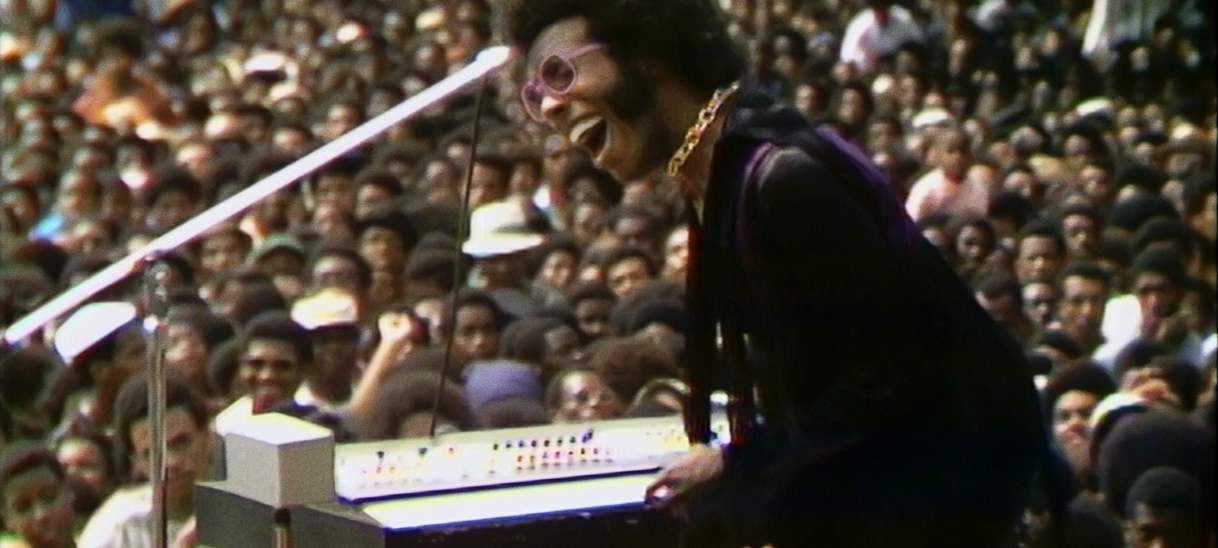
Director Thompson, a.k.a. Questlove, is best known for his work in the realm of music, and that melodic expertise is more than apparent in his selection of performances that are showcased within the feature. Highlights include a young Stevie Wonder’s masterful playing of the drums and keyboards; Mahalia Jackson and Mavis Staples’ powerful duet of “Precious Lord, Take My Hand”; Ray Barretto on bongos trading fours with his double bassist; Sonny Sharrock wildly shredding on the electric guitar; Nina Simone’s eloquent prose in “To Be Young, Gifted and Black”; and Sly and the Family Stone’s call-and-response with the Harlem crowd.

Just about every performance that’s seen in Summer of Soul is reminisced about through present-day interviews with Festival attendees, social commentators, the musicians themselves, and a handful of celebrities with the most tenuous of links to the Festival – comedian Chris Rock being such an example. Most of the input these subjects provide amounts to little more than soundbites, but their statements are nonetheless insightful, and the fondness with which they recollect events appears earnest and genuine.

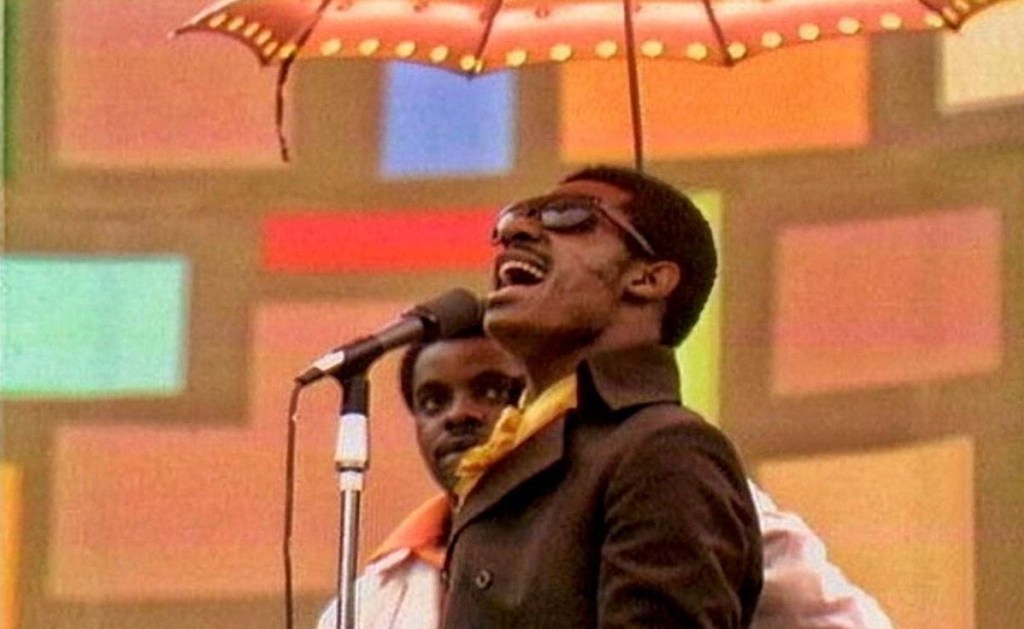
Stevie Wonder performing at the Harlem Cultural Festival, as seen in Summer of Soul

Not content with directing a concert film, Thompson also shapes Summer of Soul as a historical document of the African-American experience. Each performance is seceded by a brief interlude that explains, through archival footage and clips from the abovementioned interviews, the happenings in Harlem, the United States and the world that led to the Cultural Festival, demonstrating its place in a broader cultural movement of “Neo-Super Blackness” (as interviewee Greg Tate aptly describes it) and how it assisted in propelling it.

Some viewers might be baffled at this suggestion, given the lack of prominence afforded to the concerts until now. Summer of Soul hypothesises that an overshadowing of the Festival by two other events is the cause of that, said events being the Moon Landing in July of the same year, and the Woodstock Music and Art Fair, which took place the very same weekend that Nina Simone and B.B. King performed in Mount Morris Park. (In a delicious case of irony, the film treats both of these cultural touchstones with indifference.)

One gripe, admittedly minor, to be had with Summer of Soul is the varying quality of the concert footage. Video and audio of the event has been digitally restored from the original tapes, most of which looks and sounds pretty crisp; yet there are occasions when markings and damage to the recordings are rather visible, detracting from the experience. What’s needed is some further enhancement, or cleaning of the original imagery in order to truly, fully do the Harlem Cultural Festival justice.

Ahmir Thompson’s directorial debut is more than the recreation of a significant moment in history – it’s a stirring celebration of Black culture with a central message that’s just as relevant today. Possessing a voice that’s as loud and proud as the singers featured within, Summer of Soul is a documentary that ought to be seen and heard by all.

Summer of Soul (…Or, When the Revolution Could Not Be Televised) is now streaming on Disney+.