Tom Cruise Leads the Acerbic, Uneven Digger

Rating: 3.5 out of 5.

We, as a species, are cooked. Greenhouse gases continue to warm our planet at an alarming rate, the effects of which can be seen in our worsening, and ever-increasing natural disasters. Our world leaders flirt with autocracy at the behest of capitalists who wield far too much power. Our air is toxic, made less breathable with each passing day thanks to the byproducts of the fuel and gas we rely on to power our technology. And the only means of comfort we have left is our ability to point and laugh at the very people who gifted us this bleak, miserable existence.

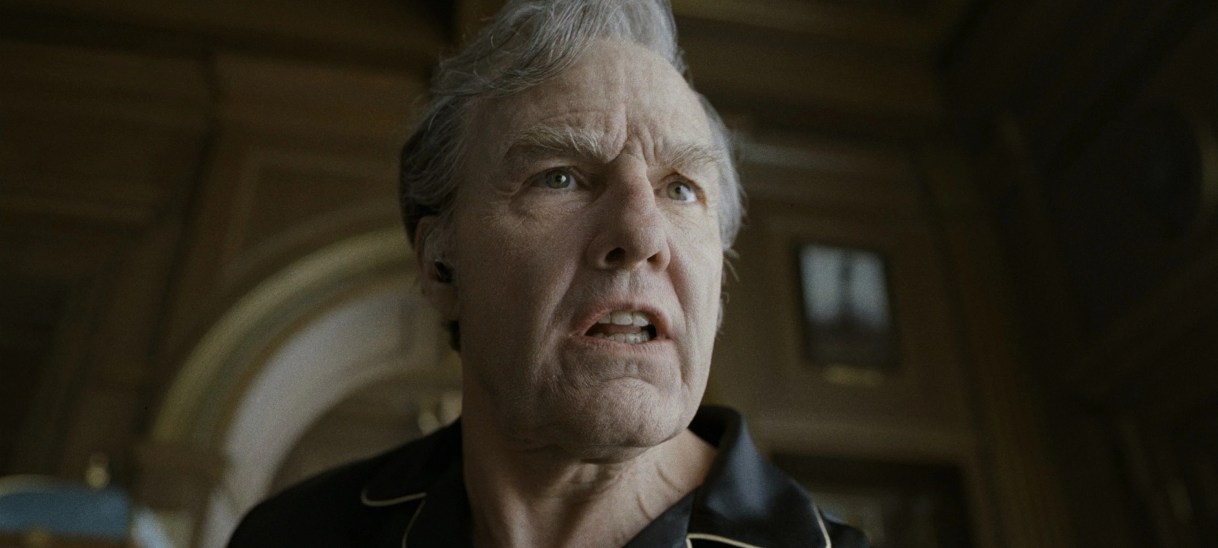
That’s both this writer’s assessment of the reality in which we find ourselves, and the morbid view expressed in Mexican director Alejandro González Iñárritu’s latest feature, Digger (2026). Its plot takes place in a world of two halves, one of which has an eccentric, arrogant American oil tycoon, Digger Rockwell (Tom Cruise) grappling with an environmental catastrophe triggered by his very company, and a Trump-coded US president (John Goodman) who would love nothing more than to absolve himself of all responsibility. As for the other half, there we have a theatrical play being directed by the young, inexperienced Hannah (Australia’s Sophie Wilde) and an executive producer (Jesse Plemons) who’s taking a very keen interest in proceedings.

Details of this second narrative were oddly absent from the marketing materials for Digger, which seem to be positioning the film as Don’t Look Up (2021) meets Dr Strangelove (1964). In reality, its tone and artistry is closer in spirit to Wes Anderson’s Asteroid City (2023) by way of a previous Iñárritu feature, Birdman (2014) – less a pointed satire of modern politics, and more a commentary on how art informs our lives. This distinction isn’t wholly apparent upon initial viewing, with the viewer likely to be confused by the dual plots and pondering what (if any) connection they share; yet all becomes clear when the story enters its third act and nears its conclusion, all before landing a vicious blow just as the credits roll.
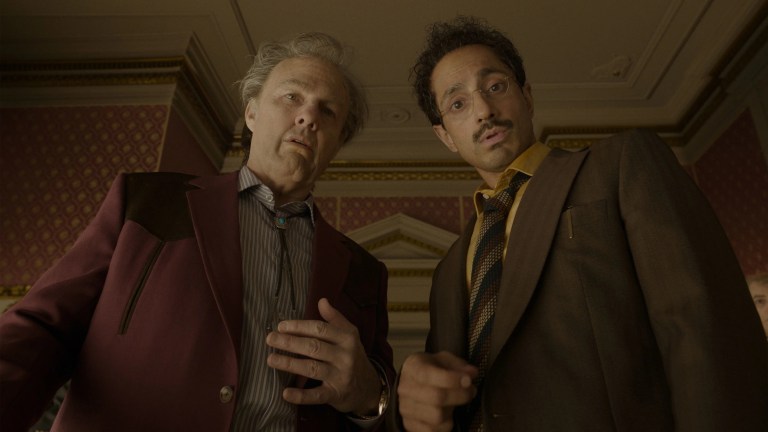
Digger Rockwell (Tom Cruise, left) and Ganesh (Riz Ahmed) in Digger

Those hoping for a satirical lambasting of our policymakers will inevitably be left disappointed, for Digger instead favours meta-commentary on the state of political comedy. The picture appears quite content to be a parody in the extreme, openly acknowledging that its characters are far more buffoonish than the counterparts from whom they’ve taken inspiration, in the belief that doing so will provide a sense of catharsis for the audience. There is some merit in this argument, particularly during the current era when certain heads of government are becoming more deranged by the minute, though the manner in which the story posits that very dictum proves quite heavy-handed and abrasive.

Digger may not possess much in the way of literary prowess, but can boast some nous in the form of its performances, chief among them Cruise. Despite being clad under a fat-suit and heavy prosthetics applied by Oscar-winning makeup artist Kazu Hiro, the acting veteran offers boundless energy in the role of Rockwell, his talent coming to the fore during a caustic monologue delivered to a rowdy crowd. His co-stars shine almost as brightly, including the aforementioned Goodman, Wilde and Plemons, as well as Sandra Hüller in the role of Digger’s half-sister Emma, Riz Ahmed as scientist Ganesh and Michael Stuhlbarg as a meek, ineffective vice-president. Further praise should be given to the cinematography of Emmanuel Lubezki, and production design of Dennis Gassner and Richard L. Johnson, even if they’re borrowing a few too many cues from Wes Anderson.

Being subversive, incendiary and brazen in equal measure, Digger ought to be the highpoint of Iñárritu’s storied career that has also given us acclaimed productions like Amores Perros (2000), Babel (2007) and The Revenant (2016). Unfortunately though, his latest effort doesn’t quite reach those heights, owing to a muddled screenplay that contains just enough bite, yet too few laughs and a clumsily-delivered message. Consider the feature instead as a showcase for a talented cast, and it can’t be faulted.

Digger is now screening in cinemas nationwide.
Black Cinema Gains a New Voice Via the Summer of Soul

Rating: 4.5 out of 5.

African-American directors have long used their powerful voice to admonish racism and injustice – think John Singleton, Ava DuVarney, Jordan Peele and of course, Spike Lee with his signature Joints. Newly ranking among this cohort is Ahmir Thompson, utilising long-lost footage of a monumental event to concoct a narrative of equal distinction.

In 1969, amidst a Climate of Hate in the United States, the New York neighbourhood of Harlem played host to a series of outdoor concerts, featuring musicians both prominent and rising, locally famed and internationally recognised. The free events, promoted as the Harlem Cultural Festival, took place over successive weekends during the Summer, their family-friendly façade masking an ulterior intention – as interviewee Darryl Lewis bluntly puts it, “to keep Black folks from burning up the city in ’69.”

Despite being attended by as many as 300,000 people, and earning the public support of New York City’s white, Republican Mayor, John Lindsay, press coverage of the Festival was limited, and a proposed film documenting the performances was shelved after failing to garner an investor. Multiple reels of video and audio that had been recorded for a documentary instead lay dormant in storage, unseen by the public eye for over five decades – hence this picture’s, full title, Summer of Soul (…Or, When the Revolution Could Not Be Televised) (2021).

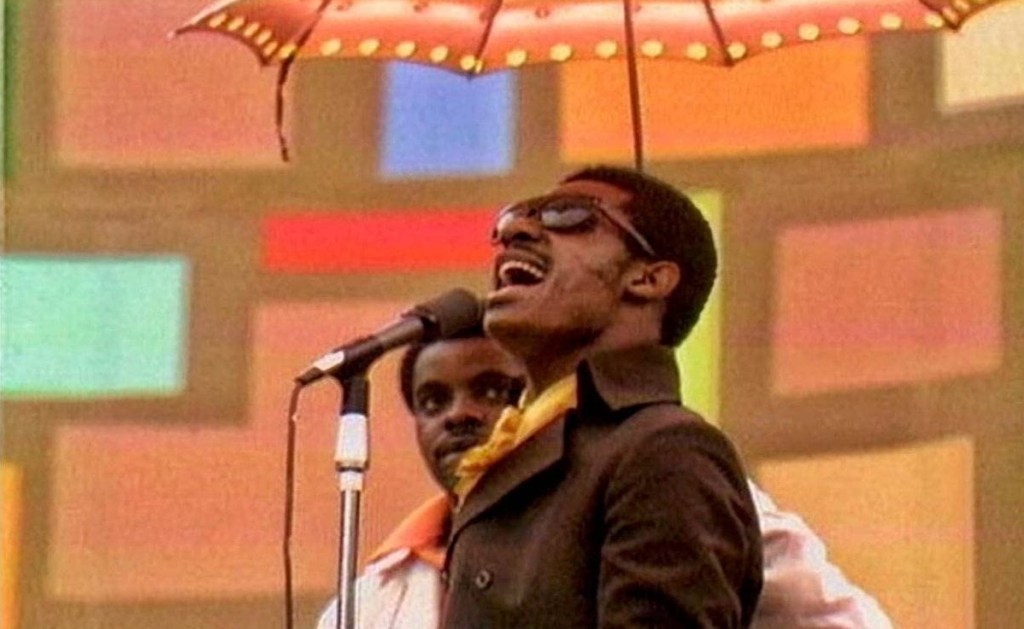
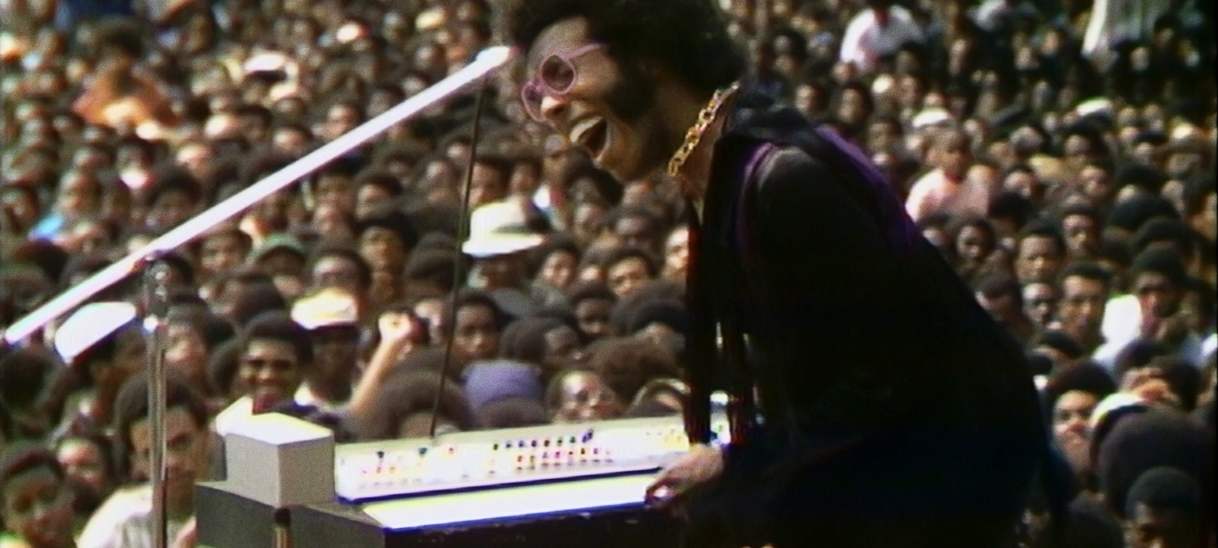
Director Thompson, a.k.a. Questlove, is best known for his work in the realm of music, and that melodic expertise is more than apparent in his selection of performances that are showcased within the feature. Highlights include a young Stevie Wonder’s masterful playing of the drums and keyboards; Mahalia Jackson and Mavis Staples’ powerful duet of “Precious Lord, Take My Hand”; Ray Barretto on bongos trading fours with his double bassist; Sonny Sharrock wildly shredding on the electric guitar; Nina Simone’s eloquent prose in “To Be Young, Gifted and Black”; and Sly and the Family Stone’s call-and-response with the Harlem crowd.

Just about every performance that’s seen in Summer of Soul is reminisced about through present-day interviews with Festival attendees, social commentators, the musicians themselves, and a handful of celebrities with the most tenuous of links to the Festival – comedian Chris Rock being such an example. Most of the input these subjects provide amounts to little more than soundbites, but their statements are nonetheless insightful, and the fondness with which they recollect events appears earnest and genuine.

Stevie Wonder performing at the Harlem Cultural Festival, as seen in Summer of Soul

Not content with directing a concert film, Thompson also shapes Summer of Soul as a historical document of the African-American experience. Each performance is seceded by a brief interlude that explains, through archival footage and clips from the abovementioned interviews, the happenings in Harlem, the United States and the world that led to the Cultural Festival, demonstrating its place in a broader cultural movement of “Neo-Super Blackness” (as interviewee Greg Tate aptly describes it) and how it assisted in propelling it.

Some viewers might be baffled at this suggestion, given the lack of prominence afforded to the concerts until now. Summer of Soul hypothesises that an overshadowing of the Festival by two other events is the cause of that, said events being the Moon Landing in July of the same year, and the Woodstock Music and Art Fair, which took place the very same weekend that Nina Simone and B.B. King performed in Mount Morris Park. (In a delicious case of irony, the film treats both of these cultural touchstones with indifference.)

One gripe, admittedly minor, to be had with Summer of Soul is the varying quality of the concert footage. Video and audio of the event has been digitally restored from the original tapes, most of which looks and sounds pretty crisp; yet there are occasions when markings and damage to the recordings are rather visible, detracting from the experience. What’s needed is some further enhancement, or cleaning of the original imagery in order to truly, fully do the Harlem Cultural Festival justice.

Ahmir Thompson’s directorial debut is more than the recreation of a significant moment in history – it’s a stirring celebration of Black culture with a central message that’s just as relevant today. Possessing a voice that’s as loud and proud as the singers featured within, Summer of Soul is a documentary that ought to be seen and heard by all.

Summer of Soul (…Or, When the Revolution Could Not Be Televised) is now streaming on Disney+.