Superman: James Gunn Marvel-ises Superman, for Better and Worse

Rating: 3 out of 5.

Superman preview screening provided by Universal Pictures

When Guardians of the Galaxy (2014) hit screens some eleven years ago, there was a shift in the superhero movie paradigm that up until then was often focused on darker stories and more mature themes, most of which went hard on action but stepped away from the jovial playfulness that animated shows often captured so well. That shift is owed in large part to James Gunn who managed to find a nice middle ground between getting you your dose of power ups and battle scenes with the humanity and flaws behind these heroes. He also (unintentionally) set off a chain of events for superhero films that would see them sway too much towards silliness and cheesy one-liners that they eventually became devoid of any uniqueness or balance.

In the time since his original Guardians film, Gunn has gone onto deliver two more for Marvel before being headed up as Co-chairman and Co-CEO of DC Studios in a bid to try and turn the tide DC’s way — after all, their catalogue of heroes is much stronger than that of Marvels. While The Suicide Squad (2021) represented his first real foray into the DC universe, it’s his long awaited reinvention of Superman (2025) that has felt like the true starting point that is supposed to set the tone for what is to come.

To do so, Gunn has opted to throw the whole ‘origin story’ approach out the window and instead, throw viewers right into the thick of things. Superman (a perfectly cast David Corenswet) is three years into his Superman reveal, with all of the crash landing and coming-to-terms-with-his-powers backstory, left implied. It’s a bold choice from Gunn but it makes sense as it gives him the room to cram more into the plot rather than tread old ground.

Whether the cramming tickles your fancy or not, is another question. There’s a lot going on in Gunn’s film, much to the detriment of building out a cohesive plot. Gunn is at once interested in diving into the humanity behind the God figure and hitting him with countless obstacles and side quests, with the result being glimmers of deeper interrogation —one occurring early on as Superman in his Clark Kent guise, chats with his fellow reporter girlfriend Lois Lane (an equally fitting Rachel Brosnahanin) in an impromptu interview— but an overall surface level exercise.

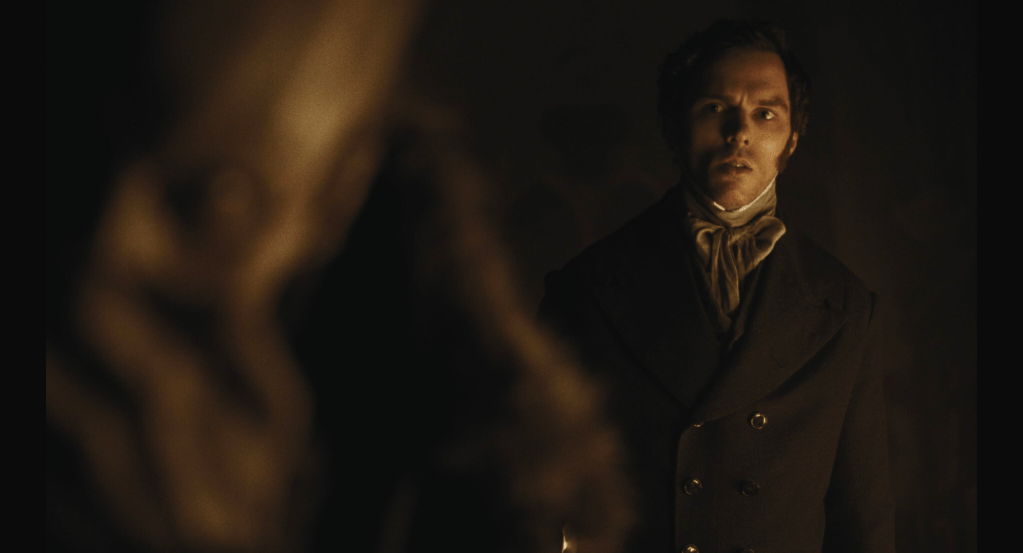
(L to r) NICHOLAS HOULT as Lex Luthor and DAVID CORENSWET as Superman in Warner Bros. Pictures’ “SUPERMAN”

And that’s before we start talking about the wider plot which includes Lex Luthor (Nicholas Hoult) trying to get dirt on Superman so he has justification to kill him, a trio of ‘Justice Gang’ sub-heroes who pop in every now and then to aid Superman and (really) fill-in during his absence, a weird middle-eastern conflict that threatens to boil over but that Superman is embroiled in, and a wonky love-story between Luthor’s side-piece and a a journo helping to get dirt on Luthor. In other words, it’s a stuffy room with little air left to breathe, which at best gets you a little laugh and at worst, an eye roll.

But while Gunn might not be focusing on Superman’s origin story, he’s definitely focusing on his own, taking his learning’s from his time at Marvel and Marvel-ising them here. No one can accuse Gunn of making something that’s boring, after all, the ethos of Superman has always been built around a level of silliness and charm that starts right from his vibrant, cartoonish costume. Gunn understands that in order to make this version of Superman any different from past iterations, he would have to cut the preamble and focus on the wonder that comes from seeing frost breathe, laser eyes and flying while keeping it as lighthearted as possible — keep the message simple and ensure the goofiness is there, even if the stakes never feel like they match up.

I have to admit, while I’m not a Zack Snyder shill, I appreciate the darker tones and comic-book wham’s and pow’s he brought to Man of Steel (2013), Batman v Superman: Dawn of Justice (2016) and his version of the Justice League (2021). Gunn’s version has gone a completely different direction and I can respect the decision to do so since the other approach wasn’t putting bums in cinema seats. Whether or not this film sets the tone for this new DC universe though, is hard to tell, especially with Matt Reeves’ The Batman (2022) feeling more akin to what would have existed in the old universe (I’m sure we’ll see Cornswet’s Superman and Robert Pattinson’s Batman cross paths in some way — though I smell tonal whiplash from a mile away). Regardless, Superman is imbued with the same level of goofiness as Gunn’s other films, and while it probably would have felt fresher had it been released eleven years ago, it still packs an entertaining punch.

Superman opens nationally from July 10.
Nosferatu is an Overwhelming Experience

Rating: 4 out of 5.

Nosferatu preview screening provided by Universal Pictures.

When you enter the world of Robert Eggers’ films, you are immediately placed within a space through a remarkable tactility. The old wooden walls of an estate have a smell, the dim candlelight dining halls have an air of repression and melancholy, and none of the performers carry with them the weight of modern knowledge (his actors rarely display an awareness of what an iPhone is which derails many modern period films). When you enter the world of Eggers’ Nosferatu (2024), you succumb to his whims just as the characters succumb to the enticements of the ghoulish Count Orlok (a never better Bill Skarsgård).

Adapting a 100-year-old film that defined all horror storytelling that came afterwards shouldn’t feel as comfortable as it does for Eggers and his creative team (highlighted by the extraordinary cinematographer Jarin Blaschke), but after three successful features steeped in immense period accuracy and style (2015’s The Witch, 2019’s The Lighthouse, 2021’s The Northman), Nosferatu feels like an inevitable next step for one of America’s most unique cinematic voices.

For those not up to speed on the Nosferatu story, originally an unauthorised adaptation of Bram Stoker’s Dracula novel in 1922, we follow newlyweds Ellen (Lily-Rose Depp) and estate agent Thomas Hutter (Nicholas Hoult), in 1838 Germany. Thomas is sent on a journey to Transylvania to secure the signature of the elusive Count Orlok, who is keen to purchase an old estate in town. Ellen pleads with her husband not to leave, sensing doom is quickly approaching them, a foreboding presence that she has carried with her most of her life. From the beginning of this updated version of the story, Ellen’s dark connection to Orlok is apparent, working as the film’s greatest strength. This key narrative propulsion is born from the silent era film’s greatest weakness, a focus on Thomas’ journey, eclipsing Ellen’s more internal struggle with the Count.

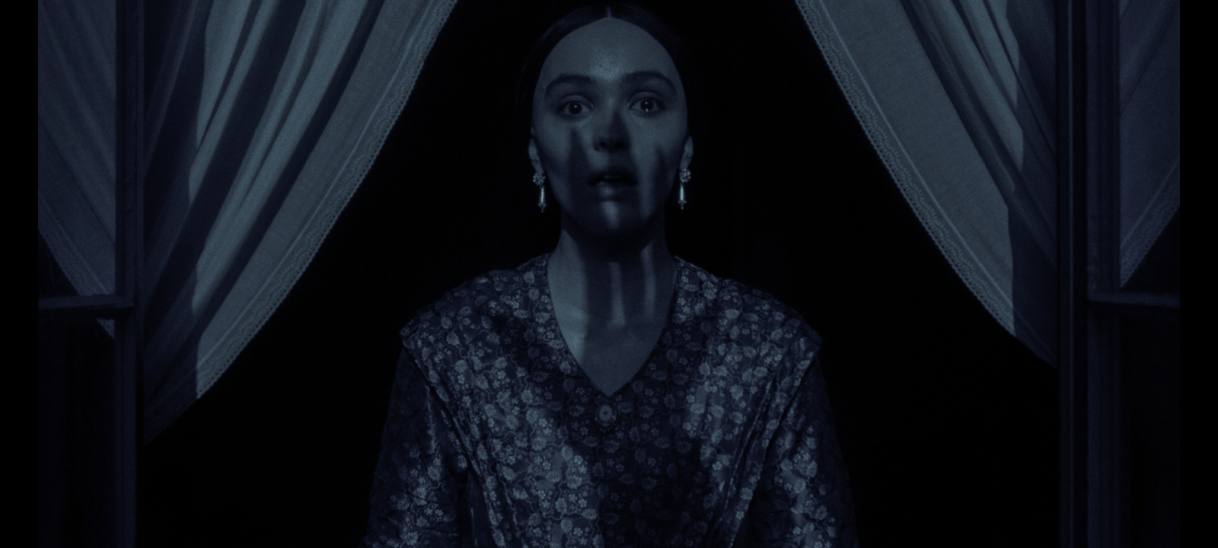
Lily-Rose Depp in Nosferatu. Credit: Courtesy of Focus Features

This focus on Ellen’s perspective and melancholy is felt even as the film shifts to Thomas’s trek to find the castle, an extraordinary sequence, propelled by both what he seeks and what has been left behind. Depp is incredible in the difficult role of Ellen, balancing her temperament seemingly as both possessor and possessed, with deep references to the genre-defining performances of Isabelle Adjani in Possession (1981) and Linda Blair in The Exorcist (1973). A performance of writhing spectacle that administers an impressive restraint when needed, wielding Eggers’ impressive ability to pen alluring scenes with no simple destination as well previous muses Anya Taylor-Joy (The Witch) and Robert Pattinson (The Lighthouse).

At the heart of this adaptation which is wholly absent from the previous two Nosferatu films is the seductive lure of the abyss that would have Nietzsche bursting out of his crypt like the Count. While the central tenet of the Nosferatu story is the psychic seduction that gives the Count power over those susceptible, a transformation is always an integral component, something Eggers removes here in place of Skarsgård’s increasingly terrifying presence.

The tightly held secret of Bill Skarsgård’s appearance as Nosferatu will not be spoiled here, just know it is worth the lock and key. Leave it to the obsessive Eggers to design a memorable and period-accurate depiction of Count Olak that expands on the original and Werner Herzog’s adaptation in 1979. Skarsgård’s count is slowly demystified across the film, creating a surprisingly destabilising experience. As an audience, we are so accustomed to the legendary character hiding and weaponising the shadows, which does occur in several key sequences in the film. Still, here, Count Orlok is brought more and more into the crisp moonlight, revealing the humanity underneath the creature of the night.

Nicholas Hoult in Nosferatu. Credit: Courtesy of Focus Features

Where the original film exploded the medium while also speaking to the modern reality of the Spanish Flu of 1918, Eggers opts instead to entrench himself in the imagery of the past. More than any of his other works, Nosferatu is a work of pure escapism, cementing the auteur as a formalist filmmaker whose worldview is tightly withheld from the work.

A filmmaking collaboration that extends environs into a three-dimensional cinematic space, Eggers and Blaschke evoke the very smells and textures that transform a text from period-accurate to fully inhabited. The film’s guiding light is Jack Clayton’s The Innocents (1961), a masterpiece in gothic literature adaptation that evokes a spellbinding atmosphere through its mixture of production design and cinematography. With its flowing curtains and long candlestick-lit hallways that invite a menacing darkness, Eggers’ Nosferatu is bringing the tentpoles of gothic storytelling to a new generation.

Gothic horror is deeply connected with the Gothic romance genres, and while the faithfulness to the original texts is admirable, it is in this expansion into other forms of gothic storytelling that Eggers’ iteration breathes new life. Through Depp’s singular performance at the heart of the film, we are compelled through the romance and horror that lurks in the shadows of every room, arriving at a near-operatic finale that never loses the wry humour that permeates through the filmmaker’s work.

However, it’s hard not to feel Eggers playing it safe across every moment of Nosferatu. Masked beneath the comfortable walls of period storytelling that rarely escapes the snowglobe-like structures he crafts in his work, it is difficult for the pangs of concern to creep in that one of America’s great craftsmen avoids the contemporary human moment like the plague. Whether it is fair to critique this absence or not, the feeling lingers. 

It is perhaps too much to ask of a filmmaker so equipped in transportational genre storytelling that allows you to smell the musk of an old library or the menace of an encroaching evil in your very marrow. Still, there is a level of artistic safety that is palpable throughout the film, leaving one aching for a little more dare and bite.

Nosferatu is in theatres January 1st.