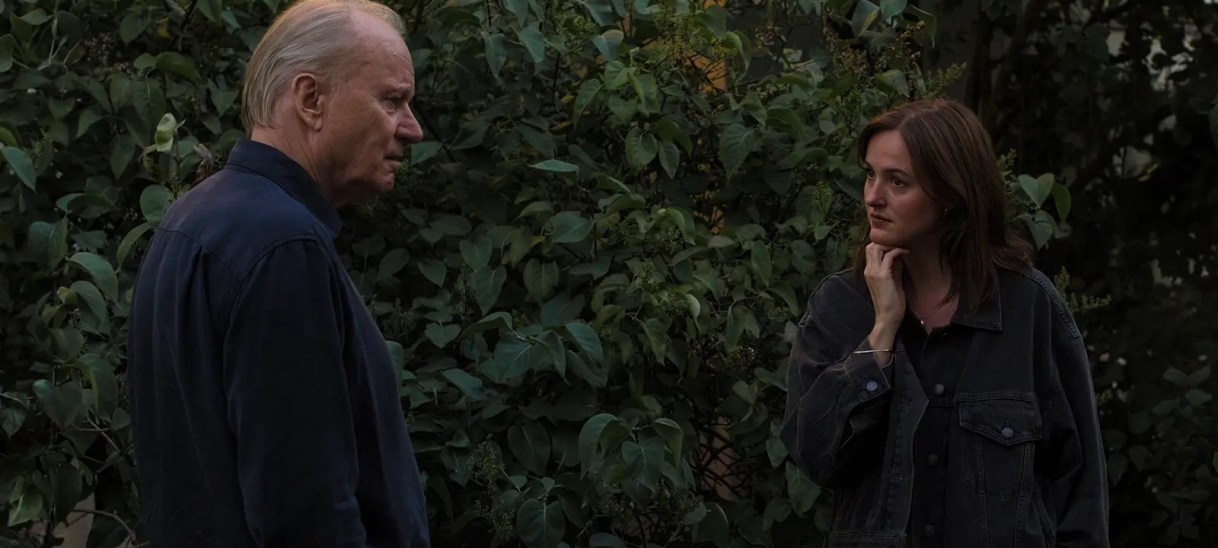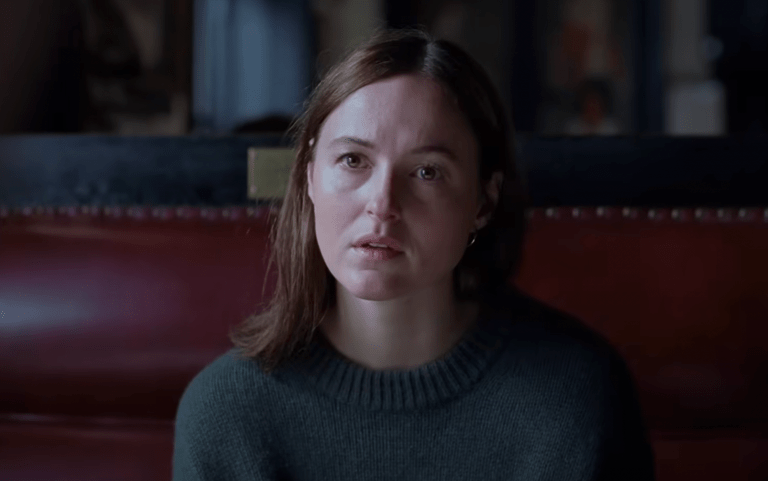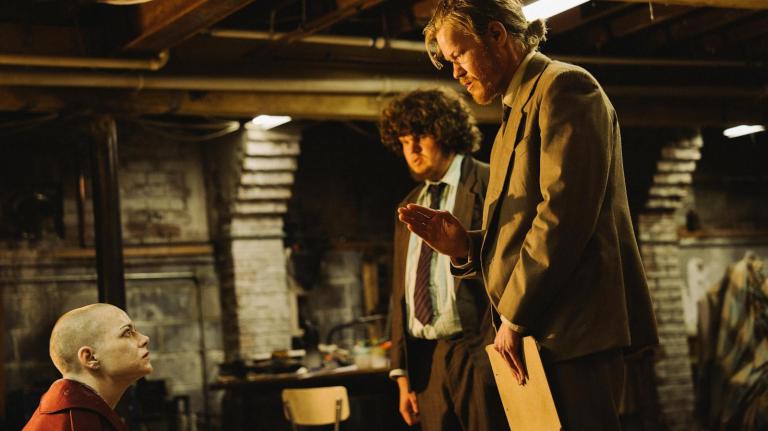
Sentimental Value is The Moving Family Drama to See

Rating: 4.5 out of 5.

Arriving on Australian shores on Christmas Day, Joachim Trier’s follow-up to the Millennial instant classic The Worst Person in the World (2021) follows a family collision of artists that may be the perfect film for the holiday. Sentimental Value (2025) is a film about artists unable to articulate their feelings but are able to embody them and translate it to a captive audience. Trier and frequent collaborator Eskil Vogt have moved from dense single-character explorations into a wider canvas of a family, allowing their humanist writing style to weave between the said and unsaid.

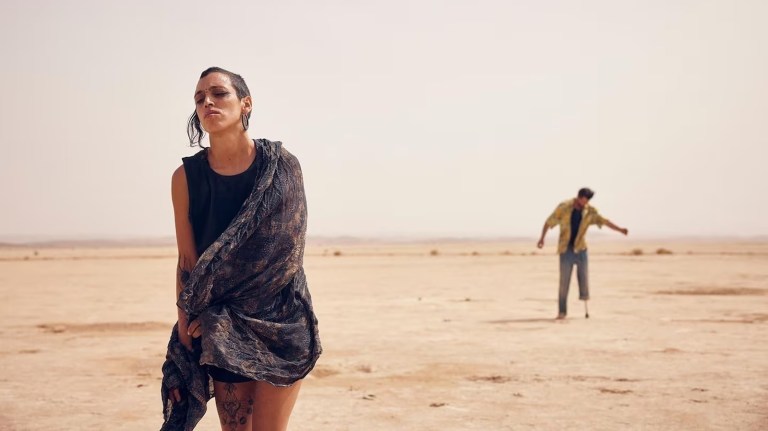
Centred is Nora Borg, played by another frequent collaborator in Renate Reinsve, a respected theatre actor suffering from immense stage fright; Agnes (a remarkable Inga Ibsdotter Lilleaas), her younger sister who has escaped the arts to make a more grounded life for herself; Gustav (a tremendous Stellan Starsgård), a well respected arthouse director and their distant father; and Rachel (Elle Fanning), an American star who aches to work on more meaningful work.

The film focuses on the return of Gustav, who has written a script that explores the past and present of the family’s history, set in the old family home, most of where Sentimental Value is set. He believes this script will launch him out of the retrospective tour space and back into the forefront of modern cinema; he just needs his estranged daughter, Nora, to agree to collaborate with him and star in the film. When she refuses to work with her father on the film, Gustav, after a chance encounter at a film festival, asks the young star Rachel to perform the role instead.

The act of writing a lead role for a loved one is something the film does not take lightly, whilst never allowing the work to unfold into a navel-gazing melodrama. A shaggy family drama about the film business and artistry would quickly implode, but Trier and Vogt’s script has a dedication to the central three family members that always feels generous. 

Renate Reinsve in Sentimental Value (2025.)

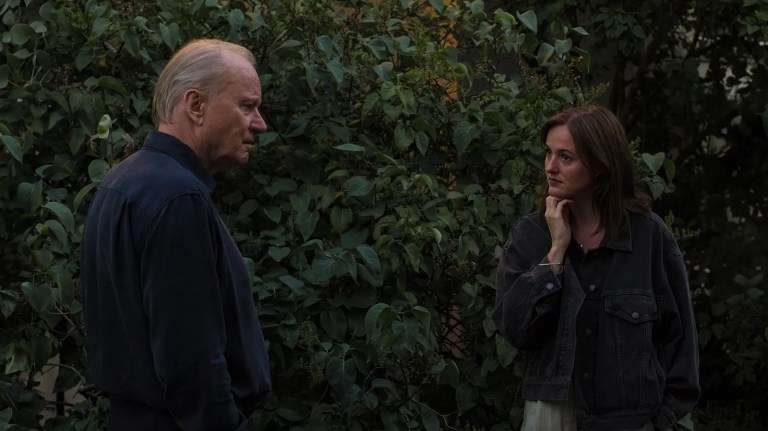
While a gut punch on first viewing, upon multiple viewings, it becomes clear that this is a generational performance by Skarsgård. This is made all the more extraordinary due to his health and his inability to memorise lines post-stroke. It is too rare where a character and performer to become as intrinsically linked as Skarsgård and Gustav do here, as an aging artist looking to the past, present, and future of their family line to understand themselves and those around them.

Bergman is always on the mind while interpersonal scenes float from moment to moment. The film dances between influences in Persona (1966) and Vertigo (1958) with Fanning’s character Rachel, arriving at an equal power through a balance of influences. While Hitchcock’s complicated masterpiece wields the weight of comedically heightened mirroring and Bergman’s film of duality that revel in never fully eliding its meaning to the characters, Trier’s mirroring achieves its power through its late decision to voice itself clearly and openly. 

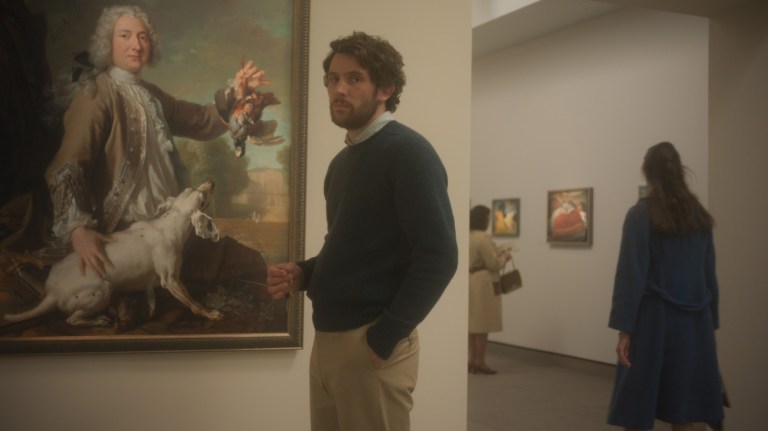
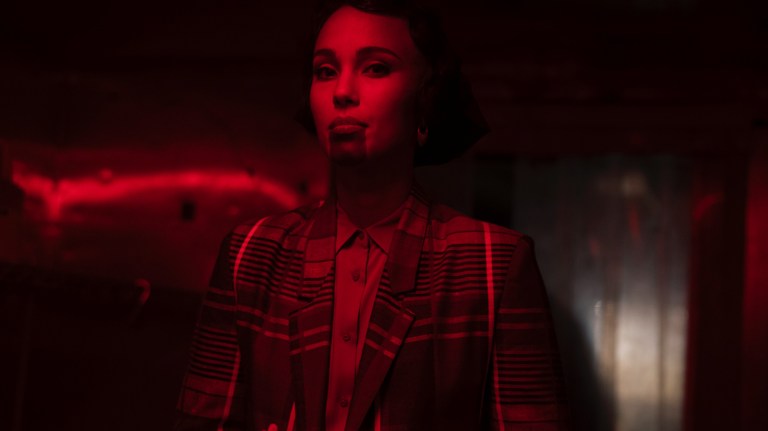
A key scene of mirroring occurs in a pair of scenes that opens up the film into a world of collective humanity that is often the goal of Trier’s films. On one side of the glass is a monologue rehearsal scene with Rachel (after dying her hair to more closely resemble Nora) and Gustav, who is struggling to reach the impossible place he is searching for. On the other, a gorgeous scene where Nora finally reads the script after being given it by her sister, after she also finally reads it. After finally reading the script and releasing the intimacy that Gustav is pouring onto the page — something he would never articulate to them personally — the sisters are profoundly moved, and a point of familial understanding overwhelms them. 

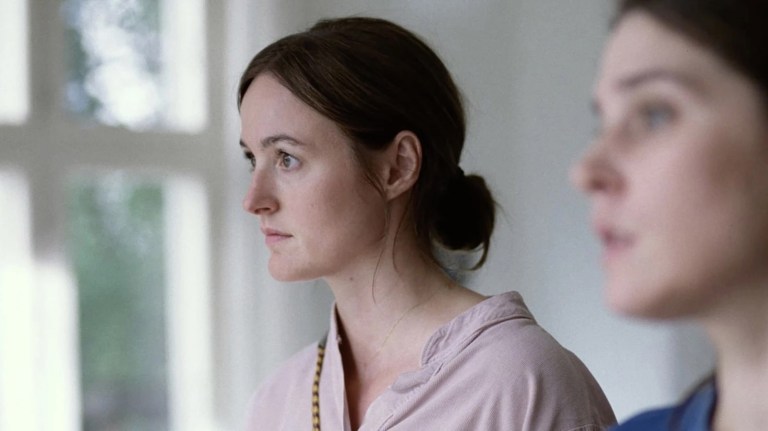
(from left) Renate Reinsve and Inga Ibsdotter Lilleaas in Sentimental Value (2025.)

Whether the film too neatly arrives at its climaxes is up to personal taste, but much needs to be credited to Trier and Vogt for the level of clarity and emotional weight they give to the struggle artists have with connecting to those they love without using their art. And the exploration Gustav has in writing extends as an olive branch to Nora, to tell her he sees her struggles, but gives her the medium of her art to explore them together.

It is in these moments of generous openness and charged, yet elided, dialogue that Sentimental Value becomes a beautifully emotive family drama. Trier and all his creative collaborators understand that to create is to bridge an ocean of the unsaid, even if that means building a replica of your generational family home on a soundstage, only to have it hidden on the 18th page of the Netflix arthouse section. Trier and Vogt understand deeply how, even through that artifice, true openness and connection can be translated into a final, powerful image of understanding but not resolution.

Sentimental Value is in select theatres now.

Bugonia is a Conspiracy Comedy With a Lot on its Mind

Rating: 3.5 out of 5.

A dark comedy satire about modern conspiracies that devolves into chaos, Bugonia (2025) is a perfect follow-up for Greek auteur Yorgos Lanthimos’ uneven but fascinating 2024 triptych Kinds of Kindness. Based on Jang Joon-hwan’s too-early-for-the-moment film Save the Green Planet (2003), Lanthimos works with The Menu (2022) screenwriter Will Tracy, tapping into the moment of conspiracy and class-based desperation as the wealth gap opens into a chasm that flits between glancingly poignant insights.

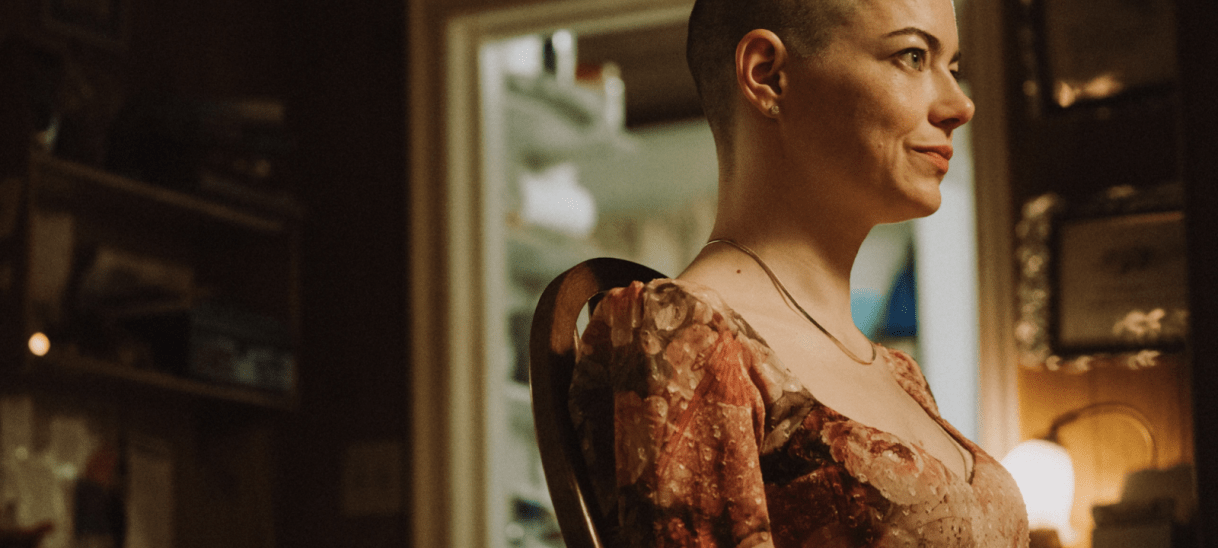
Set around the outskirts of Atlanta, cousins Teddy (Jesse Plemons) and Don (Aidan Delbris in his first screen role) are conspiracy-addled loners living in Teddy’s family home, preparing to kidnap a nearby pharmaceutical CEO they believe is an alien hellbent on destroying the planet. The CEO in question, Michelle Fuller, played by now-regular Lanthimos collaborator and producing partner Emma Stone, holds this shaky film and script together with a powerfully committed performance that would command greater Oscar buzz if the film weren’t so off-putting, likely dissuading voters from admiring her work.

In quiet and chaotic scenes alike, Stone plays the cousins and audiences constantly, as we search for any clue as to whether Teddy is right about any of his ravings. While the film fluctuates in tone, never settling on a worldview of humanity that usually allows Lanthimos’ films to shine through the affectation, Stone is perhaps Hollywood’s most dexterous performer of tonality, with an ever-increasing ability to comfort and challenge an audience at a moment’s notice.

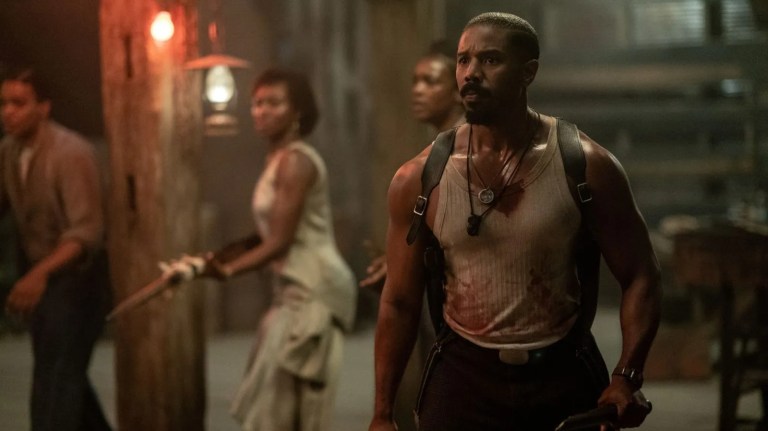
Jesse Plemons as Teddy in Bugonia (2025).

When the film is thriving, it bounces between satirical black comedy moments from Teddy’s conspiratorial ravings about aliens causing all of his personal problems and Michelle’s faux empathic conversations with her employees. By so heavily linking Teddy’s personal traumas to his conspiracies as well as his solution of convincing the aliens to spare Earth, we are drawn deeper into the spiral of empathising with a violent protagonist while never wavering in our scepticism. Teddy’s seeming displeasure with other people also has the audience questioning why his end goal is to save humanity, when he only appears to like his family and the bees he cares for.

Plemons and Stone have become so locked into Lanthimos’ sets that they become true extensions of the filmmaker that are worth the price of admission. Robbie Ryan’s 35mm Vistavision camera focuses so intently on faces during key confrontation scenes that complicate and enrich every fraught interaction between the three characters, playing out like an absurdist tragedy of modern nihilism and the cost of humanity in simple close-up.

(From Left) Emma Stone, Aiden Delbis, and Jesse Plemons in Bugonia (2025).

Even with its often bracing moments and artistic flourishes that have won and lost the Greek filmmaker’s fans over the years, Bugonia will go down smoother than recent entries due to its deliberately modern setting. With a pair of iconic needle-drops in Chappel Roan’s Good Luck, Babe and Green Day’s Basketcase, Lanthimos’ film stretches out past his own artistic bubble, offering a hand to a contemporary audience needing to be invited into his world that is richly rewarding. 

Teddy is a beekeeper and blames Michelle’s company for the death of the countless bees (bees feature as prominently here as in Jason Statham’s bizarre 2024 film The Beekeeper), as well as the death of his mother, clouding the audience’s perceptions of whether this kidnapping is mostly an act of personal vengeance. The title Bugonia comes from an ancient Mediterranean ritual based on the belief that bees are produced from a cow’s carcass. This spiritual concept of rebirth, blossoming from an integral part of the ecosystem through the death of another being, is woven throughout the film, most clearly in its final images. Unfortunately, the rest of the film’s zippy nihilism clouds these fleeting ideas, never reaching above a wry smirk or passing glance towards a future it believes in. 

The Greek auteur’s work can too often feel disconnected from our world, much like his clear idol, Terry Gillem, striving for the work to be seen and appreciated outside time rather than exist alongside it. In Bugonia, however, we live in an achingly dissolving world of Teddy’s conspiracies and Michelle’s jarring CEO ruthlessness, echoing much of the world in our mid-2020s in a similar vein to Ari Aster’s divisive Eddington (2025).

But in a current climate of political violence and peak conspiratorial thinking in positions of power, what does it mean to centre a violent conspiracy theorist in a contemporary movie? Kudos to Tracy and Lanthimos for adapting Jang Joon-hwan’s 22-year-old film into this fraught moment, but do they truly reckon with that decision? A film that plays with your ideas of truth and fiction, Bugonia lands in a certain vein of deterministic nihilism that questions why bother asking the question in the first place, leaving us with a satisfying movie but a bizarre aftertaste. Turning to conspiracy as a direct result of tragedy is an evocative core at the heart of a contemporary story, but are you willing to turn inwards and face that ugly humanness that is uncovered?

Bugonia is in theatres on October 30.

97th Academy Awards: Predictions

It’s the most wonderful time of the year if you’re a cinephile, and it’s just around the corner.

Yes, the Academy of Motion Picture Arts and Sciences’ Night of Nights —otherwise known as “The Oscars”— will be taking place this Monday morning, March 1st (Naarm time) and the team at Rating Frames is as excited as ever.

As they did last year, our three resident critics have made their predictions as to what, or who, will be victorious in all 23 categories.

Below are the films that Arnel, Darcy and Tom are predicting will walk away with a coveted statuette at the 97th Academy Awards, and their personal vote, in each category

Best Picture

What will win // What deserves to win

Arnel: The Brutalist // Anora

Darcy: Anora // Nickel Boys

Tom: Conclave // Dune: Part Two

Best Director

Arnel: Brady Corbet (The Brutalist) // Sean Baker (Anora)

Darcy: Sean Baker (Anora) // Brady Corbet (The Brutalist)

Tom: Sean Baker (Anora) // Sean Baker

Best Actor

Arnel: Adrien Brody (The Brutalist) // Adrien Brody

Darcy: Adrien Brody (The Brutalist) // Adrien Brody

Tom: Adrien Brody (The Brutalist) // Ralph Fiennes (Conclave)

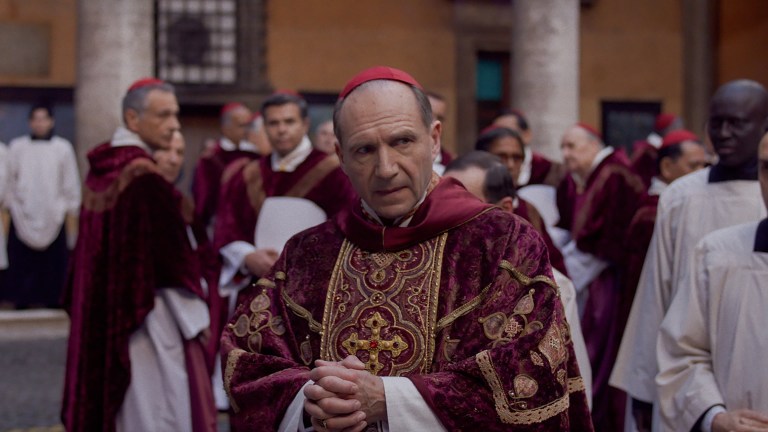
Ralph Fiennes, nominated for his performance in The Conclave
Best Actress

Arnel: Mikey Madison (Anora) // Mikey Madison

Darcy: Demi Moore (The Substance) // Mikey Madison (Anora)

Tom: Demi Moore (The Substance) // Mikey Madison (Anora)

Best Supporting Actor

Arnel: Kieran Culkin (A Real Pain) // Kieran Culkin

Darcy: Kieran Culkin (A Real Pain) // Guy Pearce (The Brutalist)

Tom: Kieran Culkin (A Real Pain) // Yura Borisov (Anora)

Best Supporting Actress

Arnel: Zoe Saldaña (Emilia Perez) // Zoe Saldaña

Darcy: Zoe Saldaña (Emilia Perez) // Monica Barbaro (A Complete Unknown)

Tom: Zoe Saldaña (Emilia Perez) // Isabella Rossellini (Conclave)

Best Original Screenplay

Arnel: Anora // Anora

Darcy: Anora // Anora

Tom: Anora // Anora

Best Adapted Screenplay

Arnel: Conclave // Conclave

Darcy: Conclave // Nickel Boys

Tom: Conclave // Conclave

Best Animated Feature

Arnel: The Wild Robot // The Wild Robot

Darcy: The Wild Robot // The Wild Robot

Tom: The Wild Robot // The Wild Robot

The Wild Robot is a hot favourite for Animated Feature
Best International Feature

Arnel: I’m Still Here // I’m Still Here

Darcy: I’m Still Here // The Seed of the Sacred Fig

Tom: I’m Still Here

Best Documentary Feature

Arnel: Porcelain War // No Other Land

Darcy: No Other Land // No Other Land

Tom: Porcelain War

Best Documentary Short Subject

Arnel: Incident // Instruments of a Beating Heart

Darcy: I Am Ready, Warden // Incident

Tom: Instruments of a Beating Heart

Best Live-Action Short

Arnel: The Man Who Could Not Remain Silent // The Man Who Could Not Remain Silent

Darcy: The Man Who Could Not Remain Silent // The Man Who Could Not Remain Silent

Tom: The Man Who Could Not Remain Silent

Best Animated Short

Arnel: Yuck! // Yuck!

Darcy: Beautiful Men // Yuck!

Tom: Magic Candies

Best Original Score

Arnel: The Brutalist // The Brutalist

Darcy: The Brutalist // The Brutalist

Tom: The Brutalist // The Wild Robot

Best Original Song

Arnel: “El Mal” (Emilia Perez) // “El Mal”

Darcy: “El Mal” (Emilia Perez) // “Like a Bird” (Sing Sing)

Tom: “El Mal” (Emilia Perez)

Best Sound

Arnel: Dune: Part Two // Dune: Part Two

Darcy: Dune: Part Two // Dune: Part Two

Tom: A Complete Unknown // Dune: Part Two

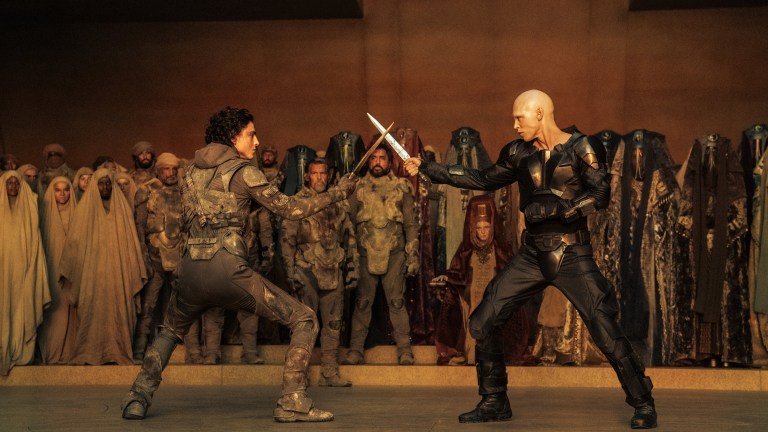
Dune: Part Two is nominated for multiple categories, including Best Sound
Best Production Design

Arnel: Wicked // Wicked

Darcy: Wicked // The Brutalist

Tom: Wicked // Conclave

Best Cinematography

Arnel: The Brutalist // Dune: Part Two

Darcy: The Brutalist // The Brutalist

Tom: The Brutalist // Dune: Part Two

Best Makeup and Hairstyling

Arnel: The Substance // The Substance

Darcy: The Substance // The Substance

Tom: The Substance // Nosferatu

Best Costume Design

Arnel: Wicked // Nosferatu

Darcy: Wicked // Nosferatu

Tom: Nosferatu // Conclave

Best Film Editing

Arnel: The Brutalist // Anora

Darcy: Anora // Anora

Tom: The Brutalist // Anora

Best Visual Effects

Arnel: Dune: Part Two // Dune: Part Two

Darcy: Dune: Part Two // Dune: Part Two

Tom: Dune: Part Two // Kingdom of the Planet of the Apes

The Promised Land is a Rare and Satisfying Danish Period Epic

Rating: 3.5 out of 5.

Set in the glaringly inhospitable north of Denmark in the 18th century, The Promised Land (2023), is a period drama that could’ve easily slipped into historical mad-libs. But, through a nuanced script by director Nikolaj Arcel and Anders Thomas Jensen based on the 2020 novel by Ida Jesson, we are given an easily digestible and consistently compelling epic through a real focus on character interiority. Mads Mikkelsen, with a weathered face as sprawling and inscrutable as the sparse Danish countryside, captures our attention within every frame of the film that too easily could’ve faded into obscurity without his brilliant performance.

The heath, a term for the impenetrable countryside in northern Denmark is where we find ourselves. A land with murky jurisdiction between the Danish king and local landowners, recently retired army captain Ludwig Kahlen (the formidable Mads Mikkelsen) seeks to gain permission to farm this impossible land and in return, gain land ownership and an estate. A uniquely humble period drama, The Promised Land succeeds in the grounded, universal story of perseverance and cultivation that ties us to our global history.

This is an environment we don’t often see Mikkelsen in, as the lower-born striver amongst the bourgeoisie. He is in a more anxious state than the revered actor is used to, placing his weathered face amongst the terse and difficult countryside cultivating anything that will uproot him into a higher station. 

Mads Mikkelsen and Gustav Lindh in The Promised Land

A film that reflects its brooding and unsettling environment in its subject matter and style, The Promised Land still finds new pockets of period cruelty in a tense scene at the local magistrate and estate owner Frederick’s (Simon Bennebjerg) ball, highlighted by the capture and horrible torture of a runaway alongside a children’s choir. Up until this point, Frederick is seen as petulant and weak, but in this moment the world Ludwig seeks to establish himself in is realised. Bennebjerg’s performance is a great counter to Mikkelsen’s resolve, matching his severe expressions with those of an adult toddler with too many toys at their disposal.

The Promised Land pairs closely with the modern masterpiece There Will be Blood (2007), albeit with a more classical Western approach to striving protagonists combating the established power structures. While not on the same artistic level as the Paul Thomas Anderson film (few new films are), The Promised Land thrives in its modesty, propelled by its strong ensemble cast highlighted by Mikkelson and Amanda Collin as Ann Barbara, an indentured farmer who fled the cruel Frederick’s reign. 

But this is not just a film about farming and potato rustling. This is a rare modern period film that actually explores the role of faith, both in religion and in the monarchical institution that Ludwig wields as a symbol of righteousness amongst chaos. These are complicated, compelling ideas to show in a grounded way, and by focusing on the individual humanity on display over the broader concepts, you see both modern life and history at once, deepening the experience.

Mads Mikkelsen in The Promised Land

The revelation of Ludwig’s trump card in this land and farming war is the lowly and persistent potato is a charming one and well reflects the character’s stern resolve in his ambition, no matter the origin. The Danish winter is harsh with only the slightest glimmer of hope coming through the promise of spring that ties us physically and emotionally to this enduring farming tale of perseverance. The cinematography by Rasmus Videbæk is beautiful in its landscapes and use of natural lighting with a focus on fire while maintaining a groundedness that can too often be lost in these more natural environments. 

The casting of Mikkelson is of course integral to the production of the film, but it does alter how the narrative unfolds. As one of the great unflappable performers working today, Mikkelson always appears entirely in control of his situation, with his desire to lift himself into a higher station an inevitability. His age also complicates the story, as the character of Ludwig on the page appears a more youthful character out of the army (there is a line in the opening scene informing us that Ludwig is recently retired that seeks to explain away his age) and eager to establish themselves with money and land, but at his more advanced age, the man Mikkelson portrays appears to be on his final attempt at making a life for himself. Whether intentional or not, this creates a weight of sadness and desperation that becomes the lifeblood of the film.

Through a well realised ensemble headlined by the great Mads Mikkelson, The Promised Land is an honest and compelling period drama set in a unique world that is still close to home. With its grounded farming story and classic Hollywood western narrative of a single, wandering force upsetting the local power structures, we are placed on familiar ground, allowing us to be swept up into this formidable drama.

The Promised Land is in select theatres now.
96th Academy Awards: Predictions

We’re just mere hours away now from this year’s Oscars telecast, and with it, the reveal as to what America’s Academy of Motion Picture Arts and Sciences deems the most outstanding films of 2023.

Continuing a tradition that began two years prior and continued last year, our writers are once again hedging their bets as to which movies and artists will walk home with a coveted statuette.

Read on to reveal the predictions of Arnel, Darcy and Tom for the upcoming ceremony, plus who they’d most like to see emerge victorious.

Best Picture

What will win // What deserves to win

Arnel: Oppenheimer // Oppenheimer

Darcy: Oppenheimer // Killers of the Flower Moon

Tom: Oppenheimer // Oppenheimer

Best Director

Arnel: Christopher Nolan (Oppenheimer) // Christopher Nolan

Darcy: Christopher Nolan (Oppenheimer) // Jonathan Glazer (The Zone of Interest)

Tom: Christopher Nolan (Oppenheimer) // Christopher Nolan

Best Actor

Arnel: Cillian Murphy (Oppenheimer) // Cillian Murphy

Darcy: Cillian Murphy (Oppenheimer) // Cillian Murphy

Tom: Cillian Murphy (Oppenheimer) // Paul Giamatti (The Holdovers)

Best Actress

Arnel: Lily Gladstone (Killers of the Flower Moon) // Lily Gladstone

Darcy: Lily Gladstone (Killers of the Flower Moon) // Lily Gladstone

Tom: Lily Gladstone (Killers of the Flower Moon) // Lily Gladstone

Best Supporting Actor

Arnel: Robert Downey Jr. (Oppenheimer) // Robert Downey Jr.

Darcy: Robert Downey Jr. (Oppenheimer) // Robert Downey Jr.

Tom: Robert Downey Jr. (Oppenheimer) // Mark Ruffalo (Poor Things)

Best Supporting Actress

Arnel: Da’Vine Joy Randolph (The Holdovers) // Da’Vine Joy Randolph

Darcy: Da’Vine Joy Randolph (The Holdovers) // Da’Vine Joy Randolph

Tom: Da’Vine Joy Randolph (The Holdovers) // Danielle Brooks (The Color Purple)

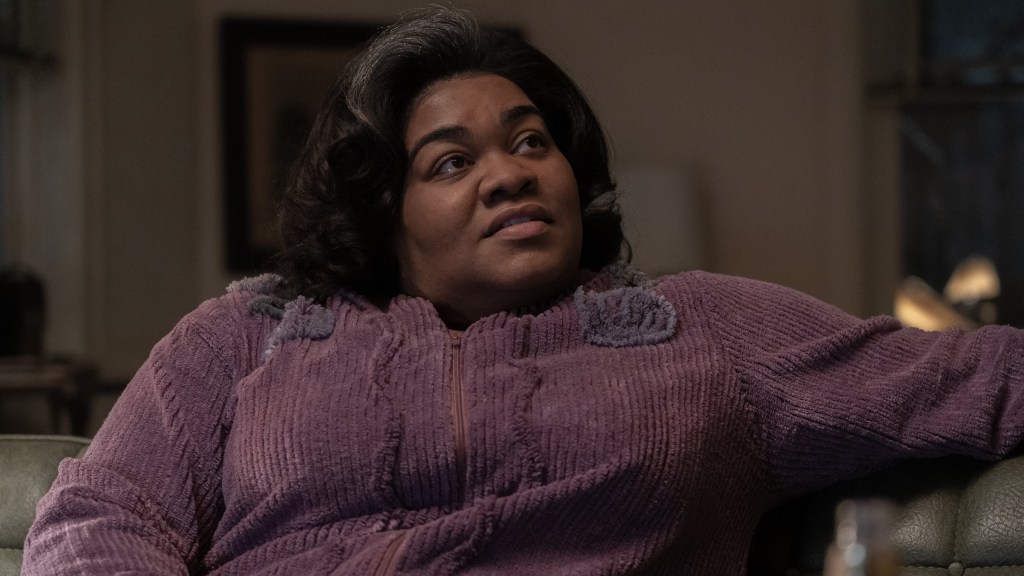
Da’Vine Joy Randolph, nominated for her performance as Mary Lamb in The Holdovers
Best Original Screenplay

Arnel: Justine Triet & Arthur Harari (Anatomy of a Fall) // Celine Song (Past Lives)

Darcy: Justine Triet & Arthur Harari (Anatomy of a Fall) // Celine Song (Past Lives)

Tom: Justine Triet & Arthur Harari (Anatomy of a Fall) // Celine Song (Past Lives)

Best Adapted Screenplay

Arnel: Christopher Nolan (Oppenheimer) // Christopher Nolan

Darcy: Cord Jefferson (American Fiction) // Christopher Nolan

Tom: Christopher Nolan (Oppenheimer) // Christopher Nolan

Best Animated Feature

Arnel: The Boy and the Heron // The Boy and the Heron

Darcy: Spider-Man: Across the Spider-Verse // The Boy and the Heron

Tom: Spider-Man: Across the Spider-Verse // Across the Spider-Verse

Best International Feature

Arnel: The Zone of Interest // The Zone of Interest

Darcy: The Zone of Interest // The Zone of Interest

Tom: The Zone of Interest

Best Documentary Feature

Arnel: 20 Days in Mariupol // 20 Days in Mariupol

Darcy: 20 Days in Mariupol // 20 Days in Mariupol

Tom: 20 Days in Mariupol

Best Documentary Short Subject

Arnel: The ABCs of Book Banning // The ABCs of Book Banning

Darcy: The ABCs of Book Banning // The ABCs of Book Banning

Tom: The ABCs of Book Banning

Benedict Cumberbatch in The Wonderful Story of Henry Sugar, nominated for Best Live-Action Short
Best Live-Action Short

Arnel: The Wonderful Story of Henry Sugar // The Wonderful Story of Henry Sugar

Darcy: The Wonderful Story of Henry Sugar // The Wonderful Story of Henry Sugar

Tom: The Wonderful Story of Henry Sugar

Best Animated Short

Arnel: War is Over! Inspired by the Music of John and Yoko // War is Over! Inspired by the Music of John and Yoko

Darcy: Letter to a Pig // War is Over! Inspired by the Music of John and Yoko

Tom: War is Over! Inspired by the Music of John and Yoko

Best Original Score

Arnel: Ludwig Göransson (Oppenheimer) // Ludwig Göransson

Darcy: Ludwig Göransson (Oppenheimer) // Ludwig Göransson

Tom: Ludwig Göransson (Oppenheimer) // Ludwig Göransson

Best Original Song

Arnel: “What Was I Made For?” (Barbie) // “What Was I Made For?” (Barbie)

Darcy: “What Was I Made For?” (Barbie) // “I’m Just Ken” (Barbie)

Tom: “What Was I Made For?” (Barbie) // “Wahzhazhe (A Song for My People)” (Killers of the Flower Moon)

Best Sound

Arnel: Oppenheimer // Oppenheimer

Darcy: Oppenheimer // The Zone of Interest

Tom: The Zone of Interest // Oppenheimer

Best Production Design

Arnel: Barbie // Poor Things

Darcy: Barbie // Poor Things

Tom: Barbie // Poor Things

Greta Gerwig’s Barbie, nominated for Best Production Design
Best Cinematography

Arnel: Hoyte van Hoytema (Oppenheimer) // Hoyte van Hoytema

Darcy: Hoyte van Hoytema (Oppenheimer) // Rodrigo Prieto (Killers of the Flower Moon)

Tom: Hoyte van Hoytema (Oppenheimer) // Hoyte van Hoytema

Best Makeup and Hairstyling

Arnel: Poor Things // Poor Things

Darcy: Maestro // Poor Things

Tom: Maestro // Poor Things

Best Costume Design

Arnel: Jacqueline Durran (Barbie) // Jacqueline Durran (Barbie)

Darcy: Jacqueline Durran (Barbie) // Jacqueline Durran (Barbie)

Tom: Jacqueline Durran (Barbie) // Holly Waddington (Poor Things)

Best Film Editing

Arnel: Jennifer Lame (Oppenheimer) // Jennifer Lame

Darcy: Jennifer Lame (Oppenheimer) // Jennifer Lame

Tom: Jennifer Lame (Oppenheimer) // Jennifer Lame

Best Visual Effects

Arnel: Godzilla Minus One // Godzilla Minus One

Darcy: Godzilla Minus One // Godzilla Minus One

Tom: The Creator // Guardians of the Galaxy: Vol. 3

Rating Frames Podcast Episode 3: 95th Oscars Recap

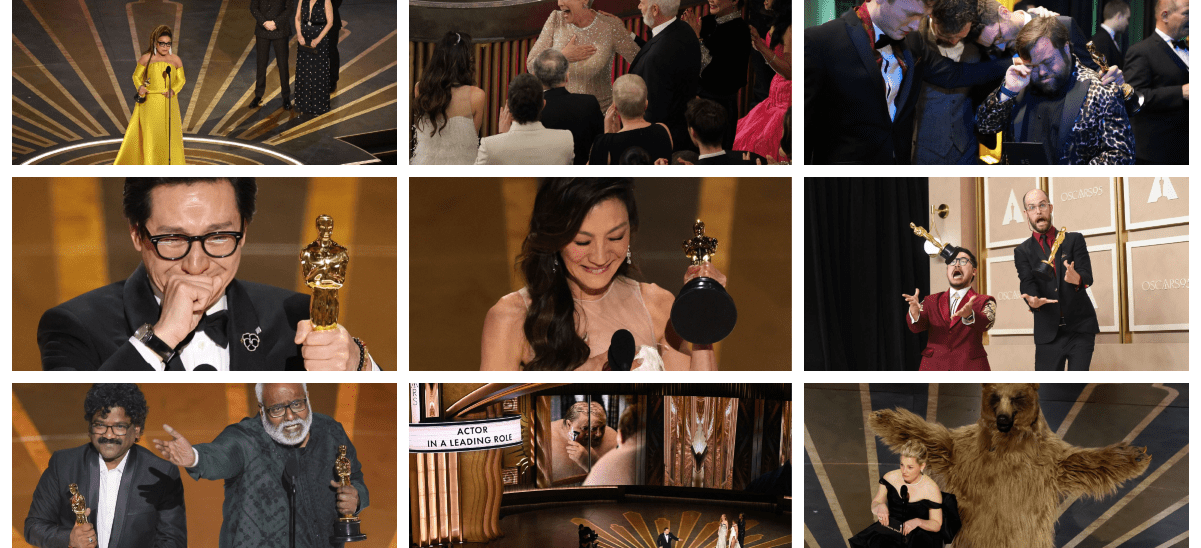
Arnie, Darcy and Tom recap the 95th Academy Awards, including everything from Ke Huy Quan’s extraordinary journey to win the Best Supporting Actor award; his fellow cast member Michelle Yeoh’s Best Actress win; the biggest winner of the night in Everything Everywhere All At Once; All Quiet on the Western Front‘s underdog wins; and Brendan Fraser’s Best Actor win to cap off his run of wins — we have it all.

95th Academy Awards: Predictions

It’s the most wonderful time of the year if you’re a cinephile, and it’s just around the corner.

Yes, the Academy of Motion Picture Arts and Sciences’ Night of Nights —otherwise known as “The Oscars”— will be taking place this Monday morning, March 13th (Naarm time) and the team at Rating Frames is as excited as ever.

As they did last year, our three resident critics have made their predictions as to what, or who, will be victorious in all 23 categories.

Below are the films that Arnel, Darcy and Tom are predicting will walk away with a coveted statuette at the 95th Academy Awards, and their personal vote, in each category.

Best Picture

What will win // What deserves to win

Arnel: The Fabelmans // The Fabelmans

Darcy: Everything Everywhere All at Once // Tár

Tom: Everything Everywhere All at Once // Everything Everywhere

Best Director

Arnel: Steven Spielberg (The Fabelmans) // Steven Spielberg (The Fabelmans)

Darcy: Daniel Kwan & Daniel Scheinert (Everything Everywhere All at Once) // Steven Spielberg (The Fabelmans)

Tom: Daniels (Everything Everywhere All at Once) // Martin McDonagh (The Banshees of Inisherin)

Best Actor

Arnel: Brendan Fraser (The Whale) // Colin Farrell (The Banshees of Inisherin)

Darcy: Brendan Fraser (The Whale) // Paul Mescal (Aftersun)

Tom: Brendan Fraser (The Whale) // Colin Farrell (The Banshees of Inisherin)

Best Actress

Arnel: Cate Blanchett (Tár) // Cate Blanchett (Tár)

Darcy: Cate Blanchett (Tár) // Cate Blanchett (Tár)

Tom: Michelle Yeoh (Everything Everywhere All at Once) // Michelle Yeoh (Everything Everywhere…)

Best Supporting Actor

Arnel: Ke Huy Quan (Everything Everywhere All at Once) // Brendan Gleeson (The Banshees of Inisherin)

Darcy: Ke Huy Quan (Everything Everywhere All at Once) // Ke Huy Quan (Everything Everywhere All at Once)

Tom: Ke Huy Quan (Everything Everywhere All at Once) // Brian Tyree Henry (Causeway)

Best Supporting Actress

Arnel: Angela Bassett (Black Panther: Wakanda Forever) // Kerry Condon (The Banshees of Inisherin)

Darcy: Angela Bassett (Black Panther: Wakanda Forever) // Kerry Condon (The Banshees of Inisherin)

Tom: Jamie Lee Curtis (Everything Everywhere All at Once) // Stephanie Hsu (Everything Everywhere All at Once)

Best Original Screenplay

Arnel: Martin McDonagh (The Banshees of Inisherin) // Martin McDonagh (The Banshees of Inisherin)

Darcy: Martin McDonagh (The Banshees of Inisherin) // Todd Field (Tár)

Tom: Daniels (Everything Everywhere All at Once) // Martin McDonagh (The Banshees of Inisherin)

Best Adapted Screenplay

Arnel: Sarah Polley (Women Talking) // Sarah Polley (Women Talking)

Darcy: Sarah Polley (Women Talking) // Sarah Polley (Women Talking)

Tom: Sarah Polley (Women Talking) // Rian Johnson (Glass Onion: A Knives Out Mystery)

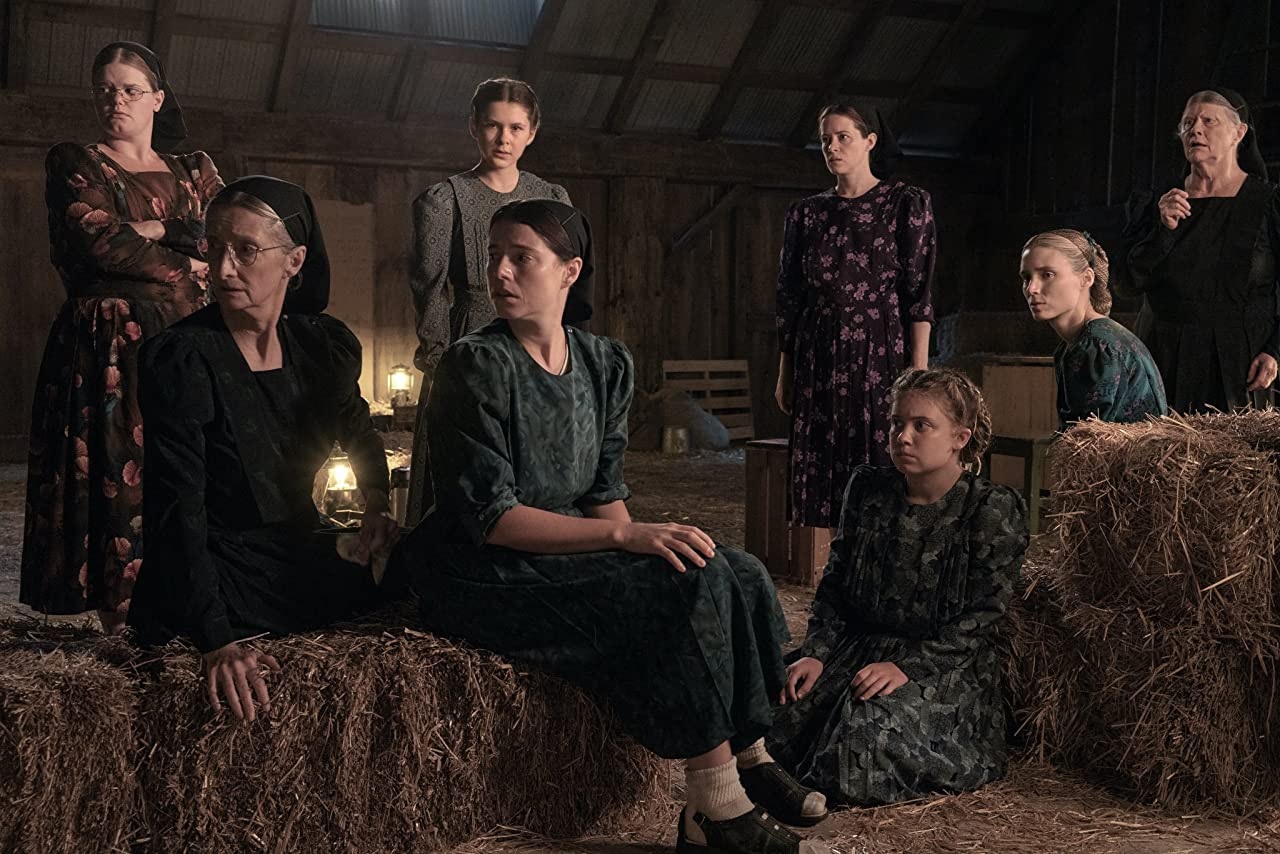
The cast of Women Talking, the team’s tip for Best Adapted Screenplay
Best Animated Feature

Arnel: Guillermo del Toro’s Pinocchio // Guillermo del Toro’s Pinocchio

Darcy: Turning Red // Turning Red

Tom: Guillermo del Toro’s Pinocchio // Turning Red

Best International Feature

Arnel: All Quiet on the Western Front // All Quiet on the Western Front (ideally, none)

Darcy: All Quiet on the Western Front // The Quiet Girl

Tom: All Quiet on the Western Front // All Quiet on the Western Front

Best Documentary Feature

Arnel: Guess answer: Fire of Love // Fire of Love

Darcy: Navalny // All the Beauty and the Bloodshed

Tom: Fire of Love // Fire of Love

Best Documentary Short Subject

Arnel: Guess answer: Haulout

Darcy: Haulout

Tom: How Do You Measure a Year?

Best Live-Action Short

Arnel: Guess answer: Le Pupille

Darcy: Le Pupille

Tom: Le Pupille

Best Animated Short

Arnel: Guess answer: The Boy, the Mole, the Fox and the Horse

Darcy: The Boy, the Mole, the Fox and the Horse

Tom: The Boy, the Mole, the Fox and the Horse

Best Original Score

Arnel: Justin Hurwitz (Babylon) // Justin Hurwitz (Babylon)

Darcy: Justin Hurwitz (Babylon) // Justin Hurwitz (Babylon)

Tom: Volker Bertelmann (All Quiet on the Western Front) // Justin Hurwitz (Babylon)

Best Original Song

Arnel: “Naatu Naatu” (RRR) // “Hold My Hand” (Top Gun: Maverick)

Darcy: “Naatu Naatu” (RRR) // “This is a Life” (Everything Everywhere All at Once)

Tom: “Naatu Naatu” (RRR) // “Hold My Hand” (Top Gun: Maverick)

N. T. Rama Rao Jr and Ram Charan in RRR, the favourite for Best Original Song

Best Sound

Arnel: Top Gun: Maverick // Top Gun: Maverick

Darcy: Top Gun: Maverick // The Batman

Tom: All Quiet on the Western Front // Top Gun: Maverick

Best Production Design

Arnel: Babylon // Babylon

Darcy: Babylon // Babylon

Tom: Elvis // All Quiet on the Western Front

Best Cinematography

Arnel: Roger Deakins (Empire of Light) // Roger Deakins (Empire of Light)

Darcy: Roger Deakins (Empire of Light) // Florian Hoffmeister (Tár)

Tom: Mandy Walker (Elvis) // James Friend (All Quiet on the Western Front)

Best Makeup and Hairstyling

Arnel: The Whale // The Batman

Darcy: Elvis // Black Panther: Wakanda Forever

Tom: The Whale // The Batman

Best Costume Design

Arnel: Shirley Kurata (Everything Everywhere All at Once) // Shirley Kurata (Everything Everywhere All at Once)

Darcy: Shirley Kurata (Everything Everywhere All at Once) // Shirley Kurata (Everything Everywhere All at Once)

Tom: Catherine Martin (Elvis) // Ruth Carter (Black Panther: Wakanda Forever)

Best Film Editing

Arnel: Paul Rogers (Everything Everywhere All at Once) // Paul Rogers (Everything Everywhere All at Once)

Darcy: Paul Rogers (Everything Everywhere All at Once) // Paul Rogers (Everything Everywhere All at Once)

Tom: Paul Rogers (Everything Everywhere All at Once) // Eddie Hamilton (Top Gun: Maverick)

Best Visual Effects

Arnel: Avatar: The Way of Water // Avatar: The Way of Water

Darcy: Avatar: The Way of Water // Avatar: The Way of Water

Tom: Avatar: The Way of Water // Top Gun: Maverick

The Fabelmans is a Surprisingly Thorny Origin Tale

Rating: 4.5 out of 5.

Pauline Kael in her legendary review for Steven Spielberg’s pre-Jaws (1975) breakout feature The Sugarland Express (1974), a film she called “one of the most phenomenal debut films in the history of movies”, that Spielberg “isn’t saying anything special in The Sugarland Express, but he has a knack for bringing out young actors and a sense of composition and movement that almost any director might envy.” This note encapsulates the pantheon filmmaker’s now long-serving skill set and potential flaws as an empty escapist entertainer (a critique Spielberg agreed with as something he had to grow into). 

This should be kept in mind while watching his most personal film yet, The Fabelmans (2022), both in following our budding protagonist’s journey as a filmmaker, but also in Spielberg’s own journey behind the camera to arrive at a place where he felt daring enough to put his life on screen in this openly vulnerable way. 

The film follows Sammy (Mateo Zoryan as young Sammy, Gabriel LaBelle as teenage Sammy) and the family Fabelman from a child to 18, tracing the journey from New Jersey, to Phoenix, and finally to California as he discovers his love for film. This love, however, begins to complicate as Sammy grows more invested in cinema, an investment that intertwines and impacts his love, both internally and externally, for his family.

The opening scene is a microcosm of the film, with Sammy and his parents Mitzi (Michelle Williams) and Burt (Paul Dano), going to a showing of Cecil B. Demille’s The Greatest Show on Earth (1952), his first film experience. Sammy is scared to go in, with Spielberg opening the frame from his perspective, with his parents’ legs looming over the screen like Charlie Brown adults, so the pair do their best to reassure their child in their own ways. Burt believes this can be achieved by explaining to Sammy how the projector operates on a mechanical level, while Mitzi rebuts by expressing to him that “movies are a dream”. This duality plays throughout the film, with Spielberg with Sammy as his stand-in, as a budding craftsman that has the soul of a big-dreaming artist.

(from left) Paul Dano, Mateo Zoryan, and Michelle Williams in The Fabelmans.

On its surface, The Fablemans has the appearance of the ultimate final Spielberg film. In a half-century-long career, the legendary filmmaker is looking back at his upbringing, mining the depths of his childhood to create a truly individual coming-of-age story that he has more than deserved to make. Whether intentional or not, Spielberg has created an aura around The Fabelmans as the film he has wanted to make his whole life and feels may not get another chance besides now. There is an urgency to the storytelling that creates propulsion from scene to scene. Spielberg is the ultimate sentimentalist filmmaker, but this may be his most naked and open-hearted. Surprisingly though, the film is a more biting reflection on one’s upbringing as a young artist than it is perceived and is a truly unique film experience by modern Hollywood’s most important filmmaker. 

The film has a truly fascinating origin and is worth adding an extra chapter to the documentary Spielberg (2017), with the filmmaker shifting his focus during Covid, which forced West Side Story (2021) to delay a year, and for his children to be at home with him in lockdown. He also began working on this film shortly after his parents passed away (his father living to 103!) which should be noted in the context of the film. The pandemic is a large reason for this glut of memoiristic films by seasoned veteran filmmakers, with Spielberg being no exception. And, to no surprise, the master filmmaker has made the best film of the class.

Divorce is a defining aspect of Spielberg’s career so depicting the ur-separation that defines him is deeply compelling. Family units being separated can be seen throughout Spielberg’s filmography, from E.T. (1982), Indiana Jones and the Last Crusade (1989), Catch Me if You Can (2002), A.I. Artificial Intelligence (2001), and Close Encounters of the Third Kind (1977), all mining from similar experiences and placing them inside of other stories. In the Fabelmans, his relationship with his family changes and shifts in interesting and messy ways, especially in relation to his obsession with the camera and the power he wields in it. Seeing Sammy be oblivious to the power and destruction that his filmmaking obsession has on his family, with the emotional journey we see him go through, eventually unravels to him by the end of The Fabelmans that with great power comes great responsibility.

Frequent writing partner Tony Kushner has discussed how he believes Steven needed someone outside of the family to help work on the script. Anne Spielberg (Steven’s sister portrayed by Julia Butters in the film) wrote a script I’ll Be Home in 1999 about their childhood that they considered making into a film but never did. Their relationship is so connected at this stage, Kushner is able to balance the necessary mix of therapeutic memoir ghostwriter, and close filmmaking partner to create a truly special film. Using Kushner’s masterful skills in humanising and empathising with each character, Spielberg is able to create an honest love letter to his parents and those that made him who he is.

The power of Spielberg’s clear-eyed and impassioned filmmaking, mixed with Kushner’s deft hand at profound characterisation, allows the audience to see themselves in every character. This is as much a film about Mitzi and Burt as it is about Sammy, with Kushner able to establish an extraordinary amount of emotional depth out of these personal stories for Spielberg whilst never feeling overly soft or cruel to their lives. 

(from left) Julia Butters and Gabriel LaBelle in The Fabelmans.

The film mines aspects of Spielberg’s childhood that were not known, as he was clearly not ready to discuss in interviews or in the 2017 documentary, opting instead to express it the only way he knows how: by putting it on celluloid. The revelations made in The Fabelmans are clearly so personal to him that it is so heartwarming and heart-wrenching to see them rendered on screen for the world to see in some of the best scenes of the year. 

A personal favourite scene of the film and perhaps of the year, is the pivotal scene of Sammy deciding to show Mitzi the camping trip edit that has been eating him up and could rupture his family. Every moment of this scene is emotionally charged and perfect, leading to perhaps the most important use of Spielberg Face in his career. Beginning with a collection of insert shots, delicately showing the tactile and personal process of setting up his projector, adding to the weight of Sammy’s decision. Nothing illustrates his character more than choosing to show this film to his mother as his voice in an argument, both in his fear and his unknowing power his camera has. This moment also illustrates the evolution Mitzi and Sammy’s relationship has with these films in the closet, from humble childhood beginnings to emotionally shattering ends.

What allows The Fabelmans to expand past an individual coming-of-age story is the connection Kushner and Spielberg give to supporting characters in Sammy’s life. Woven delicately underneath the film is Reggie, (played wonderfully by Once Upon a Time in Hollywood 2019 breakout Julia Butters) and her emotional connection with her mother Mitzi. In the mother’s dress rehearsal for her piano performance, on the camping trip as the men are enraptured by Mitzi’s dance, and after the parents announce their divorce, Reggie is defending her mother, someone she is clearly emotionally in tune with while others are merely drawn to it. The Fabelmans is more than just Sammy’s story, through these other characters the film has shown a wider lens at this family as it emerges through crisis and change in an emerging America.

(from left) Gabriel LaBelle and Judd Hirsch

Biopics often fall into a trap of whipping through the subject’s life at a rapid pace, never allowing the film to ground itself in a place for long stretches, with important figures whipping through their life scene to scene. The Fabelmans has several scenes that play out that way, like the abrupt entrance of Uncle Boris (with an awards-worthy performance by Judd Hirsch), as well as a chance meeting with John Ford (I won’t spoil who he is played by) that closes the film. But there is never an air of dishonesty or hokiness to these moments, especially the Uncle Boris scene which really illuminates to Sammy his connection to his mother and their familial bond to art which is sure to lead to heartbreak. 

Spielberg’s whole heart is on the screen, warts and all. What makes The Fabelmans succeed is its lack of pure saccharine while still maintaining his signature warmth. It is a crucial scene that can be put up against any of his totemic scenes, showing Mitzi and Burt sitting down with their children to tell them about the divorce, which devolves into a shouting match. While frozen by what’s happening, Sammy isolates himself on the staircase while his family sits around the couch, he sees himself in the mirror, holding a camera up to this distressing confrontation. With an audible groan coursing through the audience, this is perhaps the most critical Spielberg has ever been about himself and how he uses filmmaking as a way to both reveal and hide behind his personal life.

Pair that with the pivotal scene of the antisemitic bully Logan (Sam Rechner in a quietly brilliant performance) confronting Sammy after the burgeoning filmmaker decided to capture him as the golden child of the school, and we have a truly unique experience of watching a masterful artist trying to come to terms with his camera-wielding compulsions.

The Fabelmans is in select theatres from January 5th.

The Banshees of Inisherin is a Feckin’ Good Time

Rating: 4.5 out of 5.

A densely compacted tragic fable on friendship, breakups, art, passions, and how one spends one’s life, Banshees of Inisherin is one of the year’s most rewarding films, with a collection of brilliant performances by Colin Farrell, Brendan Gleeson, Kerry Condon, and Barry Keoghan amplifying an extraordinary script by Oscar winning filmmaker Martin McDonagh.

At the tail end of the Irish Civil War in 1923, on the outskirts of the conflict sits the fictitious isle of Inisherin, a quiet town that feels universal in both place and time. The conversations and bickering being had on Inisherin could be happening in the 1920s, 1820s, or even today. Revered playwright turned filmmaker Martin Mcdonagh often plays with the idea of places as a form of purgatory for his characters, with Inisherin being no exception.

Reuniting after 14 years, Mcdonagh, Farrell, and Gleeson echo their masterpiece In Bruges (2008) throughout Banshees, making for a perfect double feature. Gleeson plays Colm, a folk musician in Inisherin who decides, for unclear reasons, to abruptly ignore and reject his long-time friend Pádraic, played by Farrell. He tells Pádraic he finds him dull and would rather spend the rest of his days composing music, wanting to leave behind a legacy rather than drink at the pub and listen to idle conversation. The actors seem to mirror the disposition of the other in these two films, with Farrell turning from a vessel of guilt to a sweetheart, and Gleeson from a kind and endearing soul to a self-absorbed and increasingly cruel man. 

The setup is simple with the characters devolving as Pádraic’s desire to understand and rekindle this relationship with his closest friend persists. As Pádraic continues in his endeavour, Colm’s threats towards him to be left alone grow more and more extreme, leading to truly shocking places.

Brendan Gleeson (left) and Colin Farrell in The Banshees of Inisherin

What allows Banshees to thrive is its ability to entertain throughout as a film of friendship, art, and finding meaning in one’s life, as well as operating at an incredibly high level of thematic and political resonance. McDonagh has grown exponentially as a visual storyteller, allowing his sharp pen to relax and to allow the other aspects of cinema to communicate his themes and ideas in deeply rewarding ways. 

A series of thematic ties to Colm and Van Gogh plays both into the conflict the musician is feeling about his life and his work, and his desire to emit a legacy in a town that is absent of one. Gleeson gives a nuanced and subtle performance that should hopefully be rewarded in the awards season, exuding pathos and despair in a world he finds incredibly meaningless. In an interview with GQ, production designer Mark Tildesley describes Colm’s home like a Van Gogh painting;

“When you get into Colm’s house, the inside is almost like a Van Gogh painting. It’s yellow, bright. It has a red floor, which is an old oilskin from sailcloth, and a black ceiling, [which] are strong colours for a period film.”

Hannah Strong, GQ

These striking visual choices and the obvious allusion to Van Gogh’s ear with Colm’s threat of mutilation further cement the comparison between artists. The genius of this thematic connection is in how the filmmakers create the ties through the character Colm’s own choices, not their own. The sadness of the Colm story is his desperate need to have his work evaluated and celebrated, something we are never actually shown. We never hear his completed works so his projected idea of himself as this tortured artist is never redeemed for us as the audience, allowing only the pathos and cruelty of his decisions to fester throughout. What allows the very best character-led dramas to succeed is in creating a world that is believably crafted by its characters, something Banshees achieves superbly.

Brendan Gleeson (right) and Colin Farrell in The Banshees of Inisherin

The war of friends is a microcosm of the civil war taking place on its fringes in heartbreaking ways. There are better places to learn of the Irish civil war, but in essence, it was an internal struggle between the Irish about the ownership of land by the British, occurring shortly after the Irish War of Independence that created the free state. Viewing Colm and Pádraic’s falling out between brothers, devolving into increasing brutality (both to their land and personhood) in this historical sense allows the weight of this quirky comedy to ascend to greater heights. The heartbreak at the conclusion of the film is further extended with the knowledge of the troubles to come.

But to call The Banshees of Inisherin a political film about the Irish Civil War would be to reduce the breadth of ideas McDonagh is working with here. Complicated characters working against each other and their place in the world for seemingly asinine reasons, inside a deeply enjoyable and melancholic comedy, is the work of a master writer at the top of his game.

Banshees is a brilliant balancing act that consistently grounds itself in its characters, never allowing its more ethereal themes to float away into wistful abstraction. McDonagh is at the top of his game both as a writer and filmmaker here, allowing the non dialogue heavy moments to shine as much as the musicality of his feckin’ barbs to create one of the year’s best films.

The Banshees of Inisherin is in select theatres from Boxing Day.