“I’ve lived here maybe 23 years. But I feel afraid to call it home. There’s always the feeling that I’ll have to leave.” These opening words, by a nameless individual, ring out throughout Payal Kapadia’s extraordinary film All We Imagine as Light (2024), shot against the backdrop of Mumbai, focusing on the women who inhabit it.
The most soulful film in years is also perhaps the best feature of the year, documentarian turned fiction filmmaker Kapadia exploding onto the scene with an honest and poetic portrait of humanity in modern India. A powerful blend of personal womanhood inside the political sprawled across modern Mumbai, Kapadia’s gorgeous and lyrical film centres on three multigenerational nurses navigating a world unwilling to accommodate their lives.
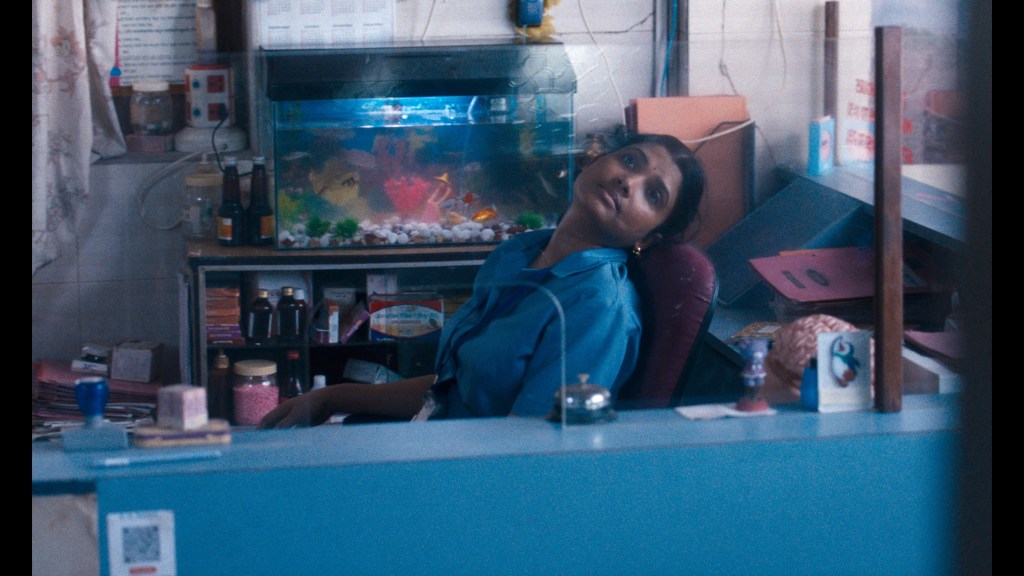
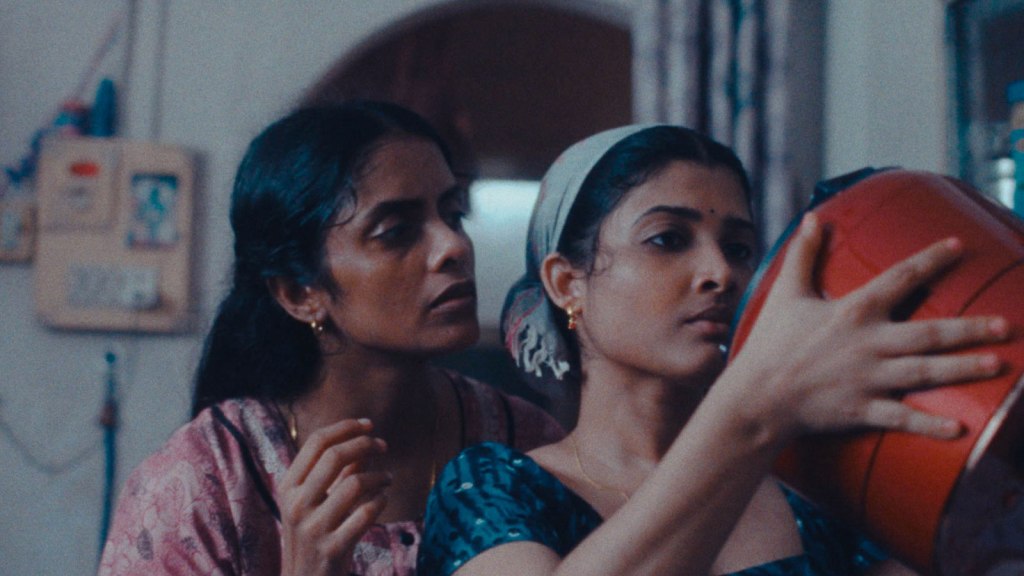
Centring on a pair of nurses, seasoned veteran Prabha (Kani Kusruti), and the youthful and expressive Anu (Divya Prabha), navigate an economically and politically uncertain time in Mumbai, along with older nurse Parvarty (Chhaya Kadam), who is facing eviction after the death of her husband. Prabha is dealing with the extended absence of her husband. This arranged marriage almost immediately left Mumbai to work in Germany, sending gestures to her home like a European rice cooker that only highlights the void he has left. On the other hand, Anu is attempting to balance her life while forming an interfaith romance with Muslim boy Shiaz (Hridhu Haroon), an increasingly contentious issue in current-day India.
Kani Kusruti as Prabha in All We Imagine as Light.
We first see Anu and Prabha on public transport on their way to work, inside the lyrical six-minute opening sequence that guides you immediately into the world Kapadia is sharing with us. Anu is asleep on her side on a train seat, demonstrating her naive sense of safety in her position while also telling the audience her level of preparedness to arrive at work. In the immediate next shot, we see Prabha, gracefully shown in a medium closeup holding onto the pole of the same train for stability (seen above). By only showing Prabha from the shoulders up here, Cinematographer and frequent collaborator Ranabir Das portrays the battle-hardened nurse in grace with the world around her, yet never settled into one place.
There is a fear this remarkable film will be lost in the awards race shuffle due to India’s increasingly conservative film body and government not submitting it for the Academy Awards, even with the film winning the Grand Prix at Cannes. This is a sad but unsurprising occurrence after Kapadia emerged onto the film scene with her 2021 documentary A Night of Knowing Nothing, also critical of India’s patriarchal system.
The sweet centre of the film lies in the blossoming romance between Anu and Shiaz, a relationship that blends religion and the modern political moment in the city. In a series of push-pull romantic moments which includes a heartbreaking yet comedic booty call where Anu must purchase a hijab to visit him in the Muslim district where he lives. Kapadia avoids easy exits with this romance, concluding powerfully with an honest and poetic moment of acceptance and beauty, tied into an honest moment of private security.
In contrast to this romance, Prabha and her complicated relationship with her absent husband fills the remaining emotional bandwidth. Born of an arranged marriage that ties her to the city she does not call her own. In the opening prologue, a resident tells us, “That’s life. You better get used to the impermanence”. In a film centred on the relationship between people and the places they inhabit, this line pangs with an honest awareness.
Divya Prabha as Anu in All We Imagine as Light.
A film that comes to mind while watching Kapadia’s film is Steve McQueen’s Lover’s Rock (2020) from his Small Axe series, and not just because composers Dhritiman Das and Topshe’s playful piano score could’ve fallen out of one of his films. The short and sweet feature is in contention for the film of the decade, a complicated work of desire and connection inside a wealth of sumptuous visual storytelling and guile that simply overwhelms you. Both films use colour and vivid travelogue-styled cinematography to embrace the human connection of place. What separates the two films is Kapadia’s deceptively critical eye when depicting modern Mumbai, especially the three women’s place within it.
The slow, simmering drama underneath the film’s central pair is the wrongful eviction of a third nurse at the hospital, the older woman Parvaty. Her husband has died, removing her right to live in her own home. The potency of the feminist politics that simmer underneath All We Imagine as Light is in the grounded reality of the characters’ situation, one they are helpless to improve, finding solace in their own uneasy but accepting companionship.
The film operates within two acts, the first within the city that flows downstream into its latter half as the trio of women go to the beachside village that Parvaty grew up in. Kapadia, through her documentary lens, views characters as people who have been steeped in a certain place like tea, becoming more like a place the longer you inhabit it. While Mumbai is described as a place of impermanence and instability for the characters we meet, it is only in venturing out of the rapid city do they begin to view their life and their wants more clearly. In its final moments, would Anu and Shiaz ever have the courage to meet Prabha without this opportunity outside the city? And would Prabha’s spiritual exchange with her husband which opened her eyes to what she is holding onto and what she needs to give up to change have occurred in the melancholy that followed her throughout Mumbai?
Kapadia, with a refined hand through documentary work, flourishes in small moments. Whether it’s the embrace of a rice cooker given by a distant-slash-estranged husband working in Germany, or the small gesture of helping an older colleague move her things back to her old home after being wrongfully evicted, All We Imagine as Light embraces the aching emotionality of the quotidian, knowing these fleeting moments create a mosaic that reflects the light of human experience.
All We Imagine as Light is in select theatres now.
A year of avoiding the larger titles in favour of more independent films, my MIFF experience in 2024 went from the battleground of Gaza to the quiet family dramas in modern Seoul, with a unifying theme of perseverance and defiance throughout. Much like 2023, the curatorial efforts of the festival directors are its greatest gift, ensuring a high baseline of quality that guarantees a thoughtful and compelling time at the movies no matter your interest set.
All Dirt Roads Taste of Salt (2023) – Raven Jackson
⭐⭐⭐⭐
Rating: 4 out of 5.
A powerful combination of photographic and sonic qualities propels Raven Jackson’s All Dirt Roads Taste of Salt to incredible heights. Becoming larger than the sum of its modest parts, Jackson announced herself immediately as an important American artist to follow moving forward.
Flowing like a seasonal river with its rises and falls, the narrative follows Mack, portrayed seamlessly by Kaylee Nicole Johnson and Charlean McClure, as she journeys through 1960s Mississippi onwards, with all the love and difficulty that comes with staying in her hometown through a challenging time.
Squeezing every fleeting moment of thematic and emotional juice, this essayistic ode to womanhood, home, and the shared experience will wash over you if you let it, feeling reborn in the gleaning sunlight.
All We Imagine as Light (2024) – Payal Kapadia
⭐⭐⭐⭐⭐
Rating: 4.5 out of 5.
The most soulful film of the festival, documentarian turned fiction filmmaker Payal Kapadia explodes onto the scene with the remarkable All We Imagine as Light. A powerful blend of personal womanhood inside the political in modern Mumbai, Kapadia’s gorgeous and lyrical film centres on three multigenerational nurses navigating a world unable and unwilling to accommodate their lives.
Kapadia, with a refined hand through documentary work, flourishes in small moments. Whether it’s the embrace of a rice cooker given by a distant-slash-estranged husband working in Germany, or the small gesture of helping an older colleague move her things back to her old home after being wrongfully evicted, All We Imagine as Light embraces the aching emotionality of the quotidian, knowing these fleeting moments create a mosaic that reflects the light of human experience.
Brief History of a Family (2024) – Jianjie Lin
⭐⭐⭐
Rating: 3 out of 5.
The one-child policy of China casts a long shadow across Brief History of a Family, a taut and beguiling debut feature from Jianjie Lin. After an incident at school sparks an unlikely connection, the shy and reserved teen Shuo (Sun Xilun) begins to spend more and more time at his more confident classmate Wei’s (Lin Muran) upper-middle-class house.
Lin’s debut is atmospheric and tense and while its decision to bunt with its bases loaded, the film still demonstrates a skill set to operate in the genre world of modern thriller, a drought-stricken place with fans desperate for new, exciting voices. Went long on the film here.
Didi (2024)- Sean Wang
⭐⭐⭐⭐
Rating: 3.5 out of 5.
In what is sure to be the beginning of a wave in late 00s coming-of-age stories that will have those in their late 20s questioning all life experiences as being unique, Sean Wang’s terrific and humbling Didi shows you screwing up is an integral part of growing up.
Telling the story of a Californian skater and potential filmmaker Chris (Izaac Wang), on summer break (a bizarre theme across several MIFF releases) as he navigates girls, friends, and his family. With integral sequences playing out over AIM and MySpace (finally, a film captures the adolescent psychological torture device of the top friends section on film) that had the audience in raptures, Wang is an exciting new filmmaker that can deftly translate the modern malaise of youth into compelling cinematic storytelling.
I Saw the TV Glow (2024) – Jane Schoenbrun
⭐⭐⭐⭐⭐
Rating: 4.5 out of 5.
A truly expansive cinematic experience that will define the year in movies, Jane Schoenbrun’s miraculous and tangly I Saw the TV Glow, is the best film I saw at MIFF and will no doubt contend with my film of the year. A film that explodes ideas of what a teenage coming-of-age story can be as it explores the push and pull between stagnation and liberation, ending on a unique note that seemingly has a different taste depending on the individual audience member’s life experience. That is no small feat.
I Saw the TV Glow follows Owen, a suburban teen protracted by Justice Smith in an outrageously good performance of youthful dysphoria and I will not hear arguments otherwise. Stuck in a liminal space outside of life, Owen finds solace in a fictional 90s too-adult-but-still-for-kids show The Pink Opaque, unlocked by fellow disenchanted teen Maddy (Brigette Lundy-Paine), who invited him into the world via burned VHS recordings of the show. The film is too dense to capture in a couple sentences, and the weight of Schoenbrun’s storytelling is in its ability to envelop a whole audience in the liminal world Owen feels locked within. Where most trans texts follow an embrace of transitioning, Schoenbrun’s film instead lingers and interrogates the suffocating space of dysphoria surrounding that place, a more evocative and unique lens to capture on film.
That Schoenbrun can bring a crowd down the psychological rabbit hole of dysphoria through a trans lens is a testament to their remarkable filmmaking powers. This is not just a film for ‘Twin Peaks: The Return (2017) is an 18-hour film’ Film Twitter folks (I am sometimes in the crowd), but for anyone who has felt lost in the liminal space that can be found along the path of life.
Janet Planet (2023) – Annie Baker
⭐⭐⭐⭐
Rating: 4 out of 5.
The smell of Autumn on a warm breeze as you stare, half bored and half awake at the misshapen clouds above, playwright Annie Baker’s filmmaking debut Janet Planet is the emergence of a major new voice in cinema, with all the confidence and assurance of an established artist.
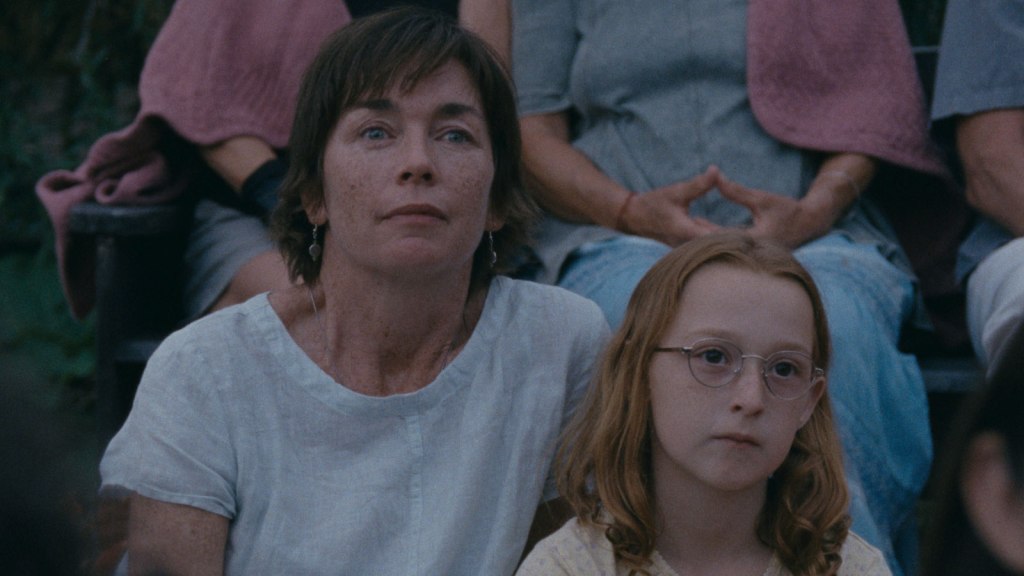
Capturing a fascinating and enthralling pair in the owlish 11-year-old Lacy (a revelatory Zoe Ziegler) and her mother Janet (Julianne Nicholson) over a summer break, Baker’s precise use of silence and seasonal boredom is a beautiful ode to human connection, with the push and pull that can only come from someone you’ve known your whole life.
La Cocina (2024) – Alfonso Ruizpalacios
⭐⭐⭐⭐
Rating: 3.5 out of 5.
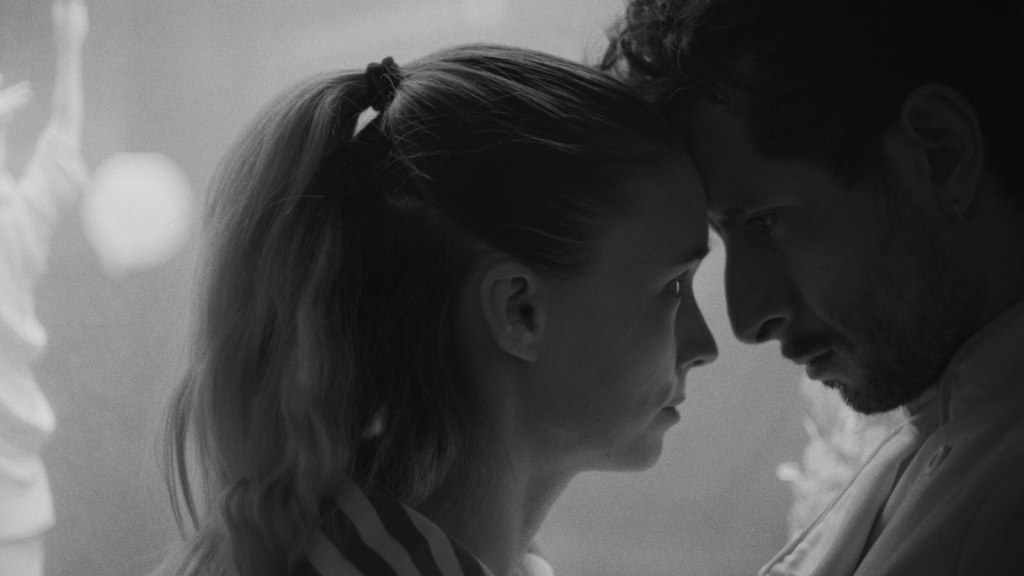
A frenetic, seething diorama of modern America through the lens of a Times Square super diner kitchen, Alfonso Ruizpalacios’ La Cocina blends the modern and the old-fashioned in this long but never tiring hospitality nightmare. Starring Rooney Mara and Raúl Briones, La Cocina wears its metaphors of American white supremacy and immigration inside the kitchen proudly, with Ruizpalacios’s impressive filmmaking style and farcical tendencies buoying these weighty ideas.
My Sunshine (2024) – Hiroshi Okuyama
⭐⭐⭐⭐
Rating: 3.5 out of 5.
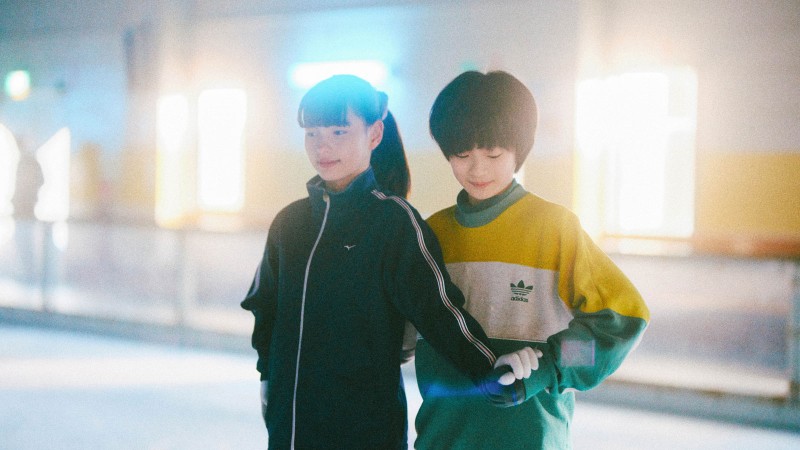
Like the enchanting mist of a crisp winter morning, Hiroshi Okuyama’s My Sunshine captures a personal tale of adolescent passion and direction with a nourishing blend of nostalgia and honesty.
My Sunshine has the trappings of a film about childhood love and coming of age, but shines through as a potent story about the importance of teachers and the connection that is made through a shared passion. While the uplifting story of Takuya’s (Keitatsu Koshiyama) journey with figure skating and growing into himself is universal and soul-nourishing, the journey of Arakawa (Sôsuke Ikematsu) rediscovering his love through his pupil’s childhood enthusiasm shows the connection with a mentor and mentee shines both ways.
No Other Land (2024) – Basel Adra, Hamden Ballal, and Yuval Abraham
⭐⭐⭐⭐
Rating: 4 out of 5.
The only documentary I caught at the festival, No Other Land is a breathtaking on-the-ground experience in Gaza, with filmmaking collective Basel Adra, Hamden Ballal, and Yuval Abraham giving us a visceral document of the horrible situation in the Palestinian West Bank. Capturing Adra and his family’s village in Masafer Yatta in real-time slowly erodes any feeling of optimism in the region will hollow you out and leave you seething in rage.
On Becoming a Guinea Fowl (2024) – Rungano Nyoni
⭐⭐⭐⭐
Rating: 4 out of 5.
Despite our IMAX screening needing to be restarted 30 minutes in due to a lack of subtitles, Rungano Nyoni’s On Becoming a Guinea Fowl had cast a cinematic spell that proved impossible to break. A compelling and seething portrait of the friction between community repression and warmth in modern-day Zambia, Guinea Fowl is a difficult but necessary watch with its honest telling of the ways sexual violence permeates global communities in incalculable ways.
Anchored by a truly star-making performance by Susan Chardy as the modern Shula returning home to her community in Zambia only to come across the bizarrely dead body of Uncle Fred in the middle of the street, Nyoni’s strong filmmaking chops are in full force, beautifully balancing evocative and compelling characters in an awful situation. One of the leading new voices to watch coming out of MIFF.
Pepe (2024) – Nelson Carlos de los Santos Arias
⭐⭐⭐⭐
Rating: 3.5 out of 5.
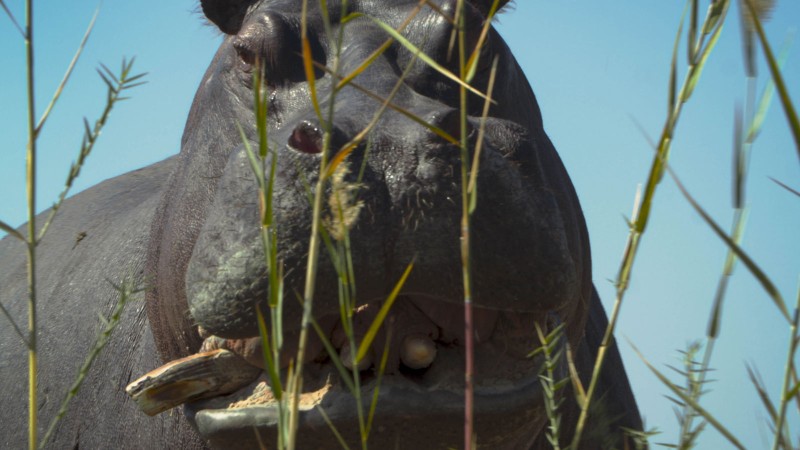
The story of Pablo Escobar’s escaped hippo told through poetic voiceover by the impossibly gorgeous baritone of Jhon Narváez, Nelson Carlos de los Santos Arias’s Pepe has one of the loglines of the year but is a film that dives compelling depths in this potential silly tale of animal personhood.
An infinitely charming and divisive story of losing a home never seen, Pepe bites off more than it can chew but has more meat on its bones than the majority of films you’ll see this year. With some truly mind-blowing filmmaking inside its modest frame, Pepe will sneak up on you and leave you surprisingly emotional about these hippos.
The Seed of the Sacred Fig: (2024) – Mohammad Rasoulof
⭐⭐⭐⭐⭐
Rating: 4.5 out of 5.
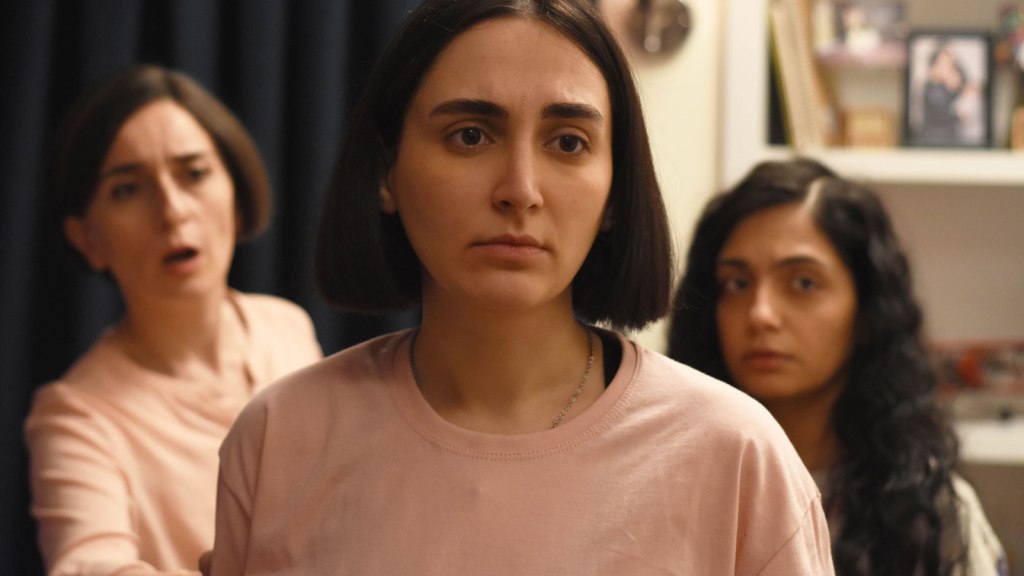
An enthralling family drama that devolves into an edge-of-your-seat thriller, Mohammad Rasoulof’s The Seed of the Sacred Fig deservedly earned second place at Cannes and easily finds itself in the conversation for film of the year.
Grounding itself in the reality of student protests in Iran, potently displayed through real phone footage, Rasoulof’s film about how politics and repression are bound to its people is at times overwhelming, but never melodramatic. The Seed of the Sacred Fig is one of the most impressive screenplays of the decade due to its difficulty and focused expression, moving slowly but confidently to its unexpected climax.
Through an emotionally overwhelming use of real social media videos of Iranian political protests and violence, Razoulof risked his life making this remarkable film that so of the moment it’s hard to believe. Brilliantly blending metaphors of family dynamics as stand-ins for the regime, The Seed of the Sacred Fig is a remarkable, must-see film that may be the most crucial piece of cinema to emerge from 2024.
Sing Sing (2024) – Greg Kwedar
⭐⭐⭐⭐
Rating: 4 out of 5.
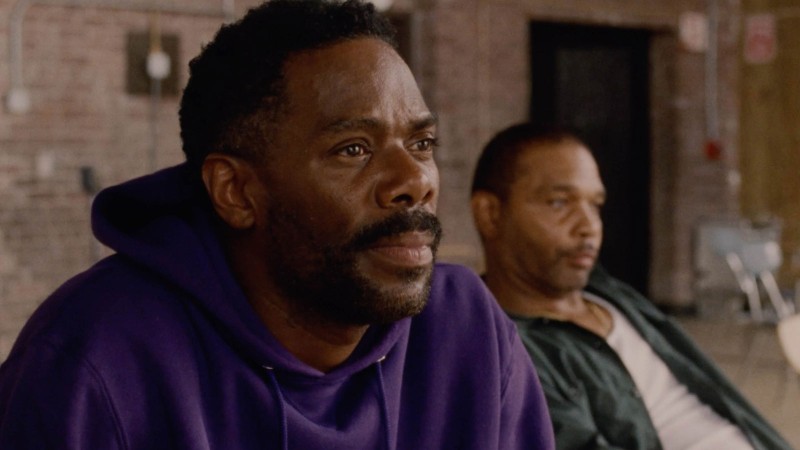
The most emotionally overwhelming film of the festival, we are sure to be hearing a lot about Greg Kwedar and his incredible prison rehabilitation drama Sing Sing come awards season at year’s end.
Exploring the real theatre-based prison rehabilitation program at Sing Sing Maximum Security prison (RTA), with an open heart and boundless compassion, Kwedar and his collaborators have given audiences one of the year’s best and most open-hearted portrayals of the American prison system that will break your heart and put it back together.
Perfectly blending reality and fiction, with an awards-worthy pair of performances by Colman Domingo and Clarence Maclin (an alum of the program), Sing Sing avoids any missteps into gratuity and gawking through an endless stream of humanity and humble decisions that is inspiring. A true miracle of a film.
The Shrouds (2024) – David Cronenberg
⭐⭐⭐
Rating: 3 out of 5.
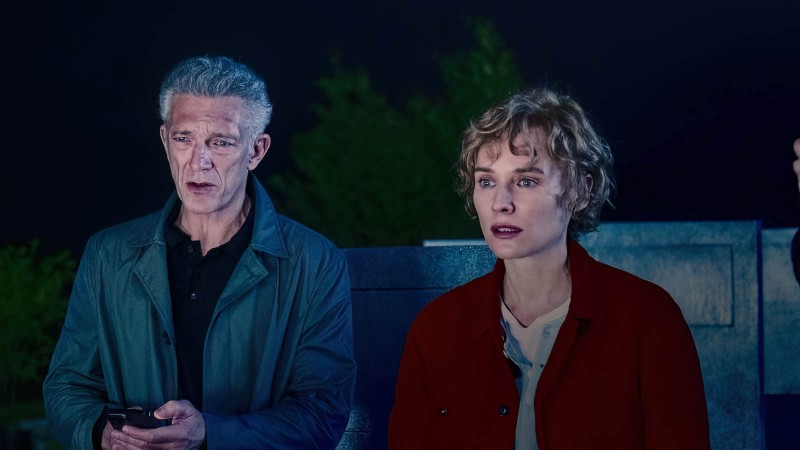
A beguiling and disarmingly funny inward look at grief by a living legend, 81-year-old David Cronenberg’s The Shrouds is a film only he could make. While not on the level of Crimes of the Future (2022), Cronenberg’s outward display of grief for his late wife Carolyn Ziefman in 2017 here is poignant and more emotional than you’d expect.
With a deliberate caricature of the auteur in the lead with a white-haired and sunglasses Vincent Cassel as a cemetery-owning video content producer with a physical obsession with the deceased, The Shrouds bizarre humour reminds one of the late Argento, but with a framework and personality that only the Canadian legend can achieve. While feeling more like a sketch than a fully realised project, in the long arc of Cronenberg’s work, this still feels like a critical late tentpole.
Sweet Dreams (2024) – Ena Sendijarevic
⭐⭐⭐
Rating: 3 out of 5.
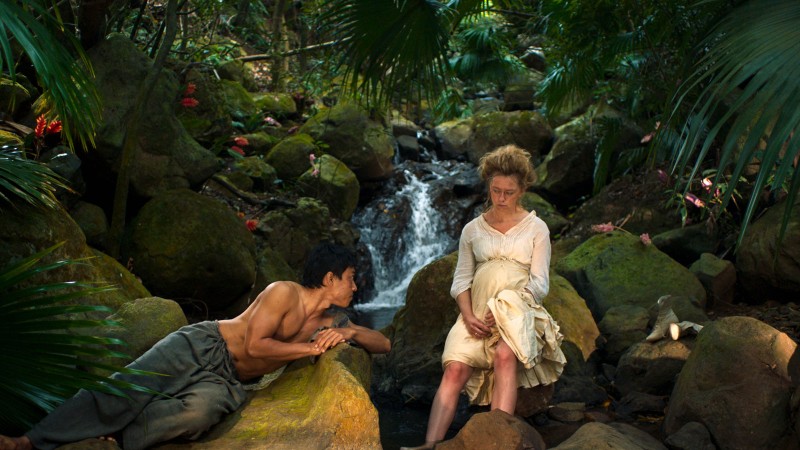
A charmingly eccentric but slight look at the doomed Dutch colonialism of Indonesia, Ena Sendijarevic’s Sweet Dreams lives in the shadow of Yorgos Lanthimos and other Euro eccentric filmmakers, but still effectively skewers a worthy target.
As the death of a Dutch sugar plantation owner Jan (Hans Dagelet) plunges the land into financial turmoil, the arrival of a daffy married couple Josefien (Lisa Zweerman and Cornelis (Florian Myjer) threatens to sell off the depreciating land, much to the behest of Jan’s widow Agathe (the scene-stealing Reneé Soutendijk).
The demise of a certain vein of European colonialism shot evocatively through natural lighting with Barry Lyndon (1975) as a touchstone, Sweet Dreams is a minor work compared to the rest of this list of MIFF films but is an entertaining enough ride to enjoy.
Universal Language (2024) – Matthew Rankin
⭐⭐⭐⭐
Rating: 4 out of 5.
A poignant picaresque of Winnipeg through the language of 80s Iranian cinema, Matthew Rankin’s evocative film Universal Language charmed its way into the MIFF grand prize, the Bright Horizons award, and deservedly so.
A farcical tour through a Farsi-speaking imagined world of modern-yet-timeless Winnipeg, Rankin’s creative world-building leaves evocative nuggets around every corner, including one of the best locations in cinema this year with an Iranian-styled Tim Hortons.
One of the most rewarding and enchanting experiences in a wonderful suite of films, Rankin’s Universal Language is an idiosyncratic depiction of one’s home and cinematic loves combined, morphing into a must-see.









 Rating Frames