One Battle After Another preview screening provided by Universal Pictures
Even as I found myself slouched into the cinema seat, still having not adjusted to the timezone after a recent overseas vacation, Paul Thomas Anderson’s One Battle After Another (2025) woke me up, slapped me around and reminded me why I spent a year researching his work. There are few working directors who have stayed as true to form as PTA has, and even fewer who have dared to push quirky, unpredictable narratives and irreverent characters at such a scale out to audiences; One Battle After Another might just be the quirkiest, most unpredictable film he’s ever made, and easily one of the rare few that a studio has decided to back, with such a big budget.
While One Battle After Another, at least on paper, has all of the elements of a PTA film —themes of surrogacy, a focus on damaged male characters and dialogue that has you think twice and then twice more— it also feels like his most relevant film to date and not because of smart phones or modern mustangs, but because it isn’t a period piece, it isn’t looking back in ways that There Will be Blood (2007) or Inherent Vice (2014) were. This film plays like it’s very much a forward-looking, foreshadowing of what’s to come if we let forces greater than us hunt us down in the little spaces we’ve carved out for ourselves in a world that feels like it’s already getting smaller around us.
And it’s immediately apparent from the opening sequence that this isn’t going to be your stock standard PTA flick, with a harsher, almost street-like quality to the cinematography. We open with Perfidia (Teyana Taylor), a revolutionary who is scouting an immigration camp before we’re introduced to Bob Ferguson (Leonardo DiCaprio), and other grungy looking revolutionaries who are looking to cause calculated havoc in similar encampments and eventually, across banks and other establishments as well. The political undertones of the film are clear, but the whirlwind that’s to follow is unimaginable.
It doesn’t take long for things to shift to fifth gear as narcissistic leader of said camp/s, Steven J. Lockjaw (a career best Sean Penn and shoo-in for supporting actor), someone who detests African Americans but in being humiliated by Perfidia, falls head over heels for her (hey, everyone’s got a kink), is on a mission to hunt down every revolutionary involved in these acts of defiance. While he does hunt/kill most of them, Bob and his daughter Willa (played in youth age later by Chase Infiniti) are extracted to a safe haven while Perfidia, finding herself in witness protection, escapes to Mexico.
LEONARDO DI CAPRIO as Bob Ferguson in “One Battle After Another.” A Warner Bros. Pictures Release.
A time jump to 16 years later caps off a first act that is as balls-to-the-wall as any PTA has attempted (with 1997’s Boogie Nights coming in at a distant second). It’s telling that like Bob, who goes into hiding with his daughter while others hunt him down in this almost cat and mouse plot at the centre of this film, PTA has (in a way) almost been doing the same, or at the very least, trying to find a version of himself who’d warm up to the idea of being more in touch with the immediate world as it unfolds. While PTA can never be accused of playing things safe —in fact, his framing of thematic interests has only shifted as he’s aged and as he’s had his own children— he’s at his most abrasive, rampant self here.
For starters, PTA doesn’t attempt to play to the good vs evil, right vs wrong binary tendencies that so many weaker political thrillers tend to. Instead, he uses this strange love triangle (if it can be called that), between Bobb, Lockjaw and Perfidia, and a focus on character, to let any surrounding commentary seep in from. Ultimately this is a film about a father/daughter dynamic that’s complicated by an equally complicated lunatic whose motive (without spoiling) in hunting them is far more nuanced than simply getting rid of them.
What ensues is an electrifying, chaotically focused, yet hearty film that never slows down but keeps you on your toes until its classic finale that’s already entered legendary status. To get to that point, Johnny Greenwood’s edgy, almost chimey score keeps the tension flowing and builds on the unnerving aura of not knowing what’s around the corner. This is coupled with the equally unnerving performances of Penn, DiCaprio and Infiniti, with the former having a duality and complex that feels insane to have been pulled off, while Leo has a hipster edginess that’s underpinned by a desire to be didactic yet his paranoia is leaving him out of sorts (this pairing between PTA and Leo is a match made in heaven).
Like the characters in this film, PTA is a revolutionary but of a different cause: the preservation of cinema. In shooting One Battle After Another, he decided to bring back VistaVision (a dying breed of film format). It speaks to his desire to find meaning and breathe life into things often deemed unworthy or better left to fade with time, and this desire is almost felt on the screen with a character like Bob who’s brought back from the brink, from a place where he’s almost lost sight of himself and who he was, and risks fading away into someone that once meant something to so many people but doesn’t anymore. In this way, One Battle After Another inextricably ties PTA so closely to its characters and their plights (both of which always take precedence in his films ahead of commentary) which makes its daring finale and all that Bob finds he really stands for and that his daughter hopes to stand for in her own place in the world, feel so deeply personal.
One Battle After Another opens nationally from September 25
Drop preview screening provided by Universal Pictures.
Have you ever been on a date where you’re getting random AirDrops from someone in your vicinity, threatening your family unless you kill your date? Me neither, and that’s another reason I’m sticking with Android. But mobile ecosystems aside, that’s exactly what Christopher Landon’s (2017’s Happy Death Day and 2020’s Freaky) textbook thriller, Drop, anchors its focus around for its tight 90 minute runtime. As far as thrillers go, Drop is neither groundbreaking nor is it something you’ll be eager to revisit, but it’s kooky and self assured in an M Night Shyamalan-esque way with a neat twist at the end.
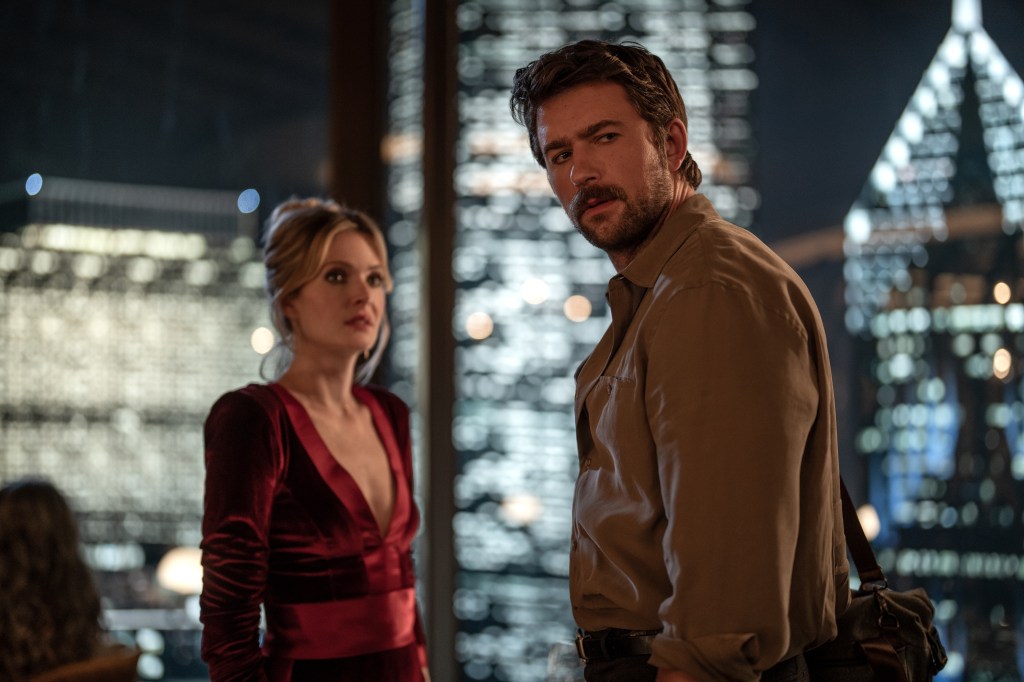
That approach will fly with audiences who like cheesy dialogue that regular people probably wouldn’t say, and movies that take a simple activity like a date and give it some sinister flavour. Landon’s film captures the angst of putting oneself back into the dating sphere by taking single mum Violet (Meghann Fahy) and having her meet up with Henry (Brandon Sklenar) in a highrise restaurant for the first time after 3 months of texting.
Similar to other Screenlife movies that focus on the dangers of screen culture like Searching (2018) or Missing (2023), Landon’s film builds its tension by capturing the modern dread of being watched, of having multiple eyes on you through surveillance or simply using your own surveillance against you. The latter is true for Violet who, after settling in with her date at the dinner table, is told to check her security cameras by her anonymous AirDropper where she sees a masked man in her house with a gun, with the choice being: do as I say or we kill your sister and son (if her first date jitters around what to wear weren’t scary enough, that really complicates things).
(from left) Violet (Meghann Fahy) and Henry (Brandon Sklenar) in Drop, directed by Christopher Landon.
This is where Landon’s film kicks into gear as it wastes no time in building out all of the directions that Violet will have to follow while focusing on keeping her date going as smoothly as possible. Fahy and Sklenar’s dynamic is what the film really banks on to sell the premise, with little actual room to cut to anything beyond the restaurant. There’s also the added element of shifty side-characters, all of whom could be the AirDropper making her life difficult; whether it’s the boisterous first-time waiter, the distant bartender or the Jamie Dornan-looking businessman who can’t seem to stop running into Violet (literally) — Drop is to Knives Out (2019) what mini-golf is to golf… a smaller playing field but just as satisfying.
The title, a play on words, might also describe the shift in pace in the final third, where there is almost a literal drop as the heat intensifies and as plot threads start to come together. For one, Violet literally hangs out of the highrise by a tablecloth. While this final third does feel like it’s been crammed into an otherwise tight screenplay, it gives the film some added momentum, even if the result feels like it gets away from the better part of the build up to it. That said, Drop is clean and will get a chin scratch or two as you try to piece together its puzzle, and proves that you may never know where your next date might take (or drop) you.
Blink Twice preview screening provided by Universal Pictures.
It’s 2024 and movie characters in thrillers are none the wiser, still choosing to vacation with strangers on secluded islands in the middle of nowhere. That idea has tickled the fancy of first time director Zoë Kravitz whose star studded feature Blink Twice, which she co-wrote with E.T. Feigenbaum, is ripe with dark humour, bubbling tension, and is gripping from start to finish.
As it turns out, Instagram doesn’t tell you about stranger danger, at least not to Frida (Naomi Ackie). She’s a barely-getting-by waitress who we meet as she’s scrolling through the social media app before finding herself enthralled by millionaire Slater King (Channing Tatum) in a strange apology video he’s issued. Whether for better or worse (which becomes clear as the pace picks up), she clumsily meets him while waitressing at a fundraising event with her friend Jess (Alia Shawkat), and when he asks her if she’d like to come to his private island, of course she says yes.
She’s not the only one who takes up his offer to ‘party it up’, as though this is one of Leonardo DiCaprio’s yacht getaways. King has decided to bring a whole group, one that’s comprised of celebrities like Sarah (Adria Arjona), his troupe of mates (Simon Rex, Haley Joel Osment, Levon Hawke, Liz Caribel, Trew Mullen, and Kyle MacLachlan), and a few other unsuspecting souls.
The real fun and games commence on the island, which has a sprawling resort-like quality; frequently smiling, somewhat off-kilter staff; slithering snakes; and enough drugs to kill a herd of elephants. It’s hard to think one would ever want to leave when every day seems like a holiday, even if you don’t quite know what day it is and what happened yesterday —that’s all part of the deal, or so Frida tries to tell herself.
For what it’s worth, Ackie’s performance is solid, and when paired with Shawkat (and later, Arjona) she’s really able to lean into the constant state of flux that her character finds herself in. Coming off the back of his performance in Fly Me to the Moon (2024), Tatum is also able to hold his own, playing his rich, handsome but slightly-off/too-good-to-be-true character with a distant edge, proving that he can hold the weight of a tense scene with an equally tense gaze and charming quality.
Where similar debut thrillers like Don’t Worry Darling (2022) often have a promising start, they tend to struggle to bring plot points together in the final act and tailspin within their own twists and turns. In saying that, knowing that this is Kravitz’s debut feature is almost as wild as the film’s premise. Her direction is assured and distinct, and I was often reminded of Jordan Peele and his approach to his debut feature Get Out (2017), from which this film clearly takes inspiration from.
Kravitz’s style is especially evident in the groovy soundtrack and the frequently blunt, yet edgy, but altogether humorous, dialogue. Coupled with Kathryn J. Schubert’s snappy editing, which gives both a feeling of intoxication/trippiness as well as the flittering of time, the title Blink Twice reverberates deep into the film’s technical elements. It also helps that Kravitz is able to get all of her nuts and bolts into roughly 90-minutes where so many filmmakers today struggle to write compact scripts that don’t overstay their welcome. If Blink Twice is anything to go by, we’ll be talking about Zoë Kravitz a lot more in years to come.
Blink Twice opens nationally from the 22nd of August.
Driven, work-oriented men who struggle to balance the personal with the professional and are often trapped by their own desires has always been Michael Mann’s bread and butter. In Ferrari (2023), his latest foray into biopics after Ali (2001), Public Enemies (2009) and to a lesser extent, The Insider (1999), he tackles automotive titan Enzo Ferrari. A figure notorious for his desire to win at all costs, Ferrari fits perfectly into the book of self-destructive but purposeful protagonists that Mann has been exploring.
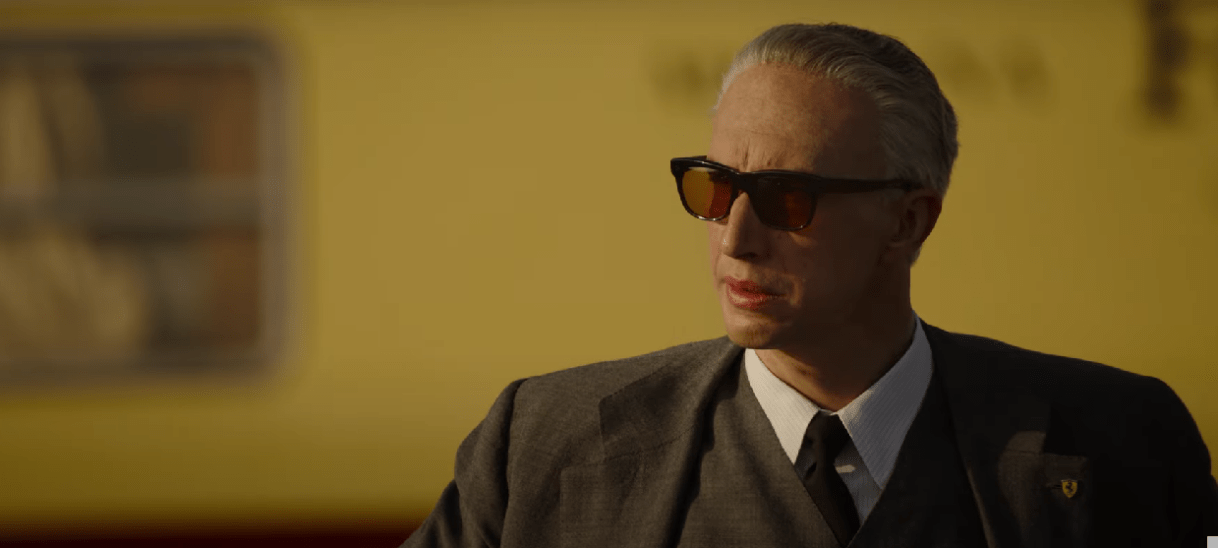
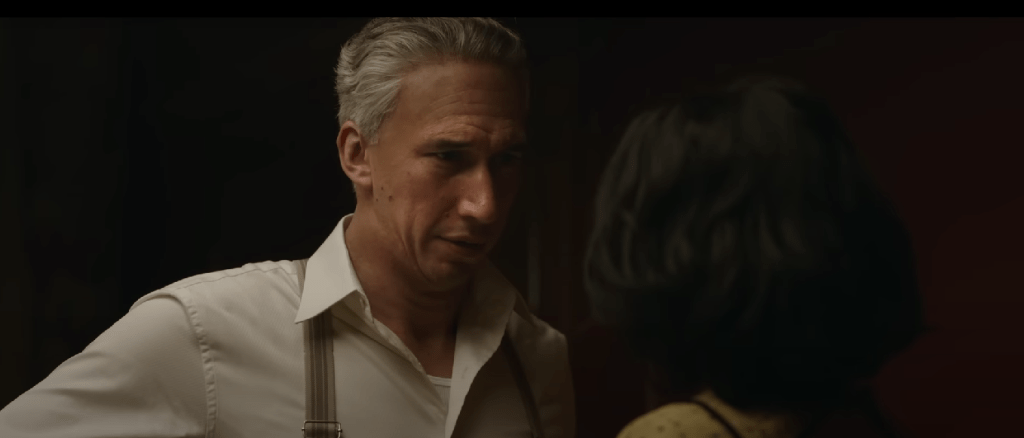
A perfectionist professionally but a loose cannon personally, Enzo Ferrari (Adam Driver) was a multi-faceted man, with his mind ever so focused on innovating and winning races but also ever so muddled when it came to his marriage and family life. Mann wastes no time in connecting those two worlds, introducing Ferrari (after a short montage of recreated black-and-white footage of a young Enzo behind the wheel) slipping out of the home of his mistress Lina (Shailene Woodley), slowly pushing a car downhill before jumping into it and speeding off. It’s a subtle introduction but helps establish what follows as a deeper look beneath the bonnet.
Where he’s speeding off to is his blindsided, somewhat estranged wife Laura (Penelope Cruz) whom he shares his struggling business with as well as a deceased son, Alfredo, whose death is a trigger point Mann continually comes back to over the course of the film to access that hidden internal layer that Enzo tries to hide.
It makes sense to ground the film to a particular moment in time rather than simply treating this as a by-the-books, cookie cutter biopic. The moment he chooses here is in 1957, with Enzo continuing to grapple with the loss of his son while living a double life with another woman and a second child, Piero. It’s a period in time where the Ferrari brand was at risk of collapse and the Mille Miglia race was a way for Enzo to clap back at doubters and hopefully, debt.
Mann is an expert at extrapolating key info from his subject matter, something Driver attests to in a Collider interview by stating that Mann’s characters “internal lives are so rich and so specific” and that “all of his notes are about character and internal life”. And Troy Kennedy Martin’s screenplay, based on Brock Yates’ Enzo Ferrari: The Man, the Cars, the Races, the Machine, offers enough legroom for Mann to build out the sort of bubbling tension that Enzo is harbouring over the course of the film where you feel that at any given moment, something will burst as it often does in his films.
Adam Driver is Enzo Ferrari in FERRARI, directed and produced by Michael Mann
As mentioned, the Mille Miglia feels like the Hail Mary for Enzo to redeem his brand, and across the film he tests cars around a track with professional drivers while reminding them that it’s a privilege to race in one of his cars. It’s in these very transaction-like conversations that his ruthlessness and hunger to win comes through, with Driver playing the Commendatore (as he was known) with a composed edge but towering presence as though he was truly a force of nature in this world. Not to take away from Driver, but at times his performance feels a little less accessible than some of Mann’s other characters who share similar traits but often have a more engaging charisma.
It’s in the more personal exchanges he has with those he cares about that the true duality of his life comes through. Laura matches him in bluntness, with the loss of their son evidently creating a rift between the two that’s left them stagnant in their marriage. Cruz’s performance here is up there with the best of the year as she plays Laura as a woman on the cusp of losing it, with her dark, hollow eyes and blank expressions evoking the rawness she stills feels for her son’s death and distance from her husband.
While the film is more of a melodrama in its muted moments, it wouldn’t be a Mann film without some thrills and spills. The racing sequences, including that of the track tests and the Miglia itself, are shot expertly by cinematographer Erik Messerschmidt with cameras situated in seemingly every part of the car except the drivers laps. The sound-design adds to the flair of the races and the sense of foreboding doom as the cars rocket around turns and narrowly avoid knocking into each other.
The closing sequence is one of the most confronting of Mann’s career and definitely of the last year, with a crash that kills nine onlookers at the Miglia. Sure the CGI feels a bit jarring in a film that focuses on practical effects for its majority, but the moment itself and Enzo’s reaction afterwards speaks to the coolness that he projects where things happen in this line of work and you move on, because that’s what winners do, no matter the cost.
No one manages to blend crime and action on the big screen quite like Michael Mann. From the sprawling cityscapes that act as their own character, to the attention-to-detail with each and every aspect of production, Mann’s films are distinctively his own. It seems fitting then to look back on his stellar oeuvre and try and rank his titles based on my sentiment towards them at this moment in time. This is especially the case following his recent novel and sequel to the iconic Heat (1995), which he co-wrote with Meg Gardiner, and leading up to his Adam Driver-led, Enzo Ferrari biopic, Ferrari (2023).
Of course, like with any list, opinions are different and feelings towards films change as time goes by and depending on where in your life you find yourself. But for now, these are his films ranked from worst (if you can call them that) to best:
11. The Keep (1983)
The Keep
Whether it’s due to the fact that large chunks of this film were cut out, or because it’s the least Mann-esque title on the list, The Keep is what I like to call Mann’s brain fart.
His second feature following the brilliant Thief (1981) represents his first and clearest (as there are elements of this in his true crime thrillers) foray into the horror genre. It’s a film plagued by bland and uninspired performances; a nonsensical narrative involving Nazis, a devilish entity, a supernatural Scott Glenn and one of the strangest but best sex-scenes you’re likely to see in a Mann film or otherwise; an interesting production design; and a pretty neat synthy score by Tangerine Dream.
Given Mann has disowned the film because of Paramount’s treatment of it, one can only imagine what the unreleased director’s cut had in store — we can only hope it graces out screens someday.
10. Manhunter (1986)
Manhunter
Many might find my ranking of Manhunter to be completely against the grain, but this thriller revolving around capturing a psychotic serial killer just never resonated with me on a narrative level like some of the other titles on this list (and I still gave it 3.5/5).
Manhunter focuses on FBI agent Will Graham (William Peterson), a detective who’s come out of retirement to help locate an elusive serial-killer with strange motives. His past experiences hunting figures like Hannibal Lecter (a subtle performance by Brian Cox) means he’s the perfect guy for the job.
Manhunter uses Will and the serial killer he’s hunting to create an interesting parallel between the mind of a psychotic man and the man capable of catching him. Its use of home video and the focus on truly seeing almost posits that these two men aren’t so different in how they see the world, but to different ends and outcomes.
Whether or not I was expecting a more conventional voyeuristic mystery-thriller in the way that Se7en (1995) or Rear Window (1954) are —where the killer feels like they’re an arm’s length away, only for the satisfaction of catching them to be snatched from you— is difficult to say (perhaps that’s what people love about this?), but I found myself at a crossroads by the third act. I hope my opinion changes on a second viewing.
9. Ali (2001)
Ali
On the surface, a film about Muhammad Ali seems like the farthest thing from a Michael Mann joint. There’s no mesmerising cityscape, no sirens or gunfire, no real suspense in the way that his crime films create suspense, and the subject matter doesn’t exactly scream ‘Michael Mann’.
But this film about the greatest boxer of all time works because of Mann’s interest in figures that don’t play by the rules. Specifically, Ali focuses on the period of time between Ali’s (Will Smith) first major heavyweight bout, the court case filed against him for refusing conscription for the Vietnam War, and his famous win against George Foreman to reclaim the heavyweight title.
Ali’s unilateral decision to not be conscripted was momentous for the fact that he was the heavyweight champion of the world, and making such a decision could affect his ability to box in his prime (which it did). He also reinvented who he was by changing his name and living on his own terms — a staple of Mann characters, but for different reasons. Often his characters are trying to protect others from who they truly are whereas Ali was trying to break away from the branding that others (white slavers) had given him and his people centuries ago.
The opening 15 or so minutes are also arguably Mann’s most compelling in the way that he establishes character, creates purpose and builds tension. At times there’s a suddenness to proceedings where the film makes abrupt leaps in time between the court case announcement, the Joe Frazier fight, and the George Foreman fight, but overall Ali is a portrait of one man’s journey to becoming in the face of adversary.
8. The Last of the Mohicans (1992)
The Last of the Mohicans
Along with The Keep, The Last of the Mohicans represents a different sort of Mann.
Like with Peter Jackson’s first film experience with the classic King Kong (1933) and his eventual reimagining of that classic on his own terms in King Kong (2005), Mann’s first vivid film memory was of 1936’s The Last of the Mohicans.
Helmed by Daniel Day-Lewis as the adopted Mohican, Hawkeye, this period piece about everything from the damning effects of bureaucracy to the Tarzan-esque romanticism of the love affair between Hawkeye and Cora Munro (Madeleine Stowe), is the first Mann film to create a sense of scale that would have greatly shaped the way he approached his later films.
By that I mean Mann finds a balance between showcasing the wide and beautiful terrain of a primeval America against the harshness of the looming modernisation that threatens its existence. This translates onto how the characters react to each other, whether it be through Magua (a mesmerising Wes Studi) and his desire for revenge against the British (for what they took from him) as well as his forward thinking to help his tribe, or through the loud and rampant battle at Fort William Henry that threatens the peace of the land.
Guided by one of the greatest scores of any film ever by Trevor Jones and Randy Edelman which at once evokes hope and sadness, picturesque vistas, and gripping direction that never falters, this Mann-epic is Mann at his most untethered.
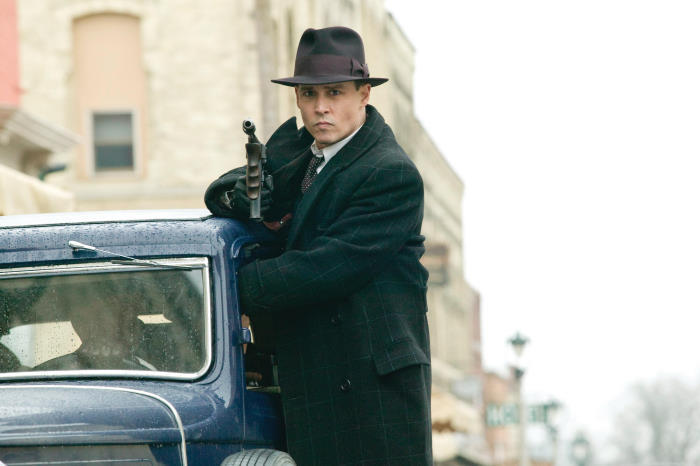
7. Public Enemies (2009)
Public Enemies
When it comes to famous outlaws, there are few that are as iconic as John Dillinger, especially given he was a man who wasn’t interested in stealing from regular people, but the state itself.
That’s partly why he’s the perfect historical figure for a Michael Mann film given his self-defined approach to life.
Public Enemies follows Dillinger (Johnny Depp) as he makes prison escape after prison escape, continuously evading capture and robbing banks before finding an added purpose in life in the form of one French-American, Billie Frechette (Marion Cotillard).
Like all of Mann’s anti-heroes, Depp’s Dillinger is charming and elusive all at once. He’s a character infused with an aura of mystique that Depp delivers with the casual suave that his own image beyond the screen has maintained.
But it’s in the reimagining of the period through a digital lens where Public Enemies really excels. The moody greys, dark passages and almost colourless world are so striking here that it creates a more profound hyper-realism — almost bringing the 1930s to life in a way that shooting on film wouldn’t.
6. The Insider (1999)
The Insider
A film about a man’s grapple with doing what’s morally right or being forced into silence by forces greater than him; The Insider, in true Mann-style, is an exercise in patience — in waiting for the right moment to make a move before it’s too late.
Unlike Mann’s other thrillers though, The Insider doesn’t have vans of heavily armed forces hiding around the corner, but it instead puts its faith in the truth overcoming the odds. That truth is in the form of former tobacco chemical scientist, Jeffrey Wigand (Russell Crowe) and the 60 Minutes producer looking to help bring his story to light, Lowell Bergman (Al Pacino). The odds are the Brown and Williamson Tobacco Company who are trying to keep Jeffrey, and this story around what really happens to tobacco, silent.
Guided by Mann’s brilliant direction, a well-crafted script by Mann and Eric Roth, and a standout performance from Al Pacino in an unfamiliar but equally familiar performance, The Insider paints a perplexing portrait of the lengths to which vindictive multi-billion dollar organisations will go to in order to supress information. It brings various parties with differing interests together, and creates a wide web of uncertainty for all involved — with no clear contingencies, but everything to lose for everyone involved.
5. Blackhat (2015)
Blackhat
Michael Mann’s most recent film feels like a sum of all of his best parts (it’s also been eight years since it was released!).
The film follows hacker Nicholas Hathaway (a career-best performance from Chris Hemsworth) who, after a series of awry events happen by an unknown source, is released from prison for the purpose of helping discover the person behind these events.
Blackhat is where ideas meet, characters converge, and where the tangible coalesces with the intangible.
In a similar way to Manhunter (but without the straining of classic thriller conventions) and Heat, this film once again depicts two sides of the same coin — Hathaway as the hacker-turned-FBI collaborator, and the unknown hacker blowing up coolant pipes and infiltrating wall-street. One is front and centre for the audience, while the other is kept faceless. While their intentions are different, they occupy a similar space like almost all of Mann’s characters do, but Blackhat is different to his past films because of how it bridges the characters worlds together and carries and communicates messages.
Mann uses modern technology to create a divide (the intangible), and forces his characters to embrace human interaction and connection (the tangible) if they are to overcome this threat.
His portrayal of the L.A. and Hong Kong maze of buildings and their bright lights speaks to the lack of personality or distinguished features in these settings, which fizzles down to the people who fade into each other like ones and zeros. It’s a wider critique on getting lost in the masses at a macro level, and getting lost in the code on a micro level.
Hathaway is the vessel Mann uses here to try and break through the code and by extension, this front that a world lacking real connections, has maintained — with Hemsworth using his size and stature to brilliant avail.
The closing sequence sees Hathaway concoct weapons and armour out of everyday tools, as though Mann is returning man to a primitive state before the world of data and technology became the guiding force. Hathaway gets the upper hand, and walks away in perhaps Mann’s most optimistic ending.
4. Thief (1981)
Thief
The OG Mann, Thief introduced audiences to this true-crime loving director who focuses on characters that take pride in the work they do, sometimes fall in love in the process, and live life on their own terms.
For expert safe-cracker and straight-talker, Frank (James Caan), he embodies the above perhaps more than any other character in Mann’s oeuvre. It might be because this is Mann’s most contained film in that it isn’t made up of major set pieces and crowded settings, but instead allows Caan to revel in the dialogue and the weight behind his words.
Thief is about a man on a mission to tick off his checklist of wants before cashing out. It’s also about a man refusing to bow down to the interests of others, instead taking it upon himself to shape his own destiny at any cost.
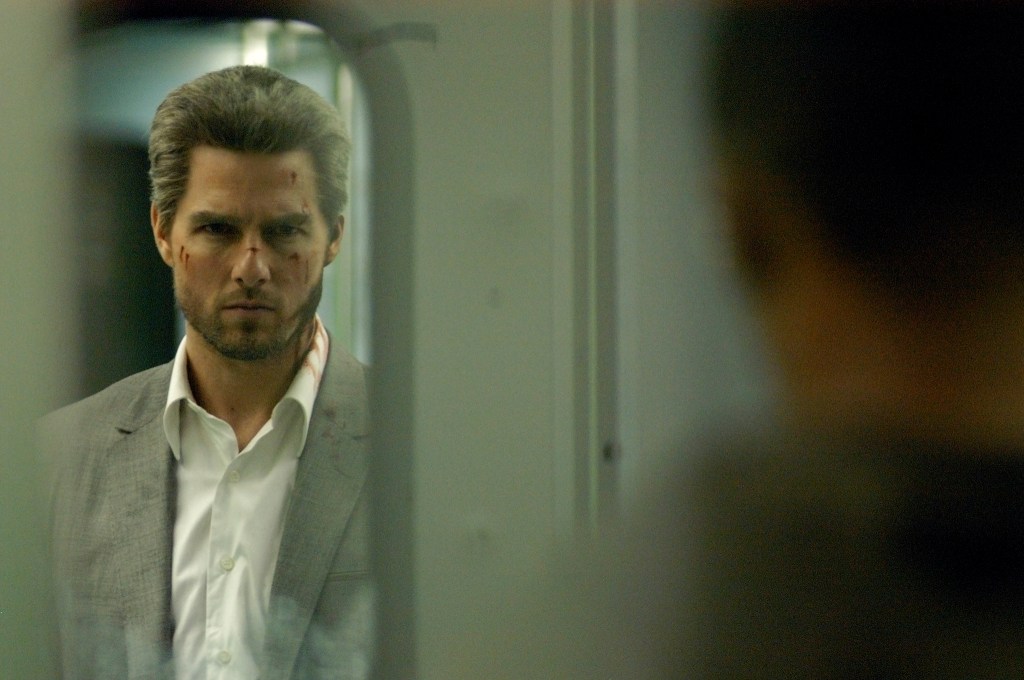
3. Collateral (2004)
Collateral
Two guys in a car, strangers to each other, both operating on a routine, a structure that they rarely break from, moving as one through the luminous L.A. night but to different ends.
Collateral is a wonderous neo-noir that pivots two men with differing moral compasses against each other: Max (Jamie Foxx), a slave to his inhibition, to his failure to act and make a difference to his life; and Vincent (Tom Cruise), a man untethered, a multi-faceted nihilistic hitman who gets in, gets out, and keeps moving forward.
Much has already been written on Collateral, from its vivid imagery to the rawness of its digitised look — at once enticing and haunting. Vincent poses a threat to Max’s idealised vision of tomorrow, but also an opportunity to start making things happen and not idle by.
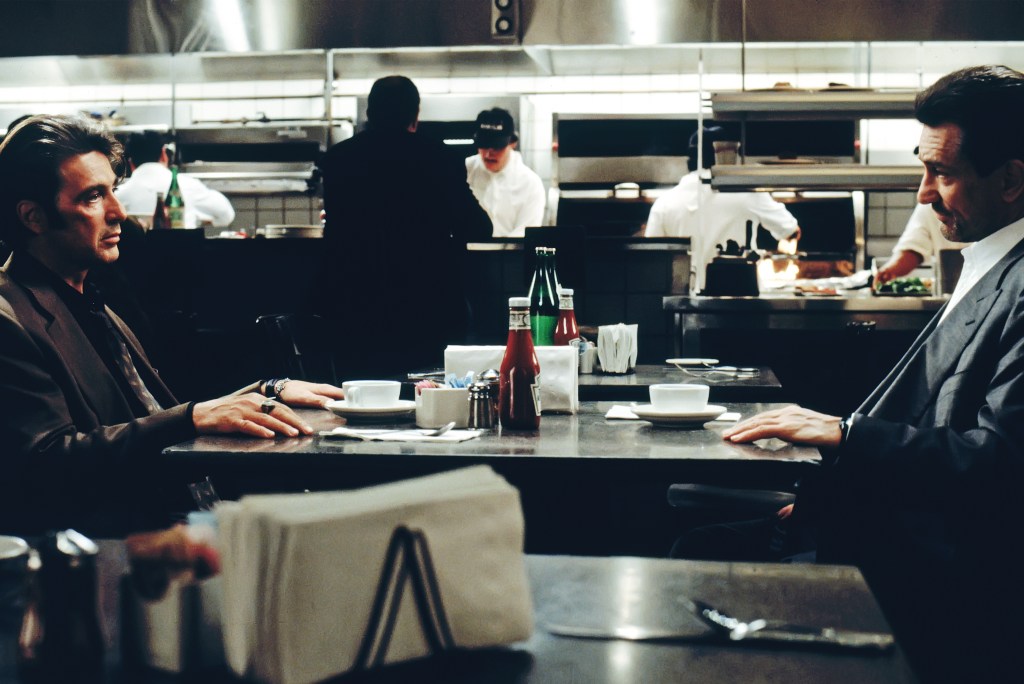
2. Heat (1995)
Heat
What does one even say about what, in the eyes of many, is Mann’s magnum-opus?
Heat is the sum of many parts, but it doesn’t work without its two key pieces: Al Pacino and Robert de Niro. The duo, reunited together on a feature for the first time (and for the first time ever in the same scene/s) since The Godfather Part II (1974), Pacino and de Niro are two sides of the same coin.
Vincent Hanna and Neil McCauley are like yin and yang — they don’t mix but they can’t function without one another. This speaks to Mann’s wider commentary on good vs evil, crime vs order which has been the focal point for 90% of his oeuvre. In Heat, Pacino and de Niro accentuate Mann’s fascination with these binary opposites to their full extent.
It’s as though these characters revel in the chase, of being the hunter and the prey, and they treat it like a drug that supersedes everything else in life. Mann brilliantly captures this through bright neon lights and the wider city which acts as its own sanctum that gives weight to the chase. Nothing is as beautiful as the city lights in a Mann film where cop cars race down the freeway in a storm of intensity.
But Heat is also made up of moments: the diner scene between Neil and Vincent is one of the greatest moments of character interaction in cinema history as these two men come face to face, pause the chase, and acknowledge each other; the downtown LA shootout where Mann shut down multiple blocks to shoot one of the most jaw-dropping scenes in any film ever; and the poignant finale where the two leads lock horns for the last time.
Without Heat, we may never have had The Dark Knight (2008), and that’s just one extra reason to watch this if you haven’t.
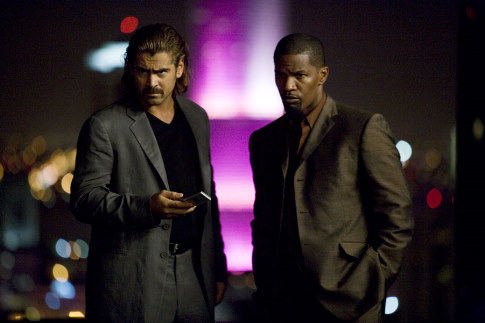
1. Miami Vice (2006)
Miami Vice
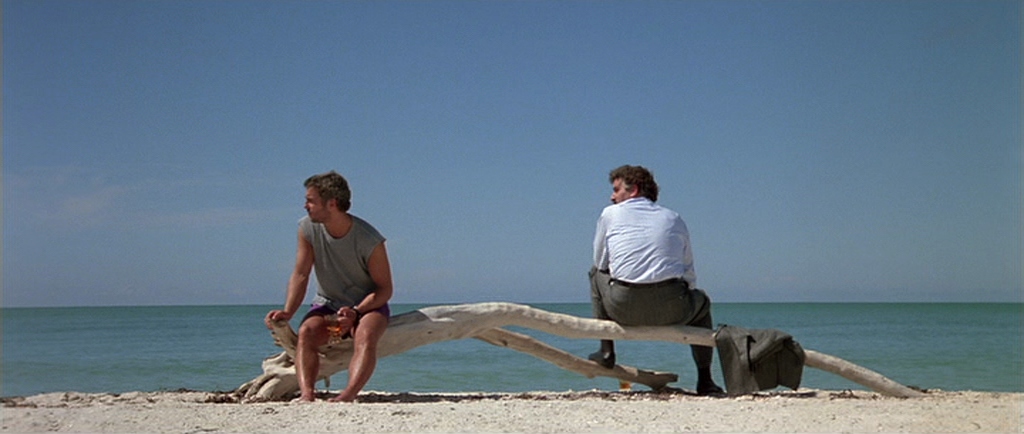
I’m sure Miami Vice is a top-three Mann on anyone’s ranking of his work, but this bustling neo-noir about two under-cover detectives goes beyond the 80s show of the same name to become a gripping tale of people accepting that they’re living on borrowed time and learning how to manage the time they have left.
On the surface, Miami Vice is a buddy-cop thriller about two detectives infiltrating an offshore drug operation where they act as the middle-man between the international supplier and the local Miami buyer. Their mission is to find out who the buyer is, but the deeper they find themselves in the operation, the more they realise they’ll never have an opportunity like this again.
Jamie Foxx and Colin Farrell are the two leads here and (while already the case with Foxx) they instantly fit the Mann-model of characters who don’t always play by the books, are good at what they do, and sometimes make rash, emotionally led decisions.
But it’s through Mann’s ability to capture the fleeting nature of life, the suddenness of a bust and the shootouts that ensue, where Miami Vice makes a case for his best film. There’s a dream-like tranquillity to the use of digital footage here that might just be the best example of creating evocative images in the digital format. From the bright hues of the nightlife and its clubs to the more intimate sensual moments, there’s a sense of liveliness and temporality mixed together in the film’s visual language.
Mann’s growing fascination with the commodification and expendability of the human body really started gaining momentum here as well. Whether it be in the film’s final shootout where bodies drop at a whim or the use of people as shields for getting what you want (drugs, cash, obedience), it’s an aspect of his films that really does speak to how precious those moments of human interaction are for his characters when they do have them.
There’s a great anxiety or even terror that comes with moving to a new place, but especially for females, since they are more likely to fall victim to perverts and predators who seek to take advantage of them. This horror film is one that brilliantly plays to those fears, benefitting from the helmsmanship of an ever-solid director.
Cornish teenager Ellie Turner (Thomasin McKenzie) is leaving her rural home for the bright lights and bustling streets of London, where she hopes to fulfil her dream of becoming a fashion designer. Her romanticised notion of the city is tarnished upon arrival, with leering cab drivers, conniving roommates and loud dorm parties all making her experience an unpleasant one, forcing her to move off-campus and into a dingy flat.
Ellie’s new accommodation brings with it a series of strange dreams that transport her back to 1966 and into the body of Sandie (Anja Taylor-Joy) – a blonde who aspires to be a famous singer in West End. Initially, Ellie is enamoured by Sandie’s world and the characters that inhabit it; yet within days, these slumber-induced visions become increasingly nightmarish, before creeping their way into Ellie’s everyday life.
Last Night in Soho (2021) marks a long-awaited return to horror for director Edgar Wright, who has not dabbled in the genre since Shaun of the Dead (2004), the comedic blockbuster that garnered him worldwide fame. Not that he’s completely disassociated himself from the field, mind – in the intervening years, Wright has helmed films such as the buddy-cop parody-pastiche Hot Fuzz (2007) and the humour-laced science-fiction The World’s End (2013), both of which contain horror elements without being outright scary.
Wright’s latest feature, meanwhile, is one that’s crafted to frighten everybody and anybody, even viewers who aren’t usually startled by horror movies. The nameless monsters of Last Night in Soho are some of the most creative and original in years, ranking among the creepiest ever witnessed in the medium. What’s more, Wright is also able to generate scares by leaning quite heavily into the horror genre’s tropes, smartly utilising the clichés seen in countless other films and then subverting them – it’s rather clever stuff.
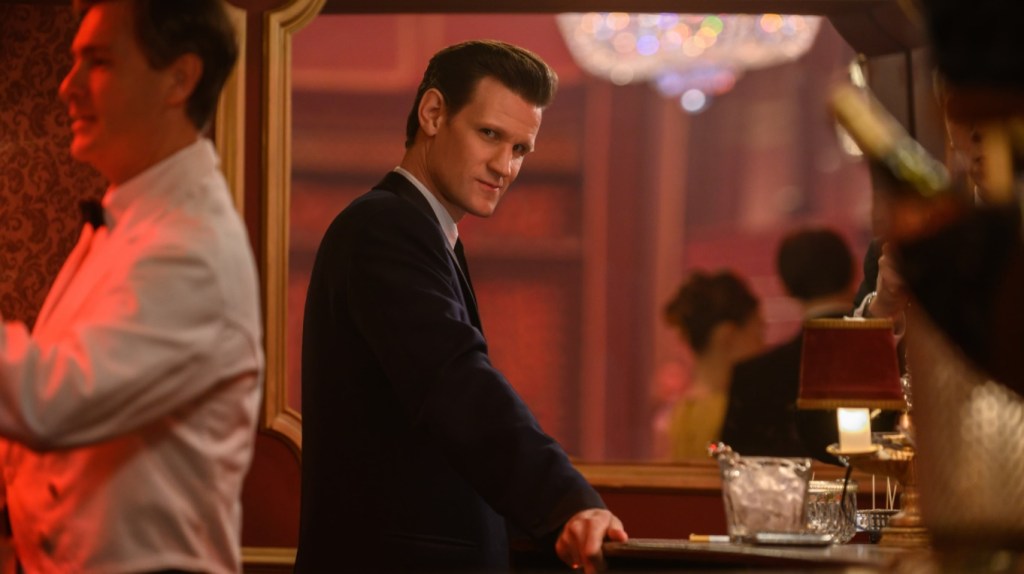
Jack (Matt Smith) in Last Night in Soho
The cast is excellent too, with great acting from all involved – praise that applies to rising stars McKenzie and Taylor-Joy, the relatively-unknown Michael Ajao, octogenarian Terence Stamp with his sinister aura, and the late Diana Rigg in her final on-screen performance. Yet of all the thespians, it’s Matt Smith who impresses most as Jack, the sharply-dressed, well-spoken London gent who grooms Sandie into becoming part of his seedy empire, his evilness becoming more pronounced as he does.
Long-time fans of Wright’s work will be gratified to know that his affinity for music has not been lost, since Last Night in Soho is paired with a fantastic soundtrack, as per tradition for the director. Tying into Ellie’s affinity for all things retro, there’s a wide array of Sixties pop songs to be heard – some that are familiar to the ear, others more obscure – that contribute to a fun, upbeat atmosphere; and when proceedings are creepier, Wright utilises the talents of composer Steven Price, who delights once again with a neat orchestral soundtrack.
While Last Night in Soho is undoubtedly a great film, there are some faults that prevent it from being perfect. The most glaring of these flaws is a persistent bugbear of Wright’s, that being a predictable screenplay, with the twists and revelations being rather easy to foresee. Of smaller consequence is the comparatively sedate direction of Wright, who has shown more liveliness and flair in releases past, such as Scott Pilgrim vs. The World (2010) and Baby Driver (2017).
Regardless, this is still a fun romp that satisfies anybody in need of a good scare. With a fantastic soundtrack, cast, monsters and ability to generate dread, Last Night in Soho represents yet more excellence from one of the most creative, eclectic and original blockbuster directors working today.
Last Night in Soho is available now on home-video and on-demand platforms.
Australia has long had difficulty reconciling with its past, whether it be pertaining to its colonial practices, its treatment of First Nations peoples, or its storied xenophobia. This biographical picture explores a more recent chapter in the country’s dark history, one that’s bound to provoke discomfort, yet is worth sitting through all the same.
A disaffected young man (Caleb Landry Jones) lives in the outer suburbs of Hobart, Tasmania with his cold, domineering mother (Judy Davis) and lackadaisical father (Anthony LaPaglia), ostracised by society and dependent on others to care for him. His only source of compassion is Helen (Essie Davis), an older woman whose fondness for him is eclipsed only by her passion for Gilbert & Sullivan operas; but like everybody else, she has limits for his eccentric behaviour.
Nitram (2021) is a veiled portrait of Martin Bryant, who is infamously and inextricably linked with the slaughtering of innocent people at the historical Port Arthur convict settlement in 1996. Interestingly, although Bryant is the narrative’s central figure, at no point does the film refer to him by name, nor does it mention where the atrocity he committed took place, with the focus instead being placed on the moments leading up to the event in hope of understanding the perpetrator’s mindset.
Material of this sort is not new to director Justin Kurzel, who previously helmed the picture Snowtown (2011) to critical acclaim. Said picture is a semi-fictionalised retelling of the Snowtown murders – so-named because of the South Australian locale where the bodies were hidden – that centres on an assailant to the crimes, detailing his troubled upbringing as a reason for his actions. This level of sympathy is somewhat absent in Nitram, since the film is non-committal in deciding who is at fault for the main character’s behaviour.
Similar levels of caution are applied throughout Nitram, being more delicate and poised than its subject matter would suggest – viewers are never shown instances of graphic violence at the hands of the characters, and likewise are spared having to witness the horrific bloodshed inflicted upon people at Port Arthur, ensuring that the picture is respectful to Bryant’s victims. And yet, although instances of violent behaviour are few, they are nonetheless terrifying when they do occur.
Judy Davis, as she appears in Nitram
Another peculiar facet of Nitram is how the story never seems to reach its climax. Like a powder-keg that never ignites, tension slowly and steadily builds throughout, yet that tension is never released, with the conclusion arriving just as the pressure reaches its peak. Amazingly, these last moments prove to be the most eerie and affecting part of the entire picture, with pointed intertitles referencing the proliferation of gun violence, followed by credits that roll to absolute silence.
Of greater fascination are the astounding performances from the main players, including Caleb Landry Jones. The Texan actor’s commitment cannot be faulted, for he speaks with a seemingly-natural Strine, and conveys his character’s vulnerability and underlying cruelty with considerable ease – qualities that rightfully won him Best Actor at this year’s Cannes Film Festival, where Nitram had its world premiere. His brilliance is equalled by industry veteran Judy Davis, whose baleful matriarch is sure to earn the scorn of audiences.
Regrettably, the excellence of Nitram is devalued by a poor choice in filming locations, with the Victorian city of Geelong acting as an unconvincing stand-in for Hobart and its surrounds. Aside from one aerial shot of tree-laden hills surrounding an undisclosed body of water, none of the scenery inhabited by the characters shares so much as a resemblance with southern Tasmania, being flat, arid and most unflattering to the eye; what’s more, there’s even a blatant disregard for continuity – at one point, a V/Line train can be seen travelling in the background.
Ignore this laziness though, and what’s left is unequivocally the best Australian production of the year, bar none. Guided meticulously by Justin Kurzel, Nitram doubles as both a gripping biography of a disturbed soul and an effective slow-burn thriller, further bolstered by the phenomenal acting of the leads.
Nitram is currently screening in select cinemas, and will be streaming on Stan from this Wednesday, November 24th.













 Rating Frames