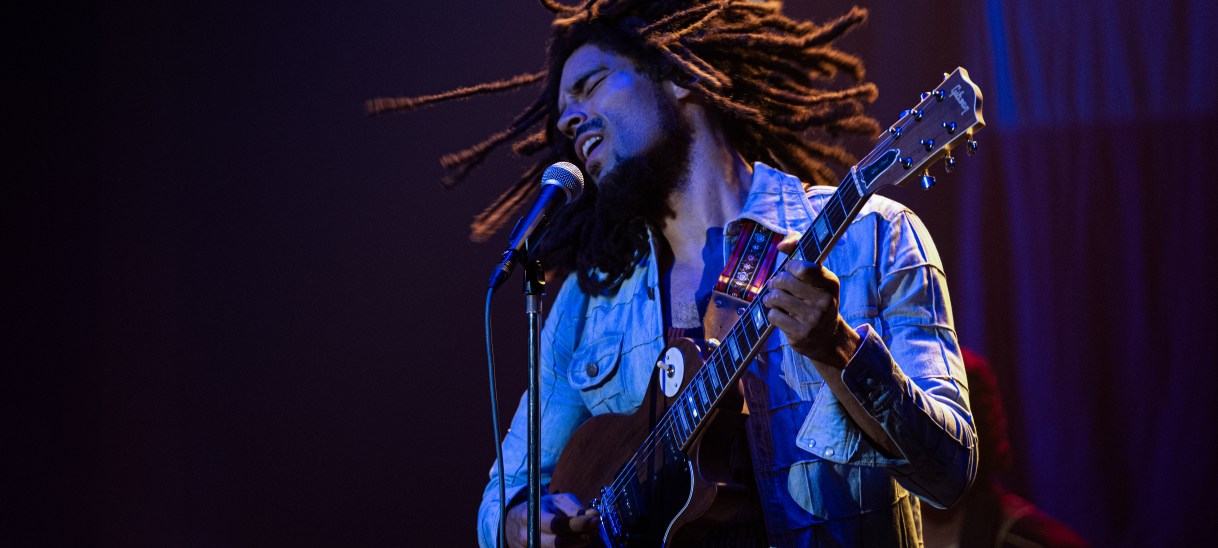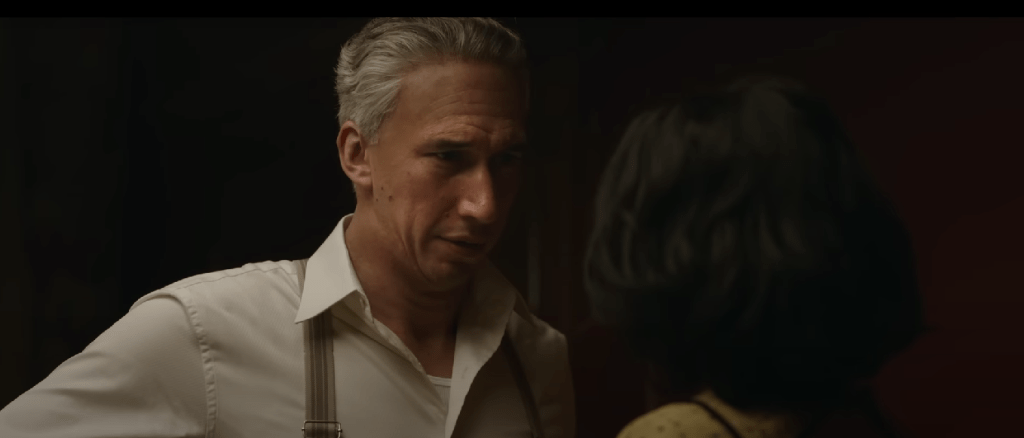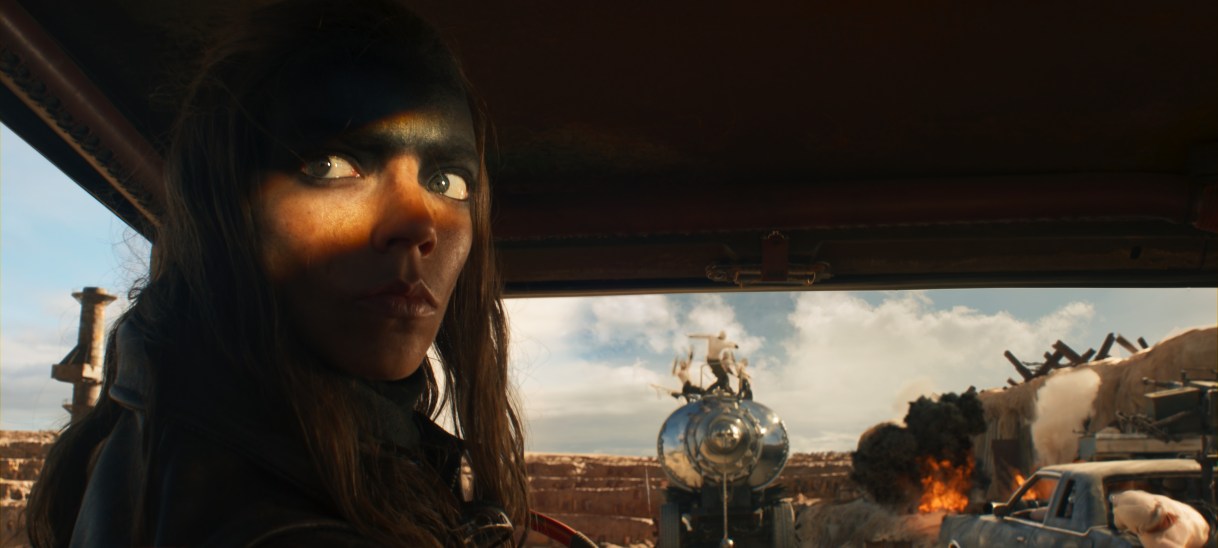
Bob Marley: One Love preview screening provided by Paramount Pictures
It’s telling that a film showcasing one of music’s most audacious artists who refused to ‘play it safe’ is the exact opposite in its approach to capturing his significance to history. Reggae icon Bob Marley is just that, an icon, which is why Reinaldo Marcus Green’s Bob Marley: One Love (2024) should feel like more than just a surface level recount of a trailblazing artist.
Unfortunately this exact problem has plagued a majority of recent films that have focused on iconic musicians. Film’s like Bohemian Rhapsody (2018), Elvis (2022) and Rocketman (2019) are all guilty of playing it too safely when it comes to taking a historical figure and adapting their story from a fictional lens. These film’s all ultimately lean too far into accuracy (or their version of it) at the expense of deeper character drama, a nurtured plot and an understanding that every nook and cranny of the musician’s life doesn’t need to be shown (we’ve got Wikipedia for that).
One Love falls into that category where it never really tells you more about the subject beyond what a simple google search might. If we consider A Star is Born (2018), Walk the Line (2005) and even The United States vs. Billie Holiday (2021), all of these films said more about the characters at their core through the very fact that they understood how to tow the line between fiction (of which A Star is Born is completely) and utilising drama to create tension ––– and that’s all while never losing sight of the protagonist at their core.
Marcus Green’s film picks up at a point in Marley’s (Kingsley Ben-Adir) life when he’s already reached a level of fame that has him ruffling a few political feathers. It’s a commendable point in his life to start at (in the mid-70s) rather than tracing the complete rags-to-riches story like some of the aforementioned titles.
Kingsley Ben-Adir as Bob Marley and Lashana Lynch as Rita Marley in Bob Marley: One Love from Paramount Pictures.
After being shot in an attempted murder, Marley is advised to leave Jamaica for a period of time while tensions ease at the top. This is much to his dismay since his wife Rita (Lashana Lynch) was also shot and narrowly avoided death. It proves to be a worthwhile move, with Marley finding inspiration in the UK music scene after arriving in London, and eventually releasing albums like Exodus which were undercut with political commentary and offered a twist on the sort of reggae beat he had become accustomed to in prior years.
If there’s one saving grace in a film about an iconic musician, it’s the music itself. There’s no shortage of hits that are played throughout like War, Exodus, I Shot the Sheriff, Three Little Birds and more. Fortunately they’re not showcased in the same way as the hits of Queen in Bohemian Rhapsody where they were seemingly devised on a whim and almost purely exist in that film for nostalgic purposes rather than to propel the narrative forward.
The film rounds off to a close after some 95 minutes which is a silver lining at a time where most overstay their welcome. This film doesn’t overstay its welcome and will no doubt be lopped up by an audience familiar with and intrigued by, Marley’s story. Should there have been a greater focus on accentuating that internal dialogue and sentiment Marley had towards the political situation in his country that ultimately led to his performance of unity at the One Love peace concert? Definitely. Ultimately the film gets you to that point, but the result is more of a split, cobbled-together look at key milestones rather than a deeper dive into a man who united a nation.
Bob Marley: One Love opens nationally from the 14th of February.
Driven, work-oriented men who struggle to balance the personal with the professional and are often trapped by their own desires has always been Michael Mann’s bread and butter. In Ferrari (2023), his latest foray into biopics after Ali (2001), Public Enemies (2009) and to a lesser extent, The Insider (1999), he tackles automotive titan Enzo Ferrari. A figure notorious for his desire to win at all costs, Ferrari fits perfectly into the book of self-destructive but purposeful protagonists that Mann has been exploring.
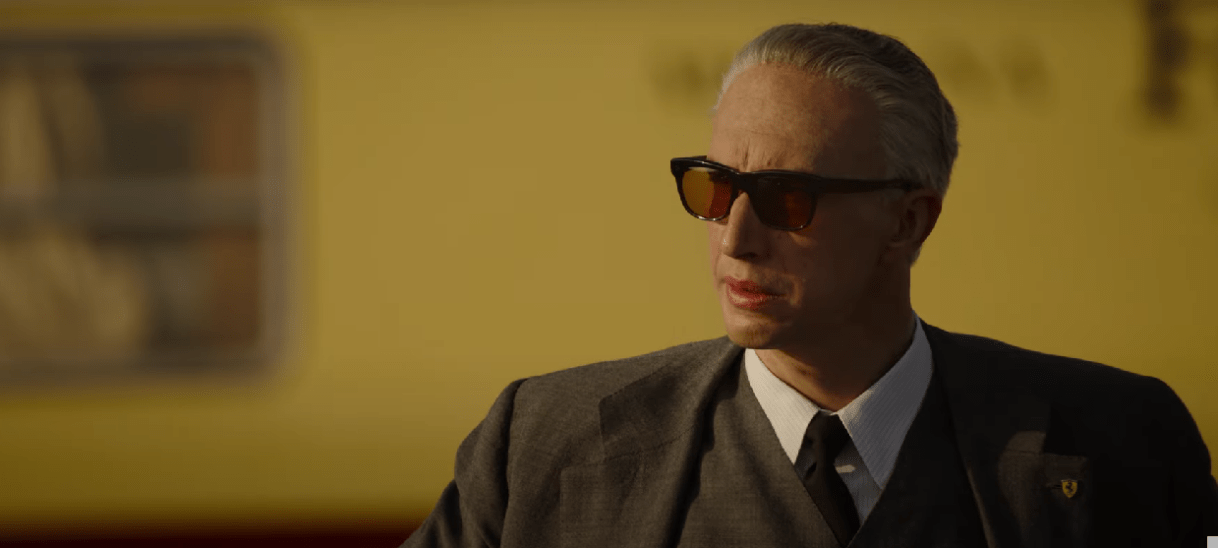
A perfectionist professionally but a loose cannon personally, Enzo Ferrari (Adam Driver) was a multi-faceted man, with his mind ever so focused on innovating and winning races but also ever so muddled when it came to his marriage and family life. Mann wastes no time in connecting those two worlds, introducing Ferrari (after a short montage of recreated black-and-white footage of a young Enzo behind the wheel) slipping out of the home of his mistress Lina (Shailene Woodley), slowly pushing a car downhill before jumping into it and speeding off. It’s a subtle introduction but helps establish what follows as a deeper look beneath the bonnet.
Where he’s speeding off to is his blindsided, somewhat estranged wife Laura (Penelope Cruz) whom he shares his struggling business with as well as a deceased son, Alfredo, whose death is a trigger point Mann continually comes back to over the course of the film to access that hidden internal layer that Enzo tries to hide.
It makes sense to ground the film to a particular moment in time rather than simply treating this as a by-the-books, cookie cutter biopic. The moment he chooses here is in 1957, with Enzo continuing to grapple with the loss of his son while living a double life with another woman and a second child, Piero. It’s a period in time where the Ferrari brand was at risk of collapse and the Mille Miglia race was a way for Enzo to clap back at doubters and hopefully, debt.
Mann is an expert at extrapolating key info from his subject matter, something Driver attests to in a Collider interview by stating that Mann’s characters “internal lives are so rich and so specific” and that “all of his notes are about character and internal life”. And Troy Kennedy Martin’s screenplay, based on Brock Yates’ Enzo Ferrari: The Man, the Cars, the Races, the Machine, offers enough legroom for Mann to build out the sort of bubbling tension that Enzo is harbouring over the course of the film where you feel that at any given moment, something will burst as it often does in his films.
Adam Driver is Enzo Ferrari in FERRARI, directed and produced by Michael Mann
As mentioned, the Mille Miglia feels like the Hail Mary for Enzo to redeem his brand, and across the film he tests cars around a track with professional drivers while reminding them that it’s a privilege to race in one of his cars. It’s in these very transaction-like conversations that his ruthlessness and hunger to win comes through, with Driver playing the Commendatore (as he was known) with a composed edge but towering presence as though he was truly a force of nature in this world. Not to take away from Driver, but at times his performance feels a little less accessible than some of Mann’s other characters who share similar traits but often have a more engaging charisma.
It’s in the more personal exchanges he has with those he cares about that the true duality of his life comes through. Laura matches him in bluntness, with the loss of their son evidently creating a rift between the two that’s left them stagnant in their marriage. Cruz’s performance here is up there with the best of the year as she plays Laura as a woman on the cusp of losing it, with her dark, hollow eyes and blank expressions evoking the rawness she stills feels for her son’s death and distance from her husband.
While the film is more of a melodrama in its muted moments, it wouldn’t be a Mann film without some thrills and spills. The racing sequences, including that of the track tests and the Miglia itself, are shot expertly by cinematographer Erik Messerschmidt with cameras situated in seemingly every part of the car except the drivers laps. The sound-design adds to the flair of the races and the sense of foreboding doom as the cars rocket around turns and narrowly avoid knocking into each other.
The closing sequence is one of the most confronting of Mann’s career and definitely of the last year, with a crash that kills nine onlookers at the Miglia. Sure the CGI feels a bit jarring in a film that focuses on practical effects for its majority, but the moment itself and Enzo’s reaction afterwards speaks to the coolness that he projects where things happen in this line of work and you move on, because that’s what winners do, no matter the cost.
“Can you find the wolves in this picture?” As the simple Earnest (Leonardo DiCaprio) reads from a history book given to him by his uncle William “King” Hale (Robert De Niro) about the Osage Nation, to acclimatise himself to the new land in Oklahoma he has found himself in after returning from the war, we are not so subtly asked to investigate the frame of each scene. The land is almost entirely owned by the First Nations Osage community that, after being slaughtered and chased out of other states before finding themselves here, struck a reserve of oil on the land they had legal rights to, making them the richest per capita community in the world. And now their people are being brutally killed in careless succession, with the government nowhere in sight to investigate.
Killers of the Flower Moon (2023), a sprawling period crime epic based on the incredible best-selling nonfiction book of the same name by David Grann tracking the 1921 Osage Nation murders (potentially hundreds even though the reported count reached only 20), is the best film to arrive in theatres in years. An astonishing work of the clashing worlds of empathy and cruelty, the legendary director Martin Scorsese, alongside veteran screenwriter Eric Roth set out to explore and probe the original sins of white exploitation and destruction that dismantled a once thriving community in the Osage Nation.
Central to the story is Mollie Kyle (Lily Gladstone in the must-see performance of the year), and her family who were amongst the wealthiest in the community through their Osage headrights. From the opening moments of the film, the plan is established by the wolf Hale: set up his family to marry into and then assassinate Mollie’s family to gain their land through these headrights, with the newest entrant Earnest, Hale’s young (in reality Earnest was 19) nephew with nowhere else to go, to be placed alongside Mollie.
Lily Gladstone, Robert De Niro, and Leonardo DiCaprio in Killers of the Flower Moon
With a task as grave and serious about a community unfamiliar to their own, Scorsese and Roth’s script remarkably lands at a point of empathy and understanding they can reach as outsiders to this world. Scorsese’s self-reflective limitations as the person to tell this story are palpable throughout the film. This crime film’s capacity to tell a story of a community not his own arrives at a peak in a final sequence that may not evoke the same emotions in audience members as personal opinions of this vary (more on this later). However, it is disingenuous to wholly dismiss this remarkable film on those grounds, just as it is disingenuous to wholly dismiss the air of white guilt and limitations as storytellers that frame Killers.
The film is a surprisingly straightforward narrative story, using its 206-minute runtime to form as tight a compulsive story as is possible with Grann’s sprawling book, with the marriage of Earnest and Mollie at its core. There are many changes in structure and perspective to the book, with the most crucial being the shift in storytelling philosophy with the character of William Hale. In Grann’s book, the revelation of Hale’s orchestration of the gaining of head rights through systemic murders of the Osage Nation plays out closer to a whodunit true crime thrill ride that concludes with the formation of the FBI and the men that uncovered the truth — a sharp contrast to how the story is presented in the film. By changing the storytelling style from a whodunit into a bottomless well of foreboding dread through our connection to his character, Scorsese is tying us to the poison in his veins, feeling the bounds of the American condition and original sin within this vile man more directly.
Roth’s original screenplay focused on a more procedural whodunit that would’ve subbed as a perfectly adequate recreation of Grann’s book, centring early on Mollie and following onto Tom White’s (Jesse Plemons) role in the FBI investigation. Scorsese, in his first co-screenwriting credit since Silence (2016), alongside Roth, altered the perspective of the script, maintaining focus on Mollie and Ernest. In Grann’s book, the primary question being posed is: who is the culprit of these hideous acts? In Killers, the power of the storytelling comes from pursuing the more unanswerable questions at the core of their relationship and marriage: How can you do this to someone you believe to love? And how can you not see the root from which all these horrible events are stemming from? The boiling frustrations that stem from these probing, emotional questions are allowed to simmer across the entire extended runtime of the film, evolving into a profound sadness that will last with you a lifetime. Very few films attempt this level of emotional connection with the viewer, and even fewer films achieve it.
Lily Gladstone and Leonardo DiCaprio in Killers of the Flower Moon
What allows Killers to capture an audience’s hearts and minds across its extended runtime is the trio of performances by DiCaprio, Gladstone, and De Niro in one of the finest ensembles in Scorsese’s storied career. De Niro, in his best performance in many years, is nightmarish as the wolf Hale, able to talk and smile through both sides of his mouth, taking up residence as a haunting figure of colonial greed and arrogance in the early 20th century. Alongside him is DiCaprio in his Calvin Candie mode from Django Unchained (2012), a performance style he has grown more comfortable with in recent years. The choice of DiCaprio to play an individual some 30 years his junior is a fascinating one. It can be read as a director pulling his muse into another film for the central role, or as a compelling provocation to the audience of seeing the star portray a despicable and complicated person. The weight of Earnest’s wilful ignorance is also deepened when placed across DiCaprio’s face than a more age accurate performer. What allows the film to transcend however, is Gladstone, perhaps the most compelling screen presence to emerge in a decade, whether in a single scene in the great TV series Reservation Dogs (2022) or Certain Women (2016), she is simply astonishing. Gladstone’s chemistry with DiCaprio is established early and becomes the crux of the film, with each scene together tethered to an anchor of tension that remains all the way into their incredible final meeting.
There are arguments to be made that Gladstone is sidelined for too much of the back end of the film due to her illness, which is as much a compliment to her performance as a narrative choice. This element of the film is also forced due to the reality of Mollie’s poisoning and illness, a storytelling hurdle that would’ve been disrespectful to sidestep. Her powerful presence is felt on and off screen equally, her piercing eyes hold a deep well of humanity which buries into your psyche for the elongated runtime. To avoid this aspect of the real story is to avoid the real pain that was subjugated on each member of this community, something that was clear throughout the production as being integral to telling this story. This family of women, with Mollie at the centre, want for a normal, wealthy American life that should have been afforded to them, but the ingrained systems of racial vilification and capitalism — the two are intrinsically linked — force them into a victimhood they should have been able to avoid through their wealth.
The longer Roth and Scorsese worked with the community, listening to their stories and hearing their truth, the deeper the well of understanding was established which is felt in powerful sequences throughout the film. A key moment displaying this respect to the Osage Nation is in the profoundly moving sequence as Lizzie (Tantoo Cardinal), Mollie’s mother, passes on, holding hands with her ancestors as she walks, smiling and without regret, into the next life. The sequence is quiet, simply staged, and made with great respect, with the air of an Apichatpong Weerasethakul film. The sequence echoes Silence (2016), Scorsese exploration into his own faith late in life, through its stripped-down and respectful style, displaying the utmost care when dealing with the faith of the people portrayed on screen.
Robert De Niro and Leonardo DiCaprio in Killers of the Flower Moon
By saddling the audience with Earnest for much of the film, a man with absolutely no moral core in the centre of the frame, Scorsese seeks to probe and destabilise us in equal measure. We don’t have the comforts of a future-set flashback to reassure us of his remorse, nor do we have saccharine familial moments that give us an easy out of the atrocities portrayed in the film. The further and further we are stretched, the more determined we are to uncover some hidden truth in DiCaprio’s performance, but he is equally as withholding with us as he is with his own wife. Over 200 minutes, the greatest living filmmaker is asking us not to find the wolves in sheep’s clothing, but to ask how these wolves can live amongst sheep after consuming their families.
As an Australian, it’s impossible to ignore the echoes of our own history in this story, of The Stolen Generations and the arrogant dark seed of colonialism at its core. The pain in seeing the universality of these vicious and callous crimes is overwhelming, especially as it overlaps with this year’s referendum vote. It has never been easier to be wilfully ignorant of our past, dooming ourselves to continue them.
This dark cloud hangs over many aspects of the story of Killers. There is a deliberate air of inevitability to the murders and distressing moments of the story, shown through the edit and deliberately bleak sound cues that saddens whilst never veering into an unbearably solemn experience. Too often a film, especially an epic of this scale and runtime, will lose all propulsion as a compelling narrative in order to express the grave nature of the experience. This is a balancing act that is beautifully achieved, where the wealth of film knowledge of Scorsese and his long-time crew shines through to create this tremendous work of art.
Legendary musician and collaborator Robbie Robertson in his final work feels an inch off screen at all times, holding court on proceedings through his Stratocaster with a beautifully anachronistic score that brings to mind the famous Neil Young improvised score for Dead Man (1996). The real highlight piece for Robertson is the mournful guitar and vocal duet “They Don’t Live Long”, which seeps into your bone marrow through its mixture of seething rage and sorrow at the feeling of utter helplessness to these vile acts we are bearing witness to.
Leonardo DiCaprio, Lily Gladstone, Martin Scorsese, and Robert De Niro on the set of Killers of the Flower Moon
There is a care taken to each death that is heart wrenching and overwhelming that builds across the film. These moments aren’t calloused, or moments of entertainment that Scorsese has been accused of leaning too heavily on in the past. They are stark and honest, allowing the pulverising emotion of an audience experiencing these brutishly evil acts without a guide rope.
There is a special kind of pain Scorsese is carving out of you through the ham-fisted manner in which these horrific crimes are taking place. Not only is no one properly investigating these crimes due to the collective apathy those in real power hold for the Osage, but that is understood by those involved. This is not some elaborate web of seemingly innocuous murders, but a collection of obvious crimes committed by a group that never thought they’d get caught due to the privilege they wield over this community. For the master of the organised crime genre in cinema to focus on this collection of brutish, disorganised crime figures is pointed and considered, a continuation of his previous film The Irishman (2019), which is present throughout.
The film concludes with a charming Lucky Strike-helmed 50s radio play — sponsored by the FBI, valorising and sensationalising their involvement in the events — performing the events that transpire post the film in place of the usual text over photographs that close many a nonfiction adaptation. In these final moments, Scorsese enters the frame in an emotionally charged note to Molly’s ending, emanating both a solemn goodbye and apology for the nightmarish life she had to endure. He is overtly surrendering to the material and the Osage Nation. Not in some Variety interview or for your consideration campaign spot, but in the very text itself. The greatest living American filmmaker – and perhaps the country’s greatest ever auteur – closing potentially his final film in this manner will resonate till the end of time.
Killers of the Flower Moon is in select theatres now and streaming soon on Apple TV+.
Several animated series have made the leap from broadcasting to celluloid in years gone by — The Simpsons, South Park and Beavis and Butt-Head to name but a few. Although most examples have proven enjoyable, to date none of these feature-length adaptations have been of a greater calibre than the shows which inspired them, nor outshone them in the public zeitgeist. Such a problem afflicts the newest addition to this cohort of adaptations, despite the movie being quite enjoyable in its own right.
Father-of-three and small business owner Bob Belcher (voice of H. Jon “Archer” Benjamin) has been issued an ultimatum by his bank: pay his latest instalment within seven days, or see his beloved, self-named burger eatery repossessed. Making that repayment won’t be easy for the perpetually cash-strapped Bob, not least because his busiest period — the summer holidays — are still a week away; worse still, a giant sinkhole has emerged right outside the entrance of his store, robbing him of what little income he already receives.
Before The Bob’s Burgers Movie (2022), there was the animated television programme Bob’s Burgers, which premiered on the Fox Network in 2011 to meteoric ratings. While those sky-high viewing figures didn’t last — as has been the case for most shows the world over — interest remained strong in the seasons that followed, in part due to its many and varied qualities. Such attributes include a wholesome tone, quirky sense of humour, fantastic use of colour, catchy soundtrack, great cast of voice-actors, and bevy of eccentric supporting characters — among them handyman and loyal customer Teddy (Larry Murphy), who is practically a lead protagonist.
Most of those elements have carried over to the Movie including, most pleasingly, the principal voice-cast. Jon Benjamin reprises his role as the series’ patriarchal namesake, so too John Roberts as Bob’s ultra-supportive, high-energy wife Linda; Dan Mintz as their lovesick thirteen-year-old daughter Tina; Eugene Mirman as middle-child and musical prodigy Gene; Kristen Schaal as youngest daughter, the pink bunny-ears-wearing Louise; Murphy as fan-favourite Teddy, plus several other supporting players. All voices involved have nailed the persona and emotions of their characters, giving their all whether they be uttering dialogue, or singing one of the film’s tunes.
Talking of the latter, jaunty music is another quality this picture shares with its televisual source. A trio of numbers is contained within, first of which being the upbeat opener “Sunny Side-Up Summer”, then the Louise-led “Lucky Ducks” and, as the plot enters its third act, “Not That Evil” – sung by the Movie’s hidden antagonist. Though there isn’t much to distinguish the three songs from each other — all have a similar sound and tempo, differentiated only by the lyrics and key they are sung in – it’s the opening track which proves the most enjoyable, being memorable, hummable, infectiously happy, and setting the mood for all that follows.
Bob and Linda Belcher, trying to stay positive in the face their restaurant’s impending closure in The Bob’s Burgers Movie.
One of the significant improvements the film holds over its originator is the strength of its hand-drawn animation. Where in the show, a limited budget sees humans move stiffly or remain static for many a scene, here the characters bounce, weave, flex and shimmy with near-fluid motion; likewise, their faces are as rubbery and expressive as they’ve ever been. All this energetic bodily and facial movement only adds to the joyous atmosphere, as does the vibrant palette — note how the buildings and backgrounds are multi-hued, rather than painted in a single shade.
Yet another strength is the screenplay, which contains multiple, interweaving conflicts. The most investing of these threads is one centring a skeleton found in the abovementioned sinkhole; it sees Louise coerce her older siblings into solving the mystery of who placed it there, both in hopes of saving her family’s restaurant and proving to her schoolmates that she’s braver than her pink ears suggest. It’s an intriguing subplot with some great turns, and a strong one too — so much so, it becomes the central narrative by the third act. That in turn, and unfortunately, means the pre-established struggles of the other characters are relegated to tertiary importance.
Such is the case with Tina, who is hoping to ask long-time crush Jimmy Pesto Jr. (voiced by Benjamin, like Bob) to be her summer boyfriend, yet is reluctant to commit to a relationship; and Gene, who wants to reunite his band but fears their avantgarde sound won’t be accepted — effort is made to integrate both subplots into the main narrative, but with limited success. More frustrating, though, is the lack of story afforded to Linda, who’s given no conflict of her own to explore nor the opportunity to grow as a character, instead tasked with being’s Bob’s better conscience.
Another grievance to be had with the film is how it fails to utilise the large roster of characters who frequent the TV show. This was a deliberate choice made on the part of director (and show creator) Loren Bouchard and his co-producer Nora Smith, who say they didn’t wish to see their adaptation become an endless parade of cameos and risk alienating newcomers. That’s a fair call, but when one considers how effectively and cleverly The Simpsons Movie (2007) incorporated an even-bigger list of deuteragonists into its tale, it more or less makes Bouchard and Smith’s argument invalid. Yet that’s not the biggest gripe to be had.
The Belcher siblings (from left) Tina, Louise and Gene in The Bob’s Burgers Movie.
Of foremost disappointment is the low-key manner in which The Bob’s Burgers Movie presents itself. Making an appearance in theatres should be a cause for celebration, an opportunity to take the characters in a new direction, or make some bold decisions that wouldn’t be possible to enact in the medium of TV. Or ideally, all of the above, as was the case with The Simpsons Movie. Instead, what’s being presented seems more akin to an extended episode of the series, one which could just as happily be watched on a smaller screen. And for fans of the show, that’s a real shame.
Having said that, this remains an enjoyable piece of Bob’s Burgers media and, importantly, a great film when judged solely on its own merits, fulfilling Bouchard’s wish of being accessible to “all the good people who’ve never seen the show.” Rating Frames is not alone in this view — upon its initial release, critics seasoned and unfamiliar with the Belcher clan alike found a shared appreciation for the Movie and its merits, as evidenced by a Certified Fresh designation from Rotten Tomatoes and average rating of 75 percent from Metacritic. Which begs the question as to why that praise — and the programme’s avid following to boot — did not translate into box-office success.
There are, as it happens, multiple factors that point to The Bob’s Burgers Movie’s lacklustre theatrical run, such as the constant production delays, limited marketing, wariness around the pandemic, and the negative sentiment toward the programme which has lingered since its first season. Yet ultimately, fault lies with the decision to release it on the very same date as Top Gun: Maverick (2022) in a misguided attempt at counterprogramming. Had it not been released at that time, there’s every chance the film would have found the audience, and the returns, it so rightly deserves.
Even though it falls short of being the stirring adventure that fans desired and were promised, The Bob’s Burgers Movie is nevertheless a bright, joyous feature for viewers of all ages, whether they’re devotees of the original series or not. All the virtues of its source material are there, while the slick animation and mystery element of the screenplay only adds to the delight. Not the Belchers’ crowning achievement, but a letdown it most certainly is not.
Across four nights in 1983, one of the most indelible acts in America turned the Pantages Theatre on Hollywood Boulevard into the greatest party on Earth. Luckily for the rest of the world, these performances were immortalised by one of the greatest filmmakers of his generation, Jonathan Demme. Forty years on, Stop Making Sense (1984) lives long in the minds of fans old and new of the Talking Heads. The original is to this day still consistently embraced in repertory theatres around the world on a yearly basis with the same level of cult appreciation as Rocky Horror Picture Show (1975) and The Room (2003). Now, one of cinema’s great achievements is coming to theatres visually and sonically enhanced by A24, bringing us closer inside the walls of the Pantages Theatre without removing any of the original’s charms. The power of this eternal classic flows from both the incredible music and extraordinary filmmaking and stagecraft that cannot be taken for granted.
Even the highest quality concert films don’t have the scope of emotionality that Demme achieves throughout Stop Making Sense, to the same level he executes in Philadelphia (1993) and Rachel’s Getting Married (2008). Demme’s cinematic superpower has always been in finding an impossibly deep well of humanity and emotion in a short, single frame, a feat that is perfect for the theatrical production David Byrne has crafted for these performances.
With the humble beginnings of David Byrne entering from stage right, with a boombox and acoustic guitar to perform “Psycho Killer” solo, we are folded into this simple but compelling setting for what has become the band’s biggest track. As the band trickles in one by one, the first act is complete and the concert can launch from street busking art kids into the best nightclub band in town. With an all-killer no-filler set (I won’t hear a bad word about the Tom Tom Club), Stop Making Sense has a more potent propulsion from scene to scene than almost any film you’ll see. What allows it to flow as gloriously and seamlessly through its four performances is the collaboration between editor Lisa Day and Blade Runner (1982) cinematographer Jordan Cronenweth alongside Demme, finding the perfect moments for each song without the camera obstructing the band.
David Byrne in Stop Making Sense
Talking Heads’ acrimonious disbandment has created an aura of profound scarcity with the legendary band which has allowed both this film and the live album (impeccably recorded and produced for a live album) to live on across multiple generations. “Psycho Killer” and “Once in a Lifetime” were always going to be iconic American art anthems, but the way they are captured here by the band and Demme make them immortal.
With the characters established and location set, we are vaulted into as big a cinematic moment as you’ll find this year with “Burning Down The House”, a triumphant detonation of everything that has made the Talking Heads iconoclastic. Communal choruses, a joyous blend of new wave, funk, and pop rock, and a buoyancy of enthusiasm beaming from the whole band, with Byrne’s body movements a lightning rod of motion tapped directly into the frequency of the music. The serotonin spike this moment achieves is profound, connecting as deeply to a live band as you’ll find in person, no matter the regularity with which you watch this film. Stop Making Sense has a serious case to be made as the most rewatchable film ever made.
Stop Making Sense has had a long tail on the genre of concert films in the forty years since its release. However, it is still one of the only performance films that focus on the performer’s excitement and joy instead of a glorified document of the difficulty of pulling off a large concert. The great humanist filmmaker Jonathan Demme is a rare auteur who is able to imprint his own style into a concert film whilst never detracting from the artist and the moment being captured. Demme keenly focused this concert film on the small human moments between band members, displaying the pure joy and excitement of performing together, allowing all of Stop Making Sense to transcend into the near consensus place as the Michael Jordan of concert films it arrived at quickly.
David Byrne and Tina Weymouth in Stop Making Sense
The other key decision Demme makes in the film that continues to be a rarity in the genre is the importance given to the crew members building the set during the show. The 4k restoration only heightens these human moments, with its greater emphasis on clarity in viewing the crew in motion. The team restoring this masterpiece are clearly operating on the wavelength in which Stop Making Sense is operating. A great restoration operates similarly to a work of honest adaptation, with the creators needing to be keyed into why the work resonates and lives on in the audience’s minds for decades, something that is proudly achieved here.
Indelible moments like the lamp dance in “This Must Be the Place” and the emergence of David’s enormous suit in “Girlfriend is Better” after the Tom Tom Club reprieve play with a renewed verve in the remaster, particularly sonically. The powerful synth duo performance from Tiny Weymouth and the legend Bernie Worrell of Parliament-Funkadelic pulses throughout the cinema, with your eyes locked on Byrne at the centre, commanding a uniquely transfixing allure that’s not easily quantified. The oversized suit quickly became the icon of the film, a humorous and strange cultural object that will be the lasting image of a film full of iconography.
David Byrne in Stop Making Sense
Uniquely, Demme avoids showing the audience, concealing them until this enormous explosion of joy when they are shown during the conclusion of “Take Me to the River” and into “Crosseyed and Painless”. Demme arrives at the moment after Byrne has introduced the entire extended band like the audience is the final member of this incredible performance. After that point, the lid is off and Demme is unable to stop the powerful geyser from erupting. The audience’s excitement is so overwhelming for the final tracks of the concert that Demme shifts the atmosphere of the Pantages Theatre from an intimate warehouse soundcheck to an almost religious exuberance with the Talking Heads as our saviour.
There is an emotive religiosity to the whole performance, with Byrne donning the energy of a pastor in fleeting moments of “Life During Wartime” and “Once in a Lifetime” that compels you forward. Demme’s decision to frame this iconic performance as a near single take of Byrne having this near-religious experience an hour into the film is electric, highlighted by a sharp spotlight on the frontman’s right side. In a song about the existential insecurities of life itself, Demme and the Talking Heads combine to create a powerfully emotional moment inside this already overwhelming cinematic experience.
In what could’ve been an easy cash grab with minimal effort, this remaster has improved upon a perfect film that is genuinely life-changing. With crisper contrasts that never feel artificially enhanced like is the case with poorer quality restorations, A24’s 4k update is an improvement on a perfect film, becoming a new definitive version of a true masterpiece. To have one of my ten favourite films remastered with this level of care, as well as having it return to theatres again, is something I will treasure forever.
Due to the frenetic nature of modern streaming churn based on shareholder growth over humane work practices or audience desire, the Star Wars industrial complex has pivoted to television in recent years. These shows have the blown-out budgets for blockbuster sci-fi epics, but are piped into our TVs and laptops. Some of these shows are great (Tony Gilroy’s Andor), and some aren’t (Obi-Wan Kenobi), but as a whole, this pivot has created a dearth of real blockbuster sci-fi with a sense of originality and modernity.
Enter The Creator (2023), the latest from visual stylist Gareth Edwards of Rogue One (2016) and Godzilla (2014) fame. In an alt-history world where robotic development arrived much earlier and Asia is seemingly conquered by Japan (the film is not equipped to deal with the meaning of his choice) and renamed New Asia, the US, seemingly under martial law, has declared war on AI who have allegedly detonated a nuclear weapon on LA (another choice we are not left given time to process). Joshua (John David Washington), an ex-special forces soldier, still mourning the death of his pregnant wife Maya (Gemma Chan in the most thankless role of the year), is brought onto a mission in New Asia to extract what they believe to be a new AI weapon.
Quickly we discover the weapon is actually an adorable child whom Joshua names Alphie (the standout newcomer Madeleine Yuna Voyles), turning The Creator into a showreel of Star Wars (1977) tropes that begin with a lone wolf and cub story, and concluding with the inevitable explode-death-ship-equals-victory mission. From the outset, the film is at war with itself, with its cheesy 90s sci-fi plot machinations and tropes on AI, robots, and human connection in a sci-fi world, styled as a contemplative Denis Villeneuve sci-fi. Edwards compels you into this visually entrancing film with real locations, considered visual effects, and evocative lighting that is truly stunning.
John David Washington and Madeleine Yuna Voyles in The Creator
The extraordinary production and visual design keep you invested in a film that’s narrative constantly draws groans from the audience. With a fifth of the budget of Star Wars Episode 9: Rise of Skywalker (2019) ($80m vs $416m), it is incredible what Edwards and his all star team have created visually. To contend with the wash of franchise blockbusters, Edwards has returned to the big screen with real weight behind him, including Hans Zimmer, cinematographer Greig Fraser, and editors Hank Corwin and Joe Walker, to elevate this familiar story to greater heights than this script deserves.
With Zimmer behind the wheel of a modern sci-fi, one would expect to be awestruck at the master composer’s work, but in The Creator, the great German is on autopilot. With some truly bizarre needle drops including Radiohead’s Everything in its Right Place, the audience is constantly pulled between the furiously disjointed world that is created in the theatre. Edwards has an enormous mountain to climb with this hacky script, with each decision taking away instead of building upon the last.
The film is loaded with arresting images and beautifully unique production designs, like the Nomad ship and South East Asia setting, but it’s all in service to a script that is a collection of sloppy plot machinations and simple tropes rather than genuine insight or human emotion. There is a pregnant wife to be sacrificed as character motivation. There is a surrogate child given to a character that lost a child to learn fatherhood. There are moustache-twirling, blonde military villains that were seemingly given a tape of Stephen Lang in Avatar (2009) to emulate. None of these moments are knowingly familiar or aware that fall into place by a steady hand, instead arriving to us as a manic bingo card of staid sci-fi plots that consistently underwhelm and frustrate.
Madeleine Yuna Voyles in The Creator
Events, even the visually stunning ones, occur as cheap building blocks designed to arrive in its most obvious destination. There is no room for exploration and character moments in this beautifully realised sci-fi world, like a child given every toy in a store only to spend an afternoon throwing a rock at a wall. These critiques on story and film structure pale in comparison to the wild othering and orientalism that occurs throughout this story that can seemingly be put down to a team of white writers not considering their choices and subject matter, a trend that becomes clear the further down the rabbit hole of the film you go. It is lovely to see the real world locations of Cambodia and Vietnam used in a large-scale studio sci-fi, but at what cost?
Concluding with a mandatory ‘defeat the enemy by blowing up their Death Star’ plot removes any hope for a satisfying and unique story that earns its dazzling imagery and sound design. The Creator flashes of brilliance are crashing waves, thrashing you against the sea, but once those waves subside, you realise you can easily stand in the shallow depths of the water.
While J. Robert Oppenheimer’s name might be synonymous with the deadliest device ever created, Christopher Nolan’s latest three hour biopic, Oppenheimer, looks at the man behind the atomic bomb through a much more introspective lens without ever insinuating that audiences should feel a sense of sympathy for his brilliant mistake/s. Of course, introspection is a key building block to any biopic, but given Nolan’s ouevre hasn’t ever focused on a historical figure of this magnitude —or any historical figure in this sense which still isn’t as big a shock as not casting Michael Caine—, there’s understandably a greater interest surrounding this biopic if not for the simple fact that it’s a Nolan film, then definitely because its subject is one of the most infamous, and misunderstood, scientific minds ever.
That Oppenheimer was a brilliant theoretical physicist who was the victim of his own belief that man could be trusted with forces larger than them, is undeniable. But Nolan’s film isn’t just concerned with the cookie-cutter facts that you can pull from a Wikipedia page. While the film is based on 2005’s Pulitzer winning novel, ‘American Prometheus’, Nolan’s interest jumps from the key, often glossed over moments in Oppenheimer’s life, and interrogates them more carefully.
Nolan’s Oppenheimer (a perfectly cast Cillian Murphy) is a man struggling to be faithful, who is always in his mind, viewing every next move like an equation on a chalkboard. His relationship to theory stretches into his everyday life as he struggles to maintain meaningful relationships, always approaching life by the numbers and relegating himself to a disconnected observer as opposed to a practical artisan. At one point he is in disbelief that scientists overseas have figured out how to split atoms from each other (or something to that effect), stating that it’s not possible from a theoretical point of view (POV), and it’s through this sort of mould that he carves his Oppenheimer from — a man unlike those around him, an outlier.
L to R: Florence Pugh is Jean Tatlock and Cillian Murphy is J. Robert Oppenheimer in OPPENHEIMER, written, produced, and directed by Christopher Nolan.
In this way, he isn’t too different from other Nolan characters like Bruce Wayne or Joseph Cooper in that he’s committed to what he knows, and does what he must for the greater good. His distant persona also affects his ability to build sustainable relationships, often pin-balling across various lovers and failing to forge a life beyond his commitment to his craft as exacerbated by a scene where he offers his crying baby to his friends as he doesn’t have the time to look after it (a selfish move he recognises).
Early in the film he’s encouraged to pursue his interest in theory and master it, and this is the point in his life that Nolan opts to introduce us to. And it’s in the early stages of the film that Nolan really portrays the internal struggle that will go on to plague Oppenheimer in the film’s later stages. He cleverly uses hazy, almost dreamlike visual motifs that equally look like beautiful stars and bomb fragments. These moments are some of the most thought-provoking as they provide a real deviation from the coolness and level head of Cillian Murphy’s performance that makes the character difficult to read — as though he’s got everything under his hat and under control.
It helps that multiple POV’s are being deployed by Nolan here in what is probably the most un-Nolan-esque part of this movie. Not only is Oppenheimer’s view of the world on display, but that of his early ‘affiliate’, Lewis Strauss (Robert Downey Jr. at his brilliant best). This duality helps build tension and allows the events of the third act to come together more tightly than might otherwise have been possible. Frequent Nolan cinematographer, Hoyte van Hoytema, shoots in colour for Oppenheimer and black and white for Strauss, further helping create this sense of separation through subjectivity and objectivity, ultimately adding to Oppenheimer’s unknowability and the difference in views that the two characters have. Whether or not this approach works in its entirety is difficult to tell from a first viewing, especially since it does tie events together, but equally throws one out of rhythm from time to time with the various timelines intersecting.
Robert Downey Jr is Lewis Strauss in OPPENHEIMER, written, produced, and directed by Christopher Nolan.
The most jarring instance of rhythmic intrusion is also the film’s best for the very fact that it’s the most speechless moment in the film. If you’ve followed the marketing, the controlled atomic set-piece (atomic in its own right) is where the full force of seeing this 70mm beast in IMAX really sells itself. By this point a lot of the establishing from the first half —namely around the politics of the Manhattan Project and the scientific lingo that will fly over most people’s heads— has been rounded off and Nolan finally gets to play with his own toys by unleashing the mother of all bombs, creating a spectacle that almost transports you to the New Mexico desert with the characters. It is really the punchline of the film, rewarding your patience by drowning out all of the noise in its countdown and the ensuing blast.
Whether or not Oppenheimer is the sort of Nolan film audiences are eager for is tough to say; there’s no tricky logic that fans of Interstellar (2014) or Inception (2010) wouldn’t wrap their heads around, but the film also sees Nolan at his rawest and most cynical, choosing to show a world destined to implode on itself just as it’s beginning to take shape. While The Dark Knight (2008) followed a similar path, there was at least the knowledge that its commentary was so distant from reality rather than a part of it. Yet in a film full of so many competing elements whether it’s the performances, the dialogue (which has has never really been the sweet-spot in a Nolan film as much as the moments around it are), the rapturous score from Ludwig Göransson, the staging of the key set piece or even the candidness of the story, there’s no doubt that like Oppenheimer, Nolan was all in on going big, and the final result is one that will stick with many long after the end credits roll by.
“Who the fuck is he?!” There are few better ways of introducing the bravado world of the European music scene in the 18th Century than a violin battle between Mozart and our protagonist. Bursting onto the scene as a young, brash upstart, Joseph Bologne (played wonderfully by the emerging star Kelvin Harrison Jr.) won’t take no for an answer, accruing skills and accolades like his life depends on it, which they perhaps do in this world of extreme prejudice.
Chevalier (2022) is a briskly paced period musical drama in the mould of a stripped-down Amadeus (1984), focusing on the untold story of Bologne, a famed composer, fencer, and violinist, named Chevalier de Saint-Georges right on the precipice of the French Revolution. Harrison Jr whips through courtrooms and ballrooms with an active charm he wields as tightly as his rapier, staving off potential suitors and snobbish aristocrats in equal measure.
Directed by veteran TV journeyman Stephen Williams, Chevalier is as modest as a period drama can feel. At a brisk 108 minutes (50 minutes shorter than Amadeus), the film structures itself on the familiar grounds of music biographical drama, with Bologne’s newest goal to conquer in becoming the head of the Paris Opera, set out as a competition by his friend Maria Antoinette (Lucy Boynton) against the courts preferred pick, German composer Christoph Gluck (Henry Lloyd-Hughes).
Kelvin Harrison Jr. and Joseph Prowen in Chevalier
Bologne’s confidence and deeply ingrained desire for victory propels the story into a familiar but compelling opera-based sports film, with the customary training montages, interwoven romance subplot with his lead singer and muse Marie-Josephine (the great Samara Weaving), and buildup to the final game. The middle act of the film centres on the romance between Joseph and Marie-Josephine, with a whirl of montage spinning us through their relationship as it intertwines with the writing of their opera. There are few surprises through these moments, but the chemistry between Harrison Jr. and Weaving is given room to flourish and charm in the limited time given.
Penned by the great Atlanta writer Stefani Robinson, Chevalier feels unique next to the staid and rigid period biopics that have become all too predictable and unengaging. By highlighting instead of shying away from Bologne’s personal history as a biracial Creole man born of an enslaved mother Nanon (Ronkẹ Adékoluẹjo) and her enslaver George Bologne (Jim High), Robinson has crafted a savvier story that deserved a larger budget to tell his full story. Joseph’s deep desire to defeat any who challenge him stems from his father’s demand for his son to be great at all things, believing that is the only way he will be allowed entry into this white world. This idea permeates Chevalier, as Joseph’s identity stems from this complex moment that is at once a slave owner telling a young boy to dominate those around him to get what he wants out of a world that is against him, and as a father wanting more for his son.
Joseph’s identity is the engine that maintains the course of this unevenly paced drama that easily could’ve stumbled into a cheap cradle to grave story. While uniquely modest for a period drama, Robinson adeptly avoids the many potential cliche landmines that litter historical features of this time.
Kelvin Harrison Jr. and Lucy Boynton in Chevalier
Where the film thrives is inside the relationship between Joseph and his mother Nanon, who comes to Paris a free woman after the death of George. Being taken from his mother and shipped off to a white boarding school, Joseph was forced to adapt to survive and thrive within the white world of European aristocracy and the musical landscape, never given the opportunity to learn of his culture and grow a relationship with his mother and that part of his life. Chevalier is at its best when we see this relationship, which is at first a tension point in Joseph’s life which he is eager to avoid, blossoms into a beautiful story of defiance and familial and communal bonds.
As Joseph learns to embrace his whole self , he wields the very defiant confidence and power he used to become accepted into the French aristocracy as Chevalier against them. With the undercurrent of unrest simmering under the surface throughout the film, we are led carefully through Joseph’s discovery of his place in these two worlds that are on the precipice of violence. As a man forced to survive through competition and determination inside the aristocracy that will not accept his place amongst them due to his race, Joseph Bologne is deserving of a place at the table of epic period dramas. In a more fleshed out and well funded telling of this tale, we would follow through into the French Revolution and Bologne’s impressive role in it. But for now, we will have to embrace Robinson and Williams for giving us this compelling and engaging, albeit brief encounter, with his story.
A modern dance film to remember, with a more emotive story than expected, Carmen (2022) is an evocative and thrilling experience that has peaks as high as you’ll find this year. An adaptation in name alone, choreographer and first-time feature filmmaker Benjamin Millepied has crafted, alongside a terrific collection of talent in front of and behind the camera, a complete reimagining of the Carmen opera. The film is vibrant and alive, and while the script is slight and only gestures mildly at its location and setting as a Mexico-American border romance, it still moves with a rapturous passion.
At the heart of the story is Carmen, played with fierce precision by emerging star Melissa Barrera, escaping across the border after the murder of her mother Zilah (flamenco dancer Marina Tamayo with one of the best opening scenes of the year). On the other side, we have Paul Mescal, a recently returning war vet Aiden, who is withholding his PTSD from those around him. On top of this, due to the struggling financial situation of the area, Aiden is forced to volunteer as a border patrol officer (the only real work in town), which pulls him into the path of Carmen.
Paul Mescal and Melissa Barrera in Carmen.
It would be easy to reduce this film to a tragic love story between a Mexican immigrant and a border patrol officer, but that would discredit all of the work being done by screenwriters Lisa Loomer, Loïc Barrere, and Alexander Dinelaris to give these characters an agency and poignancy that surpasses these easy conventions.
What allows a dance-focused film to thrive as a theatrical experience is the incredible work of the great composer Nicolas Brittel. Brittell’s choral and string focused score is a work of magic, showing the extraordinary composer’s range while still driven by a focus on uplifting the emotion and narrative. Whether on Succession or his work with Barry Jenkins – his work on The Underground Railroad (2021) and If Beale Street Could Talk (2018) ought to be the stuff of legend – Britell’s compositions never overwhelm the narrative as they appear to come from the very core of the character’s beings. It is a shame a lot of his best work is on TV (Succession, The Underground Railroad, Andor), as it is a privilege to hear his work in a cinema.
Millepied and veteran cinematographer Jörg Widmer both understand the power of movement on screen, especially when shown in deep contrast by a solemn stillness. An emotive dance performance is often followed by an extended stationary shot centring an isolated performer in a chair or in isolation in some form. Wielding a combination of natural and neon lighting, Carmen operates well in both static frame and in movement, constantly fighting a balance between the two poles.
Rossy de Palma in Carmen.
When the film is at its best, all of the film’s elements come together to make something magical. The dancers alongside Barrera, Mescal’s war-torn performance, Widmer’s camera, Millepied’s gorgeous choreography, and Brittell’s score brings the whole film to life, transcending certain moments into awe-inspiring sequences. While it is his first time behind the camera for a feature film, Millepied has a clear knowledge of how these different elements, when operated by some of the best in the industry, can overwhelm an audience.
Bob Fosse paved the way for undeniable dance choreographers leaving their mark on cinema with style and personality, and while Carmen is no Cabaret (1972) or All That Jazz (1979), Millepied has a clear understanding of the energy an expressive, well filmed dance number can give an audience.
The lowest point of the film is certainly the stretch in the final hour without any large dance sequence, a standard for dance-forward films of this ilk. Millepied is aware of this lull, however, with two eruptive dance moments in the club and an underground fight ring that holds nothing back. The fight scene in particular sneaks out of the shadows, building naturally in a thrilling way. Focusing the scene on hip-hop legend The D.O.C and his original song ‘Pelea’ heightens the moment and makes for a terrific finale. Collaborating with Brittel on the song brings to mind Pusha T’s incredible Succession theme remix with its mix of modern Hip Hop and the composer’s cinematic style.
There is power in an artist, uncertain if an opportunity like this will arise again, leaving it all on the floor. This is why the best debut albums are always so powerful. And while this is certainly the case here with Carmen, what makes it unique is how collaborator-focused Millepied’s film is. In a tour de force score from Brittell, a balletic work behind the camera from Widmer and Australian Steadicam operator Andrew ‘AJ’ Johnson, and a potent ensemble highlighted by Barrera and Mescal, Millepied has made an intoxicating debut to remember.
There has never been a more impossible task for the powerhouse creative team of Tom Cruise and Christopher McQuarrie than following up their genre-defining film Mission: Impossible – Fallout (2018), but they chose to accept it. With a more global reaching threat that feels more anchored to the moment in its AI focus, Dead Reckoning Part One (2023) has treated us to a weightier but immensely enjoyable film in the enduring franchise that is striving to operate as a final capstone like never before.
By tying the film onto Ethan’s past from the very beginning, Dead Reckoning Part One gives itself capital ‘I’ importance, a sensation unique to the McQuarrie era of mostly lightweight but masterfully crafted action romps. While the stunts are close in quality to Fallout – getting even close is an achievement itself – the focus on thematic and franchise storytelling far exceeds where the previous McQuarrie entries have gone before. The centring on AI technology that challenges the IMF in ways we haven’t seen before heightens the stakes into genuinely stressful sequences that have usually been left for the extreme stunt moments.
Now more about those stunts. Whether it’s dabbling in an extended car chase in Rome, an astonishing train sequence on the Orient Express (when you can, why pick any other train?), or a Venetian rave that feels equally John Wick 2 (2017) and Don’t Look Now (1973)inspired, Dead Reckoning’s staggering set-pieces leave few stones unturned. There are few cinematic experiences as overwhelming as a Mission: Impossible stunt sequence, with McQuarrie and Cruise becoming veterans in pacing out these moments to keep audiences on the hook for the runtime.
Hayley Atwell and Tom Cruise in Mission: Impossible – Dead Reckoning Part One
The introduction of Hayley Atwell as Grace, a pickpocket out of their depth is wonderful, countering the veteran spies that orbit around her throughout the film. While there is certainly a female character fridging issue that has plagued the MI series and is even more present in Dead Reckoning, it should be commended how each new woman that enters Hunt’s life operates on an entirely different wavelength. Other notable inclusions are Pom Klementieff as the flamboyant assassin Paris that works brilliantly as a silent action star, Esai Morales as the mysterious Gabriel, and the great Shea Whigham (with some tremendous hair) as G-man Jaspar Briggs sent to capture Hunt. They all add a unique flavour to the nearly three-hour runtime that knows when to add something new to the mixture.
Mission: Impossible films centre around their locations, an idea that was once a staple in the jet-setting action genre, but now feels fresh and invigorating in a climate of Atlanta studio lot set-pieces that leave an audience tired and unengaged, criticisms that can never be lobbed at this franchise. With wonderful sequences in Rome and Venice, Dead Reckoning never stays in one place for long but always uses its locations to its extremes, making it feel like the largest budgeted film in existence.
Adding onto the John Wick comparisons are the style and storytelling choices of Dead Reckoning that feel closer to the Keanu-helmed action epic, or even the most recent Bond film No Time to Die (2021), than the espionage trickery that defines this franchise. By opening Dead Reckoning with an extended prologue that sets up the stakes, we are given a rare glimpse into information that the IMF isn’t aware of. While this isn’t uncommon in action movies to establish the story this way, this alters how we as an audience view Hunt and his team throughout Part One, who are almost always a step ahead of us. Mask reveals and double crosses are part of the trade in the spy franchise, but in Dead Reckoning, McQuarrie and Cruise have doubled down on the world-spanning action epic elements that have defined their collaboration since Rogue Nation (2015).
With the strange re-emergence of bifurcated films in recent years (Dune, Spider-Verse, MI), larger stories are being told on the big screen, interesting creative decisions are being made in terms of where to split the narrative, a difficult decision that Dead Reckoning Part One has succeeded well above its peers in giving its eager audience the best of both. The magic trick McQuarrie and Cruise pull off here is in creating the sense that no cinematic idea is being held back, while still concluding satisfyingly with the knowledge that a part two will raise the stakes even higher.
Mission: Impossible – Dead Reckoning Part One is in theatres now.