Oppenheimer: Christopher Nolan Casts some Light on the Darkness Covering the Atomic Bomb’s Father

Rating: 3.5 out of 5.

While J. Robert Oppenheimer’s name might be synonymous with the deadliest device ever created, Christopher Nolan’s latest three hour biopic, Oppenheimer, looks at the man behind the atomic bomb through a much more introspective lens without ever insinuating that audiences should feel a sense of sympathy for his brilliant mistake/s. Of course, introspection is a key building block to any biopic, but given Nolan’s ouevre hasn’t ever focused on a historical figure of this magnitude —or any historical figure in this sense which still isn’t as big a shock as not casting Michael Caine—, there’s understandably a greater interest surrounding this biopic if not for the simple fact that it’s a Nolan film, then definitely because its subject is one of the most infamous, and misunderstood, scientific minds ever.

That Oppenheimer was a brilliant theoretical physicist who was the victim of his own belief that man could be trusted with forces larger than them, is undeniable. But Nolan’s film isn’t just concerned with the cookie-cutter facts that you can pull from a Wikipedia page. While the film is based on 2005’s Pulitzer winning novel, ‘American Prometheus’, Nolan’s interest jumps from the key, often glossed over moments in Oppenheimer’s life, and interrogates them more carefully.

Nolan’s Oppenheimer (a perfectly cast Cillian Murphy) is a man struggling to be faithful, who is always in his mind, viewing every next move like an equation on a chalkboard. His relationship to theory stretches into his everyday life as he struggles to maintain meaningful relationships, always approaching life by the numbers and relegating himself to a disconnected observer as opposed to a practical artisan. At one point he is in disbelief that scientists overseas have figured out how to split atoms from each other (or something to that effect), stating that it’s not possible from a theoretical point of view (POV), and it’s through this sort of mould that he carves his Oppenheimer from — a man unlike those around him, an outlier.

In this way, he isn’t too different from other Nolan characters like Bruce Wayne or Joseph Cooper in that he’s committed to what he knows, and does what he must for the greater good. His distant persona also affects his ability to build sustainable relationships, often pin-balling across various lovers and failing to forge a life beyond his commitment to his craft as exacerbated by a scene where he offers his crying baby to his friends as he doesn’t have the time to look after it (a selfish move he recognises).

Early in the film he’s encouraged to pursue his interest in theory and master it, and this is the point in his life that Nolan opts to introduce us to. And it’s in the early stages of the film that Nolan really portrays the internal struggle that will go on to plague Oppenheimer in the film’s later stages. He cleverly uses hazy, almost dreamlike visual motifs that equally look like beautiful stars and bomb fragments. These moments are some of the most thought-provoking as they provide a real deviation from the coolness and level head of Cillian Murphy’s performance that makes the character difficult to read — as though he’s got everything under his hat and under control.

It helps that multiple POV’s are being deployed by Nolan here in what is probably the most un-Nolan-esque part of this movie. Not only is Oppenheimer’s view of the world on display, but that of his early ‘affiliate’, Lewis Strauss (Robert Downey Jr. at his brilliant best). This duality helps build tension and allows the events of the third act to come together more tightly than might otherwise have been possible. Frequent Nolan cinematographer, Hoyte van Hoytema, shoots in colour for Oppenheimer and black and white for Strauss, further helping create this sense of separation through subjectivity and objectivity, ultimately adding to Oppenheimer’s unknowability and the difference in views that the two characters have. Whether or not this approach works in its entirety is difficult to tell from a first viewing, especially since it does tie events together, but equally throws one out of rhythm from time to time with the various timelines intersecting.

Robert Downey Jr is Lewis Strauss in OPPENHEIMER, written, produced, and directed by Christopher Nolan.

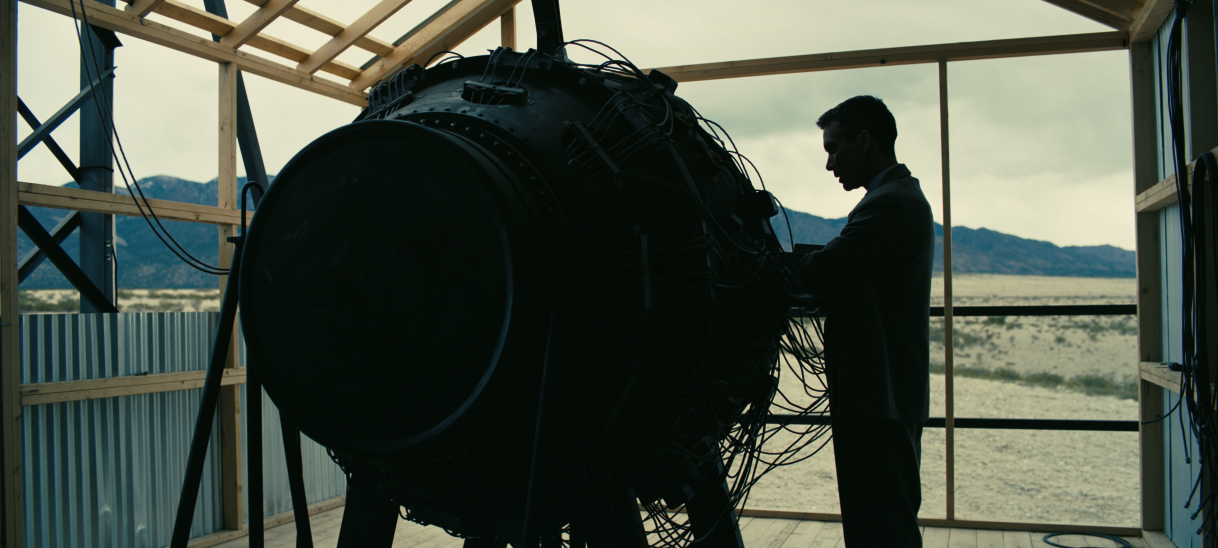
The most jarring instance of rhythmic intrusion is also the film’s best for the very fact that it’s the most speechless moment in the film. If you’ve followed the marketing, the controlled atomic set-piece (atomic in its own right) is where the full force of seeing this 70mm beast in IMAX really sells itself. By this point a lot of the establishing from the first half —namely around the politics of the Manhattan Project and the scientific lingo that will fly over most people’s heads— has been rounded off and Nolan finally gets to play with his own toys by unleashing the mother of all bombs, creating a spectacle that almost transports you to the New Mexico desert with the characters. It is really the punchline of the film, rewarding your patience by drowning out all of the noise in its countdown and the ensuing blast.

Whether or not Oppenheimer is the sort of Nolan film audiences are eager for is tough to say; there’s no tricky logic that fans of Interstellar (2014) or Inception (2010) wouldn’t wrap their heads around, but the film also sees Nolan at his rawest and most cynical, choosing to show a world destined to implode on itself just as it’s beginning to take shape. While The Dark Knight (2008) followed a similar path, there was at least the knowledge that its commentary was so distant from reality rather than a part of it. Yet in a film full of so many competing elements whether it’s the performances, the dialogue (which has has never really been the sweet-spot in a Nolan film as much as the moments around it are), the rapturous score from Ludwig Göransson, the staging of the key set piece or even the candidness of the story, there’s no doubt that like Oppenheimer, Nolan was all in on going big, and the final result is one that will stick with many long after the end credits roll by.

This post was originally published on SYN

Oppenheimer is in theatres now

Chevalier is a Uniquely Modest Period Drama

Rating: 3 out of 5.

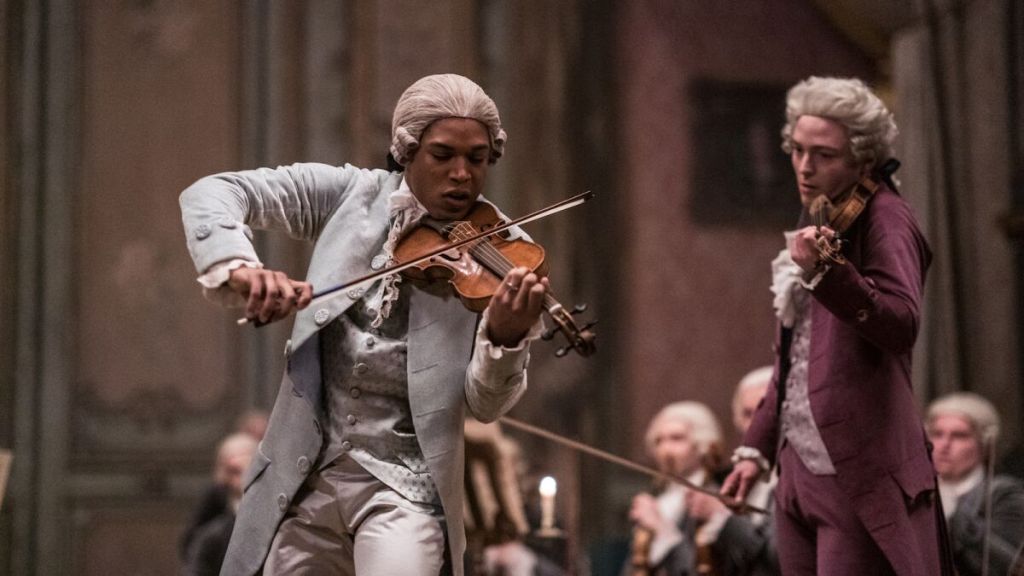
“Who the fuck is he?!” There are few better ways of introducing the bravado world of the European music scene in the 18th Century than a violin battle between Mozart and our protagonist. Bursting onto the scene as a young, brash upstart, Joseph Bologne (played wonderfully by the emerging star Kelvin Harrison Jr.) won’t take no for an answer, accruing skills and accolades like his life depends on it, which they perhaps do in this world of extreme prejudice.

Chevalier (2022) is a briskly paced period musical drama in the mould of a stripped-down Amadeus (1984), focusing on the untold story of Bologne, a famed composer, fencer, and violinist, named Chevalier de Saint-Georges right on the precipice of the French Revolution. Harrison Jr whips through courtrooms and ballrooms with an active charm he wields as tightly as his rapier, staving off potential suitors and snobbish aristocrats in equal measure.

Directed by veteran TV journeyman Stephen Williams, Chevalier is as modest as a period drama can feel. At a brisk 108 minutes (50 minutes shorter than Amadeus), the film structures itself on the familiar grounds of music biographical drama, with Bologne’s newest goal to conquer in becoming the head of the Paris Opera, set out as a competition by his friend Maria Antoinette (Lucy Boynton) against the courts preferred pick, German composer Christoph Gluck (Henry Lloyd-Hughes). 

Kelvin Harrison Jr. and Joseph Prowen in Chevalier

Bologne’s confidence and deeply ingrained desire for victory propels the story into a familiar but compelling opera-based sports film, with the customary training montages, interwoven romance subplot with his lead singer and muse Marie-Josephine (the great Samara Weaving), and buildup to the final game. The middle act of the film centres on the romance between Joseph and Marie-Josephine, with a whirl of montage spinning us through their relationship as it intertwines with the writing of their opera. There are few surprises through these moments, but the chemistry between Harrison Jr. and Weaving is given room to flourish and charm in the limited time given.

Penned by the great Atlanta writer Stefani Robinson, Chevalier feels unique next to the staid and rigid period biopics that have become all too predictable and unengaging. By highlighting instead of shying away from Bologne’s personal history as a biracial Creole man born of an enslaved mother Nanon (Ronkẹ Adékoluẹjo) and her enslaver George Bologne (Jim High), Robinson has crafted a savvier story that deserved a larger budget to tell his full story. Joseph’s deep desire to defeat any who challenge him stems from his father’s demand for his son to be great at all things, believing that is the only way he will be allowed entry into this white world. This idea permeates Chevalier, as Joseph’s identity stems from this complex moment that is at once a slave owner telling a young boy to dominate those around him to get what he wants out of a world that is against him, and as a father wanting more for his son.

Joseph’s identity is the engine that maintains the course of this unevenly paced drama that easily could’ve stumbled into a cheap cradle to grave story. While uniquely modest for a period drama, Robinson adeptly avoids the many potential cliche landmines that litter historical features of this time. 

Kelvin Harrison Jr. and Lucy Boynton in Chevalier

Where the film thrives is inside the relationship between Joseph and his mother Nanon, who comes to Paris a free woman after the death of George. Being taken from his mother and shipped off to a white boarding school, Joseph was forced to adapt to survive and thrive within the white world of European aristocracy and the musical landscape, never given the opportunity to learn of his culture and grow a relationship with his mother and that part of his life. Chevalier is at its best when we see this relationship, which is at first a tension point in Joseph’s life which he is eager to avoid, blossoms into a beautiful story of defiance and familial and communal bonds.

As Joseph learns to embrace his whole self , he wields the very defiant confidence and power he used to become accepted into the French aristocracy as Chevalier against them. With the undercurrent of unrest simmering under the surface throughout the film, we are led carefully through Joseph’s discovery of his place in these two worlds that are on the precipice of violence. As a man forced to survive through competition and determination inside the aristocracy that will not accept his place amongst them due to his race, Joseph Bologne is deserving of a place at the table of epic period dramas. In a more fleshed out and well funded telling of this tale, we would follow through into the French Revolution and Bologne’s impressive role in it. But for now, we will have to embrace Robinson and Williams for giving us this compelling and engaging, albeit brief encounter, with his story.

Chevalier is in theatres now.

Carmen Defies Expectation

Rating: 3.5 out of 5.

A modern dance film to remember, with a more emotive story than expected, Carmen (2022) is an evocative and thrilling experience that has peaks as high as you’ll find this year. An adaptation in name alone, choreographer and first-time feature filmmaker Benjamin Millepied has crafted, alongside a terrific collection of talent in front of and behind the camera, a complete reimagining of the Carmen opera. The film is vibrant and alive, and while the script is slight and only gestures mildly at its location and setting as a Mexico-American border romance, it still moves with a rapturous passion.

At the heart of the story is Carmen, played with fierce precision by emerging star Melissa Barrera, escaping across the border after the murder of her mother Zilah (flamenco dancer Marina Tamayo with one of the best opening scenes of the year). On the other side, we have Paul Mescal, a recently returning war vet Aiden, who is withholding his PTSD from those around him. On top of this, due to the struggling financial situation of the area, Aiden is forced to volunteer as a border patrol officer (the only real work in town), which pulls him into the path of Carmen.  

Paul Mescal and Melissa Barrera in Carmen.

It would be easy to reduce this film to a tragic love story between a Mexican immigrant and a border patrol officer, but that would discredit all of the work being done by screenwriters Lisa Loomer, Loïc Barrere, and Alexander Dinelaris to give these characters an agency and poignancy that surpasses these easy conventions.

What allows a dance-focused film to thrive as a theatrical experience is the incredible work of the great composer Nicolas Brittel. Brittell’s choral and string focused score is a work of magic, showing the extraordinary composer’s range while still driven by a focus on uplifting the emotion and narrative. Whether on Succession or his work with Barry Jenkins – his work on The Underground Railroad (2021) and If Beale Street Could Talk (2018) ought to be the stuff of legend – Britell’s compositions never overwhelm the narrative as they appear to come from the very core of the character’s beings. It is a shame a lot of his best work is on TV (Succession, The Underground Railroad, Andor), as it is a privilege to hear his work in a cinema.

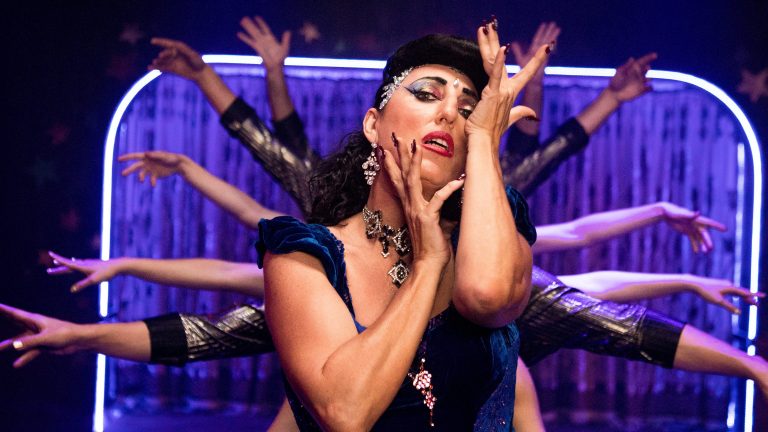
Millepied and veteran cinematographer Jörg Widmer both understand the power of movement on screen, especially when shown in deep contrast by a solemn stillness. An emotive dance performance is often followed by an extended stationary shot centring an isolated performer in a chair or in isolation in some form. Wielding a combination of natural and neon lighting, Carmen operates well in both static frame and in movement, constantly fighting a balance between the two poles.

Rossy de Palma in Carmen.

When the film is at its best, all of the film’s elements come together to make something magical. The dancers alongside Barrera, Mescal’s war-torn performance, Widmer’s camera, Millepied’s gorgeous choreography, and Brittell’s score brings the whole film to life, transcending certain moments into awe-inspiring sequences. While it is his first time behind the camera for a feature film, Millepied has a clear knowledge of how these different elements, when operated by some of the best in the industry, can overwhelm an audience.

Bob Fosse paved the way for undeniable dance choreographers leaving their mark on cinema with style and personality, and while Carmen is no Cabaret (1972) or All That Jazz (1979), Millepied has a clear understanding of the energy an expressive, well filmed dance number can give an audience.

The lowest point of the film is certainly the stretch in the final hour without any large dance sequence, a standard for dance-forward films of this ilk. Millepied is aware of this lull, however, with two eruptive dance moments in the club and an underground fight ring that holds nothing back. The fight scene in particular sneaks out of the shadows, building naturally in a thrilling way. Focusing the scene on hip-hop legend The D.O.C and his original song ‘Pelea’ heightens the moment and makes for a terrific finale. Collaborating with Brittel on the song brings to mind Pusha T’s incredible Succession theme remix with its mix of modern Hip Hop and the composer’s cinematic style. 

There is power in an artist, uncertain if an opportunity like this will arise again, leaving it all on the floor. This is why the best debut albums are always so powerful. And while this is certainly the case here with Carmen, what makes it unique is how collaborator-focused Millepied’s film is. In a tour de force score from Brittell, a balletic work behind the camera from Widmer and Australian Steadicam operator Andrew ‘AJ’ Johnson, and a potent ensemble highlighted by Barrera and Mescal, Millepied has made an intoxicating debut to remember.

Carmen is in select theatres now.

Mission: Impossible – Dead Reckoning Part One Will Wow You

Rating: 4 out of 5.

There has never been a more impossible task for the powerhouse creative team of Tom Cruise and Christopher McQuarrie than following up their genre-defining film Mission: Impossible – Fallout (2018), but they chose to accept it. With a more global reaching threat that feels more anchored to the moment in its AI focus, Dead Reckoning Part One (2023) has treated us to a weightier but immensely enjoyable film in the enduring franchise that is striving to operate as a final capstone like never before. 

By tying the film onto Ethan’s past from the very beginning, Dead Reckoning Part One gives itself capital ‘I’ importance, a sensation unique to the McQuarrie era of mostly lightweight but masterfully crafted action romps. While the stunts are close in quality to Fallout – getting even close is an achievement itself – the focus on thematic and franchise storytelling far exceeds where the previous McQuarrie entries have gone before. The centring on AI technology that challenges the IMF in ways we haven’t seen before heightens the stakes into genuinely stressful sequences that have usually been left for the extreme stunt moments.

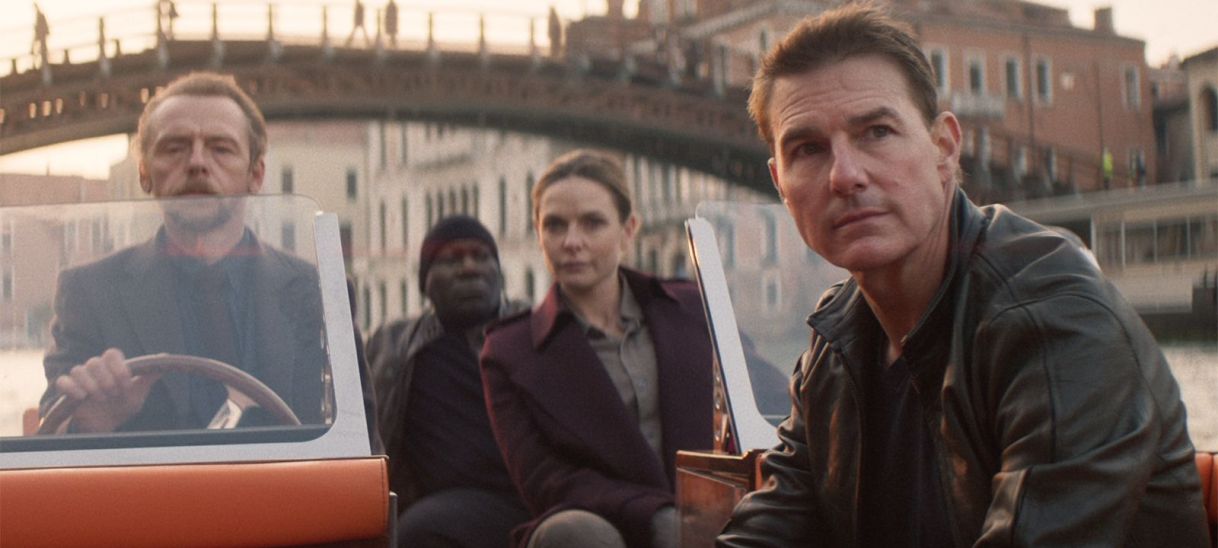
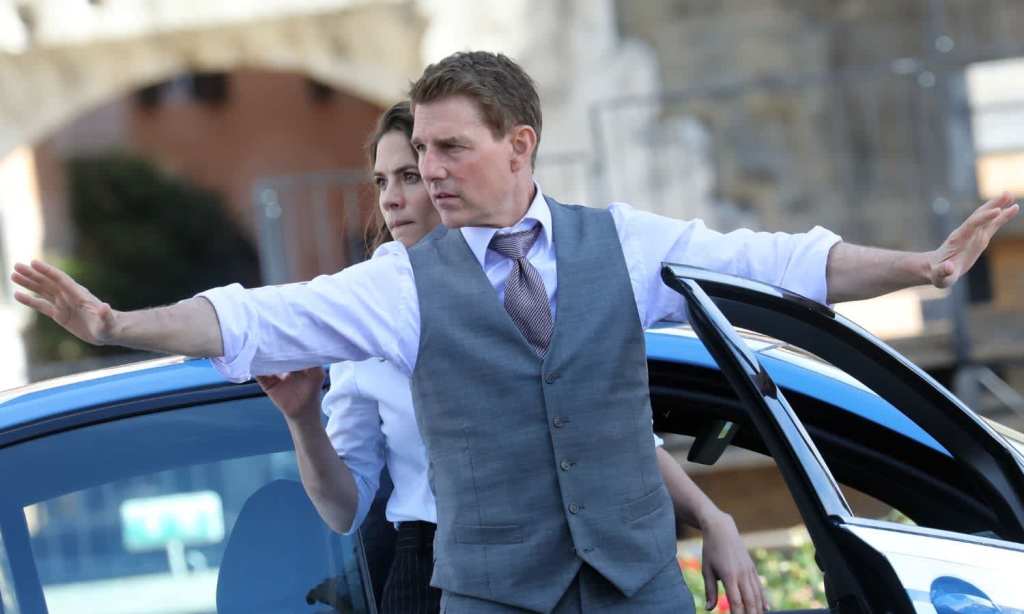
Now more about those stunts. Whether it’s dabbling in an extended car chase in Rome, an astonishing train sequence on the Orient Express (when you can, why pick any other train?), or a Venetian rave that feels equally John Wick 2 (2017) and Don’t Look Now (1973) inspired, Dead Reckoning’s staggering set-pieces leave few stones unturned. There are few cinematic experiences as overwhelming as a Mission: Impossible stunt sequence, with McQuarrie and Cruise becoming veterans in pacing out these moments to keep audiences on the hook for the runtime.

Hayley Atwell and Tom Cruise in Mission: Impossible – Dead Reckoning Part One

The introduction of Hayley Atwell as Grace, a pickpocket out of their depth is wonderful, countering the veteran spies that orbit around her throughout the film. While there is certainly a female character fridging issue that has plagued the MI series and is even more present in Dead Reckoning, it should be commended how each new woman that enters Hunt’s life operates on an entirely different wavelength. Other notable inclusions are Pom Klementieff as the flamboyant assassin Paris that works brilliantly as a silent action star, Esai Morales as the mysterious Gabriel, and the great Shea Whigham (with some tremendous hair) as G-man Jaspar Briggs sent to capture Hunt. They all add a unique flavour to the nearly three-hour runtime that knows when to add something new to the mixture.

Mission: Impossible films centre around their locations, an idea that was once a staple in the jet-setting action genre, but now feels fresh and invigorating in a climate of Atlanta studio lot set-pieces that leave an audience tired and unengaged, criticisms that can never be lobbed at this franchise. With wonderful sequences in Rome and Venice, Dead Reckoning never stays in one place for long but always uses its locations to its extremes, making it feel like the largest budgeted film in existence.

Adding onto the John Wick comparisons are the style and storytelling choices of Dead Reckoning that feel closer to the Keanu-helmed action epic, or even the most recent Bond film No Time to Die (2021), than the espionage trickery that defines this franchise. By opening Dead Reckoning with an extended prologue that sets up the stakes, we are given a rare glimpse into information that the IMF isn’t aware of. While this isn’t uncommon in action movies to establish the story this way, this alters how we as an audience view Hunt and his team throughout Part One, who are almost always a step ahead of us. Mask reveals and double crosses are part of the trade in the spy franchise, but in Dead Reckoning, McQuarrie and Cruise have doubled down on the world-spanning action epic elements that have defined their collaboration since Rogue Nation (2015).

With the strange re-emergence of bifurcated films in recent years (Dune, Spider-Verse, MI), larger stories are being told on the big screen, interesting creative decisions are being made in terms of where to split the narrative, a difficult decision that Dead Reckoning Part One has succeeded well above its peers in giving its eager audience the best of both. The magic trick McQuarrie and Cruise pull off here is in creating the sense that no cinematic idea is being held back, while still concluding satisfyingly with the knowledge that a part two will raise the stakes even higher. 


Mission: Impossible – Dead Reckoning Part One is in theatres now.

The Boogeyman is a Lean and Exciting New Horror

Rating: 3 out of 5.

The grief monster lives inside the house. Based on a 12-page short story by Stephen King from the 1970s that obscures the nightmare between supernatural and psychological, The Boogeyman (2023) is a lean and enjoyable 90-minute horror that is as good a theatre experience as you’ll find right now. There is no obscurity here, as screenwriters Scott Beck, Bryan Woods, and Mark Heyman begin with a horrific cold open that leaves little doubt about the threat at the centre of the film. 

The Boogeyman follows a similar trajectory to most Stephen King stories – familial grief made manifest, a central car crash, overlooked teens, etc – but it’s in execution where the film thrives. After the sudden passing of their mother in a car crash, the Harper family of teenager Sadie (Sophie Thatcher), much younger Sawyer (Vivien Lyra Blair), and father Will (Chris Messina) are struggling to cope in the aftermath, leaving them vulnerable to the presence of a looming spectre in the dark. The film is light on narrative invention, but has some of the most impressively creative horror set pieces that engages an audience far more than the story.

(From left) Sophie Thatcher, Chris Messina, and Vivien Lyra Blair in The Boogeyman.

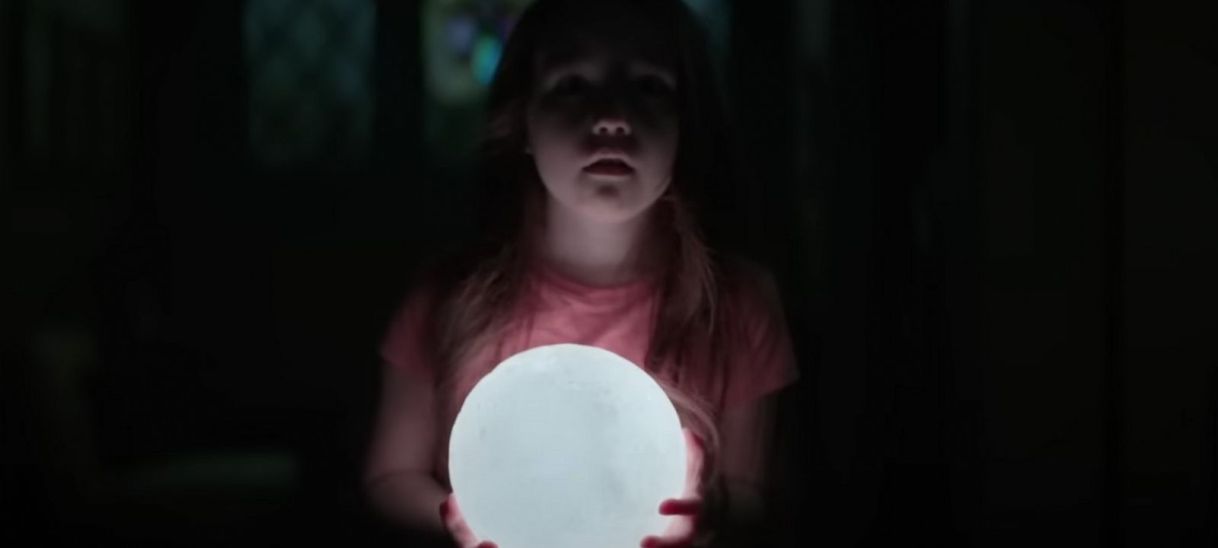
Emerging onto the scene with the impressively minimalist Covid horror film Host (2020), Rob Savage weaponised the familiar with Zoom calls and our collective sense of isolation during the pandemic that made it so effective. Given a studio budget and higher-level actors to work with, the filmmaker created an effective horror film that should stand as one of the year’s best. Savage’s impressive use of light and negative space that he flexed in Host (especially in its constraints), is heightened in The Boogeyman, especially through the use of unique light sources in the set pieces like Sawyer’s light ball, a PlayStation game, or the therapist’s red pulsating light pillar that ratchets up the tension greatly.

Looking for narrative invention and complexity in a film titled The Boogeyman is like searching for water in the Sahara, and Savage is acutely aware of this. The film’s narrative simplicity strips it down to its base elements of a grief-addled family and a monster feeding off their pain, allowing the set pieces and creative execution to thrive. Feeling much like a short story that hastily needs connective tissue to leap to its heightened moments, the film takes narrative shortcuts to arrive at its impressive set pieces. This is not uncommon in the horror genre, but in a post-Get Out (2017) world, its lack of self-awareness is surprising, especially in its very post-2020s setup of therapy and grief.

Supported by a solid all-around cast, Thatcher and Blair are terrific as the mourning sisters. Sophie Thatcher in particular, in her first lead film role since breaking out in the TV series Yellowjackets (2021), holds the movie together with a combination of teenage resolve and raw open nerve that is always engaging. Horror has long been a genre that’s allowed young actors to break out, and Thatcher’s performance here is one of the more impressive in recent years.

The Boogeyman is another in a long run of recent film and television centred on therapy, which while an important addition to culture to lessen the stigma, it makes for a collection of tired tropes with little insight. Will is a therapist, which certainly heightens his fear of opening up to his daughters about the sudden passing of his wife and their mother, but is hollow as a character (something not uncommon with adults in King stories). The depictions of therapists in the film, Will and Dr Weller (LisaGay Hamilton), are harsh and broad, ultimately hurting the characterisation of the profession instead of illuminating it.

Despite its narrative flaws and simplicities, it’s hard not to get swept up in the enjoyment and genre craft on display in The Boogeyman, from a recent emerging talent in Rob Savage. Comfortably levelling up to studio horror scale, Savage heightens every moment with creative set pieces that will thrill any horror fan seeking a new cinema experience.

The Boogeyman is in theatres now.

Marlowe is an Uneven but Enjoyable L.A. Noir

Rating: 2.5 out of 5.

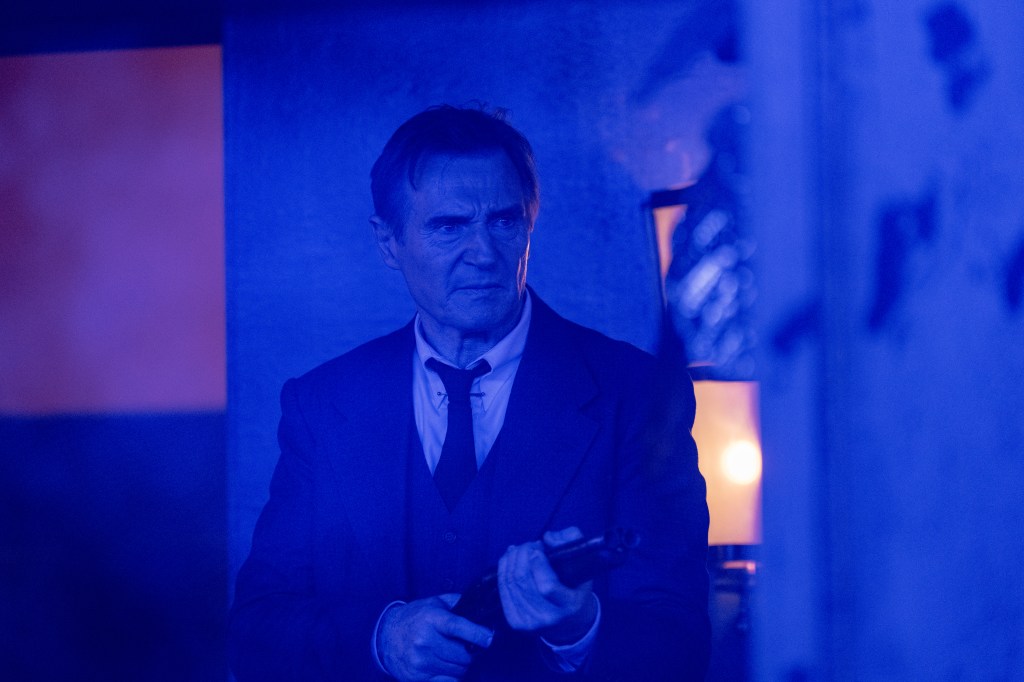
Beginning, as most noir stories do, in a detective’s office. In enters the striking heiress Clare Cavendish (Diane Kruger), seeking to hire the famed private investigator Philip Marlowe (Liam Neeson) to find her missing lover, Nico Peterson (François Arnaud). These familiar beats are established efficiently and with a breeze of frictionless storytelling that makes for pleasant viewing to begin a film, but makes for a shaky foundation to build a twisty detective caper. Based not on Raymond Chandler’s series of novels, but the 2014 novel The Black-Eyed Blonde by John Banville, the film feels notably modern while inside the familiar world of the famed detective, making for a unique watch.

Marlowe (2023) has the presentation early on of a Sunday matinee theatre film, which makes the sudden shift with a quite gnarly sequence in its first act even more jarring. It destabilises the film, which could be an interesting choice to move the audience into an unexpected place, but these two styles run on parallel tracks throughout the film. L.A. noir stories are often about the seedy underbelly of the Hollywood system, so these juxtaposed styles could reinforce that concept, but in Marlowe they lessen the impact of each other completely.

The performances are solid all round, especially in the smaller side characters headlined by Jessica Lange and Alan Cumming, but is let down by a lacking lead performance by Neeson, who is still within his post-Taken mode that feels out of place for a Marlowe role. While Robert Mitchum’s performance of Marlowe in Farewell, My Lovely (1975) was hard-nosed and rough as sandpaper, there was still the famed character’s wisecracking and philosophising that made him beloved. Whether these changes have been ground down with this much older Marlowe is unclear, as the film focuses on addressing his age physically, not emotionally or mentally. It’s difficult to separate the previous Marlowe performances here, but it’s those changes that flatten the film as a whole.

Liam Neeson in Marlowe

A causal change with this flat Neeson performance is the lack of chemistry he has with Diane Kruger, which should be the igniting spark for the whole film. An underwritten femme fatale part is a staple in the noir genre, usually buoyed by the filmmaking and dynamic chemistry with the detective, neither of which are serviced to Kruger, who should be the standout element of the film.

Philip Marlowe has always been a compelling literary and screen character throughout the years due to his iron moral backbone being constantly put up against the rapidly shifting immorality of old Hollywood. This is shown in flashes in Marlowe – it will never grow tiring to see the villain attempt to bribe the unflappable detective – but the portrayal here is focused on Marlowe’s desire to either retire or return to the police force for a more stable life. While unique for a screen portrayal of the character through its source material, this forces the film into a thematically inert corner that does not make for engaging cinema.

The film’s strange mixture of modern sensibilities (graphic violence, modern dialogue, handheld camerawork) inside of a period setting makes it a fascinating but not always engaging watch. The final act devolves into a strangely modern action spectacle – equipped even with the neon-drenched scenery – that has a stronger connection to last year’s Neeson action film Memory (2022) than The Big Sleep (1946). In theory this could all work as a form of adaptation of old Hollywood noir tropes through a modern lens, but in practice Marlowe ends up a mess of contradictions that complicates what began as a charming enough Summer noir for older audiences.

Marlowe is in select theatres now.

Guardians of the Galaxy Vol. 3 is Marvel at its Best

Rating: 3.5 out of 5.

Guardians of the Galaxy have long been the under-appreciated Marvel gang of underdogs (now including an actual dog in Cosmo, played by Oscar nominee Maria Bakalova), that, against all odds, have formed a surprising trilogy of films that can all be put amongst the enduring enterprises very best. The three films are simple, emotional, and dynamic in ways that are becoming increasingly rare in the MCU – largely off the back of filmmaker James Gunn’s writing and directing style – but a great portion of credit should be given to their strong ensembles and creative art and production designs.

It’s been 6 years since the last stand-alone Guardians adventure, with Gunn being immensely busy in the interim. He has switched allegiances from Marvel to DC, first with his own The Suicide Squad (2021) film alongside a John Cena TV show, and now operating as the franchise’s own Kevin Feige overlord, beginning with his own Superhero rebirth story set for 2025.

What allows this new instalment, Guardians of the Galaxy Volume 3 (2023), to thrive is its basic retrieval mission with crystal clear stakes, a divergence not just from recent Marvel plots, but from most third entries in franchises. When Adam Warlock (Will Poulter) crashes through Knowhere in a failed attempt to kidnap Rocket (Bradley Cooper) for mysterious reasons, resulting in significant injuries, the remaining Guardians must go back through his past in order to save their friend’s life. Where Volume 2 (2017) narrowed its focus to Peter Quill’s (Chris Pratt, who is at his best here) backstory with his family, Volume 3 smartly focuses on the origins of Rocket Racoon. Cooper’s Rocket has always been the hipster pick for best performance in the MCU, and he is given an interesting role here as the tech genius Racoon is shown mostly in flashback for the film’s runtime, slowly becoming the grizzled vet we know today. Volume 2 excelled in the tertiary moments between Rocket and Michael Rooker’s Yondu, a formula Volume 3 follows similarly in this flashback origin structure.

(From Left) Dave Bautista, Pom Klementieff, Chris Pratt, and Karen Gillan Guardians of the Galaxy Vol. 3

Music has always been a heavy focus of the Guardians story from the 80s Yacht Rock focus of the first two films (with Peter’s beloved cassette player), to the introduction of the Zune player in Volume 3, allowing the film to have a distinct 90s flavour. Opening with a wonderful sequence on Knowhere with an acoustic version of Radiohead’s Creep, we see Rocket (Bradley Cooper) singing and moving amongst the ragtag community they have cultivated. It is clear that Rocket is now as closely attached to this Earth music as Peter, a connection that has slowly been growing across the three films. Volume 3 is scattered with outstanding music cues from The Flaming Lips, Beastie Boys, and Florence + the Machine, which surprisingly feels more cohesive to the film’s style than the built-in nostalgia of the 80s music that is so integral to the Guardian’s story. 

The ensemble has grown to accommodate a few welcome faces, including Will Poulter and Chukwudi Iwuji as Adam Warlock and The High Evolutionary respectively.  Poulter’s charming wide eyed emergence into the world as a young celestial is a wonderful inclusion, especially the two hander scenes between Adam and Ayesha (Elizebeth Debiki), which are the comedic highpoint of the film. Debiki’s devolution from a pompous ruler at the beginning of Volume 2 to a desperate lackey to a maniacal boss here showcases the actress’s comedic chops, breathing new life into a character that was previously given little time.

Iwuji does his best 90s action villain impression as twisted experimental scientist The High Evolutionary – the whole movie has a great ongoing Face/Off (1997) bit –  that heightens his scenes, making him more enjoyable than recent Marvel villains. The film’s villain storyline closely resembles the arc of X-Men 2 (2003), with Rocket in the Wolverine role and The High Evolutionary in the role of Brian Cox’s William Stryker, the man responsible for his claws through unethical experimentations.  With this close resemblance, an audience is able to settle into a familiar story, allowing the emotional stakes to become the focus instead of a convoluted plot that derails too many comic stories.

(From Left) Karen Gillan, Chris Pratt, and Zoe Saldana in Guardians of the Galaxy Vol.3

Where Volume 3 exceeds well above the previous two films is the wildly inventive world-building and production designs. The warm interiors of Knowhere feel like a home to these characters, which garners emotional weight when it gets put in jeopardy. Guardians has always been about its misfit community with Knowhere at its heart, so it is never a chore the film cuts back to the misadventures of the crew on board while the Guardians are away on a mission. But the inclusion of new locations in Volume 3, like the 80s Star Trek-styled organic security hub Orgosphere or Stepford Wives (1972) tinged Counter-Earth, feels wholly unique in the MCU. Gunn’s Guardians trilogy consistently breathes new life into the wider MCU establishment, with Volume 3 coming at a time they need a major kickstart.

Although the Guardians were integral to the plot of the later Avengers films, it is remarkable how cohesive this trilogy of films is when viewed together. Comparatively, the Jon Watts Spider-Man trilogy and Peyton Reed Ant-Man trilogy are tonally jarring when viewed as a collective story, instead being pulled and twisted into the larger MCU puzzle set. 

The very best filmmakers to operate within this larger Superhero space have been those that have been able to wrestle with the large enterprise while maintaining their own sensibilities. Ryan Coogler was able to bring his political and empathic filmmaking chops from Fruitvale Station (2013) into his Black Panther films, while Gunn has been able to weave a satisfying and hilarious adventure romp that never lacks bite, qualities that made him such a compelling emerging filmmaker. 

Gunn has a penchant for having his characters plainly express their feelings about any situation, which is a creative quirk that takes a while to settle into but can often lead to moments of immense emotionality. Much like Aaron Sorkin’s or Quentin Tarantino’s distinct writing style, Gunn trusts his audience to move to the rhythms of his character’s dialogue to an emotionally satisfying conclusion, accepting the occasional off-notes on the journey.

In spite of its long runtime and simple retrieval plotting, Volume 3 excels through the strong emotional connection that has been made with this world and its characters. Gunn has perfected his emotionally candid dialogue style, with an ensemble of quality performances, highlighted by Cooper, to create the most satisfying Marvel film in years.

Guardians of the Galaxy Volume 3 is in theatres now.

Broker is Kore-eda’s Most Challenging but Rewarding Family Drama

Rating: 4.5 out of 5.

One of the best films from MIFF 2022 has finally arrived in theatres, Broker (2022) is a deeply complicated but always empathetic drama from a true modern master. Hirokazu Kore-eda’s films have a certain sticky texture, maturing in your mind long after the credits roll. His films will always affect you emotionally, but their true power is the depths he is able to mine from a collection of characters. 

Born out of a desire to work with legendary Korean actor Song Kang-ho, working with a large swathe of the Parasite (2019) production crew, Kore-eda has crafted another thorny but deeply humanist portrait of an unlikely family, thrown together through unusual circumstances. Broker follows a pair of church volunteers Ha Sang-hyun (Song Kang-ho) and Dong-soo (Gang Dong-won), who sell unwanted babies that are left in the church’s baby box on the adoption black market. When a young mother Moon So-young (pop star IU), returns for her baby the next day, she catches wind of their schemes and forces the brokers to take her on their journey out of town to sell her baby to the right family.

Even for one of the greatest humanist filmmakers to ever live, this is an extremely difficult story to operate as an empathy machine for an audience, making it all the more moving when it does break you open. Most of the auteur’s films start with a sweeter taste, which then patiently develops into a more acidic and complex series of emotions and flavours. In Broker, however, Koreeda begins with his darkest and most complicated place to date. The film builds and develops on top of this shaky foundation, unmasking compassion and empathy in unexpected places that will leave you in pieces. 

Song Kanh-ho in Broker

Where The Truth (2019) faltered in its execution of performance (French and Japanese styles are worlds apart), Broker is one of the best ensembles put to film in years. From Song Kang-ho’s heart of gold humanity in face of difficult circumstance to the detectives Lee (Lee Jou-young) and Su-jin (the always terrific Bae Donna) that are tasked with taking down the operation, the entire cast is pitched perfectly to Kore-eda’s empathetic underpinnings that make his work so affecting. But it is IU (real name Ji-eun Lee), who really stands out and is transcendent in the role, vaulting her immediately into the top tier of pop star performances.

Broker operates closer in style to The Truth, the filmmaker’s big swing after winning the Palme d’Or for the masterful Shoplifters (2018), which was filmed away from his home nation of Japan and in a foreign language. Both Broker and The Truth has less of the documentary style of pacing and mise en scene that made him legendary in Japanese cinema, showcasing his adaptability not just in style, but in his ability to work with a cast and crew that speak different languages.

Broker, leaning into the more Korean style of cinema, is more forceful and plot-driven in its storytelling than Kore-eda’s other films, that often stem from his documentary background. The film is quite astonishing and deeply felt, with perhaps the only false note being its loud, heavy-handed moments. These moments are further leaned on by quite an obtrusive and manipulative score by Jung Jae-il, especially by Kore-eda standards, who usually allows emotions to develop more naturally in his films.

Bae Doona (left) and Lee Joo-young (right) in Broker

In most Kore-eda films, a single location is used that is full of so much personality and attention that it feels like a whole world. In Broker, a road trip movie for the most part, that single location becomes the two central vehicles: Ha Sang-hyun’s laundry van with its broken back door but homely interior, and Su-jin and Lee’s detective sedan where they spend most of the film.

Themes of care in different forms permeate the film, with the notable motifs of rain and shirt buttons coursing through its veins. By weaving themes of care and compassion between Ha Sang-hyun and detective Su-jin through their clothing, Kore-eda complicates his seemingly straightforward detective story through his characters’ shared connections. In these small moments, Kore-eda excels and deepens his character portraits which have made him a modern master. 

Perhaps the most emotionally overwhelmed you will feel in a theatre this year occurs in a hotel room with Moon So-young and the ragtag crew, with all the lights off, thanking them for being born. She is unable to say it directly to her child who she may never see again, so she says it individually to the whole group. This is a group who have felt discarded and left behind in their own lives, so to have a young mother saying this to them with the same care as she tells her own son, is profound. This is one of the most emotionally resonant scenes Kore-eda has put to film, which is saying something given his extraordinary filmography.

Fellow filmmaker Kogonada once described Kore-eda’s films as tasting similarly to the legendary director ​​Yasujirō Ozu’s work due to its aftertaste. “When we leave his films we experience a similar aftertaste, which is to say, a deeper sense of life. And it turns out that the every day is a lot like tofu (which may explain why Ozu referred to himself as a tofu maker). It may seem bland in comparison to the spectacle of other dishes and desserts being offered, but if we happen to stumble upon a master chef capable of bringing out its subtle flavours, it will change the way we experience tofu forever.” In this case, Broker is perhaps Kore-eda’s most complex dish yet, one that will stay with you forever.

Broker is in select theatres now.

John Wick Enters Legendary Status in Chapter 4

Rating: 4 out of 5.

John Wick Enters Legendary Status in Chapter 4

“Welcome back Mr Wick” (RIP the iconic Lance Reddick). The bravura American action franchise of the past 10 years, John Wick returns bolder, brasher, and more inventive than ever in John Wick: Chapter 4 (2023). The film, clocking in at 169 minutes with an immense 14 action set pieces, figures which on the surface would cripple most films, but in reality are remarkably well paced. Renown stuntman turned in-demand filmmaker (his IMDb page reads like a to-do list) Chad Stahelski has always focused more on individual moments than a wholly engaging narrative, which is still the case with the fourth entry in the franchise, but the attention to detail in these moments, along with an extraordinary ensemble that are all giving their best, makes the film as a whole immensely enjoyable.

The franchise has always focused on three central tenets: gloriously realistic fight choreography with one of the best to ever do it in Keanu Reeves, stunningly inventive visuals in all real locations, and minimal dialogue with an eye for larger world-building on the margins. These are all ratcheted up to extremes in Chapter 4, bringing the film closer in comparison to a David Lean film than whatever the Russo’s are producing on Netflix.

Following on from the events of Chapter 3: Parabellum (2019), John Wick (Reeves), down a finger and assumed dead by the High Table, must traverse even further reaches of the globe to take down the senior figures of the organisation. The major inclusion to the franchise here is the legendary Donnie Yen, and his presence is felt immediately as the blind retired assassin Caine, tasked with eliminating his old friend John. Caine’s story parallels John’s from the first film, a connection that is simple but effective in a film that knows when to expand the story and when to be quiet and let audiences bathe in the stylised action set pieces.

Keanu Reeves in John Wick: Chapter 4

The franchise has been able to boast an incredibly varied list of cameos from Angelica Houston to Boban Marjanović, adding a sense of scale and interest to each sequence. Added here are Yen, Bill Skarsgard, Rina Sawayama, and Hiroyuki Sanada, all improving on an already impressive ensemble that is unparalleled in an action franchise. Yen in particular is incredible, adding a coy and aloof nature to one of the best fighters in cinema history makes for a constantly compelling screen presence. To be able to add a figure like Yen to the franchise after four films shows the filmmakers are never satisfied with what was previously achieved, always seeking a greater experience for audiences, which they have accomplished in spades.

John Wick has long been a quintessential YouTube clips movie, focusing on individual moments over a cohesive narrative. Chapter 4 is easily the most ambitious entry. Whether that is in its outrageous Berlin rave sequence, incredible Donnie Yen fight sequences, or a seen-to-be-believed false roof bird’s eye oner with explosive shotgun rounds that will have audiences with their jaws on the floor and an overwhelming desire to cheer in appreciation. 

The best inclusion to the franchise introduced in Chapter 3: Parabellum (besides Halle Berry and her dogs) are the locations outside of New York, something that is being further expanded here in Chapter 4. Taking place in Berlin, Paris, and Osaka, this film is able to flex its muscles visually and tonally which adds important freshness to a world that could have relied on what previously worked instead of giving audiences a three-hour endorphin rush.

Keanu Reeves in John Wick: Chapter 4

Connection to the entire franchise can be felt throughout Chapter 4, from its extraordinary Berlin rave sequence to Mr Nobody’s attack dog. These moments never feel like a tired repetition, but an evolution of form that makes this film the quintessential John Wick film. With the additions of location jumping and more convoluted plots, the John Wick franchise has morphed into a sort of John Woo-inspired, American Wuxia James Bond or Mission Impossible, with Keanu Reeves at its centre. The only thing it’s missing is the iconic score (although the music is always top-notch).

Among the best blockbuster theatre experiences this decade, Stahelski and crew have pushed every moment to its limits to put John Wick: Chapter 4 in the pantheon of action filmmaking achievements. Comfortably the best film in the series, Chapter 4 is a perfect culmination of everything that makes the previous films great, heightened and stylised to the highest degree imaginable.

John Wick: Chapter 4 is in theatres now.

Pearl Stands on Her Own

Rating: 3 out of 5.

“Please lord, make me the biggest star the world has ever seen”, our heroine Pearl (Mia Goth) pleads each night before bed, accompanied by a garish string accompaniment that draws immediate comparisons to the early colour cinema. A skilled director of pastiche, Ti West has crafted a Douglas Sirk-styled film within the dark and gory world he has created with muse Goth, that is sure to thrill old and new fans alike. Immediately following the release of one of 2022’s best horror films, X, it was announced West and Goth will be creating a trilogy surrounding these characters, here with the prequel Pearl (2022), and concluding with MaXXXine (2023), all following Goth’s characters.

Set in 1918 Texas during the Influenza pandemic, Pearl is the only child of a German immigrant family. Pearl’s father (Matthew Sunderland) is infirm, laying the burden of survival in a trying time with Ruth (Tandi Wright), Pearl’s domineering mother who needs to get her daughter to help out around the farm. Pearl, however, is desperate to become a silent film star and dancer, sneaking off to the picture house every opportunity she gets.

Pearl’s love of cinema and desire to be a star is established in X, something that ties her to Goth’s other character Maxine in that film, which is deepened here. Pearl is never more joyful than when she is at the picture house, watching the newest dancing features. Goth and West craft such an empathetic and archetypal image of a budding star hoping to break out, that her budding malevolence is allowed to boil under the surface.

Mia Goth in Pearl

The film is aware its greatest strength is a close-up of Goth’s expressive face, a cinematic world into itself. Enough can’t be said about Goth’s commitment to the performance of this character, beginning in X but truly flowering here to create a singular horror cinema performance. You can immediately feel Goth’s co-writing credit in the character, similar to Hunter Schaeffer’s co-writing credit in the Euphoria (2019) Covid special, Fuck Anyone Who’s Not a Sea Blob (the artistic peak of the show), where a performer has a psychic connection to their role that tears through the screen.

The saturated, Wizard of Oz (1939) inspired-yet-repressed world that Pearl inhabits can grow tiring at stages, but the final act is such a showcase for Goth’s magnetism as a performer and writer, that the film leaves you satisfied. West’s films often have an issue of peaking early through his deft skill at creating tension and dread compared to his bloody finales, an issue absent in Pearl.

The film’s setting within the Influenza pandemic whilst being a Covid-produced film has a simple charm to it, with all crowds in masks and characters bemoaning the difficulties of recognising people in them. Pearl’s yearning to be out of the isolation of her farm during this pandemic is a more relatable experience than you’d expect to come out of this film.

Mia Goth in Pearl

Pearl is a unique prequel in that it has the potential to be viewed before the original film, X, due to its focused character study of Pearl, a character you leave the first film aching for more details on. West and Goth feel acutely aware of the aspects audiences were craving more from in X, namely the Pearl character and a further relishing of Goth’s unique screen presence.

Where X focuses on its wide ensemble and 70s environment, Pearl is very much a character study. Aside from a compelling performance by Tandi Wright as Ruth, Pearl’s mother, we are not given many deeply written side characters, allowing the audience to narrow their attention to our star. Wright and Goth have a similar dynamic to Spacek and Laurie in Carrie (1976), a foundational text for the film, particularly in its latter stages. While West is focusing on the juxtaposition of the Cinemascope aesthetic with the gore, the true dynamism is achieved through Goth’s varied performance that gets stymied by Wright’s hard-lined determination to survive their struggling lives. The real climax of the film is not a gory showstopper like in X, but the culmination of Pearl and Ruth’s resentments colliding at a family dinner.

The West trilogy is soon to be completed with the upcoming MaXXXine (2023), the first A24 trilogy. Following on from the events of X, this second entry in this quickly produced franchise is a unique world that has been crafted by a pair of oddball filmmakers in West and Goth that is refreshing in the world of IP drudgery we find ourselves in the never-ending middle of.

Pearl is in theatres from March 16th.