Mission: Impossible – The Final Reckoning: After 29 Years it’s Mission Complete for Tom Cruise’s Iconic Franchise

Rating: 4 out of 5.

Mission: Impossible – The Final Reckoning preview screening provided by Paramount Pictures.

Whether it’s hanging suspended inside a secret vault, rock climbing on cliff faces, climbing the Burj Khalifa, HALO jumping, flying helicopters between cliffs, dangling off the side of airplanes or diving to deep depths, for the past 29 years the Mission: Impossible franchise has pushed the boundaries of what the cinematic experience can offer. The latest and last addition to this exercise, The Final Reckoning (2025), manages to impress one last time, leaving no stone unturned and no jaw undropped.

It feels as though Director Christopher McQuarrie and Tom Cruise’s bond since first collaborating on Jack Reacher (2012) has only strengthened the work they’ve done on this franchise, with The Final Reckoning representing the sixth time they’ve worked together. The duo are clearly in sync with one another, and their relationship has seen McQuarrie produce a number of other titles Cruise has starred in — their collab might just be the Robert de Niro/Martin Scorsese of modern action films.

While all of the Mission films are interlinked, they always tend to have a new threat for Ethan Hunt (Cruise) to take on. Of course, these final two are more connected than the others (title aside). Kicking off almost immediately after Dead Reckoning Part One (2023), The Final Reckoning finds Hunt once again in hiding as his narrow escape from the previous film’s derailed-train-finale has left him with the key to the vault of the lost Sevastopol submarine. The dangerous AI known as the ‘Entity’ continues to pose a risk to the survival of the world, and it’s up to Hunt to track down the sub, contain the entity, and prevent the world from becoming an ash wasteland. Just another day for cinema’s most rouge operative, right?

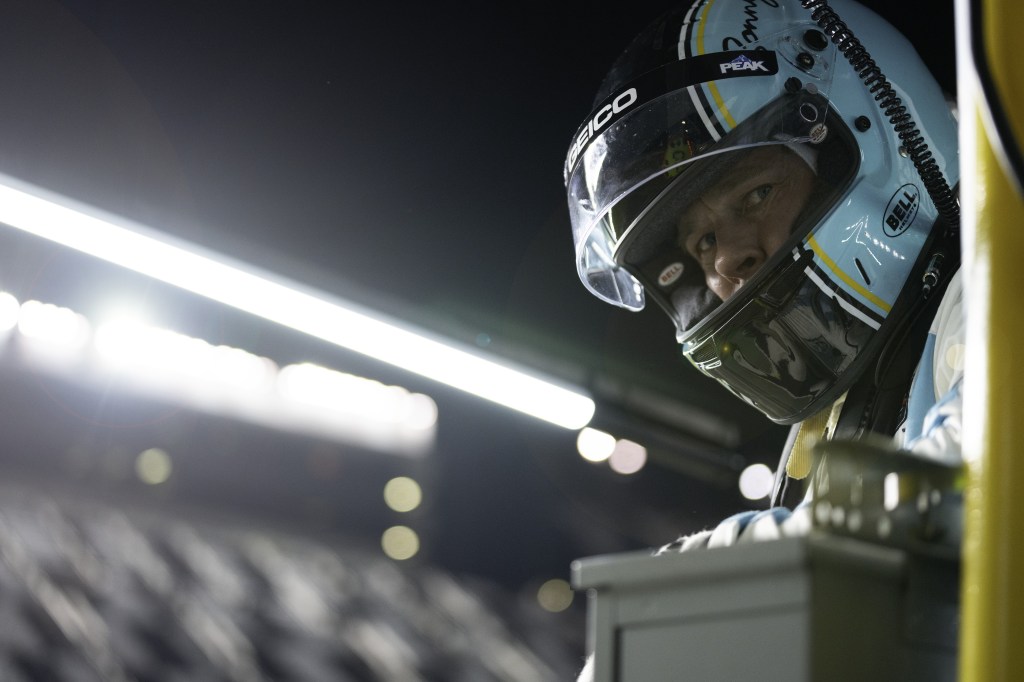
Tom Cruise plays Ethan Hunt in Mission: Impossible – The Final Reckoning from Paramount Pictures and Skydance.

The Final Reckoning takes Hunt to new heights as well as depths, with Cruise once again putting his body on the line for the sake of realism. It takes some time to get to the almost playful-like vibe that previous installments have been so good at capturing, though. You feel more of the dialogue this time around, with the first act in particular having a greater weightiness to it. When I think about my favourite film in the franchise, Fallout (2018), no line ever feels wasted and always drives the plot forward, but it’s as though the punchy, in-your-face-ness of dialogue this time around is a bit more… measured (I guess being the final film, there’s some understandable caution of trying to make every moment count).

Once the flood gates open, however, it’s a hold-onto-your-horses kind of ride. The elation of watching a Mission film is in the knowing that what you’re seeing isn’t a gimmick, and to add an extra layer to it, that the film’s star is the one doing it. A tank was purpose built (the largest ever for this kind of production) to have Cruise dive into, and the tension of seeing him clamber under water while the sound design holds him (and by extension, the audience) to ransom, is spine tingling, on-the-edge-of-your-seat stuff. At a later point, Cruise is literally dangling from the thin bars of a biplane in what is perhaps the most death defying stunt ever performed by the star of a movie for the big-screen. The high of seeing Cruise scramble as the plane barrel rolls and twists and turns, is just as exhilarating as you’d imagine, and it’s one of the clearest examples of the symbiotic relationship between Hunt and Cruise, a point where these two personas meet as they both battle to get into the cockpit — a feeling best exacerbated by the G-force struggle on Cruise’s face.

Tom Cruise plays Ethan Hunt, Pom Klementieff plays Paris, Greg Tarzan Davis plays Degas, Simon Pegg plays Benji Dunn and Hayley Atwell plays Grace in Mission: Impossible – The Final Reckoning from Paramount Pictures and Skydance.

Ethan’s moral compass has always been the core of what makes this franchise standout. He’s a character of conviction, one who chooses right over right and pays the consequences time and time again. Fallout really brought the fire that burns within him —for those he cares about— out to the max. These final two films have felt more mellow when it comes to character development (we know what makes him tick), but the idea that he’s not facing any one person this time around, but an AI, really brings the focus back on him and his ability to make decisions on the fly, something that really homes in on the idea that his biggest enemy is himself.

At this point, the “Tom Cruise is secretly trying to kill himself” memes are comical, but for every broken bone the actor has endured (and there have been a few), hundreds of thousands of jaws have dropped. If the Mission: Impossible films have taught us anything it’s that Cruise, like Ethan Hunt, has continued to choose the mission and risk his life for the benefit of those he will never truly meet, and cinema is all the better for it.

Mission: Impossible – The Final Reckoning opens nationally from today.

Thunderbolts* is the Best Post-Endgame Marvel Film

Rating: 3.5 out of 5.

Marketed with a keen focus on its crew’s previous work with the production company de jour A24, Marvel’s attempted rebound back into the public consciousness has arrived in the Florence Pugh led Thunderbolts* (2025). The film is emotional and built from the inside out with a commitment to its characters, a collection of misfit Marvel characters played by an incredible cast of emerging talents that shows when the call is made, they will deliver.

Much like an aggressive chiropractic session, the Marvel project desperately needed realignment, no matter the clunkiness to achieve it. By bringing in emerging creatives to develop a more personal character story — what used to be the MCU’s calling card in the early years — Thunderbolts* arrives fashionably late to a series in need of rescue. While modest in its pursuits (for a blockbuster feature), Thunderbolts* is built off the back of two terrific performances in Pugh as Helena and Lewis Pullman as Bob. Their chemistry stems from the characters’ visible mental health struggles that long for meaning and connection in a world devoid of both, a difficult idea to place front and centre in a film with multiple car flips.

After a haphazard and almost impressively uninspired handover film Captain America: A Brave New World (2025), Marvel’s loaded release schedule picks back up with a darker, sharper, and wittier ensemble film that stands on its own feet before the navel-gazing returns with a new Fantastic Four and Avengers films in the next 12 months.

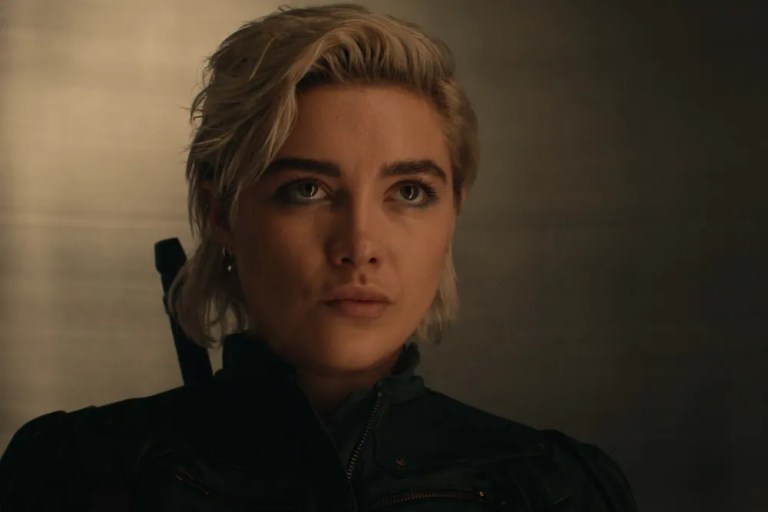
Florence Pugh in Thunderbolts*.

Beef’s (2024) Jake Schreier, alongside many of his collaborators on the acclaimed series, puts character above all in a seemingly obvious pivot away from the plug-and-play style of most post-Endgame MCU films that has put the company on the brink.

Never undercutting its emotional weight with a cheap joke in the same sentence, screenwriters Eric Pearson and Joanna Calo keep their characters, in particular Yelena (a tremendous Florence Pugh), on clearly defined and recognisable tracks. Even as one of the world’s best assassin’s, Yelena’s mental health struggles and ennui is expressed with a profound clarity that underscores the entire film.

By taking their story of literalising mental health struggles to a fulfilling breaking point, Thunderbolts* shows what can be achieved in the best comic book stories by reflecting these superpowered people’s humanity out into the world. Thunderbolts* elicits an unusual feeling: nostalgia for the early entrants in the Marvel cinematic project. Slimmed down to bare essentials with an antagonist that reflects the interior conflicts of our soon-to-be heroes, the film knows the power it holds with its outstanding cast and when to cede ground to their talents.

Sebastian Stan in Thunderbolts*.

From the outset, the score out of electronic trio Son Lux stands apart from the swathe of superhero cinema. In many critical scenes, their emotional intelligence shines through, giving the story of depression and reconciliation a clarity of vision that easily could’ve fallen through our hands like sand. The acoustic and electronic work sustains an unexpected grace that should be applauded.

With an eventual villain in The Sentry that embodies the call of the void itself, Thunderbolts* excels in grounding every element of its story within its characters. Much like Tony Stark being forced to reckon with his role in war profiteering to survive, Yelena must contend with her depression and learn to live alongside it.

The film excels in its modesty, even if it sets a pivotal confrontation in the old Avengers tower (baby steps!). Thunderbolts* uses a potent mix of humour and contemporary emotional turmoil to place itself a tier above the durge of action cinema that doesn’t even arrive at the boilerplate. While striving to be remembered as more than a footnote on the way to back-to-back billion-dollar cheques, Schreier’s film places potent themes of loneliness and emptiness at the forefront of a superhero story that separates itself from the studio’s recent shortfalls.

Thunderbolts* is in theatres now.

Drop: First Date Nerves come into Full Force in this Cheeky Thriller

Rating: 3 out of 5.

Drop preview screening provided by Universal Pictures.

Have you ever been on a date where you’re getting random AirDrops from someone in your vicinity, threatening your family unless you kill your date? Me neither, and that’s another reason I’m sticking with Android. But mobile ecosystems aside, that’s exactly what Christopher Landon’s (2017’s Happy Death Day and 2020’s Freaky) textbook thriller, Drop, anchors its focus around for its tight 90 minute runtime. As far as thrillers go, Drop is neither groundbreaking nor is it something you’ll be eager to revisit, but it’s kooky and self assured in an M Night Shyamalan-esque way with a neat twist at the end.

That approach will fly with audiences who like cheesy dialogue that regular people probably wouldn’t say, and movies that take a simple activity like a date and give it some sinister flavour. Landon’s film captures the angst of putting oneself back into the dating sphere by taking single mum Violet (Meghann Fahy) and having her meet up with Henry (Brandon Sklenar) in a highrise restaurant for the first time after 3 months of texting.

Similar to other Screenlife movies that focus on the dangers of screen culture like Searching (2018) or Missing (2023), Landon’s film builds its tension by capturing the modern dread of being watched, of having multiple eyes on you through surveillance or simply using your own surveillance against you. The latter is true for Violet who, after settling in with her date at the dinner table, is told to check her security cameras by her anonymous AirDropper where she sees a masked man in her house with a gun, with the choice being: do as I say or we kill your sister and son (if her first date jitters around what to wear weren’t scary enough, that really complicates things).

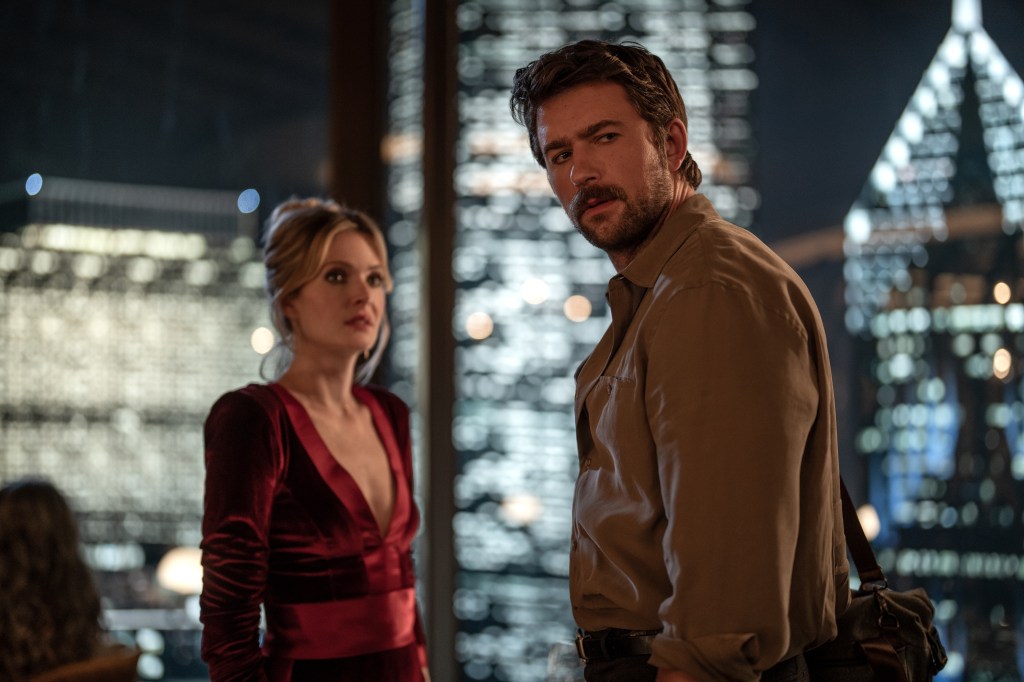
(from left) Violet (Meghann Fahy) and Henry (Brandon Sklenar) in Drop, directed by Christopher Landon.

This is where Landon’s film kicks into gear as it wastes no time in building out all of the directions that Violet will have to follow while focusing on keeping her date going as smoothly as possible. Fahy and Sklenar’s dynamic is what the film really banks on to sell the premise, with little actual room to cut to anything beyond the restaurant. There’s also the added element of shifty side-characters, all of whom could be the AirDropper making her life difficult; whether it’s the boisterous first-time waiter, the distant bartender or the Jamie Dornan-looking businessman who can’t seem to stop running into Violet (literally) — Drop is to Knives Out (2019) what mini-golf is to golf… a smaller playing field but just as satisfying.

The title, a play on words, might also describe the shift in pace in the final third, where there is almost a literal drop as the heat intensifies and as plot threads start to come together. For one, Violet literally hangs out of the highrise by a tablecloth. While this final third does feel like it’s been crammed into an otherwise tight screenplay, it gives the film some added momentum, even if the result feels like it gets away from the better part of the build up to it. That said, Drop is clean and will get a chin scratch or two as you try to piece together its puzzle, and proves that you may never know where your next date might take (or drop) you.

Drop opens nationally from the 17th of April.

The Amateur is a Spy Thriller Uncomfortable in its Own Shoes

Rating: 3 out of 5.

Helmed by British Television veteran James Hawes, The Amateur is a spy thriller unable to capture its own personality or separate itself from the recently booming subgenre. Focusing on a CIA data analyst-slash-hacker (Rami Malek, in his wheelhouse) who forces himself into the field by any means necessary after the death of his wife (Rachel Brosnahan) during a terrorist hostage crisis in London, the film’s fractured cadence and lack of narrative momentum despite this inciting incident means you don’t know where you’ll be taken next, but also uncertain about whether you’ll care. 

Based on Robert Litell’s 1981 spy novel of the same name and adapted by Black Hawk Down (2001) screenwriter Ken Nolan and Gary Spinelli, The Amateur plays both sides of the Atlantic with its approach to the spy thriller. This, unfortunately, means the film never finds a singular drive or point of view but is made with a great cast and a refined crew that keeps the train on the tracks.

A surprisingly small-scale espionage thriller even as Malek makes his way through many cities, The Amateur shuffles along from moment to moment, with many cast members rarely appearing in multiple locations, restricting the narrative momentum of every sequence. Even the pivot hostage scene with Brosnahan plays out in short news clipping bursts, forcing Malek to shoulder the weight of every emotional and narrative beat, something very few actors can manage.

Rami Malek combined his experiences in the TV series Mr Robot (2015-2019) and No Time to Die (2021) to lead his own spy thriller in the vein of Jason Bourne if his amnesia expanded to include the trainee manual. With a tremendous cast of faces alongside Malek with Laurence Fishburne, Brosnahan, Jon Bernthal, Michael Stuhlbarg, Caitríona Balfe, Holt McCallany, and Julianne Nicholson, elevate rote scenes with barely a hint of drama or characterisation.


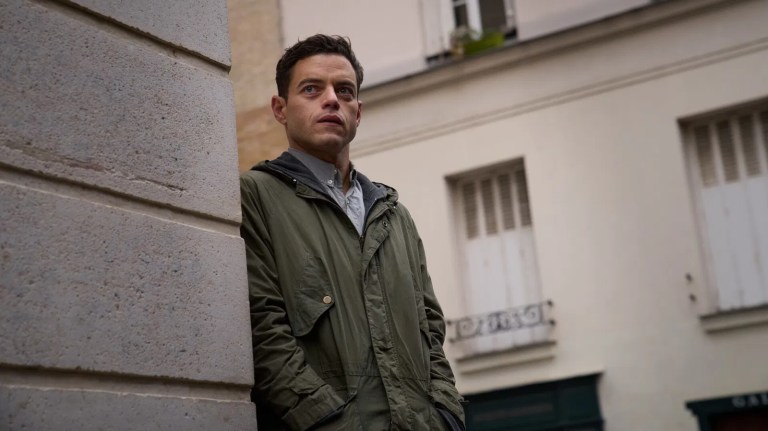
Rami Malek in The Amateur. Screening provided by 20th Century Studios.

Malek’s compelling anti-chemistry as a leading man works in fits and starts, primarily when he is acting alongside some of the best working actors in Bernthal, Stuhlbarg, and Fishbourne. Mr Robot thrived in its ability to work to Malek’s strength as a performer by constantly giving him unique counterweights to act against. In a surprisingly thin script, Malek and the other actors are repeatedly left out to dry, forced to fend for themselves while the ship chugs along to a near nonstop score.

The film is not assisted by Oscar-winning composer Volker Bertelmann’s austere score that opts to flatten much of the proceedings. The constant score certainly elevates the uncompelling exposition scenes but never highlights the entertaining and thrilling set pieces that are the film’s shining light.

However, almost in spite of itself, the film comes together in a worthwhile and satisfying way, even as it frays around the edges of time and drama. This is largely due to its creative action set pieces where each element, especially Malek’s performance, clicks into place into pure enjoyment. While the revenge narrative is established with a reckless abandon, it is thrilling to see where Hawes places these pivotal scenes, including a highrise pool and a final confrontation in the Russian-Finnish ocean border.

Due to this narrative style, The Amateur is not dissimilar to Tenet (2020) in how it moves quickly between setting up and executing inventive action set pieces instead of exploring the characters within its espionage world. This is surprising given The Amateur’s stellar cast, even if they are rarely given any meat on the bone.

Ultimately, there were high hopes for The Amateur due to its cast and veteran crew in a subgenre currently in a mini-boom. Still, without a unique style or handle on tone, the film moves shakily between sequences, never arriving sure of foot. Thankfully, the film’s trump card for a final sequence, a charming and compelling Michael Stuhlbarg performance, pretty successfully ties up a desperately fraying narrative yearning for a satisfying end note.

The Amateur is in theatres now. 

The Alto Knights: Robert De Niro Delivers a Dual Performance in a Modern 80s Crime Film

Rating: 2 out of 5.

The Alto Knights preview screening provided by Universal Pictures.

While the odd gangster film does pop up every now and then, the genre has felt like it’s been on life support for the better part of ten years. With misses like The Many Saints of Newark (2021), Capone (2020) and Gotti (2018) coming to mind, it’s no surprise why that feeling is in the air. The Alto Knights isn’t a terrible film for the genre, but it doesn’t exactly have the legs to stretch beyond being simply another story about honouring a code and betrayal between close friends.

Knowing that Barry Levinson’s film has been in development since 1970 gives a world of perspective in understanding how this subject matter and story would have been eaten up in the heyday of the genre. The fact that this has been released in 2025 to audiences that have either seen the genre be done to death or are seeking out alternative stories, hasn’t worked in its favour. That’s not to say that these stories can’t work for modern audiences, with The Irishman (2019) providing a unique look at ageing crime figures mixed with wider political commentary, while Killers of the Flower Moon (2023) is masked as a crime-thriller but uses themes from the genre and orients them around Native American plights in history (the difference being, you guessed it, Martin Scorsese).

The Alto Knights, by contrast, is slow, it’s weighty, and it doesn’t reinvent itself or its framing of events in a new and crisp way for the genre. It’s a by-the-books gangster drama that cuts to one of Robert de Niro’s two characters, Frank Costello, looking down the barrel of the camera and narrating various parts of the film. It’s a shortcoming of the film that speaks to the rest of the exposition and general hand-holding that’s overdone in its roughly two-hour runtime (modest, for this sort of film). But The Alto Knights isn’t inherently bad, rather, it’s just a bit too textbook for my taste in that it doesn’t really offer much we haven’t seen from some of those aforementioned similar films.

Caption: Robert De Niro as “Vito Genovese” in Warner Bros. Pictures “THE ALTO KNIGHTS,” a Warner Bros. Pictures release.

Taking place across different time periods, but mainly in the mid to late 50s, Levinson’s film focuses on the friendship and betrayal between Frank Costello and Vito Genovese (both played by Robert De Niro). After Costello survives an assassination attempt from one of Genovese’s henchmen, Levinson takes us back in time from the incident to show us how the duo got to that point of division. It sees familiar tropes like courtroom scenes and political unrest take place as power dynamics switch from one boss to another, in this case from Genovese to Costello.

De Niro plays both characters with a classy, but sharp edge that’s like child’s play for him at this point. The supporting cast aren’t nearly as interesting as his dual performances though, with many of the actors bordering the line of “too much wise talking” while lacking the screen presence to match De Niro (even Cosmo Jarvis is relegated to a mumbling mafioso, a ways away from his breakout performance in hit series Shogun).

The script sometimes feels contrived, in part because there’s clearly a lot going on to the point where we need De Niro speaking all of the exposition, and the jumps in time don’t exactly help, with part of me wondering whether a version exists that doesn’t become bogged down in the final third where the pace begins to falter after we’ve finally caught up to all of the backstory.

The Alto Knights is a been-there-done-it kind of crime film, one that feels like it’s come a bit too late to have its subject matter and story land, but it hits the beats we’ve come to expect from similar films. For what it’s worth, seeing De Niro saddle up for any mobster film is a blessing, no matter how many times he does them, but where The Irishman felt like a capstone of sorts to the genre and the actors who brought it to life, The Alto Knights doesn’t quite find the same level of ingenuity.

The Alto Knights opens nationally from today.

Hard Truths is a Difficult but Rewarding Watch

Rating: 4 out of 5.

A caustic character study of depression, expressed in a near limitless capacity of anger and frustration, the legend Mike Leigh and Marianne Jean-Baptiste reunite for a potent and captivating film like no other. At times an excruciating viewing experience, Hard Truths (2024) is as rewarding a film as you’ll find this year, sneaking up on you with seasoned patience so few filmmakers deploy.

John Waters lovingly called Jean-Baptiste’s Pansy “the most unpleasant sourpuss in the history of cinema”, and it’s hard to argue with him. An open wound that reacts to every possible moment like a critically endangered animal hoping to survive another day, even if they’re unsure why they cling to life so hard.

An ornery and occasionally cruel working-class mother of an adult-at-home son, Pansy doesn’t drift across days as much as she bulldozes through every waking moment. We learn everything you need to know about Pansy by the way she wakes up. In multiple instances across Hard Truths, we grow desperately empathetic to the peacefulness she exudes while sleeping, but is constantly jolted awake, activating an instantaneous fight mode.

While Jean-Baptiste is prone to blot out the sun with her performance, Leigh leaves room for some truly remarkable supporting performances. David Webber and Tuwaine Barrett, as Pansy’s husband Curtley and reclusive and introverted son Moses, manage to withstand the ocean storm that is Pansy through a deep connection to characters given little room to breathe but require a wide berth. 

Marianne Jean-Baptiste in Hard Truths

Leigh is a cinematic master through his ability to create a cumulative character experience that bursts at the seams of its final ensemble sequence. Like a well-crafted play, Hard Truths walks you towards a profound moment of empathy and attachment in a naturally unexpected cadence. With little plot outside of a Mother’s Day date for Pansy and her sister Chantelle (Michele Austin), Leigh gives his ensemble enormous space to fill the frame with nuanced character portraits that will feel like mirrors into the soul of the modern-day middle-class, seen with honesty and respect.

While Pansy is increasingly vocal about an uncertain ailment that is fuelling a violent discomfort with life, she harbours a real hesitation in improving her situation. From a doctor’s appointment to a trip to the dentist (with Leigh using a real dentist!), these scenes carry a weight that sustains the film’s second half, as the audience grows increasingly desperate for the reason in all this internal suffering perpetually boiling over. She is nothing but a raw nerve, longing for a connection without the capability to find it. 

A desperate need to be understood and heard hidden within a desperate need to be left alone, Jean-Baptiste, with Leigh by her side, reflects a moment of modern life not seen in the old cinematic masters. While Leigh’s best films are where he forces his fractured characters into unfamiliar places (Topsy Turvy, Naked), Hard Truths can be placed among a select few films that express the early 2020s with an honest reflection you’d more likely see in a period piece made decades after. We cannot take his movies for granted.

Hard Truths is in select theatres now.

Mickey 17: Bong Joon-ho’s Long-Awaited Follow-Up to Parasite is Amusing, Insightful and Downright Fun

Rating: 4 out of 5.

Mickey 17 preview screening provided by Universal Pictures.

It doesn’t take a genius to understand that a film about a guy who wants to leave on an expedition and chooses to willingly die and get reprinted (literally) with his memories in-tact, only to keep dying and being reprinted, is right up Bong Joon-ho’s alley. While that doesn’t capture the multifaceted space adventure that is Mickey 17 (2025) to nearly the full extent of the word, Bong’s interests are very particular in that, human dispensability —especially with regards to people in lower socio-economic situations— is a pertinent concern throughout his oeuvre.

In Snowpiercer (2013), a train is used as a motif to portray the various carriages of the caste system, with the back of the train being the lowest class citizens and the front, the highest class, while in Mickey 17, a large spaceship serves a similar purpose. In other words, it’s no secret that capitalism and the presence of an oligarchy are concerns that he hasn’t been shy about critiquing, and they’re a thematic consistency across his work. Regarding dispensability, Mickey 17 is much more literal than any of his previous films in how it reduces the human body to something that can be done away with, something that goes beyond even that of the lowliest of workers to just a recycled carcass.

That’s at least the seed from which the rest of the film grows and revolves around as Mickey (Robert Pattinson) signs himself up to be an “expendable” or an unfortunate soul who would choose to live a quasi-immortal life by living to die and dying to live. He does this after finding himself in bad company on Earth following a debt he hasn’t paid back, before ending up on a government spaceship headed up by a pompous failed politician, Kenneth Marshall (a goofy Mark Ruffalo whose performance echoes that of his one in 2023’s Poor Things), that’s on an expedition to find a new planet to preserve mankind — if this is sounding like Passengers (2016) mixed with Edge of Tomorrow (2014), then you’d be on the right track.

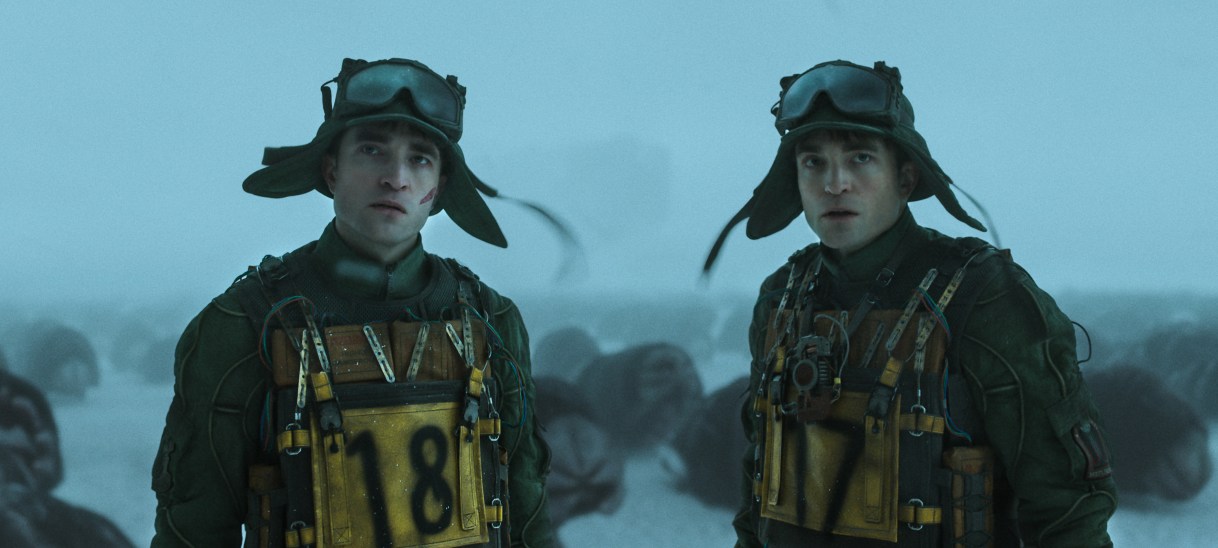
Robert Pattinson in Mickey 17

The spaceship finds itself headed towards Niflheim (not to be confused with that area in 2018’s God of War game), a cold planet inhabited by woolly creatures that look like roly polie, pill bugs (dubbed “Creepers”). It’s here that Mickey’s expendable state is really tested, as he’s exposed to the planet’s toxic air over and over again until a cure can be found and applied; it’s also where we eventually get to the 17th version of Mickey that opens the film in a scene we circle back to later. While comical in its portrayal of the printing process after every Mickey death, Bong’s commentary on how human life can be reduced so willy-nilly by those in power makes for a tasty treat, especially when it comes to just how dispensable the human body is in real life, especially when it comes to matters of war.

Bong never dwells though, he keeps the film moving and he keeps the action and dialogue light-hearted and cosy, but his ability to go a step further in his critique of capitalism and the frivolousness of those in power who look down on others, shows a director who is maturing in his own ideas and isn’t afraid to mine them to the full extent. It helps that Marshall and Gwen (Toni Collette) are so effortlessly unlikable in their bougieness which helps those ideas evolve easier.

But their relationship is hardly the most shocking: after being saved by the aforementioned woolly pill bugs (following a harsh fall in an ice cave), Mickey 17 manages to find his way back to the ship where he comes across a clone of himself or a “multiple” as they’re called. It turns out Mickey 17 was presumed dead so the 18th version of him was printed, but without his pitchy accent and more akin to Pattinson’s Bruce Wayne in cadence.

Mark Ruffalo and Toni Collette in Mickey 17

It also turns out “multiples” aren’t permitted, so much so that Mickey 18 tries to kill Mickey 17 from the outset, but they soon find a commonality in the form of taking down their oppressors (very much in the vein of Snowpiercer). Pattinson’s dual performance is really a make-or-break factor in understanding what makes these multiples so unique from one another — that these reprints exhibit more humanity than the majority of the crew really adds weight to just how narcissistic and morally bleak humans can be at their worst.

At the end of the day, this is easily Bong’s most optimistic film, one that doesn’t present a bleak future but offers a chance for its characters to carve a brighter tomorrow on their own terms. Sure, he isn’t subtle about his growing interest in ideas he’s previously explored, but he also doesn’t pander to his audience, choosing to let the film’s amusing story take you on a rollercoaster comprised of the grotesque, heartfelt and humorous. In this way, it feels like his most accessible film as there are no hidden windows that keep you guessing.

Mickey 17 opens nationally from today.

97th Academy Awards: Predictions

It’s the most wonderful time of the year if you’re a cinephile, and it’s just around the corner.

Yes, the Academy of Motion Picture Arts and Sciences’ Night of Nights —otherwise known as “The Oscars”— will be taking place this Monday morning, March 1st (Naarm time) and the team at Rating Frames is as excited as ever.

As they did last year, our three resident critics have made their predictions as to what, or who, will be victorious in all 23 categories.

Below are the films that Arnel, Darcy and Tom are predicting will walk away with a coveted statuette at the 97th Academy Awards, and their personal vote, in each category

Best Picture

What will win // What deserves to win

Arnel: The Brutalist // Anora

Darcy: Anora // Nickel Boys

Tom: Conclave // Dune: Part Two

Best Director

Arnel: Brady Corbet (The Brutalist) // Sean Baker (Anora)

Darcy: Sean Baker (Anora) // Brady Corbet (The Brutalist)

Tom: Sean Baker (Anora) // Sean Baker

Best Actor

Arnel: Adrien Brody (The Brutalist) // Adrien Brody

Darcy: Adrien Brody (The Brutalist) // Adrien Brody

Tom: Adrien Brody (The Brutalist) // Ralph Fiennes (Conclave)

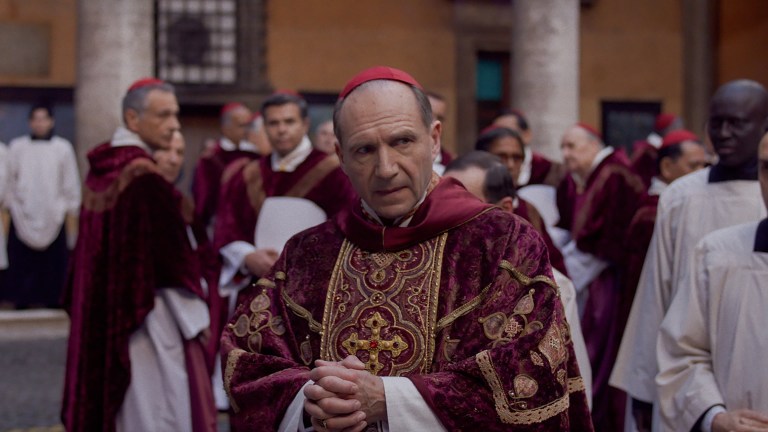
Ralph Fiennes, nominated for his performance in The Conclave
Best Actress

Arnel: Mikey Madison (Anora) // Mikey Madison

Darcy: Demi Moore (The Substance) // Mikey Madison (Anora)

Tom: Demi Moore (The Substance) // Mikey Madison (Anora)

Best Supporting Actor

Arnel: Kieran Culkin (A Real Pain) // Kieran Culkin

Darcy: Kieran Culkin (A Real Pain) // Guy Pearce (The Brutalist)

Tom: Kieran Culkin (A Real Pain) // Yura Borisov (Anora)

Best Supporting Actress

Arnel: Zoe Saldaña (Emilia Perez) // Zoe Saldaña

Darcy: Zoe Saldaña (Emilia Perez) // Monica Barbaro (A Complete Unknown)

Tom: Zoe Saldaña (Emilia Perez) // Isabella Rossellini (Conclave)

Best Original Screenplay

Arnel: Anora // Anora

Darcy: Anora // Anora

Tom: Anora // Anora

Best Adapted Screenplay

Arnel: Conclave // Conclave

Darcy: Conclave // Nickel Boys

Tom: Conclave // Conclave

Best Animated Feature

Arnel: The Wild Robot // The Wild Robot

Darcy: The Wild Robot // The Wild Robot

Tom: The Wild Robot // The Wild Robot

The Wild Robot is a hot favourite for Animated Feature
Best International Feature

Arnel: I’m Still Here // I’m Still Here

Darcy: I’m Still Here // The Seed of the Sacred Fig

Tom: I’m Still Here

Best Documentary Feature

Arnel: Porcelain War // No Other Land

Darcy: No Other Land // No Other Land

Tom: Porcelain War

Best Documentary Short Subject

Arnel: Incident // Instruments of a Beating Heart

Darcy: I Am Ready, Warden // Incident

Tom: Instruments of a Beating Heart

Best Live-Action Short

Arnel: The Man Who Could Not Remain Silent // The Man Who Could Not Remain Silent

Darcy: The Man Who Could Not Remain Silent // The Man Who Could Not Remain Silent

Tom: The Man Who Could Not Remain Silent

Best Animated Short

Arnel: Yuck! // Yuck!

Darcy: Beautiful Men // Yuck!

Tom: Magic Candies

Best Original Score

Arnel: The Brutalist // The Brutalist

Darcy: The Brutalist // The Brutalist

Tom: The Brutalist // The Wild Robot

Best Original Song

Arnel: “El Mal” (Emilia Perez) // “El Mal”

Darcy: “El Mal” (Emilia Perez) // “Like a Bird” (Sing Sing)

Tom: “El Mal” (Emilia Perez)

Best Sound

Arnel: Dune: Part Two // Dune: Part Two

Darcy: Dune: Part Two // Dune: Part Two

Tom: A Complete Unknown // Dune: Part Two

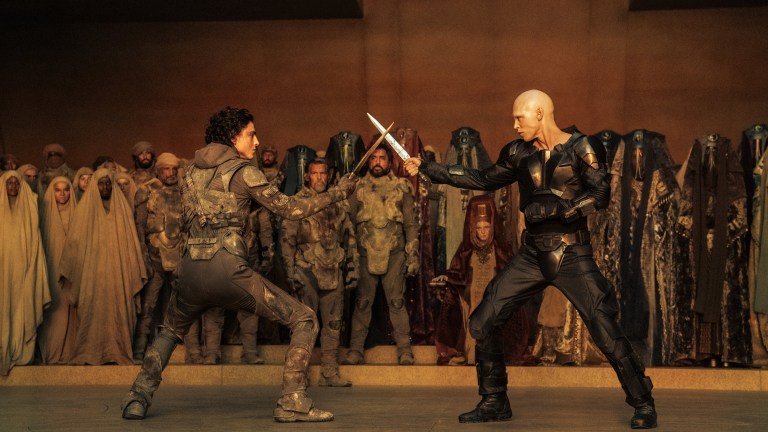
Dune: Part Two is nominated for multiple categories, including Best Sound
Best Production Design

Arnel: Wicked // Wicked

Darcy: Wicked // The Brutalist

Tom: Wicked // Conclave

Best Cinematography

Arnel: The Brutalist // Dune: Part Two

Darcy: The Brutalist // The Brutalist

Tom: The Brutalist // Dune: Part Two

Best Makeup and Hairstyling

Arnel: The Substance // The Substance

Darcy: The Substance // The Substance

Tom: The Substance // Nosferatu

Best Costume Design

Arnel: Wicked // Nosferatu

Darcy: Wicked // Nosferatu

Tom: Nosferatu // Conclave

Best Film Editing

Arnel: The Brutalist // Anora

Darcy: Anora // Anora

Tom: The Brutalist // Anora

Best Visual Effects

Arnel: Dune: Part Two // Dune: Part Two

Darcy: Dune: Part Two // Dune: Part Two

Tom: Dune: Part Two // Kingdom of the Planet of the Apes

Best of 2024: Tom’s Picks

With 2024 having drawn to a close, Rating Frames is looking back at the past twelve months of cinema and streaming releases that have come our way. In the third and final of our series of articles, Tom Parry is taking a look at his ten favourite films of the year that was.

The resilience of the medium we know as cinema truly knows no bounds. Having survived a once-in-a-century pandemic and endured the dual strikes of unions representing America’s screenwriters and performers, 2024 proved – from an artistic perspective, at least – that the industry is as strong and creative as ever, with several titles catching the eye of yours truly.

As with previous end-of-year reflections compiled by this writer, the list below is dominated by English-language and blockbuster pictures, in part due to the shortage of arthouse theatres in regional Victoria and lack of opportunities to visit Melbourne; but had circumstances been different, he is confident the structure of this list would remain much the same.

10. The Apprentice

Director Ali Abbasi envisaged this biopic would sway undecided voters ahead of last year’s U.S. Presidential Election, though as the box-office returns and subsequent vote-count suggest, he failed miserably in achieving that goal. Yet what he does succeed in doing with The Apprentice is offer an astonishing re-creation of 1970s New York; elicit uncanny, lifelike performances from Sebastian Stan and Jeremy Strong; and provide a surprisingly nuanced examination of a man whose single-minded pursuit of wealth and fame turned him into the physical embodiment of every negative stereotype we associate with his countrymen.

9. Conclave

Applying the term “mature” to a feature-length drama, for most, conjures in the mind imagery, actions, themes and language inappropriate for younger audiences; yet it can also be used to define a production which is nuanced, composed and cerebral – all apt descriptions for Conclave. Here is what can be considered a political thriller without politicians, or Glengarry Glen Ross (1992) without the excessive swearing, taking viewers behind the façade of pageantry and into the halls of power, complete with excellent performances, great dialogue and a fantastic narrative that hooks until the very last twist.

8. Anora

For the better part of a decade, Sean Baker has made it his mission to document those on the margins of American society, a pursuit that has rightfully brought him countless accolades and admirers. He may well have reached his directorial and screenwriting peak with his latest effort Anora, a film so mesmeric that it has placed within in the Top Ten of this year’s Best-Of lists by all three of Rating Frames’ resident scribes – though Arnie and Darcy both seem to have neglected mentioning the ever-delightful Igor (Yura Borisov), one of the best characters of any picture in recent years.

7. Perfect Days

Despite earning high praise at the Sydney and Melbourne International Film Festivals the year prior, it wasn’t until March of 2024 that Wim Wenders’ Japanese drama received a theatrical release in Australia. That decision flies in the face of what is a beautiful story, one that’s tranquil and almost poetic in its observations of an otherwise unremarkable man who cleans toilets for a living. Add to that the gorgeous cinematography and impeccable soundtrack, and Perfect Days pretty much lives up to its title.

6. Super/Man: The Christopher Reeve Story

The 72nd iteration of MIFF was the first time since a certain global pandemic that yours truly attended an in-person screening in the Festival’s namesake city, an occasion marked at The Capitol with this very documentary. Its moving screenplay – yes, tears were shed – explores Reeve’s upbringing, early career as stage actor, casting as the Man of Steel, paralysis and charity work, told via interviews with some very famous and unexpected talking-heads (Jeff Daniels! Glenn Close! Susan Sarandon!) plus unseen home-videos and archival footage. An intimate portrait that offers a heartfelt tribute to its subject while not shying away from his faults.

5. The Wild Robot

Amid Disney’s ongoing cultural and commercial dominance, and increasing competition from Sony Pictures Animation, the once-mighty DreamWorks had in recent times gone from being a pioneer of the industry to a studio at-risk of losing its prestige. That belief was immediately dispelled with the arrival of The Wild Robot, a feature-length production which not only proved a better film than any of its animated contemporaries released last year, but is also its studio’s most-impressive effort since the How to Train Your Dragon movies, complete with a talented voice-cast, stunning visuals, touching screenplay and rousing score from Kris Bowers.

4. The Iron Claw

Here lies a biographical narrative far better than it has any right to be. Distributed on our shores last January and lost in the thick of Awards Season, The Iron Claw recounts the lives of the famed Von Erich brothers, their contributions to the sport of wrestling, and the tragedies which impacted them as they pursued glory. Among its impressive elements are the cinematography, perfectly-curated rock soundtrack, and raw, compelling script that, astonishingly, had to be toned-down because the family’s actual story proved too sad and unbelievable. A must-watch, even for non-wrestling types (this writer included).

3. The Holdovers

Yet another release that made a belated appearance in Australian theatres, and unfairly so, since The Holdovers would have made for ideal festive viewing had it been brought here just one month earlier. Beneath the sardonic, caustic veneer of a history teacher (Paul Giamatti), anarchic rebellion of a student (Dominic Sessa) and remoteness of a cook in mourning (Da’Vine Joy Randolph) lies a transfixing, warm and sweet – yet never saccharine – tale embodying all the best qualities of Christmas.

2. Dune: Part Two

Arnie and myself have quite differing tastes when it comes to cinema, but on one count we are in strong agreement: the sequel to 2021’s Dune is the second-best release of 2024. Canadian auteur Denis Villeneuve provides with Dune: Part Two the Empire Strikes Back (1980) to its predecessor’s New Hope (1977), a follow-up that builds upon the lore of its established characters and setting, and pairs them with even-more impressive visuals, sound and music. Also, kudos to Villeneuve for leaning heavily into the religious allegories of Frank Herbert’s original text.

1. Challengers

The sheer number of quality pictures meant choosing this final list of ten proved much harder than in previous years, and deciding where to place the Top Five was a more difficult decision still. All came close to usurping the honour of being this writer’s ultimate favourite of 2024, yet only one prevailed – chiefly due to its flamboyance and idiosyncrasy.

Expertly helmed by Luca Guadagnino, Challengers boasts a tense, pulsating techno soundtrack from Trent Reznor and Atticus Ross; a non-linear narrative with a conflict that remains engaging throughout; fun camera angles and photography during its tennis sequences; and morally-ambiguous characters who defy the traditional concepts of a protagonist, yet never succumb to being antagonists. Put simply, there’s been no other film quite like it in the previous 12 months – and perhaps ever.

Honourable mentions: Civil War, Monkey Man, Kingdom of the Planet of the Apes, Kinds of Kindness, Unbreakable: The Jelena Dokic Story

Presence Sees the World Through a Ghost’s Eyes

Rating: 3.5 out of 5.

Presence preview provided by Rialto Distribution.

From the outset of Steven Soderbergh’s newest cinematic experiment, Presence (2024), it is clear this gambit will pay off. As we, through the anxious eyes of a new ghost, experience a new world, through a nimble first-person lens that never relents. This new world in question is the arrival of a young family of four in a large suburban house after the traumatic deaths of teenager Chloe’s (a wonderful Callina Liang) two friends in the city, leaving them in need of a fresh start.

Beginning with one of 2022’s best films Kimi, veteran filmmakers Steven Soderbergh and David Koepp have united to create a series of impressively contemporary small-scale American films (with another set for 2025 with Black Bag), that feels wholly unique on the movie calendar. With Presence, the pair shift from tech thriller to modern ghost tale with an equally impressive lens pointed directly at the connection in contemporary life.

Through a floating visual language, we explore this young family in moments of both intimate quiet and explosive argument. The parents, high-powered exec Rebecca (Lucy Liu) and the more emotive Chris (Chris Sullivan), have clear strong ties to individual children, creating a constant tension between the four characters. Rebecca sees herself and the potential for great success in their arrogant older son Tyler (Eddy Maday), whereas Chris’ more emotional side draws him to his daughter Chloe, an isolated teen dealing with tremendous grief at a young age that pierces through the screen.

Chris Sullivan and Lucy Liu in Presence.

Themes of accidental overdoses and youth deaths are complicated but important issues to place in a film, particularly at its emotional core. While Presence floats freely between potential genre trappings, it is grounded by this potent story element that is sure to resonate with many.

To achieve the sensation of a first-person camera narrative that has real expression through the lens, Soderbergh — acting as his own cinematographer as he often does — filmed Presence chronologically, with the camera beginning in a more trepidatious, larval state before coming into its own by the film’s midpoint. The camera does not glide effortlessly through the house to open the movie. Instead, we feel every step as we move around the space, like a young foal taking its awkward first steps into the world. The camera has physical tics and safe spaces inside the home that, through repetition, just like an acting performance, breathes life into the lens. This deft and crucial weight of intent allows the film to quickly transcend from a small-scale cinema experiment into a riveting family drama where the absence is just as visceral.

It’s remarkable how quickly you can slide into the position as a fly-on-the-wall observer by wielding the camera this way, and how the emotion of a scene can play out with sharp efficiency (a Soderbergh hallmark) when the personification of the camera holds so much weight. 

The film operates as an interesting refraction to David Lowery’s poetic A Ghost Story (2017), which focuses on a ghostly presence with a level of banal reality that transforms slowly into a beautiful understanding of a greater spiritual moment. Much like that film, the innovative style of filmmaking on hand here works effectively because of the decision to place a young ghost at the heart of both stories. 

While the structure of the film allows a flow state of dramatic experiences for the family, the final 10 minutes of Presence are as distressed as you’ll feel at the movies this year with its clear eyed understanding of modern life and pressures. This shouldn’t be a surprise as it’s a ghost film, but over the course of this innovative family drama on loss and connection, this shift has an overwhelming weight of emotion that is wonderfully unexpected. Through Koepp and Soderbergh, we have a new creative powerhouse partnership that is breathing new life into modern American storytelling.

Presence is in theatres now.