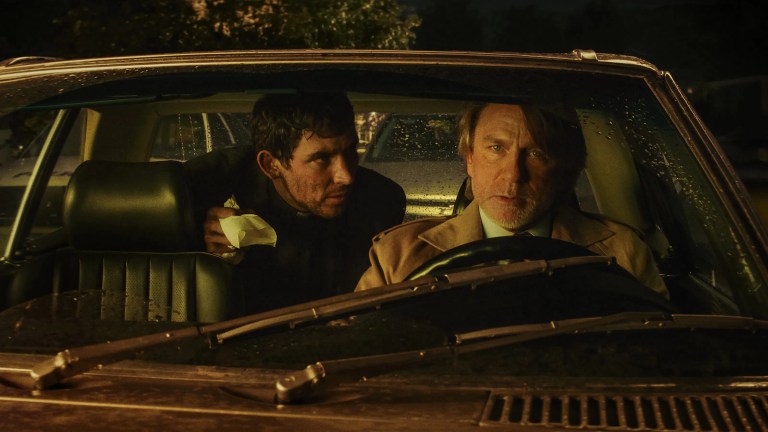
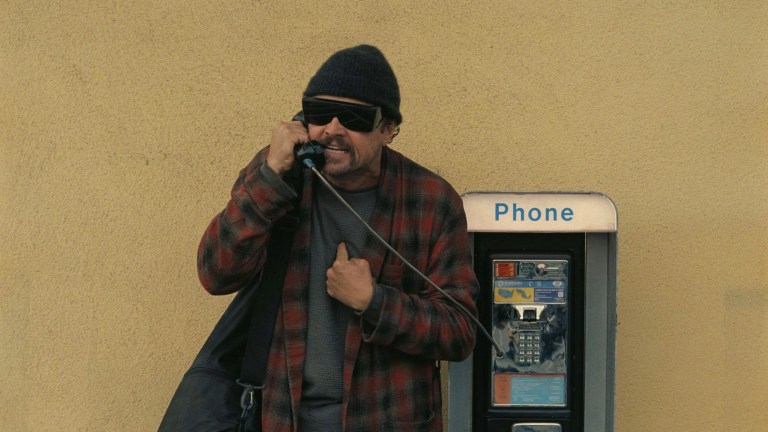
Blue Moon: A Character Study that takes a While to Find its Grove

Rating: 3 out of 5.

Blue Moon preview screening provided by Sony Pictures

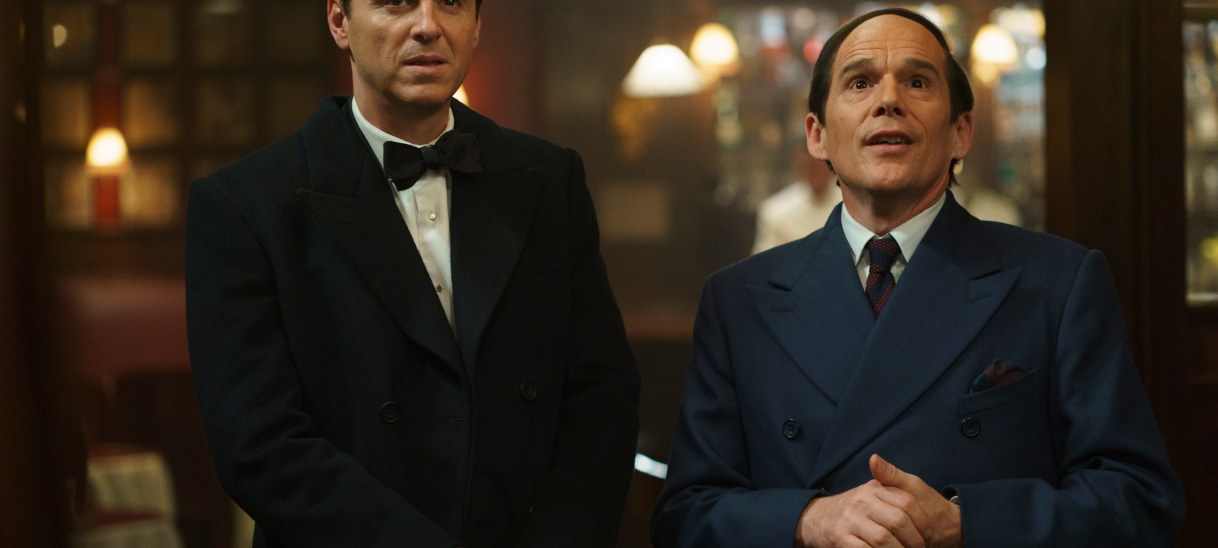
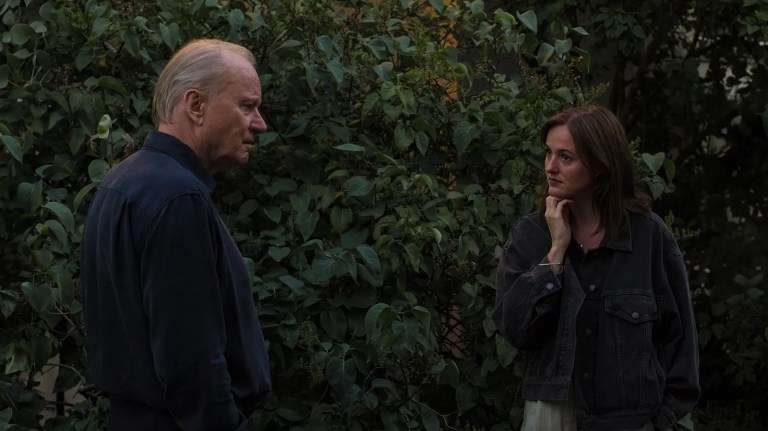
There’s a lot of talking in Richard Linklater’s Blue Moon, a film focused around a single evening in a single location that has been described as something akin to a theatre experience on screen. It’s fitting that in such a film there is a lot of talking since, if the film’s title hasn’t given it away, it revolves around Blue Moon creator Lorenz Hart (played enigmatically here by Ethan Hawke), a serial conversationalist (often to his own detriment) as he works to convince himself and those around him that he’s holding it together while his past collaborator, Richard Rogers (Andrew Scott) and his new lyricist Oscar Hammerstein (Simon Delaney), are heaped with praise following the successful opening of their Oklahoma! musical.

Setting a film entirely around the bar and lobby of a hotel while subjecting the audience to one man’s incessant talking is no easy feat, but audiences familiar with Linklater’s work (especially those that are diehard fans), will lap this approach up. For starters, Ethan Hawke does a fantastic job of carrying the weight of the film, no matter how small he is framed by Linklater (Hart was 5 feet tall; Hawke, by comparison, is 5″10). For such a small individual, Hart’s voice echoes the farthest here, with Hawke capturing his larger-than-life persona tremendously, and he’s deservedly received an Oscar nomination for it.

The film starts off rather shaky though, showing Hart on the evening of his death in a back alley, a major fall from grace for someone who was so revered, before jumping back some months to that opening night of Oklahoma! and the mingling that ensued post-show. Sure, this shows the stark difference between a man who had countless people adore him and the man who would die alone, but just as soon as this opening pops up, it’s just as quickly gone from the mind. The shakiness continues though as side characters are established like Eddie the bartender (Bobby Cannavale) and E.B. White (Patrick Kennedy), but like in any function you may have ever been to where small talk happens, they serve merely to keep you entertained until the real guests you want to speak to arrive.

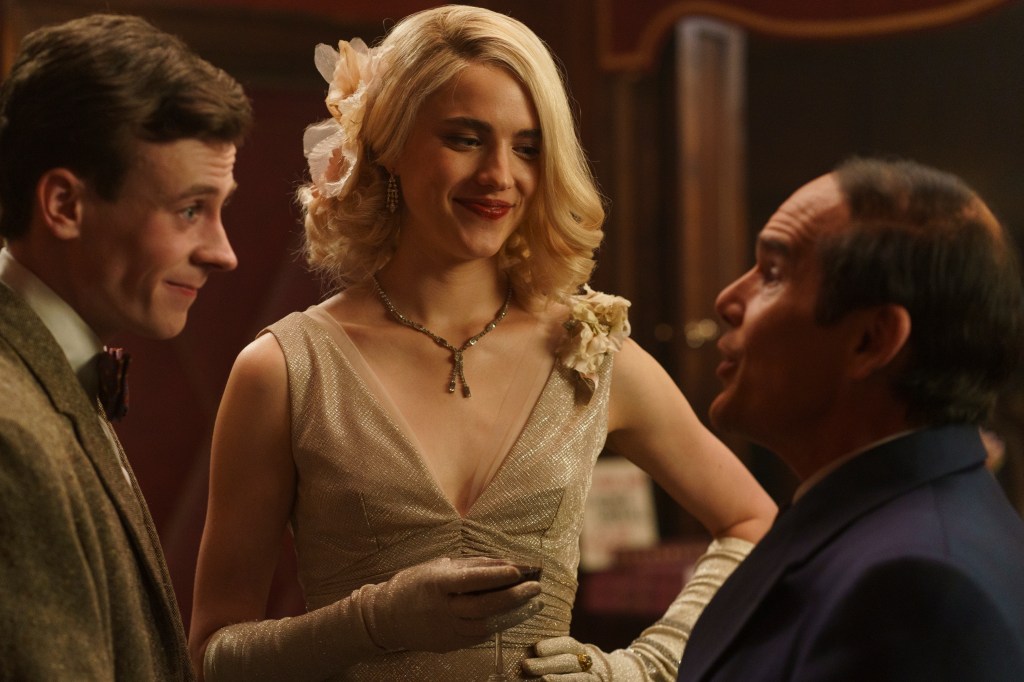
(L-R) David Rawle as George Roy Hill, Margaret Qualley as Elizabeth Weiland and Ethan Hawke as Lorenz Hart in Blue Moon.

One such guest is Elizabeth Weiland (Margaret Qualley), a young 20 year old college student who Hart has been selling those side characters the narrative that he has something deeper and more meaningful going on with her. In truth, she views him as just a really good friend, someone who she loves but “just not in that way,” a line that comes at a crucial moment in the film, contextualising Hart’s erratic, borderline needy behaviour. The other guest is the star of the show, Richard Rogers, someone we (or those, like myself, who are not familiar with theatre at all) learn Hart created some legendary plays with. Their relationship holds strong, and while we learn it’s had testing moments (alcoholism from Hart’s side playing into that), their dynamic is by far the most interesting given their history and the insights that it gives into why Linklater chose this night of all nights to focus on.

On the surface, Linklater frames Hart as a man who craves attention, both intentionally and unintentionally because his disposition permits he does so. As the film unfolds, his flaws creep up, including his insecurities and desire to not fade in the background given he has become so used to being the centre of attention. It takes a good 70 minutes to get to that part though as Hart becomes almost smaller by the frame, especially after paying to have some alone time with Elizabeth in a cloak room where he shows interest in her sexual escapades, like some voyeur who gets off on the idea of another person’s pleasure. You begin to pity him more than anything, with Hawke really showing the fragility of the man when he’s not in an open space around others — a place where he uses his talking as a shield to maintain this facade of composure that he’s built.

Blue Moon knows what audience it’s for, so if you’re unfamiliar with theatre like I am, the humour and references will more than likely fly over your head and make it difficult to engage with or care for these people and their line of work. That said, as a character study it offers a wonky but gradually clearer insight into Lorenz Hart, even if it takes a while to get to any deeper unraveling of this broken side of him.

Blue Moon opens nationally from Thursday 29 January.

The Secret Agent is a Biting and Playful Political Thriller

Rating: 4.5 out of 5.

Set in the Northeast of Brazil in the city of Recife in 1977, just as the country’s military dictatorship rounds third base, Kleber Mendonça Filho’s relaxed but probing political film The Secret Agent (2025) is like nothing else you’ll encounter in a cinema this year. Able to open a double feature with either Dazed and Confused (1993) or Army of Shadows (1969), the film wears many hats that in less assured hands would appear frayed and confused. Thankfully, Filho has levelled up as a filmmaker and storyteller, letting his playful tendencies heighten the moments of potent tension and violence that in less capable hands would beguile an audience.

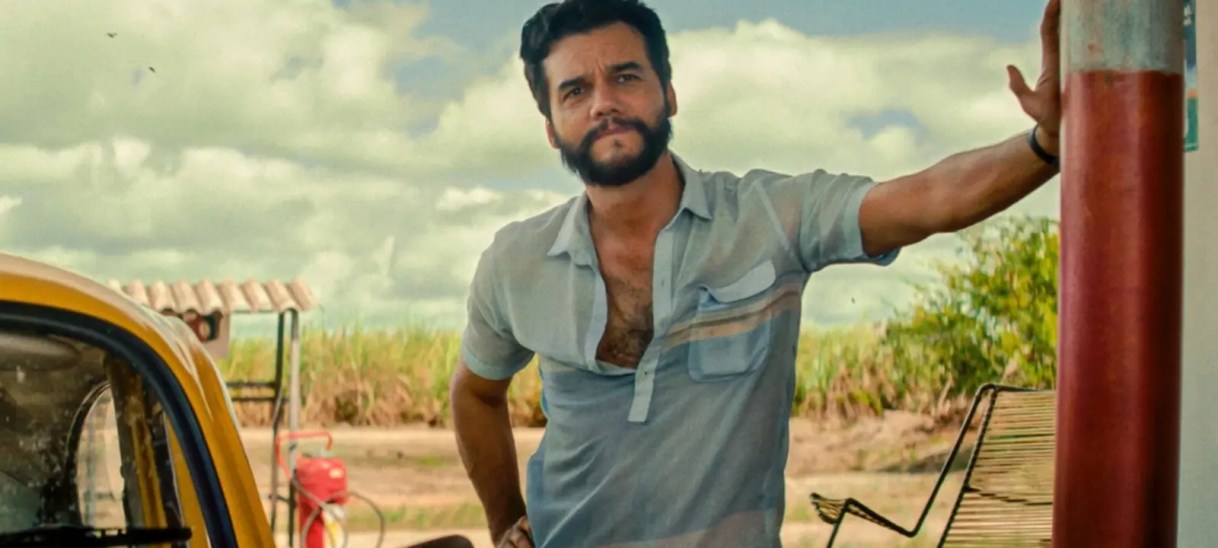
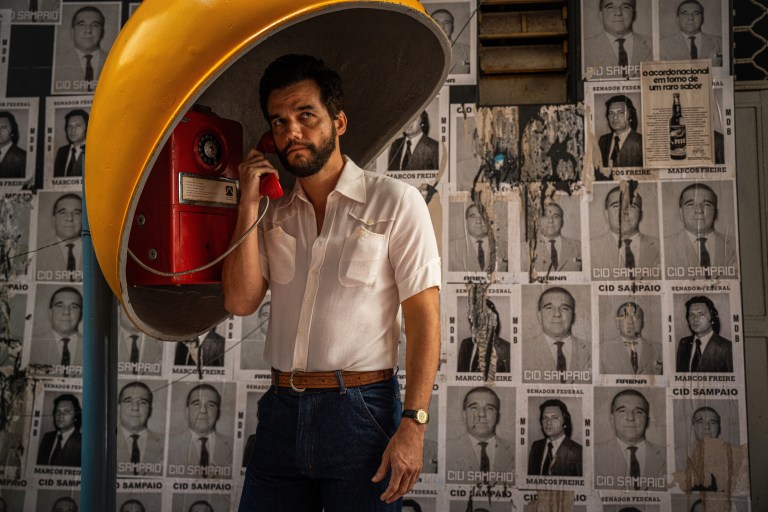
Centring a former professor and widower with a political target on his back, Armando (an exceptional Wagner Moura) returns to Recife to collect his son from his in-laws, seeking refuge in the warm embrace of a small community of political refugees helmed by Dona Sebastiana, in one of the year’s best supporting performances by Tânia Maria that feels achingly real.

Wagner Moura’s work shifts elusively from room to room as Armando quickly surveys his surroundings to uncover how he needs to respond to each interaction. The highly regarded actor is given the role of a lifetime and is set to acquire several awards, as a man with a committed goal, but never stops living his elusive life, even as the violence around the corner draws nearer.

Wagner Moura as Armando in The Secret Agent (2025).

By placing this political and community-based struggle in the veins of a hangout film, Filho supports Moira’s performance with an outstanding cast that gives life to the past by giving a beating heart to this community of political refugees of his own country.

Echoes ripple through buildings, but the truth in history is something that must be searched for. Filho explores his country’s past and the people who inhabit those histories not as vessels for political tropes and ideologies, but as human beings who pass away long before their heroism is uncovered. The secondary narrative device of university students seeking to uncover the truth through tape recordings of our central story is surprising when it first appears, but it allows a dense exploration of ideas to occur. Filho’s way of shooting these scenes gives what could’ve been a contrived narrative crutch a potent level of emotional intimacy, allowing the film’s final sequence to sing.

In voicing The Secret Agent in the language of De Palma and Pakula, masters of the genre and time period the film is based, Filho is placing his film in conversation with the genre of political thrillers that most audiences are familiar with, allowing a discourse to occur across the screen between time and continents, ideas that are very much at the heart of the narrative. Alongside this, the film is a Cinema Paradiso (1988) level love affair with cinema itself, playing out in large swathes at a theatre, set against the backdrop of the sweltering summer backdrop of Jaws (1975) and the way it took the world by storm. Opening the film is the beguiling discovery of a leg inside a shark being studied at a local university, sweeping us up in the strange and playful mode Filho builds the world around, all while leading us down deeper and deeper with an unnerving sense of impending violence.

Like his previous film, Bacurau (2019), a rhythmic playfulness quickly sweeps an audience into a story, but a moment of visceral violence and aggression can pierce through that world like a stray bullet. With The Secret Agent, Filho’s eye is sharper and more directed, but playfulness is still the engine that drives his work. People do not stop living as the plots of his films take place; everything and everyone is transient, a poignant concept to maintain in a political thriller of this kind. 

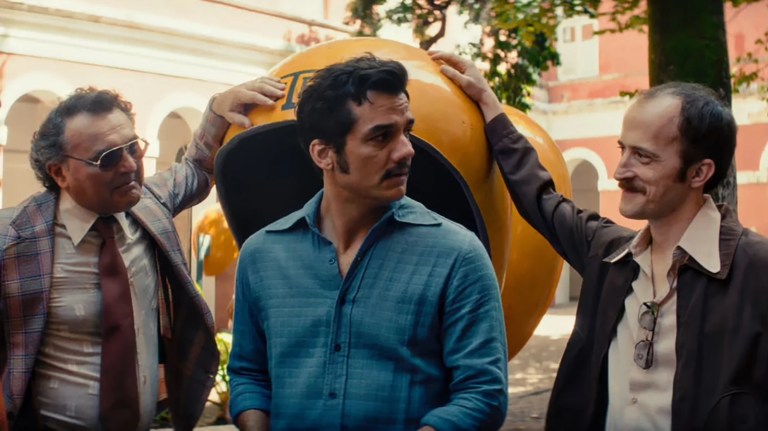
(From left) Robério Diógenes, Wagner Moura, and Igor de Araújo in The Secret Agent.

While the political thriller genre is defined by American filmmakers like De Palma and Pakula, peaking in the conspiratorial aftermath of Watergate and the Nixon administration, in recent years, the genre has been defined by international cinema. The Secret Agent asks much of its audience in terms of prior knowledge of Brazil’s military dictatorship, but in a modern climate of authoritarian spot fires around the globe, many audiences will see themselves in the images Filho shows us. Scenes of political refugees commenting on the limited groceries that are handed by a local farmer trying to assist them are as keenly observed as the moments of shocking violence.

Returning to the present day with the students weaving themselves into the stories of the past, we are in a constant meditation with ideas of bearing witness through aural recollection and the intimate but limited way of history being investigated. A pivotal scene in the film’s movement towards the thriller genre plays out when Armando and Elza (Maria Fernanda Cândido) discuss getting his family out of the country and the hit being put on his head, all while recording the conversation. This gripping scene is shown alongside Flavia (Laura Lufési), a heavily invested student, probing the moments we are shown, trying to glean insight into this moment and what may have occurred in that room outside of the captured audio.

What does it mean to tell a story of such darkness with this level of lightness? The film’s Godardian level of bounce and freedom activates a unique form of scene-to-scene tension not often seen in the political skin that Filho’s film wears. But, while the tension of these genre moments is usually played for excitement, The Secret Agent conditions us to find these moments profoundly reflective, peering into these lives with an open heart and a wry smirk of the absurdity of buffoonish political violence. A high-wire act that appears shockingly relaxed.

The Secret Agent is in select theatres now.

Best of 2025: Tom’s Picks

With 2025 having drawn to a close, Rating Frames is looking back at the past twelve months of cinema and streaming releases that have come our way. In the third and last of our series of articles, Tom is taking a look at his ten favourite films of the year that was.

There remains a great deal of Doom and Gloom around the film industry, with good reason. A need to appease shareholders has seen mega-corporations merge to boost their market share and profits; Artificial Intelligence continues to evolve, insofar that the technology is replacing jobs until now performed solely by teams of humans; once-bankable actors, directors and franchises no longer bring in the big bucks; and box-office revenues globally still haven’t returned to their pre-pandemic highs.

And yet, these past few months have provided yours truly every reason to be hopeful about the future of cinema. Look no further than the examples below, many of which are feature-length productions guided by auteurs and showcasing diverse voices – just a few years ago, these films would have been considered big risks for the studios credited with financing and releasing them, but their gambles have paid off handsomely, lapped-up by audiences hungry for fresh ideas and original stories.

To that end, this writer is of the belief that 2025 will come to be known as the year that Hollywood finally rediscovered its mojo, the dawn of a second New Wave that celebrates and rewards directors who possess great artistic vision. And these here are the films which shall come to define it.

10. KPop Demon Hunters

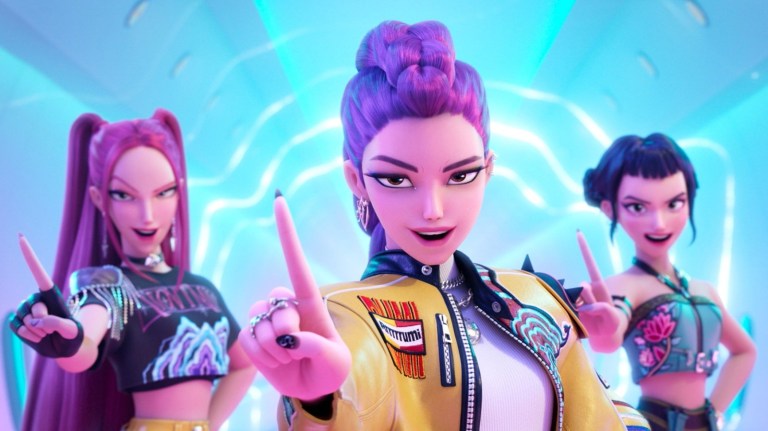
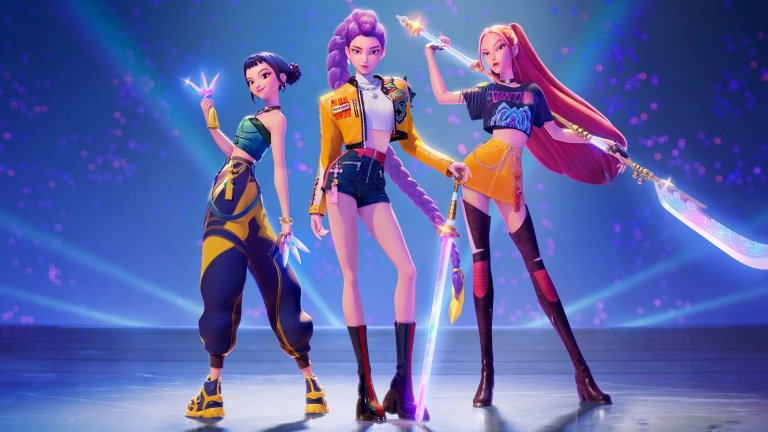
Not since Disney’s Frozen (2013) has an animated feature so readily and deservedly ruled the cultural zeitgeist. Unceremoniously added to Netflix’s catalogue in June, this genre-melding fable broke free of its seemingly-niche target audience to become staple viewing in family households, entice large crowds to theatres with sing-alongs and earn a place in music history by having one of its numbers topping pop-charts the world over.

Driving that success is qualities like a bright palette, flashy visuals, mesmeric fight sequences, great songs, and a trio of distinctive lead characters who come across as quirky, unapologetic dorks, yet just are just as capable of being strong, resourceful and ultra-cool heroines. Even non-fans of Korean pop music and fantasy stories will be won over by KPop Demon Hunters, offering further proof that its studio, Sony Pictures Animation is becoming the industry’s focal point for creative and boundary-pushing works.

9. Wake Up Dead Man

First there was Knives Out (2019), a smart and comedic subversion of the Whodunit that delivered one of cinema’s more memorable characters in recent times; then came Glass Onion (2022) which retained its eccentric protagonist while upping the laughs and intrigue. Following both is Wake Up Dead Man, and though not as inventive nor funny as its precursors, this latest chapter is the most compelling mystery to feature Benoit Blanc so far.

Lying within are pertinent commentaries about the role faith and religion plays in our lives; a script that has viewers guessing and second-guessing until the Agatha Christie-like reveal of the true culprit; and conflicts attuned to contemporary politics which come across as neither snarky nor patronising. And that’s not to forget the all-star list of thespians who inhabit their roles brilliantly, including Daniel Craig who’s delightful once more in the role of Blanc.

8. Superman

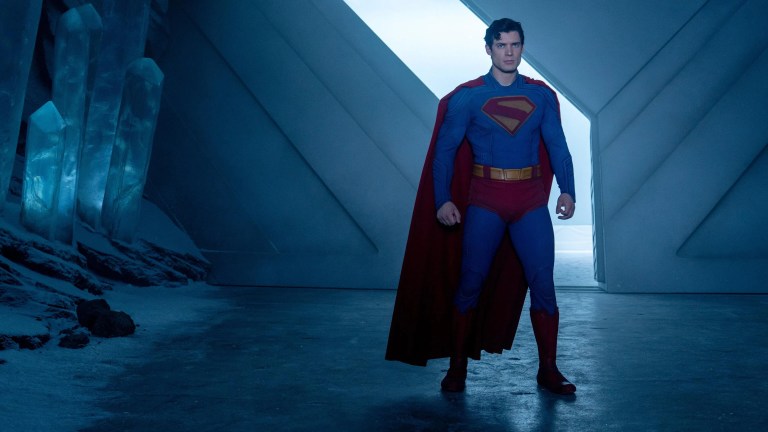
Producing a movie centred on America’s original and ultimate superhero that wins over critics and punters should be an easy task, and yet in this century alone, Warner Bros has twice brought the venerable comic-book franchise to the big screen with a reboot that underwhelmed parties in both camps. Who better, then, to restore faith in the Man of Steel than a director who made a group of obscure, space-faring bounty hunters a box-office drawcard, and transformed a reviled super-villain property into a gag-filled spectacle.

James Gunn’s Superman is a blockbuster that understands the ethos of its titular metahuman better than most adaptations that bear his name – he’s not a god or alien, rather someone just like us who happens to possess otherworldly powers. The film’s tone is welcomely cartoonish and silly but equally sincere and loveable, meaning any initial hesitations about cheap-looking sets and vibrant colour-grading are pretty much forgotten about within minutes. Also worthy of mention is the peerless cast and plentiful references to its Richard Donner-helmed forebear.

7. Mission: Impossible – The Final Reckoning

“I need you to trust me one last time,” says Ethan Hunt to his superiors, though he could well be addressing theatregoers in that statement too. For close to three decades, we trusted him to deliver the kind of high-octane, jaw-dropping thrills that demanded to be seen on the largest screen possible, and our confidence in him was justly rewarded with the eighth feature-length instalment of a spy franchise once confined to television, but now inexplicably linked with the saviour of cinema: Thomas Cruise Mapother IV.

The Final Reckoning is burdened with issues of world-building and slow pacing in its early stages – something of a trend with 2020s action flicks – which soon after yield to some of the tensest action sequences ever witnessed, many involving practical effects and some worrying enough to give viewers a nervous breakdown. Combine that with the pertinent discussions around A.I. and assured direction of Christopher McQuarrie, and the result is a near-perfect send-off.

6. One Battle After Another

Now for the most contentious opinion shared in our end-of-year reflections – where both of his fellow Rating Frames scribes have placed the latest Paul Thomas Anderson feature at the very top of their lists, yours truly has opted for a less enthusiastic view and a position five rungs below. Reasons why are hard to pinpoint, but there is a nagging sensation that an element is missing, an itch not being scratched; a feeling the picture could be funnier, livelier, more subversive, more bonkers.

None of this is to say that One Battle shouldn’t be showered with praise, or else there’d be no mention of its title here. Of greatest appreciation is Sean Penn as the antagonist Colonel Lockjaw; Jonny Greenwood’s piano-led score which heightens the tension; and a world that perfectly captures the USA’s current political climate (note the militant police forces and sense of autocracy) without hitting too close to home a la Ari Aster’s Eddington.

5. Mickey 17

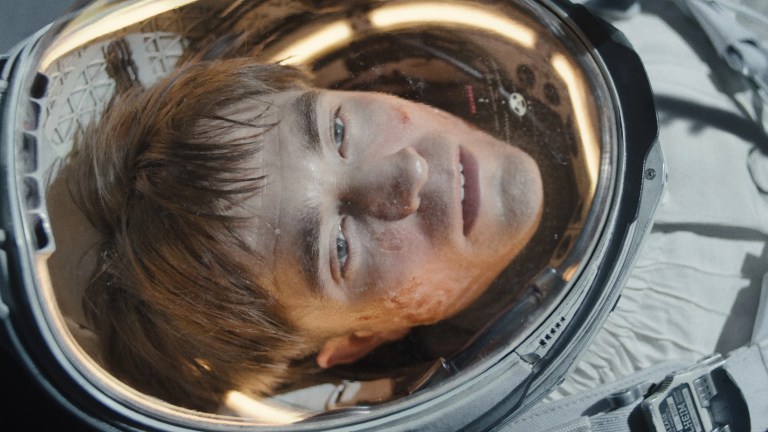
Having effusively asserted himself as one of the best directors working today with the Oscar-winning Parasite (2019), anticipation was high, and the wait long, for Maestro Bong’s follow-up. His newest effort, released in the early months of 2025, draws upon several of the motifs and themes utilised in the Korean auteur’s previous works, yet sets itself apart by – as Arnie pointed out in his Top 10 article – striking a more positive and hopeful tone.

Other merits of Mickey 17 include the fantastic production design with its grimy, rudimentary sets; the hypnotic soundtrack of composer and returning Bong collaborator Jung Jae-il; the superb editing of Yang Jin-mo which keeps the pace smooth throughout; and Mark Ruffalo, who’s a delight in every scene as the Trump-adjacent despot Kenneth Marshall.

4. Bugonia

The current political scene is casting a long shadow over Hollywood’s creative output, as evidenced by the previous two films mentioned and their not-so-veiled mocking of the Free World’s supposed leader and his lackeys. That same paranoia can be found in Greek auteur Yorgos Lanthimos’ latest, an allegorical narrative that’s all at once clever, thought-provoking and scary.

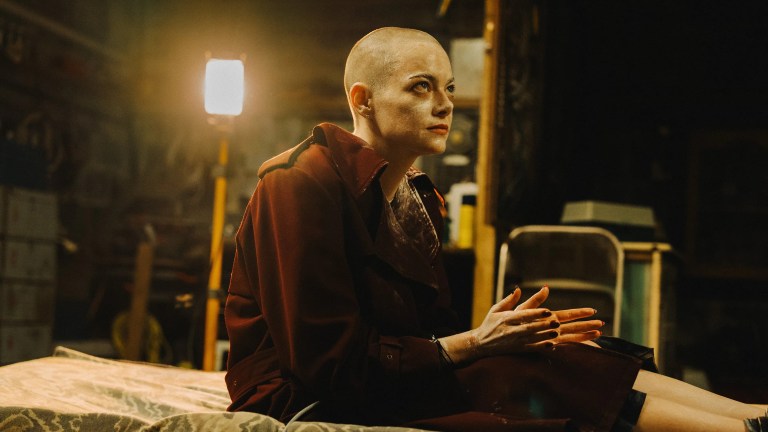
In keeping with the rest of Yorgos’ oeuvre, Bugonia has a delightfully off-kilter tone, aided in part by the bombastic, haunting and ethereal score of Jerskin Fendrix. Biting humour alleviates the stressful atmosphere, often when it’s least expected, as does newcomer Aidan Delbis in the role of Don, the screenplay’s moral and rational centre, and someone who very nearly outshines his established co-stars, Emma Stone and Jesse Plemons – both of whom prove to be their usual exceptional selves.

3. Hundreds of Beavers

“How on Earth,” you might be wondering, “does a low-budget slapstick comedy which premiered in 2022 end up appearing in a Best of 2025 list?” The answer is thus: for many Australians, the past year was their first chance to see Mike Cheslik’s homage to our favourite medium’s early 20th Century pioneers like Buster Keaton and Harold Lloyd, whether that be through SBS On Demand or limited showings in local theatres like Cinema Nova.

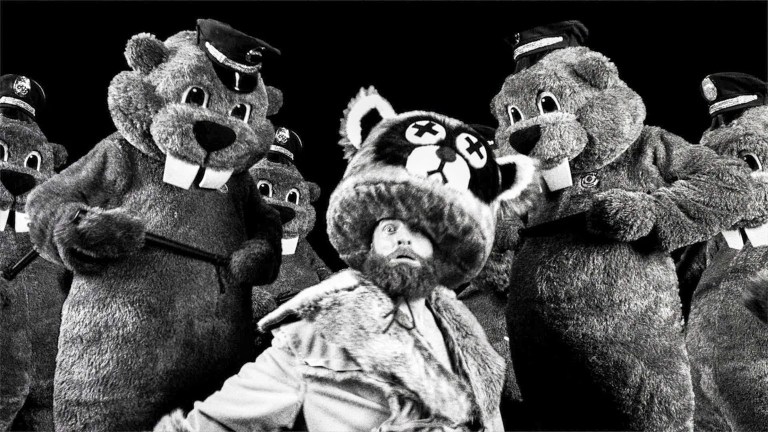
Jokes abound in Hundreds of Beavers, which commits wholeheartedly to the silent-era aesthetics by telling its narrative almost entirely without the spoken word. Most gags are physical in nature with all manner of harm done to our hero, Jean Kayak (Ryland Brickson Cole Tews) and his mammalian foes (various human actors in oversized animal costumes) while a meme-referencing needle-drop over the end-credits provides the cherry on top of a very rich and decadent cake of laughs. You’ll be hard-pressed to find a movie that puts a bigger smile on your face.

2. But Also John Clarke

Being a fan of its eponymous subject, and in particular his political satire meant this documentary was virtually assured a placing in this writer’s Top 10 list, and if judged solely on personal sentiment would easily slot into First Place. Indeed, its sole irksome drawback is that not enough time is devoted to his impact beyond Australia and New Zealand.

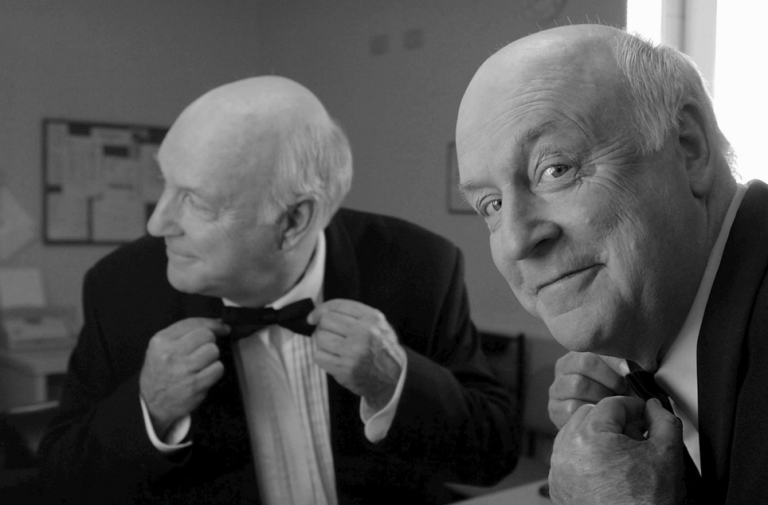
Yet to view this solely as a fawning appreciation for a comedic titan would be unfair to director Lorin Clarke, for non-fans of her late father will find plenty of interest within But Also John Clarke. Archival clips of his work, some dating back to the 1970s prove just as fresh and witty as when they first aired, while contemporary interviews offer fascinating insights into the legacy of his long-haired, gumboot-toting alter-ego Fred Dagg.

1. Sinners

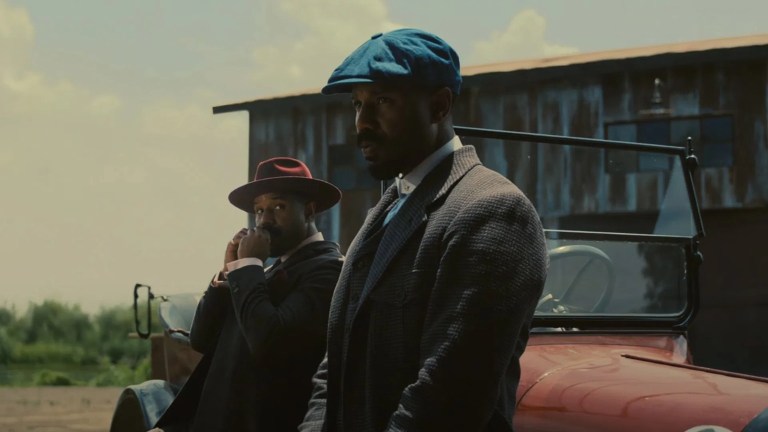
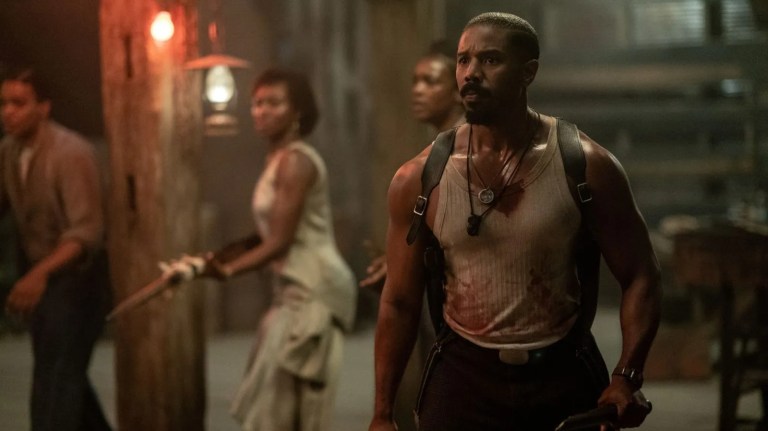
The horror genre has become the go-to place for directors to establish their mark on the medium, whether they be upstarts hoping to earn a name for themselves or industry veterans eyeing status as a legend of their craft; Sinners puts Ryan Coogler firmly and assuredly in the latter category.  To label it simply as a horror flick would be a disservice to Coogler’s genius though, for his blockbuster is an astute melange of several other influences – it’s a Western, a musical, an action flick with tinges of romance and comedy.

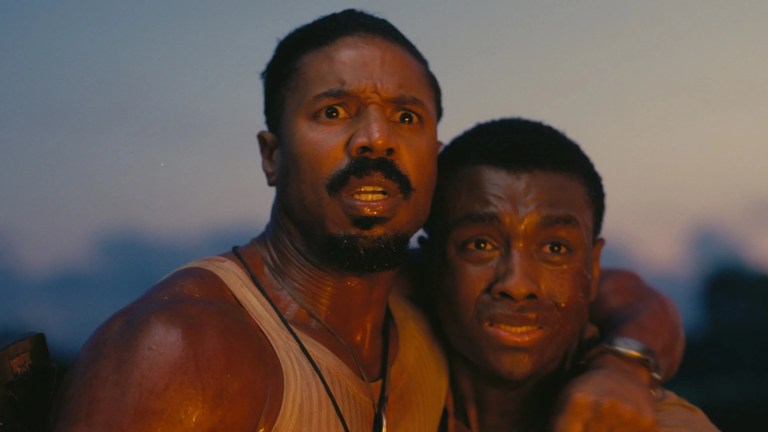
Here lies a thrilling, classy and transcendent experience, boasting an excellent cast headlined by Michael B. Jordan in dual roles, alongside phenomenal supporting performances from Wunmi Mosaku, Delroy Lindo, Hailee Steinfeld and Miles Caton. Impressing further is the film’s showstopping music sequence that honours Black artists of every era, and Ludwig Gorannson’s epic blues-inspired score that echoes the strains of Terence Blanchard, all combining to form the most awe-inspiring release of 2025.

Honourable mentions: F1, The Fantastic Four: First Steps, Guillermo del Toro’s Frankenstein and Travis Head’s century in Perth.

No Other Choice is the Work of a Master

Rating: 4.5 out of 5.

A showman like no other, Korean visionary Park Chan Wook elicits more joy and wonder out of an audience from a perfectly timed cross-dissolve than most car chases filmed this decade. A filmmaker who is constantly looking to find the tipping point of extremity without falling into the world of camp, Park has cultivated a devoted fanbase that expands with each new entry, especially in recent years, with his fearlessness to work in the grime of modern life 

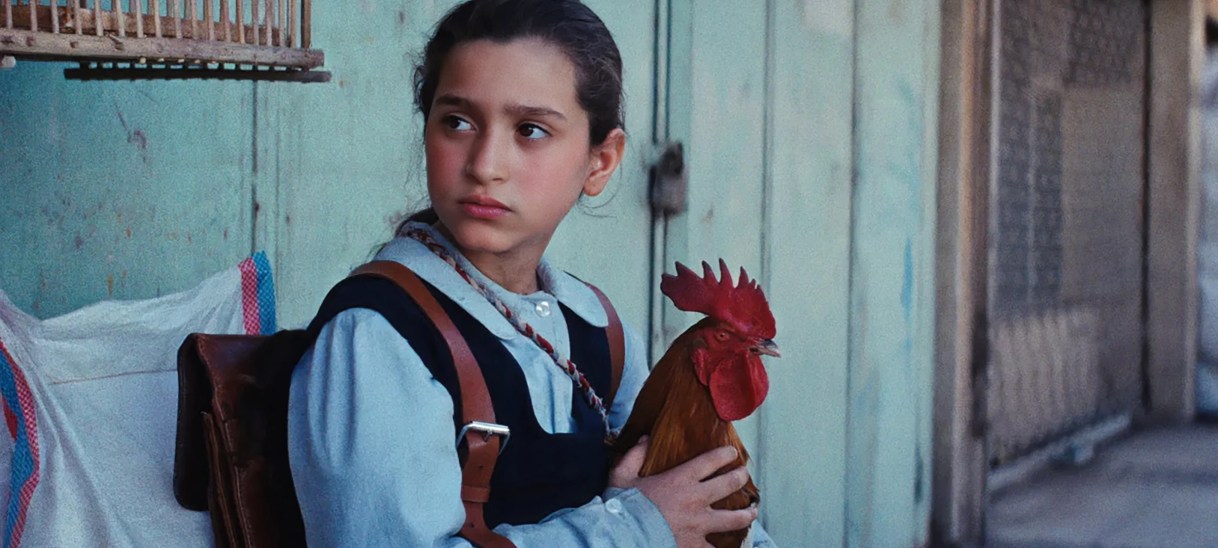
Upon exiting No Other Choice (2025) in a delirium, it is clear that Park is the greatest modern visual stylist. While his stories can vary in interest and quality, as a filmmaker who is obsessed with the power of the art of editing, you will always leave his films satisfied. Adapted from the legend Donald Westlake’s The Ax from 1997, Park’s screenplay makes the key decision to maintain the protagonist’s occupation and narrative arc, showing how, as time passes, the crushing weight of modern capitalism has only increased. Centring a literal paper pusher, we walk hand in ham-fisted hand, gliding on the back of whip pans and transitions that will make film students furiously scribbling notes. 

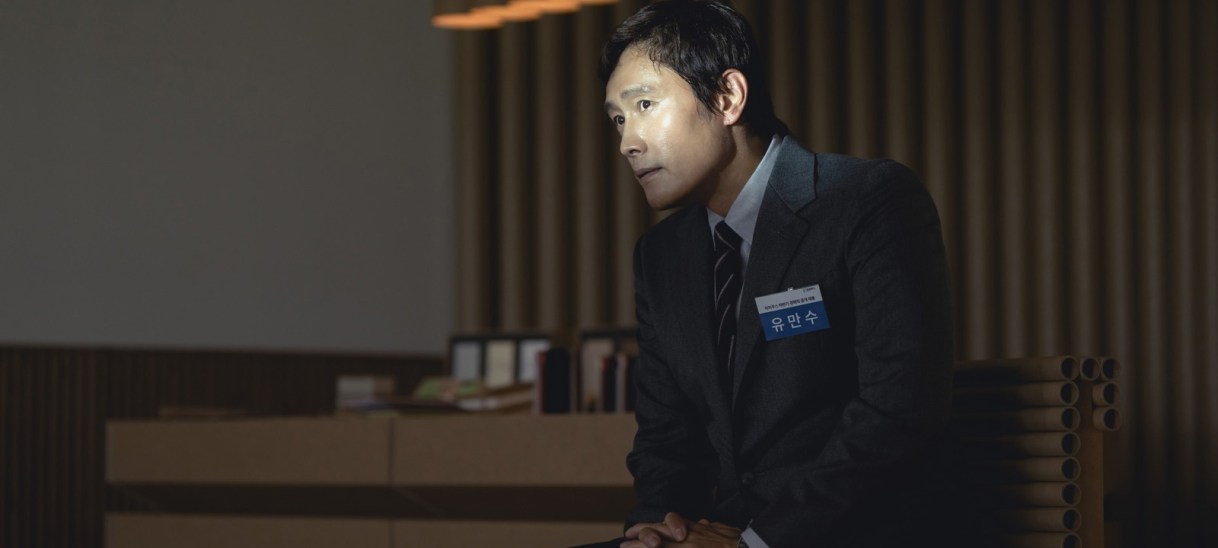
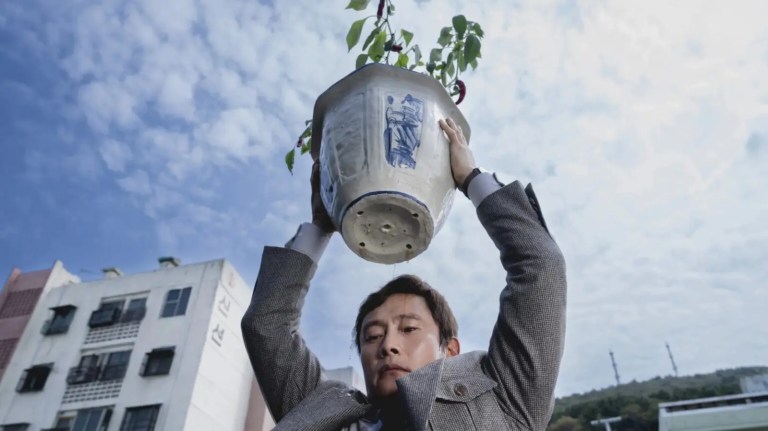
After being made redundant after the acquisition of the paper company by an American conglomerate, Man-su (Lee Byung-hun) is sent to a support group for the newly unemployed, selling self-worth and virtue as its own reward. But, after tasting mild success and a bountiful life with his family, Man-su is after a return to cold, hard reward.

Built on the late capitalist mindset that success can only be achieved through the pain of another, Man-su’s plan ultimately lands in Park’s wheelhouse, getting rid of the more hireable paper men in town, so he is all that remains. Amongst all the extremity and chaotic joy gushing out of wild filmmaking choices, the story elicits an overwhelming sense of pain as we see a group of men that should be in community with one another, forced to compete for what will ultimately be a hollow prize.

Lee Byung-hun as Man-Su in No Other Choice.

Sitting somewhere between Kiyoshi Kurosawa’s Cloud (2024) and Tokyo Sonata (2008) as modern tales on the devolving psyche of work culture and living under the cruel thumb of capitalism. That Neon in a marketing push sent an open invite to the fortune 500 company CEO’s says everything about how pointed the film aims to be at its primary villain.

Lee’s performance holds down the film’s extremity, preventing it from turning into a circus. His desperation exudes from him as a flop sweat, gritting his teeth through every moment, anxious that the moment he stops to consider the repercussions, it will all crash down. In moments where the world appears to react based on Man-su’s emotions, anything seems possible in this farcical satire that moves with a feverish pace. There is a fleeting moment when a potential final victim offers a job that we feel an unexpected glimmer of hope that we can get off the road. But as is the case with most Park Chan Wook films, that road, once entered, is one-way.

Park is in a tier above all when it comes to pushing the visual medium forward with a fever pitch and an unmatched style. Like his idol Alfred Hitchcock, Park sees his role as both old school entertainer and cinematic visionary who asks what is possible in the medium they have devoted their life to. In his recent work, Park has devoted an enormous amount of time to uncovering ways to use the reflective world of phone and computer screens to tell a story that is still compelled by the characters holding them. When we see Man-su’s reflected face alongside his screen as he drives himself further and further into his doomscroll, we so easily see ourselves. These scenes are comedic but intensely revealing, and make almost all contemporary filmmakers look like cowards for hiding in period filmmaking.

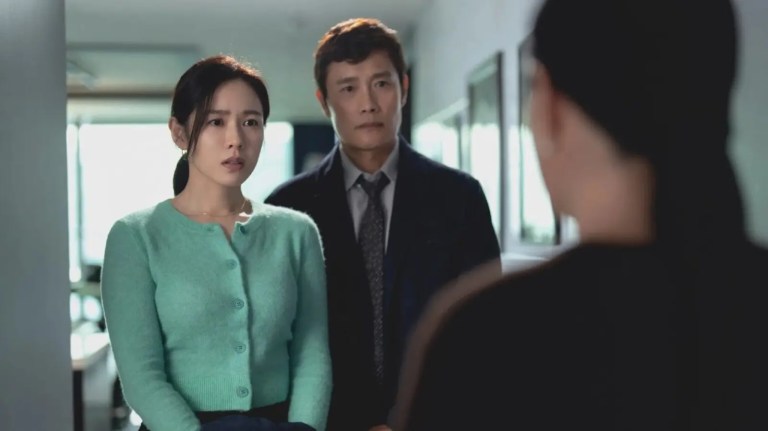
(From left) Son Ye-Jin as Miri and Lee Byung-hun as Man-Su in No Other Choice.

Always veering into doing too much, Park hides as much in its maximalist frames as he shows. Many have criticised the filmmaker for over-directing his screenplays, never allowing the writing to gleam through the forest of his craft, which I believe to be a false and overly simplistic reading of his work. In his very best films, whether original scripts or adaptations like in No Other Choice, he highlights the power and potency of the writing by its sheer ability to stand alongside some of the most visionary filmmaking this century through iconic characters and set pieces. It is only in his films like Stoker, with lesser scripts, that become mostly known for a scene transition (show hair transition scene from YouTube). 

What allows Park to ride so close to the edge of camp absurdism without toppling over is his ability to play to a crowd, both in enjoyment and the collective experience of being surrounded by strangers, all uncertain of what will happen next, which makes live sports an enduring event. With all respect to the perfect chase scene at the conclusion of One Battle After Another (2025), the legend of the final act, Park Chan Wook’s No Other Choice, has the finale of the year. A glorious send-up of modern late-stage capitalism as a ‘be careful what you wish for’ fairy tale that blends melodrama into a living nightmare into the best satire in years. It is a farcical screed of capitalism that gloriously blooms into something unexpectedly transcendent in its conclusion. 

The poetic irony in its final moments play like the deterministic singularity point that all modern art about the crushing weight of capitalism arrives at, there is literally no other choice. How Park doesn’t arrive at a place of crippling nihilism in its final moments but of cruel irony and humanity is nothing short of astounding. His revenge fables are without equal in modern storytelling, with No Other Choice arriving into this extended canon in surprising ways.

No Other Choice is in select theatres now.

Best of 2025: Darcy’s Picks

With 2025 having drawn to a close, Rating Frames is looking back at the past twelve months of cinema and streaming releases that have come our way. In the second of our series of articles, Darcy is taking a look at his ten favourite films of the year that was.

The medium is the message of films in 2025. In a time where feature filmmaking has to, in some form or another, justify its existence on the screen in comparison to TV or internet slop fed through an infinite reel, the best work to come out this year weaponises the stranglehold a great long-form story can have on an audience. A mixture of old masters and bright new talents across genres and styles, the top of a terrific year in film was all improved by viewing them in a packed theatre, demonstrating that cinema is still at its best as a communal experience, from incisive documentaries and quiet family dramas to a provocative action spectacle that invites an audience to question its worldview.

10. The Perfect Neighbor

So much of good documentary work comes down to access and editing, and Geeta Gandbhir’s heartbreaking portrait of a Ajike Owens’ Florida community and the very active role racism can take in someone’s life has both in droves. Using almost exclusively bodycam footage, police station security tapes, and 911 calls, Gandbhir and editor Viridiana Lieberman weave a poignant and incisive story of the state’s Stand Your Ground laws and the reality of how they are abused. No other film this year will make your blood boil and your heart sink.

9. 28 Years Later

Returning 18 years later with a supposed three screenplays in hand, Alex Garland (a personal favourite writer) wanted to tell the story of the UK in recent years in a franchise that has defined a lot of 21st Century English cinema, with a remarkable and unexpectedly emotional film. Centring on a young family led by an impressive newcomer in Alfie Williams, the rich level of depth and commentary in 28 Years Later allows what could’ve easily been a quick money grab by Garland and Danny Boyle to become an instant Brexit classic. With its exploration of community and isolationism with the backdrop of a widespread outbreak, 28 Years Later places itself at the forefront of art in conversation with the world in the 2020s.

8. The Mastermind

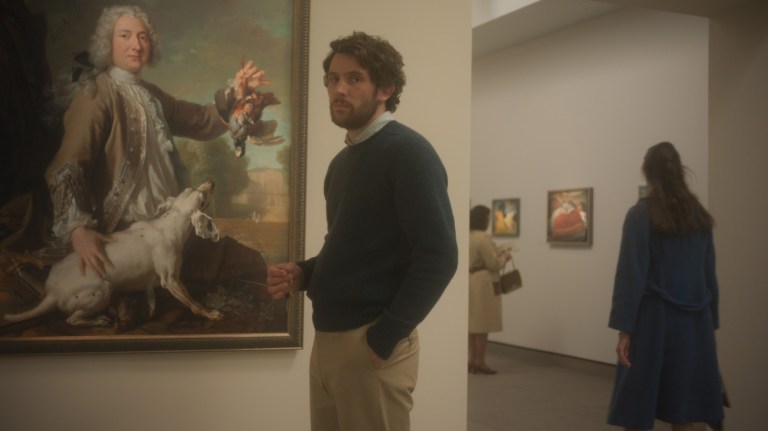
A sleepy political heist hangout with the actor of the moment, Kelly Reichardt’s 70s whisper-of-a-film will leave a long tail that may define the year in the future. Starring Josh O’Connor in his best performance to date as an uninspired suburban dad wanting to pull off an art heist, The Mastermind glides through its own world with a protagonist who believes himself smart and savvy enough to pull off the crime. Reichardt’s hidden sharp blade of focusing on someone causing chaos through their quiet ego of knowing better than those around them allows the world around O’Connor to build from gentle embers to a raging fire.

7. Sorry, Baby

A wonderfully modern dramedy, Sorry, Baby may just usher in a new era of 2020s mumblecore with a shining new voice in Eva Victor. A story that easily could’ve landed on television and overextended, Victor, who wrote, directed, and starred in this thorny comedy of unsurety, loves cinema enough to operate and thrive within the condensed medium. As a young, depressed literary professor, Victor’s Agnes is one of the best cinematic characters of the year, a charming and thorny person you can’t help but connect with. A film that handles heavy subjects with grace and clarity, Victor has emerged as one of the brightest emerging filmmakers and performers in years.

6. Sirât

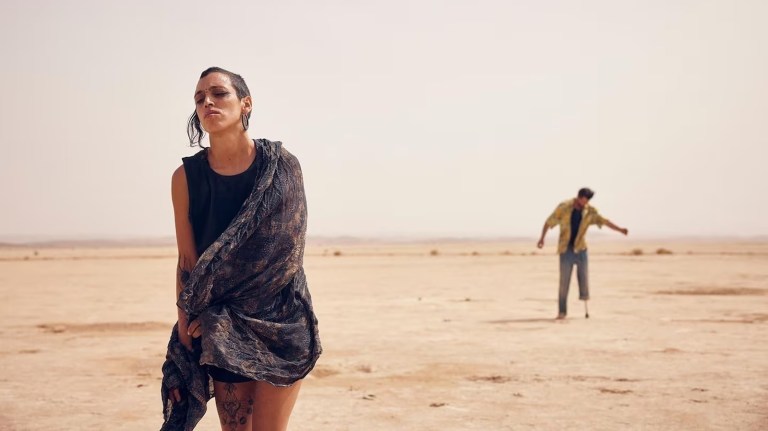
A modern experiential travel saga akin to William Friedkin’s Sorcerer (1977), Oliver Laxe’s Sirât must be seen to be believed, with several earth-shaking moments that will dig into your bones and leave scars. A shocking cinematic experience, Sirât follows a father and son as they search through an underground Moroccan desert rave scene to find their daughter and sister. The film explores community and connection, propelling you forward in line with Kangding Ray’s incredible music soundscapes.

5. Sinners

The future promise of exciting blockbuster cinema is also one of the most enjoyable and prickly films of the year. Ryan Coogler’s exploration into race, music, and history is tied to an explosive vampire action film that proves adults will still show up if given some real meat to sink their teeth into. With a terrific ensemble and a remarkable breakout by Miles Caton (so good you do not question his future self played by Buddy Guy), Coogler’s musical knows how to entertain a crowd while still provoking thoughts about how culture and music are consumed.

4. BLKNWS: Terms & Conditions

My most anticipated film experience of the year delivers and beguiles like no other. Perhaps the greatest music video director around, working with Beyonce, Kendrick Lamar, FKA Twigs, and Flying Lotus, Kahlil Joseph has a visual eye that blends hyper-modern documentary styles — which includes YouTube clips and memes — with his love and influence from the legendary Thai director Apichatpong Weerasethakul. Debuting the first iteration of BLKNWS at the Venice Biennale in 2019 as a video installation, Joseph and A24 collaborated to expand the work into a feature-length experience like no other. The film will be hard to track down, but it is as essential a watch in 2025 as any film on this list. BLKNWS: Terms & Conditions is a dense yet enjoyable work that will have you asking more from documentary and experiential cinema for the rest of the decade.

3. Sentimental Value

A tremendous follow up to Joachim Trier’s millennial classic The Worst Person in the World (2021), Sentimental Value pulses and ripples through generations of familial connection and disconnection with grace and power that feels open and inviting even in its thorniest moments. Trier and all his creative collaborators understand that to create is to bridge an ocean of the unsaid, even if that means building a replica of your generational family home on a soundstage, only to have it hidden on the 18th page of the Netflix arthouse section. Trier and Vogt understand deeply how, even through that artifice, true openness and connection can be translated into a final, powerful image of understanding but not resolution.

2. No Other Choice

With all respect to the perfect chase scene at the conclusion of the film at the top of my list, the master of the final act, Park Chan Wook’s No Other Choice, has the finale of the year. A glorious send-up of modern late-stage capitalism as a ‘be careful what you wish for’ fairy tale that blends melodrama into a living nightmare into the best satire in years. How Park doesn’t arrive at a place of crippling nihilism in its final moments but of cruel irony and humanity is nothing short of astounding. His revenge fables are without equal in modern storytelling, with No Other Choice entering this extended canon in surprising ways. No one is pushing the language of cinematic storytelling more than Park with his visualisations of doomscrolling as a uniquely modern debilitation.

1. One Battle After Another

A film that leaps off the screen in an instant, One Battle After Another works the way most immediately immortal films do. And much like many of the great immortal films, I find myself reading rather than writing about Paul Thomas Anderson’s incisive work of contemporary revolutionary cinema that even when it pulls punches, compels you forward. I’m not surprised a new PTA film that finally delves into contemporary life is my favourite film to be released in its 2020s, as his deeply humanist approach to writing over the last 30 years has defined so much of my taste in art. Combine that with subject matter I find endlessly compelling as a modern look at the humanity and personhood of revolutionaries that is fuelled by the past but never backwards-looking, and you have a film that will be the yardstick all other films will be measured against.

Honourable mentions: Black Bag, Caught By The Tides, Eephus.

Best of 2025: Arnie’s Picks

With 2025 having drawn to a close, Rating Frames is looking back at the past twelve months of cinema and streaming releases that have come our way. In the first of our series of articles, Arnie is taking a look at his ten favourite films of the year that was.

In what I think is probably the strongest year in film for the current decade (surpassed only by 2021), I managed to squeeze in 36 new releases (equal to last year) and would probably have had more had I not gone overseas for a few months. That said, 2025 surprised me with just how strong the year was, with my top 10 (save for perhaps my no 1 and 2 spots) easily interchangeable depending on my mood. I did miss a few films that I really wanted to see and will hopefully see in the next month like Rental Family, Sentimental Value and Train Dreams, but overall I am delighted with what my top 10 is looking like. Here’s to a bigger and better 2026!

10. Black Bag

While it feels like forever since Steven Soderbergh’s Black Bag was released, the thriller has stuck with me for it’s a punchy, measured and meditative approach in telling its story as it focuses on the importance of trust in relationships, but amplifies that tenfold by throwing spies and high stakes into the mix. The film is an exercise in precision, in patience, in waiting for the right moment to make your move but takes a snappy, well paced approach in portraying those aspects. Michael Fassbender’s coolness and straight-talking robotic like persona is matched by Cate Blanchett, with the duo finding a dance like rhythm / choreography every time they’re on screen, making it intoxicating to watch them to the point where you feel like a third wheel between their sexual chemistry. To top it off, the film is around 90minutes and doesn’t waste a second, demonstrating Soderbergh’s knack for pacing and witty dialogue when it comes to thrillers.

9. Mission: Impossible – The Final Reckoning

Speaking of thrillers, the final entry in Tom Cruise’s Mission: Impossible franchise, The Final Reckoning, is an exhilarating finale to this almost 30 year exercise in pushing the boundaries of what is possible on the big screen. While it doesn’t quite hit the highs of Fallout (2018) and Dead Reckoning Part One (2023) in terms of scale and plotting, Christopher McQuarrie and Tom Cruise sign off in style, with everything from deep sea submarine diving to flying and dangling off of aeroplanes because… well… why not. The film does take some time to really kick into gear, with a beefy first act having a weightiness to it that takes a moment to shake off as story threads are tied from past films, but once it gets to the fun and games of the second act, it has that free flowing, pacey energy that the franchise is known for.

8. If I Had Legs I’d Kick You

If I Had Legs I’d Kick You came as a late entry for me but quickly cemented itself in my top 10. For starters, Rose Byrne delivers one of the most electrifying performances of the past few years and easily a career best which is sure to earn her an Oscar nomination and perhaps the Oscar itself. Secondly, this is the most stressful film I’ve watched in a long time with Mary Bronstein creating a sense of tension and holding on to it throughout the film’s majority through Byrne’s performance and her ability to isolate her in and around the problems she has, giving the film an almost straitjacket feeling that can’t be shaken off.

The approach to focus on a woman who has this literal and figurative hole in her life that is a reflection of her struggles to raise a sick child while her husband compounds her struggles from a distance (as he isn’t present), creates a simmer that never seems to cool down. Coupled with a camera that maintains a relatively tight close up on her for the most part and works in tandem with a score that has a dread like quality, amplifies the sense of hopelessness that the character endures.

7. Avatar: Fire and Ash

James Cameron’s third entry in the Avatar franchise is the biggest and most visually striking film of the year, and it’s a testament to the director’s desire to push the medium forward by pulling out all stops. The CGI and performance capture are unmatched in Fire and Ash as is the lifelike quality of Pandora and its blue inhabitants, the flora and fauna, and the wider setting. While the script feels a little more drawn out and repetitive compared to the previous two films (there’s a lot of similar story beats and wonky subplots), the heart of the film and Cameron’s love for this universe shine through in its three and a bit hour runtime.

Listening to Cameron’s interviews after having seen the film have bought me into his vision even more and helped me appreciate the level of depth and thought that go into every performance and the way the world interacts with these performances (almost a video game-esque quality). Sometimes the transition from 48fps to 24fps can be quite jarring where I would have preferred for the whole film to be shot in the former, but no one is making films of this scale and with this much originality compared to Cameron and I would gladly take another two of these films in the coming years.

I was blown away watching this in 3D in Melbourne’s newest and second only IMAX screen.

6. Bugonia

After leaving me rather underwhelmed with Poor Things (2023) and Kinds of Kindness (2024), Yorgos Lathimos’ Bugonia felt like a return to form as the director brought his regulars Jesse Plemons and Emma Stone into this conspiracy theory game of ‘who breaks first’. Lanthimos and The Menu (2022) screenwriter Will Tracy wrote a clever script that blends humour with desperation as one man becomes convinced that the CEO of his company is an Alien and decides to capture her so that he can learn where her mothership is and how to make contact with it. Beneath the often comedic, sometimes rattling plot is a film that shows the lengths people will go to when faced with a desperate situation, one that speaks to wider issues of failed healthcare systems and the people they leave in their wake. The final third of this film is a wild rollercoaster of “I know what’s going to happen” to “Oh, now I know what’s going to happen” to “I knew that first thing was going to happen”. Lanthimos paces this film incredibly, leaving you on the edge of your seat to ponder whether questions we ask ourselves about the world are worth asking, whether for better or worse.

5. Sinners

Ryan Coogler’s Sinners felt like a breath of fresh air as this almost neo-western, horror type gothic genre epic. Sinners feels both familiar and different, owed in large part to Coogler’s understanding of Black history mixed with his penchant for spectacle and creating moments that cut through and challenge you as a viewer like a musical sequence that mixes in blues, jazz, hip hop and a wide range of music genres in this pseudo-multiverse portrayal which is unlike anything I’ve seen in recent times. Clearly taking a leaf out of Robert Rodriguez’s From Dusk Till Dawn (1996), Sinners finds a harmonious balance between the horrific and the heartfelt, where Coogler patiently builds up to the unhinged killing fest and doesn’t slow down when it hits.

4. No Other Choice

It’s no secret that the job market has been absolutely fucked, something that the proliferation of AI has only amplified, with Australia feeling the strain of unemployment to a large degree as well. Park Chan Wook’s No Other Choice, like some of the legendary director’s films before, is a brutal, sometimes comical, portrayal of the lengths people will go to begin to make sense of the situation they are put in, whether through their own doing or not.

Man-su (a brilliant Lee Byung-hun) delivers one of the year’s best performances as a paper worker who loses his job due to downsizing and decides that the only way to stand any chance of regaining unemployment and keeping his idealistic lifestyle is to kill the true competition that is applying for the same jobs as him. Park is a technical genius who proves his worth once again through striking transitions and camerawork right through to interesting plotting choices that all build up a sense of desperation as Man-su spirals into a void.

3. Mickey 17

While not quite hitting the same highs as his Best Picture winning Parasite (2019), Bong Joon Ho’s Mickey 17 continues the director’s fascination with the caste system, capitalism and human dispensability. It’s a goofy film with strange characters and creatures and a closing sequence that is weird in its own right, but it speaks to wider issues of injustice and treating people with inhumanity for material gain, yet it’s Bong’s most optimistic film as well.

There’s a palpable pity in watching Robert Pattinson’s Mickey character be reprinted through a human printing machine time and time again, until through an error, two versions of him emerge, opposed in multiple ways yet finding a commonality in their disposable existence to unite against those that discard them like an old shoe. The scale of the film is evident in its Hollywood-ised grandeur of space travel and all that comes with it, but it stays close to the heart of its oddballs, never losing sight of the human condition even as it threatens to become relegated to a means to something more sinister.

2. It Was Just an Accident

Jafar Panahi’s It Was Just an Accident blew me away in more ways than one. The Iranian filmmaking juggernaut has never been coy when it comes to his criticism of Iranian oppression and abuses of power, and in this film he focuses on how that abuse and specifically, torture, imprisons people for their whole lives.

He frames this through a group of people whose lives have never been the same after a man with a squeaky leg tortured them some years ago at the request of, and for the good of, the “regime”. When Vahid, a survivor and humble mechanic, hears the squeaky leg of a man whose car has broken down outside his repairs shop, all of those horrific memories come flooding in and he decides to capture and bury him the day after. That is, of course, until the man vehemently asserts that he’s not this ‘Eghbal’ torturer that Vahid is looking for. From there, Vahid is set on confirming the man’s identity before deciding what to do with him, meeting others who were beaten and brutalised under his authority.

The film is sometimes comical, often gut-wrenching, especially towards the second half where a subtle shift in tone shows the length the oppressed will go when they’re desperate for vengeance. Panahi paints humanity as a fragile construct in a film that threatens to tip the scales between victim and oppressor, showing what a broken, unjust system can do to people as they become prisoners of their own mind because of the actions of others. The final shot might just be the most harrowing of the year.

1. One Battle After Another

Another year, another Paul Thomas Anderson masterclass; it’s been many years since a new release sold me on 5 stars, and who else’s film could do that other than PTA’s? One Battle After Another, his latest politically charged (which is more of a byproduct) yet grounded story of a father and daughter dynamic, is a culmination of all of the best parts of his oeuvre. Loosely based on Thomas Pynchon’s 1990 Vineland, a book with its own political leanings and criticisms of the Reagan administration, One Battle After Another is also PTA’s most contemporary film to date. Where previously he has tended to look back, his latest film is very much a forward-looking, foreshadowing of what’s to come if we let forces greater than us hunt us down in the little spaces we’ve carved out for ourselves in a world that feels like it’s already getting smaller around us.

One Battle After Another is the breeziest, almost 3 hour film experience I’ve had in years which is testament to PTA’s ability to pace his films and leave no dialogue wasted for filler. Each moment gives the film momentum and builds on the cause and effect chain of events, with an abundance of set pieces (easily the most in his career). This all culminates to a closing sequence that as a whole, is one of the most striking I’ve seen in years (a car chase shot through swerving, dusty roads will stick with you).

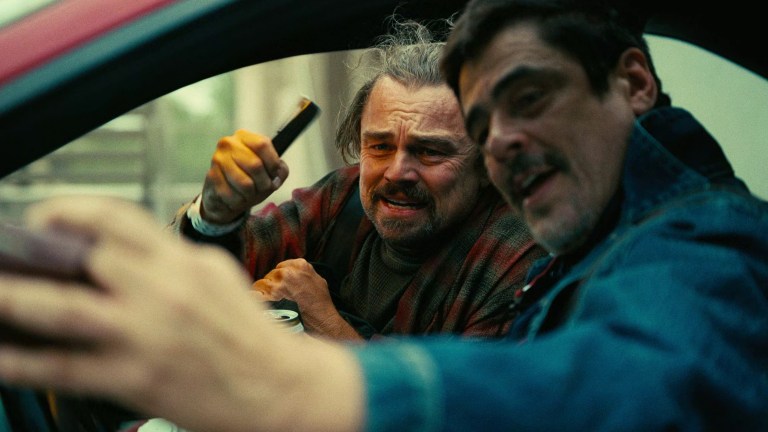
PTA has always managed to get the best out of his ensembles much like his inspiration, Robert Altman, and it shows here as Leonardo DiCaprio delivers a career best performance along with Sean Penn (who is no doubt a shoehorn for Best Supporting Actor), with Chase Infiniti, Benicio del Toro and others also at the top of their game.

I felt like I was watching a classic in the making and a film that will stand the test of time as an epic much like There Will Be Blood (2007) has all these years later, and I can’t wait to buy the 4k bluray later this month to experience it all over again.

Honourable mentions: F1 and Die My Love

Sentimental Value is The Moving Family Drama to See

Rating: 4.5 out of 5.

Arriving on Australian shores on Christmas Day, Joachim Trier’s follow-up to the Millennial instant classic The Worst Person in the World (2021) follows a family collision of artists that may be the perfect film for the holiday. Sentimental Value (2025) is a film about artists unable to articulate their feelings but are able to embody them and translate it to a captive audience. Trier and frequent collaborator Eskil Vogt have moved from dense single-character explorations into a wider canvas of a family, allowing their humanist writing style to weave between the said and unsaid.

Centred is Nora Borg, played by another frequent collaborator in Renate Reinsve, a respected theatre actor suffering from immense stage fright; Agnes (a remarkable Inga Ibsdotter Lilleaas), her younger sister who has escaped the arts to make a more grounded life for herself; Gustav (a tremendous Stellan Starsgård), a well respected arthouse director and their distant father; and Rachel (Elle Fanning), an American star who aches to work on more meaningful work.

The film focuses on the return of Gustav, who has written a script that explores the past and present of the family’s history, set in the old family home, most of where Sentimental Value is set. He believes this script will launch him out of the retrospective tour space and back into the forefront of modern cinema; he just needs his estranged daughter, Nora, to agree to collaborate with him and star in the film. When she refuses to work with her father on the film, Gustav, after a chance encounter at a film festival, asks the young star Rachel to perform the role instead.

The act of writing a lead role for a loved one is something the film does not take lightly, whilst never allowing the work to unfold into a navel-gazing melodrama. A shaggy family drama about the film business and artistry would quickly implode, but Trier and Vogt’s script has a dedication to the central three family members that always feels generous. 

Renate Reinsve in Sentimental Value (2025.)

While a gut punch on first viewing, upon multiple viewings, it becomes clear that this is a generational performance by Skarsgård. This is made all the more extraordinary due to his health and his inability to memorise lines post-stroke. It is too rare where a character and performer to become as intrinsically linked as Skarsgård and Gustav do here, as an aging artist looking to the past, present, and future of their family line to understand themselves and those around them.

Bergman is always on the mind while interpersonal scenes float from moment to moment. The film dances between influences in Persona (1966) and Vertigo (1958) with Fanning’s character Rachel, arriving at an equal power through a balance of influences. While Hitchcock’s complicated masterpiece wields the weight of comedically heightened mirroring and Bergman’s film of duality that revel in never fully eliding its meaning to the characters, Trier’s mirroring achieves its power through its late decision to voice itself clearly and openly. 

A key scene of mirroring occurs in a pair of scenes that opens up the film into a world of collective humanity that is often the goal of Trier’s films. On one side of the glass is a monologue rehearsal scene with Rachel (after dying her hair to more closely resemble Nora) and Gustav, who is struggling to reach the impossible place he is searching for. On the other, a gorgeous scene where Nora finally reads the script after being given it by her sister, after she also finally reads it. After finally reading the script and releasing the intimacy that Gustav is pouring onto the page — something he would never articulate to them personally — the sisters are profoundly moved, and a point of familial understanding overwhelms them. 

(from left) Renate Reinsve and Inga Ibsdotter Lilleaas in Sentimental Value (2025.)

Whether the film too neatly arrives at its climaxes is up to personal taste, but much needs to be credited to Trier and Vogt for the level of clarity and emotional weight they give to the struggle artists have with connecting to those they love without using their art. And the exploration Gustav has in writing extends as an olive branch to Nora, to tell her he sees her struggles, but gives her the medium of her art to explore them together.

It is in these moments of generous openness and charged, yet elided, dialogue that Sentimental Value becomes a beautifully emotive family drama. Trier and all his creative collaborators understand that to create is to bridge an ocean of the unsaid, even if that means building a replica of your generational family home on a soundstage, only to have it hidden on the 18th page of the Netflix arthouse section. Trier and Vogt understand deeply how, even through that artifice, true openness and connection can be translated into a final, powerful image of understanding but not resolution.

Sentimental Value is in select theatres now.

Anaconda Struggles to Swallow the Weight of its own Ambition

Rating: 2 out of 5.

Anaconda preview screening provided by Sony Pictures.

It’s been almost 30 years since Luis Llosa’s Anaconda (1997) hit cinemas, a film which I’ll remember for it having traumatised me as an unsupervised five year old who shouldn’t have had access to the remote after 10pm. Tom Gormican’s 2025 remake/reboot/spiritual successor pays homage to the Jennifer Lopez led cult classic while carving out its own little corner, one that is tonally all over the place, incredibly self-aware and yet had me giddy in moments.

In fact, Anaconda finds an odd equilibrium between comedy, action and horror as it uses its funny star duo of Jack Black and Paul Rudd to present itself as a comedy, while keeping you guessing at every turn through conventional jump scares that sometimes land while falling flat at other times. Gormican’s last film, The Unbearable Weight of Massive Talent (2022) took a similar approach but in the opposite sense by using an often serious actor in Nicolas Cage to play a fictional Nicolas Cage while building the comedy around him and his seriousness.

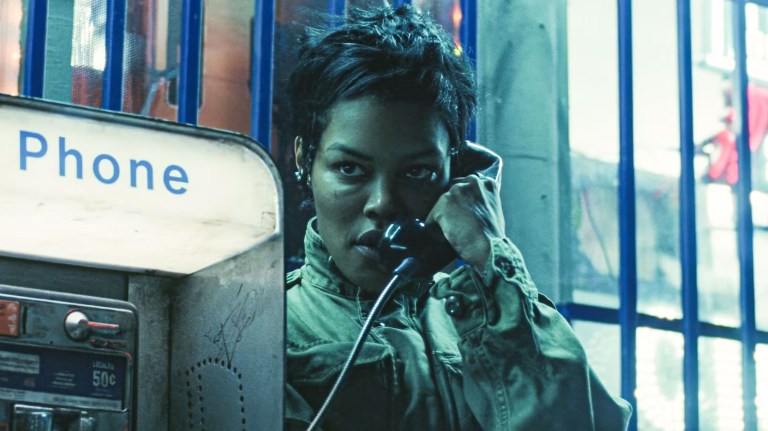
Incredibly self-aware in its presentation of events, Gormican chooses to focus on a group of childhood friends who used to make short films together, and while they still concern themselves with filmmaking in their adult lives, they aren’t exactly doing what they love. For starters, Doug (Jack Black) shoots weddings, Ronald (Paul Rudd) is a struggling actor, Kenny (Steve Zahn) is a cinematographer who gets rowdy and drunk, and Claire (Thandiwe Newton) more or less is doing better than the rest of them. It’s not until Ronald acquires the rights to the Anaconda intellectual property that he begins to make everyone believe they’re sitting on success.

After some convincing (namely of Doug), the group decide to go and shoot a reboot of the 1997 classic in the Amazon where they become embroiled in a game of cat and mouse with a real anaconda as well as a wider subplot of illegal gold miners. If this sounds like the sort of silly Hollywood blockbuster that tends to cap off the year, well it is. But this silliness (mostly) works, namely because the central cast are all so damn charming and likeable that it’s hard not to have a cheeky grin when something totally irrelevant to the plot happens, like Kenny getting over his peeing-in-public fear to piss on a supposed spider bite that Doug has sustained. There’s plenty of similar brain-dead humor that might leave you scratching your head, but what more can you expect with Jack Black leading the pack?

Anaconda isn’t groundbreaking by any stretch of the word, and it often calls attention to the lack of creativity in Hollywood, poking fun at its own studio in the process. That said, Anaconda becomes the very film it seeks to mock, with dialogue for dialogue’s sake and references to real world people and events. The film will probably be swallowed up by audiences in the moment with chase sequences and explosions all around, but when all is said and done, it’ll just as quickly be regurgitated.

Anaconda opens nationally from Boxing Day.

Avatar: Fire and Ash Has Pandora Starting to Feel Familiar

Rating: 3 out of 5.

Returning to Pandora after just three years, James Cameron’s third entry into his one-of-a-kind franchise, Avatar: Fire and Ash (2025), is closely linked to its previous chapter, Avatar: Way of Water (2022), giving the film its first sense of stagnation. But that is not to say Fire and Ash is a regression. The film is overwhelming and unwieldy, and in a normal year would be the best in a lacklustre slate of Hollywood blockbuster filmmaking with its incomparable visual style and boundary-pushing ingenuity that still convinces global audiences to leave the house and wear 3D glasses. But with the releases of Sinners (2025)and One Battle After Another (2025), two of the year’s films, should audiences start asking more from the stories coming out of Pandora?

Taking place one year after Way of Water, the Sully family is still mourning the loss of Neteyam (Jamie Flatters), all in different ways. As a Na’vi, most are still in a mourning period, especially Neytiri (Zoe Saldana), who feels lost in her grief. Jake (Sam Worthington), however, introduces the human concept of never addressing your feelings and pushing through in the hope of progress to the community. 

There is little time to settle back into Pandora before the action starts. Spurred by the adults’ desire to remove Spider (Jack Champion, their sort of adoptive son and only human protagonist left in the franchise) from their community, much to the rage of the rest of their young and growing family, the Sully clan are ambushed by the Mangkwan clan, or Ash people, are they are known. A brutal Na’vi group headed by Varang (Oona Chaplin), a war chief who leaps off the screen and gives this long film the jolt it needs to sustain itself, even if we are constantly let down by a lack of development.

Oona Chaplin as Varang in Avatar: Fire and Ash.
While Varang is a viscous and instantly captivating antagonist, entering the canon of Cameron villains, we are constantly seeking more depth behind the violence and destructive tendencies. What does it mean for a leader of a seemingly nomadic group of Na’vi styled like the Comanche to so easily join the colonising oppressive humans, and what does it mean that these questions are not explored? While appreciating that screenwriters Cameron, Rick Jaffa, and Amanda Silver explore different sides of their Native American and colonist sci-fi allegory, the lack of depth or curiosity in its own writing falls flat, underwhelming what should be an explosive final act.
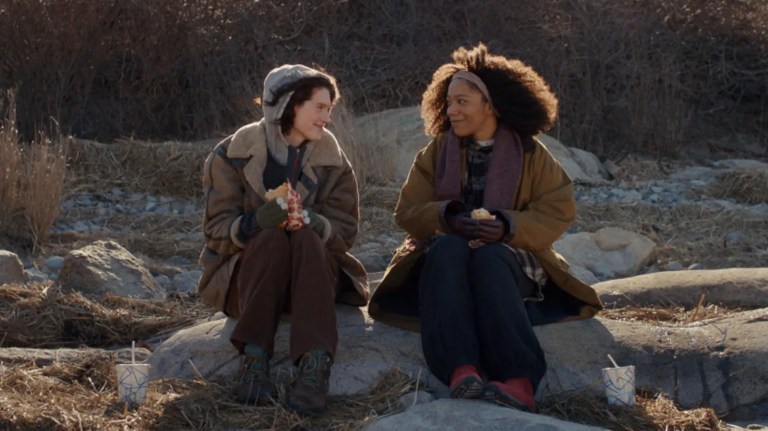
With a script and thematic conceptions decades out of date and technological cinema spectacle decades ahead of its competitors, James Cameron’s Avatar films live outside of time, allowing us extended peaks at this bizarre yet captivating place. What has allowed these films to thrive after all these years is their commitment to elemental storytelling, and not just in its commitment to adding elements like its naming brother, Avatar: The Last Airbender (2005) (definitely adding an earth tribe next). The family dynamics are overwhelmed with melodrama, deeply intertwining friend and foe with children and lost families, all with a growing connection to the land and its creatures, the more time they spend there, to a point where the climax of the film is weighted equally to the Na’vi as the Tulkan (whale creature added in the previous film) Payakan.

Cameron’s franchise expands in surprisingly organic ways, closer to a sweeping fantasy novel series than a film franchise spinning its wheels and playing the hits. Heroes and villains remain as the story is almost solely fascinated by their evolution as characters in a shifting world rather than having an expanding world smash up against rigid, established characters. As a double-edged sword, however, this does mean that at a runtime of 197 minutes we are focusing a lot of time and resources on the story of Spider, a mildly interesting but repetitive character, and his two fathers, Jake and Quarich (Stephan Lang). 

Sam Worthington as Jake Sully in Avatar: Fire and Ash

While the script and characterisations continue to lack, we still marvel at the film’s visual palette and stunning sound design. With its use of high frame rates, something that takes time to settle into, water and elemental scenes really soar, while the textured sound design grounds the world in the familiar, a delicate balance that allows each scene to grip you even if the storytelling falls away. Unfortunately the score by Simon Franglen still remains uninspired in these films, with preplanned swells that stir less emotion than is required for a film of this scale and craft.

Where films like The Creator (2023) seem designed to offer its cinematic approach to CGI filmmaking to future films in the genre, Cameron’s Avatar films strive for the visual Pantheon to be worshipped not emulated. We marvel, moment to moment at scenes of lush forests and dense reef ecosystems, fully immersed in a world of human creation, even as we get swept up in an expansive story about our need to protect and connect with nature. Like going to the aquarium and spending all day in the VR room. 

But at what stage does it feel greedy to ask for more from a franchise now 551 minutes into its on-screen runtime? As we round the corner to home plate and the James Cameron payoff machine starts working its gears, it’s hard not to be hit by a pang of sadness that this fascinating cultural item at the heart of a medium in a state of panic doesn’t strive for something more human or poetic. Audiences may never stop returning to Pandora once invited, but they may begin to ask for something under the surface to sustain them.

Avatar: Fire and Ash is in theatres now.

The SpongeBob Movie: Search for SquarePants: A Wholesome, Funny Undersea Adventure

Rating: 3 out of 5.

The SpongeBob Movie: Search for SquarePants preview screening provided by Paramount Pictures

It’s hard to believe that The SpongeBob Movie: Search for SquarePants (2025) is the fourth feature in the iconic Spongebob Squarepants franchise (not counting the two spinoffs), one that is showing no signs of slowing down or being outgrown by modern audiences as it continues to be Nickelodeon and Paramount’s hottest property. As a polished extension of the animated series, Search for Squarepants effortlessly translates to the big screen and revels in all of the shows silliness and giddy pinballing from moment to moment, without respite.

That’s to say that Derek Drymon’s film is as innocent as its titular character whose biggest dilemma in this advenutre is how to build up the nerve to ride a roller coaster now that he’s a ‘big guy’ who has grown over the required height requirements to ride said rollercoaster. Minimal stakes are the backbone of anything Spongebob related, and they lead him to the depths of the Underworld where he finds himself undertaking a series of challenges alongside the Flying Dutchman (Mark Hamill) to become a certified swashbuckler. Of course, the extent of the danger with which Spongebob finds himself in, escapes him, as the Dutchman has ulterior motives: find a pure, giddy soul to help break his curse and set him free.

This sees him, along with his starfish buddy Patrick, ride through beautiful, visually mossy looking Underworld that is filled with everything from ship knot monsters, googly eyed beasts and skeleton fish creatures. Drymon, who worked with the show’s late creator Stephen Hillenburg in the early days, doesn’t try to reinvent the wheel like he did in Hotel Transylvania: Transformania (2022) which fell flat on its face, but leans into the silliness of butt jokes and one liners that are a hoot for children and adults alike.

Squidward (Rodger Bumpass), Mr. Krabs (Clancy Brown) and Gary (Tom Kenny) in The SpongeBob Movie: Search For SquarePants from Paramount Animation and Nickelodeon.

Some fans of the show might be disappointed to know that show favourites Plankton and Sandy take a back seat this time around (perhaps owing to them getting their own spinoff movies in the last year), but Mr Krabs, Squidward and Gary the snail make up for that as they venture into the Underworld to try and rescue Spongebob. Their own little adventure navigating deadly sirens and a three headed seagull brings its own joys and comedic relief.

While the narrative feels a bit loose and wishy-washy, Drymon’s film sticks to the soul of the series and leaves you with the basic but hearty reminder to see the strengths in yourself and not compromise who you are to try and prove yourself to the world around you. Spongebob ends up a bigger guy than the big guy he thought he had already become and it’s all through seeing just how big he already was, and I think that’s as big a life lesson as you should really have from Bikini Bottom’s finest.

The SpongeBob Movie: Search for SquarePants opens nationally from Boxing Day.